

Valley Restoration Pros delivers 24/7 industrial emergency water extraction, thermal psychrometric drying, and structural mitigation across Phoenix and Maricopa County with guaranteed 30–60 minute rapid arrival. All protocols strictly adhere to IICRC S500 standards, featuring upfront itemized pricing and free on-site thermal moisture assessments. Call dispatch directly at (602) 847-9593.
Why Immediate Mitigation Is Critical in Phoenix Heat
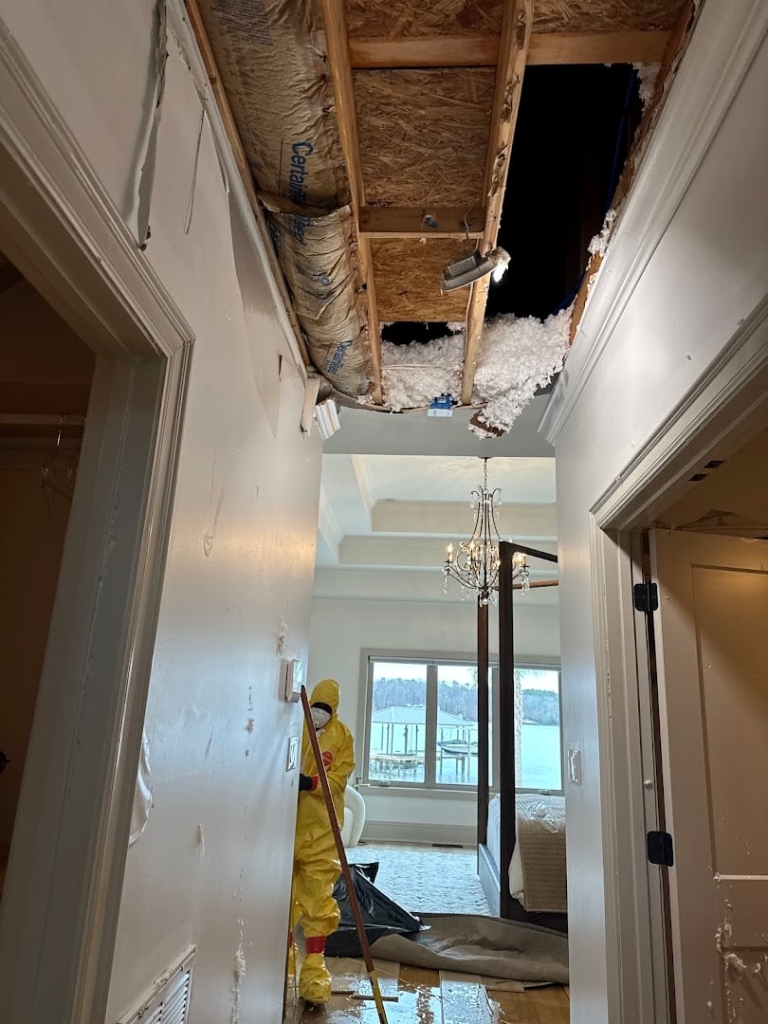
Arizona summer haboobs and monsoon storms unleash torrential downpours that overwhelm flat foam roofs, breach tile underlayment, and push contaminated desert silt and flash flood runoff across concrete slabs. Exterior runoff carries pesticides, petroleum residues, and pathogenic bio-contaminants that require immediate antimicrobial decontamination.
Monsoon Storm Property Damage Response Protocol
- Inspect ceilings for sagging or water droplets; puncture a tiny pinhole into the lowest bulge point with a bucket beneath to prevent catastrophic plaster collapse.
- Disconnect electrical power to wet rooms from a dry breaker panel.
- Document wind-blown roof tile displacement, tree branch impacts, and water intrusion depths with high-res photos.
- Move furniture away from exterior doors and sliding glass tracks prone to wind-driven rain seepage.
- Do not attempt to climb onto wet tile roofs during or immediately after a storm; wet Arizona tile is extremely slick and fragile.
- Call Valley Restoration Pro for emergency roof tarping and high-capacity flash flood water extraction.

Service Definition & The IICRC Standard of Care
Professional storm & flood cleanup is an engineering and environmental discipline adhering strictly to IICRC S500 protocols, not mere surface mopping. When structural plumbing failures strike in Maricopa County, certified emergency water extraction and thermal structural drying procedures must be deployed immediately. Whether triggered by high-pressure burst pipe emergencies, subfloor leaks, or commercial line ruptures, bound moisture rapidly penetrates concrete subfloors and wall framing. In the desert heat, delays trigger microbial proliferation requiring rapid mold remediation. Request damage assessment through our emergency assessment portal or request 30-minute dispatch across all Valley service areas.
Securing electrical feeds, inspecting load-bearing assemblies, and containing pathogens.
Stopping the intrusion source and erecting 6-mil plastic isolation containment airlocks.
31-HP truck-mount extraction, removing gallons exponentially faster than evaporation.
LGR dehumidifiers and HEPA air scrubbers driving grains per pound below 25 GPP.
Calibrated electronic pinless testing confirming baseline dry standards.
Critical Mistakes Phoenix Homeowners Make After Storms
Property owners naturally try to act fast, but well-intentioned DIY measures frequently escalate structural damage or void insurance claims:
- Delaying Roof Tarping Between Storm Outbreaks: Phoenix monsoons often strike in multi-day clusters; failing to tarp immediately ensures the next storm will flood the entire home.
- Leaving Wet Blown Attic Insulation in Place: Wet cellulose or fiberglass attic insulation acts as a wet sponge on ceiling drywall, guaranteeing ceiling collapse within 48 hours.
- Failing to File an Immediate Insurance Loss Report: Storm claims create massive local volume with adjusters; early filing with our professional thermal documentation ensures priority claims handling.
- Throwing Away Water-Damaged Personal Possessions Early: Insurance adjusters must inspect damaged items or review itemized photo inventories before paying contents replacement values.
- Allowing Mud and Silt to Dry into Carpets and Baseboards: Once desert caliche mud hardens, it chemically binds to fibers and porous baseboards, dramatically increasing replacement costs.
Damage Severity Classification & Contamination Matrix
Industry standards categorize property damage by contamination risk and drying difficulty. Review the matrix below to understand the technical protocols required:
Stage 1: Wind-Driven Rain & Minor Roof Leak
Source Examples: Cracked concrete tile, deteriorated foam roof flashing, window weep hole overflow
Hazards & Risks: Ceiling staining, drywall softening, localized insulation wetting.
Certified Protocol: Emergency roof tarping, thermal moisture scan, targeted ceiling cavity drying, antimicrobial wash.
Stage 2: Roof Breach & Ceiling Failure
Source Examples: Microburst wind damage, fallen tree branches, HVAC curb flash failure
Hazards & Risks: Multiple ceiling collapses, interior flooding, ruined furniture and flooring.
Certified Protocol: Immediate poly tarping, overhead debris clearing, high-volume extraction, multi-room LGR drying.
Stage 3: Overland Flash Flood & Silt Intrusion
Source Examples: Overflowing desert washes, street drainage backup, yard grading pooling
Hazards & Risks: Grossly contaminated Category 3 black water, toxic silt sludge, bacterial contamination.
Certified Protocol: Submersible mud extraction, pressure washing, hospital-grade biocide fogging, full containment.
The Complete 6-Stage Restoration Roadmap
Our IICRC-certified crews execute a disciplined, scientific 6-stage protocol to stabilize and dry structural components:
Emergency Dispatch & Perimeter Isolation
30 to 60 minute arrival. Securing electrical shutoffs, evaluating structural loads, and erecting containment airlocks.
FLIR® Thermal Mapping & Baseline Scans
Infrared thermal scans detect trapped moisture behind walls and beneath concrete without invasive exploratory demolition.
High-Volume Bulk Extraction
31-HP truck-mount extraction units pump standing water away at hundreds of gallons per minute.
Controlled Selective Demolition
Precision flood cuts 12 to 24 inches above moisture lines, removing wet insulation and opening wall framing to dry airflow.
Thermodynamic Dehumidification
Industrial Low-Grain Refrigerant dehumidifiers pull deep trapped moisture from dense framing lumber and concrete slabs.
Antimicrobial Sanitization & Verification
EPA-registered botanical application (Benefect Decon 30) and calibrated moisture testing to issue an official dry certificate.

Specialized Equipment & Industrial Restoration Technology
Mitigating severe property damage requires industrial-grade technology capable of altering thermodynamic psychrometrics:
Truck-Mounted Extraction Rigs
31-HP engines producing 16+ inches Hg vacuum suction to evacuate bulk water rapidly into holding tanks.
Low-Grain Refrigerant Dryers
Pre-cooling heat-pipe systems driving ambient grains per pound below 25 GPP to draw deep trapped water out of framing.
HEPA Negative-Air Scrubbers
Hospital-grade 99.97% particulate filtration capturing microscopic fungal spores, soot, and biohazard aerosols.
FLIR® Thermal Scanners & Probes
Infrared thermography detecting evaporative cooling boundaries behind walls, combined with digital RF pinless scanners.


Professional Restoration vs. DIY Mitigation
Attempting DIY cleanup during a property disaster creates severe hidden liabilities:
- Trapped Moisture: Surface drywall dries while moisture inside cavities triggers hidden mold blooms.
- Pathogenic Risks: Category 2 & 3 water contains bio-contaminants standard cleaners fail to kill.
- Insurance Denial: Insurers require daily psychrometric logs; lack of data causes claim disputes.
Transparent Upfront Itemized Pricing
Valley Restoration Pros operates with complete transparency:
- Free On-Site Assessment: Complete physical inspection before work begins.
- Upfront Itemized Estimates: Detailed line items calculated via industry-standard Xactimate.
- Zero Surprise Billing: No hidden charges or unauthorized repairs.
Certified Storm & Flood Cleanup Field Documentation
Every response performed by Valley Restoration Pros is documented through photographic and thermographic records:

Verified Local Area Dispatch: Phoenix, AZ
Official Geo-Coordinates: 33.4484° N, -112.074° W • Maricopa County
Frequently Asked Questions: Certified Restorer Insights
Direct answers to the most critical technical, operational, and insurance questions Phoenix property owners ask:
Related Specialized Emergency Restoration Services
Explore specialized rapid-response mitigation protocols across Greater Phoenix and Maricopa County:
Valley-Wide Emergency Response Service Coverage
Our mobile restoration fleet is dispatched across the entire Phoenix metropolitan region, providing rapid 30 to 60 minute emergency response: