

Valley Restoration Pros delivers 24/7 industrial emergency water extraction, thermal psychrometric drying, and structural mitigation across Phoenix and Maricopa County with guaranteed 30–60 minute rapid arrival. All protocols strictly adhere to IICRC S500 standards, featuring upfront itemized pricing and free on-site thermal moisture assessments. Call dispatch directly at (602) 847-9593.
Why Immediate Mitigation Is Critical in Phoenix Heat
Superheated Phoenix summer attics exceeding 140°F accelerate bacterial and fungal incubation within 24 to 48 hours of condensate saturation. Waterlogged ceiling drywall absorbs up to three times its dead weight, causing catastrophic overhead collapse onto living areas and occupants. Saturated blown-in cellulose and fiberglass insulation permanently lose thermal R-value, trap moisture against timber joists, and foster aggressive mold colonies. Hidden electrical wiring, junction boxes, and recessed lighting canisters submerged in pooling condensate create severe short-circuit and arc fire risks.
Service Definition & The IICRC Standard of Care
Professional attic ac condensation ceiling water damage phoenix is an engineering and environmental discipline adhering strictly to IICRC S500 protocols, not mere surface mopping. When structural plumbing failures strike in Maricopa County, certified emergency water extraction and thermal structural drying procedures must be deployed immediately. Whether triggered by high-pressure burst pipe emergencies, subfloor leaks, or commercial line ruptures, bound moisture rapidly penetrates concrete subfloors and wall framing. In the desert heat, delays trigger microbial proliferation requiring rapid mold remediation. Request damage assessment through our emergency assessment portal or request 30-minute dispatch across all Valley service areas.
Securing electrical feeds, inspecting load-bearing assemblies, and containing pathogens.
Stopping the intrusion source and erecting 6-mil plastic isolation containment airlocks.
31-HP truck-mount extraction, removing gallons exponentially faster than evaporation.
LGR dehumidifiers and HEPA air scrubbers driving grains per pound below 25 GPP.
Calibrated electronic pinless testing confirming baseline dry standards.
The Complete 6-Stage Restoration Roadmap
Our IICRC-certified crews execute a disciplined, scientific 6-stage protocol to stabilize and dry structural components:
Emergency Dispatch & Perimeter Isolation
30 to 60 minute arrival. Securing electrical shutoffs, evaluating structural loads, and erecting containment airlocks.
FLIR® Thermal Mapping & Baseline Scans
Infrared thermal scans detect trapped moisture behind walls and beneath concrete without invasive exploratory demolition.
High-Volume Bulk Extraction
31-HP truck-mount extraction units pump standing water away at hundreds of gallons per minute.
Controlled Selective Demolition
Precision flood cuts 12 to 24 inches above moisture lines, removing wet insulation and opening wall framing to dry airflow.
Thermodynamic Dehumidification
Industrial Low-Grain Refrigerant dehumidifiers pull deep trapped moisture from dense framing lumber and concrete slabs.
Antimicrobial Sanitization & Verification
EPA-registered botanical application (Benefect Decon 30) and calibrated moisture testing to issue an official dry certificate.

Specialized Equipment & Industrial Restoration Technology
Mitigating severe property damage requires industrial-grade technology capable of altering thermodynamic psychrometrics:
Truck-Mounted Extraction Rigs
31-HP engines producing 16+ inches Hg vacuum suction to evacuate bulk water rapidly into holding tanks.
Low-Grain Refrigerant Dryers
Pre-cooling heat-pipe systems driving ambient grains per pound below 25 GPP to draw deep trapped water out of framing.
HEPA Negative-Air Scrubbers
Hospital-grade 99.97% particulate filtration capturing microscopic fungal spores, soot, and biohazard aerosols.
FLIR® Thermal Scanners & Probes
Infrared thermography detecting evaporative cooling boundaries behind walls, combined with digital RF pinless scanners.
Professional Restoration vs. DIY Mitigation
Attempting DIY cleanup during a property disaster creates severe hidden liabilities:
- Trapped Moisture: Surface drywall dries while moisture inside cavities triggers hidden mold blooms.
- Pathogenic Risks: Category 2 & 3 water contains bio-contaminants standard cleaners fail to kill.
- Insurance Denial: Insurers require daily psychrometric logs; lack of data causes claim disputes.
Transparent Upfront Itemized Pricing
Valley Restoration Pros operates with complete transparency:
- Free On-Site Assessment: Complete physical inspection before work begins.
- Upfront Itemized Estimates: Detailed line items calculated via industry-standard Xactimate.
- Zero Surprise Billing: No hidden charges or unauthorized repairs.
Certified Attic AC Condensation Ceiling Water Damage Phoenix Field Documentation
Every response performed by Valley Restoration Pros is documented through photographic and thermographic records:

Comprehensive Attic AC Condensation Ceiling Water Damage Phoenix Technical Manual & Operational Standards
Exhaustive engineering protocols, psychrometric calculations, geological multipliers, and step-by-step restoration standards for Maricopa County properties:
Executive Emergency Abstract: Attic Air Handler Failures & Overhead Ceiling Inundation
During the relentless summer months across Greater Phoenix, residential and commercial cooling systems operate under continuous thermal strain. In typical Valley residential architecture—from mid-century ranches in Central Phoenix to sprawling two-story properties in Scottsdale and Gilbert—the primary heating, ventilation, and air conditioning (HVAC) split-system air handling unit is situated directly within the unconditioned attic space. When ambient outdoor temperatures hover between 110°F and 118°F, unconditioned attic chambers frequently reach extreme thermal equilibriums ranging between 140°F and 160°F. Under these unforgiving conditions, central cooling systems extract massive volumes of latent moisture from interior living spaces, condensing anywhere from 15 to 25 gallons of water per day across chilled evaporator coils.
Catastrophic ceiling water damage occurs when the mechanisms engineered to convey this steady stream of condensate fail, leading to an active AC overflowing in attic scenario. When a 3/4-inch polyvinyl chloride (PVC) primary condensate drain line becomes choked with gelatinous algal slime, bacterial zooglea, and calcified mineral scale, condensate backs up into the internal coil drain pan. If the secondary emergency overflow pan is unlined, rusted through, missing an auxiliary float safety switch, or tilted off-pitch, hundreds of gallons of lukewarm water cascade directly into the attic framing bay.
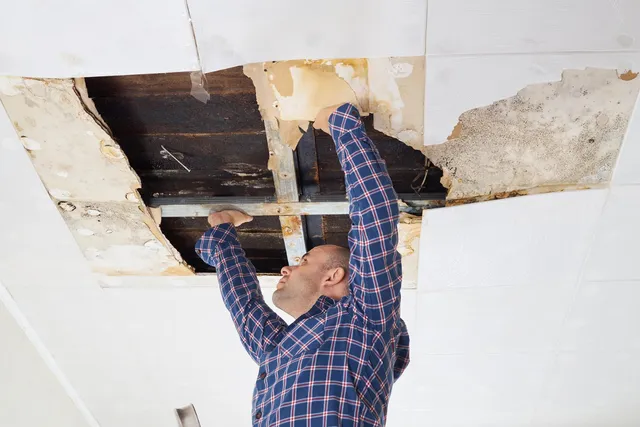
The escaping water immediately saturates blown-in cellulose or loose-fill fiberglass insulation, turning thermal insulation blankets into heavy, sodden sponges. A single four-foot by eight-foot section of 1/2-inch gypsum ceiling drywall, which weighs approximately 45 pounds dry, absorbs upwards of three times its dry weight when soaked from above. Fastener heads pull through wet paper facing, resulting in sudden, violent ceiling collapses that send contaminated attic insulation, drywall mud, and biological sludge crashing into master bedrooms, kitchens, and common living areas below. Prompt deployment of emergency water extraction within the first 60 minutes is mandatory to halt structural destruction and protect interior assets.
Immediate Attic AC Condensation Emergency Directives
- Shut Down the Thermostat and Air Handler Breaker: Immediately set your thermostat to OFF. Navigate to your main electrical distribution panel and trip the dual-pole breaker dedicated to the attic furnace or air handler. This cuts power to the condensing unit, halting further condensation production and eliminating 240V/120V shock hazards.
- Isolate Sagging Ceiling Areas Below: Evacuate all occupants and pets from rooms beneath bulging, discolored, or dripping ceiling drywall. Waterlogged gypsum can collapse without auditory warning. Place plastic catch basins beneath active drips, but never push or poke sagging plaster without protective eye gear and full containment.
- Relieve Hydraulic Pooling Safely: If a localized drywall ceiling bladder is bulging heavily with water, pierce the center carefully with a screwdriver while holding a clean 5-gallon bucket underneath to relieve static weight before the entire sheet tears away from overhead timber joists.
- Mobilize 24/7 Professional Restoration Dispatch: Contact Valley Restoration Pros immediately at (602) 847-9593. Our emergency crews arrive equipped with commercial HEPA insulation extraction vacuums, industrial desiccant dehumidifiers, and thermal imaging cameras to secure your overhead ceiling assembly.
Anatomy of Attic AC Failures: Microbial Zooglea, Drain Line Clogs & Thermal Shock
To understand why attic air conditioning assemblies represent such a severe structural liability in Maricopa County residences, one must analyze the physical mechanics of residential split-system cooling. An air handler consists of a blower motor, an expansion valve, and an evaporator coil assembly housed inside an insulated sheet metal cabinet. As warm, moisture-laden indoor air is drawn across chilled aluminum fins, vapor condenses into liquid droplets that flow down into an internal plastic or galvanized steel collection trough:
Zooglea Algae & Biofilm Obstruction
The continuous presence of room-temperature moisture inside the dark drain pan creates a hospitable breeding ground for airborne fungal spores and bacteria. These microorganisms synthesize extracellular polymeric substances, forming a thick, gelatinous biological mat known as zooglea slime. This jelly-like biofilm slides down into the 3/4-inch PVC drain trap, anchoring airborne dust and pet dander until the pipe is 100% occluded.
Extreme Attic Thermal Pan Warping
Polyethylene secondary drain pans installed beneath attic air handlers are subjected to blistering ambient temperatures exceeding 150°F during mid-afternoon peak solar exposure. Over years of thermal cycling, polymer pans become brittle, warp along their structural ribs, and sag between supporting ceiling framing timbers. When water finally overflows into the warped pan, it runs toward unsealed corners or hair-line stress fractures rather than exiting the secondary drain nipple.
Secondary Float Switch Mechanical Seizure
Building codes require an auxiliary float switch installed on the secondary drain port or secondary pan to cut the 24V control circuit when water rises. However, in dusty Arizona attics, blowing dust storms (haboobs) deposit airborne grit across exposed switches. Airborne particulate binds with evaporated moisture, encrusting float bobbins in place. When an overflow occurs, the stuck switch fails to interrupt power, allowing the unit to pump water into the attic uninterrupted.
Duct Sweating & Vapor Barrier Tear Rupture
Flexible ductwork runs carrying 55°F conditioned air across a 150°F attic rely on outer metallized vapor barriers. Rodent activity or tradesman traffic frequently punctures these foil jackets. Superheated humid attic air makes direct contact with cold duct liners, causing rapid exterior surface condensation (duct sweating). The duct jacket fills with gallons of water like an elongated balloon until it bursts directly over living room ceilings.
When an attic air conditioning system discharges water overhead, the moisture spreads along ceiling joists, dampening drywall across multiple rooms before producing noticeable wet spots. Homeowners dealing with extensive overhead damage should reference our comprehensive ceiling water damage restoration procedures to understand structural stabilization standards.
For commercial facilities and properties utilizing rooftop packaged units, condensate management presents unique multi-zone drainage challenges. Review our detailed technical overview on rooftop hvac condensation pan overflow surprise az to see commercial-grade drainage protocols.
Phoenix Desert Climatic Multipliers: 140°F Attic Superheating & 20-Gallon Condensation Rates
The thermodynamic forces governing water damage in Phoenix, Arizona are fundamentally unlike those encountered in humid subtropical or temperate coastal states. The intense radiant solar load absorbed by concrete tile and asphalt shingle roofs elevates residential attic temperatures into dangerous industrial ranges:
1. 140°F to 160°F Attic Superheating & Thermal Expansion Stress
Phoenix experiences over 100 days annually with ambient outdoor temperatures exceeding 100°F, frequently reaching peaks between 115°F and 120°F. Dark roofing materials absorb solar radiation, transferring heat downward into attic voids. Attic temperatures routinely measure 145°F to 160°F by 2:00 PM.
This superheated thermal environment subjects PVC drain lines, adhesive solvents, and secondary polymer pans to continuous expansion and contraction cycles. PVC joints glued with standard solvent cements can shear over time, while vinyl drain tubing becomes soft, droops between joists, and creates unvented water traps that prevent gravity drainage.
2. High-Volume Condensate Production During Monsoon Season
Between July and September, the North American Monsoon transports tropical moisture from the Gulf of California and the eastern Pacific into the Valley of the Sun. Outdoor dew points spike from bone-dry desert baselines (30°F to 40°F) up to tropical levels exceeding 65°F to 72°F.
Because residential AC compressors run 16 to 20 hours per day to battle outdoor heat, the moisture removal rate skyrockets. A 5-ton split system can generate over 25 gallons of condensate daily during monsoon humidity surges. When a drain line clogs during this period, secondary pans overflow in mere hours rather than days. For ceiling issues triggered directly by monsoon roof infiltration, explore our specialized monsoon ceiling water damage repair scottsdale recovery operations.
3. Rapid Microbial Incubation in 24 to 36 Hours
Fungi and bacteria require three elements to flourish: moisture, an organic carbon food source, and elevated temperatures. Saturated blown cellulose insulation (manufactured from recycled newspaper treated with fire retardants) and drywall paper facings provide an abundant food source.
When coupled with attic heat, fungal spores including Aspergillus, Cladosporium, and Stachybotrys chartarum germinate within 24 to 36 hours. Once fungal colonies establish in the attic framing space, the air handler's return plenum draws microscopic bio-aerosols into the central ductwork, contaminating the entire home's indoor air quality. Immediate implementation of certified mold remediation is vital to decontaminate structural timber and HVAC distribution plenums.
Immediate Emergency First-Hour Protocol & Overhead Safety Isolation
When overhead ceiling plaster darkens, bubbles, or begins dripping, property owners must take immediate defensive action. Overhead water intrusion presents severe structural collapse hazards and life-threatening electrocution risks. Follow this standardized first-hour operational playbook:
Step 1: Total Electrical Isolation of Overhead Circuits
Attic spaces host complex networks of 120V branch circuits, Romex cables, recessed lighting junction boxes, and exhaust fan motors. Saturated insulation resting on electrical junction boxes allows water to track directly into live wiring splices.
De-energize the HVAC air handler breaker immediately, along with all branch lighting and receptacle circuits serving the rooms beneath the affected attic sector. Do not touch wet light switches or stand in puddle water beneath ceiling fixtures until circuits are verified dead using a non-contact voltage tester.
Step 2: Controlled Relief of Overhead Hydrostatic Weight
When water pools over drywall, latex interior paint forms an elastic, water-filled blister that can hold several gallons of liquid. Allowing this weight to concentrate on drywall seams can cause entire 4x8 drywall panels to shear off their fastener screws, damaging furnishings below and endangering residents.
Place tarps and sturdy collection buckets directly underneath the lowest point of the sagging ceiling. Using an awl, screwdriver, or nail mounted on an extension rod, puncture the center of the blister from a safe perimeter position. This directs the trapped water into the receptacle in a controlled stream, relieving hydraulic weight on the ceiling joists.
Step 3: Relocation of Vulnerable Contents & Floor Protection
Ceiling water contains fiberglass fibers, dust mite allergens, and particulate from attic voids. Remove valuable electronics, area rugs, solid wood furnishings, and heirloom textiles from the splash zone.
If water has dripped onto hardwood, natural stone, or luxury vinyl tile flooring, lay down polyethylene sheeting to prevent water from seeping into subflooring. If hardwood floors have absorbed overhead dripping, consult our advanced procedures for hardwood floor water damage drying to reverse cupping before permanent damage sets in.
Advanced Industrial Equipment Specifications: Overhead Cavity Desiccation & Thermal Imaging
Extracting trapped moisture from attic structural assemblies requires industrial restoration machinery engineered for high static pressure and high-temperature environments. Valley Restoration Pros deploys advanced technology to ensure comprehensive drying:
FLIR T540 Thermal Imaging Radiometers
Equipped with a 464x348 pixel uncooled microbolometer sensor and thermal sensitivity under 30 mK, our diagnostic cameras visualize subtle evaporative cooling thermal differentials across ceiling surfaces. We map the exact footprint of saturated attic framing and wet insulation without cutting unnecessary exploratory inspection holes in pristine drywall.
High-Volume Gas Insulation Removal Vacuums
Our truck-mounted Meyer Versa-Vac OS units generate over 3,500 CFM of negative suction. Utilizing 6-inch reinforced intake hoses routed directly through attic access hatches, wet blown cellulose, rat droppings, and damp fiberglass are evacuated directly into exterior HEPA filtration containment bags parked outside the home, preventing dust release into interior air.
Low-Grain Refrigerant (LGR) Dehumidifiers
Deploying Phoenix DryMAX XL and Dri-Eaz Revolution LGR units, our systems remove up to 140 pints of water per day at AHAM conditions (80°F/60% RH). These units continue condensing moisture even as specific humidity drops below 34 grains per pound (GPP), drawing deep bound moisture out of solid 2x6 and 2x8 ceiling joists.
HEPA 500 Negative Air Scrubbers
Operating with multi-stage filtration including activated carbon and true certified HEPA filters (capturing 99.97% of particles down to 0.3 microns), our air filtration devices create negative pressure in work zones. They capture airborne mold spores, insulation particulate, and VOCs, discharging purified air through exhaust ducting.
To desiccate enclosed interstitial framing bays without tearing out structural ceilings, we configure specialized positive-pressure cavity drying arrays. Heated, ultra-dry air is injected through 3/8-inch access ports into ceiling joist bays, driving moisture vapor outward toward industrial dehumidification intakes.
For comprehensive whole-structure drying standards across walls, subfloors, and framing assemblies, review our dedicated structural drying technical manual.
Hazardous Saturated Insulation Removal & HEPA Vacuum Extraction Protocols
One of the most catastrophic errors committed by uncertified contractors during an attic AC leak is leaving damp insulation in place with the expectation that it will dry out naturally in the desert heat. In reality, wet attic insulation acts as an impermeable moisture reservoir that traps humidity against ceiling framing, accelerating timber rot and microbial proliferation:
The Physics of Saturated Cellulose vs. Fiberglass Insulation
Blown-In Cellulose: Cellulose is manufactured from shredded recycled newspaper treated with boric acid or ammonium sulfate for fire retardancy. When exposed to AC condensate, the fire retardant chemicals leach out into the water, forming an acidic liquid that corrodes metal electrical boxes, Romex staples, and truss gang-nail connector plates. Saturated cellulose clumps into dense papier-mâché paste that traps moisture against joists for weeks, permanently losing its thermal resistance (R-value).
Loose-Fill or Batt Fiberglass: While glass fibers do not absorb water directly, the capillary matrix between microscopic glass strands holds enormous quantities of moisture. Wet fiberglass batts compress under water weight, losing air pockets required for insulation. The organic backing paper supports vigorous mold colonies, while the damp fiberglass retains water directly against ceiling drywall, ensuring eventual ceiling collapse if not mechanically removed.
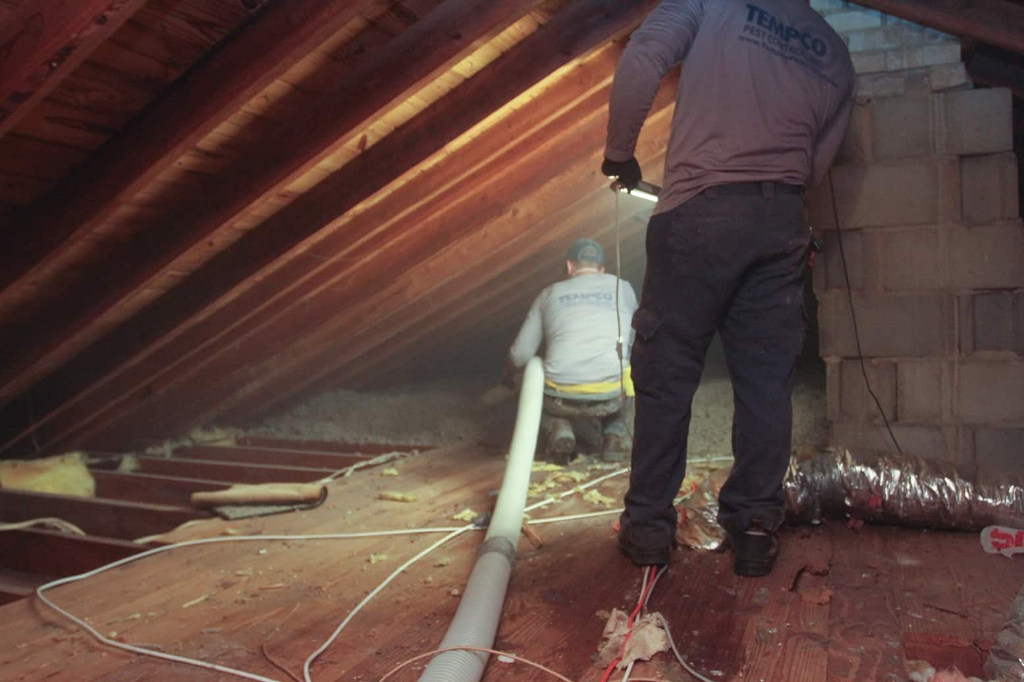
Valley Restoration Pros executes complete insulation extraction using truck-mounted vacuum systems. Technicians wearing Level C personal protective equipment (PPE)—including Tyvek suits, full-face respirators equipped with P100 HEPA cartridges, and cut-resistant gloves—navigate attic catwalks to vacuum out every trace of wet insulation down to bare ceiling framing.
Once the framing is cleared, industrial HEPA vacuums remove biological sludge and settled particulate from the ceiling drywall topside, creating an unobstructed pathway for rapid thermodynamic desiccation. If your plumbing failure involves supply lines rather than AC condensation, see our manual on burst pipe repair protocols.
IICRC S500 & S520 Step-by-Step Ceiling & Attic Restoration Protocol
Every water intrusion project managed by Valley Restoration Pros is governed by the rigorous standards established by the Institute of Inspection, Cleaning and Restoration Certification (IICRC). Specifically, we execute our recovery under the IICRC S500 Standard for Professional Water Damage Restoration and the IICRC S520 Standard for Professional Mold Remediation:
Stage 1: Thermographic Moisture Mapping & Hazard Assessment
Our Lead Restorer conducts an exhaustive psychrometric inspection using calibrated FLIR infrared thermal imaging cameras and Tramex non-invasive pinless moisture meters. We identify the precise migration path of the condensate overflow across attic joists, top plates, wall cavities, and ceiling drywall. All electrical circuits within the affected zone are tested for energization and isolated to ensure technician safety.
Stage 2: Critical Containment & Air Filtration Setup
To prevent attic dust, fiberglass fibers, and microbial spores from entering clean residential living quarters, technicians erect 6-mil polyethylene containment barriers with magnetic zipper doorways around the attic access point and affected rooms. HEPA 500 air scrubbers are initiated to establish continuous negative pressure, exhausting scrubbed air to the exterior.
Stage 3: Saturated Insulation Vacuuming & Controlled Demolition
Technicians vacuum out all wet cellulose and fiberglass insulation using truck-mounted vacuum units. Sagging, delaminated, or mold-impacted ceiling drywall is surgically cut along structural joist centers using oscillating saws equipped with HEPA shroud attachments. Drywall screws are backed out, and wet gypsum panels are bagged in heavy-duty contractor sacks for disposal.
Stage 4: Botanical Antimicrobial Decontamination (EPA-Registered Thymol)
Exposed wood framing members, roof trusses, ceiling joists, and drywall perimeters are cleaned and treated with Benefect Decon 30. This hospital-grade botanical disinfectant, derived from natural thyme oil, achieves a 99.99% kill rate against fungal pathogens, bacteria, and viruses without toxic synthetic chemicals or off-gassing, ensuring complete occupant safety.
Stage 5: High-Performance Thermodynamic Desiccation
We deploy an engineered balance of high-capacity Low-Grain Refrigerant (LGR) dehumidifiers and commercial centrifugal air movers. Airflow is directed across structural timber to shear the boundary moisture layer, while dehumidifiers condense the evaporated moisture out of the air. Moisture meters and thermo-hygrometers record ambient temperature, relative humidity, GPP, and wood moisture equivalent (WME) daily until dry standards are achieved.
Stage 6: Final Clearance Testing & Reconstruction Hand-Off
Once timber joists achieve verified equilibrium moisture content (under 12% to 14% WME), containment is taken down following final HEPA vacuuming and wiping. We provide a comprehensive, insurance-ready Certificate of Completion with psychrometric drying logs and moisture mapping documentation.
Psychrometric Science: Grain Depression & Interstitial Vapor Pressure Gradients
Professional structural drying is not a matter of simply placing fans in a room; it is an applied thermodynamic science. Water molecules bound within solid lumber framing, ceiling joists, and drywall gypsum move according to vapor pressure differentials. Valley Restoration Pros technicians optimize psychrometric conditions to force moisture migration:
The Physics of Vapor Pressure Differential
Vapor pressure is the force exerted by water vapor molecules in a gas or liquid state, measured in inches of mercury (in. Hg) or kilopascals. Moisture naturally migrates from areas of high vapor pressure to areas of low vapor pressure. Saturated wood joists in an attic possess a very high internal vapor pressure.
By utilizing industrial LGR dehumidifiers to drive the ambient air's specific humidity down below 35 Grains Per Pound (GPP)—achieving a low ambient vapor pressure under 0.25 in. Hg—our technicians establish an aggressive vapor pressure gradient. This gradient draws deep bound moisture out of the center of 2x6 ceiling framing into the ambient air, where our dehumidifiers condense and pump it away.
Daily psychrometric logs record ambient temperature, relative humidity, dew point, and grain depression (the difference in GPP between the dehumidifier intake and processed exhaust). This empirical documentation proves structural materials have achieved equilibrium moisture content before reconstruction commences.
Ceiling Structural Substrates: Standard Drywall, Historic Plaster & Commercial Acoustic Tiles
Different overhead ceiling substrates respond distinctly to top-down AC condensate saturation. Valley Restoration Pros tailors stabilization and desiccation procedures according to specific material physics:
Standard Gypsum Drywall (1/2" & 5/8")
Gypsum core dissolves under prolonged saturation, losing fastener holding strength. When moisture content exceeds 18% WME or physical sagging occurs, affected sheets must be removed. If caught within 12 hours with minor perimeter dampness, high-velocity air drying can restore integrity without demolition.
Historic Lath & Plaster Ceilings
Found in historic districts like Encanto-Palmcroft and Coronado, plaster keys hook through wood lath strips. Water weakens lime plaster keys, causing sudden detachment of heavy plaster plates. We stabilize plaster with temporary shoring jacks and use dehumidification without excessive airflow to prevent brittle cracking.
Commercial Suspended Acoustic Ceiling Tiles
Mineral fiber lay-in tiles wick condensate rapidly, turning yellow-brown and bowing downward out of the T-bar grid. Wet acoustic tiles must be discarded immediately as Category 2 gray water hazards. The metal grid is sanitized and dried in place before new tiles are dropped in.
For commercial properties facing widespread office or retail acoustic grid inundation, explore our comprehensive commercial water damage restoration services.
Microbial Amplification & Indoor Air Quality Decontamination Protocols
Water pooling from an attic AC unit is categorized under IICRC S500 standards as Category 2 gray water at its origin. Because it originates from condensation on dusty coils and passes through dirty drain pans, it carries microscopic contamination. In the extreme heat of a Phoenix summer, Category 2 water degrades into Category 3 gross biological contamination within 48 hours:
The Cross-Contamination Threat to Central Air Conditioning Plenums
Because the air handler and primary return ductwork are located directly adjacent to the overflow site, negative pressure inside return plenums pulls fungal spores, cellulose dust, and bacterial endotoxins through microscopic duct seams. Once inside the air distribution system, toxic bio-aerosols are blown into every bedroom and living space in the home every time the blower cycles on.
To eliminate health hazards, our crews execute thorough air duct sanitization and apply botanical biocides to all affected framing. If contamination has progressed to extensive microbial colonization, our specialized sewage cleanup and biohazard extraction protocols ensure complete hospital-grade containment and clearance.
For subterranean foundation or underground plumbing risks that coincide with multi-level water losses, see our technical breakdown of slab leak water damage restoration.
Hyper-Local Phoenix Case Study: Biltmore Corridor Split-System Attic Pan Failure
The Scenario & Initial Damage Profile
In late July, during an extreme heatwave where Phoenix recorded four consecutive days above 116°F, the primary condensate line on a 4-ton attic split system became blocked by zooglea slime and hard water mineral deposits. The secondary emergency overflow pan, installed in 2011, had developed micro-fissures along its unreinforced drain flange. Over a 72-hour period, an estimated 60 gallons of condensate overflowed directly into the attic framing bay above the master bedroom suite and adjoining hallway.
The homeowner returned from a weekend trip to discover a 12-foot by 16-foot section of master bedroom ceiling sagging precariously, with foul odors and brown liquid dripping onto solid oak hardwood flooring. They contacted Valley Restoration Pros at (602) 847-9593.
Emergency Response & Psychrometric Intervention
Our rapid-response emergency vehicle arrived on scene within 28 minutes. Lead Restorer Marcus Vance immediately established a controlled safety perimeter and used FLIR thermal imaging to locate the boundary of moisture migration. Crews placed catch tarps and relieved water pressure through controlled perforations before executing surgical removal of 180 square feet of saturated, mold-compromised ceiling drywall.
Using our truck-mounted Meyer vacuum, technicians evacuated 45 bags of wet blown-in cellulose insulation from the attic truss bays. Benefect Decon 30 botanical antimicrobial was applied to the saturated 2x6 ceiling joists, which measured 36% WME at baseline inspection. We installed a containment drying chamber equipped with two Phoenix DryMAX XL LGR dehumidifiers and six axial air movers, along with an Injectidry floor mat system over the hardwood planks below.
Outcome & Verification
Within 68 hours of continuous psychrometric drying, timber joist moisture levels were successfully restored to the dry standard of 10.4% WME, and hardwood flooring cupping was 100% reversed without requiring floor tear-out. The entire claims package—including itemized Xactimate estimates and complete daily drying logs—was documented and submitted to the carrier, resulting in prompt claim authorization without out-of-pocket billing surprises for the homeowner.
Pay-Per-Call Financial Transparency & Insurance Documentation Standards
Navigating property damage insurance claims after an attic AC overflow can be stressful. Valley Restoration Pros upholds strict ethical, pay-per-call transparency standards to ensure our clients understand every financial detail before work commences:
Our Transparent Financial Commitments:
- Free Comprehensive On-Site Damage Assessment: We evaluate the full extent of attic, ceiling, wall, and flooring moisture using infrared cameras and moisture meters at zero upfront cost to you.
- Transparent Upfront Itemized Pricing: Prior to initiating any demolition or equipment setup, you receive an itemized estimate outlining equipment charges, labor rates, and scope of work.
- Zero Deceptive Billing Promises: We never falsely claim that insurance will cover 100% of costs without deductible responsibility, nor do we promise direct billing without client authorization. You maintain complete control of your claim.
- Comprehensive Claims Documentation Assistance: We compile detailed psychrometric drying logs, FLIR thermal imaging reports, moisture mapping charts, and industry-standard Xactimate line-item estimates to streamline claim approval with your insurance adjuster.
Calculate expected restoration scopes and baseline mitigation investment ranges using our interactive free on-site assessment tool.
Preventative Engineering: Mechanical Hardening Standards for Phoenix Attics
Following emergency ceiling restoration, property owners must take proactive steps to harden their attic mechanical systems against future condensate overflow catastrophes. Valley Restoration Pros recommends the following engineering upgrades:
Dual Electronic Float Switches
Install dual electronic water-sensing safety switches (such as Safe-T-Switch or AquaGuard). One sensor should be hardwired into the primary drain outlet, while a second sensor is mounted on the lip of the secondary drain pan. If liquid bridges the sensor contacts, the unit cuts the 24V thermostat circuit within two seconds.
Seamless Welded Secondary Metal Pans
Replace flimsy plastic pans with heavy-gauge galvanized steel or aluminum secondary pans with rolled edges and fully soldered or welded seams. Ensure the pan extends at least 3 inches beyond all sides of the air handler cabinet to capture condensate blow-off from high-velocity fan cycles.
Dedicated PVC Cleanouts & Trap Vents
Incorporate a threaded cleanout tee with a removable cap directly upstream of the P-trap. This enables homeowners and HVAC technicians to flush the line with warm water or white vinegar monthly during peak summer cooling to dissolve emerging zooglea biofilm before clogs develop.
For issues related to municipal water heater failures and mechanical room inundation, review our specialized manual for water heater burst cleanup.
Valley-Wide Rapid Response Network: 30-Minute Emergency Dispatch
Attic AC condensation leaks do not wait for business hours. When ceiling plaster is actively dripping or threatening collapse, every minute matters. Valley Restoration Pros maintains strategically deployed mobile emergency restoration units stationed across the Valley of the Sun:
Central & North Phoenix Hub
Serving Downtown, Midtown, Biltmore, Arcadia, Paradise Valley, and North Phoenix. Connect directly with our Phoenix water damage emergency command.
Scottsdale & Paradise Valley Hub
Providing white-glove ceiling restoration for luxury residences across Scottsdale water damage and Paradise Valley water damage properties.
East Valley Municipalities
Rapid dispatch covering Gilbert, Chandler, Tempe, and Mesa. Explore our dedicated Mesa water damage response fleet.
West Valley Communities
Full-service drying and insulation extraction for Glendale, Peoria, Surprise, and Goodyear via our Glendale water damage operations base.
Review all serviced regions and emergency mobilization checkpoints on our comprehensive areas we serve index, or contact our dispatch team directly on our contact us page.
Environmental Dynamics: 18 GPG Mineral Scale & Copper Line Degradation
While AC condensate itself is technically distilled water generated through atmospheric phase-change, the physical environment inside Phoenix attics introduces intense mineral and chemical interactions:
Atmospheric Calcite Particulate & Scale Accumulation
The Sonoran Desert atmosphere is laden with fine airborne dust particles originating from expansive caliche soils. These airborne particles contain high fractions of calcium carbonate, magnesium silicates, and quartz dust. As the air handler pulls unfiltered air through return duct gaps, this alkaline mineral dust impinges upon wet evaporator fins.
When combined with the Valley's 18+ grains per gallon (GPG) municipal water supply present in evaporative coolers or humidifiers, heavy calcified crusts form along the drain pan floor. These rock-hard mineral deposits trap biological slime, cementing obstructions in place that cannot be cleared with simple gravity flow. If plumbing distribution lines in your attic have suffered corrosion, consult our technical analysis on copper pipe pinhole leak water damage phoenix response.
Containment Barrier Engineering & Clean-Air Pressurization Systems
Ceiling water damage restoration in occupied homes demands uncompromising dust and bio-aerosol containment. Removing collapsed drywall and sodden insulation without engineering controls exposes occupants to millions of respirable fiberglass shards, fungal mycotoxins, and rodent allergens:
Airtight Isolation with Critical Barriers
Valley Restoration Pros establishes true isolation barriers utilizing heavy 6-mil flame-retardant poly sheeting supported by spring-loaded aluminum tension poles. All seams are taped with clean-release vinyl barrier tape. Magnetic self-closing entry zippers allow technicians access while maintaining continuous negative air pressure within the contaminated chamber.
Commercial air scrubbers run continuously, exchanging the chamber air volume at least six to eight times per hour through certified HEPA filters. This ensures that the remainder of your home remains completely clean, safe, and livable throughout the entire restoration process.
Frequently Asked Questions: Attic AC Condensate & Ceiling Water Restoration
Emergency overflow pans are designed to hold or redirect small residual drainage temporarily, not continuous multi-gallon flows. If the secondary pan lacks an operational float switch, or if the switch bobbin is stuck due to dust buildup, the system will not shut down. Furthermore, plastic pans crack from years of exposure to 150°F attic heat, while metal pans rust through, allowing water to escape into the ceiling framing immediately.
If ceiling drywall has bowed, sagged, or stayed saturated for more than 24 hours, it cannot be safely saved. Gypsum core loses structural coherence when wet, and fastener screws pull through the sodden paper facing, creating an ongoing collapse hazard. Furthermore, leaving wet drywall in place seals moisture and wet insulation inside the joist bay, creating ideal conditions for toxic mold growth. Only minor, superficial moisture caught within hours can be dried without removal.
In the majority of standard HO-3 and commercial property insurance policies, sudden and accidental water damage caused by appliance overflows is a covered loss. However, insurance carriers frequently scrutinize attic claims to determine whether the failure was sudden or the result of long-term neglected maintenance. Valley Restoration Pros assists policyholders by providing detailed psychrometric drying logs, FLIR thermal imaging reports, and itemized Xactimate estimates proving the sudden nature of the event. We never guarantee coverage or promise direct billing without client responsibility.
Under IICRC S500 standards, professional structural desiccation typically requires three to five days of continuous operation. The exact timeline depends on the volume of water released, whether insulation was extracted promptly, and the density of structural framing lumber. Daily monitoring visits verify that joists and wall studs achieve equilibrium dry standards before equipment is removed.
Yes, in most cases where contamination is restricted to the attic and ceiling of isolated rooms. Our crews establish sealed negative-pressure containment barriers and deploy HEPA 500 air scrubbers to guarantee that dust, fiberglass, and microbial particulate cannot migrate into unaffected living quarters. However, if the master bedroom or primary living areas are heavily impacted, temporary relocation may be recommended for comfort.
Preventative measures include pouring one cup of distilled white vinegar into the condensate access T-pipe monthly during summer, replacing standard mechanical float switches with electronic dual-sensing switches, and scheduling bi-annual HVAC maintenance to flush lines and check secondary pan integrity.
Verified Local Area Dispatch: Phoenix, AZ
Official Geo-Coordinates: 33.4484° N, -112.074° W • Maricopa County
Related Specialized Emergency Restoration Services
Explore specialized rapid-response mitigation protocols across Greater Phoenix and Maricopa County:
Valley-Wide Emergency Response Service Coverage
Our mobile restoration fleet is dispatched across the entire Phoenix metropolitan region, providing rapid 30 to 60 minute emergency response: