

Valley Restoration Pros delivers 24/7 industrial emergency water extraction, thermal psychrometric drying, and structural mitigation across Phoenix and Maricopa County with guaranteed 30–60 minute rapid arrival. All protocols strictly adhere to IICRC S500 standards, featuring upfront itemized pricing and free on-site thermal moisture assessments. Call dispatch directly at (602) 847-9593.
Why Immediate Mitigation Is Critical in Phoenix Heat
Accidental pre-action deluge sprinkler header rupture or high-expansion AFFF foam proportioner failure dumping 4,000+ GPM of high-pressure municipal water across clear-span epoxy hangar floors. Mesa Gateway 18 to 22 GPG extreme hard water depositing conductive calcium carbonate scale and aggressive chlorides that spark rapid galvanic corrosion on corporate jet airframes, turbine rotor shafts, and landing gear assemblies. Sonoran Desert ambient heat exceeding 115°F accelerating liquid flash evaporation, driving internal humidity above 85% RH and triggering catastrophic internal condensation inside unsealed avionics bays. Sub-slab deluge water penetration through concrete control cuts saturating expansive caliche clay subgrades, inducing severe upward foundation heave under multi-ton aircraft.
Service Definition & The IICRC Standard of Care
Professional mesa gateway aerospace corridor commercial hangar water extraction is an engineering and environmental discipline adhering strictly to IICRC S500 protocols, not mere surface mopping. When structural plumbing failures strike in Maricopa County, certified emergency water extraction and thermal structural drying procedures must be deployed immediately. Whether triggered by high-pressure burst pipe emergencies, subfloor leaks, or commercial line ruptures, bound moisture rapidly penetrates concrete subfloors and wall framing. In the desert heat, delays trigger microbial proliferation requiring rapid mold remediation. Request damage assessment through our emergency assessment portal or request 30-minute dispatch across all Valley service areas.
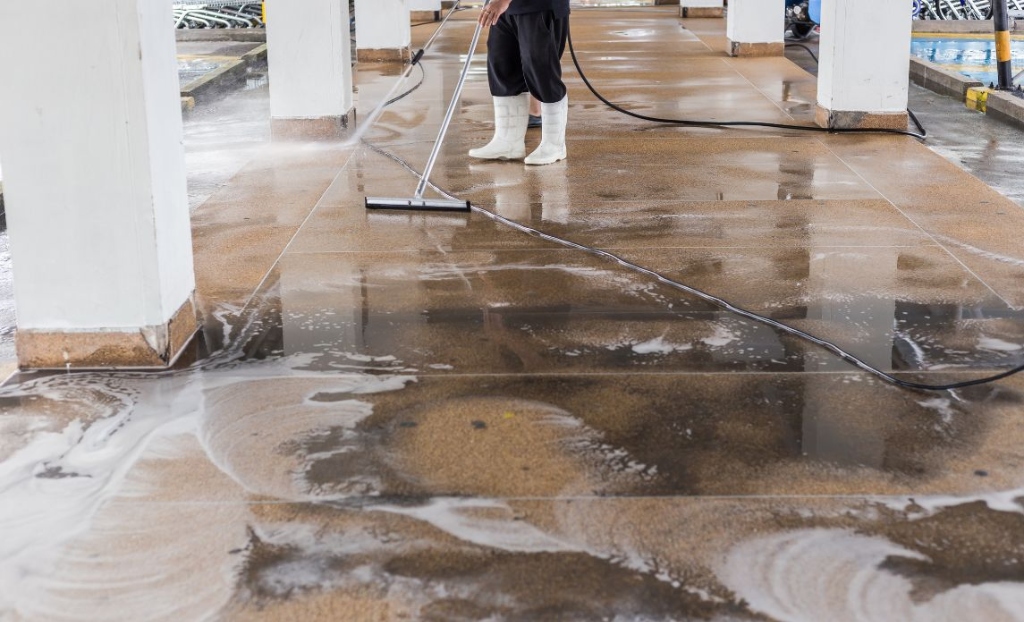
Securing electrical feeds, inspecting load-bearing assemblies, and containing pathogens.
Stopping the intrusion source and erecting 6-mil plastic isolation containment airlocks.
31-HP truck-mount extraction, removing gallons exponentially faster than evaporation.
LGR dehumidifiers and HEPA air scrubbers driving grains per pound below 25 GPP.
Calibrated electronic pinless testing confirming baseline dry standards.
The Complete 6-Stage Restoration Roadmap
Our IICRC-certified crews execute a disciplined, scientific 6-stage protocol to stabilize and dry structural components:
Emergency Dispatch & Perimeter Isolation
30 to 60 minute arrival. Securing electrical shutoffs, evaluating structural loads, and erecting containment airlocks.
FLIR® Thermal Mapping & Baseline Scans
Infrared thermal scans detect trapped moisture behind walls and beneath concrete without invasive exploratory demolition.
High-Volume Bulk Extraction
31-HP truck-mount extraction units pump standing water away at hundreds of gallons per minute.
Controlled Selective Demolition
Precision flood cuts 12 to 24 inches above moisture lines, removing wet insulation and opening wall framing to dry airflow.
Thermodynamic Dehumidification
Industrial Low-Grain Refrigerant dehumidifiers pull deep trapped moisture from dense framing lumber and concrete slabs.
Antimicrobial Sanitization & Verification
EPA-registered botanical application (Benefect Decon 30) and calibrated moisture testing to issue an official dry certificate.

Specialized Equipment & Industrial Restoration Technology
Mitigating severe property damage requires industrial-grade technology capable of altering thermodynamic psychrometrics:
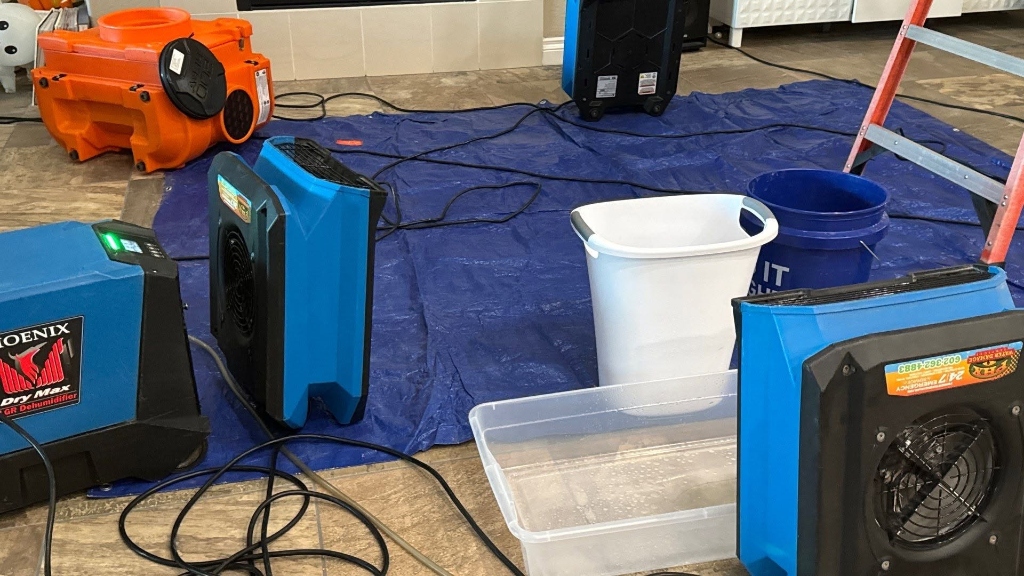
Truck-Mounted Extraction Rigs
31-HP engines producing 16+ inches Hg vacuum suction to evacuate bulk water rapidly into holding tanks.
Low-Grain Refrigerant Dryers
Pre-cooling heat-pipe systems driving ambient grains per pound below 25 GPP to draw deep trapped water out of framing.
HEPA Negative-Air Scrubbers
Hospital-grade 99.97% particulate filtration capturing microscopic fungal spores, soot, and biohazard aerosols.
FLIR® Thermal Scanners & Probes
Infrared thermography detecting evaporative cooling boundaries behind walls, combined with digital RF pinless scanners.
Professional Restoration vs. DIY Mitigation
Attempting DIY cleanup during a property disaster creates severe hidden liabilities:
- Trapped Moisture: Surface drywall dries while moisture inside cavities triggers hidden mold blooms.
- Pathogenic Risks: Category 2 & 3 water contains bio-contaminants standard cleaners fail to kill.
- Insurance Denial: Insurers require daily psychrometric logs; lack of data causes claim disputes.
Transparent Upfront Itemized Pricing
Valley Restoration Pros operates with complete transparency:
- Free On-Site Assessment: Complete physical inspection before work begins.
- Upfront Itemized Estimates: Detailed line items calculated via industry-standard Xactimate.
- Zero Surprise Billing: No hidden charges or unauthorized repairs.
Certified Mesa Gateway Aerospace Corridor Commercial Hangar Water Extraction Field Documentation
Every response performed by Valley Restoration Pros is documented through photographic and thermographic records:

Comprehensive Mesa Gateway Aerospace Corridor Commercial Hangar Water Extraction Technical Manual & Operational Standards
Exhaustive engineering protocols, psychrometric calculations, geological multipliers, and step-by-step restoration standards for Maricopa County properties:
Executive Emergency Abstract: Phoenix-Mesa Gateway Aerospace Hangar Inundation & Deluge Extraction
Phoenix-Mesa Gateway Airport (KIWA / IWA) represents the epicenter of commercial aviation growth, aerospace advanced manufacturing, and defense MRO (Maintenance, Repair, and Overhaul) operations across the Greater Phoenix East Valley. Formerly Williams Air Force Base—a historic flight training installation established during World War II—this expansive 3,000-acre aerospace hub features three parallel 10,000-foot commercial-grade runways capable of accommodating the largest wide-body transport aircraft, heavy air cargo carriers, and advanced corporate business jets in global aviation. Bounded by South Sossaman Road, East Ray Road, South Power Road, and East Pecos Road, and seamlessly integrated with the booming Eastmark innovation district, the Mesa Gateway Aerospace Corridor accommodates global aerospace giants. Major facilities include the Embraer Executive Jet Service Center, Gulfstream Aerospace maintenance operations, Textron Aviation service centers, Able Aerospace Services (a Textron company operating over 250,000 square feet of dynamic component overhaul facilities), Chandler-Gilbert Community College Aviation Maintenance Technology campus, and elite flight training academies.
When an industrial fire suppression riser shears, an overhead pre-action deluge valve malfunctions, or a high-expansion foam proportioning loop ruptures within these sprawling clear-span hangar facilities, the resulting hydraulic inundation creates an immediate operational crisis. Aerospace maintenance hangars across the Mesa Gateway corridor routinely encompass 30,000 to 75,000 square feet of open, unobstructed floor space finished with seamless, mirror-finish polyurethane and chemical-resistant epoxy coating systems. Built strictly without floor pitch to allow precision multi-axis laser alignment, airframe jacking, and smooth aircraft towing, these monolithic decks cannot drain standing water naturally. Under municipal static pressures exceeding 90 to 110 PSI, industrial fire risers discharge between 3,500 and 6,000 gallons per minute (GPM) directly across aircraft parking spots. Within minutes, 50,000 to over 100,000 gallons of pressurized municipal water flood the clear span, surging toward multimillion-dollar corporate aircraft (including Embraer Praetor 600s, Phenom 300Es, Gulfstream G500s, and Citation Longitudes), precision computer numerical control (CNC) five-axis milling centers, subterranean 480V 3-phase raceways, and FAA Part 145 composite repair cleanrooms.
The physical severity of this inundation is exacerbated by the unique desert climate and geology of Southeast Mesa. Municipal water supplied across the East Valley carries an extreme dissolved mineral concentration of 18 to 22 Grains Per Gallon (GPG), creating an aggressive, highly conductive electrolyte laden with calcium carbonate, magnesium sulfates, and chloride ions. When this water contacts high-performance aerospace alloys—such as 7075-T6 zinc-bearing aluminum stringers, precipitation-hardened titanium fasteners, cadmium-plated landing gear bolts, and magnesium accessory gearboxes—it sparks immediate galvanic corrosion cells. Furthermore, during Mesa summer months, ambient temperatures exceeding 115°F rapidly heat the hangar metal envelope, causing rapid flash evaporation. This drives indoor relative humidity from a dry baseline of 12% to over 85% within ninety minutes, precipitating catastrophic internal condensation inside unsealed avionics racks, electronic flight instrument system (EFIS) displays, and flight management computers. Immediate deployment of certified emergency water extraction platforms is vital to prevent total economic write-offs of flight assets.
Immediate Aviation Emergency Priority Checklist: First 30 Minutes
- Fire Suppression Header Mechanical Isolation: Dispatch trained flight-line maintenance personnel to immediately close the primary Outside Screw and Yoke (OS&Y) gate valve or exterior Post Indicator Valve (PIV) controlling the active suppression zone, followed instantly by opening the 2-inch or 4-inch main line drain to evacuate trapped overhead hydraulic head pressure.
- 480V 3-Phase Switchgear & 400Hz GPU De-Energization: Execute emergency Lockout/Tagout (LOTO) protocols across main distribution switchboards, disconnect all 400Hz frequency converter umbilicals and 28V DC rectifiers plugged into parked airframes, and de-energize floor-recessed utility power boxes to prevent high-voltage subterranean arc flash incidents.
- Airframe Environmental Barrier Deployment: Secure approved waterproof, breathable silicone intake blanks, exhaust plugs, auxiliary power unit (APU) weather covers, and protective silicone boots over pitot-static probes, total air temperature (TAT) sensors, and angle-of-attack vanes on all hangared aircraft to halt moisture vapor ingress.
- Mobilize Industrial Aerospace Restoration Command: Contact Marcus Vance and the Valley Restoration Pros flight-line response unit at (602) 847-9593 or tap Emergency Phone Dispatch for guaranteed 30-minute heavy extraction mobilization across Phoenix-Mesa Gateway Airport and the Eastmark aerospace corridor.
Anatomy of the Failure & Aerospace Physical Dynamics
The hydraulic mechanics and structural physics governing an aircraft hangar flooding disaster differ fundamentally from typical commercial real estate losses. Commercial aerospace facilities operating at Phoenix-Mesa Gateway Airport are designed to meet National Fire Protection Association (NFPA) 409 Standards for Aircraft Hangars. Because these structures house aircraft containing thousands of gallons of Jet-A aviation fuel and volatile hydrocarbon fluids, NFPA 409 Group I and Group II hangars require high-volume fire suppression networks capable of quenching intense fuel fires instantaneously. These systems utilize overhead pre-action deluge pipe loops, wet-pipe automatic sprinkler grids, or high-expansion aqueous film-forming foam (AFFF) proportioning systems. These industrial networks are fed by dedicated 8-inch to 12-inch fire service risers capable of sustaining sustained water deliveries between 4,000 and 6,000 GPM under immense static pressure. When addressing catastrophic infrastructure failures of this magnitude, resolving commercial water damage requires advanced fluid dynamic mastery and aviation engineering expertise.
Catastrophic mechanical failures in hangar suppression loops generally stem from three physical mechanisms: transient hydraulic water hammer shocks, caliche scale stress-corrosion fatigue, or accidental mechanical impact. In the Southeast Mesa municipal utility district, rapid switching between municipal booster stations and agricultural irrigation canal pump networks can generate massive hydraulic shock waves. When an automated valve cycles abruptly, the resulting pressure surge can exceed 200 PSI, blowing out mechanical grooved pipe couplings, cracking cast-iron riser elbows, or shearing threaded sprinkler pendant drops. Alternatively, in dry-pipe or pre-action systems, internal pipe scale and condensation create localized crevice corrosion and microbiological corrosion (MIC), thinning pipe wall thickness over years until fitting rupture occurs. Finally, high-tempo hangar operations involving overhead bridge cranes, mobile tail stands, scissor lifts, or high-mast aircraft tugs risk physical collision with overhead piping arrays, instantly shearing sprinkler heads and releasing torrents of high-pressure municipal water. When overhead fire suppression networks discharge unexpectedly, immediate execution of precision fire sprinkler water damage cleanup is essential to mitigate irreversible airframe loss.
The physical behavior of water on the hangar deck is dictated by the specialized civil and structural design of aerospace concrete slabs. Hangar floors at Phoenix-Mesa Gateway Airport are constructed as heavy-duty, steel-reinforced slabs measuring between 12 and 16 inches in thickness, engineered to support concentrated aircraft wheel point loads exceeding 65,000 pounds per main landing gear assembly. To resist corrosive aviation hydraulic fluids (such as Skydrol LD-4 and Skydrol PE-5 ester formulations), synthetic turbine lubricants, and aviation fuels, the slab surface is finished with seamless, multi-coat, high-build chemical-resistant polyurethane or 100% solids epoxy resin systems. Because aviation maintenance regulations prohibit floor slope to ensure precise airframe alignment, water cannot drain away by gravity. The epoxy surface is completely non-porous and impermeable. When thousands of gallons discharge onto the floor, the water cannot soak into the concrete; instead, it behaves as a rapidly expanding, hydrodynamic sheet that travels horizontally across tens of thousands of square feet.
Sub-Slab Utility Trench Flooding
Hangar slabs incorporate subterranean utility trenches carrying 480V 3-phase feeder lines, 400Hz frequency converter cables, compressed air headers, and high-speed fiber data conduits. Unsealed steel diamond-plate covers allow deluge water to cascade directly into these trenches, completely submerging electrical bus bars, junction boxes, and pull stations, creating catastrophic subterranean arc flash hazards.
Static Grounding Well Submersion
Recessed copper grounding bus plates and static bonding reels embedded in the concrete floor deck become submerged in mineral-saturated flood water. This creates high-resistance ground faults, nullifying static electricity dissipation pathways required during fuel defueling, oxygen servicing, and avionics bench testing.
Cleanroom & NDT Lab Infiltration
Because water cannot absorb into the epoxy floor, the expanding sheet surges toward perimeter partitions. Water penetrates under door thresholds into FAA Part 145 composite layup cleanrooms, non-destructive testing (NDT) radiographic inspection vaults, and computerized avionics calibration labs, saturating drywall, cabinetry, and sensitive test consoles.
Carbon Brake & Landing Gear Immersion
Standing water depths exceeding 2 inches immerse main landing gear wheel bearings, anti-skid digital sensors, and multi-disc carbon brake heat packs on parked business jets. Water entering carbon heat packs causes structural matrix micro-cracking and hydraulic piston binding, requiring complete teardown and recertification before return to service.
Furthermore, when high-expansion foam systems discharge concurrently with deluge water, the physical dynamics become exponentially more hazardous. Modern firefighting foams utilize fluorochemical surfactants that dramatically reduce water surface tension to below 18 dynes per centimeter. This ultra-low surface tension enables foam-water mixtures to creep into microscopic concrete joints, penetrate unsealed electrical conduit seals, and seep past aircraft panel gaskets that would normally resist clean water. Overcoming these multi-phase fluid dynamics requires specialized high-vacuum extraction fleets, surfactant neutralization chemistry, and closed-loop environmental containment.
Phoenix-Mesa Gateway Climatic & Geological Multipliers: Aerospace Risk Amplification
Commercial aircraft hangar restoration in the East Valley of Greater Phoenix is dictated by extreme environmental, geochemical, and atmospheric parameters found almost nowhere else in North America. Southeast Mesa, spanning from South Power Road eastward past Sossaman Road toward the Eastmark development, occupies an intense desert basin characterized by hyper-arid summer heat, severe municipal water hardness, and dense expansive caliche clay soils. Out-of-state contractors and inexperienced restoration crews unfamiliar with these desert variables routinely mismanage hangar losses, resulting in catastrophic galvanic corrosion of airframe structures, destroyed avionics packages, and cracked concrete slabs.
The primary geochemical threat originates directly from Mesa municipal water chemistry. Water supplying fire loops and industrial facilities around Phoenix-Mesa Gateway Airport is sourced through the Central Arizona Project (CAP) canal and the Salt River Project (SRP) water distribution network. This surface water carries an extreme mineral hardness between 18 and 22 Grains Per Gallon (GPG), representing 310 to 380 parts per million (PPM) of total dissolved solids (TDS). This liquid is heavily laden with dissolved calcium carbonate, magnesium bicarbonates, and aggressive chloride ions. In an aviation maintenance setting, this mineral-rich water acts as an intensely aggressive, highly conductive electrolyte solution. When flood water contacts parked aircraft, it creates destructive galvanic corrosion couples across dissimilar metals:
- 7075-T6 Aerospace Aluminum Airframe Structures: Zinc-alloyed structural aluminum bulkheads, longerons, and fuselage skins suffer rapid exfoliation corrosion along countersunk fastener holes and lap joints when exposed to chloride-rich water, compromising structural airworthiness within 24 to 48 hours.
- Magnesium Accessory Gearbox Housings: Auxiliary power units (APUs) and turbine accessory gearboxes manufactured from magnesium alloys exhibit an extreme galvanic potential difference when coupled to stainless steel or titanium studs. In the presence of 20 GPG water, anodic dissolution of magnesium begins within 12 hours, creating deep pitting that permanently ruins precision castings.
- Cadmium-Plated High-Strength Steel Fasteners: Hard water salts strip sacrificial cadmium plating from 4340 and 300M high-strength structural landing gear bolts, exposing bare alloy steel to rapid hydrogen embrittlement and stress-corrosion cracking under continuous static tension.
- Carbon-Fiber Composite & Aluminum Splices: In modern corporate business jets like the Embraer Praetor and Gulfstream G500, carbon-fiber composite skin panels bonded to aluminum substructures create a potent galvanic cell when bridged by conductive mineral water, accelerating galvanic oxidation of underlying aluminum ribs.
The second critical multiplier is the brutal thermal profile of Southeast Mesa. Between May and October, ambient outdoor temperatures across Phoenix-Mesa Gateway Airport routinely climb to between 112°F and 118°F. Sprawling steel-framed commercial hangars act as immense solar heat sinks. With clear-span corrugated metal roof systems exposed to relentless solar irradiance, roof deck surface temperatures easily reach 170°F, driving interior hangar temperatures beyond 125°F within hours. When 60,000 gallons of deluge water are suddenly released onto this superheated floor deck, the entire hangar converts into an industrial autoclave.
The standing liquid flash-evaporates rapidly off the warm epoxy floor, driving internal relative humidity from the typical desert baseline of 12% to over 85% within ninety minutes. Under standard room conditions (70°F and 50% RH), microbial mold spore germination requires 48 to 72 hours. However, in an overheated Mesa Gateway hangar, the combination of 100°F+ water, high humidity, and organic contaminants creates an optimal incubator. Bacterial proliferation and mold colonization can initiate within 24 to 36 hours. Deploying comprehensive structural drying protocols is imperative to arrest biological growth before it infiltrates aircraft interior cabin acoustic insulation, leather seating, and executive cabin linings. If microbial growth takes hold, certified mold remediation protocols must be executed immediately to preserve passenger cabin airworthiness.
The Internal Sweating Phenomenon: Avionics Dew Point Crash
As hot, moisture-saturated air circulates through the hangar envelope, it encounters parked aircraft containing sub-surface fuel reserves, heavy forged landing gear assemblies, and massive structural titanium forgings that remain cold from recent flight or thermal lag. Because these dense metal components lag behind the rapidly heating air, their surface temperature drops below the indoor dew point. This triggers catastrophic internal sweating: water vapor condenses directly inside closed wing dry bays, wire harnesses, flight management computers, and radar transceiver units. This causes immediate electrical short circuits, pinhole contact oxidation, and permanent destruction of multimillion-dollar avionics suites.
Finally, the geotechnical sub-base beneath Phoenix-Mesa Gateway Airport introduces severe foundation risks. Southeast Mesa alluvial soil consists of expansive smectite clay beds underlain by dense, rock-hard caliche (calcium carbonate hardpan) located 3 to 7 feet below the surface. When deluge water escapes through unsealed hangar concrete control cuts, expansion joints, or perimeter foundation edges, it cannot percolate downward through the impermeable caliche barrier. Instead, water pools horizontally across the expansive clay layer. Saturated smectite clays expand violently, generating upward swelling pressures exceeding 8,500 pounds per square foot (PSF). This localized hydrostatic upheaval can crack 14-inch steel-reinforced concrete slabs, displace floor expansion joint elastomeric seals, and misalign laser-calibrated airframe assembly jigs, resulting in civil and structural repairs costing hundreds of thousands of dollars.
Immediate Emergency First-Hour Protocol & Flight-Line Safety Isolation
The initial sixty minutes following a commercial aerospace hangar deluge event represent the critical operational window that determines whether the incident results in manageable floor remediation or a catastrophic multi-million-dollar airframe and avionics insurance write-off. In an aerospace maintenance environment filled with high-voltage machinery, volatile aviation turbine fuels, pressurized hydraulic lines, and sensitive electronic assemblies, emergency response cannot follow standard commercial restoration tactics. Personnel must execute a disciplined, safety-engineered flight-line sequence adhering strictly to OSHA 29 CFR 1910 Lockout/Tagout (LOTO) rules, NFPA 70E electrical safety standards, and FAA flight safety criteria.
The foremost operational priority is the absolute electrical isolation of all flooded zones before personnel step onto wet surfaces. Hangar facilities at Phoenix-Mesa Gateway Airport feature extensive sub-slab electrical conduit networks powering 480-volt 3-phase hydraulic test benches, overhead bridge cranes, turbine balancing jigs, and pop-up floor utility boxes. When these recessed raceways flood, they become lethal arc-flash risks. Specialized teams handling commercial underground electrical vault flood extraction must immediately isolate the main facility switchgear at the master service entrance. Simultaneously, all external Ground Power Units (GPUs) supplying 400Hz AC or 28V DC power to parked aircraft must be physically disconnected at the aircraft umbilical receptacles and locked out.
Critical Safety Warning: Static Grounding Reel Integrity Under Flooding
Never disconnect aircraft static bonding cables while standing in flood water or operating in an unverified hangar atmosphere. Hangared aircraft maintain static bonding via heavy-duty copper cables connected to subterranean grounding electrodes embedded in the concrete floor. In the presence of fuel vapors or disturbed chemical residues, disconnecting a grounding clamp can generate an electrostatic discharge spark capable of igniting aerosolized vapors. All static bonding pathways must remain connected until verified with an intrinsically safe megohmmeter by an FAA-certificated airframe and powerplant (A&P) technician or safety engineer.
Simultaneously with electrical isolation, the hydraulic suppression water source must be definitively stopped. Pre-action deluge headers and high-capacity fire risers are governed by heavy outside screw and yoke (OS&Y) gate valves or exterior Post Indicator Valves (PIV). Once the local fire marshal or airport fire department verifies that no active fire hazard exists, the riser gate valve must be closed, chained, and tagged. Crucially, the main 2-inch or 4-inch drain valve on the riser header must be opened immediately to evacuate the thousands of gallons of trapped head pressure lingering within overhead branch pipes. When unaddressed, overhead pipes continue dripping mineral-heavy water onto aircraft cowlings, windshields, and rotor assemblies. Rapid isolation and repairs, similar to those required during burst pipe repair, are vital to preventing secondary structural saturation.
The third critical phase of the first-hour protocol focuses on physical airframe preservation. Technicians must immediately deploy chemical-resistant containment booms around all aircraft landing gear and corporate jet wheels, diverting flood water away from tire beads, carbon brake packs, and lower fuselage antenna fairings. Specialized waterproof, breathable silicone covers must be secured over turbine intakes, turbofan exhaust ducts, APU air inlets, and delicate external flight sensors (pitot probes, static ports, angle-of-attack vanes). This blocks airborne moisture aerosols, foam surfactants, and high-humidity air from infiltrating internal engine compressor stages and avionics compartments while heavy extraction machinery mobilizes across the hangar deck.
Finally, flight-line operations supervisors must establish strict zoned perimeters: Hot Zone (active flooded bay), Warm Zone (equipment decontamination and staging), and Cold Zone (unaffected flight offices and tarmac). Foot traffic and unauthorized vehicle movement must be strictly prohibited across the wet epoxy floor. Unrestricted movement spreads chemical surfactants across clean aprons and creates extreme slip and fall hazards on polished polyurethane surfaces.
Advanced Industrial Equipment Specifications & Flight-Line Deployment at Mesa Gateway
Mitigating a catastrophic deluge flood within a 45,000-square-foot aerospace hangar requires heavy industrial machinery engineered for extreme volumetric evacuation and deep psychrometric moisture extraction. Standard commercial restoration equipment—designed for residential basements or small commercial suites—is entirely incapable of controlling 60,000+ gallons of standing water on a massive epoxy deck under triple-digit desert heat. Valley Restoration Pros mobilizes an elite industrial fleet of positive-displacement extraction trucks, industrial ride-on squeegee extractors, trailer-mounted desiccant dehumidifiers, negative-air HEPA scrubbers, and precision cavity drying systems engineered specifically for aviation and defense industrial facilities. When handling massive commercial losses like those encountered in warehouse flood damage restoration, deploying high-capacity extraction fleets is crucial to securing complete recovery.
Our bulk water extraction strategy relies on positive-displacement truck-mounted vacuum extraction units. Driven by industrial PTO engines, these units incorporate dual rotary lobe blowers generating 16 inches of mercury (inHg) vacuum lift and pulling over 1,200 CFM of airflow per machine. Connected to 2.5-inch and 3-inch crush-proof vacuum lines and commercial hard-surface weighted extraction wands, each truck evacuates bulk standing water at continuous rates exceeding 160 GPM through automated pumpout manifolds. To clear massive open floor spans rapidly without scratching high-gloss polyurethane floor coatings, we deploy battery-powered industrial ride-on extractors equipped with 38-inch non-marking squeegee blades and dual-stage vacuum motors. These units sweep the hangar apron systematically, capturing thin-sheet water films before mineral scale can crystallize on the epoxy.
Aerospace Hangar Industrial Drying Fleet Specifications
Trailer-Mounted Desiccants
Airflow Capacity: 5,000 to 15,000 CFM per trailer
Moisture Removal: Delivers supply air at <15% RH and <18 GPP
Aviation Role: Deep dew point depression to prevent internal sweating in parked corporate jets.
Positive Displacement Vacuums
Vacuum Lift: 16 inHg, dual rotary lobe blowers
Extraction Rate: 160+ GPM continuous auto-pumpout
Aviation Role: Bulk standing water dewatering from slabs, sumps, and utility trenches.
Industrial LGR Dehumidifiers
Water Removal: 250 PPD at AHAM (80°F / 60% RH)
Operating Range: 33°F to 120°F with internal pumpout
Aviation Role: Secondary containment drying in tool cribs, cleanrooms, and flight offices.
Negative-Air HEPA Scrubbers
Filtration Rating: DOP-certified 99.97% @ 0.3 microns
Blower Output: 2,000 CFM variable-speed centrifugal fan
Aviation Role: Capture airborne hard water dust, aerosolized surfactants, and mold spores.
To control atmospheric moisture within the cavernous hangar volume, standard refrigerant dehumidifiers are insufficient because high desert temperatures reduce their thermodynamic efficiency. Valley Restoration Pros deploys trailer-mounted industrial desiccant dehumidification systems generating between 5,000 and 15,000 CFM of dry air per unit. Operating with active silica gel desiccant rotors, these units absorb water vapor directly from the air regardless of ambient temperatures. Desiccant trailers deliver supply air at relative humidity levels below 15% and humidity ratios under 18 GPP (grains per pound of dry air). This ultra-dry air is ducted through 20-inch reinforced lay-flat ducting directly across parked aircraft airframes, dropping the ambient dew point to well below 45°F and entirely eliminating the risk of internal sweating inside fuselage stringers and avionics racks.
For subterranean utility trenches, perimeter wall assemblies, and double-walled maintenance partitions, we deploy Injectidry high-pressure negative-pressure desiccation systems. These industrial units connect to high-pressure vacuum lines that draw moist air out of wall cavities and enclosed utility trenches without requiring extensive destructive demolition of drywall and fire-rated assemblies. By pulling dry desiccant air through wall cavities, these systems dry internal metal framing and insulation to baseline standards within 48 to 72 hours. Equipment strategies similar to those used during commercial chiller pipe burst water damage restoration ensure rapid environmental recovery across multi-zone commercial structures.
To ensure uninterrupted drying operations without overloading facility electrical infrastructure or depending on de-energized hangar switchgear, Valley Restoration Pros deploys mobile 150 kW to 250 kW sound-attenuated diesel generators. Equipped with multi-tap Cam-Lok power distribution panels, these heavy generators deliver clean, dedicated 480V 3-phase and 208V single-phase power directly to trailer desiccant reactivating heaters, high-volume blower assemblies, and emergency extraction pumps. This self-contained utility architecture guarantees that drying operations continue around the clock regardless of utility outages or airport maintenance curtailments.
High-velocity aerodynamic airflow management is achieved through banks of commercial industrial axial air movers generating over 3,500 CFM of focused, laminar airflow per unit. Technicians position these units in continuous cyclonic patterns designed to sweep the boundary layer of moist air off polished concrete decks and redirect it toward desiccant return air intakes. Air speeds are precisely calibrated using digital hot-wire anemometers to maintain surface evaporation while remaining strictly below velocity limits that could disturb calibrated tooling or kick up crystalline mineral dust into aircraft engine nacelles.
Continuous diagnostic monitoring is maintained utilizing high-resolution FLIR T-Series thermal imaging cameras, Tramex CMEX5 non-invasive dielectric concrete moisture scanners, and precision Vaisala calibrated thermo-hygrometers. Thermal imaging detects sub-surface moisture migration beneath epoxy coatings, tracking unevaporated water pockets trapped within concrete expansion joints, control cuts, and structural column bases that remain invisible to the naked eye. In-situ relative humidity testing using Wagner Rapid RH smart sensors allows technicians to track internal concrete moisture evaporation continuously, ensuring data-backed drying decisions.
IICRC S500 & FAA Part 145 Step-by-Step Restoration Protocol
Restoring an active commercial aerospace maintenance hangar or FAA Part 145 certificated repair station requires an uncompromising, scientifically verified restoration protocol. Every action must align with the IICRC S500 Procedural Standards for Professional Water Damage Restoration, the IICRC S520 Standard for Professional Mold Remediation, and Title 14 CFR Part 145 quality assurance requirements. Valley Restoration Pros executes a six-stage industrial restoration sequence engineered specifically for high-asset aviation environments across Phoenix-Mesa Gateway Airport.
Preliminary Flight-Line Inspection, Hazard Profiling & Psychrometric Baselining
Upon arrival at Phoenix-Mesa Gateway Airport, our IICRC-certified Commercial Large Loss Specialists (CLLS) and Master Water Restorers partner with the facility Director of Maintenance, Chief Quality Inspector, and Environmental Health and Safety (EHS) director. Technicians perform an immediate multi-point inspection to classify water contamination. Fire suppression discharge from pre-action risers is classified initially as Category 2 (Significant Contamination) due to rust inhibitors, pipe scale, and stagnant riser sediment. If AFFF foam concentrate or subterranean trench soil is present, water is upgraded to Category 3 (Grossly Contaminated) requiring full hazardous bio-chemical handling protocols.
Specialized environmental air sampling and photoionization detector (PID) volatile organic compound (VOC) tests are performed across the hangar deck to rule out aerosolized jet fuel, Skydrol ester vapors, or toxic breakdown products before high-volume aeration is initiated. Hazardous chemical spill berms are deployed to isolate contaminated runoff from pristine airfield drainage points.
Baseline psychrometric readings—ambient temperature, relative humidity, dew point, and grains per pound (GPP)—are established utilizing calibrated NIST-traceable thermo-hygrometers across four discrete vertical elevations: floor deck level, aircraft wing level (14 feet), tail fin level (28 feet), and roof truss level (45 feet). Thermal imaging scans map moisture migration across the entire slab footprint, identifying hidden saturation pockets within concrete expansion joints and subterranean grounding wells.
Heavy Volumetric Water Extraction & Sub-Slab Trench Dewatering
Industrial truck-mounted extraction platforms and self-propelled ride-on squeegee extractors deploy across the main hangar apron. Our teams operate in overlapping circular patterns to push standing water toward high-vacuum suction intakes, evacuating bulk water at over 320 GPM across multiple operating lines. Subterranean electrical trenches, airframe grounding pits, and tool sump vaults are dewatered using intrinsically safe submersible pneumatic pumps and high-lift vacuum lines.
Effluent containing chemical fire foam or hydraulic residues is pumped directly into closed-loop containment holding tanks on mobile trailers. In strict compliance with City of Mesa Industrial Wastewater regulations and ADEQ mandates, this wastewater is transported to licensed commercial treatment facilities rather than discharged into local storm sewers. Protocols mirroring those executed during aircraft hangar fire sprinkler discharge water extraction are enforced to protect sensitive flight equipment.
Surface Decontamination, Hard Water Mineral Removal & Surfactant Neutralization
Evacuating bulk water does not resolve the danger posed by Mesa 18+ GPG water. As moisture evaporates, dissolved calcium carbonate and chlorides precipitate onto epoxy floors and metallic airframe components as abrasive, conductive white crystalline crusts. Left unaddressed, these crystals become severe Foreign Object Debris (FOD) hazards capable of ingestion by turbine engines.
Our crews perform a comprehensive deionized water flood-rinse across affected floor sectors, utilizing commercial floor scrubbers equipped with soft polypropylene brushes. Neutralizing surfactant agents break down residual AFFF foaming chemicals without damaging polyurethane floor coatings. Surface conductivity and pH tests verify that all chemical and mineral residues are eliminated before drying air is applied.
All aircraft landing gear assemblies, hydraulic actuating cylinders, and grounding cables touched by flood water undergo direct contact surface rinsing with high-purity deionized water, followed by non-destructive fluorescent dye penetrant or surface conductivity audits. This eliminates residual conductive mineral ions, stopping galvanic reactions before moisture is evacuated.
Controlled Desiccant Dehumidification & Dew Point Depression
Trailer-mounted desiccant systems are activated, ducting 10,000+ CFM of ultra-dry air directly into the hangar envelope. We create localized containment micro-chambers around high-value corporate jets utilizing heavy-duty anti-static poly sheeting. Deep grain depression drives ambient relative humidity down to between 20% and 30%, lowering the dew point to below 40°F.
This massive vapor pressure differential forces bound moisture out of unsealed concrete expansion joints, perimeter drywall, and subterranean utility raceways without creating internal sweating inside aircraft avionics. Continuous monitoring guarantees that air movement avoids blowing dust or loose particulate into open turbine cowlings or composite layup areas. Parallel procedures applied during Falcon Field commercial aerospace hangar water extraction ensure maximum protection across East Valley aviation corridors.
Specialized Cavity, Utility Vault & Sub-Slab Moisture Extraction
Trapped moisture inside double-walled steel partitions, perimeter administrative offices, and subterranean conduits is extracted using Injectidry negative-air systems. Technicians install micro-ports along baseboard lines to pull moisture-laden air directly from wall cavities into HEPA-filtered air streams.
Subterranean electrical trenches are desiccated utilizing heated desiccant duct adapters until electrical insulation resistance tests (Megger testing) across submerged 480V lines surpass 50 megohms. Addressing underlying sub-slab saturation, just as required during complex slab leak water damage restoration, ensures that structural slabs and utility pathways remain stable and safe.
Final Psychrometric Clearance & FAA Part 145 Verification
Mitigation equipment operates continuously until all structural and concrete materials reach dry standards verified against unaffected baseline controls. Concrete slab equilibrium relative humidity is measured in accordance with ASTM F2170 using in-situ relative humidity probes inserted into drilled sleeve wells, confirming internal slab RH drops below 75%.
The facility envelope is monitored over a mandatory 24-hour stabilization hold period to verify zero moisture rebound. A comprehensive final engineering report—complete with psychrometric drying logs, thermal scan imagery, surface conductivity documentation, and Megger electrical certificates—is submitted directly to the Director of Maintenance, Chief Quality Inspector, and aviation insurance claims adjusters for return-to-service sign-off.
Hyper-Local Case Study: 44,000 Sq Ft Corporate Jet Maintenance Hangar Flood Recovery at Phoenix-Mesa Gateway Airport
On a mid-summer Tuesday at 14:05, outdoor ambient temperatures at Phoenix-Mesa Gateway Airport in Mesa reached 116°F. Inside a premier 44,000-square-foot FAA Part 145 certificated corporate jet maintenance center, an overhead 8-inch pre-action fire deluge header elbow suffered a sudden structural rupture. The failure was precipitated by an extreme municipal pressure transient exceeding 190 PSI coupled with internal mineral scale corrosion along the mechanical grooved coupling. Under 94 PSI static operating pressure, the sheared header discharged an estimated 64,000 gallons of high-hardness municipal water across the mirror-finish polyurethane hangar floor before facility maintenance crews could access and close the exterior Post Indicator Valve.
At the moment of header rupture, the hangar accommodated four high-value corporate aircraft: two Embraer Phenom 300 business jets undergoing 600-hour airframe checks, a Gulfstream G280 undergoing scheduled 48-month structural inspection, and a Bombardier Challenger 350 in transit. The facility also contained two computerized flight deck test consoles, precision turbine balancing benches, and an adjacent composite repair cleanroom. Standing water depths surged to 3.0 inches across the main hangar floor, inundating landing gear wheel assemblies, sub-slab 480V 3-phase raceways, and static grounding bus plates.
Valley Restoration Pros received emergency dispatch notification at 14:10. Our East Valley industrial flight-line response unit deployed immediately from our regional equipment depot, arriving at the South Sossaman Road airfield security gate at 14:32—within 22 minutes of dispatch. Rapid arrival, reinforced by our commercial operational capabilities across the Mesa water damage corridor and regional staging across areas we serve, ensured immediate mitigation before flash evaporation damaged parked aircraft.
Psychrometric Baseline & Recovery Timeline Metrics
Immediate tactical safety measures included locking out the facility 480V 3-phase electrical substation, disconnecting ground power units, and isolating subterranean raceways. Three truck-mounted positive displacement vacuum units and four battery-powered ride-on squeegee extractors deployed simultaneously, evacuating over 60,000 gallons of standing water within the first 5 hours. To protect the four corporate jets from flash evaporation and internal avionics condensation, technicians erected anti-static poly containment chambers around each airframe, ducting ultra-dry desiccant air at 20 GPP directly across fuselage access doors, open turbine cowlings, and wheel wells. Technical protocols developed during our work in Scottsdale Airpark commercial hangar flood extraction allowed our teams to stabilize the atmosphere without delay.
Because Southeast Mesa water carries 21 GPG of dissolved mineral solids, our technicians performed a comprehensive deionized water flood-rinse across the entire polyurethane floor deck, neutralizing chemical scale and preventing abrasive crystalline dust buildup. Subterranean grounding wells were dewatered and desiccated until electrical resistance tests measured under 3.5 ohms to ground. Subterranean electrical pull boxes were tested to 80 megohms insulation resistance before main power re-energization was approved.
Restoration Outcome: By hour 72, complete psychrometric clearance was documented, slab expansion joints reached baseline equilibrium moisture content, and zero galvanic corrosion was detected on landing gear forgings, carbon brake discs, or cadmium fasteners. The Part 145 facility resumed maintenance operations with zero FAA airworthiness discrepancies, protecting over $85 million in aviation capital assets and preventing severe client charter delivery penalties.
Commercial Aerospace Insurance & Itemized Billing Transparency
Managing insurance claims and forensic accounting following an aviation hangar flood demands absolute documentation accuracy, technical transparency, and regulatory compliance. Commercial aerospace losses involve complex multi-tiered insurance policies spanning hangar keepers liability, commercial property building coverage, defense contractor business interruption, and aviation hull and machinery policies underwritten by specialized global aviation syndicates including Global Aerospace, USAIG, AIG Aerospace, and Allianz Global Corporate & Specialty. Standard residential restoration billing methods are completely unacceptable to commercial claims adjusters and aerospace risk managers. Valley Restoration Pros strictly adheres to ethical Pay-Per-Call (PPC) compliance standards and professional industry financial governance.
Our Transparent Financial & Insurance Commitment
- Free Comprehensive On-Site Damage Assessment: We inspect the entire scope of hangar inundation, structural sub-slab moisture, and airframe environmental risk with zero upfront diagnostic obligations.
- Transparent Upfront Itemized Pricing Before Work Begins: Every extraction unit, desiccant trailer, air filtration device, and technician hour is priced utilizing standardized commercial aviation Xactimate item codes.
- Zero Billing Promises: We never promise that commercial insurance will cover 100% of costs or claim direct billing authorization without written carrier approval and client policy verification.
- Assistance with Detailed Claims Documentation & Psychrometric Moisture Logs: We supply adjusters and risk managers with certified psychrometric drying logs, thermal imaging surveys, calibration certificates, and IICRC S500 daily atmospheric records to substantiate every billed item.
Aviation hangar claims frequently involve multiple stakeholders, including municipal airport authorities (Phoenix-Mesa Gateway Airport Authority), tenant aerospace corporations, fixed-base operators, and third-party corporate aircraft owners. In scenarios where municipal backflow or drainage backups intermingle with flood water, executing rigorous sewage cleanup protocols is mandatory to satisfy OSHA and environmental health codes. Valley Restoration Pros maintains dedicated commercial claims specialists who coordinate directly with forensic engineers, independent adjusters, and aerospace risk managers.
To eliminate claims disputes and expedite claim approval, our project managers provide complete daily audit packages. These packages include digital time-stamped photo inventories, equipment run-time logs, electronic moisture mapping CAD diagrams, and atmospheric grain-depression charts documenting the steady decline of indoor moisture ratios toward baseline standards. We maintain open-ledger accounting for all consumables—such as lay-flat ducting, poly containment sheeting, DOP-tested HEPA filters, and botanical antimicrobials—ensuring that corporate accounting departments receive a transparent, line-by-line reconciliation report at the completion of the project.
Commercial aerospace facilities require rigorous fiscal compliance. Our billing protocols utilize standardized commercial Xactimate pricing matrices, categorizing every line item under heavy extraction (WTR), surface decontamination (CLN), desiccant dehumidification (DRY), and heavy equipment staging (EQP). This standardized coding structure allows third-party forensic auditors to instantly verify rates against prevailing Phoenix and Mesa commercial market benchmarks, preventing billing friction and expediting carrier reimbursement schedules.
Furthermore, we supply corporate risk managers with detailed ASTM F2170 in-situ probe documentation, thermal imaging infrared maps, and Megger electrical test certificates in a single consolidated PDF binder. This provides corporate legal and flight operations teams with indisputable forensic evidence of full structural stabilization, protecting lease covenants and ensuring compliance with FAA airworthiness quality management systems.
To assist aerospace corporate controllers and facility managers in projecting emergency restoration costs, we provide access to our interactive digital cost estimator tool, which calculates real-time regional cost parameters based on square footage, extraction volume, and desiccant drying duration across Greater Phoenix.
Exhaustive Commercial Aerospace Restoration FAQ: Technical & Operational Standards
Leading aviation avionics manufacturers (including Honeywell, Collins Aerospace, and Garmin) specify that unconditioned storage environments must maintain non-condensing relative humidity below 60%, with ideal operational preservation maintained between 30% and 45% RH at 70°F. If flood-induced humidity spikes above 75% RH in an overheated desert hangar, the dew point can rise above the surface temperature of cold aircraft metal, triggering catastrophic internal condensation inside wing dry bays, wire bundles, and flight computer racks. Valley Restoration Pros deploys trailer-mounted desiccant systems delivering ultra-dry air at under 18 GPP, maintaining dew point depression at least 15°F below the coolest airframe surface to eliminate condensation risk.
Mesa Gateway municipal water sourced from SRP and CAP canals contains extremely high concentrations of dissolved calcium, magnesium, sulfates, and chloride ions (310 to 380 ppm TDS). These dissolved salts create a highly conductive electrolyte. When this water contacts adjacent dissimilar metals—such as magnesium auxiliary gearbox housings fastened with titanium bolts or 7075-T6 aluminum bulkheads joined with stainless steel fasteners—it creates an electrochemical galvanic cell. The anodic magnesium or aluminum corrodes rapidly, forming microscopic pits and intergranular micro-cracks that can cause structural failure under flight stresses. Immediate deionized water rinsing and rapid desiccation are essential to stop this corrosion reaction.
Before any personnel touch standing water or enter utility trenches, the facility master 480V switchgear must be locked out and tagged out according to OSHA 29 CFR 1910 standards. Technicians utilize non-conductive, intrinsically safe pneumatic diaphragm pumps and high-lift industrial vacuum lines to evacuate standing water. Grounding conductors and subterranean cable insulation are cleaned of mineral silt and desiccated using dry air ducted through low-profile nozzles. Technicians then perform high-voltage insulation resistance testing (Megger testing) to verify that circuit insulation resistance exceeds 50 megohms before re-energization is approved by the facility chief engineer.
Aqueous film-forming foams (AFFF) and synthetic fluorosurfactants have low surface tension and aggressive chemical compositions. If allowed to pond on high-gloss epoxy or polyurethane hangar floors, the surfactants penetrate micro-pores and chemical cross-links in the coating, causing chemical etching, softening, and loss of gloss. Furthermore, when dried, surfactant residues form a slick film that destroys the floor coefficient of friction, creating dangerous slipping hazards for ground handling crews. We apply specialized non-ionic defoaming agents to collapse the foam matrix, extract the effluent into closed-loop containment, and perform neutral-pH deionized water rinses to restore the factory coating finish.
The geological strata beneath Phoenix-Mesa Gateway Airport contains dense, impermeable calcium carbonate caliche layers 3 to 7 feet below grade, overlaid by highly expansive smectite clays. When deluge water penetrates unsealed concrete expansion joints, it cannot percolate downward through the caliche hardpan. The water pools horizontally above the caliche, saturating the clay layer. This triggers expansive soil heave generating upwards of 8,500 PSF of swelling pressure. This force can lift 14-inch concrete slabs, displace floor expansion joints, and misalign laser-calibrated airframe maintenance jigs. Deep cavity desiccation stops this moisture plume before expansive soil movement occurs.
We compile an exhaustive, audit-ready engineering binder containing: (1) Initial Category and Class of water loss determinations per IICRC S500; (2) Multi-elevation psychrometric drying logs tracking relative humidity, ambient temperature, and GPP twice daily; (3) High-resolution thermal imaging survey maps documenting complete structural desiccation; (4) Sub-slab ASTM F2170 concrete relative humidity probe certificates; (5) Megger electrical insulation resistance test certificates for submerged circuits; and (6) Foreign Object Debris (FOD) clearance verification certificates. For emergency consultation or facility risk assessments, reach out through our contact us portal immediately.
Foreign Object Debris (FOD) control is managed under strict aerospace flight-line protocols conforming to FAA Advisory Circular 150/5210-24. Prior to operating high-velocity air movers, our crews perform continuous HEPA vacuum sweeps of all concrete surfaces to capture loose drywall dust, dried mineral crystals, and sand grains. High-velocity air streams are directed strictly away from open engine cowlings, APU exhaust bays, and composite layup cleanrooms. Furthermore, all drying zones immediately adjacent to parked aircraft are sealed with anti-static containment barriers under continuous negative pressure utilizing DOP-certified HEPA air filtration devices exhausting clean air away from aircraft flight decks. Specialized subterranean water extraction protocols, including those implemented during commercial elevator pit water extraction, ensure complete structural drying without introducing airborne particulate hazards.
Verified Local Area Dispatch: Mesa, AZ
Official Geo-Coordinates: 33.4152° N, -111.8315° W • Maricopa County
Related Specialized Emergency Restoration Services
Explore specialized rapid-response mitigation protocols across Greater Phoenix and Maricopa County:
Valley-Wide Emergency Response Service Coverage
Our mobile restoration fleet is dispatched across the entire Phoenix metropolitan region, providing rapid 30 to 60 minute emergency response: