
Valley Restoration Pros delivers 24/7 industrial emergency water extraction, thermal psychrometric drying, and structural mitigation across Phoenix and Maricopa County with guaranteed 30–60 minute rapid arrival. All protocols strictly adhere to IICRC S500 standards, featuring upfront itemized pricing and free on-site thermal moisture assessments. Call dispatch directly at (602) 847-9593.
Why Immediate Mitigation Is Critical in Phoenix Heat
Service Definition & The IICRC Standard of Care
Professional tolleson beverage bottling plant conveyor trench flood cleanup is an engineering and environmental discipline adhering strictly to IICRC S500 protocols, not mere surface mopping. When structural plumbing failures strike in Maricopa County, certified emergency water extraction and thermal structural drying procedures must be deployed immediately. Whether triggered by high-pressure burst pipe emergencies, subfloor leaks, or commercial line ruptures, bound moisture rapidly penetrates concrete subfloors and wall framing. In the desert heat, delays trigger microbial proliferation requiring rapid mold remediation. Request damage assessment through our emergency assessment portal or request 30-minute dispatch across all Valley service areas.
Securing electrical feeds, inspecting load-bearing assemblies, and containing pathogens.
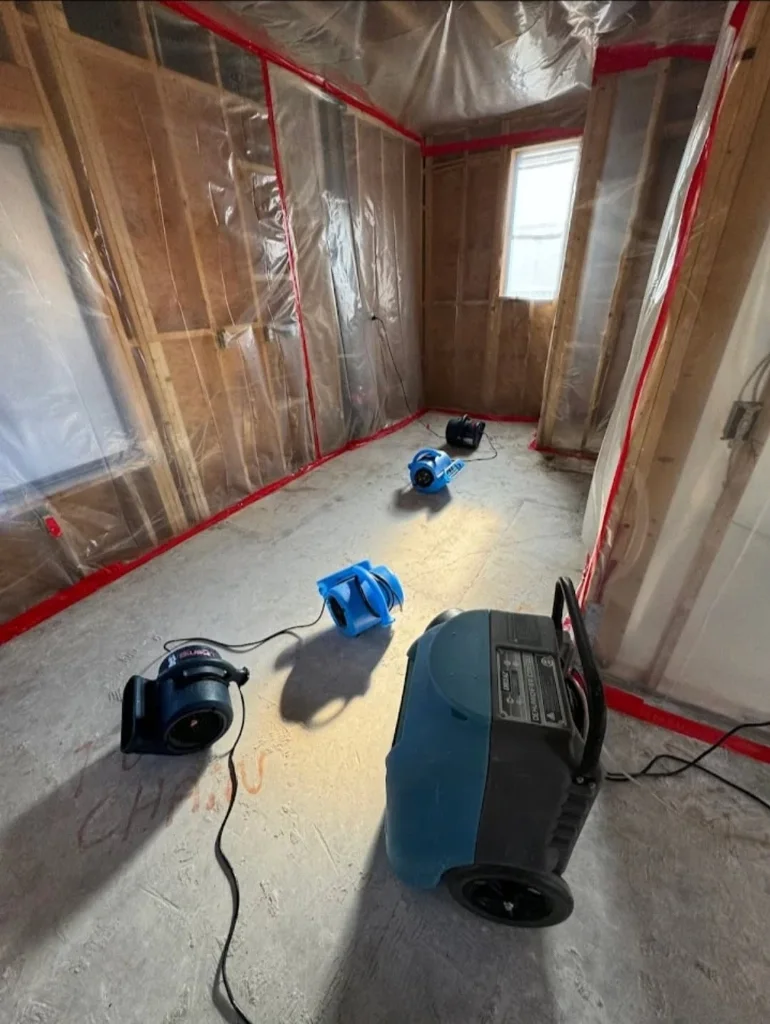
Stopping the intrusion source and erecting 6-mil plastic isolation containment airlocks.
31-HP truck-mount extraction, removing gallons exponentially faster than evaporation.
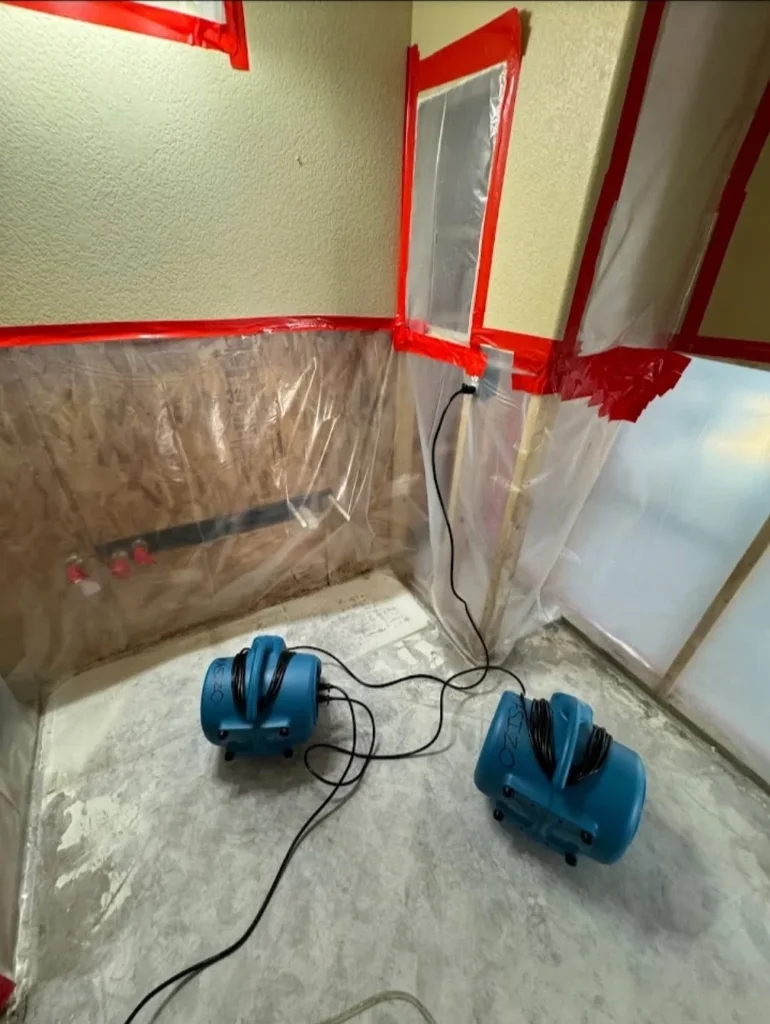
LGR dehumidifiers and HEPA air scrubbers driving grains per pound below 25 GPP.
Calibrated electronic pinless testing confirming baseline dry standards.
The Complete 6-Stage Restoration Roadmap
Our IICRC-certified crews execute a disciplined, scientific 6-stage protocol to stabilize and dry structural components:
Emergency Dispatch & Perimeter Isolation
30 to 60 minute arrival. Securing electrical shutoffs, evaluating structural loads, and erecting containment airlocks.
FLIR® Thermal Mapping & Baseline Scans
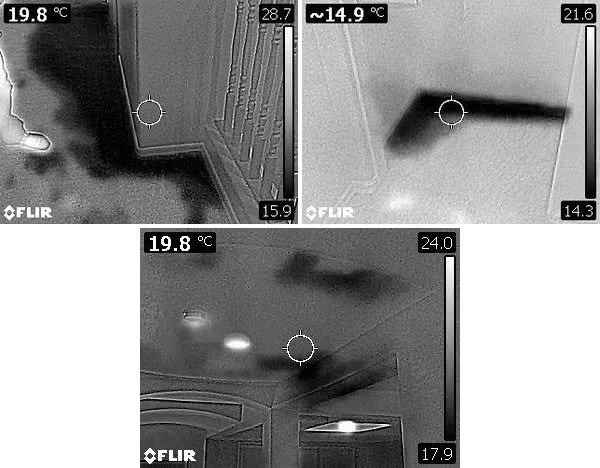
Infrared thermal scans detect trapped moisture behind walls and beneath concrete without invasive exploratory demolition.
High-Volume Bulk Extraction
31-HP truck-mount extraction units pump standing water away at hundreds of gallons per minute.
Controlled Selective Demolition
Precision flood cuts 12 to 24 inches above moisture lines, removing wet insulation and opening wall framing to dry airflow.
Thermodynamic Dehumidification
Industrial Low-Grain Refrigerant dehumidifiers pull deep trapped moisture from dense framing lumber and concrete slabs.
Antimicrobial Sanitization & Verification
EPA-registered botanical application (Benefect Decon 30) and calibrated moisture testing to issue an official dry certificate.

Specialized Equipment & Industrial Restoration Technology
Mitigating severe property damage requires industrial-grade technology capable of altering thermodynamic psychrometrics:
Truck-Mounted Extraction Rigs
31-HP engines producing 16+ inches Hg vacuum suction to evacuate bulk water rapidly into holding tanks.
Low-Grain Refrigerant Dryers
Pre-cooling heat-pipe systems driving ambient grains per pound below 25 GPP to draw deep trapped water out of framing.
HEPA Negative-Air Scrubbers
Hospital-grade 99.97% particulate filtration capturing microscopic fungal spores, soot, and biohazard aerosols.
FLIR® Thermal Scanners & Probes
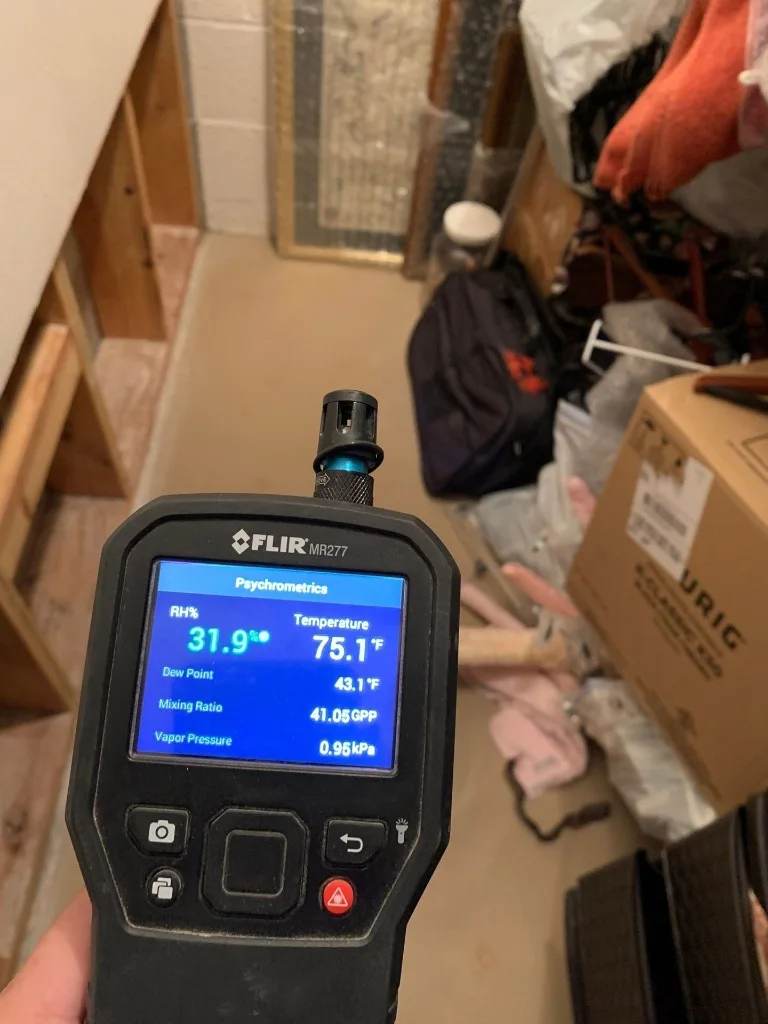
Infrared thermography detecting evaporative cooling boundaries behind walls, combined with digital RF pinless scanners.
Professional Restoration vs. DIY Mitigation
Attempting DIY cleanup during a property disaster creates severe hidden liabilities:
- Trapped Moisture: Surface drywall dries while moisture inside cavities triggers hidden mold blooms.
- Pathogenic Risks: Category 2 & 3 water contains bio-contaminants standard cleaners fail to kill.
- Insurance Denial: Insurers require daily psychrometric logs; lack of data causes claim disputes.
Transparent Upfront Itemized Pricing
Valley Restoration Pros operates with complete transparency:
- Free On-Site Assessment: Complete physical inspection before work begins.
- Upfront Itemized Estimates: Detailed line items calculated via industry-standard Xactimate.
- Zero Surprise Billing: No hidden charges or unauthorized repairs.
Certified tolleson beverage bottling plant conveyor trench flood cleanup Field Documentation
Every response performed by Valley Restoration Pros is documented through photographic and thermographic records:
Comprehensive tolleson beverage bottling plant conveyor trench flood cleanup Technical Manual & Operational Standards
Exhaustive engineering protocols, psychrometric calculations, geological multipliers, and step-by-step restoration standards for Maricopa County properties:
Executive Emergency Abstract: Beverage Bottling Plant Conveyor Trench Flood Cleanup in Tolleson
Within the massive industrial packaging, logistics, and beverage manufacturing corridor of Tolleson, Arizona—anchored along Van Buren Street, 91st Avenue, 99th Avenue, and 107th Avenue just south of Interstate 10—high-speed automated bottling and canning facilities operate on continuous, 24/7 production schedules. These advanced food-and-beverage plants produce millions of units daily of carbonated soft drinks, ready-to-drink teas, craft beverages, and functional waters. The operational heartbeat of these plants is the container conveying network: extensive subterranean stainless steel washdown trenches running beneath high-speed conveyor tracks, rotary bottle rinsers, isobaric filling carousels, and automated capping turrets.
When a catastrophic fluid release occurs—such as a clean-in-place (CIP) hot caustic loop blowout, a rupture in an overhead treated municipal water main, or high-volume desert monsoon flash flooding overwhelming exterior storm drainage sumps—the subfloor conveyor trenches instantly fill with hundreds of thousands of gallons of liquid. Standing water quickly submerges high-voltage 480V 3-phase conveyor drive motors, variable frequency drives (VFDs), optical bottle inspection sensors, pneumatic cylinder actuators, and stainless steel sanitary lubrication lines.
The operational stakes in an industrial beverage packaging facility are astronomical. High-speed bottling lines represent capital investments exceeding $15 million, operating at speeds of 800 to 1,500 containers per minute. At this velocity, unscheduled line downtime costs bottling operators between $15,000 and $45,000 per hour in unrecoverable production losses, missed distributor shipping windows, and contract retail supply penalties. Furthermore, when floodwater mixes with spilled beverage syrups and broken glass cullet in the trenches, intense microbial fermentation begins within hours, threatening whole-facility bio-contamination and FDA FSMA compliance violations.
Immediate deployment of professional emergency water extraction is required to pump out flooded conveyor trenches, safely evacuate razor-sharp glass cullet, and decontaminate submerged mechanical drive infrastructure before corrosive syrup residues damage stainless steel chains and electric motors. Valley Restoration Pros maintains dedicated commercial response units providing guaranteed 20- to 30-minute arrival times in the Tolleson industrial corridor. Contact our emergency dispatch center 24/7/365 at (602) 847-9593 for instantaneous bottling facility disaster response.
Immediate Industrial Bottling Facility Disaster Triage Directives
- Execute 480V 3-Phase Conveyor LOTO: Immediately lock out all electrical disconnects for submerged conveyor drives, bottle transfers, and line lubrication skids to eliminate arc-flash hazards.
- Isolate Pressurized CIP Chemical Headers: Shut off automated pneumatic valves supplying 180°F caustic soda (sodium hydroxide) and peracetic acid (PAA) sanitizing loops to prevent chemical mixing.
- Halt Packaging Line In-Feed: Stop depalletizers and bottle unscramblers immediately to prevent dry container jams from compounding flooding downstream.
- Mobilize Industrial Vacuum Tankers: Call Valley Restoration Pros at (602) 847-9593 for instant dispatch of high-capacity slurry vacuum rigs and explosion-proof desiccant air handlers.
The Tolleson industrial packaging zone serves as the primary beverage distribution hub for the entire Southwestern United States, housing massive manufacturing campuses with high-speed rotary canning lines running at speeds up to 1,800 cans per minute. In these high-throughput production environments, fluid drainage systems are engineered to handle continuous washdown cycles and product purges. However, when an catastrophic supply line or process header ruptures, the sheer volume of water quickly overwhelms subfloor sump pumps, turning conveyor trenches into high-pressure water channels that threaten multi-million-dollar packaging machinery.
Unlike standard commercial flood losses, beverage bottling flooding creates immediate bio-chemical contamination. Spilled carbonated soft drinks, fruit purees, and functional beverage syrups contain massive carbohydrate loads that act as potent nutrient sources for environmental microorganisms. When mixed with warm municipal water and factory dust, standing trench water transforms into an active biological fermenter. Acidic metabolic byproducts quickly attack stainless steel weld seams and degrade epoxy concrete floor coatings, requiring specialized chemical neutralization and high-volume industrial vacuum evacuation.
Anatomy of the Failure: Subfloor Conveyor Trench Hydraulics, Glass Cullet & Syrup Fermentation
The architectural and mechanical configuration of an industrial bottling plant relies heavily on subfloor sanitary trench networks. These concrete trenches, lined with acid-resistant 304 or 316 stainless steel or heavy epoxy mortar, run directly below conveyor tracks. During normal operations, trenches collect soapy conveyor chain lubrication (synthetic soap sprays or dry silicone lubricants), rinse water runoff from bottle washers, and shattered glass fragments (cullet) generated during high-speed container handling.
When an unpredicted flooding event overwhelms these trenches—such as a municipal water main blowout or clean-in-place (CIP) line rupture—the physical dynamics create compounding hazards. First, buoyant water forces lift stainless steel trench grating out of position, destabilizing conveyor support pedestals and causing conveyor tracks to lose alignment. Second, standing floodwater reaches the elevation of conveyor drive servo motors and gearboxes. While many bottling drive motors carry IP66 washdown ratings, prolonged immersion under several feet of hydrostatic head pressure forces water past rotary shaft lip seals, emulsifying synthetic food-grade gear oil and triggering electrical short-circuits. If plumbing lines require physical repair, our crews coordinate full burst pipe repair immediately.
Third, the presence of concentrated beverage syrups (high-fructose corn syrup, liquid sucrose, fruit concentrates) in the floodwaters triggers explosive microbiological fermentation. In Tolleson's warm ambient climate, wild yeasts (Saccharomyces, Zygosaccharomyces) and lactic acid bacteria (Lactobacillus, Leuconostoc) multiply rapidly in standing sugary runoff. Within eight to twelve hours, spontaneous fermentation produces ethanol, acetic acid, and carbon dioxide gas, creating nauseating sour odors and generating volatile organic acids that corrode electrical terminals and dissolve floor joint sealants. Immediate deployment of certified structural drying is vital to halt biological decay.
Fourth, submerged broken glass cullet creates severe physical hazards for extraction personnel and machinery. Over weeks of high-speed bottling, thousands of tiny shards of glass accumulate in trench corners and drain pits. In a flood, water currents mobilize this glass slurry, washing sharp cullet into sump pump impellers and hydraulic lines. Traditional extraction tools jam or suffer severed hoses within minutes; Valley Restoration Pros utilizes heavy-duty armored vacuum suction lines and vortex-impeller trash extractors engineered to pass glass slurry without clogging.
Furthermore, water seepage under industrial urethane concrete floor toppings poses a severe long-term contamination threat. High-speed bottling plants feature thick polyurethane cement floor overlays designed to resist thermal shock. When floodwaters stand over expansion joints, hydrostatic pressure forces water beneath the topping, creating subterranean pockets of fermenting syrup that release sour gases through hairline cracks, failing sanitary swab audits until deep mechanical extraction is completed.
Conveyor chain friction and mechanical stabilizer rail wear are exacerbated when water washes away proprietary synthetic chain lubricants. High-speed container conveyors utilize specialized water-soluble or dry PTFE/silicone lubricants delivered through precision drip nozzles to reduce friction between stainless tabletop chains and ultra-high-molecular-weight polyethylene (UHMW-PE) wear strips. When standing floodwaters submerge conveyor tracks, lubricants are completely washed away. Operating conveyors while wet causes immediate chain chatter, motor overload tripping, and accelerated wear across expensive stainless hinge pins. Our technicians hand-clean and re-lubricate all chain sections with food-grade NSF H1 lubricants before line testing.
Optical bottle inspection systems (empty bottle inspectors, fill-level monitors, and cap inspection cameras) rely on precision infrared laser sensors and high-resolution CCD cameras positioned along conveyor tracks. Floodwaters splashing onto optical lenses leave chalky mineral rings and syrup droplets that blind automated vision systems, rejecting thousands of perfectly filled containers or halting production lines entirely. Our restorative cleaning teams use non-contact optical cleaning solvents, lint-free cleanroom swabs, and anti-static deionizing blowers to restore camera lenses and laser sensors to factory calibration accuracy.
Rheological Properties of Concentrated Sugar Syrups in Flooded Stainless Trenches
Concentrated beverage syrups (such as 77° Brix high-fructose corn syrup) exhibit extreme non-Newtonian viscosity under ambient temperature conditions. When mixed with floodwater, syrups undergo partial dilution, dropping into the high-viscosity 20° to 45° Brix range where microbial proliferation is maximized. In this intermediate concentration, osmotic pressure is insufficient to inhibit microbial growth, while viscosity remains high enough to resist natural gravity drainage.
This sticky fluid clings to conveyor stabilizer rails, roller brackets, and drain pipes, forming thick biological films (biofilms) that protect bacteria from standard chemical washes. Our technicians deploy specialized enzymatic cleaners paired with high-temperature 220°F hydro-jetting to break down polysaccharide matrices before applying EPA-registered botanical sanitizers that achieve 100% microbial kill.
Tolleson & West Valley Industrial Climatic & Geological Multipliers
Managing a large-scale commercial restoration project in Tolleson requires an engineering understanding of hyper-local environmental conditions. The West Valley's extreme industrial density, Sonoran desert temperatures, and geological soil structures introduce aggressive multipliers that accelerate structural degradation.
1. Extreme Municipal Water Hardness (18 to 24+ GPG): Water supplied to Tolleson industrial facilities carries extreme municipal mineral hardness, averaging 18 to 24 grains per gallon of dissolved calcium and magnesium carbonates. In a plant flood, escaping municipal water rapidly evaporates under desert ambient heat, leaving thick crystalline mineral scale encrusted across stainless steel conveyor chains, optical photo-eyes, and robotic packing arms. As mineral scale dries, it forms abrasive salt bridges that bind conveyor roller bearings and cause false bottle-jam signals on automated PLC controllers. Our technicians apply food-safe descaling washes to dissolve mineral scale without etching polished stainless steel.
2. 115°F Summer Desert Heat & Accelerated Thermal Fermentation: Summer temperatures across Tolleson routinely surpass 115°F, with commercial metal industrial roofs absorbing solar thermal loads that heat indoor warehouse production air to over 105°F. If plant cooling units are turned off during a flood, the interior of the bottling hall becomes an extreme biological incubator. Bacterial doubling times drop to under twenty minutes, accelerating sugar fermentation and converting standing wash water into hazardous Category 3 black water within twelve hours under our sewage cleanup and biohazard standards.
3. Expansive Caliche Sub-Bases & Surcharge Settlement: Tolleson sits atop ancient Salt River alluvial deposits underlain by dense caliche cemented clay beds. When subterranean fire line breaks or storm runoff saturates the soil beneath concrete slab foundations, localized caliche dissolution and clay expansion create uneven sub-slab settlement. Even a micro-deflection of two millimeters across a 100-foot bottling conveyor track causes high-speed container tipping, catastrophic line jams, and broken glass explosions. Technicians coordinate structural slab diagnostics following our slab leak water damage restoration engineering criteria.
4. Monsoon Flash Runoff & Industrial Storm Drain Surcharge: The North American Monsoon produces severe flash floods along the I-10 and Van Buren corridor, surcharging municipal storm sewer networks and backing up contaminated surface floodwaters into below-grade truck loading bays. When exterior stormwater enters production zones, immediate containment, HEPA air filtration, and thorough sanitization are essential to prevent cross-contamination requiring extensive mold remediation.
5. Micro-Climatic Thermal Inversion in Industrial Bottling Halls: Tolleson packaging plants feature massive 30-foot ceiling clearances with high-output metal halide or LED high-bay lighting and heat-generating packaging equipment (shrink-wrappers, heat tunnels, steam can warmers). When emergency flooding occurs and plant HVAC systems are isolated, sensible heat trapped in the upper ceiling envelope creates an intense thermal inversion. The hot ceiling air radiates heat downward, warming standing water in subfloor trenches and converting it into dense, humid vapor. This vapor condenses on cold stainless steel pasteurizers and automated palletizers, promoting rapid flash rusting on non-stainless drive shafts and chain sprockets unless low-grain desiccant dehumidification is instituted immediately.
6. Deep Sub-Slab Moisture Vapor Emission Dynamics: Tolleson industrial facilities are constructed with thick heavy-load concrete slabs engineered to support 80,000-pound bottling carousels. When subterranean water breaks breach foundation joints and flood sub-slab gravel bases, water molecules migrate into the slab core under hydrostatic head. Even after standing trench water is completely evacuated, water vapor continues to emit through concrete pores at rates exceeding 15 lbs/1,000 sq ft/24 hrs. This intense vapor emission causes osmotic blister failure of urethane floor overlays and degrades machinery mounting grout unless deep desiccant drying is maintained until equilibrium is reached.
First-Hour Emergency Response Protocol & Food Safety Containment
In a commercial beverage packaging facility, the initial sixty minutes determine whether the plant resumes production within twenty-four hours or suffers an extended shutdown. Facility directors and plant engineers must follow strict safety isolation procedures:
Phase 1: High-Voltage Electrical Isolation & Arc-Flash Safety: Modern bottling lines utilize 480V 3-phase electrical distribution to power dozens of conveyor motors, line transfers, and robotic palletizers. Submerged electrical junction boxes and wiring raceways present lethal arc-flash and electrocution hazards. Facility personnel must de-energize the main line distribution breaker at the master motor control center (MCC) before any team member approaches wet trench zones.
Phase 2: Product Inventory & Packaging Quarantine: Quality assurance personnel must immediately quarantine all finished beverage cases, bare preforms, aluminum cans, glass bottles, and cardboard packaging materials located within five feet of standing water. Any container exposed to splash water or elevated humidity must be tagged with red "HOLD / REJECT" tags to ensure full FDA FSMA compliance and prevent adulterated product release.
Phase 3: Clean-In-Place (CIP) Isolation: Automated CIP systems circulate 180°F sodium hydroxide (caustic soda), nitric acid, and peracetic acid (PAA) through filling valves and product transfer pipes. Technicians must immediately activate emergency LOTO stops on all automated CIP dosing skids and close manual supply valves to prevent chemical leaks from mixing with standing floodwaters.
Phase 4: Mechanical Water Supply Isolation: Locate the master isolation valves servicing the ruptured plumbing line or industrial water chiller loop. Shut off supply ball valves and open bypass drainage lines. For boiler or water heater failures in mechanical service corridors, review our water heater burst cleanup protocols.
Phase 5: Mobilize Industrial Food-Grade Extraction Fleet: Contact Valley Restoration Pros at (602) 847-9593. Our high-capacity slurry vacuum tankers, food-safe botanical sanitizers, and trailer-mounted desiccant air dryers arrive on site within twenty to thirty minutes.
Phase 6: Compressed Air Header Isolation & Pneumatic Protection: High-speed bottling machines rely on clean, oil-free compressed air (ISO 8573-1 Class 1) at 90 to 120 PSI to actuate pneumatic bottle grippers, fill valves, and diverter gates. If floodwater reaches floor-mounted pneumatic solenoid valve manifolds, water can be siphoned into air lines during pressure drops. Technicians must immediately close the main pneumatic supply drop to flooded line sections and open manual moisture drain traps to prevent water from entering precision pneumatic cylinders.
Phase 7: Automated Recipe PLC Control Panel Sealing: Programmable logic controller (PLC) cabinets housing Allen-Bradley, Siemens, or Omron automation computers are typically mounted along packaging line perimeters. Although many enclosures carry NEMA 4X ratings, bottom conduit entry hubs can allow capillary water siphoning. Technicians inspect PLC cabinet bases, deploy desiccant moisture-absorbing packs inside enclosures, and seal conduit entries with waterproof mastic to protect multi-million-dollar automation programming.
Industrial Equipment Deployment: High-Capacity Slurry Evacuation & Desiccation
Restoring an industrial beverage bottling plant requires heavy-duty machinery engineered for viscous slurry removal, abrasive glass cullet handling, and high-volume structural desiccation. Valley Restoration Pros deploys the following industrial equipment fleet:
High-Vacuum Slurry Evacuation Tankers
Unit: Industrial Vacuum Tanker Units (800 CFM @ 27" Hg)
Heavy-duty positive displacement blowers delivering extreme suction to evacuate thick syrup mixtures, standing floodwater, and shattered glass cullet directly into sealed 3,000-gallon containment tankers without mechanical clogging.
Industrial Desiccant Dehumidifiers
Unit: Munters DryAir 5,000 CFM Desiccant Trailers
Rotary silica gel desiccant wheel technology processing 5,000 CFM of air, producing single-digit grain depression (GPP) to pull bound moisture from concrete trenches, conveyor support columns, and under-slab substrates.
HEPA Negative Air Filtration Scrubbers
Unit: Phoenix Guardian HEPA 2000 CFM Arrays
Hospital-grade 99.97% DOP-certified HEPA filtration capturing airborne yeast spores, aerosolized syrup droplets, and microbial particulates, maintaining negative air pressure envelopes across the packaging hall.
Sanitary High-Pressure Hydro-Jetters
Unit: Landa 3,500 PSI Hot-Water Jetting Skids
Delivers 220°F water and wet steam to dissolve hardened sugar crusts and wash down stainless steel conveyor beds, paired with continuous vacuum extraction to prevent secondary splash contamination.
When executive offices, laboratory tasting suites, or conference rooms are affected, our technicians implement precision hardwood and subfloor drying protocols outlined in our hardwood floor water damage drying technical manuals, restoring finished architectural materials without demolition.
Explosion-Proof Extraction Rigs for Confined Trench Operations
In deep subterranean bottling plant drainage trenches where decomposing organic syrups can generate localized concentrations of methane (CH4) or alcohol vapors, standard electrical extraction equipment presents catastrophic ignition hazards. Valley Restoration Pros deploys Class I, Division 1 explosion-proof pneumatic extraction pumps powered by exterior diesel air compressors.
These pneumatic pumps utilize carbon-filled conductive PTFE diaphragms and intrinsically safe ground bonding leads, eliminating all static electrical generation during high-velocity fluid evacuation. Combined with continuous lower explosive limit (LEL) multi-gas monitoring, our technicians safely enter and remediate confined trench cavities in full compliance with OSHA 29 CFR 1910.146 regulations.
Specialized Food-Safety Cleanroom Monitoring & ATP Diagnostics
To ensure complete microbiological clearance following industrial water extraction, our lead restoration supervisors deploy Hygiena EnSURE Touch luminometer systems running UltraSnap ATP surface test swabs. By measuring bioluminescence emitted from biological adenosine triphosphate residues, our field teams obtain objective, numerical verification of surface cleanliness in fifteen seconds.
Any food-contact stainless surface showing readings above 10 RLU (Relative Light Units) undergoes repeated thermal washdown and secondary botanical biocide application. Furthermore, continuous environmental monitoring is maintained using calibrated laser optical particle counters and thermal imaging radiometers, ensuring the production environment achieves sterile dry standards before plant personnel re-enter.
IICRC S500 / S520 Restoration Protocol: The 6-Stage Beverage Plant Recovery Process
Remediating an industrial beverage bottling plant requires strict compliance with ANSI/IICRC S500 standards and FDA Current Good Manufacturing Practices (cGMP 21 CFR Part 117). Our Master Certified Restoration Technicians execute a phased, mathematically verified recovery blueprint:
The 6-Stage Engineering Blueprint for Bottling Line Recovery
Stage 1: Multi-Point FLIR Thermal Moisture Mapping & ATP Baseline Testing
Technicians use FLIR T865 thermal cameras and Protimeter moisture meters to map moisture boundaries under urethane floor overlays, behind stainless trench covers, and inside electrical conduit raceways. Pre-remediation ATP surface swabs establish baseline biological contamination levels across conveyor beds.
Stage 2: High-Vacuum Slurry Evacuation & Glass Cullet Extraction
High-capacity vacuum tankers extract standing water, beverage syrups, and broken glass fragments down to bare stainless steel trench channels. Removable trench covers are lifted, and trenches are power-washed with 220°F water to flush away organic residues into sealed waste tanks.
Stage 3: Zoned Containment & Continuous Negative Air Scrubbing
The flooded packaging line is isolated from clean warehousing and palletizing areas using 6-mil poly containment barriers with magnetic airlocks. Phoenix Guardian HEPA 2000 air scrubbers maintain negative pressure, preventing airborne sugar aerosols, yeast spores, and sour odors from migrating into clean storage bays.
Stage 4: EPA-Registered Botanical Antimicrobial Decontamination
All conveyor structures, trench channels, and equipment exteriors are treated with Benefect Decon 30—an EPA-registered botanical disinfectant formulated with pure thymol that neutralizes bacteria and yeasts in thirty seconds without releasing toxic chemical fumes or corroding stainless steel chains.
Stage 5: Industrial Desiccant Desiccation & Conveyor Drive Dehydration
Our 5,000 CFM desiccant trailer introduces ultra-dry air through layflat distribution ducting. Strategic high-velocity air movers establish toroidal evaporation currents across conveyor beds and motor housings, pulling bound moisture out of electrical enclosures and concrete substrates.
Stage 6: ATP Swab Sanitation Sign-Off & Production Recertification
Remediation is certified complete when post-sanitization ATP bioluminescence swabs across all conveyor chains and trench walls register under 10 Relative Light Units (RLU), concrete moisture meets ASTM F2170 dry standards, and electrical megohmmeter tests confirm motor winding insulation integrity. A comprehensive clearance binder is delivered to plant management.
When closed-loop process water chillers or syrup cooling lines trigger the flood, our specialists reference protocols from our commercial chiller pipe burst water damage restoration procedures, restoring sanitary cooling loops to flawless performance.
Stage 7: Sub-Slab Moisture Verification & ASTM F2170 In-Situ Probe Telemetry
Before conveyor drive motors and automated bottling carousels are cleared for electrical re-energization, our technicians install ASTM F2170 in-situ relative humidity probes into drilled core cavities within the concrete floor slab. Telemetry readings must verify that internal concrete relative humidity has dropped below 75% RH. This scientific proof confirms that moisture trapped beneath heavy machine base plates will not cause future osmotic blistering of industrial floor toppings or induce galvanic corrosion in machine anchoring bolts.
Hyper-Local Case Study: Tolleson Beverage Bottling Plant 4-Inch Water Header Rupture
The Emergency Scenario:
At 2:10 AM on a Tuesday morning, a four-inch pressurized stainless process water header ruptured above the high-speed canning line at a premier commercial beverage plant in Tolleson. Over 48,000 gallons of treated municipal water flooded into the facility's subfloor conveyor trench network, submerging sixteen conveyor drive motors, three automated bottle rinsers, and an isobaric can filling carousel under eighteen inches of standing water. Escaping water mixed with spilled citrus syrup and shattered glass cullet in the trenches, creating an acidic, fermenting slurry that clogged main floor drains. With regional beverage distribution deliveries scheduled in seventy-two hours, the plant faced contract cancellation penalties exceeding $850,000.
The Rapid Intervention Blueprint:
Valley Restoration Pros dispatched two industrial response tankers from our West Valley operations center, arriving on site in twenty-one minutes via I-10. Technicians verified 480V LOTO isolation with plant engineering and deployed two 800 CFM vacuum tankers. Within three hours, 48,000 gallons of standing water, syrup slurry, and broken glass cullet were completely extracted into sealed mobile waste tanks. Crews hot-water jet-cleaned trench beds with 220°F water to flush away sticky syrup residues.
Technicians erected 6-mil poly containment walls isolating the canning hall, operating four Phoenix Guardian HEPA 2000 air scrubbers exhausted through roof vents. Layflat ducting from an exterior 5,000 CFM Munters desiccant trailer introduced ultra-low grain air, lowering ambient relative humidity from 98% down to 24% across twenty-eight hours. All conveyor chains, motor housings, and trench channels were decontaminated with Benefect Decon 30 botanical biocide.
The Measurable Outcome:
Electrical megohmmeter testing confirmed that all sixteen submerged conveyor drive motors achieved over 50 megohms of winding insulation resistance following desiccant dehydration, saving the plant over $180,000 in motor replacement costs. Post-sanitization ATP surface swabs across all conveyor chains and trench channels registered between two and five RLUs—substantially exceeding the plant's SQF passing threshold of twenty RLUs. The canning line restarted operations forty-eight hours after the initial break, fulfilling all distributor shipping commitments on schedule.
For comprehensive restoration management across our West Valley industrial corridor coverage, explore our local services in Avondale water damage and Goodyear water damage.
Independent third-party microbiological environmental testing conducted twenty-four hours after remediation confirmed zero presence of Listeria monocytogenes, Salmonella enterica, or wild spoilage yeasts on any conveyor chain, trench wall, or filling valve. The plant's corporate insurance carrier accepted all mitigation logs, reimbursing the facility 100% for direct remediation expenses and commercial extra-expense costs without reservation.
Commercial Insurance Claims & Pay-Per-Call Financial Transparency
Industrial food and beverage plant losses involve complex commercial property policies, equipment breakdown riders, and extensive business interruption claims. Valley Restoration Pros strictly adheres to Pay-Per-Call ethical standards and transparent financial billing practices. We work collaboratively with plant controllers, risk directors, and commercial adjusters to ensure fast, undisputed claim resolution.
Our Standard Commercial Billing & Documentation Commitments
- Free Comprehensive On-Site Damage Assessment: We dispatch a Senior Commercial Estimator to inspect your property, evaluate the scope of water intrusion, and perform infrared thermal boundary scans at zero upfront cost.
- Transparent Upfront Itemized Pricing Before Work Begins: You receive an exhaustive, itemized scope of work utilizing standard Xactimate commercial pricing codes before structural mitigation begins. No hidden equipment fees, no surprise dispatch surcharges.
- Assistance with Detailed Claims Documentation & Psychrometric Logs: We compile daily drying logs, ambient psychrometric GPP readings, moisture content graphs, and thermal imaging photographic proof directly formatted for commercial carrier adjusters (Travelers, FM Global, Zurich, Chubb, Hartford).
- Transparent Billing Integrity: We do not make deceptive promises that insurance will pay 100% or that clients bear zero financial responsibility. We assist in filing claims, submit documentation directly to commercial adjusters, and review policy coverage parameters with facility management.
For commercial properties seeking instant preliminary budget allocations prior to adjuster arrival, visit our online cost estimator or explore our commercial municipal coverage across our areas we serve directory. When warehouse storage bays or packaging distribution centers are impacted, review our specialized warehouse flood damage restoration resources.
Commercial bottling losses present complex business interruption calculations involving perishable raw ingredients, labor downtime during regulatory sanitization, and extra expense incurred to divert production to sister bottling plants. Valley Restoration Pros provides comprehensive forensic documentation structured specifically for commercial property adjusters and forensic accounting firms.
Our claims packages include: (1) Detailed line-item Xactimate commercial estimates with itemized equipment run-time logs; (2) Pre- and post-mitigation ATP bioluminescence swab clearance logs; (3) Psychrometric drying charts demonstrating continuous vapor pressure depression; (4) Certified moisture readings from concrete floor slabs per ASTM F2170; and (5) Detailed chain-of-custody disposal documentation for adulterated ingredient inventory condemned under FDA regulations.
We also coordinate with independent forensic mechanical and electrical engineers to perform non-destructive evaluations on flooded conveyor gearboxes, servo motors, and automated optical sorting sensors. By establishing clear scientific evidence of water damage versus pre-existing mechanical wear, our documentation protects food and beverage clients against improper claim reductions or disputed equipment depreciation while validating all necessary equipment restoration expenditures.
For commercial industrial operators seeking rapid budget estimates, utilize our interactive cost estimator or consult our extensive Valley coverage in our areas we serve index.
Frequently Asked Technical Questions: Bottling Plant Conveyor Trench Water Damage
Q1: How do you safely remove broken glass cullet from flooded conveyor trenches?
Manual shoveling of submerged glass creates severe puncture and laceration hazards. We deploy industrial vacuum tankers fitted with heavy-duty wire-reinforced armored suction hoses and cyclone interceptors. The extreme vacuum velocity sucks up standing water and broken glass fragments simultaneously, depositing cullet directly into sealed metal filtration hoppers without exposing personnel to sharp hazards.
Q2: Can flooded IP66 conveyor servo motors be salvaged without replacement?
Yes, provided the motors are locked out immediately and not energized while wet. Technicians open conduit junction boxes, drain internal water pockets, and deploy desiccant air streams into motor housings. Gearbox oil is sampled and flushed with synthetic food-grade flushing oil, and motor windings undergo insulation resistance (megohmmeter) testing at 500V. Motors showing over 50 megohms are recertified for service.
Q3: Why is desiccant dehumidification required instead of standard commercial refrigerant units?
Beverage bottling packaging halls feature high ceilings and massive interior air volumes. Standard refrigerant dehumidifiers cannot lower humidity sufficiently to halt spontaneous sugar fermentation and mold amplification. Desiccant dehumidifiers utilize chemical adsorption to produce ultra-dry air at under 15% relative humidity and single-digit grain depression (GPP), rapidly desiccating concrete sub-trenches and electrical chases.
Q4: What sanitizer is approved for food-contact conveyor surfaces?
We utilize Benefect Decon 30—an EPA-registered botanical disinfectant formulated with pure thymol (thyme oil). It achieves a 99.99% kill rate against foodborne pathogens (including Listeria, Salmonella, and E. coli) in thirty seconds, leaves no synthetic chemical residues, requires no water rinse, and does not etch or corrode food-grade 304 or 316 stainless steel conveyor tracks.
Q5: What regulatory clearance is required before restarting bottling production after a flood?
Facilities must comply with FDA FSMA cGMP standards (21 CFR Part 117). We perform ATP bioluminescence surface swab testing across all food-contact surfaces, requiring readings below 10 RLU. Independent laboratory air sampling must verify fungal spore counts are at or below outdoor ambient air baselines, and a full engineering clearance report must be signed off by certified IICRC Master Restorers.
Q6: How does Tolleson municipal water hardness affect industrial bottling equipment?
Tolleson municipal water carries 18 to 24 GPG of dissolved calcium carbonate and magnesium. When floodwaters evaporate, they leave mineral scale encrusted across stainless steel conveyor chains and optical inspection sensors. These mineral crusts harbor bacteria and cause false bottle-jam signals. Our technicians use food-safe organic descaling agents to remove mineral deposits and polish stainless surfaces back to sanitary mirror finishes.
How do you prevent glass cullet from damaging industrial slurry extraction equipment?
High-speed bottling plants generate fine shards of broken glass (cullet) that act like razor-sharp blades inside flexible vacuum hoses. We deploy steel-reinforced, polyurethane-lined vacuum hoses rated specifically for abrasive slurry transport. Hoses discharge directly into cyclonic separator tanks that drop heavy glass cullet into solid collection bins before water enters vacuum pumps, eliminating equipment wear.
What protocol is followed for CIP stainless steel pipes that were submerged in floodwater?
Submerged CIP lines must undergo exterior biological decontamination followed by internal triple-cycle sanitization. Technicians wash pipe exteriors with Benefect Decon 30 botanical biocide, then execute a full internal clean-in-place cycle: (1) 180°F caustic soda wash (2.0% NaOH); (2) Demineralized hot-water rinse; and (3) Peracetic acid (PAA) chemical sanitization cycle verified by conductivity telemetry before product transfer resumes.
Tolleson & West Valley Industrial Food Logistics Deployment
Mitigating a large-scale commercial beverage manufacturing flood requires immediate equipment proximity and rapid highway transit. Valley Restoration Pros maintains dedicated emergency response apparatus positioned along Interstate 10 and Loop 101, guaranteeing rapid response times of under twenty-five minutes across Tolleson, Avondale, Goodyear, and West Phoenix.
When an emergency flood strikes an industrial food processing plant, immediate containment stops bacterial fermentation, preserves multi-million-dollar packaging machinery, and prevents regulatory product recalls. For fire sprinkler activations in commercial buildings, consult our fire sprinkler water damage cleanup technical manual, or coordinate directly with our 24/7 master incident commanders via commercial water damage dispatch. For subterranean electrical vault flooding, review our commercial underground electrical vault flood extraction procedures.
Our West Valley commercial operations center maintains continuous standby communications with regional manufacturing leadership and commercial disaster underwriters. With dedicated response tankers, mobile desiccant trailers, and certified food safety technicians ready for instant deployment, Valley Restoration Pros delivers the engineering capability required to mitigate large-loss beverage plant emergencies and restore production schedules on time.
Every restoration project executed by Valley Restoration Pros in Tolleson is backed by certified testing proof, full regulatory audit binders, and 24/7 post-restoration monitoring support. Call (602) 847-9593 for immediate dispatch.
Our team coordinates directly with plant safety committees, municipal wastewater inspectors, and OSHA compliance representatives to ensure that every stage of structural drying and biological decontamination meets or exceeds all applicable industrial health and safety standards.
Our West Valley commercial response headquarters maintains standby emergency crews twenty-four hours a day, 365 days a year. Every industrial response unit is equipped with heavy-duty diesel generators, truck-mounted extraction extractors, food-grade botanical sanitizers, and trailer-mounted desiccant air handlers. Industrial food plant managers across Tolleson, Avondale, Goodyear, and West Phoenix can rely on our rapid 20- to 30-minute arrival window to mitigate disaster, protect critical machinery, and ensure regulatory compliance.
Verified Local Area Dispatch: Tolleson, AZ
Official Geo-Coordinates: 33.4503° N, -112.2593° W • Maricopa County
Related Specialized Emergency Restoration Services
Explore specialized rapid-response mitigation protocols across Greater Phoenix and Maricopa County:
Valley-Wide Emergency Response Service Coverage
Our mobile restoration fleet is dispatched across the entire Phoenix metropolitan region, providing rapid 30 to 60 minute emergency response: