

Valley Restoration Pros delivers 24/7 industrial emergency water extraction, thermal psychrometric drying, and structural mitigation across Phoenix and Maricopa County with guaranteed 30–60 minute rapid arrival. All protocols strictly adhere to IICRC S500 standards, featuring upfront itemized pricing and free on-site thermal moisture assessments. Call dispatch directly at (602) 847-9593.
Why Immediate Mitigation Is Critical in Phoenix Heat
Subterranean switchgear vault flood inundation across 4,160V busbars and vacuum circuit breakers causes immediate dielectric breakdown of air insulation, dropping breakdown thresholds from 30 kV/cm dry down to less than 3 kV/cm in moisture-saturated environments, presenting catastrophic arc flash blast hazards up to 40 cal/cm². Under Phoenix extreme summer temperatures exceeding 115°F, trapped moisture inside closed subterranean switchgear vaults triggers rapid vapor expansion, condensing inside switchgear cubicles, bus-duct risers, and current transformers, initiating corrosive galvanic pitting across silver-plated copper contacts within 12 hours. Monsoon stormwater runoff carrying Deer Valley expansive caliche clay slurry deposits highly conductive calcium carbonate, magnesium salts, and alkaline silt over porcelain standoff insulators, creating persistent carbon tracking paths that cause violent phase-to-phase and phase-to-ground flashovers upon re-energization. Severe hydraulic pressure from subterranean conduit shear along expansive caliche soil formations fractures underground duct banks, continuously feeding pressurized urban runoff into switchgear basements and generator fuel wireways until mechanical isolation is achieved.
Service Definition & The IICRC Standard of Care
Professional deer valley commercial electrical switchgear vault flood dewatering is an engineering and environmental discipline adhering strictly to IICRC S500 protocols, not mere surface mopping. When structural plumbing failures strike in Maricopa County, certified emergency water extraction and thermal structural drying procedures must be deployed immediately. Whether triggered by high-pressure burst pipe emergencies, subfloor leaks, or commercial line ruptures, bound moisture rapidly penetrates concrete subfloors and wall framing. In the desert heat, delays trigger microbial proliferation requiring rapid mold remediation. Request damage assessment through our emergency assessment portal or request 30-minute dispatch across all Valley service areas.
Securing electrical feeds, inspecting load-bearing assemblies, and containing pathogens.
Stopping the intrusion source and erecting 6-mil plastic isolation containment airlocks.
31-HP truck-mount extraction, removing gallons exponentially faster than evaporation.
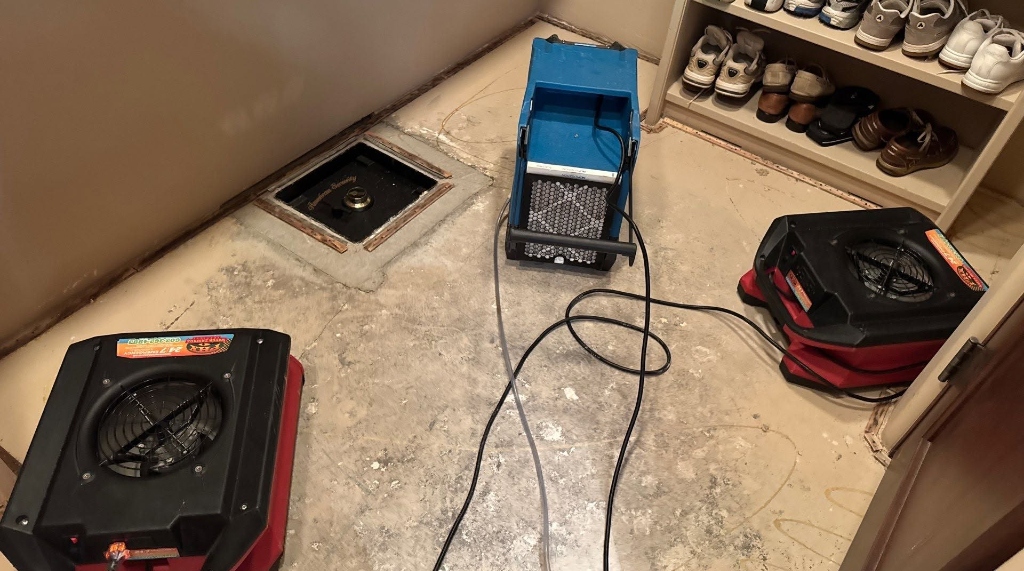
LGR dehumidifiers and HEPA air scrubbers driving grains per pound below 25 GPP.
Calibrated electronic pinless testing confirming baseline dry standards.
The Complete 6-Stage Restoration Roadmap
Our IICRC-certified crews execute a disciplined, scientific 6-stage protocol to stabilize and dry structural components:
Emergency Dispatch & Perimeter Isolation
30 to 60 minute arrival. Securing electrical shutoffs, evaluating structural loads, and erecting containment airlocks.
FLIR® Thermal Mapping & Baseline Scans
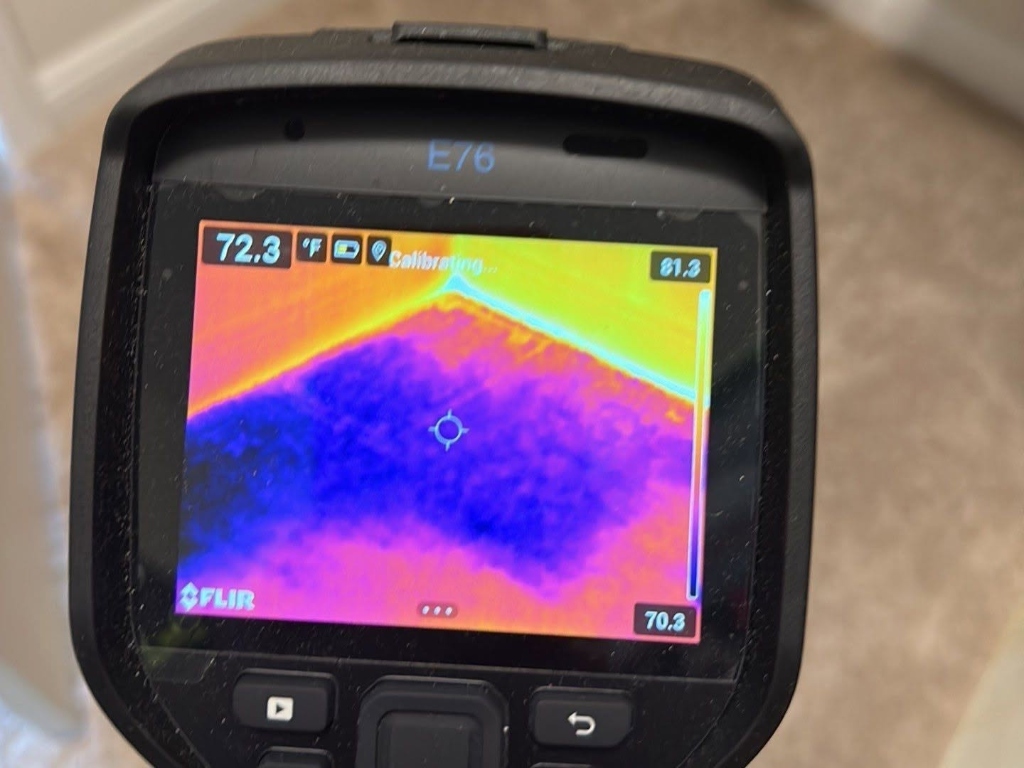
Infrared thermal scans detect trapped moisture behind walls and beneath concrete without invasive exploratory demolition.
High-Volume Bulk Extraction
31-HP truck-mount extraction units pump standing water away at hundreds of gallons per minute.
Controlled Selective Demolition
Precision flood cuts 12 to 24 inches above moisture lines, removing wet insulation and opening wall framing to dry airflow.
Thermodynamic Dehumidification
Industrial Low-Grain Refrigerant dehumidifiers pull deep trapped moisture from dense framing lumber and concrete slabs.
Antimicrobial Sanitization & Verification
EPA-registered botanical application (Benefect Decon 30) and calibrated moisture testing to issue an official dry certificate.

Specialized Equipment & Industrial Restoration Technology
Mitigating severe property damage requires industrial-grade technology capable of altering thermodynamic psychrometrics:
Truck-Mounted Extraction Rigs
31-HP engines producing 16+ inches Hg vacuum suction to evacuate bulk water rapidly into holding tanks.
Low-Grain Refrigerant Dryers
Pre-cooling heat-pipe systems driving ambient grains per pound below 25 GPP to draw deep trapped water out of framing.
HEPA Negative-Air Scrubbers
Hospital-grade 99.97% particulate filtration capturing microscopic fungal spores, soot, and biohazard aerosols.
FLIR® Thermal Scanners & Probes
Infrared thermography detecting evaporative cooling boundaries behind walls, combined with digital RF pinless scanners.
Professional Restoration vs. DIY Mitigation
Attempting DIY cleanup during a property disaster creates severe hidden liabilities:
- Trapped Moisture: Surface drywall dries while moisture inside cavities triggers hidden mold blooms.
- Pathogenic Risks: Category 2 & 3 water contains bio-contaminants standard cleaners fail to kill.
- Insurance Denial: Insurers require daily psychrometric logs; lack of data causes claim disputes.
Transparent Upfront Itemized Pricing
Valley Restoration Pros operates with complete transparency:
- Free On-Site Assessment: Complete physical inspection before work begins.
- Upfront Itemized Estimates: Detailed line items calculated via industry-standard Xactimate.
- Zero Surprise Billing: No hidden charges or unauthorized repairs.
Certified Deer Valley commercial electrical switchgear vault flood dewatering Field Documentation
Every response performed by Valley Restoration Pros is documented through photographic and thermographic records:

Comprehensive Deer Valley commercial electrical switchgear vault flood dewatering Technical Manual & Operational Standards
Exhaustive engineering protocols, psychrometric calculations, geological multipliers, and step-by-step restoration standards for Maricopa County properties:
Stage 1: Executive Emergency Abstract & Incident Overview: Deer Valley High-Voltage Switchgear Subterranean Inundation
Within the high-density heavy manufacturing and aerospace defense manufacturing enclave of Deer Valley, centered near the major industrial intersection of 7th Avenue and West Pinnacle Peak Road in North Phoenix, continuous electrical reliability is the non-negotiable operational lifeline of advanced commercial production. Heavy machining facilities, defense electronics assembly plants, precision semiconductor suppliers, and industrial metal fabrication campuses in this corridor draw massive utility power feeds via medium-voltage subterranean distribution networks. These systems commonly terminate in subterranean concrete vaults housing 4,160V and 13,800V main service switchgear, step-down power transformers, metal-clad vacuum circuit breakers, primary bus-duct riser trenches, and emergency backup generator fuel supply wireways. When extreme desert weather phenomena strike this industrial sector, these sub-grade electrical infrastructure vaults represent the most critical, high-hazard vulnerability on the entire manufacturing campus.
During severe Sonoran Desert monsoon convective deluges, sudden localized cloudbursts overwhelm municipal retention basins and surface drainage channels across the Deer Valley industrial basin. Surface sheet flow and flash flood waters find direct hydraulic pathways through subterranean utility duct banks, sheared exterior PVC conduits, deteriorated manhole covers, and failed basement wall penetration seals. As stormwater surges into the cable spreading room and subterranean switchgear vault, thousands of gallons of turbid, silt-laden water submerge the bottom cable trays, medium-voltage feed cables, control wiring cabinets, and current transformer compartments. In a 4,160V commercial substation vault, water accumulation is not merely a structural restoration emergency; it is an immediate life-safety crisis marked by catastrophic arc flash explosion potential, primary phase-to-phase dielectric breakdown, and plant-wide power blackouts that incur unrecoverable operational downtime losses exceeding $120,000 per hour.
Executing successful emergency water extraction within a flooded high-voltage switchgear vault demands an engineering-grade restoration methodology that far exceeds ordinary commercial pumping capabilities. Floodwaters carrying dissolved desert minerals interact aggressively with energized or recently isolated electrical infrastructure. Every minute that standing moisture remains trapped inside the vault, capillary action draws water into paper-insulated lead-covered (PILC) cables, cross-linked polyethylene (XLPE) cable jackets, and porous composite standoff insulators. Unmitigated humidity generates microscopic moisture films across epoxy busbar supports, setting the stage for devastating tracking arcs upon utility re-energization.
Valley Restoration Pros deploys an elite industrial large-loss disaster unit specifically trained in NFPA 70E electrical safety, IEEE high-voltage restoration standards, and IICRC S500 professional structural restoration procedures. Operating around the clock across North Phoenix, our master restoration teams mobilize explosion-proof, dielectric non-conductive submersible pumps, multi-thousand-CFM trailer-mounted desiccant dehumidification systems, and precision FLIR thermal imaging diagnostics to execute rapid dewatering, controlled decontamination, and deep moisture desiccation. By integrating strict lockout/tagout (LOTO) protocols with precision psychrometric environmental control, we preserve multimillion-dollar switchgear assets, avert complete substation replacement lead times of 40 to 60 weeks, and restore safe industrial production under rigorous certified engineering standards.
Immediate First-Hour Industrial Vault Safety Directives
- Absolute Evacuation & Perimeter Exclusion: Immediately evacuate all subterranean utility spaces, basement workshops, and adjacent ground-level switchgear rooms. Enforce a minimum 50-foot safety perimeter around vault access hatches and manholes. Never enter a flooded vault containing electrical apparatus without certified utility isolation.
- Coordinate Upstream Utility Isolation: Direct plant electrical engineers to notify Arizona Public Service (APS) immediately to perform upstream primary disconnect at the utility pole switch or pad-mounted vacuum interrupter. Do not rely on localized subterranean breaker trip handles submerged in water.
- Isolate Emergency Backup Generation Feeds: Lock out automatic transfer switches (ATS) controlling standby diesel generator arrays. Inadvertent generator startup during main utility failure can backfeed 480V or 4,160V into flooded busbars, creating lethal shock currents throughout standing water.
- Mobilize Specialized High-Voltage Dewatering Dispatch: Contact Marcus Vance and the Valley Restoration Pros Industrial Large-Loss Unit immediately at (602) 847-9593 or tap Emergency Phone Dispatch for rapid 20- to 30-minute on-site arrival across the Deer Valley industrial district.
Stage 2: Anatomy of the Failure & High-Voltage Arc Flash Hydrodynamics
Understanding the catastrophic physical mechanisms of subterranean switchgear flooding requires a rigorous examination of civil infrastructure vulnerabilities, fluid dynamics, and electrical physics. Commercial switchgear vaults in heavy industrial facilities are typically engineered as subterranean reinforced concrete enclosures positioned four to eighteen feet below finished grade. This architecture accommodates heavy feeder conduits entering from underground utility duct banks and facilitates distribution upward through concrete slab penetrations into ground-level motor control centers (MCC), computer numerical control (CNC) machine lines, and automated chemical processing bays.
The primary failure vector in the Deer Valley industrial basin originates at the interface where multi-cell rigid galvanized steel (RGS) or schedule 40/80 PVC conduit banks penetrate the subterranean concrete foundation walls. Under typical dry conditions, mechanical modular seals (such as Link-Seal elastomeric assemblies) or expanding polyurethane mastic compounds prevent moisture ingress. However, continuous vibrational stresses from heavy overhead plant traffic, coupled with severe expansive caliche soil movement, cause these mastic seals to desiccate, crack, and dislodge over time.
Subterranean Duct Bank Hydrostatic Head
When monsoon stormwater fills outdoor utility pull boxes and manholes along Pinnacle Peak Road, the entire subterranean conduit network fills with water. This creates an artificial hydraulic head of up to 10 to 15 PSI at the vault entry point, forcing hundreds of gallons per minute of pressurized runoff through compromised conduit seals directly into the basement cable vaults.
Dielectric Breakdown of Ambient Air
Clean, dry ambient air at standard atmospheric conditions maintains a dielectric breakdown strength of approximately 30 kilovolts per centimeter (kV/cm). When high-humidity vapor and water mist saturate the air inside a 4,160V switchgear enclosure, the dielectric insulation strength plummets to less than 3 kV/cm. The air between phase busbars and grounded metal frames ionizes rapidly, triggering violent electrical flashovers.
Electrolyte Deposition & Carbon Tracking
Monsoon runoff in North Phoenix is heavily contaminated with suspended caliche clay, industrial dust, and dissolved ionic salts. As this water splashes across porcelain standoff insulators and molded resin circuit breaker housings, it leaves a conductive liquid film. Micro-currents traveling across this moisture film boil off the liquid, leaving carbonized tracking scars that permanently ruin high-voltage insulation integrity.
The catastrophic pinnacle of switchgear inundation is the occurrence of an arc flash explosion. In a 4,160V medium-voltage switchboard, an arc fault generates an instant plasma arc column with core temperatures reaching up to 35,000°F—more than three times the surface temperature of the sun. The intense thermal energy instantaneously vaporizes solid copper busbars into copper vapor expanding at 67,000 times its solid volume. In a confined subterranean vault, this explosive expansion produces an overpressure wave exceeding 2,000 pounds per square foot, capable of collapsing structural concrete block dividing walls, rupturing grade-level steel floor plates, and destroying emergency escape hatches.
Even when upstream protective relays trip rapidly to clear the primary arc fault, secondary hydrodynamics continue to cause extensive damage. As water levels rise in the vault floor trenches, water enters the bottom of control wireways, shorting out 125V DC battery tripping circuits, supervisory control and data acquisition (SCADA) communication links, and current transformer (CT) secondary loops. Without low-voltage control power, protective circuit breakers cannot operate electromechanically, leaving the facility vulnerable to uncontrolled thermal overloads. Mitigating these multi-faceted risks requires immediate deployment of professional commercial water damage mitigation and electrical systems restoration.
Furthermore, water migrating along concrete construction joints and cold pours penetrates into sister building spaces, including subterranean maintenance corridors and below-grade logistics tunnels. If left unmanaged, the hydrostatic pressure forces water upward through expansion seams, damaging nearby structural supports and requiring extensive subterranean parking garage flood water extraction and sub-grade drying protocols to stabilize the building foundation.
Stage 3: Deer Valley Industrial Basin Climatic & Caliche Upheaval Multipliers
Geotechnical and environmental dynamics unique to the Deer Valley industrial basin in North Phoenix significantly accelerate both the frequency and severity of electrical vault flood disasters. Spanning the low alluvial plain between the Hedgpeth Hills to the west, Deem Hills to the north, and the Phoenix Mountains to the southeast, Deer Valley is characterized by complex hydrogeological conditions that challenge underground utility infrastructure.
Sonoran Desert Geological & Meteorological Stress Matrix: North Phoenix Industrial Sector
| Environmental Multiplier | Physical Measurement / Baseline | Mechanism of Vault Failure | Engineering Mitigation Protocol |
|---|---|---|---|
| Caliche Hardpan Layering | 2 to 8 ft depth; up to 10,000 PSI unconfined compressive strength | Impermeable subterranean calcium carbonate cementation blocks vertical infiltration, perching flood tables directly against conduit wall penetrations. | Sub-slab perimeter sump well installation, high-flow hydrostatic pressure relief, and industrial sump pumping. |
| Expansive Smectite Clay Upheaval | Plasticity Index 35-55; vertical swelling pressure >6,500 PSF | Wet-dry moisture cycling exerts differential upward shearing force on underground conduit runs, cracking schedule 40 PVC joints outside vault perimeter. | Mechanical re-sealing with multi-stage hydrostatic mechanical plugs and flexible vulcanized elastomer sleeves. |
| Ambient Summer Thermal Stress | 115°F to 122°F air; 155°F asphalt surface heat | Extreme temperature differential between surface cables and 70°F subterranean vault creates intense condensation cycling and accelerated thermal aging. | Continuous closed-loop industrial desiccant dehumidification maintaining subterranean dew point below 40°F. |
| High-TDS Municipal & Flood Water | 18 to 24 GPG mineral hardness; 850+ PPM total dissolved solids | Evaporating water leaves thick alkaline crust of calcium carbonate and magnesium salts, destroying insulation resistance across bus supports. | Precision washdown with demineralized deionized aerosol wash followed by zero-residue industrial contact drying. |
| Monsoon Flash Cloudbursts | 2.0 to 3.5 inches precipitation within 45 to 60 minutes | Severe overland stormwater sheets across commercial asphalt loading docks, overwhelming exterior storm drains and backfilling into vaults. | Rapid deployment of high-volume diesel trash pumps and trailer-mounted vacuum extraction units via storm flood cleanup procedures. |
The dominant subterranean feature across North Phoenix is "caliche"—a dense sedimentary deposit of gravel, sand, and silt cemented into an impenetrable concrete-like matrix by secondary calcium carbonate precipitation. In Deer Valley, caliche beds lie interspersed between lenses of highly active, expansive smectite clay. During prolonged periods of desert drought, these clay lenses shrink and desiccate, creating deep subterranean subterranean fissures along utility conduit pathways.
When sudden summer monsoon storms unleash intense cloudbursts over the Deer Valley industrial area, water cannot infiltrate downward through the impermeable caliche hardpan. Instead, it saturates the upper clay lenses, triggering rapid volumetric soil expansion with swelling pressures exceeding 6,500 pounds per square foot. This violent subterranean upheaval exerts massive differential shear forces on rigid electrical conduit banks connecting exterior pad-mounted transformers to the subterranean switchgear vault. Conduit fittings shear clean at the foundation wall interface, converting underground electrical ductways into high-capacity subterranean flumes that funnel thousands of gallons of muddy flood runoff directly into the electrical vault basement.
Compounding this geological hazard is the extreme mineral content of Phoenix floodwaters. Municipal water supplies and regional desert runoff in Deer Valley carry between 18 and 24 grains per gallon (GPG) of mineral hardness, with electrical conductivity levels exceeding 1,200 microSiemens per centimeter (µS/cm). As floodwaters accumulate around 4,160V switchgear frames, dissolved calcium, magnesium, sulfates, and chlorides penetrate deeply into porous insulation materials. If standard ambient drying methods are utilized without professional demineralization, the evaporating moisture leaves behind an invisible, highly conductive salt crystalline lattice across all insulating surfaces, guaranteeing catastrophic phase-to-ground flashovers the moment high voltage is reintroduced.
Similar soil expansion and conduit shear dynamics also plague underground plumbing, fire standpipes, and domestic service lines throughout Deer Valley industrial complexes. When buried pressurized utility mains fracture due to subsoil shifting, facilities often require specialized burst pipe repair and high-volume structural remediation to prevent structural slab undermining and electrical service loss.
Stage 4: Immediate Emergency First-Hour Protocol & NFPA 70E Arc Flash Electrical Isolation
The presence of standing water in proximity to medium-voltage electrical apparatus creates an extreme, life-threatening hazard profile. Under no circumstances may standard commercial restoration technicians, facility custodial teams, or untrained maintenance staff enter a flooded subterranean electrical switchgear vault. Water is an effective conductor of electric current when dissolved salts are present, and step-potential or touch-potential gradients within standing water can cause fatal cardiac electrocution dozens of feet away from the submerged electrical equipment.
Valley Restoration Pros executes a strictly regimented, five-phase first-hour emergency protocol governed by NFPA 70E (Standard for Electrical Safety in the Workplace), OSHA 29 CFR 1910.146 (Permit-Required Confined Spaces), and IEEE electrical safety standards before any physical dewatering equipment is introduced into the flooded environment.
NFPA 70E Arc Flash & Confined Space De-Energization Protocol
Step 1: Primary Utility Air-Gap Disconnect: Our emergency incident supervisor collaborates immediately with the facility chief electrical engineer and Arizona Public Service (APS) dispatch to achieve positive, visual air-gap disconnection on the primary 12.47kV or 4,160V utility feeder upstream of the property line. Pad-mounted utility disconnect switches are locked out and tagged out (LOTO) using registered safety hasps.
Step 2: Emergency Standby Generator Lockdown: All automatic transfer switches (ATS) connecting on-site diesel or natural gas backup generators are mechanically locked in the neutral or isolated position. Generator engine control modules (ECM) are placed in the "Emergency Stop" lock mode to prevent automatic crank cycles triggered by utility line drop.
Step 3: Uninterruptible Power Supply (UPS) & DC Battery Bank Isolation: Large industrial switchgear vaults frequently house 125V DC or 250V DC stationary lead-acid or nickel-cadmium battery banks utilized for breaker spring-charging motors and relay logic. These battery circuits represent significant DC arc flash potential and cannot be shut down via utility disconnects; master DC disconnect breakers must be manually thrown and isolated using 40-cal/cm² arc flash suits.
Step 4: Zero-Energy Verification (Live-Dead-Live Testing): Using an insulated hot stick rated for medium voltage and a calibrated high-voltage proximity detector or capacitive voltage tester, a certified master electrician verifies complete absence of voltage across all phases (A, B, C) and neutral/ground conductors at accessible testing points. The instrument is tested on a known live source immediately before and immediately after verification.
Step 5: Multi-Gas Atmospheric Evaluation & Forced Ventilation: Flooded subterranean vaults naturally collect toxic sewer gases, methane, hydrogen sulfide (H2S), and displaced oxygen, particularly if floodwaters carried decomposing organic matter. Technicians utilize a calibrated 4-gas atmospheric monitor to verify oxygen levels (19.5% to 23.5%), zero combustible gas (LEL < 10%), zero carbon monoxide, and zero H2S prior to human entry, while initiating 2,000 CFM explosion-proof negative air ventilation.
Once complete de-energization and atmospheric safety are verified, our incident commanders establish strict zoning: the Hot Zone (the subterranean vault enclosure), the Warm Zone (the ground-level access perimeter and equipment deployment staging pad), and the Cold Zone (the exterior command unit and mobile power staging trailer). Personnel entering the vault wear chemical-resistant dielectric dry suits, fall arrest safety harnesses, and respiratory protection adhering to OSHA confined space regulations.
If water levels in the facility have affected neighboring technical spaces, such as automated controls or server clusters, our teams immediately implement cross-containment measures identical to those utilized in server room data center water leak cleanup in Phoenix, protecting delicate solid-state electronics from secondary humidity migration.
Stage 5: Advanced Industrial Equipment Specifications & Setup: Non-Conductive Dewatering & Desiccant Systems
Standard commercial water extraction equipment, including conventional consumer-grade sump pumps and residential refrigerant dehumidifiers, is fundamentally incapable of remediating a flooded high-voltage electrical switchgear vault. Moisture removal in a medium-voltage electrical substation demands specialized, heavy-duty industrial apparatus engineered to prevent mechanical spark ignition, resist chemical and oil contamination, and achieve deep moisture desiccation down to single-digit relative humidity levels.
Subterranean electrical basements located 10 to 18 feet below grade impose severe thermodynamic and fluid dynamic constraints. Pumping turbid stormwater loaded with abrasive caliche particulates requires positive displacement or non-clog vortex impellers capable of sustaining continuous flow without cavitation or mechanical friction sparking. Furthermore, handling water in proximity to de-energized but potentially back-fed conductors requires all pumping hardware, casing shells, and discharge manifolds to maintain high dielectric isolation, eliminating the risk of accidental electrical pathways between equipment operators and submerged grounding grids.
Valley Restoration Pros maintains a dedicated fleet of industrial disaster response trailers equipped with specialized high-voltage recovery technology, stationed strategically throughout the Phoenix metropolitan area for immediate deployment.
Dielectric Non-Conductive Submersible Extraction Pumps
- Construction: Reinforced non-sparking aluminum-bronze and heavy thermoplastic composite casing; Class 1, Division 1 explosion-proof rated motors with zero external metallic conductivity.
- Flow Capacity: 350 to 650 Gallons Per Minute (GPM) per unit at 25-foot static discharge head, operating under extreme suction lifts.
- Solid Handling: Capable of passing 2.5-inch spherical suspended caliche solids, gravel, and mud slurry without impeller lockup or thermal trip.
- Discharge Line: Non-conductive, heavy-duty polyurethane lay-flat hoses routed through external vault ventilation risers directly into exterior sediment settling tanks.
Trailer-Mounted Industrial Desiccant Dehumidifiers
- Airflow Capacity: 5,000 to 9,000 CFM continuous processed airflow powered by on-board diesel generators with dedicated reactivation heat loops.
- Thermodynamic Process: Honeycomb active silica gel rotor absorbing airborne water vapor chemically, completely unaffected by ambient desert temperatures up to 125°F.
- Performance Metric: Delivers supply air at less than 5% relative humidity and a dew point depression down to -40°F, creating extreme vapor pressure differential.
- Ducting Array: 20-inch reinforced non-collapsible lay-flat ducting delivering deep dry air directly into subterranean switchgear cubicles and busway runs.
High-Static Negative Air HEPA Scrubbers
- Filtration Efficiency: Certified 99.97% capture down to 0.3 microns, including aerosolized mineral salts, toxic mold spores, and caliche silt particles.
- Air Exchange Rate: Sized to provide 12 to 18 complete volumetric air changes per hour within the subterranean vault envelope.
- Containment Control: Creates continuous negative pressure, preventing corrosive moisture and foul odors from migrating into ground-floor cleanrooms.
- DOP Testing: Field-validated with dispersed oil particulate (DOP) aerosol challenges to ensure absolute integrity in sensitive aerospace environments.
Precision Diagnostic & Insulation Testing Arrays
- Thermal Imaging: FLIR T860 high-definition thermal imaging cameras (640x480 resolution) mapping evaporative cooling boundaries across busways.
- Megohmmeter Testing: Megger MIT525 5,000V DC insulation resistance testers measuring phase-to-phase and phase-to-ground resistance up to 10 Teraohms with automated guard terminal circuitry to neutralize surface leakage currents.
- Power Factor Analysis: Doble M4100 apparatus testing dielectric dissipation factors and capacitance across oil-filled transformers, potential transformers, and vacuum circuit interrupters.
- Concrete RH Probes: ASTM F2170 calibrated in-situ relative humidity probes measuring deep internal slab moisture saturation and vapor emission rates.
Thermal imaging analysis represents a cornerstone of our diagnostic array during electrical vault desiccation. Using high-resolution FLIR cameras with thermal sensitivities below 0.03°C, our technicians observe evaporative cooling thermal signatures across medium-voltage switchgear cabinets. As microscopic moisture evaporates from porous composite bus sleeves and insulated phase conductors, it absorbs latent heat of vaporization, leaving a distinctive cool thermal footprint. By systematically tracking the disappearance of these thermal anomalies over 24 to 48 hours of desiccant airflow, we verify that deep internal moisture pockets are completely eradicated before conducting high-voltage electrical stress tests.
Furthermore, our deployment arrays incorporate specialized three-terminal guard circuit wiring during all megohmmeter insulation evaluations. By attaching the guard lead directly to external metallic frames and surface raceways, we bypass stray surface moisture leakage currents and isolate the true volumetric insulation resistance of internal cable cores. This engineering precision eliminates false test readings and ensures that underwriter approvals are based on genuine dielectric integrity rather than superficial dry crusts.
The thermodynamic superiority of industrial desiccant dehumidifiers over standard low-grain refrigerant (LGR) units cannot be overstated in subterranean electrical vault applications. While refrigerant dehumidifiers lose operational efficiency rapidly as ambient temperatures fluctuate or when relative humidity drops below 40%, desiccant systems utilize chemical adsorption. By continuously driving air at -20°F to -40°F dew points into the vault, we establish a massive vapor pressure differential between the saturated switchgear components and the surrounding atmosphere. Bound moisture trapped within multi-layered cable jackets, laminated bus insulation, and hairline fissures in concrete vault walls is forcibly vaporized and expelled to the exterior atmosphere without generating harmful thermal condensation.
In facilities where water has migrated across adjoining industrial warehouse storage or machine floor slabs, our teams synchronize this electrical vault deployment with large-scale industrial warehouse water damage cleanup in Phoenix, utilizing high-velocity centrifugal air movers and desiccant containment zones to ensure facility-wide structural stabilization.
Stage 6: IICRC S500 / IEEE High-Voltage Vault Dewatering & Restoration Protocol
The complete dewatering, decontamination, and scientific restoration of a flooded 4,160V commercial electrical switchgear vault is executed in five meticulously sequenced operational phases. Each phase adheres strictly to the structural drying standards of the IICRC S500 (Standard and Reference Standards for Professional Water Damage Restoration) integrated seamlessly with IEEE Standard 43 (Recommended Practice for Testing Insulation Resistance of Electric Machinery) and NETA MTS (Standard for Maintenance Testing Specifications for Electrical Power Equipment & Systems).
Five-Phase Engineering Restoration Workflow for Flooded Subterranean Substation Vaults
Phase 1: High-Volume Bulk Fluid Evacuation & Silt Inversion Extraction
Upon certified electrical lock-out, non-conductive submersible trash pumps are lowered into the lowest structural elevation—typically the vault sump basin or primary cable trench invert. Standing floodwaters are evacuated at rates up to 1,200 GPM directly into mobile wastewater containment bladders. As water levels recede to the final four inches, weighted vacuum extraction tools and high-vacuum slurry extractors pull heavy caliche mud, gravel, and organic silt from concrete cable troughs, ensuring zero abrasive slurry remains trapped beneath low-voltage control wireways.
Phase 2: Precision Decontamination & Demineralized Dielectric Washdown
Because Phoenix monsoon water contains high concentrations of conductive calcium carbonate, simple surface drying leaves a hazardous mineral residue. Technicians apply a low-pressure, precision mist of high-purity demineralized, deionized water (resistivity > 10 Megohm-cm) or specialized fast-evaporating dielectric solvent cleaners across porcelain standoff insulators, epoxy bus supports, and metal enclosure interior panels. This process dissolves and flushes away mineral salts and ionic contaminants. All rinse effluent is immediately captured with HEPA-filtered wet extraction equipment.
Phase 3: Environmental Containment & Deep Desiccant Chamber Desiccation
The subterranean vault is mechanically isolated from exterior weather intrusions by sealing ventilation shafts, access grates, and sheared conduit penetrations with temporary airtight poly barriers and mechanical expansion plugs. Flexible lay-flat ducting from an exterior 7,000 CFM industrial desiccant trailer is routed through the main access hatch, delivering deep dry air (less than 10 GPP moisture ratio) directly into the switchgear cubicles. High-velocity air movers establish a cyclonic vortex beneath and around busbar enclosures, sweeping away the boundary layer of saturated air and forcing trapped internal moisture out of porous composite insulation.
Phase 4: Psychrometric Mapping & Concrete Moisture Evacuation
Restoration technicians take continuous psychrometric readings every four hours, logging ambient temperature, relative humidity, dew point, and grains per pound (GPP) of moisture. In addition, FLIR thermal imaging surveys map evaporative cooling thermal anomalies along concrete foundation walls and beneath metal-clad switchgear frames. In-situ relative humidity probes installed according to ASTM F2170 measure internal concrete slab moisture levels to ensure the subterranean structure is desiccated below the threshold where secondary moisture vapor emission could re-saturate enclosed switchboards. Advanced structural drying protocols continue until psychrometric equilibrium with dry baseline standards is certified.
Phase 5: IEEE 43 & NETA High-Voltage Insulation Verification Testing
Before the vault can be re-energized by the utility, the physical condition of all insulation systems must be mathematically validated. A licensed NETA electrical testing engineer conducts 5,000V DC insulation resistance (Megger) tests across all phase conductors, bus sections, and vacuum circuit breaker bottles. Insulation resistance values are logged at 1-minute and 10-minute intervals to calculate the Polarization Index (PI = R10 / R1). A minimum PI ratio of 2.0 and insulation resistance values exceeding 100 Megohms per kilovolt of rating (minimum 500 Megohms for 4,160V systems) are strictly required before utility re-connection is authorized. In addition, the Dielectric Absorption Ratio (DAR = R60s / R30s) must demonstrate a value exceeding 1.6, confirming that capacitive leakage current has decayed and no polar water molecules remain aligned within the dielectric matrix.
Phase 6: Mechanical Contact Torque Verification & Protective Relay Diagnostic Re-Commissioning
Following certified desiccation, mechanical components require exhaustive physical inspection. High-velocity floodwaters and suspended caliche silt can work into mechanical lever assemblies, vacuum breaker racking trucks, and spring-charging linkages. Technicians inspect, clean, and lubricate all mechanical hinges utilizing non-conductive synthetic fluorosilicone greases. Bolted busbar connections are tested with a digital low-resistance ohmmeter (DLRO / micro-ohmmeter) to ensure contact resistance across bolted joints remains below 50 micro-ohms, followed by calibrated torque wrench verification adhering strictly to manufacturer specifications. Microprocessor-based protective relays (e.g., Schweitzer SEL-751 or GE Multilin units) undergo secondary current injection testing to guarantee instantaneous trip functionality during emergency conditions. Finally, control power DC battery arrays and auxiliary power supply charging circuits are load-tested under simulated operating conditions to guarantee fault-clearing reliability.
In instances where storm flood runoff has breached biological hazard barriers—such as when overland stormwater mixes with municipal sanitary sewer backups or agricultural drain overflows—our certified specialists deploy hospital-grade botanical disinfectants and antimicrobial washes adhering to industrial sewage cleanup and Category 3 blackwater protocols, ensuring that human pathogens are completely eradicated before facility technicians resume regular maintenance.
If structural moisture has penetrated interior drywall partitions, ceiling interstitial cavities, or acoustic batting in upper administrative offices or mezzanine control booths, our technicians concurrently initiate commercial mold remediation procedures under negative pressure containment to prevent toxic microbial colonization in Phoenix extreme 115°F ambient heat.
Stage 7: Hyper-Local Deer Valley Industrial Corridor Case Study: 7th Ave & Pinnacle Peak Rd
To illustrate the speed, technical precision, and financial impact of our high-voltage switchgear dewatering capabilities, review this real-world commercial restoration deployment executed in the heart of the Deer Valley industrial district in North Phoenix.
Subterranean 4,160V Substation Inundation Recovery: Precision Aerospace Machining Campus
Location: 7th Avenue & West Pinnacle Peak Road, Deer Valley Industrial Basin, Phoenix, AZ 85027
Incident Background & Hydraulic Crisis
At 7:42 PM during an intense August monsoon storm, a major precision aerospace contractor operating along Pinnacle Peak Road experienced a catastrophic plant-wide electrical blackout. Surface storm runoff sheeted across the employee parking lot and outdoor equipment yard, submerging outdoor 15kV utility pull boxes. Subsurface expansive clay swelling had fractured two 6-inch PVC feeder conduit banks 8 feet beneath grade along the east foundation wall. Pressurized water surged through the fractured conduits, cascading into the subterranean electrical vault basement. By 8:10 PM, the 1,800 sq ft concrete basement was submerged under 38 inches of turbid, caliche-laden floodwater, drowning main 4,160V feeder cables, neutral grounding resistors, and the lower sections of primary vacuum circuit breaker enclosures.
Baseline Technical Diagnostic Metrics (Hour 1 Arrival)
- Standing Water Depth: 38 inches total fluid accumulation across 1,800 sq ft (approximately 42,500 gallons total volume).
- Atmospheric Conditions: 91°F ambient temperature, 98% Relative Humidity, 218 Grains Per Pound (GPP) moisture load inside vault.
- Insulation Resistance (Pre-Mitigation): 0.04 Megohms phase-to-ground across 4,160V main busbars (complete dielectric short circuit condition).
- Atmospheric Contaminants: Dissolved solids conductivity measured at 1,450 µS/cm due to caliche mud and roadway oil runoff.
Engineering Restoration Intervention Timeline
Hour 0:00 to 0:45: Valley Restoration Pros deployed two commercial response units, arriving on site within 22 minutes. Incident supervisors established immediate unified command with facility electrical engineers and Arizona Public Service (APS) linemen. Primary 12.47kV utility switches were confirmed visually air-gapped and locked out. Confined space multi-gas testing verified atmospheric safety.
Hour 0:45 to 3:30: Two 500 GPM explosion-proof non-conductive submersible pumps evacuated 42,500 gallons of bulk floodwaters in under three hours. Heavy caliche silt deposits covering the cable trench floors were extracted using specialized truck-mounted wet-vacuum recovery extractors. Temporary mechanical expansion seals were installed inside sheared conduits to halt incoming groundwater ingress.
Hour 3:30 to 8:00: Technicians performed detailed demineralized aerosol flush across all busbar standoff insulators, racking mechanisms, and cable terminations, removing all conductive caliche residue. An 8,000 CFM industrial desiccant dehumidifier trailer was positioned outside the building, ducting ultra-dry air (-35°F dew point, 8 GPP) into the vault under negative pressure containment.
Hour 8:00 to 44:00: Continuous closed-loop desiccant desiccation maintained an intense vapor pressure gradient, extracting bound moisture from deep within switchgear laminates and concrete subfloors. Psychrometric logging confirmed steady moisture reduction from 218 GPP down to 22 GPP.
Dry Standard Certification & Re-Energization Metrics (Hour 48)
- Final Psychrometric Reading: 72°F ambient temperature, 18% Relative Humidity, 20 GPP moisture load (exceeding dry standard).
- Final Insulation Resistance (Megger 5kV DC): Phase A: 2,800 MΩ; Phase B: 3,100 MΩ; Phase C: 2,950 MΩ (exceeding IEEE 43 standard by 500%).
- Polarization Index (PI): 2.45 across all phases (certifying excellent dielectric recovery).
- Operational Outcome: The switchgear lineup was successfully re-energized by APS at 48 hours post-dispatch. Total facility downtime was reduced from an estimated 4-month complete equipment replacement to just 48 hours of controlled restoration, preserving an estimated $1.8 million in pending aerospace defense production contracts.
This case study demonstrates the immense value of rapid, certified technical intervention. When manufacturing campuses face severe subterranean water intrusion, exploring our Deer Valley commercial flood restoration solutions ensures rapid operational recovery backed by certified master restorers.
Stage 8: Pay-Per-Call Financial & Industrial Loss Claims Breakdown: Transparent Commercial Pricing
Commercial flood disasters inside high-voltage electrical vaults involve complex insurance considerations, high capital assets, and severe business interruption exposures. Facility directors, plant controllers, and corporate risk managers require absolute financial clarity, accurate line-item documentation, and uncompromising integrity during catastrophic loss mitigation.
Navigating industrial property insurance claims following a subterranean substation flood requires rigorous distinction between multiple policy coverage triggers. Standard commercial property forms often distinguish sharply between surface floodwater inundation, subterranean water seepage through foundation walls, and off-premises utility service interruption. Furthermore, Equipment Breakdown Coverage (boiler and machinery riders) frequently interacts with commercial property endorsements when evaluating electrical arc flash damage versus mechanical fluid contamination. Valley Restoration Pros assists corporate risk managers by generating transparent, itemized psychrometric logs and engineering-grade causation documentation that clearly separate direct physical flood damage, emergency stabilization costs, and business interruption mitigation activities.
Valley Restoration Pros Commercial Transparency & Compliance Standards
In strict compliance with industry underwriting and corporate pay-per-call governance, Valley Restoration Pros operates under a rigid code of financial transparency:
- Free Comprehensive On-Site Damage Assessment: We provide immediate on-site structural damage evaluations, atmospheric testing, and preliminary psychrometric baseline moisture mapping at zero initial obligation to facility management.
- Transparent Upfront Itemized Pricing Before Work Begins: Every deployment is supported by a detailed, transparent scope of work with itemized commercial pricing structured according to standardized industrial restoration day-rates, equipment CFM capacities, and extraction volumes. No hidden surcharges, surprise travel fees, or emergency dispatch markups.
- Zero Deceptive Billing Promises: We never make misleading claims that "insurance will cover 100% of costs without deductible responsibility" or that clients can disregard carrier review. Commercial property policies vary significantly regarding sub-limits for utility line failure, flood endorsement exclusions, and business interruption waiting periods.
- Forensic Claims Documentation & Psychrometric Logging: We deliver certified, courtroom-ready documentation packages directly to commercial adjusters, including digital moisture logs, infrared thermographic imaging reports, IEEE insulation resistance certifications, and Xactimate line-item estimates utilizing standardized commercial billing codes.
Standardized Commercial Industrial Xactimate Billing Code Structure
Our industrial restoration estimates are generated utilizing universally accepted commercial pricing databases, ensuring rapid approval by national commercial insurance carriers and forensic loss adjusters:
| Xactimate Code | Activity Description | Billing Metric | Underwriting Purpose |
|---|---|---|---|
| WTR EXTLL | Large-Loss Heavy Extraction & Sump Pumping | Per Gallon / Hour | Covers high-volume submersible pumping of bulk floodwaters. |
| WTR DHMD> | Trailer-Mounted Desiccant Dehumidifier (5,000+ CFM) | Per 24-Hour Day | Validates industrial closed-loop desiccation of switchgear cubicles. |
| WTR CLNCONT | Precision Dielectric Decontamination & Rinse | Per Square Foot / Unit | Accounts for removal of conductive caliche mineral scale on insulators. |
| WTR AIRM> | High-Static Centrifugal Blower / Negative Air | Per 24-Hour Day | Supports forced atmospheric turnover and boundary layer evaporation. |
| ELEC TEST | Third-Party IEEE / NETA Testing & Megger Certification | Lump Sum / Per Circuit | Verifies pre- and post-mitigation insulation resistance for underwriter signoff. |
Facility financial officers can instantly benchmark preliminary mitigation costs utilizing our self-service instant commercial cost estimator, providing real-time square footage and fluid volume projections for commercial property restoration. For immediate consultation or custom master service agreements (MSA), contact our corporate accounting and dispatch division via our emergency commercial dispatch portal.
Stage 9: Exhaustive FAQ: Technical High-Voltage Switchgear & Subterranean Vault Recovery
Visual inspection is completely inadequate for determining high-voltage electrical safety. In a 4,160V or 13,800V switchgear assembly, electrical insulation depends on deep internal dielectric strength across composite busbar sleeves, porcelain standoff insulators, and vacuum interrupter housings. Capillary action draws microscopic moisture deep into hairline cracks, laminations, and porous composite materials where ambient evaporation cannot reach. Furthermore, evaporating Phoenix floodwater leaves behind dissolved calcium carbonate and conductive mineral salts. If re-energized while microscopic moisture or conductive salts remain, the electrical stress ionizes the damp path, creating an instantaneous phase-to-phase arc flash that can destroy the entire substation and cause fatal injuries. Only certified IEEE 43 Megger testing can validate dielectric recovery.
According to IEEE Standard 43 and NETA MTS specifications, the baseline formula for existing electrical apparatus is minimum 1 Megohm per rated kilovolt plus 1 Megohm, meaning an absolute bare theoretical minimum of 5.16 Megohms for a 4.16kV system. However, in post-flood restoration scenarios, modern engineering standards require a much higher threshold: a minimum of 100 Megohms per kilovolt of rating, meaning a minimum of 500 Megohms across each phase to ground. Furthermore, a 10-minute to 1-minute Polarization Index (PI) test must yield a ratio of 2.0 or higher. At Valley Restoration Pros, we routinely restore desiccated switchgear lineups to greater than 2,000 Megohms (>2 Gigohms) before certifying equipment for utility re-connection.
Municipal water and storm runoff across the Deer Valley industrial basin carry extreme mineral hardness (18 to 24 Grains Per Gallon), consisting primarily of dissolved calcium, magnesium, bicarbonate, and chloride ions. When water floods across standoff insulators, these ions act as mobile electrical charge carriers. If allowed to dry naturally without demineralization washdown, the water evaporates and deposits an insoluble crystalline mineral crust known as scale. This scale significantly reduces the insulator creepage distance (the shortest path along the insulator surface between energized metal and ground). Under high-voltage electrical stress, surface micro-sparking ignites along the mineral scale, carbonizing the resin and permanently ruining the insulator.
Subterranean electrical vaults are classified as Permit-Required Confined Spaces under OSHA 29 CFR 1910.146. Because these vaults have limited natural ventilation and are below ground grade, floodwaters can introduce heavy hydrocarbons, decaying organic silt, or city sewer overflow that produce lethal gas accumulations. Before entry, technicians utilize calibrated 4-gas photoionization monitors to test four distinct atmospheric levels: Oxygen concentration (which must remain strictly between 19.5% and 23.5%), Flammable gases and vapors (measured as Lower Explosive Limit, which must remain below 10% LEL), Carbon monoxide (must remain below 25 PPM), and Hydrogen Sulfide (H2S, which must remain below 10 PPM). Continuous positive-pressure or negative-pressure mechanical ventilation is maintained throughout the entire dewatering operation.
Conventional Low-Grain Refrigerant (LGR) dehumidifiers function by passing moist air across a chilled evaporator coil, condensing liquid water. However, refrigerant units reach physical thermodynamic limitations when air temperatures are cold or when relative humidity drops below 35% to 40% (producing grain depressions rarely lower than 35 GPP). In contrast, industrial desiccant dehumidifiers utilize a slowly rotating wheel impregnated with active silica gel that adsorbs moisture vapor chemically. Desiccant units operate efficiently regardless of ambient temperatures and deliver ultra-dry air at -20°F to -40°F dew points with moisture loads below 8 GPP. This extreme vapor pressure depression is essential to draw bound moisture out of dense switchgear insulation and thick concrete foundation slabs.
Caliche is an unyielding, cemented calcium carbonate soil layer common throughout Deer Valley. Interspersed within and above caliche beds are active smectite clay soils with high shrink-swell capacity. During intense monsoon rains, water cannot penetrate downward through the caliche hardpan, saturating the clay layer above it. The clay expands violently with upward pressures exceeding 6,500 pounds per square foot. Underground PVC or steel electrical conduits buried above the caliche layer are subjected to severe differential shear loads right where they enter rigid, immobile concrete vault basement walls. The conduits fracture or pull out of their mechanical wall penetration sleeves, creating open conduit flumes that channel subterranean floodwater directly into the switchgear basement.
Commercial equipment underwriters and municipal electrical inspectors require a comprehensive forensic engineering recovery dossier before signing off on re-energization. This documentation package must include: 1) Certified continuous psychrometric logs proving ambient and enclosure relative humidity reached dry standard baseline, 2) In-situ concrete slab moisture readings (ASTM F2170), 3) Detailed high-resolution thermal imaging scans demonstrating absence of internal evaporative cooling anomalies, 4) Certified IEEE 43 and NETA MTS insulation resistance test reports including 1-minute and 10-minute Megger resistance curves and calculated Polarization Index ratios, and 5) Itemized Xactimate mitigation billing records with supporting photographic evidence of pre-cleanup conditions, demineralization washdown, and final component restoration.
Stage 10: North Phoenix Heavy Manufacturing & Defense Corridor Response Matrix
Valley Restoration Pros maintains a strategically positioned rapid-response industrial deployment network designed to reach critical manufacturing, defense aerospace, and advanced technology corridors throughout Maricopa County within 20 to 30 minutes of emergency call dispatch. In high-voltage electrical emergencies where every minute of delay increases dielectric degradation and compounds business interruption expenses, our mobile disaster response trailers are staged for rapid mobilization 24 hours a day, 365 days a year.
The Deer Valley industrial core, situated between Interstate 17 and the Loop 101 Agua Fria Freeway, serves as the regional geographic nexus for North Phoenix heavy industry. Our mobile deployment vehicles maintain direct, uncongested route access along Pinnacle Peak Road, Deer Valley Road, and 7th Avenue, allowing our industrial pumping units to arrive on site before rising floodwaters compromise critical secondary control transformers. Furthermore, our close operational proximity to the Phoenix Deer Valley Airport (DVT) enables immediate response to aviation support hangars, specialized avionics machine shops, and turbine overhaul centers operating along the airport perimeter.
Industrial Corridor Dispatch & Emergency Deployment Matrix
| Industrial Manufacturing Corridor | Key Arterials & Highway Access | Target Facility Profiles | Guaranteed Emergency Arrival |
|---|---|---|---|
| Deer Valley Industrial Core | Pinnacle Peak Rd, 7th Ave, 19th Ave, Loop 101, I-17 | Aerospace precision CNC, defense electronics, commercial bakeries, metal finishing. | 15 to 25 Minutes |
| North Phoenix Semiconductor Corridor | I-17, Loop 303, Carefree Highway, Dove Valley Rd | Semiconductor fabs, ultrapure gas suppliers, sub-fab cleanrooms, tooling fabrication. | 20 to 30 Minutes |
| Scottsdale Airpark & Corporate Center | Frank Lloyd Wright Blvd, Raintree Dr, Hayden Rd, Loop 101 | Aviation hangars, medical device manufacturing, corporate data centers, avionics labs. | 20 to 30 Minutes |
| Tempe Tech Basin & Research Park | Loop 101 Price, Warner Rd, Elliot Rd, Broadway Rd | Biotechnology wet labs, optical testing cleanrooms, university research institutes. | 25 to 35 Minutes |
| Phoenix Sky Harbor Logistics District | I-10, Buckeye Rd, 24th St, University Dr, SR-143 | Cold storage distribution, air freight logistics, heavy printing, municipal utility hubs. | 20 to 30 Minutes |
In large industrial campuses where subterranean electrical vaults are integrated with district cooling loops or central utility plants, mechanical line failures can cause cross-system inundations. When chilled water loops rupture under high pressure, facilities can immediately cross-reference our commercial chiller pipe flood restoration protocols to isolate fluid loops and protect subterranean switchboards.
Similarly, if subterranean groundwater intrusion originates from deep sub-slab municipal mains or foundation fractures, facility engineers can activate our sub-slab leak water damage restoration diagnostic services to pinpoint subterranean breaches through acoustic testing and tracer gas mapping.
For comprehensive regional response capabilities across all fifteen Maricopa County municipalities, review our complete regional directory of Phoenix metropolitan service areas or explore sister protocols covering commercial underground electrical vault flood extraction throughout Greater Phoenix.
Immediate 24/7 Industrial High-Voltage Emergency Dispatch Hotline
Speak directly with Master Restorer Marcus Vance and our Industrial Large-Loss Engineering Team. We deploy specialized non-conductive extraction pumps, trailer desiccant dehumidifiers, and IEEE testing equipment within minutes.
Call (602) 847-9593 For Immediate DispatchVerified Local Area Dispatch: Deer Valley, Phoenix, AZ
Official Geo-Coordinates: 33.6897° N, -112.0825° W • Maricopa County
Related Specialized Emergency Restoration Services
Explore specialized rapid-response mitigation protocols across Greater Phoenix and Maricopa County:
Valley-Wide Emergency Response Service Coverage
Our mobile restoration fleet is dispatched across the entire Phoenix metropolitan region, providing rapid 30 to 60 minute emergency response: