

Valley Restoration Pros delivers 24/7 industrial emergency water extraction, thermal psychrometric drying, and structural mitigation across Phoenix and Maricopa County with guaranteed 30–60 minute rapid arrival. All protocols strictly adhere to IICRC S500 standards, featuring upfront itemized pricing and free on-site thermal moisture assessments. Call dispatch directly at (602) 847-9593.
Why Immediate Mitigation Is Critical in Phoenix Heat
Service Definition & The IICRC Standard of Care
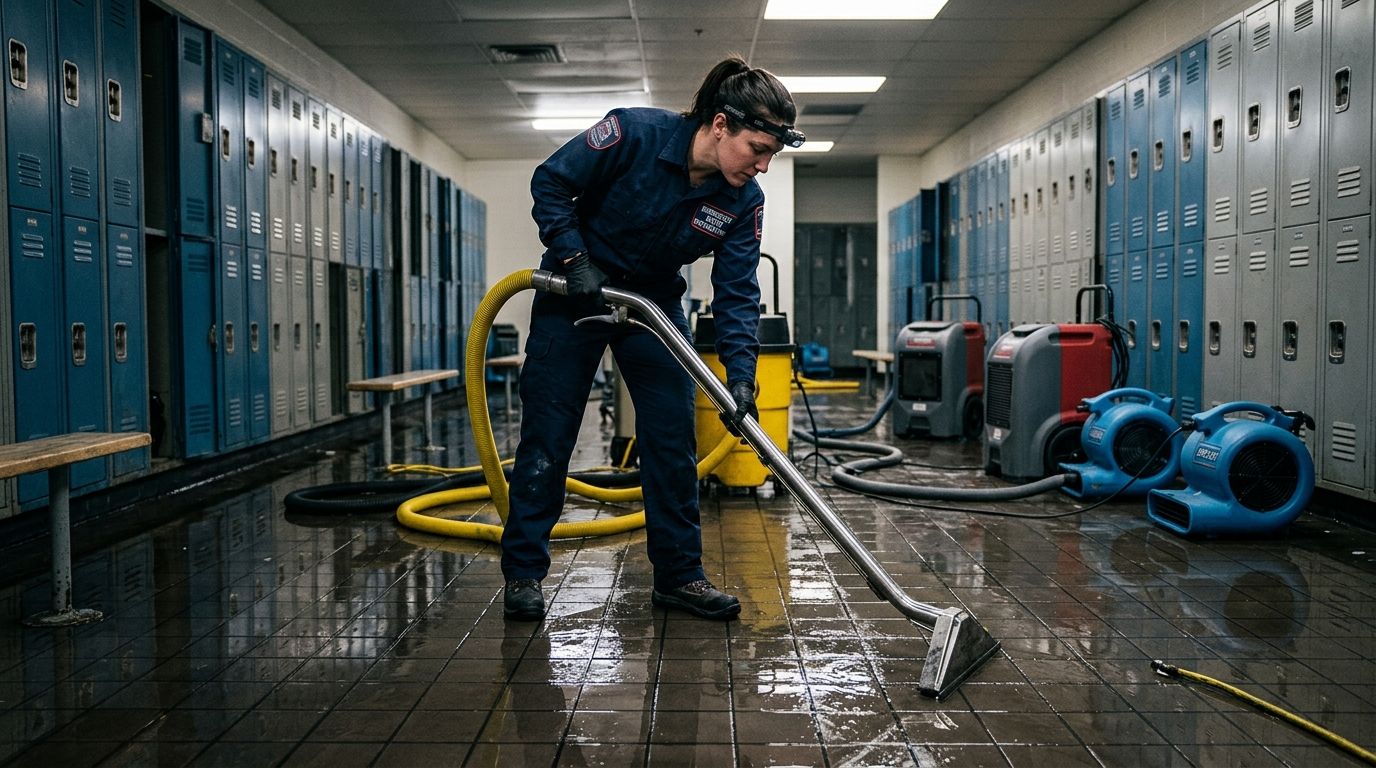
Professional peoria commercial aquatic fitness center balance tank flood extraction is an engineering and environmental discipline adhering strictly to IICRC S500 protocols, not mere surface mopping. When structural plumbing failures strike in Maricopa County, certified emergency water extraction and thermal structural drying procedures must be deployed immediately. Whether triggered by high-pressure burst pipe emergencies, subfloor leaks, or commercial line ruptures, bound moisture rapidly penetrates concrete subfloors and wall framing. In the desert heat, delays trigger microbial proliferation requiring rapid mold remediation. Request damage assessment through our emergency assessment portal or request 30-minute dispatch across all Valley service areas.
Securing electrical feeds, inspecting load-bearing assemblies, and containing pathogens.
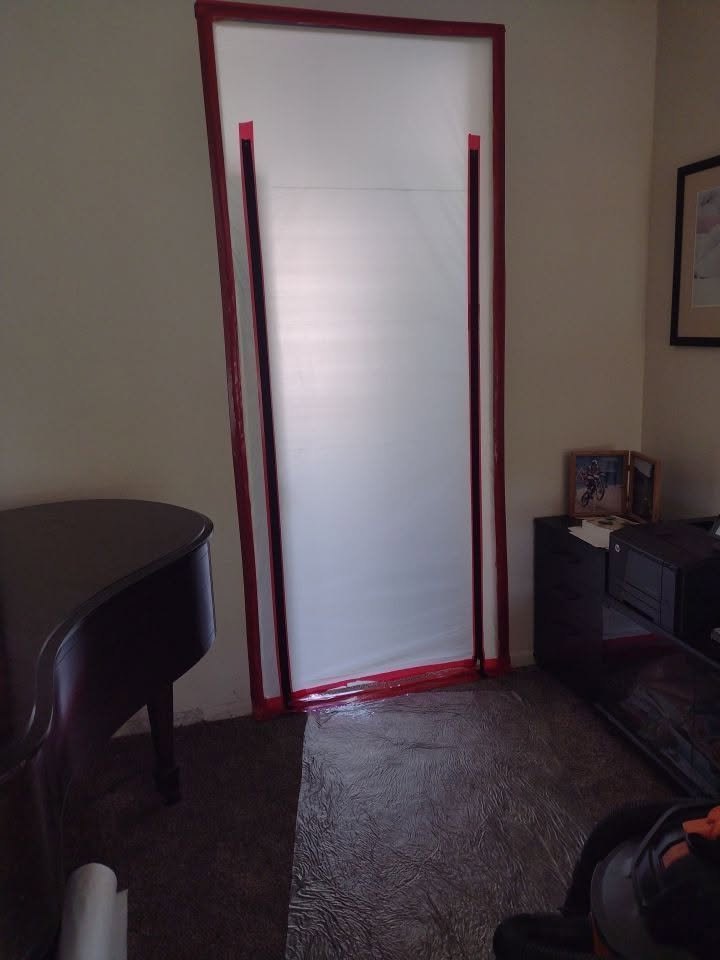
Stopping the intrusion source and erecting 6-mil plastic isolation containment airlocks.
31-HP truck-mount extraction, removing gallons exponentially faster than evaporation.
LGR dehumidifiers and HEPA air scrubbers driving grains per pound below 25 GPP.
Calibrated electronic pinless testing confirming baseline dry standards.
The Complete 6-Stage Restoration Roadmap
Our IICRC-certified crews execute a disciplined, scientific 6-stage protocol to stabilize and dry structural components:
Emergency Dispatch & Perimeter Isolation
30 to 60 minute arrival. Securing electrical shutoffs, evaluating structural loads, and erecting containment airlocks.
FLIR® Thermal Mapping & Baseline Scans
Infrared thermal scans detect trapped moisture behind walls and beneath concrete without invasive exploratory demolition.
High-Volume Bulk Extraction
31-HP truck-mount extraction units pump standing water away at hundreds of gallons per minute.
Controlled Selective Demolition
Precision flood cuts 12 to 24 inches above moisture lines, removing wet insulation and opening wall framing to dry airflow.
Thermodynamic Dehumidification
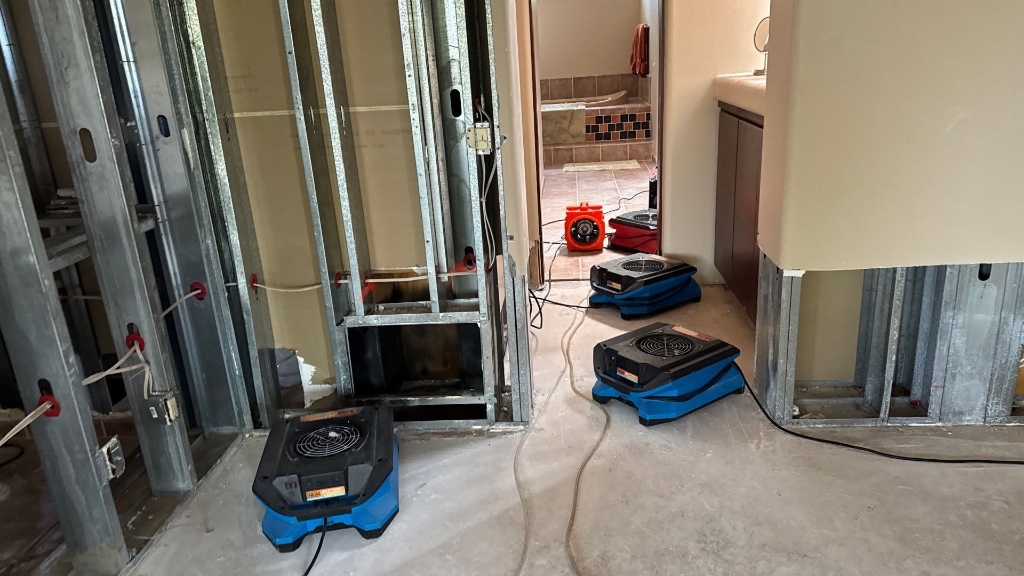
Industrial Low-Grain Refrigerant dehumidifiers pull deep trapped moisture from dense framing lumber and concrete slabs.
Antimicrobial Sanitization & Verification
EPA-registered botanical application (Benefect Decon 30) and calibrated moisture testing to issue an official dry certificate.
Specialized Equipment & Industrial Restoration Technology
Mitigating severe property damage requires industrial-grade technology capable of altering thermodynamic psychrometrics:
Truck-Mounted Extraction Rigs
31-HP engines producing 16+ inches Hg vacuum suction to evacuate bulk water rapidly into holding tanks.
Low-Grain Refrigerant Dryers
Pre-cooling heat-pipe systems driving ambient grains per pound below 25 GPP to draw deep trapped water out of framing.
HEPA Negative-Air Scrubbers
Hospital-grade 99.97% particulate filtration capturing microscopic fungal spores, soot, and biohazard aerosols.
FLIR® Thermal Scanners & Probes
Infrared thermography detecting evaporative cooling boundaries behind walls, combined with digital RF pinless scanners.
Professional Restoration vs. DIY Mitigation
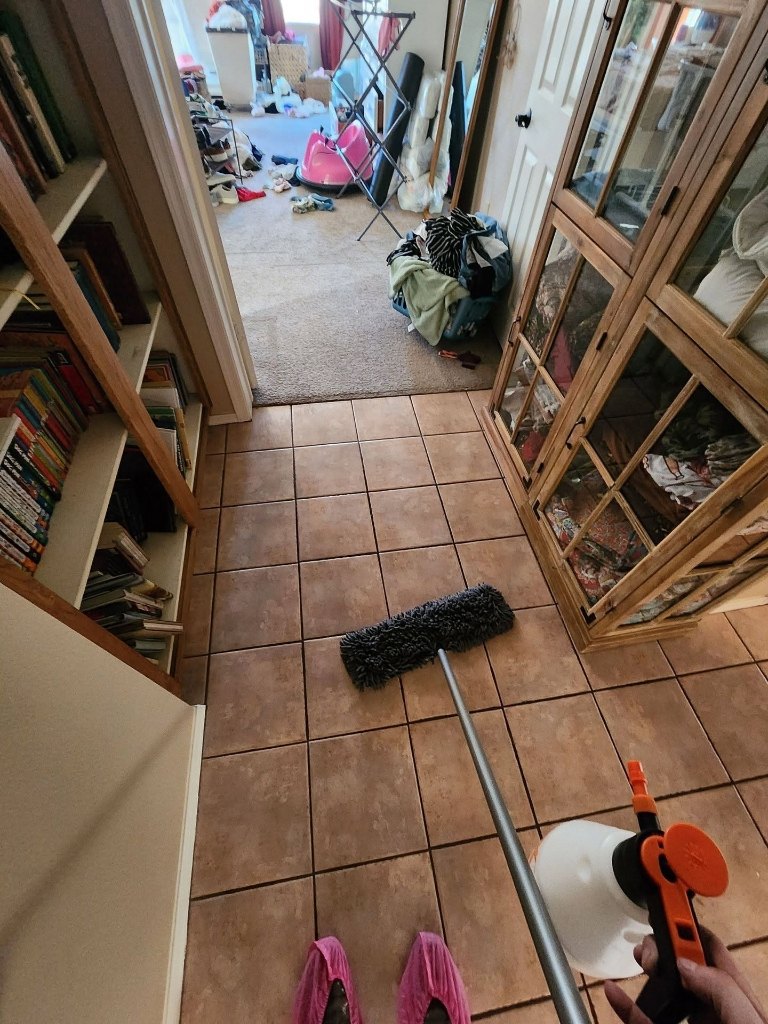
Attempting DIY cleanup during a property disaster creates severe hidden liabilities:
- Trapped Moisture: Surface drywall dries while moisture inside cavities triggers hidden mold blooms.
- Pathogenic Risks: Category 2 & 3 water contains bio-contaminants standard cleaners fail to kill.
- Insurance Denial: Insurers require daily psychrometric logs; lack of data causes claim disputes.
Transparent Upfront Itemized Pricing
Valley Restoration Pros operates with complete transparency:
- Free On-Site Assessment: Complete physical inspection before work begins.
- Upfront Itemized Estimates: Detailed line items calculated via industry-standard Xactimate.
- Zero Surprise Billing: No hidden charges or unauthorized repairs.
Certified peoria commercial aquatic fitness center balance tank flood extraction Field Documentation
Every response performed by Valley Restoration Pros is documented through photographic and thermographic records:
Comprehensive peoria commercial aquatic fitness center balance tank flood extraction Technical Manual & Operational Standards
Exhaustive engineering protocols, psychrometric calculations, geological multipliers, and step-by-step restoration standards for Maricopa County properties:
Executive Emergency Abstract: Commercial Aquatic Fitness Center Balance Tank Inundation in Peoria Arizona
Commercial aquatic health clubs, premier fitness resorts, and municipal athletic competition complexes in Peoria represent high-occupancy, mechanically dense investments that operate continuous multi-million-gallon water circulation infrastructures. Concentrated prominently throughout the bustling P83 Entertainment and Sports District along the busy Bell Road and 83rd Avenue commercial corridor—adjacent to the Peoria Sports Complex and Arrowhead Towne Center—these facilities maintain competition-grade 25-meter and 50-meter lap pools, heated hydrotherapy spas, warm-water leisure basins, and comprehensive locker room complexes. Subterranean mechanical rooms and recessed filter vaults house the heartbeat of these aquatic operations: massive atmospheric surge balance tanks, high-rate commercial sand filtration batteries, computerized chemical dosing controllers, and 480-volt commercial circulation pumps operating under continuous hydraulic head pressures.
When a mechanical catastrophic event strikes a subterranean aquatic vault—such as an automated electronic level sensor malfunction triggering an uncontrolled city makeup water surge, an 8-inch surge balance tank equalization line gasket blow-out, or an industrial sand filter multiport backwash valve fracture—the resulting deluge inundates the facility with unprecedented velocity. Operating at high flow volumes ranging from 800 to 2,500 gallons per minute (GPM), thousands of gallons of chlorinated, chemically conditioned water rapidly engulf subterranean vault slabs, submerging primary pump motors, drowning electronic variable frequency drives (VFDs), and overwhelming municipal floor drainage sumps. Without immediate industrial intervention, the contaminated floodwaters rise above containment vault thresholds, backing up into adjacent subterranean plumbing chases and migrating horizontally into team locker rooms, luxury sauna suites, administrative corridors, and specialized athletic flooring zones.
The execution of rapid, specialized industrial 24 hour flood extraction is immediately imperative to mitigate irreversible structural decay and catastrophic asset loss. Flooding originating from commercial swimming pool balance tanks is not benign clean water. It constitutes an aggressive, chemically active aqueous solution laden with sodium hypochlorite (chlorine), hydrochloric (muriatic) acid residuals, elevated calcium hardness minerals, dissolved cyanuric acid, and volatile chloramines (combined chlorine compounds). When trapped in enclosed subterranean vaults or driven into porous building components, this chemical aqueous mixture exerts intense osmotic pressure, accelerates galvanic corrosion across commercial electrical conduit and structural steel reinforcement, and releases hazardous chloramine vapors that threaten technician respiratory safety and indoor air quality.
Uncontrolled moisture migration beyond the mechanical vault presents catastrophic threats to athletic facilities. Subfloor moisture vapor rapidly travels beneath vulcanized rubber weight room tiles, unsealed athletic hardwood basketball and aerobics courts, and commercial porcelain locker room assemblies. In the extreme Sonoran Desert environment of Peoria, where ambient summer afternoon temperatures routinely climb above 115 degrees Fahrenheit, the indoor relative humidity of a flooded natatorium facility accelerates fungal amplification. Pathogenic microbial colonization can initiate across damp drywall cavities, carpet tack strips, and timber framing within 24 to 36 hours. Immediate deployment of commercial desiccant dehumidification and negative-air gas scrubbing is necessary to stabilize the internal vapor pressure before widespread mold colonization mandates structural demolition.
Valley Restoration Pros operates as the premier commercial disaster recovery authority for municipal athletic facilities, commercial aquatic centers, and private health clubs throughout Peoria, Glendale, Sun City, and the Northwest Valley. Our IICRC Master Water Restorers maintain a guaranteed rapid emergency dispatch response window of 20 to 30 minutes, 24 hours a day, 365 days a year. We mobilize trailer-mounted industrial desiccant dehumidifiers, chemical-resistant high-capacity submersible trash pumps, certified hazardous gas monitoring arrays, and non-destructive subsurface drying technology. Facility directors, municipal risk managers, and commercial operations supervisors must contact our dedicated emergency dispatch team immediately at (602) 847-9593 to mitigate operational downtime and structural ruin.
Immediate Commercial Aquatic Facility Incident Action Directives
- Emergency Pool Makeup & Balance Line Isolation: Immediately actuate manual gate valves on automated city water makeup supplies, pool surge return headers, and balance tank equalizer piping to eliminate pressurized inflow into the subterranean mechanical room.
- Electrical Lockout / Tagout (LOTO): De-energize primary 480-volt 3-phase distribution sub-panels feeding pool circulation pump motors, automated chemical feed systems, and subterranean lighting circuits before any personnel approach standing water.
- Atmospheric Hazard Assessment: Utilize calibrated multi-gas detection instrumentation to evaluate subterranean vault oxygen levels, chlorine ($Cl_2$) gas concentrations, and airborne chloramine vapor levels before room entry.
- Chemical Feed Containment: Inspect secondary containment basins for liquid sodium hypochlorite and muriatic acid storage tanks to verify that floodwaters have not breached containment or initiated hazardous chemical mixing reactions.
- Engage Industrial Restoration Specialists: Call Valley Restoration Pros at (602) 847-9593 for urgent mobilization of high-volume submersible trash pump extraction rigs, desiccant dehumidification trailers, and activated carbon air scrubbers.
Anatomy of the Failure: Balance Tank Hydrodynamics, Commercial Filtration Hydraulics & Chloramine Chemistry
Understanding the catastrophic inundation of an athletic center mechanical vault requires a rigorous examination of commercial pool circulation hydrodynamics. In standard high-capacity commercial natatoriums and municipal aquatic centers, continuous pool surface skimming is achieved via perimeter gutter systems or rim-flow weir channels rather than simple residential wall skimmers. Water cascading over these perimeter weirs drains by gravity into a subterranean surge balance tank—a massive concrete or high-density polyethylene (HDPE) reservoir designed to buffer dynamic water displacement caused by varying bather loads, wave action, and backwash volume requirements.
Under normal operational parameters, the balance tank acts as an atmospheric sump. Commercial flooded-suction centrifugal pumps draw water directly from the balance tank, pushing it under high pressure (typically 35 to 55 PSI) through commercial multi-tank high-rate sand or regenerative media filtration systems, past commercial gas-fired water heaters, through ultraviolet (UV) secondary disinfection chambers, and across automated chemical sanitization injection points before returning the conditioned water to the pool floor inlets. The balance tank incorporates automated electronic liquid level controllers with ultrasonic or multi-probe sensors connected to motorized solenoid valves that replenish water lost through evaporation and splash-out.
Catastrophic mechanical room inundation occurs when one or more hydrodynamic vulnerabilities fail under hydraulic strain:
Primary Mechanisms of Commercial Balance Tank & Filtration Room Failure
- Electronic Liquid Level Controller & Solenoid Float Latch-Up: In commercial aquatic environments, mineral scale encrustation and corrosive chloramine condensation foul electronic float probes or mechanical pilot float valves. When the sensor fails in the "demand water" state, the commercial 2-inch or 3-inch high-pressure city makeup line remains continuously open. Discharging at municipal street pressure (60 to 90 PSI), the city water line injects over 150 gallons per minute into the balance tank. Once the tank exceeds its rim threshold, the integrated gravity overflow pipe—frequently restricted by mineral deposits or undersized for pressurized flow—overflows catastrophically into the open mechanical room.
- Multi-Port Valve Actuator Failure During Backwash Cycles: Commercial sand filtration batteries utilize motorized or pneumatic butterfly valve clusters to reverse flow during media backwashing. If an automated valve actuator shears its internal drive pin or a hydraulic butterfly seat fractures during high-volume backwash (demanding 600 to 1,200 GPM), pressurized pool water diverges directly into the subterranean room rather than discharging into the municipal sewer interceptor.
- Balance Tank Equalizer Line Shearing from Soil Settling: Heavy cast-in-place concrete balance tanks and deep swimming pool shells experience microscopic differential settling over time. When subterranean pipes lack flexible braided stainless-steel expansion couplings, shear stress concentrates at the concrete wall penetrations. An 8-inch PVC or ductile iron balance line rupture instantly releases thousands of gallons of hydrostatic head water directly from the main pool bowl into the pump vault.
- Subterranean Sump Pump Mechanical Jamming: Subterranean mechanical rooms rely on dual-redundant submersible sump pumps to evacuate minor drip leakage. However, during high-volume pipe failures, fine sand expelled from ruptured filter lateral collectors or debris rapidly clogs the sump pump impellers, leading to immediate thermal overload trip-out and unchecked room flooding.
Beyond immediate liquid volume destruction, balance tank floodwaters generate severe chemical and atmospheric hazards. Commercial pool water contains active residual hypochlorous acid ($HOCl$) and hypochlorite ions ($OCl^-$). When thousands of gallons of chlorinated water discharge forcefully into a confined subterranean vault, turbulence causes rapid off-gassing of volatile chloramines, specifically monochloramine ($NH_2Cl$), dichloramine ($NHCl_2$), and trichloramine ($NCl_3$).
Trichloramine vapor is an aggressive mucous membrane irritant and powerful oxidizer with a low sensory threshold. In enclosed subterranean spaces with submerged electrical infrastructure, chloramine vapors combine with ambient moisture to form an aerosolized acidic film. This corrosive film attacks galvanized electrical metallic tubing (EMT), copper wiring terminations within variable frequency drives, structural iron pipe hangers, and ductwork insulation. Furthermore, if standing floodwaters reach the chemical dosing room where sodium hypochlorite solution (12.5% trade concentration) or 31.45% technical-grade muriatic acid are stored, container buoyancy tipping or chemical mixing could release lethal pure chlorine gas ($Cl_2$).
Restoring such an environment requires specialized expertise in industrial chemical isolation, confined-space atmospheric purging, and commercial structural drying protocols engineered to neutralize corrosive chemical residues while extracting massive latent moisture reservoirs from surrounding concrete envelopes.
Peoria & Northwest Valley Climatic & Geological Multipliers: Caliche Subsoils, Hard Water & Desert Heat
Commercial aquatic facility disaster restoration in Peoria, Arizona, cannot be executed using generic nationwide formulas. The unique environmental, hydrological, and geotechnical dynamics of the Northwest Salt River Valley impose extreme physical stresses on mechanical components and drastically alter structural moisture migration pathways. Restoration engineers must account for three distinct regional environmental multipliers:
1. 18 GPG Extreme Municipal Water Hardness & Mineral Calcite Scaling
The municipal water supply distributed throughout the City of Peoria and the P83 commercial corridor originates from Central Arizona Project (CAP) surface water diverted from the Colorado River, blended with deep alluvial aquifer well water. This municipal water is exceptionally hard, testing consistently between 16 and 22 grains per gallon (GPG) of total hardness, with total dissolved solids (TDS) frequently exceeding 650 to 900 parts per million (PPM).
When this mineral-laden water is heated in commercial lap pools and subjected to chemical chlorination, calcium carbonate ($CaCO_3$) continuously precipitates out of solution as rock-hard calcite scale. Within subterranean balance tanks and mechanical piping assemblies, calcite scale accumulates on electronic liquid level sensors, mechanical float arms, backwash valve elastomer seals, and commercial pump mechanical shaft seals. This relentless mineral deposition causes valve binding, sensor misreadings, and premature seal embrittlement, making Northwest Valley commercial aquatic systems disproportionately susceptible to catastrophic valve blowouts and surge tank overflow emergencies.
2. Expansive Alluvial Caliche Clay Soil Movement & Structural Shear Stress
The geological subsurface of Peoria, particularly along the ancient New River alluvial floodplain surrounding 83rd Avenue, Bell Road, and Peoria Avenue, is dominated by clay loam interwoven with dense caliche cementation zones. Caliche consists of sedimentary gravels and clays bound together by calcium carbonate into an impermeable, concrete-like subterranean stratum.
During the North American Monsoon season (July through September), torrential microburst rainfall saturates superficial soil layers. The underlying expansive montmorillonite clays absorb moisture and expand with immense hydraulic force, only to undergo severe desiccation and volumetric shrinkage during the protracted dry desert summer months. When balance tanks, 100,000-gallon pool vessels, and concrete vault structures settle differentially against rigid caliche shelves, subterranean plumbing lines experience tremendous mechanical shear. Buried PVC conduits and rigid piping connections fracture, causing catastrophic subterranean breaches that flood mechanical pump rooms from the exterior foundation in. In similar fashion to commercial slab leak water damage restoration, subterranean foundation shifts jeopardize the structural integrity of both the plumbing manifolds and the concrete building footings.
3. 115°F Desert Ambient Heat & Accelerated Microbial Incubation Window
During the extended Sonoran Desert summer, outdoor ambient temperatures across Peoria routinely hover between 108 and 118 degrees Fahrenheit. Within commercial athletic facilities, indoor natatoriums are intentionally conditioned to elevated air temperatures (typically 82°F to 86°F) to prevent convective evaporative chill on wet swimmers. When tens of thousands of gallons of balance tank water inundate the facility, the combination of elevated baseline natatorium temperatures and high ambient exterior heat creates an aggressive microbial incubation chamber.
In typical temperate climates, the standard IICRC microbial remediation threshold allows 48 to 72 hours before Category 1 water degrades into Category 2 (significant contamination) and Category 3 (grossly contaminated pathogenic water). In Peoria, however, the elevated thermal conditions accelerate bacterial metabolic activity and fungal spore germination exponentially. Within 24 to 36 hours of balance tank inundation, standing water and saturated wallboard assemblies experience rapid microbial blooms of opportunistic fungi such as Aspergillus niger, Penicillium, and Chaetomium. Professional mold remediation and industrial bio-wash sanitization must be initiated concurrently with water extraction to safeguard public health and ensure commercial athletic facility compliance with Arizona Department of Health Services standards.
Immediate First-Hour Containment & Chlorine Chemical Isolation Protocol
The initial sixty minutes following a balance tank mechanical vault rupture dictate whether the incident results in manageable mechanical repairs or escalates into multi-million-dollar structural contamination and catastrophic business interruption. When Valley Restoration Pros deploys to a commercial athletic facility in Peoria, our certified incident response team immediately executes an exacting five-stage hazardous containment and chemical isolation protocol:
The 5-Stage Commercial Aquatic Emergency Isolation Sequence
Stage 1: Multi-Point Hydraulic & Chemical Isolation
Technicians immediately close the main mechanical supply gate valves, isolating the city water makeup feed, balance tank equalization lines, and pool main drain return headers. Concurrently, automated chemical dosing lines connecting liquid sodium hypochlorite day tanks, bulk muriatic acid vats, and calcium hypochlorite briquette feeders are manually isolated using chemical-resistant teflon-seated ball valves to halt chemical migration into flooded zones.
Stage 2: Electrical Arc Flash & Electrocution Safety Lockout
Submerged 480V 3-phase pump motors, high-intensity discharge (HID) pool underwater light transformers, and variable frequency drive cabinets pose lethal electrocution and arc flash risks in standing conductive pool water. Our certified technicians coordinate with on-site facility engineers to execute comprehensive OSHA Lockout/Tagout (LOTO) protocols at the primary distribution motor control center (MCC), verifying zero energy potential with calibrated non-contact voltage testers prior to vault entry.
Stage 3: Atmospheric Air Quality Clearance & Forced Ventilation
Subterranean mechanical vaults are designated permit-required confined spaces under OSHA regulations. Technicians lower multi-gas detectors (calibrated for $O_2$, $CO$, $H_2S$, Lower Explosive Limit, and free chlorine $Cl_2$) to continuously monitor atmospheric safety. Simultaneously, industrial explosion-proof pneumatic air horns and high-static axial blowers establish positive fresh air purging through external utility hatches to evacuate toxic chloramine vapors.
Stage 4: Critical Physical Containment & Vapor Barrier Zoning
To prevent cross-contamination into dry athletic spaces, technicians erect 6-mil reinforced polyethylene containment barriers secured with heavy-duty aluminum tension poles and airtight perimeter foam sealing gaskets. Magnetic self-closing zipper airlocks are installed at all access passages between the flooded subterranean vault, locker rooms, and the main natatorium concourse. Industrial negative-air scrubbers fitted with activated carbon filters establish continuous negative pressure within the compromised zone, capturing airborne chloramine odors and preventing moisture migration into adjacent cardio workout floors.
Stage 5: High-Capacity Dewatering Deployment
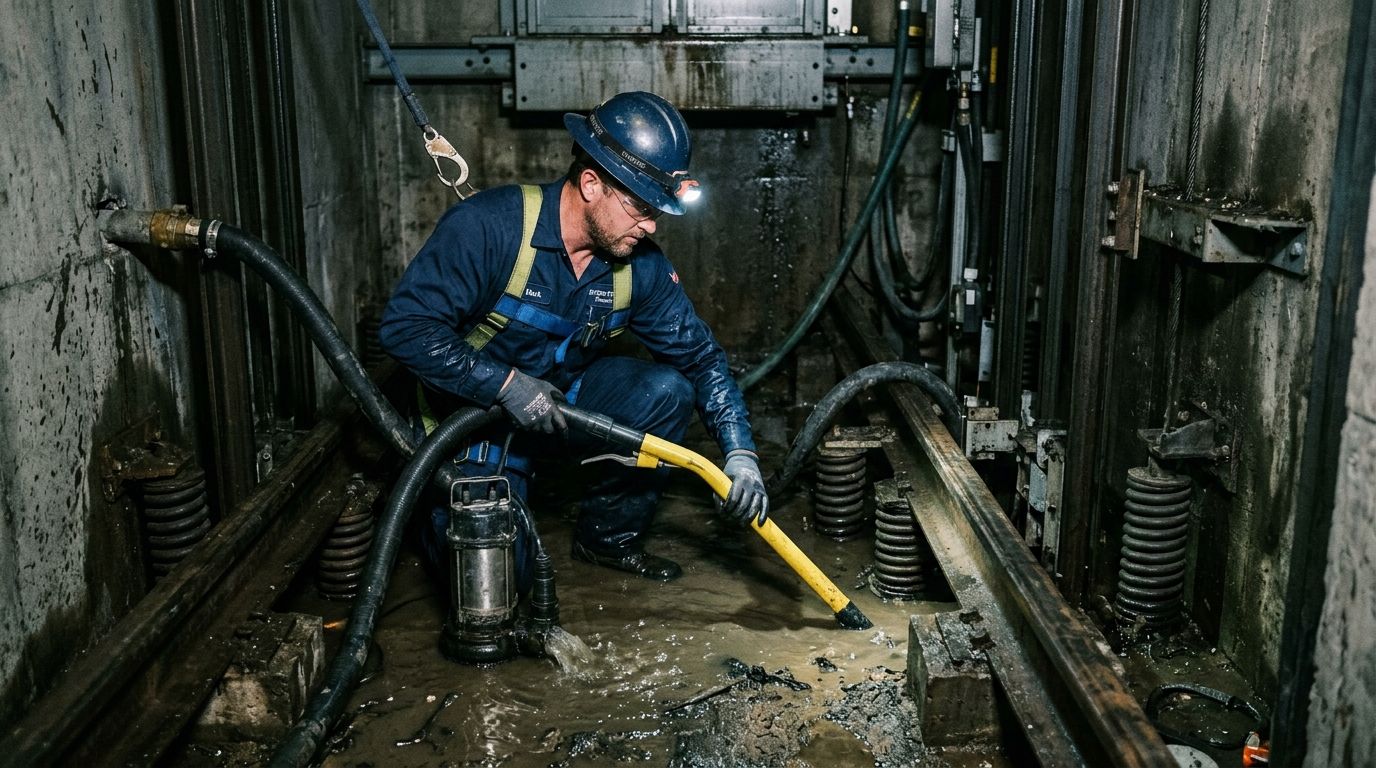
Heavy industrial 3-inch and 4-inch submersible trash pumps equipped with solids-handling vortex impellers and chemical-resistant fluoroelastomer seals are lowered into the submerged vault sump. Heavy-duty layflat discharge hoses are routed through external service shafts directly to authorized municipal sanitary sewer cleanouts, initiating bulk extraction at rates exceeding 600 GPM.
For commercial fitness centers and municipal facilities facing simultaneous pipe bursts or plumbing main ruptures across adjacent utility suites, our team also provides complete commercial burst pipe repair coordination and structural containment across all facility plumbing risers.
Advanced Industrial Equipment Specifications & Containment Engineering
Dewatering and restoring a commercial aquatic facility mechanical vault demands industrial-grade machinery specifically engineered to withstand harsh chemical environments. Standard residential water extraction equipment or commercial low-grain refrigerant (LGR) dehumidifiers are utterly incapable of handling the extreme ambient relative humidity, deep structural saturation, and corrosive chemical vapors present in a flooded pool balance tank vault. Valley Restoration Pros deploys an advanced commercial equipment fleet tailored for large-scale athletic disaster recovery:
| Equipment Category | Model & Capacity | Performance Specifications | Strategic Restoration Role |
|---|---|---|---|
| High-Head Submersible Dewatering Pumps | Tsurumi KTZ Series 4-Inch Submersible Trash Pump | 550 GPM @ 40 ft head; high-chrome iron impeller; silicon carbide mechanical seals | Rapid bulk dewatering of flooded subterranean pump vaults and balance tank pits |
| Industrial Desiccant Dehumidification Trailers | Munters dryMax 5,000 CFM Industrial Desiccant Unit | 5,000 CFM process airflow; silica gel rotor; operates efficiently down to 10% RH and 15 GPP | Deep structural concrete desiccation and natatorium vapor pressure suppression |
| Chemical-Vapor Air Scrubbers | Abatement Technologies PAS2400 with Carbon / Permanganate Module | 2,000 CFM; 99.97% HEPA filtration plus 40 lb vapor-phase virgin carbon / potassium permanganate bed | Adsorption of airborne chloramines, trichloramine vapor, and volatile chemical odors |
| Thermal Thermography & Moisture Profiling | FLIR T540 Industrial Thermal Imaging & FLIR MR277 Hygrometer | 464 x 348 IR resolution; calibrated psychrometric sensor; non-destructive IGM moisture scanning | Mapping subsurface moisture migration behind tile walls and beneath rubber athletic floors |
| Sub-Slab Cavity Drying Injectors | Injectidry Commercial High-Pressure System | Negative pressure extraction wands; micro-hose manifold arrays delivering pressurized dry air | Targeted desiccation of trapped water under commercial rubber tiles and locker room casework |
The thermodynamic superiority of industrial desiccant dehumidifiers over standard commercial LGR units is non-negotiable in aquatic facility recovery. In a warm, humid natatorium where the ambient air temperature is 84°F with 60% relative humidity, the moisture content of the air exceeds 108 grains per pound (GPP). When mechanical room floodwaters release thousands of additional gallons, the indoor air becomes fully saturated at 140+ GPP.
Standard refrigerant dehumidifiers rely on cooling air below its dew point to condense liquid water over refrigeration coils. However, when the indoor air reaches high moisture loads, refrigerant coils suffer rapid efficiency drop-offs and cannot produce the low vapor pressure required to pull bound water from dense concrete foundation walls or masonry balance tank shells.
Our trailer-mounted desiccant systems utilize a continuously rotating honeycomb wheel impregnated with microscopic silica gel desiccant crystals. As moist process air passes through the rotor, water molecules are chemically adsorbed directly onto the desiccant surface without condensation. The unit expels ultra-dry air at less than 15 GPP into the structure while routing heated moisture-laden reactivation air directly outside the facility through 16-inch flexible ducting. This generates an intense vapor pressure gradient between the ambient air and the saturated concrete slab, forcing bound moisture out of capillary pores at triple the rate of conventional drying methods.
Where facilities have experienced cross-contamination into locker rooms, showers, or sanitary drains, our team implements stringent commercial sewage cleanup and bio-sanitization protocols to neutralize bacterial pathogens and protect occupant health.
IICRC S500 / S520 Commercial Aquatic Restoration Protocol
Executing structural restoration in a commercial aquatic fitness complex requires rigorous adherence to the ANSI/IICRC S500 Standard for Professional Water Damage Restoration and the IICRC S520 Standard for Professional Mold Remediation. Because pool balance tank floodwaters carry chemical additives, elevated mineral salts, and potential biological residuals from high bather loads, Valley Restoration Pros follows an exacting six-phase technical protocol:
The 6-Phase Technical Restoration Workflow
Phase 1: Deep Hazardous De-Watering & Vault Sump Scouring
Submersible trash pumps evacuate bulk standing water down to a 2-inch threshold. Technicians then deploy heavy-duty commercial wet-vacuum extraction units with weighted squeegee wands to remove residual standing pools from concrete depressions, pump mounting pads, and electrical conduit trenches. All expelled water is disposed of strictly in compliance with City of Peoria industrial wastewater discharge ordinances.
Phase 2: Chemical Residue Decontamination & Salt Neutralization
As chlorinated pool water evaporates, it deposits aggressive mineral salts and corrosive chlorine residues across concrete slabs, steel motor mounts, and structural steel beams. Technicians apply a specialized neutralizing wash formulated to chelate calcium ions, eliminate hypochlorite oxidizers, and stabilize surface pH to a neutral 7.0. All metallic surfaces are rinsed and treated with a micro-thin corrosion-inhibiting protective coating to arrest ferrous and galvanic oxidation.
Phase 3: Non-Destructive Athletic Flooring Remediation & Sub-Slab Extraction
In athletic complexes, water migrating from subterranean mechanical rooms frequently infiltrates adjacent weight rooms floored with heavy interlocking vulcanized rubber tiles or fitness studios with sprung maple hardwood. Trapped moisture under rubber tiles creates a vapor-proof envelope that will rapidly foster toxic mold colonies. Technicians implement strategic non-destructive floor tile uncoupling, numbering each tile for re-assembly. High-pressure negative extraction mats are sealed to the concrete sub-slab, extracting trapped moisture directly through capillary channels without requiring wholesale floor replacement. For adjacent hardwood gymnasiums, our technicians apply specialized hardwood floor water damage drying injector mats to preserve timber planks and prevent cupping.
Phase 4: High-Performance Structural Desiccant Desiccation
Trailer-mounted Munters desiccant systems deliver pressurized, ultra-dry airflow into the mechanical vault and affected athletic corridors. High-velocity axial air movers are positioned in a clockwise vortex drying pattern across concrete walls and foundation footings, continuously disrupting the boundary layer of stagnant air and transferring deep masonry moisture into the desiccant airstream.
Phase 5: EPA-Registered Broad-Spectrum Antimicrobial Application
To counteract the rapid bacterial incubation driven by Peoria’s 115°F summer heat, technicians apply an EPA-registered, hospital-grade broad-spectrum botanical antimicrobial (thymol-based) across all exposed framing, subflooring, and masonry surfaces. This non-corrosive biostatic agent prevents fungal hyphae germination while leaving zero toxic chemical residuals that could off-gas into fitness facility breathing zones.
Phase 6: Psychrometric Verification & In-Situ Relative Humidity Sign-Off
Restoration operations continue until calibrated psychrometric instrumentation confirms that structural materials have returned to predetermined baseline dry standards. In-situ concrete relative humidity probes (ASTM F2170) verify that subterranean slab relative humidity has dropped below 75% before commercial flooring re-installation, ensuring long-term adhesive integrity and zero mold regrowth risk.
For commercial athletic complexes that incorporate large commercial domestic boilers or high-capacity hydronic loops serving natatorium showers, our engineers are also equipped to manage concurrent water heater burst cleanup and industrial plumbing desiccation.
Hyper-Local Case Study: Peoria P83 Commercial Aquatic Fitness Center Balance Tank Catastrophe
Incident Dossier: Subterranean Aquatic Mechanical Vault Inundation
Location: P83 Commercial Sports District, 83rd Avenue & Bell Road Corridor, Peoria, AZ
Facility Profile: 65,000 sq. ft. Premier Commercial Athletic Health Club & Aquatic Center
Asset Scope: 25-Meter 8-Lane Competition Lap Pool, 1,200 sq. ft. Therapy Spa, Subterranean Mechanical Room
Failure Source: Automatic Makeup Water Solenoid Latch-Up & Multi-Port Backwash Valve Seat Shearing
Water Volume Discharged: Estimated 32,000 Gallons of Chlorinated Pool Water
Response Time: 22 Minutes from Initial Emergency Hotline Dispatch
At 3:15 AM on a mid-July morning during a severe 114°F heatwave, an emergency automated alarm signaled high-water intrusion in the subterranean filtration vault of a flagship commercial aquatic fitness center located near 83rd Avenue and Bell Road in Peoria. The facility’s automated city water makeup solenoid valve had suffered mechanical latch-up due to heavy 18 GPG calcite scale accumulation on the pilot seat. The continuous high-pressure city supply surged unchecked into the concrete balance tank.
When the morning automated backwash cycle engaged, hydraulic pressure hammered against the already overflowing tank. An 8-inch cast-iron butterfly backwash valve seat sheared under the pressure differential, releasing over 850 GPM of pressurized water directly into the subterranean pump pit. By the time facility maintenance arrived, 4.5 feet of chlorinated water had submerged four 20-horsepower primary circulation pumps, overwhelmed the dual subterranean sump pumps, and begun breaching the perimeter masonry wall, seeping into the luxury locker room suites and the adjacent 8,000 sq. ft. free-weight fitness arena.
Valley Restoration Pros dispatched our heavy commercial emergency response fleet immediately, arriving on-site in exactly 22 minutes. Technicians executed emergency electrical LOTO on the 480V motor control center, established negative-air containment barriers at the mechanical room threshold, and deployed two 4-inch Tsurumi submersible trash pumps. Over 32,000 gallons of standing water were evacuated within 90 minutes.
Simultaneously, technicians deployed a 5,000 CFM Munters desiccant dehumidification trailer, running layflat ducting into the subterranean vault and across the lifted vulcanized rubber flooring in the adjacent fitness wing. Four Abatement PAS2400 air scrubbers equipped with chemical vapor carbon/permanganate media continuously captured volatile chloramines, maintaining clean, breathable air across the upper facility.
| Substrate / Structural Zone | Initial Moisture Baseline (Day 1) | 24-Hour Desiccation (Day 2) | Final Certified Dry Standard (Day 4) | Verification Method |
|---|---|---|---|---|
| Mechanical Vault Concrete Foundation | 99.9% WME (Saturated) | 48.2% WME | 11.8% WME (Dry Standard) | ASTM F2170 In-Situ RH Probe (<72% RH) |
| Locker Room Porcelain Tile Sub-Slab | 88.5% Surface RH | 36.1% Surface RH | 10.2% Surface RH (Dry Standard) | Tramex Concrete Moisture Meter |
| Weight Room Rubber Underlayment Slab | 94.0% WME (Trapped Water) | 29.4% WME | 9.4% WME (Dry Standard) | FLIR MR277 Pinless Non-Invasive Sensor |
| Subterranean Vault Ambient Air | 138 GPP / 92% RH @ 84°F | 44 GPP / 28% RH @ 86°F | 28 GPP / 18% RH @ 82°F (Baseline) | Digital Calibrated Psychrometric Hygrometer |
Through non-destructive rubber floor uncoupling and industrial desiccant desiccation, 100% of the commercial vulcanized rubber flooring was saved with zero secondary mold contamination. Structural dry standard sign-off was officially achieved in 72 hours, enabling the fitness facility to reopen its upper athletic floor in 36 hours and fully resume natatorium operations in 5 days—saving an estimated $280,000 in flooring replacement costs and business interruption losses.
Commercial Restoration Financial Transparency & Insurance Documentation Standards
Navigating property insurance claims for commercial aquatic facilities, sports clubs, and municipal recreation centers requires meticulous financial transparency and unimpeachable technical forensic documentation. Unlike residential claims, commercial aquatic losses involve multi-million-dollar athletic assets, complex business interruption calculations, and strict corporate governance oversight. Valley Restoration Pros upholds strict commercial compliance and transparent billing ethics across every deployment:
Our Commercial Restoration Commitment to Facility Stakeholders
- Free Comprehensive On-Site Damage Assessment: Our senior commercial project engineers perform an exhaustive, non-destructive initial structural and psychrometric audit of your aquatic facility at zero upfront charge, establishing the exact moisture boundaries and chemical exposure risks.
- Transparent Upfront Itemized Pricing Before Work Begins: We provide full itemized cost estimates utilizing industry-standard Xactimate commercial restoration price coding (WTR, CLN, DRY line items) before commencing structural work. Every piece of equipment, technician labor rate, and consumables charge is explicitly defined.
- Assistance with Detailed Claims Documentation & Psychrometric Moisture Logs: We compile comprehensive daily moisture logs, ASTM F2170 concrete relative humidity profiles, FLIR radiometric infrared thermal portfolios, and equipment operating hour logs required by commercial property insurance adjusters for rapid, dispute-free claim approvals.
- Clear Financial Policy Disclosure: Valley Restoration Pros works seamlessly with all national and regional commercial insurance carriers. In strict compliance with Arizona commercial standards, we never make misleading promises that insurance will pay 100% of all expenses without property owner authorization, nor do we claim to bill insurance directly without client oversight. Facility owners and municipal risk directors remain fully informed and in ultimate control of all restoration decisions.
To review standardized regional repair pricing or model capital reserve planning for commercial athletic properties, explore our interactive commercial cost estimator tool. Facility managers seeking emergency dispatch can connect directly with our commercial disaster coordinator by dialing our 24/7 hotline at (602) 847-9593 or by activating the direct connection link below:
For commercial properties facing widespread regional weather emergencies, monsoonal flash floods, or municipal storm sewer back-ups, consult our dedicated flood cleanup technical overview.
Frequently Asked Technical Questions: Commercial Aquatic Balance Tank Restoration
How does chlorinated balance tank water affect reinforced concrete foundation slabs differently than domestic water pipe bursts?
Unlike potable domestic water from standard plumbing breaks, commercial pool surge water is chemically treated with high levels of hypochlorous acid, hypochlorite salts, dissolved calcium carbonate, and cyanuric acid. When this chemically active solution penetrates the porous capillary network of concrete slabs, chloride ions migrate rapidly toward internal steel reinforcement rebar. Chloride ions depassivate the protective oxide film naturally shielding the steel, initiating accelerated electrochemical pitting corrosion. As rebar rusts, it expands up to six times its original volume, generating massive internal tensile stresses that cause concrete spalling, cracking, and structural degradation. Furthermore, as the water evaporates, crystallizing mineral salts generate sub-surface subflorescence, exerting internal crystallization pressure that destabilizes floor coatings and tile mortar beds. Professional restoration requires specialized salt-neutralization washdowns prior to structural desiccation.
What specific atmospheric monitoring protocols must be completed before technicians enter a flooded subterranean pool mechanical vault?
Subterranean pool mechanical vaults are classified under OSHA 29 CFR 1910.146 as Permit-Required Confined Spaces due to the potential for oxygen deficiency, hazardous gas accumulation, and entrapment risks. Before any technician crosses the threshold, calibrated multi-gas monitors must be lowered to sample the atmosphere at four-foot vertical intervals. The testing protocol measures: (1) Oxygen content (must remain between 19.5% and 23.5%), (2) Combustible gases / Lower Explosive Limit (must be <10% LEL), (3) Carbon monoxide (<25 PPM), (4) Hydrogen sulfide (<10 PPM), and (5) Free chlorine ($Cl_2$) gas and trichloramine vapor (must be strictly below the OSHA Permissible Exposure Limit of 1.0 PPM, with ideal safe working levels <0.5 PPM). Continuous forced positive-pressure ventilation using explosion-proof pneumatic air movers must be maintained throughout the duration of entry and extraction operations.
Why are desiccant dehumidifiers mandatory instead of standard LGR dehumidifiers when restoring flooded commercial natatoriums?
Low-grain refrigerant (LGR) dehumidifiers function by chilling process air over metal evaporator coils to condense moisture into liquid water. In commercial natatoriums, where indoor baseline air temperatures are maintained between 82°F and 86°F with elevated vapor pressure, LGR units quickly reach thermodynamic condensation plateaus, failing to pull indoor moisture below 45 to 50 GPP. Dense structural concrete, cinder block mechanical walls, and masonry surge pits require a steep vapor pressure gradient to surrender bound moisture. Industrial desiccant dehumidifiers utilize chemical adsorption via a rotating silica gel rotor, operating completely independently of dew-point limitations. Desiccant units deliver process air at sub-15 GPP and less than 10% relative humidity, creating an intense psychrometric differential that forces deep capillary moisture out of concrete foundations in half the time required by refrigerant machines.
Can athletic rubber flooring and wood sports courts be salvaged after pool surge tank flooding?
Yes, provided professional mitigation begins within the critical 24-hour first-response window. Vulcanized rubber interlocking athletic tiles are inherently non-porous and water-resistant; however, water trapped underneath them cannot evaporate naturally and will foster rapid microbial colonization on the concrete sub-slab. Valley Restoration Pros implements non-destructive tile uncoupling, numbering each section for precision reinstallation, sanitizing the tiles with botanical antimicrobials, and desiccating the concrete slab using negative-pressure drying mats. For sprung hardwood basketball courts and aerobics studios, high-pressure Injectidry floor mat systems are sealed to the surface to draw dry air through sleeper channels under the floorboards, pulling out trapped moisture and eliminating wood plank cupping and crowning without requiring floor demolition.
What causes commercial pool balance tanks and surge pits to fail catastrophically in Peoria commercial fitness facilities?
The primary failure triggers in Peoria are directly tied to regional environmental realities. The city’s extreme 18 GPG water hardness precipitates heavy calcium carbonate scale onto automated electronic water makeup float switches and solenoid pilot valves, causing them to jam in the open position. When thousands of gallons of continuous high-pressure city water surge into the balance tank, gravity overflow lines cannot keep pace. Secondarily, expansive caliche clay soils expand and contract aggressively between scorching 115°F summers and monsoonal deluges, causing microscopic differential settling between the deep swimming pool shell, subterranean concrete balance tanks, and the pump vault foundation. This structural deflection shears rigid PVC and cast-iron equalizer lines at foundation penetrations.
How does Valley Restoration Pros ensure chloramine vapor does not cross-contaminate dry athletic zones, cardio floors, and HVAC air handling units?
We isolate the compromised mechanical vault and adjacent flooded zones using airtight 6-mil polyethylene critical barriers secured with heavy-duty tension poles and foam-sealed perimeters. Industrial negative-air machines (Abatement Technologies PAS2400) fitted with specialized 40-pound activated carbon and potassium permanganate gas-phase chemical filtration beds are installed to continuously exhaust air outside the building. This creates negative pressure relative to the rest of the facility, ensuring that air always flows into the containment zone rather than escaping into cardio areas, weight rooms, or administrative offices. Additionally, dedicated natatorium HVAC air handling units are isolated and inspected to verify that chloramine-laden return air is not recirculated across dry facility sectors.
What ASTM standard testing is required before re-installing athletic flooring over flooded concrete sub-slabs?
Before re-installing vulcanized rubber athletic flooring, commercial carpet, or hardwood systems, quantitative moisture verification must be executed in accordance with ASTM F2170 (Standard Test Method for Determining Relative Humidity in Concrete Floor Slabs Using in situ Probes). Technicians drill precision test holes to 40% of the slab depth, insert calibrated relative humidity probe sleeves, and allow a 24-hour thermal equilibration period. The slab relative humidity must test below 75% (or the specific flooring adhesive manufacturer’s threshold). Additionally, surface pH testing is conducted using ASTM F710 protocols to verify that alkaline salts and chlorine oxidizers have been completely neutralized (pH between 7.0 and 9.0) to prevent adhesive emulsification.
To learn more about our comprehensive industrial capabilities across commercial hospitality, municipal infrastructure, and manufacturing sectors, explore our specialized overview for commercial water damage restoration throughout Arizona.
Peoria & Northwest Valley Commercial Aquatic Disaster Response Matrix
When a high-capacity commercial pool surge tank or mechanical filtration room breaches, rapid geographic accessibility is paramount. Valley Restoration Pros strategically stages mobile commercial restoration fleets throughout Peoria and the Northwest Valley, guaranteeing rapid 20 to 30 minute emergency dispatch to municipal recreation centers, athletic country clubs, commercial fitness resorts, and resort natatoriums:
| Northwest Valley District | Key Arterial Corridors & Landmarks | Average Emergency ETA | Staged Commercial Equipment Fleet |
|---|---|---|---|
| Peoria P83 Sports & Entertainment District | Bell Rd / 83rd Ave / 75th Ave / Peoria Sports Complex / Arrowhead | 15 – 20 Minutes | 4-Inch Submersible Trash Pumps, 5,000 CFM Desiccant Trailers, Gas Scrubbers |
| North Peoria Vistancia & Lake Pleasant Basin | Loop 303 / Lake Pleasant Pkwy / Happy Valley Rd / Vistancia Blvd | 20 – 25 Minutes | Trailer Desiccants, Deep Cavity Dryers, In-Situ ASTM Concrete Probes |
| Glendale Sports & Entertainment District | Loop 101 / Glendale Ave / Westgate / State Farm Stadium / 91st Ave | 18 – 22 Minutes | High-Head Submersibles, Centrifugal Air Movers, Carbon Vapor Scrubbers |
| Surprise Civic & Aquatic Center Corridor | Bell Rd / Bullard Ave / Waddell Rd / Surprise Aquatic Center / Litchfield Rd | 20 – 25 Minutes | Sub-Slab Injector Systems, Wet Extraction Wands, Non-Destructive Flooring Gear |
| Sun City & Sun City West Recreation Centers | Grand Ave (US-60) / 99th Ave / Bell Rd / R.H. Johnson Blvd / Meeker Blvd | 18 – 24 Minutes | Chemical-Resistant Poly Scrubbers, FLIR Thermal Cameras, Salt Neutralizers |
To explore dedicated emergency response profiles in neighboring municipal districts, view our specialized coverage resources for Peoria water damage cleanup and adjacent emergency flood cleanup near me.
For commercial athletic facilities confronting parallel industrial refrigeration, chiller line, or specialty floor inundation events, our engineering team also maintains specialized technical operations for ice rink chiller loop flood extraction, high-volume industrial commercial wash bay flood extraction, and deep subterranean printing press pit water extraction.
To review all service jurisdictions, commercial capabilities, and municipal rapid-response hubs across Maricopa County and the Greater Phoenix Metropolitan region, visit our comprehensive areas we serve directory or contact our 24/7 central dispatch division immediately at (602) 847-9593.
Verified Local Area Dispatch: Peoria, AZ
Official Geo-Coordinates: 33.5806° N, -112.2374° W • Maricopa County
Related Specialized Emergency Restoration Services
Explore specialized rapid-response mitigation protocols across Greater Phoenix and Maricopa County:
Valley-Wide Emergency Response Service Coverage
Our mobile restoration fleet is dispatched across the entire Phoenix metropolitan region, providing rapid 30 to 60 minute emergency response: