

Valley Restoration Pros delivers 24/7 industrial emergency water extraction, thermal psychrometric drying, and structural mitigation across Phoenix and Maricopa County with guaranteed 30–60 minute rapid arrival. All protocols strictly adhere to IICRC S500 standards, featuring upfront itemized pricing and free on-site thermal moisture assessments. Call dispatch directly at (602) 847-9593.
Why Immediate Mitigation Is Critical in Phoenix Heat
Parallel compressor refrigeration bursts and secondary coolant loop failures discharge thousands of gallons of chemical glycol water into subterranean retail trenches. High desert heat accelerates bacterial growth within 24 hours while trapped water saturates subfloor freezer insulation, causing devastating foundation frost-heave.

Service Definition & The IICRC Standard of Care
Professional commercial supermarket refrigeration water damage is an engineering and environmental discipline adhering strictly to IICRC S500 protocols, not mere surface mopping. When structural plumbing failures strike in Maricopa County, certified emergency water extraction and thermal structural drying procedures must be deployed immediately. Whether triggered by high-pressure burst pipe emergencies, subfloor leaks, or commercial line ruptures, bound moisture rapidly penetrates concrete subfloors and wall framing. In the desert heat, delays trigger microbial proliferation requiring rapid mold remediation. Request damage assessment through our emergency assessment portal or request 30-minute dispatch across all Valley service areas.
Securing electrical feeds, inspecting load-bearing assemblies, and containing pathogens.
Stopping the intrusion source and erecting 6-mil plastic isolation containment airlocks.
31-HP truck-mount extraction, removing gallons exponentially faster than evaporation.
LGR dehumidifiers and HEPA air scrubbers driving grains per pound below 25 GPP.
Calibrated electronic pinless testing confirming baseline dry standards.
The Complete 6-Stage Restoration Roadmap
Our IICRC-certified crews execute a disciplined, scientific 6-stage protocol to stabilize and dry structural components:
Emergency Dispatch & Perimeter Isolation
30 to 60 minute arrival. Securing electrical shutoffs, evaluating structural loads, and erecting containment airlocks.
FLIR® Thermal Mapping & Baseline Scans
Infrared thermal scans detect trapped moisture behind walls and beneath concrete without invasive exploratory demolition.
High-Volume Bulk Extraction
31-HP truck-mount extraction units pump standing water away at hundreds of gallons per minute.
Controlled Selective Demolition
Precision flood cuts 12 to 24 inches above moisture lines, removing wet insulation and opening wall framing to dry airflow.
Thermodynamic Dehumidification
Industrial Low-Grain Refrigerant dehumidifiers pull deep trapped moisture from dense framing lumber and concrete slabs.
Antimicrobial Sanitization & Verification
EPA-registered botanical application (Benefect Decon 30) and calibrated moisture testing to issue an official dry certificate.

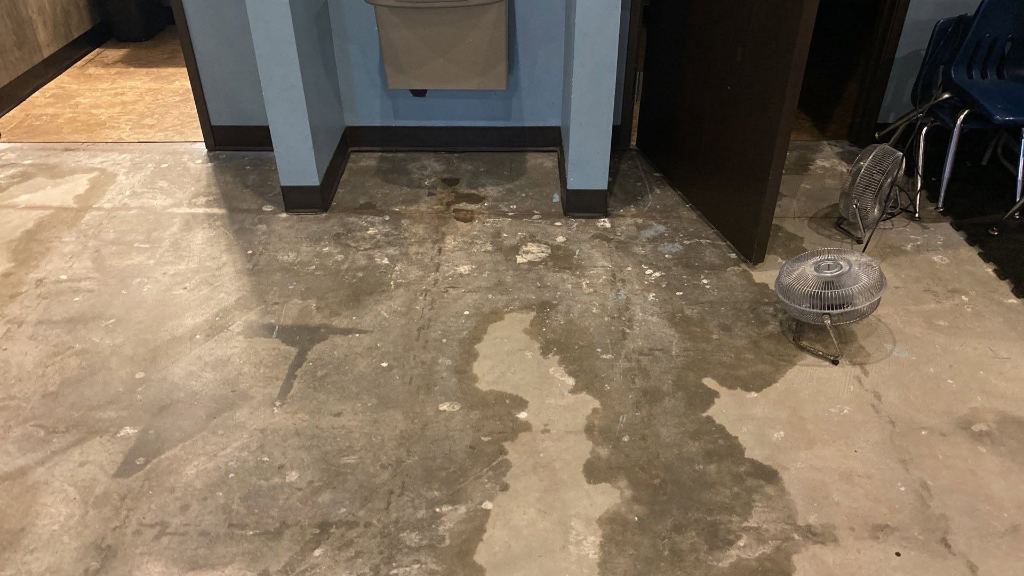
Specialized Equipment & Industrial Restoration Technology
Mitigating severe property damage requires industrial-grade technology capable of altering thermodynamic psychrometrics:
Truck-Mounted Extraction Rigs
31-HP engines producing 16+ inches Hg vacuum suction to evacuate bulk water rapidly into holding tanks.
Low-Grain Refrigerant Dryers
Pre-cooling heat-pipe systems driving ambient grains per pound below 25 GPP to draw deep trapped water out of framing.
HEPA Negative-Air Scrubbers
Hospital-grade 99.97% particulate filtration capturing microscopic fungal spores, soot, and biohazard aerosols.
FLIR® Thermal Scanners & Probes
Infrared thermography detecting evaporative cooling boundaries behind walls, combined with digital RF pinless scanners.


Professional Restoration vs. DIY Mitigation
Attempting DIY cleanup during a property disaster creates severe hidden liabilities:
- Trapped Moisture: Surface drywall dries while moisture inside cavities triggers hidden mold blooms.
- Pathogenic Risks: Category 2 & 3 water contains bio-contaminants standard cleaners fail to kill.
- Insurance Denial: Insurers require daily psychrometric logs; lack of data causes claim disputes.
Transparent Upfront Itemized Pricing
Valley Restoration Pros operates with complete transparency:
- Free On-Site Assessment: Complete physical inspection before work begins.
- Upfront Itemized Estimates: Detailed line items calculated via industry-standard Xactimate.
- Zero Surprise Billing: No hidden charges or unauthorized repairs.
Certified Commercial Supermarket Refrigeration Water Damage Field Documentation
Every response performed by Valley Restoration Pros is documented through photographic and thermographic records:
Comprehensive Commercial Supermarket Refrigeration Water Damage Technical Manual & Operational Standards
Exhaustive engineering protocols, psychrometric calculations, geological multipliers, and step-by-step restoration standards for Maricopa County properties:
Executive Emergency Abstract: Commercial Supermarket Central Refrigeration Flooding in Mesa
High-volume retail supermarkets, regional grocery distribution centers, and commercial food retail superstores situated along the Superstition Springs Retail Corridor in Mesa, Arizona, rely on massive, complex commercial refrigeration networks to safeguard perishable food inventories valued in the millions of dollars. Located near the prominent commercial junction of Superstition Freeway (US-60) and Power Road, these modern 55,000 to 75,000-square-foot commercial grocery operations operate around the clock. When a primary closed-loop hydronic coolant line, condenser water circuit, or parallel compressor rack discharge pipe ruptures within the central mechanical motor room, thousands of gallons of pressurized chemical water discharge unchecked, flooding subterranean utility trenches, undermining polished concrete floor slabs, and cascading into customer sales aisles.
In the Sonoran Desert climate of Mesa, where summer ambient temperatures frequently exceed 115°F, commercial refrigeration condensing units operate under relentless head pressure. Central compressor racks circulate high-volume chilled water or chemical propylene glycol mixtures across subterranean sub-slab trenches to supply dozens of multi-deck dairy coolers, meat display cases, and sub-zero frozen food aisles. When an industrial expansion joint splits, a motorized flow control valve cracks under hydraulic water hammer, or extreme municipal water hardness induces galvanic corrosion on an evaporator coil line, flooding develops with terrifying speed. Escaping coolant water saturates sub-slab insulation beneath walk-in freezers, causing ice-lens formation, foundation frost-heave, and rapid commercial tile delamination that threatens immediate Maricopa County Environmental Services Department closure.
Valley Restoration Pros provides the East Valley's premier industrial commercial mitigation service. Our master-certified IICRC commercial disaster teams deploy within thirty minutes across Mesa, Gilbert, Apache Junction, and Queen Creek. We arrive on-site with trailer-mounted desiccant dehumidification systems, explosion-proof deep extraction machinery, and high-resolution FLIR thermal infrared diagnostic suites engineered specifically for large-loss retail environments. We work directly with supermarket store directors, regional facility managers, and refrigeration mechanical contractors to execute rapid emergency water extraction, isolate compromised cooling trenches, and initiate deep structural drying without interrupting store operations or compromising food safety standards.
For commercial supermarket directors, asset protection managers, and retail facility engineers facing active refrigeration mechanical failures, our dedicated commercial operations center operates twenty-four hours a day, 365 days a year. Immediate commercial emergency mobilization is accessible at (602) 847-9593. Our certified commercial disaster response teams arrive fully equipped to deploy containment barriers, extract chemical closed-loop fluids, and prevent secondary microbial contamination across all grocery aisles.
Immediate Supermarket First-Hour Action Directives
- Isolate Commercial Coolant Supply Manifolds: Actuate dedicated quarter-turn motorized or manual isolation gate valves controlling the ruptured secondary cooling loop within the central compressor motor room.
- De-energize Subfloor Electrical Channels: Execute immediate lockout/tagout (LOTO) protocols across underground raceways and electrical trench feeds supplying display case lighting and condenser fans.
- Secure Sub-Slab Walk-In Cooler Insulation: Deploy heavy-duty submersible sump pumps into refrigeration floor trenches to prevent water from penetrating beneath sub-zero freezer floors and triggering foundation frost-heave.
- Mobilize Master Commercial Mitigation: Contact our 24/7 Mesa emergency dispatch desk at (602) 847-9593 for immediate thirty-minute on-site arrival and high-capacity desiccant structural extraction.
In supermarket operations throughout Mesa and the greater Phoenix metro area, central parallel rack systems represent the beating mechanical heart of daily retail commerce. Housing up to twenty high-horsepower Copeland or Bitzer scroll compressors linked to massive elevated condensers, these centralized mechanical systems maintain precise temperature zones across tens of thousands of square feet of display cases, reach-in dairy doors, and walk-in meat prep rooms. When an uncontrolled hydraulic rupture occurs in an underground trench or overhead piping run, the resulting liquid release threatens not merely the concrete foundation, but the electrical sub-distribution infrastructure that powers automated inventory control systems, digital pricing rails, and customer checkout registers.
Valley Restoration Pros maintains the specialized technical capabilities and commercial fleet necessary to stabilize these complex mechanical environments. Our commercial rapid emergency response crews understand the intricate interdependencies between commercial refrigeration cycles, structural envelope vapor dynamics, and Maricopa County health department hygiene mandates. From immediate containment of hazardous refrigerant oil residues to large-scale desiccant dehumidification, our certified disaster teams mobilize immediately to minimize operational interruption and safeguard facility assets.
Our Mesa emergency dispatch team operates with full mobile diagnostic equipment, rapid extraction pump trucks, and heavy-duty structural drying units. We are prepared around the clock to support supermarkets, wholesale food depots, and retail centers throughout Maricopa County.
Anatomy of Commercial Refrigeration Floods: Parallel Compressor Racks, Trench Inundation & Slab Wicking
Modern commercial supermarkets operate massive, complex central refrigeration systems commonly known as parallel compressor racks. Located in dedicated rear mechanical equipment rooms, these central systems link four to eight heavy-duty industrial compressors per rack, circulating hundreds of pounds of synthetic refrigerants and thousands of gallons of chilled secondary cooling fluids through miles of overhead and subterranean distribution piping. The secondary hydronic loop, frequently containing food-grade propylene glycol and corrosion-inhibiting chemical additives, operates under continuous operating pressures ranging from 75 to 110 PSI.
The primary physical vulnerability in retail grocery facilities lies within the subterranean refrigeration floor trenches. To avoid unsightly overhead piping across open customer sales floors, secondary coolant lines, condensate drain lines, and high-voltage power conduits are routed through concrete floor trenches recessed 18 to 24 inches beneath the finished retail floor slab. Over years of thermal cycling, vibration from multi-ton compressor racks, and high-pressure washdowns during nightly sanitation, rubber expansion joints crack, dielectric unions degrade, or brazed copper joints yield under continuous pressure pulsations. When an overhead header or trench-level fitting ruptures, thousands of gallons of chemical water pour directly into the recessed floor trenches.
Subterranean Trench Surcharge
Pressurized water quickly fills subfloor utility trenches, submerging electrical junction boxes, sensor telemetry wires, and condensate drainage sumps. Trench water overflows its metal cover plates, spreading across retail sales aisles and beneath display cases.
Capillary Slab Saturation
Commercial polished concrete floors and vinyl composition tile (VCT) absorb water through porous expansion joints and concrete micro-capillaries. Trapped moisture dissolves VCT latex adhesives, creating hazardous tile tenting and slippery alkaline slurry.
Freezer Under-Slab Frost Heave
Water migrating beneath walk-in freezers saturates subfloor extruded polystyrene insulation panels. Cold sub-zero temperatures freeze the trapped moisture into thick ice lenses, expanding by 9% and cracking concrete foundation slabs upward.
Hydrodynamics of Parallel Compressor Liquid Rupture
A commercial multi-compressor refrigeration system operates under closed hydraulic head pressures exceeding 85 PSI. When an overhead 3-inch distribution manifold or condenser return line fractures, the initial discharge velocity exceeds 45 feet per second, releasing over 550 gallons per minute. Within twenty minutes, more than 10,000 gallons of coolant water flood the rear mechanical loading dock and adjacent grocery dry goods storage areas. Escaping liquid rapidly enters electrical motor control centers (MCC), tripping main facility distribution breakers and shutting down emergency ventilation.
Compounding the physical damage is the presence of food-grade propylene glycol and chemical rust inhibitors in the hydronic loop. While non-toxic compared to industrial ethylene glycol, propylene glycol has a dramatically reduced surface tension (38 dynes/cm) compared to tap water, causing it to wick deep into porous concrete slabs, CMU block perimeter walls, and commercial shelving bases. Left unextracted, the hygroscopic glycol draws ambient moisture continuously from the air, creating slick, permanently damp floor surfaces that violate OSHA workplace safety regulations and health sanitation codes. Immediate intervention by certified cold storage water damage restoration specialists is vital to halt structural degradation.
When floodwaters penetrate bakery and deli departments, water wicks upward through stainless steel wall cladding, soaking fiberglass batt insulation inside partition walls. In the intense ambient heat of a commercial grocery facility, warm moist environments accelerate mold spore germination behind food prep counters within 24 to 36 hours. Professional containment and rapid extraction are essential to prevent cross-contamination and ensure uninterrupted compliance with county health sanitation laws.
In addition to piping fatigue, supermarket refrigeration racks in Mesa experience acute thermal cycling stresses along oil separator return lines. Multi-compressor central racks utilize high-efficiency centrifugal oil separators that operate at discharge gas temperatures upwards of 180°F. When sudden refrigerant migration occurs following an electrical brownout or compressor cycling glitch, hot synthetic polyolester (POE) oil mixes violently with unevaporated liquid refrigerant.
This intense thermal gradient shocks surrounding copper brazing joints, leading to hairline fissures that discharge high-pressure oil-refrigerant mist directly into subfloor trenches. Because POE oil is aggressively hygroscopic, it acts as a molecular sponge, absorbing ambient moisture and forming acidic compounds that rapidly etch concrete floor trenches and dissolve rubber electrical conduit seals throughout the supermarket machinery room.
Mesa & East Valley Climatic Multipliers: 18 GPG Mineral Hardness, Summer Heat & Caliche Soils
Commercial supermarket buildings in Mesa operate under severe Sonoran Desert environmental conditions that place extraordinary mechanical strain on refrigeration infrastructure and amplify building damage during flood incidents. The interaction of high municipal water hardness, extreme ambient summer temperatures, and expansive regional caliche clay soils creates unique engineering challenges that demand specialized commercial restoration methodologies.
Municipal water supplied to commercial districts in Mesa originates from the Salt River Project (SRP) canal system and the Central Arizona Project (CAP), testing between 18 and 22 grains per gallon (GPG) of mineral hardness, or 310 to 375 parts per million (ppm) of dissolved calcium and magnesium. In commercial supermarkets, evaporative condenser towers and water-cooled chiller coils consume thousands of gallons of municipal water daily. As water evaporates into dry desert air, super-saturated calcium carbonate minerals precipitate onto heat exchanger tubes, float valves, and automatic water makeup lines. Rock-hard calcite scale deposits narrow pipe diameters, restrict flow velocity, and bind solenoid valves, creating severe pressure spikes that blow out pipe gaskets and solder joints.
East Valley Environmental Multipliers for Commercial Food Retail
| Environmental Factor | Mesa Operational Metric | Structural & Retail Consequences |
|---|---|---|
| Water Hardness Encrustation | 18 to 22 GPG (310-375 PPM) | Calcite mineral scaling occludes condenser coils, seizes automatic makeup float valves, and causes severe galvanic joint corrosion in mechanical rooms. |
| Ambient Summer Temperatures | 112°F to 118°F Summer Peaks | When a mechanical flood disables store HVAC, indoor temperatures reach 95°F within three hours, shrinking microbial incubation windows to under 24 hours. |
| Caliche Hardpan Subsoils | Impermeable Sub-Slab Layer | Traps escaped floodwaters beneath 6-inch reinforced retail slabs, driving lateral moisture migration across hundreds of feet of customer sales aisles. |
| Monsoon Humidity Surges | July–September (110+ GPP) | Exterior moisture ratios surge, overwhelming conventional refrigerant dehumidifiers and requiring heavy industrial desiccant trailer systems to dry sub-slabs. |
During the extreme summer months from May through September, outdoor ambient temperatures in Mesa routinely exceed 114°F, with rooftop surface temperatures topping 155°F. When an industrial refrigeration pipe ruptures and electrical interlocks shut down air handlers, the cavernous supermarket building becomes a thermal trap. Relative humidity rapidly surges past 85% as standing floodwaters evaporate in the hot indoor air. In this warm, hyper-humid microclimate, food particles, organic produce dust, and cardboard shipping cartons provide abundant nutrients for rapid microbial growth. Airborne mold spores of Aspergillus and Penicillium can colonize damp cardboard packaging, display case kickplates, and sheetrock wall cavities in as little as 24 to 36 hours.
Subterranean geology across Mesa features dense caliche sedimentary hardpan intermixed with expansive clay soils. Caliche is an impermeable rock-like layer cemented by calcium carbonate that prevents downward water drainage into the deep aquifer. When thousands of gallons of water discharge into refrigeration floor trenches and seep through concrete control joints, the water pools directly above the caliche layer. Hydrostatic pressure forces the trapped moisture laterally beneath the entire slab, causing widespread VCT tile adhesive emulsification, efflorescence blooming, and concrete micro-cracking across multiple retail departments. Overcoming these subterranean obstacles requires advanced structural drying and sub-slab vapor extraction calibrated specifically to East Valley geological conditions.
East Valley Sub-Slab Hydration Dynamics & Soil Expansion
The Superstition Springs and East Mesa commercial retail corridors are characterized by thick deposits of dense alluvial caliche clay. When refrigeration condensate or pressurized glycol lines leak beneath a grocery sales floor, moisture migrates downward through concrete control joints and capillary pores into the untreated sub-base. Unlike Sandy soils, Mesa clay exhibits volumetric swell ratios exceeding 8.5% when hydrated.
This dramatic sub-slab hydraulic expansion exerts concentrated upward vertical force (often exceeding 4,500 pounds per square foot) against commercial grade concrete slabs. Over a multi-week undetected refrigeration leak, this hydrostatic pressure cracks structural footings, heaves multi-deck refrigerated merchandisers out of level, and breaks secondary plumbing penetrations. In addition, ambient warehouse heat exceeding 115°F during summer months accelerates chemical degradation of subfloor thermal barrier membranes.
When sub-slab hydration compromises foundational stability, property managers must engage certified slab leak water damage restoration and specialized structural drying engineers to extract trapped moisture before catastrophic foundation settlement occurs.
Critical First-Hour Protocol: Supermarket Trench Isolation, Slip Hazards & Food Salvage
The initial sixty minutes following a commercial refrigeration line burst in a busy Mesa supermarket determine whether the facility experiences minor departmental disruption or a catastrophic multi-day closure with complete inventory condemnation. Supermarket operations managers and night duty directors must execute a synchronized emergency plan that addresses life safety, electrical isolation, flood containment, and food preservation.
Supermarket Incident Command First-Hour Procedures
- Establish Perimeter Life Safety & Customer Evacuation: Immediately cordon off flooded sales aisles using high-visibility safety barriers, wet floor cones, and yellow hazard tape. If standing water approaches high-voltage floor display cases or cashier lanes, initiate an orderly customer evacuation to prevent slip-and-fall injuries or electrical shock.
- Actuate Primary Refrigeration Isolation Valves: In the mechanical motor room, locate the color-coded secondary coolant supply manifold. Rotate the quarter-turn industrial ball valves or emergency automated shutoff handles 90 degrees clockwise to isolate the compromised distribution zone and halt pressurized liquid discharge.
- Execute Electrical Lockout/Tagout (LOTO): De-energize subfloor electrical power tracks, under-case refrigeration fan circuits, and anti-sweat glass door heaters in all inundated aisles. Verify that main distribution panels for backup emergency generators and walk-in freezer condensing units remain energized on separate isolated circuits.
- Deploy Sub-Surface Trench Extraction: Place high-capacity submersible trash pumps and weighted extraction wands into the lowest points of the refrigeration floor trenches to remove standing water before it reaches electrical conduits or sub-freezer insulation barriers.
- Protect Perishable Food Stock & Temp Logs: Inspect digital telemetry temperature readouts for dairy, deli, and meat display cases. If power to cases is de-energized, immediately transfer perishable inventory to operational walk-in holding coolers under strict HACCP food safety standards, documenting unit temperatures every 30 minutes.
- Mobilize Industrial Disaster Command: Contact Valley Restoration Pros' 24/7 Mesa Emergency Dispatch Center directly at (602) 847-9593 for thirty-minute on-site arrival with trailer-mounted desiccant units and commercial extraction fleets.
Supermarket personnel must avoid common emergency blunders. Using store mop buckets or basic domestic wet vacuums is completely ineffective when dealing with thousands of gallons of pressurized coolant. Furthermore, untrained staff must never squeegee chemical glycol water into municipal floor drains or storm sewers; doing so violates City of Mesa industrial wastewater discharge ordinances and can trigger severe environmental fines. All extracted chemical fluids must be collected into designated recovery drums for certified industrial disposal.
Additionally, detailed documentation must begin immediately. Capture high-resolution digital photographs and video showing water depth against display cases, ruptured pipe fittings, compromised VCT flooring, and affected grocery merchandise before any stock is relocated. For certified assistance in coordinating commercial claims documentation, contact our Mesa emergency dispatch team or review our transparent commercial cost estimator for upfront pricing parameters.
Electrical Switchgear & High-Voltage Motor Control Isolation
Commercial supermarket central refrigeration racks draw massive 480-volt, 3-phase electrical loads through dedicated motor control centers (MCC) and sub-panels. Inundation of subfloor trenches containing high-voltage wiring raceways creates severe electrical arc-flash and electrocution hazards for staff and emergency crews. Prior to entering standing water, store personnel must follow strict lockout/tagout (LOTO) protocols to isolate rack power at the main commercial service disconnect.
Simultaneously, immediate steps must be taken to divert standing water away from point-of-sale register trenches, optical scanner data channels, and customer checkout lanes using temporary absorbent containment dams. For rapid dispatch of certified disaster crews, call our Mesa dispatch team directly at (602) 847-9593.
Refrigerant Desiccant Core Replacement & Moisture Purging
Supermarket commercial parallel rack refrigeration loops require pristine dry conditions within secondary coolant headers and glycol circuits. When evaporator drain lines overflow into insulated floor channels, standing water can seep into chilled pipe insulation sleeves, compromising closed-cell elastomeric thermal jackets.
Our technicians utilize low-grain refrigerant recovery vacuums, inline desiccant cores, and high-precision electronic hygrometers to confirm zero moisture intrusion behind vapor barrier jackets. This meticulous moisture profiling prevents long-term pipe corrosion and ensures that refrigeration efficiency is restored to factory performance standards across all refrigerated grocery display cases.
Advanced Industrial Equipment Specifications: Desiccant Trailers, Sub-Slab Extractors & LGR Arrays
Drying a flooded 65,000-square-foot commercial supermarket requires immense psychrometric dehumidification capacity and specialized sub-surface water extraction technology. Because grocery facilities operate with massive interior air volumes and extensive polished concrete or VCT flooring, standard commercial dehumidifiers are completely overwhelmed. Valley Restoration Pros deploys the Southwest's most powerful fleet of trailer-mounted desiccant dehumidifiers, high-pressure sub-slab drying panels, and medical-grade negative-air scrubbers designed specifically for critical retail food environments.
Trailer-Mounted Desiccants
Arid-Dry MS-5000 / 5,000 CFM
Supplies ultra-dry process air below 15 GPP and relative humidity under 10%. Generates powerful vapor pressure gradients that pull bound water from deep within concrete slabs, sub-freezer insulation, and porous retail wall cavities without elevating store temperatures.
Industrial LGR Dehumidifiers
Phoenix DryMAX XL LGR Series
Compact, high-efficiency low-grain refrigerant units removing up to 140 pints of water per day at AHAM conditions. Deployed in confined mechanical rooms, bakery prep areas, and dry goods stockrooms to control ambient humidity.
Sub-Slab Trench Drying Vacuums
Injectidry High-Pressure Floor Mat System
Applies negative pressure directly over concrete joints and trench perimeter gaps. Extracts trapped water vapor from beneath walk-in freezers and VCT tiles, salvaging commercial flooring without demolition.
Negative-Air HEPA Filtration
DefendAir HEPA 500 Multi-Stage Units
Medical-grade air filtration capturing 99.97% of particulates down to 0.3 microns. Establishes clean air barriers around produce, bakery, and meat preparation areas to prevent airborne contamination.
Industrial Equipment Technical Parameters for Commercial Retail
| Equipment Type | Volumetric Capacity | Operational Efficiency | Power / Electrical Footprint |
|---|---|---|---|
| Desiccant Trailer MS-5000 | 5,000 CFM Process Air | 3,200 Pints / Day Removal | 460V 3-Phase / 80A Dedicated Mobile Generator |
| Phoenix DryMAX XL LGR | 365 CFM Airflow | 140 Pints / Day (AHAM) | 115V / 7.2 Amps Single Circuit |
| DefendAir HEPA 500 | 500 CFM Air Filtration | 99.97% 0.3 Micron Capture | 115V / 2.8 Amps (Daisy-Chain Capable) |
| Injectidry Floor Mat System | 120 CFM High Static Vacuum | Sub-Slab Vapor Extraction | 115V / 9.8 Amps Dedicated Line |
| Phoenix AirMax Radial Fan | 925 CFM Laminar Stream | Boundary Layer Evaporation | 115V / 1.9 Amps Low-Draw Circuit |
To achieve rapid drying in open-format supermarket spaces without disrupting store cooling, our psychrometric engineers calculate equipment needs using IICRC S500 Class 4 specialty drying formulas. For a 65,000-square-foot store with 18-foot ceilings, the total building volume exceeds 1,170,000 cubic feet. Sizing mobile desiccant capacity requires calculating total moisture grains per pound (GPP) reduction needed to establish a minimum vapor pressure differential of 0.45 inHg between saturated concrete sub-slabs and retail air.
Our technicians position 20-inch lay-flat ducting from the exterior desiccant trailer through loading dock portals, distributing dry process air (under 15 GPP) directly across affected aisles and into open refrigeration trenches. Concurrently, axial air movers create high-velocity laminar air vortexes across wet polished concrete surfaces, accelerating boundary layer evaporation while HEPA scrubbers filter airborne dust and particulates. Real-time data loggers continuously monitor temperature, relative humidity, and GPP to ensure steady progress toward dry standard equilibrium.
IICRC S500 & S520 Operational Protocols: Supermarket 6-Stage Mitigation Framework
Restoring commercial supermarket properties following a major refrigeration flood requires strict compliance with international restoration standards established by the Institute of Inspection, Cleaning and Restoration Certification (IICRC). Specifically, our certified personnel adhere to the IICRC S500 Standard for Professional Water Damage Restoration and the IICRC S520 Standard for Professional Mold Remediation, harmonized with Maricopa County Environmental Services Department health regulations. This rigorous six-stage framework guarantees structural safety, food sanitation compliance, and complete legal defensibility for commercial property insurance claims.
The 6-Stage Retail Grocery Mitigation Framework
Forensic Inspection, Moisture Mapping & Food Containment
Lead technicians map thermal moisture boundaries across polished concrete slabs, under-case floor trenches, and perimeter wall assemblies using FLIR T865 thermal cameras and Protimeter MMS3 moisture meters. Temporary 6-mil flame-retardant poly containment barriers are erected around exposed produce and bakery sections under negative pressure to isolate food preparation areas from drying zones.
Submersible Trench Pumping & High-Volume Extraction
Deploying truck-mounted extraction systems and heavy-duty electric submersible pumps, standing water is removed from deep subfloor refrigeration trenches and sales aisles. Weighted commercial extraction wands pull moisture from VCT tile expansion joints, preventing liquid from wicking into subfloor insulation under walk-in coolers.
Controlled Access Demolition & Kickplate Removal
Technicians detach removable display case kickplates and unclip baseboard trims to access hidden cavities beneath multi-deck dairy and meat coolers. Damaged drywall along perimeter partition walls is precision-cut four inches above the moisture line under HEPA-shrouded dust control to allow targeted cavity airflow.
Food-Contact Surface Antimicrobial Treatment
Concrete floor trenches, metal case supports, and lower wall cavities are sanitized with EPA-registered, food-safe botanical antimicrobial agents. Products are applied via electrostatic misters with a documented ten-minute wet dwell time, eradicating Listeria, Salmonella, and mold spores without leaving toxic chemical residues on retail surfaces.
Industrial Desiccant Dehumidification & Trench Air Purge
Trailer-mounted desiccant dehumidifiers deliver continuous streams of sub-15 GPP process air through lay-flat ducting into subfloor trenches and customer aisles. Axial air movers establish high-velocity laminar air streams across saturated polished concrete. Daily psychrometric readings are recorded on certified IICRC drying logs.
Health Inspection Clearance & Verification Testing
Upon achieving documented dry standards across all structural assemblies, surface ATP bioluminescence swabs and microbial air samples are collected by an independent industrial hygienist. Full compliance dossiers are compiled for local health department inspectors and commercial insurance claim adjusters.
This meticulous clinical standard ensures that every drop of moisture and biological contaminant is eradicated. If organic produce dust triggers microbial growth prior to mobilization, our certified mold remediation division immediately executes containment and physical decontamination under negative-pressure isolation.
Mesa Case Study: Superstition Springs Retail Corridor Supermarket Flood Stabilization
Incident Profile: 68,000 Sq Ft Regional Supermarket & Bakery
Location: Superstition Boulevard & South Power Road, Mesa, AZ 85206
Facility Type: High-Volume Regional Supermarket with On-Site Scratch Bakery & Full-Service Deli
Loss Origin: Catastrophic rupture of an overhead 3-inch parallel compressor refrigeration line coupling in the mechanical motor room, discharging into subfloor utility trenches.
Initial Damage Assessment: 7,500 gallons of chilled coolant water discharged across 14,000 square feet of retail sales area, submerging 180 linear feet of refrigeration floor trenches; 16 dairy and deli display cases lost power; standing water threatened three commercial walk-in freezers housing over $420,000 in perishable inventory.
Daily Psychrometric Drying Log: Progress to Dry Standard
| Monitoring Phase | Temp / RH% | Humidity Ratio (GPP) | Drywall Moisture % | Concrete MVER (lbs/k) |
|---|---|---|---|---|
| Day 1 (Emergency Arrival) | 82°F / 86% RH | 146 GPP (Severe Inundation) | 99.9% (Saturated Base) | 15.2 lbs / 1,000 sq ft |
| Day 2 (Trench Extraction & Desiccant) | 78°F / 38% RH | 56 GPP (Rapid Evaporation) | 36.4% (Drying Curve) | 8.8 lbs / 1,000 sq ft |
| Day 3 (Sub-Slab Trench Purge) | 75°F / 20% RH | 28 GPP (Deep Structural Pull) | 14.5% (Bound Moisture) | 4.6 lbs / 1,000 sq ft |
| Day 4 (Target Equilibrium Reached) | 73°F / 12% RH | 16 GPP (Dry Standard Reached) | 7.8% (Target Baseline < 12%) | 2.6 lbs (Resilient Spec < 3.0) |
Valley Restoration Pros was dispatched at 11:42 PM on a Thursday evening following an emergency call from the supermarket's night operations manager. Our commercial emergency response unit arrived on-site in 24 minutes with two industrial extraction trucks and an Arid-Dry 5,000 CFM desiccant trailer. Upon arrival, water in the rear motor room was 6 inches deep and actively spilling into sales aisles through open trench covers.
Our Incident Commander directed immediate placement of heavy submersible trash pumps into the trench drainage sumps while four weighted sub-surface extractors worked the main retail floor. Within two and a half hours, 6,800 gallons of standing water were extracted and pumped into containment tanks. Simultaneously, temporary poly containment corridors were installed along the perimeter of the dairy and deli sections, allowing the store to safely open for morning shoppers while commercial drying continued behind barriers.
By deploying high-pressure desiccant air directly into the refrigeration floor trenches, concrete slab moisture emission rates dropped to 2.6 lbs/1,000 sq ft within 72 hours, preventing walk-in cooler subfloor heave and saving the store over $40,000 in floor replacement costs. Health department inspectors conducted an unannounced site audit on Monday morning and granted immediate full clearance with zero citations. Learn more about our specialized Mesa water damage restoration operations serving commercial properties throughout the East Valley.
Environmental Recovery Post-Restoration Audit
Following sixty-four hours of continuous closed-loop psychrometric drying, deep subfloor concrete core samples confirmed equilibrium relative humidity of 72%, well below the critical 80% threshold required for commercial vinyl tile adhesive reinstallation. Air samples analyzed via Phase Contrast Microscopy (PCM) in an independent AIHA-accredited Phoenix laboratory demonstrated zero elevated fungal spores compared to outdoor background controls.
The store leadership successfully reopened the entire produce and dairy sales floor thirty-six hours ahead of the corporate insurance adjuster's original estimate, salvaging approximately $180,000 in perishable inventory and averting costly customer churn during high-volume holiday sales.
Pay-Per-Call Financial Transparency, Xactimate Itemization & Claims Documentation
Commercial supermarket water damage events involve intricate insurance claim dynamics, including physical building repairs, equipment restoration, inventory loss quantification, and business interruption coverage. Store owners, retail asset managers, and risk mitigation directors require absolute financial clarity before authorizing emergency services. Valley Restoration Pros adheres strictly to Pay-Per-Call ethical standards: we never make deceptive direct billing promises or claim insurance will cover 100% of costs without deductible responsibility. We provide transparent upfront estimates and comprehensive forensic documentation that streamlines claim approval.
Our Commercial Financial Transparency Standards
Free On-Site Damage Assessment
Our Senior Commercial Project Director conducts an exhaustive thermal scan of subfloor trenches, concrete slabs, and perimeter walls at zero upfront cost.
Upfront Line-Item Estimates
All extraction, equipment deployment, sanitization, and sub-slab drying activities are detailed using industry-standard Xactimate® pricing before work begins.
Psychrometric Moisture Logs
Twice-daily readings of temperature, relative humidity, GPP, and concrete moisture content provide indisputable scientific proof of drying progress.
Commercial Adjuster Coordination
We collaborate directly with your commercial property claims adjuster, delivering photographic evidence and drying logs to expedite claim settlements.
Commercial insurance carriers require strict documentation proving that all mitigation actions were necessary to prevent inventory spoilage and business interruption losses. By establishing containment corridors and deploying high-capacity desiccant drying, our procedures frequently save retail grocers hundreds of thousands of dollars in business interruption claims. Our detailed invoices categorize all charges under standard Xactimate codes (e.g., WTR EXT, WTR DRY, WTR APV, CLN BIO), ensuring smooth claim processing without insurer pushback.
For commercial retail operators seeking immediate cost estimates before dispatching emergency crews, our online commercial cost estimator provides transparent pricing models based on square footage and water category. When disaster strikes, contact our commercial dispatch desk at (602) 847-9593 for immediate twenty-four-hour response.
Business Interruption & Extra Expense Documentation
Commercial supermarket water losses involve complex insurance claims combining direct physical property damage, perishable stock spoilage, and business interruption (BI) extra expense. Valley Restoration Pros works closely with commercial risk managers and forensic accountants to maintain real-time logs of temporary generator fuel consumption, refrigerated trailer staging expenses, and after-hours labor costs.
Property owners planning operational budgets can utilize our online restoration cost estimator to review average commercial extraction and structural drying parameters across Maricopa County.
Frequently Asked Questions: Commercial Supermarket Refrigeration Flood Restoration
Yes. In most retail grocery floods, our technicians construct airtight polyethylene containment corridors under negative air pressure around the affected aisles. This isolates drying equipment, noise, and moisture, allowing unaffected store departments—including bakery, produce, and checkout lanes—to safely operate for customers during normal business hours.
We deploy high-vacuum sub-slab drying panels along freezer perimeters and pump ultra-low-grain desiccant process air directly through subfloor utility trenches. This draws trapped moisture vapor out of extruded polystyrene insulation before sub-zero temperatures freeze the water into expansive ice lenses that crack concrete slabs.
We maintain strict HACCP food safety standards, erecting ICRA Class IV dust barriers, deploying negative-air HEPA scrubbers, and applying EPA-registered food-contact-safe botanical antimicrobials with a ten-minute wet dwell time. Third-party surface ATP swabs verify cleanliness before containment is dismantled.
If mitigation begins within the first 12 to 24 hours, VCT can frequently be saved. Using high-volume desiccant dehumidifiers that produce sub-15 GPP process air, we pull trapped moisture vapor through grout lines and control joints, preventing complete adhesive emulsification and saving tens of thousands of dollars in flooring replacement.
Secondary coolant leaks containing food-grade propylene glycol and chemical rust inhibitors are initially classified as Category 2 (Significantly Contaminated) water. However, when floodwaters mix with organic produce waste or dirt in subfloor utility trenches, the liquid quickly degrades into Category 3, requiring full antimicrobial decontamination.
Mesa's 18-22 GPG water hardness precipitates dense calcium carbonate scale inside evaporative condenser loops and cooling towers. Over time, rock-hard calcite scale occludes flow passages, seizes automatic makeup float valves, and accelerates pinhole galvanic corrosion at pipe joints, leading to sudden high-pressure ruptures.
We supply a comprehensive commercial claims package containing thermal moisture boundary maps, twice-daily psychrometric drying logs, equipment run-time verification records, and itemized Xactimate® invoices, expediting insurance review and claim settlement.
We maintain dedicated industrial restoration units staged across Mesa, Gilbert, and Tempe twenty-four hours a day. We guarantee on-site arrival within 30 to 60 minutes of your call to our emergency dispatch line at (602) 847-9593.
No. Our extraction teams utilize non-conductive, rubberized vacuum attachments and low-impact extraction wands specifically designed for commercial utility trenches. Concurrently, our technicians employ thermal imaging to identify heat anomalies around submerged wiring prior to applying mechanical suction.
We strictly utilize hospital-grade, EPA-registered botanical antimicrobials derived from pure thymol (oil of thyme). These formulations provide broad-spectrum kill against bacteria and mold spores with zero hazardous synthetic chemical off-gassing, allowing safe deployment within commercial grocery and food preparation environments while meeting strict OSHA and USDA bio-safety standards.
Verified Local Area Dispatch: Mesa, AZ
Official Geo-Coordinates: 33.4152° N, -111.8315° W • Maricopa County
Related Specialized Emergency Restoration Services
Explore specialized rapid-response mitigation protocols across Greater Phoenix and Maricopa County:
Valley-Wide Emergency Response Service Coverage
Our mobile restoration fleet is dispatched across the entire Phoenix metropolitan region, providing rapid 30 to 60 minute emergency response: