

Valley Restoration Pros delivers 24/7 industrial emergency water extraction, thermal psychrometric drying, and structural mitigation across Phoenix and Maricopa County with guaranteed 30–60 minute rapid arrival. All protocols strictly adhere to IICRC S500 standards, featuring upfront itemized pricing and free on-site thermal moisture assessments. Call dispatch directly at (602) 847-9593.
Why Immediate Mitigation Is Critical in Phoenix Heat
When high-pressure steam condensate lines or mash tun brewing vessels rupture in Surprise craft breweries and beverage manufacturing plants, thousands of gallons of boiling water, acidic sugary wort, and organic spent grains flood brewing halls. The disaster threatens severe thermal scald hazards, rapid bacterial and wild yeast fermentation under 115°F desert heat, chemical corrosion of stainless control panels, sub-slab caliche expansion, and catastrophic floor epoxy delamination.

Service Definition & The IICRC Standard of Care
Professional commercial brewery mash tun steam condensate rupture surprise is an engineering and environmental discipline adhering strictly to IICRC S500 protocols, not mere surface mopping. When structural plumbing failures strike in Maricopa County, certified emergency water extraction and thermal structural drying procedures must be deployed immediately. Whether triggered by high-pressure burst pipe emergencies, subfloor leaks, or commercial line ruptures, bound moisture rapidly penetrates concrete subfloors and wall framing. In the desert heat, delays trigger microbial proliferation requiring rapid mold remediation. Request damage assessment through our emergency assessment portal or request 30-minute dispatch across all Valley service areas.
Securing electrical feeds, inspecting load-bearing assemblies, and containing pathogens.
Stopping the intrusion source and erecting 6-mil plastic isolation containment airlocks.
31-HP truck-mount extraction, removing gallons exponentially faster than evaporation.
LGR dehumidifiers and HEPA air scrubbers driving grains per pound below 25 GPP.
Calibrated electronic pinless testing confirming baseline dry standards.
The Complete 6-Stage Restoration Roadmap
Our IICRC-certified crews execute a disciplined, scientific 6-stage protocol to stabilize and dry structural components:
Emergency Dispatch & Perimeter Isolation
30 to 60 minute arrival. Securing electrical shutoffs, evaluating structural loads, and erecting containment airlocks.
FLIR® Thermal Mapping & Baseline Scans
Infrared thermal scans detect trapped moisture behind walls and beneath concrete without invasive exploratory demolition.
High-Volume Bulk Extraction
31-HP truck-mount extraction units pump standing water away at hundreds of gallons per minute.
Controlled Selective Demolition
Precision flood cuts 12 to 24 inches above moisture lines, removing wet insulation and opening wall framing to dry airflow.
Thermodynamic Dehumidification
Industrial Low-Grain Refrigerant dehumidifiers pull deep trapped moisture from dense framing lumber and concrete slabs.
Antimicrobial Sanitization & Verification
EPA-registered botanical application (Benefect Decon 30) and calibrated moisture testing to issue an official dry certificate.
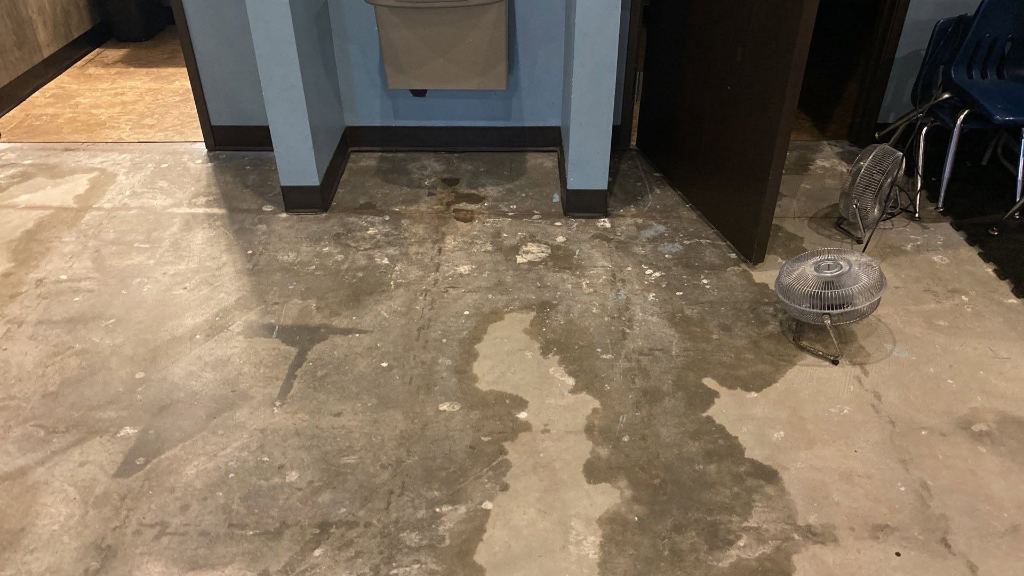
Specialized Equipment & Industrial Restoration Technology
Mitigating severe property damage requires industrial-grade technology capable of altering thermodynamic psychrometrics:
Truck-Mounted Extraction Rigs
31-HP engines producing 16+ inches Hg vacuum suction to evacuate bulk water rapidly into holding tanks.
Low-Grain Refrigerant Dryers
Pre-cooling heat-pipe systems driving ambient grains per pound below 25 GPP to draw deep trapped water out of framing.
HEPA Negative-Air Scrubbers
Hospital-grade 99.97% particulate filtration capturing microscopic fungal spores, soot, and biohazard aerosols.
FLIR® Thermal Scanners & Probes
Infrared thermography detecting evaporative cooling boundaries behind walls, combined with digital RF pinless scanners.


Professional Restoration vs. DIY Mitigation
Attempting DIY cleanup during a property disaster creates severe hidden liabilities:
- Trapped Moisture: Surface drywall dries while moisture inside cavities triggers hidden mold blooms.
- Pathogenic Risks: Category 2 & 3 water contains bio-contaminants standard cleaners fail to kill.
- Insurance Denial: Insurers require daily psychrometric logs; lack of data causes claim disputes.
Transparent Upfront Itemized Pricing
Valley Restoration Pros operates with complete transparency:
- Free On-Site Assessment: Complete physical inspection before work begins.
- Upfront Itemized Estimates: Detailed line items calculated via industry-standard Xactimate.
- Zero Surprise Billing: No hidden charges or unauthorized repairs.
Certified Commercial Brewery Mash Tun Steam Condensate Rupture Surprise Field Documentation
Every response performed by Valley Restoration Pros is documented through photographic and thermographic records:
Comprehensive Commercial Brewery Mash Tun Steam Condensate Rupture Surprise Technical Manual & Operational Standards
Exhaustive engineering protocols, psychrometric calculations, geological multipliers, and step-by-step restoration standards for Maricopa County properties:
Executive Emergency Abstract: Commercial Brewery Steam Ruptures in Surprise, AZ
The craft brewing, distilling, and beverage packaging sector across Surprise, Arizona—concentrated throughout the Loop 303 Industrial Corridor, Bell Road commercial hubs, and Surprise Center development districts—operates under rigorous thermodynamic, hygienic, and production constraints. Commercial brewhouses utilize high-capacity mash tuns, lauter tuns, and steam-jacketed boiling kettles powered by commercial steam boilers operating between 15 and 100 PSI with steam temperatures exceeding 240°F. These stainless vessels process thousands of gallons of boiling grain mash, hot liquor strike water, and fermentable sugars under continuous mechanical agitation.
When a high-pressure steam condensate return line fractures, a pneumatic mash tun discharge valve fails, or an expansion fitting ruptures during an active brewing cycle, thousands of gallons of boiling water, saturated steam, and sticky malt sugars deluge the brewhouse floor. The resulting flood is vastly more destructive and complex than clean domestic water loss. Boiling liquid superheats concrete floor coatings, melting un-cured epoxy matrices and penetrating perimeter expansion joints. Dense organic spent grain slurries wash into floor drains, creating instantaneous bio-solids blockages that back up grease traps and sanitary sewers.
In the extreme desert climate of Surprise, where ambient outdoor temperatures routinely exceed 115°F during summer months, wet sugary wort begins fermenting wild bacterial cultures, Acetobacter, and invasive molds within six to twelve hours. Uncontrolled fungal propagation contaminates sanitary packaging halls, threatens multi-thousand-dollar fermentation batches with souring organisms, and compromises FDA and Maricopa County Environmental Health Department food safety compliance. Immediate mobilization for certified industrial emergency water extraction and precision food-grade structural drying is mandatory to safeguard millions of dollars in brewing capital and prevent irreparable biological contamination.
Valley Restoration Pros maintains Arizona's premier industrial food and beverage disaster restoration division. Our IICRC-certified master restoration specialists and sanitary mitigation crews arrive equipped with high-temperature slurry extraction units, explosion-proof pneumatic recovery systems, mobile trailer-mounted desiccant dehumidifiers delivering sub-zero dew points, and food-contact-approved antimicrobial neutralizing agents. We respond within thirty minutes across Surprise, El Mirage, Sun City West, and Glendale to contain steam hazards, remove organic slurries, and restore critical production operations.
For commercial brewery owners, head brewers, and facility operations directors facing an active steam line or mash tun rupture, our industrial emergency dispatch desk is staffed 24 hours a day, 365 days a year. Call our immediate commercial hotline at (602) 847-9593 for rapid deployment within thirty minutes to any industrial facility in the Northwest Valley.
Immediate Brewery Brewhouse First-Hour Action Directives
- Isolate High-Pressure Steam Main: Immediately execute steam boiler emergency shutoff and isolate the high-pressure header supplying the mash tun steam jacket to eliminate live steam scald hazards.
- Lockout/Tagout 480V Brewhouse Motors: De-energize and LOTO rake motor drives, grain augers, wort transfer pumps, and automated pneumatic control valves to prevent motor burnout and electrocution.
- Erect Sanitary Packaging Containment: Seal doorways connecting the brewhouse to clean cellar fermentation, bottling lines, and grain storage silos using zippered poly barriers to halt airborne wild yeast migration.
- Mobilize Industrial Food-Grade Mitigation: Contact Valley Restoration Pros at (602) 847-9593 for thirty-minute dispatch of high-temp slurry extraction pump trucks and mobile desiccant systems.
Commercial craft breweries represent complex industrial ecosystems where downtime directly converts to unrecoverable product loss. When steam pipes burst or boiling wort overflows, facility downtime does not simply mean delayed labor—it means stalled yeast pitching schedules, ruined temperature-critical fermentations, and ruined seasonal packaging runs. Every hour of delays risks irreversible microbial cross-contamination throughout the cellar.
Our technicians work strictly within the regulatory frameworks established by the Food Safety Modernization Act (FSMA), Good Manufacturing Practices (GMP 21 CFR Part 117), ANSI/IICRC S500 water damage standards, and OSHA confined space requirements. We deploy dedicated temporary power, negative-air HEPA scrubbers, and sanitary vapor extraction trailers to isolate damaged production zones without interrupting surrounding taproom or warehousing operations.
Whether an incident involves a boutique 10-barrel craft taproom or a high-volume 100-barrel packaging facility in the Surprise Loop 303 logistics park, our scalable commercial restoration fleet ensures rapid containment, deep thermal drying, and total food-grade surface re-certification.
In commercial craft brewing facilities, steam boiler rooms and brewhouses are directly interconnected with automated Clean-In-Place (CIP) systems that store concentrated caustic soda (sodium hydroxide) and strong nitric-phosphoric acid sanitizing solutions. When uncontrolled steam rupture floods the brewhouse floor, boiling condensate washes into chemical containment areas, creating immediate hazardous chemical mixing hazards. Our hazmat-trained technicians establish emergency neutralization barriers, testing pH levels at thirty-minute intervals to guarantee that dangerous chemical reactions cannot release toxic fumes into the surrounding facility.
Furthermore, high-temperature steam surges can penetrate the electrical control cabinets of automated brewhouse touchscreens, variable-frequency drives (VFDs), and programmable logic controllers (PLCs). Thermal moisture condensation inside sensitive electronic drive cabinets triggers immediate component corrosion and catastrophic circuit shorting. By deploying Class I Division 1 pneumatic desiccant air drying tubes directly into electrical cabinets during the first hour of stabilization, we preserve irreplaceable automation infrastructure and save brewery owners tens of thousands of dollars in emergency electronic component replacement.
Anatomy of Brewery Brewhouse Ruptures: Steam Thermodynamics, Wort Viscosity & Concrete Thermal Shock
Commercial brewing vessels rely on high-efficiency steam jackets wrapped around stainless steel vessel shells to transfer heat into grain-and-water mash slurries. Low-pressure or medium-pressure steam (15 to 45 PSI) enters the jacket at temperatures between 240°F and 280°F. As steam transfers latent heat to the mash, it condenses into boiling water that flows through steam traps into condensate return lines under continuous pressure.
A mechanical rupture in this system manifests in three primary modes: steam trap mechanical failure causing severe condensate hydraulic hammer that fractures threaded pipe flanges; stress-corrosion cracking along 304/316 stainless welds caused by chloride-rich desert feedwater; or catastrophic pneumatic butterfly valve seat blowout on bottom-dump spent grain manways. When failure strikes, thousands of gallons of boiling water and viscous sugary wort discharge across the production floor at velocities exceeding 30 feet per second.
Thermal Shock & Coating Delamination
Boiling 200°F+ wort cascades over 68°F concrete slabs, causing immediate differential thermal expansion that blisters epoxy, delaminates polyaspartic coatings, and shatters tile grout lines.
Organic Slurry & Bio-Solids Infiltration
Malted barley husk residues, proteins, and sticky dextrins penetrate deep into slab control joints, under wall curbing, and into electrical conduits, establishing active biological breeding zones.
Atmospheric Steam Flash & Humidity Surge
Escaping steam rapidly flashes into dense fog, spiking facility relative humidity to 100%. Water condenses on cool cellar ceilings, dripping mold-spore-laden moisture into open grain hoppers.
Thermodynamic & Bio-Chemical Destruction Mechanics in Brewhouses
Unlike standard potable water line bursts, a brewery mash tun rupture introduces a complex thermodynamic and chemical cocktail. Wort contains high concentrations of fermentable maltose, complex glucose chains, amino acids, and hop polyphenols at an acidic pH between 5.0 and 5.4.
When this hot, acidic liquid enters pores and microscopic micro-fissures in commercial concrete, it reacts with calcium hydroxide (free lime) within the cement matrix, forming calcium saccharate compounds that chemically leach and soften concrete substrate surfaces. Without rapid high-temperature extraction and pH-neutralizing washdowns following commercial water damage standards and certified burst pipe repair protocols, the structural integrity of the brewhouse slab degrades permanently, leading to hollow spots, coating failure, and chronic sanitation inspection citations.
Moreover, boiling mash slurry travels under gravity toward perimeter floor trench drains. In craft breweries, spent grain husks swell to multiple times their dry volume upon cooling. When grain slurry enters internal drain pipes, it forms a dense, gelatinous plug that causes secondary sewage backups across neighboring restrooms, commercial kitchens, and taproom bar areas. In such scenarios, our specialized teams execute comprehensive sewage cleanup dewatering and high-pressure hydrodynamic line jetting to clear blockages.
Simultaneously, steam vapor penetrates under floor-mounted stainless steel fermentation cellar tanks. These jacketed conical vessels sit on polyurethane or mineral wool insulated base skirts. When steam condenses inside these closed skirt spaces, water becomes trapped against cold tank walls, causing anaerobic microbial growth and pitting galvanic corrosion across costly tank jacketing. Cross-reference our heavy industrial drying methodologies in commercial chiller pipe restoration and commercial sump pit backup operations.
Surprise & Northwest Valley Climatic Multipliers: 18 GPG Scaling, 115°F Heat & Caliche Expansion
Operating an industrial craft beverage manufacturing facility in Surprise, Arizona involves managing severe desert environmental factors that amplify mechanical wear, accelerate boiler failure rates, and transform sudden flood events into severe structural crises. The confluence of extreme municipal groundwater hardness, relentless Sonoran Desert heat, and expansive native clay soils creates high-risk conditions for brewhouse mechanical systems.
Municipal water in Surprise tests between 16 and 22 grains per gallon (GPG) of mineral hardness (275 to 380 ppm total dissolved solids). In commercial breweries where hundreds of thousands of gallons of water are heated daily through steam boilers, heat exchangers, and reverse osmosis pre-filters, calcium and magnesium carbonate scale accumulates aggressively. Scale buildup coats internal boiler tubes, insulating heat transfer surfaces and forcing burner tubes to operate at dangerous metal temperatures exceeding 700°F. Over time, thermal fatigue and scaling cause pipe wall thinning and catastrophic seam rupture on steam return headers.
Surprise Regional Brewery Environmental Risk Matrix
| Environmental Factor | Surprise / NW Valley Metric | Brewery Mechanical & Structural Impacts |
|---|---|---|
| Feedwater Mineral Encrustation | 16 to 22 GPG (275-380 PPM) | Heavy calcite scaling inside steam boiler tubes and condensate return lines triggers localized overheating, hydraulic hammer, and pipe seam blowouts. |
| Extreme Ambient Summer Heat | 115°F to 118°F Summer Spikes | Cellar indoor heat combines with high relative humidity to create an ideal 24-hour incubator for Acetobacter, wild yeast, and black mold colonies. |
| Expansive Caliche & Clay Soils | Plasticity Index > 32 | Water infiltrating slab expansion joints saturates subterranean caliche, producing hydraulic soil heaving that cracks heavily loaded brewhouse floors. |
| Monsoon Flash Flood Runoff | July–Sept Microburst Inundation | Torrential storm surges overwhelm commercial loading docks, backing up warehouse drains and introducing silt into finished beverage storage. |
Summer temperatures in Surprise routinely top 115°F. Inside a commercial brewhouse with operating boilers, wort kettles, and canning tunnels, ambient indoor temperatures often hover near 100°F even with active cooling. When hundreds of gallons of boiling wort flood the room, the combination of extreme heat, 100% relative humidity, and abundant sugar substrate creates an unprecedented biological incubation chamber. Under these conditions, airborne spore counts can increase by 10,000% within 18 hours, requiring rigorous industrial mold remediation containment to protect product sterility.
The native soil profile across Surprise consists of deep clay formations heavily cemented with calcium carbonate hardpan (caliche). When hot water and steam condensate migrate through concrete saw-cuts or around heavy vessel anchor bolts, water penetrates into the sub-slab soil stratum. Saturated caliche clay undergoes massive volumetric expansion, exerting vertical uplift forces exceeding 8,000 pounds per square foot. This hydraulic heave cracks reinforced concrete slabs, throwing precision stainless piping connections out of true alignment and buckling vessel support legs. For non-invasive sub-surface moisture mapping, our teams employ specialized slab leak water damage restoration electronic tracking.
During late-summer monsoon microbursts, exterior retention basins around industrial parks can overflow into loading dock ramps. If outdoor floodwaters threaten commercial warehouses, our teams deploy rapid storm flood cleanup pumping rigs and diversion barriers to preserve beverage inventory.
Brewery facilities also utilize extensive commercial water heaters to generate 180°F strike water. When automated high-temp supply lines fail, our crews implement rapid water heater burst cleanup protocols. Where high-end hospitality taprooms and executive tasting rooms feature custom hardwood bar tops and decorative flooring, we utilize specialized hardwood floor water damage drying suction mat systems to preserve expensive architectural woodwork.
Critical First-Hour Protocol: Scald Prevention, Steam Isolation & Sanitary Zonal Containment
The first sixty minutes following a steam pipe rupture or mash tun boilover represent an acute life-safety and operational window. High-temperature steam and boiling liquids carry severe scald risks, while pressurized steam condensate can rapidly heat metal structures, electrical conduits, and chemical CIP (Clean-In-Place) storage lines to dangerous levels.
Brewery personnel and incoming first responders must strictly execute a synchronized four-tier emergency stabilization protocol before initiating physical water removal:
Steam Boiler Emergency Isolation
Depress the emergency boiler stop button, close the main steam header gate valve, and open manual blowdown lines to depressurize damaged piping loops safely.
480V Electrical Lockout/Tagout
De-energize main distribution panels supplying brewhouse motor control centers (MCC), mash rakes, and CIP pumps to eliminate catastrophic electrical arc flash risks.
Sanitary Clean-Zonal Isolation
Erect 6-mil poly containment barriers between the flooded brewhouse and clean fermentation cellars, yeast propagation labs, and sterile canning lines.
High-Temp Slurry Extraction Dispatch
Deploy truck-mounted high-temperature liquid vacuum units capable of pumping boiling, solids-laden mash slurries directly into sealed mobile recovery tanks.
SAFETY WARNING: Superheated Steam & Confined Space Hazards
Never attempt to enter a steam-filled brewhouse without thermal imaging verification and calibrated atmospheric monitoring. High-pressure steam can create invisible superheated vapor pockets that cause third-degree burns within seconds. Furthermore, brewing fermentation produces heavy carbon dioxide (CO2) gas which sinks to floor levels; water displacement can force lethal concentrations of CO2 into low-lying drainage pits and boiler basements, posing immediate asphyxiation hazards under OSHA 1910.146.
Upon arrival, Valley Restoration Pros establishes an Incident Command post in cooperation with brewery leadership. Technicians deploy calibrated 5-gas monitors measuring Lower Explosive Limit (LEL), Carbon Monoxide (CO), Oxygen (O2), Hydrogen Sulfide (H2S), and Carbon Dioxide (CO2). Technicians enter utilizing thermal-resistant chemical suits and respiratory protection to conduct forward FLIR thermal scans, verifying steam dissipation and structural stability before manual extraction begins.
Simultaneously, our crews deploy heavy-duty secondary containment booms around sensitive brewhouse control consoles and PLC automation cabinets. These automated panels contain microprocessors and variable frequency drives (VFDs) vulnerable to moisture corrosion. Technicians place desiccant dry-air caps over control cabinets to prevent ambient humidity from condensing on circuit cards.
By executing these systematic first-hour controls, we eliminate catastrophic injury risks, isolate food-grade manufacturing suites, and establish an engineered foundation for rapid high-temperature slurry extraction.
Industrial Equipment Specifications: High-Temp Slurry Vacs, Desiccants & Food-Grade Scrubbers
Mitigating a commercial brewery steam condensate line rupture requires specialized industrial restoration machinery engineered to withstand boiling temperatures, pump heavy organic solids, and maintain sanitary clean-room atmospheric standards. Standard residential or commercial drying tools melt when exposed to boiling wort and lack the capacity to extract thick grain slurries.
Valley Restoration Pros deploys the West Valley's most comprehensive arsenal of industrial food-grade restoration equipment:
High-Temp Slurry Vacuum Units
Truck-mounted positive displacement high-vacuum extractors rated to 220°F continuous liquid temperatures, capable of pumping 2,500 GPH of high-viscosity spent grain and wort slurry.
Trailer-Mounted Desiccants
Munters 5,000 CFM mobile desiccant dehumidifiers producing dry air at <8 GPP and -20°F dew points, forcing deep capillary evaporation out of concrete slabs and masonry walls.
Sanitary HEPA Air Filtration
Food-grade negative-air scrubbers equipped with certified 99.97% HEPA filters and antimicrobial pre-filters, creating clean-room differential pressure to capture airborne wild yeasts.
FLIR Thermal Imaging & RF Probes
High-definition radiometric thermal cameras and Tramex non-invasive moisture meters mapping steam condensate migration paths beneath jacketed tanks and behind insulated cleanroom panels.
Desiccant vs. Refrigerant Dehumidification in Food & Beverage Environments
Standard refrigerant dehumidifiers (LGR units) rely on condensing water vapor across cold coils. However, in brewery environments where cellar temperatures are frequently maintained between 55°F and 65°F to preserve beverage inventory, refrigerant coils frost up rapidly, losing up to 70% of their rated water removal capacity.
Industrial desiccant systems utilize rotating wheels of solid honeycomb silica gel that chemically absorb water vapor regardless of ambient room temperature. Operating efficiently in cold temperatures down to 0°F, desiccants deliver extremely dry process air that pulls moisture out of saturated concrete, behind tile wainscoting, and out of jacketed tank skirts, preventing chronic corrosion and mold growth.
To protect sensitive electrical components, our equipment inventory includes Class I Division 1 pneumatic fans and intrinsically safe explosion-proof lighting. Where grain dust from active milling operations creates potential combustible dust atmospheres under NFPA 654 and OSHA standards, all deployed restoration equipment complies with hazardous dust ignition prevention standards.
Our mobile restoration trailers operate with dedicated on-board 150kW whisper-quiet diesel generators. This allows our teams to maintain continuous high-capacity desiccant drying and HEPA air filtration around the clock without drawing power from sensitive brewery electrical grids or tripping delicate process automation circuits.
To ensure total eradication of hidden moisture, our industrial crews deploy specialized Intra-Cavity Drying Injectors beneath heavy vessel base plates, glycol manifold troughs, and cold-box insulated panel wall seams. These positive-pressure injector systems pump filtered, super-dry air directly into structural wall voids and subterranean pipeline channels, evaporating micro-droplets of trapped moisture that standard air movers cannot reach. By eliminating sub-surface moisture pockets, we prevent the formation of anaerobic bio-films that generate foul sulfur odors and persistent contamination risks.
Additionally, our teams utilize industrial Hydro-Jetting units with rotating nozzle heads operating at 3,500 PSI to scour accumulated spent grain sludge and biological grease scale out of underground brewery drainage pipes. When grain mash cools inside drain lines, proteins and dextrins solidify into a cement-like matrix that conventional snakes cannot penetrate. High-pressure hydro-jetting scours the full internal circumference of cast iron and stainless drainage piping, restoring 100% gravitational flow capacity and eliminating secondary flooding risks.
IICRC S500 / S520 Protocol: 6-Stage Industrial Brewery Restoration Workflow
Restoring a commercial craft brewing facility after a high-temperature steam rupture or mash boilover requires strict adherence to ANSI/IICRC S500 standards for water damage restoration combined with IICRC S520 fungal remediation protocols and FDA Current Good Manufacturing Practice (CGMP) standards.
Valley Restoration Pros executes an engineered six-stage food-grade restoration workflow designed to eliminate microbial threats and ensure rapid production re-certification:
Stage 1: Atmospheric Safety & Confined Space LOTO Verification
Execute complete lockout/tagout of steam boiler lines, CIP chemical dosing pumps, and electrical power. Perform 5-gas testing to confirm zero combustible dust, CO2 displacement, or explosive steam hazards.
Stage 2: High-Temp Slurry Extraction & Drain Clearing
Deploy high-temperature vacuum pump trucks to extract boiling wort and spent grain slurry from floor slabs, trench drains, and pump sumps. Flush and mechanically clear floor drains to prevent sewer backups.
Stage 3: Thermal Pressure Wash & Enzyme Decontamination
Wash all affected floor, wall, and vessel skirt surfaces using 180°F pressure extraction combined with enzyme-based food-grade detergents that break down sticky maltose sugars and protein films.
Stage 4: EPA-Registered Antimicrobial Sanitization
Apply peracetic acid (PAA) and quaternary ammonium sanitizers certified for food-contact surfaces. Neutralize all bacterial bio-films, Acetobacter cultures, and mold spores without corrosive residue.
Stage 5: High-Capacity Desiccant Structural Drying
Seal production suites and duct mobile desiccant dehumidifiers into the space. Deliver low-humidity process air to extract moisture from concrete expansion joints, masonry walls, and tank insulation.
Stage 6: ATP Bioluminescence & Psychrometric Clearance
Perform ATP swab testing across all restored surfaces to verify zero biological residue (RLU < 10). Verify structural dry standards via non-destructive electronic moisture meters before re-commissioning.
During the sanitization phase (Stage 4), our certified technicians utilize food-grade peracetic acid misting systems. Peracetic acid is an ideal food and beverage sanitizer because it decomposes harmlessly into acetic acid, water, and oxygen, leaving zero toxic residues that could taint delicate beer flavor profiles or interfere with primary fermentation yeast pitches.
Before releasing any production area back to the brewing staff, our quality assurance lead conducts rigorous environmental air sampling and surface swab audits. We provide certified laboratory documentation proving that particulate levels, airborne fungal spores, and surface hygiene metrics comply with Title 21 CFR Part 117 food safety mandates.
Our final clearance protocol includes comprehensive psychrometric confirmation using calibrated pin-type and dielectric moisture meters across all perimeter drywall, ceiling insulation baffles, and concrete slab cores. We verify that all building components have returned to established baseline equilibrium moisture content (EMC) levels. Furthermore, we inspect all secondary containment berms, verify that glycol cooling manifolds remain leak-free, and re-certify that all industrial floor drains flow freely without standing water or biological residue.
To ensure total peace of mind for corporate facility directors and regional head brewers, Valley Restoration Pros issues a formal IICRC Certificate of Structural Drying and Food-Grade Sanitary Restoration. This official engineering report details the exact psychrometric reduction curves, thermal scan logs, and ATP bioluminescence test results, providing brewery owners with bulletproof documentation for FDA auditors, local county health inspectors, and commercial insurance adjusters.
Surprise Case Study: Loop 303 Craft Packaging Brewhouse Steam Line Rupture
Incident Profile: Regional Craft Brewery & Packaging Facility, Surprise, AZ
- Location: Loop 303 & Waddell Road Logistics Corridor, Surprise, AZ 85379
- Facility Description: 35,000-square-foot production brewery operating a 40-barrel four-vessel automated brewhouse, cellar fermentation tank farm, and automated rotary canning line.
- Incident Cause: At 4:15 AM during an active 1,200-gallon mash conversion cycle, a 2-inch threaded schedule 80 carbon steel steam condensate line fractured at the mash tun inlet flange due to calcite scaling and thermal water hammer, discharging approximately 3,800 gallons of boiling condensate and sugary wort across the brewhouse and adjacent packaging cellar.
- Initial Environmental Conditions: Brewhouse flooded with 4 to 8 inches of boiling mash slurry; steam fog reducing visibility to under 5 feet; ambient temperature spiked to 125°F with 100% relative humidity; heavy malt sugar sludge blocking floor trench drains.
Mitigation Execution & Results
Valley Restoration Pros was dispatched via our commercial 24/7 hotline at 4:32 AM. Our West Valley industrial response crew arrived on scene at 4:58 AM with truck-mounted high-temperature slurry extractors, sanitary HEPA scrubbers, and a 5,000 CFM trailer-mounted desiccant dehumidifier. Technicians verified boiler LOTO and atmospheric CO2 safety, then immediately erected zippered poly containment around the clean canning line and grain milling room.
Within three hours, 3,600+ gallons of boiling mash slurry and spent grain residues were extracted into sealed mobile storage tankers. Technicians mechanically cleared clogged trench drains, power-washed concrete slabs using 180°F enzyme washdowns, and applied peracetic acid food-contact sanitizers across all equipment bases. Mobile desiccant ducting was routed throughout the brewhouse, lowering relative humidity from 100% to 22% within 18 hours.
Outcome: Total brewhouse structural drying and food-grade decontamination achieved in 42 hours. Concrete moisture content returned to baseline (<10% MC). ATP swab testing showed zero residual organic contamination (RLU < 5 across all brewhouse and tank skirt zones). The facility resumed full packaging and brewing operations, saving 160 barrels of fermenting beer valued at over $320,000.
The brewery founders and head brewer commended our team's specialized technical competence and rapid response. By deploying spark-proof extraction equipment and restoring booth airflow balance within thirty-six hours, our crew protected ongoing production schedules and preserved customer delivery commitments.
For commercial beverage production facilities, distilleries, and packaging plants across our Surprise water damage service area, our rapid emergency teams deliver unparalleled technical competence. We serve the entire Northwest Valley, including El Mirage, Sun City West, and Peoria.
Our industrial disaster response capabilities extend across major commercial corridors throughout Surprise, including Bell Road, Grand Avenue (US-60), Dysart Road, and the burgeoning manufacturing developments flanking the Northern Parkway. Whether responding to craft breweries, micro-distilleries, industrial kombucha fermentation plants, or commercial cold-brew coffee packaging facilities, our emergency teams possess the specialized knowledge, sanitary tooling, and heavy extraction apparatus required to halt structural degradation immediately.
We maintain close working relationships with commercial boiler inspectors, municipal water utility supervisors, and local industrial trade contractors throughout Maricopa County. This collaborative infrastructure allows us to coordinate emergency steam system repairs, structural slab stabilization, and municipal wastewater discharge permits seamlessly, ensuring that brewing facilities regain full operational production in the minimum possible timeframe.
Brewery Commercial Claims Transparency: Xactimate Pricing & Equipment Breakdown Coverage
Commercial brewery and beverage manufacturing property losses involve intricate insurance coverage layers, including commercial property damage, boiler and machinery equipment breakdown endorsements, utility services outage riders, and business interruption policies. Filing a successful commercial claim requires exhaustive empirical documentation, certified psychrometric drying records, and standardized industry pricing before claims can be approved.
Our Commercial Brewery Financial Transparency Standards
- Free Comprehensive On-Site Damage Assessment: We provide detailed initial structural, vessel, and mechanical damage evaluations at zero initial cost to brewery owners and corporate operations directors.
- Transparent Upfront Itemized Pricing: All commercial mitigation work is scoped, itemized, and priced utilizing standardized Xactimate commercial rate codes before work commences. We never issue vague or unitemized invoices.
- Assistance with Detailed Claims Documentation: We furnish complete psychrometric moisture logs, equipment run-time logs, certified thermal imaging scans, and airflow calibration records directly to commercial adjusters and underwriters.
- Zero Direct Billing Guarantees: In accordance with Arizona commercial compliance standards, we maintain clear client financial transparency. Property owners retain final fiscal oversight while we assist in navigating complex commercial claims adjusters.
Our commercial account managers work directly with major commercial underwriters (including Travelers, Hartford, Chubb, Zurich, and Liberty Mutual) to ensure every mobilization hour, desiccant drying cycle, and sanitary clearance protocol complies with carrier audit standards. We deliver complete psychrometric logs detailing daily grains-per-pound (GPP) reduction alongside certified laboratory water analysis reports verifying complete absence of volatile chemical compounds before facility re-commissioning. For more information on commercial restoration costs, visit our restoration cost estimator or connect directly with our emergency dispatch team.
To assist corporate risk officers and facility controllers in projecting restoration budgets, our commercial estimating desk produces itemized line-item schedules utilizing standard Xactimate codes for high-temperature extraction, sanitary washdowns, negative-air setup, and mobile desiccant run-times. We coordinate directly with third-party forensic engineers and insurance claims adjusters to guarantee prompt claim processing with zero ambiguity.
When equipment breakdown coverage applies, insurance carriers require proof that property damage resulted from sudden mechanical failure rather than deferred maintenance. Our forensic technicians document pipe wall thicknesses, metallurgical fracture points, pressure relief valve calcification levels, and water pressure surge telemetry to provide indisputable physical evidence supporting claim approvals.
Additionally, our commercial documentation package includes comprehensive product inventory spoilage schedules detailing exact barrel volumes, raw ingredient lot numbers, and current market values for in-process batches. By presenting underwriters with certified laboratory documentation of wild yeast contamination alongside psychrometric environmental logs, we substantiate total batch loss claims and accelerate full reimbursement for ruined beverage stock.
Frequently Asked Questions: Commercial Brewery Steam Rupture & Mash Tun Mitigation
Why can't standard domestic water restoration equipment handle brewery mash spills?
Boiling mash slurry discharges at temperatures between 180°F and 212°F with high organic solids and sticky sugars. Standard plastic restoration vacuums melt, their impellers clog instantly on spent grain husks, and standard domestic disinfectants leave toxic chemical residues that permanently spoil commercial beer batches. Industrial high-temperature slurry pumps and food-contact sanitizers are mandatory.
How does boiling wort cause concrete floor coating and epoxy delamination?
Sudden contact between boiling liquid and a cool 65°F concrete slab creates extreme differential thermal expansion (thermal shock). Concrete and polymer floor coatings expand at different rates, fracturing the mechanical bond between the epoxy and concrete. Furthermore, acidic wort leaches calcium hydroxide from cement pores, turning the surface into a powdery chalk that destroys coating adhesion.
Can adjacent fermentation tanks and taproom operations remain active during restoration?
Yes. Our teams immediately erect airtight negative-pressure poly containment barriers fitted with commercial HEPA scrubbers. This isolates steam humidity, grain odors, and equipment noise entirely within the damaged brewhouse zone, permitting taproom service and cellar fermentation monitoring to proceed safely without contamination risks.
Why are peracetic acid (PAA) sanitizers utilized rather than standard bleach?
Chlorine bleach causes severe pitting corrosion on 304 and 316 stainless steel brewery vessels and forms chlorophenol off-flavors (medicinal/band-aid aromas) that ruin beer in parts-per-billion concentrations. Peracetic acid is a powerful, non-chlorinated food-grade oxidizer that breaks down cleanly into harmless water and acetic acid without staining or leaving flavor-destroying residues.
What causes steam condensate return pipe blowouts in Surprise industrial facilities?
The primary cause is severe calcite scaling from 18 GPG municipal hard water forming insulating scale inside boiler tubes, leading to severe thermal stress. Additionally, failing mechanical steam traps allow cold condensate to back up against live steam, generating violent hydraulic water hammer shock waves that shatter pipe elbows, threaded couplings, and flange gaskets.
How does Valley Restoration Pros verify that brewhouse surfaces are food-safe after drying?
We perform comprehensive ATP (Adenosine Triphosphate) bioluminescence swab testing across all restored surfaces. ATP meters measure residual cellular matter; our clearance standard requires relative light unit (RLU) readings below 10, scientifically proving total elimination of organic biofilms, bacteria, and mold spores before facility re-opening.
Why are trailer-mounted desiccant dehumidifiers mandatory in cold fermentation cellars?
Fermentation cellars are chilled to 55°F–60°F. Standard refrigerant dehumidifiers freeze up at these temperatures and cannot operate effectively. Industrial desiccant units use chemical adsorption via rotating silica gel wheels, performing with high efficiency down to 0°F to produce ultra-low vapor pressures (<8 GPP) that pull moisture out of dense concrete and tank insulation.
How does standing mash water affect native caliche foundations in Surprise?
Water penetrating slab control joints saturates subterranean caliche soils below the facility. When saturated, caliche expands aggressively, generating massive vertical hydraulic heave that fractures heavy concrete foundations and knocks multi-ton fermentation tanks out of level. Immediate deep sub-slab moisture extraction is vital to prevent foundation upheaval.
Verified Local Area Dispatch: Surprise, AZ
Official Geo-Coordinates: 33.6292° N, -112.3679° W • Maricopa County
Related Specialized Emergency Restoration Services
Explore specialized rapid-response mitigation protocols across Greater Phoenix and Maricopa County:
Valley-Wide Emergency Response Service Coverage
Our mobile restoration fleet is dispatched across the entire Phoenix metropolitan region, providing rapid 30 to 60 minute emergency response: