

Valley Restoration Pros delivers 24/7 industrial emergency water extraction, thermal psychrometric drying, and structural mitigation across Phoenix and Maricopa County with guaranteed 30–60 minute rapid arrival. All protocols strictly adhere to IICRC S500 standards, featuring upfront itemized pricing and free on-site thermal moisture assessments. Call dispatch directly at (602) 847-9593.
Why Immediate Mitigation Is Critical in Phoenix Heat
Washing machine supply hose blowouts discharge up to 600 gallons per hour of pressurized laundry graywater across multi-story residences. Under Phoenix 115°F summer heat, trapped subfloor moisture triggers rapid ceiling collapse, delaminates subfloors, and fosters toxic black mold colonies within 24 to 48 hours.

Service Definition & The IICRC Standard of Care
Professional washing machine overflow flood cleanup phoenix is an engineering and environmental discipline adhering strictly to IICRC S500 protocols, not mere surface mopping. When structural plumbing failures strike in Maricopa County, certified emergency water extraction and thermal structural drying procedures must be deployed immediately. Whether triggered by high-pressure burst pipe emergencies, subfloor leaks, or commercial line ruptures, bound moisture rapidly penetrates concrete subfloors and wall framing. In the desert heat, delays trigger microbial proliferation requiring rapid mold remediation. Request damage assessment through our emergency assessment portal or request 30-minute dispatch across all Valley service areas.
Securing electrical feeds, inspecting load-bearing assemblies, and containing pathogens.
Stopping the intrusion source and erecting 6-mil plastic isolation containment airlocks.
31-HP truck-mount extraction, removing gallons exponentially faster than evaporation.
LGR dehumidifiers and HEPA air scrubbers driving grains per pound below 25 GPP.
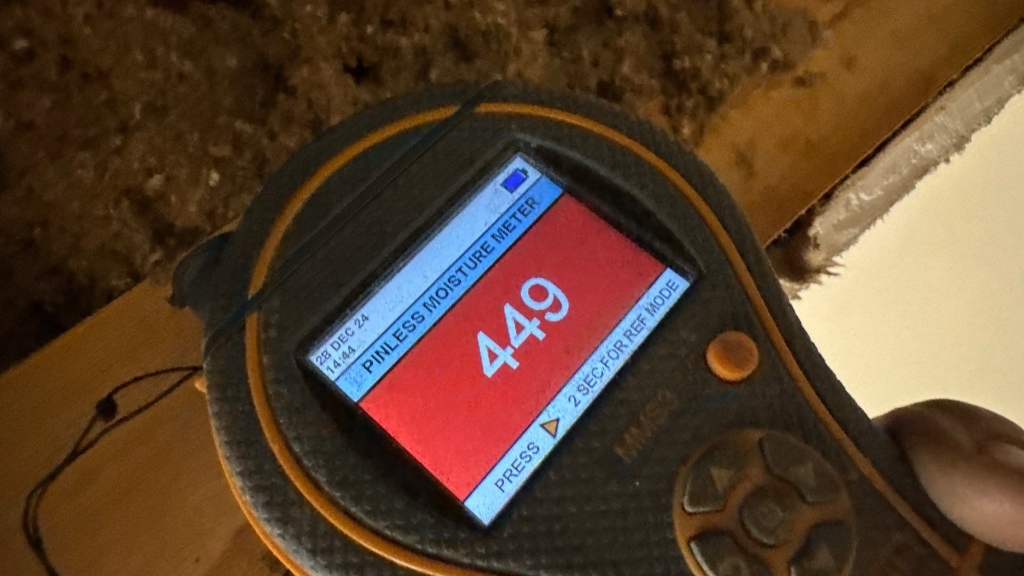
Calibrated electronic pinless testing confirming baseline dry standards.
The Complete 6-Stage Restoration Roadmap
Our IICRC-certified crews execute a disciplined, scientific 6-stage protocol to stabilize and dry structural components:
Emergency Dispatch & Perimeter Isolation
30 to 60 minute arrival. Securing electrical shutoffs, evaluating structural loads, and erecting containment airlocks.
FLIR® Thermal Mapping & Baseline Scans
Infrared thermal scans detect trapped moisture behind walls and beneath concrete without invasive exploratory demolition.
High-Volume Bulk Extraction
31-HP truck-mount extraction units pump standing water away at hundreds of gallons per minute.
Controlled Selective Demolition
Precision flood cuts 12 to 24 inches above moisture lines, removing wet insulation and opening wall framing to dry airflow.
Thermodynamic Dehumidification
Industrial Low-Grain Refrigerant dehumidifiers pull deep trapped moisture from dense framing lumber and concrete slabs.
Antimicrobial Sanitization & Verification
EPA-registered botanical application (Benefect Decon 30) and calibrated moisture testing to issue an official dry certificate.
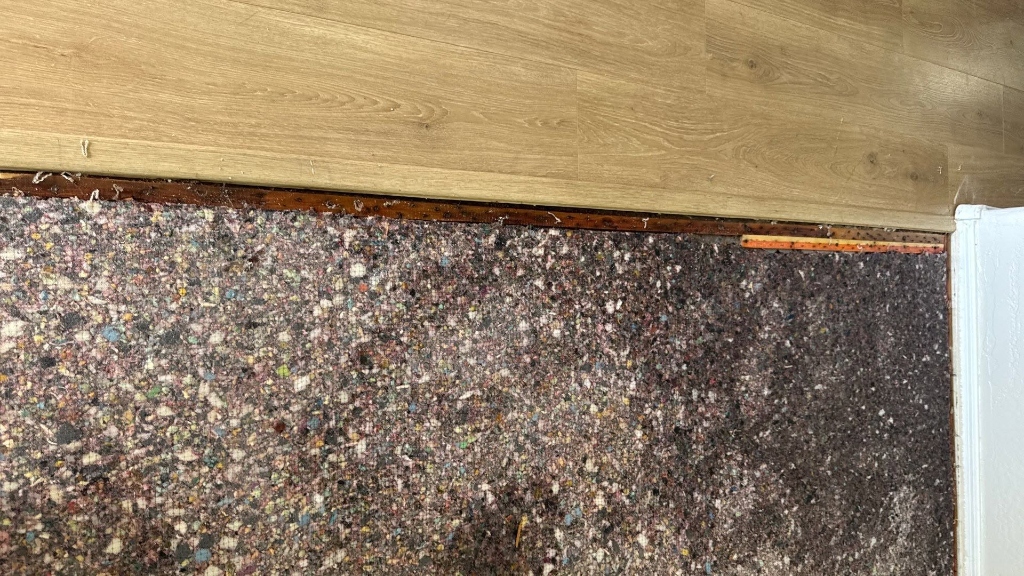
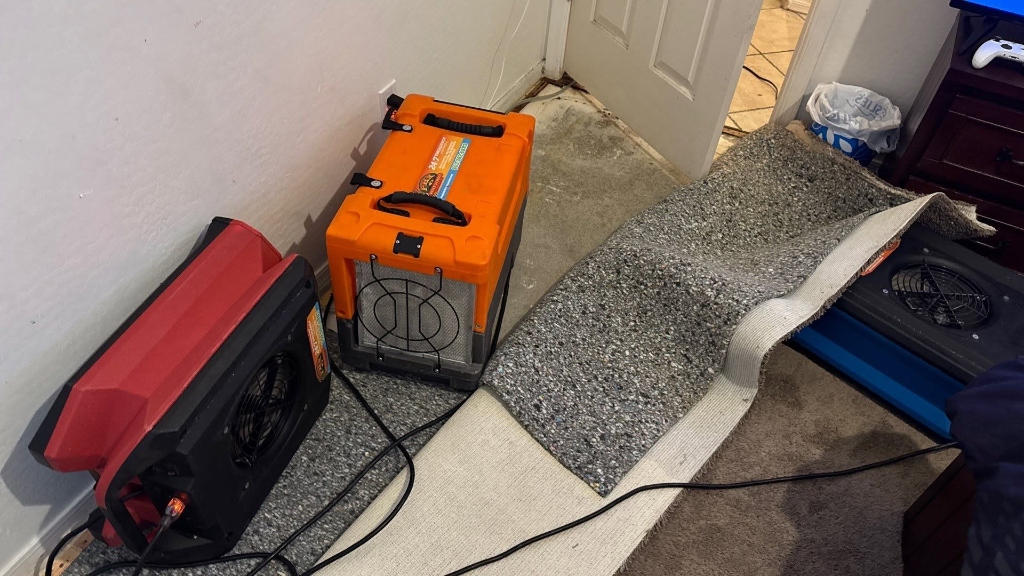
Specialized Equipment & Industrial Restoration Technology
Mitigating severe property damage requires industrial-grade technology capable of altering thermodynamic psychrometrics:
Truck-Mounted Extraction Rigs
31-HP engines producing 16+ inches Hg vacuum suction to evacuate bulk water rapidly into holding tanks.
Low-Grain Refrigerant Dryers
Pre-cooling heat-pipe systems driving ambient grains per pound below 25 GPP to draw deep trapped water out of framing.
HEPA Negative-Air Scrubbers
Hospital-grade 99.97% particulate filtration capturing microscopic fungal spores, soot, and biohazard aerosols.
FLIR® Thermal Scanners & Probes
Infrared thermography detecting evaporative cooling boundaries behind walls, combined with digital RF pinless scanners.

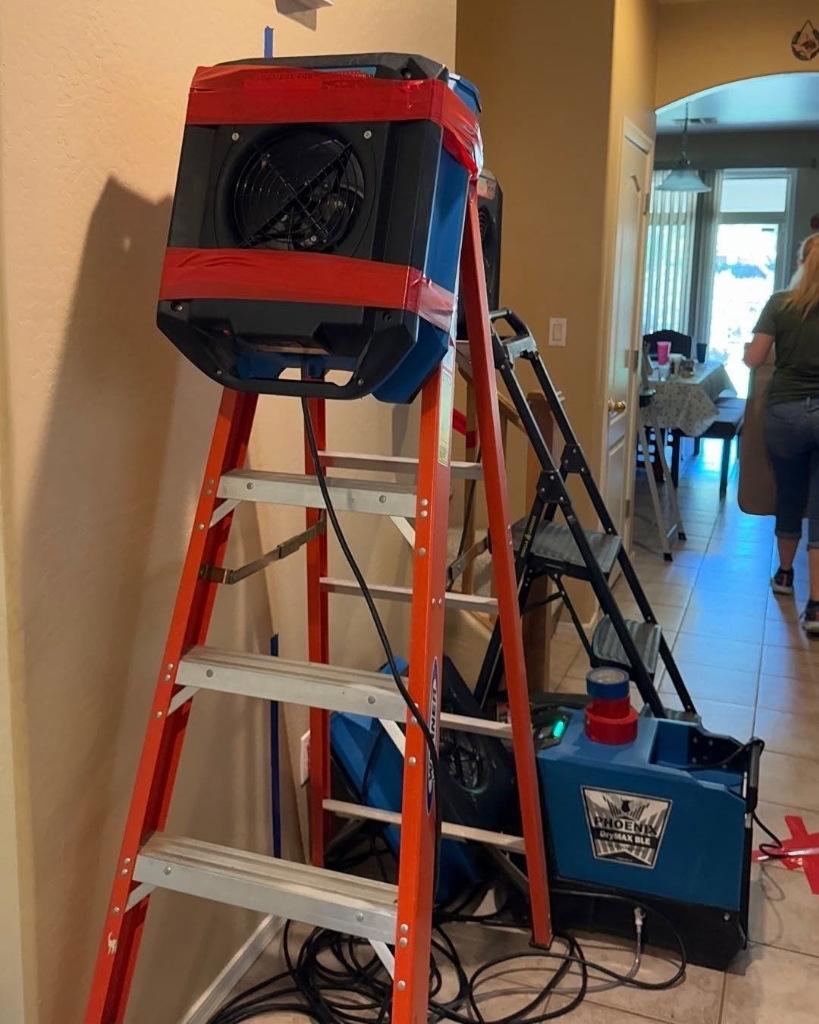
Professional Restoration vs. DIY Mitigation
Attempting DIY cleanup during a property disaster creates severe hidden liabilities:
- Trapped Moisture: Surface drywall dries while moisture inside cavities triggers hidden mold blooms.
- Pathogenic Risks: Category 2 & 3 water contains bio-contaminants standard cleaners fail to kill.
- Insurance Denial: Insurers require daily psychrometric logs; lack of data causes claim disputes.
Transparent Upfront Itemized Pricing
Valley Restoration Pros operates with complete transparency:
- Free On-Site Assessment: Complete physical inspection before work begins.
- Upfront Itemized Estimates: Detailed line items calculated via industry-standard Xactimate.
- Zero Surprise Billing: No hidden charges or unauthorized repairs.
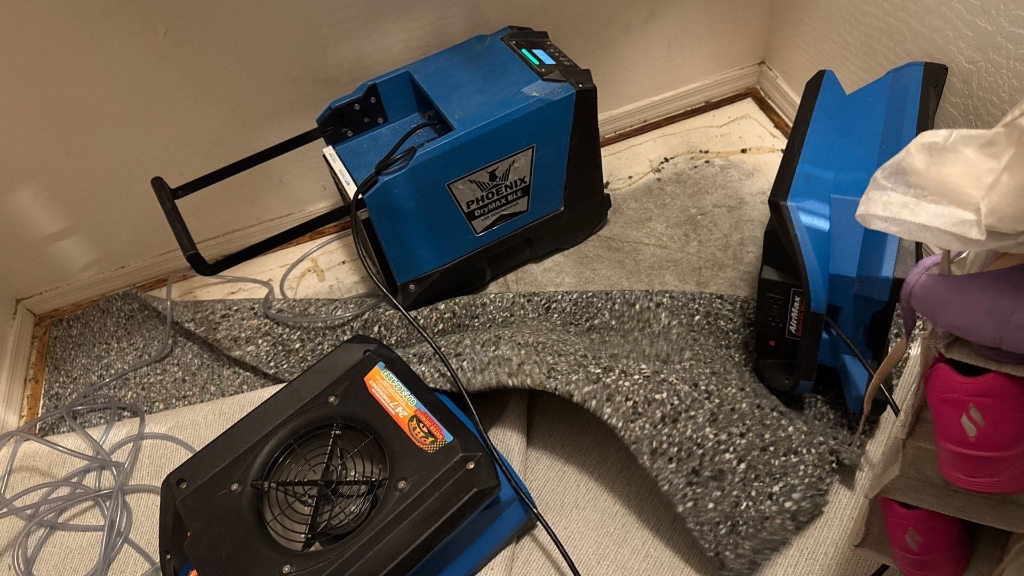
Certified Washing Machine Overflow Flood Cleanup Phoenix Field Documentation
Every response performed by Valley Restoration Pros is documented through photographic and thermographic records:


Comprehensive Washing Machine Overflow Flood Cleanup Phoenix Technical Manual & Operational Standards
Exhaustive engineering protocols, psychrometric calculations, geological multipliers, and step-by-step restoration standards for Maricopa County properties:
Executive Emergency Abstract: Washing Machine Catastrophic Inundation & Multi-Room Recovery
Across Greater Phoenix and Maricopa County, washing machine supply line failures and tub overflow catastrophes constitute one of the single most frequent causes of catastrophic interior residential and commercial water damage. Washing machines operate under continuous municipal line pressure ranging between 60 and 90 pounds per square inch (PSI), fed by pressurized hot and cold water risers. When an aging reinforced rubber supply hose develops an acute fatigue aneurysm, an internal water level pressure switch fails, or an unmonitored drain standpipe backs up during high-velocity spin pump discharge, the resulting torrent discharges between 400 and 1,200 gallons of pressurized water within just a few hours.
Unlike minor plumbing drips, a washing machine supply line burst is a full-volume pressurized hydraulic disaster. At a discharge rate of 6 to 10 gallons per minute, standing water quickly breaches laundry room thresholds, spreading across adjoining hallways, carpeted master suites, kitchens, and living rooms. In two-story homes in master-planned communities across Scottsdale, Gilbert, Chandler, and North Phoenix, upper-level laundry room failures produce immediate cascading destruction—saturating second-floor subflooring, destroying ceiling drywall, cascading through recessed light fixtures, and collapsing lower-level living room ceilings.
Furthermore, water escaping from a washing machine is frequently classified as Category 2 graywater under Institute of Inspection, Cleaning and Restoration Certification (IICRC) S500 Standards. Loaded with concentrated detergents, fabric softeners, lint, and biological soils from laundry cycles, this effluent carries elevated chemical and microbial risks. Under the extreme ambient temperatures of the Sonoran Desert—where indoor and garage temperatures regularly exceed 85°F to 100°F—standing laundry graywater undergoes rapid bacterial amplification, degrading into dangerous Category 3 blackwater within 24 to 48 hours unless immediate professional intervention takes place.
Immediate Washing Machine Flood Emergency Directives
- Shut Off Laundry Supply Valves Immediately: Locate the dual-lever or single-lever laundry shutoff valve box in the wall directly behind the washing machine. Pull the central red lever up or turn both individual hot and cold brass oval valves clockwise until fully closed. If valves are calcified or inaccessible due to high water, shut off the primary residential main water riser outside immediately.
- De-Energize Dedicated 120V / 240V Electrical Circuits: Laundry areas incorporate 120V washing machine receptacles and heavy-duty 240V electric dryer outlets. Never wade into standing laundry floodwater while circuits are energized. Walk to your primary service panel and trip the dedicated laundry breakers.
- Do Not Drain Cascading Ceiling Water Without Containment: If water is leaking from a second-story laundry failure into lower-level ceilings, place large plastic bins beneath the lowest sagging point and puncture a small relief hole using a screwdriver to control drainage and prevent sudden catastrophic ceiling collapse.
- Mobilize 24/7 Professional Extraction: Contact Valley Restoration Pros at (602) 847-9593. Our certified Master Restorers arrive on site in 30 minutes with high-capacity truck-mounted vacuum extractors, commercial desiccant dehumidifiers, and thermal imaging cameras to arrest migration and preserve structural framing.
Anatomy of Laundry Floods: Supply Hose Aneurysms, Pressure Switch Failures & Siphon Deluges
A residential washing machine undergoes intense kinetic and hydraulic stress during every wash cycle. Subject to vigorous spin-cycle mechanical vibrations, thermal shifts from boiling wash water to cold tap rinses, and sudden hydraulic water hammer shocks, the plumbing components servicing the appliance are uniquely vulnerable. The primary mechanical and plumbing failure pathways include:
Reinforced Rubber Supply Hose Rupture
Standard black rubber washing machine hoses deteriorate internally from constant municipal water pressure, chlorine degradation, and ozone exposure. The rubber matrix thins and forms an external bulge or aneurysm that eventually bursts violently under 80+ PSI municipal pressure, discharging up to 600 gallons per hour directly into the laundry room.
Internal Water Level Pressure Switch Seizure
The mechanical or electronic pressure transducer regulates tub fill volume via an air dome tube connected to the wash basin. If dried soap scum, lint, or calcium deposits block this 1/4-inch clear vinyl tube, the sensor never registers that the tub is full. Water continues filling indefinitely, cascading over the outer tub lip and flooding the room.
Solenoid Fill Valve Mechanical Binding
The dual water inlet valve relies on an electromagnetic coil and internal spring to seat a rubber diaphragm against incoming line pressure. Extreme mineral scaling from Phoenix's 18 GPG hard water jams the valve plunger in the open position. Even after the washing cycle ends or the machine is turned off, water flows continuously into the tub.
Drain Standpipe Backup & Siphon Break Blowout
Modern high-efficiency washers discharge wash water at velocities up to 15 to 20 GPM during drain cycles. If the 2-inch in-wall drain standpipe is partially obstructed by lint accumulations, or if the flexible discharge hose is shoved too deeply into the P-trap eliminating the air gap, dirty discharge water overflows the standpipe or siphons continuously into wall framing.
When a washing machine supply line fails, water migrates rapidly along floor-wall perimeters, wicking up drywall partitions, saturating sill plates, and passing beneath baseboards into adjacent rooms. In our experience responding to appliance disasters throughout Greater Phoenix, implementing certified emergency water extraction within the first hour reduces secondary structural damage by up to 75%.
For properties experiencing plumbing failures originating from related appliances, explore our technical manuals on dishwasher leak kitchen water damage and appliance leak water damage recovery.
Phoenix-Specific Environmental Accelerators: 18 GPG Water Scale, Monolithic Slabs & Summer Heat
Washing machine water damage in Phoenix, Arizona behaves fundamentally differently than in humid eastern or coastal climates. The unique environmental and geological characteristics of the Valley of the Sun create severe compounding challenges:
1. 18–25 GPG Extreme Water Hardness & Solenoid Diaphragm Calcification
The municipal water delivered across Phoenix, Scottsdale, Mesa, and Glendale carries between 300 and 450 parts per million (PPM) of total dissolved solids, primarily calcium carbonate, magnesium, and silica. In washing machines where hot wash cycles concentrate dissolved minerals, heavy calcium encrustations form along valve stems, O-rings, and stainless steel mesh inlet screens.
This abrasive scale causes premature rubber fatigue and prevents inlet solenoids from seating tightly, resulting in insidious slow drips behind the machine that persist undetected for weeks. When combined with nocturnal municipal water pressure spikes—often reaching 95 to 110 PSI between midnight and 4 AM—weakened rubber supply lines fail catastrophically. For properties facing severe plumbing scale degradation, review our technical breakdown on copper pipe pinhole leak water damage phoenix issues.
2. Monolithic Slabs on Caliche Earth & Multi-Room Capillary Spread
In single-story Phoenix homes, ground-floor laundry rooms sit directly upon monolithic post-tension concrete slabs poured above rock-hard caliche clay soil. Because caliche is nearly impermeable to water, floodwater cannot drain downward through the ground. Trapped above the slab, hundreds of gallons of wash water migrate laterally along expansion joints, perimeter sill plates, and carpet tack strips.
Within hours of an uncontained burst, water wicks through wall framing into adjoining bedrooms, dining areas, and living spaces. Trapped beneath flooring underlayment, stagnant water saturates concrete pores, triggering white salt efflorescence and lifting tiles unless high-capacity desiccant dehumidifiers are deployed. For deep structural slab moisture recovery, see our specialized slab leak water damage restoration protocols.
3. 115°F Desert Ambient Heat & 24-Hour Category 3 Blackwater Conversion
During Phoenix summer months (May through October), enclosed laundry rooms and unconditioned utility spaces consistently reach temperatures above 90°F to 110°F. When warm laundry graywater—containing body oils, skin cells, pet dander, and organic soil—saturates drywall paper and wooden baseplates in this hyper-thermal environment, bacterial populations explode exponentially.
What begins as a Category 2 graywater spill degrades into a hazardous Category 3 blackwater contamination within 24 to 36 hours. Toxic molds, including Aspergillus, Stachybotrys chartarum, and Penicillium, rapidly colonize enclosed wall cavities. Immediate containment and botanical antimicrobial application through our certified mold remediation protocol is mandatory to safeguard indoor air quality.
First-Hour Emergency Response Procedures: Water Isolation & Structural Preservation
The precise actions taken during the initial sixty minutes of discovering an active washing machine deluge dictate whether the incident results in manageable floor desiccation or a massive multi-room rebuild. Follow this systematic response protocol:
Isolate the Pressurized Water Supply
Locate the laundry supply box recessed into the wall behind the machine. Pull the central red single-throw lever upward, or turn both hot and cold brass oval valves clockwise until tightly seated. If the valves are corroded, seized, or spray water from the packing nut when turned, do not force them. Immediately exit the flooded space and shut off the home's main water supply valve located on the exterior water riser near the front hose bib.
De-Energize Dedicated Electrical Circuits
Laundry rooms contain 120V GFCI outlets powering washers and 240V 30-amp heavy appliance receptacles powering electric dryers. Standing water in direct contact with power cords creates lethal shock hazards. Go directly to your home's main electrical breaker panel and trip the breakers marked "Washer," "Dryer," and "Laundry." Never step into standing water to unplug equipment while circuits are energized.
Contain Migration & Mitigate Two-Story Cascading
Form an absorbent physical barrier using clean dry towels across doorways leading from the laundry room into carpeted hallways or hardwood living zones. In two-story homes with an upper-level laundry failure, immediately inspect the lower-level ceiling beneath the laundry footprint. Place large plastic tubs beneath sagging drywall and use an awl or screwdriver to pierce a small weep hole in the center of the water bulge, relieving weight and preventing sudden ceiling collapse.
Initiate Certified Rapid Restoration Dispatch
Contact Valley Restoration Pros at (602) 847-9593. Inform our emergency dispatcher whether the incident involves a single-story slab flood or a multi-level cascading structural loss. Our certified restoration crews mobilize immediately with commercial truck-mounted extraction units, industrial LGR dehumidifiers, and thermal imaging cameras.
For major household plumbing floods originating in garages or utility rooms, see our specialized manuals on water heater burst cleanup and burst pipe repair.
Advanced Industrial Restoration Equipment Deployed for Laundry Floods
Remediating hundreds of gallons of escaping laundry graywater requires commercial-grade extraction systems and thermodynamic desiccation machinery. Standard shop-vacs and domestic fans lack the vacuum lift and grain depression needed to extract bound moisture from saturated subflooring and wall cavities. Valley Restoration Pros deploys cutting-edge industrial technology:
Truck-Mounted High-Vacuum Extraction Units
Our fleet vehicles carry PTO-driven vacuum blowers delivering 16 inches of mercury (Hg) vacuum lift and 600+ CFM airflow. Connected to weighted rover extractors and deep-claw floor wands, these systems remove 95% of liquid water from carpet pads, tile grout, and concrete slabs in a single pass.
Vacuum Lift: 16 In. Hg (1,200 GPH)Low-Grain Refrigerant (LGR) Dehumidifiers
High-capacity Phoenix DryMAX XL and Dri-Eaz Revolution LGR units extract up to 140 pints of water per day per unit. Engineered for arid desert climates, these units push ambient grain depression down below 30 GPP, drawing deep-seated moisture out of saturated framing studs and structural subfloors.
AHAM Rating: 80 PPD @ 80°F/60% RHHigh-Velocity Centrifugal & Axial Air Movers
We deploy aerodynamic Phoenix Focus II axial air movers generating 3,200 CFM of high-velocity laminar airflow. Placed at 45-degree angles along saturated baseboards and floor assemblies, they strip away the boundary layer of high humidity at material surfaces, accelerating the evaporation rate.
Airflow Output: 3,200 CFM @ 2.5 AmpsFLIR Thermal Imaging & Pinless Moisture Meters
Our certified thermographers employ FLIR E60 thermal cameras to identify evaporative cooling patterns behind drywall partitions and under flooring. Non-destructive Tramex and Protimeter pinless meters calibrate exact wood moisture equivalent (WME) percentages without puncturing finished walls.
Thermal Sensitivity: < 0.05°CTo explore the thermodynamic engineering principles underlying our drying systems, review our exhaustive technical manual on structural drying protocols.
IICRC S500 / S520 Step-by-Step Restoration Protocol: From Bulk Extraction to Dry Standard
Remediating extensive laundry room water damage requires a structured engineering workflow. Valley Restoration Pros executes a 6-stage protocol adhering strictly to the Institute of Inspection, Cleaning and Restoration Certification (IICRC) S500 Standards:
Comprehensive Multi-Spectrum Hazard Inspection & Thermal Mapping
Upon arrival, our IICRC-certified Master Water Restorer maps the complete migration footprint using FLIR thermal imaging cameras. We establish baseline psychrometric measurements (dry-bulb temperature, relative humidity, dew point, and grains per pound of air) and calibrate wood moisture equivalent (WME) readings on structural framing, drywall, and subfloors. An unaffected room is tested to serve as the definitive benchmark dry standard for the project.
Heavy Mechanical Water Extraction & Sub-Surface Salvage
Using truck-mounted extraction equipment producing 16 inches of mercury vacuum lift, technicians remove standing water from tile grout lines, laundry pans, and carpeted corridors. For carpeted rooms, we utilize weighted self-propelled Rover extractors that compress carpet and pad simultaneously, pulling out 90%+ of absorbed graywater without requiring pad replacement in clean Category 1 supply line failures.
Controlled Precision Demolition & Cavity Access Flood Cuts
Because graywater wicks rapidly up interior drywall partitions, trapped moisture inside closed wall cavities will rot structural sill plates within 72 hours. Our crew executes clean 12-inch or 24-inch horizontal flood cuts using oscillating saws between wall studs to preserve electrical wiring. Saturated kraft-faced fiberglass insulation is removed and sealed in heavy 6-mil poly bags for safe disposal.
Botanical Antimicrobial Sanitization & Bio-Washing
Washing machine floodwater contains high levels of surfactant residue, fabric softeners, and bio-contaminants. We treat all exposed framing studs, concrete foundation slabs, and subfloor assemblies with Benefect Decon 30—an EPA-registered, plant-based thymol antimicrobial biocide. This hospital-grade disinfectant eradicates 99.99% of bacteria and fungal spores without toxic synthetic fumes or synthetic chemical residues.
Thermodynamic Drying Chamber Setup & Psychrometric Monitoring
We construct sealed polyethylene containment barriers to isolate affected rooms from unaffected living quarters. Commercial Low-Grain Refrigerant (LGR) dehumidifiers and high-velocity axial air movers are deployed at engineered 45-degree angles to create high-velocity vortex airflow across foundation slabs and exposed framing studs. Our technicians record daily psychrometric logs, monitoring vapor pressure differentials to ensure steady, uninterrupted evaporation.
Final Verification & Dry Standard Certification
The drying chamber is demobilized only after digital moisture meters confirm that framing studs, subfloor assemblies, and drywall have reached equilibrium with the pre-loss dry standard benchmark (typically 8% to 12% moisture content in wood framing and < 3.0 lbs/1,000 sq ft/24 hrs vapor emissions on concrete). We provide property owners and adjusters with a complete certificate of dry standard compliance and comprehensive photographic documentation.
For cases involving upper-level laundry room leaks penetrating ceilings, explore our specialized procedures for ceiling water damage restoration.
Hyper-Local Phoenix Case Study: Windsor Square Historic Home Second-Floor Laundry Deluge
Windsor Square Historic District: N Central Ave & E Camelback Rd, Phoenix AZ
Structure: 3,400 Sq Ft Two-Story Residential
Initial Incident Discovery
At 1:15 AM on a Wednesday in August, an unreinforced rubber hot-water supply hose burst behind a second-floor front-load washing machine while the family was asleep. Over 450 gallons of scalding water flooded the upper laundry room, saturated the subfloor, seeped through the floor joists, and collapsed a 14-foot section of the downstairs formal dining room ceiling.
Diagnostic Moisture Mapping
Thermal imaging cameras detected deep saturation throughout the second-floor plywood subfloor (34% moisture content) and downstairs lath-and-plaster ceiling joists (29% moisture content; dry standard benchmark was 8.1%). Downstairs antique oak hardwood flooring measured 31% moisture content with early perimeter cupping.
Mitigation & Outcome
Within 30 minutes, technicians secured the water source, extracted standing water from both floors, and stabilized the ceiling cavity. Technicians deployed Injectidry floor mat systems on the downstairs antique hardwood and set up high-capacity LGR dehumidifiers across both levels. Complete dry standard equilibrium was achieved in 72 hours, saving the historic oak flooring and avoiding full subfloor demolition.
"Waking up to the sound of water crashing through our dining room ceiling from the upstairs laundry room was an absolute nightmare. Marcus Vance and the Valley Restoration Pros team were on site in less than 30 minutes. They extracted hundreds of gallons of water, prevented further ceiling collapse, and saved our historic 1940s oak hardwood floors with their specialized drying mats. Their transparent communication and itemized insurance documentation made an overwhelming disaster completely manageable."
— James & Catherine M., Windsor Square, Phoenix AZ
We deliver identical rapid emergency response across all Valley communities. Explore our localized services for Scottsdale water damage and Tempe water damage restoration.
Transparent Financial Standards: Pricing Clarity & Insurance Documentation Protocols
Dealing with a major washing machine flood is stressful and disruptive. Valley Restoration Pros adheres strictly to consumer protection standards, providing upfront pricing clarity and comprehensive claims documentation:
On-Site Damage Assessment
Our field supervisor conducts an exhaustive multi-point moisture mapping inspection using FLIR thermal cameras and digital hygrometers at zero cost or financial obligation to the property owner.
Itemized Pricing Schedule
Before any equipment is connected or flood cuts are initiated, homeowners receive a detailed itemized estimate based on standardized pricing schedules. We never begin work without explicit authorization.
Standardized Insurance Codes
All extraction wands, dehumidifiers, air movers, and antimicrobial treatments are itemized using standardized Xactimate® pricing codes recognized by major homeowners insurance carriers nationwide.
Consumer Protection & Direct Billing Disclosure
Valley Restoration Pros does not make misleading promises of "free deductible waivers" or false assurances that insurance will cover 100% of all expenses without property owner responsibility. Policy coverages vary widely depending on endorsements, sudden-and-accidental provisions, and maintenance exclusions. We work cooperatively with your insurance adjuster, submitting daily psychrometric logs, moisture maps, and high-definition photographs to validate every dollar of work performed.
To calculate preliminary restoration expenses based on affected square footage and water category, explore our interactive free on-site assessment tool.
Frequently Asked Technical Questions: Washing Machine Overflows & Supply Hose Failures
Standard reinforced rubber hoses are subject to continuous municipal line pressure 24 hours a day, 365 days a year. Rapid-closing electronic solenoid valves inside modern washers create severe hydraulic shock waves (water hammer), momentarily spiking pressure inside the hoses over 120 PSI. Over 3 to 5 years, the combination of internal water hammer, chlorine degradation, and ozone in laundry air weakens the rubber wall, causing an aneurysm that bursts violently. We recommend replacing all rubber hoses with braided stainless steel lines equipped with internal check valves.
If a clean water supply hose ruptures before water enters the wash tub, it is classified as Category 1 (Clean Water). However, if water overflows from the washing tub during or after a wash cycle, it contains surfactants, fabric softeners, lint, and biological soils, classifying it immediately as Category 2 (Graywater). If left unmitigated in Phoenix summer temperatures for more than 24 to 48 hours, bacterial colonization degrades the loss into Category 3 (Blackwater), requiring full containment, antimicrobial biocide washing, and controlled removal of porous materials.
Most standard HO-3 and HO-5 homeowners insurance policies cover water damage resulting from "sudden and accidental" appliance failures, including ruptured supply hoses and mechanical overflow switches. However, insurers may deny coverage if they determine the damage was caused by chronic, unresolved leakage or visible hose rot that was ignored. Our technicians compile high-resolution photographic evidence, date-stamped thermal scans, and psychrometric logs proving the sudden nature of the failure to substantiate your claim.
In Category 1 clean water supply line bursts, synthetic carpeting and bonded polyurethane foam carpet padding can often be fully restored in place using truck-mounted weighted extraction wands and commercial LGR dehumidifiers. However, if the flooding originated from tub overflow or drain backup (Category 2 graywater), IICRC S500 Standards mandate the immediate removal and disposal of porous carpet padding, while synthetic carpeting can be salvaged through professional sub-surface extraction and EPA-registered botanical sanitization.
Bulk liquid extraction is completed within the first 1 to 2 hours of arrival. Deep structural desiccation of drywall framing, subflooring, and concrete foundation slabs typically requires 3 to 4 days (72 to 96 hours) of continuous LGR dehumidification and high-velocity axial airflow. We verify dryness using non-destructive moisture meters and demobilize equipment only when materials match the dry standard of unaffected areas in your home.
We recommend four proven engineering safeguards: (1) Replace black rubber hoses with braided stainless steel supply lines rated for 150+ PSI working pressure; (2) Install water hammer arrestors directly onto the hot and cold supply risers to absorb hydraulic shock waves; (3) Place an automatic flood-stop valve (such as Watts or FloodStop) that uses electric motorized ball valves to shut off supply lines within two seconds if moisture is sensed; and (4) Install a rigid polymer laundry drip pan with a 1-inch PVC drain line piped directly to an exterior discharge point or sewer standpipe.
Laundry graywater contains dissolved laundry salts and ionic detergents, drastically increasing its electrical conductivity compared to pure potable water. When standing graywater touches lower 120V junction boxes or 240V dryer receptacles, it triggers electrical tracking, corrodes brass contact terminals, and damages sensitive digital inverter motor boards. Sheet-metal laundry storage pedestals suffer severe galvanic rust along spot-welded seams, often binding internal sliding drawers unless immediately dried and treated with anti-corrosion inhibitors.
Psychrometric data—including dry-bulb temperature, relative humidity, dew point, and grains per pound (GPP) of moisture—provides definitive scientific evidence of structural evaporation. By measuring the specific humidity of air entering and exiting our commercial LGR dehumidifiers (grain depression), our technicians calculate the exact rate at which water is leaving your building materials. These logs are provided directly to your insurance company to justify equipment run times and prove compliance with IICRC S500 dry standards.
Valley-Wide Rapid Emergency Dispatch Corridors: 30-Minute On-Site Mobilization
Washing machine supply line blowouts do not wait for business hours. An uncontained deluge occurring at 2 AM demands instantaneous emergency mobilization. Valley Restoration Pros maintains dedicated emergency response teams stationed across the Greater Phoenix metropolitan area, arriving fully equipped within 30 minutes of your call:
Central & Downtown Phoenix Core
Serving Midtown, Arcadia, Encanto, Central Avenue, and Biltmore. Visit our Phoenix water damage dispatch center.
East Valley Metro Corridors
Serving Mesa, Tempe, Chandler, and Gilbert. Explore our Mesa water damage and Chandler water damage response teams.
West Valley Industrial & Residential
Serving Glendale, Peoria, Surprise, and Goodyear. See our Glendale water damage and Peoria water damage field units.
North Valley & Foothills
Serving Deer Valley, Desert Ridge, Anthem, and North Scottsdale. Contact our emergency dispatch hub for immediate staging.
Beyond washing machine overflows, our certified crews remediate all residential plumbing emergencies, including garage inundation from water heater burst cleanup, sub-slab leaks via slab leak water damage restoration, and sewage backflows under our sewage cleanup protocols. Review all serviced communities on our areas we serve directory.
Engineering Upper-Level Laundry Floods: Subfloor Salvage & Ceiling Structural Stabilization
Modern multi-story home design across Phoenix frequently positions laundry rooms on the second floor adjacent to primary bedrooms for homeowner convenience. However, an upper-level laundry flood is exponentially more destructive than a ground-floor slab failure. When 500 gallons of pressurized water escape on the second floor, gravity pulls water downward through every available architectural penetration:
1. Plywood & OSB Subfloor Delamination Mechanics
Second-story subflooring consists of tongue-and-groove oriented strand board (OSB) or CDX plywood fastened over engineered I-joists or solid dimensional 2x10 lumber. OSB subfloors absorb water rapidly along exposed panel edges, causing edge swelling up to 1/4 inch that does not recover upon drying.
Valley Restoration Pros deploys directed thermodynamic drying chambers to dry subfloors from both sides simultaneously. By placing positive-pressure Injectidry systems in the ceiling joist space below while operating high-velocity air movers and LGR dehumidifiers on the floor above, we equalize vapor pressures across the subfloor thickness, arresting edge swelling and preserving subfloor structural integrity.
2. Ceiling Joist Decontamination & Electrical Safety Verification
Water penetrating second-story subfloors cascades through lower-level ceiling assemblies, flooding can lights, ceiling fans, smoke detectors, and HVAC supply registers. Wet gypsum drywall absorbs massive water weight—increasing in density by up to 300%—straining drywall screws until the entire ceiling collapses under gravity.
Our restoration specialists perform controlled structural relief cuts, removing unsalvageable saturated drywall while stabilizing structural ceiling framing. We mist exposed ceiling joists with hospital-grade botanical biocides and deploy negative-air HEPA scrubbers to filter out airborne drywall dust and mold spores, restoring a pristine, safe living environment.
Hydraulic Water Hammer Physics & Mechanical Shock Arrestor Standards
To prevent recurring laundry disasters, property owners must understand the destructive physics of hydraulic shock—commonly known as water hammer. When high-efficiency washing machines pulse their water inlet solenoids open and closed in fractions of a second during wash and rinse sequences, the kinetic energy of rapidly moving water is suddenly halted:
The Physics of Pressure Shock Waves in Copper & PEX Plumbing
Water is essentially incompressible. When a solenoid valve snaps shut against a 60 PSI supply line flowing at 8 GPM, the sudden cessation of flow converts kinetic energy into a high-speed acoustic shock wave traveling backward through residential piping at approximately 4,000 feet per second. This generates instantaneous pressure spikes exceeding 150 to 200 PSI.
Repeated thousands of times over years of laundry cycles, these shock waves expand rubber supply hoses, loosen solder joints on rigid copper risers, and fatigue plastic crimp rings on PEX lines. Installing ASSE 1010 certified mechanical water hammer arrestors directly between the supply valve and the flexible hose absorbs this hydraulic recoil through an internal air-cushioned piston, shielding your plumbing infrastructure from catastrophic failure.
Drain Pan Hydraulics & Maricopa County Plumbing Code Mandates
Under the Uniform Plumbing Code (UPC) and local building safety codes adopted across Phoenix, Scottsdale, and Chandler, automatic washing machines installed on elevated wood-framed floors or living levels must be equipped with a watertight secondary containment pan:
The Sizing Deficit of Standard Builder Drain Pans
Most residential builders install lightweight polystyrene pans with a shallow 1.5-inch lip connected to a 1-inch PVC gravity drain line. While sufficient to catch minor condensation drips, a 1-inch gravity pipe can drain only 3 to 4 GPM under atmospheric pressure. When an 80 PSI supply hose ruptures—discharging 8 to 12 GPM—the pan overflows within 90 seconds, flooding the floor completely.
Valley Restoration Pros recommends upgrading to heavy-gauge aluminum or stainless steel commercial containment pans equipped with 1.5-inch or 2-inch drain lines and integrated electronic water-sensing shutoff switches that automatically kill line pressure the moment 1/16-inch of water pools in the pan.
Detergent Surfactant Chemistry & Foam Suppression Extraction Protocols
Washing machine tub overflows present a unique extraction challenge that separates professional restoration firms from amateur cleaners: concentrated laundry detergent surfactants. When high-efficiency (HE) liquid detergents mix with hundreds of gallons of wash water, the solution generates massive foam volumes when subjected to high-velocity vacuum airflow:
Preventing Vacuum Blower Cavitation with Silicone Emulsion Defoamers
If extracted directly into a vacuum recovery tank, detergent foam expands instantly, blinding the blower intake filters and forcing soapy water through the exhaust, damaging recovery equipment and reducing extraction lift.
Our technicians inject concentrated silicone emulsion defoamers into extraction hoses and recovery waste tanks prior to extraction. The defoamer breaks the surface tension of detergent bubbles on contact, collapsing foam into dense liquid that can be drawn through our truck-mounted systems at maximum vacuum efficiency.
Carpet & Cushion Pad Salvage vs. Replacement: IICRC S500 Standards
When laundry water breaches hallway thresholds and enters carpeted bedrooms, property owners need clear, authoritative standards regarding whether floor coverings can be saved or require replacement:
Category 1 vs. Category 2 Delamination Protocols
If the flood was caused by a clean supply line rupture prior to entering the machine (Category 1), synthetic carpet and polyurethane foam pad can be saved 100% in place through weighted sub-surface extraction and high-volume LGR dehumidification, saving thousands in carpet re-stretching and replacement costs.
However, if the flood originated from a tub overflow or backwashing standpipe (Category 2 graywater), IICRC S500 Standards strictly require the removal and disposal of bonded foam carpet cushion. The synthetic carpet itself is retained, treated on both face and backing with Benefect Decon 30 botanical biocide, and reinstalled with new antimicrobial padding once the concrete foundation slab has reached certified dry equilibrium.
Psychrometric Evaporative Equilibrium & Air Exchange in Confined Laundry Closets
In modern apartments, condominiums, and townhomes across Phoenix and Tempe, washing machines are frequently installed in tight hallway closets rather than open utility rooms. Drying a confined, unconditioned 40-square-foot laundry closet requires precise thermodynamic airflow management to avoid microclimatic saturation:
Engineered Negative-Air Cross-Ventilation Protocols
Without active mechanical air exchange, running high-velocity air movers in an enclosed closet causes relative humidity to spike to 100% within 15 minutes, stopping all structural evaporation and inducing secondary condensation on surrounding walls.
Valley Restoration Pros establishes a negative-air ducted drying envelope. Using layflat poly ducting, our commercial dehumidifiers draw wet air out of the closet enclosure while pumping processed, ultra-dry air (sub-30 GPP) directly against saturated framing studs. This high-volume differential exchange accelerates drying times by over 40%, preventing chronic microbial colonization in confined residential spaces.
Throughout the active desiccation cycle, certified technicians record grain depression measurements every 24 hours. By verifying that moisture vapor is exiting the building materials faster than ambient air can re-absorb it, we ensure that structural lumber reaches equilibrium with the predetermined dry standard without causing structural distortion or secondary framing cracks.
Additionally, all electrical switches, outlet junction boxes, and appliance receptacles within the affected footprint undergo formal thermal and electrical continuity inspection before power is safely re-energized. This thorough engineering safeguard eliminates hidden fire and arc-fault risks, returning the property to a certified safe, habitable state.
Verified Local Area Dispatch: Phoenix, AZ
Official Geo-Coordinates: 33.4484° N, -112.074° W • Maricopa County
Related Specialized Emergency Restoration Services
Explore specialized rapid-response mitigation protocols across Greater Phoenix and Maricopa County:
Valley-Wide Emergency Response Service Coverage
Our mobile restoration fleet is dispatched across the entire Phoenix metropolitan region, providing rapid 30 to 60 minute emergency response: