

Valley Restoration Pros delivers 24/7 industrial emergency water extraction, thermal psychrometric drying, and structural mitigation across Phoenix and Maricopa County with guaranteed 30–60 minute rapid arrival. All protocols strictly adhere to IICRC S500 standards, featuring upfront itemized pricing and free on-site thermal moisture assessments. Call dispatch directly at (602) 847-9593.
Why Immediate Mitigation Is Critical in Phoenix Heat
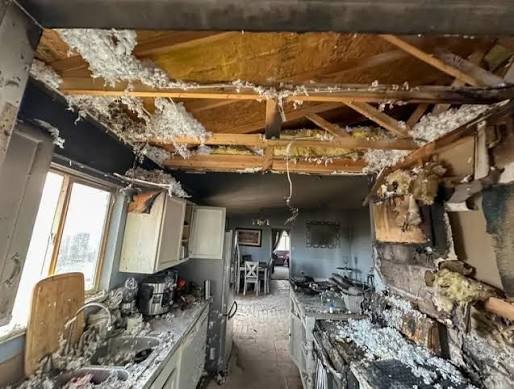
Heated smoke carries carcinogenic PAHs, acrolein, and volatile organic compounds upward into attic voids, saturating thousands of pounds of blown insulation and wood framing. Under Phoenix 140°F to 160°F summer attic superheating, porous wood trusses expand and off-gas intense burnt chemical odors downward through ceiling light fixtures into air-conditioned living spaces. Saturated ceiling insulation from firefighting water deluge weighs over 15 pounds per square foot, threatening catastrophic ceiling drywall collapse onto living quarters below. Trapped moisture from firefighting water combined with 110°F+ attic temperatures fosters aggressive toxic mold colonies across wet ceiling drywall paper backing within 24 to 48 hours.
Service Definition & The IICRC Standard of Care
Professional attic smoke odor removal thermal fogging phoenix is an engineering and environmental discipline adhering strictly to IICRC S500 protocols, not mere surface mopping. When structural plumbing failures strike in Maricopa County, certified emergency water extraction and thermal structural drying procedures must be deployed immediately. Whether triggered by high-pressure burst pipe emergencies, subfloor leaks, or commercial line ruptures, bound moisture rapidly penetrates concrete subfloors and wall framing. In the desert heat, delays trigger microbial proliferation requiring rapid mold remediation. Request damage assessment through our emergency assessment portal or request 30-minute dispatch across all Valley service areas.
Securing electrical feeds, inspecting load-bearing assemblies, and containing pathogens.
Stopping the intrusion source and erecting 6-mil plastic isolation containment airlocks.
31-HP truck-mount extraction, removing gallons exponentially faster than evaporation.
LGR dehumidifiers and HEPA air scrubbers driving grains per pound below 25 GPP.
Calibrated electronic pinless testing confirming baseline dry standards.
The Complete 6-Stage Restoration Roadmap
Our IICRC-certified crews execute a disciplined, scientific 6-stage protocol to stabilize and dry structural components:
Emergency Dispatch & Perimeter Isolation
30 to 60 minute arrival. Securing electrical shutoffs, evaluating structural loads, and erecting containment airlocks.
FLIR® Thermal Mapping & Baseline Scans
Infrared thermal scans detect trapped moisture behind walls and beneath concrete without invasive exploratory demolition.
High-Volume Bulk Extraction
31-HP truck-mount extraction units pump standing water away at hundreds of gallons per minute.
Controlled Selective Demolition
Precision flood cuts 12 to 24 inches above moisture lines, removing wet insulation and opening wall framing to dry airflow.
Thermodynamic Dehumidification
Industrial Low-Grain Refrigerant dehumidifiers pull deep trapped moisture from dense framing lumber and concrete slabs.
Antimicrobial Sanitization & Verification
EPA-registered botanical application (Benefect Decon 30) and calibrated moisture testing to issue an official dry certificate.

Specialized Equipment & Industrial Restoration Technology
Mitigating severe property damage requires industrial-grade technology capable of altering thermodynamic psychrometrics:
Truck-Mounted Extraction Rigs
31-HP engines producing 16+ inches Hg vacuum suction to evacuate bulk water rapidly into holding tanks.
Low-Grain Refrigerant Dryers
Pre-cooling heat-pipe systems driving ambient grains per pound below 25 GPP to draw deep trapped water out of framing.
HEPA Negative-Air Scrubbers
Hospital-grade 99.97% particulate filtration capturing microscopic fungal spores, soot, and biohazard aerosols.
FLIR® Thermal Scanners & Probes
Infrared thermography detecting evaporative cooling boundaries behind walls, combined with digital RF pinless scanners.
Professional Restoration vs. DIY Mitigation
Attempting DIY cleanup during a property disaster creates severe hidden liabilities:
- Trapped Moisture: Surface drywall dries while moisture inside cavities triggers hidden mold blooms.
- Pathogenic Risks: Category 2 & 3 water contains bio-contaminants standard cleaners fail to kill.
- Insurance Denial: Insurers require daily psychrometric logs; lack of data causes claim disputes.
Transparent Upfront Itemized Pricing
Valley Restoration Pros operates with complete transparency:
- Free On-Site Assessment: Complete physical inspection before work begins.
- Upfront Itemized Estimates: Detailed line items calculated via industry-standard Xactimate.
- Zero Surprise Billing: No hidden charges or unauthorized repairs.
Certified Attic Smoke Odor Removal Thermal Fogging Phoenix Field Documentation
Every response performed by Valley Restoration Pros is documented through photographic and thermographic records:

Comprehensive Attic Smoke Odor Removal Thermal Fogging Phoenix Technical Manual & Operational Standards
Exhaustive engineering protocols, psychrometric calculations, geological multipliers, and step-by-step restoration standards for Maricopa County properties:
Executive Emergency Abstract: Attic Smoke Odor Sequestration & Thermal Fogging Decontamination
Following a structure fire, furnace malfunction, or severe electrical blaze in Greater Phoenix, the attic space represents the single most problematic, chemically contaminated, and tenaciously odorous zone within the entire building envelope. Because heated air naturally rises via thermodynamic stack convection, plumes of volatile combustion gases, aerosolized soot particles, and vaporized synthetic polymers are forcefully driven upward through ceiling penetrations—including recessed lighting canisters, plumbing vent stacks, electrical chases, and ceiling drywall joints—directly into the enclosed attic cavity.
Once inside the attic, airborne combustion byproducts encounter thousands of square feet of raw, unsealed framing lumber: Douglas fir roof trusses, oriented strand board (OSB) sheathing, ceiling joists, and massive beds of loose blown cellulose or fiberglass batt insulation. In the hyper-arid climate of the Sonoran Desert, where summer attic temperatures routinely spike to between 140°F and 160°F, wood framing undergoes extreme thermal expansion. Microscopic wood pores open widely, absorbing volatile organic compounds (VOCs), polycyclic aromatic hydrocarbons (PAHs), and acrid carbon particulates deep into the structural wood matrix.
Compounding the disaster, attic blown insulation behaves like an enormous chemical sponge, trapping billions of sub-micron smoke particles and corrosive acid gases. Months or even years after a fire has been extinguished, whenever outdoor temperatures rise or atmospheric pressure drops, the superheated attic acts like a giant bellows, off-gassing nauseating, toxic smoke fumes downward through interior light fixtures and HVAC return plenums into living quarters below. Standard household air fresheners, surface wiping, and cosmetic painting cannot touch this deeply sequestered chemical contamination.
Immediate Attic Smoke Emergency Directives
- Do Not Enter the Attic Unprotected: Unconditioned attic spaces after a fire contain lethal concentrations of carcinogenic PAHs, volatile organic compounds, and microscopic fiberglass filaments. Entering without NIOSH-certified P100 respiratory protection presents severe pulmonary risks.
- Shut Down Attic-Mounted HVAC Air Handlers: Immediately set your central air conditioning thermostat to "OFF". Many Valley homes locate primary air handlers and flexible return ducts inside the attic; operating the system pulls concentrated attic smoke fumes and acid soot directly into bedroom living spaces.
- Do Not Attempt to Spray Water or Liquid Cleaners into Blown Insulation: Wetting smoke-damaged cellulose or fiberglass insulation destroys its thermal R-value, dissolves fire-retardant borate salts into ceiling drywall, and creates an immediate microbial incubation hazard under desert heat.
- Mobilize Specialized Attic Decontamination: Contact Valley Restoration Pros at (602) 847-9593. Our certified Master Restorers deploy high-powered insulation extraction vacuums, negative-air Nikro HEPA scrubbers, and industrial thermal pulse-jet foggers to eliminate smoke odors permanently.
The Thermodynamic Chimney Effect: How Smoke Migrates into Roof Cavities
To understand why attic spaces suffer severe smoke contamination even during small, localized fires—such as a kitchen grease flare-up or garage electrical fire—one must examine the thermodynamic principles governing building air dynamics:
Thermal Convective Stack Pressure
During combustion, superheated air expands and decreases in density, creating strong upward buoyant forces. This positive pressure differential forces smoke upward against the ceiling assembly at velocities reaching hundreds of feet per minute, seeking every micro-fissure to escape into the attic.
Ceiling Bypass Infiltration
In typical residential construction, drywall ceilings contain dozens of unsealed penetrations: non-IC recessed light housings, bathroom exhaust vent connections, junction boxes, and attic hatch access doors. These gaps act as natural chimneys, funneling concentrated smoke plumes directly into the insulation layer.
Insulation Adsorption Mechanics
Loose blown cellulose and fiberglass batting possess enormous total surface areas—often exceeding tens of thousands of square yards within a 2,000-square-foot attic. Hydrocarbon smoke molecules electrostatically adhere to insulation fibers, creating an enduring reservoir of volatile odor compounds.
Ventilation Short-Circuiting
Passive roof soffit vents, ridge vents, and gable louvers fail to exhaust dense, heavy smoke efficiently. Soot deposits stick to louver screens and dead-air attic valleys, creating stagnant odor pockets that continue recirculating throughout the roof framing structure.
Whenever attic smoke contamination accompanies structural firefighting water deluge, our team integrates immediate emergency water extraction on wet ceiling drywall with comprehensive attic decontamination to halt secondary collapse and structural decay.
For comprehensive whole-building fire damage recovery across all interior living spaces, review our foundational standards detailed in fire damage restoration.
Phoenix Climatic Multipliers: 140°F Attic Superheating, Monsoon Humidity & Caliche Soils
Remediating smoke odor from attic cavities in the Salt River Valley involves extreme desert environmental dynamics that standard restoration methods cannot overcome:
1. 140°F to 160°F Extreme Attic Superheating
During Phoenix summer months (May through September), solar radiation striking tile or shingle roofs elevates attic temperatures beyond 150°F. This intense thermal energy acts as a powerful catalyst for chemical desorption.
Synthetic polymers, melted electrical wiring jackets, and charred roof decking vaporize trapped polycyclic aromatic hydrocarbons into gaseous states. This intense heat pressurizes the attic cavity, driving noxious burnt chemical odors down through tiny drywall joints and recessed lights into air-conditioned living spaces. For properties with HVAC condensation issues compounding attic heat, see our analysis of attic ac condensation ceiling water damage dynamics.
2. Hyper-Arid Dryness Followed by Monsoon Humidity Surges
For much of the year, Phoenix ambient relative humidity remains below 15%. This arid air draws all free moisture out of roof trusses and OSB sheathing, leaving wood pores wide open to absorb airborne smoke particulates.
When the North American Monsoon arrives between July and September, sudden spikes in outdoor humidity (surging from 15% to 75% RH within hours) cause dehydrated framing lumber to rapidly re-absorb moisture vapor. This moisture uptake displaces embedded volatile aromatic compounds, releasing sudden, intense bursts of smoke odor into the home years after the original fire took place.
3. 18+ GPG Hard Water Suppression Deluge & Roof Breaches
When fire department crews cut ventilation holes through the roof or direct high-pressure hose streams into attic eaves, municipal water carrying 18 to 25 grains per gallon of dissolved minerals drenches attic framing and ceiling insulation.
As this mineral-laden water evaporates under 140°F attic heat, thick calcium carbonate scale crusts over charred roof trusses, trapping soot particles beneath rock-hard mineral deposits. If roof decking has been breached, explore our emergency response procedures for roof leak water damage restoration to secure the building envelope against desert rain.
4. 115°F Desert Heat & Accelerated Microbial Incubation
When firefighting water saturates cellulose attic insulation and ceiling drywall in an unconditioned home, interior temperatures hovering around 110°F create a prime breeding ground for hazardous mold species.
Fungal spores germinate within 24 to 48 hours, colonizing the wet organic paper backing of ceiling drywall and wood framing. Valley Restoration Pros deploys certified mold remediation containment and high-capacity drying protocols to eliminate microbial threats before insulation replacement begins.
First-Hour Emergency Response Procedures: Attic Safety & Ceiling Protection
Actions taken in the first sixty minutes following an attic fire or heavy smoke infiltration are vital to protect occupants from ceiling collapse and toxic particulate inhalation:
Evacuate Rooms Beneath Saturated Drywall Ceilings
Water-soaked blown cellulose insulation can weigh over 15 pounds per square foot. When standard 1/2-inch gypsum ceiling drywall absorbs water, the core softens and drywall screws pull through paper facing, leading to sudden overhead collapse. Keep everyone out of rooms showing bowed or sagging ceilings.
De-Energize Overhead Lighting Circuits
Turn off electrical circuit breakers supplying ceiling light fixtures, ceiling fans, and attic junction boxes. Firefighting water running through ceiling electrical boxes creates severe short circuits and arc hazards.
Seal Attic Access Hatches
Keep all attic scuttle holes, drop-down stairs, and access doors firmly closed. Opening an attic hatch allows thousands of cubic feet of hot, smoke-laden air to dump into living quarters, ruining furnishings and contaminating clean carpeting.
Mobilize Valley Restoration Pros Rapid Response
Call our 24/7 emergency dispatch hotline immediately at (602) 847-9593. Our specialized crews arrive in 30 minutes with truck-mounted insulation extraction rigs, negative-air HEPA scrubbers, and industrial thermal foggers throughout phoenix water damage and scottsdale water damage territories.
For properties where ceiling water retention threatens overhead collapse, review our specialized structural support protocols in our ceiling water damage restoration manual.
Advanced Industrial Equipment Specifications & Setup Protocols
Eliminating sequestered attic smoke odor requires heavy-duty industrial machinery engineered specifically for confined, high-temperature roof cavities:
For deep desiccation of structural timbers and roof trusses soaked during firefighting operations, review our specialized drying methodology in our structural drying overview.
IICRC FSRT Certified 6-Stage Attic Restoration Workflow
Valley Restoration Pros executes an exacting, multi-stage restoration sequence compliant with the IICRC FSRT (Fire and Smoke Restoration Technician) standard to guarantee complete odor elimination:
Attic Assessment, Structural Evaluation & Containment Setup
Master Restorers inspect roof trusses, collar ties, and OSB decking for structural charring and deflection. Airtight 6-mil poly containment corridors are erected around attic access openings. Negative-air HEPA scrubbers establish negative pressure within the attic, ensuring zero dust or smoke particles enter interior living areas.
Bulk Insulation Vacuum Extraction
High-capacity 23 HP gas-powered insulation vacuums remove all smoke-contaminated blown cellulose, rockwool, or fiberglass batting down to the bare ceiling drywall. Contaminated materials are sucked through 8-inch reinforced hoses directly into exterior disposal containment trailers, preventing indoor contamination.
Surface HEPA Vacuuming & Char Media Blasting
All exposed joists, trusses, and ceiling drywall plates are vacuumed using certified HEPA equipment. Where trusses or roof sheathing exhibit surface charring, dry-ice pellet blasting ablates carbonized wood down to clean, undamaged structural timber without producing grit waste.
Electro-Thermal Fogging Deodorization
Technicians introduce high-temperature thermal foggers into the sealed attic space. The specialized solvent-based deodorizing fog atomizes into sub-micron droplets that mimic the original smoke pathway, penetrating deep into framing pores and hairline crevices to chemically neutralize embedded odor molecules.
Vapor-Barrier Encapsulation
All framing lumber, trusses, and roof sheathing receive an airless spray application of pigmented shellac-based or high-solids acrylic odor-barrier sealant. This creates an impermeable seal that permanently locks in microscopic volatile compounds, ensuring zero off-gassing even in 150°F desert summer heat.
Airflow Baffle Reinstatement & Blown Insulation Re-Installation
Once clearance inspections confirm total odor elimination, technicians install new ventilation baffles at all soffit intakes and blow in virgin borate-treated cellulose or fiberglass insulation to achieve code-mandated R-38 to R-49 thermal resistance across the entire ceiling deck.
For broader whole-home smoke remediation covering carpets, drywall, and HVAC duct systems, review our complete technical manual on smoke odor removal thermal fogging phoenix procedures.
Total Attic Insulation Vacuum Extraction: Eliminating the Primary Odor Reservoir
Attempting to deodorize an attic without removing smoke-saturated insulation is an exercise in futility. Insulation acts as a massive particulate filter, trapping acidic soot, burnt wood pitch, and synthetic toxins. Leaving old insulation in place ensures that smoke odor will continually off-gas into the home whenever temperatures elevate:
The Closed-Loop Vacuum Extraction Methodology
Valley Restoration Pros employs commercial 23 HP gas-driven vacuum extractors staged outside the residence. Heavy-duty 8-inch reinforced vacuum hoses are routed directly into the attic through an exterior gable vent or sealed containment access pathway.
Operating at 4,500 CFM of negative suction, the vacuum strips all insulation—whether blown cellulose, fiberglass batts, or rockwool—down to the bare drywall ceiling sheets. The waste material is conveyed directly into heavy woven polypropylene disposal bags outside the home, completely isolating the living areas from hazardous dust, rodent dander, and carcinogenic smoke residue.
Containment Airlocks & Continuous Negative Pressure Verification
To ensure zero cross-contamination into clean living spaces during insulation extraction, technicians construct dual-chamber polyethylene airlocks at attic access hatches. Digital differential manometers continuously monitor pressure differentials to verify that the attic remains at a minimum of -5 Pascals relative to occupied living spaces, ensuring all fugitive dust flows inward toward exterior vacuum extraction points.
Property owners in mesa water damage and tempe water damage trust our closed-loop attic extraction protocols to preserve clean indoor air quality.
Char Ablation: Dry Ice CO2 Pellet Blasting of Trusses, Rafters & Decking
When flames directly enter the attic, roof rafters, truss gusset plates, and OSB roof sheathing suffer superficial to moderate charring. Carbonized wood retains a high concentration of aromatic hydrocarbons that constantly off-gas. Replacing structural roof trusses requires complex temporary shoring and tearing off the tile roof:
Cryogenic Micro-Blasting Without Secondary Waste
We solve this challenge using cryogenic dry-ice pellet blasting. Compressed dry air propels food-grade solid CO2 pellets at -109°F against the charred wood at supersonic speeds. Upon impact, the extreme cold causes the charred wood layer to shrink and fracture instantly.
The dry ice pellets sublimate into harmless gas upon impact, expanding 800-fold to lift carbonized wood fibers cleanly away. This process leaves pristine, unburned structural timber ready for engineering inspection without producing grit, sand, or wastewater in the attic cavity.
Operating with nozzle pressures of 90 to 125 PSI and pellet feed rates between 2.5 and 3.5 pounds per minute, technicians carefully ablate charred surfaces without removing load-bearing dimensional timber. Licensed structural engineers can then perform sounding tests and resistance drill inspections to certify that the structural trusses retain their full design dead-load and live-load ratings.
Molecular Deodorization Science: Thermal Fogging vs. Cold ULV vs. Hydroxyls
True smoke odor elimination is a molecular chemical process, not an olfactory masking trick. Valley Restoration Pros uses scientifically matched decontamination technologies based on the specific smoke chemistry present:
Thermal Pulse-Jet Fogging
By heating solvent deodorizers to 1,100°F, thermal foggers produce microscopic droplets between 0.5 and 2.0 microns. These tiny droplets remain suspended in air currents and penetrate wood pores just as hot smoke did during the fire, chemically bonding with and neutralizing odor molecules.
Cold Ultra-Low Volume (ULV) Misting
ULV foggers shear liquid water-based botanical antimicrobials into 15 to 30 micron mists. This application is deployed across ceiling drywall and framing to neutralize fungal spores and biological odor precursors without saturating building materials.
Photocatalytic Hydroxyl Radicals
Hydroxyl generators produce active OH radicals that neutralize airborne volatile organic compounds safely in occupied structures, breaking carbon bonds in volatile smoke molecules without damaging electrical wire insulation or delicate rubber seals.
Homeowners in chandler water damage and glendale water damage rely on our multi-stage chemical decontamination systems to restore pure, fresh air.
Permanent Vapor Barrier Encapsulation: Shellac Primers & Framing Sealants
Following char removal and thermal fogging, structural attic timbers require permanent encapsulation to guarantee that trapped volatile compounds will never off-gas, even under extreme 150°F desert heatwaves:
The Superiority of Shellac-Based Odor Barriers
Water-based latex paints and standard acrylic primers are vapor-permeable; under high heat and humidity, volatile odor molecules migrate through latex films easily. Valley Restoration Pros uses white pigmented shellac sealants, which cure into an impermeable natural resin barrier with a perm rating below 0.1 perms.
Using high-pressure airless spray rigs operating at 3,000 PSI, our technicians coat 100% of exposed truss lumber, top plates, roof sheathing, and rafters. The bright white finish also provides superior lighting reflectivity for future attic maintenance and verification inspections.
Our technicians apply the shellac coating at a wet film thickness of 6 to 8 mils, curing to a durable 3 to 4 mil dry film. In accordance with ASTM E96 standard test methods for water vapor transmission of materials, this application forms an impermeable seal that halts all odor off-gassing. Furthermore, the shellac formula prevents bleeding of wood resins, tar oils, and soot stains, providing a pristine, permanently decontaminated substrate.
Hyper-Local Case Study: North Scottsdale Luxury Residence Attic Smoke Decontamination
The Incident & Damage Profile
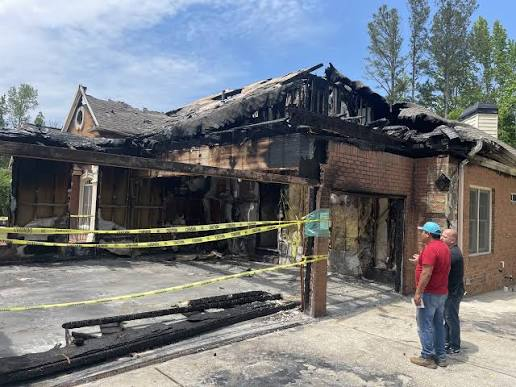
An electrical malfunction in an electric vehicle charging station sparked an intense garage fire in a luxury North Scottsdale home in mid-June. Although the fire department stopped the flames before they breached the living quarters, dense plumes of burning lithium-ion, tire rubber, and automotive plastic smoke poured through the garage ceiling into the vast shared attic space. Over 3,800 square feet of blown fiberglass insulation was heavily contaminated with toxic soot.
Whenever the home's three attic-mounted HVAC units kicked on in 112°F outdoor heat, foul, chemical-laden air filled the luxury residence. Photo-ionization detectors (PIDs) registered total volatile organic compounds (TVOCs) inside the home at 3.8 ppm (safe baseline: <0.3 ppm), rendering the home completely uninhabitable.
Restoration Execution & Measurable Outcomes
Valley Restoration Pros established negative-air containment across the attic space using four 2,000 CFM Nikro HEPA air scrubbers. Our 23 HP gas vacuum extracted 4,200 pounds of smoke-saturated blown insulation into exterior disposal trailers within 18 hours. Exposed roof trusses were cleaned via dry-ice pellet micro-blasting to eliminate soot deposits without damaging delicate engineering truss plates.
Crews performed two sequential electro-thermal fogging applications using solvent-based neutralizers, followed by complete encapsulation of all framing with white pigmented shellac. New virgin blown fiberglass insulation was installed to an R-49 rating. Post-remediation air quality testing confirmed TVOC levels dropped to 0.08 ppm, with zero detectable smoke odor, enabling the homeowners to return safely to their property.
We serve luxury estates and suburban homes across all Valley municipalities, including peoria water damage and gilbert water damage service sectors.
Transparent Billing, Itemized Pricing & Comprehensive Insurance Documentation
Valley Restoration Pros operates with complete financial honesty and consumer transparency. In an industry too often filled with vague promises, we maintain strict professional principles:
Our Pay-Per-Call Compliance & Consumer Trust Commitments
- Free Comprehensive On-Site Damage Assessment: Our certified Master Restorers perform a complete attic inspection, insulation contamination evaluation, and thermal imaging scan totally free of charge prior to any contract execution.
- Transparent Upfront Itemized Pricing Before Work Begins: We deliver clear, itemized estimates utilizing industry-standard Xactimate software. You receive line-by-line pricing clarity with zero hidden surcharges.
- Zero Deceptive Billing Promises: We never claim that "insurance will cover 100% of your claim" or promise to "waive your deductible." Coverage is governed strictly by your specific insurance policy, endorsements, and carrier policy provisions.
- Dedicated Claims Documentation Assistance: We compile thorough digital evidentiary files for your insurance adjuster, including high-resolution timestamped photos, thermal moisture scans, air quality test readings, and itemized scope sheets to expedite fair claim resolution.
To calculate prospective restoration budgets and understand typical cost drivers for residential and commercial attic losses, visit our online free on-site assessment tool.
To schedule an immediate on-site attic inspection or coordinate emergency dispatch, contact our operations center via our contact us portal or call directly at (602) 847-9593.
Toxic Chemical Hazards: Polycyclic Aromatic Hydrocarbons & Inhalation Risks
Attic smoke contamination involves severe toxicological risks that directly threaten human health if left unaddressed. Incomplete combustion of roof decking, asphalt shingles, and synthetic items produces dangerous compounds:
Polycyclic Aromatic Hydrocarbons (PAHs)
PAHs such as benzo(a)pyrene and chrysene are known human carcinogens. In dry desert attics, these heavy organic molecules bind to dust and fiberglass, easily migrating into living areas through ceiling gaps during HVAC cycling.
Sub-Micron Soot Particulates
Particles smaller than 2.5 microns (PM2.5) bypass upper respiratory defenses and penetrate deep into alveolar lung tissues, exacerbating asthma, bronchitis, and cardiovascular vulnerabilities in building occupants.
Fiberglass Filament Entrainment
When smoke-damaged attic insulation degrades, brittle glass fibers become aerosolized. Inhaling airborne synthetic vitreous fibers coated in acidic smoke residue causes acute pulmonary irritation and chronic dermal dermatitis.
Our technicians work in full Level C personal protective equipment, including disposable high-density Tyvek suits and full-face respirators equipped with multi-contaminant HEPA cartridges to ensure complete respiratory safety.
Airflow Balancing & Attic Ventilation Engineering: Soffit Baffles & Ridge Vents
Proper ventilation engineering is crucial following attic smoke decontamination. Stagnant air pockets in dead-end attic valleys trap lingering odors and accelerate summer heat accumulation:
Optimizing Net Free Vent Area (NFVA)
Under International Residential Code (IRC) Section R806 and Phoenix municipal amendments, attics require a minimum 1:150 ventilation ratio, or 1:300 where continuous balanced intake and exhaust ventilation is provided. During insulation re-installation, technicians install rigid poly baffle vents at every rafter bay over the exterior top plate.
These baffles ensure that newly blown insulation cannot block soffit vents, maintaining an unimpeded continuous airflow channel from the eaves up to the ridge vent. This continuous thermodynamic air wash sweeps heat and residual moisture out of the attic, keeping summer roof temperatures substantially lower.
For structures equipped with roof-mounted evaporative cooling systems where moisture compromised attic ventilation, review our specialized procedures for swamp cooler roof leak water damage phoenix restoration.
Ceiling Drywall Salvage & Dual-Phase Water Desiccation Protocols
When municipal fire departments spray water onto roof trusses, thousands of pounds of water collect on top of ceiling drywall. If drywall paper has not separated from the gypsum core and sagging is less than 1/4 inch, specialized desiccation techniques can often salvage the ceiling:
Overhead Cavity Desiccation Systems
Once wet insulation is vacuumed away, technicians position high-pressure air delivery manifolds in the attic. Directed streams of heated, ultra-dry air from desiccant dehumidifiers circulate across the unconditioned upper face of the ceiling drywall while commercial air movers sweep the underside.
This dual-sided evaporation gradient extracts bound water within 48 to 72 hours, returning gypsum cores to baseline moisture content below 10% without mold germination or structural failure.
Regulatory Compliance: OSHA Confined Space Safety & Maricopa County Codes
Executing attic smoke decontamination in Greater Phoenix mandates strict compliance with local, state, and federal workplace safety standards:
Heat Stress & Confined Space Protocols
Under OSHA Confined Space and Heat Illness Prevention standards, working inside an unconditioned Phoenix attic during summer requires rigorous safety controls. Valley Restoration Pros uses portable spot chillers and high-volume ventilation fans to introduce conditioned air into the work zone, alongside strict 20-minute technician rotation schedules and biometric heat monitoring.
Furthermore, in accordance with Maricopa County Air Quality Department Rule 370, any insulation or drywall disturbance in pre-1980 homes undergoes mandatory accredited asbestos testing prior to vacuum extraction, guaranteeing complete legal and health compliance.
Explore our complete regional coverage across the entire Valley on our areas we serve directory.
Long-Term Attic Protection & Intumescent Firestop Penetration Upgrades
Following structural deodorization and insulation replacement, we advise property owners to install preventative fire and smoke stops at critical ceiling bypass points:
Intumescent Fire Caulk & Draft Stopping
Applying UL-listed intumescent firestop sealants around all plumbing vent pipes, electrical wire penetrations, and chimney chases seals the boundary between living quarters and the attic. Under high heat, intumescent compounds expand up to 25 times their volume, blocking flames, hot gases, and toxic smoke from penetrating into the roof space during a fire.
We also recommend installing fire-rated insulated attic hatch covers that maintain both thermal barrier continuity and airtight smoke isolation.
Frequently Asked Questions: Attic Smoke Odor Removal & Thermal Fogging
Review comprehensive answers to common technical and procedural questions regarding attic smoke odor decontamination in Phoenix:
Attic framing lumber is porous. In Phoenix summer heat, attic temperatures exceed 150°F, which causes microscopic wood pores to expand and vaporize trapped volatile organic compounds (VOCs) that were absorbed during the fire. Furthermore, monsoon humidity increases moisture in the wood, displacing embedded smoke molecules into the air. Without professional thermal fogging and vapor-barrier encapsulation, this cyclical off-gassing continues indefinitely.
No. Blown cellulose and fiberglass insulation have immense surface area that traps microscopic soot particulates, carcinogenic PAHs, and acidic gases. Deodorizing sprays cannot penetrate the depth of the insulation bed, and ozone or thermal fogging cannot remove physical soot particulates trapped inside the fibers. Total vacuum extraction down to the bare joists is the only IICRC-approved method to guarantee complete odor elimination.
Cold misting (ULV) produces liquid droplets between 15 and 30 microns that fall quickly onto surfaces and can create moisture problems. Thermal fogging heats solvent-based deodorizers to over 1,000°F, producing ultra-fine vapor droplets between 0.5 and 2.0 microns. These micro-droplets remain suspended in the air, duplicating the exact behavior and penetration depth of the original hot fire smoke to chemically neutralize odor molecules at the molecular level.
Water-based latex and acrylic primers are vapor-permeable. When attic temperatures hit 150°F, volatile smoke molecules pass directly through latex coatings. Pigmented shellac is a natural resin that cures into an impermeable vapor barrier with a perm rating below 0.1 perms. It locks in smoke odors, tar resins, and soot particles permanently, preventing off-gassing even under extreme thermal stress.
Dry-ice blasting accelerates solid CO2 pellets at -109°F with high-pressure air. Upon impact, the extreme thermal shock makes the charred wood brittle and fractures it instantly. The dry ice pellets sublimate into gas on contact, expanding 800 times to blast soot away without generating water, sand, or secondary cleanup waste. It leaves clean, undamaged dimensional timber ready for sealing.
Yes. Under standard property policies, smoke damage to attic insulation and framing resulting from a covered fire loss is fully compensable. Valley Restoration Pros assists by providing itemized Xactimate estimates, photo evidence, thermal imaging logs, and smoke particulate assessments directly to your insurance adjuster to substantiate the necessity of total insulation extraction and encapsulation.
Psychrometric Science: Thermodynamic Vapor Pressure Deficit in Attic Timber Desiccation
Desiccating structural attic framing and ceiling assemblies after firefighting operations is governed by psychrometry—the thermodynamic science of moist air. In high-heat desert environments, unscientific drying creates severe structural warping:
Managing Vapor Pressure Gradients Across Saturated Trusses
When roof trusses absorb hundreds of gallons of firefighting water, the internal vapor pressure of the wet Douglas fir framing spikes above 1.50 inches of mercury (inHg). To draw this deeply embedded water out through the cellular wood structure without causing surface case-hardening or checking, technicians must create a controlled vapor pressure gradient.
Our industrial desiccant dehumidifiers deliver ultra-dry air streams below 15 GPP (Grains Per Pound) directly into the attic space. This establishes an ambient vapor pressure below 0.22 inHg, creating an aggressive 1.28 inHg vapor pressure deficit that draws bound moisture out of the wood core efficiently.
Centrifugal air movers scour the saturated wood surfaces, sweeping away the boundary layer of high humidity that clings to joists. Technicians monitor grain depression, dew points, and moisture content daily using pin-type resistance meters until all structural timbers reach baseline dry standards between 7% and 9% moisture content.
Photocatalytic Oxidation (PCO) & Atmospheric Hydroxyl Radical Dynamics in Confined Roof Cavities
Decontaminating intricate attic crawlspaces where complex truss webs and low roof pitch prevent direct physical contact requires advanced gas-phase atmospheric chemistry. Valley Restoration Pros integrates industrial photocatalytic oxidation (PCO) and high-output hydroxyl generators within isolated attic containment zones:
The Chemistry of Photocatalytic Radical Destruction
Photocatalytic generators utilize specialized high-intensity ultraviolet (UV-C) optics focused on titanium dioxide (TiO2) honeycomb target matrices. When ambient water vapor passes through the activated catalytic chamber, moisture molecules dissociate into highly reactive hydroxyl radicals (•OH) and hydroperoxyl radicals (•O2H).
With an oxidation potential of 2.80 electron volts—substantially more powerful than chlorine or hydrogen peroxide—hydroxyl radicals react within milliseconds with airborne and surface-bound volatile organic compounds. They aggressively abstract hydrogen atoms from complex polycyclic aromatic hydrocarbons (PAHs), breaking benzene rings and converting pungent sulfur and nitrogen complexes into harmless carbon dioxide (CO2) and water vapor (H2O).
Because hydroxyl radicals occur naturally in Earth's outdoor troposphere and have a micro-second half-life, they do not bleach structural timber, harm electrical wire insulation, or damage natural rubber seals. Staging multi-point hydroxyl generation throughout the attic space ensures continuous molecular decontamination of complex roof hips, valleys, and soffit dead-spaces that manual cleaning can never reach.
Continuous Non-Destructive Operation
Unlike high-concentration ozone chambers which degrade electrical rubber jackets and require total building evacuation, hydroxyl systems run continuously during active structural desiccation, deodorizing the building while technicians work safely.
Micro-Aperture Gas Diffusion
Hydroxyl radicals diffuse into microscopic gaps between ceiling joists and drywall top plates, neutralizing smoke residues trapped behind electrical junction boxes and recessed lighting cans where liquid cleaners cannot penetrate.
Verified Local Area Dispatch: Phoenix, AZ
Official Geo-Coordinates: 33.4484° N, -112.074° W • Maricopa County
Related Specialized Emergency Restoration Services
Explore specialized rapid-response mitigation protocols across Greater Phoenix and Maricopa County:
Valley-Wide Emergency Response Service Coverage
Our mobile restoration fleet is dispatched across the entire Phoenix metropolitan region, providing rapid 30 to 60 minute emergency response: