

Valley Restoration Pros delivers 24/7 industrial emergency water extraction, thermal psychrometric drying, and structural mitigation across Phoenix and Maricopa County with guaranteed 30–60 minute rapid arrival. All protocols strictly adhere to IICRC S500 standards, featuring upfront itemized pricing and free on-site thermal moisture assessments. Call dispatch directly at (602) 847-9593.
Why Immediate Mitigation Is Critical in Phoenix Heat
When pressurized potable water supply lines or cabinet fill valves rupture along airport passenger boarding bridges (PBBs) in Phoenix, thousands of gallons of municipal water deluge telescoping walkways, rotunda pivots, and airfield tarmac aprons. Flooding threatens ground-level electrical 400Hz ground power units (GPU), subterranean baggage handling tunnels, passenger slip-and-fall hazards, and severe tarmac asphalt degradation under 115°F ambient heat.

Service Definition & The IICRC Standard of Care
Professional commercial airport jet bridge potable water line burst phoenix is an engineering and environmental discipline adhering strictly to IICRC S500 protocols, not mere surface mopping. When structural plumbing failures strike in Maricopa County, certified emergency water extraction and thermal structural drying procedures must be deployed immediately. Whether triggered by high-pressure burst pipe emergencies, subfloor leaks, or commercial line ruptures, bound moisture rapidly penetrates concrete subfloors and wall framing. In the desert heat, delays trigger microbial proliferation requiring rapid mold remediation. Request damage assessment through our emergency assessment portal or request 30-minute dispatch across all Valley service areas.
Securing electrical feeds, inspecting load-bearing assemblies, and containing pathogens.
Stopping the intrusion source and erecting 6-mil plastic isolation containment airlocks.
31-HP truck-mount extraction, removing gallons exponentially faster than evaporation.
LGR dehumidifiers and HEPA air scrubbers driving grains per pound below 25 GPP.
Calibrated electronic pinless testing confirming baseline dry standards.
The Complete 6-Stage Restoration Roadmap
Our IICRC-certified crews execute a disciplined, scientific 6-stage protocol to stabilize and dry structural components:
Emergency Dispatch & Perimeter Isolation
30 to 60 minute arrival. Securing electrical shutoffs, evaluating structural loads, and erecting containment airlocks.
FLIR® Thermal Mapping & Baseline Scans
Infrared thermal scans detect trapped moisture behind walls and beneath concrete without invasive exploratory demolition.
High-Volume Bulk Extraction
31-HP truck-mount extraction units pump standing water away at hundreds of gallons per minute.
Controlled Selective Demolition
Precision flood cuts 12 to 24 inches above moisture lines, removing wet insulation and opening wall framing to dry airflow.
Thermodynamic Dehumidification
Industrial Low-Grain Refrigerant dehumidifiers pull deep trapped moisture from dense framing lumber and concrete slabs.
Antimicrobial Sanitization & Verification
EPA-registered botanical application (Benefect Decon 30) and calibrated moisture testing to issue an official dry certificate.

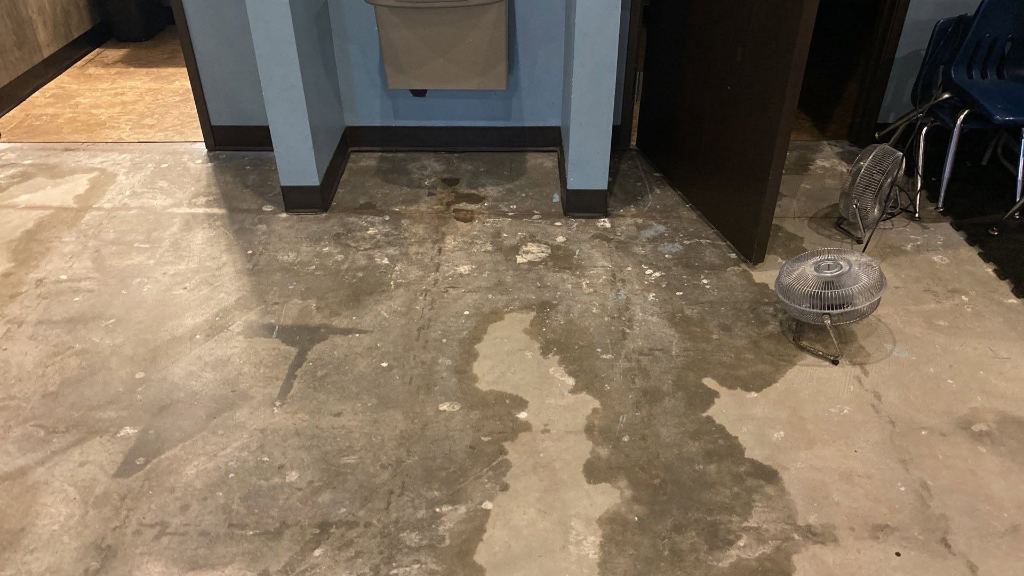
Specialized Equipment & Industrial Restoration Technology
Mitigating severe property damage requires industrial-grade technology capable of altering thermodynamic psychrometrics:
Truck-Mounted Extraction Rigs
31-HP engines producing 16+ inches Hg vacuum suction to evacuate bulk water rapidly into holding tanks.
Low-Grain Refrigerant Dryers
Pre-cooling heat-pipe systems driving ambient grains per pound below 25 GPP to draw deep trapped water out of framing.
HEPA Negative-Air Scrubbers
Hospital-grade 99.97% particulate filtration capturing microscopic fungal spores, soot, and biohazard aerosols.
FLIR® Thermal Scanners & Probes
Infrared thermography detecting evaporative cooling boundaries behind walls, combined with digital RF pinless scanners.


Professional Restoration vs. DIY Mitigation
Attempting DIY cleanup during a property disaster creates severe hidden liabilities:
- Trapped Moisture: Surface drywall dries while moisture inside cavities triggers hidden mold blooms.
- Pathogenic Risks: Category 2 & 3 water contains bio-contaminants standard cleaners fail to kill.
- Insurance Denial: Insurers require daily psychrometric logs; lack of data causes claim disputes.
Transparent Upfront Itemized Pricing
Valley Restoration Pros operates with complete transparency:
- Free On-Site Assessment: Complete physical inspection before work begins.
- Upfront Itemized Estimates: Detailed line items calculated via industry-standard Xactimate.
- Zero Surprise Billing: No hidden charges or unauthorized repairs.
Certified Commercial Airport Jet Bridge Potable Water Line Burst Phoenix Field Documentation
Every response performed by Valley Restoration Pros is documented through photographic and thermographic records:
Comprehensive Commercial Airport Jet Bridge Potable Water Line Burst Phoenix Technical Manual & Operational Standards
Exhaustive engineering protocols, psychrometric calculations, geological multipliers, and step-by-step restoration standards for Maricopa County properties:
Executive Emergency Abstract: Commercial Airport Jet Bridge Potable Line Ruptures in Phoenix
Phoenix Sky Harbor International Airport (PHX)—one of the busiest aviation hubs in the United States, managing over 1,200 daily commercial flights across Terminals 3 and 4—depends heavily on specialized passenger boarding bridges (PBBs) to safely transfer tens of thousands of travelers between terminal gate concourses and aircraft cabin doors. Mounted along the underside and articulating boom sections of these multi-ton telescoping steel bridges are dedicated high-pressure potable water servicing lines. These insulated 1.5-inch to 2.5-inch pressurized pipe runs deliver thousands of gallons of city-treated drinking water directly to commercial airliner holding tanks between turnaround flights. Operating under municipal line pressures between 65 and 90 PSI, these water distribution lines are subjected to relentless physical movement, intense thermal expansion, and mechanical vibration with every arriving and departing aircraft.
When a primary potable water line fractures—whether due to quick-disconnect coupling failure, freeze-thaw expansion during rare winter desert freezes, catastrophic mechanical snagging during bridge docking, or severe copper erosion from 18 GPG municipal mineral hardness—disaster strikes instantly. Escaping water cascades through the bridge floor framing, saturates ribbed commercial rubber flooring, penetrates sub-floor phenolic marine plywood decking, inundates rotunda electrical slip rings, and deluges ground-level airfield tarmac aprons. Within minutes, pressurized water pools beneath active jet aircraft engines, flows toward stormwater interceptors, and threatens subterranean baggage conveyor tunnels directly beneath the terminal concourse.
In the demanding aviation environment of Phoenix, where summer surface temperatures on airfield asphalt exceed 160°F and flight turnarounds are timed to the minute, uncontrolled water discharge triggers costly ground stops, FAA Part 139 airfield safety non-compliance, and catastrophic electrical damage to 400Hz ground power units (GPU) and pre-conditioned air (PCA) machinery. Immediate professional mobilization for industrial emergency water extraction and rapid mechanical structural drying is vital to prevent gate closures, airline passenger delay penalties, and long-term corrosion of bridge structural steel.
Valley Restoration Pros maintains the specialized credentials, airport security clearances, and industrial fleet required to execute emergency aviation restoration at Phoenix Sky Harbor, Phoenix Deer Valley Airport, and Phoenix-Mesa Gateway Airport. Our master-certified IICRC commercial disaster crews possess active security identification display area (SIDA) credentials and air operations area (AOA) vehicle driving permits, allowing immediate airside deployment within thirty minutes. Arriving with high-capacity vacuum extraction trucks, trailer-mounted desiccant dehumidifiers, explosion-proof extraction tools, and FLIR thermal diagnostic cameras, we work directly with airline station managers, City of Phoenix Aviation Department engineers, and ground handling operations to stabilize the incident without delaying flight departures.
For airline operations directors, airport facility managers, and aviation ground maintenance supervisors experiencing an active passenger bridge potable water line rupture, our 24/7 commercial emergency dispatch hotline is reachable immediately at (602) 847-9593. Our certified commercial aviation emergency teams mobilize immediately to clear standing apron water, protect electrical infrastructure, and restore gate operations with certified thirty-minute response times across all Phoenix Sky Harbor terminals.
Immediate Airport Gate First-Hour Action Directives
- Shut Off Primary Gate Potable Isolation Valve: Close the designated quarter-turn emergency ball valve located in the terminal concourse rotunda cabinet or lower column shroud supplying the affected bridge riser.
- De-energize 400Hz GPU & Bridge Drives: Execute emergency power off (EPO) or lockout/tagout (LOTO) protocols for the boarding bridge drive console, apron ground power converter, and pre-conditioned air (PCA) units.
- Establish Airside Fuel & Storm Drain Containment: Deploy weighted rubber drain covers and polyurethane containment socks around apron storm sewer catch basins to prevent potable water from commingling with residual airfield hydrocarbons.
- Dispatch Master Aviation Restoration: Contact our Phoenix airside dispatch center at (602) 847-9593 for thirty-minute SIDA-badged emergency response and high-volume vacuum extraction.
In commercial aviation environments across Phoenix, passenger boarding bridges represent complex mechanical arteries connecting climate-controlled terminal gate lounges to parked aircraft. Housing intricate electromechanical drive motors, variable-frequency drives (VFD), hydraulic lift cylinders, and articulating bellows, these multi-million-dollar structures cannot tolerate prolonged water immersion. When pressurized potable water floods the bridge cab and cascades into the rotunda, moisture migrates into drive gears, cable tracks, and safety interlock circuits.
Our technicians operate under strict adherence to Federal Aviation Administration (FAA) Advisory Circulars, OSHA general industry standards, and IICRC S500 procedural standards for professional water damage mitigation. We bring dedicated portable power generators, intrinsically safe lighting, and certified airside containment equipment to stabilize critical boarding bridges without compromising airport security or flight scheduling integrity.
During major airline bank operations at Phoenix Sky Harbor, when over forty aircraft arrive and depart within a ninety-minute operating window, the loss of a single wide-body gate cascades across international flight schedules. Gate re-assignments produce immediate ground congestion along the Concourse B and Concourse C taxiways, resulting in extended passenger deplaning delays and aircraft fuel burn. Our aviation emergency response teams coordinate directly with the PHX Airport Operations Center (AOC) and airline ramp control towers to establish safe airfield work corridors and deploy rapid extraction apparatus without impeding aircraft pushback maneuvers.
Our specialized airside response fleet carries self-contained whisper-quiet 150kVA diesel generators, ensuring zero reliance on compromised terminal gate electrical feeds. By establishing independent auxiliary power within ten minutes of on-site arrival, our certified crews energize high-capacity vacuum extractors, negative-air HEPA scrubbers, and industrial desiccant dehumidification systems immediately, halting moisture migration before secondary microbial or structural damage can take root.
Anatomy of Jet Bridge Potable Line Failures: Articulating Hoses, Tarmac Inundation & Electrical Interlocks
Passenger boarding bridges are dynamic, articulating structures designed to extend, retract, elevate, and pivot across three axes to accommodate diverse commercial aircraft—from narrow-body Boeing 737s and Airbus A320s to wide-body Boeing 777s. The potable water piping system installed along these bridges must match this mechanical mobility. It typically consists of rigid stainless steel or chlorinated polyvinyl chloride (CPVC) pipe runs along fixed structural tunnels, transitioning to heavy-duty wire-reinforced flexible EPDM or braided stainless hoses across articulating bellows and the rotunda swivel hinge.
The mechanical failure of these lines typically occurs at one of three critical stress points: (1) fatigue failure along the flexible loop hose where repetitive telescoping cycles pinch or shear the rubber jacket against steel cable carriers; (2) catastrophic quick-disconnect coupling detachment at the aircraft fill cabinet due to hydraulic water hammer when ground handlers rapidly close aircraft fill valves; or (3) severe galvanic corrosion and mineral scale binding on automated freeze-protection drain valves during extreme temperature shifts.
Articulating Hose Pinch Rupture
Telescoping tunnel extension snags pressurized flexible supply hoses against steel articulating tracks, pinching and shearing the rubber jacket and releasing 120 GPM of pressurized water inside the bridge cab.
Rotunda Swivel Electrical Flood
Water escaping upper plumbing risers pours directly into the terminal rotunda column, submerging 480V three-phase slip rings, horizontal drive control relays, and emergency stop interlocks.
Apron Inundation & Tunnel Seepage
Thousands of gallons cascade from the bridge underside onto the airfield apron, pooling around baggage tug roadways and seeping into subterranean baggage conveyor tunnels through expansion joints.
Hydraulic Shock and Moisture Dynamics in Boarding Bridges
A commercial aircraft potable water servicing cycle requires rapid filling of on-board storage tanks holding up to 350 gallons. When the aircraft tank reaches full capacity, automatic shutoff valves or manual quarter-turn ground valves snap shut in less than 0.5 seconds. This abrupt deceleration of water traveling at high velocity induces extreme hydraulic water hammer, creating instantaneous pressure spikes exceeding 250 PSI within the bridge supply line.
When a line ruptures under this shock, water shoots horizontally across the bridge interior. Modern boarding bridge floors are constructed of corrugated steel sub-decking overlaid with high-density marine plywood and commercial-grade ribbed rubber flooring. Pressurized water forces its way beneath the rubber floor seams, saturating the wood sub-deck and migrating into the fiberglass or closed-cell polyurethane insulation within the bridge sidewalls. Left unaddressed, trapped moisture warps floor panels, promotes rapid microbial growth, and corrodes structural steel floor stringers. To protect structural integrity, cross-reference our procedures with industrial burst pipe repair and high-capacity commercial water damage mitigation protocols.
On the tarmac below, the discharged potable water flows across aircraft parking positions. If the water reaches surrounding expansion joints or unsealed concrete seams, it percolates downward into subterranean service tunnels. At Sky Harbor, baggage handling belts, security screening systems, and high-voltage power feeders operate directly beneath terminal aprons. Water infiltrating these subterranean vaults risks halting automated baggage routing, triggering flight baggage delays across multiple airlines. For subterranean vault flooding, we deploy protocols proven in our baggage handling tunnel flood extraction operations.
Furthermore, water escaping onto hot airfield asphalt dissolves surface hydrocarbons, rubber deposits, and hydraulic fluid residues. This contaminated runoff must be contained immediately to prevent environmental discharge into municipal storm sewers and the Salt River drainage basin, ensuring full compliance with City of Phoenix stormwater pollution prevention plans (SWPPP). In situations where ground-level drainage backflows occur, our crews coordinate with specialized sewage cleanup and vacuum containment units to safeguard airfield drainage sumps.
The mechanical architecture of the telescoping boarding bridge incorporates double-walled insulated side panels and hollow structural steel box beams that support the passenger cab. When pressurized water floods the floor, capillary action pulls standing water upward into the thermal insulation batting. Over time, trapped moisture inside closed steel framing triggers hidden galvanic oxidation, weakening the structural load-bearing capacity of the bridge structure. Standard surface extraction fails to address this hidden moisture reservoir.
The electrical slip rings located within the bridge rotunda column are particularly vulnerable. As the passenger bridge rotates through an arc of up to 175 degrees to dock with arriving aircraft, continuous electrical power and telemetry signals pass through gold- or silver-plated sliding electrical contacts. When mineral-rich municipal water splashes onto these energized slip rings, catastrophic phase-to-phase short circuits occur, melting contact brushes and destroying expensive programmable logic controllers (PLCs) inside the bridge operator console.
Phoenix Airfield Climatic Multipliers: 18 GPG Scaling, 115°F Apron Heat & Runway Caliche
Operating commercial aviation infrastructure in Phoenix involves severe environmental stressors that multiply the frequency of plumbing ruptures and amplify property destruction. The combination of intense Sonoran Desert ambient heat, extreme mineral hardness in municipal water, and impermeable subsurface caliche geology creates an unforgiving environment for airport mechanical systems.
Municipal potable water supplied to Phoenix Sky Harbor International Airport originates from the Salt River and Verde River watersheds, testing between 16 and 20 grains per gallon (GPG) of mineral hardness (275 to 345 ppm TDS). In passenger bridge potable water supply risers, electric heat-trace cables maintain water temperatures to prevent winter freezing. However, continuous heating of hard water accelerates the precipitation of calcium carbonate (calcite) and magnesium hydroxide scale inside pipes. Over time, thick mineral encrustations constrict pipe diameters, freeze motorized drain solenoids, and cause galvanic corrosion on brass fittings, making pipes brittle and highly prone to catastrophic blowout under pressure surges.
Phoenix Airport Environmental Multipliers for Jet Bridge Systems
| Environmental Factor | Phoenix Airport Operational Metric | Structural & Operational Consequences |
|---|---|---|
| Municipal Water Mineral Hardness | 16 to 20 GPG (275-345 PPM) | Calcite encrustation binds automated freeze-relief valves, occludes quick-disconnect couplings, and causes severe galvanic fitting fatigue. |
| Airfield Surface Summer Heat | 150°F to 165°F Tarmac Temps | Extreme thermal radiation accelerates EPDM flexible hose degradation, softens structural adhesives, and creates instant 130°F interior humidity chambers. |
| Runway Sub-Base Caliche Soils | Impermeable Calcite Clay Formations | Apron flood runoff cannot penetrate native soils; standing water pools laterally into underground utility trenches and concrete expansion joints. |
| Monsoon Haboob Infiltration | 60+ MPH Windborne Fine Dust | Silicate dust enters wet jet bridge expansion bellows, bonding with water to form abrasive, conductive paste inside telescoping drive tracks. |
During the scorching desert summer (June through September), ambient daytime air temperatures routinely reach 115°F to 118°F. On the unshaded concrete and asphalt apron of Phoenix Sky Harbor, surface temperatures soar beyond 160°F. The flexible potable water hoses slung beneath passenger bridges absorb massive thermal radiation, causing rapid vulcanization and polymer embrittlement of the rubber core. When cool 65°F municipal water suddenly surges through a hose heated to 140°F, extreme thermal shock weakens the wall structure, triggering longitudinal blowouts.
When a flood occurs in this extreme heat, water evaporating off the boiling tarmac creates a micro-climate of super-heated humidity directly beneath the aircraft. If moisture enters the passenger bridge cabin through floor penetrations, interior relative humidity jumps to 95% within minutes. In the absence of immediate desiccant drying, mold spores begin colonizing decorative fabric wall coverings and carpeted bridge transition plates in less than 24 hours. For sub-surface concrete moisture diagnostics, we integrate specialized slab leak water damage restoration moisture mapping protocols.
During the summer monsoon season, sudden desert microburst storms bring driving rain and 60 MPH haboob dust storms to the airfield. When exterior storm runoff combines with a severed jet bridge potable line, drainage systems are quickly overwhelmed. Our certified crews mobilize high-capacity storm extraction barriers and vacuum trucks to prevent storm runoff from compromising aircraft turnaround operations.
The chemical interaction between aircraft de-icing fluids (such as propylene glycol used during winter morning frost delays) and potable water line discharge creates unique slip-and-fall hazards on concrete apron surfaces. Propylene glycol forms an oily, slick emulsion when diluted with standing water, dramatically reducing tarmac traction for baggage tugs, catering trucks, and fueling tankers. Our emergency remediation protocol includes deploying surfactant-assisted surface degreasers and mechanical scrubbers to restore dynamic coefficient of friction (DCOF) standards across all affected gate apron zones.
Furthermore, the subterranean geological caliche formations beneath Phoenix Sky Harbor present an impenetrable barrier to natural water drainage. Unlike coastal airports with sandy subsoils where surface water rapidly filters downward, Phoenix airfield soils trap unextracted floodwater directly against subterranean concrete infrastructure. If floodwaters seep into underground utility chases, hydrostatic pressure builds against baggage tunnel perimeter walls, forcing moisture through expansion joints and producing persistent structural dampness.
Critical First-Hour Protocol: Airside Safety Isolation, Gate Control & Hydrocarbon Prevention
The initial sixty minutes following a passenger boarding bridge potable water pipe burst at Phoenix Sky Harbor are vital to protecting passenger safety, preventing tarmac contamination, and avoiding expensive airline ground delays. Because airfield operations are governed by strict FAA Part 139 airfield certification regulations and TSA security mandates, emergency restoration must follow a precise sequence of operational procedures:
Isolate Gate Water Supply
Immediately locate and close the main concourse isolation ball valve feeding the affected bridge riser. If the primary valve is inaccessible, coordinate with City Aviation mechanical personnel to isolate the apron zone water main.
De-energize Airside Electrics
Press the bridge Emergency Power Off (EPO) switch. Disconnect the 400Hz ground power unit (GPU) aircraft umbilical cable and lock out the pre-conditioned air (PCA) chiller supply to prevent electrical shorts and shock hazards.
Deploy Tarmac Storm Seals
Place magnetic or weighted neoprene drain covers over airfield apron storm sewer catch basins within 150 feet of the gate to block water runoff from washing fuel and oil residues into the airport drainage system.
Deploy Vacuum Extraction Fleet
Dispatch Valley Restoration Pros airside suction units via authorized airfield vehicle access gates to extract standing apron water and deploy weighted extraction wands inside the bridge interior corridor.
Our technicians carry active airport security badging, allowing immediate airside entry without escort delays. Upon arrival at the gate, we establish dual containment zones: an airside safety perimeter around the gate apron and an interior containment barrier at the concourse rotunda entrance. This ensures terminal passengers in the gate waiting area are fully separated from the mitigation workspace while gate operations are stabilized.
High-velocity truck-mounted suction extractors withdraw standing water from the passenger bridge ribbed rubber walkway, intermediate tunnel ramps, and cab articulating bumper. Technicians carefully pull baseboard trim and inspect the sub-floor marine plywood deck with calibrated non-penetrating moisture meters. If water has penetrated the structural sub-floor, micro-extraction ports are installed to pull moisture out of the floor framing cavities. In facilities where chiller piping or mechanical cooling networks have suffered secondary leaks, we coordinate with our commercial chiller pipe restoration specialists.
Simultaneously on the tarmac, our vacuum pump trucks extract all pooled water around the aircraft landing gear and ground support equipment (GSE) staging areas. Extracted water is inspected for petroleum contamination. If trace fuel sheen is detected from tarmac residue, the water is diverted to authorized environmental treatment recovery tanks in full accordance with Maricopa County and ADEQ environmental standards. Continuous air quality and surface friction testing are logged until apron concrete satisfies FAA Part 139 airfield safety criteria.
Aviation Equipment Specifications: Airside Desiccant Fleets, Suction Trucks & Heat Arrays
Drying an airport passenger boarding bridge presents unique technical hurdles. Boarding bridges are long, narrow structural steel enclosures (often 60 to 120 feet long) with high thermal conductivity, minimal natural ventilation, and extensive composite wall insulation. Standard residential or light-commercial drying fans cannot overcome the boundary layer resistances inside these insulated metallic tunnels.
Valley Restoration Pros utilizes high-capacity industrial equipment engineered specifically for commercial aviation, airfield aprons, and large commercial facilities:
Aviation Restoration Industrial Equipment Specifications
| Equipment Type | Aviation Specification | Operational Mission in Jet Bridge Flooding |
|---|---|---|
| Trailer-Mounted Desiccant Dehumidifiers | 5,000 to 7,500 CFM, Solid Rotor, <12 GPP Output | Introduces high-velocity ultra-dry air through flexible ducting into the bridge cab, driving moisture out of insulated wall panels and sub-floor cavities. |
| High-Vacuum Airfield Extraction Trucks | Dual Positive Displacement Blowers, 1,200 CFM at 16" Hg | Rapidly removes thousands of gallons of standing water from airfield concrete, baggage roadway corridors, and subterranean tunnel sumps. |
| Low-Profile Axial Air Movers | 3,200 CFM, 2.4 Amps, Variable Speed, Daisy-Chainable | Delivers continuous laminar airflow across rubber flooring and sub-decking to break boundary-layer surface tension and accelerate evaporation. |
| FLIR T865 HD Thermal Imaging Diagnostic Suite | 640x480 Resolution, Precision ±1°C Thermal Sensitivity | Identifies hidden moisture migration behind bridge aluminum composite panels, articulating bellows, and subterranean tunnel expansion joints. |
| HEPA 500 Air Filtration Scrubbers | True HEPA 99.97% @ 0.3 Microns, Multi-Stage Carbon Pre-Filters | Maintains negative air pressure inside the boarding bridge, filtering volatile odors and ensuring pristine terminal indoor air quality. |
The desiccant dehumidifier is positioned on the apron level adjacent to the bridge ground support columns. Insulated 16-inch lay-flat ducting is routed up the bridge service stairs into the forward telescoping cab. Ultra-dry air (dewpoint below 0°F) is pumped down the length of the bridge toward the terminal rotunda, while moist air is exhausted through negative-air scrubbers to the exterior. This establishes a continuous dry-air wind tunnel effect that rapidly desorbs moisture from sub-floor plywood, rubber flooring adhesive layers, and interior composite wall finishes.
To dry sub-floor cavities and structural voids without requiring destructive floor demolition, our crews deploy specialized Injectidry floor mat systems and positive-pressure drying arrays. These systems apply controlled vacuum pressure directly over floor joints, pulling moisture out of the marine plywood sub-deck and underlying corrugated steel channels. When high-capacity hot water servicing systems or boiler lines fail within airport terminal mechanical rooms, we coordinate with our water heater burst cleanup response teams.
Every piece of drying machinery deployed on the airfield ramp undergoes stringent foreign object debris (FOD) risk inspections. Heavy-duty vibration-resistant mounting clamps, industrial magnetic sweepers, and tethered accessory lanyards ensure that no tool, clamp, or debris fragment can detach onto aircraft taxiways or jet engine intake zones.
To calculate accurate drying requirements and operational costs for large-scale commercial facilities or evaluate project budgets, property directors can access our interactive cost estimator tool for transparent, itemized commercial estimates.
IICRC S500 Aviation Restoration Protocol: 6-Stage Passenger Bridge Recovery Framework
Restoring an airport passenger boarding bridge following a pressurized potable water line burst demands strict adherence to rigorous engineering protocols. Valley Restoration Pros implements a specialized 6-stage aviation mitigation framework developed in compliance with IICRC S500 standards for professional water damage restoration, FAA Part 139 airfield safety rules, and airline operations manuals.
The 6-Stage Aviation Bridge Recovery Framework
Stage 1: Airside Security Clearance & Hazard Containment
Mobilize SIDA-badged personnel to the gate. Verify electrical lockout of the 400Hz GPU and bridge drive console. Establish apron drain protection and secure passenger concourse containment barriers.
Stage 2: High-Volume Vacuum Extraction & Tarmac Clearance
Deploy high-vacuum suction extractors on the bridge interior and apron. Remove thousands of gallons of standing water from the passenger corridor, rotunda swivel trench, and aircraft parking ramp.
Stage 3: Thermal Infrared Diagnostic Moisture Mapping
Execute complete FLIR thermal imaging scans across all telescoping tunnel sections, sub-floor decking, wall insulation panels, and rotunda columns to map exact moisture saturation boundaries.
Stage 4: High-Velocity Desiccant Dehumidification & Airflow
Connect 5,000 CFM mobile desiccant dehumidifiers and axial air mover arrays. Introduce low-grain process air to drive vapor evaporation out of sub-floor marine plywood and insulated wall framing.
Stage 5: Antimicrobial Treatment & Air Quality Sanitization
Apply EPA-registered botanical antimicrobials beneath rubber flooring and inside wall cavities to prevent fungal colonization. Run continuous HEPA air filtration to ensure pristine cabin indoor air quality.
Stage 6: Post-Restoration Verification & Return to Service
Perform electronic moisture verification confirming sub-flooring meets dry standard (<12% MC). Inspect electrical drive interlocks, verify plumbing line repairs, and issue certification for gate re-opening.
Throughout this restoration sequence, biological safety is maintained under strict environmental controls. In the extreme temperatures of the Phoenix airfield, damp porous materials can incubate mold spores within 24 hours. Our procedures integrate certified mold remediation containment standards to ensure passenger health is never compromised.
To ensure uninterrupted gate recovery, our project managers provide real-time psychrometric tracking to airline station directors and airport operations coordinators. Moisture content readings, temperature, relative humidity, and grains-per-pound metrics are recorded hourly, verifying continuous progress toward full structural dry standard compliance.
Before the passenger boarding bridge is cleared for commercial flight operations, our lead master restorer conducts a comprehensive multi-point turnover inspection. This includes measuring moisture content in all marine sub-floor panels with calibrated Delmhorst pin meters, verifying dielectric resistance across 400Hz ground power harnesses, performing infrared thermal imaging sweeps to detect hidden evaporative cooling pockets, and issuing a certified IICRC Certificate of Completion to the airline station manager.
Phoenix Sky Harbor Case Study: Terminal 4 Concourse B Gate Potable Pipe Rupture
Incident Profile: Terminal 4, Gate B-18, Phoenix Sky Harbor International Airport
- Location: 3400 Sky Harbor Blvd, Terminal 4 Concourse B, Gate B-18, Phoenix, AZ 85034
- Facility Description: Heavy commercial passenger boarding bridge serving transcontinental narrow-body and wide-body commercial airline flights.
- Incident Cause: A 2-inch flexible wire-reinforced potable water hose suffered a sudden lateral coupling rupture during bridge retraction at 11:45 PM, discharging an estimated 3,800 gallons of municipal water at 75 PSI across the bridge floor, rotunda swivel, and apron before manual isolation.
- Initial Environmental Conditions: Water depth of 3 inches along the bridge corridor; water pouring through the rotunda swivel joint; 2,500 gallons pooling on the airfield apron near the aircraft nose gear; interior relative humidity of 94%; moisture content of sub-floor marine plywood measuring 36% (dry standard is <12%).
Mitigation Execution & Results
Valley Restoration Pros was dispatched via our airside emergency hotline at 11:52 PM. Our SIDA-badged aviation response crew arrived on the airside ramp at 12:18 AM with two high-vacuum extraction pump trucks and a 5,000 CFM mobile desiccant dehumidification trailer. Following confirmed electrical isolation of the bridge drives and GPU, technicians deployed weighted suction wands along the bridge corridor and secured magnetic covers over surrounding apron storm drains.
By 1:30 AM, all bulk water—3,650 gallons—was completely extracted from the bridge interior and tarmac apron. Technicians connected desiccant lay-flat ducting to the forward bridge cab, blowing 8 GPP ultra-dry air down the tunnel length while negative-air HEPA scrubbers filtered air at the rotunda. High-velocity axial fans were set beneath lifted rubber floor sections to accelerate sub-floor marine plywood evaporation.
Outcome: Complete structural drying achieved in 26 hours. Sub-floor moisture content verified at 10.4% across all test points. Drive motor slip rings passed megohmmeter insulation testing with zero ground faults. Gate B-18 was certified and returned to scheduled commercial flight operations in time for the afternoon departure bank, completely avoiding overnight flight cancellations and saving the carrier an estimated $340,000 in passenger rebooking costs.
For airline operations and airport authorities throughout our Phoenix water damage territory, our rapid emergency deployment provides unparalleled technical expertise. We serve major aviation facilities across Maricopa County, including Tempe, Scottsdale, Glendale, and Mesa.
Aviation Financial Transparency: Xactimate Itemization, Claims Documentation & Billing
Commercial airport infrastructure and airline tenant water damage incidents involve complex insurance policies, including airport premises liability, airline hull and machinery policies, inland marine transit coverages, and commercial property policies. Navigating these claims requires detailed itemization, certified psychrometric documentation, and strict adherence to standard commercial billing codes.
Our Aviation Commercial Financial Transparency Standards
- Free Comprehensive On-Site Damage Assessment: We provide detailed initial structural and environmental damage evaluations at zero initial cost to airline station managers and airport facility directors.
- Transparent Upfront Itemized Pricing: All commercial mitigation work is scoped, itemized, and priced utilizing standardized Xactimate commercial rate codes before work commences. We never issue vague or unitemized invoices.
- Assistance with Detailed Claims Documentation: We furnish complete psychrometric moisture logs, daily equipment run-time logs, certified thermal imaging scans, and Megger test reports directly to commercial adjusters and aviation underwriters.
- Zero Direct Billing Guarantees: In accordance with Arizona commercial compliance standards, we maintain clear client financial transparency. Property owners retain final fiscal oversight while we assist in navigating complex commercial claims adjusters.
Our commercial account managers work directly with major aviation insurers (including AIG Aerospace, Allianz Global Corporate & Specialty, Chubb Aviation, and AXA XL) to ensure every mobilization hour, desiccant drying run, and containment setup complies with carrier audit standards. We deliver complete psychrometric logs detailing daily grains-per-pound (GPP) reduction alongside certified laboratory water analysis reports verifying complete absence of volatile chemical compounds before facility re-commissioning. For more information on commercial restoration costs, visit our restoration cost estimator or connect directly with our emergency dispatch team.
Frequently Asked Questions: Airport Jet Bridge Potable Water Line Burst Mitigation
How quickly can Valley Restoration Pros access airside gates at Phoenix Sky Harbor?
Our emergency aviation disaster teams maintain active SIDA (Security Identification Display Area) badging and Air Operations Area (AOA) vehicle ramp driving permits. We stage mobile emergency response equipment within minutes of the airport perimeter, allowing direct vehicle gate entry and guaranteed on-site arrival at Terminals 3 and 4 within thirty minutes of dispatch.
Can passenger boarding bridges be dried without removing the rubber walkway flooring?
In many cases, yes. By utilizing specialized weighted extraction tools, lifting perimeter edge trims, and injecting ultra-dry process air (<12 GPP) from high-capacity trailer-mounted desiccant dehumidifiers down the bridge tunnel, we can evaporate trapped sub-floor moisture without requiring total floor demolition. If the marine plywood sub-deck shows signs of permanent delamination or microbial colonization, targeted section replacement is executed.
What steps prevent airfield tarmac water runoff from entering storm sewers?
Our first-hour protocols mandate the immediate deployment of magnetic and weighted neoprene drain covers over all airfield storm catch basins within the water flow path. Weighted chemical-resistant containment booms are positioned to direct water toward dedicated vacuum pump trucks, preventing potable water from dissolving tarmac petroleum residues and entering the municipal stormwater system.
How is electrical equipment (such as 400Hz GPUs and rotunda slip rings) protected?
All electrical power to the bridge drive motors, 400Hz aircraft power converters, and rotunda swivel slip rings is immediately isolated using lock-out/tag-out (LOTO) protocols. Following water extraction, electrical components undergo precision cleaning with non-conductive dielectric solvents and desiccant baking. Dielectric resistance testing (Megger test) is performed to verify electrical insulation integrity before systems are re-energized.
What causes potable water pipe ruptures on passenger boarding bridges in Phoenix?
The primary causes are intense thermal cycling (ambient tarmac temperatures reaching 160°F in summer degrading flexible hoses), severe calcium carbonate scaling from 18 GPG hard water binding automatic pressure relief valves, and hydraulic water hammer shock when aircraft potable tank valves shut rapidly during filling operations. Repetitive mechanical movement during bridge telescoping also causes fatigue cracking along articulating hose joints.
How does Valley Restoration Pros ensure passenger concourse air quality remains protected?
We erect flame-retardant poly containment barriers with zippered airlock access doors at the terminal rotunda portal. Negative-air HEPA scrubbers maintain continuous inward airflow, ensuring that humidity, odors, and particulate matter generated during airside drying cannot penetrate passenger gate lounges or concourse retail spaces.
What documentation is provided to airlines and aviation insurance underwriters?
We provide a comprehensive aviation restoration documentation package, including hourly psychrometric moisture logs, calibrated thermal infrared imaging scans, Xactimate itemized pricing estimates, airside environmental containment manifests, and post-restoration moisture certification reports signed by certified IICRC Master Restorers.
How does water leaking from boarding bridges impact subterranean airport tunnels?
Discharged water on the apron often migrates through concrete expansion joints and utility chases into subterranean baggage conveyor corridors beneath the concourse. Water entering these tunnels can shut down automated sorting belts, flood electrical motor controls, and damage passenger baggage. Our crews immediately deploy sub-level suction pumps to protect baggage handling infrastructure and ensure uninterrupted flight departure routing.
Verified Local Area Dispatch: Phoenix, AZ
Official Geo-Coordinates: 33.4484° N, -112.074° W • Maricopa County
Related Specialized Emergency Restoration Services
Explore specialized rapid-response mitigation protocols across Greater Phoenix and Maricopa County:
Valley-Wide Emergency Response Service Coverage
Our mobile restoration fleet is dispatched across the entire Phoenix metropolitan region, providing rapid 30 to 60 minute emergency response: