
Valley Restoration Pros delivers 24/7 industrial emergency water extraction, thermal psychrometric drying, and structural mitigation across Phoenix and Maricopa County with guaranteed 30–60 minute rapid arrival. All protocols strictly adhere to IICRC S500 standards, featuring upfront itemized pricing and free on-site thermal moisture assessments. Call dispatch directly at (602) 847-9593.
Why Immediate Mitigation Is Critical in Phoenix Heat
Commercial bakery proofing cabinets and industrial roll-in retarder-proofers operate with continuous high-pressure water supply lines, internal steam immersion generators, and automatic solenoid valves. When float switches stick, supply lines fracture, or condensation pans overflow, hundreds of gallons of scalding water and pressurized steam inundate production zones. In Greater Phoenix heat, escaping hot water combines with ambient flour dust to form an adhesive, fermenting gluten slurry that clogs trench drainage networks, migrates into porous quarry tile subfloors, breeds toxic mold and rope spore bacteria within 24 hours, and triggers immediate operational closure by Maricopa County Environmental Services Department (MCESD) health inspectors.

Service Definition & The IICRC Standard of Care
Professional commercial bakery proofing box leak water damage phoenix is an engineering and environmental discipline adhering strictly to IICRC S500 protocols, not mere surface mopping. When structural plumbing failures strike in Maricopa County, certified emergency water extraction and thermal structural drying procedures must be deployed immediately. Whether triggered by high-pressure burst pipe emergencies, subfloor leaks, or commercial line ruptures, bound moisture rapidly penetrates concrete subfloors and wall framing. In the desert heat, delays trigger microbial proliferation requiring rapid mold remediation. Request damage assessment through our emergency assessment portal or request 30-minute dispatch across all Valley service areas.
Securing electrical feeds, inspecting load-bearing assemblies, and containing pathogens.
Stopping the intrusion source and erecting 6-mil plastic isolation containment airlocks.
31-HP truck-mount extraction, removing gallons exponentially faster than evaporation.
LGR dehumidifiers and HEPA air scrubbers driving grains per pound below 25 GPP.
Calibrated electronic pinless testing confirming baseline dry standards.
The Complete 6-Stage Restoration Roadmap
Our IICRC-certified crews execute a disciplined, scientific 6-stage protocol to stabilize and dry structural components:
Emergency Dispatch & Perimeter Isolation
30 to 60 minute arrival. Securing electrical shutoffs, evaluating structural loads, and erecting containment airlocks.
FLIR® Thermal Mapping & Baseline Scans
Infrared thermal scans detect trapped moisture behind walls and beneath concrete without invasive exploratory demolition.
High-Volume Bulk Extraction
31-HP truck-mount extraction units pump standing water away at hundreds of gallons per minute.
Controlled Selective Demolition
Precision flood cuts 12 to 24 inches above moisture lines, removing wet insulation and opening wall framing to dry airflow.
Thermodynamic Dehumidification
Industrial Low-Grain Refrigerant dehumidifiers pull deep trapped moisture from dense framing lumber and concrete slabs.
Antimicrobial Sanitization & Verification
EPA-registered botanical application (Benefect Decon 30) and calibrated moisture testing to issue an official dry certificate.


Specialized Equipment & Industrial Restoration Technology
Mitigating severe property damage requires industrial-grade technology capable of altering thermodynamic psychrometrics:
Truck-Mounted Extraction Rigs
31-HP engines producing 16+ inches Hg vacuum suction to evacuate bulk water rapidly into holding tanks.
Low-Grain Refrigerant Dryers
Pre-cooling heat-pipe systems driving ambient grains per pound below 25 GPP to draw deep trapped water out of framing.
HEPA Negative-Air Scrubbers
Hospital-grade 99.97% particulate filtration capturing microscopic fungal spores, soot, and biohazard aerosols.
FLIR® Thermal Scanners & Probes
Infrared thermography detecting evaporative cooling boundaries behind walls, combined with digital RF pinless scanners.
Professional Restoration vs. DIY Mitigation
Attempting DIY cleanup during a property disaster creates severe hidden liabilities:
- Trapped Moisture: Surface drywall dries while moisture inside cavities triggers hidden mold blooms.
- Pathogenic Risks: Category 2 & 3 water contains bio-contaminants standard cleaners fail to kill.
- Insurance Denial: Insurers require daily psychrometric logs; lack of data causes claim disputes.
Transparent Upfront Itemized Pricing
Valley Restoration Pros operates with complete transparency:
- Free On-Site Assessment: Complete physical inspection before work begins.
- Upfront Itemized Estimates: Detailed line items calculated via industry-standard Xactimate.
- Zero Surprise Billing: No hidden charges or unauthorized repairs.
Certified commercial bakery proofing box leak water damage phoenix Field Documentation
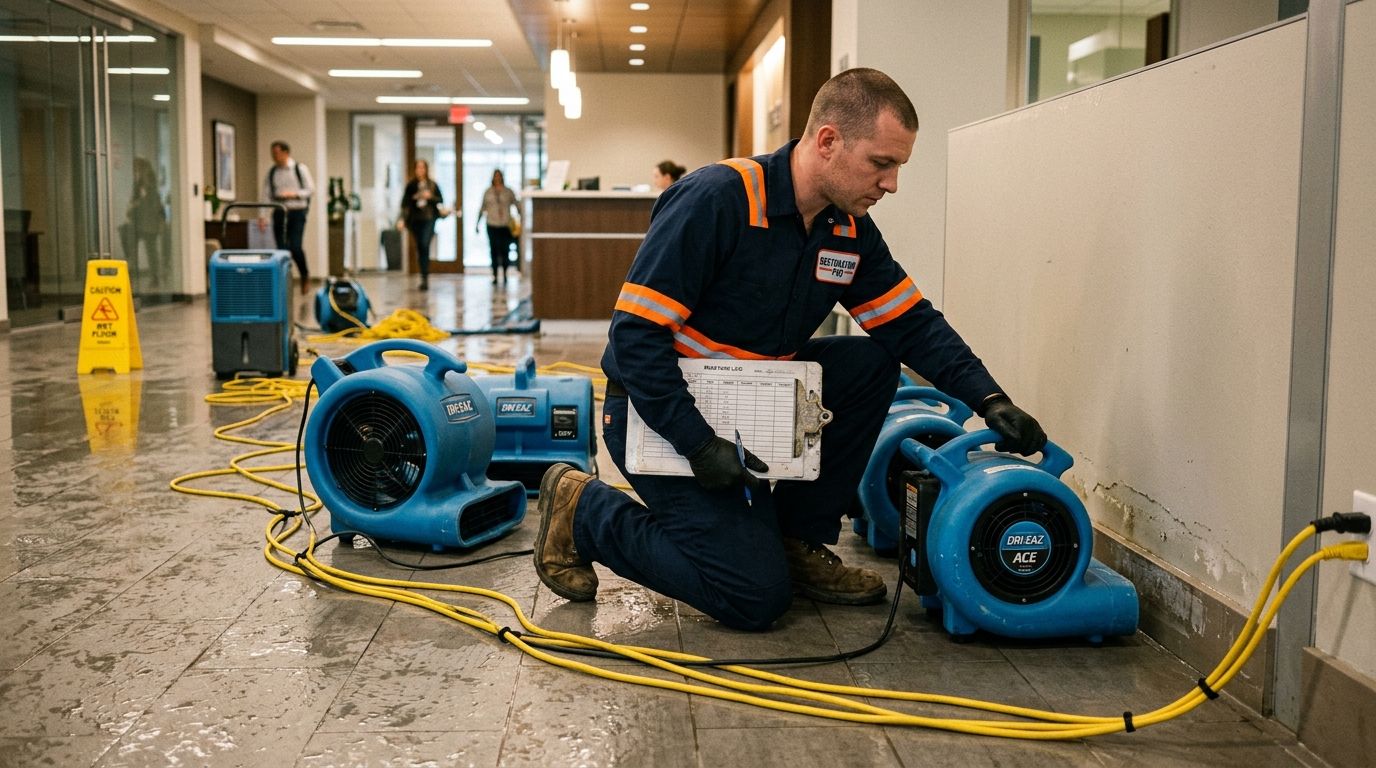
Every response performed by Valley Restoration Pros is documented through photographic and thermographic records:
Comprehensive commercial bakery proofing box leak water damage phoenix Technical Manual & Operational Standards
Exhaustive engineering protocols, psychrometric calculations, geological multipliers, and step-by-step restoration standards for Maricopa County properties:
Executive Emergency Abstract: Commercial Bakery Proofing Box Water & Steam Ruptures
Within the high-output production corridors of Greater Phoenix—stretching from the large-scale commercial wholesale bakeries of the Deer Valley Industrial Park and Central Avenue food production hubs to the artisan pastry commissaries of Downtown Scottsdale and the Tempe commercial logistics basin—a commercial bakery proofing box water failure represents an immediate catastrophic threat to structural assets, multi-million dollar equipment arrays, and public health safety. Commercial roll-in proofing cabinets and automated retarder-proofers are precision-engineered thermodynamic chambers designed to accelerate yeast fermentation by maintaining continuous internal climates between 95 degrees and 110 degrees Fahrenheit with 80 percent to 90 percent relative humidity. To achieve these extreme psychrometric conditions, proofing cabinets depend on uninterrupted pressurized municipal water supplies, internal electric immersion boilers, ultrasonic atomizers, and delicate float switch solenoid assemblies.
When an unpredicted mechanical failure strikes—such as a continuous-duty solenoid stuck open by mineral scaling, a cracked copper steam injection manifold, a fractured stainless water reservoir, or a blocked condensate evacuation drain—the unit discharges hundreds to thousands of gallons of scalding water and pressurized steam across the bakery facility. Unlike conventional commercial plumbing failures, proofing box leak inundations in commercial bakeries trigger a uniquely hazardous secondary reaction: escaping pressurized moisture immediately contacts airborne flour dust and floor spillage, forming hundreds of pounds of dense, sticky, gelatinous starch paste. This adhesive gluten slurry rapidly floods across quarry tile floors, coats stainless floor tracks, seeps behind sanitary base cove tiles, and enters recessed electrical floor trenches housing 480-volt, three-phase power supplies.
In the extreme arid climate of Greater Phoenix, where external ambient temperatures frequently exceed 115 degrees Fahrenheit and commercial production floor environments operate under intense thermal baselines, stagnant pools of warm moisture and starch provide a hyper-accelerated incubation matrix. Pathogenic mold strains, wild environmental yeasts, and dangerous foodborne bacteria such as Bacillus subtilis (the causative agent of bacterial rope disease in bread) proliferate explosively within 12 to 24 hours. The presence of uncontrolled moisture and microbial colonization immediately violates Maricopa County Environmental Services Department (MCESD) health regulations and federal FDA Food Safety Modernization Act (FSMA) preventive controls, resulting in mandatory plant shutdowns, product condemnation, and catastrophic business interruption losses.
Immediate intervention by certified commercial water damage specialists trained in food-grade decontamination, high-heat slurry extraction, and desiccant structural desiccation is mandatory to halt ongoing structural degradation, prevent permanent motor and electrical circuitry loss, and secure fast-track regulatory clearance to resume wholesale baking operations.
Immediate Commercial Bakery Proofing Box Emergency Action Directives
- Execute Immediate 480V/208V Electrical & Steam Lockout: Instantly de-energize primary branch circuit breakers serving the proofing cabinet, internal steam immersion elements, circulation blower motors, and adjacent rack ovens. Electrified water on wet quarry tile floors poses extreme life-safety electrocution hazards for bakery staff.
- Isolate Dedicated Water Supply & Condensation Loops: Rotate the manual quarter-turn brass ball valve on the dedicated cold-water feed line feeding the proofing box steam generator. If the isolation valve is inaccessible or frozen with limescale, trip the master commercial building water main to arrest continuous hydraulic influx.
- Halt Water Washdown on Dry Flour Deposits: Strictly instruct sanitation workers NEVER to spray high-pressure water hoses onto dry flour dust or dry ingredients located near the flood zone. Adding water to dry flour creates an unmanageable paste cement that permanently blocks floor trench drains and clogs industrial grease traps.
- Quarantine Proofed Dough & Raw Dry Inventory: Close roll-in proofer doors to isolate proofing chamber contents. Seal off ingredient storage rooms containing open or permeable bagged flour, yeast cultures, sugars, and shortening to protect against humidity-induced microbial condensation and airborne aerosol settlement.
- Mobilize Specialized Industrial Water Extraction Teams: Contact industrial commercial response director Marcus Vance at the Valley Restoration Pros 24/7 Rapid Commercial Dispatch Hotline at (602) 847-9593. Our master restoration technicians arrive on site within thirty minutes equipped with self-contained heated extraction systems, food-grade desiccant dehumidifiers, and containment infrastructure.
Anatomy of Proofing Box Water & Steam Ruptures: Hydraulic Forces, Thermal Dynamics & Gluten Paste Slurry
Industrial walk-in proofing boxes and roll-in retarder-proofers manufactured by leading industrial bakery brands (such as Baxter, Hobart, Doyon, Belshaw, and Revent) represent sophisticated mechanical assemblies operating under continuous thermal and hydraulic stress. A comprehensive engineering breakdown of how these specialized units operate reveals why internal component degradation triggers such widespread, high-velocity water destruction across commercial food processing facilities:
Solenoid Valve Seizure & Unchecked Influx
Proofing boxes regulate water volume via electromagnetic solenoid valves activated by digital humidistats and mechanical float switches. The incoming municipal line operates under continuous 40 to 65 PSI hydraulic pressure. When extreme mineral scaling causes the internal brass piston, plunger spring, or synthetic diaphragm to seize in an open position, cold water flows continuously into the boiler reservoir at 8 to 15 gallons per minute. Within thirty minutes of unattended operation during an overnight bake cycle, over 400 gallons of water overflow internal baffles and cascade onto the production floor.
Steam Boiler Tank Fracture & Scald Deluge
The internal steam generation tank utilizes heavy-duty electric heating elements to boil water into saturated steam. Continuous thermal cycling between 140 degrees and 212 degrees Fahrenheit causes severe expansion and contraction fatigue along welded seams of stainless steel boiler reservoirs. When thermal shock or localized corrosion causes seam rupture, pressurized scalding water and superheated steam erupt inside the mechanical compartment, melting internal wiring harnesses, blowing past door gasket seals, and soaking adjacent drywall framing assemblies.
Flour Dust Hydration & Gluten Slurry
The most severe compounding factor in bakery floods is the presence of starch and flour dust. As escaped water spreads across the facility floor, it dissolves ambient flour dust, starch starches, and yeast residues, creating a viscous, glue-like gluten slurry. This thick adhesive compound coats floor drains, clogs drainage traps, seeps beneath quarry tile mortar beds, and sticks to the undersides of heavy stainless dough mixers, proofing racks, and spiral dough sheeters. Standard wet vacuums cannot pump this heavy paste without immediate filter and impeller failure.
Sub-Floor Capillary Wicking & FRP Ingress
Commercial bakery walls are typically clad with Fiberglass Reinforced Plastic (FRP) panels over water-resistant drywall or masonry blocks. Escaping hot water under pressure forces its way behind perimeter stainless coving and unsealed FRP bottom edges. Through strong capillary action, moisture wicks vertically up structural wall cavities, soaking insulation and drywall backing while remaining invisible behind non-porous FRP sheeting until catastrophic microbial rot and wall buckling manifest days later.
When thousands of gallons of boiling water and starch-laden slurry escape across bakery production zones, standard janitorial cleaning equipment is completely outmatched. Our certified restoration specialists deploy industrial truck-mounted emergency water extraction units operating at maximum lift to extract heavy slurries, clear obstructed floor drains, and stabilize ambient humidity before structural degradation takes hold.
For bakeries operating centralized steam delivery networks, facilities directors should also consult our specialized technical overview for commercial bakery steam boiler leak water damage restoration to manage complex high-pressure boiler piping ruptures and pressurized distribution failures.
Phoenix Climatic Multipliers: 18 GPG Limescale Scale, 115°F Microbial Incubation & Caliche Foundation Upheaval
Commercial bakery operations located throughout the Valley of the Sun—including Phoenix, Scottsdale, Mesa, Tempe, Glendale, and Chandler—operate under unique environmental and geological stressors that drastically increase the frequency of proofing box water ruptures and complicate subsequent recovery efforts:
1. 18 to 24 GPG Municipal Water Hardness & Calcite Mineral Incrustation
Municipal water sourced from the Salt River Project (SRP), Central Arizona Project (CAP) canals, and deep municipal groundwater wells carries astronomical levels of dissolved mineral ions, frequently testing between 18 and 24 grains per gallon (GPG) of total hardness. In proofing boxes where water is continuously heated to generate steam, dissolved calcium bicarbonate and magnesium salts precipitate out of solution, forming dense, rock-hard calcite (calcium carbonate) limescale crusts across heating elements, water level sensing probes, float switches, and solenoid valve seats.
A calcified water level sensor fails to signal the automatic shutoff, causing the intake solenoid to remain continuously energized. Simultaneously, scale deposits flake off into narrow 3/8-inch copper supply lines and 1/4-inch atomizer nozzles, creating high-pressure blockages that burst internal tubing or back up condensation trays. When mineral-dense water floods the bakery, dissolved salts leave behind an intractable white mineral film that binds with organic flour dust, requiring specialized acidic descaling agents to restore commercial stainless steel cooking equipment without etching factory finishes.
2. 115°F Desert Ambient Heat & Accelerated Microbial / "Rope" Spore Incubation
During the sweltering Phoenix summer months from May through October, outdoor temperatures routinely hover between 110 and 118 degrees Fahrenheit. In industrial bakeries where continuous-tunnel ovens and revolving rack ovens generate massive thermal loads, internal production floor temperatures frequently exceed 100 degrees Fahrenheit, even with industrial evaporative or chilled-water cooling systems in operation.
When a proofing box discharges hundreds of gallons of hot water into this super-heated environment, ambient relative humidity spikes from a typical 15 percent desert baseline up to 85 percent or higher. This creates a virtual tropical incubator. Moisture, heat, and abundant starch nutrients allow dormant spores of Bacillus subtilis and Bacillus licheniformis—the feared bacterial pathogens responsible for "rope disease" in commercial bakeries—to germinate within hours. Rope bacteria degrade crumb structure into a sticky, stringy, foul-smelling mass that contaminates production equipment and destroys entire product batches. Concurrently, black mold (Aspergillus niger) and airborne molds colonize moist drywall cavities behind stainless panels within 24 to 48 hours, necessitating certified mold remediation protocols.
3. Expansive Caliche Soils & Sub-Slab Hydraulic Migration
The geological foundation of Greater Phoenix consists predominantly of highly expansive montmorillonite clay bound by dense, concrete-like calcium carbonate hardpan known locally as caliche. Industrial bakeries are constructed over thick commercial concrete post-tensioned or reinforced slabs. When a proofing box leaks hundreds of gallons of water over an extended weekend or overnight shift, standing water penetrates saw-cut expansion joints, perimeter plumbing penetrations, and micro-fissures in the concrete floor slab.
Water reaching the sub-slab environment encounters reactive caliche clays, triggering volumetric soil swelling of up to 10 percent. This upward hydraulic pressure exerts intense localized foundation upheaval, fracturing rigid underground copper plumbing lines, cracking quarry tile assemblies, and creating unlevel surfaces that misalign heavy roll-in bakery rack conveyors. For facilities where sub-slab plumbing lines have fractured, our certified specialists execute non-invasive acoustic detection through our specialized burst pipe repair protocols.
4. Maricopa County Environmental Services Department (MCESD) Regulatory Enforcement
Commercial baking and food manufacturing facilities in Phoenix operate under strict regulatory enforcement by the Maricopa County Environmental Services Department (MCESD) Environmental Health Division and the FDA Western Region Food Safety Inspection Bureau. Under Maricopa County Health Code Chapter 8, any uncontrolled plumbing inundation in food production areas demands immediate suspension of food manufacturing permits until certified environmental sanitization is proven.
Health inspectors conduct rigorous visual, physical, and microbiological audits following water intrusion incidents. Any open or permeable food packaging contacted by floodwater or elevated moisture must be condemned and disposed of under strict chain of custody. Valley Restoration Pros coordinates directly with MCESD sanitarians, providing verifiable ATP swab clearance logs and dry standard certifications that satisfy county health authorities and expedite facility permit reissuance.
Immediate First-Hour Emergency Protocol: Incident Isolation & Hazard Containment
The initial sixty minutes following a commercial bakery proofing box leak determine whether a production facility experiences a controlled 36-hour restoration turnaround or suffers catastrophic multi-week production closures, complete product line contamination, and devastating revenue forfeiture. Executive bakers, plant maintenance engineers, and sanitation supervisors must execute systematic emergency containment procedures before specialized disaster recovery teams arrive on site:
Phase 1: High-Voltage Electrical Lockout & Life Safety Isolation (Minutes 0–15)
Instantly clear non-essential personnel from the production floor. Commercial proofing boxes, retarders, and roll-in rack systems operate on 208-volt to 480-volt three-phase electrical circuits drawing 30 to 80 amperes. Liquid water and saturated steam penetrating electrical conduit runs, terminal strips, heating element junction boxes, and floor raceways create severe electrical arc and electrocution hazards. De-energize subpanel circuit breakers supplying the proofer, exhaust hoods, proof box circulation fans, and adjacent dough handling equipment. Affix Lockout/Tagout (LOTO) safety tags to prevent accidental re-energization during extraction.
Phase 2: Pressurized Water Supply & Steam Loop Isolation (Minutes 15–30)
Locate the dedicated water shutoff valve supplying the proofing cabinet steam boiler, typically situated behind the top mechanical access hatch or on the back wall distribution manifold. Turn the ball valve handle 90 degrees perpendicular to the pipe. If the dedicated valve is corroded, seized by limescale, or submerged beneath boiling water, immediately shut off the zone isolation valve or master building water service meter. Relieve residual line pressure by opening adjacent low-point drain bibbs outside the production zone to prevent back-siphonage into potable water lines.
Phase 3: Dry Flour Protection & Starch Dust Barrier Deployment (Minutes 30–45)
Deploy heavy-duty rubber containment berms, weighted silicone dikes, or absorbent chemical socks around the perimeter of the leak to prevent water from reaching dry flour storage silos, bagged ingredient racking, and spiral mixer stations. Crucially, enforce a strict prohibition against using mop buckets, garden hoses, or water washdowns across dry flour areas. Flour exposed to water forms an insoluble gluten cement that permanently adheres to floors, coats drainage pipes, and ferments into sour, acidic dough within hours. Dry flour dust in surrounding dry zones should be gathered exclusively with certified Class II Div 1 explosion-proof dry HEPA vacuums.
Phase 4: Raw Ingredient Quarantine & Insurance Notification (Minutes 45–60)
Inspect all proofed dough racks inside the failed unit and adjacent proofing retarders. Lock proofer doors and clearly mark racks with biohazard warning signs reading "QUARANTINE - DO NOT BAKE." Condensation from boiler steam ruptures contains heavy metallic oxides, dissolved boiler chemicals, and microbial contaminants that render dough products unwholesome and illegal to sell. Take high-resolution photographs of all flooded areas, submerged baking racks, damaged flour bags, and water level lines for commercial insurance claim substantiation, then immediately contact Valley Restoration Pros for 24/7 master commercial emergency dispatch.
If water inundation has overwhelmed bakery plumbing systems and backed up municipal floor drains with biohazard blackwater, kitchen operators must follow our specialized emergency standards for sewage cleanup to ensure comprehensive sanitation compliance.
Advanced Industrial Restoration Equipment: Slurry Extraction & Food-Grade Desiccant Dehumidification
Remediating a commercial bakery proofing box leak requires specialized industrial equipment capable of extracting viscous, starch-laden slurries, drying high-density masonry subfloors, and maintaining ultra-low humidity levels where zero surface condensation can be tolerated. Valley Restoration Pros deploys an advanced fleet of commercial restoration hardware engineered specifically for food processing environments:
Truck-Mounted High-Heat Slurry Extraction
Model: Sapphire Scientific 2500 & Hydro-Force Industrial PTO Extraction Units
Featuring positive-displacement vacuum blowers pulling 2,500 CFM at 16 inches of mercury (Hg) vacuum lift, with onboard heat exchangers delivering 220-degree Fahrenheit softening rinses. High heat instantly breaks down gelatinized flour starch bonds, while dual-wand high-vacuum extraction lifts the dense slurry into sealed exterior holding tanks without releasing hazardous bio-aerosols into the bakery atmosphere.
Industrial Desiccant Dehumidifiers
Model: Quest PowerDry 1200 & Phoenix D450 Mobile Desiccant Systems
Food processing facilities require dry environments where relative humidity must drop below 20 percent and grains per pound (GPP) must reach single digits to prevent moisture condensation on dry flour stocks. Our industrial desiccant dehumidifiers utilize silica-gel honeycomb rotors that pull moisture vapor directly from hot desert ambient air, creating massive vapor pressure gradients that pull trapped water from beneath quarry tile concrete slabs.
Negative-Air HEPA Filtration Units
Model: Phoenix Guardian HEPA & DefendAir HEPA 500 Air Scrubbers
Equipped with certified 99.97% DOP true HEPA filtration stages down to 0.3 microns, paired with potassium permanganate carbon stages. These units scrub up to 2,000 CFM of contaminated bakery air, capturing airborne fungal spores, volatile fermenting odors, and aerosolized flour dust to establish clean negative air zones that prevent cross-contamination into clean packaging rooms.
Infrared Thermography & Psychrometric Sensors
Model: FLIR T540 High-Definition Cameras & Tramex Concrete Encounter Meters
High-resolution infrared thermal imaging reveals hidden moisture pockets traveling behind stainless steel wall panels, inside proofer insulation cores, and under heavy bakery oven masonry. Calibrated electrical impedance meters and in-situ relative humidity probes (ASTM F2170) measure precise concrete moisture percentages to ensure subfloors reach certified dry baseline.
To ensure deep structural drying within commercial wall assemblies, stainless kickplates, and sub-slab conduits, our certified technicians implement engineered structural drying procedures that desiccate structural components without requiring expensive demolition.
Additionally, in bakeries where floor drains have backed up with sewer contaminants or grease-laden wastewater, our specialists execute comprehensive commercial kitchen blackwater damage restoration to sterilize contaminated production subfloors.
IICRC S500 & S520 Commercial Bakery Water Damage Restoration Protocol
Restoring a commercial bakery after a proofing box water and steam rupture requires adherence to rigorous IICRC S500 Standards for Professional Water Damage Restoration and IICRC S520 Standards for Microbial Remediation, fully integrated with federal food safety cGMP standards (21 CFR Part 117). Valley Restoration Pros executes an exhaustive nine-phase restoration protocol to return the facility to operating status:
Stage 1: Psychrometric Mapping, Hazard Tagging & Critical Containment
Lead disaster restoration supervisors conduct an exhaustive on-site audit using FLIR thermal cameras and digital moisture probes. Technicians construct heavy-duty 6-mil flame-retardant polyethylene containment walls around the proofing line and affected production zones, sealing HVAC supply vents and ingredient room access doors. Industrial HEPA air scrubbers establish continuous negative air pressure (-0.02 inches of water column) within the drying chamber, completely isolating moisture vapor, volatile organic odors, and fungal spores from clean packaging and storage zones.
Stage 2: Dry Flour Recovery & Explosion-Proof HEPA Pre-Vacuuming
Before liquid extraction begins, technicians utilize Class II Division 1 certified explosion-proof HEPA vacuums and mechanical scrapers to remove dry and semi-dry flour deposits surrounding the perimeter. Flour dust presents severe combustible dust explosion hazards when agitated near electric machinery; our certified technicians follow strict NFPA 654 standards to safely collect dry flour particulate without creating airborne combustible dust clouds or allowing flour to hydrate into adhesive paste.
Stage 3: Heated Hydro-Extraction of Fermenting Starch Slurry
Using truck-mounted extraction units operating with 200-degree Fahrenheit softened rinse water, technicians systematically liquefy and extract gelatinous flour slurry from quarry tile floor grooves, expansion joints, drainage trenches, and proofer floor tracks. High-velocity extraction wands apply continuous suction, pumping recovered organic waste directly into sealed holding tanks for licensed disposal, completely preventing slurry from solidifying inside municipal sewer pipes.
Stage 4: Proofing Box Mechanical Disassembly & Boiler Descaling
Technicians dismantle proofing box access panels, circulation fan housings, and steam generator chambers. Scaled heating elements and float switch chambers undergo food-grade citric and sulfamic acid descaling baths to dissolve hard water calcite deposits. Damaged water supply lines, solenoid valves, and corroded electrical contactors are cataloged for precision replacement, while internal stainless steel floor panels are sanitized and inspected for structural seam integrity.
Stage 5: Deep Structural Cavity & Sub-Slab Moisture Extraction
Where water has seeped behind stainless wall cladding and FRP panels, technicians install specialized negative-pressure wall cavity drying systems. Heated, ultra-dry air is injected into wall studs, while high-vacuum suction extracts trapped moisture vapor through base cove openings. High-frequency floor drying panels are positioned over quarry tile subfloors, driving out moisture trapped within mortar beds without requiring destructive tile demolition.
Stage 6: Desiccant Thermodynamic Dehumidification Cycle
Industrial desiccant dehumidifiers (Quest PowerDry 1200) paired with Phoenix DryMAX XL LGR units and high-velocity axial air movers are configured in a precision closed-loop drying vortex. The desiccant units reduce room relative humidity below 20 percent and ambient GPP to under 25, creating an aggressive drying gradient that vaporizes deep bound moisture from concrete slabs, masonry walls, and equipment insulation jackets within 24 to 36 hours.
Stage 7: Food-Grade EPA-Registered Antimicrobial & Sporicidal Sanitization
Following structural drying, technicians apply an EPA-registered, no-rinse food-contact sanitizer formulated with peracetic acid and hydrogen peroxide. This hospital-grade disinfectant rapidly eradicates bacterial vegetative cells, wild yeast strains, fungal mycotoxins, and resistant Bacillus subtilis bacterial endospores without leaving toxic residues or compromising food safety standards. Application is carried out via ultra-low volume (ULV) cold foggers across ceilings, walls, proofer interiors, and floor drains.
Stage 8: Stainless Steel Passivation & Production Line Reassembly
To reverse surface oxidation and pitting caused by high-temperature water and acidic fermentation byproducts, technicians treat all 304 and 316 stainless steel proofer walls, floor tracks, and rack channels with food-grade citric acid passivation solutions. Passivation restores the protective chromium oxide film on stainless surfaces, preventing rust blooming and surface degradation from daily washdown cycles. Rebuilt proofer mechanical components and replaced solenoids are calibrated to factory operational tolerances.
Stage 9: ATP Bioluminescence Clearance & MCESD Certification Audit
Prior to facility recommissioning, our certified quality assurance auditors execute systematic Adenosine Triphosphate (ATP) bioluminescence surface swab sampling across 30 critical control points, including proofer walls, rack tracks, floor drains, and preparation tables. All food-contact surfaces must register below 10 Relative Light Units (RLU) to pass clearance. A formal Certificate of Sanitary Decontamination and Psychrometric Dry Standard is issued to bakery management for presentation to Maricopa County health sanitarians and insurance carriers.
Maricopa County Health Department (MCESD) & FDA FSMA Regulatory Compliance Standards
Resuming commercial bakery manufacturing in Greater Phoenix after an uncontrolled water inundation requires compliance with overlapping municipal, state, and federal food safety laws. The Maricopa County Environmental Services Department (MCESD) and the US Food and Drug Administration enforce stringent Current Good Manufacturing Practice (cGMP) regulations under 21 CFR Part 117. Valley Restoration Pros manages regulatory compliance protocols to protect facilities from punitive enforcement actions:
Adulterated Food Condemnation & Destruction
Under Arizona Revised Statutes Title 36 and MCESD regulations, any food product, proofed dough batch, flour ingredient, or packaging material that contacts plumbing floodwater or condensation from steam boiler leaks is classified as adulterated. Our compliance technicians document each condemned lot, record batch numbers, photograph packaging damage, and oversee controlled denaturing with non-toxic blue dye before disposal in locked roll-off containers, generating an airtight Certificate of Destruction for insurance reimbursement.
FSMA Environmental Swabbing & Microbial Clearance
Under the FDA Food Safety Modernization Act (FSMA), industrial bakeries must maintain an active Hazard Analysis Critical Control Point (HACCP) program. Moisture intrusions require environmental swabbing of non-food contact surfaces (such as proofer drain pans, expansion joints, and equipment casters) to verify the absence of Listeria monocytogenes and Salmonella. Valley Restoration Pros coordinates independent third-party laboratory analysis to provide accredited microbiological clearance reports.
Floor Trench Drainage & Pretreatment Compliance
Discharging viscous flour paste or chemical descaling effluents into municipal sewer drains violates City of Phoenix Water Services Department Industrial Pretreatment standards. Technicians capture all extraction waste in sealed tanks, filter suspended solids down to 50 microns, and neutralize pH before authorized industrial discharge, shielding bakery owners from severe municipal fines and wastewater surcharge penalties.
MCESD Fast-Track Operating Permit Reinstatement
When an MCESD sanitarian places a red suspension placard on a commercial bakery entrance, every hour of delay costs tens of thousands of dollars in lost contracts. Our lead compliance officers prepare comprehensive technical documentation packages—incorporating dry logs, ASTM concrete moisture readings, sanitization verification, and ATP swab results—and meet sanitarians on site to achieve fast-track permit reissuance within 24 to 48 hours.
For commercial bakeries operating in integrated foodservice properties where kitchen fire protection systems were simultaneously discharged, review our specialized technical protocols for Ansul system discharge cleanup in Phoenix.
Hyper-Local Phoenix Commercial Case Study: Deer Valley Industrial Bakery Proofing Box Rupture
Emergency Proofing Cabinet Leak Dewatering & MCESD Expedited Clearance at Industrial Baking Facility
At 2:15 AM on a Tuesday morning during the main wholesale production shift, a high-volume commercial artisan bakery located near the intersection of West Deer Valley Road and North 19th Avenue in Phoenix (ZIP 85027) sustained a catastrophic water failure on a double-depth roll-in proofing cabinet. A continuous-feed solenoid valve seized open due to severe 22 GPG calcium mineral encrustation, while an adjacent copper steam generator manifold fractured under thermal pressure fatigue. Saturated 190-degree water and steam erupted unchecked for over three hours before maintenance crews identified the breach, discharging an estimated 1,400 gallons of scalding water across 6,500 square feet of quarry tile production floor, dough makeup lines, and adjacent dry ingredient warehousing.
The boiling water mixed with over 400 pounds of spilled artisan flour and starch dust, creating a dense 2-inch layer of fermenting gluten paste that completely submerged floor drainage grates, flooded 480-volt underground conduit chases, and wicked into drywall assemblies behind sanitary stainless steel wall cladding. Ambient production room humidity spiked from 18% to 92%, threatening 12,000 pounds of bagged organic flour in the adjacent warehouse with irreversible moisture spoilage.
Baseline Psychrometrics
Ambient: 94°F, 92% RH (214 GPP)
Quarry Tile Grout: 99.9% WME (Saturated)
Concrete Sub-Slab: 96% in-situ RH
Raw Inventory Risk: $48,000 organic flour
Restoration Strategy
26-Minute Rapid On-Site Mobilization
Explosion-Proof HEPA Flour Pre-Scrape
Sapphire 2500 Slurry Hydro-Extraction
2x Quest 1200 Desiccants + 4x DryMAX LGRs
Verified Results
38-Hour Production Floor Turnaround
Sub-Slab Dried to 11.4% WME Baseline
ATP Surface Swabs Averaged 4 RLU
Full MCESD Health Clearance Granted
Commercial restoration director Marcus Vance and the Valley Restoration Pros industrial emergency team arrived on site in Deer Valley within twenty-six minutes of dispatch. Technicians instantly established negative pressure containment with four Phoenix Guardian HEPA air scrubbers, isolating the humid disaster zone from dry ingredient silos. Crews utilized explosion-proof dry vacuums to safely recover 400 pounds of loose flour before truck-mounted high-heat slurry extractors lifted 1,350 gallons of standing water and dissolved starch sludge into exterior containment tanks.
A high-capacity desiccant drying vortex driven by two Quest PowerDry 1200 desiccant units and four Phoenix DryMAX XL LGR dehumidifiers reduced ambient grains per pound from a hazardous 214 GPP down to 32 GPP within 24 hours, completely eliminating condensation risks. Food-grade peracetic acid sporicidal treatment was applied across all surfaces, and 30 ATP bioluminescence surface swabs registered an average of 4 RLU (far exceeding the county threshold of 10 RLU). Maricopa County health inspectors conducted an on-site verification at 5:00 PM Wednesday, reinstating the facility operating permit and allowing full wholesale baking distribution to resume with zero canceled supermarket delivery accounts.
Commercial Insurance Documentation, Financial Transparency & Claim Settlement Support
A major commercial bakery water intrusion involving equipment breakdown, raw ingredient spoilage, and business interruption presents an intricate commercial insurance claim. Commercial property insurers (including Travelers, Chubb, Hartford, Zurich, and Liberty Mutual) demand exhaustive, verifiable engineering and psychrometric evidence before reimbursing high-value restoration and business downtime losses. Valley Restoration Pros compiles production-grade claim documentation to ensure swift, equitable settlement:
Standardized Insurance Documentation Deliverables
- High-Definition Infrared Thermography Reports: Comprehensive FLIR thermal image logs identifying concealed moisture migration behind stainless panels, under heavy oven footings, and inside wall cavities before and after drying.
- Itemized Xactimate Line-Item Invoicing: Standardized commercial pricing schedules utilizing current Phoenix regional labor, material, and specialty drying equipment rates accepted by commercial insurance adjusters.
- Psychrometric Moisture Decontamination Logs: Daily records documenting ambient temperature, relative humidity, GPP vapor pressure, and material moisture content percentages (WME) validating that structures met scientific dry standards.
- Certified Food Spoilage & Raw Material Loss Audits: Complete itemized schedules of condemned flour sacks, yeast cultures, proofed dough batches, and damaged packaging materials complete with lot numbers and wholesale invoice values.
- ATP Bioluminescence & Microbial Clearance Records: Certified laboratory and field testing logs verifying that all production surfaces achieved food-grade sanitary clearance prior to recommissioning.
Consumer Protection & Transparent Insurance Claims Disclosure
Valley Restoration Pros strictly adheres to ethical restoration standards. We do not make deceptive promises of "free deductible waivers" or guarantee that commercial property insurance will automatically cover 100% of all restoration costs without client policyholder responsibility. Coverage determinations depend entirely on individual commercial property policy language, equipment breakdown endorsements, water damage riders, and deductible schedules. We provide comprehensive claims documentation assistance—furnishing daily psychrometric logs, ASTM concrete readings, thermal photography, and itemized billing sheets—to substantiate claims with your commercial adjuster.
Mandatory Commercial Restoration Guarantees
Valley Restoration Pros guarantees: Free Comprehensive On-Site Damage Assessment, Transparent Upfront Itemized Pricing Before Work Begins, and Assistance with Detailed Claims Documentation & Psychrometric Moisture Logs. We do not provide speculative telephone quotes; a master commercial restorer audits your facility in person to deliver an exact, binding recovery plan. To calculate baseline commercial restoration parameters, explore our interactive instant commercial cost estimator.
To request an immediate on-site commercial bakery evaluation, connect with our commercial operations center through our 24/7 commercial emergency dispatch operations team.
Frequently Asked Technical Questions: Commercial Bakery Proofing Box Water Damage
A proofing box leak involves high temperatures, dissolved mineral salts, and organic baking ingredients that transform a clean water event into an immediate biohazard. Scalding water (140°F to 212°F) accelerates hydraulic penetration into porous masonry, dissolves adhesive bonds beneath quarry tile, and rapidly hydrolyzes ambient flour dust into an adhesive gluten slurry. This thick starch paste coats floor surfaces, clogs drainage traps, and enters sub-slab conduits. In Phoenix ambient heat, this organic slurry begins anaerobic fermentation within hours, breeding wild yeasts, black mold, and bacterial pathogens. Furthermore, steam boiler discharges carry concentrated limescale particulate and metallic boiler oxides that stain commercial stainless steel equipment.
Greater Phoenix municipal tap water carries severe dissolved mineral hardness averaging 18 to 24 grains per gallon (GPG), saturated with calcium and magnesium carbonates. In proofing boxes where water is continuously boiled to produce steam, water evaporates while pure calcite mineral salts remain behind. Over time, rock-hard limescale coats internal immersion heating elements, causing uneven thermal stress and boiler seam rupture. Crucially, scale encrustation coats automatic mechanical float switches and solenoid valve plungers. When scale binds the solenoid valve armature in an open position, high-pressure municipal water flows into the chamber continuously, resulting in massive overnight overflow deluges.
No. Under Maricopa County Environmental Services Department (MCESD) health regulations and FDA FSMA food safety rules, all food products directly contacting floodwater or exposed to sustained relative humidity above 75 percent must be condemned. Proofed dough inside the cabinet is contaminated by aerosolized boiler oxides and chemical scaling agents. Permeable multi-wall paper flour bags absorb airborne moisture vapor rapidly; once flour moisture content surpasses 14 percent, dormant fungal spores and weevil eggs hatch, while Bacillus bacteria proliferate. Attempting to bake contaminated flour risks widespread consumer food poisoning and severe regulatory prosecution. All exposed product must be condemned and documented for insurance recovery.
Rope disease is a devastating bacterial contamination caused by endospore-forming bacteria, primarily Bacillus subtilis and Bacillus licheniformis. These bacterial endospores are naturally present in raw cereal grains and withstand commercial baking oven temperatures up to 212°F. Under normal dry conditions, spores remain dormant. However, when a proofing box flood elevates facility humidity and coats equipment in warm, moist starch slurry under Phoenix summer heat, the spores germinate exponentially. If bread is baked in a contaminated bakery envelope, the bacteria decompose the bread crumb within 24 hours into a sticky, stringy, honey-like slime with a repulsive decaying fruit odor. Eradicating rope spores requires hospital-grade sporicidal sanitizers (peracetic acid) and complete facility desiccation.
Standard Low-Grain Refrigerant (LGR) dehumidifiers remove moisture by cooling air across refrigeration coils to condense water. While effective at high moisture levels, LGR units lose efficiency when relative humidity drops below 40 percent or when ambient air temperatures exceed 95 degrees Fahrenheit. In a commercial bakery containing millions of pounds of hygroscopic flour and dry ingredients, ambient relative humidity must be driven below 20 percent and grains per pound (GPP) below 25 to pull trapped moisture out of dense concrete subfloors without risking condensation. Industrial desiccant dehumidifiers utilize active chemical adsorption rotors that operate with maximum efficiency in low-humidity, high-heat desert environments, ensuring rapid, complete desiccation.
The Maricopa County Environmental Services Department (MCESD) requires four mandatory compliance deliverables: (1) A signed Certificate of Sanitary Decontamination from a certified commercial restoration firm verifying that all food preparation areas have been treated with EPA-registered food-contact sanitizers; (2) An itemized Certificate of Food Destruction documenting that all adulterated dough batches, raw flour, and contaminated packaging were denatured and discarded; (3) ATP bioluminescence surface swab test records verifying that all food-contact zones test below 10 RLU; and (4) Mechanical repair documentation proving that the proofer plumbing, solenoid shutoff valves, and backflow prevention devices have been repaired, tested, and approved by a licensed plumbing contractor.
Valley-Wide Commercial Bakery Rapid Response Corridors: 30-Minute Priority Dispatch
Commercial bakery water and steam emergencies require immediate mobilization by master restorers equipped with high-vacuum slurry extraction units and high-capacity desiccant drying systems. Valley Restoration Pros maintains dedicated commercial emergency response crews strategically stationed across Maricopa County, guaranteeing on-site arrival within thirty minutes:
Deer Valley & North Phoenix Industrial Corridors
Providing emergency response for commercial wholesale bakeries, automated bun plants, and food logistics centers along Deer Valley Road, 19th Avenue, and Pinnacle Peak Road. Connect with our dedicated Phoenix commercial food processing restoration dispatch team.
Mesa Falcon Field & East Valley Food Processing
Serving high-volume commercial bakeries, tortilla manufacturing plants, and commissary kitchens throughout Falcon Field, Superstition Springs, and Broadway Road. Access our specialized Mesa commercial bakery dewatering division.
Tempe Commercial Basin & ASU Culinary Centers
Delivering high-capacity slurry extraction and desiccant drying for university dining commissaries, specialty wholesale bakeries, and pastry kitchens along University Drive. Contact our Tempe commercial bakery recovery squad.
Glendale Sports District & West Valley Logistics
Providing 24/7 rapid water extraction and sanitation for industrial bakeries, stadium concession bakeries, and distribution centers across Glendale and Tolleson. Mobilize our Glendale food manufacturing restoration unit.
Scottsdale Airpark & Resort Pastry Commissaries
Restoring high-end artisan bakeries, luxury resort pastry production kitchens, and gourmet catering commissaries throughout Scottsdale Airpark and Old Town. Connect with our Scottsdale artisan bakery restoration crew.
Chandler Tech Corridor & Gilbert Agricultural Hubs
Delivering precision structural drying and ATP microbial clearance for commercial food production facilities and automated bakeries along Price Road and Gilbert Road. Access our Chandler food plant property recovery specialists.
Master Valley-Wide Food Industry Operations
For coordinated commercial dispatch across all municipal jurisdictions in Maricopa County, explore our comprehensive Valley-wide commercial restoration service directory.
When an industrial proofing box water or steam rupture threatens your commercial bakery production schedule and food safety compliance, every passing minute magnifies structural saturation, dough loss, and regulatory exposure. Contact commercial restoration operations director Marcus Vance immediately at (602) 847-9593 for certified 24/7 emergency dispatch.
Verified Local Area Dispatch: Phoenix, AZ
Official Geo-Coordinates: 33.4484° N, -112.074° W • Maricopa County
Related Specialized Emergency Restoration Services
Explore specialized rapid-response mitigation protocols across Greater Phoenix and Maricopa County:
Valley-Wide Emergency Response Service Coverage
Our mobile restoration fleet is dispatched across the entire Phoenix metropolitan region, providing rapid 30 to 60 minute emergency response: