

Valley Restoration Pros delivers 24/7 industrial emergency water extraction, thermal psychrometric drying, and structural mitigation across Phoenix and Maricopa County with guaranteed 30–60 minute rapid arrival. All protocols strictly adhere to IICRC S500 standards, featuring upfront itemized pricing and free on-site thermal moisture assessments. Call dispatch directly at (602) 847-9593.
Why Immediate Mitigation Is Critical in Phoenix Heat
When high-pressure cooling water jackets or quench lines burst on commercial crematory retorts operating at 1,800°F in Tempe, thousands of gallons of water deluge refractory ceramic chambers and processing bays. Flooding threatens explosive thermal shock spalling of refractory brick, catastrophic refractory floor collapse, biohazard wastewater contamination, and electrical burner control destruction under 115°F desert heat.

Service Definition & The IICRC Standard of Care
Professional commercial crematory retort cooling water line burst tempe is an engineering and environmental discipline adhering strictly to IICRC S500 protocols, not mere surface mopping. When structural plumbing failures strike in Maricopa County, certified emergency water extraction and thermal structural drying procedures must be deployed immediately. Whether triggered by high-pressure burst pipe emergencies, subfloor leaks, or commercial line ruptures, bound moisture rapidly penetrates concrete subfloors and wall framing. In the desert heat, delays trigger microbial proliferation requiring rapid mold remediation. Request damage assessment through our emergency assessment portal or request 30-minute dispatch across all Valley service areas.
Securing electrical feeds, inspecting load-bearing assemblies, and containing pathogens.
Stopping the intrusion source and erecting 6-mil plastic isolation containment airlocks.
31-HP truck-mount extraction, removing gallons exponentially faster than evaporation.
LGR dehumidifiers and HEPA air scrubbers driving grains per pound below 25 GPP.
Calibrated electronic pinless testing confirming baseline dry standards.
The Complete 6-Stage Restoration Roadmap
Our IICRC-certified crews execute a disciplined, scientific 6-stage protocol to stabilize and dry structural components:
Emergency Dispatch & Perimeter Isolation
30 to 60 minute arrival. Securing electrical shutoffs, evaluating structural loads, and erecting containment airlocks.
FLIR® Thermal Mapping & Baseline Scans
Infrared thermal scans detect trapped moisture behind walls and beneath concrete without invasive exploratory demolition.
High-Volume Bulk Extraction
31-HP truck-mount extraction units pump standing water away at hundreds of gallons per minute.
Controlled Selective Demolition
Precision flood cuts 12 to 24 inches above moisture lines, removing wet insulation and opening wall framing to dry airflow.
Thermodynamic Dehumidification
Industrial Low-Grain Refrigerant dehumidifiers pull deep trapped moisture from dense framing lumber and concrete slabs.
Antimicrobial Sanitization & Verification
EPA-registered botanical application (Benefect Decon 30) and calibrated moisture testing to issue an official dry certificate.

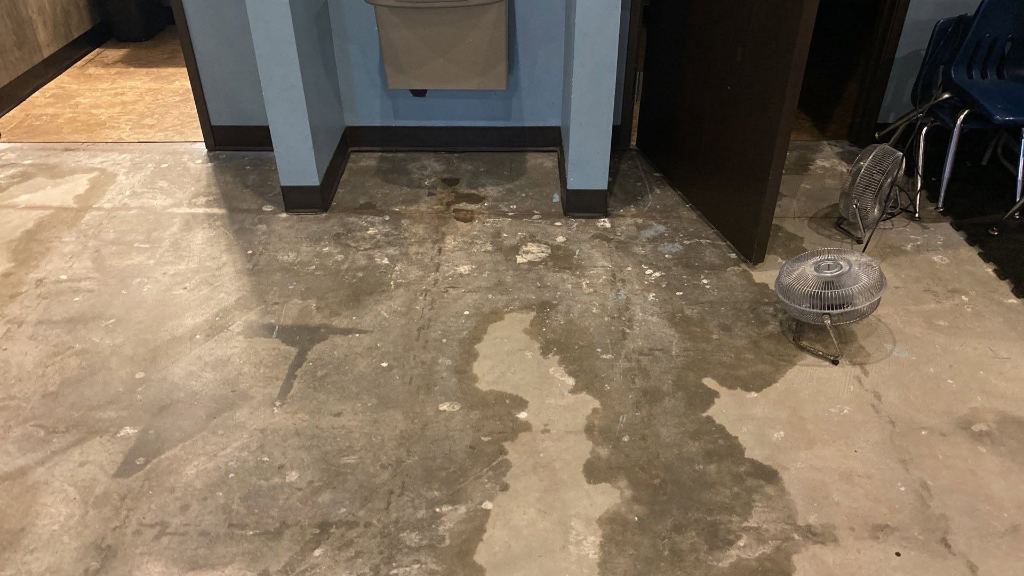
Specialized Equipment & Industrial Restoration Technology
Mitigating severe property damage requires industrial-grade technology capable of altering thermodynamic psychrometrics:
Truck-Mounted Extraction Rigs
31-HP engines producing 16+ inches Hg vacuum suction to evacuate bulk water rapidly into holding tanks.
Low-Grain Refrigerant Dryers
Pre-cooling heat-pipe systems driving ambient grains per pound below 25 GPP to draw deep trapped water out of framing.
HEPA Negative-Air Scrubbers
Hospital-grade 99.97% particulate filtration capturing microscopic fungal spores, soot, and biohazard aerosols.
FLIR® Thermal Scanners & Probes
Infrared thermography detecting evaporative cooling boundaries behind walls, combined with digital RF pinless scanners.


Professional Restoration vs. DIY Mitigation
Attempting DIY cleanup during a property disaster creates severe hidden liabilities:
- Trapped Moisture: Surface drywall dries while moisture inside cavities triggers hidden mold blooms.
- Pathogenic Risks: Category 2 & 3 water contains bio-contaminants standard cleaners fail to kill.
- Insurance Denial: Insurers require daily psychrometric logs; lack of data causes claim disputes.
Transparent Upfront Itemized Pricing
Valley Restoration Pros operates with complete transparency:
- Free On-Site Assessment: Complete physical inspection before work begins.
- Upfront Itemized Estimates: Detailed line items calculated via industry-standard Xactimate.
- Zero Surprise Billing: No hidden charges or unauthorized repairs.
Certified Commercial Crematory Retort Cooling Water Line Burst Tempe Field Documentation
Every response performed by Valley Restoration Pros is documented through photographic and thermographic records:
Comprehensive Commercial Crematory Retort Cooling Water Line Burst Tempe Technical Manual & Operational Standards
Exhaustive engineering protocols, psychrometric calculations, geological multipliers, and step-by-step restoration standards for Maricopa County properties:
Executive Emergency Abstract: Commercial Crematory Retort Water Line Ruptures in Tempe
Commercial crematories, mortuary service centers, and municipal memorial facilities situated in the South Tempe Industrial Corridor and surrounding East Valley districts operate specialized high-temperature cremation retorts that run continuously at operational combustion temperatures between 1,600°F and 1,800°F. To protect mechanical door seals, hydraulic loading rams, and exhaust stack emissions scrubbers, these multi-chamber industrial furnaces depend on closed-loop or pressurized municipal cooling water circuits. Operating under line pressures between 60 and 80 PSI, these cooling water supply headers circulate hundreds of gallons of water per minute around intense heat zones.
When a cooling water line, quench spray nozzle, or heat exchanger manifold ruptures—whether due to thermal fatigue, rapid expansion joint failure, or mineral encrustation from 18 GPG East Valley water hardness—the results are catastrophic. High-pressure water deluges the hot exterior steel casing and pours directly into refractory brick combustion chambers. The immediate interaction of cold water striking 1,800°F alumina-silicate refractory brick creates violent explosive steam flashes that spall ceramic masonry, crack monolithic hearth castables, submerge electronic burner controls, and flood processing bays with Category 3 biohazard-contaminated wastewater.
In the extreme arid climate of Tempe, where summer ambient temperatures routinely exceed 115°F, trapped standing water creates an instant super-heated humidity chamber within the facility. Moisture migrates rapidly beneath acid-stained concrete slabs, saturates dry drywall partitions, and condenses inside sensitive PLC flame safeguard controls. Immediate professional mobilization for specialized emergency water extraction and rapid industrial structural drying is vital to prevent permanent destruction of refractory chambers, preserve structural steel shells, and maintain solemn, dignified operations.
Valley Restoration Pros deploys the East Valley’s premier specialized industrial restoration fleet. Our master-certified IICRC commercial disaster specialists and biohazard mitigation technicians mobilize within thirty minutes across Tempe, Mesa, Chandler, and Phoenix. We arrive on site equipped with high-temperature extraction pumps, trailer-mounted desiccant dehumidifiers capable of achieving sub-zero dew points, explosion-proof negative-air HEPA scrubbers, and high-resolution FLIR thermal diagnostic cameras. We work directly with crematory facility directors, mortuary engineers, and equipment manufacturers to isolate hazards, dewater refractory structures, and restore operating chambers to baseline thermal conditions.
For commercial crematory operators, funeral home directors, and municipal facility managers facing an active retort cooling line burst or equipment room flood, our commercial command desk operates twenty-four hours a day, 365 days a year. Immediate emergency dispatch is accessible at (602) 847-9593. Our certified emergency teams execute rapid on-site stabilization without delay, maintaining guaranteed thirty-minute arrival windows across Tempe and East Valley commercial districts.
Immediate Crematory First-Hour Action Directives
- Isolate Retort Cooling Water Header: Actuate the designated quarter-turn emergency supply valve feeding the retort cooling circuit and open the auxiliary drain to relieve system pressure.
- Initiate Controlled Burner Shutdown: De-energize primary and secondary natural gas burners following manufacturer controlled cooldown protocols to prevent rapid thermal contraction.
- De-energize Floor Electrical Circuits: Execute lockout/tagout (LOTO) protocols for 480V three-phase draft blowers, hydraulic door rams, and floor-level electrical disconnects.
- Mobilize Certified Thermal Restoration: Contact Valley Restoration Pros at (602) 847-9593 for thirty-minute deployment of trailer-mounted desiccant dehumidifiers and biohazard extraction units.
In commercial crematory operations throughout Tempe and Maricopa County, cremation retorts represent massive capital investments requiring delicate thermal equilibrium. Constructed with specialized dense refractory brick and high-temperature insulating block, these chambers are designed to withstand extreme dry heat but are exceptionally vulnerable to water intrusion. When pressurized water penetrates porous refractory materials, capillary suction draws water deep into microscopic ceramic pores.
Our technicians operate under strict adherence to OSHA 1910.1030 bloodborne pathogen standards, Arizona Board of Funeral Directors and Embalmers operational regulations, and IICRC S500 procedural standards for professional water damage mitigation. We bring dedicated portable power generators, intrinsically safe lighting, and certified biohazard containment equipment to stabilize critical crematory facilities without compromising dignified operations or structural integrity.
Our Tempe response fleet is equipped with self-contained 250kW mobile generators, HEPA-filtered vacuum extractors, and EPA-registered broad-spectrum disinfectants. We understand that in crematory and mortuary environments, compassionate discretion is as important as technical precision. Every aspect of our response is designed to protect facility assets, safeguard employee health, and ensure seamless regulatory compliance.
Commercial crematories in Arizona operate under strict regulatory oversight by the Arizona State Board of Funeral Directors and Embalmers and the Maricopa County Air Quality Department (MCAQD). Operating permits mandate continuous recording of secondary chamber combustion temperatures (maintaining a minimum of 1,600°F with a one-second residence time) to ensure complete destruction of emissions. When water intrusion cools refractory brick or shorts out thermocouple temperature sensors, the retort cannot legally operate.
Valley Restoration Pros coordinates immediately with plant directors to establish strict containment boundaries. By deploying mobile desiccant dehumidifiers and certified airside scrubbers, our certified crews extract water and purge humidity from electronic burner management systems, enabling facility engineers to re-verify compliance parameters and avoid costly administrative permit suspensions.
Our industrial disaster response technicians are certified in IICRC S500 water mitigation, IICRC S520 microbial remediation, and OSHA 29 CFR 1910.1030 bloodborne pathogen standards. We maintain dedicated inventory of non-conductive drying mats, desiccant air handlers, and botanical disinfectants ready for rapid dispatch across all commercial corridors in Tempe and surrounding Maricopa County communities.
Anatomy of Retort Cooling Line Failures: Refractory Thermal Shock, Steam Flashes & Biohazard Wicking
Commercial cremation retorts are sophisticated thermal processing systems lined with multi-layered refractory ceramics. The interior chamber is constructed from heavy alumina-silicate refractory brick capable of resisting temperatures up to 2,600°F, backed by lightweight microporous insulation block and encased in heavy structural steel plate. Because operating temperatures exceed the melting points of standard brass and rubber components, auxiliary cooling systems circulate pressurized municipal water through water-jacketed loading door frames, draft fan bearing collars, and exhaust emission opacity monitoring ports.
Mechanical failure typically originates at cooling line flex joints or brazed copper-to-steel dielectric unions subjected to relentless thermal expansion and vibration. When a cooling line ruptures under 75 PSI line pressure, water sprays directly across the hot outer steel skin and into the lower combustion chamber. The physical dynamics of this failure are severe: cold water contacting 1,800°F ceramic brick expands instantaneously into steam at a volumetric ratio of 1,600 to 1, generating localized explosive shock waves that spall ceramic brick faces and crack monolithic hearth floors.
Refractory Thermal Spalling
Rapid steam generation inside porous ceramic brick creates violent internal tensile stresses, fracturing refractory brick faces and blowing out mortar joints.
Sub-Hearth Moisture Pooling
Deluge water drains beneath the retort hearth, saturating lower insulation layers and pooling across concrete foundation slabs beneath multi-ton furnace frames.
Biohazard Commingling
Escaping water washing across retort processing floors commingles with biological residues, creating Category 3 blackwater requiring strict OSHA HazMat protocols.
Thermal Mechanics and Capillary Absorption in Ceramic Masonry
Alumina-silicate refractory brick possesses an open porosity of approximately 18% to 24% by volume. Under normal operations, this porous matrix provides superior thermal insulation. However, when exposed to uncontained cooling water, capillary action draws water deep into the brick core at suction pressures exceeding 50 PSI. As the ceramic absorbs water, its thermal conductivity increases tenfold, transferring immense heat directly into the outer steel containment shell and causing structural warping of the retort chassis.
If the retort is re-fired while moisture remains trapped inside the refractory brick, the trapped water will vaporize into super-heated steam, building explosive hydrostatic pressure that shatters the entire ceramic chamber from within. Complete desiccant dehumidification to dry standard is mandatory before any burner re-ignition can be attempted. Immediate deployment of certified commercial water damage protocols and industrial burst pipe repair containment techniques is critical to mitigate these compounding risks.
Furthermore, water escaping from retort rooms frequently migrates into adjacent embalming suites and mortuary preparation rooms. When floodwater reaches floor drains in these areas, biological fluids and chemical embalming agents (such as glutaraldehyde and formaldehyde) mix with standing water, elevating the loss to an acute environmental health hazard. For mortuary facility recovery, cross-reference our procedures in mortuary embalming suite water damage restoration.
When drainage sumps back up under heavy flood volumes, wastewater can overflow municipal sewer connections. Our technicians coordinate with municipal wastewater teams using specialized sewage cleanup vacuum containment infrastructure to ensure regulatory compliance and prevent environmental contamination.
The thermal shock of cool water hitting hot steel chassis plates causes severe warping of door tracks and burner mounting flanges. Our specialized restoration methodology combines precision thermal imaging, deep desiccant drying, and structural alignment verification to ensure that crematory retorts are safely returned to service without risking catastrophic failure.
The metallurgical construction of industrial retorts utilizes ASTM A36 structural steel frames lined with ceramic fiber modules and dense alumina firebrick. When pressurized cooling water floods the lower hearth, water wicks into the backup calcium silicate insulation board. Calcium silicate is exceptionally hygroscopic; when saturated, it loses structural compressive strength and turns into a soft paste under the weight of the multi-ton refractory ceiling arch above it.
Furthermore, water escaping from cooling jackets pools inside burner air plenums and gas pilot assemblies. Electronic flame rectification rods and UV flame scanners suffer instant dielectric breakdown when exposed to conductive water. If moisture remains inside gas solenoid valves, internal rust and mineral scale cause valve sticking, creating severe gas leak hazards upon re-ignition. Only certified industrial restoration technicians possessing non-conductive drying systems can safely restore these complex mechanical assemblies to factory safety standards before any gas pilot is re-energized.
Tempe & Salt River Valley Climatic Multipliers: 18 GPG Scale, 115°F Heat & Caliche Soils
Commercial crematory facilities in Tempe operate under severe Sonoran Desert environmental conditions that place extraordinary mechanical strain on cooling systems and accelerate structural decay during flood events. The intersection of severe municipal water hardness, extreme ambient summer temperatures, and expansive caliche clay subsoils creates unique engineering challenges that demand specialized commercial restoration methodologies.
Municipal water supplied to commercial districts in Tempe originates from the Salt River Project (SRP) canal system and Central Arizona Project (CAP), testing between 16 and 22 grains per gallon (GPG) of mineral hardness (275 to 375 ppm TDS). In commercial crematories, cooling water jackets circulate this hard water continuously around high-temperature combustion chambers. As water heats to near-boiling inside cooling jackets, super-saturated calcium carbonate minerals precipitate onto pipe walls, forming thick layers of calcite scale. Over time, rock-hard scale encrustations constrict water flow, increase hydraulic operating pressures, and cause severe galvanic corrosion on brass fittings, leading to sudden high-pressure pipe blowouts.
Tempe Crematory Environmental Multipliers for Thermal Facilities
| Environmental Factor | Tempe Regional Metric | Thermal & Structural Consequences |
|---|---|---|
| Cooling Water Mineral Encrustation | 16 to 22 GPG (275-375 PPM) | Calcite scaling on water jackets restricts cooling flow, causing localized overheating and catastrophic steam explosion ruptures. |
| Sonoran Summer Ambient Heat | 115°F to 118°F Summer Peaks | Retort heat combined with exterior desert temperatures creates 130°F indoor conditions, shrinking microbial incubation windows to under 12 hours. |
| Expansive Caliche & Clay Soils | High Shrink-Swell Index (PI > 32) | Water ponding beneath retort equipment foundations triggers caliche soil swelling, misaligning multi-ton steel furnace frames. |
| Monsoon Haboob Particulates | Airborne Silicate Dust | Monsoon dust storms introduce silicates into wet crematory air intakes, contaminating burner nozzles and draft blower bearings. |
During the desert summer, ambient temperatures in Tempe frequently exceed 115°F. Inside a commercial crematory, operating retorts radiate immense thermal energy, pushing equipment room temperatures beyond 120°F. When a pressurized cooling line ruptures, releasing thousands of gallons of water into this super-heated environment, relative humidity spikes to 100% almost instantaneously. At these extreme temperatures, bacterial doubling times accelerate, creating severe biohazard risks from commingled floor drainage within hours.
Subsurface soils in Tempe consist of dense caliche formations cemented by calcium carbonate. When high-volume cooling water escapes floor drains, it pools beneath reinforced concrete equipment slabs. The underlying expansive clay swells with immense hydraulic uplift pressure, causing foundation heaving that cracks heavy concrete equipment pads beneath multi-ton cremation furnaces. For sub-slab moisture mapping, our teams deploy advanced slab leak water damage restoration diagnostic protocols.
During late summer monsoon downpours, flash flood waters can overwhelm exterior drainage retention basins. When exterior runoff threatens facility loading bays, our teams deploy rapid storm flood cleanup containment barriers to protect clean production suites.
The chemical interaction of municipal mineral scale and crematory exhaust emissions creates corrosive sulfuric and nitric acid condensates on wet surfaces. Our restoration protocol includes applying specialized alkaline neutralizing washes to decontaminate structural steel and protect electronic flame controls from acid corrosion.
During the extreme summer months in Tempe, ambient temperatures outside often reach 118°F. Inside an unventilated crematory equipment bay where retorts were recently active, ambient indoor temperatures hover between 125°F and 135°F. In this super-heated microclimate, standing water evaporates at an accelerated rate, driving hot water vapor into ceiling roof trusses and hollow structural steel columns.
The mineral chemistry of Tempe municipal water (averaging 18 GPG) further accelerates equipment destruction. As cooling water evaporates off hot retort surfaces, it leaves behind rock-hard crystalline deposits of calcium carbonate and magnesium sulfate. These mineral encrustations bond tenaciously to optical sight glass windows, draft pressure sensor ports, and thermocouple wells, skewing temperature sensor readings and requiring precision chemical chelation cleaning before equipment can be safely recalibrated.
Critical First-Hour Protocol: Burner Safety Shutdown, Cooling Isolation & Biohazard Containment
The initial sixty minutes following a crematory retort cooling water line burst in Tempe are critical to worker safety, equipment preservation, and environmental containment. Because water contacting active cremation retorts creates violent steam explosions and electrical short-circuit hazards, standard water extraction methods cannot be employed.
Crematory operators, mortuary technicians, and emergency responders must follow a rigorous four-phase initial safety isolation sequence before physical water extraction begins:
Isolate Cooling Water Manifold
Immediately locate and close the main water supply valve feeding the retort cooling jacket. Open the designated system drain to relieve residual pressure and halt water flow into the chamber.
Controlled Burner Shutdown
Execute controlled emergency shutdown of primary and secondary natural gas burners. Keep draft induction fans running on low speed to exhaust steam vapors safely through the stack.
De-energize Floor Electrics
Lock out and tag out (LOTO) 480V electrical panels supplying hydraulic door rams, processing tables, and floor-level junction boxes to eliminate electrical shock hazards.
Deploy Thermal Bio-Extractors
Mobilize Valley Restoration Pros specialized high-temperature vacuum pump trucks and biohazard extraction wands to dewater processing floors and refractory sumps.
Upon arriving on site, our technicians suit up in Level C personal protective equipment (PPE)—including chemical-resistant Tychem suits, full-face air-purifying respirators fitted with combination organic vapor/P100 HEPA cartridges, heat-resistant boots, and heavy-duty nitrile gloves—before entering the crematory processing bay.
Initial extraction focuses on removing standing water from the concrete floor surrounding the retort chassis. High-capacity pneumatic suction wands withdraw standing liquid into dedicated biohazard recovery holding tanks. Technicians carefully pull access panels around the retort base and inspect the refractory ceramic insulation with calibrated non-destructive radio-frequency moisture meters. In facilities where chiller piping or mechanical cooling networks have suffered secondary leaks, we coordinate with our commercial chiller pipe restoration specialists.
Continuous air sampling and negative-air pressure monitoring are maintained throughout the extraction process. Negative-air HEPA scrubbers fitted with activated carbon filters capture volatile organic vapors and odors, ensuring that chapel areas, arrangement offices, and public corridors remain completely free of odor or airborne contamination.
Our technicians also verify the integrity of all sub-floor electrical conduit seals. In high-temperature crematory environments, cooling water line discharge can penetrate rigid metal conduits through damaged silicone gaskets, causing hidden electrical shorts within burner control panels. We utilize thermal infrared imaging and dry-air purges to ensure every electrical conduit run is completely free of moisture before motor re-energization.
Specialized Equipment Specifications: Refractory Desiccants, Biohazard Vacuums & FLIR Diagnostics
Drying an industrial cremation retort and surrounding processing bay presents complex technical challenges. Refractory brick cannot tolerate rapid direct heat drying, which causes steam spalling. Standard refrigerant dehumidifiers cannot achieve the ultra-low grains per pound (<10 GPP) necessary to draw deep bound moisture out of dense ceramic pores.
Valley Restoration Pros maintains an advanced inventory of specialized industrial restoration equipment engineered specifically for crematory retorts, mortuary suites, and high-temperature thermal facilities:
Crematory Restoration Industrial Equipment Arsenal
| Equipment Type | Specialized Specification | Operational Mission in Retort Floods |
|---|---|---|
| Trailer-Mounted Desiccant Dehumidifiers | 5,000 to 7,500 CFM, Solid Silica Gel Rotor, <8 GPP Output | Delivers ultra-low dewpoint process air into retort chambers and sub-hearth cavities, desorbing moisture from ceramic brick without thermal shock. |
| Biohazard Vacuum Extraction Units | HEPA-Filtered Exhaust, Sealed Stainless Steel Waste Tanks | Extracts contaminated cooling water, biological washdowns, and chemical residues into HazMat holding vessels in full compliance with OSHA. |
| FLIR T865 HD Thermal Imaging Diagnostic Suite | 640x480 Resolution, Precision ±1°C Thermal Sensitivity | Maps hidden moisture saturation behind refractory brick linings, underneath furnace steel shells, and inside sub-slab concrete. |
| Negative-Air HEPA & Carbon Scrubbers | 2,000 CFM, 99.97% HEPA @ 0.3μm, Activated Carbon Bed | Maintains negative air pressure inside the crematory suite, capturing volatile odors and ensuring pristine air quality in public chapel areas. |
| Calibrated Psychrometric Telemetry Nodes | NIST-Traceable Wireless RH, GPP, Temp, and Surface Sensors | Continuous 24/7 real-time remote cloud monitoring of ceramic drying equilibrium, vapor pressure, and dry-standard compliance. |
The desiccant dehumidification system is positioned outside the facility building envelope. Insulated 16-inch lay-flat ducting is routed through dedicated service access doors into the retort room. Ultra-dry air (with dew points reaching -18°F) is introduced directly into the cold combustion chamber and around the exterior steel shell, creating a high-velocity vapor pressure gradient that sweeps moisture out of the tight porous capillaries of the refractory ceramic brick.
To calculate accurate drying requirements and operational costs for specialized commercial facilities or evaluate project budgets, property directors can access our interactive cost estimator tool for transparent, itemized commercial estimates.
To dry hollow structural steel chassis members, sub-hearth insulation voids, and double-walled insulated refractory bulkheads, our crews deploy specialized Injectidry positive-pressure drying manifolds. These systems deliver targeted micro-jets of super-dry desiccant air directly into enclosed framing spaces through existing inspection ports, accelerating moisture evaporation without requiring destructive disassembly of structural furnace steel.
Our technicians utilize specialized Delmhorst and Protimeter non-invasive radio-frequency moisture meters calibrated specifically for dense ceramic masonry and refractory firebrick. These precision instruments measure subsurface moisture gradients up to two inches deep without drilling or chipping delicate ceramic surfaces. By establishing baseline dry standards from unflooded sister retorts, we track drying progress until moisture content drops below 1.0% throughout the entire refractory masonry assembly.
IICRC S500 Thermal Restoration Protocol: 6-Stage Retort Stabilization Framework
Restoring an industrial cremation retort after a catastrophic cooling water line burst requires an uncompromising engineering methodology. Valley Restoration Pros implements a specialized 6-stage thermal facility mitigation framework developed in compliance with IICRC S500 professional water damage restoration standards, OSHA bloodborne pathogen standards, and refractory ceramic drying specifications.
The 6-Stage Crematory Retort Mitigation Framework
Stage 1: Biohazard Isolation & Negative-Air Containment
Erect flame-retardant poly containment barriers with zippered airlocks isolating the crematory processing bay from funeral home chapels. Establish negative air pressure using HEPA/carbon scrubbers.
Stage 2: High-Volume Vacuum Extraction & Wastewater Neutralization
Deploy HEPA-filtered vacuum pump trucks to extract standing cooling water from retort floors, sump trenches, and sub-hearth voids into sealed biological holding tanks.
Stage 3: Thermal Infrared Diagnostic Moisture Mapping
Execute complete FLIR thermal imaging scans across refractory ceramic brick linings, chamber ceilings, and concrete foundation slabs to map all hidden moisture pockets.
Stage 4: Ultra-Low Dewpoint Desiccant Dehumidification
Connect 5,000 CFM mobile desiccant dehumidifiers to introduce -18°F dewpoint process air into the cold retort chamber, desorbing bound moisture from ceramic pores without heat.
Stage 5: Hospital-Grade Disinfection & ATP Swab Verification
Apply EPA-registered broad-spectrum botanical antimicrobials across concrete processing floors and equipment bases. Conduct ATP bioluminescence swabs to verify biological cleanliness.
Stage 6: Controlled Refractory Curing & Commissioning Handover
Supervise initial low-temperature burner re-light and refractory bake-out schedule (100°F per hour ramp rate) to purge residual moisture safely before full production release.
Throughout this multi-stage framework, biological contamination risks are continuously controlled. In the warm ambient climate of Tempe, any organic residue left behind wall panels can cultivate mold growth within 24 to 36 hours. Our procedures integrate certified mold remediation containment standards and EPA-registered botanical antimicrobials to guarantee complete indoor air hygiene.
To ensure uninterrupted crematory recovery, our project managers provide real-time psychrometric tracking to facility directors and equipment engineers. Moisture content readings, temperature, relative humidity, and grains-per-pound metrics are recorded hourly, verifying continuous progress toward full structural dry standard compliance.
Prior to handing the facility back to plant management, our lead restoration supervisor conducts a rigorous multi-parameter sanitary clearance audit. This audit includes testing for residual moisture within concrete setting beds, verifying that surface ATP swab counts register below 10 RLU, and inspecting electrical raceways for complete dryness. A formal IICRC Certificate of Sanitization and Structural Drying is issued to support facility audit files.
The controlled refractory re-heat curing schedule represents a vital engineering safeguard. Heating wet refractory ceramics too quickly creates immense internal steam pressure that can shatter ceramic bricks and destroy monolithic hearths. Our master technicians monitor every stage of the slow initial burner bake-out with optical pyrometers and thermal sensors, verifying that temperature rises at no more than 100°F per hour until reaching 600°F. Once holding for four hours, moisture is fully vaporized, allowing the furnace to return to full operational status.
Tempe Case Study: South Tempe Commercial Crematory Retort Flood Stabilization
Incident Profile: Commercial Memorial Center & Crematory, Tempe, AZ
- Location: South Priest Drive & West Broadway Road, Tempe, AZ 85282
- Facility Description: High-volume commercial crematory facility operating three industrial dual-chamber cremation retorts serving regional funeral homes.
- Incident Cause: A 2-inch stainless steel retort cooling water jacket manifold suffered a catastrophic fatigue rupture at 1:45 AM while Retort #2 was cooling down, discharging approximately 3,200 gallons of municipal water at 70 PSI across the retort room before manual isolation.
- Initial Environmental Conditions: Water depth of 5 inches across the processing hall; water entering Retort #2 combustion chamber; exterior shell temperature of 210°F creating dense steam clouds; room relative humidity of 99%; refractory brick moisture content measuring 100% saturation.
Mitigation Execution & Results
Valley Restoration Pros received emergency dispatch at 2:05 AM and arrived on site at 2:28 AM with our specialized commercial response unit. Following confirmed lockout/tagout of retort gas burners, electrical power feeds, and cooling line risers, our team deployed two pneumatic diaphragm suction extractors and sealed containment barriers at the chapel doorway.
Within two hours, 3,100+ gallons of standing water were extracted into mobile biohazard recovery tanks. Technicians connected a 5,000 CFM trailer-mounted desiccant dehumidifier, ducting -16°F dewpoint process air directly into Retort #2 combustion chamber and across the floor slab. Continuous psychrometric drying operated for 42 hours, desorbing moisture from ceramic refractory brick without causing thermal shock spalling.
Outcome: Complete refractory structural drying achieved in 42 hours. Refractory ceramic brick moisture content returned to baseline (<1% MC). The crematory manufacturer inspected the combustion chamber and certified zero brick spalling or hearth cracking. A controlled 100°F/hour re-heat curing schedule was executed safely, averting an estimated $180,000 refractory relining replacement and resuming operations on schedule.
Facility management commended our team's dignified conduct and technical competence. By establishing negative-air containment and carbon filtration within thirty minutes of arrival, our crew ensured that a major memorial service scheduled in the adjacent chapel proceeded the following morning without odor, moisture, or disruption, preserving the facility's flawless operational reputation.
For commercial crematory operators and funeral service directors across our Tempe water damage territory, our rapid emergency deployment provides unparalleled specialized technical expertise. We serve major facilities across Maricopa County, including Mesa, Chandler, and Phoenix.
Crematory Financial Transparency: Xactimate Itemization, Claims Documentation & Billing
Commercial crematory and mortuary water damage claims involve intricate insurance policy dynamics, including commercial property coverages, boiler and machinery endorsements, specialized mortuary professional liability policies, and business interruption coverages. Navigating these claims requires exhaustive empirical documentation, certified psychrometric logs, and standardized industry pricing before claims can be approved.
Our Specialized Facility Financial Transparency Standards
- Free Comprehensive On-Site Damage Assessment: We provide detailed initial structural, equipment, and environmental damage evaluations at zero initial cost to crematory directors and facility managers.
- Transparent Upfront Itemized Pricing: All commercial mitigation work is scoped, itemized, and priced utilizing standardized Xactimate commercial rate codes before work commences. We never issue vague or unitemized invoices.
- Assistance with Detailed Claims Documentation: We furnish complete psychrometric moisture logs, equipment run-time logs, certified thermal imaging scans, and refractory curing records directly to commercial adjusters and underwriters.
- Zero Direct Billing Guarantees: In accordance with Arizona commercial compliance standards, we maintain clear client financial transparency. Property owners retain final fiscal oversight while we assist in navigating complex commercial claims adjusters.
Our commercial account managers work directly with major commercial underwriters (including Travelers, Hartford, Chubb, Zurich, and Liberty Mutual) to ensure every mobilization hour, desiccant drying cycle, and sanitary clearance protocol complies with carrier audit standards. We deliver complete psychrometric logs detailing daily grains-per-pound (GPP) reduction alongside certified laboratory water analysis reports verifying complete absence of volatile chemical compounds before facility re-commissioning. For more information on commercial restoration costs, visit our restoration cost estimator or connect directly with our emergency dispatch team.
To assist corporate risk officers and facility controllers in projecting restoration budgets, our commercial estimating desk produces itemized line-item schedules utilizing standard Xactimate codes for high-temperature extraction, sanitary washdowns, negative-air setup, and mobile desiccant run-times. We coordinate directly with third-party forensic engineers and insurance claims adjusters to guarantee prompt claim processing with zero ambiguity.
Frequently Asked Questions: Commercial Crematory Retort Water Line Burst Mitigation
Why does water intrusion destroy refractory ceramic brick inside cremation retorts?
Refractory ceramic brick is porous and designed to withstand dry radiant heat. When cold water contacts hot brick, thermal shock causes explosive steam expansion within brick pores, spalling the ceramic surface. Furthermore, if wet brick is re-fired without complete desiccant drying, trapped moisture turns to high-pressure steam, shattering brick walls and collapsing monolithic hearth floors from within.
How can crematory retorts be dried without re-lighting the main gas burners?
By utilizing high-capacity trailer-mounted desiccant dehumidifiers delivering low-grain process air (<8 GPP, dew points below -18°F) directly into the cold combustion chamber. This creates a deep vapor pressure differential that safely extracts moisture from porous ceramic brick and sub-hearth insulation at ambient temperatures, avoiding thermal shock.
How is biohazard contamination managed when crematory floors are flooded?
Flooding in crematory and mortuary processing bays is classified as Category 3 blackwater due to potential contact with biological residues and embalming chemicals. Our crews erect negative-air poly containment, wear Level C HazMat PPE, extract water into sealed biohazard tanks, and apply EPA-registered broad-spectrum disinfectants in strict accordance with OSHA bloodborne pathogen standards.
What causes cooling water line ruptures on cremation retorts in Tempe?
The primary causes are extreme thermal cycling (frequent heating and cooling stressing metal piping joints), severe calcium carbonate scaling from 18 GPG municipal hard water restricting water jackets, and vibration-induced fatigue along flexible cooling connections. Pressure spikes from municipal supply surges can also rupture weakened fittings.
Can adjacent memorial chapel services continue during the restoration process?
Yes. Our teams immediately isolate the crematory suite with sealed flame-retardant poly containment walls and operate negative-air HEPA scrubbers loaded with activated carbon. This guarantees that all moisture, odors, and equipment noise are completely contained within the service area, allowing scheduled chapel services to proceed with full solemnity.
How quickly can Valley Restoration Pros deploy to a crematory facility in Tempe?
Our specialized East Valley commercial response units are staged near Loop 202 and Interstate 10, ensuring guaranteed on-site arrival within thirty minutes for facilities throughout Tempe, Mesa, Chandler, and Phoenix. We arrive fully equipped with vacuum pump trucks, desiccant trailers, and biohazard containment equipment.
What controlled curing schedule is required before returning the retort to full service?
Following desiccant drying, the retort must undergo a controlled refractory bake-out. Burners are ignited at minimal fire rate, elevating chamber temperatures at no more than 100°F per hour up to 600°F, holding for four hours, and then gradually ramping to operating temperature (1,600°F). This slow bake-out safely purges any micro-traces of moisture without inducing ceramic thermal shock.
How does sub-slab moisture beneath cremation furnaces affect foundation stability?
Water pooling around multi-ton retort foundations saturates expansive caliche clay soils beneath the concrete slab. In Tempe, caliche soils swell with immense force when wet, causing foundation heaving that misaligns steel furnace chassis, binds loading door tracks, and cracks chimney refractory linings. Deep sub-slab extraction is essential to halt soil expansion.
What specific procedures protect against airborne biohazard contamination during drying?
To prevent biohazard cross-contamination, our teams erect flame-retardant poly containment chambers equipped with zippered decontaminating airlocks at all entry points. Commercial negative-air scrubbers fitted with certified 99.97% HEPA filtration at 0.3 microns and deep activated carbon beds maintain continuous negative pressure, capturing volatile odors, airborne bacteria, and particulate matter before exhaust air is vented safely to the exterior.
Verified Local Area Dispatch: Tempe, AZ
Official Geo-Coordinates: 33.4255° N, -111.94° W • Maricopa County
Related Specialized Emergency Restoration Services
Explore specialized rapid-response mitigation protocols across Greater Phoenix and Maricopa County:
Valley-Wide Emergency Response Service Coverage
Our mobile restoration fleet is dispatched across the entire Phoenix metropolitan region, providing rapid 30 to 60 minute emergency response: