
Valley Restoration Pros delivers 24/7 industrial emergency water extraction, thermal psychrometric drying, and structural mitigation across Phoenix and Maricopa County with guaranteed 30–60 minute rapid arrival. All protocols strictly adhere to IICRC S500 standards, featuring upfront itemized pricing and free on-site thermal moisture assessments. Call dispatch directly at (602) 847-9593.
Why Immediate Mitigation Is Critical in Phoenix Heat
Subterranean 6-DOF Stewart-Gough motion platform actuator pits accumulate floodwaters mixed with high-pressure Skydrol or ester-based hydraulic fluids, creating a corrosive, toxic hydrocarbon emulsion that aggressively degrades elastomeric hydraulic seals, electrical conduit potting, and concrete sub-base integrity. Flooded below-grade utility trenches submerge high-voltage 480V three-phase motion servo power distribution cables, host computer interface lines, and high-speed fiber-optic avionics buses, inducing catastrophic dielectric breakdown, short circuits, and severe fire ignition hazards. Chilled water loop pipe ruptures introduce mineralized Phoenix municipal water containing 18 to 22 grains per gallon (GPG) hardness, depositing abrasive calcium and magnesium silicate scale on precision mirror-finish hydraulic cylinder rods, electro-hydraulic servovalves, and linear feedback transducers. Summer ambient temperatures exceeding 115°F in Greater Phoenix heat unconditioned flight simulator high-bay enclosures to 135°F+, creating an aggressive psychrometric greenhouse inside submerged concrete pits that accelerates toxic microbial and fungal spore colonization within 24 to 48 hours. Expansive caliche and clay soil formations beneath subterranean flight simulator pit sumps swell under prolonged water immersion, exerting severe upward and lateral hydrostatic heave that cracks reinforced concrete pits, shears hydraulic supply lines, and misaligns precision-anchored motion platform baseplates.
Service Definition & The IICRC Standard of Care
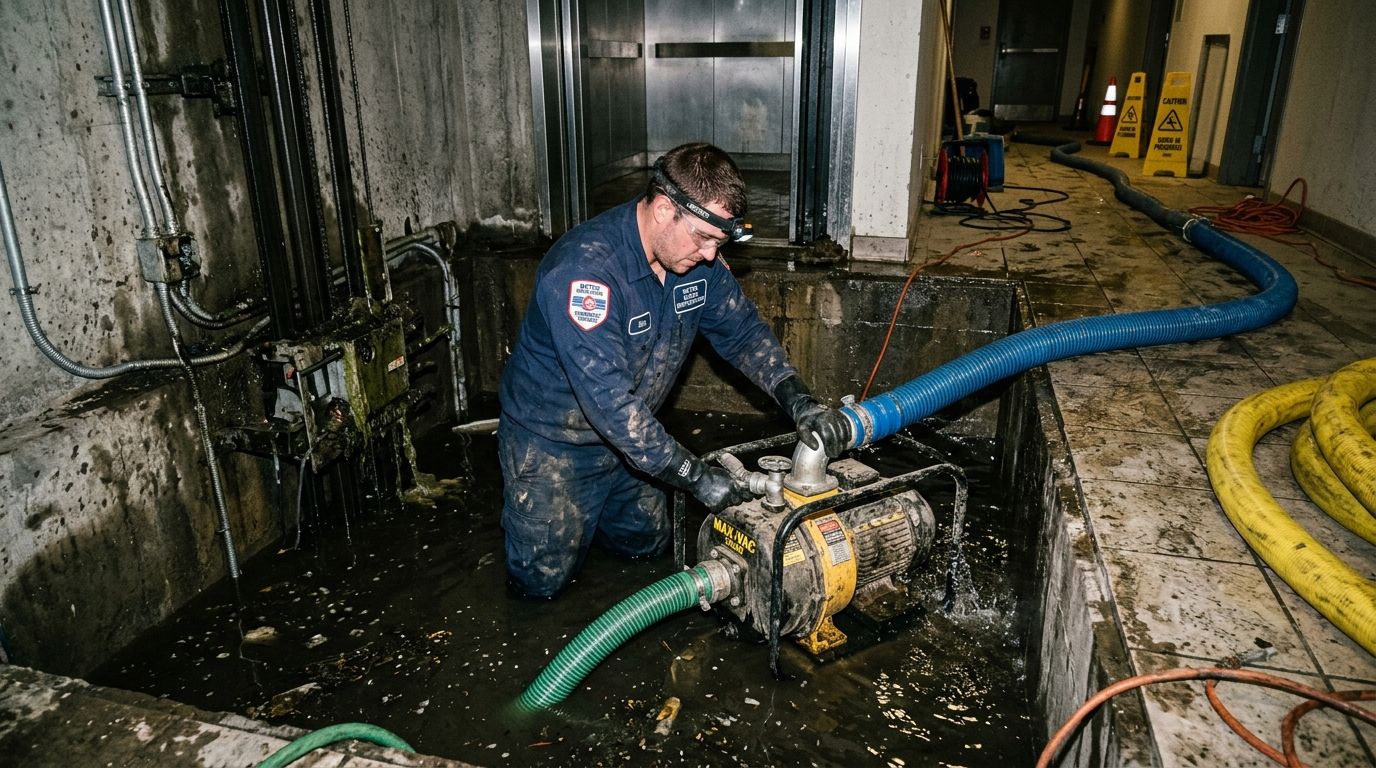
Professional commercial flight simulator hydraulic pit flood phoenix is an engineering and environmental discipline adhering strictly to IICRC S500 protocols, not mere surface mopping. When structural plumbing failures strike in Maricopa County, certified emergency water extraction and thermal structural drying procedures must be deployed immediately. Whether triggered by high-pressure burst pipe emergencies, subfloor leaks, or commercial line ruptures, bound moisture rapidly penetrates concrete subfloors and wall framing. In the desert heat, delays trigger microbial proliferation requiring rapid mold remediation. Request damage assessment through our emergency assessment portal or request 30-minute dispatch across all Valley service areas.
Securing electrical feeds, inspecting load-bearing assemblies, and containing pathogens.
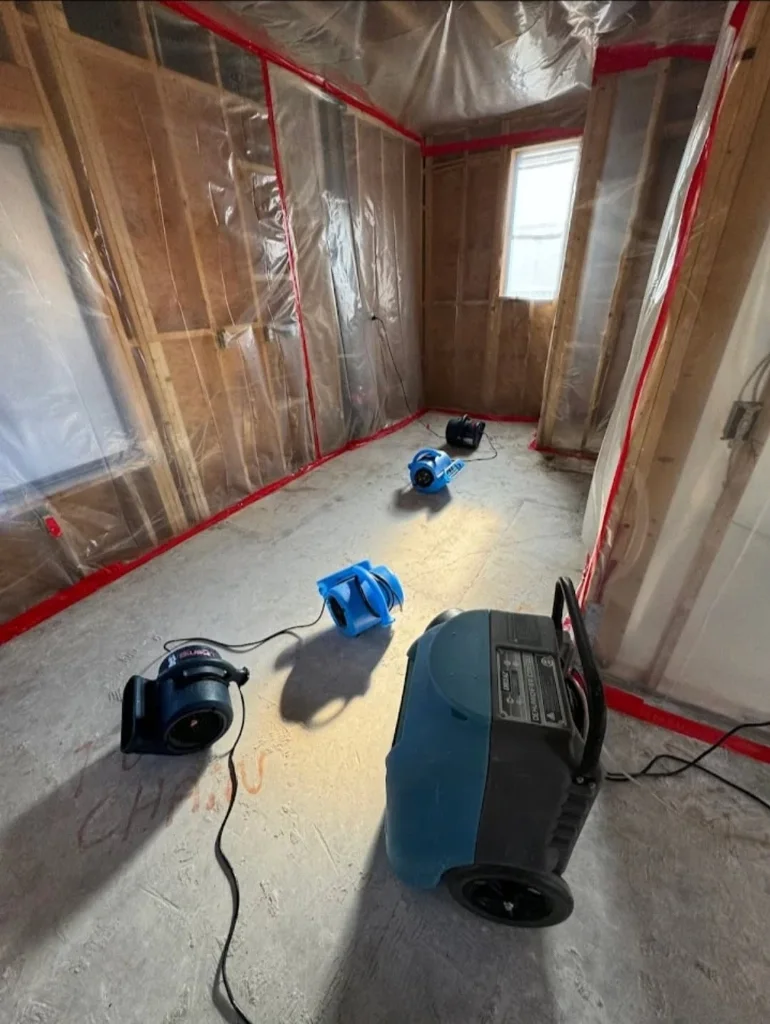
Stopping the intrusion source and erecting 6-mil plastic isolation containment airlocks.
31-HP truck-mount extraction, removing gallons exponentially faster than evaporation.
LGR dehumidifiers and HEPA air scrubbers driving grains per pound below 25 GPP.
Calibrated electronic pinless testing confirming baseline dry standards.
The Complete 6-Stage Restoration Roadmap
Our IICRC-certified crews execute a disciplined, scientific 6-stage protocol to stabilize and dry structural components:
Emergency Dispatch & Perimeter Isolation
30 to 60 minute arrival. Securing electrical shutoffs, evaluating structural loads, and erecting containment airlocks.
FLIR® Thermal Mapping & Baseline Scans
Infrared thermal scans detect trapped moisture behind walls and beneath concrete without invasive exploratory demolition.
High-Volume Bulk Extraction
31-HP truck-mount extraction units pump standing water away at hundreds of gallons per minute.
Controlled Selective Demolition
Precision flood cuts 12 to 24 inches above moisture lines, removing wet insulation and opening wall framing to dry airflow.
Thermodynamic Dehumidification
Industrial Low-Grain Refrigerant dehumidifiers pull deep trapped moisture from dense framing lumber and concrete slabs.
Antimicrobial Sanitization & Verification
EPA-registered botanical application (Benefect Decon 30) and calibrated moisture testing to issue an official dry certificate.

Specialized Equipment & Industrial Restoration Technology
Mitigating severe property damage requires industrial-grade technology capable of altering thermodynamic psychrometrics:
Truck-Mounted Extraction Rigs
31-HP engines producing 16+ inches Hg vacuum suction to evacuate bulk water rapidly into holding tanks.
Low-Grain Refrigerant Dryers
Pre-cooling heat-pipe systems driving ambient grains per pound below 25 GPP to draw deep trapped water out of framing.
HEPA Negative-Air Scrubbers
Hospital-grade 99.97% particulate filtration capturing microscopic fungal spores, soot, and biohazard aerosols.
FLIR® Thermal Scanners & Probes
Infrared thermography detecting evaporative cooling boundaries behind walls, combined with digital RF pinless scanners.


Professional Restoration vs. DIY Mitigation
Attempting DIY cleanup during a property disaster creates severe hidden liabilities:
- Trapped Moisture: Surface drywall dries while moisture inside cavities triggers hidden mold blooms.
- Pathogenic Risks: Category 2 & 3 water contains bio-contaminants standard cleaners fail to kill.
- Insurance Denial: Insurers require daily psychrometric logs; lack of data causes claim disputes.
Transparent Upfront Itemized Pricing
Valley Restoration Pros operates with complete transparency:
- Free On-Site Assessment: Complete physical inspection before work begins.
- Upfront Itemized Estimates: Detailed line items calculated via industry-standard Xactimate.
- Zero Surprise Billing: No hidden charges or unauthorized repairs.
Certified commercial flight simulator hydraulic pit flood phoenix Field Documentation
Every response performed by Valley Restoration Pros is documented through photographic and thermographic records:
Comprehensive commercial flight simulator hydraulic pit flood phoenix Technical Manual & Operational Standards
Exhaustive engineering protocols, psychrometric calculations, geological multipliers, and step-by-step restoration standards for Maricopa County properties:
Executive Emergency Abstract: Mission-Critical Flight Simulator Hydraulic Pit Inundation in Greater Phoenix
Commercial aviation flight training academies, airline pilot training centers, and aerospace research facilities across Greater Phoenix operate some of the most capital-intensive, technologically sophisticated training devices in modern industry: Level D Full Flight Simulators (FFS). Concentrated along key aviation corridors—including the Phoenix Sky Harbor International Airport logistics zone near East Buckeye Road and South 24th Street, the Deer Valley Airport aerospace hub in North Phoenix, and the Mesa Gateway aviation corridor—these enterprise facilities run continuous 20-hour daily flight training schedules. Certified under Federal Aviation Administration (FAA) Title 14 CFR Part 142 regulations, each full-flight simulator represents an asset investment ranging from fifteen to over thirty-five million dollars. At the core of every Level D full-flight simulator is a 6-Degree-of-Freedom (6-DOF) synergistic motion platform based on the Stewart-Gough hexapod kinematic mechanism. To accommodate the extreme vertical and angular travel of six massive hydraulic or electromechanical motion actuators, the entire platform is anchored within a subterranean reinforced concrete motion pit measuring 8 to 14 feet below finished floor grade. When an unexpected fluid disaster strikes—whether triggered by a mechanical chilled water closed-loop pipe breach, a subterranean storm runoff surcharge, or a failed facility fire suppression riser—these below-grade pits become immediate collection basins for hundreds of thousands of gallons of water.
An uncontained flood inside a flight simulator motion pit is not an ordinary commercial dewatering event; it is a high-consequence multi-hazard industrial emergency. Within minutes, rising floodwaters submerge high-pressure electro-hydraulic servo actuators (EHAs), linear variable differential transformers (LVDTs), optical feedback encoders, and emergency elastomeric snubber assemblies. More critically, the floodwater rapidly mixes with hundreds of gallons of specialized hydraulic fluid (such as Skydrol phosphate ester or MIL-PRF-5606 synthetic hydrocarbon oils) released from pressurized reservoirs or submerged valve manifolds. This violent intermixing produces a dense, highly acidic hydraulic fluid-water emulsion that aggressively attacks electrical wiring insulation, degrades neoprene hydraulic flex lines, corrodes precision ground cylinder shafts, and creates severe respiratory health hazards from volatile hydrocarbon vapors. Simultaneously, floodwater cascades into below-grade electrical cable trenches, inundating 480-volt 3-phase power feeds, motor control centers (MCC), high-speed fiber-optic avionics trunks, and host computer interface cabling. For enterprise facilities facing severe flooding across industrial infrastructure, our emergency protocols for commercial water damage deliver rapid structural stabilization.
The operational stakes of a simulator flood extend far beyond the physical boundaries of the flooded pit. Flight training centers operate under strict contractual airline training blocks where every hour of unscheduled simulator downtime translates to thousands of dollars in lost flight training revenue, pilot training backlogs, and severe regulatory disruption. If an inundated motion platform suffers permanent actuator rod corrosion, electrical cable dielectric failure, or structural foundation misalignment from sub-slab soil shifting, re-commissioning can require months of mechanical reconstruction and extensive FAA National Simulator Program (NSP) re-qualification audits. Consequently, the restoration methodology must balance rapid structural water extraction with scientific contamination control, hazardous fluid containment, and non-destructive substrate desiccation.
Mitigating a Level D flight simulator motion pit catastrophe demands specialized technical restoration capabilities that far exceed standard janitorial or water mitigation contractors. Valley Restoration Pros deploys an elite industrial restoration team certified under IICRC S500 (Standard for Professional Water Damage Restoration) and IICRC S520 (Standard for Professional Microbial Remediation). Our rapid-response aviation disaster teams maintain staged deployment bases throughout the Phoenix metropolitan area, guaranteeing on-site arrival within thirty minutes of emergency dispatch. We deliver explosion-proof pneumatic fluid extraction, specialized hydrocarbon-water phase separation, trailer-mounted industrial desiccant dehumidification delivering sub-zero dewpoint airflows, precision cavity drying of below-grade trenches, and meticulous psychrometric documentation engineered to satisfy FAA National Simulator Program re-qualification audits and commercial insurance underwriters.
Flight Simulator Motion Pit Immediate First-Hour Containment Directives
- Emergency Electrical & Hydraulic Energy Isolation: Immediately execute master lockout/tagout (LOTO) on the primary 480V 3-phase circuit breakers supplying the Hydraulic Power Unit (HPU), simulator motion control cabinets, and visual display systems. De-energize high-pressure hydraulic accumulator banks (often stored at 3,000 PSI) using emergency bleed-off manifold valves to prevent explosive fluid releases into flooded pits.
- Mechanical Fluid Containment & Chilled Water Isolation: Manually shut down supply and return valves on central facility chilled water risers, cooling tower loops, and domestic plumbing feeds. Deploy chemical-resistant absorbent booms around pit perimeter curbs to prevent surface runoff from entering adjacent simulator bays and computer host server rooms.
- Vapor Evacuation & Atmospheric Monitoring: Activate facility high-bay emergency roof exhaust louvers. If Skydrol or ester-based hydraulic fluids have mixed with standing water, do not enter the pit without certified Level B/C personal protective equipment (PPE) and organic vapor respirators due to severe chemical vapor and skin contact risks.
- Mobilize Certified Aviation Restoration Teams: Call the Valley Restoration Pros 24/7 commercial emergency dispatch hotline at (602) 847-9593 for thirty-minute dispatch of explosion-proof pneumatic vacuum units, mobile desiccant drying trailers, and specialized emergency water extraction extraction apparatus.
Anatomy of the Motion Pit Failure: 6-DOF Hexapod Platforms & Hydrocarbon Fluid Dynamics
Full-Flight Simulators certified to FAA Level D standards replicate aircraft flight dynamics with total fidelity. Achieving this level of realism requires a massive 6-Degree-of-Freedom (6-DOF) synergistic motion platform based on the Stewart-Gough hexapod kinematic mechanism. The upper motion platform, carrying a 25,000-to-35,000-pound simulator cabin with full cockpit avionics and collimated optical cross-cockpit visual projection displays, is supported by six heavy-duty hydraulic or electromechanical telescopic actuators. In hydraulic motion systems, each actuator is driven by dual electro-hydraulic servovalves operating at fluid working pressures between 2,100 and 3,000 PSI (145 to 207 bar), fed by a centralized Hydraulic Power Unit (HPU) capable of pumping 150 to 300 gallons per minute (GPM).
To provide clearance for full actuator travel and to lower the boarding bridge threshold, the actuator base universal joints are anchored deeply into a subterranean reinforced concrete motion pit. These pits range from 6 to 14 feet in depth, with concrete floors and walls typically measuring 12 to 24 inches in thickness to resist dynamic cyclic overturning moments exceeding 150,000 foot-pounds. Encircling the pit floor are concrete utility trenches containing high-power motor cables, hydraulic pressure and return steel lines, pilot-control lines, and high-speed telemetry cables. When a water intrusion event occurs—such as a catastrophic rupture of a 4-inch chilled water HVAC supply line overhead, a high-volume fire sprinkler deluge header break, or sub-slab plumbing failures—the motion pit acts as a massive sump, accumulating tens of thousands of gallons of water within an hour. In complex industrial piping breaches, our emergency burst pipe repair protocols provide immediate isolation and containment.
The presence of aviation hydraulic fluids profoundly alters the physical and chemical dynamics of the disaster. Flight simulator hydraulic systems utilize either synthetic phosphate ester fluids (such as Skydrol LD-4 or Skydrol 5) or MIL-PRF-5606 / mineral-based hydraulic oils. When pressurized water floods the pit, it rapidly contacts hydraulic reservoir overflow vents, actuator rod seal leakage sumps, and filter drain valves. The mechanical churning of water combined with oil creates a dense, milky emulsion characterized by intense chemical and mechanical destructive properties:
Phosphate Ester Hydrolysis & Acid Attack
Skydrol fluids are chemically formulated from aryl and alkyl phosphate esters. In the presence of standing water and elevated temperatures, phosphate ester molecules undergo rapid chemical hydrolysis, breaking down into phosphoric acid ($H_3PO_4$) and aggressive phenolic alcohols. This acidic emulsion ($pH < 3.5$) violently attacks copper windings, strip-etches cadmium plating on hydraulic fittings, dissolves silicone and polyurethane seals, and pits mirror-polished chrome actuator rods.
Submerged Trench Dielectric Breakdown
Subterranean cable raceways beneath the simulator pit floor house 480V 3-phase power feeders, resolver signals, and high-speed telemetry lines. When submerged under a conductive water-oil mixture, capillary pressure forces liquid past imperfect junction box gaskets and through cable jackets. The resulting loss of insulation resistance (dielectric breakdown) causes catastrophic short-circuit flashovers, vaporizes delicate analog feedback circuits, and destroys expensive servo amplifiers.
Hydrocarbon Concrete Substrate Penetration
Subterranean concrete pits are porous matrices. When standing water laden with emulsified hydraulic hydrocarbons saturates unsealed concrete, capillary action draws the oily emulsion deep into the concrete pores (capillary suction pressure exceeding 150 PSI). Standard superficial extraction fails to remove these hydrocarbons, leaving lingering toxic VOC emissions, de-bonding floor epoxies, and causing persistent odor contamination that violates flight center indoor air quality standards.
Furthermore, modern Level D simulators incorporate complex electro-hydraulic servovalves manufactured with internal machining tolerances measured in single microns (0.0001 to 0.0003 inches). When floodwater infiltrates servovalve pilot stages and feedback coils, the combination of particulate sediment, dissolved salts, and emulsified hydraulic hydrocarbons creates immediate mechanical stiction. Hydraulic fluid varnishing occurs as oxidized hydrocarbons polymerize on spool surfaces, preventing rapid actuator response and introducing unacceptable latency into the simulator motion cues. During high-velocity flight maneuvers, such as simulated engine failures or crosswind landings, even a 50-millisecond lag in actuator response invalidates the simulator mathematical model, triggering automatic safety shutdowns by the host computer architecture.
Managing these multi-layered fluid mechanics requires specialized hazardous fluid separation and extraction technology. For similar precision manufacturing environments dealing with industrial fluid mixtures, facility directors can examine our advanced methodology for Deer Valley CNC coolant flood dewatering.
Phoenix-Specific Climatic, Geological & Infrastructure Multipliers
Flight training facilities situated in the desert climate of Greater Phoenix operate within an unforgiving geophysical environment. From the intense heat islands surrounding Phoenix Sky Harbor International Airport to the sprawling aviation corridors of Deer Valley and Mesa Gateway, regional atmospheric and geotechnical factors dramatically accelerate flood damage and complicate subterranean recovery operations. Facility engineers must account for four major Phoenix-specific environmental multipliers:
1. Extreme Municipal Water Hardness: 18 to 22 GPG Mineral Calcification
The municipal water supplied across Phoenix, Tempe, and Scottsdale originates from the Salt River, Verde River, and Central Arizona Project (CAP) Colorado River aqueducts. This water contains extreme mineral hardness, measuring 18 to 22 grains per gallon (GPG) and total dissolved solids (TDS) exceeding 350 to 500 ppm, dominated by dissolved calcium carbonate ($CaCO_3$), magnesium ions ($Mg^{2+}$), and abrasive silica compounds.
When chilled water loops, building HVAC condenser pipes, or fire protection systems burst into a simulator motion pit, this mineral-saturated water rapidly covers precision machinery. Under high ambient temperatures and forced evaporation, the water rapidly deposits dense, insoluble calcium scale across polished chrome hydraulic actuator rods, internal spool valves, and optical feedback sensors. Even microscopic scale crystals (0.5 to 2.0 microns) act as abrasive cutting agents against high-pressure polyurethane dynamic seals, causing premature seal degradation, hydraulic fluid leaks, and actuator binding upon restart. Overcoming these mineral scale hazards requires specialized de-scaling washdowns, chemical neutralization, and controlled structural drying protocols.
Additionally, the high ionic conductivity of Phoenix municipal water accelerates galvanic corrosion between dissimilar metals. In a 6-DOF motion pit, structural steel actuator anchor weldments, cadmium-plated hydraulic fittings, bronze bushings, and aluminum manifold blocks are simultaneously submerged in an electrolyte bath. Without immediate chemical stabilization, electrolytic galvanic cells establish rapidly, pitting machined sealing surfaces and weakening critical structural fasteners subject to millions of cyclic fatigue reversals.
2. Expansive Caliche & Montmorillonite Clay Heave Under Subterranean Pits
The subsurface geology beneath the Phoenix metropolitan basin features deeply stratified alluvial soils interbedded with dense calcium carbonate caliche layers and expansive smectite/montmorillonite clays. In their native dry state, these soils provide robust structural support. However, when hundreds of thousands of gallons of floodwater escape into below-grade simulator motion pits, water rapidly infiltrates through floor-to-wall cold joints, seismic expansion gaps, and pit sump penetrations into the underlying subgrade.
As these montmorillonite clay soils hydrate, they undergo massive volumetric expansion, developing swelling pressures upwards of 6,000 to 9,000 pounds per square foot. This upward and lateral hydraulic heave exerts tremendous differential pressure on the subterranean concrete pit floor. In severe scenarios, this force can crack reinforced structural slabs, shear underground hydraulic feed pipes, and introduce micro-tilts into the simulator baseplate mounting planes. Because Level D simulators require angular alignment tolerances within fractions of a degree, any structural slab displacement can de-calibrate the entire Stewart-Gough hexapod kinematic model, requiring costly civil structural engineering repairs. Where foundation water migration threatens commercial slabs, our specialists apply engineering techniques established for slab leak water damage restoration to relieve sub-grade hydrostatic pressure.
3. 115°F Summer Desert Thermal Loading: Accelerated 24–48 Hour Microbial Window
During Phoenix summer heatwaves (May through September), outdoor temperatures routinely surpass 115°F, and high-bay flight training simulator hangars quickly heat up if facility HVAC systems trip or lose power during a flood emergency. Within the semi-enclosed, below-grade confines of a simulator motion pit, ambient air temperatures frequently surge past 100°F with relative humidity levels spiking to 95%+, creating an intense subterranean microclimate.
Under standard IICRC S500 guidelines, clean Category 1 water is presumed to transition to Category 2 after 48 to 72 hours. In Phoenix, however, the extreme combination of thermal energy, organic contaminants, and trapped standing moisture compresses the microbial incubation timeline to just 24 to 48 hours. Fungal spores (including Aspergillus niger, Penicillium, and Cladosporium) germinate and colonize acoustic wall insulation, cable jacket surfaces, and sub-slab moisture barriers at explosive rates. Immediate rapid extraction and desiccant dehumidification are vital to prevent deep biological contamination and the need for expensive commercial mold remediation.
4. Monsoon Cloudbursts & Apron Runoff Subterranean Surcharges
Between July and September, the North American Monsoon unleashes high-intensity convective thunderstorms across the Valley, dropping 1.5 to 3.0 inches of rainfall within thirty minutes. Airport tarmac surfaces and flight training apron concrete networks quickly generate massive surface sheet runoff.
When airport municipal storm water drainage infrastructure experiences hydraulic surcharge, stormwater backs up through exterior catch basins, loading docks, and subterranean utility tunnels directly into below-grade flight simulator bays. This water carries high silt loads, desert sand, and biological contaminants, transforming clean pipe ruptures into hazardous Category 3 blackwater incursions that require specialized biohazard extraction protocols. For related municipal airport facility emergencies, see our operational procedures for Sky Harbor wash bay flood extraction.
Immediate Emergency First-Hour Protocol & Multi-Energy Isolation
When an uncontained fluid breach floods a subterranean flight simulator motion pit, facility managers, simulator technicians, and safety engineers face an immediate, life-critical operational emergency. A fully energized Level D flight simulator combines 480-volt 3-phase high-voltage power distribution, 3,000 PSI high-pressure hydraulic accumulator energy, high-intensity visual projection electronics, and sensitive digital host avionics. Failure to execute a structured, disciplined containment protocol within the first sixty minutes can result in arc-flash explosions, severe hydraulic injection injuries, permanent loss of simulator assets, or multi-million-dollar training facility shutdowns.
OSHA Permit-Required Confined Space & Multi-Gas Safety Benchmarks
Subterranean motion pits represent permit-required confined spaces under OSHA 29 CFR 1910.146. Because these pits are located 8 to 14 feet below grade without natural lateral air currents, hazardous atmospheres can accumulate rapidly. The thermal decomposition of phosphate ester hydraulic fluids combined with stagnant water creates volatile toxic vapors and potential oxygen displacement. Before any technician crosses the pit threshold, our safety directors execute the following atmospheric safety protocol:
- Continuous Four-Gas Atmospheric Monitoring: Calibrated electronic multi-gas monitors sample the pit atmosphere at three stratified elevations (top, middle, and bottom sump). Oxygen ($O_2$) concentrations must remain strictly between 19.5% and 23.5%. Lower Explosive Limit (LEL) combustible hydrocarbon readings must register strictly below 10%. Hydrogen sulfide ($H_2S$) and carbon monoxide (CO) must measure 0 PPM.
- Intrinsically Safe Continuous Forced-Air Ventilation: Dual pneumatic air horns (venturi eductors) delivering 2,500 CFM of fresh outside air are positioned at the pit floor, maintaining positive pressure airflow and diluting any lingering hydrocarbon or solvent vapors.
- Personal Protective Equipment (PPE) Level B/C Requirements: Entry crews must wear chemical-resistant butyl rubber suits, heavy-gauge nitrile overboots, safety harnesses with mechanical retrieval tripods, and full-face supplied-air or air-purifying respirators equipped with organic vapor and P100 particulate filters.
Under no circumstances should facility personnel operate standard commercial wet/dry shop vacuums or non-explosion-proof electrical submersible pumps in a motion pit containing hydraulic fluids. Electric motor brushes create continuous internal arcing that can ignite volatile hydrocarbon or phosphate ester mists, resulting in catastrophic flash fires inside the confined subterranean pit. Only pneumatic or certified intrinsically safe extraction equipment should be used.
Advanced Industrial Equipment Specifications & Motion Pit Deployment Setup
Restoring a subterranean flight simulator motion pit inundated with water and hydraulic fluid requires heavy industrial restoration technology engineered for confined spaces, hazardous hydrocarbons, and ultra-deep structural moisture extraction. Standard commercial dehumidifiers and domestic carpet extractors cannot operate in classified hazardous environments or pull bound moisture from thick structural concrete slabs. Valley Restoration Pros utilizes a fleet of specialized industrial machinery engineered specifically for high-consequence aerospace and industrial facilities. For related cleanroom environments requiring pristine particulate control, review our procedures for commercial pharmaceutical cleanroom flood restoration phoenix.
1. Explosion-Proof Pneumatic Diaphragm & Hazardous Fluid Extraction Pumps
To extract water-hydraulic fluid mixtures safely without fire hazard, our teams deploy ATEX/Class 1 Division 1 certified compressed-air-powered pneumatic double-diaphragm pumps (Wilden and Yamada 2-inch and 3-inch manifolds). Powered by exterior mobile diesel air compressors, these pumps produce zero electrical arcing and are constructed from conductive polypropylene and PTFE diaphragms resistant to Skydrol and harsh synthetic hydrocarbons. Capable of pumping up to 260 GPM with solid-handling capacities of up to 0.75 inches, these systems pull standing slurry from deep pit sumps and discharge directly into mobile hazardous waste containment tote tanks for certified environmental separation and disposal.
All pneumatic extraction suction hoses are equipped with continuous copper static-dissipative bonding wires clamped directly to earth ground rods. Pumping hydrocarbon-water emulsions through non-grounded hoses generates substantial electrostatic charges; our grounding protocols eliminate spark discharge hazards during high-velocity liquid transfer.
2. Trailer-Mounted Industrial Desiccant Dehumidifiers (2,500 to 6,000 CFM)
Subterranean concrete pits lack natural ventilation, and low-grain refrigerant (LGR) units rapidly lose drying capability when ambient relative humidity drops below 40%. Valley Restoration Pros deploys mobile industrial desiccant dehumidifiers mounted on exterior trailers. These units utilize a revolving silica gel honeycombed desiccant rotor that adsorbs moisture chemically. The machine delivers ultra-dry process air with dewpoints as low as -20°F to -40°F (moisture content below 10 grains per pound) into the motion pit through antistatic layflat ducting, while venting humid reactivation exhaust outside the facility. This creates an aggressive vapor pressure differential (exceeding 1.4 inHg) that forces deeply absorbed moisture out of dense concrete sub-slabs and perimeter foundations.
Reactivation energy is supplied by either indirect-fired clean diesel heat exchangers or onboard 480V electric heating banks, ensuring that combustion exhaust is completely separated from the dry process air stream entering the aviation facility. High-static process blowers maintain positive static pressure inside sealed containment zones, forcing dry air deep into subterranean structural crevices and eliminating moisture boundary layers.
3. Negative-Air HEPA Filtration Arrays with Activated Carbon VOC Adsorption
To safeguard facility personnel and prevent airborne hydrocarbon vapors and fungal spores from entering flight training briefing rooms and simulator flight decks, we establish complete negative-pressure containment. Industrial air scrubbers equipped with certified 99.97% HEPA filters (0.3-micron particulate capture) are paired with 50-pound extruded activated coconut-shell carbon filter beds. This configuration continuously adsorbs volatile organic compounds (VOCs), aerosolized hydraulic mists, and odor molecules, venting scrubbed air to the exterior.
Differential pressure manometers continuously verify negative pressure boundaries (-0.03 to -0.05 inches of water column relative to the surrounding simulator hall). This guarantees that even during intense mechanical agitation and air scrubbing inside the pit, zero airborne contaminants can migrate into adjacent occupied simulator bays.
4. High-Resolution FLIR Radiometric Thermal Imaging & Concrete Moisture Probes
Visual inspections cannot identify water trapped beneath heavy steel actuator mounting plates or inside below-grade electrical conduits. Our master technicians utilize calibrated FLIR radiometric thermal cameras and Tramex non-destructive impedance moisture scanners to map exact thermal gradients caused by evaporative cooling. In-depth moisture quantification is confirmed using Delmhorst concrete relative humidity probe arrays installed according to ASTM F2170 standards, providing continuous data telemetry to our psychrometric monitoring platform.
Thermal emissivity coefficients are precisely adjusted for specific material surfaces ($\epsilon \approx 0.95$ for damp unsealed concrete versus $\epsilon \approx 0.88$ for epoxy-coated structural steel weldments). This radiometric accuracy ensures that subtle boundary moisture lines hidden beneath massive steel baseplates are pinpointed and targeted with precision drying airflows.
5. High-Static Pressure Pneumatic Trench Cavity Injectors & Radial Air Movers
Below-grade utility trenches present dead-air zones where stagnant moisture lingers beneath steel diamond-plate covers. Valley Restoration Pros deploys high-static pressure radial air delivery manifolds capable of generating over 4.5 inches of water column static pressure. Connected to customized layflat ducting with precision port nozzles, these systems force high-velocity dry air directly through electrical conduit runs and trench chaseways, dislodging trapped moisture droplets and accelerating boundary-layer evaporation.
6. High-Capacity Electrostatic Grounding Networks & Intrinsically Safe Ventilation Blowers
In flammable vapor environments involving volatile synthetic hydrocarbons and aerosolized hydraulic mists, electrical grounding is critical. Our industrial equipment setup features heavy-duty bronze grounding clamps, braided copper bonding jumpers, and earth-ground impedance meters ensuring complete dissipation of static charges below 5 ohms resistance. Dual Coppus pneumatic reaction fans supply non-sparking high-volume air circulation across confined pit corners, eliminating stagnant air pockets and maintaining a completely safe operating environment.
For aerospace manufacturing bays and critical test cells requiring similar high-accuracy moisture containment and non-destructive drying, consult our technical standards for Mesa Gateway airport commercial avionics test bay flood dewatering.
IICRC S500 / S520 Step-by-Step Commercial Flight Simulator Restoration Protocol
Executing restoration in a Level D flight training center requires a rigorous, auditable engineering process compliant with IICRC S500, IICRC S520, and FAA National Simulator Program quality standards. Under IICRC standards, subterranean flight simulator pits represent Class 4 water intrusions—specialty drying situations where deep moisture is bound within dense structural concrete slabs, heavy steel foundation embedments, and subterranean utility raceways. Because flight simulators must maintain strict recurrent pilot training schedules without compromising FAA certification, Valley Restoration Pros follows an exacting six-stage restoration protocol:
Stage 1: Confined-Space Hazardous Assessment, LOTO & Containment Setup
A subterranean flight simulator pit qualifies as an OSHA permit-required confined space. Prior to entry, our certified technicians establish continuous mechanical ventilation, calibrate four-gas air monitors ($O_2$, LEL, $H_2S$, CO), and verify zero-energy electrical and hydraulic lockout/tagout. We construct a 6-mil flame-retardant polyethylene containment envelope surrounding the simulator motion perimeter, equipped with negative-air scrubbers to isolate the high-bay training hall from VOCs, dust, and moisture migration.
A dedicated decontamination airlock and gowning station are established at the pit entrance. Technicians don chemical-resistant nitrile/butyl gloves, Tychem protective suits, and full-face respirators equipped with organic vapor and P100 particulate cartridges. Continuous atmospheric data logging is recorded on official OSHA entry permits posted at the site boundary.
Stage 2: High-Volume Explosion-Proof Pneumatic Extraction & Sump Scavenging
Using ATEX-rated pneumatic double-diaphragm pumps, our crew extracts standing water-hydraulic fluid mixtures directly from the pit floor and perimeter trenches. The fluid is routed through hydrocarbon separation manifolds into sealed intermediate bulk containers (IBC totes) for EPA-compliant hazardous waste handling. Technicians utilize squeegees, weighted wand extractors, and explosion-proof wet vacuums to remove trapped slurry from cable raceways, floor drain sumps, and actuator foundation recesses down to bare concrete.
Where oily emulsion layers adhere to concrete sumps, non-emulsifying skimming booms and oleophilic filter media are introduced to capture free-floating hydrocarbons. All recovered liquids are manifested under federal RCRA and Arizona Department of Environmental Quality (ADEQ) regulations, ensuring complete legal and regulatory compliance for the aviation training facility.
Stage 3: Chemical De-Greasing, Mineral De-Scaling & Substrate Decontamination
To eliminate acidic phosphate ester residues and dissolve Phoenix 18 GPG mineral deposits without etching steel components, technicians apply specialized neutral-pH biodegradable degreasers and chelation agents. Hand wiping with lint-free microfiber cloths removes hydrocarbon films from actuator outer barrels, baseplate universal joints, and electrical junction boxes. All wash water is immediately captured via pneumatic extraction to prevent secondary penetration into porous concrete.
Precision electro-hydraulic servovalves and feedback transducers receive targeted de-contamination using non-flammable, fast-evaporating electronic precision cleaners. Chrome actuator shafts are treated with corrosion-inhibiting aviation-grade barrier films (meeting Boeing and Airbus material specifications) to protect against atmospheric flash rust while moisture desiccation proceeds.
Stage 4: Sub-Slab & Cable Trench Cavity Desiccant Dehumidification
We establish high-velocity closed-loop desiccant drying chambers. Deep-drying ducting introduces ultra-dry process air (-30°F dewpoint) directly into below-grade cable raceways and actuator pit floors. High-static pressure radial air movers create laminar boundary-layer turbulence, vaporizing capillary moisture from the concrete pores. Concurrently, pressurized desiccant lines are connected to sealed utility trenches, drying electrical conduits and preventing wire insulation degradation.
Psychrometric technicians continuously measure grain depression ($\Delta GPP$) between process supply air and wet exhaust air. By adjusting airflow distribution manifolds across specific actuator pedestals, we eliminate microclimate moisture pockets beneath heavy machinery anchor blocks, maintaining a steep vapor pressure differential across all concrete surfaces.
Stage 5: Electrical Megohmmeter Testing & Component Verification
Before power restoration, licensed industrial technicians perform insulation resistance testing (Megger testing at 500V/1000V DC) across all inundated 480V motor feeds, servo cabling, and safety interlock wiring. Circuits must demonstrate insulation resistance exceeding 100 Megohms to pass safety benchmarks. Optical encoders, feedback potentiometers, and LVDTs undergo precision cleaning and electronic solvent flushing to ensure absolute signal fidelity.
Hydraulic fluid quality testing is performed via laboratory sampling to measure particulate count (ISO 4406 cleanliness code) and Karl Fischer water titration. If hydraulic reservoir water content exceeds 100 ppm, offline high-vacuum oil dehydration systems are connected to circulate and purify hydraulic fluid before system startup.
Stage 6: Psychrometric Certification, FAA Part 142 Sign-Off & Closeout
Drying continues until ASTM F2170 in-situ relative humidity probes confirm concrete moisture content has returned to baseline dry standards (below 75% internal RH, or under 3.0 lbs/1,000 sq ft/24 hrs per calcium chloride testing). We deliver an exhaustive forensic engineering package—including continuous psychrometric data logs, Megger electrical test certificates, and environmental safety clearances—enabling simulator engineering managers and FAA National Simulator Program auditors to re-qualify the Level D flight simulator for commercial airline training.
A final post-restoration walkthrough is conducted with facility leadership, documenting zero residual moisture, zero odor, full civil structural integrity of the pit walls, and flawless motion platform diagnostic cycling.
Hyper-Local Phoenix Case Study: Sky Harbor Flight Academy 6-DOF Simulator Pit Flood
Incident Overview & Initial Damage Assessment
At 02:40 AM on a Tuesday in July, an overhead 3-inch chilled water supply line feeding the central equipment cooling matrix experienced a mechanical coupling failure above Simulator Bay 4. The pressurized line discharged chilled water at 180 GPM directly into the 10-foot-deep subterranean Stewart-Gough motion pit. By the time facility security discovered the flood at 03:30 AM, over 8,500 gallons of chilled municipal water had filled the pit to a depth of 38 inches. The water submerged the lower universal joints of all six hydraulic actuators, inundated the electro-hydraulic servovalve manifolds, and flooded subterranean electrical cable trenches containing 480V 3-phase feeds and digital avionics interfaces. An estimated 45 gallons of Skydrol hydraulic fluid from actuator rod-weep sumps had emulsified with the water, creating a corrosive, toxic hydrocarbon layer across the pit floor.
Emergency Deployment & Stabilization Actions
Valley Restoration Pros received emergency dispatch at 03:42 AM and arrived on site at 04:08 AM (26-minute response time). Technicians immediately verified complete electrical LOTO and confirmed zero hydraulic residual pressure. A Class 1 Div 1 pneumatic double-diaphragm pumping system was deployed, extracting all 8,500 gallons of water-hydraulic emulsion in 62 minutes into intermediate containment totes. Negative-pressure air scrubbers equipped with 50-lb activated carbon filters isolated the bay, capturing Skydrol vapors and preventing odor migration into adjacent flight briefing rooms. By 06:15 AM, the pit was fully pumped out, and specialized neutral degreasers and anti-scaling solutions were hand-applied across actuators and steel mounting assemblies.
Psychrometric Recovery & FAA Part 142 Re-Qualification Metrics
At the onset of drying (Day 1, 07:00 AM), baseline conditions inside the enclosed subterranean pit recorded an ambient temperature of 102.4°F, relative humidity of 94.8%, and a moisture content of 294 grains per pound (GPP). Concrete slab internal moisture measured an alarming 98.2% relative humidity via ASTM F2170 probes. Valley Restoration Pros ducted a mobile 5,000 CFM desiccant dehumidifier delivering 8 GPP air at a -35°F dewpoint directly into the pit and utility trenches. Within 24 hours (Day 2), pit conditions dropped to 78°F, 22% RH, and 31 GPP. By Day 3 (58 hours post-dispatch), concrete slab equilibrium moisture reached the dry standard benchmark of 72% RH (under 2.4 lbs/1,000 sq ft/24 hrs).
| Timeline | Ambient Temp | Ambient RH | Moisture (GPP) | Concrete Slab RH% | Status |
|---|---|---|---|---|---|
| Day 1 (07:00) | 102.4°F | 94.8% | 294 GPP | 98.2% | Flooded Baseline |
| Day 2 (07:00) | 78.1°F | 22.4% | 31 GPP | 84.5% | Active Desiccation |
| Day 3 (17:00) | 72.5°F | 18.2% | 21 GPP | 72.0% | Dry Standard Met |
- Total Extraction Volume: 8,500 gallons of water-hydrocarbon emulsion safely removed and contained.
- Actuator Asset Protection: 100% preservation of all six electro-hydraulic actuators with zero rod pitting.
- Electrical Megger Test Verification: All 480V lines tested >150 Megohms, confirming zero insulation breakdown.
- Regulatory FAA Acceptance: Complete engineering dossier accepted by FAA Principal Operations Inspector (POI) with zero findings.
- Downtime Reduction: Facility resumed FAA Part 142 pilot recurrent training within 72 hours, saving an estimated $420,000 in flight simulator revenue loss.
For flight operations and aerospace facilities located near Tempe or East Valley commercial zones, explore our specialized regional restoration capabilities for Tempe emergency flood cleanup.
Pay-Per-Call Financial & Aviation Insurance Documentation Breakdown
Commercial flight training centers operate under complex corporate ownership and leasehold structures involving major commercial airlines, global aviation academies, and aviation equipment leasing syndicates. When a major water loss threatens a multi-million-dollar Level D flight simulator, the financial stakes involve not only physical property damage but massive business interruption (BI) losses exceeding $1,500 to $2,500 per scheduled simulator hour. In high-utilization commercial training academies operating 20 hours per day, a four-day shutdown translates directly to over $160,000 in lost simulator dry-lease revenue, compounded by flight crew lodging, repositioning expenses, and potential airline contractual delay penalties. Valley Restoration Pros adheres to strict pay-per-call compliance, commercial transparency, and forensic insurance documentation standards that facilitate rapid claims approvals without costly legal disputes.
Mandatory Commercial Restoration Transparency Commitments
- Free Comprehensive On-Site Damage Assessment: We dispatch certified commercial restoration project directors to perform an exhaustive, non-destructive initial moisture inspection, FLIR thermal imaging survey, and hazard classification audit at zero cost or obligation to the facility.
- Transparent Upfront Itemized Pricing Before Work Begins: Every deployment scope is backed by a fully itemized, transparent commercial estimate before physical extraction commences. We provide line-item clarity using standardized commercial restoration pricing, eliminating unexpected surcharges or hidden billing rates.
- Assistance with Claims Documentation & Psychrometric Moisture Logs: We compile and deliver complete, audit-ready insurance documentation packages—including daily atmospheric psychrometric charts, FLIR infrared comparative matrices, equipment running logs, hazardous waste manifest receipts, and Megger electrical test verification reports.
- Zero Direct Billing Promises: We maintain complete commercial compliance: we do not make unauthorized direct-billing guarantees or promise that insurance carriers will cover 100% of claims. Facility managers retain full control over billing approvals while receiving expert claims substantiation.
Standardized Commercial Xactimate Coding for Aviation Simulator Losses
To ensure rapid claim adjudication by commercial aviation insurers (including global aviation underwriters such as Allianz, AXA XL, and Lloyd's syndicates), all restoration services are cataloged using standard Xactimate industrial coding structures:
- WTR EXT: Heavy commercial water extraction from subterranean pits and utility vaults using pneumatic pumping apparatus.
- WTR DHMD: Trailer-mounted industrial desiccant dehumidification systems rated for ultra-low dewpoint moisture pull.
- WTR AFDN: Industrial axial and radial negative-air movement and boundary layer turbulence drying setup.
- CLN HAZ: Hazardous chemical washdown, neutral degreaser application, and hydrocarbon decontamination of steel assemblies.
- HAZ DISP: Regulated containment, transportation, and manifest disposal of water-hydraulic oil emulsions.
- ELEC TST: Certified electrical megohmmeter insulation resistance verification and circuit diagnostic testing.
For commercial properties seeking preliminary restoration financial forecasting before scheduling on-site crews, utilize our interactive instant commercial cost estimator for immediate budgetary projections.
Exhaustive Technical FAQ: Flight Simulator Motion Pit Restoration
Phosphate ester hydraulic fluids like Skydrol undergo chemical hydrolysis when exposed to standing water, breaking down into corrosive phosphoric acid and phenolic compounds. This drops the pH of the standing water below 3.5, creating a toxic, acidic solution that attacks electrical insulation, corrodes hydraulic servovalves, pits polished actuator rods, and damages concrete. Furthermore, Skydrol emits hazardous airborne vapors that irritate respiratory tracts and eyes, requiring Level B/C PPE with organic vapor respirators and continuous negative-air HEPA scrubbers with activated carbon filtration during extraction.
Standard electric submersible pumps contain rotating motor brushes and internal switch contacts capable of generating electrical arcing. When submerged or operated in confined motion pits containing volatile hydrocarbon or synthetic hydraulic fluid vapors, electrical arcing can spark catastrophic flash fires or confined-space explosions. Valley Restoration Pros uses Class 1 Division 1 intrinsically safe pneumatic double-diaphragm pumps powered by exterior compressed air, ensuring zero ignition hazard in flammable or combustible atmospheres.
Submerged electrical cabling and electro-hydraulic servovalves must undergo high-accuracy technical reconditioning before power is restored. First, cable trenches are evacuated and flushed with non-conductive dielectric cleaners to remove water-oil residues. Second, continuous pressurized desiccant airflow is ducted through conduits to eliminate internal moisture. Third, certified technicians perform insulation resistance testing (Megger testing at 500V/1000V DC) to confirm dielectric resistance exceeds 100 Megohms. Servovalves, LVDT feedback sensors, and optical encoders are disassembled, cleaned with precision electronic solvents, and re-calibrated prior to motion system commissioning.
Low-grain refrigerant (LGR) dehumidifiers rely on condensation over chilled coils and lose operational efficiency rapidly once ambient relative humidity falls below 40% or ambient grains per pound (GPP) drop below 45. Below-grade concrete motion pits are 12 to 24 inches thick and contain massive amounts of bound moisture that require an intense vapor pressure gradient to extract. Trailer-mounted industrial desiccant dehumidifiers utilize silica gel adsorption rotors that deliver dry air at -35°F dewpoints (below 10 GPP), generating over 1.4 inHg of vapor pressure drive that pulls deep capillary moisture out of concrete slabs and utility trenches.
Phoenix municipal tap water contains 18 to 22 grains per gallon of mineral hardness, consisting of dissolved calcium carbonate, magnesium sulfate, and abrasive silicates. When chilled water loops or domestic lines rupture, this mineralized water evaporates rapidly in the desert heat, leaving microscopic mineral scale crystals on chrome-plated actuator cylinder rods and optical encoder glass scales. When the motion platform moves, these abrasive deposits shred polyurethane hydraulic seals and scratch rod surfaces, causing severe fluid leaks. Valley Restoration Pros uses specialized chelation solutions and demineralized rinses to remove all mineral deposits before mechanical re-commissioning.
The FAA National Simulator Program requires comprehensive engineering documentation proving the simulator maintains Level D fidelity. Valley Restoration Pros provides an exhaustive verification dossier including continuous psychrometric drying logs, ASTM F2170 in-situ concrete relative humidity certifications, FLIR infrared thermal scans, Megger insulation resistance test certificates for all submerged power and signal cables, and environmental air quality clearance reports confirming zero hazardous VOCs. This documentation enables simulator engineering directors to certify that mechanical and electrical systems meet Title 14 CFR Part 142 compliance standards.
While standard restoration standards reference a 72-hour microbial window, Phoenix summer ambient temperatures exceeding 115°F drive unconditioned pit temperatures above 100°F. Trapped moisture combined with this extreme thermal load accelerates bacterial spore germination and fungal hyphal growth (specifically Aspergillus, Penicillium, and Cladosporium species) within 24 to 48 hours. Immediate industrial desiccant dehumidification is mandatory to lower subterranean relative humidity below 50% and suppress microbial incubation before permanent mold colonization occurs. To schedule rapid emergency mitigation, connect with our 24/7 commercial emergency dispatch team immediately.
Greater Phoenix Aviation & Aerospace Training Corridor Logistics Matrix
Valley Restoration Pros maintains strategically pre-staged commercial emergency response units throughout Maricopa County. Our mobile desiccant dehumidifiers, explosion-proof pneumatic fluid extraction skids, and certified industrial restoration specialists provide guaranteed 30-minute rapid response to all primary aviation hubs, flight simulator academies, and aerospace manufacturing facilities across the Valley.
| Aviation Corridor / Hub | Primary Municipal Anchor | Flight Training & Aerospace Scope | Guaranteed Dispatch Radius |
|---|---|---|---|
| Sky Harbor Aviation Corridor | E. Buckeye Rd & S. 24th St, Phoenix | Airline Pilot Training Academies, Boeing/Airbus Level D FFS | Under 30 Minutes |
| Deer Valley Aerospace Center | Deer Valley Rd & 7th Ave, North Phoenix | General & Commercial Aviation Training, Avionics Manufacturing | Under 30 Minutes |
| Mesa Gateway Aviation Core | Sossaman Rd & Ray Rd, Mesa | Collegiate Flight Academies, Heavy Maintenance & Simulator Bays | Under 30 Minutes |
| Scottsdale Airport Airpark | Airport Dr & Redfield Rd, Scottsdale | Corporate Jet Flight Simulators, High-Tech Aviation Systems | Under 30 Minutes |
| Glendale Municipal Aviation Park | Glen Harbor Blvd & Glendale Ave, Glendale | Flight Simulators, Helicopter Training, Military Contractor Bays | Under 30 Minutes |
Critical Flight Simulator Pit Flood? Immediate 30-Minute Commercial Dispatch
Connect directly with our Master Certified Commercial Restoration Engineers for rapid pneumatic fluid extraction, trailer desiccant dehumidification, and complete FAA Part 142 compliance documentation across all Maricopa County service areas.
Call 24/7 Commercial Dispatch:Verified Local Area Dispatch: Phoenix, AZ
Official Geo-Coordinates: 33.4484° N, -112.074° W • Maricopa County
Related Specialized Emergency Restoration Services
Explore specialized rapid-response mitigation protocols across Greater Phoenix and Maricopa County:
Valley-Wide Emergency Response Service Coverage
Our mobile restoration fleet is dispatched across the entire Phoenix metropolitan region, providing rapid 30 to 60 minute emergency response: