

Valley Restoration Pros delivers 24/7 industrial emergency water extraction, thermal psychrometric drying, and structural mitigation across Phoenix and Maricopa County with guaranteed 30–60 minute rapid arrival. All protocols strictly adhere to IICRC S500 standards, featuring upfront itemized pricing and free on-site thermal moisture assessments. Call dispatch directly at (602) 847-9593.
Why Immediate Mitigation Is Critical in Phoenix Heat
Subterranean Vacuum Furnace Pit Inundation & Thermal Shock Catastrophe: Bottom-drop vacuum furnaces and pit carburizers feature subterranean operational pits housing high-vacuum diffusion pumps, roughing lines, and hydraulic lift rams. Sudden flooding by thousands of gallons of cold polymer quench fluid against hot furnace retort walls or hot diffusion pump casings risks violent thermal shock, refractory ceramic fiber disintegration, vacuum vessel warpage, and catastrophic steam explosions. High-Amp Induction Power Supply Dielectric Destruction: Induction heat treating lines operate at 480V to 4,160V with multi-thousand-amp solid-state IGBT power cabinets. Fluid inundation short-circuits water-cooled output transformer busbars, flash-arcs capacitor banks, and destroys sub-micron gate-drive circuitry, generating extreme arc flash blast hazards and unrecoverable equipment replacement delays of 30 to 50 weeks. Phoenix 18 GPG Municipal Hard Water Calcite Precipitation on Quench Heat Exchangers: Municipal water across Deer Valley carries extreme mineral hardness measuring 18 to 22 grains per gallon. When makeup line floodwaters boil against hot furnace exterior shells or induction coil surfaces, dissolved calcium and magnesium carbonates flash-precipitate into rock-hard calcite scale (Mohs hardness 3-4), choking internal cooling jacket channels and causing fatal hotspot burnouts during subsequent thermal cycles. Caliche Soil Sub-Slab Hydraulic Uplift & Heavy Furnace Hearth Misalignment: Floodwater escaping subterranean furnace pits saturates North Phoenix expansive caliche clay formations. The resulting hydraulic soil swelling exerts massive differential upward thrust against reinforced concrete foundation slabs, shifting multi-ton vacuum hearth alignments, distorting bottom-head O-ring sealing faces, and voiding Nadcap pyrometry compliance.
Service Definition & The IICRC Standard of Care
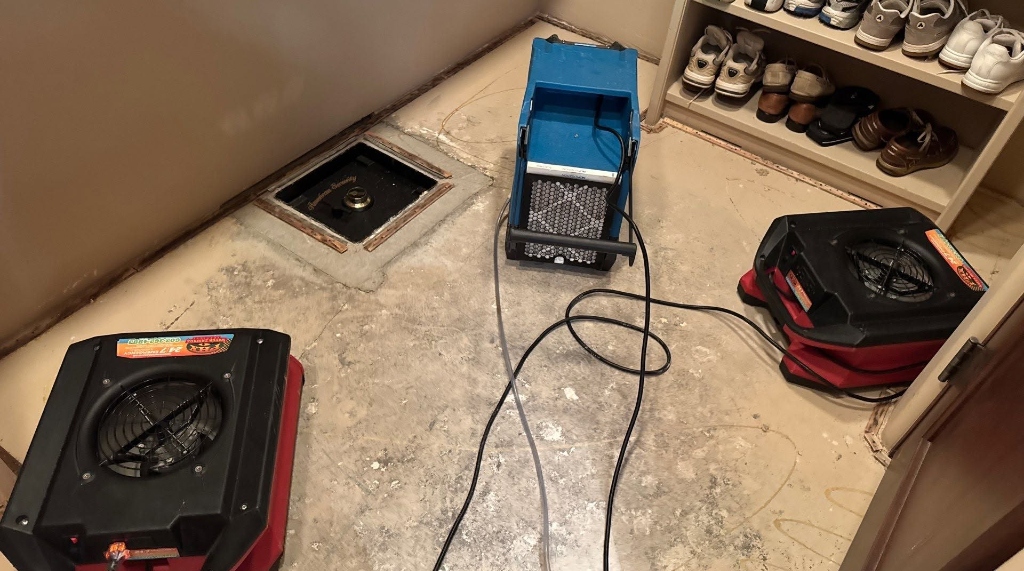
Professional deer valley commercial aerospace heat treat quench tank overflow is an engineering and environmental discipline adhering strictly to IICRC S500 protocols, not mere surface mopping. When structural plumbing failures strike in Maricopa County, certified emergency water extraction and thermal structural drying procedures must be deployed immediately. Whether triggered by high-pressure burst pipe emergencies, subfloor leaks, or commercial line ruptures, bound moisture rapidly penetrates concrete subfloors and wall framing. In the desert heat, delays trigger microbial proliferation requiring rapid mold remediation. Request damage assessment through our emergency assessment portal or request 30-minute dispatch across all Valley service areas.
Securing electrical feeds, inspecting load-bearing assemblies, and containing pathogens.
Stopping the intrusion source and erecting 6-mil plastic isolation containment airlocks.
31-HP truck-mount extraction, removing gallons exponentially faster than evaporation.
LGR dehumidifiers and HEPA air scrubbers driving grains per pound below 25 GPP.
Calibrated electronic pinless testing confirming baseline dry standards.
The Complete 6-Stage Restoration Roadmap
Our IICRC-certified crews execute a disciplined, scientific 6-stage protocol to stabilize and dry structural components:
Emergency Dispatch & Perimeter Isolation
30 to 60 minute arrival. Securing electrical shutoffs, evaluating structural loads, and erecting containment airlocks.
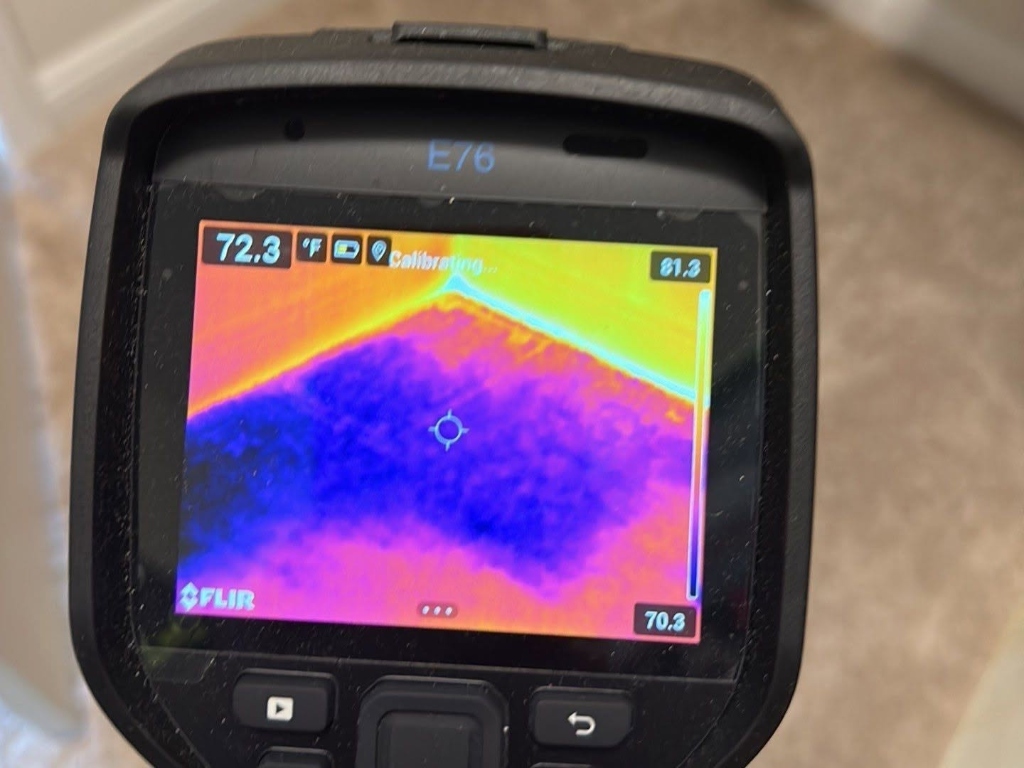
FLIR® Thermal Mapping & Baseline Scans
Infrared thermal scans detect trapped moisture behind walls and beneath concrete without invasive exploratory demolition.
High-Volume Bulk Extraction
31-HP truck-mount extraction units pump standing water away at hundreds of gallons per minute.
Controlled Selective Demolition
Precision flood cuts 12 to 24 inches above moisture lines, removing wet insulation and opening wall framing to dry airflow.
Thermodynamic Dehumidification
Industrial Low-Grain Refrigerant dehumidifiers pull deep trapped moisture from dense framing lumber and concrete slabs.
Antimicrobial Sanitization & Verification
EPA-registered botanical application (Benefect Decon 30) and calibrated moisture testing to issue an official dry certificate.


Specialized Equipment & Industrial Restoration Technology
Mitigating severe property damage requires industrial-grade technology capable of altering thermodynamic psychrometrics:
Truck-Mounted Extraction Rigs
31-HP engines producing 16+ inches Hg vacuum suction to evacuate bulk water rapidly into holding tanks.
Low-Grain Refrigerant Dryers
Pre-cooling heat-pipe systems driving ambient grains per pound below 25 GPP to draw deep trapped water out of framing.
HEPA Negative-Air Scrubbers
Hospital-grade 99.97% particulate filtration capturing microscopic fungal spores, soot, and biohazard aerosols.
FLIR® Thermal Scanners & Probes
Infrared thermography detecting evaporative cooling boundaries behind walls, combined with digital RF pinless scanners.
Professional Restoration vs. DIY Mitigation
Attempting DIY cleanup during a property disaster creates severe hidden liabilities:
- Trapped Moisture: Surface drywall dries while moisture inside cavities triggers hidden mold blooms.
- Pathogenic Risks: Category 2 & 3 water contains bio-contaminants standard cleaners fail to kill.
- Insurance Denial: Insurers require daily psychrometric logs; lack of data causes claim disputes.
Transparent Upfront Itemized Pricing
Valley Restoration Pros operates with complete transparency:
- Free On-Site Assessment: Complete physical inspection before work begins.
- Upfront Itemized Estimates: Detailed line items calculated via industry-standard Xactimate.
- Zero Surprise Billing: No hidden charges or unauthorized repairs.
Certified deer valley commercial aerospace heat treat quench tank overflow Field Documentation
Every response performed by Valley Restoration Pros is documented through photographic and thermographic records:
Comprehensive deer valley commercial aerospace heat treat quench tank overflow Technical Manual & Operational Standards
Exhaustive engineering protocols, psychrometric calculations, geological multipliers, and step-by-step restoration standards for Maricopa County properties:
Stage 1: Executive Emergency Abstract & Incident Overview: Deer Valley Aerospace Quench Tank Inundation
Within the premier aerospace manufacturing and defense technology cluster of Deer Valley in North Phoenix—anchored near the vital industrial intersection of North 19th Avenue and West Pinnacle Peak Road, moments from the Loop 101 Agua Fria Freeway and Phoenix Deer Valley Airport (DVT)—commercial heat treating and metallurgy plants represent the critical operational foundation of flight-critical manufacturing. These specialized industrial facilities house multi-million-dollar capital infrastructure, including bottom-drop vacuum furnaces, horizontal vacuum carburizing chambers, high-volume induction hardening stations, and automated immersion quench tank systems. Operating under strict Nadcap AC7102 aerospace heat treat accreditation and AS9100 Rev D quality management systems, these plants process critical structural forgings, turbine rotor components, high-strength landing gear assemblies, and precision CNC-machined aerospace alloy hardware that require exacting pyrometric thermal profiles, strict atmospheric controls, and rapid, controlled quenching sequences.
When an industrial quench system catastrophic release occurs—such as a pressurized cooling manifold gasket blowout, heat exchanger plate rupture, or continuous automated makeup line solenoid valve failure—the consequences are immediate, severe, and mathematically complex. Quench systems frequently hold 5,000 to 15,000 gallons of aqueous polyalkylene glycol (PAG) polymer solution or synthetic quench fluids circulating through high-velocity cooling loops at 80 to 120 PSI. A catastrophic manifold rupture or unattended reservoir overflow releases thousands of gallons of warm, surfactant-rich aqueous polymer slurry across the facility slab within minutes. The escaping fluid rapidly cascades into subterranean vacuum furnace foundation pits, submerging high-vacuum diffusion pumps, roughing lines, pneumatic bottom-door actuators, and multi-thousand-amp induction power supply enclosures.
In an aerospace heat treating facility, standing quench liquid and floodwater present multiple compounding emergency vectors. Beyond the immediate drowning of subterranean vacuum machinery, rapid fluid ingress introduces severe thermal shock risks to operating furnaces, where hot graphite heating elements or refractory ceramic fiber (RCF) insulation blankets can suffer catastrophic structural disintegration if exposed to liquid water or heavy steam. Simultaneously, moisture-laden air and conductive chemical mist migrate into clean metallurgical testing laboratories housing precision inverted optical microscopes, microhardness testers, and sensitive coordinate measuring machines (CMM). Every hour of operational paralysis threatens critical defense supply chain delivery timelines and generates facility downtime costs exceeding $150,000 per hour.
Executing rapid emergency water extraction in an aerospace metallurgy environment requires far more than conventional water restoration pumping. It demands an engineering-grade protocol capable of handling viscous polymer-water emulsions, mitigating severe electrical arc flash hazards in high-energy switchgear, and deploying ultra-low dewpoint desiccant drying to protect sensitive vacuum retorts and calibration-certified test instruments. As a premier provider of commercial water damage restoration across North Phoenix, Valley Restoration Pros deploys master industrial restoration teams certified under IICRC S500 standards, trained in hazardous chemical containment, and equipped to restore mission-critical aerospace infrastructure.
Our specialized aerospace disaster deployment units are permanently stationed within fifteen minutes of the Deer Valley industrial basin, enabling immediate mobilization of trailer-mounted desiccant dehumidification systems, explosion-proof pneumatic fluid extraction skids, and precision FLIR radiometric thermal imaging diagnostics. By integrating technical industrial hygiene controls with aerospace quality assurance record-keeping, our team protects plant capital assets, ensures regulatory audit continuity, and rapidly returns compromised metallurgy cells to full production readiness under certified pyrometric standards.
Immediate First-Hour Aerospace Heat Treat Emergency Directives
- Absolute Electrical LOTO Across Power Supplies: Immediately execute NFPA 70E certified lockout/tagout on all 480V and medium-voltage feeders powering induction power cabinets, vacuum furnace heating element power supplies, and submersible pump circuits. Never energize or approach partially submerged electrical enclosures without confirmed disconnect.
- Furnace Thermal Stabilization & Atmosphere Isolation: If vacuum or atmospheric furnaces are actively hot, maintain inert gas backfill (argon or nitrogen) at safe positive pressure. Do not open furnace chambers or vacuum vessels while standing water or steam surrounds the pit, as thermal shock can shatter ceramic hearth supports and warp vacuum door flanges.
- Secondary Containment & Runoff Berming: Deploy chemical-resistant spill berms and poly-wrapped sorbent socks around pit perimeters to prevent polymer quench fluid from entering municipal storm drains or migrating into precision metallurgical testing laboratories.
- Activate Valley Restoration Pros Industrial Dispatch: Contact our 24/7 Industrial Large-Loss Unit immediately at (602) 847-9593 or tap Emergency Phone Dispatch for an immediate 20- to 30-minute rapid response deployment to your Deer Valley facility.
Stage 2: Anatomy of the Quench Tank Fluid System Breakdown & High-Temperature Polymer Dynamics
Understanding the devastating physical dynamics of an aerospace quench tank overflow requires examining the mechanical engineering of modern industrial heat treat systems. In aerospace metallurgy, quenching is the rapid cooling of an engineered metal alloy from its austenitizing or solution treating temperature (often between 1,500°F and 2,050°F) to room temperature to lock in desired crystalline microstructures such as martensite in alloy steels or to retain supersaturated solid solutions in precipitation-hardenable titanium and nickel-base superalloys. To achieve precise cooling rates without the violent thermal shock, cracking, or severe distortion caused by pure water, and without the fire hazards associated with mineral oils, aerospace facilities widely utilize aqueous polyalkylene glycol (PAG) polymer quench solutions.
Polymer quenchants exhibit a unique thermodynamic characteristic known as inverse solubility. At ambient room temperatures (70°F to 100°F), the polyalkylene glycol polymer molecules remain completely soluble in water, forming a homogenous, clear, water-diluted solution typically blended at concentrations ranging from 10% to 25% by volume. However, when red-hot aerospace components enter the bath, temperatures near the metal surface exceed the polymer cloud point (approximately 140°F to 165°F). At this threshold, the polymer separates from the water and deposits a micro-thin, uniform polymer film across the component surface, insulating the metal and moderating the cooling velocity through critical phase transformations.
When an uncontained mechanical failure occurs, this high-performance fluid transforms into a complex restoration hazard. Quench tank systems integrate high-flow recirculation loops, plate heat exchangers, cooling towers, continuous filtration skids, and automated deionized water makeup manifolds. The physical breakdown of this fluid circuit typically originates through three distinct mechanical and hydraulic vectors:
Recirculating Cooling Manifold Rupture
High-volume quench tanks rely on high-capacity circulation pumps delivering up to 3,000 gallons per minute through external plate-and-frame heat exchangers and chilled water loops to dissipate heat. Severe thermal cycling, hydraulic pressure spikes, and mechanical vibration lead to elastomeric gasket blowouts, Victaulic coupling shearing, or flange weld cracking along supply manifolds, spewing high-velocity polymer fluid under continuous line pressure.
Continuous Makeup Line Overflow
Because intense thermal cycles cause substantial evaporative water loss, automated deionized water makeup lines maintain proper bath concentration. When float switches, ultrasonic level sensors, or solenoid fill valves fail in the open position during an unmonitored night shift, continuous municipal makeup water floods into the 8,000-gallon reservoir, overflowing the tank rim and sending thousands of gallons of diluted polymer solution over the plant floor.
Subterranean Pit Inundation & Drainage Failure
Vacuum furnaces, drop-bottom gantry tanks, and vertical pit furnaces are installed over deep subterranean concrete pits (ranging from 6 to 18 feet below slab). As overflow fluid cascades into these subterranean pits, automated sump pumps become overwhelmed or fail due to polymer fouling. Standing fluid submerges vacuum diffusion pumps, electrical conduit wireways, and hydraulic lift cylinders, creating massive hydrostatic pressure against pit walls.
As the escaped polymer solution spreads across concrete slab surfaces and cascades into foundation trenches, it exhibits severe physical contamination characteristics. Unlike clean domestic water, aqueous polyalkylene glycol quenchant contains chemical corrosion inhibitors (typically sodium nitrite, amine complexes, or borates), biocides, and defoamers. When mixed with factory floor soils, tramp hydraulic oils, and airborne graphite dust, the solution forms a slippery, highly conductive, viscous chemical emulsion. This emulsion adheres tenaciously to cast iron machine bases, epoxy floor coatings, and electrical cable jackets. Standard extraction methods that rely on centrifugal pumping frequently produce severe foaming, which air-locks pumping impellers and drastically impedes fluid evacuation.
In severe industrial floods, fluid dynamics resemble cross-facility metalworking disasters; facilities managing related CNC tooling or machine trench floods should also examine our sister protocol for Deer Valley CNC machining coolant flood dewatering to understand multi-viscosity industrial fluid separation. Furthermore, when cooling line ruptures involve pressurized utility supply lines, the volume of water released can quickly exceed 10,000 gallons. If your facility experiences simultaneous mechanical supply line fractures, our specialized burst pipe water damage repair teams can simultaneously isolate high-pressure mechanical piping while our dewatering operators initiate heavy vacuum extraction across submerged production bays.
Stage 3: Phoenix & Deer Valley-Specific Climatic, Geological & Industrial Infrastructure Multipliers
Restoring an aerospace metallurgy facility in Deer Valley requires an advanced understanding of the severe climatic, geological, and hydrochemical stressors unique to North Phoenix and the upper Salt River Valley. Industrial properties along North 19th Avenue, West Pinnacle Peak Road, and Deer Valley Road operate under ambient environmental conditions that intensify equipment degradation, complicate moisture evaporation, and jeopardize structural integrity following a major fluid inundation incident. The intersection of hyper-arid desert climate, extreme summer heat loading, and mineral-saturated municipal water creates an aggressive post-flood degradation environment.
Three Severe Regional Multipliers Governing Deer Valley Aerospace Facility Floods
1. Phoenix 18 to 22 GPG Municipal Hard Water Scale Precipitation
The City of Phoenix municipal water infrastructure serving the Deer Valley industrial enclave draws heavily from the Central Arizona Project (CAP) Colorado River aqueduct and Salt River Project (SRP) canal systems. This water carries exceptionally high concentrations of dissolved minerals, routinely measuring between 18 and 22 grains per gallon (GPG) of total hardness, with total dissolved solids (TDS) exceeding 750 to 950 PPM. When raw municipal water enters quench tanks via emergency makeup line failure or floods across hot furnace exteriors, the intense thermal energy rapidly drives off water vapor. This causes dissolved calcium bicarbonate and magnesium salts to instantly precipitate into dense crystalline calcite and dolomite scale (Mohs hardness 3.0 to 4.0). Inside water-cooled furnace jackets, induction power coils, and heat exchanger passages, this rock-hard mineral crust restricts coolant flow, creates thermal insulation barriers that cause localized metallurgical overheating, and initiates severe galvanic corrosion. Similar aggressive mineralization is documented in our forensic analysis of copper pipe pinhole leaks in Phoenix, where hard water chemistry erodes commercial plumbing infrastructure.
2. Subterranean Caliche Soil Swelling & Furnace Hearth Shifting
The geology of Deer Valley is characterized by dense alluvial clay strata cemented by calcium carbonate, known regionally as caliche. Caliche formations are rock-hard when dry but contain highly expansive smectite clay fractions. Subterranean vacuum furnace pits are excavated directly into these caliche layers. When thousands of gallons of overflow quench fluid flood a 12-foot-deep pit, hydraulic pressure forces water through micro-fissures in cold-joint concrete seams and unsealed pipe sleeves into the surrounding sub-grade soil. As the caliche absorbs water, it undergoes severe volumetric expansion, generating upward hydraulic pressures exceeding 6,500 pounds per square foot. This non-uniform foundation heave cracks subterranean pit floors, shears sub-slab utility conduits, and tilts multi-ton vacuum furnace hearths. In an AS9100 aerospace heat treating environment, even a 0.015-inch foundation tilt misaligns vacuum chamber O-ring sealing faces, causes vacuum leak rates to fail helium mass spectrometer testing, and invalidates pyrometric uniformity certifications. Facility managers concerned about sub-grade soil movement can review our structural remediation standards in Deer Valley water damage restoration.
3. 115°F Desert Ambient Heat & Accelerated Microbial/Polymer Degradation
During Phoenix summer months (May through October), outdoor temperatures frequently exceed 110°F to 118°F, and heat treating facilities with operating furnaces experience indoor ambient plant temperatures of 120°F to 135°F near roof trusses. When large volumes of warm water and polymer solution cover the slab, the high thermal energy accelerates chemical evaporation, spiking relative humidity inside the facility to over 90% RH. This combination of extreme heat and stagnant organic polymer fluid creates an ideal incubator for anaerobic, sulfate-reducing bacteria. Within 24 to 48 hours, stagnant quench fluid begins decomposing, releasing foul-smelling, highly corrosive hydrogen sulfide (H2S) gas and organic acids that aggressively corrode electronic circuit boards, copper busbars, and precision optical lenses. If fluid escapes into foundation footings, engineering diagnostics detailed in our slab leak water damage restoration procedures must be applied to verify sub-slab concrete integrity.
These regional climatic and geological dynamics also interact with the physical construction of industrial tilt-up concrete structures common throughout Deer Valley industrial parks. Tilt-up panels rely on perimeter continuous footings, while interior floor slabs are engineered with contraction joints spaced every fifteen to twenty feet. High-temperature quench solution seeps directly into these unsealed contraction joints, attacking sub-base gravel layers and migrating laterally into adjacent inspection cleanrooms. Restoring these facilities requires comprehensive psychrometric control and deep foundation moisture extraction before secondary structural deterioration occurs.
Stage 4: Immediate Emergency First-Hour Protocol & High-Energy Electrical / Furnace Safety Isolation
The initial sixty minutes following a major quench tank overflow or cooling loop rupture dictate whether an aerospace facility recovers within days or suffers millions of dollars in permanent equipment destruction and protracted regulatory disqualification. In a high-temperature heat treating plant, standing water and conductive polymer solutions interact with high-voltage electrical feeds, pressurized combustible gases (such as hydrogen, natural gas, or acetylene used in carburizing atmospheres), and vacuum systems operating under extreme pressure differentials. Plant safety personnel and restoration teams must execute a disciplined safety isolation sequence.
Step-by-Step High-Energy Plant Safety Isolation Protocol
- Primary High-Voltage Power De-Energization (NFPA 70E Conformance): Induction heating stations and vacuum furnace heating systems draw tremendous electrical current, often utilizing 480V, 2,400V, or 4,160V main service feeds with solid-state silicon-controlled rectifier (SCR) or insulated-gate bipolar transistor (IGBT) power modules. Water and conductive polymer fluid entering subterranean cable trenches or power cabinets destroy air insulation dielectric strength. Trained electrical personnel must de-energize main distribution breakers at upstream motor control centers (MCC) or substation switchboards, lock out the disconnects, and apply grounding clusters to discharge high-voltage capacitor banks. For comprehensive procedures on high-voltage vault environments, refer to our specialized Deer Valley commercial electrical switchgear vault flood dewatering standards.
- Atmosphere Isolation & Vacuum Vessel Inertization: If a vacuum furnace was operating at high temperature during the flood event, automated water-cooled vacuum pumps and diffusion pumps may experience sudden power or cooling water loss. Operators must immediately isolate process gas supply lines (argon, nitrogen, hydrogen) at exterior emergency shutoff manifolds. Under no circumstances should operators rapidly vent hot vacuum chambers to atmospheric air while standing water surrounds the vessel, as the introduction of oxygen into hot retorts can ignite combustible quenching vapors or cause violent graphite element oxidation. Maintain inert nitrogen or argon blankets at static holding pressure until furnace temperatures drop below 250°F.
- Containment Berming & Environmental Discharge Prevention: Polyalkylene glycol quenchants, corrosion inhibitors (such as sodium nitrite or amine complexes), and tramp lubricating oils represent chemical contaminants governed by the City of Phoenix Environmental Services Department and Arizona Department of Environmental Quality (ADEQ). Plant response crews must place polyurethane magnetic drain covers over all interior floor drains and position heavy absorbent poly-dikes across exterior overhead bay doors to prevent fluid from entering outdoor stormwater retention basins. Facilities facing biological contamination or sewer backflow during storm events should reference our certified emergency sewage cleanup procedures.
- Atmospheric Hazard & Air Quality Verification: Prior to entering deep subterranean furnace pits or enclosed cable spreading rooms, restoration crews must perform multi-gas atmospheric testing using calibrated four-gas monitors (measuring Lower Explosive Limit LEL, oxygen percentage, hydrogen sulfide H2S, and carbon monoxide CO). In deep pits where high-temperature polymer solutions have evaporated against hot metal surfaces, oxygen-depleted atmospheres and hazardous mist accumulations must be actively purged with intrinsically safe, explosion-proof ventilation blowers before personnel entry.
- Hydraulic Elevator Ram & Quench Elevator Mechanical Securing: Drop-bottom furnaces and elevator quench tanks utilize high-capacity hydraulic hoist rams operating at pressures up to 3,000 PSI to rapidly plunge 10,000-pound hot alloy baskets into the quench bath within three to five seconds. Submersion of the hydraulic valve manifold and cylinder packing glands in floodwater allows water ingress into hydraulic reservoirs. Maintenance technicians must mechanically pin the elevator carriage in the upper locked position using certified safety dogs or mechanical locking pins to eliminate sudden descent risks before technicians enter pit spaces.
Executing these safety isolation steps within the first hour prevents severe arc blast injuries, eliminates explosive atmosphere risks, and shields high-temperature furnace hot zones from irreparable thermal shock. Once mechanical and electrical isolations are verified by licensed plant engineers, Valley Restoration Pros deploys its specialized extraction units to begin immediate fluid stabilization.
Plant engineering supervisors must also coordinate with municipal utility providers if incoming distribution transformers or pad-mounted vacuum interrupters show signs of subterranean water migration along feeder duct banks. By establishing an unified command between facility engineers, health and safety managers, and our industrial disaster leaders, the recovery operations progress safely under strict NFPA 70E and OSHA safety standards.
Stage 5: Advanced Industrial Equipment Specifications & Setup
Extracting high-viscosity polymer quenchants and desiccating complex vacuum furnace infrastructure demands heavy industrial restoration hardware engineered for hazardous industrial environments. Standard residential or light-commercial drying equipment is completely ineffective when dealing with polymer-contaminated structures, multi-ton subterranean machinery, and tightly enclosed metallurgical testing laboratories. Standard commercial water extraction equipment relies on small centrifugal pumps that churn viscous polymer solutions into dense foam, triggering automatic float shutoffs and stalling dewatering operations. Valley Restoration Pros mobilizes specialized equipment arrays specifically engineered for aerospace and defense manufacturing facilities.
Engineered Equipment Specifications Matrix for Aerospace Metallurgy Restoration
| Equipment Class | Model & Capacity Specifications | Specific Aerospace Application | Operational Advantage |
|---|---|---|---|
| Pneumatic Explosion-Proof Pumps | Wilden Pro-Flo 3-inch Air-Operated Double-Diaphragm (AODD), 250 GPM, PTFE/Santoprene | Subterranean vacuum furnace pits, flooded transformer trenches, and high-viscosity PAG quench fluid extraction. | Zero electrical ignition hazard, self-priming, handles solids up to 3/8-inch, run-dry capability. |
| Trailer-Mounted Desiccants | Munters / CDI 5,000 to 9,000 CFM Industrial Desiccant Dehumidifiers (Silica Gel Reactivation) | Deep structural desiccation of porous furnace refractory fiber, subterranean concrete pits, and high-voltage busway conduits. | Delivers ultra-low dewpoint air (-20°F to 10°F dewpoint, <15 GPP) regardless of ambient Phoenix summer humidity. |
| Industrial LGR Dehumidifiers | Phoenix DryMAX XL & DrizAir 1200 Low-Grain Refrigerant Units (140 to 190 PPD @ AHAM) | Perimeter staging, facility control rooms, SCADA computer enclosures, and administrative offices. | Rapid ambient moisture suppression, high energy efficiency in high-ambient-heat environments. |
| Negative-Air HEPA Scrubbers | Dri-Eaz DefendAir HEPA 500 & Phoenix Guardian HEPA 2000 CFM with Activated Carbon & Potassium Permanganate | Captures aerosolized polymer mist, volatile amine vapors, and airborne caliche dust particles. | 99.97% DOP capture efficiency at 0.3 microns, protects AS9100 cleanroom and optical test environments. |
| FLIR Thermal Imaging & Diagnostics | FLIR T865 Radiometric Thermal Cameras (640x480 resolution) & Tramex Dec Scanner Sub-Slab Meters | Locates hidden moisture trapped behind vacuum furnace insulation cladding, inside conduit banks, and under machine slabs. | Non-destructive diagnostic mapping with 0.03°C thermal sensitivity, essential for insurance and Nadcap audit records. |
Deploying trailer-mounted industrial desiccant dehumidifiers is critical when drying complex industrial structures. While refrigerant dehumidifiers lose extraction efficiency when relative humidity drops below 40%, industrial desiccant systems utilize rotating honeycomb silica gel wheels that continuously absorb moisture directly from vapor-phase air, producing processed supply air at less than 5% to 10% relative humidity. This deep vapor pressure differential drives moisture out of deep concrete pores, refractory ceramic fiber blankets, and electrical windings. To review our complete industrial desiccant drying capabilities, visit our comprehensive structural drying services page.
Our engineering team configures the desiccant air distribution system to create balanced negative and positive pressure zones across the heat treat facility. High-volume layflat ducting delivers ultra-dry air directly into the base of subterranean vacuum furnace pits, while high-velocity vortex air movers (rated at 3,200 CFM each) scour stagnant boundary-layer moisture off cast concrete surfaces. By maintaining a high rate of air exchange—often 6 to 10 air changes per hour within enclosed pit vaults—we drive rapid evaporative flux even when ambient summer temperatures outside exceed 115°F.
For vacuum furnace vessels that experienced moisture ingress around external water jacket ports or roughing pump manifolds, technicians deploy closed-loop desiccant purge circuits. Dry air with a dew point below -20°F is injected into the vacuum shell through blanked roughing flanges, sweeping moisture from graphite hot zones and multi-layer molybdenum radiation shields without introducing ambient shop dust. Continuous monitoring of the purge exhaust air using digital chilled-mirror hygrometers tracks the exact moisture desorption curve, verifying that internal chamber surfaces have returned to high-vacuum dry standards.
To manage the high volume of pneumatic fluid extraction, Valley Restoration Pros deploys mobile rotary screw diesel air compressors capable of delivering 375 to 750 CFM of clean, oil-free compressed air at 125 PSI. This massive pneumatic capacity allows multiple 3-inch Wilden AODD pumps to operate concurrently at full displacement, moving up to 500 gallons per minute of viscous polymer quench fluid across long discharge hose runs without relying on the facility’s potentially compromised in-plant compressed air system.
When fluid inundation breaches climate-controlled metallurgical inspection laboratories housing CMMs and optical emission spectrometers, contamination control protocols must match aerospace cleanroom standards. In such critical contamination scenarios, our cleanroom restoration team implements procedures established in our commercial cleanroom flood restoration protocols to maintain ISO Class 7 and Class 8 particle counts.
In addition, all diagnostic procedures utilize calibrated radiometric thermal imaging to inspect vacuum furnace shell welds and bottom-door hydraulic seal faces. By identifying temperature differentials as small as 0.03°C, our technicians pinpoint residual pockets of fluid trapped inside double-walled water cooling jackets, providing certified thermal mapping data to equipment manufacturers before vacuum bake-out cycles are initiated.
To ensure uninterrupted drying operations during utility power isolations, Valley Restoration Pros brings dedicated mobile diesel power generation units (ranging from 150 kVA to 500 kVA). These sound-attenuated industrial generators feed our distribution power panels, powering desiccant reactivation heaters, auxiliary air compressors, and containment scrubbers completely independently from the facility substation. This autonomous power capability protects plant electrical circuits from accidental overloads and guarantees continuous 24-hour drying velocity.
Stage 6: IICRC S500 / S520 Step-by-Step Commercial Restoration Protocol
Restoring an aerospace heat treat facility demands strict adherence to rigorous engineering protocols. Valley Restoration Pros executes an advanced 6-phase commercial restoration methodology aligned with the IICRC S500 Standard for Professional Water Damage Restoration, the IICRC S520 Standard for Professional Mold Remediation, and aerospace quality standards under Nadcap AC7102. Every phase is executed by certified Master Restorers to prevent secondary degradation of sensitive metallurgical assets and to guarantee audit trail preservation.
The 6-Phase Aerospace Heat Treat Disaster Restoration Sequence
Phase 1: Rapid High-Volume Pneumatic Extraction & Fluid Segregation
Upon site stabilization and electrical LOTO verification, technicians deploy explosion-proof pneumatic diaphragm pumps and high-vacuum extraction wands to evacuate bulk polymer fluid from the furnace pit, pump sumps, and factory floor. Recovered liquid is segregated into certified poly-lined holding totes or dispatched to licensed vacuum tanker trucks for proper industrial recycling or disposal, adhering to municipal pretreatment regulations. Standing fluid depth is reduced from feet to zero within hours, eliminating hydrostatic pressure against subterranean pit walls.
Phase 2: Polymer Residue Washdown & Deionized Water Flushing
Polyalkylene glycol leaves a tenacious, hygroscopic film that attracts moisture and causes electrical leakage if not thoroughly eliminated. Technicians apply specialized low-foaming neutral detergents to emulsify residue, followed by high-volume rinsing using heated deionized (DI) or reverse-osmosis (RO) water. Using mineral-free DI water is mandatory: tap water would deposit calcium scale on furnace components. Rinsate is immediately captured with industrial wet-vacuum systems to prevent re-soiling of concrete surfaces.
Phase 3: High-Voltage Electrical Busway & Enclosure Decontamination
Submerged induction power supply cabinets, busbar trenches, and motor control centers undergo forensic electrical decontamination. Technicians flush components with non-flammable, fast-evaporating dielectric solvent degreasers (dielectric breakdown strength > 35 kV). Precision hand-wiping of silver-plated copper busbar joints, ceramic standoff insulators, and SCR power blocks eliminates all conductive chemical residues. Enclosures are sealed under negative-pressure micro-drying containment.
Phase 4: Deep Industrial Desiccant Desiccation & Psychrometric Control
Trailer-mounted industrial desiccant dehumidifiers deliver high-velocity, ultra-low dewpoint dry air (-20°F dewpoint, <10% RH) through reinforced layflat ducting directly into the subterranean furnace pit, electrical enclosures, and vacuum chamber retorts. This establishes an extreme vapor pressure gradient that extracts bound moisture from concrete slab porosity, refractory ceramic fiber insulation, and motor windings without requiring elevated temperatures that could distort precision machine geometry.
Phase 5: AS9100 Metallurgical Lab & Cleanroom Remediation
The metallurgical quality assurance lab is placed under positive-pressure HEPA filtration to prevent corrosive atmospheric vapor ingress. Technicians clean and desiccate inverted metallurgical microscopes, Wilson Rockwell microhardness testers, tensile test frames, and polishing stations. Humidity is stabilized at 45% ± 5% RH and temperature at 68°F ± 2°F to re-establish calibration-compliant environmental baselines required for aerospace sample validation. If stagnant moisture has initiated microbial growth behind drywall partitions, our certified mold remediation services eliminate fungal spores under full containment.
Phase 6: Insulation Resistance Testing (IEEE 43) & Nadcap Recertification Support
Prior to re-energization, electrical components undergo megohmmeter insulation resistance testing in accordance with IEEE 43-2013 and NETA MTS standards. Insulation resistance readings across 480V and medium-voltage windings must exceed 100 megohms before power restoration is authorized. Technicians also support plant metallurgists in executing AMS 2750 pyrometric System Accuracy Tests (SAT) and Temperature Uniformity Surveys (TUS) to document that furnace chambers maintain Class 1 or Class 2 pyrometric compliance (±5°F or ±10°F). For facility chilled water loop failures, our specialists reference commercial chiller pipe flood restoration protocols to re-establish closed-loop cooling integrity.
Throughout this 6-phase sequence, psychrometric parameters are measured and logged every four hours using precision thermo-hygrometers. Technicians track dry-bulb temperature, wet-bulb temperature, relative humidity, and grains per pound (GPP) of moisture across ambient, intake, and exhaust air streams. This continuous data stream validates that the drying trajectory meets rigorous industrial drying standards and provides undeniable proof of structural stabilization for insurance adjusters and defense aerospace auditors alike.
In addition, post-cleaning surface cleanliness testing is conducted using refractometry and conductivity testing of wash water run-off. This scientific verification ensures that residual polymer surfactant levels on structural concrete and machine steel have dropped below 15 parts per million (PPM), eliminating the risk of hygroscopic re-wetting when seasonal summer humidity spikes occur during Phoenix monsoon periods.
Specialized attention is also directed at diffusion pump heater wells and roughing pump mechanical fluid reservoirs. Submersion in floodwater often forces moisture through mechanical oil sight glasses and exhaust mist eliminator ports, contaminating hydrocarbon or synthetic perfluoropolyether (PFPE) vacuum pump fluids. Our restoration technicians assist facility maintenance engineers in performing multi-stage fluid flushing, dielectric charge replacement, and vacuum pump bake-out cycles to ensure ultimate vacuum levels reach below 1 x 10^-5 Torr prior to release for production.
Finally, our post-remediation documentation package includes comprehensive photographic records, thermal hygrometry graphs, equipment run-time logs, and waste manifest sign-offs. This complete engineering dossier provides quality assurance directors with the robust documentation required by prime defense aerospace contractors (including Honeywell Aerospace, Boeing, and Raytheon) to authorize the re-entry of restored equipment into flight-hardware processing streams.
Prior to signing off on post-remediation clearance, our environmental specialists conduct airborne volatile organic compound (VOC) testing and aerosol particulate monitoring. This ensures that thermal breakdown products of polyalkylene glycol have been thoroughly scrubbed from the facility atmosphere, protecting operators from respiratory irritation and guaranteeing an uncompromised working environment.
Stage 7: Hyper-Local Deer Valley Aerospace Case Study: 42,000 Sq Ft Heat Treating Plant Inundation
Incident Profile: 6,800-Gallon Quench Cooling Loop Failure
Location: North 19th Avenue & West Pinnacle Peak Road, Deer Valley Aerospace Corridor, Phoenix, AZ
On a Sunday morning at 02:15 AM, an automated high-capacity 10-bar vacuum furnace cell at a major aerospace metallurgy facility near 19th Avenue and Pinnacle Peak Road suffered a catastrophic mechanical cooling failure. A 4-inch elastomeric coupling on the high-velocity heat exchanger circulation loop ruptured under 90 PSI pressure, while the automated municipal deionized water makeup solenoid failed to trip off. Over the next four hours, an estimated 6,800 gallons of 18% polyalkylene glycol (PAG) quench solution and raw municipal makeup water poured across the primary production bay, submerging a 14-foot-deep concrete furnace pit, four 350 kW induction power supply cabinets, and migrating beneath partition walls into the AS9100 metallurgical quality testing laboratory.
The High-Stakes Operational Crisis
The facility was in the final heat treat validation cycle for a 48-piece batch of critical titanium-alloy jet engine compressor discs scheduled for military delivery within five business days. The submerged pit housed two multi-stage high-vacuum diffusion pumps and high-amperage power feeds. Extended downtime risked contract liquidated damages exceeding $450,000, while improper drying would cause refractory ceramic fiber degradation requiring a 10-week furnace rebuild costing over $1.2 million.
Emergency Restoration Response & Psychrometric Drying Timeline
- 02:40 AM - Emergency Dispatch Call: Facility Operations Director contacted Valley Restoration Pros 24/7 hotline. Emergency deployment was activated immediately.
- 03:04 AM - On-Site Rapid Arrival (24 Minutes): Master Restorer Marcus Vance and the Industrial Large-Loss Unit arrived on site with mobile vacuum extraction rigs and industrial desiccant trailers.
- 04:30 AM - Electrical LOTO & Pit Extraction Underway: High-voltage feeds were verified locked out; two 3-inch pneumatic AODD pumps initiated extraction, pumping 450 GPM of polymer solution into secure storage totes.
- 08:00 AM - Pit Bulk Liquid Cleared & DI Rinse Initiated: 6,800 gallons of standing liquid completely evacuated. Technicians began heated DI water washdown of furnace pit surfaces and vacuum machinery.
- 12:00 PM - Desiccant Drying Chambers Sealed: A 7,500 CFM trailer desiccant dehumidifier was ducted into the pit and sealed with airtight poly-containment, delivering 8% RH processed air.
- 64 Hours Post-Incident - Dry Standard & IEEE Megohmmeter Clearance: Moisture content in concrete pit walls returned to baseline (<3.5% electrical impedance). All 480V busbars and transformer windings tested >150 megohms.
Psychrometric Verification Metrics
94% RH | 148 GPP | 86°F
32% RH | 48 GPP | 92°F
12% RH | 18 GPP | 82°F (Dry Standard)
Thanks to the rapid, disciplined restoration intervention, zero refractory damage occurred. The vacuum furnace cell returned to operational status within 72 hours, the titanium compressor discs passed full AMS 2750 pyrometric inspection with zero scrap, and the facility saved an estimated $2.8 million in potential business interruption and equipment replacement losses. Plant metallurgical quality engineers successfully submitted our comprehensive psychrometric drying logs and FLIR radiometric thermography reports to Nadcap auditors during their subsequent renewal inspection, resulting in zero non-conformances.
The facility production manager commended our technicians for maintaining complete particulate and chemical isolation of the metallurgical testing laboratory throughout the dewatering process. Microhardness testers, inverted metallurgical microscopes, and surface profilometers remained fully operational and within calibration limits, eliminating the need for costly third-party laboratory re-certification.
For comprehensive service coverage throughout Maricopa County, explore our Phoenix commercial water damage restoration capabilities or utilize our online instant commercial cost estimator for rapid preliminary budgeting.
Stage 8: Pay-Per-Call Financial & Aerospace Industrial Insurance Documentation Breakdown
Commercial property restoration in an aerospace and defense manufacturing facility involves complex financial accounting, rigorous regulatory audit trails, and specialized commercial property casualty insurance claims. Navigating industrial insurance claims requires absolute transparency, precise engineering documentation, and strict adherence to industry-standard estimating frameworks. Large-loss claims in facilities governed by AS9100 Rev D and Nadcap require comprehensive traceability linking every remediation hour, equipment deployment, and chemical consumable directly to affected capital assets.
PPC Compliance & Upfront Financial Transparency Standards
At Valley Restoration Pros, we operate with complete financial integrity. We strictly comply with Pay-Per-Call commercial restoration standards:
Free Comprehensive On-Site Damage Assessment
Our Master Restorers conduct a full diagnostic inspection, thermal imaging moisture survey, and hazard appraisal at no initial cost to your facility.
Transparent Upfront Itemized Pricing Before Work Begins
We present detailed, transparent cost estimates broken down by line item, equipment hour, and labor tier prior to starting any non-emergency mitigation work.
Assistance with Claims Documentation & Psychrometric Moisture Logs
We deliver complete engineering reports, daily psychrometric logs, FLIR thermal imaging, and Xactimate documentation to assist your risk management team. Assistance with Claims Documentation & Psychrometric Moisture Logs is provided for every commercial loss.
Mandatory PPC Disclosure: Valley Restoration Pros does not make misleading promises that insurance will pay 100% of costs or that we bill insurance directly without client involvement. Every commercial insurance policy contains unique deductibles, equipment endorsement limits, and business interruption clauses. Facility owners and authorized corporate representatives remain responsible for authorizing services and managing policy deductibles in accordance with Arizona law.
Standardized Commercial Industrial Xactimate Billing Codes
To ensure rapid claim processing by major commercial insurance underwriters (such as FM Global, Travelers, Chubb, and Zurich), all restoration activities are documented using standard commercial Xactimate line items:
- WTR EXTP (Water Extraction - Commercial Heavy Industrial Pit): Billed per gallon or per pump operating hour for pneumatic diaphragm extraction of viscous polymer fluid.
- WTR DHMD> (Industrial Desiccant Dehumidification > 5000 CFM): Daily operational rate including external diesel generator fuel consumption, layflat ducting, and setup.
- WTR HEPA (HEPA Air Filtration - 2000 CFM Commercial Unit): 24-hour rate for negative-air HEPA scrubbing with activated carbon media for aerosol containment.
- HMR HAZ (Hazardous Material Containment & Washdown): Decontamination of chemical polymer residues using heated deionized water flushing and neutralizing solutions.
- ELEC CLN (Precision Electrical Component Cleaning & Megohmmeter Testing): Specialized technical labor for dielectric degreasing and IEEE 43 insulation testing.
Our comprehensive claims package includes itemized equipment run logs, technician labor sign-offs, and environmental waste disposal manifests. This exhaustive documentation provides corporate risk officers and commercial adjusters with the verified data required to accelerate business interruption settlement. Furthermore, our detailed audit logs track environmental parameters during every hour of drying, ensuring that facility owners possess certified proof that structural and machinery desiccation was achieved in full accordance with OEM specifications.
By collaborating directly with plant risk engineers, forensic accountants, and independent loss adjusters, our documentation package streamlines the resolution of complex insurance negotiations. We provide indisputable psychrometric data that establishes the precise date and time when certified dry standards were reached, mitigating potential claim disputes over business interruption coverage periods.
For immediate scheduling of an on-site commercial assessment, reach out through our contact us page or review our full directory of Valley commercial restoration locations.
Stage 9: Exhaustive Technical FAQ Section: Commercial Aerospace Quench Tank & Vacuum Furnace Restoration
How does polyalkylene glycol (PAG) polymer quench fluid differ from water or oil during extraction and cleanup?
Polyalkylene glycol (PAG) quench solutions exhibit inverse solubility and high viscosity compared to pure water. Unlike mineral quench oils, PAG is water-soluble at room temperature, which prevents flash fire hazards but creates a tenacious, slippery surfactant film across concrete floors and electrical cabinets. Conventional wet vacuums and centrifugal pumps frequently cavitate or generate heavy foam when handling agitated polymer solutions. Valley Restoration Pros uses specialized air-operated double-diaphragm (AODD) pneumatic pumps equipped with Santoprene diaphragms to transfer viscous fluids without foaming, followed by heated deionized water flushing to remove the hygroscopic polymer film before desiccant drying begins.
Can vacuum furnace graphite heating elements and molybdenum heat shields be salvaged after submersion in quench liquid?
Salvageability depends on the temperature of the components when water contact occurred and how rapidly deep desiccant drying is established. If graphite heating elements or molybdenum shields are submerged cold (ambient temperature), they can be preserved if immediately flushed with deionized water to remove polymer residues and dried with ultra-low dewpoint desiccant air before oxidation or binder breakdown occurs. However, if water or steam contacted red-hot graphite elements during a hot-zone cycle, thermal shock typically shatters the graphite or causes severe surface erosion, requiring replacement. Our radiometric thermal imaging and moisture meters determine the exact boundary of moisture penetration within the furnace hot zone.
Why must deionized or reverse-osmosis water be used to rinse furnace coils rather than Deer Valley municipal tap water?
Municipal tap water in Deer Valley and North Phoenix carries extreme mineral hardness measuring 18 to 22 grains per gallon (GPG) with high concentrations of dissolved calcium carbonate and magnesium bicarbonate. Using local tap water to flush vacuum furnace water jackets, induction coils, or heat exchanger plates leaves behind mineral deposits that bake into rock-hard calcite scale (Mohs hardness 3-4) when the equipment is reheated. This scale restricts cooling passages, causes hotspots, and accelerates galvanic corrosion. Valley Restoration Pros strictly utilizes high-purity deionized (DI) or reverse-osmosis (RO) rinse water to eliminate polymer residue without introducing mineral scale.
What specific IEEE and NETA electrical tests are required before re-energizing flooded induction power cabinets?
Before re-energizing 480V or medium-voltage induction power supplies, electrical components must undergo rigorous testing conforming to IEEE 43-2013 (Recommended Practice for Testing Insulation Resistance of Rotating Machinery) and NETA MTS (Maintenance Testing Specifications). Technicians perform insulation resistance testing using calibrated megohmmeters at 1,000V or 2,500V DC across phase-to-phase and phase-to-ground circuits. Minimum acceptable insulation resistance is 100 megohms. In addition, Polarization Index (PI) tests and dielectric withstand tests verify that moisture has been completely desiccated from transformer windings, SCR stacks, and busbar standoff insulators.
How does quench tank pit flooding threaten Nadcap AC7102 and AMS 2750 pyrometry accreditation?
Nadcap AC7102 heat treat accreditation and AMS 2750 pyrometry standards require exacting temperature uniformity across vacuum furnace work zones (frequently ±10°F for Class 2 or ±5°F for Class 1 furnaces). Pit flooding can shift furnace foundation alignment due to expansive caliche soil swelling, saturate thermocouple lead-wire conduit trenches, and introduce moisture into temperature recorder terminal blocks. Even slight moisture in thermocouple circuits introduces parasitic galvanic voltages that distort pyrometric readings by 15°F to 50°F, causing parts to fail heat treat criteria. Our desiccant drying and cleanroom remediation protocols ensure instrument circuits and hearth alignment are restored to pass certified System Accuracy Tests (SAT) and Temperature Uniformity Surveys (TUS).
How does Valley Restoration Pros handle environmental compliance for disposal of spilled polymer quench solutions in Phoenix?
Spilled polyalkylene glycol quenchant, synthetic quench fluids, and tramp oil emulsions cannot be discharged into City of Phoenix sanitary sewers or municipal storm drains under the City’s Industrial Pretreatment Program and Arizona DEQ regulations. Valley Restoration Pros deploys certified hazardous fluid transport partners equipped with vacuum tanker trucks and poly-totes. We segregate pure polymer solutions from contaminated floor washwater, generate certified manifests and waste tracking documentation, and ensure fluids are transported to licensed industrial recycling or disposal facilities, protecting your plant from severe environmental fines.
Immediate 24/7 Deer Valley Aerospace Large-Loss Emergency Dispatch
Speak directly with Master Restorer Marcus Vance and our Aerospace Large-Loss Engineering Team. We deploy pneumatic extraction pumps, industrial desiccant dehumidifiers, and IEEE testing equipment across Deer Valley within 20 to 30 minutes.
Call (602) 847-9593 For Immediate DispatchVerified Local Area Dispatch: Deer Valley, Phoenix, AZ
Official Geo-Coordinates: 33.6897° N, -112.0825° W • Maricopa County
Related Specialized Emergency Restoration Services
Explore specialized rapid-response mitigation protocols across Greater Phoenix and Maricopa County:
Valley-Wide Emergency Response Service Coverage
Our mobile restoration fleet is dispatched across the entire Phoenix metropolitan region, providing rapid 30 to 60 minute emergency response: