

Valley Restoration Pros delivers 24/7 industrial emergency water extraction, thermal psychrometric drying, and structural mitigation across Phoenix and Maricopa County with guaranteed 30–60 minute rapid arrival. All protocols strictly adhere to IICRC S500 standards, featuring upfront itemized pricing and free on-site thermal moisture assessments. Call dispatch directly at (602) 847-9593.
Why Immediate Mitigation Is Critical in Phoenix Heat
Service Definition & The IICRC Standard of Care
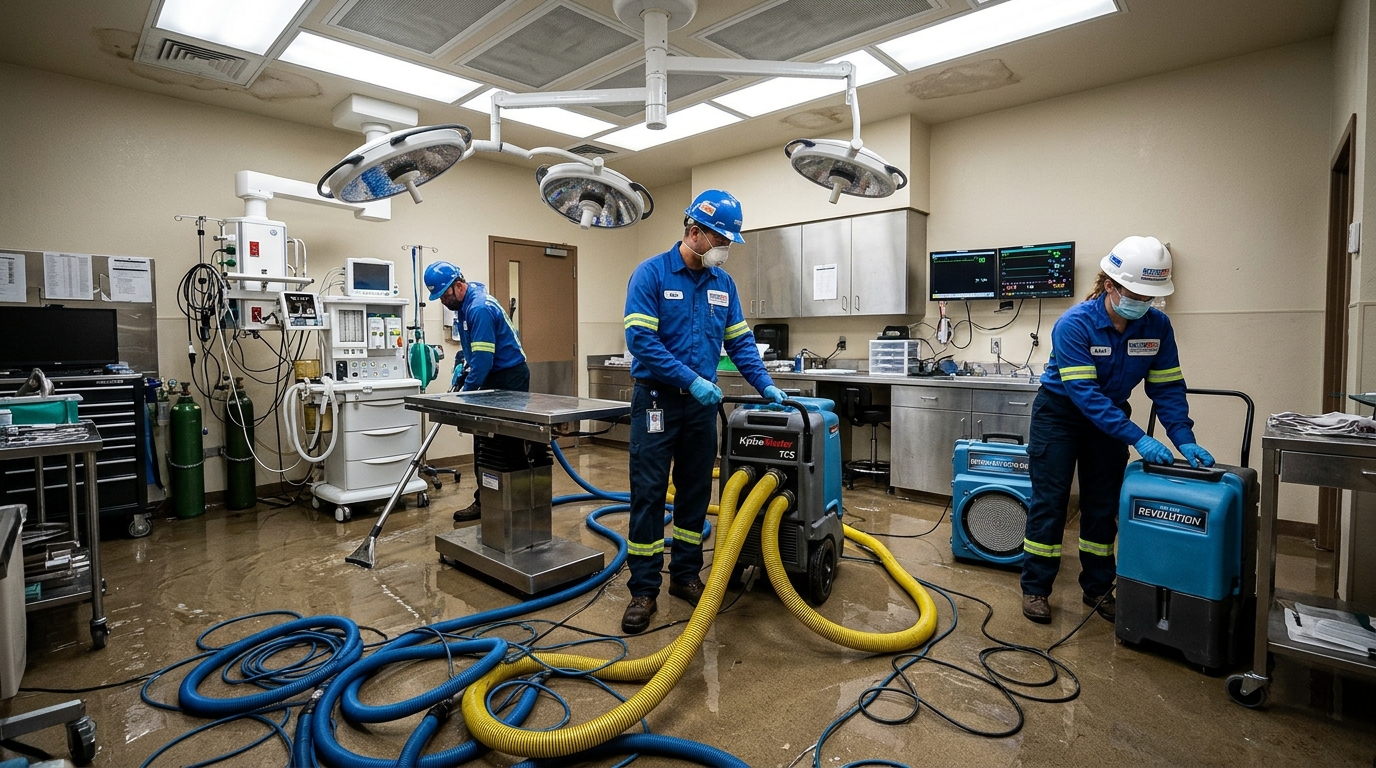
Professional gilbert commercial equestrian veterinary surgical suite flood cleanup is an engineering and environmental discipline adhering strictly to IICRC S500 protocols, not mere surface mopping. When structural plumbing failures strike in Maricopa County, certified emergency water extraction and thermal structural drying procedures must be deployed immediately. Whether triggered by high-pressure burst pipe emergencies, subfloor leaks, or commercial line ruptures, bound moisture rapidly penetrates concrete subfloors and wall framing. In the desert heat, delays trigger microbial proliferation requiring rapid mold remediation. Request damage assessment through our emergency assessment portal or request 30-minute dispatch across all Valley service areas.
Securing electrical feeds, inspecting load-bearing assemblies, and containing pathogens.
Stopping the intrusion source and erecting 6-mil plastic isolation containment airlocks.
31-HP truck-mount extraction, removing gallons exponentially faster than evaporation.
LGR dehumidifiers and HEPA air scrubbers driving grains per pound below 25 GPP.
Calibrated electronic pinless testing confirming baseline dry standards.
The Complete 6-Stage Restoration Roadmap
Our IICRC-certified crews execute a disciplined, scientific 6-stage protocol to stabilize and dry structural components:
Emergency Dispatch & Perimeter Isolation
30 to 60 minute arrival. Securing electrical shutoffs, evaluating structural loads, and erecting containment airlocks.
FLIR® Thermal Mapping & Baseline Scans
Infrared thermal scans detect trapped moisture behind walls and beneath concrete without invasive exploratory demolition.
High-Volume Bulk Extraction
31-HP truck-mount extraction units pump standing water away at hundreds of gallons per minute.
Controlled Selective Demolition
Precision flood cuts 12 to 24 inches above moisture lines, removing wet insulation and opening wall framing to dry airflow.
Thermodynamic Dehumidification
Industrial Low-Grain Refrigerant dehumidifiers pull deep trapped moisture from dense framing lumber and concrete slabs.
Antimicrobial Sanitization & Verification
EPA-registered botanical application (Benefect Decon 30) and calibrated moisture testing to issue an official dry certificate.


Specialized Equipment & Industrial Restoration Technology
Mitigating severe property damage requires industrial-grade technology capable of altering thermodynamic psychrometrics:
Truck-Mounted Extraction Rigs
31-HP engines producing 16+ inches Hg vacuum suction to evacuate bulk water rapidly into holding tanks.
Low-Grain Refrigerant Dryers
Pre-cooling heat-pipe systems driving ambient grains per pound below 25 GPP to draw deep trapped water out of framing.
HEPA Negative-Air Scrubbers
Hospital-grade 99.97% particulate filtration capturing microscopic fungal spores, soot, and biohazard aerosols.
FLIR® Thermal Scanners & Probes
Infrared thermography detecting evaporative cooling boundaries behind walls, combined with digital RF pinless scanners.


Professional Restoration vs. DIY Mitigation
Attempting DIY cleanup during a property disaster creates severe hidden liabilities:
- Trapped Moisture: Surface drywall dries while moisture inside cavities triggers hidden mold blooms.
- Pathogenic Risks: Category 2 & 3 water contains bio-contaminants standard cleaners fail to kill.
- Insurance Denial: Insurers require daily psychrometric logs; lack of data causes claim disputes.
Transparent Upfront Itemized Pricing
Valley Restoration Pros operates with complete transparency:
- Free On-Site Assessment: Complete physical inspection before work begins.
- Upfront Itemized Estimates: Detailed line items calculated via industry-standard Xactimate.
- Zero Surprise Billing: No hidden charges or unauthorized repairs.
Certified gilbert commercial equestrian veterinary surgical suite flood cleanup Field Documentation
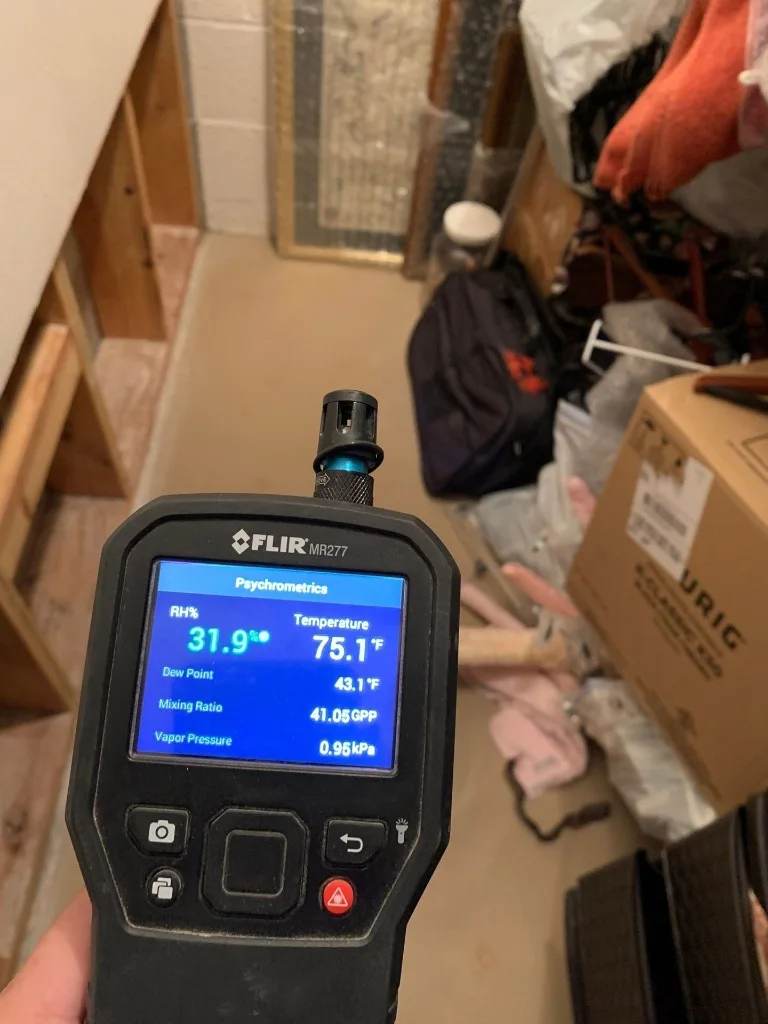
Every response performed by Valley Restoration Pros is documented through photographic and thermographic records:
Comprehensive gilbert commercial equestrian veterinary surgical suite flood cleanup Technical Manual & Operational Standards
Exhaustive engineering protocols, psychrometric calculations, geological multipliers, and step-by-step restoration standards for Maricopa County properties:
Executive Emergency Abstract: Commercial Equestrian Veterinary Surgical Suite Inundation & Critical Facility Salvage
Commercial equine veterinary hospitals, regional large-animal emergency trauma centers, and advanced equestrian sports medicine clinics located throughout Gilbert and the surrounding East Valley agricultural belt represent extraordinary capital and clinical commitments. Positioned strategically within high-density equine corridors—such as the Val Vista Drive and East Germann Road agricultural interfaces, Greenfield Road ranch complexes, and adjacent Queen Creek equestrian properties—these state-of-the-art veterinary facilities house specialized medical infrastructure capable of supporting complex orthopedic repairs, exploratory laparotomies, colic surgery, arthroscopy, and delicate soft-tissue reconstructions on 1,200-to-2,200-pound elite performance horses, breeding stallions, and valuable show stock. When an internal plumbing catastrophe, subterranean line breach, mechanical HVAC deluge, or high-pressure sterilizer line rupture inundates an equine surgical facility, the consequences are immediate, structurally complex, and clinically devastating.
Unlike standard commercial buildings or small-animal veterinary offices, an equestrian veterinary surgical suite incorporates specialized architectural and mechanical features engineered specifically for massive veterinary patients. Operating suites feature monolithic concrete slab foundations designed with deep subterranean pits to house heavy-duty, multi-axis hydraulic lift surgical tables capable of elevating three tons. Adjacent to the sterile theater are high-impact padded induction and recovery stalls lined with seamless high-density vulcanized rubber or poured polyurethane wall and floor cushioning systems. The facility relies on heavy-duty monorail gantry hoist systems, wide flush-threshold commercial perimeter drainage trenches with cast iron sediment grates, medical vacuum lines, overhead articulated anesthesia gas scavengers, and dedicated large-animal positive-pressure HEPA ventilation networks.
When floodwaters submerge this specialized clinical environment, water instantly tracks into subterranean hydraulic table pits, saturates the interstitial spaces beneath seamless poured rubber membranes, submerges electrical motor drives, and wicks into the porous core of equine stall impact padding. In Gilbert's harsh Sonoran Desert climate, where summer ambient temperatures routinely surge past 115°F, trapped moisture creates an aggressive hyper-thermal incubator. The convergence of ambient heat, high organic load common to agricultural environments, and standing water allows rapid bacterial and fungal amplification within 24 hours. Dangerous spore-forming pathogens—including Clostridium tetani, Clostridium perfringens, Rhodococcus equi, and opportunistic Aspergillus species—proliferate rapidly, threatening aseptic surgical conditions and making sterile veterinary surgery legally and medically impossible.
Immediate intervention through certified emergency water extraction, subterranean hydraulic pit dewatering, and controlled desiccant dehumidification is mandatory to safeguard millions of dollars in medical equipment, prevent irreparable structural subfloor delamination, and maintain American Animal Hospital Association (AAHA) and American College of Veterinary Surgeons (ACVS) facility compliance. Immediate deployment of dedicated commercial structural drying protocols ensures rapid stabilization before microbial colonization can take root. Valley Restoration Pros maintains a 24/7 dedicated commercial rapid-response team specialized in medical and veterinary disaster mitigation, arriving fully equipped at Gilbert equine facilities within 20 to 30 minutes of initial emergency dispatch.
Immediate Equine Surgical Suite Emergency Directives: First 30 Minutes
- Isolate Primary Water Inflow Immediately: Shut off the main commercial water backflow assembly or interior medical isolation valve feeding the surgical prep and wash-down sector. If the failure stems from a high-pressure autoclave or RO system, close dedicated supply manifolds immediately.
- De-Energize Hydraulic Table Sub-Slab Power & Gantry Hoists: Cut electrical breaker feeds to the 480V 3-phase hydraulic table pump units, sub-floor pit drainage pumps, overhead electric monorail hoists, and in-floor radiant heating circuits to prevent electrocution hazards and pump motor burnout.
- Seal & Isolate Padded Equine Induction / Recovery Stalls: Close all airtight and gasketed acoustic doors between the flooded surgical suite and patient recovery boxes. Establish temporary physical barriers to stop contaminated wash water from migrating into clean equine boarding barns.
- Protect Precision Anesthesia & Endoscopy Workstations: Elevate or wheel all mobile large-animal inhalation anesthesia machines, electronic ventilator bellows, veterinary endoscope carts, and surgical monitoring towers into dry, conditioned auxiliary suites.
- Dispatch Commercial Restoration Engineers: Contact our 24/7 commercial emergency restoration hotline immediately at to mobilize high-volume vacuum extraction trailers, desiccant dehumidifiers, and HEPA negative-air filtration scrubbers.
Anatomy of Equine Surgical Suite Failure & Hydraulic Table Sub-Floor Hydrodynamics
The mechanical and architectural complexity of an equine surgical theater creates unprecedented hydro-mechanical challenges during a flood event. To support three-ton dynamic patient loads during complex surgical repositioning, commercial large-animal hospitals rely on massive hydraulic lift surgical tables recessed directly into reinforced concrete floor slabs. These hydraulic assemblies reside within subterranean pit vaults measuring 8 to 12 feet in length, 4 to 6 feet in width, and 3 to 5 feet in depth. When water enters the surgical environment, gravity naturally channels hundreds or thousands of gallons of contaminated fluid directly into this low-elevation containment pit.
Once flooded, the subterranean hydraulic table vault becomes an active reservoir of cross-contamination and mechanical destruction. The hydraulic lift mechanism consists of heavy chrome-plated telescoping cylinder rams, high-pressure synthetic hydraulic fluid hoses, proportional electric directional valves, and a submerged or pit-adjacent 480V electric pump motor. Inundation submerges electrical junction enclosures, tripping ground fault relays and short-circuiting precision positional encoders. More critically, floodwaters enter the hydraulic fluid reservoir via breathers and reservoir caps, resulting in severe water-in-oil emulsion. When water mixes with hydraulic fluid under high shear pressure, oil lubricity drops to near zero, triggering severe internal valve oxidation, seal cavitation, and micro-scoring along precision-machined hydraulic cylinder sleeves that cost tens of thousands of dollars to replace.
Concurrently, water migrates horizontally across the primary operating theater floor. Standard equine surgical suites do not utilize traditional commercial sheet vinyl; instead, they feature seamless anti-microbial poured polyurethane elastomer or thick, vulcanized interlocking rubber flooring systems bonded directly to the structural concrete sub-base. These heavy-duty flooring systems are engineered to withstand the extreme point loads of horse hooves, chemical disinfectants, and heavy steel gantry wheels. However, when water breaches the perimeter perimeter expansion joints, perimeter coving seals, or floor drain collars, hydrostatic pressure and capillary attraction force liquid beneath the impervious rubber membrane.
Trapped between the cold, non-porous concrete sub-slab and the impervious rubber surface, water cannot evaporate into the ambient atmosphere. The trapped moisture initiates alkaline hydrolysis, a chemical reaction that breaks down the polyurethane and epoxy adhesives securing the floor to the concrete. As adhesive bonds fail, massive fluid blisters (hydro-blisters) form beneath the rubber skin. Walking or rolling equipment across these blisters creates hydraulic pressure waves that tear seams and allow contaminated sub-slab water to squirt upward into sterile surgical fields during critical operations. If sub-floor saturation is not resolved with advanced water damage repair gilbert az protocols, the entire poured rubber floor system must be demolished and re-poured at astronomical expense. When foundational line shifts occur, our specialized slab leak water damage restoration diagnostic listening arrays pinpoint subterranean breaches with pin-point precision.
Adjacent to the operating room are the specialized induction and recovery stalls. These rooms are critical to equine surgical survival; horses emerging from general anesthesia can thrash violently as they regain motor function, risking catastrophic bone fractures unless completely cushioned. To protect recovering patients, induction stall walls and floors are lined with 2-to-4-inch-thick high-density closed-cell polyethylene foam panels clad in heavy tear-resistant vinyl or seamless poured elastomeric coatings. When floodwaters reach these stalls, capillary action wicks moisture upward behind wall padding assemblies. While the outer vinyl facing is waterproof, the backing plywood substrates, drywall sheathing, and steel structural studs absorb water voraciously. Saturated wood backing softens, compromising the structural anchorage of wall pads and creating hidden bio-cavities where lethal mold and fungal colonies flourish undetected.
Furthermore, commercial equine facilities feature integrated high-volume floor wash-down trenches designed to evacuate liters of blood, lavage fluids, scrub wastewater, and physiological waste during operations. These perimeter trenches connect to dedicated drainage pipes fitted with backflow prevention check valves and hair/tissue strainer baskets. In catastrophic flooding events—such as municipal storm surges, drain line blockages from compacted horsehair and wood shavings, or high-volume burst pipe repair failures—trench drainage lines reverse flow. Raw effluent and contaminated slurry bubble up through floor drains, transforming clean water losses into biohazardous Category 3 blackwater catastrophes that require rigorous forensic sewage cleanup sanitization procedures.
Equine Surgical Suite Vulnerability & Subsystem Failure Matrix
| Surgical Suite Component | Engineering Construction | Inundation Failure Dynamic | Clinical & Financial Impact |
|---|---|---|---|
| Hydraulic Lift Table Pit | Sub-slab concrete vault, 3-5 ft depth, telescoping rams, 480V 3-phase pump, proportional valves. | Total gravity flooding, water-in-oil emulsion, electrical short circuit, ram corrosion, cylinder seal failure. | $45,000-$80,000 replacement cost, complete cessation of large animal surgeries, mechanical seizure risk. |
| Poured Rubber Floor System | Seamless polyurethane elastomer over cushion shock pad bonded to concrete slab. | Perimeter seal breach, sub-membrane capillary migration, alkaline hydrolysis, adhesive bond destruction, hydro-blistering. | Biosecurity failure, loss of aseptic surface integrity, severe trip hazards for recovery horses, $30,000+ floor re-pour. |
| Induction & Recovery Stall Walls | Closed-cell polyethylene padding, marine-grade vinyl, plywood backer plates on steel studs. | Capillary moisture wicking up backer boards, interstitial condensation, structural fastener rust, fungal spore incubation. | Catastrophic stall wall collapse during recovery violent impact, equine limb fracture hazard, post-op infection. |
| Overhead Gantry Hoist System | Ceiling-mounted structural steel monorail, 3-ton motorized electric hoist, pendant controls. | High relative humidity condensation on cold steel beams, electrical brake corrosion, drive motor moisture short. | Patient transfer failure between knock-down box and operating table, severe safety hazard for veterinary staff. |
| Sub-Slab Trench Drainage | Cast iron trenches, heavy sediment grates, backflow check valves, biohazard waste piping. | Organic shaving/tissue blockages, reverse wastewater surcharges, Category 3 blackwater inundation across sterile zones. | Severe biohazard cross-contamination, AAHA compliance loss, required extensive sporicidal remediation. |
Gilbert Regional Climatic & Geological Multipliers: The Sonoran Desert Disaster Accelerators
Mitigating a commercial flood in Gilbert, Arizona requires a deep engineering understanding of the hyper-arid Sonoran Desert climate and the unique subterranean geology of the East Valley. The Town of Gilbert and adjacent Queen Creek have experienced an explosive transformation over recent decades, transitioning from historic agricultural citrus groves, dairy farms, and alfalfa fields into a high-density suburban community that fiercely preserves its premier equestrian lifestyle. However, this agricultural heritage leaves distinct geological and soil characteristics that drastically complicate commercial water damage restoration.
The primary geological hazard throughout Gilbert is the presence of expansive caliche soil formations layered beneath agricultural alluvial topsoil. Caliche is a dense, rock-like subterranean hardpan formed by calcium carbonate, magnesium salts, and fine silica cemented together over thousands of years. In its dry state, caliche possesses extraordinary compressive strength. However, when municipal water line breaks or flood events saturate the sub-grade soils beneath an equine veterinary facility, the expansive montmorillonite clay surrounding the caliche lenses expands up to 15% in volume. This hydraulic soil expansion exerts immense upward heave pressure against commercial concrete slab foundations.
For an equestrian surgical hospital, this subterranean soil heave is catastrophic. Subterranean hydraulic table pits, cast-in-place concrete drainage trenches, and plumbing penetration sleeves experience uneven shear forces. Concrete pits crack along cold pour joints, allowing pressurized ground water to infiltrate the lift pit from below long after the interior plumbing leak has been isolated. Furthermore, differential slab movement can misalign heavy overhead monorail gantry tracks anchored to structural ceiling purlins, preventing the precise mechanical transport of unconscious equine patients from induction stalls to the operating theater.
Climatically, Gilbert experiences extreme summer thermal extremes, with ambient temperatures routinely reaching 112°F to 118°F from late May through September. When an equine surgical suite floods during the desert summer, building mechanical systems are frequently compromised. If HVAC units shut down or breaker panels trip due to standing water, interior building temperatures surge rapidly into the 90s and 100s. Under these hyper-thermal conditions, the psychrometric dynamics inside the building become explosive. Saturated structural materials off-gas moisture at exponential rates, driving ambient relative humidity inside the closed envelope from a normal 25% up to 85% or 95%.
This extreme thermodynamic state acts as a rapid microbial incubator. In equine environments, the baseline fungal and bacterial load is inherently elevated due to the presence of horse dander, hay particulate, bedding shavings, and natural manure microbes. In standard conditions, rigorous hospital sanitation and positive-pressure HEPA filtration keep these microbes dormant and controlled. But when exposed to 95°F temperatures, 90% relative humidity, and abundant cellulose substrates (drywall paper, wood framing, stall padding backers), microbial amplification begins in as little as 12 to 18 hours. Spore counts for Aspergillus, Penicillium, and environmental Clostridium multiply exponentially, transforming what began as a simple plumbing leak into a complex biological containment disaster requiring intensive mold remediation intervention.
In addition to thermal and geological realities, Gilbert municipal tap water presents an aggressive chemical multiplier: extreme mineral hardness averaging 16 to 22 Grains Per Gallon (GPG), equivalent to over 270 to 375 parts per million (PPM) of dissolved calcium and magnesium carbonates. When high-hardness water floods an equine operating suite and evaporates across precision stainless steel surgical tables, fiber-optic light booms, endoscopic lenses, and chrome hydraulic rams, it leaves behind an insoluble, abrasive calcite crust. This calcified mineral scaling degrades optical glass, corrodes delicate surgical instruments, and damages the micro-machined seals of hydraulic actuators. When hot water service systems experience rupture, our rapid water heater burst cleanup specialists mitigate high-temperature scale encrustation immediately. Our restoration protocol incorporates specialized demineralization rinses and chelating agents to neutralize hard-water calcite deposits before permanent etching occurs.
Sonoran Desert Environmental Hazards vs. Equine Hospital Vulnerability
| Gilbert Environmental Factor | Physical Measurement / Baseline | Mechanism of Structural Amplification | Restoration Mitigation Standard |
|---|---|---|---|
| Extreme Ambient Heat | 110°F - 118°F outdoor; 90°F+ unconditioned indoor. | Accelerates vapor pressure differentials; drives Category 1 water to Category 2/3 in <24 hours; triggers rapid fungal spore replication. | Immediate mobile spot-cooling deployment; high-capacity desiccant drying to suppress dew point below 40°F within 2 hours. |
| Caliche Soil Expansion | 15% volumetric expansion upon saturation; heavy clay sub-strata. | Exerts upward heave against hydraulic pit floors and perimeter drainage trenches, causing hairline slab fractures and pit seepage. | Precision laser level monitoring of foundation slabs; subterranean sump dewatering; hydrostatic pressure relief ports. |
| 18 GPG Hard Water Scale | 270 - 375 PPM dissolved calcium & magnesium carbonates. | Rapid calcite crystallization upon drying; binds to stainless steel surgical tables, hydraulic rams, and electronic sensor lenses. | Deionized water extraction rinsing; neutral pH chelating surface demineralization protocols; ultrasonic instrument cleaning. |
| Equine Agricultural Bio-Load | Elevated airborne particulate; bedding dust; manure microorganisms. | Organic carbon feeds fungal growth behind vinyl wall pads; standing water mobilizes Clostridium and equine respiratory pathogens. | True HEPA negative-air scrubbing (ISO Class 7 target); EPA-registered veterinary sporicidal broad-spectrum application. |
Immediate First-Hour Containment & Equine Patient Biosecurity Isolation Protocol
When floodwaters strike an operating commercial equine hospital, emergency containment must be executed with military precision to safeguard both human clinical staff and multi-thousand-pound veterinary patients. In an equine hospital environment, a flood is not merely a facility maintenance inconvenience; it is an acute clinical crisis. If an active surgical procedure is underway when water breaches the operating theater, or if a post-operative colic horse is recovering in an adjacent stall, restoration maneuvers must be coordinated seamlessly with the attending board-certified veterinary surgeons (ACVS) and anesthesiologists.
The immediate primary mandate upon our arrival is the establishment of Dynamic Negative-Pressure Biosecurity Containment. Equine hospitals feature high-velocity HVAC systems designed to maintain strict positive air pressure inside surgical theaters to keep barn dust and opportunistic pathogens out. However, when an internal flood occurs, standing water immediately begins to aerosolize bacteria, fungal fragments, and chemical residues. If positive pressure continues to blow from the flooded operating room, these contaminated airborne particles will be forced outward through corridor doorways and into clean ICU stalls, neonatal foal units, and sterile surgical preparation corridors.
Our technicians immediately reverse this pressure dynamic. Utilizing heavy-duty 6-mil flame-retardant polyethylene sheeting, telescoping aircraft-grade aluminum spring-loaded poles, and heavy-duty magnetic self-closing airlocks, we construct an airtight isolation envelope around the entire surgical theater and induction perimeter. Industrial HEPA air filtration scrubbers equipped with certified 99.97% 0.3-micron particulate filters are installed, with exhaust lay-flat ducting routed through exterior dampers or overhead service portals to discharge outside the building envelope. This engineering control generates a continuous negative pressure differential of -0.02 to -0.04 inches of water column (-5 to -10 Pascals) within the affected zone, ensuring all airflow moves inward toward the contained disaster area, completely preventing airborne pathogen migration into active patient barns.
Equine Patient Triage & Clinical Asset Relocation Hierarchy
- Active Surgery & Anesthesia Support: If an active surgical procedure cannot be safely interrupted, our crew coordinates with the surgical team to erect temporary localized suction dams and acoustic containment barriers, executing silent wet-vacuum perimeter extraction to keep the operative zone dry and sterile until the incision is closed and the horse is transferred.
- Equine Patient Transfer Coordination: Unstable equine patients recovering from anesthesia in adjacent padded stalls are evaluated by veterinary medical staff. If water has breached stall door thresholds, horses are carefully transferred using overhead hoist harnesses or padded equine gurney trailers to auxiliary dry recovery stalls in unaffected hospital wings.
- Critical Electronic Diagnostic Asset Evacuation: High-value mobile clinical equipment—including digital radiography (DR) detector plates, ultrasound consoles, video endoscopes, surgical diode lasers, and multiparameter anesthesia monitors—are immediately elevated onto water-resistant carts, wiped down with demineralized sterile wipes, and moved into secure cleanrooms.
- Pharmaceutical & Biologic Safeguarding: Mobile refrigerated units storing delicate veterinary biologics, autologous conditioned serum (IRAP), platelet-rich plasma (PRP), joint injections, and controlled anesthetics (ketamine, isoflurane, butorphanol) are connected to auxiliary mobile generator power to guarantee uninterrupted cold-chain storage.
Simultaneously, technicians execute immediate source-water isolation and mechanical risk assessment. If the subterranean hydraulic lift table pit is actively filling, emergency submersible trash pumps and high-velocity suction wands are lowered into the pit sump to lower the water level below the hydraulic reservoir breathers, preventing disastrous water contamination of the hydraulic oil reserve. Similar emergency containment procedures are implemented during critical commercial athletic and veterinary disasters across the East Valley, including our specialized Gilbert commercial ice rink flood extraction protocols and advanced veterinary MRI center flood mitigation frameworks. To discuss immediate facility stabilization protocols, contact our clinical triage engineers via our direct contact us emergency portal.
Advanced Industrial Equipment Specifications & Clinical Engineering Deployment
Restoring a flooded commercial equestrian surgical suite requires an equipment arsenal far beyond conventional residential or commercial drying machinery. Due to massive water volumes, subterranean concrete pit geometries, thick vulcanized rubber flooring, and stringent veterinary hospital sterility standards, restoration requires industrial-grade, precision-calibrated equipment capable of creating extreme vapor pressure differentials while maintaining pharmaceutical-grade cleanroom air quality. When facility administrative offices or conference areas experience water damage, our technicians also execute specialized hardwood floor water damage drying using specialized vacuum mats.
Valley Restoration Pros mobilizes heavy industrial equipment fleets directly to Gilbert equine facilities, including trailer-mounted desiccant systems, high-flow vacuum extraction units, and clinical negative-air scrubbers:
Industrial Desiccant Dehumidifiers (5,000 CFM)
Trailer-mounted silica gel rotor desiccant dehumidifiers capable of processing 5,000 cubic feet per minute of airflow. Unlike standard refrigerant dehumidifiers that lose efficiency below 40% RH, desiccant technology drives deep structural moisture out of concrete slabs and hydraulic pits by producing ultra-dry process air down to <10% relative humidity and single-digit grains per pound (GPP < 15), creating massive vapor pressure gradients.
Truck-Mounted High-Flow Extraction Units
Heavy-duty positive-displacement vacuum blowers operating at 650 CFM and 16 inches of mercury (Hg) lift. Capable of evacuating up to 35 gallons of standing water per minute from flooded surgical pits, drainage trenches, and porous rubber mats. Outfitted with specialized non-marking weighted extraction wands and sub-floor vacuum plates that extract water directly through floor seams.
True HEPA Air Scrubbers (DOP Tested)
Commercial HEPA-500 and HEPA-2000 air filtration scrubbers utilizing medical-grade 3-stage filtration: coarse pre-filter for horsehair/shavings, active carbon/potassium permanganate matrix for anesthesia gas and biocide vapor absorption, and final DOP-tested 99.97% 0.3-micron HEPA core to capture bacterial pathogens, endotoxins, and mold spores.
Hospital-Grade Sporicidal Disinfectants
EPA-registered veterinary medical disinfectants, including stabilized hydrogen peroxide, peracetic acid, and advanced dual-chain quaternary ammonium compounds. Specifically formulated to neutralize bacterial spores (including Clostridium species), enveloped/non-enveloped viruses, and equine pathogens without generating toxic chloramine off-gassing.
FLIR High-Resolution Thermal Imaging
Calibrated FLIR T-Series and MR277 infrared radiometric cameras with calibrated thermal sensitivity (<0.03°C). Detects microscopic evaporative temperature signatures beneath seamless rubber flooring, behind thick vinyl-clad stall padding, and inside subterranean concrete pit cold-joints, mapping moisture plumes invisible to the human eye.
Injectidry High-Pressure Cavity Drying Systems
Positive/negative pressure structural drying systems equipped with micro-tubing manifold arrays. Designed to force pressurized, ultra-dry desiccant airflow behind heavy equine stall wall padding, inside structural steel square tubing framing, and into sub-floor drainage trench chases without requiring destructive tear-out of multi-thousand-dollar padded assemblies.
Industrial Equipment Engineering Deployment Specifications
| Equipment Type | Model / Capacity | Clinical Restoration Function | Target Psychrometric Output |
|---|---|---|---|
| Desiccant Dehumidifier | Industrial Trailer-Mounted 5,000 CFM | Continuous sub-slab concrete drying, hydraulic pit desiccation, deep rubber floor moisture extraction. | <10% Process Air RH; Dew point <20°F; <15 GPP moisture ratio. |
| Submersible Trash Pump | Tsurumi Stainless Steel 2.0 HP (120 GPM) | Rapid emergency dewatering of flooded hydraulic table lift pits and clogged trench drains. | Evacuation of standing liquid down to 0.25 inches within 15 minutes. |
| True HEPA Scrubber | DefendAir HEPA 500 / 2000 CFM Arrays | Dynamic negative-pressure containment (-5 Pascals); eliminates airborne spores and biocides. | Continuous >12 Room Air Changes Per Hour (ACH); ISO Class 7 air standards. |
| Cavity Drying Injector | Injectidry HP Plus Structural Floor/Wall | Pressurizes ultra-dry air behind vinyl stall pads and beneath poured rubber flooring. | Delivers 2.5 PSI dry air through 3/8-inch ports; extracts sub-surface moisture vapor. |
| Digital Psychrometer | FLIR MR277 Imaging Moisture Meter | Measures in-situ concrete RH (ASTM F2170), ambient GPP, wall moisture content, and infrared scans. | Dry standard verification: drywall <10%, concrete RH <75%, ambient RH <35%. |
IICRC S500 / S520 Step-by-Step Equine Hospital Restoration Protocol
Restoring an equine surgical operating theater and critical care facility demands strict adherence to the IICRC S500 Standard for Professional Water Damage Restoration and the IICRC S520 Standard for Professional Mold Remediation, integrated seamlessly with American Animal Hospital Association (AAHA) large-animal aseptic operating standards. Our six-phase restoration protocol ensures systematic decontamination, moisture extraction, structural drying, and certified post-remediation verification.
Phase 1: Initial Psychrometric Survey & Biosecurity Containment
Upon arrival, certified technicians establish immediate perimeter containment around the flooded surgical suite, prep rooms, and induction/recovery bays using 6-mil poly barriers and negative-pressure HEPA scrubbers running at -5 Pascals. An initial psychrometric baseline audit is recorded using calibrated digital thermo-hygrometers and FLIR thermal imagers, logging ambient temperature, relative humidity, grains per pound (GPP), and vapor pressure. In-situ pinless moisture readings are taken across poured rubber floor surfaces, wall padding backing, and adjacent dry control areas to establish the objective structural Dry Standard.
Phase 2: High-Volume Extraction & Hydraulic Pit Evacuation
Deploying truck-mounted vacuum extractors and submersible trash pumps, technicians evacuate all bulk standing water from the operating theater, induction stalls, and drainage trenches. Specialized suction wands are lowered into the subterranean hydraulic table lift pit, extracting liquid from around the lift ram cylinders, pump motors, and electrical raceways. Non-marking weighted extraction sleds are passed repeatedly across poured rubber flooring to remove liquid held in microscopic surface textures and expansion seams, removing up to 90% of free moisture before structural evaporation begins.
Phase 3: Controlled Decontamination & Veterinary Sporicidal Application
Because water in equine veterinary facilities carries high organic matter, an immediate EPA-registered hospital-grade sporicidal disinfectant is applied via ultra-low volume (ULV) cold foggers and electrostatic sprayers. The solution is distributed across all non-porous surfaces, surgical table superstructures, drainage trenches, and hydraulic pit walls, maintaining a minimum 10-minute wet contact time. This neutralizes bacterial vectors, including Clostridium tetani, Salmonella enterica, Streptococcus equi (Strangles), and fungal spores, preventing airborne biohazards as high-velocity drying equipment is activated.
Phase 4: Hydraulic Table Mechanical Decontamination & Oil Servicing
Certified industrial technicians perform forensic inspection of the submerged hydraulic surgical table pit. Telescoping hydraulic ram shafts are wiped clean of sediment, dried with compressed air, and treated with corrosion-inhibiting clinical coatings. Oil samples from the hydraulic reservoir are drawn and tested for water emulsification using Karl Fischer moisture titration. If moisture exceeds 0.05%, the entire hydraulic fluid reservoir is evacuated, flushed with dry flushing oil, and refilled with fresh ISO VG 46 synthetic hydraulic fluid. Submerged 480V electric pump motor windings are tested using a calibrated Megohmmeter (insulation resistance testing) before re-energizing.
Phase 5: Closed-Loop Desiccant Dehumidification & Cavity Aeration
Trailer-mounted 5,000 CFM desiccant dehumidifiers are integrated into the contained surgical suite. Reinforced lay-flat ducting delivers high-velocity, ultra-dry air (<10% RH, <15 GPP) directly across the operating theater floor and down into the hydraulic pit. Injectidry high-pressure systems deliver pressurized dry air behind wall padding assemblies and beneath seamless rubber flooring membranes through non-destructive perimeter test ports. High-velocity centrifugal and axial air movers are positioned to create laminar airflow across concrete floor slabs, breaking the boundary air layer and maximizing continuous moisture evaporation 24 hours a day.
Phase 6: Multi-Parameter Clearance & Clinical Certification
Prior to containment strike and facility handoff, independent multi-parameter environmental verification is executed. Structural moisture levels must meet verified baseline dry standards (drywall <10% MC, concrete sub-floor <75% in-situ relative humidity per ASTM F2170). Surface sterility is verified using calibrated Adenosine Triphosphate (ATP) bioluminescence swabbing across operating tables, gantry hoists, and rubber flooring, requiring scores below 10 Relative Light Units (RLU). Air quality testing confirms ISO Class 7 particulate standards and background fungal levels. A comprehensive Certificate of Post-Remediation Verification is signed and issued to hospital management for AAHA compliance records.
This meticulous clinical restoration framework matches the stringent industrial standards we employ when mitigating critical commercial manufacturing and processing facilities across the East Valley, including our Chandler commercial craft brewery floor flood cleanup and high-tech corporate facility recoveries.
Hyper-Local Gilbert Case Study: East Valley Equine Specialty Surgical Hospital Flood Mitigation
Facility Profile: A premier 22,000-square-foot commercial equine surgical hospital and equine reproduction center featuring two dedicated large-animal operating theaters (orthopedic and colic soft-tissue), three padded induction and recovery stalls, an overhead 3-ton monorail gantry hoist network, a digital radiography and nuclear scintigraphy suite, and a 16-stall critical care inpatient barn.
The Incident: At 1:45 AM on a Tuesday in early August during peak 114°F summer temperatures, a 2-inch commercial copper water supply line feeding the high-temperature surgical instrument washer-disinfector and scrub autoclave failed above the ceiling plenum. The pressurized line discharged at 75 PSI for approximately two hours before overnight nursing staff detected water pouring beneath the double steel acoustic doors of the primary orthopedic surgical suite. An estimated 4,200 gallons of high-hardness municipal water flooded the operating theater, completely filling the 4-foot-deep subterranean hydraulic table lift pit, saturating 3,500 square feet of seamless poured rubber flooring, and migrating under door sweeps into two adjacent padded recovery stalls.
Initial Psychrometric & Moisture Baselines (02:40 AM Arrival)
Rapid Mitigation & Engineering Execution: Valley Restoration Pros deployed two commercial response units within 22 minutes of the initial call. Crews immediately isolated the hydraulic table electrical circuit and positioned a 2.0 HP stainless steel submersible trash pump into the lift vault, discharging 2,800 gallons of standing water out through high-pressure lay-flat hose lines in 25 minutes. High-vacuum truck-mounted extractors swept the poured rubber floors and recovery stalls, pulling an additional 950 gallons of water from expansion seams and drainage trenches.
Crews erected full negative-pressure containment utilizing 6-mil poly and four DefendAir HEPA-500 air scrubbers operating at -6 Pascals. A 5,000 CFM trailer-mounted desiccant dehumidifier was stationed outside the surgical wing, delivering 4,200 CFM of ultra-dry process air (<12% RH, 14 GPP) through 20-inch reinforced ducting directly into the operating theater and hydraulic table vault. High-pressure Injectidry systems were connected to perimeter injection ports behind the vinyl-clad stall padding to evaporate trapped moisture from the plywood backing without requiring removal of the expensive acoustic panels. Hydraulic table mechanics inspected the cylinder rams, flushed the emulsified oil reservoir with flushing solvent, and replaced the fluid with fresh synthetic hydraulic oil.
Psychrometric Restoration Progression (72-Hour Timeline)
Objective Clinical Verification: At 72 hours, ASTM F2170 in-situ probes confirmed concrete sub-slab relative humidity was 72.4% (well below the 75% threshold). Wall backing moisture content measured 8.8%. Surface ATP bioluminescence swabbing across 18 surgical locations averaged 4.2 RLU (clinical sterile standard <10 RLU). Air cassette testing confirmed background fungal spore counts were lower than outdoor reference baselines, with zero detected Clostridium or Aspergillus. The surgical hospital resumed emergency large-animal surgeries on Friday morning, avoiding an estimated $380,000 in extended facility business interruption and equipment replacement losses.
Commercial Veterinary Hospital Insurance Claims & Financial Transparency
At Valley Restoration Pros, we operate under strict professional transparency and commercial compliance standards. Mitigating water damage in an advanced commercial equestrian veterinary medical facility requires comprehensive documentation, transparent billing, and rigorous insurance carrier communication. When catastrophic flooding threatens a veterinary hospital, practice administrators and property owners must make swift financial and operational decisions without worrying about hidden fees, deceptive billing promises, or insurance dispute delays.
Mandatory Commercial Financial Disclosures & Practice Protections
- Free Comprehensive On-Site Damage Assessment: We dispatch certified commercial restoration project managers to provide a 100% free, thorough on-site structural and environmental damage audit before any non-emergency mitigation work begins.
- Transparent Upfront Itemized Pricing Before Work Begins: Every service, equipment deployment, labor tier, and decontaminating agent is clearly itemized using industry-standard Xactimate pricing matrices, providing facility administrators with absolute financial clarity.
- Assistance with Detailed Claims Documentation & Psychrometric Moisture Logs: We compile exhaustive daily psychrometric logs, FLIR thermal radiometric scans, moisture mapping schematics, and equipment run-time logs to provide commercial insurance adjusters with an audit-proof claims portfolio.
- No Direct Billing Guarantees: We do not make misleading claims that commercial insurance will cover 100% of costs or guarantee direct billing without policyholder involvement. Commercial property coverage varies according to policy exclusions, endorsements, deductibles, and cause-of-loss determinations. We work collaboratively alongside your insurance adjuster while keeping the property owner fully informed of all coverage realities.
To assist practice managers in anticipating project budgets and business interruption impacts, the following breakdown illustrates standard cost categories for commercial equine surgical suite flood mitigation:
Commercial Equine Surgical Suite Restoration Cost Breakdown Matrix
| Restoration Phase / Component | Estimated Cost Range | Scope of Clinical Operations | Insurance Claim Documentation |
|---|---|---|---|
| Emergency Water Extraction & Pit Pumping | $2,800 - $6,500 | Truck-mounted extraction wands; submersible trash pumps; subterranean hydraulic table pit dewatering; trench evacuation. | Gallons extracted verification log; initial FLIR infrared moisture boundary maps; emergency dispatch timestamp. |
| Negative-Air Biosecurity Containment | $1,800 - $4,200 | 6-mil poly isolation barriers; magnetic airlocks; HEPA-500 air scrubbers; continuous -5 Pascal differential. | Manometer differential pressure log; containment diagram; pre-mitigation airborne particulate baseline. |
| Hydraulic Table Mechanical Salvage & Flush | $3,500 - $9,500 | Hydraulic ram desiccation; reservoir fluid Karl Fischer titration; flushing solvent run; ISO VG 46 refill; megohm motor test. | Fluid analysis lab report; motor insulation resistance log; mechanical technician itemized service sign-off. |
| Desiccant Dehumidification & Cavity Drying | $4,500 - $14,000 | Trailer-mounted 5,000 CFM desiccant generator run; Injectidry wall pad air injection; high-velocity axial fans. | Twice-daily psychrometric moisture logs (Temp, RH, GPP, Dew Point); meter calibration certificates; equipment run-time slips. |
| Sporicidal Decon & ATP Sterile Verification | $2,200 - $5,500 | EPA veterinary sporicidal application; ULV fogging; surface ATP swabbing; ISO Class 7 laser particle clearance. | Third-party lab air-o-cell cassette reports; ATP luminometer readings certificate; post-remediation clearance document. |
To calculate specific drying parameters and restoration estimates for commercial facilities in Maricopa County, practice administrators are encouraged to use our interactive online cost estimator tool. For immediate commercial emergency dispatch or to request your free on-site damage assessment, contact our commercial triage team directly at .
Frequently Asked Questions: Gilbert Commercial Equestrian Veterinary Surgical Suite Flood Mitigation
Dewatering a subterranean hydraulic table pit requires specialized mechanical protocols. First, our technicians perform electrical Lockout/Tagout (LOTO) on the 480V 3-phase power distribution circuits feeding the hydraulic pump and control solenoids. We deploy explosion-proof submersible trash pumps and heavy-duty truck-mounted vacuum extractors fitted with non-conductive suction wands to evacuate standing liquid down to the concrete pit floor. Once bulk water is removed, hot pressurized dry air from trailer-mounted desiccant systems is directed into the pit enclosure to evaporate residual moisture from the hydraulic rams, electrical conduit junction boxes, and actuator solenoids. Prior to re-energizing, certified technicians execute insulation resistance megohm testing on pump motor windings to ensure zero electrical ground faults.
Yes, in many instances, seamless poured polyurethane rubber and vulcanized equine flooring can be successfully salvaged without expensive tear-out if emergency restoration commences within the first 24 to 48 hours. We employ non-destructive Injectidry high-pressure systems and specialized sub-slab vacuum drying mats. By creating a continuous low-grain vapor pressure differential across perimeter expansion seams, drainage collars, and minute non-invasive injection ports, ultra-dry desiccant air is forced beneath the rubber skin while moisture vapor is extracted under negative pressure. We continuously monitor sub-floor drying progress using FLIR thermal imaging and ASTM F2170 in-situ relative humidity probes. If alkaline hydrolysis has already liquefied adhesive bonds or if bacterial contamination is severe, selective section replacement is executed.
Biosecurity containment is achieved through dynamic negative-pressure engineering. Technicians erect heavy-duty 6-mil flame-retardant poly containment barriers with magnetic zippered decontamination airlocks at all connecting doorways and breezeways. Industrial HEPA air filtration scrubbers equipped with certified 99.97% 0.3-micron filters run continuously, venting filtered exhaust air outside the facility envelope. This maintains a continuous negative pressure differential of -0.02 to -0.04 inches of water column (-5 to -10 Pascals) relative to adjacent inpatient barns and ICU stalls. All air moves inward toward the contained restoration zone, completely preventing fungal spores, aerosolized bacteria, and drying dust from reaching vulnerable animal patients.
Gilbert municipal water contains extreme mineral concentrations averaging 16 to 22 Grains Per Gallon (GPG), equivalent to over 300 PPM of dissolved calcium carbonate and magnesium. When floodwaters evaporate under desert summer heat, these minerals precipitate rapidly, forming a rock-hard calcite scale across stainless steel surgical tables, fiber-optic surgical light booms, arthroscopic cameras, and chrome hydraulic lift rams. This abrasive scale destroys precision hydraulic cylinder wipers, creates galvanic corrosion cells on medical equipment alloys, and clouds optical glass. Our restoration protocol incorporates demineralization flushes with deionized water and neutral-pH chelating rinses to dissolve mineral salts safely before permanent mechanical scoring occurs.
Resuming sterile surgical operations requires rigorous multi-parameter objective clearance. First, psychrometric monitoring confirms all structural assemblies meet pre-loss baseline dry standards (drywall <10% moisture content; concrete slab <75% in-situ relative humidity per ASTM F2170). Second, surface cleanliness is objectively measured via Adenosine Triphosphate (ATP) bioluminescence swabbing, requiring scores below 10 Relative Light Units (RLU) across all surgical tables, anesthesia units, and floor surfaces. Third, independent industrial hygiene air sampling confirms ISO Class 7 particulate standards and verifies fungal spore counts are at or below outdoor ambient baselines with zero pathogen detection. A formal Post-Remediation Verification Certificate is issued for American Animal Hospital Association (AAHA) compliance records.
We provide commercial insurance adjusters with an audit-proof claims documentation package. This comprehensive portfolio includes twice-daily psychrometric moisture logs, calibrated FLIR thermal radiometry images, equipment run-time verification slips, Xactimate itemized pricing schedules, and certified third-party laboratory environmental clearance reports. We also provide detailed engineering documentation to substantiate Business Interruption and Extra Expense claims, validating lost surgical suite billable hours and emergency equine patient transport costs. Explore our extensive East Valley service footprint via our areas we serve directory, or contact our commercial dispatch line immediately at for 24/7 emergency response.
Verified Local Area Dispatch: Gilbert, AZ
Official Geo-Coordinates: 33.3528° N, -111.789° W • Maricopa County
Related Specialized Emergency Restoration Services
Explore specialized rapid-response mitigation protocols across Greater Phoenix and Maricopa County:
Valley-Wide Emergency Response Service Coverage
Our mobile restoration fleet is dispatched across the entire Phoenix metropolitan region, providing rapid 30 to 60 minute emergency response: