

Valley Restoration Pros delivers 24/7 industrial emergency water extraction, thermal psychrometric drying, and structural mitigation across Phoenix and Maricopa County with guaranteed 30–60 minute rapid arrival. All protocols strictly adhere to IICRC S500 standards, featuring upfront itemized pricing and free on-site thermal moisture assessments. Call dispatch directly at (602) 847-9593.
Why Immediate Mitigation Is Critical in Phoenix Heat
Multi-story domestic water or fire sprinkler riser bursts in high-rise hotels cascade thousands of gallons per minute across stacked guest suites, ballroom ceilings, and elevator mechanical shafts. Trapped moisture behind vinyl wall coverings (Type II commercial vinyl) and monolithic post-tension concrete decks causes rapid adhesive emulsification, drywall rot, and hazardous mold growth. Under extreme Phoenix summer ambient temperatures (110°F–118°F) and high indoor guest occupancy humidity, fungal spores amplify within concealed guest room wall cavities in less than 24 to 36 hours. Guest business interruption, catastrophic room inventory offline status, revenue loss per available room (RevPAR collapse), and luxury brand reputation damage escalate by tens of thousands of dollars every hour without rapid desiccation.

Service Definition & The IICRC Standard of Care
Professional hotel resort pipe burst water damage phoenix is an engineering and environmental discipline adhering strictly to IICRC S500 protocols, not mere surface mopping. When structural plumbing failures strike in Maricopa County, certified emergency water extraction and thermal structural drying procedures must be deployed immediately. Whether triggered by high-pressure burst pipe emergencies, subfloor leaks, or commercial line ruptures, bound moisture rapidly penetrates concrete subfloors and wall framing. In the desert heat, delays trigger microbial proliferation requiring rapid mold remediation. Request damage assessment through our emergency assessment portal or request 30-minute dispatch across all Valley service areas.
Securing electrical feeds, inspecting load-bearing assemblies, and containing pathogens.
Stopping the intrusion source and erecting 6-mil plastic isolation containment airlocks.
31-HP truck-mount extraction, removing gallons exponentially faster than evaporation.
LGR dehumidifiers and HEPA air scrubbers driving grains per pound below 25 GPP.
Calibrated electronic pinless testing confirming baseline dry standards.
The Complete 6-Stage Restoration Roadmap
Our IICRC-certified crews execute a disciplined, scientific 6-stage protocol to stabilize and dry structural components:
Emergency Dispatch & Perimeter Isolation
30 to 60 minute arrival. Securing electrical shutoffs, evaluating structural loads, and erecting containment airlocks.
FLIR® Thermal Mapping & Baseline Scans
Infrared thermal scans detect trapped moisture behind walls and beneath concrete without invasive exploratory demolition.
High-Volume Bulk Extraction
31-HP truck-mount extraction units pump standing water away at hundreds of gallons per minute.
Controlled Selective Demolition
Precision flood cuts 12 to 24 inches above moisture lines, removing wet insulation and opening wall framing to dry airflow.
Thermodynamic Dehumidification
Industrial Low-Grain Refrigerant dehumidifiers pull deep trapped moisture from dense framing lumber and concrete slabs.
Antimicrobial Sanitization & Verification
EPA-registered botanical application (Benefect Decon 30) and calibrated moisture testing to issue an official dry certificate.
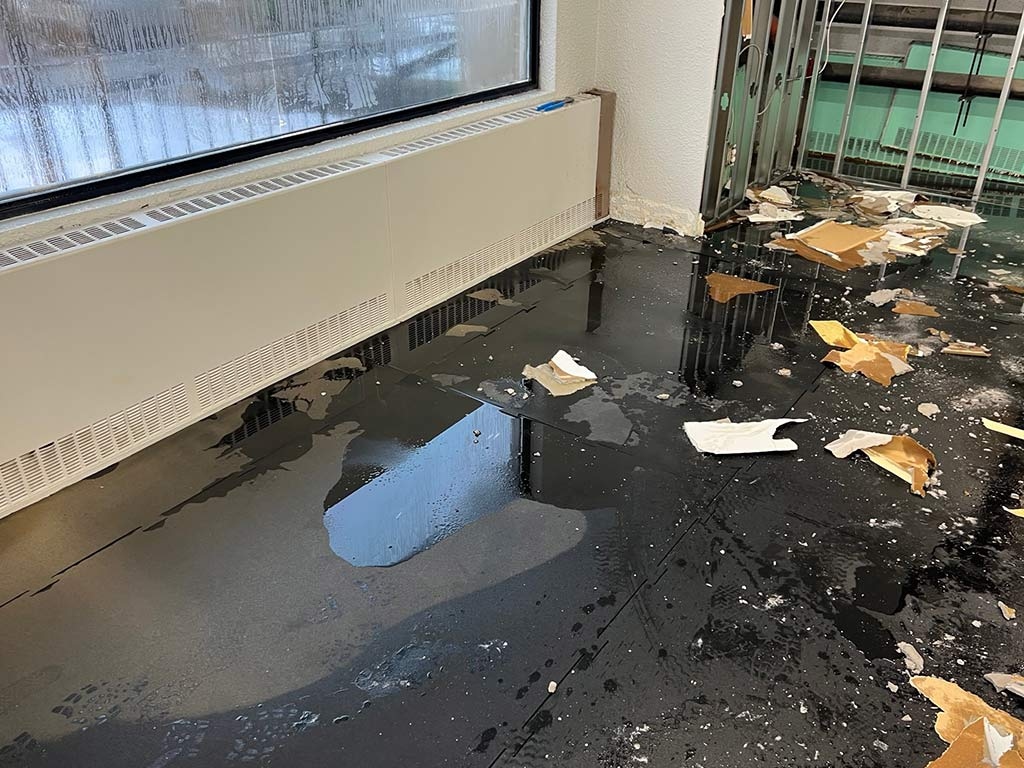

Specialized Equipment & Industrial Restoration Technology
Mitigating severe property damage requires industrial-grade technology capable of altering thermodynamic psychrometrics:
Truck-Mounted Extraction Rigs
31-HP engines producing 16+ inches Hg vacuum suction to evacuate bulk water rapidly into holding tanks.
Low-Grain Refrigerant Dryers
Pre-cooling heat-pipe systems driving ambient grains per pound below 25 GPP to draw deep trapped water out of framing.
HEPA Negative-Air Scrubbers
Hospital-grade 99.97% particulate filtration capturing microscopic fungal spores, soot, and biohazard aerosols.
FLIR® Thermal Scanners & Probes
Infrared thermography detecting evaporative cooling boundaries behind walls, combined with digital RF pinless scanners.
Professional Restoration vs. DIY Mitigation
Attempting DIY cleanup during a property disaster creates severe hidden liabilities:
- Trapped Moisture: Surface drywall dries while moisture inside cavities triggers hidden mold blooms.
- Pathogenic Risks: Category 2 & 3 water contains bio-contaminants standard cleaners fail to kill.
- Insurance Denial: Insurers require daily psychrometric logs; lack of data causes claim disputes.
Transparent Upfront Itemized Pricing
Valley Restoration Pros operates with complete transparency:
- Free On-Site Assessment: Complete physical inspection before work begins.
- Upfront Itemized Estimates: Detailed line items calculated via industry-standard Xactimate.
- Zero Surprise Billing: No hidden charges or unauthorized repairs.
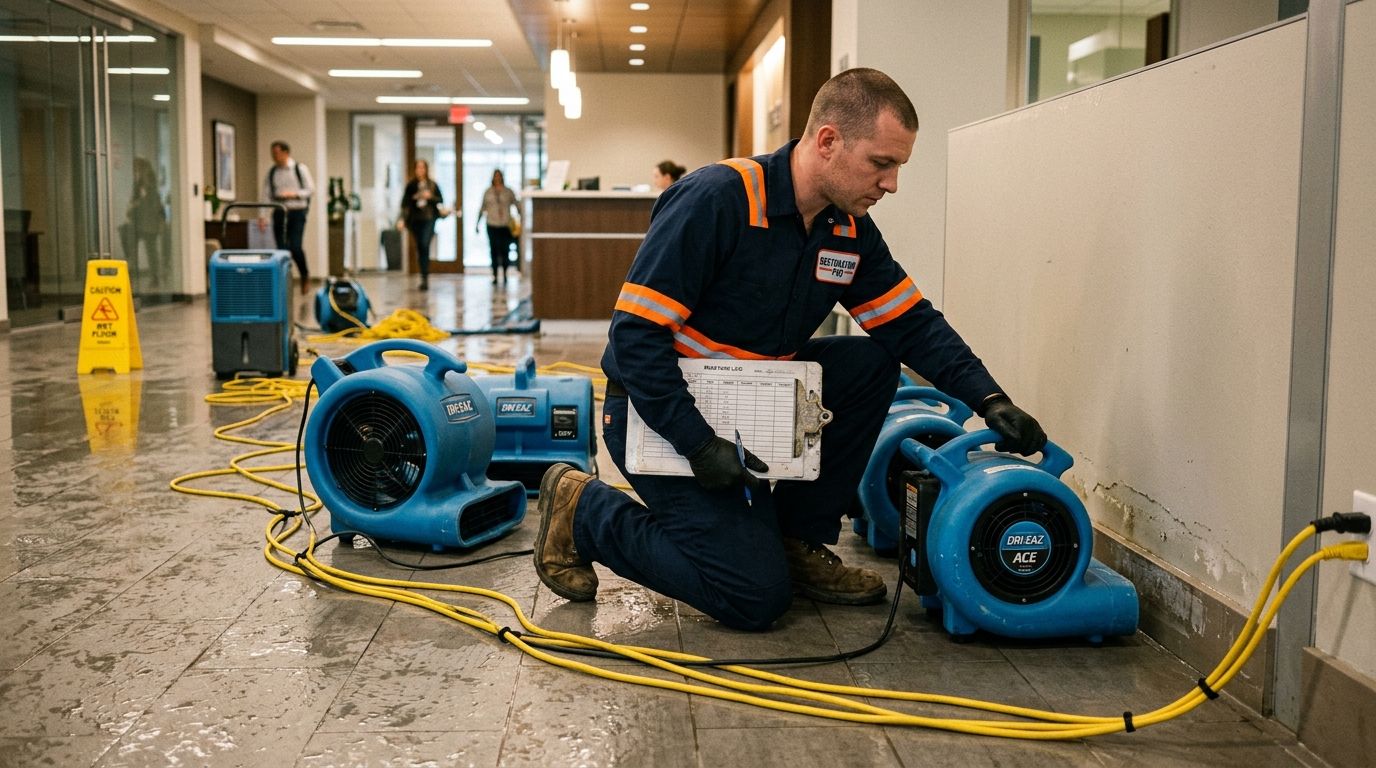
Certified Hotel Resort Pipe Burst Water Damage Phoenix Field Documentation
Every response performed by Valley Restoration Pros is documented through photographic and thermographic records:
Comprehensive Hotel Resort Pipe Burst Water Damage Phoenix Technical Manual & Operational Standards
Exhaustive engineering protocols, psychrometric calculations, geological multipliers, and step-by-step restoration standards for Maricopa County properties:
Executive Emergency Abstract: Hospitality Pipe Bursts, Multi-Floor Riser Failures & Guest Asset Protection
Across Greater Phoenix and the world-renowned resort corridors of Scottsdale, Paradise Valley, and the Camelback Corridor, commercial hospitality properties represent magnificent architectural showpieces engineered to deliver uncompromised guest experiences. However, full-service luxury hotels, desert conference resorts, and boutique extended-stay properties house vast, high-pressure plumbing infrastructures operating under continuous mechanical demand. When a pressurized domestic water riser, chilled water hydronic loop, or fire suppression main ruptures on an upper floor, thousands of gallons of water discharge within minutes, initiating an immediate multi-million-dollar operational and structural crisis.
Unlike residential flooding incidents, a commercial hospitality pipe burst triggers an immediate cascade across vertical utility shafts, guest room plumbing walls, and elevator hoistways. Saturated water plunges through post-tension concrete deck sleeves, flooding stacked guest suites, public corridors, and high-value common facilities such as grand ballrooms, fine dining dining rooms, commercial kitchens, conference auditoriums, and atrium lobbies. In hospitality management, every room placed out of order directly degrades Revenue Per Available Room (RevPAR), jeopardizes high-value corporate event contracts, and threatens hard-won brand reputation.
Compounding the disaster, Phoenix commercial hospitality construction relies on specialized interior materials. Guest suite demising walls are commonly specified with heavy 5/8-inch Type X fire-rated gypsum board finished with Type II commercial vinyl wall coverings. These durable vinyl finishes function as complete vapor barriers that trap floodwater directly inside the wall cavities and steel stud framing. When combined with Phoenix's extreme summer ambient temperatures exceeding 115°F and the continuous chilled air conditioning of interior guest suites, trapped sub-wall moisture transforms guest room envelopes into hyper-active microbial incubation zones within 24 to 36 hours.
Furthermore, hotel management must balance urgent structural extraction with guest privacy, acoustic containment, and brand preservation. Operating noisy industrial machinery through primary guest lobbies or leaving messy demolition debris in view of vacationing travelers can trigger devastating social media backlash and contract penalties from corporate meeting planners. Mitigating a hospitality large-loss incident demands specialized industrial extraction machinery, high-volume trailer-mounted desiccant dehumidification systems, and non-invasive cavity drying equipment deployed under discrete staging protocols. Valley Restoration Pros specializes in emergency hospitality large-loss restoration, delivering rapid, whisper-quiet containment that stabilizes guest suites and common areas while keeping unaffected wings operational.
Immediate Hospitality Pipe Burst Emergency Directives
- Isolate Commercial Riser Isolation Valves Immediately: Instruct facility engineering to access the mechanical chase or basement plumbing manifold to close the quadrant isolation butterfly valve controlling the breached riser. Avoid shutting the entire facility main unless catastrophic flow directly threatens primary electrical switchgear or life safety systems.
- Recall and De-Energize Affected Elevator Banks: Pressurized water cascading down elevator hoistways presents severe electrocution and hydraulic fluid contamination hazards. Place affected elevator banks in emergency recall mode, park cabs on upper dry levels, and lock out traction hoist machinery immediately.
- De-Energize Flooded Guest Room Branch Circuits: Water flowing behind headwalls and vanity plumbing saturates 120V/277V lighting, refrigeration, and convenience circuits. Trip branch circuit breakers at floor distribution panels to prevent arc flash and electrical fire hazards.
- Initiate Discrete Guest Reassignment & Keycard Lockout: Coordinate with front desk operations to reassign guests from flooded suites to dry rooms or sister properties immediately. Deactivate keycards for affected rooms to prevent guests from entering wet areas where slip-and-fall liabilities are extreme.
- Mobilize Valley Restoration Pros Commercial Large-Loss Unit: Contact Marcus Vance and our commercial emergency operations dispatch center immediately at (602) 847-9593. Our industrial teams arrive within 30 minutes with self-powered extraction rigs, desiccant trailers, and certified master restorers.
Anatomy of Commercial Hospitality Pipe Failures: Vertical Hydrostatic Head, Water Hammer & Thermal Fatigue
Modern multi-story hotels and resort properties utilize complex closed-loop hydronic systems, pressurized domestic hot and cold potable risers, and dedicated fire suppression networks. Operating continuously under 75 to 125 PSI distribution pressure, these piping networks are subject to intense hydrodynamic and thermal stresses. Understanding the physical failure mechanisms allows hotel general managers, chief engineers, and risk officers to quickly diagnose breaches and mitigate structural consequences:
Multi-Story Riser Expansion Joint Failure
Domestic hot water risers traversing 4 to 15 stories expand and contract continuously due to temperature swings between 120°F and 140°F. When elastomeric bellows or slip-type expansion joints fatigue or bind from mineral deposits, thermal expansion forces shear soldered copper tees or flanged couplings, releasing hundreds of gallons per minute into wall cavities.
Flushometer & Solenoid Water Hammer Shock
Commercial flushometers, fast-closing motorized laundry valves, and commercial dishwashers create severe hydraulic shockwaves known as water hammer. These pressure spikes frequently exceed 250 PSI, rupturing aged copper elbow fittings, weakening soldered joints, and shattering unbraced CPVC piping sections inside drywall sound-isolation chases.
Fan Coil Unit (FCU) Condensate & Supply Rupture
In-ceiling guest room fan coil units utilize chilled water loops operating at 42°F to 45°F. Heavy condensation, combined with mineral scale blockages in uninsulated drain pans or corroded copper run-outs, causes pans to overflow into decorative drop ceilings, triggering progressive ceiling collapses over guest beds and workstations.
Vertical Chase Cascades & Floor Penetrations
Once water escapes an upper-floor line, gravity directs the volume downward through firestop penetrations, conduit sleeves, and plumbing core holes. A single pipe burst on the 5th floor can inundate 20 to 30 guest rooms beneath it, saturating corridor carpet runners and weeping through acoustic ceilings down to ground-level administrative suites.
Commercial Laundry & Boiler Deluges
Hospitality laundry facilities utilize massive 100-pound commercial washer-extractors and 180°F boiler feed loops. High-pressure steam or hot-water supply line fractures in basement or back-of-house mechanical spaces flood service corridors with Category 2 graywater, compromising laundry linen supplies and food service loading docks.
When a hospitality plumbing riser ruptures, immediate extraction is required to halt vertical migration. If pressurized lines rupture inside walls, property managers can review our dedicated procedures for burst pipe repair and high-velocity emergency water extraction across multi-story buildings.
Additionally, commercial chiller networks and central mechanical plants present massive flood hazards in hospitality properties. To understand mechanical cooling loop failures, inspect our technical breakdown on commercial chiller pipe flood restoration for industrial central plant operations.
Phoenix Hospitality Environmental Multipliers: 18 GPG Scale, Post-Tension Slabs & 115°F Desert Incubation
Restoring commercial hotel and luxury resort properties across the Phoenix metropolitan basin requires mastering regional environmental forces that dramatically accelerate structural decay. Standard restoration techniques developed for temperate zones fail to account for the acute physical dynamics of the Sonoran Desert:
1. 18–25 GPG Extreme Water Hardness & Commercial Scale Deposition
Municipal water supplied by the Salt River Project (SRP) and Central Arizona Project (CAP) carries extraordinary mineral concentrations, ranging from 18 to upwards of 25 grains per gallon (GPG) of dissolved calcium carbonate and magnesium. In commercial hospitality properties operating large commercial boilers, laundry wash wheels, and high-temp dishwashing systems, this mineral load causes severe calcification.
Scale accumulation coats pipe interiors, reducing effective lumen diameters and creating turbulent friction eddies. Over time, velocity wear combined with hard water corrosion causes microscopic pitting along copper tube walls, culminating in abrupt pinhole bursts. For an exhaustive analysis of copper degradation, review our technical manual on copper pipe pinhole leak water damage phoenix dynamics.
2. Monolithic Post-Tension Decks & Interstitial Slab Moisture Trapping
Modern multi-story hospitality buildings across Phoenix and Scottsdale rely on unbonded post-tension concrete floor decks. When water cascades onto post-tension decks, it cannot soak downward through porous subflooring. Instead, it travels horizontally across massive floor plates, finding structural sleeves, expansion joints, and conduit runs.
Water seeps under decorative ceramic tile, luxury vinyl tile (LVT), and commercial broadloom carpeting. Trapped beneath impermeable flooring substrates and post-tension slabs, deep capillary moisture remains indefinitely unless extracted using positive-pressure desiccant airflow. To review complete drying methodologies for building foundations and floor slabs, explore our resource on structural drying protocols.
3. 115°F Desert Ambient Heat & Accelerated Fungal Proliferation Behind Vinyl Wall Coverings
During Phoenix summer heatwaves with temperatures hovering between 110°F and 118°F, building envelopes operate under intense thermodynamic gradients. Inside air conditioned guest rooms chilled to 68°F, high exterior ambient vapor pressure drives moisture toward the interior. When a pipe leak floods the wall cavity, this high thermal energy creates an ideal biological growth incubator.
Commercial Type II vinyl wall coverings prevent inward moisture evaporation. Drywall paper, paste adhesives, and standing water stew in complete darkness at elevated temperatures. Microscopic fungal spores—such as Aspergillus niger and Penicillium—colonize the cavity within 24 to 36 hours. Prompt containment through certified mold remediation is mandatory to protect indoor environmental air quality and guest health.
First-Hour Emergency Hospitality Procedures: Discrete Staging & Revenue Preservation
The initial sixty minutes of a major hospitality water disaster determine whether damage remains an isolated engineering setback or escalates into a catastrophic multi-million-dollar operational shutdown. Chief engineers, risk managers, and general managers must execute disciplined emergency stabilization procedures:
Critical 60-Minute Hospitality Disaster Action Framework
- Deploy Floor-by-Floor Hospitality Riser Lockout: Building maintenance personnel must immediately verify riser drawings and close quadrant isolation valves. If fire sprinkler lines are triggered, notify local fire dispatch and close the post-indicator valve (PIV) only after life safety confirmation. For fire system discharges, see our specialized fire sprinkler water damage cleanup protocol.
- Establish Discrete Guest Rerouting & Keycard Deactivation: Coordinate with the front desk to reassign guests from flooded suites to dry rooms or sister properties. Deactivate keycards for affected rooms to prevent guests from entering hazardous, wet areas where slip-and-fall liabilities are extreme.
- Protect Elevator Hoistways & Mechanical Rooms: Build sandbag and absorbent diversion berms at elevator landings on flooded floors to keep cascading water out of elevator shafts. Water entering elevator pits requires immediate industrial intervention under our specialized elevator pit water extraction phoenix procedures.
- Implement Discrete Service Corridor Staging: Position restoration equipment, lay-flat ducting, and power distribution cords through service elevators and back-of-house corridors. Avoid running equipment through guest lobbies or public restaurant areas to maintain property dignity and guest comfort.
- Initiate Emergency Extraction Dispatch: Mobilize Valley Restoration Pros at (602) 847-9593. Our large-loss commercial division arrives equipped with trailer desiccant dehumidifiers, Rover extraction units, and containment systems designed for quiet, rapid deployment.
For commercial properties encompassing full-service dining, conference facilities, or commercial kitchens, water leaks often cross into food service operations. In those situations, review our emergency procedures for commercial kitchen blackwater damage restoration and broad commercial recovery under our commercial water damage program.
Advanced Industrial Restoration Fleet Deployed for Commercial Hospitality Large-Loss
Hospitality water mitigation cannot be accomplished with light residential equipment. Mitigating 50,000 square feet of multi-floor saturation requires immense CFM airflow capacity, high-tonnage moisture extraction, and whisper-quiet operation. Valley Restoration Pros deploys the most sophisticated commercial fleet in Arizona:
Trailer-Mounted Desiccant Dehumidifiers (5,000–9,000 CFM)
Self-powered desiccant trailers deliver massive volumes of dry air with single-digit relative humidity and dewpoints below 10°F. Parked discretely at service docks, they pump desiccated air through temporary external risers up into guest corridors without consuming building power.
Capacity: Up to 9,000 CFM / Ultra-Low DewpointRover HVE High-Volume Ride-On Extraction Extractors
Equipped with motorized roller heads and intense sub-surface vacuum shoes, these commercial units apply body-weight compression to extract up to 90% of free water from commercial carpet runners and padding in a single pass, slashing drying times in half.
Extraction Rate: Up to 1,200 Sq Ft / HourInjectidry High-Pressure Cavity Desiccation Systems
To preserve expensive architectural millwork and Type II vinyl wall coverings, Injectidry systems force heated, desiccated air through tiny 1/4-inch perforations drilled beneath baseboards, drying wall cavities without tearing out custom finishes.
Non-Invasive: Saves 95% of Custom Wall FinishesFLIR T1020 HD Infrared Thermal Radiometers
High-definition thermal radiometers detect evaporative cooling patterns behind marble bathrooms, elevator shafts, and ceiling drops. Our thermographers map the full boundary of moisture intrusion across guest suites without invasive structural cutting.
Resolution: 1024 x 768 HD Thermal MappingTo understand our complete range of specialized commercial drying machinery, review our comprehensive specifications for structural drying across corporate and hospitality complexes.
When blackwater or wastewater backups contaminate hospitality facilities through sewer lines or failed kitchen grease traps, we deploy hospital-grade bio-sanitizers detailed in our sewage cleanup protocols.
IICRC S500 / S520 Certified Hospitality Restoration Protocol: 6-Stage Turnaround Methodology
Hospitality restoration demands a rigorous scientific approach that aligns with IICRC S500 Standard for Professional Water Damage Restoration and S520 Standard for Professional Mold Remediation. Valley Restoration Pros implements a disciplined six-stage turnaround protocol engineered to return rooms to service safely and swiftly:
Stage 1: Multi-Floor Psychrometric Triage & Thermal Mapping
Our master restorers deploy FLIR thermal imagers and non-penetrating dielectric moisture meters across all potentially affected guest rooms, corridors, and service chases. We establish baseline ambient temperature, relative humidity, and specific humidity measured in Grains Per Pound (GPP). Rooms are categorized into immediate priority sectors to sequence mitigation efficiently and accurately track drying trajectories.
Stage 2: High-Volume Sub-Surface Extraction
Deploying truck-mounted and ride-on vacuum extractors, crews eliminate standing surface water from corridors and guest suites. Sub-surface weighted extraction wands pull trapped water out of commercial broadloom carpeting and underlayments, removing up to 90% of water volume before dynamic evaporation begins, radically accelerating the timeline toward dry standards.
Stage 3: Discrete Containment & HEPA Negative Air Scrubbing
Corridor fire doors and zipless magnetic isolation barriers partition wet wings from active guest floors. Commercial HEPA air filtration scrubbers establish continuous negative air pressure, capturing dust, microbial particulates, and odor compounds while preventing cross-contamination to operational wings where guests reside.
Stage 4: Industrial Desiccant Dehumidification & Wall Cavity Injection
High-capacity desiccant trailers deliver ultra-dry air through temporary distribution trunks into guest rooms. Injectidry systems route positive-pressure dry air directly into wall chases behind vinyl wallcoverings and millwork, rapidly driving moisture out without requiring destructive drywall demolition or finish removal.
Stage 5: Hospital-Grade Antimicrobial Sanitization
Technicians treat exposed framing, subflooring, and concrete slabs with EPA-registered botanical antimicrobials (Benefect Decon 30). This eliminates bacterial growth, neutralizes damp odors, and ensures full hygiene clearance without leaving synthetic chemical residues that could offend sensitive guests.
Stage 6: Psychrometric Clearance & Rapid Room Release
Using pin and pinless moisture meters calibrated to dry standards, we record comprehensive readings on all wood studs, drywall, and subflooring. Once psychrometric equilibrium is verified and documented, the room is released back to housekeeping for fast re-occupancy.
In luxury resort settings featuring bespoke wood floors in ballrooms, suites, or fine dining restaurants, specialized desiccation mats are utilized. Learn more about our preservation techniques in our hardwood floor water damage drying section.
If water cascaded through ceiling plenums and damaged architectural gypsum plaster, consult our restoration playbook on ceiling water damage restoration for commercial structures.
Hyper-Local Commercial Case Study: 6-Story Camelback Corridor Luxury Resort Domestic Riser Rupture
Overnight Riser Burst: Saving $340,000 in Custom Millwork & Averting Conference Cancellation
At 2:15 AM on a July morning with outside temperatures holding at 94°F, a 2.5-inch domestic hot water copper riser connection ruptured on the 5th floor of a premier luxury resort along the Camelback Corridor. Operating under 95 PSI supply pressure, scalding 130°F water discharged into the vertical utility chase for 38 minutes before overnight engineering isolated the section. By that time, over 3,200 gallons had cascaded through floor sleeves, inundating 24 luxury guest suites, adjacent guest corridors, and the ceiling of a 4,500-square-foot ballroom directly below.
With a 500-attendee national medical convention scheduled to arrive within 72 hours, the resort management team faced total event cancellation, estimated at over $480,000 in lost food, beverage, and room revenues. Valley Restoration Pros was dispatched immediately, arriving on-site in 26 minutes with three commercial mitigation crews, a 7,000 CFM trailer desiccant dehumidifier, and Rover extraction units.
Technical Metrics & Drying Milestones
- Baseline Psychrometrics: Ambient guest suite air: 84°F, 88% Relative Humidity, 156 GPP. Drywall moisture content behind vinyl wall coverings: 99.9% saturated (pegged scale).
- Sub-Surface Extraction: Rover units extracted 2,400+ gallons from broadloom carpet and corridor underlayment within the first 3 hours.
- Desiccant Deployment: Lay-flat ducting was hoisted up the building exterior, delivering 7,000 CFM of 8% RH air at 32 GPP into guest corridors.
- Non-Invasive Cavity Drying: Injectidry systems dried wall cavities through unobtrusive baseboard micro-perforations, preserving $340,000 in custom cherry headwalls and Type II vinyl wallpaper.
- Final Clearance: Within 56 hours, all 24 suites achieved dry standard (drywall moisture content <12%, wood studs <14%, ambient air 42 GPP). Housekeeping sanitized rooms, and the medical conference proceeded without disruption.
This case study demonstrates the power of rapid commercial desiccant mobilization. Valley Restoration Pros provides identical 30-minute rapid response across all East Valley resort hubs, including our localized operations for Scottsdale water damage and Phoenix water damage hospitality commercial accounts.
Commercial Financial Integrity: Transparent Estimates & Insurance Claims Support
Commercial hospitality water losses involve intricate property claims and extensive business interruption filings. Hotel owners, asset managers, and management companies require transparent billing and rigorous documentation to satisfy forensic insurance adjusters. Valley Restoration Pros strictly adheres to honest pricing standards:
Commercial On-Site Damage Assessment
Our commercial project directors conduct thorough multi-floor thermal imaging and psychrometric moisture mapping at zero charge or obligation before work commences.
Transparent Itemized Pricing Schedules
Prior to connecting desiccant trailers or deploying extraction equipment, we deliver an itemized line-by-line estimate to property management. No hidden charges or unexpected fees.
Industry Standard Commercial Codes
All extraction passes, drying equipment hours, and containment materials are billed using standard Xactimate® pricing codes recognized by all commercial insurance carriers.
Commercial Claims Compliance & Zero Billing Promises Notice
Valley Restoration Pros does not make unlawful promises that "insurance will cover 100% of all expenses without deductible" or that property owners bear no financial responsibility. Commercial policies involve complex deductibles, sub-limits, and co-insurance provisions. We partner directly with your commercial property adjuster, delivering time-stamped psychrometric logs, moisture maps, and photo logs to substantiate every line item.
To calculate preliminary restoration expense projections based on affected guest suite square footage and damage classification, utilize our interactive free on-site assessment tool.
Frequently Asked Technical Questions: Hospitality Water Damage & Riser Burst Restoration
Yes. Valley Restoration Pros specializes in discrete hospitality containment. We seal off affected corridors using magnetic zipless containment barriers and negative-pressure HEPA filtration scrubbers. All desiccant equipment and generators remain outdoors at service docks, with lay-flat ducting routed through back-of-house service elevators. Unaffected wings remain quiet, fully operational, and undisturbed by mitigation activities.
Commercial vinyl wallpaper is non-porous and acts as a vapor barrier. Rather than tearing down thousands of dollars in designer wall finishes, our technicians carefully detach baseboards and drill small 1/4-inch injection holes through the drywall baseplate. Using Injectidry systems, we force desiccated air directly through the wall cavities, purging moisture through return perforations. Once dry, baseboards are re-installed, completely concealing all access points.
In the Phoenix summer climate where temperatures exceed 110°F, trapped water behind vinyl wallcoverings creates an active incubation environment within 24 to 36 hours. Fungal species like Aspergillus and Penicillium flourish on wet drywall paper and organic paste adhesives. Rapid deployment of industrial desiccant dehumidifiers to drop relative humidity below 50% within the first 12 hours is vital to halt biological reproduction.
Immediately place the elevator cars on emergency recall to an upper dry floor and lock out main electrical power. Never operate elevator cabs through a flooded hoistway. Water shorts traveling cables, corrodes door interlocks, and pools in the elevator pit where it contaminates hydraulic systems. Valley Restoration Pros deploys certified confined-space extraction units to dewater elevator pits and desiccate hoistway structures.
If the flood originates from a clean potable domestic water riser (Category 1) and mitigation commences within 24 hours, commercial broadloom carpet and attached cushion backing can frequently be salvaged in place. Using Rover weighted extraction extractors followed by high-velocity laminar airflow and industrial desiccant trailers, we remove moisture without carpet delamination or seam splitting.
We provide hotel general managers and forensic accountants with complete room-by-room moisture tracking logs, daily psychrometric charts, and exact room release timestamps. This detailed technical record correlates directly with your property management system (PMS) out-of-order room data to substantiate your business interruption and lost RevPAR claims with insurance adjusters.
Water traversing vertical chases easily enters electrical junction boxes and distribution panels. Circuits must be de-energized immediately. Once bulk water is removed, our technicians apply specialized dry air injection through conduit runs and conduct dielectric insulation testing alongside licensed commercial electricians before re-energizing branch circuits.
Fire sprinkler water has often remained stagnant inside black iron pipes for years, accumulating iron oxide sludge, sulfur bacteria, and dark foul-smelling residues (Category 2 graywater). In addition to high-capacity extraction and desiccation, our technicians apply EPA-registered antimicrobial washes and thermal fogging deodorization to eliminate foul odors and biohazard contaminants completely.
Guest personal belongings are handled under strict chain-of-custody protocols alongside hotel security personnel. Affected luggage, apparel, and electronics are inventoried, photographed, and relocated to secure climate-controlled holding areas. If items are damp, specialized commercial drying chambers gently dry textiles and luggage without thermal damage.
Yes, provided mitigation begins promptly. High-end solid hardwood headboards, nightstands, and credenzas are elevated on polystyrene blocks to halt capillary water absorption. We establish low-humidity drying chambers that slowly draw out moisture, preventing grain raising, checking, or finish blistering on valuable custom furnishings.
Valley Hospitality Emergency Dispatch Corridors: 30-Minute Rapid Response
When multi-story plumbing risers burst in commercial hospitality facilities, every minute of delay multiplies property loss and lost room revenues. Valley Restoration Pros maintains dedicated commercial response units strategically staged across key Maricopa County hospitality and tourism centers:
Camelback Corridor & Biltmore
Direct emergency dispatch along E Camelback Rd from 24th St through 44th St, serving premier resort properties and boutique business hotels with 20–30 minute on-site response.
Scottsdale Waterfront & Resort District
Serving luxury desert destination resorts throughout Old Town Scottsdale, Gainey Ranch, and North Scottsdale corridor through our dedicated Scottsdale water damage dispatch center.
Downtown Phoenix Convention Core
Providing high-capacity large-loss restoration to major convention center hotels, high-rise luxury towers, and historic properties throughout Central Avenue, Washington, and Jefferson corridors under our Phoenix water damage division.
Tempe Town Lake & Tech Basin
Immediate support for hospitality facilities serving ASU, university athletic venues, and technology headquarters through our Tempe water damage response teams.
We also maintain active restoration coverage across the East Valley, supporting hotel properties through our specialized teams for Mesa water damage and Chandler water damage commercial corridors. To view all municipalities we cover, visit our regional directory of areas we serve or contact us directly for priority dispatch.
Multi-Floor Vertical Chase Hydrology & Interstitial Plenum Water Migration
In commercial hotel design, plumbing risers, electrical conduits, and hydronic HVAC piping are bundled into vertical plumbing chases that penetrate reinforced concrete decks. When a pipe ruptures, the dynamics of vertical water migration create severe hidden structural hazards:
Mechanisms of Multi-Story Deluge Spread
Water escaping under pressure atomizes into a fine aerosol, saturating acoustic sound-deadening insulation and fire-rated drywall linings inside the chase. As gravity pulls the bulk volume downward, water pools atop post-tension concrete slabs at each floor level. If floor core firestops have shrunk, degraded, or were improperly caulked during construction, water shoots through sleeve perimeters, spreading out across the floor deck below.
This creates an inverted pyramid of water damage. A rupture on floor 7 might directly affect two suites on floor 7, four suites on floor 6, eight suites on floor 5, and twelve suites on floor 4, before cascading into public ballrooms or commercial kitchens on the ground floor. Locating every path of vertical migration requires systematic FLIR thermal imaging and dielectric testing on every level.
For commercial properties experiencing extensive overhead flooding from interstitial pipe bursts, review our technical standards for burst pipe repair and high-velocity desiccation.
Preserving Type II Commercial Vinyl Wall Coverings via Cavity Desiccation
Type II commercial vinyl wall coverings are the standard specification in luxury hotels, offering heavy resistance to scuffs, stains, and cleaning agents. However, from a building physics perspective, commercial vinyl acts as a vapor barrier with a perm rating of less than 0.5 perms. When interior wall cavities are saturated by pipe bursts, this barrier prevents normal evaporative drying:
The Danger of Traditional Demolition vs. Non-Invasive Desiccation
Traditional contractors immediately strip vinyl wallpaper and cut out drywall 2 to 4 feet up the wall. In a 200-room hotel, stripping vinyl wallcoverings across multiple floors triggers massive reconstruction costs, extended lead times for matching dye-lot wallpapers, and months of lost room revenues.
Valley Restoration Pros utilizes advanced cavity desiccation science. By removing rubber or wood baseboards and drilling 1/4-inch to 3/8-inch ports into the wall cavity base, our Injectidry systems force ultra-low dewpoint desiccant air directly through the wall cavities. The high-pressure airflow sweeps away the moisture boundary layer, desiccating drywall and steel studs from within. Once dry standards are reached, baseboards are reinstalled, completely covering the access ports and preserving expensive finishes.
To explore our non-invasive structural preservation methodologies, inspect our comprehensive protocols for structural drying across commercial properties.
Hospitality Flooring Substrate Desiccation: Carpets, Travertine & Parquet Dance Floors
Luxury resorts and convention hotels feature diverse high-end flooring assemblies, each presenting distinct thermodynamic evaporation characteristics and salvage tolerances:
Commercial Broadloom Corridor Carpet
Heavy hospitality carpets utilize dense nylon or wool face fibers bonded to synthetic jute or polyurethane backings. Using motorized Rover extraction units followed by high-static pressure desiccant air flow, we dry hundreds of linear feet of corridor carpet without seam puckering or delamination.
Natural Travertine & Marble Slabs
Guest bathroom vanities and lobby foyers utilize natural porous stones. Moisture penetrating beneath marble tiles creates severe efflorescence salt blooms and causes adhesive mortar failure. We deploy heat-assisted desiccant systems to safely pull subterranean moisture through porous stone pores.
Hardwood Ballrooms & Dance Floors
Resort ballrooms frequently incorporate floating tongue-and-groove maple or oak dance floors. Water intrusion causes immediate edge cupping and crowning. We deploy commercial negative-pressure desiccation floor mats, flattening cupped planks and saving hundreds of thousands of dollars in replacement costs.
For detailed technical data on drying exotic and commercial wood floors, review our specialized resource on hardwood floor water damage drying solutions.
Hospitality Plumbing Codes, PRV Regulations & Hydrodynamic Safeguards
Commercial hospitality properties must comply with the Uniform Plumbing Code (UPC), International Building Code (IBC), and local City of Phoenix and Maricopa County plumbing amendments. Following major pipe burst events, bringing facilities back into regulatory compliance requires addressing critical engineering parameters:
Pressure-Reducing Valve (PRV) Station Maintenance
High-rise hotel plumbing risers rely on staged PRV stations to step down extreme incoming municipal street pressure and vertical hydrostatic head. When hard water mineral scale fouls PRV pilot diaphragms, downstream domestic pressures can spike above 120 PSI, blowing out flexible faucet connectors and flushometer seals. Regular PRV testing and dual-redundant valve banks are critical to building integrity.
Automated Seismic & Ultrasonic Riser Shutoff Integration
Modern hospitality risk management standards recommend installing ultrasonic flow meters tied directly to the building automation system (BAS). If anomalous continuous flow exceeding baseline capacity is detected during off-peak hours, motorized riser shutoff valves automatically trip closed, limiting water loss to dozens of gallons rather than tens of thousands.
Psychrometric Science: Vapor Pressure Gradients & Accelerated Turnaround Metrics
The speed of commercial hospitality restoration is governed strictly by psychrometric thermodynamics. In the context of large-loss water mitigation, our certified master restorers manipulate vapor pressure differentials to maximize the rate of moisture evaporation from structural building components:
Maximizing the Evaporative Vapor Pressure Deficit
Evaporation is driven by the difference between the vapor pressure within wet materials and the vapor pressure of the surrounding ambient air. By continuously supplying dry desiccant air at less than 30 Grains Per Pound (GPP), we depress ambient vapor pressure down to 0.15 PSI, while the saturated building components maintain a internal vapor pressure of 0.85 PSI.
This intense vapor pressure gradient pulls water molecules out of dense wood studs, concrete slab pores, and gypsum boards at maximum thermodynamic speed. Real-time psychrometric monitoring logs grain depression across every containment zone, proving that materials are drying safely toward dry standard baselines.
When hospitality pipe bursts threaten operations, partner with Phoenix's leading commercial restoration authorities. Contact Marcus Vance and our commercial emergency division 24/7 at (602) 847-9593 or contact us online for immediate commercial mobilization.
Commercial Hospitality Business Interruption Management & Forensic Documentation
Beyond direct physical damages to building assemblies and furnishings, a major pipe burst in a hotel or luxury resort triggers severe secondary financial exposures. Business interruption (BI) and extra expense (EE) insurance claims require an extraordinary standard of forensic documentation to satisfy commercial claims adjusters, forensic accountants, and corporate risk officers:
Synchronized PMS Moisture Audits & RevPAR Substantiation
Insurance carriers frequently dispute the duration of out-of-order room status, arguing that rooms could have been released earlier or that room closures were unnecessary. Valley Restoration Pros solves this challenge by maintaining synchronized daily psychrometric logs tied directly to room numbers in your Property Management System (PMS) such as Opera or Maestro.
Every morning and evening, our lead technicians record time-stamped digital readings: relative humidity, ambient temperature, Grains Per Pound (GPP), and moisture content percentages of drywall, baseplates, and concrete subfloors. When rooms reach established dry standards, we issue a formal Certificate of Complete Desiccation signed by an IICRC Certified Master Restorer. This incontrovertible forensic record proves exactly when each room was unavailable, supporting full indemnity recovery for lost room revenues, food and beverage losses, and extra convention relocation expenses.
Protecting Online Brand Reputation & Guest Relations
In today's digital hospitality environment, a single disgruntled traveler posting video footage of flooded hallways or noisy equipment on social media or travel review platforms can inflict lasting damage on property valuation. Our discreet restoration protocols, branded magnetic containment walls, and whisper-quiet desiccant configurations protect your brand identity, allowing your team to maintain exceptional guest loyalty throughout the emergency.
Verified Local Area Dispatch: Phoenix, AZ
Official Geo-Coordinates: 33.4484° N, -112.074° W • Maricopa County
Related Specialized Emergency Restoration Services
Explore specialized rapid-response mitigation protocols across Greater Phoenix and Maricopa County:
Valley-Wide Emergency Response Service Coverage
Our mobile restoration fleet is dispatched across the entire Phoenix metropolitan region, providing rapid 30 to 60 minute emergency response: