

Valley Restoration Pros delivers 24/7 industrial emergency water extraction, thermal psychrometric drying, and structural mitigation across Phoenix and Maricopa County with guaranteed 30–60 minute rapid arrival. All protocols strictly adhere to IICRC S500 standards, featuring upfront itemized pricing and free on-site thermal moisture assessments. Call dispatch directly at (602) 847-9593.
Why Immediate Mitigation Is Critical in Phoenix Heat
Service Definition & The IICRC Standard of Care
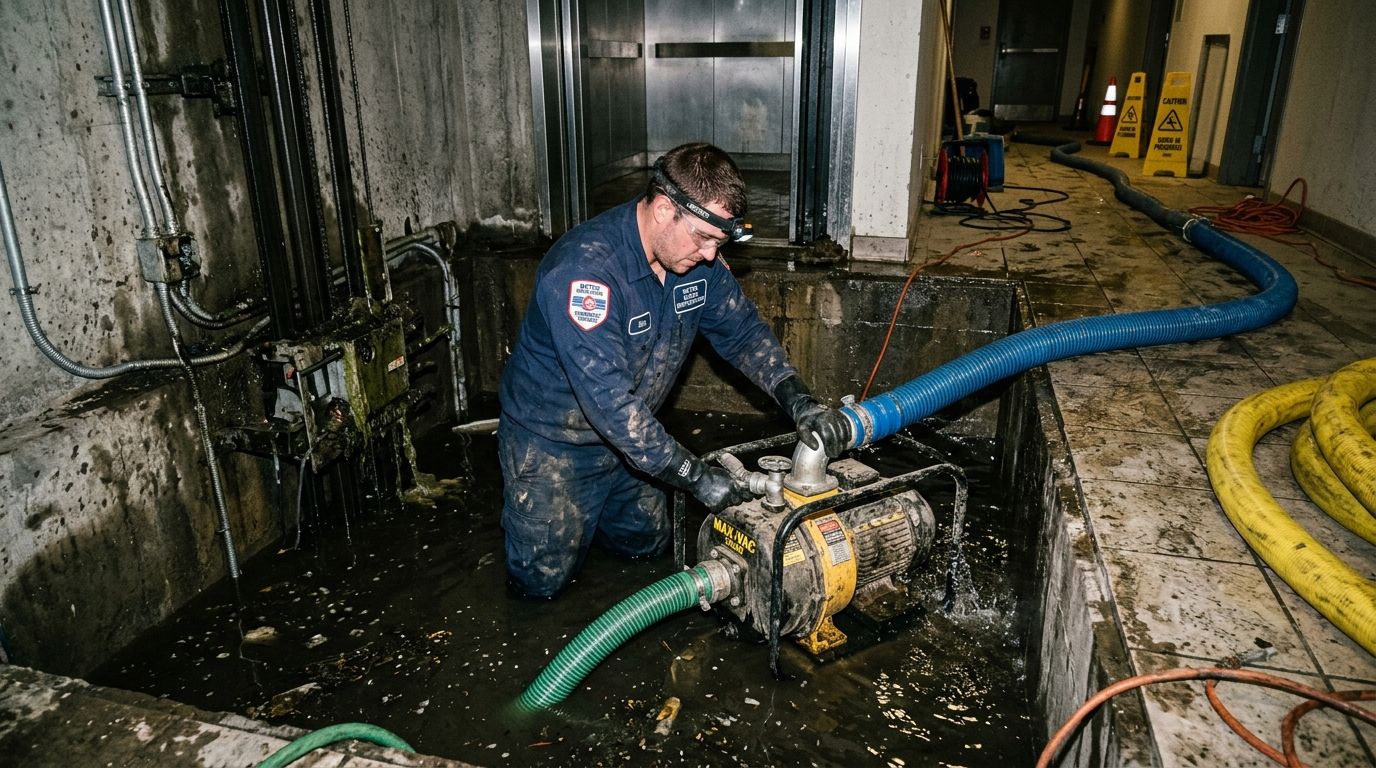
Professional peoria commercial auto dealership subterranean service pit dewatering is an engineering and environmental discipline adhering strictly to IICRC S500 protocols, not mere surface mopping. When structural plumbing failures strike in Maricopa County, certified emergency water extraction and thermal structural drying procedures must be deployed immediately. Whether triggered by high-pressure burst pipe emergencies, subfloor leaks, or commercial line ruptures, bound moisture rapidly penetrates concrete subfloors and wall framing. In the desert heat, delays trigger microbial proliferation requiring rapid mold remediation. Request damage assessment through our emergency assessment portal or request 30-minute dispatch across all Valley service areas.
Securing electrical feeds, inspecting load-bearing assemblies, and containing pathogens.
Stopping the intrusion source and erecting 6-mil plastic isolation containment airlocks.
31-HP truck-mount extraction, removing gallons exponentially faster than evaporation.
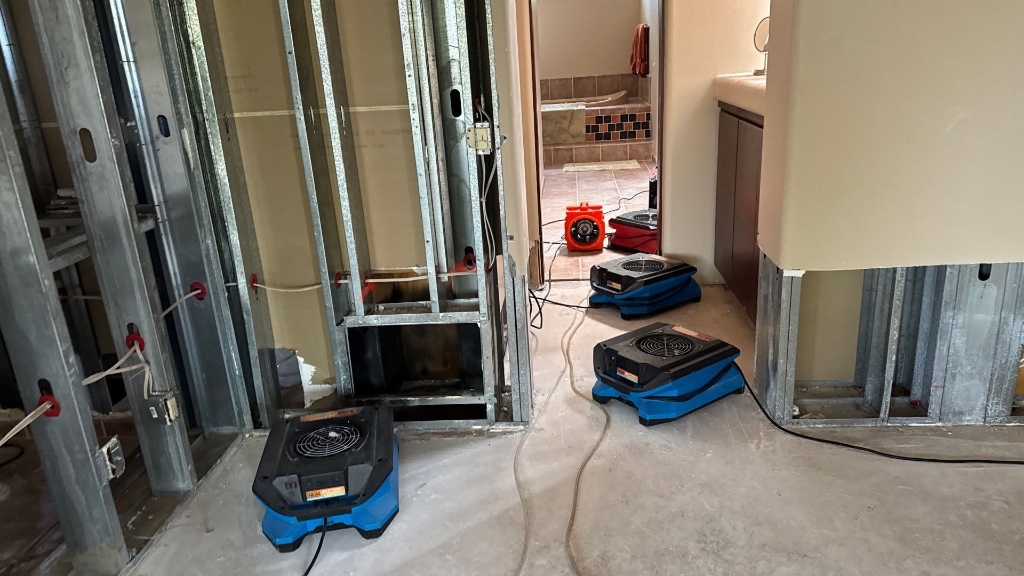
LGR dehumidifiers and HEPA air scrubbers driving grains per pound below 25 GPP.
Calibrated electronic pinless testing confirming baseline dry standards.
The Complete 6-Stage Restoration Roadmap
Our IICRC-certified crews execute a disciplined, scientific 6-stage protocol to stabilize and dry structural components:
Emergency Dispatch & Perimeter Isolation
30 to 60 minute arrival. Securing electrical shutoffs, evaluating structural loads, and erecting containment airlocks.
FLIR® Thermal Mapping & Baseline Scans
Infrared thermal scans detect trapped moisture behind walls and beneath concrete without invasive exploratory demolition.
High-Volume Bulk Extraction
31-HP truck-mount extraction units pump standing water away at hundreds of gallons per minute.
Controlled Selective Demolition
Precision flood cuts 12 to 24 inches above moisture lines, removing wet insulation and opening wall framing to dry airflow.
Thermodynamic Dehumidification
Industrial Low-Grain Refrigerant dehumidifiers pull deep trapped moisture from dense framing lumber and concrete slabs.
Antimicrobial Sanitization & Verification
EPA-registered botanical application (Benefect Decon 30) and calibrated moisture testing to issue an official dry certificate.

Specialized Equipment & Industrial Restoration Technology
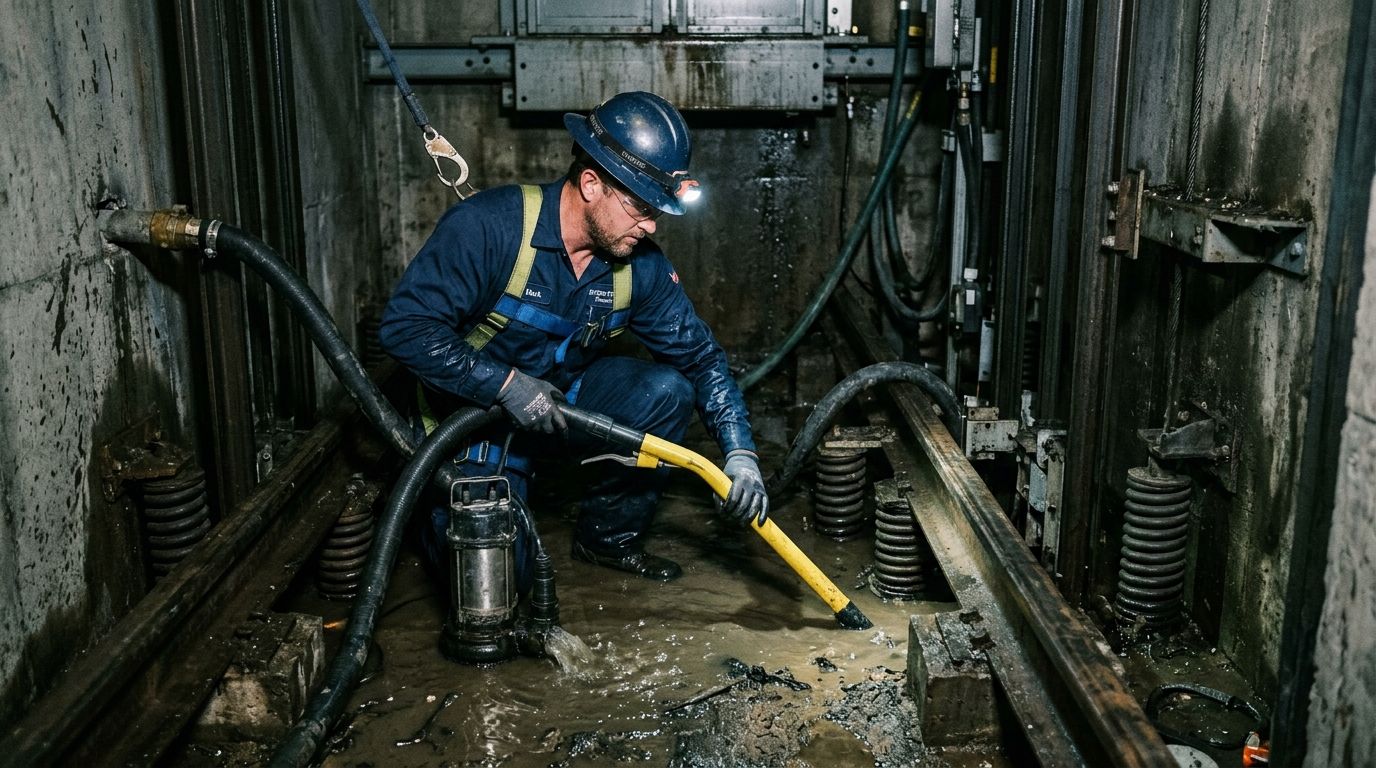
Mitigating severe property damage requires industrial-grade technology capable of altering thermodynamic psychrometrics:
Truck-Mounted Extraction Rigs
31-HP engines producing 16+ inches Hg vacuum suction to evacuate bulk water rapidly into holding tanks.
Low-Grain Refrigerant Dryers
Pre-cooling heat-pipe systems driving ambient grains per pound below 25 GPP to draw deep trapped water out of framing.
HEPA Negative-Air Scrubbers
Hospital-grade 99.97% particulate filtration capturing microscopic fungal spores, soot, and biohazard aerosols.
FLIR® Thermal Scanners & Probes
Infrared thermography detecting evaporative cooling boundaries behind walls, combined with digital RF pinless scanners.
Professional Restoration vs. DIY Mitigation
Attempting DIY cleanup during a property disaster creates severe hidden liabilities:
- Trapped Moisture: Surface drywall dries while moisture inside cavities triggers hidden mold blooms.
- Pathogenic Risks: Category 2 & 3 water contains bio-contaminants standard cleaners fail to kill.
- Insurance Denial: Insurers require daily psychrometric logs; lack of data causes claim disputes.
Transparent Upfront Itemized Pricing
Valley Restoration Pros operates with complete transparency:
- Free On-Site Assessment: Complete physical inspection before work begins.
- Upfront Itemized Estimates: Detailed line items calculated via industry-standard Xactimate.
- Zero Surprise Billing: No hidden charges or unauthorized repairs.
Certified peoria commercial auto dealership subterranean service pit dewatering Field Documentation
Every response performed by Valley Restoration Pros is documented through photographic and thermographic records:
Comprehensive peoria commercial auto dealership subterranean service pit dewatering Technical Manual & Operational Standards
Exhaustive engineering protocols, psychrometric calculations, geological multipliers, and step-by-step restoration standards for Maricopa County properties:
Executive Emergency Abstract: Commercial Automotive Dealership Subterranean Service Pit Dewatering in Peoria Arizona
Modern franchised automotive dealerships, independent fleet maintenance centers, and express quick-lube facilities located throughout Peoria represent high-capital commercial facilities operating continuous vehicle throughput. Prominently clustered along the dense Bell Road Automotive Mile—spanning West Bell Road between 75th Avenue, 83rd Avenue, and 91st Avenue directly adjacent to the Loop 101 Agua Fria Freeway and the Arrowhead commercial hub—these expansive multi-acre facilities rely on specialized subterranean service trenches. These below-grade concrete pits, frequently extending 80 to 140 linear feet beneath active service bays, house critical subterranean operations including in-ground hydraulic vehicle lifts, heavy-duty pneumatic lubrication supply lines (delivering motor oils, transmission fluids, differential gear lubricants, and ethylene glycol coolant), compressed air distribution systems, electrical control panels, and underground gravity oil-water interceptors.
When an unpredicted catastrophic water intrusion event strikes an automotive service facility—such as a monsoonal cloudburst overwhelming exterior retention basins, severe municipal storm sewer backflow along the Bell Road commercial corridor, or mechanical failure of dedicated pit sump pump duplex assemblies—the subterranean service trench acts as an unintended catchment basin. Torrential surface runoff cascades across exterior parking aprons, breaches overhead bay doors, and discharges down pit stairwells, completely inundating subterranean trenches within minutes. Floodwaters rapidly rise to depths of three to six feet, fully submerging hydraulic scissor lift cylinders, electrical disconnects, high-pressure grease reels, air tool manifolds, and subterranean technicians' staging benches.
The immediate deployment of professional emergency water extraction is vital to prevent catastrophic property loss, permanent equipment destruction, and extreme environmental liability. Subterranean automotive service pit floodwater is never clean runoff; it instantly becomes an aggressive, hazardous slurry composed of motor oils, heavy petroleum hydrocarbons, transmission fluids, synthetic coolants, metal shavings, dissolved road salts, and stormwater silt. If allowed to stand, this hydrocarbon-laden blackwater emulsifies, penetrates porous concrete slab cold joints, saturates electrical conduits, corrodes precision hydraulic cylinder rams, and emits dangerous volatile organic compound (VOC) vapors that threaten entire service departments with toxic respiratory hazards and severe fire risk.
Furthermore, uncontained oily floodwaters present immense environmental regulatory liabilities. Under Maricopa County Environmental Services Department (MCESD) regulations, Arizona Department of Environmental Quality (ADEQ) mandates, and United States Environmental Protection Agency (EPA) Clean Water Act standards, contaminated industrial pit water cannot be pumped into municipal storm drains or sanitary sewer lines. Unlawful discharge incurs draconian financial penalties and emergency facility closures. Automotive dealership general managers, fixed operations directors, and corporate facilities directors must rely on certified industrial restoration specialists equipped with explosion-proof extraction pumps, mobile oil-water separation equipment, hazardous waste manifesting protocols, and trailer-mounted desiccant drying technology.
Valley Restoration Pros functions as the premier emergency commercial restoration contractor for franchised automotive dealerships, commercial truck fleets, and heavy equipment service hubs across Peoria, Glendale, Sun City, and the Northwest Valley. Our emergency response units maintain a guaranteed 20 to 30-minute on-site arrival window throughout the Peoria Bell Road commercial corridor, fully equipped with high-volume industrial extraction rigs, hazardous hydrocarbon phase separators, and certified industrial hygienist-approved drying protocols. In any emergency pit inundation crisis, dealership management must immediately contact our dedicated 24/7 commercial emergency dispatch division at (602) 847-9593 for rapid site stabilization and environmental containment.
Immediate Dealership Facility Incident Action Directives
- Emergency Electrical Lockout / Tagout (LOTO): Immediately trip and padlock main 480-volt 3-phase and 208-volt sub-panels supplying subterranean lighting, lift power units, sump pumps, and pit convenience receptacles to prevent catastrophic arc flash and electrocution.
- Atmospheric Hazard & Explosion Risk Evacuation: Immediately clear personnel from service bays above flooded pits; hydrocarbon floodwater mixed with summer desert heat generates explosive petroleum vapors exceeding OSHA Lower Explosive Limits (LEL).
- Containment Boom Deployment: Stage hydrophobic oil-absorbent booms around pit entrance aprons and perimeter catch basins to prevent surface petroleum slicks from escaping into municipal roadways or exterior retention basins.
- Pneumatic Supply Shutoff: Isolate main compressed air lines and bulk fluid distribution manifolds at the central compressor room to prevent high-pressure back-siphoning of contaminated slurry into pneumatic delivery lines.
- Mobilize Industrial Dewatering Units: Contact Valley Restoration Pros at (602) 847-9593 for immediate dispatch of explosion-proof pumping apparatus, phase-separating filtration skids, and EPA-compliant hazardous waste handling crews.
Anatomy of the Failure: Subterranean Trench Inundation & Hydrocarbon Oily Water Dynamics
Automotive service pits are specialized architectural structures engineered for rapid underneath-vehicle access without the structural overhead of full-height surface post lifts. Cast into reinforced concrete foundation slabs, these subterranean vaults vary in depth from 4.5 to 6.5 feet, with widths spanning 36 to 48 inches and continuous lengths often exceeding 120 linear feet across four to eight active service bays. While structurally resilient under compressive vehicle axle loads, subterranean service pits function hydrodynamically as deep inverted concrete channels. Because their floor slabs sit several feet beneath surrounding exterior grade levels, any uncontrolled surface deluge gravitates naturally toward these trenches, making them exceptionally vulnerable during major stormwater intrusions similar to those encountered in subterranean parking garage flood extraction operations.
The hydraulic mechanics of a service pit flood event generate severe compounding crises. When monsoonal surface runoff or storm sewer surcharge enters an automotive service facility, water rushes across the service drive and pours through grating openings and access stairwells. As water accumulates inside the trench, it creates intense hydrostatic pressure against the pit walls and floor. In standard dry operations, pit floors feature embedded catch basins connected to internal sump pump pits or gravity feed lines leading to an exterior oil-water separator. However, during torrential flooding, high water volume quickly exceeds the mechanical discharge capacity of 1/2-HP or 1-HP fractional submersible sump pumps. If electrical breakers trip or stormwater silt clogs the impeller volutes, pit water rises unchecked at rates exceeding 50 to 100 gallons per minute.
The true complexity of service pit flooding lies in the chemical transformation of the floodwater. Automotive pits constantly collect operational drips of motor oil, synthetic automatic transmission fluid, gear lubes, differential oils, hydraulic fluids, ethylene glycol antifreeze, and degreasing solvents. When thousands of gallons of turbulent stormwater flood the trench, these hydrocarbons detach from concrete floors, drip pans, and tool shelves, creating a complex multi-phase contaminant emulsion. This mixture cannot be treated as ordinary floodwater; according to IICRC S500 standards, it immediately classifies as severe category 3 blackwater decontamination combined with hazardous industrial chemical contamination.
Hydrocarbon fluids exhibit specific gravities ranging from 0.82 to 0.92, causing un-emulsified free oils to form an impermeable petroleum sheen across the water surface. Meanwhile, mechanical agitation from rushing floodwaters and running pump impellers creates emulsified oils suspended within the water column. This chemical slurry coats every submerged mechanical assembly. As water levels rise above the floor, it inundates hydraulic scissor lift mechanism assemblies. Ground-level vehicle lifts utilize precision-machined hydraulic rams, internal wiper seals, and high-pressure fluid reservoirs. When submerged under dirty stormwater, water penetrates past external dust scrapers and wiper seals through hydrostatic head pressure, contaminating internal hydraulic oil circuits. Water contamination in hydraulic fluid causes immediate fluid emulsification (turning oil milky), promotes internal valve spool corrosion, and leads to catastrophic pump cavitation when lifts are subsequently operated.
Simultaneously, subterranean pneumatic supply piping and electrical distribution conduits experience severe degradation. Service pits feature extensive piping networks providing compressed air (90-150 PSI) for air wrenches and tire inflation, alongside low-pressure pneumatic delivery pipes for bulk lubricants. While pressurized piping resists intrusion under static closed valves, quick-disconnect fittings, pressure regulators, moisture traps, and hose reel swivels submerged under water allow muddy hydrocarbon water to back-siphon into pneumatic lines. Subterranean electrical circuits suffer immediate moisture short-circuiting. Conduit runs embedded along pit walls fill with oily water, saturating wiring insulation, corroding junction boxes, and destroying emergency stop stations, hazardous gas sniffers, and ventilation motor assemblies.
Finally, the concrete structure itself sustains deep chemical contamination. Concrete is an inherently porous material riddled with microscopic capillary networks. When submerged under oily floodwater under hydrostatic head pressure, concrete absorbs hydrocarbons deep into its matrix. Standard dewatering that leaves oily films behind results in permanent concrete degradation, persistent petroleum odor emissions, adhesion failure of future epoxy coatings, and severe slip-and-fall hazards for service technicians. Removing this hydrocarbon contamination requires specialized chemical emulsification, high-temperature thermodynamic extraction, and deep desiccant desiccation.
Technical Matrix: Physical & Chemical Damage Dynamics in Flooded Service Pits
| System / Component | Failure Mechanism | Chemical / Physical Effect | Restoration Protocol Requirement |
|---|---|---|---|
| Hydraulic Lift Cylinders | Hydrostatic seal bypass & ram submersion | Water-in-oil emulsion, cylinder bore pitting, seal degradation | Fluid flushing, ultrasonic rod inspection, new seal pack installation |
| Pneumatic Lube Distribution | Quick-connect siphon & reel submersion | Line contamination, pneumatic motor seizure, water in new fluids | High-pressure nitrogen purge, solvent flush, reel disassembly |
| 480V / 208V Conduit Runs | Conduit floodwater ingress & junction pooling | Insulation breakdown, copper oxidation, arc flash hazard | Conduit vacuum evacuation, warm dry air purge, megohmmeter verification |
| Subterranean Pit Concrete | Hydrocarbon capillary absorption under head | Petroleum saturation, VOC off-gassing, epoxy delamination | Thermodynamic chemical wash, industrial desiccant desiccation |
Phoenix & Peoria-Specific Climatic, Geological & Commercial Drainage Multipliers
Automotive dealership facilities in Peoria, Arizona operate under extreme meteorological and geological conditions that dramatically magnify the severity of subterranean flooding events. Peoria’s commercial core, particularly along the West Bell Road corridor between 75th Avenue and Loop 101, is characterized by vast expanses of impervious asphalt parking inventory lots. A single multi-franchise dealership campus often encompasses eight to fifteen acres of paved surface holding 500 to 1,500 new and pre-owned vehicles. When North American Monsoon storm cells strike the Northwest Valley between early July and late September, these microbursts deliver unprecedented precipitation intensities, frequently depositing 2.0 to 3.5 inches of rain within forty-five minutes.
Because paved dealership sales lots are completely impervious, hundreds of thousands of gallons of stormwater shed instantly across parking aprons toward property drainage catchments. However, when municipal stormwater mains beneath Bell Road and 83rd Avenue reach full hydraulic capacity under flash flood conditions, city storm sewers surcharge. Hydrostatic head pressure in the municipal system forces stormwater to reverse flow through private storm laterals. Gravity backflow flapper valves installed on dealership drainage outfalls frequently fail to seal completely due to accumulated debris, road gravel, and desert silt. Stormwater backs up through exterior service bay aprons and surges directly into subterranean service pits, requiring urgent commercial water damage mitigation to halt facility-wide devastation.
Compounding this stormwater surcharge is Peoria’s unique geological soil composition. The Northwest Valley is underlain by dense, impenetrable deposits of caliche—a hardpan soil layer formed by calcium carbonate ($CaCO_3$) cementing desert gravels and clays into an impervious, concrete-like subterranean barrier. While undisturbed desert soil exhibits minimal natural percolation, Peoria’s caliche prevents subterranean stormwater infiltration entirely. When monsoonal cloudbursts saturate the shallow topsoil horizon, subterranean hydrostatic pressure mounts rapidly against dealership foundation walls and below-grade service trenches. Groundwater finds relief through structural cold joints, expansion seams, and plumbing pipe penetrations, turning tiny subterranean fissures into high-velocity water ingress channels similar to severe pressurized pipe burst restoration scenarios. Under persistent hydrostatic pressure, this subterranean water table elevation forces moisture upward through unsealed pit slab pores via capillary action, creating efflorescence crusting and compromising subterranean concrete structural integrity long after surface waters recede.
Peoria’s municipal water chemistry presents an additional severe complication. Water drawn from the Central Arizona Project (CAP), Salt River Project (SRP), and municipal deep groundwater wells in Peoria carries extreme mineral concentrations, measuring an astonishing 18 grains per gallon (GPG) of total hardness, with total dissolved solids (TDS) regularly exceeding 650 to 900 parts per million (PPM). When mineral-laden municipal water or urban flood runoff mixes with petroleum hydrocarbons, battery electrolytes, and alkaline floor soaps inside flooded service pits, aggressive chemical precipitation occurs. Calcium and magnesium ions cross-link with fatty acid surfactants in commercial degreasers, forming stubborn insoluble calcium stearate sludges and calcium carbonate crusts that adhere tenaciously to submerged hydraulic scissor lifts, electrical switchgear, and pit floor surfaces. Removing these mineralized petroleum encrustations requires specialized thermodynamic acid-neutralizing wash cycles rather than simple pressure washing.
Furthermore, commercial auto dealerships along West Bell Road feature complex exterior stormwater catchment infrastructures designed around surface drywells and retention basins. When severe monsoons drop several inches of rain within an hour, these private retention basins rapidly exceed their engineered storage volume. Surcharging stormwater spills over curb cuts and reverses through gravity drain lines, inundating exterior service drive aprons. Because service bay roll-up doors sit at grade level while service pits sit five to six feet below grade, any water breaching bay thresholds immediately cascades into subterranean trenches, accumulating hundreds of gallons per minute of contaminated floodwater.
Finally, the relentless heat of the Sonoran Desert acts as an intense biological and chemical catalyst. During Peoria summers, daytime ambient exterior temperatures regularly hover between 110°F and 118°F, causing enclosed service bays to reach internal temperatures of 105°F to 112°F. Inside a flooded subterranean service pit, this intense thermal energy dramatically accelerates the evaporation and volatilization of light petroleum hydrocarbons, including benzene, toluene, ethylbenzene, and xylenes (BTEX compounds). In enclosed, unventilated subterranean pits, volatile petroleum vapors rapidly accumulate toward their Lower Explosive Limit (LEL), transforming the pit into a hazardous explosive environment. Concurrently, elevated temperatures combined with organic vehicle silt and warm water trigger explosive microbial incubation. Bacteria and mold spores germinate within stagnant pit waters within 12 to 24 hours, converting an industrial water intrusion into a severe biohazard. Rapid industrial extraction and continuous desiccant desiccation are mandatory to neutralize these climate-driven threats.
Immediate Emergency First-Hour Protocol & Environmental Containment / Sump Isolation
The initial sixty minutes following the discovery of a flooded subterranean automotive service pit dictate whether the event results in manageable structural remediation or catastrophic financial and legal liability. Due to the presence of high-voltage electrical circuits, volatile petroleum fuels, pressurized lubrication manifolds, and hazardous chemical runoffs, immediate emergency actions must follow strict safety protocols. Under federal OSHA standards (29 CFR 1910.146), flooded subterranean service pits are legally designated as Permit-Required Confined Spaces until certified atmospheric testing confirms the absence of flammable, toxic, or oxygen-deficient conditions. Dealership personnel must never attempt to enter flooded pits without certified confined space rescue equipment.
The primary operational priority is the immediate execution of comprehensive Electrical Lockout / Tagout (LOTO) procedures. The facility fixed operations manager or maintenance supervisor must promptly locate the main electrical service panels and de-energize all 480-volt, 240-volt, and 120-volt circuits routing into or through the subterranean trench. This includes isolating in-ground hydraulic lift motor power units, subterranean trench fluorescent and LED lighting, 120-volt convenience circuits, and dedicated duplex pit sump pumps. Submerged electrical junction boxes and wiring conduits submerged in conductive hydrocarbon water present extreme arc flash and lethal electrocution hazards to any personnel on the service drive.
Simultaneously, environmental isolation must be established to prevent regulatory violations. Dealerships along Peoria's Bell Road and Loop 101 corridors operate under stringent storm water pollution prevention plan (SWPPP) mandates overseen by Maricopa County and ADEQ. Floodwaters laden with crankcase oil and transmission fluids must not be permitted to overflow pit curbs onto open parking aprons or discharge into municipal storm drain basins. Facility personnel should immediately deploy hydrophobic, oleophilic containment booms around the perimeter of flooded service bays. These specialized polypropylene booms repel water while actively absorbing surface oil sheens, creating an effective physical barrier against environmental contamination similar to containment measures utilized during commercial aquatic balance tank flood extraction events.
Pneumatic and fluid delivery isolation forms the next vital containment step. Dealership technicians must close main air compressor supply shutoff valves feeding subterranean hose reels and turn off air regulators powering bulk pneumatic oil delivery pumps (5W-20, 5W-30, synthetic motor oils, and ATF). If pneumatic delivery lines remain pressurized under submerged conditions, pressure differential failures or cracked reel swivel seals can allow massive volumes of fresh engine oil to discharge into the floodwaters, drastically worsening hydrocarbon concentration. Conversely, if pressure drops, contaminated floodwater can back-siphon into bulk fluid distribution lines, contaminating tens of thousands of dollars in fresh commercial lubricants.
Finally, facility leadership must initiate contact with certified commercial recovery specialists. Because contaminated hydrocarbon water cannot be pumped into standard plumbing drains or municipal storm sewers without specialized on-site phase separation or vacuum tanker transportation, immediate deployment of industrial restoration assets is required. Dealership executives can calculate projected remediation scopes utilizing our online commercial restoration cost estimator before mobilizing our specialized heavy extraction fleet for complete site recovery.
First-Hour Emergency Tactical Response Checklist
- Secure Electrical Disconnects: Execute full LOTO at master breakers feeding subterranean service trench circuits and hydraulic power packs.
- Evacuate Service Bays: Clear all technicians and customers from the service department; post red hazard caution tape and confined space warning signage.
- Deploy Sorbent Booms: Place oleophilic oil-absorbent booms at service bay overhead door thresholds to prevent hydrocarbon runoff from reaching exterior storm drains.
- Close Sump Effluent Isolation Valves: Manually shut the effluent gate valve connecting the pit sump to the municipal sewer or storm line to prevent illegal discharge.
- Isolate Bulk Fluid Pumps: Shut down pneumatic air supplies to all subterranean oil, coolant, and grease dispensing reels at the master compressor manifold.
- Dispatch Industrial Recovery Units: Call Valley Restoration Pros at (602) 847-9593 for 20-30 minute emergency arrival of explosion-proof pumping apparatus.
Advanced Industrial Equipment Specifications & Setup for Dealership Service Pits
Dewatering, decontaminating, and drying an expansive commercial automotive service pit requires industrial-grade machinery specifically engineered for hazardous environments, hydrocarbon management, and below-grade concrete desiccation. Standard residential water extraction equipment and conventional refrigerant dehumidifiers are entirely incapable of managing hazardous petroleum slurries or extracting bound moisture from massive concrete slabs located five feet below grade. Valley Restoration Pros deploys a specialized fleet of explosion-proof pumps, mobile coalescing oil-water separators, high-capacity desiccant dehumidifiers, and thermal imaging diagnostics to execute comprehensive recovery adhering to strict structural drying protocols.
The dewatering phase utilizes pneumatic double-diaphragm pumps and Class 1, Division 1 explosion-proof submersible trash pumps. Standard electric pumps pose catastrophic spark risks when submerged in waters containing volatile hydrocarbons and solvent residues. Our pneumatic pumps, powered by external mobile diesel air compressors staged outside the dealership building, utilize Viton and nitrile elastomer diaphragms capable of handling aggressive petroleum hydrocarbons, abrasive metal grit, and solids up to 2 inches in diameter. These pumps operate at flow rates between 150 and 350 gallons per minute (GPM), swiftly lowering pit water levels while eliminating ignition risks.
To comply with strict Maricopa County Environmental Services Department and EPA environmental discharge regulations, extracted water is routed through mobile three-stage coalescing oil-water separator skids. Rather than hauling tens of thousands of gallons of mixed water off-site at prohibitive expense, our mobile coalescing skids utilize oleophilic corrugated plate interceptor packs and polishing coalescers. The system separates non-emulsified free oils and suspended hydrocarbons from water down to less than 10 parts per million (PPM). Separated waste oils are automatically skimmed and pumped into DOT-approved 55-gallon steel salvage drums for certified recycling, while clean water is processed for lawful disposal, significantly reducing dealership remediation costs similar to processes used in commercial CNC machining coolant flood dewatering operations.
Following water extraction and chemical surface washing, structural desiccation demands trailer-mounted industrial desiccant dehumidifiers. Standard Low-Grain Refrigerant (LGR) dehumidifiers rely on condensation coils that experience dramatic efficiency drops when ambient temperatures fall or when relative humidity drops below 40%. In deep subterranean concrete trenches enclosed by earth at 70°F to 75°F, refrigerant coils freeze or reach their drying boundary before extracting deep capillary moisture from 8-inch reinforced concrete trench walls. Our trailer-mounted desiccant dehumidifiers (delivering 3,500 to 5,000 CFM of ultra-dry airflow) utilize silica gel active desiccant wheels. These systems deliver processed air at dew points below 0°F and absolute moisture levels below 10 grains per pound (GPP), establishing an intense vapor pressure gradient that draws bound moisture out of deep concrete pores.
To manage the high concentrations of volatile petroleum vapors and ensure technician respiratory safety inside confined service trenches, our fleet incorporates explosion-proof vaneaxial ventilation blowers and negative-air HEPA scrubbers loaded with heavy-duty activated virgin coconut-shell carbon filtration beds. The activated carbon stage adsorbs volatile hydrocarbon molecules, eliminating persistent gasoline, diesel, and solvent odors while capturing sub-micron particulate matter. Static dissipative, conductive lay-flat ducting grounded to certified earth grounding rods prevents static electrical discharge during air exchange, ensuring continuous compliance with National Electric Code (NEC) Class 1, Division 1 hazardous location standards.
For diagnostic and non-destructive evaluation, our technicians utilize high-definition FLIR T-Series thermal imaging cameras paired with Tramex Dec Scanner concrete moisture meters and calibrated pin-type resistance meters. Infrared thermography reveals microscopic evaporative cooling thermal anomalies along concrete expansion joints, below-slab soil migration channels, and submerged electrical conduit pathways. Concrete moisture conditions are continuously monitored using in-situ relative humidity probes conforming to ASTM F2170 standards, which measure the equilibrium relative humidity deep within the core of the 8-inch concrete slab rather than simply taking surface measurements. This scientific rigor ensures that drying operations continue until the structural foundation reaches true psychrometric equilibrium.
Complementing our extraction and diagnostic fleet are heavy-duty closed-loop sludge recovery tanks and chemical-resistant poly containment vessels. When vacuuming heavy settled road sand, metal grindings, and viscous petroleum emulsions from pit catch sumps, our vacuum filtration trailers employ secondary cyclone separators that capture dense abrasives before fluid enters primary separation filters. This prevents premature equipment wear and ensures continuous pumping velocity even under extreme mud and particulate loads.
Commercial Equipment Deployment Specifications: Dealership Service Pit Restoration
| Equipment Category | Model & Specifications | Operating Capacity | Strategic Application in Subterranean Pit |
|---|---|---|---|
| Pneumatic Extraction Pumps | Wilden 3-Inch ATEX Diaphragm Pump | 255 GPM, 125 PSI max pressure, Viton seals | Explosion-proof evacuation of hydrocarbon floodwater & abrasive grit |
| Oil-Water Phase Separator | Mobile Coalescing Interceptor Skid | 100 GPM continuous flow, < 10 PPM effluent | On-site free-oil separation, waste oil recovery, regulatory compliance |
| Trailer Desiccant Dehumidifier | Munters / Dry-E-Z 5,000 CFM Desiccant | 5,000 CFM airflow, 2,100 pints/day at AHAM | Deep subterranean concrete desiccation, sub-zero dew point delivery |
| High-Static Ventilation Blowers | AirPower Explosion-Proof Vaneaxial Fans | 2,200 CFM static pressure through 25-ft duct | Purging petroleum VOC vapors, providing OSHA confined space airflow |
| Negative-Air HEPA Scrubbers | Drieaz DefendAir HEPA 500 w/ Carbon | 500 CFM per unit, 99.97% particulate capture | Adsorption of VOC odors and filtration of airborne microbial spores |
| Diagnostic Thermography | FLIR T540 High-Resolution Infrared | 464 x 348 IR resolution, < 0.03°C sensitivity | Mapping sub-slab water migration, cold joints, and wet conduit paths |
To ensure total operational independence from compromised building electrical infrastructure, Valley Restoration Pros deploys self-contained mobile diesel power generator trailers rated from 150 kVA to 250 kVA. These ultra-quiet, Tier-4 final generators supply dedicated 480-volt 3-phase and 208-volt single-phase power directly to our desiccant dehumidifiers, high-pressure extraction skids, and temporary explosion-proof subterranean LED light strings. By isolating our industrial restoration equipment from the facility's electrical grid, we eliminate any risk of overloading damaged dealership distribution panels while enabling round-the-clock desiccation without taxing existing building transformers.
IICRC S500 / S520 Step-by-Step Commercial Restoration Protocol for Subterranean Pits
Restoring an automotive service pit requires an uncompromising engineering methodology that addresses structural concrete desiccation, mechanical equipment preservation, electrical safety verification, and environmental compliance. Our protocols adhere strictly to the ANSI/IICRC S500 Standard for Professional Water Damage Restoration and the IICRC S520 Standard for Microbial Remediation, integrating rigorous procedures to mitigate fungal amplification and guarantee comprehensive commercial mold remediation standards across the dealership facility.
6-Phase Engineering Execution Protocol
Phase 1: Confined Space Atmospheric Clearance & Containment Isolation
Before any personnel approach the flooded pit, certified technicians utilize multi-gas detection instruments (measuring Oxygen, LEL flammability, Carbon Monoxide, and Hydrogen Sulfide) alongside photoionization detectors (PID) to measure volatile organic hydrocarbon vapors. High-static explosion-proof ventilation blowers are established to purge the subterranean atmosphere, maintaining positive airflow through 12-inch anti-static ducting. Polyethylene containment barriers are erected around pit access openings to isolate the service bays from VOC vapors and prevent cross-contamination into customer lounges and showroom areas. Entry teams are equipped with calibrated personal gas monitors, non-sparking beryllium-copper hand tools, static-dissipative footwear, and OSHA-compliant tripod mechanical extraction winches stationed at primary access stairwells.
Phase 2: High-Volume Industrial Extraction & On-Site Phase Separation
Explosion-proof pneumatic diaphragm pumps lower fluid levels in the subterranean trench from the highest elevation down to the sump basins. Suction lines equipped with weighted skimmer heads draw surface hydrocarbon films and bulk water into our mobile coalescing phase-separation skids. All suction hoses and pump bodies are grounded to structural building steel to prevent static electrical accumulation during fluid movement. Suspended petroleum oils are separated through corrugated plate packs and drummed for certified recycling, while dewatered sediment and heavy mineral scale are captured in stainless steel filtration pre-screens. Low-profile vacuum extraction wands pull remaining standing water from pit recesses, floor expansion joints, and equipment footings down to the bare concrete substrate.
Phase 3: Hydrocarbon Sludge Removal & Thermodynamic Degreasing Wash
Once standing water is removed, concrete floors, pit walls, steel grating, and equipment frames remain heavily coated in viscous petroleum sludge and 18 GPG mineral scale. Technicians apply specialized biodegradable, pH-balanced industrial degreasers engineered to break the molecular bond between heavy motor oils and porous concrete. High-pressure hot water washing units operating at 200°F and 3,000 PSI dislodge embedded hydrocarbons and scale. Concurrently, continuous flood recovery extractors capture wash water immediately, preventing contaminated runoff from escaping similar to techniques perfected in commercial wash bay flood extraction projects. All wash water is captured in closed-loop extraction vacuum tanks, treated with emulsion-breaking flocculants, and tested for neutral pH before final processing.
Phase 4: Mechanical & Electrical Sub-System Decontamination & NDT Diagnostic Testing
Restoration technicians meticulously service submerged mechanical and electrical assets. In-ground hydraulic scissor lift cylinders are extended and inspected; contaminated wiper seals are removed, chrome shafts are degreased and inspected with ultrasonic Non-Destructive Testing (NDT) for pitting, and hydraulic fluid reservoirs are sampled for water emulsion and particulate contamination per ISO 4406 cleanliness standards. Pneumatic bulk fluid delivery lines are isolated and blown down with high-purity dry nitrogen to purge moisture. Submerged electrical conduits are vacuum-extracted, flushed with dielectric moisture-displacing compounds, and dried using warm, dry air purges. A licensed industrial electrician performs calibrated insulation resistance megohmmeter testing (verifying > 100 Megohms) on all circuits prior to re-energizing.
Phase 5: Deep Subterranean Concrete Desiccation & Psychrometric Control
Trailer-mounted desiccant dehumidifiers deliver 5,000 CFM of sub-zero dew point processed air through lay-flat ducting directly to the subterranean trench floor. Industrial axial air movers are positioned every 15 linear feet at 45-degree angles to maintain high boundary-layer air velocity (500+ FPM) across the concrete surfaces, maximizing the rate of evaporation. Desiccant reactivation air is routed through heavy-duty insulated ducting directly to the exterior building envelope, expelling evaporated moisture into the outdoor desert air without elevating interior dealership humidity. Technicians calculate the thermodynamic vapor pressure differential across the concrete boundary layer: while saturated subterranean concrete exerts internal vapor pressures exceeding 0.85 inHg, our active desiccant airflow maintains the pit atmosphere below 0.18 inHg. This continuous 0.67 inHg gradient exerts relentless osmotic draw, pulling deep moisture out of structural footings and foundation slabs. Technicians maintain strict psychrometric logging every six hours, tracking dry-bulb temperature, relative humidity, dew point, and humidity ratio (grains per pound) to verify continuous grain depression and ensure deep moisture extraction from the concrete foundation.
Phase 6: Environmental Clearance Testing & Re-Commissioning
Final restoration clearance is established through objective scientific testing. Concrete moisture levels are confirmed using in-situ relative humidity probes conforming to ASTM F2170 (verifying slab core RH below 75%) alongside Calcium Chloride vapor emission tests (ASTM F1869) confirming moisture vapor emission rates (MVER) below 3 lbs/1,000 sq ft/24 hours. Non-invasive Tramex impedance scans map the entire 120-foot trench length to guarantee zero hidden pockets of saturation behind equipment footings or cold joints. Indoor air quality testing verifies total volatile organic compounds (TVOC) remain below 0.2 PPM using calibrated photoionization detectors, well within OSHA permissible exposure limits, while fungal spore trap testing confirms zero mold amplification. The facility's oil-water interceptor is inspected and re-certified, all hydraulic oil reservoirs are re-filled with virgin fluid meeting manufacturer specifications, and a comprehensive remediation compliance report is delivered to dealership management and commercial insurance adjusters.
Hyper-Local Case Study: Commercial Dealership Subterranean Pit Inundation on West Bell Road
Incident Dossier: 55,000 Sq Ft Franchised Automotive Dealership (Peoria Auto Mile)
- Facility Location: West Bell Road & 83rd Avenue, Peoria, AZ 85382 (Peoria Commercial Automotive Corridor).
- Facility Profile: 55,000 square foot state-of-the-art franchised dealership campus featuring an 8-bay quick-service lane and a 120-foot subterranean concrete service trench housing 6 in-ground hydraulic rotary scissor lifts.
- Catastrophic Trigger: Late-August Sonoran Desert monsoon microburst dumping 3.1 inches of intense rainfall in 50 minutes. Surcharging municipal storm culverts along Bell Road overwhelmed perimeter retention basins, forcing high-volume backflow through private storm laterals. Dual 3-HP pit sump pumps suffered simultaneous thermal overload failure from silt intrusion, submerging the subterranean trench in 5.5 feet of oily floodwater.
- Submerged Critical Assets: 6 rotary subterranean hydraulic scissor lifts, 18 pneumatic bulk fluid delivery reels (5W-30 synthetic, ATF, gear lube), underground 480V 3-phase electrical disconnect enclosures, and the master oil-water interceptor vault.
- Total Contaminated Flood Volume: 38,500 gallons of Category 3 hydrocarbon-laden floodwater.
The fixed operations director immediately mobilized Valley Restoration Pros via our 24/7 commercial emergency line. Our heavy commercial disaster response unit arrived on site in 22 minutes, establishing command alongside the facility maintenance supervisor. Technicians immediately performed OSHA-compliant atmospheric safety testing, verified electrical lockout/tagout, and staged anti-static ventilation blowers. Dual 3-inch pneumatic diaphragm pumps operating alongside a trailer-mounted 100 GPM coalescing oil-water separation skid commenced continuous extraction. Within 3.5 hours, all 38,500 gallons of standing floodwater were evacuated, with 420 gallons of free petroleum hydrocarbons successfully separated and drummed for certified recycling in full compliance with ADEQ regulations.
Following fluid evacuation, our crews deployed high-temperature 200°F chemical wash units to eliminate heavy petroleum sludges and 18 GPG mineral scale deposits from the concrete pit walls and floor slabs. Hydraulic lift cylinders were disassembled, inspected with ultrasonic Non-Destructive Testing, and repacked with new hydraulic seals. Electrical conduit networks were purged with dry air and verified with megohmmeter insulation testing. A 5,000 CFM trailer-mounted desiccant dehumidifier was ducted directly into the subterranean trench, establishing an intense vapor pressure differential to extract deep moisture from the 8-inch reinforced concrete walls. Lay-flat ducting lines delivered processed air down the full 120-foot trench corridor while high-velocity axial fans scrubbed boundary layer air from floor corners and equipment mounting recesses.
Simultaneously, the facility pneumatic bulk lubrication system was purged and re-commissioned. Each of the 18 overhead dispensing reels underwent high-pressure dry nitrogen blowdown to eliminate trace water droplets from swivel joints, hose lines, and digital fluid metering valves. New in-line desiccant filters and water traps were installed across the compressor discharge header. Sump pits were thoroughly sanitized with EPA-registered antimicrobial agents, and new high-capacity commercial duplex submersible pumps equipped with stainless steel vortex impellers were installed to protect the facility against future monsoonal surcharge events.
Psychrometric Recovery Log: Baseline vs. Dry Standard Verification
| Time Elapsed | Dry Bulb Temp | Relative Humidity | Humidity Ratio (GPP) | Concrete Slab RH (ASTM F2170) | Operational Phase |
|---|---|---|---|---|---|
| Hour 0 (Arrival) | 92°F | 94% RH | 218 GPP | 99% (Saturated) | Initial extraction & phase separation |
| Hour 24 | 84°F | 38% RH | 64 GPP | 91% RH | Hot degreasing wash & desiccant setup |
| Hour 48 | 80°F | 22% RH | 32 GPP | 82% RH | Deep concrete desiccation & conduit dryout |
| Hour 72 (Clearance) | 78°F | 16% RH | 22 GPP | 73% RH (Dry Standard) | Clearance testing & service bay re-opening |
Through disciplined execution, the entire 6-bay subterranean service department was fully restored and re-commissioned within 72 hours, saving the dealership an estimated $180,000 in replacement equipment costs and mitigating tens of thousands of dollars in commercial business interruption damages. For regional reference on similar recovery protocols, explore our specialized Peoria water damage restoration operations and our commercial technical resources for commercial slab leak water damage restoration.
Pay-Per-Call Financial & Automotive Commercial Property Insurance Documentation Breakdown
Commercial automotive property losses involve intricate insurance policy structures, high-value asset schedules, and rigorous environmental compliance regulations. Dealing with commercial flood mitigation requires complete financial transparency and meticulous evidentiary documentation. Valley Restoration Pros upholds strict Pay-Per-Call commercial compliance standards designed to protect property owners, dealership dealer-principals, and corporate risk managers throughout every phase of remediation.
Our Transparent Commercial Financial Commitments
- Free Comprehensive On-Site Damage Assessment: Our senior commercial project managers perform an exhaustive physical, infrared thermographic, and chemical assessment of your flooded service pit at zero upfront cost.
- Transparent Upfront Itemized Pricing Before Work Begins: We deliver detailed, transparent itemized scopes specifying pump capacities, desiccant tonnage, and labor categories before initiating mechanical extraction.
- Zero Deceptive Billing Promises: We never state that insurance will cover 100% of your claim without client responsibility, nor do we make misleading claims regarding direct insurance billing. We maintain complete clarity regarding commercial policy deductibles, policy caps, and covered perils.
- Assistance with Claims Documentation & Psychrometric Moisture Logs: We compile comprehensive, audit-ready insurance documentation packages formatted in industry-standard Xactimate pricing software. Our dedicated team provides Assistance with Claims Documentation & Psychrometric Moisture Logs directly to commercial adjusters, forensic engineers, and facility risk management executives.
Commercial dealership insurance claims typically involve multiple complex coverage forms. In addition to standard Commercial Property coverage protecting the physical building structure, dealerships maintain Garagekeepers Coverage, Business Interruption (BI) with Extra Expense riders, Equipment Breakdown Protection, and Environmental Impairment Liability (EIL) policies. When an uncontained flood submerges subterranean hydraulic lifts, claims adjusters scrutinize whether losses stem from surface stormwater, sewer backup, or mechanical equipment failure. Furthermore, environmental authorities require certified hazardous waste manifests proving that extracted oily water was processed and disposed of in strict accordance with Maricopa County Environmental Services Department and EPA rules.
Our fixed operations restoration documentation addresses both direct physical damage and critical business interruption losses. By deploying trailer-mounted desiccant systems capable of achieving 72-hour concrete dry standard clearance, Valley Restoration Pros dramatically shortens service lane closure windows. In high-volume Peoria dealerships generating $30,000 to $80,000 daily in service, parts, and warranty revenue across express lube bays, every day of operational downtime represents severe economic loss. We provide daily commercial progress logs and psychrometric moisture graphs that substantiate Extra Expense claim submissions, proving that expedited industrial remediation actively minimized total loss exposure.
Valley Restoration Pros equips dealership leadership with indisputable technical claim packages. Our commercial claims dossiers include:
- High-resolution date-and-time-stamped FLIR infrared thermographic imaging logs showing moisture migration through subterranean concrete walls.
- Twice-daily psychrometric moisture logs tracking dry-bulb temperature, relative humidity, dew points, and humidity ratios (GPP) verifying structured structural drying progress.
- Certified laboratory chain-of-custody hydrocarbon effluent analysis and ADEQ-compliant waste manifests for all recovered petroleum liquids and contaminated sorbent materials.
- Licensed master electrician megohmmeter insulation resistance test certificates for all submerged conduit circuits, disconnect boxes, and hydraulic motor power units.
- Itemized line-item Xactimate estimates detailing emergency dewatering (WTR EXTR), hazardous slurry handling (HZ HAZMAT), desiccant dehumidification (DRY DESIC), and concrete decontamination wash down (CLN DEGR).
For commercial properties facing related plumbing failures or structural saturation in customer-facing administrative suites, our restoration teams also maintain specialized capabilities for commercial water heater burst cleanup and high-end administrative commercial floor water damage drying.
Exhaustive Technical FAQ: Subterranean Automotive Service Pit Dewatering & Restoration
1. How quickly must dewatering begin in an automotive service pit to prevent permanent hydraulic lift cylinder destruction?
High-volume extraction must initiate within 2 to 4 hours of inundation. Subterranean in-ground hydraulic vehicle lifts utilize precision-ground, chrome-plated steel piston rams and precision internal wiper seals. While hydraulic cylinders withstand high internal operating pressures (2,000 to 3,500 PSI), their external wiper seals are engineered to exclude falling dust, not continuous hydrostatic head pressure. When submerged under 4 to 6 feet of dirty stormwater containing suspended road grit, dissolved 18 GPG mineral salts, and petroleum hydrocarbons, water penetrates past external dust scrapers through hydrostatic head pressure. This water mixes with hydraulic fluid, causing rapid fluid emulsification and microscopic surface pitting across the precision-machined piston shafts. Once pitting occurs, the cylinder cannot maintain pressure and requires complete structural overhaul or replacement, costing upwards of $25,000 to $45,000 per lift bay.
2. Why can't dealership staff simply pump flooded service pit water into the municipal storm drain or sanitary sewer?
Pumping flooded service pit water directly into municipal storm sewers or sanitary plumbing lines is a severe violation of federal Clean Water Act regulations, ADEQ water quality rules, and Maricopa County Environmental Services Department ordinances. Automotive service pit floodwater contains heavy concentrations of motor oils, synthetic transmission fluids, ethylene glycol coolants, and dissolved metals. Discharging untreated hydrocarbon water into storm drains leads directly to surface retention basins, local washes, or regional groundwater aquifers, incurring mandatory statutory fines reaching $25,000 to $50,000 per day per violation and immediate operational shutdown orders. By utilizing mobile coalescing phase-separation skids and licensed hazardous effluent manifesting, Valley Restoration Pros ensures 100% legal compliance while separating hydrocarbons on site.
3. How does high-volume oily stormwater affect the facility's underground oil-water separator interceptor?
Commercial automotive oil-water interceptors are calibrated for controlled, low-velocity gravity separation, typically engineered for continuous flows of 20 to 50 gallons per minute. When a monsoonal deluge or storm surcharge inundates a subterranean pit, hydraulic flows can surge to 200 to 500 GPM. This extreme velocity completely disrupts gravimetric separation, creating intense turbulence that scours accumulated oil sludges from the separator baffle chambers and flushes concentrated petroleum contaminants into municipal sewers. Furthermore, high-velocity stormwater carries thousands of pounds of desert silt and road gravel, rapidly filling the primary grit chamber and blinding internal coalescing filters. Our recovery protocol includes isolating the interceptor, pumping out flooded chambers, cleaning coalescing media, and re-certifying separator functionality prior to re-commissioning.
4. What specific atmospheric hazards exist when entering a flooded subterranean service pit in Peoria's 115°F summer heat?
Under Peoria's extreme summer ambient temperatures exceeding 115°F, subterranean service pits transform into hazardous confined space death traps. Thermal heating of stagnant hydrocarbon floodwaters accelerates the vaporization of volatile organic compounds (VOCs) including benzene, toluene, xylene, and gasoline fractions. These vapors accumulate in below-grade trenches, easily surpassing the Lower Explosive Limit (LEL) of 10%, where a simple static spark or electrical relay click can trigger a catastrophic vapor explosion. Additionally, decomposing organic storm silt rapidly depletes ambient oxygen levels below OSHA's safe threshold of 19.5% while generating deadly hydrogen sulfide ($H_2S$) gas. Continuous four-gas atmospheric monitoring and positive-pressure explosion-proof ventilation are mandatory before and during technician entry.
5. Why are industrial desiccant dehumidifiers mandatory instead of standard LGR units for drying subterranean concrete pits?
Standard Low-Grain Refrigerant (LGR) dehumidifiers function through condensation cooling coils, which lose efficiency exponentially as relative humidity drops below 40% or when ambient subterranean concrete temperatures hover around 68°F to 72°F. Subterranean pits are surrounded on three sides by heavy earth, creating continuous cool thermal boundary conditions. To extract deep capillary moisture trapped inside 8-inch reinforced concrete walls and floor slabs, the air must achieve extreme vapor pressure differentials. Industrial desiccant dehumidifiers employ rotating silica gel desiccant rotors that physically adsorb moisture molecules directly from the air stream without refrigeration coils, producing ultra-dry air at dew points below 0°F and absolute humidity levels below 10 grains per pound (GPP). This extreme grain depression forces bound deep moisture out of the concrete matrix rapidly.
6. How does your restoration protocol verify that submerged 480V electrical conduit and motor control circuits are safe to re-energize?
Never re-energize submerged electrical equipment based solely on visual inspection. Water, especially hydrocarbon-slicked conductive stormwater, penetrates past conduit compression fittings, seals, and junction box gaskets. Our verification protocol requires: (1) vacuum extraction of all liquid from conduit runs using explosion-proof fluid recovery units, (2) forced injection of dry, oil-free heated air through conduit channels, (3) application of specialized dielectric moisture-displacing aerosols, and (4) formal insulation resistance testing conducted by a licensed commercial electrician using a calibrated megohmmeter (megger) at 500V or 1,000V DC test voltages. Circuits must exhibit minimum insulation resistance values exceeding 100 Megohms before main disconnect breakers are re-energized.
For commercial facility directors managing broader municipal properties throughout Maricopa County, review our technical emergency capabilities across neighboring cities including our Glendale commercial flood extraction fleet and our complete directory of Northwest Valley areas we serve.
Peoria Regional Commercial Automotive Corridor Fleet Dispatch Matrix
Valley Restoration Pros maintains dedicated commercial emergency response trailers, high-volume extraction apparatus, and mobile oil-water phase separation skids strategically positioned across Peoria and the Northwest Valley. We guarantee 20 to 30-minute rapid response times across all primary automotive dealership hubs, municipal fleet yards, and heavy equipment maintenance corridors.
| Commercial Corridor / District | Primary Arterials & Landmark Hubs | Guaranteed Response | Staged Industrial Equipment Fleet |
|---|---|---|---|
| Peoria Bell Road Automotive Mile | West Bell Rd / 83rd Ave / 75th Ave / 91st Ave / Arrowhead Corridor | 15 – 20 Minutes | 3-Inch Pneumatic Trash Pumps, Coalescing Separators, 5,000 CFM Desiccants |
| P83 Entertainment & Commercial Hub | 83rd Ave / Mariners Way / Loop 101 Agua Fria Freeway Interchange | 15 – 20 Minutes | Explosion-Proof Vaneaxial Blowers, Submersible Grinder Pumps, Hot Wash Skids |
| Loop 101 & Northern Peoria Corridor | Loop 101 Freeway / Thunderbird Rd / Cactus Rd / 83rd Ave | 18 – 22 Minutes | High-Head Fluid Extractors, Deep Cavity Air Injectors, In-Situ ASTM Concrete Probes |
| North Peoria Lake Pleasant Corridor | Lake Pleasant Pkwy / Happy Valley Rd / Loop 303 / Vistancia Blvd | 20 – 25 Minutes | Mobile Generator Trailers, Hydrocarbon Sorbent Booms, FLIR Thermography |
| Grand Avenue (US-60) Industrial Corridor | US-60 Grand Ave / 83rd Ave / Olive Ave / Peoria Municipal Yard | 15 – 22 Minutes | Heavy Sludge Extraction Units, Dielectric Purge Blowers, Carbon Scrubbers |
When an unpredicted storm surge, municipal sewer backflow, or sump failure inundates your subterranean automotive service trenches, immediate action is paramount to preserve hydraulic machinery and protect your business against severe environmental liabilities. Contact our senior commercial incident commanders immediately at (602) 847-9593 or access our rapid dispatch center via phone at (602) 847-9593 for immediate mobilization.
Verified Local Area Dispatch: Peoria, AZ
Official Geo-Coordinates: 33.5806° N, -112.2374° W • Maricopa County
Related Specialized Emergency Restoration Services
Explore specialized rapid-response mitigation protocols across Greater Phoenix and Maricopa County:
Valley-Wide Emergency Response Service Coverage
Our mobile restoration fleet is dispatched across the entire Phoenix metropolitan region, providing rapid 30 to 60 minute emergency response: