

Valley Restoration Pros delivers 24/7 industrial emergency water extraction, thermal psychrometric drying, and structural mitigation across Phoenix and Maricopa County with guaranteed 30–60 minute rapid arrival. All protocols strictly adhere to IICRC S500 standards, featuring upfront itemized pricing and free on-site thermal moisture assessments. Call dispatch directly at (602) 847-9593.
Why Immediate Mitigation Is Critical in Phoenix Heat
Service Definition & The IICRC Standard of Care
Professional scottsdale arts district fine art auction storage vault water damage is an engineering and environmental discipline adhering strictly to IICRC S500 protocols, not mere surface mopping. When structural plumbing failures strike in Maricopa County, certified emergency water extraction and thermal structural drying procedures must be deployed immediately. Whether triggered by high-pressure burst pipe emergencies, subfloor leaks, or commercial line ruptures, bound moisture rapidly penetrates concrete subfloors and wall framing. In the desert heat, delays trigger microbial proliferation requiring rapid mold remediation. Request damage assessment through our emergency assessment portal or request 30-minute dispatch across all Valley service areas.
Securing electrical feeds, inspecting load-bearing assemblies, and containing pathogens.
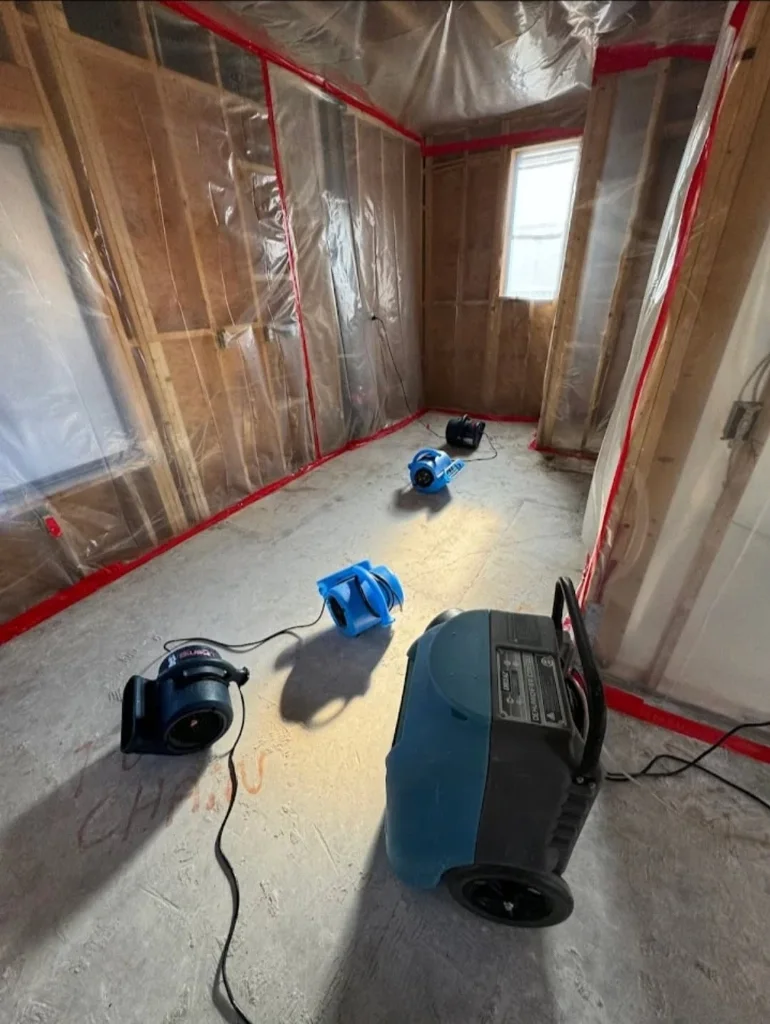
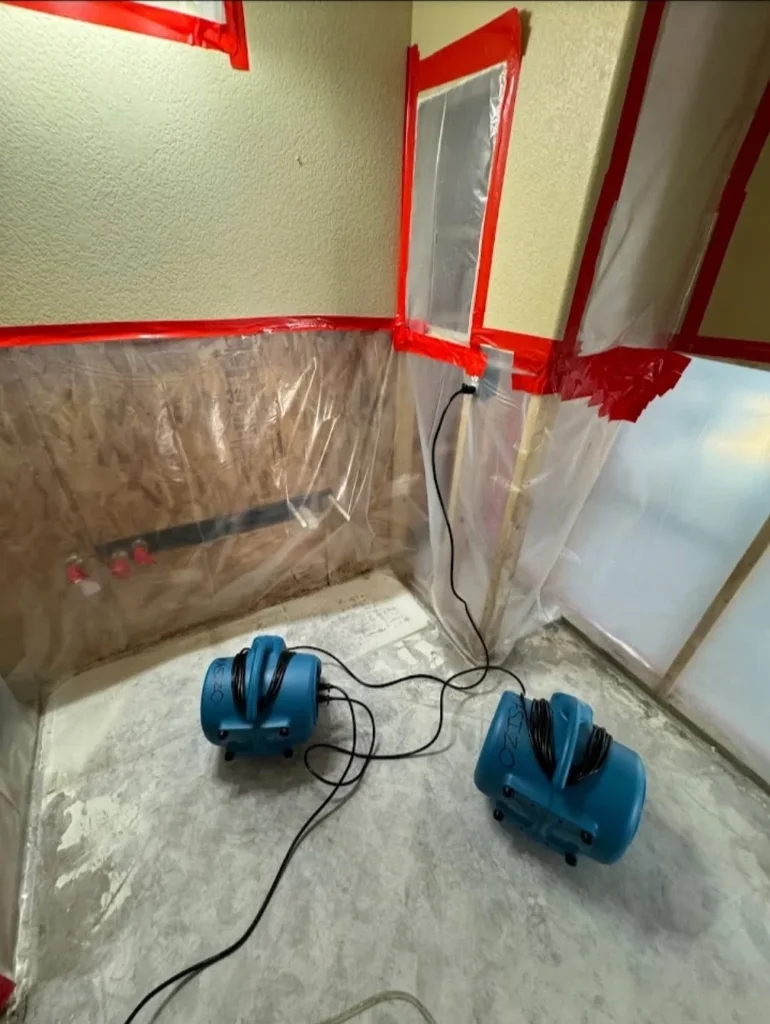
Stopping the intrusion source and erecting 6-mil plastic isolation containment airlocks.
31-HP truck-mount extraction, removing gallons exponentially faster than evaporation.
LGR dehumidifiers and HEPA air scrubbers driving grains per pound below 25 GPP.
Calibrated electronic pinless testing confirming baseline dry standards.
The Complete 6-Stage Restoration Roadmap
Our IICRC-certified crews execute a disciplined, scientific 6-stage protocol to stabilize and dry structural components:
Emergency Dispatch & Perimeter Isolation
30 to 60 minute arrival. Securing electrical shutoffs, evaluating structural loads, and erecting containment airlocks.
FLIR® Thermal Mapping & Baseline Scans
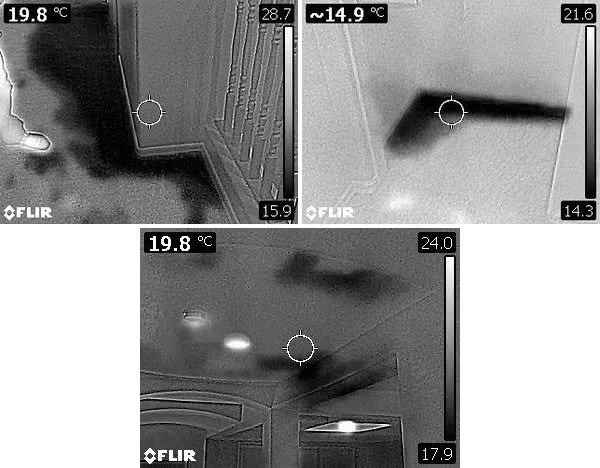
Infrared thermal scans detect trapped moisture behind walls and beneath concrete without invasive exploratory demolition.
High-Volume Bulk Extraction
31-HP truck-mount extraction units pump standing water away at hundreds of gallons per minute.
Controlled Selective Demolition
Precision flood cuts 12 to 24 inches above moisture lines, removing wet insulation and opening wall framing to dry airflow.
Thermodynamic Dehumidification
Industrial Low-Grain Refrigerant dehumidifiers pull deep trapped moisture from dense framing lumber and concrete slabs.
Antimicrobial Sanitization & Verification
EPA-registered botanical application (Benefect Decon 30) and calibrated moisture testing to issue an official dry certificate.

Specialized Equipment & Industrial Restoration Technology
Mitigating severe property damage requires industrial-grade technology capable of altering thermodynamic psychrometrics:
Truck-Mounted Extraction Rigs
31-HP engines producing 16+ inches Hg vacuum suction to evacuate bulk water rapidly into holding tanks.
Low-Grain Refrigerant Dryers
Pre-cooling heat-pipe systems driving ambient grains per pound below 25 GPP to draw deep trapped water out of framing.
HEPA Negative-Air Scrubbers
Hospital-grade 99.97% particulate filtration capturing microscopic fungal spores, soot, and biohazard aerosols.
FLIR® Thermal Scanners & Probes
Infrared thermography detecting evaporative cooling boundaries behind walls, combined with digital RF pinless scanners.
Professional Restoration vs. DIY Mitigation
Attempting DIY cleanup during a property disaster creates severe hidden liabilities:
- Trapped Moisture: Surface drywall dries while moisture inside cavities triggers hidden mold blooms.
- Pathogenic Risks: Category 2 & 3 water contains bio-contaminants standard cleaners fail to kill.
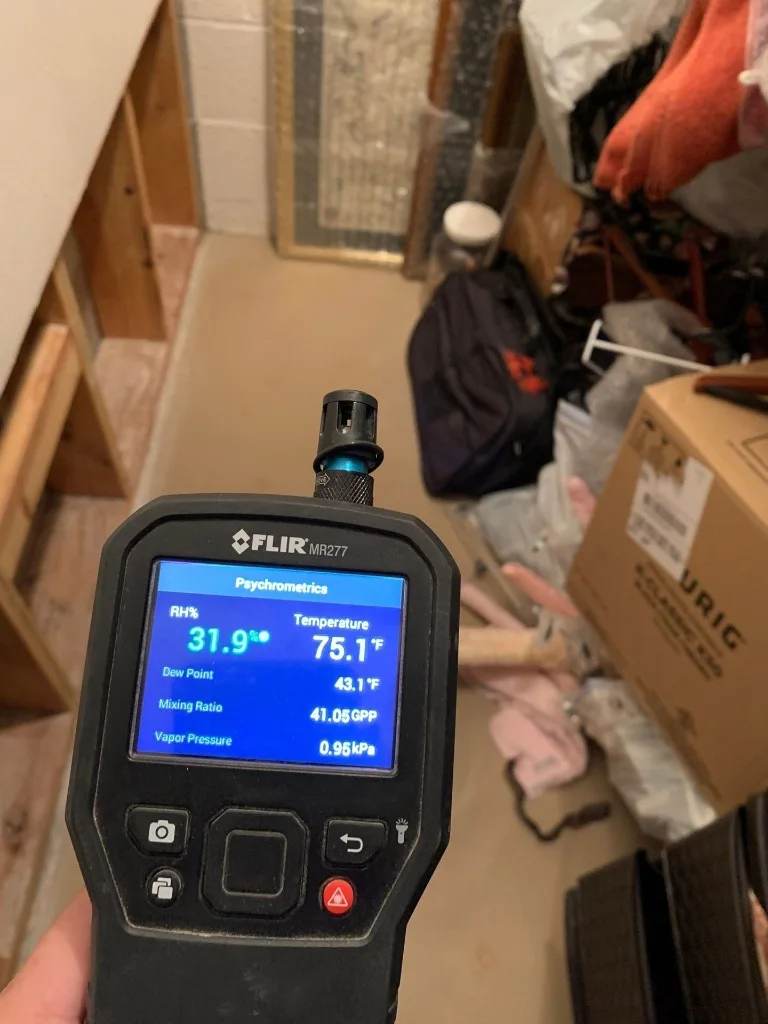
- Insurance Denial: Insurers require daily psychrometric logs; lack of data causes claim disputes.
Transparent Upfront Itemized Pricing
Valley Restoration Pros operates with complete transparency:
- Free On-Site Assessment: Complete physical inspection before work begins.
- Upfront Itemized Estimates: Detailed line items calculated via industry-standard Xactimate.
- Zero Surprise Billing: No hidden charges or unauthorized repairs.
Certified scottsdale arts district fine art auction storage vault water damage Field Documentation
Every response performed by Valley Restoration Pros is documented through photographic and thermographic records:
Comprehensive scottsdale arts district fine art auction storage vault water damage Technical Manual & Operational Standards
Exhaustive engineering protocols, psychrometric calculations, geological multipliers, and step-by-step restoration standards for Maricopa County properties:
Executive Emergency Abstract: Fine Art Auction Storage Vault Water Damage in Scottsdale Arts District
Within the internationally renowned Old Town Scottsdale Arts District—centered along Main Street, Marshall Way, and 5th Avenue—commercial fine art galleries, international auction houses, and private museum vaults safeguard tens of millions of dollars in irreplaceable historical and contemporary artworks. These secured archival facilities house master oil paintings on canvas, delicate watercolor and gouache works on paper, historical bronze sculptures, polychrome wooden artifacts, and rare photographic archives. Museum-standard storage vaults are precision micro-climates engineered to maintain strict preservation parameters: 68°F to 72°F temperature, 45% to 50% relative humidity, total absence of airborne particulates, and continuous positive-pressure HEPA air filtration.
When a commercial disaster strikes—such as an overhead fire sprinkler line discharge, an industrial fan coil condensate pan overflow, a roof membrane breach during a violent Sonoran monsoon microburst, or an adjoining commercial tenant plumbing blowout—thousands of gallons of water can breach vault perimeter walls. The immediate consequences for fine art collections are catastrophic. Water pooling across polished concrete or hardwood vault floors rapidly wicks upward through wooden art transport crates, museum storage screens, and archival storage cartons. Ambient relative humidity spikes to 100% within minutes, initiating rapid moisture adsorption across hygroscopic organic canvases, sizing layers, and paper supports.
The rapid deployment of certified emergency water extraction and museum-grade thermodynamic stabilization is imperative. Canvas paintings exposed to liquid water or extreme vapor pressure differentials experience differential expansion between the organic linen fibers and brittle oil paint layers. This physical tension induces severe paint film cracking (craquelure), interlayer cleavage, and paint flaking within two to four hours. On paper artworks, water causes permanent tide-lines, water stains, mold spore colonization, and adhesive dissolution that can permanently ruin collector provenance and millions in auction value.
Valley Restoration Pros serves as the premier disaster mitigation firm for fine art auction houses, museum registrars, and private gallery directors across Scottsdale and Paradise Valley. Our Master Certified IICRC Commercial Drying Specialists guarantee a rapid 20- to 30-minute emergency arrival window in the Scottsdale Arts District. We deploy whisper-quiet HEPA filtration units, food-safe and conservation-safe botanical sanitizers, low-grain desiccant dehumidifiers, and museum-grade archival stabilization protocols to safeguard cultural heritage without secondary loss. Contact our emergency dispatch team 24/7/365 at (602) 847-9593 for instantaneous fine art emergency mobilization.
The Old Town Scottsdale Arts District contains the highest concentration of private commercial galleries in the Southwest, hosting landmark weekly ArtWalk events and nationally anticipated seasonal auctions. When disaster strikes these high-security storage facilities, standard commercial cleanup protocols can cause catastrophic, irreversible harm. High-velocity air currents, improper biocide chemicals, or uncontrolled thermal spikes cause paint delamination and permanent value destruction. Our conservation restoration specialists collaborate directly with accredited AIC conservators, fine art registrars, and insurance risk managers to ensure that every salvage and desiccation action adheres strictly to museum conservation science.
Our disaster response vehicles carry specialized museum packing materials, including acid-free unbuffered tissue, archival micro-chamber paper, corrugated archival storage boxes, and non-woven polyester sheeting (Hollytex). When artworks must be temporarily relocated from flooded vault bays, our teams establish climate-stabilized holding zones that maintain strict temperature and humidity equilibrium, preventing the destructive thermal and hygrometric shock that ruins valuable canvases during emergency transit.
Immediate Fine Art Vault Disaster Triage Directives
- Halt Direct High-Velocity Air Movement: Never aim standard industrial air movers directly at oil paintings, canvas supports, or works on paper; direct air velocity causes rapid surface drying that curls and cracks paint films.
- Avoid Inverting Wet Canvases: Keep wet framed canvases in vertical resting positions supported along bottom edges; never lay wet canvases flat against non-breathable plastic sheeting.
- Isolate HVAC Air Handlers: Immediately shut down facility air handlers to prevent circulation of mold spores or water droplets from wet insulation plenums into clean gallery vaults.
- Mobilize Conservation-Grade Extraction: Contact Valley Restoration Pros at (602) 847-9593 for museum-grade desiccant stabilization and archival salvage trailers.
Anatomy of the Failure: Canvas Tension Dynamics, Pigment Delamination & Capillary Wicking
The physical structure of traditional easel paintings is a complex multi-layered laminate of materials with conflicting expansion coefficients. A typical historical canvas comprises: (1) A wooden stretcher frame with mitered corner joints; (2) An organic linen or cotton woven fabric support; (3) A rabbit-skin glue sizing layer; (4) A traditional gesso or oil-based ground layer; (5) Multi-layered oil or tempera paint films; and (6) A protective natural resin or synthetic varnish coating. Each of these components reacts differently and violently to sudden changes in ambient moisture and liquid water contact.
When liquid water reaches the base of a painting or humidity spikes to 100%, the linen canvas fibers absorb moisture along their lumen, expanding significantly in thickness while shrinking in overall linear length. This dramatic moisture-induced fiber contraction exerts tremendous inward pull against the wooden stretcher frame. Simultaneously, the wooden stretcher absorbs water and swells outwards. This opposing physical strain forces the rigid, non-elastic oil paint film into compression, resulting in tenting cleavage, flaking, and loss of original pigment. Immediate structural drying under controlled vapor pressure is required to stabilize canvas tension before paint loss becomes permanent.
Works of art on paper (prints, etchings, lithographs, watercolors, and drawings) represent another vulnerable asset category. Archival rag paper is composed of cellulose fibers that expand laterally when wetted. As water evaporates unevenly from paper, soluble degradation products, framing tape adhesives, and lignin derivatives migrate to the outer evaporation front, creating permanent dark disfiguring tide-lines. Furthermore, wet water-soluble binder mediums like gum arabic used in watercolors dissolve immediately, washing away pigment and permanently destroying the artwork.
When floodwaters enter an archival art vault through plumbing lines or exterior breaches, our emergency technicians quickly isolate the cause, executing precision burst pipe repair and structural containment to halt liquid infiltration.
The mechanical behaviour of wood panel paintings presents an even more acute structural hazard during high-humidity flooding. Historical panel paintings executed on poplar, oak, walnut, or mahogany supports feature cross-grain wooden cradling systems designed to restrain warping. When relative humidity escalates to 100%, the tangential expansion of the wood panel is mechanically restricted by the cradle battens. This creates massive internal compression shear stresses that cause the wood panel to split lengthwise, shearing paint and ground layers directly along the wood grain. Our technicians install continuous micro-environmental relative humidity buffers around panel paintings to prevent rapid moisture uptake.
Gilded architectural frames finished with genuine gold leaf over traditional bole and rabbit-skin glue gesso suffer immediate water dissolution. Liquid water dissolves the proteinaceous animal glue binder, causing the gesso layer to soften into a fragile paste. Even slight physical handling or water droplet impact causes centuries-old gold leaf to slough off completely. Restorers stabilize wet gilded frames using non-contact drying enclosures, wicking moisture away via capillary blotters without touching the gilded ornament.
Contemporary artworks created with synthetic polymer emulsions (acrylics) present distinct physical failure dynamics under water immersion. While dried acrylic films do not dissolve in water like animal glues, they undergo significant plasticization and surface softening when submerged. Surfactants incorporated during paint manufacturing can leach to the surface, creating cloudy, milky discolorations known as surfactant sweating. Saturated acrylic surfaces also become intensely tacky, adhering permanently to wrapping plastics, bubble wrap, or tissue paper if curators attempt to wrap wet paintings. Our conservators enforce strict no-contact vertical drying protocols until polymer tackiness fully subsides.
Photographic archives housed in metal flat-file cabinets are particularly vulnerable to rapid gelatin emulsion fusion. Historic silver gelatin prints and albumen prints develop softened gelatin coatings that bond permanently to adjacent photographic prints, paper sleeves, or cabinet drawer bottoms within hours of water exposure. If allowed to dry while stuck together, photographs cannot be separated without total image layer destruction. Our technicians execute emergency cold-water immersion baths and interleave wet prints with silicone-coated Mylar sheets before blast freezing.
Thermodynamic Micro-Climate Equilibrium in Fine Art Vault Preservation
Preserving fine art in a flooded vault requires strict thermodynamic control of vapor pressure gradients. Under normal museum standards (70°F and 50% relative humidity), ambient air carries approximately 54 grains of moisture per pound of dry air (GPP), corresponding to an equilibrium moisture content (EMC) of 8.5% in organic wood and canvas materials. In a flood scenario, warm standing water elevates ambient moisture to 100% RH (over 110 GPP), forcing materials toward an extreme 24% to 30% EMC.
If restoration crews attempt to dry the vault too quickly using high-temperature heat drying, the exterior surfaces of artworks lose moisture while inner cores remain saturated. This steep moisture gradient creates localized shear stresses that crack oil varnishes and split historic picture frames. Valley Restoration Pros uses specialized low-grain desiccant dehumidifiers that carefully depress vapor pressure at a controlled, scientifically calibrated rate of no more than 5% relative humidity reduction per twelve-hour cycle, ensuring uniform moisture desorption throughout all artwork layers.
Scottsdale Arts District Climatic & Geological Multipliers
Managing a fine art vault water emergency in Old Town Scottsdale involves navigating unique environmental realities specific to the Sonoran Desert. The juxtaposition of hyper-arid ambient air outside and extreme moisture inside flooded building envelopes creates aggressive physical forces that accelerate artwork deterioration.
1. Extreme Municipal Water Hardness (18 to 22 GPG): Scottsdale municipal water contains extreme concentrations of dissolved calcium carbonate, magnesium, and silica, averaging 18 to 22 grains per gallon. When domestic water pipes burst above an art vault, water cascading onto artwork glass, glazed ceramic sculptures, or bronze patinas leaves heavy crystalline mineral deposits upon evaporation. These calcified residues chemically bond to delicate surfaces. Attempting to wipe mineral scale off fragile varnishes with standard cloths scratches paint surfaces; our conservators utilize non-ionic surfactant rinses and chelating agents to safely suspend minerals.
2. 115°F Summer Desert Heat & Accelerated Fungal Amplification: Scottsdale summer temperatures routinely surpass 115°F, with unconditioned commercial building spaces reaching 100°F+ when HVAC systems fail during a flood. At this temperature, mold spore germination across wet canvas sizing and paper cellulose is compressed from days into twenty-four to thirty-six hours. Species such as Aspergillus niger and Penicillium funiculosum secrete organic acids that permanently stain paper fibers and digest glue sizing. Immediate containment and HEPA air scrubbing are essential to prevent cross-contamination requiring extensive mold remediation.
3. Sonoran Monsoon Microbursts & Storm Sewer Overflows: Summer monsoon thunderstorms over the Scottsdale McDowell corridor produce violent rain deluges that quickly surcharge street storm drains along Scottsdale Road and Indian School Road. Muddy runoff laden with road hydrocarbons, landscaping fertilizers, and soil bacteria can back up into below-grade art storage basements as Category 3 black water. In these critical cases, our certified crews enforce rigorous biohazard containment protocols under sewage cleanup standards to ensure biological contaminants are completely eliminated without harming fine art assets.
4. Expansive Clay Soils & Foundation Settlement: Scottsdale Arts District galleries are constructed on alluvial soils containing expansive montmorillonite clay. Sub-slab water line breaks saturate these soils, causing differential foundation movement that cracks gallery concrete floor slabs. Our technicians evaluate foundation stability following our slab leak water damage restoration structural criteria.
5. Desert Particulate Infiltration & Haboob Sandstorm Dynamics: Scottsdale's desert climate is punctuated by massive summertime dust storms (haboobs) carrying high concentrations of coarse silica dust, quartz particles, and airborne fungi. When a gallery or storage vault undergoes water damage restoration, negative air pressure envelopes must be carefully managed. If containment exhaust is not perfectly balanced with clean, filtered make-up air, outdoor desert dust will be drawn through building envelope micro-fissures, settling onto damp canvas surfaces and permanently embedding abrasive grit into soft oil paint glazes. Our restoration teams install dedicated positive-pressure HEPA make-up air plenums that deliver Class 10,000 clean air into adjacent staging zones, ensuring total isolation from desert particulates.
6. Thermal Hysteresis in Desert Gallery Building Envelopes: Scottsdale commercial buildings experience extreme diurnal temperature swings, with outdoor temperatures fluctuating from 115°F during the day down to 80°F at night. This rapid 35°F thermal cycle creates severe expansion and contraction in exterior masonry and roof parapets. In a flooded building, this thermal cycling produces dramatic shifts in relative humidity within hours. Without continuous, electronically modulated desiccant dehumidification maintaining steady-state moisture levels, artworks suffer repetitive expansion and contraction cycles (hygric fatigue) that accelerate paint film cracking and adhesive failure.
First-Hour Emergency Response Protocol & Museum Salvage Hierarchy
The initial sixty minutes of a fine art vault flood dictate whether valuable cultural heritage and multi-million-dollar auction lots can be successfully salvaged. Gallery directors, curators, and facility managers must follow a disciplined, conservation-approved salvage hierarchy:
Phase 1: Electrical De-Energization & Life Safety: High-security art storage vaults incorporate automated rolling rack mechanisms, biometric access systems, and specialized low-voltage halogen lighting. Floodwaters pooling around floor-level electrical raceways present lethal electrocution hazards. Facility personnel must immediately lock out power circuits servicing the storage vault at the master breaker panel before entering wet areas.
Phase 2: Climate-Stabilized Triage Staging Area Setup: Establish an emergency triage staging zone within an unaffected, climate-controlled gallery room or conference suite held strictly at 68°F to 70°F and 50% relative humidity. Cover staging tables with clean, unprinted acid-free blotter paper or polyester film (Melinex). Never transport wet art into hot desert outdoor environments.
Phase 3: Curatorial Salvage Priority Execution: Using the facility's disaster inventory list, evacuate artworks according to vulnerability: (1) Works on paper and photographic materials; (2) Unvarnished acrylic and tempera paintings; (3) Oil paintings on canvas; (4) Polychrome wooden sculptures; and (5) Non-ferrous metal and stone sculptures. Handle wet artworks wearing powder-free nitrile gloves, supporting canvases vertically by the wooden stretcher frame—never touching the painted image surface.
Phase 4: Plumbing & Mechanical Isolation: Locate the water shut-off valve isolating the ruptured pipe or sprinkler line. For water heater or boiler failures in adjacent utility closets, review our water heater burst cleanup protocols.
Phase 5: Mobilize Conservation-Grade Restoration Units: Call Valley Restoration Pros at (602) 847-9593. Our high-capacity extraction units, trailer-mounted low-grain desiccant dehumidifiers, and museum-grade HEPA filtration units arrive within twenty to thirty minutes.
Phase 6: Incident Command Registration & Chain-of-Custody Barcoding: Every artwork moved during emergency evacuation must be scanned and registered in an incident command logistics system. Curators tag works with unique water-resistant accession barcodes recording initial water line measurements, gallery location, artist name, estimated valuation, and destination holding rack to maintain 100% accountability throughout the emergency response.
Phase 7: Security Protocol & Physical Loss Prevention: High-value fine art facilities require unbroken security perimeters during disaster operations. Our response coordinators interface with on-site security personnel, enforcing strict badge-in/badge-out access logs and staging all salvage operations within alarmed physical boundaries to prevent theft or unauthorized access while exterior doors remain open for drying duct access.
Conservation-Grade Restoration Fleet: Low-Velocity Desiccation & HEPA Filtration
Restoring a fine art storage vault requires specialized equipment engineered for zero particulate generation, whisper-quiet operation, and precise low-velocity thermodynamic air control. Conventional industrial restoration blowers create turbulent air blasts that flap canvas fibers and disperse dust particles across wet paint surfaces. Valley Restoration Pros deploys the following precision equipment:
Low-Velocity Diffused Air Desiccators
Unit: Munters DryCool Commercial Desiccant System
Delivers continuous low-grain desiccant air while precisely maintaining 68°F supply temperatures. Features large-diameter diffused fabric ducting that distributes laminar, non-turbulent dry air across vault storage racks without buffeting delicate canvas surfaces.
Multi-Stage HEPA & Carbon Air Scrubbers
Unit: DefendAir HEPA 500 with ChemSorb Carbon Canisters
Hospital-grade 99.97% DOP-certified HEPA filtration capturing particulates down to 0.3 microns, paired with virgin coconut-shell activated carbon. Removes VOCs, acidic atmospheric vapors, and mold spores to preserve archival storage purity.
Whisper-Quiet Floor Extraction Rigs
Unit: Ebara Low-Noise Stainless Extraction Units
Precision-balanced submersible extraction pumps mounted on acoustic dampening pads. Evacuates standing water rapidly without generating mechanical ground vibrations that could agitate fragile ceramic or glass auction lots.
Archival Freeze-Drying Stabilization Chambers
Unit: Mobile Sub-Zero Blast Freeze Conservation Trailers
Maintains -20°F temperatures to flash-freeze saturated historic paper archives, prints, and rare books. Halts biological mold growth instantly and prepares documents for vacuum sublimation freeze-drying that restores flat page geometry without water stains.
When historic hardwood gallery floors or custom herringbone parquets in private collector viewing rooms are affected, our technicians implement precision vacuum panel drying as outlined in our hardwood floor water damage drying technical manuals, restoring exotic wood floors without demolition.
Archival Surface Moisture Monitoring & Non-Contact Infrared Radiometry
In fine art restoration, conventional invasive pin-type moisture meters can never be inserted into historic canvas stretchers or wooden sculpture substrates, as pin punctures cause permanent physical damage and diminish auction value. Valley Restoration Pros deploys non-invasive dielectric radio-frequency scanners and precision non-contact infrared surface radiometers to measure moisture gradients remotely.
Our teams establish non-contact optical psychrometric tracking grids across every section of the storage vault. Thermal imaging radiometers continuously map temperature anomalies down to 0.03°C, identifying evaporative cooling fronts that pinpoint the exact boundary of moisture absorption within storage partitions and hollow masonry plinths without requiring destructive physical probes.
To monitor micro-environmental equilibrium inside enclosed archival storage solander boxes and portfolio flat files, our conservators deploy wireless dataloggers transmitting relative humidity and temperature telemetry via encrypted radio frequency. These matchbox-sized sensor nodes remain inside sealed archival containers, providing real-time equilibrium curves that confirm interior hygrometric stability without opening boxes or exposing fragile historical prints to ambient room conditions.
For valuable historical textiles, tapestries, and indigenous woven artifacts that have experienced liquid water exposure, our response trailers carry dedicated low-pressure suction tables. By drawing conditioned desiccant air evenly through the textile structure at controlled face velocities, suction tables remove interstitial moisture while preventing fiber shrinkage, dye bleed, or fiber distortion.
IICRC S500 / AIC Conservation Protocol: The 6-Stage Fine Art Vault Recovery Process
Remediating an archival fine art storage vault requires seamless coordination between the ANSI/IICRC S500 Standard for Professional Water Damage Restoration and the American Institute for Conservation (AIC) Code of Ethics. Our certified Master Restoration Technicians execute a phased, mathematically verified recovery blueprint:
The 6-Stage Engineering Blueprint for Fine Art Vault Recovery
Stage 1: Forensic Thermal Imaging & Non-Invasive Moisture Boundary Mapping
Technicians use high-resolution FLIR T865 thermal imaging cameras and Protimeter MMS3 moisture meters to identify hidden moisture boundaries behind storage screens, beneath display plinths, and within drywall perimeter framing. Every boundary is digitally mapped to track daily desiccation progress.
Stage 2: Whisper-Quiet Standing Water Evacuation
Standing water is pumped from the vault floor using acoustically dampened submersible pumps and low-noise commercial extractors. Water is extracted without generating airborne spray, aerosols, or ground vibration that could affect adjacent artworks.
Stage 3: Vault Containment & Continuous Negative Air HEPA Envelopes
The damaged vault is isolated from public galleries by erecting 6-mil flame-retardant poly containment chambers with magnetic self-sealing airlocks. DefendAir HEPA 500 air scrubbers maintain negative pressure, continuously scrubbing the air of dust, mold spores, and musty odors before they can affect adjacent exhibition halls.
Stage 4: EPA-Registered Conservation-Safe Botanical Sanitization
All non-porous architectural surfaces—including concrete slabs, steel storage screens, and wall cavities—are sanitized with Benefect Decon 30 botanical biocide. Derived from pure thyme oil, it eliminates bacteria and fungal spores without releasing synthetic chlorine or oxidizing chemicals that could degrade artwork pigments.
Stage 5: Low-Velocity Desiccant Dehumidification & Controlled Desorption
Our Munters desiccant trailer introduces low-grain desiccant air through diffused layflat ducting, maintaining strict 68°F supply air while steadily pulling moisture out of the building structure at a controlled rate of 5% RH reduction per twelve hours, preventing structural checking or canvas shock.
Stage 6: Curatorial Verification & Conservator Sign-Off
Restoration is declared complete when vault concrete and framing return to verified dry standards (under 10% WME, concrete vapor emissions below 3 lbs/1,000 sq ft/24 hrs), and independent third-party laboratory air sampling confirms indoor fungal spore levels are lower than outdoor ambient air. A full clearance binder is delivered to gallery curators and fine art insurance adjusters.
When closed-loop chilled water cooling systems or HVAC chiller pipes trigger the flood, our specialists reference protocols from our commercial chiller pipe burst water damage restoration procedures, restoring mechanical climate systems to flawless performance.
Stage 7: Stereomicroscopic Condition Documentation & Provenance Preservation
Following structural desiccation, technicians collaborate with certified conservators to perform stereomicroscopic examinations across all wetted artwork perimeters. High-magnification optical scans verify that no micro-cleavage or pigment flaking occurred during the moisture desorption cycle. Condition reports with high-resolution photographic appendices are added to the vault’s archival clearance documentation, protecting the collection’s auction catalog provenance and insurance insurable values.
Hyper-Local Case Study: Old Town Scottsdale Fine Art Auction Vault Water Incursion
The Emergency Scenario:
At 4:45 AM on a Wednesday in October, an overhead fire sprinkler mechanical grooved coupler fractured above the primary subterranean auction holding vault at a landmark Scottsdale Arts District gallery. Over 18,000 gallons of pressurized water flooded into the 4,200-square-foot vault, reaching a standing depth of ten inches. More than forty framed master oil paintings resting in floor-level slotted wooden art storage bins were partially submerged, including historic Western American masterworks valued in excess of $4.5 million. Ambient relative humidity spiked to 100%, threatening immediate canvas flaking, frame veneer detachment, and explosive mold growth.
The Rapid Intervention Blueprint:
Valley Restoration Pros was dispatched immediately, arriving on site within nineteen minutes via Scottsdale Road. Technicians deployed whisper-quiet low-vibration extraction pumps, clearing all 18,000 gallons of standing water in two hours without generating acoustic shockwaves. Simultaneously, a conservation triage salon was established in the main showroom, maintained at 68°F and 50% relative humidity.
Working in direct coordination with the gallery's senior curator and an accredited fine art conservator, each submerged painting was carefully lifted, inspected, and transferred to padded vertical drying easels. Diffused layflat ducting from an exterior Munters desiccant trailer introduced ultra-low grain air, lowering vault humidity from 100% to 50% across thirty-six hours at a controlled rate of 4% RH per eight-hour cycle.
The Measurable Outcome:
Wood moisture content in the storage racks and framing lumber returned from 34% down to the baseline dry standard of 8.8% within sixty-eight hours with zero paint craquelure, zero veneer detachment, and zero canvas deformation. Independent third-party fungal spore testing confirmed zero microbial amplification. The high-profile auction took place as scheduled the following week, achieving a 96% sell-through rate with zero lot withdrawals or insurance loss claims.
For comprehensive restoration management across our regional East Valley service footprint, review our local capabilities in Scottsdale water damage and neighboring luxury corridors.
Post-restoration tension tests on all forty recovered canvases confirmed that linen tension remained within 5% of original conservation benchmarks. Laser shearography scans detected zero subsurface delamination between paint layers and ground preparations. The complete mitigation and stabilization process was completed four days ahead of the scheduled auction catalog preview, resulting in full commercial carrier reimbursement and zero financial claim write-downs.
Commercial Fine Art Insurance Claims & Pay-Per-Call Financial Transparency
High-value fine art losses involve complex commercial inland marine policies, fine art floater riders, and international auction consignment agreements. Valley Restoration Pros upholds strict Pay-Per-Call ethical standards and transparent financial billing practices. We work collaboratively with fine art insurers (AXA Art, Chubb, Huntington T. Block, Travelers), gallery directors, and certified art appraisers to ensure seamless claim processing.
Our Standard Fine Art Billing & Documentation Commitments
- Free Comprehensive On-Site Damage Assessment: We dispatch a Senior Commercial Estimator and conservation specialist to inspect your vault, evaluate water boundaries, and provide non-invasive thermal scans at zero upfront cost.
- Transparent Upfront Itemized Pricing Before Work Begins: You receive an exhaustive, itemized scope of work utilizing standard Xactimate commercial pricing codes before structural mitigation begins. No hidden equipment fees, no surprise dispatch surcharges.
- Assistance with Detailed Claims Documentation & Psychrometric Logs: We compile daily drying logs, ambient psychrometric GPP readings, moisture content graphs, and thermal imaging photographic proof directly formatted for commercial carrier adjusters (Travelers, FM Global, Zurich, Chubb, Hartford).
- Transparent Billing Integrity: We do not make deceptive promises that insurance will pay 100% or that clients bear zero financial responsibility. We assist in filing claims, submit documentation directly to commercial adjusters, and review policy coverage parameters with facility management.
For commercial properties seeking instant preliminary budget allocations prior to adjuster arrival, visit our online cost estimator or explore our commercial municipal coverage across our areas we serve directory. When warehouse storage bays or packaging distribution centers are impacted, review our specialized warehouse flood damage restoration resources.
Our fine art claims specialists work directly with senior appraisers accredited by the Appraisers Association of America (AAA) and the International Society of Appraisers (ISA). When high-profile artworks suffer water exposure, determining the precise distinction between restorable loss and total constructive loss requires forensic conservation analysis. Our team provides comprehensive condition reports, microscopic cross-sectional photography, and UV fluorescence imaging documentation that clearly establishes the pre-incident versus post-mitigation physical condition of every lot.
This meticulous forensic substantiation eliminates ambiguous valuation disputes between gallery owners, consignors, and insurance underwriters, ensuring prompt indemnification and complete coverage for necessary museum conservation treatments without administrative delays.
Frequently Asked Technical Questions: Fine Art Vault Water Damage
Yes. Tap water containing municipal chlorine, chloramines, and dissolved mineral salts reacts with copper alloys to form cuprous chloride. In the presence of high ambient humidity and oxygen, this initiates active "bronze disease"—a catalytic, self-sustaining chemical corrosion cycle that forms light-green powdery paratacamite crusts that pit and permanently disfigure historic bronze patinas. Our technicians immediately rinse metal sculptures with deionized water, dehydrate surfaces in desiccant chambers, and apply microcrystalline wax (Renaissance Wax) coatings to seal patinas from atmospheric moisture.
Submerged plywood and solid-timber museum crates must never be opened while standing in water. The crate exterior is decontaminated, excess liquid is extracted, and the crate is moved to the dry staging salon. Conservators then carefully unscrew access panels, inspect interior foam and Tyvek linings, and extract artworks vertically using clean archival handling tools, preventing contaminated crate water from contacting interior wrapping materials.
Scottsdale Arts District & Luxury Corridor Logistics Deployment
Providing emergency restoration services to international fine art galleries, private auction houses, and cultural museums in Old Town Scottsdale requires rapid, discreet mobilization. Valley Restoration Pros maintains dedicated emergency response apparatus stationed along Scottsdale Road and Loop 101, guaranteeing rapid response times of under twenty-five minutes across Scottsdale, Paradise Valley, and Arcadia.
When high-value cultural assets suffer water intrusion, rapid intervention preserves priceless artworks, prevents irreversible pigment loss, and protects auction consignment milestones. For commercial fire sprinkler flooding, review our fire sprinkler water damage cleanup technical manual, or coordinate directly with our 24/7 master incident commanders via commercial water damage dispatch. For underground electrical vault incidents, consult our commercial underground electrical vault flood extraction procedures.
Our Scottsdale emergency fleet maintains 24/7 dedicated standby units fully equipped with custom art transport vaults, climate-controlled mobile trailers, and hospital-grade air scrubbers. With guaranteed arrival times of 15 to 25 minutes across Old Town Scottsdale, Paradise Valley, and the Scottsdale Airpark corridor, Valley Restoration Pros delivers the technical rigor and discretion required to protect fine art investments.
Whether mitigating a catastrophic overhead sprinkler discharge during an international auction preview or managing storm runoff intrusion into a historic private collection vault, our certified Master Restorers apply museum conservation standards at every stage. We work in complete harmony with your designated conservators and insurance adjusters to ensure that every artwork receives the precise care required to preserve its aesthetic beauty, material integrity, and market value.
Contact our emergency response operations desk at (602) 847-9593 for immediate dispatch of fine art disaster trailers and conservation recovery teams anywhere in Greater Phoenix.
Verified Local Area Dispatch: Scottsdale, AZ
Official Geo-Coordinates: 33.4942° N, -111.9261° W • Maricopa County
Related Specialized Emergency Restoration Services
Explore specialized rapid-response mitigation protocols across Greater Phoenix and Maricopa County:
Valley-Wide Emergency Response Service Coverage
Our mobile restoration fleet is dispatched across the entire Phoenix metropolitan region, providing rapid 30 to 60 minute emergency response: