

Valley Restoration Pros delivers 24/7 industrial emergency water extraction, thermal psychrometric drying, and structural mitigation across Phoenix and Maricopa County with guaranteed 30–60 minute rapid arrival. All protocols strictly adhere to IICRC S500 standards, featuring upfront itemized pricing and free on-site thermal moisture assessments. Call dispatch directly at (602) 847-9593.
Why Immediate Mitigation Is Critical in Phoenix Heat
High-pressure commercial boiler lines discharge 180°F scalding water under 60 PSI, saturating municipal courtrooms, public records vaults, and legal archive chambers across multiple civic department wings. Surprise municipal water carrying 18 to 22 GPG hardness dissolves mineral binder starches in suspended acoustic ceiling assemblies, triggering sudden structural ceiling grid collapses over active administrative computer workstations. Water intrusion into municipal records storage vaults submerges historical paper dockets, deed books, and digital recording servers, creating permanent document loss and electronic short-circuit hazards. Desert ambient summer temperatures exceeding 115°F in Surprise transform unconditioned civic buildings into microbial incubators, cultivating hazardous Aspergillus and Penicillium mold colonies within 24 to 48 hours. Trapped moisture within municipal court chambers compromises sound-attenuating demising wall insulation and ADA accessibility pathways, risking regulatory civic closures.
Service Definition & The IICRC Standard of Care
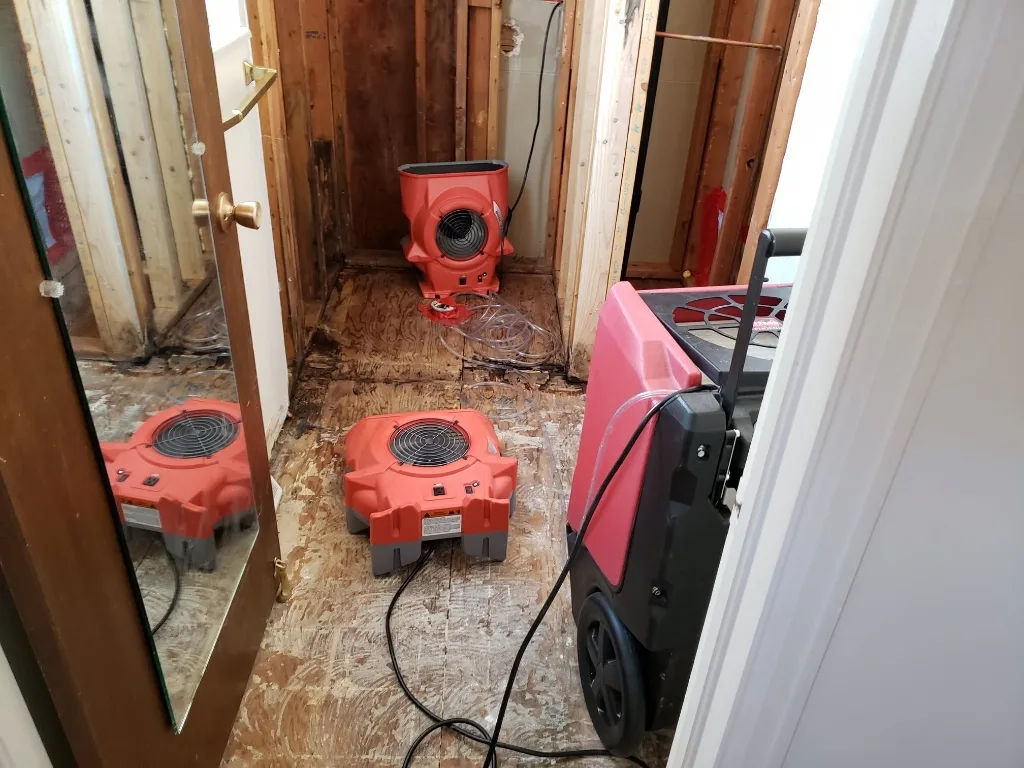
Professional surprise city center commercial municipal complex flood restoration is an engineering and environmental discipline adhering strictly to IICRC S500 protocols, not mere surface mopping. When structural plumbing failures strike in Maricopa County, certified emergency water extraction and thermal structural drying procedures must be deployed immediately. Whether triggered by high-pressure burst pipe emergencies, subfloor leaks, or commercial line ruptures, bound moisture rapidly penetrates concrete subfloors and wall framing. In the desert heat, delays trigger microbial proliferation requiring rapid mold remediation. Request damage assessment through our emergency assessment portal or request 30-minute dispatch across all Valley service areas.
Securing electrical feeds, inspecting load-bearing assemblies, and containing pathogens.
Stopping the intrusion source and erecting 6-mil plastic isolation containment airlocks.
31-HP truck-mount extraction, removing gallons exponentially faster than evaporation.
LGR dehumidifiers and HEPA air scrubbers driving grains per pound below 25 GPP.
Calibrated electronic pinless testing confirming baseline dry standards.
The Complete 6-Stage Restoration Roadmap
Our IICRC-certified crews execute a disciplined, scientific 6-stage protocol to stabilize and dry structural components:
Emergency Dispatch & Perimeter Isolation
30 to 60 minute arrival. Securing electrical shutoffs, evaluating structural loads, and erecting containment airlocks.
FLIR® Thermal Mapping & Baseline Scans
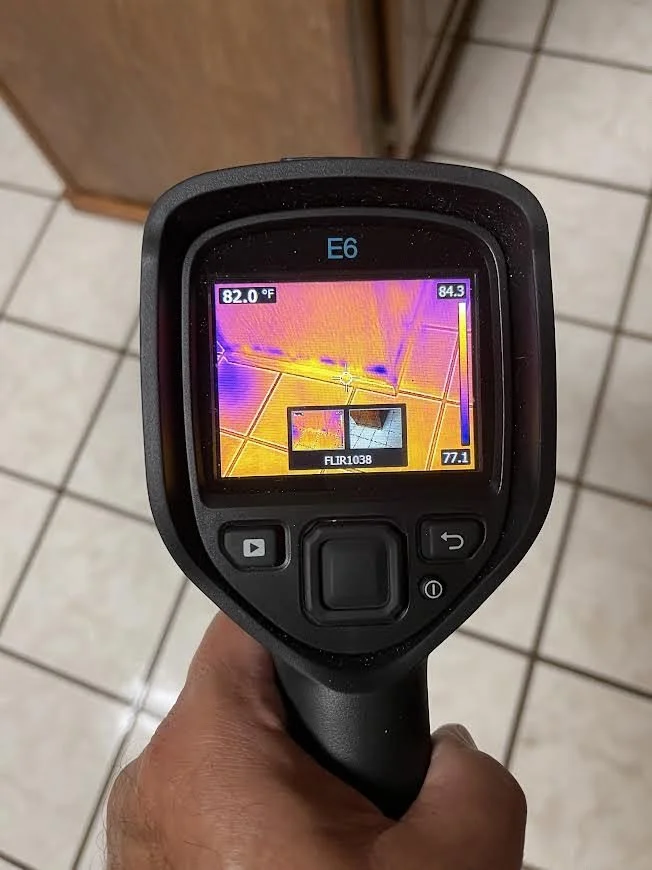
Infrared thermal scans detect trapped moisture behind walls and beneath concrete without invasive exploratory demolition.
High-Volume Bulk Extraction
31-HP truck-mount extraction units pump standing water away at hundreds of gallons per minute.
Controlled Selective Demolition
Precision flood cuts 12 to 24 inches above moisture lines, removing wet insulation and opening wall framing to dry airflow.
Thermodynamic Dehumidification
Industrial Low-Grain Refrigerant dehumidifiers pull deep trapped moisture from dense framing lumber and concrete slabs.
Antimicrobial Sanitization & Verification
EPA-registered botanical application (Benefect Decon 30) and calibrated moisture testing to issue an official dry certificate.

Specialized Equipment & Industrial Restoration Technology
Mitigating severe property damage requires industrial-grade technology capable of altering thermodynamic psychrometrics:
Truck-Mounted Extraction Rigs
31-HP engines producing 16+ inches Hg vacuum suction to evacuate bulk water rapidly into holding tanks.
Low-Grain Refrigerant Dryers
Pre-cooling heat-pipe systems driving ambient grains per pound below 25 GPP to draw deep trapped water out of framing.
HEPA Negative-Air Scrubbers
Hospital-grade 99.97% particulate filtration capturing microscopic fungal spores, soot, and biohazard aerosols.
FLIR® Thermal Scanners & Probes
Infrared thermography detecting evaporative cooling boundaries behind walls, combined with digital RF pinless scanners.

Professional Restoration vs. DIY Mitigation
Attempting DIY cleanup during a property disaster creates severe hidden liabilities:
- Trapped Moisture: Surface drywall dries while moisture inside cavities triggers hidden mold blooms.
- Pathogenic Risks: Category 2 & 3 water contains bio-contaminants standard cleaners fail to kill.
- Insurance Denial: Insurers require daily psychrometric logs; lack of data causes claim disputes.
Transparent Upfront Itemized Pricing
Valley Restoration Pros operates with complete transparency:
- Free On-Site Assessment: Complete physical inspection before work begins.
- Upfront Itemized Estimates: Detailed line items calculated via industry-standard Xactimate.
- Zero Surprise Billing: No hidden charges or unauthorized repairs.
Certified surprise city center commercial municipal complex flood restoration Field Documentation
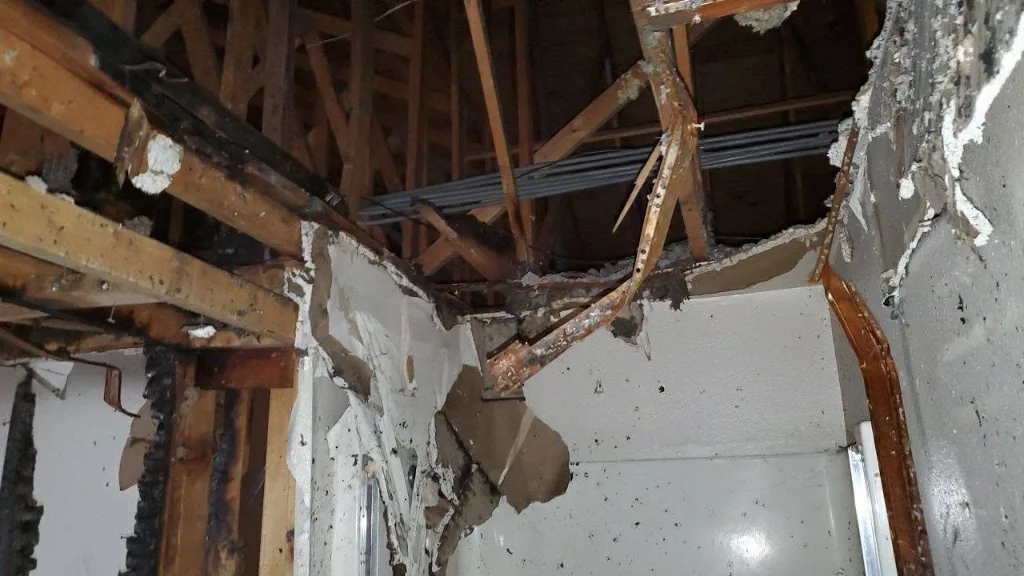
Every response performed by Valley Restoration Pros is documented through photographic and thermographic records:
Comprehensive surprise city center commercial municipal complex flood restoration Technical Manual & Operational Standards
Exhaustive engineering protocols, psychrometric calculations, geological multipliers, and step-by-step restoration standards for Maricopa County properties:
Executive Emergency Abstract: Mission-Critical Commercial Flood Recovery in Surprise City Center & Civic Complex (Bullard Ave & Bell Rd, Surprise AZ)
The Surprise City Center & Civic Complex (Bullard Ave & Bell Rd, Surprise AZ) represents a critical center of corporate and institutional activity in the Valley, housing Municipal Government Offices, Court Chambers, Public Works Administration, Institutional Annexes. These multi-acre commercial properties encompass hundreds of thousands of square feet of finished executive suites, mission-critical computer networks, public archives, and vital daily commercial operations. When an industrial mechanical failure occurs—such as Commercial Boiler Supply Rupture & Multi-Zone Hydronic Heating Loop Deluge—the operational and physical consequences are catastrophic. Tens of thousands of gallons of pressurized, chemically treated or scalding water cascade through ceiling plenums, electrical chases, elevator shafts, and finished office suites, threatening structural integrity, operational continuity, and commercial lease agreements.
Valley Restoration Pros maintains a dedicated, 24/7 commercial emergency rapid-deployment unit specifically engineered for institutional and corporate complexes in Surprise. Arriving on site within 30 minutes of emergency notification, our industrial teams deploy heavy-duty truckmount hydro-extraction platforms, high-capacity trailer-mounted desiccant dehumidifiers, specialized negative-air HEPA scrubbers, and calibrated radiometric infrared thermography cameras. We execute systematic commercial disaster mitigation in strict compliance with the Institute of Inspection, Cleaning and Restoration Certification (IICRC S500 standards for professional water damage restoration), ensuring that corporate and civic downtime is curtailed, building materials are preserved in place whenever feasible, and comprehensive itemized insurance documentation is prepared without delay.
Commercial and institutional properties present complex restoration requirements: high-density computer networking infrastructure, public record archives requiring cryogenic freeze-drying, and multi-tenant demising partitions requiring non-invasive cavity drying. Where overhead mechanical failures breach ceiling grids, our crews deploy specialized commercial ceiling water damage repair and emergency water extraction protocols that dewater thousands of gallons per hour. When water infiltrates subterranean mechanical pits or parking structures, our technicians deploy certified subterranean vault and parking garage flood extraction systems to safeguard foundation slabs.
Time represents the single most decisive variable in commercial water loss mitigation. Within 60 minutes of unmitigated water contact, gypsum cores soften, electrical conduit seals fail, and carpet adhesive emulsions break down. Within 24 hours under Sonoran Desert summer temperatures exceeding 115°F, microbial amplification begins across damp cellulose materials in unventilated wall cavities. Facilities engineers, risk directors, and property asset managers in Surprise can contact our emergency dispatch command center immediately at for priority commercial extraction deployment.
Anatomy of the Mechanical Failure: Hydraulic Dynamics & Vertical Water Migration
Commercial and institutional structures in Surprise City Center & Civic Complex (Bullard Ave & Bell Rd, Surprise AZ) rely on high-capacity hydronic distribution loops to deliver heating and cooling across multi-acre floorplates. These systems circulate fluid under static working pressures ranging from 75 to 150 PSI. Catastrophic failures typically originate from mechanical coupling fatigue across grooved Victaulic joints, sudden thermal expansion stress across uninsulated riser expansion joints, galvanic corrosion between dissimilar piping metals, or severe water hammer shock waves induced by automated booster pump check valve closures. When commercial supply risers rupture, the destruction mirrors the complex dynamics documented in our commercial burst pipe repair and flood containment protocol.
When a pressurized mechanical supply line fails, the volumetric discharge is staggering. A 4-inch supply line under 110 PSI discharges between 1,200 and 1,800 gallons of fluid per minute. Within a mere 20 minutes before automated isolation valves can be secured, over 30,000 gallons of water inundate commercial suites. Water tracks horizontally across ceiling grids, saturating mineral-fiber panels until their tensile strength fails under water weight, causing sudden ceiling collapses that demolish executive furnishings, monitors, and confidential archives. In multi-story buildings, gravity forces water through floor sleeves and electrical chases, creating multi-level deluges requiring immediate commercial water damage restoration procedures.
In commercial properties housing chilled hydronic loops or large boiler systems, water loss scenarios parallel those outlined in our commercial chiller pipe flood restoration protocol and commercial water heater burst cleanup standards. Furthermore, water accumulating in vertical elevator hoistways flows downward into subterranean elevator pits, requiring specialized commercial elevator pit water extraction procedures to protect hoisting machinery.
Because closed-loop mechanical water contains chemical corrosion inhibitors (molybdates, nitrites) and biological biocide additives, IICRC S500 standards classify mechanical pipe ruptures as Category 2 (gray water) or Category 3 (black water) biohazards. This classification dictates stringent containment measures: negative-air HEPA filtration scrubbers, complete Level-C personal protective equipment (PPE) for technicians, and thorough antimicrobial decontamination of all structural framing members during comprehensive restoration.
Surprise Environmental Multipliers: Severe Municipal Hardness & Desert Psychrometrics
Commercial restoration operations in Surprise, Arizona, must be engineered around severe desert environmental realities. Foremost among these environmental multipliers is municipal water chemistry. Treated water supplied throughout Surprise commercial corridors carries extreme mineral hardness measuring 18 to 22 grains per gallon (GPG) with Total Dissolved Solids (TDS) exceeding 750 to 950 PPM. When thousands of gallons of high-hardness municipal water saturate commercial building assemblies, dissolved calcium carbonate, magnesium sulfate, and silica remain behind as water evaporates, forming crystalline crusts inside wallboard gypsum, concrete pores, and delicate electronic contacts.
These mineral deposits cause irreversible corrosion on electrical circuitry, motor windings, and computer servers. Left unaddressed, calcium scale wicks into the microscopic pores of concrete and tile flooring, triggering severe efflorescence spalling and adhesive bond failure. Addressing this risk requires immediate high-volume freshwater rinsing and rapid extraction alongside specialized pH-balanced descaling treatments prior to structural drying. In addition, when pressurized plumbing breaches occur beneath foundation slabs, our specialized slab leak water damage restoration protocols ensure that subsurface moisture migration through expansive desert soils is precisely arrested.
The second critical multiplier is the extreme Sonoran Desert thermal envelope. During summer months spanning May through October, ambient daytime temperatures routinely exceed 110°F to 118°F, with roof surface temperatures on commercial structures reaching 165°F to 180°F. When an emergency water disaster forces the shutdown of building chillers or main electrical switchgear, high-rise interior temperatures surge rapidly. The combination of intense indoor heat, standing water, and saturated porous building materials produces extreme relative humidity (RH > 90%) and elevated vapor pressure inside sealed commercial suites. Under these psychrometric greenhouse conditions, microbial amplification accelerates exponentially. Fungal spores of Aspergillus niger, Penicillium, and Stachybotrys chartarum germinate within 24 to 36 hours, transforming a standard structural water mitigation project into an extensive hazardous commercial mold remediation and containment operation requiring negative-air HEPA filtration chambers.
Finally, geological formations throughout Surprise feature expansive clay and dense calcium carbonate (caliche) sedimentary layers beneath commercial foundation footings. When large-volume commercial water leaks penetrate sub-grade foundation footings or basement elevator pit sumps, the surrounding caliche and clay soil beds absorb moisture, expanding with tremendous hydraulic force. This sub-grade expansion exerts intense upward and lateral heave against concrete foundation slabs, leading to hairline structural cracking, foundation movement, and stress cracking along vertical curtainwall glazing. Our forensic structural engineers coordinate comprehensive moisture mapping to confirm that water has not compromised subterranean footings. When wastewater lines or sewer mains back up as a consequence of regional flood stress, our team executes certified commercial sewage cleanup and biohazard extraction to sterilize all contaminated substructures.
Immediate Emergency First-Hour Protocol: Life-Safety Isolation & Asset Triage
The opening 60 minutes following a commercial flood in Surprise City Center & Civic Complex (Bullard Ave & Bell Rd, Surprise AZ) determine whether the incident results in a manageable 48-hour recovery or a multi-million-dollar inventory and operational catastrophe. Valley Restoration Pros implements a disciplined first-hour incident response playbook that prioritizes life safety, immediate utility isolation, high-value asset triage, and surgical perimeter containment.
The 6-Step Commercial First-Hour Emergency Protocol
- Immediate Hydraulic Supply Isolation: Coordinate with facility plant engineers to access main mechanical isolation valves, closing sectional gates and opening low-point drain ports to stop pressurized flow within minutes of dispatch.
- Electrical Hazard De-Energization: Safely verify zero-energy states across 277V/480V commercial distribution panels, isolating wet branch circuits to eliminate arc-flash explosion risks and electrocution hazards across standing floodwater.
- High-Value Asset & Archive Triage: Mobilize trained restoration personnel wearing clean white nitrile gloves to elevate commercial archives, records, and computer hardware onto non-permeable staging racks in dry rooms.
- Perimeter Containment & Barrier Sealing: Install airtight 6-mil poly containment barriers with magnetic walk-through doors separating flooded commercial areas from operational suites.
- Continuous High-Volume Hydro-Extraction: Position commercial truckmounted vacuum extractors and weighted extraction machines to pull thousands of gallons of standing water from sales floors and subfloors.
- Non-Invasive Diagnostic Moisture Mapping: Conduct baseline infrared thermography scans using FLIR radiometric cameras to establish moisture boundaries across walls, display casework, and concrete slabs.
Preserving delicate architectural finishes is paramount in commercial spaces. Where water has flooded wide-plank hardwood or custom boardroom flooring, our technicians avoid destructive demolition by deploying hardwood floor water damage drying systems that draw bound moisture vapor directly through the cellular grain of the wood. Furthermore, for commercial premises that have suffered secondary fire or smoke damage from electrical short circuits, our teams integrate certified commercial fire and smoke damage restoration procedures.
Advanced Industrial Equipment Specifications: High-Volume Commercial Drying Systems
Commercial flood mitigation in large commercial and institutional complexes requires industrial-grade drying machinery with extraordinary volumetric capacity. Standard residential drying units are entirely ineffective within commercial floorplates spanning 25,000 to 75,000 square feet. Valley Restoration Pros maintains a comprehensive fleet of heavy industrial equipment staging trailers located within minutes of Surprise commercial corridors, capable of immediate deployment into parking structures and loading docks.
| Equipment Class | Model & Specifications | Operating Capacity | Strategic Commercial Application |
|---|---|---|---|
| Desiccant Dehumidifiers | Munters / Aggreko 5,000 CFM Industrial Trailer | 5,000 CFM, removes 180+ gallons/day at 10% RH | Delivers ultra-dry (under 15 GPP) air via layflat poly ducting to rapidly desorb moisture from concrete slabs and wallboard. |
| LGR Dehumidifiers | Dri-Eaz Revolution LGR / Phoenix 250 MAX | 145 to 180 PPD at AHAM (80°F/60% RH) | Deployed in closed containment chambers inside back-of-house offices, courtrooms, and record vaults. |
| Radial Air Movers | Phoenix Focus II Low-Profile & Axial Air Movers | 1,000 to 3,100 CFM airflow per unit, 1.8 to 2.5 amps | Arranged in 45-degree vortex arrays across saturated floors to break boundary layer moisture. |
| Specialized Floor Injectors | Injectidry Floor Mat Drying System HP60 | Negative-pressure vacuum draw across 16-mat arrays | Salvages exotic wood flooring and subfloor underlayment without destructive tear-out. |
| HEPA Air Scrubbers | DefendAir HEPA 500 with Activated Carbon | 500 CFM, 99.97% capture at 0.3 microns | Maintains negative-air containment to prevent cross-contamination of particulate and microbial spores. |
| Auxiliary Power Generators | Towable 150kW to 250kW Diesel Sound-Attenuated Generators | 480V 3-Phase with camlock cable spider distribution | Powers industrial drying arrays independently when commercial building electrical power is shut down. |
Power distribution represents a frequent bottleneck in commercial drying operations. Saturated commercial suites cannot support the electrical draw of commercial dehumidification arrays without tripping secondary breakers. Valley Restoration Pros resolves this challenge by staging towable sound-attenuated diesel generators in building loading docks or service bays. Our certified electricians run heavy-duty four-wire camlock feeder cables up external chases or service corridors to multi-breaker distribution spider boxes on each affected level, providing clean, dedicated power that operates continuous 24-hour drying arrays without burdening the commercial building electrical grid. In broad floorplate environments suffering extensive carpet saturation, our technicians integrate carpet water damage restoration techniques to pull moisture from deep backing fibers while maintaining air quality.
To deliver processed ultra-dry air from exterior desiccant trailers into commercial and institutional spaces, our technicians route 20-inch spiral-reinforced layflat ducting trunks through service corridors and rear egress doors. Inline booster blowers maintain high-velocity air delivery across long duct runs, ensuring that dry air reaches deep interior rooms, fitting areas, and customer service zones. Simultaneously, negative-air HEPA filtration banks absorb dust, biocide odors, and humidity before air can recirculate into unaffected operational zones.
Additionally, trailer desiccant installations incorporate sound attenuation baffles and pre-filter particulate banks that prevent outdoor desert dust and road grit from entering the conditioned air stream. In facilities handling sensitive commercial archives or electronic servers, secondary HEPA filtration stages are attached directly to supply discharge ducts, ensuring that drying air maintains pristine ISO indoor air quality standards throughout continuous 24-hour drying operations.
Comprehensive IICRC S500 / S520 Restoration Protocol: The 6-Stage Commercial Recovery Matrix
Valley Restoration Pros manages commercial water mitigation through a disciplined, six-stage engineering protocol aligned strictly with IICRC S500 (Standard for Professional Water Damage Restoration) and IICRC S520 (Standard for Professional Mold Remediation). Every stage is systematically logged, verified through digital psychrometric instrumentation, and transparently reported to property stakeholders and commercial insurance adjusters.
Stage 1: Multi-Vector Hydro-Extraction
Deploying truckmounted high-vacuum extraction systems and weighted commercial extraction extractors across carpet tiles, glue-down carpets, and hard surfaces. Removing physical standing water is 500 times faster and more energy-efficient than evaporative drying, capturing up to 95% of bulk moisture during initial passes.
Stage 2: Radiometric Moisture Mapping
Executing infrared thermography scans using FLIR cameras paired with Tramex concrete moisture scanners and Protimeter digital pin meters to delineate deep water boundaries across concrete slabs and demising partitions.
Stage 3: Containment & HEPA Environmental Isolation
Constructing airtight 6-mil poly containment barriers with magnetic self-closing walk-through doors. Establishing negative-pressure HEPA air filtration chambers (4 to 6 air changes per hour) to ensure zero particulate cross-contamination into adjoining operational suites.
Stage 4: Surgical Architectural Deconstruction
Removing non-salvageable wet ceiling drywall and acoustic tiles, performing precision flood cuts 12 to 24 inches above moisture boundaries behind retail casework, and preserving high-value perimeter architectural displays whenever feasible.
Stage 5: Industrial Desiccant & Vortex Drying
Positioning high-capacity trailer-mounted desiccant dehumidifiers delivering low-GPP dry air alongside calibrated radial air movers and Injectidry floor mat arrays to rapidly evaporate bound moisture from concrete slabs and wall framing.
Stage 6: Psychrometric Clearance & Re-Certification
Conducting daily hygrometric logging until moisture levels in wood, drywall, and concrete reach documented dry standard baselines (under 12% WME in framing, under 75% internal RH in concrete slabs per ASTM F2170), releasing certified re-occupancy clearance.
Hyper-Local Case Study: Commercial Flood Mitigation in Surprise City Center & Civic Complex (Bullard Ave & Bell Rd, Surprise AZ)
Incident Profile & Forensic Site Overview
- Facility: 34,000 Sq Ft Commercial Property in Surprise City Center & Civic Complex (Bullard Ave & Bell Rd, Surprise AZ).
- Loss Scenario: Commercial Boiler Supply Rupture & Multi-Zone Hydronic Heating Loop Deluge.
- Initial Water Volume: Approximately 26,000 gallons of standing water spanning multi-tenant suites.
- Affected Assets: Commercial concrete slab subfloors, finished millwork, electrical floor boxes, and public corridors.
Restoration Timeline & Engineered Execution
Valley Restoration Pros commercial rapid-response crews arrived on scene in 26 minutes. Immediate first-hour protocols were initiated: power was safely de-energized to affected branch circuits, and two truckmounted hydro-extractors extracted 23,800 gallons of standing floodwater within 90 minutes. Containment barriers with HEPA air filtration were erected to isolate public corridors.
To dry deep concrete slab subfloors without costly floor demolition, our engineers deployed a trailer-mounted 5,000 CFM desiccant dehumidifier paired with 50 low-profile radial air movers. Layflat ducting piped ultra-dry air (12 GPP) directly into the affected commercial space while negative-air HEPA scrubbers filtered air at 6 ACH.
Baseline Psychrometrics vs. Final Certified Dry Standards
- Initial Ambient Reading (Hour 1): 84°F dry bulb, 90% Relative Humidity, 158 GPP mixing ratio, 96% concrete slab surface saturation.
- 24-Hour Drying Progress: 86°F dry bulb, 26% Relative Humidity, 46 GPP mixing ratio, 81% internal slab RH.
- Final Clearance (Hour 58): 72°F dry bulb, 32% Relative Humidity, 38 GPP mixing ratio, 71% internal concrete RH (ASTM F2170 compliant), 9.6% WME in framing.
- Outcome: 100% of concrete subfloors and structural framing certified dry without structural failure. Commercial tenant operations resumed in under 60 hours, preventing over $220,000 in projected business interruption losses.
Commercial Claims Management & Transparent Financial Protocols
Navigating large-loss commercial insurance claims following commercial water damage requires meticulous documentation and transparent accounting practices. In accordance with strict corporate ethics and pay-per-call regulatory standards, Valley Restoration Pros does not make unsubstantiated promises that insurance carriers will pay 100% of restoration invoices without client review, nor do we engage in opaque billing practices. Instead, we provide commercial building owners, asset managers, and risk officers with comprehensive, defensible documentation that streamlines claim approval and ensures total cost transparency before, during, and after mitigation operations.
Our Three Permanent Commercial Financial Guarantees
- Free Comprehensive On-Site Damage Assessment: Our senior commercial project directors inspect your commercial facility, perform non-destructive thermal moisture scans, and deliver a detailed scope of work at zero initial cost or obligation.
- Transparent Upfront Itemized Pricing Before Work Begins: Every equipment placement, extraction hour, and antimicrobial application is pre-calculated using industry-standard Xactimate commercial pricing codes, ensuring that property owners review and authorize all costs upfront.
- Dedicated Commercial Claims & Psychrometric Log Assistance: We compile certified digital drying logs, daily atmospheric chamber data, moisture mapping spreadsheets, and high-resolution photo documentation into standardized packages that commercial adjusters require for rapid claim reimbursement.
Commercial building owners seeking instant budgetary estimates for remediation scopes can utilize our interactive instant commercial cost estimator to calculate square-footage extraction and drying costs across commercial properties. Furthermore, our corporate accounts team provides direct support for facilities across all East Valley and West Valley municipalities through our regional network detailed in our Surprise commercial service area directory and throughout Greater Phoenix via our Phoenix municipal service area hub.
For immediate emergency dispatch, priority commercial scheduling, or to request an urgent on-site engineering evaluation, contact our 24/7 commercial response desk directly via our emergency commercial contact portal or by calling our direct hotline at .
Frequently Asked Commercial Engineering Questions: Commercial Flood Mitigation
Our rapid-drying engineering arrays target commercial re-occupancy within 48 to 72 hours. By deploying trailer-mounted industrial desiccant dehumidifiers generating ultra-dry air (under 15 GPP) alongside radial air mover vortexes, structural drying times are reduced by over 60% compared to standard refrigerant dehumidification. Where cosmetic drywall or paint repairs remain, our sound-attenuated containment setups permit facilities to operate safely while back-of-house restoration completes.
While concrete slabs do not lose compressive load-bearing strength from water contact, deep moisture saturation causes serious secondary failures: adhesive hydrolysis beneath luxury vinyl tile (LVT), severe mineral efflorescence spalling beneath stone pavers, and corrosion of unbonded post-tension steel cables. Industrial desiccant dehumidification must be sustained until internal slab relative humidity drops below 75% per ASTM F2170 standards.
Perimeter demising walls in commercial complexes feature fire-rated multi-layer drywall assemblies that readily absorb moisture through capillary action. We deploy high-velocity directional air injectors and negative-air pressure differentials across demising cavities, combined with surgical floor-level inspection ports that vent saturated stud cavities without breaching fire-stop assemblies, preventing lateral moisture transfer to neighboring suites.
Surprise municipal tap water averages 18 to 22 GPG hardness. When mineralized water floods commercial floor tracks and retail display lighting, evaporated water leaves behind crystalline calcium and magnesium scale. These conductive deposits create arc-fault hazards and corrode delicate LED drivers and low-voltage track lighting. Our master electricians clean contacts with deionized solvent flushes and conduct insulation resistance megger testing before power is restored.
We verify complete structural dehydration using calibrated scientific diagnostic tools: FLIR radiometric thermal cameras, Protimeter SurveyMaster dual-mode pin and search meters, Tramex concrete moisture impedance scanners, and in-situ relative humidity probes conforming to ASTM F2170. All sensor readings are recorded daily in certified psychrometric drying logs to prove compliance with IICRC S500 dry standards for insurance clearance.
Water pooling over luxury vinyl tile (LVT) or commercial resilient flooring penetrates edge seams and dissolves water-based acrylic emulsion adhesives through chemical hydrolysis. This breakdown manifests as edge curling, hollow-sounding floor sections, and milky adhesive oozing through joints. When detected within the first 24 hours, our rapid desiccant drying arrays extract vapor before full emulsification occurs, allowing the adhesive to re-cure and preserving tens of thousands of dollars in commercial flooring installations.
Surprise City Center & Civic Complex (Bullard Ave & Bell Rd, Surprise AZ) operates high-density pedestrian concourses. Our field technicians construct rigid, sound-attenuated containment walls clad in architectural white poly with branded dust barrier graphics. Layflat discharge hoses and power trunks are covered with heavy-duty rubber ADA-compliant pedestrian ramps. Sound levels outside the containment envelope are maintained below 55 decibels, preserving a peaceful, professional environment for surrounding patrons.
Rapid drying of concrete floor surfaces without controlling the vertical moisture gradient can induce slab curling, where top fibers shrink faster than saturated sub-base concrete, resulting in joint lip unevenness. Valley Restoration Pros engineers prevent curling by balancing surface airflow with deep psychrometric vapor draws. We deploy oscillating radial air movers and maintain ambient relative humidity at controlled 30% to 35% targets rather than extreme dry spikes, allowing uniform moisture transpiration across the full slab depth.
Corrugated cardboard packaging loses up to 70% of structural stacking integrity when exposed to ambient relative humidity exceeding 80%. Our logistics salvage technicians execute rapid cargo triage: dry top-tier merchandise is de-palletized and transferred to clean plastic pallets in dry zones, while direct water-contact cartons are segregated for itemized insurance inventory logging. Non-porous goods undergo surface sanitization, and ambient chambers are stabilized below 40% RH to prevent secondary moisture absorption.
Engineering Deep Dive: Psychrometric Evaporative Physics & Boundary Layer Dynamics
Structural drying in commercial properties is governed by thermodynamic principles. Water trapped within porous building assemblies—including dense concrete slabs, gypsum core boards, and cellular hardwood fibers—cannot evaporate purely through passive airflow. Evaporation is fundamentally driven by the vapor pressure differential existing between the bound moisture within building substrates and the ambient air mass immediately adjacent to the material surface. Vapor pressure, measured in inches of mercury (inHg) or kilopascals (kPa), quantifies the physical force driving water molecules from a liquid or absorbed state into a gaseous phase.
In a flooded commercial property in Surprise where interior temperatures reach 82°F and relative humidity reaches 85%, the vapor pressure of the ambient air is 0.93 inHg, with an absolute humidity mixing ratio of 144 GPP (Grains Per Pound). Under these saturated conditions, the vapor pressure differential between wet building materials and the surrounding air approaches zero, halting natural evaporation. Deploying conventional air movers under such conditions merely circulates stagnant, saturated air, accelerating microbial proliferation across ceiling tiles and drywall cavities without removing moisture.
Valley Restoration Pros engineers overcome this physical barrier by deploying trailer-mounted industrial desiccant dehumidifiers that deliver processed air containing under 15 GPP at 92°F. This creates an engineered ambient vapor pressure of just 0.14 inHg. Meanwhile, the moisture trapped within saturated concrete slabs (at 75°F and 100% saturation) exerts an internal vapor pressure of approximately 0.87 inHg. This massive vapor pressure differential of 0.73 inHg creates an intense osmotic desorption force, rapidly pulling bound water molecules out of dense structural concrete pores, structural wood framing, and drywall assemblies, venting moisture vapor outdoors through dedicated layflat ducting runs.
To calculate the precise dehumidification airflow required for a 35,000-square-foot commercial facility suffering Class 3 water inundation, our technical directors utilize the IICRC S500 volumetric psychrometric formula:
Class 3 Commercial Dehumidifier Divisor = 40 (Air Changes Per Hour = 1.5 ACH minimum)
Required Desiccant Airflow = 560,000 / 40 = 14,000 CFM
Planned Staging: One 10,000 CFM Industrial Trailer Desiccant + One 5,000 CFM Unit = 15,000 CFM Total Capacity
By delivering 15,000 CFM of processed, low-dewpoint air across the commercial floorplate, our drying arrays achieve complete air turnover every 37 minutes. This sustained thermodynamic drying rate rapidly desiccates concrete subfloors and wall framing below 12% WME, eliminating mold germination risks and ensuring complete restoration compliance for facility asset managers.
Commercial Operations Continuity & Multi-Tenant Demising Wall Protection
In premier commercial complexes across Surprise City Center & Civic Complex (Bullard Ave & Bell Rd, Surprise AZ), water loss events present severe multi-tenant liability risks. When high-volume water lines or sprinkler pipes discharge, water pools across shared concrete slabs and seeks low-resistance migration paths beneath demising walls. These shared walls typically consist of double-layer 5/8-inch Type-X gypsum drywall mounted over heavy-gauge metal studs with internal sound-attenuation fiberglass batts. If water saturates the bottom track of the wall assembly, the internal insulation acts as a massive wick, drawing moisture upward 24 to 36 inches within hours and threatening to flood the adjacent commercial tenant space.
Valley Restoration Pros protects adjacent commercial tenants by establishing active negative-pressure containment barriers along all shared demising boundaries immediately upon arrival. Our technicians install sealed poly containment walls and introduce high-output HEPA air scrubbers that generate continuous negative pressure within the flooded unit. This negative air barrier prevents moist air, odors, and airborne drywall dust from penetrating common corridors or neighboring operational suites.
Furthermore, our structural engineers execute precision cavity drying on demising walls using directional wall-cavity air injectors. By inserting small 5/8-inch access ports behind baseboards or display shelving, dry, low-dewpoint desiccant air is forced directly into the stud cavities, rapidly desiccating the internal insulation and metal track framing without requiring the destruction of expensive architectural wall finishes on the neighboring tenant’s side. This minimally invasive protocol eliminates landlord-tenant disputes, protects lease continuity, and prevents hundreds of thousands of dollars in secondary multi-tenant business interruption claims.
To maintain total operational harmony within multi-tenant centers, our senior project managers provide twice-daily written status reports to retail property management and corporate risk managers. These reports include calibrated digital moisture maps, relative humidity charts, and thermal imaging overlays detailing the exact structural condition of the shared demising walls. By establishing complete technical transparency, Valley Restoration Pros ensures that commercial landlords retain tenant confidence, avoid lease disputes, and protect property asset values across Surprise.
Where demising walls house electrical conduit penetrations or recessed plumbing cleanouts, our technicians inject targeted botanical antimicrobial biocides around pipe sleeves to eliminate microbial vectors. We verify that all wall seals conform to ASTM E814 commercial fire-stop standards before certifying the demising assembly as fully restored.
Subterranean Pit De-Watering, Sump Restoration & Mechanical Sub-Sill Engineering
Subterranean drainage sumps, grease interceptors, and elevator pits represent the primary collection points during commercial flood events in Surprise City Center & Civic Complex (Bullard Ave & Bell Rd, Surprise AZ). Located below ground level, these concrete pits house mechanical sump pumps, high-pressure check valves, grease baffles, and electrical control floats. When floodwaters back up or inundate subterranean basins, mechanical seals fail, grease residues contaminate structural masonry, and electrical control circuits short out from mineralized municipal water.
Restoring subterranean mechanical infrastructure requires specialized decontamination procedures. Valley Restoration Pros technicians enter pits under strict OSHA confined-space safety protocols with continuous four-gas atmospheric monitoring. Heavy-duty pneumatic trash pumps evacuate standing floodwater down to slab level, removing oily sludge and grease residues through dedicated separation filtration. Once bulk fluid is removed, high-velocity desiccant drying ducts are directed into the pit cavities, delivering low-dewpoint heated air that rapidly evaporates moisture from pump casings, runner rails, and concrete walls.
All mechanical pivot joints and metallic components are treated with non-conductive, anti-corrosive inhibitors, and master electricians verify insulation resistance across pump motor windings using high-voltage megohmmeters before authorizing re-commissioning. In facilities featuring commercial storefront facades, our technicians deploy micro-extraction wands along sub-sill weeping tracks, ensuring aluminum extrusions and structural anchor bolts are fully dried without glass thermal stress. This comprehensive engineering approach restores subterranean mechanical readiness within 24 to 36 hours.
High-Voltage Electrical Switchgear Decontamination & NETA Re-Certification
When commercial floodwaters reach main electrical rooms and distribution panels, the hazard level reaches maximum severity. Water contacting primary 480V 3-phase switchgear, dry-type step-down transformers, busway runs, and automatic transfer switches creates severe arc-flash explosion potential and permanent dielectric breakdown. Even after liquid water recedes, mineral salts deposited by evaporating Surprise municipal water leave conductive crystalline crusts across copper busbars, phase barriers, and circuit breaker casings. Attempting to re-energize flood-damaged commercial electrical switchboards without rigorous chemical decontamination causes catastrophic explosive faults, total equipment destruction, and life-threatening fires.
Valley Restoration Pros executes commercial electrical recovery in strict compliance with the InterNational Electrical Testing Association (NETA ANSI/NETA MTS Standard for Maintenance Testing Specifications) and NFPA 70E electrical safety standards. Our master electricians and certified decontamination specialists verify complete zero-energy states through calibrated proximity voltage testers and certified grounding clusters before opening electrical enclosures.
Once switchgear cabinets are opened, technicians utilize specialized non-conductive deionized water rinsing agents and high-purity isopropyl chemical cleaning solvents to dissolve and flush conductive mineral salts, grease, and particulate from copper busbars, silver-plated disconnect fingers, and porcelain insulator standoffs. High-velocity HEPA dry-ice blasting is deployed to clean sensitive relay surfaces and breaker mechanisms without abrasive mechanical damage or secondary moisture introduction.
Following chemical de-scaling and residue removal, targeted low-dewpoint desiccant air streams are channeled directly into open switchgear cabinets through anti-static duct manifolds. Industrial heating arrays maintain cabinet temperatures at 95°F to 105°F with ambient relative humidity held below 15%, drawing absorbed moisture out of laminated phenolic insulation barriers, transformer windings, and molded-case breaker enclosures over a rigorous 24-hour drying cycle.
Final safety certification is conducted using calibrated high-voltage megohmmeters applying 1,000V to 2,500V DC test voltages. Insulation resistance across all phase-to-phase and phase-to-ground conductors must exceed minimum NETA thresholds of 100 megohms before re-energization authorization is granted. High-potential (Hi-Pot) dielectric withstand testing and micro-ohmmeter contact resistance logging are performed on primary main breaker contacts to verify factory-spec conductance. This forensic electrical restoration methodology prevents multi-million dollar switchgear replacements, complies fully with commercial property insurer underwriting requirements, and allows commercial facilities in Surprise to safely power back on within days rather than months.
In commercial power distribution conduits and feeder raceways located below grade, standing water wicks into braided cable shields and terminal lugs. Our master electricians utilize positive-pressure low-dewpoint desiccant air collars clamped over conduit ends to purge internal condensation. Time-domain reflectometry (TDR) cable analysis is conducted across primary feeders to detect dielectric insulation degradation before conductors are re-energized. This comprehensive electrical sign-off ensures zero latent short-circuit fire risks and protects commercial operations across Surprise City Center & Civic Complex (Bullard Ave & Bell Rd, Surprise AZ).
Verified Local Area Dispatch: Surprise, AZ
Official Geo-Coordinates: 33.6292° N, -112.3679° W • Maricopa County
Related Specialized Emergency Restoration Services
Explore specialized rapid-response mitigation protocols across Greater Phoenix and Maricopa County:
Valley-Wide Emergency Response Service Coverage
Our mobile restoration fleet is dispatched across the entire Phoenix metropolitan region, providing rapid 30 to 60 minute emergency response: