
Valley Restoration Pros delivers 24/7 industrial emergency water extraction, thermal psychrometric drying, and structural mitigation across Phoenix and Maricopa County with guaranteed 30–60 minute rapid arrival. All protocols strictly adhere to IICRC S500 standards, featuring upfront itemized pricing and free on-site thermal moisture assessments. Call dispatch directly at (602) 847-9593.
Why Immediate Mitigation Is Critical in Phoenix Heat
Condenser cooling lines and high-pressure reverse osmosis water headers rupture under 65 to 80 PSI, discharging thousands of gallons of municipal water and boiler condensate into bonded barrel storage rooms within hours. Ethanol vapors leaking from saturated aging oak barrels create volatile atmospheric concentrations nearing the 3.3% Lower Explosive Limit (LEL), mandating strict Class I, Division 1 (C1D1) explosion-proof extraction and static grounding protocols. American white oak barrels resting in standing floodwater suffer rapid stave moisture imbalance; rapid drying or severe soaking distorts barrel tension hoops, induces catastrophic bung leaks, or sparks virulent Baudoinia compniacensis and black mold outbreaks. Tempe’s 18 to 22 GPG hard water creates caustic calcium scale encrustations, while sub-slab caliche expansion in the Rio Salado floodplain causes upward hydraulic heave that buckles sealed cellar concrete and traps subsurface moisture plumes.

Service Definition & The IICRC Standard of Care
Professional tempe commercial micro-distillery barrel cellar flood cleanup is an engineering and environmental discipline adhering strictly to IICRC S500 protocols, not mere surface mopping. When structural plumbing failures strike in Maricopa County, certified emergency water extraction and thermal structural drying procedures must be deployed immediately. Whether triggered by high-pressure burst pipe emergencies, subfloor leaks, or commercial line ruptures, bound moisture rapidly penetrates concrete subfloors and wall framing. In the desert heat, delays trigger microbial proliferation requiring rapid mold remediation. Request damage assessment through our emergency assessment portal or request 30-minute dispatch across all Valley service areas.
Securing electrical feeds, inspecting load-bearing assemblies, and containing pathogens.
Stopping the intrusion source and erecting 6-mil plastic isolation containment airlocks.
31-HP truck-mount extraction, removing gallons exponentially faster than evaporation.
LGR dehumidifiers and HEPA air scrubbers driving grains per pound below 25 GPP.
Calibrated electronic pinless testing confirming baseline dry standards.
The Complete 6-Stage Restoration Roadmap
Our IICRC-certified crews execute a disciplined, scientific 6-stage protocol to stabilize and dry structural components:
Emergency Dispatch & Perimeter Isolation
30 to 60 minute arrival. Securing electrical shutoffs, evaluating structural loads, and erecting containment airlocks.
FLIR® Thermal Mapping & Baseline Scans
Infrared thermal scans detect trapped moisture behind walls and beneath concrete without invasive exploratory demolition.
High-Volume Bulk Extraction
31-HP truck-mount extraction units pump standing water away at hundreds of gallons per minute.
Controlled Selective Demolition
Precision flood cuts 12 to 24 inches above moisture lines, removing wet insulation and opening wall framing to dry airflow.
Thermodynamic Dehumidification
Industrial Low-Grain Refrigerant dehumidifiers pull deep trapped moisture from dense framing lumber and concrete slabs.
Antimicrobial Sanitization & Verification
EPA-registered botanical application (Benefect Decon 30) and calibrated moisture testing to issue an official dry certificate.


Specialized Equipment & Industrial Restoration Technology
Mitigating severe property damage requires industrial-grade technology capable of altering thermodynamic psychrometrics:
Truck-Mounted Extraction Rigs
31-HP engines producing 16+ inches Hg vacuum suction to evacuate bulk water rapidly into holding tanks.
Low-Grain Refrigerant Dryers
Pre-cooling heat-pipe systems driving ambient grains per pound below 25 GPP to draw deep trapped water out of framing.
HEPA Negative-Air Scrubbers
Hospital-grade 99.97% particulate filtration capturing microscopic fungal spores, soot, and biohazard aerosols.
FLIR® Thermal Scanners & Probes
Infrared thermography detecting evaporative cooling boundaries behind walls, combined with digital RF pinless scanners.
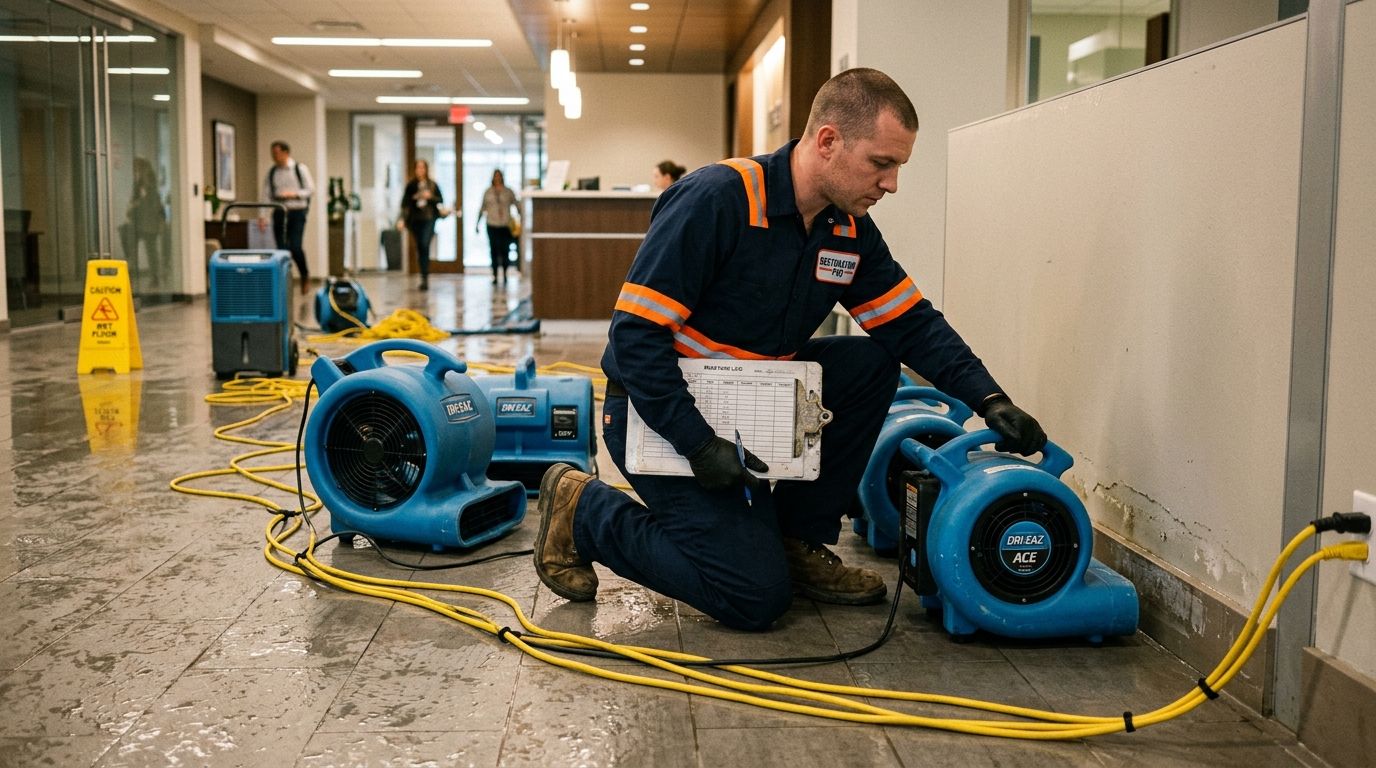

Professional Restoration vs. DIY Mitigation
Attempting DIY cleanup during a property disaster creates severe hidden liabilities:
- Trapped Moisture: Surface drywall dries while moisture inside cavities triggers hidden mold blooms.
- Pathogenic Risks: Category 2 & 3 water contains bio-contaminants standard cleaners fail to kill.
- Insurance Denial: Insurers require daily psychrometric logs; lack of data causes claim disputes.
Transparent Upfront Itemized Pricing
Valley Restoration Pros operates with complete transparency:
- Free On-Site Assessment: Complete physical inspection before work begins.
- Upfront Itemized Estimates: Detailed line items calculated via industry-standard Xactimate.
- Zero Surprise Billing: No hidden charges or unauthorized repairs.
Certified Tempe commercial micro-distillery barrel cellar flood cleanup Field Documentation
Every response performed by Valley Restoration Pros is documented through photographic and thermographic records:
Comprehensive Tempe commercial micro-distillery barrel cellar flood cleanup Technical Manual & Operational Standards
Exhaustive engineering protocols, psychrometric calculations, geological multipliers, and step-by-step restoration standards for Maricopa County properties:
Executive Emergency Abstract: Commercial Micro-Distillery Barrel Cellar Flood Mitigation in the Tempe Rio Salado Industrial Corridor
Within the high-density artisan manufacturing zones of Tempe, Arizona—concentrated heavily throughout the Rio Salado corridor, University Drive, and the industrial manufacturing sectors near Priest Drive—commercial craft micro-distilleries represent an extraordinarily delicate convergence of thermodynamic processing, pressurized plumbing utilities, and high-value flammable inventory. In an active spirit aging facility or bonded rickhouse, oak barrels holding high-proof bourbon, rye whiskey, aged rum, or specialty brandies rest in dense vertical racking arrays. When a high-volume plumbing failure strikes—such as an overhead chiller line break, a catastrophic condenser coolant coil rupture, a reverse osmosis filtration header failure, or a high-pressure municipal washdown pipe blowout—the resulting deluge introduces thousands of gallons of standing water into a hazardous operational environment.
Mitigating flood inundation within a commercial micro-distillery barrel cellar is fundamentally different from addressing standard office or retail water damage. Water intrusion across a spirit aging cellar interacts directly with hundreds of thousands of dollars of aging spirits encapsulated within porous American white oak (Quercus alba) casks. Oak staves are hygroscopic living timber membranes designed to breathe slowly over multi-year maturation cycles, absorbing ambient humidity while steadily exuding ethanol vapors commonly termed the "angel's share." Saturated cellar slabs, pooling wastewater, and surging relative humidity threaten to permanently alter the wood stave equilibrium, compromise barrel bung seals, induce catastrophic structural cooperage collapse, and ignite rampant microbiological contamination. When fluid levels rise, quick execution of emergency water extraction becomes a race against irreversible inventory loss.
Compounding the physical threat to aging inventory is the extreme life-safety hazard of volatile organic compounds (VOCs). The flash point of pure ethanol is 55°F (13°C), and typical barrel-entry spirits (ranging from 110 to 125 proof, or 55% to 62.5% alcohol by volume) maintain flash points hovering between 68°F and 76°F. When high-volume plumbing bursts dislodge barrels, shear sampling valving, or mix with spilled high-gravity distiller's beer (wash), ambient ethanol vapors accumulate within enclosed cellar volumes. The Lower Explosive Limit (LEL) for ethanol is a mere 3.3% by volume in air. Introducing non-intrinsically safe electrical equipment, standard high-velocity air movers, or conventional commercial shop vacuums into an unmitigated distillery flood zone risks catastrophic deflagration. Every phase of extraction, de-energization, and moisture stabilization must strictly comply with National Fire Protection Association standards (NFPA 30 and NFPA 497) for Class I, Division 1 (C1D1) and Division 2 (C1D2) hazardous locations.
Valley Restoration Pros deploys certified Master Commercial Restoration personnel, intrinsically safe pneumatic fluid transfer arrays, explosion-proof positive-pressure ventilation blowers, and external industrial desiccant drying trailers tailored specifically for large-loss beverage manufacturing facilities. For rapid emergency response across the East Valley, distillery owners and operations managers can contact our 24/7 technical dispatch command center at (602) 847-9593. We provide a Free Comprehensive On-Site Damage Assessment, Transparent Upfront Itemized Pricing Before Work Begins, and meticulous forensic psychrometric moisture logs to substantiate complex commercial insurance claims, coordinating seamlessly with local regulatory agencies and our comprehensive Tempe water damage restoration operations.
Immediate Action Directives for Distillery Operations Personnel
- Halt All Open-Flame & Electrical Ignition Sources: Immediately trip the exterior emergency power shutoff (EPO) or lockout non-rated sub-panels feeding the cellar to eliminate spark hazards within potentially flammable ethanol vapor envelopes.
- Monitor LEL Atmospheric Levels: Utilize a calibrated photoionization detector (PID) or multi-gas meter rated for Class I environments to confirm atmospheric ethanol levels remain strictly below 10% of the Lower Explosive Limit prior to personnel entry.
- Isolate Pressurized Process & Condenser Loops: Shut off manual quarter-turn ball valves on cold water chillers, reverse osmosis storage tanks, and steam boiler feedwater manifolds to arrest continuous inundation.
- Engage C1D1-Certified Commercial Mitigators: Call Valley Restoration Pros at (602) 847-9593 for emergency deployment of explosion-proof pneumatic extraction pumps, antistatic air movers, and external desiccant drying systems.
Anatomy of the Failure: Hydrodynamic Pressures, Mechanical Ruptures & Oak Stave Hygroscopic Dynamics
A commercial craft distillery presents a harsh operating environment characterized by high thermodynamic gradients, aggressive cycling between scalding steam and near-freezing chillers, continuous mechanical vibrations, and caustic cleaning regimes. Understanding the physical mechanics behind cellar flooding requires dissecting both the fluid distribution infrastructure and the hydrodynamics of porous wooden casks. Unlike domestic plumbing systems, distillery process piping operates under dynamic industrial fluid loads that create unique mechanical failure modes.
The primary conduit systems traversing a modern Tempe distillery cellar include copper or Schedule 40/80 304L stainless steel condenser cooling loops, insulated Schedule 80 PVC or ABS glycol supply drops, demineralized high-purity water headers fed by commercial reverse osmosis water filter skids, high-pressure steam boiler condensate return lines, and high-pressure hot water washdown manifolds operating at 50 to 85 PSI. When automated solenoid valves or rapid-acting quarter-turn butterfly valves snap closed during automated washdown or distillation cycles, hydraulic shock waves—commonly known as water hammer—surge through the pipe matrix at velocities exceeding 4,000 feet per second. This instantaneous kinetic pressure spike can exceed 350 PSI, causing solder joint shearing, mechanical flange detachment, or catastrophic fatigue failure at unsupported elbows. Similar hydraulic trauma occurs during burst pipe repair emergencies across industrial complexes throughout the Valley.
Condenser & Chiller Loop Fractures
Still condenser cooling loops move hundreds of gallons per minute of cool water to condense high-proof vapor exiting the spirit run. Continuous thermal expansion from 195°F vapor encountering 45°F coolant creates intense thermal fatigue in condenser shell-and-tube joints. When brazed fittings shear, continuous pressurized water cascades directly onto adjacent barrel ricks, saturating cask exteriors and pooling around support dunnage.
Oak Stave Radial & Tangential Swelling
American white oak barrels are bound under physical hoop tension without glue or mechanical fasteners. When submerged in floodwater, timber staves absorb moisture unevenly. Wood exhibits differential hygroscopic expansion: tangential swelling across grain growth rings is nearly double radial swelling. Unequal expansion against rigid galvanized steel hoops causes staves to warp, pinch, and buckle, breaching the watertight compression seal and initiating cask leakage.
Fluid Migration & Dunnage Submergence
Floodwater rapidly migrates across smooth, non-porous epoxy or unsealed polished concrete slabs, pooling in low points beneath bottom-tier barrel racks. Steel barrel cradles and wooden dunnage blocks become fully submerged. Submerged dunnage loses dimensional stability, tilting palletized four-barrel racks and inducing severe dynamic structural load shifts that threaten rack collapse across thousands of pounds of inventory.
The internal physical dynamics of flooded wooden casks are further complicated by vapor pressure differentials and osmotic exchanges. When an aging barrel sits in standing water or an environment with 95% relative humidity, moisture travels inward through the outer wood fibers toward the char layer. Inside, the 55% ABV spirit creates a steep chemical potential gradient. Water molecules penetrate the wood pores faster than larger ethanol molecules can escape, diluting the extractable oak lactones, vanillin, and wood sugars essential to flavor development. Conversely, if restoration crews attempt crude, unmonitored rapid drying using high-heat air movement, the exterior staves lose moisture far faster than internal wood can adjust. This rapid desiccation causes external wood contraction while internal fibers remain swollen, splitting staves along medullary rays and causing catastrophic barrel bursts that dump hundreds of gallons of flammable whiskey directly onto the drying floor.
Simultaneously, plumbing failures that involve spent distillation wash, evaporator lines, or glycol chiller tie-ins discharge high biological oxygen demand (BOD) fluids. Much like the complex industrial contamination documented in our commercial brewery glycol line burst flood cleanup in Tempe, distillery wastewater contains dissolved grain solids, active unfermented pentose and hexose sugars, and trace higher alcohols. As this wash mixes with standing municipal water, it creates an aggressive nutrient film that penetrates sub-slab expansion joints, wicks into perimeter drywall framing, and creates stubborn chemical films that resist simple extraction. Managing these complex physical interactions demands seasoned engineering oversight and specialized commercial water damage restoration protocols.
Tempe & Sonoran Desert Climatic Multipliers: Hard Water Scaling, Caliche Heave & Accelerated Microbial Incubation
Commercial restoration operations in Tempe, Arizona do not take place in a climate-controlled vacuum. The unique geophysical, hydrological, and climatic realities of the Salt River Valley exert continuous external stresses on industrial facilities, compounding water damage severity in ways unfamiliar to technicians operating outside the American Southwest. Craft micro-distilleries in Tempe's Rio Salado industrial basin, near the intersection of University Drive and Priest Drive, face four formidable regional multipliers: extreme municipal water hardness, severe caliche clay subsoil expansion, summer ambient temperatures exceeding 115°F, and aggressive monsoon microbursts.
Tempe's municipal water supply draws from a blend of the Salt River Project (SRP), Central Arizona Project (CAP) Colorado River allocations, and deep municipal groundwater wells. This water carries extreme mineral concentrations, measuring between 18 and 22 grains per gallon (GPG) of total hardness, with total dissolved solids (TDS) frequently exceeding 650 to 900 parts per million (PPM). Calcium carbonate ($CaCO_3$) and magnesium sulfate precipitate aggressively inside boiler feedwater heaters, reverse osmosis membranes, still heat exchangers, and cooling lines. Over time, thick calcite scale creates internal flow constriction, elevated backpressures, and localized galvanic corrosion beneath scale nodules. When a scaled pipe joint or brazed condenser seam fails under mechanical pressure, the discharged water deposits dense alkaline mineral residues that bond tenaciously to porous barrel staves, unsealed concrete floors, and stainless steel distillation columns, complicating post-flood sanitization.
Geotechnical & Climatic Threat Matrix for Tempe Distilleries
| Environmental Factor | Local Measurement / Condition | Impact on Distilling Infrastructure & Barrel Cellars |
|---|---|---|
| Municipal Water Hardness | 18 to 22 GPG (308 - 376 PPM CaCO₃) | Severe calcite scaling in condenser tubes and steam generators; leaves alkaline crusts on saturated oak barrels that impede wood respiration. |
| Sub-Slab Caliche Clay Soil | High-plasticity expansive clay with caliche lenses | Sub-slab water migration triggers soil swelling up to 8,500 PSF, fracturing warehouse concrete slabs, shifting barrel rack anchor bolts, and pinching drainage pipes. |
| Desert Ambient Heat | 110°F to 118°F exterior summer ambient | Cellar internal temperatures surge above 90°F during HVAC shutdown; drastically accelerates ethanol vaporization, lowering flash point safety margins and spiking VOC density. |
| Microbial Incubation Rate | 12 to 24-hour spore germination cycle | Warm, humid, ethanol-enriched atmosphere triggers hyper-rapid colonization of Baudoinia compniacensis, black mold, and wild yeast across casks and framing. |
Geologically, the Rio Salado basin in Tempe is underlain by ancient alluvial floodplain deposits interspersed with dense, calcium-carbonate-cemented soil horizons known locally as caliche. Caliche forms an impermeable, concrete-like subterranean barrier. When thousands of gallons of floodwater escape through floor cracks or saturated slab expansion joints, the water cannot drain naturally into deep groundwater aquifers. Instead, water ponds atop the caliche layer and saturates the overlying expansive clay soils. As these clays absorb water, they exert upward swelling pressures reaching 6,000 to 8,500 pounds per square foot (PSF). This hydraulic heave lifts interior concrete slabs, shears sub-slab sanitary drainage lines, and throws heavy multi-tier barrel racking out of plumb. Detecting these deep subterranean moisture pockets requires specialized slab leak water damage restoration diagnostic instruments, including acoustic ground sensors and high-frequency penetrating radar.
Finally, the interaction between Tempe's 115°F summer heat and floodwater creates a violent biological incubator. When a distillery flood occurs in July or August, Rickhouse temperatures rapidly rise if air conditioning or ventilation systems trip offline. An environment maintaining 90°F with 90% relative humidity, surrounded by airborne ethanol vapor and wood sugars, creates optimal conditions for mycological explosion. The infamous distillery black fungus, Baudoinia compniacensis, thrives exclusively in environments containing airborne ethanol and elevated moisture, utilizing the alcohol vapor as a carbon source for rapid cellular metabolism. Within 24 to 36 hours, this aggressive melanized fungus blankets barrel exteriors, ceiling trusses, and drywall surfaces in soot-like black crusts. Once established, eradicating this biohazard requires rigorous mold remediation protocols, as conventional bleach or surface wiping cannot penetrate the porous oak grain without contaminating the aging spirit within.
Immediate Emergency First-Hour Protocol: Hazardous Isolation, C1D1 Spark Elimination & Environmental Protection
The initial sixty minutes following a major water intrusion inside a commercial micro-distillery barrel cellar dictate whether the incident remains an insurable property loss or escalates into a catastrophic structural fire, catastrophic barrel collapse, or severe municipal regulatory crisis. Emergency response personnel and facility managers must act under strict, disciplined procedures designed to mitigate life-safety hazards before initiating physical extraction. Standard emergency water response procedures do not apply inside a bonded spirit facility; standard electric wet vacuums, ungrounded blowers, and non-certified lighting can instantly trigger an ethanol vapor ignition event.
The primary operational priority is atmospheric verification and flammable vapor isolation. First responders must avoid flipping light switches, engaging ventilation fan breakers, or bringing mobile phones and non-intrinsically safe radios into the cellar envelope. Atmospheric screening utilizing a multi-gas meter equipped with a photoionization detector (PID) must be conducted from the exterior threshold, reading volatile organic compounds (VOCs), oxygen content ($O_2$), and percentage of Lower Explosive Limit (% LEL). If LEL levels exceed 10%, no personnel may enter until intrinsically safe, pneumatic positive-pressure ventilation establishes safe clearance.
First-Hour Emergency Response Protocol Checklist
Phase 1: External Atmospheric LEL Verification
Sample air at floor level, barrel bung level, and ceiling ridges using a C1D1-certified PID meter. Verify ethanol vapor concentration is strictly below 10% of LEL (0.33% ethanol by volume). Maintain continuous atmospheric monitoring throughout the entire mitigation event.
Phase 2: Electrical Lockout / Tagout (LOTO) & Static Bonding
Trip master breakers at the exterior main distribution panel. Execute formal Lockout/Tagout on all 480V 3-phase still controllers, agitator pumps, and cellar lighting. Connect braided copper grounding cables from metal barrel racks to the building's main grounding electrode system to neutralize electrostatic discharge hazards.
Phase 3: Utility Isolation & Pressure Relief
Isolate the primary domestic water backflow assembly, reverse osmosis booster pump headers, and condenser circulation manifolds. Relieve residual hydrostatic pressure from overhead line drops to prevent recurring water surges during restoration operations.
Phase 4: Wastewater Isolation (City of Tempe Compliance)
Deploy chemical-resistant polyurethane drain seals and containment dikes over cellar floor drains. Prevent high-BOD wash water, ethanol residues, and boiler fluids from entering the City of Tempe sanitary sewer system, avoiding severe municipal environmental violations and industrial pretreatment fines.
The environmental compliance component cannot be overstated. The City of Tempe Environmental Services Division enforces strict industrial pretreatment standards governing brewery and distillery wastewater discharges. Commercial sewer lines draining the Rio Salado corridor feed the Kyrene Water Reclamation Facility or the regional 91st Avenue Wastewater Treatment Plant. Uncontrolled discharges containing elevated ethanol concentrations, yeast slurries, or boiler scale inhibitors can wipe out biological digestion beds, triggering substantial regulatory fines, mandatory reporting to the Arizona Department of Environmental Quality (ADEQ), and potential revocation of municipal industrial discharge permits. If sewer backflows or biohazard conditions occur concurrently, immediate engagement of certified sewage cleanup crews is required to decontaminate affected sub-surfaces.
Once safety isolations, static grounding grids, and environmental containment dikes are secured, facility managers should contact Valley Restoration Pros immediately at (602) 847-9593. Our rapid deployment teams mobilize fully self-contained emergency rigs equipped with pneumatic extraction systems, mobile generator power placed safely outside the hazard zone, and intrinsically safe ventilation systems to initiate immediate, compliant mitigation.
Advanced Industrial Equipment Specifications & Setup: C1D1 Pneumatic Pumping, Antistatic Filtration & Desiccant Dehumidification
Mitigating a large-scale commercial flood within a micro-distillery rickhouse requires an engineering approach that completely excludes ordinary commercial drying machinery. Standard restoration air movers with commutated brush motors, conventional refrigerant dehumidifiers with non-sealed electrical switches, and electric submersible pumps create micro-sparks during continuous operation that could ignite volatile ethanol-air mixtures. Valley Restoration Pros deploys an advanced fleet of Class I, Division 1 explosion-proof extraction systems, compressed-air-driven pumps, static-dissipative ventilation blowers, and external heavy-tonnage desiccant dehumidification trailers designed specifically for hazardous commercial environments.
For primary liquid evacuation, our technicians deploy Wilden Pro-Flo SHIFT pneumatic air-operated double-diaphragm (AODD) pumps constructed from conductive polypropylene or 316 stainless steel with PTFE diaphragms. Powered by oil-free, trailer-mounted rotary screw air compressors parked outside the building envelope in a designated non-hazardous zone, these pumps move up to 150 GPM of standing water, ethanol mixtures, and sediment-laden wash without utilizing a single electrical connection within the cellar. High-tensile, static-dissipative EPDM suction hoses fitted with continuous internal bonding wires ensure that electrostatic charges generated by rapid fluid friction are safely bled off to ground before they can accumulate.
Industrial Equipment Fleet Specifications: Distillery & Rickhouse Floods
| Equipment Class | Model / Configuration | Technical Specifications | Cellar Application & Safety Rating |
|---|---|---|---|
| Pneumatic Extraction | Wilden Pro-Flo 2" AODD Pump System | 150 GPM capacity; 125 PSI max air supply; conductive PTFE diaphragms; intrinsically spark-free. | Evacuates standing floodwater, wash slurry, and alcohol mixtures directly into external containment tanks; ATEX / C1D1 compliant. |
| Hazardous Air Movement | Americ VAF-3000P Intrinsically Safe Blower | 2,093 CFM airflow; pneumatic motor; anti-static conductive polyethylene housing; grounding clamp. | Purges volatile ethanol vapors; provides laminar evaporation across wet barrel racking without electrical spark risk; C1D1 rated. |
| Industrial Desiccant Trailer | Aggreko / DryMax 5000 CFM Desiccant System | 5,000 CFM process airflow; silica gel desiccant wheel; removes 2,400 pints/day at 80°F/60% RH; 15 GPP supply air. | Parked outdoors; delivers ultra-dry, deep-grain dehumidification air into the cellar through positive-pressure ducting manifolds. |
| Negative-Air HEPA Filtration | Phoenix Guardian HEPA System (Sealed Motor) | 1,400 CFM; 99.97% DOP capture efficiency at 0.3 microns; multi-stage carbon adsorption filter. | Captures airborne fungal spores (Baudoinia, mold) and neutralizes ambient organic odors during structural drying. |
| Direct Injection Wall Drying | Injectidry HP-PLUS Drying Package | High-pressure negative/positive pressure airflow; delivers warm dry air into wall cavities via small penetrations. | Dries moisture trapped behind water-resistant FRP wall panels and drywall framing behind barrel racks without wall tear-out. |
To dry saturated building envelopes without damaging sensitive wooden casks, our engineers rely on trailer-mounted industrial desiccant dehumidifiers. While standard low-grain refrigerant (LGR) dehumidifiers are effective in everyday commercial environments, an active distillery rickhouse requires precise, deep psychrometric moisture depression that refrigerants cannot provide. Desiccant systems utilize a continuously rotating honeycomb wheel coated with synthetic silica gel. Process air from the cellar passes through the wheel, where water vapor is adsorbed directly via vapor pressure differential. The desiccant system delivers dry air with grains per pound (GPP) metrics as low as 15 to 25 GPP, establishing a powerful vapor pressure gradient that draws bound moisture out of concrete foundations and perimeter partitions. The entire drying strategy aligns with the heavy industrial drying principles deployed in our structural drying protocols.
Diagnostic moisture assessment inside the cellar relies on intrinsically safe, non-destructive instrumentation. Our team utilizes FLIR E8-XT infrared thermal cameras to scan cold-temperature evaporative signatures across vast concrete slab spans and behind multi-tiered racking systems. Subsurface concrete moisture is measured using Tramex CME5 non-destructive impedance meters and ASTM F2170 in-situ relative humidity probes inserted into drilled slab sleeves. To evaluate moisture absorption across American white oak casks, technicians employ Delmhorst RDM-3 digital wood moisture meters fitted with insulated pin electrodes, verifying wood moisture content (MC%) at varying depths along the barrel staves to avoid rapid over-drying and destructive shrinkage.
When water penetrates double-paneled firewalls or fiber-reinforced plastic (FRP) sanitary wall claddings separating the rickhouse from adjacent bottling lines or still rooms, technicians deploy the Injectidry HP-PLUS high-pressure direct injection drying system. By coring discreet 3/8-inch test holes beneath wall baseboards or along racking anchor lines, the system forces ultra-dry desiccant air directly into enclosed wall cavities, evaporating trapped interstitial moisture without requiring destructive demolition of essential fire-rated perimeter partitions. Similar specialized structural drying engineering is detailed in our coverage of ASU Research Park commercial lab water damage restoration in Tempe.
All pneumatic and auxiliary support equipment deployed in the cellar is continuously monitored via intrinsically safe instrumentation. Technicians track air velocity across barrel surfaces with Dwyer hot-wire thermo-anemometers, ensuring boundary-layer evaporation remains below 250 feet per minute to prevent stave desiccation stress. Furthermore, all compressed air supply lines are fitted with coalescing oil-removal filtration banks and inline desiccators, guaranteeing that process air powering our C1D1 tools introduces zero airborne hydrocarbons or secondary oil aerosols into the sensitive spirit aging environment.
IICRC S500 / S520 Step-by-Step Restoration Protocol: Six-Stage Engineering Workflow for Flooded Rickhouses
Valley Restoration Pros executes micro-distillery cellar flood mitigation in strict accordance with the Institute of Inspection, Cleaning and Restoration Certification (IICRC) S500 Standard for Professional Water Damage Restoration, the IICRC S520 Standard for Professional Mold Remediation, and Title 21 of the Code of Federal Regulations (21 CFR Part 117 - Current Good Manufacturing Practice for Human Food). The presence of aging spirits intended for human consumption mandates an uncompromising hygiene standard where food safety regulations intersect with heavy industrial drying science. The following six-stage engineering protocol outlines our methodical restoration workflow.
Stage 1: Hazardous Atmospheric Clearance & Psychrometric Baseline Mapping
Before mobilizing heavy restoration equipment, technicians establish an external command post and execute a full atmospheric sweep using certified C1D1 photoionization detectors (PID) and four-gas monitors. Oxygen levels must register between 19.5% and 22.0%, carbon monoxide ($CO$) below 25 PPM, hydrogen sulfide ($H_2S$) at 0.0 PPM, and volatile flammable ethanol vapors below 10% of the Lower Explosive Limit. Once hazardous clearance is verified, lead technicians establish baseline psychrometric conditions. Ambient temperature, relative humidity (RH), dew point, and humidity ratio (grains per pound, GPP) are recorded for the affected rickhouse, unaffected adjacent spaces (still room, tasting room, bottling hall), and outside ambient desert air.
Initial moisture content (MC%) is logged across multiple points: bottom-tier oak barrel staves, wood dunnage, rack anchor footings, perimeter drywall, and concrete slab cores using pin and non-pin meters. These baseline readings establish the formal Drying Standard against which structural clearance will ultimately be validated.
Stage 2: Intrinsically Safe Fluid Evacuation & Environmental Segregation
Standing floodwater is systematically evacuated utilizing our truck-mounted pneumatic double-diaphragm pumping fleet. Because floodwater in a distillery cellar frequently contains spilled wash, spent grain sediment, and ethanol residues, water is diverted away from municipal floor drains and pumped directly into intermediate bulk containers (IBC totes) or vacuum holding trucks for wastewater characterization. This prevents illegal discharges under the City of Tempe Industrial Pretreatment Program.
Technicians follow heavy pumping with static-bonded pneumatic squeegee wands, pulling residual fluid from low depressions beneath low-clearance barrel racks, expansion joints, and equipment footings. Rapid bulk extraction eliminates over 95% of the total water volume, dramatically curtailing atmospheric vapor loading and slowing wood stave moisture absorption.
Stage 3: Barrel Stave Microclimate Stabilization & Racking Inspection
The central challenge of barrel cellar restoration is managing wood stave equilibrium moisture content (EMC). Saturated American white oak barrels cannot simply be subjected to blast drying. If surrounding relative humidity plummets from 90% down to 20% within hours, exterior stave wood shrinks while the internal timber remains water-logged, causing catastrophic hoop slippage, stave fracture, and bung blowout.
Valley Restoration Pros establishes a controlled microclimate chamber around the barrel ricks, maintaining relative humidity at a stable 60% to 65% while gradually reducing grains per pound over a 72-hour cycle. Certified cooperage inspection protocols are performed: every bottom-tier cask is examined for stave deformation, bung seal displacement, and hoop integrity. In multi-tier rick systems, structural integrity engineers verify that saturated wooden dunnage or foundation deflection has not compromised vertical racking alignment.
Stage 4: Food-Safe Antimicrobial Decontamination & Spore Neutralization
Once bulk fluid is removed, all structural concrete slabs, metal rack frames, and non-porous assemblies are decontaminated using EPA-registered, food-contact-safe antimicrobial solutions. In a licensed food-grade distillation cellar, traditional toxic biocides, chlorine bleaches, or quaternary ammonium compounds with persistent aromatic chemistries cannot be used, as airborne fumes or chemical residues could penetrate wooden barrel staves and adulterate the aging spirit.
Our specialists apply stabilized peracetic acid ($CH_3CO_3H$) and hydrogen peroxide formulations. These advanced oxidizers neutralize wild yeast, bacterial cultures, and early-stage Baudoinia compniacensis fungal mycelium on contact, breaking down completely into harmless water, oxygen, and trace acetic acid without leaving toxic residues. Similar food-safe sanitation principles are utilized during our Chandler craft brewery pipe burst flood cleanup operations.
Stage 5: Industrial Desiccant Drying & Sub-Slab Vapor Extraction
Structural drying of heavy commercial concrete slabs requires sustained thermodynamic vapor pressure control. Outside the facility, our mobile desiccant dehumidifier trailer processes thousands of cubic feet of air per minute, discharging deep-dry air (15 to 20 GPP) through reinforced lay-flat ducting into the rickhouse. Intrinsically safe air movers maintain laminar boundary-layer airflow across the floor, drawing bound moisture upward through the concrete matrix into the air stream, where it is exhausted outside the building envelope.
Daily psychrometric moisture logs record ambient temperature, relative humidity, dew point, GPP, and concrete core relative humidity in accordance with ASTM F2170 standards. This deep structural dryout prevents sub-slab moisture from re-saturating the cellar once HVAC systems are brought back to standard operational parameters.
Stage 6: Post-Remediation Verification, ATP Bioluminescence & Clearance Certification
Clearance verification is conducted only when all structural materials achieve verified pre-loss dry standards. In addition to psychrometric validation, our certified industrial hygienist (CIH) partners execute rapid adenosine triphosphate (ATP) bioluminescence surface swab testing across barrel surfaces, racking frames, and floor slabs. ATP readings must fall below 10 relative light units (RLU), confirming an ultra-clean, food-safe operational state.
Upon passing all microbial swabs and moisture benchmarks, Valley Restoration Pros issues a comprehensive Certificate of Completion accompanied by an exhaustive forensic documentation dossier for corporate risk management and commercial property insurance claim resolution.
Hyper-Local Tempe Case Study: Commercial Micro-Distillery Rickhouse Flood Mitigation on University Drive
Incident Profile: University Drive & Priest Drive Industrial Corridor, Tempe, AZ 85281
At 2:45 AM on a mid-July Tuesday, an overhead 2-inch condenser cooling loop return line suffered catastrophic fitting separation inside a premier craft micro-distillery located in the Rio Salado industrial corridor near University Drive and Priest Drive. Pressurized water at 68 PSI discharged continuously for nearly four hours before the morning distilling shift arrived on site. By 6:30 AM, an estimated 5,200 gallons of water and boiler condensate had flooded the 7,200-square-foot aging cellar, which housed 480 American white oak barrels of aging bourbon, rye, and malt whiskey valued at over $2.2 million.
When the facility operations manager discovered the inundation, standing water stood 3 to 4 inches deep across the warehouse slab, completely submerging bottom-tier barrel racks and wood dunnage blocks. Saturated by the hot municipal floodwater, the wooden barrels were rapidly absorbing fluid, and elevated ambient temperatures (88°F inside the facility with exterior Phoenix ambient climbing toward 114°F) accelerated ethanol vaporization from wood micro-pores. Initial photoionization detector (PID) readings registered elevated VOC levels, mandating immediate hazardous atmospheric protocols. Valley Restoration Pros was dispatched via our 24/7 commercial emergency hotline, arriving on scene in 28 minutes.
Psychrometric & Moisture Metric Restoration Progression
| Restoration Parameter | Incident Baseline (Hour 1) | Stabilization (Hour 24) | Deep Dryout (Hour 48) | Verified Clearance (Hour 72) | Standard Dry Target |
|---|---|---|---|---|---|
| Cellar Ambient RH | 94% RH | 64% RH | 48% RH | 38% RH | 35% - 45% RH |
| Humidity Ratio (GPP) | 148 GPP | 72 GPP | 44 GPP | 32 GPP | < 40 GPP |
| Oak Stave Surface MC% | 34.2% WME | 22.8% WME | 16.1% WME | 12.4% WME | 11.0% - 13.5% WME |
| Concrete Slab Internal RH | 99% In-Situ RH | 89% In-Situ RH | 81% In-Situ RH | 74% In-Situ RH | ≤ 75% In-Situ RH |
Our incident commander immediately instituted C1D1 safety protocols. Technicians ran heavy copper grounding lines from the steel rick racking system to verified building earth grounds. Two Wilden 2-inch pneumatic double-diaphragm pumps, driven by an external diesel air compressor staged 100 feet away in the north parking apron, evacuated 4,800 gallons of standing liquid in under 90 minutes. Extracted fluid was diverted to sealed 330-gallon IBC totes to protect the City of Tempe wastewater infrastructure from unmetered BOD/COD loading.
To dry the facility without desiccating the fragile oak casks, an external 5,000 CFM desiccant dehumidifier trailer was deployed, supplying ultra-dry air through 20-inch antistatic ducting. Six pneumatic axial air movers maintained gentle, non-turbulent laminar airflow beneath the lower barrel tiers. Technicians applied a food-contact-safe peracetic acid mist across contaminated concrete expanses to inhibit fungal colonization. By Hour 72, oak stave moisture content normalized to 12.4% WME without a single loose hoop or barrel leak, concrete internal relative humidity dropped to 74%, and ATP bioluminescence swabs confirmed complete microbial sanitization. The client resumed scheduled distillation and bottling operations with zero inventory write-offs.
Post-restoration forensic evaluation revealed that our rapid deployment of positive-pressure desiccant air prevented sub-slab caliche expansion from lifting the perimeter foundation footings. Ground-penetrating radar scans performed at the 14-day mark confirmed zero sub-slab void formation or lingering subterranean moisture pockets beneath the cellar slab. Similar rapid mitigation successes are highlighted across our wine cellar flood restoration projects in Phoenix and our large commercial warehouse flood restoration assignments.
Transparent Financial Standards, Commercial Claims Management & Forensic Documentation
A major flood inside a commercial craft distillery introduces complex insurance and financial challenges that extend far beyond standard structural drying claims. When hundreds of thousands of dollars in aging spirit inventory, custom distillation columns, and bonded warehouse assets are threatened, business owners need absolute financial transparency and forensic documentation that withstands rigorous scrutiny by commercial property and casualty adjusters, forensic accountants, and underwriting investigators.
Valley Restoration Pros operates under strict Pay-Per-Call (PPC) and commercial consumer protection standards. We never make misleading promises regarding direct carrier billing or claim that insurance will cover 100% of costs without deductible or policy limits. Commercial insurance coverage varies significantly depending on specific policy endorsements, including Water Damage Inundation Endorsements, Equipment Breakdown Coverage (boiler and machinery), Spoilage and Contamination Riders, and Civil Authority / Environmental Pretreatment Endorsements. Our operational commitment to commercial facility operators rests on three fundamental pillars:
Free Comprehensive On-Site Assessment
Our certified master restoration specialists arrive on scene, execute atmospheric safety testing, map moisture intrusion boundaries using infrared thermography, and provide facility owners with a clear, honest appraisal of property conditions at zero initial cost.
Transparent Upfront Itemized Pricing
Before any work commences, clients receive a fully itemized, industry-standard estimate generated using Xactimate software. Every line item—from pneumatic pumping and C1D1 equipment surcharges to desiccant run hours—is clearly defined with no hidden fees.
Forensic Claims Documentation
We assemble a comprehensive forensic proof package, including daily psychrometric dry logs, thermal imaging radiometric files, Cooperage moisture logs, and ATP bioluminescence swab results to substantiate every dollar claimed with your carrier.
In commercial beverage manufacturing claims, inventory valuation presents unique accounting hurdles. Aging spirits are classified as maturing inventory whose market value appreciates significantly over time. Standard actual cash value (ACV) calculations based solely on grain, water, and barrel input costs fail to account for irreplaceable aging time and anticipated wholesale revenue. Our documentation specialists work directly with your forensic accountants and insurance adjusters, supplying precise environmental logs that verify whether barrels suffered thermal shock, liquid contamination, or wood stave breach, protecting the full insurable value of maturing stock.
Our claims documentation protocols utilize standardized Xactimate line-item coding accepted by major commercial underwriters nationwide. We detail all specialized hazardous location operations, including pneumatic pumping mobilization (WTR EXT), hazardous environment air scrubbers with activated carbon stages (HMR DRY), intrinsically safe ventilation ducting, and industrial desiccant trailer operations (DHM LGR/DESIC). By logging exact run hours, intake and exhaust grains per pound, and atmospheric LEL clearance readings, we provide adjusters with an indisputable evidentiary trail that accelerates claim settlement timelines.
Furthermore, we provide commercial operations directors with critical documentation required for Business Interruption (BI) and Extra Expense claims. In a craft micro-distillery, flood downtime halts brewing mashes, strips distillation capacity, and delays scheduled packaging runs. Our engineering logs quantify exact timelines from initial incident isolation to final microbial clearance certification, enabling your risk managers to recover legitimate revenue losses resulting from temporary facility suspension.
For commercial business owners seeking preliminary budget clarity, our online restoration cost estimator provides baseline cost expectations for industrial water extraction and drying services. To explore our comprehensive regional coverage across Maricopa County, visit our areas we serve directory, or connect directly with our emergency command dispatch via our contact us portal.
Exhaustive Technical FAQ: Commercial Distillery Barrel Cellar Flood Recovery
Safety in ethanol-rich atmospheres requires strict adherence to Class I, Division 1 (C1D1) explosion-proof protocols under NFPA 30 and NFPA 497. Conventional electric pumps, wet vacuums, and commercial blowers contain electric brushes that produce continuous micro-sparks capable of igniting ethanol-air mixtures at concentrations between 3.3% and 19.0% (the Lower and Upper Explosive Limits). Valley Restoration Pros utilizes pneumatic air-operated double-diaphragm (AODD) pumps driven entirely by compressed air from exterior compressors staged outside the building hazard envelope. All extraction wands and hoses are made from conductive anti-static materials and are mechanically bonded using copper grounding jumpers attached to verified earth ground electrodes to eliminate electrostatic discharge.
Yes, unmonitored rapid drying is exceptionally hazardous to aging barrels. American white oak casks maintain structural integrity through delicate equilibrium moisture content (EMC) and hoop tension. If high-capacity desiccant systems or aggressive air movers drop ambient relative humidity below 40% too rapidly, the outer millimeters of the wood staves lose moisture rapidly while internal fibers remain saturated. This moisture gradient causes violent tangential wood shrinkage, pulling staves away from steel hoops and causing catastrophic leaks or barrel collapse. Our technicians engineer a controlled microclimate chamber that stabilizes relative humidity around the barrels at 60% to 65% while directing concentrated drying energy toward concrete floors and structural walls.
No. Discharging floodwater contaminated with unfermented distiller's wash, high-proof ethanol, spent grain solids, or boiler chemical scale into municipal sanitary sewers directly violates the City of Tempe Industrial Pretreatment Program and City Code Chapter 27. High-BOD/COD organic fluids shock municipal wastewater treatment plants (such as the Kyrene Water Reclamation Facility), resulting in heavy regulatory penalties and potential suspension of industrial discharge permits. Valley Restoration Pros isolates cellar drains immediately using polyurethane containment plugs and pumps contaminated liquids into sealed intermediate bulk containers (IBC totes) or licensed hazardous waste vacuum trucks for chemical analysis and off-site disposal.
Under FDA Food Safety Modernization Act (FSMA 21 CFR Part 117) regulations, all sanitizers applied in a facility producing human consumables must be food-contact safe and non-tainting. Conventional chlorine bleaches, phenolic compounds, and scented quaternary ammonium disinfectants cannot be used; chlorine reacts with wood lignin to produce 2,4,6-trichloroanisole (TCA), the compound responsible for severe "cork taint" that permanently ruins distilled spirits. We utilize stabilized peracetic acid ($CH_3CO_3H$) and hydrogen peroxide blends. These food-grade oxidizers destroy bacteria, wild yeast, and mold spores on contact and decompose completely into water, oxygen, and trace vinegar without leaving toxic or aromatic residues.
The Rio Salado industrial basin is characterized by dense subterranean caliche horizons—calcium carbonate-cemented hardpan layers that block natural downward percolation. When high-volume pipe bursts flood a cellar, water migrates downward through control joints and foundation cracks, pooling between the concrete slab and the impermeable caliche. This trapped water saturates overlying expansive clays, generating upward heave pressures exceeding 8,000 PSF that can crack reinforced concrete slabs and misalign barrel racking arrays. Furthermore, trapped moisture acts as a continuous vapor reservoir, pushing moisture upward through the concrete via capillary action. Removing this sub-slab moisture requires sustained deep-grain desiccant drying and negative-pressure vapor extraction.
Mitigation must commence within 12 to 24 hours. The unique biological organism Baudoinia compniacensis, commonly known as distillery black fungus, feeds on ambient ethanol vapor released during barrel maturation. In normal dry cellar conditions, it grows very slowly; however, when high-volume floodwater saturates the cellar, raising relative humidity above 85% in temperatures exceeding 80°F, fungal germination accelerates dramatically. Within 36 hours, soot-like fungal colonies can envelop wooden casks, structural framing, and insulation. Once established, mechanical scrubbing or dry ice blasting is required to eradicate the fungus without damaging barrel integrity. Rapid water extraction, HEPA filtration, and desiccant humidity depression are essential to arrest colonization before spores bloom. For additional chiller-related piping insights, explore our commercial chiller pipe burst restoration overview.
Verified Local Area Dispatch: Tempe, AZ
Official Geo-Coordinates: 33.4255° N, -111.94° W • Maricopa County
Related Specialized Emergency Restoration Services
Explore specialized rapid-response mitigation protocols across Greater Phoenix and Maricopa County:
Valley-Wide Emergency Response Service Coverage
Our mobile restoration fleet is dispatched across the entire Phoenix metropolitan region, providing rapid 30 to 60 minute emergency response: