

Valley Restoration Pros delivers 24/7 industrial emergency water extraction, thermal psychrometric drying, and structural mitigation across Phoenix and Maricopa County with guaranteed 30–60 minute rapid arrival. All protocols strictly adhere to IICRC S500 standards, featuring upfront itemized pricing and free on-site thermal moisture assessments. Call dispatch directly at (602) 847-9593.
Why Immediate Mitigation Is Critical in Phoenix Heat
Subterranean chemical distribution vault (CDV) inundation submerging ultra-pure chemical supply lines and acid-waste neutralization (AWN) lift stations creates immediate catastrophic risks of chemical cross-reaction, exothermic heat generation, and toxic vapor off-gassing involving hydrofluoric acid, sulfuric acid, and flammable solvents. Under Chandler summer ambient temperatures reaching 115°F, trapped moisture inside confined subterranean chemical vaults triggers explosive vapor expansion, rapid secondary containment liner delamination, and accelerated chemical vapor corrosion across 316L stainless steel piping and Class 1 Division 1 electrical raceways. Monsoon stormwater runoff carrying Chandler expansive caliche clay silt and 18 GPG alkaline scale deposits overwhelms sub-grade sumps, forming conductive mineral slurries that compromise intrinsically safe liquid level sensors and trigger catastrophic automated emergency shut-off trips across front-end cleanroom manufacturing tools. Ground heave and severe lateral hydraulic soil pressure along the Price Road corridor fractures underground double-containment poly piping sleeves and concrete vault penetrations, continuously funneling thousands of gallons of pressurized groundwater into hazardous chemical distribution rooms until mechanical containment isolation is established.
Service Definition & The IICRC Standard of Care
Professional chandler semiconductor chemical distribution vault water extraction is an engineering and environmental discipline adhering strictly to IICRC S500 protocols, not mere surface mopping. When structural plumbing failures strike in Maricopa County, certified emergency water extraction and thermal structural drying procedures must be deployed immediately. Whether triggered by high-pressure burst pipe emergencies, subfloor leaks, or commercial line ruptures, bound moisture rapidly penetrates concrete subfloors and wall framing. In the desert heat, delays trigger microbial proliferation requiring rapid mold remediation. Request damage assessment through our emergency assessment portal or request 30-minute dispatch across all Valley service areas.
Securing electrical feeds, inspecting load-bearing assemblies, and containing pathogens.
Stopping the intrusion source and erecting 6-mil plastic isolation containment airlocks.
31-HP truck-mount extraction, removing gallons exponentially faster than evaporation.
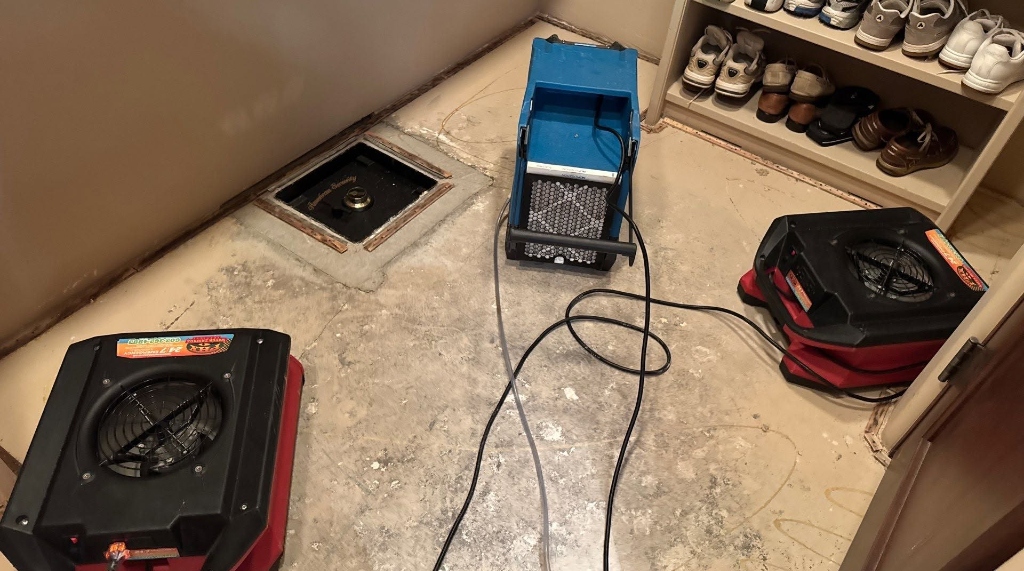
LGR dehumidifiers and HEPA air scrubbers driving grains per pound below 25 GPP.
Calibrated electronic pinless testing confirming baseline dry standards.
The Complete 6-Stage Restoration Roadmap
Our IICRC-certified crews execute a disciplined, scientific 6-stage protocol to stabilize and dry structural components:
Emergency Dispatch & Perimeter Isolation
30 to 60 minute arrival. Securing electrical shutoffs, evaluating structural loads, and erecting containment airlocks.
FLIR® Thermal Mapping & Baseline Scans
Infrared thermal scans detect trapped moisture behind walls and beneath concrete without invasive exploratory demolition.
High-Volume Bulk Extraction
31-HP truck-mount extraction units pump standing water away at hundreds of gallons per minute.
Controlled Selective Demolition
Precision flood cuts 12 to 24 inches above moisture lines, removing wet insulation and opening wall framing to dry airflow.
Thermodynamic Dehumidification
Industrial Low-Grain Refrigerant dehumidifiers pull deep trapped moisture from dense framing lumber and concrete slabs.
Antimicrobial Sanitization & Verification
EPA-registered botanical application (Benefect Decon 30) and calibrated moisture testing to issue an official dry certificate.


Specialized Equipment & Industrial Restoration Technology
Mitigating severe property damage requires industrial-grade technology capable of altering thermodynamic psychrometrics:
Truck-Mounted Extraction Rigs
31-HP engines producing 16+ inches Hg vacuum suction to evacuate bulk water rapidly into holding tanks.
Low-Grain Refrigerant Dryers
Pre-cooling heat-pipe systems driving ambient grains per pound below 25 GPP to draw deep trapped water out of framing.
HEPA Negative-Air Scrubbers
Hospital-grade 99.97% particulate filtration capturing microscopic fungal spores, soot, and biohazard aerosols.
FLIR® Thermal Scanners & Probes
Infrared thermography detecting evaporative cooling boundaries behind walls, combined with digital RF pinless scanners.
Professional Restoration vs. DIY Mitigation
Attempting DIY cleanup during a property disaster creates severe hidden liabilities:
- Trapped Moisture: Surface drywall dries while moisture inside cavities triggers hidden mold blooms.
- Pathogenic Risks: Category 2 & 3 water contains bio-contaminants standard cleaners fail to kill.
- Insurance Denial: Insurers require daily psychrometric logs; lack of data causes claim disputes.
Transparent Upfront Itemized Pricing
Valley Restoration Pros operates with complete transparency:
- Free On-Site Assessment: Complete physical inspection before work begins.
- Upfront Itemized Estimates: Detailed line items calculated via industry-standard Xactimate.
- Zero Surprise Billing: No hidden charges or unauthorized repairs.
Certified chandler semiconductor chemical distribution vault water extraction Field Documentation
Every response performed by Valley Restoration Pros is documented through photographic and thermographic records:

Comprehensive chandler semiconductor chemical distribution vault water extraction Technical Manual & Operational Standards
Exhaustive engineering protocols, psychrometric calculations, geological multipliers, and step-by-step restoration standards for Maricopa County properties:
Stage 1: Executive Emergency Abstract & Incident Overview: Chandler Semiconductor Chemical Distribution Vault Inundation
Within the premier semiconductor manufacturing cluster of the American Southwest—the Price Road Silicon Corridor in Chandler, Arizona, centered near the major high-technology arterial junction of South Dobson Road and West Queen Creek Road—uncompromising environmental stability is the fundamental prerequisite of microelectronics fabrication. High-volume wafer manufacturing facilities, advanced semiconductor packaging campuses, and specialty chemical synthesis plants in this corridor rely on intricate, subterranean chemical distribution vaults (CDVs) and sub-fab utility basements. Positioned eight to twenty-four feet below finished grade, these heavy reinforced-concrete subterranean enclosures house primary bulk chemical distribution systems (BCDS), ultra-pure chemical (UPC) transfer lines, acid-waste neutralization (AWN) lift stations, fluoropolymer-lined double-containment piping headers, and localized slurry dispense pumps. These sub-grade infrastructure vaults route vital liquid precursors—including aqueous hydrofluoric acid, semiconductor-grade sulfuric acid, hydrogen peroxide, tetramethylammonium hydroxide (TMAH) developer solutions, and flammable solvents such as isopropyl alcohol (IPA)—directly into overhead cleanroom production bays.
When sudden water intrusion strikes a subterranean chemical distribution vault, the event represents an immediate, catastrophic threat that diverges entirely from conventional commercial basement flooding. Water entry may originate from massive industrial chiller pipe failures, pressurized DI (deionized) water distribution loop fractures, fire protection dry-pipe deluge discharges, or severe Sonoran Desert monsoon cloudbursts that overwhelm civil retention basins and hydraulic duct banks. In a subterranean chemical vault, floodwaters do not simply saturate structural concrete; they instantly submerge secondary containment basins, compromise electrical junction enclosures, overwhelm acid-waste neutralization sumps, and interact unpredictably with specialized bulk chemicals. A single inch of water inundation across a chemical valve manifold box (VMB) can trip safety interlocks, initiating plant-wide emergency tool shutdowns across lithography, chemical vapor deposition (CVD), and chemical mechanical planarization (CMP) bays that generate catastrophic operational losses exceeding $350,000 per hour of unmitigated production downtime.
Executing rapid emergency water extraction within a semiconductor chemical distribution vault demands an elite industrial restoration team certified under OSHA 29 CFR 1910.120 (HAZWOPER 40-Hour Hazardous Waste Operations), trained in NFPA 70 National Electrical Code Class 1, Division 1 hazardous location standards, and possessing advanced competency in hazardous materials characterization. Traditional extraction pumps, standard commercial shop vacuums, and spark-producing electrical tools are strictly barred from these environments due to the volatile co-presence of flammable solvent vapors and corrosive fumes. Every gallon of standing liquid must be evaluated as potentially hazardous effluent, requiring precise pH monitoring, atmospheric lower explosive limit (LEL) testing, toxic gas photoionization detection, and specialized non-sparking, intrinsically safe pumping infrastructure.
Valley Restoration Pros operates as the foremost commercial industrial disaster restoration authority throughout Chandler and the greater Phoenix metropolitan East Valley. Our master industrial response specialists deploy around the clock, mobilizing truck-mounted explosion-proof pneumatic diaphragm pumps, intrinsically safe Class 1 Div 1 electric submersible extraction systems, negative-air chemical filtration scrubbers with dual-stage activated carbon chemisorption beds, and ultra-high-capacity industrial desiccant dehumidifiers. Working under strict unified incident command with facility chemical safety officers and EHS (Environmental Health and Safety) managers, we contain, neutralize, extract, and completely desiccate flooded subterranean chemical distribution infrastructure, protecting capital assets valued in the tens of millions and safely expediting semiconductor cleanroom re-commissioning.
Immediate First-Hour Industrial Vault Safety Directives
- Absolute Zone Exclusion & Life-Safety Evacuation: Immediately evacuate all personnel from subterranean utility corridors, sub-fab cleanroom plenums, and adjacent subterranean valve galleries. Establish an exclusion perimeter extending a minimum of 100 feet from all vault access hatches, subterranean stairwells, and freight elevator vestibules. Do not enter standing liquid without certified Level B/C chemical PPE and multigas monitoring clearance.
- Initiate Automated Toxic Chemical & Solvent Isolation: Activate the emergency chemical shutoff system (ECSS) to pneumatic valve manifold boxes feeding the flooded distribution vault. Isolate pressurized lines carrying hydrofluoric acid, hydrochloric acid, ammonia, TMAH, and solvent manifolds at the main chemical storage tank farm upstream.
- Isolate Non-Intrinsically Safe Electrical Circuits: Coordinate with facility electrical engineering to de-energize standard 480V/208V power panels, lighting circuits, and receptacle branch wiring feeding the subterranean vault at upstream substation switchgear. Maintain emergency power only to explosion-proof exhaust ventilation fans and Class 1 Div 1 certified life-safety gas detection sensor systems.
- Mobilize Specialized Industrial Vault Dewatering Units: Contact Valley Restoration Pros Industrial Large-Loss Command immediately at (602) 847-9593 or engage Emergency Phone Dispatch for guaranteed 20- to 30-minute rapid mobilization across the Chandler Silicon Corridor and Ocotillo industrial submarket.
Stage 2: Anatomy of the Chemical Vault Failure & Hydrodynamic Dynamics
Subterranean chemical distribution vaults in advanced semiconductor manufacturing campuses are complex, engineered reinforced-concrete containment structures. Engineered to satisfy stringent environmental protection codes (EPA 40 CFR 264 Subpart J, OSHA 1910.119 Process Safety Management, and local Chandler municipal wastewater pretreatment ordinances), these vaults serve as secondary containment envelopes for bulk chemical dispensing equipment, valve manifold boxes, and acid-waste neutralization collection sumps. The structural architecture includes poured-in-place concrete walls eighteen to thirty-six inches thick, coated with specialized elastomeric fluoropolymer, vinyl ester, or novolac epoxy liner membranes designed to withstand concentrated acids, caustic hydroxides, and polar organic solvents.
Despite robust engineering safeguards, subterranean chemical vaults are vulnerable to multi-vector fluid inundations resulting from mechanical equipment failures, civil infrastructure breaches, and hydrogeological stress. Understanding the primary failure dynamics is critical to formulating an effective, safe engineering restoration plan:
Acid-Waste Neutralization (AWN) Sump Overflow
Semiconductor fab cleanrooms discharge thousands of gallons of spent corrosive rinse fluids into sub-grade AWN lift stations. If duplex heavy-duty sump pumps suffer mechanical cavitation, electrical relay failure, or impeller jam from crystallizing chemical salts, incoming acid waste backs up rapidly, overtopping sump containment curbs and filling the distribution vault floor with toxic, low-pH industrial wastewater.
Double-Containment Outer Sleeve Failure
Chemical distribution lines utilize coaxial double-containment piping (e.g., PFA or PVDF primary inner pipe inside high-density polyethylene HDPE or FRP outer containment sleeves). If thermal cycling or excessive hydraulic water hammer causes primary carrier line rupture, chemical fluid fills the interstitial annular space. When an outer containment sleeve fitting cracks inside a flooded subterranean vault, aggressive chemicals bleed directly into incoming floodwaters.
High-Pressure DI Water Loop Rupture
Semiconductor manufacturing consumes massive volumes of ultra-pure water (UPW) pressurized at 80 to 120 PSI. UPW supply mains running through utility trenches share wall penetrations with chemical vaults. A mechanical flange rupture or valve gasket blowout along a 6-inch or 8-inch UPW loop discharges up to 800 gallons per minute of aggressive, highly aggressive deionized water directly into the vault enclosure.
The hydrodynamics of a chemical distribution vault flood trigger dangerous physical and chemical phenomena. Ultra-pure water, completely stripped of dissolved minerals (resistivity reaching 18.2 Megohm-cm at 25°C), behaves as an aggressive chemical solvent. When UPW floods concrete surfaces or comes into contact with metallic components, it aggressively leaches calcium, lime, and metal ions from concrete cold seams and unlined structural joints, rapidly degrading structural seals.
Even more critical is the exothermic interaction that occurs when floodwaters breach secondary containment sumps containing concentrated industrial chemicals. When water mixes with concentrated sulfuric acid ($H_2SO_4$, 96-98%) commonly utilized in piranha etch solutions, the heat of dilution is intensely exothermic, rapidly spiking liquid temperatures beyond 200°F. This sudden thermal shock can cause localized boiling, violent acid splattering, and structural cracking of polypropylene containment vessels. Simultaneously, the hot acid solution off-gases dense, corrosive sulfur oxide and acidic aerosol mists that immediately attack overhead galvanized cable trays, structural steel columns, and precision stainless steel pneumatic control actuators.
If water levels reach electrical cable trenches housing Class 1 Division 1 intrinsically safe barrier modules and 24V DC telemetry wiring, hydrostatic pressure forces water through conduit seals into sealed explosion-proof junction boxes. Although these enclosures are engineered to prevent internal gas ignition from escaping, they are not impervious to continuous external liquid hydrostatic immersion. Water entering junction boxes creates direct electrical shorts across analog 4-20mA sensor loops, disabling remote emergency chemical shutoff valves (ESVs) and corrupting SCADA telemetry transmitted to the central cleanroom facilities monitoring room. Addressing these complex catastrophic risks requires specialized commercial water damage mitigation combined with rigorous chemical engineering controls.
Additionally, in multi-story industrial fab campuses where chemical vaults connect to high-voltage substation vaults or chiller rooms through sub-grade utility tunnels, floodwaters can migrate across fire-barrier penetrations, requiring concurrent commercial electrical switchgear vault flood dewatering protocols to stabilize adjacent high-voltage power feeds.
Stage 3: Sonoran Desert Geological & Climatic Multipliers in the Chandler Silicon Corridor
Semiconductor manufacturing facilities operating in Chandler, Arizona are situated in one of the most chemically and physically demanding environmental regimes in North America. Spanning the southeastern portion of the Phoenix metropolitan basin, Chandler sits atop complex Sonoran Desert alluvial formations characterized by high soil alkalinity, extensive subterranean caliche beds, and heavy expansive montmorillonite smectite clays. When coupled with the extreme desert meteorological cycles of hyper-arid summer heat and intense convective monsoon cloudbursts, these regional environmental conditions exert immense mechanical and chemical stress upon subterranean infrastructure.
Chandler Silicon Corridor Geological & Environmental Stress Factors
| Environmental Factor | Regional Physical Specification | Impact on Subterranean Chemical Vaults | Restoration Engineering Countermeasure |
|---|---|---|---|
| Municipal Water Hardness | 18 to 26 GPG (308–445 PPM CaCO3 equivalent) | Rapid calcite scale encrustation across sump impellers, level sensors, and emergency mechanical drainage check valves. | Demineralized DI washdown and chelating chemical flushes during decontamination. |
| Subterranean Caliche Hardpan | Dense cemented calcium carbonate beds 4–12 ft below grade | Impermeable subterranean barrier that traps perched groundwater tables during monsoons, forcing water horizontally against vault walls. | Continuous high-volume sump extraction and hydrostatic pressure relief pumping. |
| Expansive Smectite Clay Upheaval | Shrink-swell index exceeding 180%; 7,000+ PSF lateral heave | Severe shear forces fracture buried double-containment poly sleeves and tear mechanical Link-Seal wall penetration assemblies. | Pneumatic expansion plug deployment and structural chemical containment sealing. |
| Extreme Desert Ambient Heat | 115°F to 122°F summer highs; sub-grade concrete soaking | Accelerates chemical off-gassing, expands solvent vapor pressures, and shortens bacterial incubation to under 24 hours. | Closed-loop industrial desiccant desiccation maintaining deep negative pressure and vapor control. |
| Monsoon Flash Flood Deluges | 1.5 to 3.0 inches of precipitation within 45 minutes | Massive surface runoff inundates outdoor chemical tank farm secondary basins and backfeeds sub-fab AWN discharge lines. | Rapid deployment of high-capacity trailer-mounted extraction units and hazardous effluent containment bladders. |
The expansive caliche soil dynamics along the Price Road technology corridor create chronic civil structural vulnerabilities for industrial microelectronics facilities. During extended dry summer intervals, desert subsoils desiccate severely, contracting away from concrete building foundation walls and leaving subterranean annular voids. When torrential North American monsoon storms strike between July and September, intense sheet runoff penetrates down through these dry perimeter fissures. Upon striking the impermeable caliche hardpan layer, water cannot drain downward into the deep aquifer; instead, it accumulates as a perched groundwater table directly surrounding subterranean chemical distribution vaults.
As the trapped smectite clay absorbs moisture, it expands violently, exerting lateral compressive pressures exceeding 7,000 pounds per square foot against below-grade concrete containment walls. Rigid double-containment piping headers entering the vault from outdoor chemical storage yards (bulk chemical delivery pads) are subjected to tremendous shear loading at wall penetrations. Elastomeric modular boots and hydrophilic waterstops are deformed, creating high-volume entry flumes that channel thousands of gallons of pressurized desert storm runoff—carrying suspended abrasive silt, agricultural fertilizers, and dissolved minerals—directly into the chemical vault.
Furthermore, Chandler municipal tap water and local groundwater are renowned for extreme mineral hardness, routinely testing between 18 and 26 Grains Per Gallon (GPG). This water contains heavy concentrations of calcium, magnesium bicarbonates, and silica. When unconditioned groundwater or municipal fire protection water inundates a chemical distribution vault, the dissolved minerals react with chemical fumes and hot surfaces, forming an insoluble, rock-hard calcite scale across stainless steel valve stems, optical leak sensors, and sump pump impellers. If allowed to evaporate naturally, this crystalline scale cements mechanical linkages and permanently damages sensitive fluid metering equipment. Rapid, controlled dewatering and precision demineralization washdown are imperative to protect multimillion-dollar cleanroom supply assets.
In events where underground municipal water mains rupture due to foundation soil settlement, our specialized burst pipe repair and high-volume extraction units work concurrently to isolate the pressurized feed and evacuate incoming water volumes before secondary chemical containment basins overflow.
Stage 4: Immediate First-Hour Containment & Hazmat Chemical Isolation Protocol
The initial sixty minutes of a subterranean chemical vault inundation dictate whether the incident remains a contained, manageable industrial loss or spirals into an catastrophic environmental catastrophe involving plant-wide toxic gas releases, cleanroom contamination, and protracted regulatory shutdowns enforced by the Arizona Department of Environmental Quality (ADEQ) and OSHA. Every action taken during this emergency window must adhere to strict hazardous materials incident command procedures.
Standardized First-Hour Hazmat & Chemical Extraction Sequence
Minute 0–15: Emergency Notification & Unified Command Activation
Upon receipt of subterranean vault high-liquid alarm or low-pressure telemetry on cleanroom chemical loops, cleanroom operations personnel immediately trigger the internal emergency notification chain. Unified Command is established between the Facility Operations Director, Cleanroom EHS Officer, and the Valley Restoration Pros Industrial Large-Loss Incident Commander. All subterranean access points are physically sealed with red hazard barrier tape and monitored by safety marshals.
Minute 15–30: Atmospheric Characterization & LEL/Toxic Gas Clearance
Prior to opening vault access hatches or inserting extraction equipment, technicians deploy intrinsically safe multi-gas telemetry probes and photoionization detectors (PIDs) rated for volatile organic compounds (VOCs). The atmospheric profile is analyzed for: 1) Oxygen concentration (19.5% to 23.5%), 2) Lower Explosive Limit (LEL must read 0% before non-Class 1 Div 1 equipment is positioned nearby), 3) Hydrogen fluoride (HF) gas (permissible exposure limit PEL 3 PPM; action level 0.5 PPM), 4) Sulfur dioxide and inorganic acid vapors, and 5) Ammonia gas (PEL 50 PPM). High-capacity explosion-proof negative-air scrubbers are placed at vault exhaust ports to prevent toxic migration into upper cleanroom sub-fab plenums.
Minute 30–45: Effluent pH Sampling & Chemical Characterization
Using non-conductive, chemical-resistant telescoping fluid sampling samplers, restoration technicians extract liquid core samples from multiple elevations of the standing vault water. Fluid samples undergo instant electrochemical testing: 1) pH titration (determining whether standing water is neutral stormwater pH 7.0–8.2, acidic AWN overflow pH 1.0–4.5, or caustic developer waste pH 10.0–13.5), 2) Fluoride ion-selective electrode testing to detect hydrofluoric acid presence, 3) Specific gravity and electrical conductivity, and 4) Solvent presence testing. Effluent classification governs pump metallurgy selection and municipal wastewater discharge containment requirements.
Minute 45–60: Controlled Containment Pumping & Wastewater Segregation
If standing liquid indicates chemical contamination (pH < 6.0 or > 9.0, or detected solvent traces), standing water CANNOT be discharged into city storm or sanitary sewers under City of Chandler Industrial Pretreatment Program regulations. Technicians mobilize intrinsically safe, pneumatically actuated double-diaphragm pumps (AODD) equipped with PVDF/PTFE wetted parts. Contaminated fluid is pumped directly into dedicated, grounded 5,000-gallon mobile polyethylene tanker trailers or DOT-certified hazardous waste holding bladders for licensed hazmat off-site treatment.
In situations where laboratory facilities or bioscience testing rooms adjacent to the cleanroom are affected by backpressure through shared utility trenches, facility directors can immediately cross-reference our bioscience core laboratory water damage cleanup protocol to maintain biological and cleanroom envelope separation.
Simultaneously, if sewage lines or sanitary drain mains have backed up into lower level mechanical vaults as a result of regional storm system backflow, our teams deploy biohazard disinfection procedures adhering strictly to commercial sewage cleanup standards to neutralize biological pathogens before desiccation commences.
Stage 5: Advanced Industrial Equipment Specifications & Hazardous Extraction Technology
Executing water extraction and structural desiccation within a semiconductor chemical distribution vault requires specialized, heavy industrial restoration machinery engineered to satisfy hazardous industrial classification standards. In an environment where flammable solvent vapors (e.g., IPA, acetone, PGMEA) and corrosive acid mists may coexist with standing water, ordinary commercial equipment poses catastrophic ignition and rapid corrosion failure risks. Valley Restoration Pros maintains a proprietary inventory of Class 1 Division 1 certified and intrinsically safe restoration equipment specifically configured for semiconductor and high-tech cleanroom deployments.
Pneumatic Air-Operated Double-Diaphragm (AODD) Pumps
- Class Rating: 100% intrinsically safe, pneumatic operation; zero electrical spark potential; ATEX certified for Zone 1/21 and Class 1 Div 1 environments.
- Wetted Materials: Solid conductive PVDF (polyvinylidene fluoride) or pure PTFE bodies with virgin Teflon diaphragms, impervious to 98% sulfuric, hydrofluoric, and nitric acids.
- Flow Capacity: Dual 3-inch discharge manifolds delivering variable flow rates up to 280 GPM per unit against head pressures up to 125 PSI.
- Solid Handling: Capable of passing suspended chemical precipitates, caliche clay slurries, and solids up to 3/8-inch diameter without mechanical clogging.
Class 1 Div 1 Explosion-Proof Electric Submersible Pumps
- Certifications: UL/CSA listed Class 1, Groups C & D, Class 2, Groups E, F & G explosion-proof motor housings.
- Construction: 316L passivated stainless steel motor casing, double silicon carbide mechanical seals bathed in non-conductive food-grade dielectric oil.
- Pumping Volume: High-volume dewatering capability up to 450 GPM for deep vault sumps and subterranean drainage elevator pits.
- Thermal Protection: Dual internal thermal overloads with hermetically sealed power cords rated for continuous hazardous fluid immersion.
Negative-Air Multi-Stage Chemical Chemisorption Scrubbers
- Airflow Volume: High-static 2,000 CFM blower units engineered to maintain a minimum of -0.04 inches of water column differential pressure.
- Pre-Filtration: MERV 11 poly pre-filters capturing bulk caliche dust, followed by certified 99.97% DOP HEPA filters capturing micro-particulates down to 0.3 microns.
- Chemisorption Bed: 50-lb potassium permanganate-impregnated alumina and virgin activated carbon beds designed to scrub acid gases (HF, HCl) and organic solvent vapors.
- Exhaust Ducting: Anti-static conductive carbon-embedded lay-flat ductwork grounded to earth ground to eliminate static discharge risks.
Trailer-Mounted Industrial Desiccant Dehumidifiers
- Capacity: 5,000 to 9,000 CFM desiccant units utilizing active honeycomb silica gel adsorption rotors.
- Moisture Depression: Delivers supply air at less than 5% relative humidity, with dew points reaching -35°F to -45°F and moisture ratios below 8 GPP.
- External Placement: Dehumidifier trailers are staged outside the cleanroom facility envelope in safe, non-hazardous zones, ducting dry air into the subterranean vault.
- Reactivation: Indirect-fired natural gas or electric reactivation heaters exhausting captured moisture directly to the exterior desert atmosphere.
The engineering justification for deploying industrial desiccant dehumidifiers over standard low-grain refrigerant (LGR) dehumidifiers in semiconductor chemical vaults is absolute. Standard refrigerant dehumidifiers rely on cooling air to condense moisture onto metallic evaporator coils. In a chemical vault containing residual traces of acidic vapor or volatile solvents, condensate forming on aluminum cooling coils creates a corrosive electrolytic acid bath that rapidly corrodes refrigeration tubes, causing catastrophic refrigerant leaks within 24 to 48 hours. Furthermore, LGR units lose moisture removal efficiency as relative humidity drops below 40%, making it impossible to desiccate dense concrete vault walls and secondary containment basins down to the deep dry standards required for chemical re-coating.
Industrial desiccant systems, by contrast, utilize solid chemical adsorption. Air is passed through a desiccant rotor impregnated with synthesized silica gel, physically binding water molecules without liquid condensation. By introducing continuous supply air at -40°F dew point into the sealed subterranean vault, our teams create an intense vapor pressure gradient between the moisture-saturated concrete and the surrounding atmosphere. Bound moisture residing deep within concrete capillary pores, beneath delaminated containment liners, and inside utility conduit chases is forcibly vaporized and drawn out into the exhaust airstream.
To ensure total precision, our technicians monitor moisture migration utilizing high-definition FLIR thermal imaging cameras and ASTM F2170 in-situ relative humidity probes embedded directly into concrete slab cores. In facilities where water migration has spread into neighboring distribution warehouses or clean packaging storage areas, our units synchronize this deployment with industrial warehouse water damage cleanup in Phoenix, establishing complete multi-zone environmental control across all facility sectors.
Stage 6: IICRC S500 / S520 & Hazardous Industrial Facility Restoration Protocol
Restoring a subterranean semiconductor chemical distribution vault requires an advanced, multi-stage engineering workflow that merges the structural restoration standards of the IICRC S500 (Standard and Reference Standards for Professional Water Damage Restoration) with the hazardous chemical containment requirements of OSHA 29 CFR 1910.120 and semiconductor industry SEMI S2/S8 environmental health and safety protocols. Valley Restoration Pros executes this complex recovery through six rigorously managed operational phases:
Six-Phase Engineering Protocol for Semiconductor Chemical Distribution Vault Recovery
Phase 1: Multi-Gas Atmospheric Clearing & Negative-Pressure Envelope Containment
Prior to structural entry, certified HAZWOPER technicians establish an airtight negative-pressure containment envelope sealing all vault penetrations, access grates, and subterranean utility chases using 6-mil flame-retardant anti-static poly barriers. Explosion-proof negative-air scrubbers equipped with dual-stage activated carbon chemisorption canisters are powered up to establish a minimum of -0.03 inches of water column negative pressure differential. Continuous four-gas telemetry logging ensures that volatile solvent vapor levels remain strictly below 5% LEL and toxic gas concentrations remain below OSHA action levels throughout the intervention.
Phase 2: Intrinsically Safe Hazardous Fluid Extraction & Effluent Segregation
Pneumatic double-diaphragm PVDF/PTFE pumps are grounded to the building copper grounding grid to prevent static charge buildup. Extraction suction stiles are lowered into the lowest sump basin. Standing liquids are evacuated at rates up to 350 GPM directly into mobile hazardous waste containment bladders. Real-time digital pH probes continually monitor the effluent stream. Fluid exhibiting pH values below 6.0 or above 9.0, or containing detected fluoride or solvent concentrations, is segregated for dedicated chemical waste profiling and licensed off-site disposal in compliance with EPA RCRA hazardous waste mandates.
Phase 3: Silt De-Slurrying, Chemical Neutralization & Demineralized DI Washdown
Following bulk fluid extraction, floor surfaces and containment trenches are covered with dense caliche clay mud, mineral scale, and residual chemical films. Technicians wearing Level B/C chemical splash suits apply buffering neutralizing wash solutions: a 5% sodium bicarbonate solution for acidic residues or a dilute citric acid buffer for caustic developer spills. Once pH neutrality (6.8–7.5) is confirmed via surface contact testing, surfaces are subjected to a low-pressure rinse using heated, demineralized deionized water (resistivity > 10 Megohm-cm). Washdown effluent is vacuumed immediately utilizing HEPA-filtered, explosion-proof wet extraction machinery.
Phase 4: Deep Industrial Desiccant Desiccation & Concrete Moisture Evacuation
A 7,000 CFM trailer-mounted industrial desiccant dehumidifier staged in an exterior staging lane delivers deep dry air (-40°F dew point, < 10 GPP moisture load) into the subterranean vault via anti-static spiral reinforced lay-flat ducting. Class 1 Div 1 rated high-velocity axial air movers establish a high-turbulence drying vortex across vault floors, secondary containment sumps, and piping trench walls. Advanced structural drying protocols continue 24/7 until internal concrete slab relative humidity drops below 75% RH per ASTM F2170 in-situ probe verification.
Phase 5: Secondary Containment Liner Spark Testing & Structural Integrity Audit
Chemical distribution vaults rely on elastomeric fluoropolymer or novolac epoxy secondary containment liners to protect groundwater from chemical permeation. Hydrostatic flood pressures and thermal shock can cause liner blistering, seam separation, or microscopic pinhole punctures. Following complete desiccation, certified coatings inspectors conduct high-voltage spark testing (NACE SP0188 / ASTM D5162) across all lined floor and curb surfaces. Any holiday (pinhole) or seam defect is mapped, mechanically prepped, and repaired utilizing rapid-curing, chemical-resistant vinyl ester patching systems.
Phase 6: Airborne Molecular Contamination (AMC) Audit & Cleanroom Re-Commissioning
Before the chemical distribution vault can be returned to active service, environmental air sampling is conducted to confirm zero Airborne Molecular Contamination (AMC) that could compromise cleanroom wafer yields. Technicians collect air samples utilizing sorbent tubes and optical particle counters, testing for trace volatile acids, basic amines, organic solvents, and airborne condensable siloxanes adhering to SEMI F21 cleanroom AMC classification standards. Upon final signoff by cleanroom facility engineers, primary chemical delivery lines are repressurized and production tools are safely re-commissioned.
In facilities where ambient heat and moisture have penetrated adjacent office suites, sub-fab cleanroom gowning rooms, or interstitial mechanical mezzanine plenums, our certified teams concurrently implement commercial mold remediation under full negative-pressure containment to prevent fungal spore propagation under Chandler 115°F desert heat.
Furthermore, when subterranean water ingress originates from cooling plant loops or chilled water piping lines running through shared sub-fab tunnels, our specialists activate our commercial chiller pipe flood restoration protocol to isolate closed-loop fluid systems and restore facility temperature control.
Stage 7: Hyper-Local Chandler Semiconductor Corridor Case Study: Dobson Rd & Queen Creek Rd
To demonstrate the technical precision, speed, and massive financial preservation delivered by Valley Restoration Pros, review this real-world commercial restoration case study executed within the heart of the Chandler Price Road Silicon Corridor.
Subterranean Chemical Distribution Vault Inundation Recovery: 300mm Wafer Fab Facility
Location: South Dobson Road & West Queen Creek Road, Chandler Price Road Corridor, Chandler, AZ 85286
Incident Background & Hydraulic Crisis
At 11:18 PM during a violent August monsoon cloudburst, a major microelectronics manufacturer located near Dobson Road and Queen Creek Road suffered a catastrophic utility failure. Severe soil expansion along the subterranean utility corridor sheared an exterior 6-inch high-pressure deionized water supply loop (operating at 105 PSI). Concurrently, exterior storm sheet runoff entered fractured underground cable duct banks. Thousands of gallons of pressurized DI water and caliche clay flood runoff surged into the facility subterranean chemical distribution vault, fourteen feet below grade. By 11:45 PM, the 2,400 sq ft concrete chemical vault was submerged beneath 32 inches of standing fluid (over 48,000 gallons total volume). The floodwaters submerged the lower tiers of sixteen valve manifold boxes (VMBs), compromised acid-waste neutralization lift station pumps, and threatened primary double-containment transfer lines carrying hydrofluoric acid and solvent slurries to the cleanroom bays overhead.
Baseline Technical Diagnostic Metrics (Hour 1 Arrival)
- Standing Liquid Volume: 32 inches average depth across 2,400 sq ft (approximately 47,800 gallons total liquid accumulation).
- Atmospheric Conditions: 88°F ambient temperature, 96% Relative Humidity, 194 Grains Per Pound (GPP) moisture ratio inside vault.
- Effluent Characterization: pH measured at 4.2 across lower sump strata due to AWN overflow mixing; trace fluoride detected at 14 PPM; LEL reading stable at 0%.
- Electrical Status: Emergency low-voltage 24V DC telemetry loops shorted; 480V distribution feed de-energized via upstream LOTO.
Engineering Restoration Intervention Timeline
Hour 0:00 to 0:45: Valley Restoration Pros deployed two specialized large-loss disaster units, arriving on site within 19 minutes. Incident supervisors established immediate unified command with facility EHS directors and chief plant engineers. Atmospheric clearance confirmed 0% LEL, and explosion-proof negative-air scrubbers were activated to seal the sub-fab air envelope.
Hour 0:45 to 3:45: Three intrinsically safe pneumatic double-diaphragm (AODD) PVDF pumps were deployed. The entire 47,800 gallons of low-pH contaminated water was evacuated in three hours, routed directly into dedicated 20,000-gallon frac tanks for on-site neutralization and licensed treatment. Heavy caliche silt and chemical salt deposits were extracted using hazardous-rated slurry recovery vacuum units.
Hour 3:45 to 8:30: Technicians performed buffered sodium bicarbonate spray washdowns across all VMB cabinets, containment trenches, and sump basins to neutralize acidic residues, followed by a precision demineralized DI rinse. Surface pH testing confirmed complete neutralization (7.2 pH). Sheared conduit penetrations were mechanically plugged with high-pressure elastomeric pneumatic packers.
Hour 8:30 to 42:00: An exterior 8,500 CFM industrial desiccant dehumidifier trailer was ducted into the vault. Under closed-loop negative pressure desiccation, deep structural moisture was extracted from concrete subfloors, driving moisture levels from 194 GPP down to 18 GPP.
Dry Standard Certification & Re-Commissioning Metrics (Hour 48)
- Final Psychrometric Reading: 72°F ambient temperature, 16% Relative Humidity, 18 GPP moisture load (exceeding dry standard baseline).
- Concrete Moisture Verification: ASTM F2170 in-situ relative humidity probes registered 69% RH (safely below 75% threshold).
- Liner Integrity Verification: High-voltage spark testing (NACE SP0188) across 2,400 sq ft of fluoropolymer secondary containment liner confirmed zero holidays or punctures.
- Airborne Molecular Contamination (AMC): Sorbent tube laboratory gas chromatography confirmed volatile acid and solvent concentrations below 0.1 parts per billion (PPB).
- Operational Outcome: Chemical distribution systems were repressurized and production tools were cleared for wafer processing at 48 hours post-dispatch. Total cleanroom downtime was capped at 48 hours, averting an estimated $14.2 million in lost production and scrapped silicon wafers.
This real-world recovery highlights the necessity of partnering with an engineering-grade restoration contractor equipped for complex hazardous environments. Microelectronics manufacturers throughout the East Valley can explore our dedicated 24 hour flood services near me solutions for rapid on-site emergency dispatch.
Stage 8: Pay-Per-Call Financial & Industrial Loss Claims Breakdown: Transparent Commercial Pricing
Industrial disasters inside advanced semiconductor chemical vaults involve complex commercial property insurance, environmental liability policies, and business interruption exposures. Corporate risk officers, cleanroom facility managers, and financial controllers demand total billing transparency, rigorous line-item documentation, and uncompromised regulatory compliance.
Underwriting a catastrophic semiconductor vault flood requires careful demarcation between multiple policy coverage lines. Standard Commercial Property coverage interacts with Pollution Legal Liability (PLL) endorsements, Equipment Breakdown Coverage (boiler and machinery riders), and Business Interruption / Extra Expense provisions. Valley Restoration Pros assists corporate financial teams by providing detailed, forensic causation reports and transparent psychrometric logs that clearly distinguish emergency structural stabilization, hazardous chemical effluent segregation, and cleanroom environmental desiccation activities.
Valley Restoration Pros Commercial Transparency & Compliance Standards
In strict compliance with corporate pay-per-call governance and industrial underwriting standards, Valley Restoration Pros operates under an uncompromised code of financial ethics:
- Free Comprehensive On-Site Damage Assessment: We provide immediate on-site structural damage evaluations, atmospheric safety testing, effluent pH profiling, and baseline psychrometric moisture mapping at zero initial financial obligation to facility owners.
- Transparent Upfront Itemized Pricing Before Work Begins: Every deployment is supported by an exhaustive, transparent scope of work with itemized commercial pricing structured according to standardized industrial restoration day-rates, equipment CFM ratings, and certified hazardous extraction volumes. No hidden surcharges, surprise travel fees, or emergency dispatch markups.
- Zero Deceptive Billing Promises: We never make misleading representations that "insurance will cover 100% of costs without deductible responsibility" or that clients can bypass carrier review. Commercial property and pollution policies carry specific deductibles, sub-limits for hazardous waste handling, and waiting periods for business interruption.
- Forensic Claims Documentation & Psychrometric Logging: We deliver certified, courtroom-ready documentation packages directly to commercial insurance adjusters and forensic risk consultants, including continuous digital moisture logs, infrared thermographic reports, NACE liner spark test certifications, and standardized Xactimate line-item estimates.
Standardized Commercial Industrial Xactimate Billing Code Structure
Our industrial restoration estimates are generated utilizing universally accepted commercial pricing databases, ensuring rapid approval by national commercial insurance carriers and forensic loss adjusters:
| Xactimate Code | Activity Description | Billing Metric | Underwriting Purpose |
|---|---|---|---|
| WTR EXTLLH | Large-Loss Hazardous Fluid Extraction (Intrinsically Safe AODD) | Per Gallon / Hour | Covers pneumatic, explosion-proof pumping of chemically contaminated effluent. |
| WTR DHMD> | Trailer-Mounted Industrial Desiccant Dehumidifier (7,000+ CFM) | Per 24-Hour Day | Validates deep closed-loop structural desiccation of concrete containment envelopes. |
| HAZ NEUTR | Chemical Surface Neutralization & Demineralized DI Washdown | Per Square Foot / Unit | Accounts for buffered chemical washdown and elimination of acidic/basic residues. |
| HAZ SCRUB | Negative-Air Multi-Stage Chemisorption Filtration Unit | Per 24-Hour Day | Supports environmental containment and VOC/acid vapor chemisorption. |
| COAT TEST | NACE / ASTM High-Voltage Secondary Containment Spark Testing | Lump Sum / Per Vault | Verifies structural liner integrity and absence of holiday pinholes before re-commissioning. |
Facility financial officers and procurement managers can immediately estimate preliminary commercial restoration budgets utilizing our digital instant commercial cost estimator, delivering real-time square footage and fluid volume projections for commercial property restoration. For custom enterprise master service agreements (MSA) or immediate consultation, contact our corporate accounting and dispatch division via our emergency commercial dispatch portal.
Stage 9: Exhaustive Technical Restoration FAQ: Semiconductor Vault & Chemical Sump Recovery
Standard commercial electric submersible pumps and wet-vac extractors utilize open-frame, brushed, or non-explosion-proof electric motors that generate internal electrical arcing during routine operation. Subterranean chemical distribution vaults house flammable semiconductor solvents such as isopropyl alcohol (IPA), acetone, and PGMEA, which off-gas volatile organic vapors. Under NFPA 70 National Electrical Code standards, these vaults are classified as Class 1, Division 1 or Division 2 hazardous locations. Introducing a non-rated pump into an atmosphere with trapped solvent vapors can trigger an immediate atmospheric explosion. Furthermore, standard pump casings (cast iron, standard aluminum, Buna-N seals) are rapidly destroyed when exposed to corrosive acids like hydrofluoric or sulfuric acid. Only pneumatic air-operated double-diaphragm (AODD) pumps with PVDF/PTFE bodies or UL-listed Class 1 Div 1 explosion-proof stainless steel submersible pumps are permitted.
Hydrofluoric acid represents an exceptional biological and structural hazard because free fluoride ions readily penetrate skin and cellular membranes, precipitating systemic calcium and magnesium ions and inducing cardiac arrest, while actively dissolving glass and concrete silicates. If standing floodwater tests positive for fluoride ions, technicians must operate in Level B supplied-air or specialized Level C chemical suits with neoprene/butyl rubber gloves. Standing effluent cannot be treated with standard sodium bicarbonate because calcium fluoride precipitation requires specialized stoichiometric dosing. Pumping equipment must utilize 100% fluoropolymer (PVDF/PTFE) wetted parts because HF aggressively attacks 316L stainless steel, glass sight glasses, and silicone seals. Contaminated effluent is segregated in dedicated poly tankers for hazardous waste disposal under EPA RCRA waste codes.
Municipal tap water in Chandler carries extreme mineral hardness (18 to 26 GPG), consisting of high concentrations of dissolved calcium carbonate, magnesium, chlorides, and silicates. If tap water is sprayed across sensitive semiconductor chemical distribution manifolds, valve cabinets, and optical sensors, the water evaporates and deposits a conductive, abrasive crystalline mineral crust. In a cleanroom sub-fab environment, these mineral deposits can cause mechanical binding of pneumatic actuators, foul optical liquid-level sensors, and create cross-contamination paths for semiconductor wafer processing. Washing down equipment with high-purity deionized water (resistivity > 10 Megohm-cm) dissolves and flushes away chemical residues without introducing mobile metallic or ionic contaminants.
Secondary containment liners (such as fluoropolymer sheets, fiberglass-reinforced vinyl esters, or high-build novolac epoxies) are non-conductive dielectric barriers applied over conductive reinforced concrete subfloors. High-velocity floodwaters, caliche gravel debris, and thermal shock from acid dilution can produce microscopic tears, blistering, or pinhole punctures (known as "holidays") that are invisible to the naked eye. In accordance with NACE SP0188 and ASTM D5162, a high-voltage holiday detector passes an energized conductive brass brush across the dry liner at voltages calibrated to coating thickness (typically 100 to 125 volts per mil). If a pinhole exists, an electrical spark jumps through the defect to the grounded concrete slab, triggering an audible alarm. This testing guarantees secondary containment integrity before hazardous chemicals are reintroduced.
Semiconductor cleanrooms operate under positive air pressure relative to surrounding corridors to prevent airborne particulate infiltration. However, subterranean chemical vaults and sub-fab plenums share return air shafts and utility chases. During a flood, volatile chemicals and acidic moisture evaporate into the vault atmosphere. By deploying high-static negative-air scrubbers exhausting through sealed ports to the exterior, technicians maintain the vault at a continuous negative pressure differential of -0.02 to -0.05 inches of water column. This ensures that air currents always flow inwards toward the hazardous vault, preventing corrosive vapors or Airborne Molecular Contamination (AMC) from migrating into upper cleanroom manufacturing bays.
Under EPA Emergency Planning and Community Right-to-Know Act (EPCRA Section 304) and Arizona Department of Environmental Quality (ADEQ) regulations, any chemical release exceeding the federal Reportable Quantity (RQ)—for example, 100 pounds for hydrofluoric acid or 1,000 pounds for sulfuric acid—requires immediate notification to the National Response Center (NRC), the Arizona State Emergency Response Commission (AZSERC), and the Chandler Fire Department Hazardous Materials Response Team. Additionally, the City of Chandler Municipal Utilities Department enforces strict industrial wastewater discharge permits. Discharging untreated chemical vault effluent into city storm drains or sanitary sewers is a severe federal Clean Water Act violation. Valley Restoration Pros assists facility EHS directors by providing certified chemical sampling logs, volume documentation, and chain-of-custody waste manifests verifying compliant hazardous effluent containment.
Stage 10: Chandler Silicon Corridor & East Valley High-Tech Industrial Response Matrix
Valley Restoration Pros maintains a dedicated, strategically positioned rapid-response industrial deployment infrastructure engineered to reach critical semiconductor fabrication campuses, biotechnology laboratories, and aerospace manufacturing facilities across Chandler, Tempe, Mesa, and the greater East Valley within 20 to 30 minutes of emergency call dispatch. In high-stakes microelectronics disasters where chemical off-gassing and cleanroom downtime losses compound with every passing minute, our mobile hazmat extraction units, trailer desiccant dehumidifiers, and Class 1 Div 1 certified pumping systems are staged for immediate dispatch 24 hours a day, 365 days a year.
The Chandler Price Road Corridor—anchored by major multinational semiconductor corporations along South Price Road, Dobson Road, and Queen Creek Road—serves as the primary geographic hub of Arizona advanced technology manufacturing. Our industrial response vehicles utilize direct, priority arterial routes along the Loop 101 Price Freeway, Loop 202 San Tan Freeway, and Arizona State Route 87, ensuring rapid, unimpeded site arrival across all high-tech commercial industrial parks.
East Valley Semiconductor & Advanced Technology Emergency Dispatch Matrix
| Industrial Technology Corridor | Key Arterials & Highway Access | Target Facility Infrastructure | Guaranteed Emergency Arrival |
|---|---|---|---|
| Chandler Price Road Silicon Corridor | Price Rd, Dobson Rd, Queen Creek Rd, Loop 101, Loop 202 | Semiconductor fabs, sub-fab chemical distribution vaults, AWN lift stations, packaging plants. | 15 to 25 Minutes |
| Ocotillo High-Tech Industrial Enclave | Alma School Rd, Arizona Ave (SR-87), Queen Creek Rd, Ocotillo Rd | Wafer fabrication campuses, bulk gas distribution plants, specialty chemical synthesis labs. | 15 to 25 Minutes |
| Tempe Tech Basin & Research Park | Loop 101, Warner Rd, Elliot Rd, Rural Rd, Baseline Rd | Optoelectronics cleanrooms, university research institutes, biotechnology wet labs. | 20 to 30 Minutes |
| Mesa Falcon Field Aerospace Hub | Loop 202 Red Mountain, Greenfield Rd, McKellips Rd, Higley Rd | Defense electronics manufacturing, aviation chemical plating, composite materials labs. | 25 to 35 Minutes |
| Goodyear & West Valley Industrial Corridor | I-10, Loop 303, MC-85, Litchfield Rd, Cotton Ln | Automated distribution centers, cold storage, chemical processing, battery manufacturing. | 30 to 40 Minutes |
In facilities where industrial refrigeration or large-scale food and chemical cold storage facilities suffer hazardous line ruptures, facility directors can immediately cross-reference our cold storage glycol line burst cleanup protocols to safely handle chemical refrigerant releases.
If subterranean water intrusion is driven by sub-slab utility main fractures or deep concrete slab leaks, our technicians deploy acoustic electronic correlators and tracer gas analysis through our sub-slab leak restoration protocols to locate and isolate the structural water source.
For commercial facilities throughout Maricopa County facing sub-grade utility room flooding, explore our sister protocols covering commercial underground electrical vault flood extraction or view our regional directory of Phoenix metropolitan service areas.
Immediate 24/7 Industrial Chemical Vault Emergency Dispatch Hotline
Connect directly with Marcus Vance and our HAZWOPER-certified Industrial Large-Loss Engineering Team. We deploy Class 1 Div 1 pumps, mobile chemisorption scrubbers, and industrial desiccant dehumidifiers within minutes.
Call (602) 847-9593 For Immediate DispatchVerified Local Area Dispatch: Chandler, AZ
Official Geo-Coordinates: 33.3062° N, -111.8413° W • Maricopa County
Related Specialized Emergency Restoration Services
Explore specialized rapid-response mitigation protocols across Greater Phoenix and Maricopa County:
Valley-Wide Emergency Response Service Coverage
Our mobile restoration fleet is dispatched across the entire Phoenix metropolitan region, providing rapid 30 to 60 minute emergency response: