

Valley Restoration Pros delivers 24/7 industrial emergency water extraction, thermal psychrometric drying, and structural mitigation across Phoenix and Maricopa County with guaranteed 30–60 minute rapid arrival. All protocols strictly adhere to IICRC S500 standards, featuring upfront itemized pricing and free on-site thermal moisture assessments. Call dispatch directly at (602) 847-9593.
Why Immediate Mitigation Is Critical in Phoenix Heat

Service Definition & The IICRC Standard of Care
Professional goodyear commercial cold storage glycol line burst cleanup is an engineering and environmental discipline adhering strictly to IICRC S500 protocols, not mere surface mopping. When structural plumbing failures strike in Maricopa County, certified emergency water extraction and thermal structural drying procedures must be deployed immediately. Whether triggered by high-pressure burst pipe emergencies, subfloor leaks, or commercial line ruptures, bound moisture rapidly penetrates concrete subfloors and wall framing. In the desert heat, delays trigger microbial proliferation requiring rapid mold remediation. Request damage assessment through our emergency assessment portal or request 30-minute dispatch across all Valley service areas.
Securing electrical feeds, inspecting load-bearing assemblies, and containing pathogens.
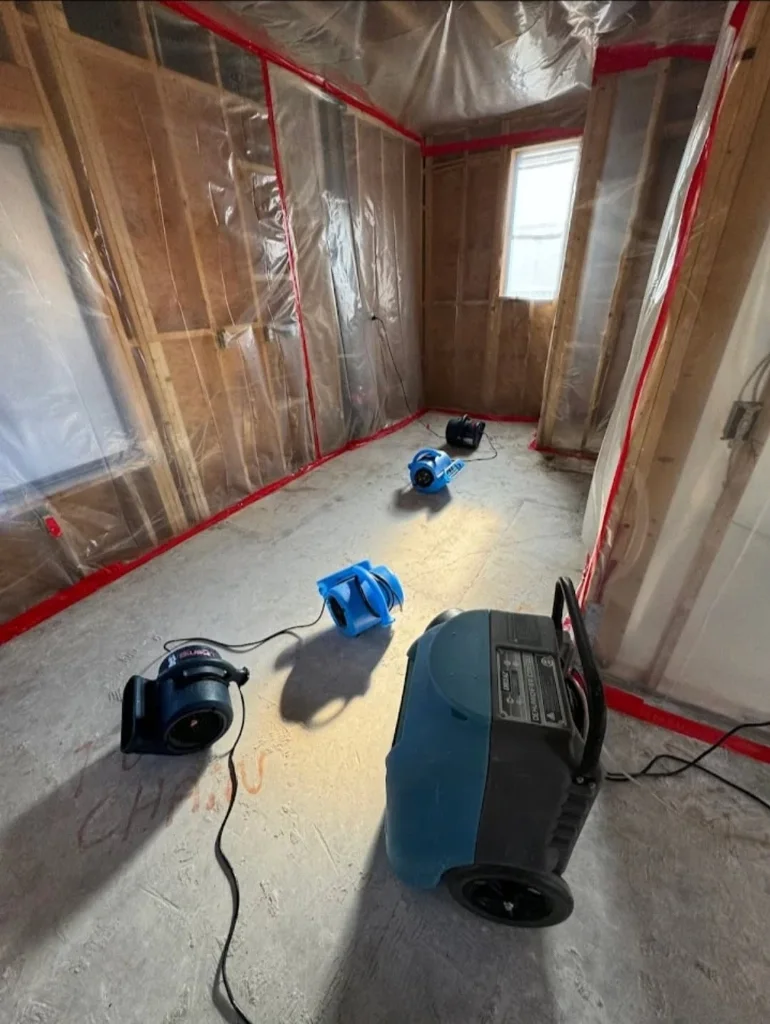
Stopping the intrusion source and erecting 6-mil plastic isolation containment airlocks.
31-HP truck-mount extraction, removing gallons exponentially faster than evaporation.
LGR dehumidifiers and HEPA air scrubbers driving grains per pound below 25 GPP.
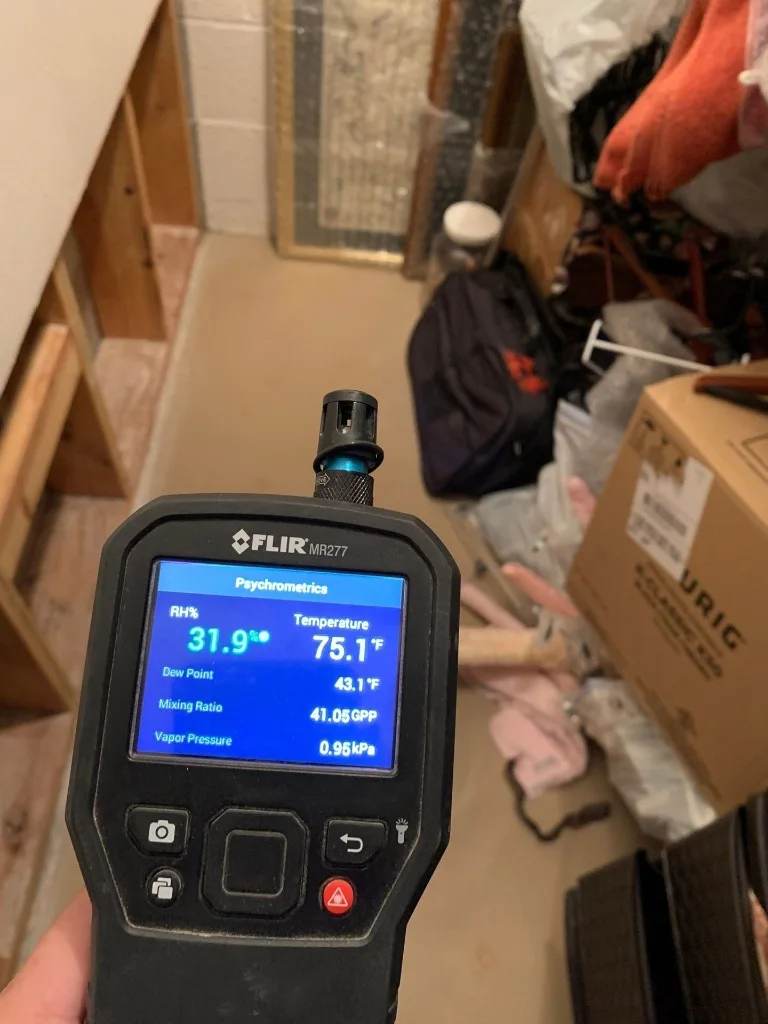
Calibrated electronic pinless testing confirming baseline dry standards.
The Complete 6-Stage Restoration Roadmap
Our IICRC-certified crews execute a disciplined, scientific 6-stage protocol to stabilize and dry structural components:
Emergency Dispatch & Perimeter Isolation
30 to 60 minute arrival. Securing electrical shutoffs, evaluating structural loads, and erecting containment airlocks.
FLIR® Thermal Mapping & Baseline Scans
Infrared thermal scans detect trapped moisture behind walls and beneath concrete without invasive exploratory demolition.
High-Volume Bulk Extraction
31-HP truck-mount extraction units pump standing water away at hundreds of gallons per minute.
Controlled Selective Demolition
Precision flood cuts 12 to 24 inches above moisture lines, removing wet insulation and opening wall framing to dry airflow.
Thermodynamic Dehumidification
Industrial Low-Grain Refrigerant dehumidifiers pull deep trapped moisture from dense framing lumber and concrete slabs.
Antimicrobial Sanitization & Verification
EPA-registered botanical application (Benefect Decon 30) and calibrated moisture testing to issue an official dry certificate.
Specialized Equipment & Industrial Restoration Technology
Mitigating severe property damage requires industrial-grade technology capable of altering thermodynamic psychrometrics:
Truck-Mounted Extraction Rigs
31-HP engines producing 16+ inches Hg vacuum suction to evacuate bulk water rapidly into holding tanks.
Low-Grain Refrigerant Dryers
Pre-cooling heat-pipe systems driving ambient grains per pound below 25 GPP to draw deep trapped water out of framing.
HEPA Negative-Air Scrubbers
Hospital-grade 99.97% particulate filtration capturing microscopic fungal spores, soot, and biohazard aerosols.
FLIR® Thermal Scanners & Probes
Infrared thermography detecting evaporative cooling boundaries behind walls, combined with digital RF pinless scanners.
Professional Restoration vs. DIY Mitigation
Attempting DIY cleanup during a property disaster creates severe hidden liabilities:
- Trapped Moisture: Surface drywall dries while moisture inside cavities triggers hidden mold blooms.
- Pathogenic Risks: Category 2 & 3 water contains bio-contaminants standard cleaners fail to kill.
- Insurance Denial: Insurers require daily psychrometric logs; lack of data causes claim disputes.
Transparent Upfront Itemized Pricing
Valley Restoration Pros operates with complete transparency:
- Free On-Site Assessment: Complete physical inspection before work begins.
- Upfront Itemized Estimates: Detailed line items calculated via industry-standard Xactimate.
- Zero Surprise Billing: No hidden charges or unauthorized repairs.
Certified goodyear commercial cold storage glycol line burst cleanup Field Documentation
Every response performed by Valley Restoration Pros is documented through photographic and thermographic records:
Comprehensive goodyear commercial cold storage glycol line burst cleanup Technical Manual & Operational Standards
Exhaustive engineering protocols, psychrometric calculations, geological multipliers, and step-by-step restoration standards for Maricopa County properties:
Executive Emergency Abstract: Goodyear Commercial Cold Storage Glycol Line Burst Cleanup & Sub-Zero Restoration Overview
Within the heavy freight and cold-chain distribution centers of Goodyear, Arizona—centered along the historic Highway MC-85 (Maricopa County 85 / Buckeye Road) corridor, South Bullard Avenue, Estrella Parkway, and adjacent to the Union Pacific transcontinental rail mainline—massive refrigerated warehousing complexes maintain regional food supply pipelines for Arizona, Southern California, and the broader American Southwest. These sprawling logistics facilities house millions of cubic feet of temperature-controlled storage, ranging from 34°F produce staging docks to deep sub-zero blast freezers operating continuously at -20°F (-29°C) for commercial protein freezing, ice cream distribution, and temperature-sensitive biomedical supplies.
To maintain these ultra-low temperatures without routing high-pressure anhydrous ammonia directly through occupied storage envelopes, modern cold-chain infrastructure relies on closed-loop secondary coolant distribution systems. In these configurations, central industrial chillers circulate thousands of gallons of pressurized, inhibited propylene glycol and water slurry through overhead piping mains suspended thirty to forty-five feet above high-bay pallet racking. When an overhead secondary coolant header pipe ruptures within a sub-zero blast freezer envelope, the resulting chemical inundation triggers an instantaneous large-loss industrial catastrophe.
A typical industrial header rupture discharges between 3,500 and 5,000 gallons of 40% propylene glycol solution under 60 to 75 PSI across thirty to fifty thousand square feet of sub-zero floor space. Cascading chemical slurry strikes automated high-density racking, saturates insulated metal panels (IMPs), coats electrical conduit, and pools several inches deep across structural floor slabs. Unlike ambient water damage, sub-zero glycol releases present extraordinary physical and thermodynamic complications. At -20°F, propylene glycol transforms into an ultra-high-viscosity, semi-solid gelatinous slush with a kinematic viscosity exceeding 400 centistokes. Standard water pumps and centrifugal extractors cavitate and seize instantly.
Furthermore, Goodyear's extreme summer ambient environment—regularly exceeding 115°F on loading dock aprons—establishes a violent 135°F thermal gradient and a massive 25 to 30 mmHg atmospheric vapor pressure differential. The moment dock doors or emergency exits are opened during unengineered response attempts, humid desert air rushes into the sub-zero room, generating blinding whiteout ice fog, causing overhead roof trusses to accumulate heavy glaze ice, and triggering widespread electronic sensor failures. Crucially, escaping chemical slurry that penetrates concrete slab expansion joints threatens the sub-floor insulation envelope and foundation heating grids, creating immediate risks of catastrophic frost heave.
Cold storage facility directors face immense financial stakes. High-throughput distribution operations incur downtime losses between $25,000 and $65,000 per hour in idle labor, supply chain retail penalties, and diverted freight. Concurrently, chemical exposure threatens whole-bay inventory condemnation under strict FDA Food Safety Modernization Act (FSMA) and USDA Food Safety and Inspection Service (FSIS) regulations. Immediate deployment of certified emergency water extraction teams utilizing heavy positive-displacement vacuum tankers and low-dewpoint desiccant dehumidifiers is mandatory. Valley Restoration Pros maintains dedicated West Valley industrial emergency crews ready for immediate dispatch. Contact our 24/7 master command center via our emergency dispatch center at (602) 847-9593 for guaranteed 20- to 30-minute commercial arrival along the MC-85 corridor.
Immediate Industrial Emergency Directives: First 30 Minutes
- Execute Secondary Coolant Pump LOTO: De-energize and lock out secondary glycol circulation pumps at the motor control center (MCC) to halt pressurized fluid discharge.
- Isolate Ruptured Header Branch Valves: Close manual or motorized isolation butterfly valves feeding the affected blast freezer zone to stop back-siphoning from elevated return lines.
- Maintain Active Blast Freezer Refrigeration: Never deactivate room refrigeration or attempt to thaw the room. Thawing transforms manageable gelatinous slush into free liquid that penetrates sub-slab insulation and destroys foundation stability.
- Verify Sub-Slab Frost Heave Heating Systems: Inspect the under-floor heating control panel to ensure under-slab glycol warming loops or electric resistance trace cables remain powered and operating between 38°F and 42°F.
- Deploy Polyurethane Threshold Berms: Seal all personnel doors and forklift vestibules leading into adjacent 34°F dock areas with chemical-resistant containment dams to prevent slurry migration.
- Mobilize Valley Restoration Pros Commercial Team: Call (602) 847-9593 to dispatch industrial vacuum tankers, heated flushing skids, and sub-zero desiccant trailers to your Goodyear facility.
Anatomy of the Failure: Secondary Refrigeration Piping Ruptures, Slurry Rheology & Structural Mechanics
Commercial refrigeration systems in high-throughput food logistics complexes utilize a two-tier thermodynamic architecture. A primary ammonia (R-717) or carbon dioxide (R-744) central mechanical plant operates in an isolated exterior machinery building. This primary system chills a secondary circulating fluid through heavy industrial plate-and-frame or shell-and-tube heat exchangers. In sub-zero blast freezers operating at -20°F, the secondary fluid is composed of an engineered aqueous solution of 40% to 50% food-grade propylene glycol (1,2-propanediol, C3H8O2) blended with deionized water and chemical corrosion buffering packages (primarily dipotassium phosphate and tolyltriazole).
This secondary coolant is pumped through overhead distribution networks fabricated from 4-inch, 6-inch, or 8-inch Schedule 40 carbon steel or 304L stainless steel piping suspended along structural bar joists thirty to forty-five feet above finished floor level. Catastrophic piping ruptures in these systems stem from three interconnected mechanical failure mechanisms: severe hydraulic transient pressure shock (water hammer), cyclic thermal fatigue across defrost transitions, and mechanical coupling gasket degradation.
During automated evaporator defrost cycles, motorized solenoid valves rapidly cycle open and shut to divert fluid streams. Rapid valve closure under high secondary flow velocities (exceeding 8 to 10 feet per second) induces massive acoustic pressure shockwaves within the piping manifold. These pressure transients—frequently spiking beyond 350 PSI—exert immense circumferential tensile stress upon mechanical grooved pipe couplings (victaulic joints), welded flange connections, and threaded instrument ports. Over thousands of operational defrost cycles, continuous thermal cycling between -20°F operating conditions and 60°F defrost temperatures degrades synthetic EPDM rubber coupling gaskets. The elastomeric seals experience cold-temperature embrittlement, hardening, and micro-cracking until a violent hydraulic pressure spike causes the coupling to slip or the pipe seam to fracture, instantly liberating thousands of gallons of pressurized chemical coolant. When piping integrity fails, our mechanical teams coordinate complete emergency burst pipe repair to secure the infrastructure.
Rheological Transition & Kinematic Viscosity Dynamics of Sub-Zero Propylene Glycol
The fluid mechanics of propylene glycol under sub-zero conditions fundamentally differ from standard commercial water damage. At standard ambient room temperature (70°F / 21°C), a 40% propylene glycol aqueous solution displays a kinematic viscosity of approximately 4.5 centistokes (cSt), flowing with minimal hydraulic resistance across horizontal concrete surfaces. As temperature decreases, intermolecular hydrogen bonding within the diol compound intensifies exponentially.
At 32°F (0°C), viscosity increases to 18 cSt. At 0°F (-18°C), viscosity climbs to 95 cSt. When discharged into a blast freezer maintained at -20°F (-29°C), the kinematic viscosity surges beyond 380 to 450 centistokes. Furthermore, because a 40% propylene glycol concentration has an equilibrium freezing point of -8°F (-22°C), the solution enters a metastable supercooled slush phase at -20°F. Microscopic ice crystal dendrites precipitate out of solution, suspending within the concentrated glycol liquid to create a dense, highly cohesive non-Newtonian slurry resembling thick gel.
Standard centrifugal trash pumps, sump pumps, and rotary vacuum extraction tools cannot handle this fluid. Centrifugal impellers slip within the high-shear non-Newtonian gel, cavitating instantaneously and burning out electric drive motors within minutes of submersion. Industrial recovery requires positive-displacement rotary lobe vacuum blowers or air-operated double-diaphragm (AODD) positive-displacement pumping systems specifically engineered for high-viscosity chemical slurries.
The physical impact of a 3,500-gallon chemical burst extends directly into the structural building envelope. Modern blast freezers are constructed from Insulated Metal Panels (IMPs) composed of rigid polyisocyanurate (PIR) or expanded polystyrene (EPS) foam cores sandwiched between 26-gauge galvanized steel skins with food-grade polyvinylidene fluoride (PVDF) exterior finishes. High-velocity chemical discharge cascades down vertical wall assemblies, pooling in bottom metal floor retention channels and penetrating panel joint caulking seams.
When propylene glycol slurry contacts insulated panel seams, capillary draw pulls the fluid into microscopic crevices. While polyurethane foam is closed-cell, long-term exposure to high-pressure chemical liquids degrades seam gaskets, dissolves adhesive bonding agents, and saturates panel perimeter interfaces. This saturating fluid degrades the insulating R-value of the panel assembly from R-48 down to less than R-18, creating localized thermal shorts. Warm exterior moisture immediately migrates toward these cold shorts, resulting in severe exterior panel condensation, structural steel corrosion, and potential delamination of the composite panel facings. Implementing certified structural drying procedures with negative-pressure cavity desiccation is essential to preserve the structural envelope.
Equally vulnerable are the concrete floor expansion joints and isolation joints. Modern blast freezer slabs are constructed from 8- to 10-inch heavy-duty fiber-reinforced concrete designed to support 12,000-pound loaded turret trucks and high-density racking loads. Slabs incorporate semi-rigid polyurea joint fillers to protect saw-cut edges. When pressurized glycol slurry inundates the floor, the chemical liquid acts as a solvent against compromised joint sealants. Propylene glycol penetrates through joint crevices, reaching the underlying extruded polystyrene (XPS) insulation board and the sub-slab vapor barrier membrane. Trapped glycol creates permanent hydraulic cavities beneath the wearing slab, destroying the uniform load-bearing capacity of the floor and causing concrete deflection under heavy forklift traffic.
Under continuous sub-zero operation, unextracted chemical residues alter the boundary friction coefficient of the slab surface. Propylene glycol does not sublimate at cold storage temperatures, remaining an oily film that reduces the friction coefficient to less than 0.2, creating catastrophic traction loss for industrial reach trucks and battery-powered turret forklifts. High-precision laser-steered autonomous mobile robots (AMRs) and turret trucks experience wheel slip and drive motor overload errors, completely halting automated order fulfillment. Deep chemical emulsification and hot-water closed-loop extraction are mandatory before industrial traffic can safely resume.
Phoenix West Valley Environmental Multipliers: 135°F Thermal Delta, Caliche Soil Heave & Monsoon Vapor Dynamics
Executing commercial restoration in Goodyear, Arizona, requires engineering for extreme desert climatic factors and hyper-local geological conditions unique to the West Valley of Maricopa County. Bordered by the Sierra Estrella mountains to the south and the Gila River alluvial basin to the east, Goodyear experiences some of the most aggressive environmental extremes in the United States. During the prolonged summer season from May through October, ambient daytime temperatures routinely range between 110°F and 118°F (43°C to 48°C), with unshaded commercial asphalt dock aprons along MC-85 and Bullard Avenue reaching surface temperatures of 165°F.
135°F Continuous Thermal Gradient
The extreme differential between Goodyear's 115°F exterior ambient heat and the -20°F interior blast freezer environment generates intense thermodynamic stress across every structural envelope interface. Opening exterior doors triggers immediate condensation and icing.
Violent Atmospheric Vapor Drive
Summer monsoon storms push outdoor vapor pressures above 28 to 32 mmHg, compared to less than 0.6 mmHg inside the freezer. This massive 30 mmHg differential drives ambient moisture through unsealed building envelope penetrations at high velocity.
Caliche Soil Permafrost Frost Heave
Goodyear sub-soils consist of dense alluvial clay layered with cemented calcium carbonate (caliche). If sub-slab heating grids are disrupted, freezing moisture in the soil forms subterranean ice lenses that lift structural slabs with destructive uplift force.
To comprehend the psychrometric severity of this environment during an emergency restoration project, consider the thermodynamic physics of water vapor pressure. On a typical July afternoon in Goodyear, an exterior ambient temperature of 115°F combined with 25% relative humidity yields a humidity ratio of approximately 112 grains per pound (GPP) of dry air, generating a water vapor pressure of roughly 24 mmHg. When seasonal North American Monsoon storms roll through the West Valley between July and September, sudden convective squalls push outdoor dew points up to 72°F, driving outdoor absolute humidity above 135 GPP and water vapor pressure past 30 mmHg.
Inside the blast freezer at -20°F and 90% relative humidity, the absolute moisture content of the air is less than 1.8 grains per pound, exerting a vapor pressure of merely 0.58 mmHg. This creates a relentless, high-energy vapor pressure differential of 23 to 30 mmHg across every wall seal, personnel door, dock leveler pit, and roof-mounted refrigeration line penetration. When emergency extraction equipment is deployed, any unsealed opening allows humid exterior air to penetrate the sub-zero envelope like a high-pressure jet. The gaseous moisture in this invading air instantly undergoes desublimation (phase transformation directly from gas to solid ice crystals), filling the warehouse with blinding whiteout fog, coating refrigeration evaporator coils with dense frost, and coating high-bay bar joists in thick glaze ice that creates catastrophic structural overhead weight loads.
Beneath the facility slab lies an equally critical geological threat: the caliche soil profile of the West Valley. Soils in the Goodyear, Avondale, and Buckeye agricultural-industrial basins consist of deep quaternary alluvium interbedded with heavily cemented calcium carbonate strata known as caliche. Caliche formations are impermeable, rock-like layers that resist vertical water drainage. Beneath a massive commercial blast freezer, steady conductive heat loss through the floor insulation continuously chills the sub-soil.
To prevent this sub-zero cold from freezing natural ground moisture and creating subterranean ice lenses, industrial blast freezers incorporate active under-floor heating grids (glycol warming loops or electric resistance trace cables) designed to maintain the sub-base soil between 38°F and 42°F. If an overhead secondary glycol line burst causes thousands of gallons of chemical slurry to flood the floor and emergency crews mistakenly shut off sub-floor heaters—or if glycol seeps past expansion joints into sub-slab insulation—the freezing isotherm migrates deep into the moist caliche clay. As water in the soil freezes, it undergoes a 9% volumetric expansion, generating upward hydrostatic frost heave pressures exceeding 25,000 pounds per square foot. This hydraulic uplift fractures 10-inch reinforced concrete slabs, shears automated transit tracking sensors, misaligns automated high-bay racking systems, and risks total structural condemnation. For structural movement diagnostics, review our specialized slab leak water damage restoration engineering procedures.
Furthermore, municipal water supplies delivered throughout Goodyear, Litchfield Park, and Avondale carry high mineral hardness, averaging 18 to 24 GPG with total dissolved solids exceeding 750 ppm. If unsoftened municipal water is introduced during secondary coolant makeup or emergency flushing, calcium carbonate and magnesium sulfate immediately precipitate across cold evaporator surfaces, forming insulating mineral scale that degrades heat transfer efficiency and accelerates galvanic corrosion on structural steel racking baseplates. Explore our comprehensive local capabilities across our Goodyear water damage response network.
The presence of alluvial clay minerals such as montmorillonite within Goodyear sub-soils introduces severe shrink-swell mechanics when foundation moisture levels fluctuate. In areas where sub-slab glycol leaks leach into underlying strata, the chemical diol alters clay soil plasticity and pore-fluid salinity, inducing differential settlement under unflooded slab bays while adjacent flooded bays experience frost heave. This dual vector of geotechnical failure demands continuous geological and psychrometric monitoring during extraction operations.
Immediate Emergency First-Hour Response Protocol: Industrial Chemical Containment & Life Safety Directives
The initial sixty minutes following a secondary coolant header rupture in an industrial cold storage facility dictate the boundary between a controlled chemical recovery and a catastrophic multi-million-dollar inventory loss. Facility directors, environmental health and safety (EHS) managers, and refrigeration engineers must implement a rigorous, safety-engineered emergency sequence to safeguard operating personnel, protect structural building assets, and isolate high-value food inventories under regulatory control.
The first critical imperative is atmospheric verification and life safety screening. Although modern cold storage facilities utilize food-grade, non-toxic propylene glycol within occupied blast freezer spaces, primary refrigeration chillers located in central machine rooms utilize anhydrous ammonia (R-717) or high-pressure carbon dioxide (R-744). In plate-and-frame or shell-and-tube heat exchangers, primary refrigerant cools the secondary glycol stream. A sudden rupture in an overhead secondary header creates the latent danger of primary-to-secondary heat exchanger tube failure. If an internal heat exchanger tube has breached, high-pressure anhydrous ammonia gas can enter the secondary glycol loop, discharging hazardous toxic gas directly into the blast freezer alongside the chemical slurry.
Six-Step First-Hour Industrial Cold Storage Chemical Emergency Protocol
- Atmospheric Gas Screening & Safety Clearance: Certified safety personnel equipped with calibrated multi-gas detectors (electrochemical NH3 sensors and photoionization detectors) must scan the atmosphere at freezer entry vestibules. If ammonia concentrations exceed the OSHA Permissible Exposure Limit (PEL) of 25 ppm, immediately evacuate the entire building and summon hazardous materials emergency services. If zero NH3 is detected, proceed with secondary chemical slurry containment.
- High-Voltage Electrical Lockout/Tagout (LOTO): De-energize all 480V 3-phase automated pallet racking conveyors, vertical high-speed rollup doors, motorized rack shuttles, and sub-floor electrical junction boxes within the flooded bay. Lockout must be formally tagged at the motor control center (MCC) in strict compliance with OSHA 29 CFR 1910.147.
- Secondary Loop Hydraulic Source Isolation: Close manual or motorized isolation butterfly valves on both the supply and return lines feeding the ruptured blast freezer header. Verify that line pressure drops to zero gauge pressure to prevent back-siphoning from elevated distribution mains.
- Threshold Containment Dike Construction: Deploy heavy-duty polyurethane chemical spill dikes, magnetic drain blockers, and chemical-absorbent booms across all doorways connecting the blast freezer to 34°F staging docks, refrigerated vestibules, and forklift charging bays. Prevent viscous glycol slurry from contaminating low-risk facility areas. If blackwater or sewage backups compound the flood, cross-reference our certified sewage cleanup protocols.
- FDA FSMA Inventory Quarantine Demarcation: Under FDA 21 CFR Part 117 (FSMA Sanitary Food Transportation and Current Good Manufacturing Practices), establish an immediate 50-foot regulatory quarantine perimeter around all palletized products in the affected bay. Pallets subjected to chemical splashing or mist must be tagged under formal regulatory hold pending QA microbiological and chemical analysis.
- Mobilize Industrial Large-Loss Disaster Units: Contact Valley Restoration Pros at (602) 847-9593 or access our instant commercial cost estimator to dispatch heavy-vacuum tankers and sub-zero desiccant drying trailers.
Personal protective equipment (PPE) for response personnel entering a flooded -20°F blast freezer must address both extreme cryogenic cold exposure and chemical splash hazards. Technicians must be outfitted in multi-layer thermal sub-zero suits rated to -40°F, chemical-resistant neoprene or heavy nitrile outer gauntlet gloves over thermal fleece liners, steel-toe boots with cryogenic chemical-resistant rubber outsoles and tungsten-carbide ice studs, and full-face splash shields. Walking on smooth concrete slabs coated in viscous propylene glycol slurry presents extreme slip-and-fall hazards, requiring rigid safety tethers and overhead fall-arrest anchor systems along flooded racking aisles.
A critical operational directive for facility leadership is to strictly avoid turning off blast freezer refrigeration or opening exterior dock doors to warm up the room. Introducing warm exterior air transforms the thick, manageable gelatinous slush into free liquid runoff. This liquid rapidly penetrates expansion joints, flows under wearing slabs, and accelerates capillary migration into insulated metal panel cores. Keeping the room continuously refrigerated preserves the slurry in a dense, localized slush state that can be mechanically extracted under controlled industrial vacuum without spreading chemical contamination.
Communication protocols must also be established immediately between facility engineering, cold storage floor supervisors, and the incoming restoration incident command. A single liaison should interface with local municipal water authorities and environmental regulators to confirm containment efficacy and prevent accidental chemical introduction into municipal wastewater systems.
Advanced Industrial Restoration Equipment Specifications: Cryogenic Extraction, Positive-Displacement Tankers & Desiccant Dehumidification
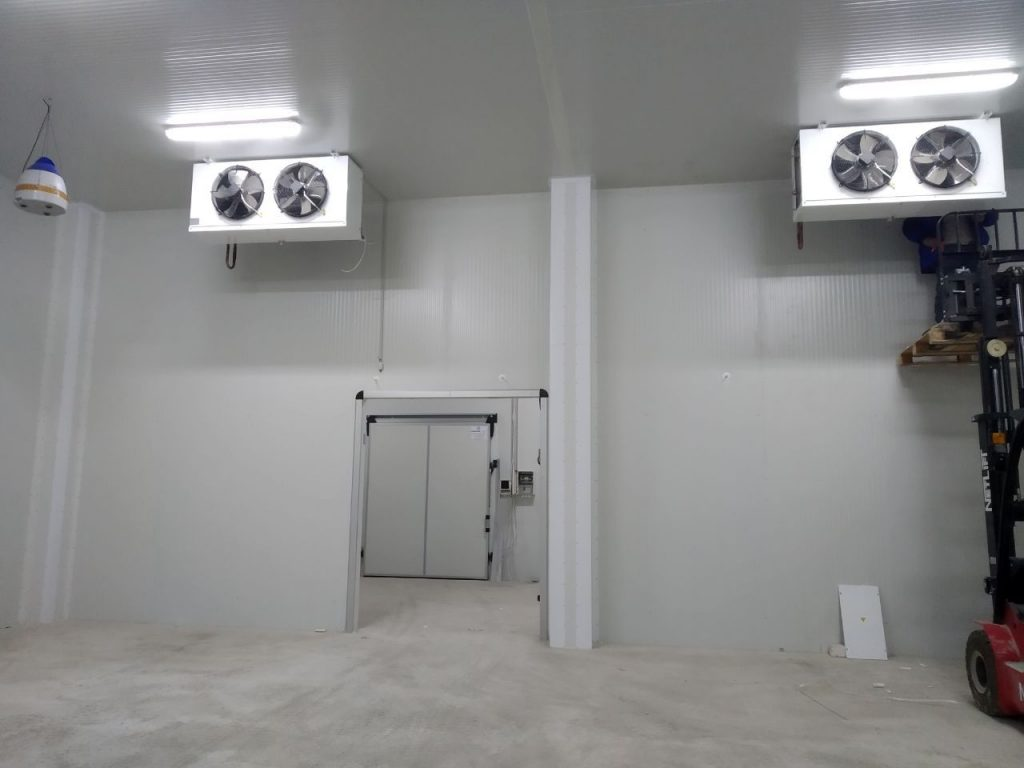
Mitigating an industrial secondary coolant line burst inside a commercial blast freezer operating at -20°F requires specialized industrial restoration machinery specifically engineered for sub-zero operating environments. Conventional restoration equipment used in commercial office or residential water losses—such as centrifugal air movers, low-grain refrigerant (LGR) dehumidifiers, and electric submersible utility pumps—is completely non-functional under sub-zero conditions. LGR cooling coils freeze into solid blocks of ice within minutes, plastic pump casings crack under cryogenic thermal shock, and standard centrifugal impellers seize when exposed to 400 cSt glycol slurry.
Valley Restoration Pros maintains an extensive fleet of specialized heavy-loss industrial assets staged across the Greater Phoenix and West Valley logistics corridors. For large-scale facility disasters, explore our complete commercial water damage capabilities and our specialized warehouse flood damage restoration protocols.
| Equipment Category | Model Specifications | Operating Parameters & Capacity | Sub-Zero Cold Storage Engineering Application |
|---|---|---|---|
| Industrial Desiccant Trailers | Munters DryCool / Quest 5,000 to 9,000 CFM | Delivers air down to -40°F dew point, <1.0 GPP, 180°F reactivation heat | Maintains deep negative vapor pressure inside blast freezer, pulling frozen moisture and chemical vapors out of structural assemblies without thermal elevation. |
| High-Vacuum Slurry Tankers | Presvac / Cusco 3,200 Gallon DOT Tankers | Roots-Dresser 1,200 CFM positive-displacement rotary lobe blower, 28" Hg vacuum | Pulls 400 cSt propylene glycol slush through 4-inch armored suction lines directly into heated tanker vessel without line freezing or impeller stall. |
| Cryogenic AODD Slurry Pumps | Wilden Pro-Flo Shift 3-inch Air-Operated Double-Diaphragm | 255 GPM displacement rate, 125 PSI head pressure, PTFE diaphragms and Teflon balls | Submerged slurry transfer in sub-zero sump zones without electrical spark ignition risk or cold-induced mechanical motor stall. |
| Heated Closed-Loop Extraction Skids | Landa Industrial Hot-Water Vacuum Surface Washers | 160°F water delivery, 3,000 PSI, integrated vacuum shroud recovering 99.8% of liquid | Applies micro-controlled thermal rinse to emulsify sticky glycol residues on concrete slabs while capturing wash runoff instantly under 25" Hg vacuum. |
| Infrared Radiometric Scanners | FLIR T865 High-Performance Radiometric Thermal Cameras | 640x480 resolution, <30 mK thermal sensitivity, calibrated -40°F to 248°F | Maps moisture migration behind insulated metal panels and detects sub-slab heating loop thermal discontinuities beneath frozen slabs. |
| Dielectric Sub-Zero Moisture Probes | Tramex Dec Scanner & Delmhorst BD-2100 Probes | Deep RF impedance scanning, calibrated for frozen composite substrates | Measures moisture and chemical ingress behind metal panel facings without puncturing or destroying vapor-tight panel exterior membranes. |
The thermodynamic operation of industrial desiccant dehumidifiers is central to achieving structural dry standards without elevating facility temperatures. An industrial desiccant dehumidifier functions by routing incoming process air through a continuously rotating desiccant rotor matrix impregnated with active synthetic silica gel. As the cold air passes through the narrow flutes of the honeycomb wheel, water vapor molecules are adsorbed onto the immense internal surface area of the silica gel via van der Waals forces.
Simultaneously, a separate reactivation air stream heated to 180°F to 240°F by external natural gas burners passes through a designated sector of the rotor, driving off the adsorbed moisture and discharging it outside the building envelope. To dry a sub-zero blast freezer without melting inventory, our technicians position the mobile desiccant trailer outside the facility dock apron. Heavy-duty, insulated 20-inch spiral ducting delivers ultra-dry supply air (conditioned to a -40°F dew point with less than 1.0 GPP absolute moisture) directly into the affected cold bay.
This ultra-dry air creates a massive vapor pressure differential between the conditioned air and the frozen moisture trapped in slab pores, expansion joints, and panel joints. Through the process of sublimation (phase transformation directly from solid ice to water vapor without entering the liquid phase), trapped moisture is pulled into the moving air stream and evacuated outside the facility envelope. A dedicated return duct routes air back to the desiccant trailer, creating a continuous, closed-loop drying cycle that operates entirely independent of outdoor desert weather.
Auxiliary high-static pressure fans and specialized distribution manifolds ensure uniform air velocity across entire high-bay racking corridors. By positioning supply nozzles at floor level along the base of racking uprights and return intakes near ceiling joists, our technicians establish a laminar airflow sweep that eliminates stagnant microclimates and accelerates vapor extraction from low-lying concrete slab crevices.
IICRC S500 Standard of Care: Six-Stage Engineering Protocol for Commercial Cold Storage Glycol Restoration
Restoration operations within commercial food distribution cold storage facilities must adhere strictly to the Institute of Inspection, Cleaning and Restoration Certification (IICRC) S500 Standard and Reference Manual for Professional Water Damage Restoration, while simultaneously integrating mandatory compliance with FDA Food Safety Modernization Act (FSMA) standards, USDA Food Safety and Inspection Service (FSIS) regulations, and OSHA industrial safety mandates.
In an industrial secondary coolant burst, the discharged fluid is classified under IICRC S500 as Category 2 (water containing significant chemical contamination and additive buffers, capable of causing discomfort or sickness if consumed). If chemical extraction is delayed, biological growth, organic floor grime, or decomposition transforms the loss into a Category 3 blackwater contamination scenario. For complex industrial chilled loop failures, review our sister protocol for commercial chiller pipe burst water damage and our comprehensive standards for mold remediation.
Stage 6.1: Initial Diagnostic Survey & Baseline Psychrometric Profiling
The master restoration commander deploys FLIR T865 high-resolution infrared thermal cameras and Vaisala chilled-mirror dew point hygrometers to establish comprehensive baseline conditions. Technicians map the precise boundaries of glycol migration across concrete slab joints, measure moisture infiltration along IMP bottom horizontal tracks, and log interior air temperatures (-20°F), relative humidity (88-92%), and grain depressions (1.5-2.0 GPP).
Dielectric non-destructive moisture scans are conducted along every wall panel joint within 100 feet of the discharge point. In-situ relative humidity probes (ASTM F2170) and calibrated concrete surface moisture meters establish the baseline moisture vapor emission rate (MVER) of the uncompromised slab to establish our drying target standard.
Stage 6.2: High-Vacuum Slurry Evacuation & Bulk Viscous Fluid Recovery
Deploying truck-mounted 1,200 CFM positive-displacement vacuum units connected to 4-inch armored, vacuum-rated suction hoses, crews systematically extract standing propylene glycol slurry from the frozen concrete floor. Continuous vacuum evacuation pulls viscous slush from low points, expansion joints, and pallet racking anchor plates.
Air-operated double-diaphragm (AODD) pumps transfer slurry from deep racking sumps into certified 3,200-gallon liquid containment tankers. Recovered chemical fluid is manifested and transported for lawful industrial recycling or treatment in strict compliance with Arizona Department of Environmental Quality (ADEQ) regulations.
Stage 6.3: Controlled Micro-Thermal Rinsing & Emulsification Neutralization
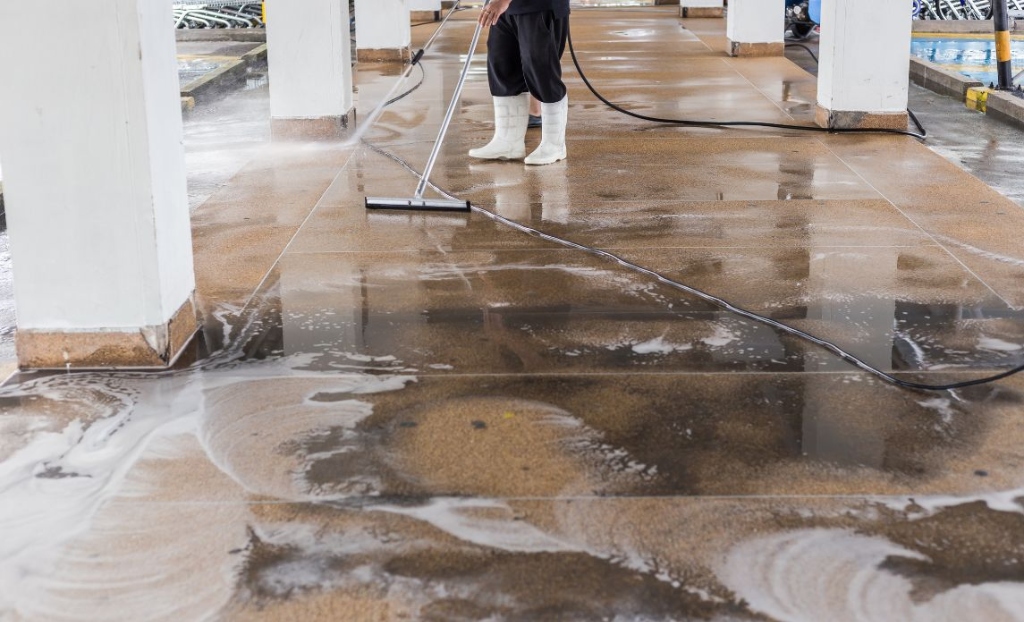
Propylene glycol leaves a persistent, hygroscopic chemical film that bonds to concrete pores and does not evaporate naturally. To strip this chemical film without heating the blast freezer space, technicians utilize closed-loop, vacuum-shrouded surface extraction skids delivering 160°F heated water blended with food-grade botanical emulsifiers (citric acid and botanical surfactants).
The high-velocity vacuum shroud recovers 99.8% of wash water instantaneously under 25 inches of mercury vacuum, stripping the glycol film from the concrete without allowing wash fluid to freeze or elevating the freezer ambient temperature above 0°F.
Stage 6.4: Insulated Metal Panel (IMP) Cavity Vacuum Extraction & Core Desiccation
Where glycol slurry has penetrated the vertical joint seams or bottom floor channels of insulated metal panels, technicians deploy non-destructive cavity extraction probes. Micro-vacuum ports are installed in bottom horizontal base flashing channels under negative pressure.
High-vacuum air suction evacuates trapped liquid from panel bases, followed by continuous positive-pressure injection of ultra-low dewpoint desiccant air (-40°F dew point) directly into the panel joints. This sublimates residual moisture without requiring destructive panel demolition.
Stage 6.5: Sub-Slab Frost Heave Heating Grid Monitoring & Thermal Balancing
Throughout the mitigation process, engineers monitor the operational integrity of the sub-slab foundation warming system. Utilizing calibrated deep-core resistance temperature detectors (RTDs) and sub-slab thermocouple sensor arrays, technicians verify that sub-slab soil temperatures remain consistently between 38°F and 42°F across all bay grids.
Any localized thermal depressions indicating glycol infiltration or circuit tripping are immediately addressed with auxiliary heat-trace energization to guarantee zero subterranean ice lens formation.
Stage 6.6: Deep Sublimation Desiccant Dehumidification & Regulatory Clearance Sign-Off
Industrial desiccant trailers deliver continuous high-volume, low-dewpoint airflow across the affected bay until complete psychrometric equilibrium is achieved. Drying operations continue until concrete slab relative humidity drops below 75% via ASTM F2170 in-situ probes and moisture vapor emission rates return to baseline.
Technicians perform comprehensive ATP bioluminescence surface swab testing across structural columns, racking uprights, and food-contact boundaries to certify zero residual chemical adulteration or microbial contamination, providing facility directors with full regulatory audit clearance.
This meticulous six-stage engineering protocol ensures that commercial blast freezers and food-grade cold storage facilities recover from catastrophic secondary coolant line bursts without structural damage, compromised thermal envelopes, or regulatory food safety penalties.
Post-restoration inspection includes rigorous verification of rack upright anchor bolt torque and structural alignment. High-impact thermal changes during fluid releases can induce micro-movements in anchor bolts embedded in cold concrete. Our teams inspect and re-torque all affected baseplates using calibrated torque wrenches to ensure total seismic and structural compliance under OSHA high-bay storage regulations.
Hyper-Local Industrial Case Study: Goodyear Food Logistics Center Glycol Burst Restoration
To demonstrate the engineering precision required during commercial cold storage chemical extraction, review this documented emergency mitigation executed at a major wholesale food logistics facility located along the MC-85 and Bullard Avenue industrial corridor in Goodyear, Arizona.
Commercial Loss Dossier: Sub-Zero Blast Freezer Secondary Line Rupture
Incident Sequence: At 2:40 AM on a Tuesday in July, an overhead 4-inch mechanical grooved coupling on the secondary propylene glycol header supplying Blast Freezer Bay 4 suffered catastrophic failure following an automated defrost valve cycle. The pressurized header released 3,500 gallons of coolant at 65 PSI before automated differential pressure sensors shut down circulation pumps. Inundation covered 38,000 square feet of -20°F blast freezer floor, saturating the perimeter insulated wall panels and pooling 3 to 5 inches deep along central pallet racking aisles holding $4.2 million in commercial frozen beef and poultry inventory.
Emergency Mobilization: The facility operations director contacted Valley Restoration Pros' 24/7 commercial emergency hotline. Our West Valley heavy-loss disaster team arrived on site in 22 minutes with two 3,200-gallon high-vacuum recovery tankers, two trailer-mounted 5,000 CFM Munters desiccant dehumidifiers, four explosion-proof AODD slurry pumps, and sixteen certified commercial restoration specialists.
Execution Strategy: Incident commanders immediately confirmed zero atmospheric ammonia presence via photoionization detectors. Chemical containment dikes were deployed across blast freezer threshold doors to safeguard adjacent dock areas. Because exterior ambient temperatures were already 102°F at dawn, our engineers maintained the blast freezer's active -20°F refrigeration setpoint to prevent the slurry from turning into liquid runoff. High-capacity vacuum tankers evacuated 3,200 gallons of viscous slurry within four hours, operating through 4-inch insulated hoses.
Thermal Rinsing & Desiccant Stabilization: Following bulk slurry recovery, technicians deployed vacuum-shrouded 160°F hot water micro-extraction wands to emulsify sticky glycol residues from the concrete floor, recovering 99.8% of wash fluids instantaneously. Two Munters 5,000 CFM desiccant trailers pumped processed air at -40°F dew point through 20-inch insulated ducting into the bay, creating a continuous sublimation loop that dried slab pores and wall cavities without melting palletized products.
Restoration Outcome: Within 44 hours of emergency mobilization, the blast freezer attained certified dry standards. In-situ slab relative humidity registered 72% (dry baseline: 70%), IMP cavity dielectric readings returned to baseline, and ATP surface swabs verified zero chemical or microbial residue. Zero product was condemned by USDA inspectors, saving the logistics operator over $4,200,000 in perishable inventory claims and preventing an estimated 8 days of catastrophic facility shutdown. Explore our complete regional capabilities across areas we serve and neighboring Buckeye water damage industrial zones.
Commercial Pay-Per-Call Financial Standards, Xactimate Itemization & Forensic Insurance Claims Documentation
Managing a large-loss commercial restoration project in a food logistics facility requires technical engineering excellence coupled with absolute financial transparency and meticulous administrative documentation. Commercial property insurance underwriters, forensic claims examiners, and independent adjusters representing commercial carriers demand complete forensic substantiation for every billed labor hour, equipment rental unit, chemical manifest, and psychrometric data log.
Valley Restoration Pros operates under strict Pay-Per-Call compliance standards. We never make deceptive promises that insurance will automatically cover 100% of costs or claim that we bill insurance directly without client accountability. Instead, we provide property owners and logistics directors with complete transparency from the moment of dispatch:
Free Comprehensive On-Site Damage Assessment
Our senior industrial incident commanders perform an exhaustive multi-point structural and psychrometric audit of your cold storage envelope at zero upfront assessment cost.
Transparent Upfront Itemized Pricing
Before physical extraction begins, facility leadership receives a fully itemized operational scope of work utilizing standard industry-approved Xactimate commercial pricing metrics.
Comprehensive Claims Documentation
We deliver daily digital documentation binders containing certified psychrometric logs, FLIR infrared surveys, chemical disposal manifests, and ATP audit certificates to expedite claim approval.
Every commercial cold storage restoration file generated by Valley Restoration Pros is structured to satisfy the scrutiny of commercial insurance adjusters representing major underwriters (such as FM Global, Zurich, Travelers, and Chubb). Our comprehensive claim documentation packages include:
- Xactimate Industrial Line-Item Billing: Detailed line items covering heavy extraction (WTR EXTTRK), hazardous chemical pump-out (HMR PUMP), industrial desiccant dehumidification (WTR DHMD>>), air scrubbing (WTR DUMPM), and technician labor categories (WTR LAB, HAZ LAB).
- Daily Psychrometric Moisture Logs: Hour-by-hour calibrated logging of temperature, relative humidity, dew points, and grain depression across all drying zones, confirming standard-of-care dry attainment.
- Calibrated Infrared Radiometric Surveys: Baseline, intermediate, and final FLIR radiometric scans proving the complete elimination of moisture pockets behind insulated metal panels and beneath wearing slabs.
- Certified Chemical Disposal Manifests: Full chain-of-custody documentation and ADEQ hazardous waste manifest tracking verifying lawful industrial transportation and recycling of recovered propylene glycol fluids.
- ATP Bioluminescence & Sanitary Swab Certificates: Third-party verified surface testing data confirming zero microbial growth or chemical residue on food-contact and facility surfaces.
For facilities facing related commercial mechanical emergencies—such as deluge sprinkler discharges—consult our detailed technical manual for fire sprinkler water damage cleanup to understand how our engineering teams coordinate large-loss commercial claims.
Frequently Asked Questions: Commercial Cold Storage Glycol Line Burst Cleanup & Sub-Zero Restoration
At normal ambient temperatures (70°F), a 40% propylene glycol and water mixture behaves much like liquid water with a kinematic viscosity of approximately 4 to 5 centistokes. However, in a -20°F blast freezer environment, temperature plunges well below the standard freezing point of pure water. Because a 40% glycol solution has a freeze point around -8°F, the liquid enters a supercooled, semi-solid slush phase at -20°F. Its viscosity spikes to over 380 to 450 centistokes, forming a thick, gelatinous slurry that clings tenaciously to concrete slabs, insulated metal panel base channels, and structural pallet racking. Standard centrifugal flood pumps cavitate and burn out immediately; extraction requires industrial positive-displacement vacuum blowers or cryogenic air-operated double-diaphragm (AODD) pumps with chemical-resistant PTFE components.
Facility personnel unfamiliar with sub-zero thermodynamic restoration often assume that shutting down the refrigeration system will make the slush easier to extract by melting it into liquid. This action is disastrous. Goodyear exterior summer air routinely reaches 115°F with high absolute humidity. Turning off refrigeration introduces massive thermal energy, liquefying the glycol slush and driving it deep into floor expansion joints, beneath monolithic floor wearing slabs, and through capillary voids in insulated metal panels (IMPs). Furthermore, as warm exterior air enters, water vapor condenses across frozen ceiling panels and structural bar joists, causing contaminated condensation to rain down across entire bays of stored food inventory. Keeping the facility frozen allows specialized extraction crews to vacuum the semi-solid slurry mechanically without spreading contamination.
Insulated metal panels feature rigid polyurethane or polyisocyanurate foam cores sealed within metallic outer facings. To verify core integrity without destroying panel vapor seals, technicians utilize advanced multi-frequency dielectric impedance moisture scanners calibrated for composite insulating materials, paired with high-resolution FLIR T865 radiometric thermal imaging cameras. Liquid glycol ingress alters the electrical capacitance and thermal conductivity of the foam core, producing distinct thermal bridging patterns on infrared displays. In suspected breach zones, technicians extract non-destructive micro-core samples using sealed borescope inspection ports along bottom flashing channels, verifying core moisture content and chemical presence before executing vacuum cavity desiccation.
Commercial blast freezers operating at -20°F incorporate active sub-slab heating grids (either glycol-circulating warming loops or electric heat trace cables) installed within the sub-base soil directly beneath the floor insulation. These heating grids maintain the underlying caliche and clay soil temperatures at 38°F to 42°F. Without active sub-slab heating, the sub-zero room temperature would slowly conduct through floor insulation and freeze natural moisture in the soil. Freezing water expands by 9%, forming massive underground ice lenses that lift the entire concrete floor slab (frost heave), causing catastrophic structural cracking and buckling automated storage racking. If an overhead line ruptures, facility managers must never disable the sub-slab heating grid. Technicians continuously monitor sub-slab RTD sensor arrays to ensure foundation temperatures remain stable throughout cleanup.
Product salvageability is governed by FDA FSMA (Food Safety Modernization Act) rules, USDA Food Safety and Inspection Service (FSIS) regulations, and the facility's internal Hazard Analysis Critical Control Point (HACCP) plan. Modern secondary loops use food-grade propylene glycol with FDA Generally Recognized As Safe (GRAS) classification, unlike toxic ethylene glycol. However, chemical additives and unwashed floor contact still constitute adulteration. Food stored in intact, impermeable hermetically sealed secondary packaging (such as multi-layer vacuum heat-sealed polymer bags or stretch-wrapped plastic-hooded pallets) that experienced only ambient exposure can often be salvaged following certified exterior decontamination and independent laboratory surface swab clearance. Any open containers, corrugated cardboard boxes saturated with glycol slurry, or items with direct liquid contact must be condemned under regulatory quarantine.
Standard refrigerant dehumidifiers (including advanced Low Grain Refrigerant or LGR units) operate by cooling incoming air below its dew point, condensing moisture onto metal evaporator coils. In a blast freezer at -20°F, incoming air is already far below freezing. Any moisture striking an LGR evaporator coil instantly freezes into solid ice, blocking airflow and burning out compressor motors within 15 minutes. Cold storage environments require industrial desiccant dehumidifiers utilizing rotating silica gel adsorption wheels. Desiccants do not rely on condensation; they chemically adsorb water molecules at the molecular level, delivering process air with dew points as low as -40°F and vapor pressures under 1.0 grain per pound, driving deep structural sublimation drying even in cryogenic environments. For complex food plant drying, consult our technical standards for beverage bottling plant flood cleanup and commercial bakery flood cleanup.
Valley Restoration Pros provides an exhaustive digital claims dossier designed for corporate risk managers, forensic accountants, and commercial insurance adjusters. This includes continuous electronic psychrometric data logs showing grain depression and temperature stability, radiometric FLIR infrared maps verifying envelope integrity, certified ADEQ chemical waste disposal manifests, and ATP bioluminescence sanitation audit certificates. Furthermore, we maintain detailed timeline documentation establishing exact milestones for containment, extraction, drying, and regulatory sign-off to substantiate business interruption and extra expense coverage calculations under commercial property policies.
Goodyear & West Valley Logistics Transportation Corridor Response Matrix
The West Valley of Greater Phoenix is one of the premier refrigerated supply chain hubs in the Western United States. Rapid commercial emergency response requires strategically staged equipment, dedicated transport assets, and pre-mapped arterial navigation routes connecting key distribution parks along Interstate 10, State Route 85, Loop 303, and MC-85.
| Logistics & Industrial Corridor | Primary Arterial Routes | Guaranteed Arrival Window | Staged Heavy-Loss Assets |
|---|---|---|---|
| Goodyear MC-85 & Bullard Logistics Park | MC-85, S Bullard Ave, Estrella Pkwy, I-10 | 15 - 20 Minutes | 3,200 Gal High-Vacuum Slurry Tankers + 5,000 CFM Munters Desiccant Trailers |
| Loop 303 & I-10 Goodyear / Litchfield Hub | Loop 303, McDowell Rd, Cotton Ln, Indian School Rd | 15 - 25 Minutes | AODD Sub-Zero Slurry Pumps + FLIR Radiometric Diagnostic Fleets |
| Buckeye Logistics Corridor & SR-85 | SR-85, MC-85, Southern Pacific Rail Corridor, I-10 | 20 - 25 Minutes | Heated Extraction Skids + High-Output Diesel Generator Units |
| Tolleson Industrial Food Distribution Core | Van Buren St, 91st Ave, 99th Ave, 107th Ave | 20 - 25 Minutes | Continuous-Duty Vacuum Extractors + ATP Surface Swab Field Laboratories |
| Avondale / Dysart Commercial Logistics Basin | Dysart Rd, Fairway Dr, Avondale Blvd, I-10 | 20 - 25 Minutes | Negative-Air HEPA Scrubbers + Food-Grade Botanical Sanitization Units |
When an industrial refrigeration emergency occurs, every minute of delay increases chemical permeation into structural floor slabs and elevates the risk of perishable inventory condemnation. For subterranean electrical vault inundations, review our specialized protocol for commercial underground electrical vault flood extraction, or explore our localized municipal operations through our Tolleson water damage service headquarters.
Valley Restoration Pros maintains 24/7 master incident response teams ready for immediate dispatch across Goodyear and the entire Phoenix metropolitan region. Call our commercial response center directly at (602) 847-9593 for guaranteed rapid containment and certified restoration.
Verified Local Area Dispatch: Goodyear, AZ
Official Geo-Coordinates: 33.4353° N, -112.3582° W • Maricopa County
Related Specialized Emergency Restoration Services
Explore specialized rapid-response mitigation protocols across Greater Phoenix and Maricopa County:
Valley-Wide Emergency Response Service Coverage
Our mobile restoration fleet is dispatched across the entire Phoenix metropolitan region, providing rapid 30 to 60 minute emergency response: