

Valley Restoration Pros delivers 24/7 industrial emergency water extraction, thermal psychrometric drying, and structural mitigation across Phoenix and Maricopa County with guaranteed 30–60 minute rapid arrival. All protocols strictly adhere to IICRC S500 standards, featuring upfront itemized pricing and free on-site thermal moisture assessments. Call dispatch directly at (602) 847-9593.
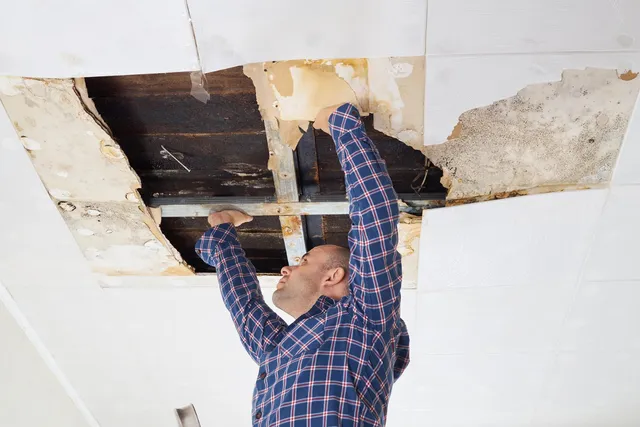
Immediate Incident Containment Protocol
- Shut off main water supply: Isolate mechanical riser valves, street curb meters, or supply manifolds immediately.
- Establish electrical safety: De-energize sub-floor circuits and submerged outlets before walking into affected zones.
- Avoid delay: 115°F desert summer ambient heat accelerates microbial spore incubation within 24 to 48 hours.
Free On-Site Assessment & Transparent Estimates
- Non-invasive thermal imaging: FLIR infrared scans map hidden water boundaries behind drywall and under concrete.
- Transparent itemized estimates: Industry-standard Xactimate line items prepared upfront with zero surprises.
- Rapid 30-to-60 minute dispatch: Mobile units fully equipped with heavy extraction pumps on active standby.
Quick Summary: Server Room Water Leak Cleanup & Data Center Restoration in Phoenix metropolitan data centers
When an overhead cooling chiller ruptures, a CRAC condensate line overflows, or a fire suppression loop breaches in a high-density server room, every second dictates whether your facility suffers millions of dollars in destroyed enterprise hardware or maintains 99.999% (“five nines”) uptime. Standard commercial water mitigation tactics—such as dragging dirty plastic air movers into raised-floor plenums or using vibrating industrial shop-vacs—cause catastrophic static discharges (ESD), aerosolize conductive subfloor dust, and trigger irreversible galvanic board corrosion. Professional server room water leak cleanup phoenix data center restoration requires specialized, non-conductive, cleanroom-grade protocols: static-dissipative liquid extraction, subfloor chilled-air plenum moisture purging, Class 100 (ISO 5) HEPA air scrubbing, and trailer-mounted industrial desiccant dehumidifiers capable of driving vapor pressure down without causing infrared thermographic moisture inspection shock to sensitive microprocessors.
🛡 ISO 14644-1 Cleanroom & ESD-Safe Protocols
☎ 24/7 Mission-Critical Dispatch: (602) 847-9593
60-Second Mission-Critical Facility Water Protocol
Facility managers, NOC engineers, and data center supervisors must execute these defensive measures within the first 60 seconds of detecting moisture to mitigate multi-rack cascades, protect power distribution units (PDUs), and prevent catastrophic electrical arc faults:
Immediately engage emergency isolation valves on the affected Computer Room Air Conditioning (CRAC/CRAH) secondary loop, overhead chilled water line, or reverse-osmosis humidification feed. Do not wait for building automation systems (BAS) if a physical isolation valve is accessible.
Deploy antistatic, fire-rated vinyl diversion tarps or magnetic drip diverters directly beneath overhead pipe leaks to channel fluid away from server rack exhausts, top-of-rack (ToR) switches, and vertical busways into mobile catchment basins.
Using non-marring, suction-cup tile lifters, lift raised access floor tiles at the perimeter of the leak zone to inspect the pressurized air plenum. Verify whether water is pooling around floor-level Power Distribution Units (PDUs), branch circuit whips, or copper patch bundles.
Do NOT hit the facility-wide EPO switch unless liquid water directly contacts live 480V/208V busbars, transformer windings, or high-amperage PDU inputs presenting immediate life-safety or arc-flash hazards. Segment electrical breakers by zone if localized isolation is required.
Ensure all internal personnel wear static-dissipative wrist straps bonded to the facility copper signal reference grid (SRG). Never bring standard nylon shop vacs, domestic mop buckets, or standard plastic sheets into the data hall.
Call Valley Restoration Pro at (602) 847-9593 for immediate dispatch of desiccant dehumidifiers, cleanroom HEPA filtration, and non-sparking liquid extraction rigs across the Phoenix metroplex.

Water Threats in Phoenix Tech Facilities & The Silicon Desert
Over the past decade, Greater Phoenix has surged into one of the top three data center markets in North America. Driven by aggressive tech development across the Chandler Tech Corridor (Price Road corridor), Mesa tech campus server rooms Elliot Road Technology Corridor, North Phoenix (Deer Valley and TSMC semiconductor hubs), and Goodyear, hundreds of megawatts of mission-critical compute infrastructure operate in the Valley of the Sun. However, operating hyperscale server facilities and mission-critical enterprise data rooms in the Sonoran Desert introduces extreme mechanical stresses that make water intrusions far more common—and dangerous—than most facility directors realize.
When outdoor ambient temperatures hover between 110°F and 118°F during Phoenix summers, facility cooling infrastructure operates at its absolute thermodynamic limit. Thermal expansion, mechanical vibration, and continuous condensation loading turn chilled liquid loops into ticking time bombs directly above and below multi-million dollar computing clusters.
1. CRAC & CRAH Chiller Condensate Leaks Under Desert Heat Loads
Computer Room Air Conditioners (CRAC) and Computer Room Air Handlers (CRAH) extract massive latent heat loads from dense server racks. In Phoenix, when monsoons drive outdoor dew points into the mid-60s, CRAC evaporator coils condense hundreds of gallons of moisture every 24 hours. Drain pans accumulate biological biofilms, dust, and mineral scale, causing condensate drain lines to clog. Condensate pans overflow directly into the under-floor cold plenum or spill onto computer room access floors. Even worse, localized mechanical chiller line fractures can release pressurized chilled water containing chemical corrosion inhibitors (glycol, biocides, and nitrites) directly into hot aisles.
2. Raised Access Floor Plenum Inundation
Standard enterprise IT environments rely on 12-inch to 24-inch raised access floor systems (Tate floors) that double as cold-air distribution plenums and cable conveyance highways. When a leak occurs, escaping water flows downward through tile perforations and pools on the concrete structural slab beneath. Because the subfloor is pressurized with high-velocity air flowing at 400 to 800 linear feet per minute, pooled water does not stay localized. High-velocity airflow atomizes the water into micro-droplets, sweeping moisture across hundreds of feet of subterranean cabling, power whips, and copper busbars, and carrying humid vapor straight into the intake vents of distant server racks.
3. Overhead Fire Suppression Line Breaches (Pre-Action vs. Wet-Pipe)
Modern data centers are engineered with double-interlock pre-action commercial fire sprinkler line rupture cleanup systems, where overhead pipes remain dry until both an optical/ionization smoke detector triggers and a sprinkler head bulb melts. However, hundreds of legacy corporate server rooms across Phoenix, Tempe commercial telecom closets, and Scottsdale enterprise facilities still house charged wet-pipe fire suppression systems directly above server racks. Mechanical damage during facility maintenance, seismic stress, roof structural shifts from monsoon microbursts, or corrosive dry-pipe MIC (microbiologically influenced corrosion) pinholes can cause catastrophic overhead water releases discharging 25 to 50 gallons of stagnant, pressurized black water per minute directly onto running equipment.
Anatomy of Subfloor Inundation: The Hydrodynamics of Cable Plenums
To remediate a flooded data hall without causing cascading server outages, restoration engineers must comprehend the complex hydrodynamics of raised floor plenums. When an overhead cooling chiller leak server room event or condensate overflow occurs in a facility like those across the Chandler tech corridor server flood zone, the physical architecture under the floor complicates every phase of extraction.
Cable Tray Damming & Capillary Traps
Data center subfloors are crisscrossed by dense layers of basket-style wire mesh cable trays, solid-bottom conduits, and high-voltage power conduits (copper busways and liquid-tight flexible metal conduits). When liquid enters this subterranean network, cable trays act as dams. Water backs up behind dense trunk lines of Cat6A copper cabling, single-mode fiber optic bundles, and 3-phase power whips.
Water gets trapped between individual cable sheaths via capillary action. Because PVC cable jackets are packed tightly in zip-tied or hook-and-loop bundles, bound water can remain trapped between cables for weeks if not extracted with specialized vacuum tools. Over time, trapped water degrades cable jacketing through plasticizer migration, alters characteristic impedance on 10GbE and 100GbE copper channels, and creates breeding grounds for fungal colonies within the cleanroom airflow loop.
Vaporization into Cold-Aisle Airflow Streams
In a standard hot-aisle/cold-aisle containment architecture, CRAH units force chilled air (typically 64°F to 70°F) into the subfloor plenum at positive static pressures ranging from 0.05 to 0.15 inches of water column. This air discharges upward through perforated floor tiles directly into the cold aisles in front of server rack intakes.
When warm ambient moisture enters the cold subfloor slab (often chilled to 60°F), the concrete slab cools the pooled water. As high-volume conditioned air rushes across the liquid pool, rapid convective evaporation occurs. The air entering server intakes becomes super-saturated with water vapor, spiking relative humidity from nominal baseline levels (40%–50% RH) to dangerous peaks above 80% RH. When this moisture-laden air hits heat sinks, power supply transformers, and high-frequency ASICs operating at 140°F–180°F, extreme vapor pressure gradients develop across silicon packaging.
Active Water Breach in Your Server Room or Data Hall?
Do not let subfloor flooding or overhead chiller leaks breach your uptime SLAs. Valley Restoration Pro provides immediate 25-to-40 minute emergency dispatch with cleanroom desiccant air handlers, static-dissipative extraction, and class-certified HEPA filtration across Phoenix, Chandler, Tempe, and Scottsdale.
Non-Conductive, Zero-Static Cleanroom Drying Protocols
Standard disaster restoration firms utilize Low-Grain Refrigerant (LGR) dehumidifiers and high-velocity centrifugal carpet fans constructed from molded rotational polyethylene. In an office building or flooded residential basement, this equipment is standard procedure. In a Tier III or Tier IV data center, deploying standard commercial equipment is reckless operational negligence that violates ANSI/ISA-71.04 environmental standards and ISO 14644-1 cleanroom classifications.
1. Triboelectric Electrostatic Discharge (ESD): Plastic housing fans blowing high-velocity non-conditioned air across synthetic cable insulation generate thousands of volts of static charge. A static discharge as minor as 25 volts can degrade a CMOS transistor, while 100 volts causes catastrophic gate oxide dielectric puncture.
2. Conductive Particulate Aerosolization: Commercial air blowers blast concrete subfloor dust, zinc whiskers from electro-galvanized floor tiles, and drywall silica into the server intake stream, coating circuit boards with conductive and hygroscopic debris.
3. Thermal Overload & Coil Freeze-Up: Standard LGR dehumidifiers heat exhaust air up to 100°F–110°F, creating extreme thermal hot spots that trigger server processor throttling and thermal shutdown.
The Cleanroom Psychrometric Protocol: Industrial Desiccant Dehumidification
To dry mission-critical server environments safely, structural drying and dehumidification must be executed via data center desiccant drying cleanroom hepa engineering. Desiccant air handlers do not rely on refrigeration coils or condensation pans. Instead, they pass moist process air through a slowly rotating honeycomb wheel impregnated with microscopic silica gel desiccant.
Sub-Zero Dew Point Depression
Desiccant systems drive grains per pound (GPP) from ambient levels (60–80 GPP) down to ultra-dry levels below 15 GPP, lowering process air dew points to -10°F. This creates an intense vapor pressure gradient that extracts bound moisture from concrete subfloors and cable bundles without raising room temperature.
Zero Internal Thermal Shock
Trailer-mounted desiccant plants park externally and deliver conditioned, ultra-dry air through antistatic, static-grounded spiral ducting. Reactivation heat and exhausted water vapor are vented outdoors, maintaining stable 68°F–72°F data hall temperatures and preventing microchip solder joint thermal fatigue.
Class 100 (ISO 5) HEPA Air Scrubbing
All drying air is filtered through 99.97% DOP-certified HEPA filtration units equipped with static-dissipative conductive housings and carbon pre-filters to capture airborne particulates down to 0.3 microns, ensuring cleanroom compliance under ISO 14644-1.
The Strict Relative Humidity Envelope: Balancing ESD vs. Corrosion
In standard flood restoration, technicians attempt to drive relative humidity as close to single digits as possible. In a mission-critical server room, this approach is disastrous. According to ASHRAE TC 9.9 Thermal Guidelines for Data Processing Environments, the allowable relative humidity envelope is strictly defined:
- Upper Limit (60% RH / 59°F Dew Point): Exceeding 60% RH triggers rapid hygroscopic salt hydration on circuit boards, accelerates electrochemical migration, and increases the risk of liquid condensation when cold air mixes with warm equipment surfaces.
- Lower Limit (40% RH / 41.9°F Dew Point): Dropping room RH below 30%–35% dramatically increases the generation of electrostatic charges on synthetic server components, floor tiles, and technician attire. In dry desert air, walking across a vinyl floor can generate static potentials exceeding 15,000 volts.
- Valley Restoration Pro Target Band: Our engineers calibrate desiccant airflow and psychrometric balancing dampers to lock the facility into a tightly regulated 45% to 50% RH envelope at 70°F, actively stripping liquid water from the building envelope while maintaining a static-safe environment for live computing infrastructure.

Preventing Corrosion on Sensitive Server Boards & Fiber Optic Backbones
The most insidious threat of a data center water leak is not catastrophic immediate immersion; it is the delayed microscopic degradation of electronic components. Modern server motherboards, PCIe expansion cards, and solid-state storage backplanes feature micro-traces separated by distances of less than 0.1 millimeters. When moisture vapor contacts these micro-circuits, complex electrochemical degradation begins within hours.
Electrochemical Migration (ECM) and Dendrite Formation
When an unsealed PCB board operates in high humidity, water vapor condenses into a microscopic moisture film across the board surface. If ionic contaminants are present—such as flux residues left over from manufacturing, airborne sulfur, or dissolved mineral salts from tap water—the moisture film forms an active electrolytic bath.
Under applied direct current voltage (such as a 12V or 3.3V power rail on a motherboard), metal ions (predominantly copper, tin, and silver) dissolve from the positively charged anode. These metal ions migrate across the electrolyte solution toward the negatively charged cathode, electroplating along path of lowest resistance. Over hours or days, this electrodeposition forms microscopic, tree-like crystalline filaments called dendrites.
Once a conductive dendrite bridges the gap between adjacent traces or ball grid array (BGA) solder balls, it creates an intermittent or dead short circuit. The sudden current spike vaporizes the dendrite, causing intermittent machine check errors (MCEs) and kernel panics that baffle system administrators—until secondary dendrites form and permanently burn out the processor or motherboard.
Hygroscopic Dust Activation & Conformal Coating Compromise
Even the cleanest data centers accumulate tiny amounts of microscopic airborne dust. In the desert Southwest, this dust contains high concentrations of calcium sulfate, calcium carbonate, and sodium chloride. In a dry environment (below 40% RH), this dust is chemically inert and electrically non-conductive.
However, when an overhead chiller leak or raised floor inundation elevates room relative humidity past the Deliquescence Relative Humidity (DRH) of the salts—which occurs at approximately 55% to 65% RH—the dry salt crystals spontaneously absorb moisture from the air, dissolving themselves into conductive liquid puddles directly on the surface of energized microchips. This activates aggressive pitting corrosion that dissolves copper traces beneath protective solder masks.
Fiber Optic Backbones: Ferrules, Attenuation, and Ceramic Contamination
While glass fiber optic strands are immune to electrical short circuits, high-speed fiber backbones (single-mode OS2 and multi-mode OM4/OM5) are exceptionally vulnerable to moisture contamination:
- Ceramic Ferrule Capillary Suction: LC and MPO/MTP connectors rely on precision ceramic ferrules polished to sub-micron tolerances. Escaping water enters connector bodies, trapping microscopic mineral deposits against the optical core interface.
- Refraction Index Distortion & Insertion Loss: A microscopic film of mineral-laden water between two mating fiber endfaces alters the refractive index of the connection. On 400Gbps and 800Gbps PAM-4 optical transceivers, this causes immediate signal attenuation, burst frame loss, and link flaps.
- Connector Endface Pitting: As trapped moisture evaporates under heat generated by transceiver lasers, dissolved minerals precipitate as hard crystalline scale that scratches optical ferrule glass during re-mating. Valley Restoration Pro deploys precision video microscope inspection and dry-solvent click cleaning to restore optical cleanliness to Telcordia GR-326-CORE specifications.
The 5-Phase Technical Restoration Workflow for Critical IT Facilities
When Valley Restoration Pro deploys to a critical IT facility water damage mitigation phoenix az emergency, our master restorers follow a rigorous five-phase engineering process aligned with IICRC S500 guidelines, ISO 14644 cleanroom standards, and ANSI/ISA environmental criteria:
Phase 1: Electrostatic-Safe Perimeter Containment & Liquid Extraction
Immediate Execution (Hour 0–2)
Technicians establish antistatic ESD perimeter containment barriers using certified flame-retardant, static-dissipative vinyl film (NFPA 701 compliant). Liquid water is extracted using explosion-proof, grounded extraction systems with non-sparking carbon-impregnated vacuum wands. Water is removed from access floor tiles, perimeter drainage trenches, and concrete slab depressions without dragging equipment across sensitive floor finishes.
Phase 2: Surgical Subfloor Grid Lifting & Under-Plenum Inspection
Hour 1–4
Using precision twin-cup vacuum lifters, technicians lift strategic floor panels in a checkerboard pattern to avoid collapsing plenum static pressure. High-resolution FLIR thermal infrared cameras and non-invasive electromagnetic moisture meters scan beneath cable trays, identifying hidden water reservoirs trapped against concrete stem walls, seismic pedestal footings, and conduit penetrations.
Phase 3: High-Volume Desiccant Dehumidification & Controlled Plenum Purge
Hour 2–24+
Trailer-mounted industrial desiccant dehumidifiers (1,500 to 5,000 CFM capacity) deliver ultra-dry air through antistatic ducting directly into the subfloor plenum. Negative pressure purge fans evacuate moisture vapor outdoors, ensuring humid air is never recirculated into CRAH return air streams. GPP levels are depressed rapidly below 20 GPP while room relative humidity is locked into the ASHRAE 45%–50% safety zone.
Phase 4: Class 100 HEPA Air Scrubbing & Particle Counter Testing
Continuous Operation
Continuous Class 100 HEPA air scrubbers circulate the data hall air volume 6 to 10 times per hour, trapping dust particles, construction debris, and aerosolized salts. Laser particle counters monitor air quality in real time, validating that particulate counts stay within ISO 14644-1 Class 8 or Class 7 parameters throughout the drying cycle.
Phase 5: Forensic Psychrometric Clearance & Cleanroom Recertification
Final Hand-Off
The project concludes only when concrete subfloor moisture reaches dry baseline standards (ASTM F2659 & F2170), copper resistance testing validates zero bridging, and comprehensive forensic environmental clearance reports are generated for corporate risk managers, SLA compliance officers, and commercial property commercial business interruption insurance claims adjusters.
Comparison Table: Standard Commercial Restoration vs. Mission-Critical Cleanroom Desiccant Restoration
Deploying standard commercial restoration contractors to mitigate a high-density server room flood introduces severe operational risks. The technical divergence between general commercial water cleanup and mission-critical cleanroom restoration is illustrated below:
| Technical Parameter | Standard Commercial Mitigation (LGR / Fans) | Mission-Critical Cleanroom Restoration (Valley Restoration Pro) |
|---|---|---|
| Dehumidification Mechanism | Mechanical refrigeration coils (LGR). Ineffective below 40 GPP; shuts down in ambient temperatures above 95°F. | Industrial rotating silica gel desiccant honeycomb wheel. Operates independently of ambient heat down to 10 GPP and -10°F dew points. |
| Electrostatic Discharge (ESD) Protection | None. Standard plastic fans and vinyl hoses generate 5,000V–15,000V static potentials, threatening chip dies. | 100% static-dissipative equipment housings, carbon-grounded ducting, and technician grounding to copper Signal Reference Grid (SRG). |
| Airborne Particulate Control | Air blowers blast concrete subfloor dust and zinc whiskers into server intakes, violating ISO cleanroom specs. | Class 100 (ISO 5) certified 99.97% HEPA air filtration scrubbers operating under continuous negative pressure containment. |
| Thermal Load Impact on Racks | Refrigerant compressors exhaust 100°F–110°F hot air directly into the room, risking server thermal throttling. | Zero thermal footprint. Reactivation heat and moisture exhaust are ducted externally, maintaining precise 68°F–72°F rack intake temps. |
| Humidity Control Envelope | Uncontrolled rapid drying attempts; drops RH below 25%, creating intense ESD hazards for electronic packaging. | Precision dampening maintains ASHRAE TC 9.9 recommended envelope (45%–50% RH) to eliminate both corrosion and static arc risk. |
| Subfloor Plenum Access & Extraction | Random floor tile removal collapses plenum air pressure; shop-vacs drag across delicate power and fiber trunks. | Surgical twin-cup vacuum lifting preserves airflow balance. Non-marring suction wands safely extract under dense cable trays. |
| Corrosion Prevention Protocols | No board-level diagnostics; assumes drying room air prevents circuit degradation. | Electrochemical migration mitigation, desiccated dry-air micro-purging, and optical ferrule inspection to Telcordia specifications. |
| Insurance & SLA Compliance Reporting | Generic residential-style drywall moisture logs unacceptable to enterprise underwriting teams. | Forensic psychrometric logging, ISO particle counter certificates, thermal infrared mapping, and enterprise Xactimate® documentation. |
Enterprise Business Continuity, SLA Preservation & Insurance Protocols
For colocation providers, cloud operators, and enterprise IT directors across the Phoenix metroplex, a water leak is not just a facilities issue—it is a critical legal and financial liability. Modern multi-tenant data centers operate under stringent Service Level Agreements (SLAs) promising 99.999% uptime (“five nines”), which permits less than 5.26 minutes of unscheduled downtime across an entire calendar year.
Financial Impact: Downtime Penalties vs. Controlled Remediation
When an unmitigated water breach forces a colocation provider to de-energize a data hall, the cascading costs accumulate exponentially:
- Direct SLA Default Credits: Standard enterprise agreements require operators to rebate 10% to 50% of monthly colocation lease fees per hour of unplanned outage for affected client cages.
- Hardware Replacement Costs: A single 42U compute rack packed with high-density GPU accelerators (such as NVIDIA H100/A100 clusters) represents upwards of $300,000 to $1,500,000 in capital equipment. Water or conductive steam damage across ten racks creates an eight-figure hardware replacement loss.
- Business Interruption & Reputational Churn: Tenant migration following an uncontained data center incident frequently results in permanent enterprise customer loss.
Forensic Insurance Documentation & Xactimate® Enterprise Estimation
Filing a commercial property and business interruption claim for an IT facility water loss requires specialized forensic evidence. Standard insurance adjusters are accustomed to pricing wet carpet padding and residential drywall; they often lack familiarity with the cost profiles of cleanroom HEPA mobilization, trailer-mounted desiccant plants, or subfloor cable plenum restoration.
Valley Restoration Pro works directly with your commercial property insurer (including FM Global, Travelers, Chubb, and Zurich) using Xactimate® Enterprise line-item protocols. We supply:
- Continuous Automated Psychrometric Logs: Timestamped records of process inlet/outlet temperatures, grains per pound (GPP), relative humidity, and surface vapor pressures proving controlled, non-damaging drying.
- High-Resolution FLIR® Thermal Infrared Scans: Calibrated radiometric imagery proving the exact extent of moisture migration beneath raised floors and behind electrical switchgear.
- ISO 14644-1 Airborne Particle Count Certificates: Third-party verified cleanroom air quality reports proving zero particulate contamination was introduced during remediation.
- Cause of Loss Forensic Investigation: Comprehensive documentation establishing sudden and accidental mechanical failure (such as CRAH valve seat ruptures or chiller freeze-cracking) to eliminate claim disputes over lack of maintenance exclusions.
Case Study: Chandler Tech Corridor Hyperscale Server Room Chiller Rupture
Chandler, Arizona
The Incident: At 2:18 AM on a July evening during a severe 114°F heatwave, an overhead 3-inch chilled water supply line feeding a perimeter CRAH unit suffered a mechanical victaulic coupling failure inside a premier colocation facility in the Chandler Tech Corridor. Pressurized chilled water (45°F, treated with corrosion inhibitors) cascaded down the wall and flooded the 18-inch raised floor plenum, spreading across four hot/cold aisle containment corridors housing 120 live server cabinets.
The Threat: Standing water in the subfloor plenum reached a depth of 2.5 inches, within a half-inch of submerging 208V 30A server branch circuit whips. Airflow from surrounding operational CRAHs was rapidly atomizing the liquid, driving cold-aisle humidity from 45% to 84% RH. An emergency facility shutdown would have triggered an estimated $1.2 million in customer SLA failure penalties within 60 minutes.
Valley Restoration Pro Deployment:
- 28-Minute Emergency Arrival: Our mission-critical emergency team arrived on site with mobile desiccant rigs and cleanroom extraction teams.
- Static-Dissipative Suction Extraction: Technicians extracted 1,150 gallons of chilled liquid directly from the concrete structural slab using grounded wand attachments, preventing liquid from touching electrical busways.
- 3,500 CFM Industrial Desiccant Deployment: Exterior trailer-mounted desiccant equipment pumped 12 GPP air into the subfloor plenum while exhaust ducts purged humidity outdoors. Process air was balanced to keep room humidity at 48% RH, preventing electrostatic sparking.
- Class 100 HEPA Containment: Four industrial negative-air HEPA scrubbers filtered the environment continuously, maintaining zero dust elevation across live server intakes.
Frequently Asked Questions: Server Room & Data Center Water Leak Mitigation
Critical answers from master certified restoration engineers for data center directors, network operations managers, and commercial facility engineers:
November 2026 Technical Field Advisory & Operations Update
Verified by IICRC Master Water Restorer | Active Emergency Deployment
Greater Phoenix Seasonal Water Damage Dynamics & 2026 Rapid Response Protocol
As ambient desert temperatures decline in late autumn across Maricopa County, concrete slabs experience thermal contraction cycles, increasing structural stress on subterranean copper plumbing lines weakened by Phoenix’s extreme 18 GPG municipal hard water scale. Valley Restoration Pro maintains rapid 30-to-60 minute emergency staging across Phoenix, Scottsdale, Mesa, Chandler, Glendale, Gilbert, Tempe, Peoria, Surprise, and Goodyear. Our master crews deploy non-destructive FLIR thermal imaging and high-volume industrial LGR dehumidification trailers to achieve dry standard equilibrium without needless structural demolition.
Emergency Server Room Water Mitigation Across Greater Phoenix
When cooling loops burst, condensate lines clog, or overhead fire lines leak, every minute of delay increases the risk of permanent microprocessor corrosion and catastrophic colocation downtime. Partner with Arizona’s elite mission-critical restoration fleet for certified cleanroom water extraction, desiccant structural drying, and direct insurance billing.
Verified Local Area Dispatch: Phoenix, AZ
Official Geo-Coordinates: 33.4484° N, -112.074° W • Maricopa County
Verified Technical Standard & Engineering Quality Assurance
Every mitigation project executed by Valley Restoration Pros complies strictly with national standards established by the Institute of Inspection, Cleaning and Restoration Certification (IICRC S500 / S520) and OSHA safety regulations across Maricopa County.