
Valley Restoration Pros delivers 24/7 industrial emergency water extraction, thermal psychrometric drying, and structural mitigation across Phoenix and Maricopa County with guaranteed 30–60 minute rapid arrival. All protocols strictly adhere to IICRC S500 standards, featuring upfront itemized pricing and free on-site thermal moisture assessments. Call dispatch directly at (602) 847-9593.
Why Immediate Mitigation Is Critical in Phoenix Heat
When sudden torrential monsoon runoff or high-pressure commercial fire sprinkler lines breach an automotive collision center along the Avondale Auto Mall corridor, down-draft spray booth exhaust pits become high-hazard containment emergencies. Subterranean exhaust trenches submerge 480-volt explosion-proof draft motors, exhaust plenums, and mechanical damper actuators beneath feet of hazardous water. Floodwaters rapidly mix with volatile organic compounds (VOCs), dried overspray sludge, isocyanate resins, and solvent residues, converting clean water into hazardous Category 3 chemical blackwater. Saturated double-wall insulated booth panels delaminate, direct-fired gas burner heat exchangers suffer thermal cracking, and standing water compromises calibrated laminar airflow balances. In Sonoran Desert summer ambient heat exceeding 115°F, trapped moisture inside closed spray booths incubates toxic microbial growth and explosive solvent vapors within 24 hours, completely halting collision center operations and voiding automotive manufacturer warranty certifications.
Service Definition & The IICRC Standard of Care
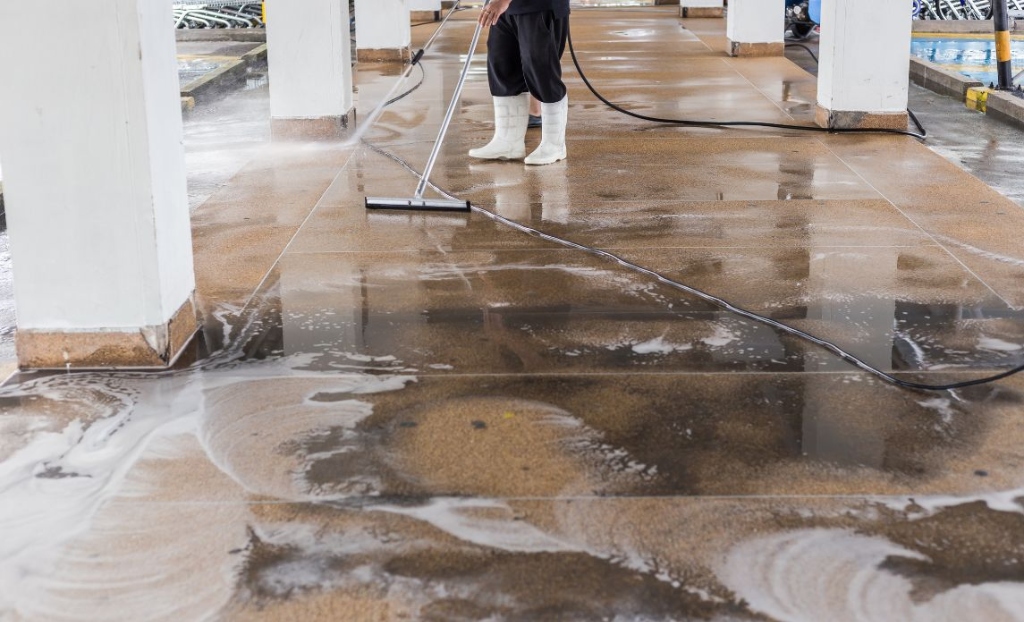
Professional avondale commercial auto body spray booth exhaust pit flood extraction is an engineering and environmental discipline adhering strictly to IICRC S500 protocols, not mere surface mopping. When structural plumbing failures strike in Maricopa County, certified emergency water extraction and thermal structural drying procedures must be deployed immediately. Whether triggered by high-pressure burst pipe emergencies, subfloor leaks, or commercial line ruptures, bound moisture rapidly penetrates concrete subfloors and wall framing. In the desert heat, delays trigger microbial proliferation requiring rapid mold remediation. Request damage assessment through our emergency assessment portal or request 30-minute dispatch across all Valley service areas.
Securing electrical feeds, inspecting load-bearing assemblies, and containing pathogens.
Stopping the intrusion source and erecting 6-mil plastic isolation containment airlocks.
31-HP truck-mount extraction, removing gallons exponentially faster than evaporation.
LGR dehumidifiers and HEPA air scrubbers driving grains per pound below 25 GPP.
Calibrated electronic pinless testing confirming baseline dry standards.
The Complete 6-Stage Restoration Roadmap
Our IICRC-certified crews execute a disciplined, scientific 6-stage protocol to stabilize and dry structural components:
Emergency Dispatch & Perimeter Isolation
30 to 60 minute arrival. Securing electrical shutoffs, evaluating structural loads, and erecting containment airlocks.
FLIR® Thermal Mapping & Baseline Scans
Infrared thermal scans detect trapped moisture behind walls and beneath concrete without invasive exploratory demolition.
High-Volume Bulk Extraction
31-HP truck-mount extraction units pump standing water away at hundreds of gallons per minute.
Controlled Selective Demolition
Precision flood cuts 12 to 24 inches above moisture lines, removing wet insulation and opening wall framing to dry airflow.
Thermodynamic Dehumidification
Industrial Low-Grain Refrigerant dehumidifiers pull deep trapped moisture from dense framing lumber and concrete slabs.
Antimicrobial Sanitization & Verification
EPA-registered botanical application (Benefect Decon 30) and calibrated moisture testing to issue an official dry certificate.

Specialized Equipment & Industrial Restoration Technology
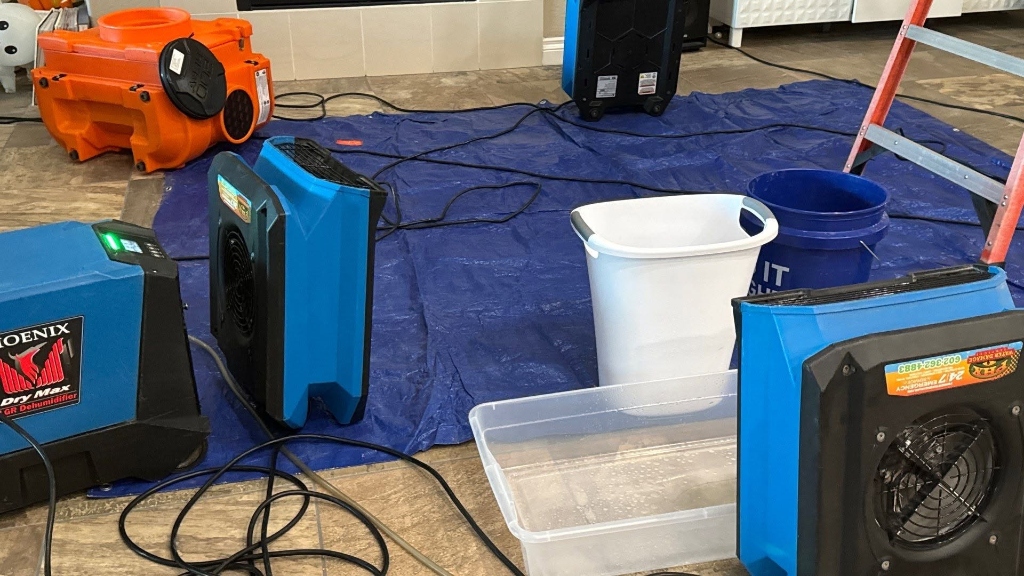
Mitigating severe property damage requires industrial-grade technology capable of altering thermodynamic psychrometrics:
Truck-Mounted Extraction Rigs
31-HP engines producing 16+ inches Hg vacuum suction to evacuate bulk water rapidly into holding tanks.
Low-Grain Refrigerant Dryers
Pre-cooling heat-pipe systems driving ambient grains per pound below 25 GPP to draw deep trapped water out of framing.
HEPA Negative-Air Scrubbers
Hospital-grade 99.97% particulate filtration capturing microscopic fungal spores, soot, and biohazard aerosols.
FLIR® Thermal Scanners & Probes
Infrared thermography detecting evaporative cooling boundaries behind walls, combined with digital RF pinless scanners.
Professional Restoration vs. DIY Mitigation
Attempting DIY cleanup during a property disaster creates severe hidden liabilities:
- Trapped Moisture: Surface drywall dries while moisture inside cavities triggers hidden mold blooms.
- Pathogenic Risks: Category 2 & 3 water contains bio-contaminants standard cleaners fail to kill.
- Insurance Denial: Insurers require daily psychrometric logs; lack of data causes claim disputes.
Transparent Upfront Itemized Pricing
Valley Restoration Pros operates with complete transparency:
- Free On-Site Assessment: Complete physical inspection before work begins.
- Upfront Itemized Estimates: Detailed line items calculated via industry-standard Xactimate.
- Zero Surprise Billing: No hidden charges or unauthorized repairs.
Certified Avondale commercial auto body spray booth exhaust pit flood extraction Field Documentation
Every response performed by Valley Restoration Pros is documented through photographic and thermographic records:

Comprehensive Avondale commercial auto body spray booth exhaust pit flood extraction Technical Manual & Operational Standards
Exhaustive engineering protocols, psychrometric calculations, geological multipliers, and step-by-step restoration standards for Maricopa County properties:
Executive Emergency Abstract: Avondale Commercial Auto Body Spray Booth Exhaust Pit Submergence & Rapid Production Interruption
Within the high-volume automotive collision and fleet refinishing complexes of the West Valley—anchored intensely around the Avondale Auto Mall along West McDowell Road, North 107th Avenue, West Van Buren Street, and North Avondale Boulevard near Interstate 10 (Papago Freeway)—a sudden structural flood emergency inside an auto body repair facility triggers an instantaneous operational catastrophe. Commercial automotive spray paint booths, specifically pressurized down-draft and semi-downdraft refinishing cabins, represent the primary revenue-generating capital core of any certified automotive collision center. These sophisticated environmental chambers cost between $175,000 and $450,000 per cabin and operate under exceptionally stringent air exchange, temperature, and filtration tolerances regulated by NFPA 33 (Standard for Spray Application Using Flammable or Combustible Materials), OSHA 29 CFR 1910.107, and Maricopa County Air Quality Department (MCAQD) Rule 342. When an overhead commercial fire sprinkler branch shears, a pressurized municipal utility line ruptures, or an intense Sonoran Desert monsoon flash flood overwhelms exterior apron grading, the lowest physical elevation on the shop floor—the subterranean down-draft exhaust pit—becomes the immediate catchment basin for thousands of gallons of destructive water.
The rapid submergence of an automotive paint booth exhaust pit initiates an immediate cascade of mechanical, electrical, structural, and chemical hazards. The below-grade concrete pit, typically excavated between 36 and 54 inches beneath heavy galvanized steel floor grating, houses mission-critical mechanical components: high-velocity backward-inclined airfoil exhaust turbine fans, variable-pitch mechanical airflow balancing dampers, explosion-proof draft motors rated for Class I, Division 1 hazardous locations, and multi-stage particulate exhaust filter holding grids. When floodwaters submerge this mechanical assembly, the liquid does not remain benign. Instead, water rapidly emulsifies and re-suspends years of accumulated overspray paint residues, polyurethane clearcoat solids, toxic aliphatic isocyanate resin binders, organic solvent thinners (xylene, toluene, acetone, methyl ethyl ketone), and heavy metal pigment dust resting on the pit floor. Within minutes, clean municipal water or outdoor storm runoff transforms into a toxic, chemically contaminated Category 3 blackwater slurry that threatens structural slab integrity and releases volatile chemical fumes throughout the entire shop facility.
Simultaneously, the physical construction of modern commercial spray cabins makes them uniquely vulnerable to catastrophic moisture entrapment. Assembled from modular double-wall interlocking insulated panels containing high-density mineral wool or expanded polystyrene (EPS) cores encased in pre-painted galvanized steel, capillary action draws standing water upward into panel bases via capillary suction. Water trapped inside this insulation envelope cannot evaporate naturally. During subsequent vehicle baking cycles (operating at 140°F to 160°F), trapped moisture flashes into high-pressure steam, causing severe panel skin delamination, internal rust blooming, blistering cabin finishes, and water droplet condensation that drops directly onto fresh paint clearcoats. If the facility direct-fired gas Air Makeup Unit (AMU) or mechanical burner mezzanine is flooded, burner combustion heads, modulating gas valves, and flame safety controls suffer catastrophic oxidation. In these critical emergencies, standard residential cleanup methods fail entirely. Restoration requires specialized industrial extraction, explosion-proof containment, and precision desiccation executed by certified experts in commercial water damage restoration.
For commercial auto body repair facilities, dealership service fleets, and independent collision reconstruction centers across Greater Phoenix and the West Valley, spray booth downtime equates to immense financial losses. Vehicle refinishing halts instantly, collision repair throughput freezes, Direct Repair Program (DRP) insurance cycle-time metrics collapse, and storage lot congestion compounds hourly. Valley Restoration Pros maintains dedicated 24/7 commercial emergency teams stationed throughout Avondale, Glendale, Goodyear, and Phoenix. Our certified technicians arrive within 30 minutes equipped with intrinsically safe pneumatic submersible pumping arrays, truck-mounted high-cfm extraction platforms, industrial desiccant dehumidification trailers, and non-destructive thermal imaging diagnostics to dewater subterranean exhaust pits, desiccate insulated cabin envelopes, and restore full NFPA 33 production clearance.
Immediate Commercial Paint Booth Emergency Action Directives
- Execute Immediate 480V 3-Phase Electrical Lockout/Tagout (LOTO): De-energize the main mechanical disconnect switch feeding the paint booth control panel, high-voltage intake air makeup blowers, exhaust draft fans, and cabin lighting ballasts. Submerged conduit lines and floor-level junction boxes present fatal electrocution and explosion hazards in the presence of volatile solvent vapors.
- Isolate Natural Gas or Propane Supply Risers: Manually close the exterior yellow quarter-turn shutoff ball valve supplying the Air Makeup Unit (AMU) burner assembly and heated flash-off units. This prevents gas valve solenoid failure, regulator flooding, and dangerous combustion backfires caused by water-logged burner nozzles.
- Halt All Shop Refinishing, Sanding, and Chemical Transfers: Evacuate personnel from adjacent paint mixing rooms and prep stations. Never energize non-explosion-proof utility pumps or commercial shop vacuums near the flooded pit, as motor carbon brush arcing will ignite flammable solvent vapors hovering above the water surface.
- Mobilize Certified Industrial Extraction Units: Immediately contact the Valley Restoration Pros 24/7 Emergency Commercial Disaster Command Desk at (602) 847-9593 for rapid deployment of certified industrial dewatering crews, intrinsically safe pumps, and desiccant drying trailers.
Anatomy of the Failure: Mechanical Hydrodynamics & Paint Booth Inundation Vectors
Commercial automotive spray paint booths are intricate thermodynamic chambers engineered to deliver laminar down-draft or semi-downdraft airflow velocities precisely calibrated between 50 and 100 feet per minute (FPM) across the vehicle surface. To achieve this, clean outside air is pressurized and heated by an overhead Air Makeup Unit (AMU), introduced through high-efficiency ceiling diffusion media, and drawn downward past the vehicle into a subterranean exhaust plenum before being expelled through industrial exhaust stacks. The precise physical engineering that creates this flawless automotive finish also makes the paint booth an acute gravity-fed sump during an industrial flood event. Understanding the anatomical failure points requires analyzing the exact structural, aerodynamic, and chemical pathways water traverses during a commercial inundation:
Subterranean Downdraft Exhaust Pit Flooding
Subterranean exhaust pits are reinforced concrete trenches excavated 36 to 54 inches below the structural shop slab, measuring between 10 to 14 feet wide and 24 to 36 feet long. When water breaches an auto body facility, gravity funnels thousands of gallons directly through the floor grating. The pit quickly fills with 4,000 to 10,000 gallons of liquid, submerging exhaust filter holding frames, subterranean air flow balancing baffles, and exhaust duct transition collars. The sudden hydrostatic load exerts immense upward and lateral pressure against pit walls, forcing water through hairline expansion joints and cracks in the concrete slab, saturating the underlying sub-base soils. Similar to our deep commercial extraction protocols deployed in subterranean parking garage flood extraction, below-grade water collection requires specialized pumping geometry and structural monitoring.
Explosion-Proof Motor & Draft Fan Submergence
Exhaust draft fans utilize non-sparking aluminum or powder-coated steel backward-inclined airfoil impellers powered by 10 to 25 horsepower 3-phase explosion-proof electric motors. In floor-mounted or side-trench pit configurations, floodwaters fully submerge motor terminal junction boxes, bearing housings, and belt drive pulleys. Silt, chemical paint sludge, and water breach the mechanical seals, washing away synthetic bearing greases and saturating motor stator windings, resulting in catastrophic phase-to-ground electrical short circuits if re-energized without proper restoration.
Double-Wall Insulated Panel Capillary Wicking
Spray booth cabins are constructed from modular tongue-and-groove insulated panels with 18-gauge pre-coated galvanized steel skins encapsulating rigid mineral wool or EPS insulation cores. When floodwaters stand on the booth floor, capillary suction draws water up into the insulation core through unsealed base tracks. Saturated insulation loses its thermal R-value, corrodes internal sheet steel from the inside out, and acts as a continuous moisture reservoir that ruins paint bake cycles for months if not aggressively extracted through industrial drying arrays.
Air Makeup Unit & Burner Contamination
Roof-mounted or mechanical mezzanine Air Makeup Units (AMUs) feed conditioned air through vertical duct drops into the booth ceiling plenum. When severe roof failures occur, or high-humidity steam and floodwaters back-draft through unsealed exhaust stacks, condensation saturates the direct-fired burner chamber, spark igniters, flame safeguard controls, and motorized intake dampers. Rust scale immediately coats burner orifices, creating irregular combustion profiles, delayed ignition detonations, and hazardous carbon monoxide back-drafting.
Beyond pure mechanical destruction, paint booth flooding presents an acute chemical contamination crisis. Collision repair facilities utilize sophisticated solvent-borne basecoats and waterborne clearcoats. Over years of heavy production, substantial quantities of overspray particulate settle beneath floor grates into the exhaust pit, forming a dense chemical sludge known as booth sediment. When water floods the pit, this sludge re-suspends. Solvent residues, isocyanates, and volatile organic compounds (VOCs) volatilize rapidly into the ambient air, while the dense aqueous chemical slurry coats exhaust dampers, pit walls, and ductwork.
Furthermore, modern high-end collision centers rely on computerized Variable Frequency Drives (VFDs) and differential pressure transducers (Magnehelic gauges) to maintain cabin pressure at a precise neutral or slightly positive setpoint (+0.02 to +0.05 inches of water column). Saturated exhaust filters produce extreme static pressure drops, causing VFD motors to ramp to maximum RPM, which can burn out flooded windings or trigger catastrophic system lockouts. Restoring a flooded automotive paint booth requires far more than surface pumping; it demands an engineered psychrometric protocol executed by certified commercial recovery teams.
Additionally, the delicate paint mixing room, which sits adjacent to the spray booth cabin, is frequently caught in the flood perimeter. Mixing rooms house explosive paints, solvent reclamation distillation units, and digital micro-scales calibrated to hundredths of a gram. Water intruding into this auxiliary zone corrodes scale load cells, shorts out hazardous-location light switches, and ruins expensive pigment toners. Addressing both the primary cabin and its interconnected mixing prep suites is essential to restoring full collision production capability across the entire facility footprint.
Phoenix & Avondale Climatic Multipliers: 18 GPG Hard Water, Caliche Clay Heave & 115°F Microbial Incubation
Restoring a flooded commercial automotive refinishing facility in Avondale and the Greater Phoenix metropolitan area requires an advanced engineering strategy adapted to the unique climatic and geological realities of the Sonoran Desert. Environmental conditions across the West Valley dramatically accelerate physical degradation, structural cracking, and microbial amplification:
1. Sonoran Desert Monsoon Deluges & West Valley Sheet Flow
Between early July and late September, the North American Monsoon generates violent atmospheric convective storms characterized by severe microbursts, haboob dust storms, and localized cloudbursts. In the West Valley sub-basin encompassing Avondale, Goodyear, and Litchfield Park, localized storm cells routinely dump 2.0 to 3.0 inches of torrential rain within thirty to forty-five minutes.
Commercial collision centers along the Avondale Auto Mall feature extensive outdoor footprints consisting of expansive asphalt customer parking areas, damaged vehicle holding pens, and outdoor parts storage yards. Because desert soils are dense and non-porous, 90% of all precipitation transforms into instantaneous surface runoff. Industrial yard catch basins and civil storm culverts quickly choke with desert silt, tumbleweeds, and coarse debris, surcharging municipal storm mains along McDowell Road and sending violent sheet flow through service bay roll-up doors directly toward below-grade exhaust pits.
Immediate deployment of high-capacity emergency water extraction within the first hour is critical to arrest inundation before water reaches electrical switchgear or structural drywall partitions.
2. Expansive Caliche Hardpan & Foundation Sub-Slab Upheaval
The geological subsurface of Avondale and the lower Agua Fria River alluvial plain consists of heavily cemented caliche—dense sedimentary layers bound by calcium carbonate and alkaline silicates. Caliche exhibits near-zero natural hydraulic conductivity. When torrential storm runoff saturates surface soils, water cannot drain downward into deeper aquifers, creating perched groundwater tables around commercial slab foundations.
This saturated clay matrix expands with tremendous volumetric force, exerting lateral soil pressures against concrete pit sidewalls and upward hydrostatic head against subterranean pit floor slabs. This hydrostatic surge forces groundwater through slab cold joints, expansion seams, and floor cracks, flooding exhaust pits from beneath even if surface bay doors remain barricaded with sandbags.
Plumbing breaks beneath concrete slabs also trigger similar upheavals; for related foundation failures, review our procedures for burst pipe repair.
3. 18 to 22 GPG Municipal Hard Water Scale & Galvanic Oxidation
Municipal water in the West Valley, whether delivered through municipal utility mains or industrial private wells, contains extreme mineral concentrations between 18 and 22 grains per gallon (GPG) of calcium carbonate and magnesium, with total dissolved solids (TDS) exceeding 750 PPM and elevated chloride concentrations.
When floodwaters contact spray booth components, the highly conductive mineral-rich water acts as an aggressive electrolyte. Dissimilar metals—such as galvanized steel pit floor grating in contact with aluminum exhaust dampers, copper sensor capillary lines, and mild steel structural framing—suffer immediate galvanic corrosion.
Unprotected metal surfaces experience aggressive white rust (zinc hydroxide oxidation) within 18 hours of submersion, seizing mechanical pivot points, binding damper linkages, and scaling burner orifices.
4. 115°F Summer Desert Ambient Heat & Accelerated Microbial Blooms
During Phoenix summer heatwaves, indoor body shop ambient temperatures routinely exceed 105°F to 115°F. Inside a stagnant, waterlogged exhaust pit where relative humidity reaches 100%, this extreme thermal energy functions as an industrial incubator.
Bare steel structural components undergo flash rusting within 8 to 12 hours. Simultaneously, airborne fungal spores (including Aspergillus, Cladosporium, and Chaetomium) germinate across wet filter racks, cardboard packaging, and acoustic insulation in under 24 hours. Furthermore, high ambient heat lowers the flash point of volatile solvents trapped in pit sludge, converting liquid chemical residues into explosive vapor clouds hovering at floor level.
Immediate application of certified mold remediation protocols is mandatory to protect sensitive air handling systems from fungal spore contamination.
Immediate Emergency First-Hour Protocol & Industrial Safety Isolation
When an automotive spray booth exhaust pit floods in Avondale, the first sixty minutes determine whether the incident results in a controlled 48-hour restoration or catastrophic multi-week facility downtime costing tens of thousands in lost collision repair billing. High concentrations of flammable solvent vapors, 480V 3-phase electrical power feeds, and hazardous chemical sludges make initial containment a high-stakes engineering operation. In accordance with NFPA 33, OSHA standard 29 CFR 1910.146 (Permit-Required Confined Spaces), and Maricopa County emergency procedures, Valley Restoration Pros implements a disciplined first-hour containment workflow:
Standardized First-Hour On-Site Isolation Procedures
- Formal Lockout/Tagout (LOTO) Execution: Our master technician verifies complete electrical isolation by locking the primary 480V 3-phase feeder at the building switchgear. Breakers for the air makeup unit burner, exhaust fan VFD, cabin lighting, and motorized roll-up doors are mechanically locked with OSHA-approved padlock hasps. Non-contact voltage sensors verify a verified zero-energy state across all sub-circuits before any personnel step near metal booth components, eliminating arc flash and electrocution hazards.
- Confined Space & Multi-Gas Atmospheric Profiling: The response supervisor conducts multi-gas testing at three vertical strata: top of the booth cabin, at floor grating height, and within the pit vapor headspace. Utilizing photoionization detectors (PID) and 4-gas meters, we verify that volatile organic compounds (VOCs) and Lower Explosive Limit (LEL) levels are safely below 10%, oxygen is strictly within 19.5% to 23.5%, and hydrogen sulfide is zero before any tools enter the area. Red barrier tape establishes a 50-foot exclusion perimeter restricting unauthorized shop staff.
- Perimeter Water Divergent Berming: While extraction rigs position, technicians deploy rapid-inflation polyurethane water dams and heavy absorbent containment snakes across shop bay entrances along McDowell Rd and 107th Ave to halt further exterior surface runoff from entering the booth footprint. Heavy sandbags and rubber diverters channel oncoming street runoff toward municipal storm basins, securing the building envelope against secondary water penetration.
- Removal of Contaminated Floor Grates & Filter Media: Technicians donning Level C personal protective equipment (Tychem chemical suits, nitrile overboots, full-face respirators equipped with organic vapor/P100 cartridges) lift heavy floor grates using non-sparking sling hoists. Saturated paint arrestor filter rolls are cut away, wrapped in 6-mil poly sheathing, and transferred to hazardous waste disposal containers to prevent further chemical leaching into the standing water.
- Establishment of Grounding Clamps & Intrinsically Safe Venturi Ventilation: Technicians clamp heavy braided copper grounding cables to the booth steel superstructure and connect them directly to an earth grounding rod. Air-driven venturi blowers begin active vapor scavenging before bulk liquid extraction commences, preventing static electrical discharge sparks and rapidly depressing combustible vapor pockets to 0% LEL.
Executing these safety steps immediately protects commercial personnel from flash fires and chemical toxicity. Once the environment is secured and the pit is isolated, our team transitions directly into structured structural drying procedures. The disciplined methodology prevents cross-contamination across customer vehicle prep bays, frame alignment benches, and mechanical diagnostic suites.
When municipal sewer surcharging or outdoor bio-contaminants are present in the floodwaters, technicians concurrently institute protocols aligned with our certified sewage cleanup procedures, guaranteeing comprehensive decontamination before mechanical recommissioning.
Advanced Industrial Equipment Specifications & Hazardous Dewatering Systems
Subterranean exhaust pits cannot be dewatered with standard utility sump pumps. Stagnant floodwater contains abrasive desert sand, suspended paint chunks, detached sealant strips, and gelatinous chemical overspray sludge that instantly clog small impellers. Furthermore, standard electric submersible pump motors represent an unacceptable spark source in the presence of dislodged solvent vapors.
Valley Restoration Pros utilizes specialized heavy-duty industrial pumping technology, explosion-proof air handling platforms, and commercial desiccant dehumidification systems designed specifically for hazardous commercial environments:
Pneumatic Air-Operated Double Diaphragm (AODD) Slurry Pumps
Powered entirely by compressed air from remote exterior diesel compressors, our Wilden Stallion and Yamada 2-inch and 3-inch AODD pumps operate with zero electrical connections. Featuring Teflon (PTFE) diaphragms, non-sparking cast aluminum fluid sections, and heavy-duty flap check valves, these units pass suspended paint solids up to 2.5 inches in diameter while pumping 150 to 260 GPM of thick chemical slurry without generating mechanical heat or electrical sparks.
ATEX & C1D1 Certified Submersible Vortex Trash Pumps
For massive flood volumes exceeding 10,000 gallons, we deploy explosion-proof certified vortex submersible trash pumps. Featuring ductile iron impellers, thermal motor overload protection, and double mechanical silicon carbide seals operating in oil baths, these units deliver up to 500 GPM at 45 feet of total dynamic head, ensuring safe high-volume dewatering across hazardous industrial zones without vapor ignition risks.
High-Lift Truckmounted Vacuum Recovery Systems
As liquid levels drop to the final inches, positive-displacement rotary lobe vacuum blowers mounted on heavy commercial recovery rigs generate 16 to 18 inches of mercury (Hg) vacuum and 650 CFM airflow. Utilizing static-conductive suction hoses bonded to ground, technicians extract thick, viscous sludge from pit sumps, corners, and drainage channels with zero volatile vapor leakage into the ambient shop air.
Industrial Desiccant Dehumidification Trailers
Our 3,000 to 5,000 CFM mobile desiccant trailers utilize active silica gel rotor wheels to chemically pull moisture out of process air. Delivering supply air at specific humidity levels under 15 Grains Per Pound (GPP) and relative humidity under 8%, these machines produce the steep vapor pressure differential necessary to desorb deep capillary moisture from concrete pit floors and walls where refrigerant dehumidifiers fail.
Pneumatic Venturi Air Horns & Antistatic Airflow Networks
Coppus pneumatic reaction air horns inject compressed air through annular nozzles to induce 4,500 CFM of high-velocity airflow with zero electrical wires or moving parts. Paired with antistatic carbon-impregnated flexible ducting clamped to earth ground rods, they scavenge heavy solvent vapors from the pit floor and vent them outdoors safely before high-capacity drying arrays operate.
FLIR Thermal Radiometers & ASTM F2170 Concrete Probes
Certified thermographers utilize calibrated FLIR infrared imagers to detect moisture migration trapped inside insulated panel walls and sub-slab cavities. Technicians drill precision micro-test holes to install in-situ relative humidity probes compliant with ASTM F2170, continuously recording concrete moisture desiccation progress to document dry standard compliance.
Explosion-Proof HEPA Scrubbers & Activated Carbon Canisters
Certified Class I, Division 1 explosion-proof negative-air scrubbers moving 2,000 CFM utilize multi-stage filtration: MERV 11 pleated pre-filters, granulated activated carbon vapor-adsorption beds to sequester VOCs and isocyanates, and DOP-tested HEPA filters capturing 99.97% of particulates down to 0.3 microns to eliminate bacterial and dust contaminants from the shop envelope.
Injectidry Cavity Desiccation & Auxiliary LGR Dehumidifiers
For insulated double-wall booth panels and hollow frame uprights, technicians connect Injectidry high-pressure negative-air drying systems. Micro-manifold tubing draws moisture out of internal insulation cores without demolishing sheet metal skins. In adjacent prep zones and paint mix rooms, Phoenix DryMAX XL LGR dehumidifiers maintain aggressive dew point depression.
All equipment deployed within twenty feet of the spray booth is Class I, Division 1 explosion-proof rated. Non-sparking brass, bronze, and aluminum hand tools are utilized exclusively during grate removal, scraping, and mechanical teardown operations. By eliminating all potential ignition pathways, our restoration teams can operate aggressively and safely in high-VOC environments.
In addition to bulk extraction assets, our trailer inventory includes dedicated indirect-fired heating units producing up to 500,000 BTU/hr of dry, combustion-free heated airflow. When ducted into the spray cabin envelope, this elevated temperature accelerates the surface evaporation of moisture from concrete pore structures while active desiccant wheels continuously remove liberated humidity from the exhaust stream.
Every piece of diagnostic monitoring instrumentation deployed on site adheres to strict NIST-traceable calibration standards. Photoionization detectors are field-calibrated daily utilizing 100 PPM isobutylene span gas to ensure accurate measurement of solvent vapor fractions. Digital thermo-hygrometers recording grains per pound (GPP), relative humidity, and dew point are cross-checked against psychrometric reference standards, while concrete relative humidity probes are equilibrated inside calibration salt chambers prior to sub-slab borehole insertion compliant with ASTM F2170 specifications.
For commercial properties facing foundation moisture migration or expansive sub-slab water intrusion, explore our advanced methodologies in slab leak water damage restoration and warehouse flood damage restoration.
IICRC S500 / S520 Step-by-Step Restoration Protocol for Commercial Spray Booth Exhaust Pits
Valley Restoration Pros executes every spray booth exhaust pit flood mitigation project in strict compliance with the Institute of Inspection, Cleaning and Restoration Certification (IICRC) S500 Standard for Professional Water Damage Restoration and S520 Standard for Professional Mold Remediation, harmonized with NFPA 33 fire codes and Maricopa County Air Quality Department (MCAQD) Rule 342 standards. Our certified industrial team adheres to a six-stage scientific workflow:
Stage 1: Atmospheric Clearance & Hazard Containment
Prior to personnel entry, our lead industrial hygienist conducts atmospheric sampling using photoionization detectors and 4-gas monitors. Technicians verify LEL levels below 10%, oxygen concentrations between 19.5% and 23.5%, and absence of toxic hydrogen sulfide gas. Electrical 480V LOTO is verified, static copper bonding cables are clamped to earth grounding rods, and pneumatic venturi air horns purge solvent vapors out through roof breaches.
A documented safety briefing is held on site, establishing the exclusion boundary and issuing the formal confined space entry permit required under OSHA 29 CFR 1910.146.
Stage 2: Bulk Extraction & Chemical Sludge Dewatering
Technicians deploy 3-inch air-operated double diaphragm pumps to pump out thousands of gallons of standing floodwater. Heavy paint arrestor filter rolls are removed and bagged under Level C PPE. As the water level recedes to several inches, high-vacuum truckmounted units extract heavy paint sediment and overspray sludge from pit collection inverts and sumps.
All extracted effluent is pumped into UN1A2 steel drums and DOT-approved totes for certified hazardous disposal under ADEQ manifesting, ensuring full environmental compliance with zero contaminated discharge into municipal storm sewers.
Stage 3: Chemical Residue Recapture & Heated Pressure Washdown
With bulk slurry evacuated, technicians apply specialized industrial biodegradable alkaline degreasers across concrete pit walls, structural steel grating supports, and exhaust transition plenums. Using enclosed rotary surface cleaners delivering 200°F heated water at 1,500 PSI with continuous vacuum recapture, technicians scour away stubborn solvent residues and paint gums.
Zero effluent is permitted to escape into exterior storm gutters or municipal sewers. Pit concrete is visually inspected to ensure all chemical residues, oils, and particulate binders are 100% neutralized and captured.
Stage 4: Electro-Mechanical Motor Restoration & Megohmmeter Certification
Submerged 480V exhaust blower motors undergo rigorous electro-mechanical restoration. Technicians dismantle motor end-bell housings, remove dirty bearing grease, and flush stator windings with de-ionized water and dielectric solvents to remove conductive mineral salts. Sealed deep-groove ball bearings are replaced with high-temperature C3-clearance industrial bearings packed with synthetic grease.
Technicians perform high-voltage Megohmmeter (Megger) insulation resistance testing at 1,000V DC compliant with IEEE Standard 43, requiring minimum resistance of 100 Megaohms before motor re-energization. Variable Frequency Drives (VFDs) undergo ultrasonic drying and conformal coating inspection.
Stage 5: Deep Structural Concrete Desorption & High-Heat Desiccant Baking
Trailer-mounted desiccant dehumidifiers deliver ultra-dry process air (<15 GPP) into the sealed booth envelope via temporary ducting. By running controlled low-heat booth cycles (maintaining cabin air at 110°F to 115°F), technicians create steep vapor pressure differentials that pull deeply absorbed capillary water molecules out of the concrete pit floor and sidewalls.
Drying continues until in-situ concrete relative humidity probes verify internal moisture below 75% RH (ASTM F2170), matching pre-loss baseline standards and ensuring zero future paint finish bubbling during baking cycles.
Stage 6: EPA Botanical Biocide Sanitization, Airflow Rebalancing & MCAQD Clearance
All pit surfaces receive an application of Benefect Decon 30, an EPA-registered botanical antimicrobial formulated from thymol, eliminating bacterial pathogens without off-gassing synthetic residues. Technicians install new pre-cut fiberglass exhaust arrestor pads and ceiling diffusion media.
Using calibrated hot-wire thermo-anemometers, technicians verify uniform down-draft velocity of 65 to 75 FPM across all cabin quadrants, completing a flawless test spray panel with zero finish defects before turning the booth back over to production.
For commercial operators comparing specialized industrial spray booth protocols, explore our parallel capabilities in Phoenix commercial auto body paint booth flood extraction, paint booth exhaust pit water extraction in Phoenix, and commercial fleet wash bay oil-water separator flood extraction.
Hyper-Local Case Study: Avondale Auto Mall Commercial Collision Center Recovery
To demonstrate our industrial field capabilities, review this real-world emergency recovery executed at a premier 38,000-square-foot commercial collision reconstruction and fleet refinishing facility located at the major commercial intersection of West McDowell Road and North 107th Avenue in Avondale, AZ (Avondale Auto Mall corridor):
The Incident: Severe Monsoon Microburst Deluge
On a late August evening, an intense monsoon thunderstorm centered over the West Valley discharged 2.6 inches of rain in under forty minutes. Impervious parking lots surrounding the facility rapidly flooded as municipal street storm drains along 107th Avenue surcharged under positive head pressure. A two-foot wall of muddy runoff crested the exterior foundation grade, breaching overhead doors in Service Bay 5 and Bay 6.
The runoff immediately cascaded into the facility's flagship GFS 32-foot commercial down-draft spray booth, completely submerging its subterranean exhaust pit under 48 inches of stormwater mixed with solvent overspray sludge. The direct-drive 20 HP exhaust blower turbine, burner dampers, and exhaust ducting were submerged under 6,200 gallons of contaminated blackwater slurry.
Facing projected business interruption losses of $18,000 per day in halted insurance Direct Repair Program (DRP) authorizations and imminent customer vehicle delivery penalties, the collision center general manager contacted Marcus Vance at Valley Restoration Pros at 7:48 PM.
Rapid Mobilization & Execution Timeline
- T+22 Minutes (8:10 PM): Valley Restoration Pros rapid response team arrives on scene with industrial extraction trailers, explosion-proof pumps, and multi-gas atmospheric testing instrumentation.
- T+40 Minutes (8:28 PM): Master electrical 480V LOTO executed; PID testing confirms 16% LEL vapor concentration; antistatic pneumatic venturi horns deployed, depressing vapor levels to 0% LEL within fourteen minutes.
- T+2.2 Hours (10:30 PM): Dual air-operated diaphragm pumps complete bulk extraction of 6,200 gallons of water and heavy sludge into DOT-approved steel drums staged in the exterior yard.
- T+7 Hours (3:10 AM): Motor end-shields dismantled, de-ionized winding flush executed, bearings replaced, and Megger testing achieves 215 Megaohms insulation resistance.
- T+12 Hours to T+42 Hours: Mobile desiccant dehumidifier trailer supplies 4,000 CFM of 12 GPP process air paired with low-heat booth baking (112°F), driving subterranean concrete relative humidity from an initial 99% RH down to the dry baseline standard of 66% RH.
Quantitative Baseline vs. Dry Standard Recovery Metrics
Restoration progress was verified through objective instrumentation: initial pit water level measured 48 inches (6,200 gallons) with a Wood Moisture Equivalent (WME) reading exceeding 85% on insulated panel base channels. Concrete slab in-situ relative humidity (ASTM F2170) recorded an initial saturated baseline of 99% RH.
Following 30 hours of continuous desiccant dehumidification and low-heat bake cycles, ambient booth humidity dropped to 14% RH at 98°F (18 GPP). In-situ concrete slab probes reached 66% RH, comfortably below the facility's documented pre-loss dry standard baseline of 70% RH, confirming that all deep structural moisture was successfully evacuated.
Megohmmeter testing of the 20 HP exhaust blower motor registered an initial ground fault reading of 0.2 Megaohms immediately post-extraction. Following de-ionized flushing, synthetic bearing replacement, and vacuum thermal baking, final insulation resistance reached 215 Megaohms, comfortably surpassing the IEEE Standard 43 operational threshold of 100 Megaohms.
The Outcome: Within 44 hours of the initial emergency call, new arrestor filters were installed, airflow was balanced at 72 FPM across the cabin floor grid, and a test spray panel passed 100% gloss and adhesion inspection with zero solvent pops or pinhole defects. The collision center resumed full production with zero equipment write-offs and zero insurance claims disputes. For commercial facilities managing subterranean lift trenches and equipment vaults, learn more about our parallel capabilities in commercial elevator pit water extraction and commercial chiller pipe flood restoration.
Transparent Upfront Itemized Pricing & Commercial Insurance Claims Assistance
In an unexpected industrial emergency, commercial property owners, fleet managers, and collision center operators need absolute clarity regarding costs, safety standards, and insurance documentation. Water damage to specialized capital equipment like automotive spray booths involves complex insurance claim mechanisms that require expert technical substantiation. Valley Restoration Pros maintains strict operational transparency with zero misleading claims:
Our Pay-Per-Call Financial & Billing Commitments
- Free Comprehensive On-Site Damage Assessment: Our master commercial restoration lead inspects your flooded spray booth, performs initial multi-gas atmospheric testing, and provides an immediate verbal and written scope of work at zero cost or obligation.
- Transparent Upfront Itemized Pricing Before Work Begins: We never commence mitigation without your authorized sign-off on detailed, transparent estimates based on standardized commercial Xactimate pricing schedules, itemizing extraction gallons, hazardous disposal staging, equipment hours, and technical labor rates.
- Zero Direct Insurance Billing Promises: We maintain complete honesty. Commercial property owners remain fully responsible for authorizing service and deductible arrangements. We never make deceptive promises that your commercial policy will automatically cover 100% of costs without carrier review or that policyholders have zero financial responsibility.
- Assistance with Detailed Claims Documentation & Psychrometric Moisture Logs: We act as your technical advocate with commercial insurance adjusters, supplying infrared thermography scans, IEEE 43 Megger electrical test certificates, daily psychrometric GPP logs, and hazardous waste manifesting to accelerate claim settlements and support business interruption reimbursements.
Commercial Policy Nuances & Business Interruption Substantiation
Commercial property coverage for automotive repair facilities generally divides losses between real property (the building structure and cast-in-place concrete exhaust pit), business personal property (movable tools, spray equipment, paint inventory), and inland marine equipment riders (covering specialized capital machinery such as spray booth cabins, burners, and VFD controllers).
Additionally, Business Interruption (BI) and Extra Expense endorsements are critical for collision centers facing tens of thousands in lost weekly refinish revenue. Valley Restoration Pros compiles detailed daily project logs correlating equipment downtime with shop management system (such as CCC ONE or Mitchell) production backlogs. We substantiate the necessity of rapid desiccant baking to mitigate business interruption losses, demonstrating to adjusters that expedited drying minimizes carrier liability compared to lengthy equipment replacements.
Our certified estimators review carrier scope sheets alongside independent collision center managers, ensuring that all hazardous waste handling fees, EPA compliance documentation costs, and non-destructive testing expenses are accurately recognized and processed under applicable policy provisions.
To calculate projected restoration expenses for your commercial facility prior to dispatch, use our instant commercial cost estimator, explore our regional coverage across Maricopa County commercial service areas, or reach out to our team directly via our commercial emergency contact hub.
Subterranean Paint Booth Exhaust Pit Flooded? Get Immediate Industrial Dispatch
Valley Restoration Pros deploys 24/7 hazardous extraction crews with intrinsically safe pumping rigs and desiccant drying trailers across Avondale and Greater Phoenix within 30 minutes.
CALL (602) 847-9593 FOR PRIORITY DISPATCHFrequently Asked Questions: Commercial Paint Booth Exhaust Pit Dewatering & Restoration
Under the IICRC S500 Standard for Professional Water Damage Restoration, standing water inside automotive spray booth exhaust trenches meets all criteria for Category 3 blackwater with severe industrial chemical co-contaminants. Incoming stormwater carries roadway grime, desert silt, and bacterial pathogens. Once inside the trench, this water dislodges and dissolves years of accumulated chemical overspray sludge consisting of toxic aliphatic isocyanate resin hardeners (HDI/IPDI), solvent-borne reducers (MEK, toluene, xylene, acetone), and heavy metal primers (zinc chromate, barium sulfate). This chemical cocktail poses severe inhalation, skin absorption, and volatile flammability risks, prohibiting standard sanitary sewer disposal and requiring Level C personal protective equipment and certified hazardous containment protocols.
Technicians strictly enforce NFPA 33 and OSHA Confined Space standards. Before entering the booth or energizing any tool, technicians perform atmospheric testing using calibrated photoionization detectors (PID) and four-gas atmospheric monitors. If volatile organic compound (VOC) vapor levels exceed 10% of the Lower Explosive Limit (LEL), we deploy pneumatic air-driven venturi blowers. Powered by remote diesel air compressors located outdoors in fresh air, these venturi horns contain no electrical motors or switches. Connected to conductive antistatic ducting clamped to earth grounding rods, they scavenge heavy solvent vapors from the pit floor and vent them outdoors until 0% LEL is confirmed.
Yes, provided they are not energized while wet. When three-phase motors are submerged, silt and water penetrate end-bell housings, contaminating winding insulation and bearing grease. Technicians mechanically dismantle the motor, execute de-ionized water flushes to wash out conductive salts and silicates, replace sealed bearings with high-temperature synthetic-grease units, and perform thermal vacuum desiccation. Technicians then conduct high-voltage Megohmmeter (Megger) insulation resistance testing. If resistance exceeds 100 Megaohms at 1,000V DC compliant with IEEE Standard 43, the motor can safely return to service. VFD inverter drives undergo conformal board cleaning and ultrasonic drying to preserve expensive electronic microchips.
Prematurely resuming painting while concrete trench walls remain damp guarantees severe vehicle finish failures. When the booth enters its heated bake cycle (typically 140°F to 160°F), high temperatures drive deep moisture out of the porous concrete through rapid vaporization. This moisture enters the recirculating cabin air, driving humidity levels above 85% during clearcoat cross-linking. The high vapor pressure causes solvent popping, micro-blistering, hazing, and clearcoat delamination on newly painted customer vehicles, requiring complete panel sanding and repainting at massive financial loss to the collision center.
Paint overspray sludge containing solvent thinners and heavy metal pigments cannot legally be discharged into municipal sanitary sewers or outdoor storm drains under the Clean Water Act and Arizona Department of Environmental Quality (ADEQ) regulations. Valley Restoration Pros pumps extracted chemical slurries directly into UN-rated steel salvage drums and intermediate bulk containers (IBC totes). We generate formal Uniform Hazardous Waste Manifests and coordinate transport through licensed hazardous waste haulers to certified disposal and reclamation facilities, protecting collision center owners from severe regulatory fines.
Standard refrigerant and Low-Grain Refrigerant (LGR) dehumidifiers rely on condensation over cooling coils, which loses efficiency dramatically when air moisture levels drop below 45 Grains Per Pound (GPP) or when ambient temperatures rise above 95°F. Subterranean concrete exhaust pits require deep capillary desorption, which can only be achieved by creating an extreme vapor pressure differential. Industrial desiccant dehumidifiers utilize active silica gel rotors to produce ultra-dry process air below 15 GPP and under 8% relative humidity regardless of ambient temperature, pulling bound water molecules out of dense concrete inverts at maximum physical speed.
Valley Restoration Pros maintains dedicated commercial rapid response units stationed strategically across Maricopa County, including units stationed near the Interstate 10 and Loop 101 interchange serving Avondale, Goodyear, and Glendale. We guarantee on-site arrival within thirty minutes of your emergency dispatch call, 24 hours a day, 365 days a year. Our mobile recovery fleets arrive fully equipped with self-contained electrical generation, intrinsically safe pneumatic pumping arrays, industrial desiccant trailers, and certified restoration personnel prepared to begin extraction immediately.
Verified Local Area Dispatch: Avondale, AZ
Official Geo-Coordinates: 33.4353° N, -112.3496° W • Maricopa County
Related Specialized Emergency Restoration Services
Explore specialized rapid-response mitigation protocols across Greater Phoenix and Maricopa County:
Valley-Wide Emergency Response Service Coverage
Our mobile restoration fleet is dispatched across the entire Phoenix metropolitan region, providing rapid 30 to 60 minute emergency response: