

Valley Restoration Pros delivers 24/7 industrial emergency water extraction, thermal psychrometric drying, and structural mitigation across Phoenix and Maricopa County with guaranteed 30–60 minute rapid arrival. All protocols strictly adhere to IICRC S500 standards, featuring upfront itemized pricing and free on-site thermal moisture assessments. Call dispatch directly at (602) 847-9593.
Why Immediate Mitigation Is Critical in Phoenix Heat
When utility-scale Battery Energy Storage System (BESS) fire deluge water suppression systems activate in Buckeye, thousands of gallons of high-pressure water inundate sealed modular containers. Flooding threatens catastrophic DC electrical arc flashes up to 1,500 volts, toxic hydrofluoric acid (HF) runoff from compromised lithium-ion cells, sub-container structural pad erosion from expansive caliche soils, and rapid secondary thermal runaway in 115°F ambient heat.

Service Definition & The IICRC Standard of Care
Professional commercial bess battery container deluge flood extraction buckeye is an engineering and environmental discipline adhering strictly to IICRC S500 protocols, not mere surface mopping. When structural plumbing failures strike in Maricopa County, certified emergency water extraction and thermal structural drying procedures must be deployed immediately. Whether triggered by high-pressure burst pipe emergencies, subfloor leaks, or commercial line ruptures, bound moisture rapidly penetrates concrete subfloors and wall framing. In the desert heat, delays trigger microbial proliferation requiring rapid mold remediation. Request damage assessment through our emergency assessment portal or request 30-minute dispatch across all Valley service areas.
Securing electrical feeds, inspecting load-bearing assemblies, and containing pathogens.
Stopping the intrusion source and erecting 6-mil plastic isolation containment airlocks.
31-HP truck-mount extraction, removing gallons exponentially faster than evaporation.
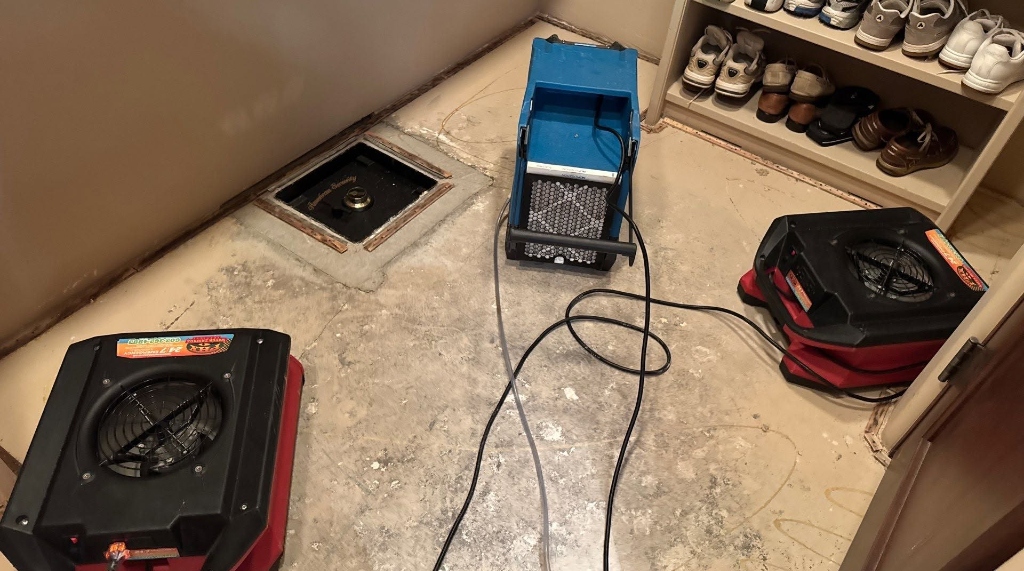
LGR dehumidifiers and HEPA air scrubbers driving grains per pound below 25 GPP.
Calibrated electronic pinless testing confirming baseline dry standards.
The Complete 6-Stage Restoration Roadmap
Our IICRC-certified crews execute a disciplined, scientific 6-stage protocol to stabilize and dry structural components:
Emergency Dispatch & Perimeter Isolation
30 to 60 minute arrival. Securing electrical shutoffs, evaluating structural loads, and erecting containment airlocks.
FLIR® Thermal Mapping & Baseline Scans
Infrared thermal scans detect trapped moisture behind walls and beneath concrete without invasive exploratory demolition.
High-Volume Bulk Extraction
31-HP truck-mount extraction units pump standing water away at hundreds of gallons per minute.
Controlled Selective Demolition
Precision flood cuts 12 to 24 inches above moisture lines, removing wet insulation and opening wall framing to dry airflow.
Thermodynamic Dehumidification
Industrial Low-Grain Refrigerant dehumidifiers pull deep trapped moisture from dense framing lumber and concrete slabs.
Antimicrobial Sanitization & Verification
EPA-registered botanical application (Benefect Decon 30) and calibrated moisture testing to issue an official dry certificate.
Specialized Equipment & Industrial Restoration Technology
Mitigating severe property damage requires industrial-grade technology capable of altering thermodynamic psychrometrics:
Truck-Mounted Extraction Rigs
31-HP engines producing 16+ inches Hg vacuum suction to evacuate bulk water rapidly into holding tanks.
Low-Grain Refrigerant Dryers
Pre-cooling heat-pipe systems driving ambient grains per pound below 25 GPP to draw deep trapped water out of framing.
HEPA Negative-Air Scrubbers
Hospital-grade 99.97% particulate filtration capturing microscopic fungal spores, soot, and biohazard aerosols.
FLIR® Thermal Scanners & Probes
Infrared thermography detecting evaporative cooling boundaries behind walls, combined with digital RF pinless scanners.


Professional Restoration vs. DIY Mitigation
Attempting DIY cleanup during a property disaster creates severe hidden liabilities:
- Trapped Moisture: Surface drywall dries while moisture inside cavities triggers hidden mold blooms.
- Pathogenic Risks: Category 2 & 3 water contains bio-contaminants standard cleaners fail to kill.
- Insurance Denial: Insurers require daily psychrometric logs; lack of data causes claim disputes.
Transparent Upfront Itemized Pricing
Valley Restoration Pros operates with complete transparency:
- Free On-Site Assessment: Complete physical inspection before work begins.
- Upfront Itemized Estimates: Detailed line items calculated via industry-standard Xactimate.
- Zero Surprise Billing: No hidden charges or unauthorized repairs.
Certified Commercial BESS Battery Container Deluge Flood Extraction Buckeye Field Documentation
Every response performed by Valley Restoration Pros is documented through photographic and thermographic records:
Comprehensive Commercial BESS Battery Container Deluge Flood Extraction Buckeye Technical Manual & Operational Standards
Exhaustive engineering protocols, psychrometric calculations, geological multipliers, and step-by-step restoration standards for Maricopa County properties:
Executive Emergency Abstract: Commercial BESS Battery Storage Deluge Flooding in Buckeye
Utility-scale Battery Energy Storage System (BESS) installations and commercial renewable microgrid facilities situated across the Buckeye logistics corridor, Sun Valley Parkway industrial developments, and the Palo Verde energy basin represent critical infrastructure for Maricopa County’s electrical grid reliability. These state-of-the-art energy storage facilities utilize modular, insulated steel walk-in enclosures housing megawatt-scale lithium iron phosphate (LFP) or nickel manganese cobalt (NMC) battery racks operating at up to 1,500 volts of direct current (DC). To protect against catastrophic thermal runaway events, modern BESS enclosures are equipped with automated high-pressure pre-action dry-pipe water deluge systems designed to flood the interior enclosure with thousands of gallons of continuous water upon detecting aerosol gas, off-gas venting, or thermal anomalies.
When an emergency deluge suppression system discharges—whether triggered by a localized thermal fault, sensor failure, or mechanical valve rupture—massive volumes of pressurized water inundate the sealed, weatherproof enclosure. Within minutes, water accumulates across raised metal grating, fills subterranean DC busway trenches, submerges critical battery management system (BMS) logic controllers, and saturates high-density thermal insulation panels. Left unaddressed, standing deluge water interacts with compromised lithium-ion cells, generating caustic hydrofluoric acid (HF), combustible hydrogen gas, and heavy electrolyte runoff that severely degrades equipment and endangers responding utility personnel.
In the extreme arid climate of Buckeye, where summer ambient temperatures frequently exceed 115°F and solar radiant heat drives container skin temperatures beyond 150°F, trapped standing water creates an instant super-heated humidity chamber. High interior relative humidity (often reaching 100% RH) induces condensation across electrical switchgear, inverter enclosures, and high-voltage bus bars, initiating rapid copper galvanic corrosion and risking secondary catastrophic arc flash explosions. Immediate professional mobilization for emergency water extraction and rapid industrial structural drying is paramount to stabilize the installation, prevent multi-million-dollar capital losses, and protect public safety.
Valley Restoration Pros deploys the West Valley’s most capable industrial emergency mitigation teams. Our IICRC-certified master restoration specialists and high-voltage hazardous environment technicians mobilize within thirty minutes across Buckeye, Tonopah, Goodyear, and Arlington. We arrive on site equipped with specialized explosion-proof extraction systems, chemical neutralization equipment, trailer-mounted desiccant dehumidifiers producing sub-zero dew points, and advanced FLIR thermal imaging diagnostic arrays. We collaborate seamlessly with utility operators, battery system manufacturers, and the Buckeye Fire-Medical-Rescue Department to isolate hazards, dewater modular containers, and return critical energy assets to baseline operating conditions.
For commercial solar-plus-storage asset managers, utility engineers, and EPC contractors facing an active BESS deluge discharge or enclosure flooding incident, our commercial command desk operates twenty-four hours a day, 365 days a year. Immediate emergency dispatch is available directly at (602) 847-9593. Our certified emergency teams execute rapid on-site stabilization without delay.
Immediate BESS First-Hour Action Directives
- Remote High-Voltage DC Disconnect: Coordinate immediately with the Energy Management System (EMS) control center to trip the primary DC contactors, shunt-trip master circuit breakers, and lock out the main power conversion system (PCS) inverters.
- Verify Deluge Header Isolation: Close the OS&Y (outside screw and yoke) post indicator control valve feeding the dry-pipe deluge riser to halt secondary water influx into the container footprint.
- Off-Gas & Atmospheric Hazard Screening: Deploy photoionization detectors (PID) and four-gas monitors to verify zero explosive lower explosive limit (LEL) hydrogen readings and sub-threshold HF vapor concentrations prior to container entry.
- Engage Certified Industrial Mitigation: Call Valley Restoration Pros at (602) 847-9593 for immediate thirty-minute deployment of trailer-mounted desiccant dehumidification and hazardous chemical water extraction systems.
In commercial BESS installations throughout Buckeye and Maricopa County, water deluge systems represent a double-edged sword: while indispensable for suppressing fire propagation across densely packed lithium cells, the resulting flood discharges hundreds of gallons per minute onto delicate electronic components. Left unmitigated for even a few hours, the combination of high mineral content, standing electrolyte runoff, and elevated desert temperatures causes irreversible collateral destruction across inverters, programmable logic controllers, and structural steel chassis.
Our technicians operate under strict adherence to NFPA 855 standards for the installation of stationary energy storage systems and IICRC S500 procedural standards for professional water damage restoration. We understand the precise balance between life safety, environmental compliance, and rapid asset salvage in high-voltage industrial facilities. Our West Valley command fleet maintains dedicated 500kW mobile diesel generator sets to power high-capacity desiccant systems independently, ensuring continuous uninterrupted structural drying even if facility main switchboards remain locked out or substation feeds are de-energized.
By deploying specialized non-invasive diagnostic sensors, real-time wireless psychrometric probes, and FLIR thermal infrared cameras, we map moisture saturation across hidden structural framing and battery racks with millimeter precision. This rigorous scientific methodology guarantees that no trapped water is overlooked, preventing lingering corrosion and ensuring seamless return-to-service certification for facility underwriters and regulatory inspectors.
Anatomy of BESS Deluge Flooding: Pre-Action Discharge, DC Arc Potentials & Chemical Hydrodynamics
Modern commercial battery energy storage containers are engineered as tightly sealed, weather-resistant ISO steel shipping containers or specialized pre-fabricated enclosures ranging from 20 to 53 feet in length. Internally, these enclosures house dense arrays of battery racks, each containing hundreds of individual lithium-ion cells connected in series and parallel configurations. Because lithium-ion fires cannot be extinguished solely by oxygen deprivation, industry fire protection standards mandate open-head water deluge or water-mist deluge systems capable of delivering high-density water application rates—frequently exceeding 0.30 gallons per minute per square foot (GPM/sq ft)—directly onto battery module surfaces.
When deluge activation occurs, a master solenoid or pneumatic deluge valve opens, charging overhead distribution piping headers and discharging between 500 and 2,500 gallons of water within ten to fifteen minutes. The hydrodynamics within the enclosed structure produce rapid water pooling across the sealed epoxy-coated steel floor plates. Because BESS enclosures are engineered to resist external desert dust storms and driving rain, their floor penetrations and perimeter thresholds are tightly sealed with silicone gaskets and fire-stop elastomeric caulking. As a direct result, deluge water cannot drain freely by gravity; instead, it rapidly pools to depths of six to twelve inches throughout the interior corridor and subterranean cable channels.
High-Voltage DC Inundation
Submerged DC cable trays and busway connections bridge opposite polarity terminals through conductive deluge water, sparking violent continuous DC arcing that vaporizes copper conductors and ignites surrounding composite materials.
Acidic Electrolyte Leaching
Deluge water washing over ruptured battery casings reacts with lithium hexafluorophosphate (LiPF6) salts, generating aqueous hydrofluoric acid that severely corrodes structural steel frames and dissolves sensitive printed circuit boards.
Vapor-Driven Thermal Degradation
Trapped standing water evaporates under extreme ambient heat, condensing onto unflooded upper racks and HVAC ductwork, saturating closed-cell polyisocyanurate wall insulation and causing irreversible loss of thermal envelope control.
Psychrometric and Chemical Cascade Inside Sealed Enclosures
The physical behavior of water inside an energized, sealed BESS container differs fundamentally from standard commercial building flooding. Because the container envelope is constructed of seam-welded corrugated Corten steel, moisture cannot escape through exterior walls. As ambient solar radiation beats down on the container roof, interior air temperatures escalate rapidly toward 130°F. At these temperatures, the vapor pressure of the standing deluge water spikes dramatically, driving microscopic water vapor molecules into sealed electrical junction boxes, inverter cooling fans, and sensitive optical smoke sensors.
Simultaneously, if any battery cells were thermally compromised during the incident, organic carbonate solvents (such as ethylene carbonate and dimethyl carbonate) leach into the standing water along with toxic fluorinated compounds. This transforms the flood runoff into a Category 3 hazardous chemical slurry requiring specialized HazMat containment, neutralization with alkaline buffering agents, and authorized disposal per Arizona Department of Environmental Quality (ADEQ) regulations. Immediate deployment of certified commercial water damage protocols and industrial burst pipe repair containment techniques is critical to mitigate these compounding risks.
Furthermore, water that seeps beneath the modular container floor attacks the concrete foundation slab. As deluge runoff overflows door sills, water ponds around the concrete foundation footings. In Buckeye, where native soils exhibit extreme shrink-swell caliche properties, massive water intrusion around the foundation perimeter destabilizes the ground, causing differential settlement that misaligns multi-ton container pads and strains rigid underground electrical interconnect conduits. When floodwaters escape external conduits into nearby subterranean utility vaults, our technicians also coordinate with municipal sewer and stormwater drainage teams using specialized sewage cleanup vacuum containment infrastructure.
During the electrical discharge sequence, the interaction of continuous direct current and moisture creates electrolytic oxidation that dissolves solid copper busbars within hours. Standard alternating current (AC) zero-crossing extinguishment mechanisms do not exist in high-voltage DC circuits; an electric arc established through contaminated floodwater will sustain continuously until the air gap becomes physically too large or the power supply is severed. This sustained ionization produces ozone, nitrogen oxides, and intense ultraviolet radiation that degrades adjacent wiring insulation and elastomeric seals throughout the container.
The thermal shock resulting from cold deluge water striking hot lithium-ion battery modules (which routinely operate at internal temperatures between 95°F and 115°F during peak summer cycling) induces microscopic fracturing of prismatic cell weld seams. Once these weld seams compromise, vaporized organic carbonate electrolytes vent into the interior enclosure atmosphere. When mixed with ambient moisture and high ambient humidity, these gases form an invisible, dense explosive blanket near the container floor. Only certified industrial restoration contractors possessing specialized explosion-proof air movers and non-sparking fluid extraction equipment can safely operate within this hazardous atmosphere.
Our team utilizes specialized non-conductive suction wands, intrinsically safe pneumatic diaphragm pumps, and industrial desiccant dehumidification systems capable of extracting thousands of gallons of deluge water without introducing ignition sources or disrupting energized perimeter equipment.
Buckeye & Sonoran Desert Climatic Multipliers: 18 GPG Scale, 115°F Heat & Caliche Soil Dynamics
Utility-scale energy storage assets in Buckeye and the West Valley operate within one of the most mechanically demanding environments in North America. The convergence of hyper-arid desert heat, intense solar radiation, mineral-dense municipal water supplies, and unstable subsurface geological formations dramatically accelerates structural and electrical deterioration when a deluge water discharge occurs.
Municipal and groundwater supplies across Buckeye, Tonopah, and surrounding West Valley aquifers exhibit severe water hardness, testing consistently between 18 and 24 grains per gallon (GPG) of dissolved calcium and magnesium carbonates (310 to 410 ppm). In dedicated fire protection water storage tanks and deluge supply risers, stagnant mineral-rich water precipitates thick calcite scaling along valve seats, check valves, and deluge nozzle orifices. When deluge systems trip, the discharged water carries high concentrations of dissolved minerals that dry into conductive crystalline salts across battery terminal insulators, high-voltage busway standoff bushings, and circuit breaker contacts, creating persistent leakage current paths and recurring ground fault errors.
Buckeye Environmental Multipliers for BESS Infrastructure
| Environmental Factor | Buckeye Regional Metric | Structural & Electrical Consequences |
|---|---|---|
| Groundwater Mineral Hardness | 18 to 24 GPG (310-410 PPM) | Evaporating deluge water deposits conductive calcite crystals on 1,500V DC busbars, causing destructive tracking currents and ground fault isolation trips. |
| Sonoran Summer Ambient Heat | 115°F to 120°F Peak Ambients | Trapped floodwater turns enclosures into 140°F humidity chambers, accelerating electrolyte evaporation and degrading battery separator membranes. |
| Expansive Caliche & Clay Soils | High Shrink-Swell Index (PI > 35) | Deluge overflow soaking foundation subgrades triggers foundation upheaval, cracking concrete equipment pads and binding container access doors. |
| Monsoon Haboob Particulates | 50+ MPH Windborne Alkaline Dust | Airborne silicates enter damaged container door seals, combining with wet surfaces to form highly conductive, corrosive mud across electronics. |
The geological reality of the Buckeye desert floor is dominated by thick layers of calcium carbonate-cemented sedimentary soils known locally as caliche. Caliche formations are virtually impermeable to natural water percolation. When hundreds or thousands of gallons of deluge water escape a modular container onto surrounding gravel pads, the water cannot drain downward; instead, it migrates laterally beneath concrete equipment foundations.
As the underlying expansive montmorillonite clay absorbs moisture, it swells with immense hydraulic uplift pressure—often exceeding 8,000 pounds per square foot. This intense foundation heaving tilts multi-ton BESS container enclosures, shears underground PVC and rigid metal conduits, and cracks structural equipment pads. Addressing this threat requires rapid exterior perimeter drainage, sub-surface trench extraction, and integration with our slab leak water damage restoration structural diagnostic protocols.
During summer months, when outdoor ambient temperatures hover between 110°F and 118°F, the loss of container HVAC climate control transforms flooded battery modules into incubators for thermal stress. Without immediate mechanical dehumidification, the combination of extreme thermal gradients and 100% relative humidity causes catastrophic micro-corrosion across sensitive nickel-plated battery bus bars, rendering entire battery strings unserviceable within 48 hours.
Monsoon season across the West Valley (spanning July through September) brings intense microburst downpours and haboobs that transport tons of fine alkaline particulate dust across the Buckeye desert. When external desert stormwater overwhelms retention basins adjacent to BESS pads, exterior moisture collides with internal deluge discharge, creating a severe double-inundation scenario. Our certified crews integrate rapid storm flood cleanup barriers and earth berms to prevent outside flash flood waters from exacerbating interior container water levels.
The mineral chemistry of Buckeye municipal water introduces severe long-term reliability risks. With total dissolved solids (TDS) frequently exceeding 650 parts per million, evaporating deluge water deposits crystalline layers of calcium sulfate and magnesium silicates across cooling fins, fan blades, and sensor lenses. Unlike soft water, these mineral crusts cannot be wiped away with ordinary cloths; they bond chemically to aluminum and copper surfaces, creating thermal insulation blankets that impair subsequent container cooling efficiency by up to 35% once the facility returns to service.
Critical First-Hour Protocol: BESS High-Voltage Isolation, Chemical Containment & Site Dewatering
The initial sixty minutes following a deluge discharge in a Buckeye commercial battery energy storage facility dictate the boundary between localized component drying and complete multi-million-dollar system destruction. Because BESS enclosures contain lethal direct current voltages that cannot be shut off at the battery cell level, standard emergency water response procedures do not apply. Strict adherence to specialized high-voltage energy storage safety procedures is non-negotiable.
Upon arrival, facility managers, emergency responders, and certified restoration technicians must follow a rigorous four-phase initial safety isolation sequence before any physical water contact or extraction commences:
High-Voltage DC Isolation
Coordinate with the plant supervisory control and data acquisition (SCADA) operator to verify open status of all motorized DC disconnects, rack breakers, and medium-voltage step-up transformers. Execute comprehensive lockout/tagout (LOTO) protocols.
Atmospheric & Gas Profiling
Deploy multi-gas detectors equipped with electrochemical sensors for hydrogen fluoride (HF), carbon monoxide (CO), hydrogen cyanide (HCN), and lower explosive limit (LEL) combustible gas levels through external sampling ports prior to unsealing doors.
Deluge Supply Lockout
Manually secure and chain-lock the post indicator valve (PIV) or dedicated deluge control valve supplying the affected container header, isolating the fire pump riser and opening the main drain valve to relieve residual system pressure.
Hazardous Containment Berming
Deploy chemical-resistant polyurethane spill berms around container egress doors and foundation drain conduits to capture contaminated water runoff, preventing chemical discharge into surrounding retention basins or unpaved desert soils.
Once structural isolation and atmospheric safety are confirmed, our technicians don Level B or Level C personal protective equipment (PPE)—including chemical-resistant Tychem suits, full-face air-purifying respirators fitted with organic vapor/acid gas/HEPA combination cartridges, and NFPA 70E Category 4 arc-rated gloves—before crossing the container threshold.
Initial water sampling is conducted immediately using calibrated digital pH and conductivity meters. If runoff exhibits a pH below 5.5 (indicating dissolved hydrofluoric acid or electrolyte salts), dry calcium carbonate buffering agents or specialized lithium neutralizing compounds are carefully applied to neutralize acidic ions before extraction begins. For high-hazard industrial environments, cross-reference our procedures with commercial battery room acid flood cleanup and large-scale commercial chiller pipe flood restoration protocols.
Extraction begins at the lowest elevation points: subterranean cable entry vaults and perimeter raceways. Intrinsically safe pneumatic suction wands withdraw standing liquid directly into dedicated HazMat recovery holding tanks for testing, manifest documentation, and compliant off-site treatment. Continuous air sampling is recorded at fifteen-minute intervals to guarantee technician safety and ensure zero accumulation of explosive hydrogen gas or toxic acid vapors as stagnant water pockets are disturbed during deep mechanical extraction.
Industrial Equipment Specifications: Desiccant Trailers, HazMat Extractors & Negative-Air Arrays
Drying a flooded utility-scale BESS container requires extreme dehumidification capacity and specialized equipment engineered to operate safely in hazardous electrical atmospheres. Standard commercial refrigerant dehumidifiers (such as LGR units) are ineffective because they cannot achieve the ultra-low grain depressions (grains per pound) required to pull moisture from intricate electronic assemblies, nor do they operate safely in potential Class I, Division 2 chemical environments.
Valley Restoration Pros maintains a dedicated fleet of industrial-grade restoration equipment engineered specifically for mission-critical renewable energy and electrical infrastructure:
BESS Restoration Industrial Equipment Arsenal
| Equipment Type | Technical Specification | Operational Mission in BESS Flooding |
|---|---|---|
| Trailer-Mounted Desiccant Dehumidifiers | 5,000 to 9,000 CFM, Solid Silica Gel Rotor, <10 GPP Dewpoint | Delivers ultra-dry process air through antistatic ducting, creating deep vapor pressure differentials to extract moisture from sealed battery modules. |
| Pneumatic Intrinsically Safe Extractors | Air-Driven Double Diaphragm Pumps, Zero Electrical Spark Potential | Extracts standing chemical runoff and deluge water from high-voltage DC trenches and sub-slab conduits without spark ignition risks. |
| Explosion-Proof HEPA Air Scrubbers | 2,000 CFM, Class I Div 1 Motors, 4-Stage Carbon/Permanganate Filters | Captures hazardous airborne acid gases (HF), aerosolized electrolyte vapors, and microscopic particulates during interior container drying. |
| FLIR T1020 HD Thermal Diagnostic Imaging | 1024x768 Thermal Resolution, <0.02°C Thermal Sensitivity | Pinpoints hidden moisture pockets trapped behind container wall cladding, ceiling vapor barriers, and battery cell thermal interfaces. |
| Calibrated Psychrometric Telemetry Nodes | NIST-Traceable Wireless RH, GPP, Temp, and Surface Sensors | Continuous 24/7 real-time remote cloud monitoring of drying equilibrium, vapor pressure, and dry-standard compliance. |
The desiccant dehumidification system is positioned outside the hazardous container perimeter. Heavy-duty 20-inch antistatic flex ducting introduces ultra-dry process air (delivering moisture levels below 10 grains per pound) into one end of the container, while return air is pulled from the opposite end through dedicated negative-air filtration banks. This continuous laminar airflow creates a high-velocity vapor pressure gradient that sweeps moisture out of the tight interstitial spaces between individual battery cells, busbar mounting plates, and subfloor cable vaults.
To address hidden moisture trapped within hollow structural steel frame members, subfloor wire channels, and double-walled insulated container bulkheads, we deploy specialized Injectidry positive and negative-pressure wall cavity drying systems. These systems deliver targeted micro-jets of super-dry desiccant air directly into enclosed framing spaces through sealed diagnostic ports, accelerating the evaporation rate of trapped capillary moisture without requiring destructive demolition of structural container walls.
Our mobile recovery trailers also house industrial ultrasonic cleaning tanks and dielectric solvent rinse stations. Electronic circuit assemblies, battery management system modules, and inverter gate drivers that were exposed to mineral-rich deluge water undergo precision de-energized decontamination using specialized non-conductive, residue-free solvent rinses that remove microscopic mineral salts and corrosive electrolyte residues before final desiccant baking and re-testing.
To calculate accurate drying capacity for high-volume commercial installations or evaluate project budgets, asset managers can utilize our interactive cost estimator tool for transparent, itemized commercial estimates.
IICRC S500 & NFPA 855 Restoration Protocol: 6-Stage BESS Stabilization Framework
Restoring an energized, megawatt-scale battery storage container after a deluge water discharge requires an uncompromising engineering methodology. Valley Restoration Pros executes a specialized 6-stage mitigation framework developed specifically for utility-scale energy facilities in compliance with IICRC S500 professional water restoration standards, NFPA 855 energy storage safety standards, and OSHA 1910 high-voltage electrical safety mandates.
The 6-Stage BESS Deluge Remediation Framework
Stage 1: Multi-Vector Hazard Isolation & Atmospheric Clearance
Complete electrical lockout/tagout (LOTO) of DC and AC disconnects, mechanical lockout of fire suppression supply risers, and multi-gas atmospheric verification for hydrogen fluoride (HF) and volatile organic compounds (VOCs).
Stage 2: Intrinsically Safe Bulk Extraction & Chemical Neutralization
Deploy pneumatic, spark-proof suction equipment to extract thousands of gallons of deluge standing water from walkways, inverter trenches, and cable trays into HazMat recovery containers. Conduct chemical neutralization of acidic runoff.
Stage 3: Negative-Air Containment & Corrosive Aerosol Scrubbing
Establish closed-loop negative pressure containment across the container footprint utilizing explosion-proof HEPA scrubbers loaded with activated carbon and potassium permanganate media to continuously eliminate corrosive vapors.
Stage 4: Deep Interstitial Desiccant Dehumidification
Inject ultra-dry process air (<10 GPP) from high-capacity mobile desiccant trailers to drive vapor evaporation out of battery rack modules, printed circuit boards, high-voltage busway standoff insulators, and wall cavity insulation.
Stage 5: Megohmmeter Testing & Infrared Thermal Verification
Execute precision insulation resistance testing (Megger testing) across high-voltage busways and cabling to ensure dielectric integrity exceeds 1,000 Megohms. Conduct complete FLIR thermal scans to verify zero hidden moisture retention.
Stage 6: Re-Commissioning Handover & Psychrometric Documentation
Compile comprehensive psychrometric drying logs, air monitoring data, and Megger certification reports. Provide complete documentation packages to utility engineers, insurance adjusters, and OEM commissioning teams.
Throughout this multi-stage framework, biological and microbial contamination risks are continuously monitored. In the extreme heat of Buckeye, any wet organic residues or paper documentation left within unconditioned spaces can cultivate mold spores in less than 36 hours. Our protocols integrate strict mold remediation environmental controls and EPA-registered botanical antimicrobial surface sanitization to safeguard indoor air quality.
Post-remediation dielectric verification represents the final critical milestone before handover. Our technicians utilize high-precision multi-frequency LCR meters and high-voltage DC hipot testing systems to verify that all electrical insulation barriers, cable terminations, and terminal blocks meet or exceed original equipment manufacturer (OEM) factory resistance specifications. We cross-verify our findings with emergency service teams across Phoenix water damage dispatch and West Valley regional facilities.
Every phase of structural drying is documented in real time within our cloud-based psychrometric tracking portal. Certified moisture logs record ambient temperature, relative humidity, dew point, grains per pound (GPP), and vapor pressure differentials across hourly intervals. This incontrovertible empirical data provides facility owners and insurance adjusters with forensic certainty that all bound moisture has been completely extracted in full accordance with IICRC S500 standards.
Buckeye Case Study: Sun Valley Parkway 4.5 MWh BESS Deluge Stabilization
Incident Profile: Sun Valley Renewable Storage Hub, Buckeye, AZ
- Location: Sun Valley Parkway & West Indian School Road, Buckeye, AZ 85396
- Facility Description: 4.5 MWh modular containerized lithium iron phosphate (LFP) energy storage facility supporting a 50 MW commercial solar installation.
- Incident Cause: Pressure surge in the primary deluge fire riser caused a high-pressure mechanical flanged fitting rupture at 2:15 AM, discharging approximately 4,200 gallons of municipal water directly into Container B-03 before the post indicator valve was isolated.
- Initial Environmental Conditions: Water depth of 8.5 inches across container floor, submerging lower battery modules; interior ambient temperature of 106°F; relative humidity of 99%; conductive mineral residue measuring 480 PPM TDS.
Mitigation Execution & Results
Valley Restoration Pros received emergency dispatch at 2:38 AM and arrived on site at 3:05 AM with our West Valley hazardous mitigation response unit. Following confirmed electrical isolation of the 1,500V DC string and atmospheric clearance by Buckeye Fire-Medical, our crew deployed two pneumatic spark-proof diaphragm pumps. Within 75 minutes, 4,100+ gallons of standing deluge water were extracted into a specialized on-site HazMat holding bladder.
At 4:45 AM, our team duct-connected a 6,000 CFM trailer-mounted desiccant dehumidifier and two 2,000 CFM explosion-proof negative-air carbon scrubbers to Container B-03. By 9:00 AM, interior relative humidity dropped from 99% to 22%, and process air dewpoint reached -14°F. Continuous psychrometric drying operated for 64 hours, safely desorbing moisture from all battery rack frames, circuit cards, and wall cavity insulation panels.
Outcome: Complete stabilization achieved in 68 total hours. Dielectric insulation testing (Megger test) verified all 1,500V DC busbars exceeded 2,200 Megohms. Total capital equipment salvage rate exceeded 94%, averting an estimated $2.8 million replacement loss and preventing secondary soil caliche swelling.
For commercial facility directors across Buckeye water damage service territories, our rapid emergency deployment provides the exact specialized capabilities required to mitigate complex infrastructure failures. We serve surrounding industrial hubs including Goodyear, Avondale, and regional renewable corridors throughout Maricopa County.
Commercial Financial Transparency: Xactimate Pricing, Insurance Documentation & Billing Compliance
Commercial and utility-scale water damage claims involving complex energy storage infrastructure require rigorous financial transparency, detailed technical documentation, and strict adherence to commercial insurance claims protocols. Large-loss property policies, commercial boiler and machinery endorsements, and renewable energy inland marine riders demand exhaustive proof of loss, precise time-and-materials logs, and standardized industry pricing before claims can be approved.
Our Commercial Financial Compliance Standards
- Free Comprehensive On-Site Damage Assessment: We provide detailed initial structural and environmental damage evaluations at zero initial cost to commercial property owners and utility operators.
- Transparent Upfront Itemized Pricing: All commercial mitigation work is scoped, itemized, and priced utilizing standardized Xactimate industrial rate codes before work commences. We never issue vague or unitemized invoices.
- Assistance with Detailed Claims Documentation: We furnish complete psychrometric moisture logs, daily equipment run-time logs, certified thermal imaging scans, and Megger test reports directly to commercial carriers and independent adjusters.
- Zero Direct Billing Guarantees: In accordance with Arizona commercial compliance standards, we maintain clear client financial transparency. Property owners retain final fiscal oversight while we assist in navigating complex commercial claims adjusters.
Our commercial account managers work directly with major commercial underwriters (including FM Global, Zurich, Travelers, Chubb, and Liberty Mutual) to ensure every mobilization hour, desiccant operating cycle, and hazardous waste extraction manifest complies with carrier audit standards. We deliver complete psychrometric logs detailing daily grains-per-pound (GPP) reduction alongside certified laboratory water analysis reports verifying complete absence of volatile chemical compounds before facility re-commissioning. For more information on commercial restoration costs, visit our restoration cost estimator or connect directly with our emergency dispatch team.
Frequently Asked Questions: Commercial BESS Battery Deluge Flood Mitigation
Can energized BESS containers be safely dried without removing the battery modules?
Yes, provided that high-voltage DC contactors and rack-level circuit breakers are properly locked out and tagged out (LOTO) by qualified personnel, and that dielectric moisture testing confirms no active short circuits. By introducing ultra-low dewpoint process air (<10 GPP) from high-capacity industrial desiccant dehumidifiers, moisture is rapidly desorbed from the interstitial surfaces between cells without requiring labor-intensive, hazardous rack disassembly.
How does deluge floodwater react chemically with damaged lithium-ion battery cells?
If lithium-ion cells suffer mechanical breach or thermal compromise during an incident, water reacts directly with lithium hexafluorophosphate (LiPF6) electrolyte salts, producing hazardous hydrofluoric acid (HF) and volatile organofluorine vapors. This chemical runoff is highly corrosive to metals, toxic to human skin, and requires specialized neutralizing agents and Level B/C HazMat PPE before standard extraction can proceed.
Why are standard refrigerant or LGR dehumidifiers insufficient for BESS enclosure drying?
Standard Low-Grain Refrigerant (LGR) dehumidifiers cease effective moisture removal when ambient relative humidity drops below 30% or when temperatures exceed 100°F. In high-density electrical enclosures, air must reach dewpoints below 0°F (relative humidity <15%) to draw bound moisture out of electrical wire harnesses, printed circuit boards, and porous fiberglass insulation panels. Only industrial solid-desiccant rotor dehumidifiers can achieve these extreme dry conditions.
What steps prevent foundation heave beneath flooded BESS container pads in Buckeye?
Because Buckeye native soils consist of highly expansive caliche clay that swells violently upon water contact, deluge water overflowing container doors must be captured immediately with chemical spill berms and extracted before it saturates the foundation subgrade. Sump wells and perimeter trench dewatering pumps are installed to lower the local water table and prevent differential settlement beneath concrete equipment slabs.
How is electrical dielectric integrity certified before re-energizing the battery facility?
Following desiccant drying, certified electrical technicians perform insulation resistance testing (Megohmmeter or Megger testing) at 1,000V to 2,500V DC across all busways, power cabling, and enclosure chassis grounds. An insulation resistance value exceeding 1,000 Megohms—combined with high-resolution FLIR thermal scanning showing zero evaporative cooling signatures—is required before the facility can be cleared for re-energization.
How quickly can Valley Restoration Pros mobilize to an emergency BESS site in Buckeye?
Our rapid commercial disaster response units are staged strategically across the West Valley, enabling guaranteed on-site arrival within thirty minutes for facilities along Sun Valley Parkway, Interstate 10, State Route 85, and the Palo Verde energy corridor. Our teams arrive fully equipped with mobile desiccant trailers, pneumatic extraction pumps, and hazardous containment equipment ready for immediate deployment.
What specific procedures protect against secondary arc flashes during deluge water extraction?
Secondary arc flashes occur when conductive deluge water creates unintended conductive bridges across opposite-polarity high-voltage DC terminals or grounded chassis steel. To eliminate this severe risk, our technicians enforce strict NFPA 70E boundaries, verify zero floating voltage across racks using calibrated non-contact high-voltage detectors, utilize non-conductive dielectric suction wands, and connect all extraction equipment to calibrated earth-ground rods. We maintain strict continuous multi-gas monitoring to ensure zero presence of flammable off-gas mixtures throughout the extraction process.
How is hazardous chemical runoff containing hydrofluoric acid managed and disposed of in Buckeye?
All water extracted from compromised battery enclosures is treated as Category 3 industrial hazardous liquid. Our teams deploy mobile containment bladders and poly-lined drums to isolate the runoff. Chemical titration is performed using certified calcium carbonate and alkaline neutralizing compounds to safely buffer acidic solutions until pH levels stabilize between 7.0 and 8.5. The neutralized wastewater is then manifested and transported by licensed environmental transport carriers to certified hazardous treatment facilities in strict accordance with Arizona Department of Environmental Quality (ADEQ) and Maricopa County environmental regulations.
Verified Local Area Dispatch: Buckeye, AZ
Official Geo-Coordinates: 33.3703° N, -112.5838° W • Maricopa County
Related Specialized Emergency Restoration Services
Explore specialized rapid-response mitigation protocols across Greater Phoenix and Maricopa County:
Valley-Wide Emergency Response Service Coverage
Our mobile restoration fleet is dispatched across the entire Phoenix metropolitan region, providing rapid 30 to 60 minute emergency response: