

Valley Restoration Pros delivers 24/7 industrial emergency water extraction, thermal psychrometric drying, and structural mitigation across Phoenix and Maricopa County with guaranteed 30–60 minute rapid arrival. All protocols strictly adhere to IICRC S500 standards, featuring upfront itemized pricing and free on-site thermal moisture assessments. Call dispatch directly at (602) 847-9593.
Why Immediate Mitigation Is Critical in Phoenix Heat
Hydro jetting vertical grease stacks under 4,000 PSI can create catastrophic pneumatic pressure surges, blowing hundreds of gallons of boiling, rancid FOG blackwater out through lower-floor kitchen drains and scullery sinks. Under Maricopa County Environmental Services Department (MCESD) and City of Phoenix Pretreatment standards, commercial grease interceptor eruptions constitute an Imminent Health Hazard mandating immediate culinary shutdown. Downtown Phoenix extreme summer ambient temperatures (115°F) superheat building shafts, causing anaerobic bacterial explosion (E. coli, Salmonella, Listeria) and toxic hydrogen sulfide (H2S) gas accumulation within 24 hours. Escaping grease blackwater breaches floor penetrations, flooding passenger and freight elevator pits, corroding electrical bus ducts, and saturating post-tension structural concrete slabs.

Service Definition & The IICRC Standard of Care
Professional commercial high rise grease interceptor hydro jetting backup downtown phoenix is an engineering and environmental discipline adhering strictly to IICRC S500 protocols, not mere surface mopping. When structural plumbing failures strike in Maricopa County, certified emergency water extraction and thermal structural drying procedures must be deployed immediately. Whether triggered by high-pressure burst pipe emergencies, subfloor leaks, or commercial line ruptures, bound moisture rapidly penetrates concrete subfloors and wall framing. In the desert heat, delays trigger microbial proliferation requiring rapid mold remediation. Request damage assessment through our emergency assessment portal or request 30-minute dispatch across all Valley service areas.
Securing electrical feeds, inspecting load-bearing assemblies, and containing pathogens.
Stopping the intrusion source and erecting 6-mil plastic isolation containment airlocks.
31-HP truck-mount extraction, removing gallons exponentially faster than evaporation.
LGR dehumidifiers and HEPA air scrubbers driving grains per pound below 25 GPP.
Calibrated electronic pinless testing confirming baseline dry standards.
The Complete 6-Stage Restoration Roadmap
Our IICRC-certified crews execute a disciplined, scientific 6-stage protocol to stabilize and dry structural components:
Emergency Dispatch & Perimeter Isolation
30 to 60 minute arrival. Securing electrical shutoffs, evaluating structural loads, and erecting containment airlocks.
FLIR® Thermal Mapping & Baseline Scans
Infrared thermal scans detect trapped moisture behind walls and beneath concrete without invasive exploratory demolition.
High-Volume Bulk Extraction
31-HP truck-mount extraction units pump standing water away at hundreds of gallons per minute.
Controlled Selective Demolition
Precision flood cuts 12 to 24 inches above moisture lines, removing wet insulation and opening wall framing to dry airflow.
Thermodynamic Dehumidification
Industrial Low-Grain Refrigerant dehumidifiers pull deep trapped moisture from dense framing lumber and concrete slabs.
Antimicrobial Sanitization & Verification
EPA-registered botanical application (Benefect Decon 30) and calibrated moisture testing to issue an official dry certificate.
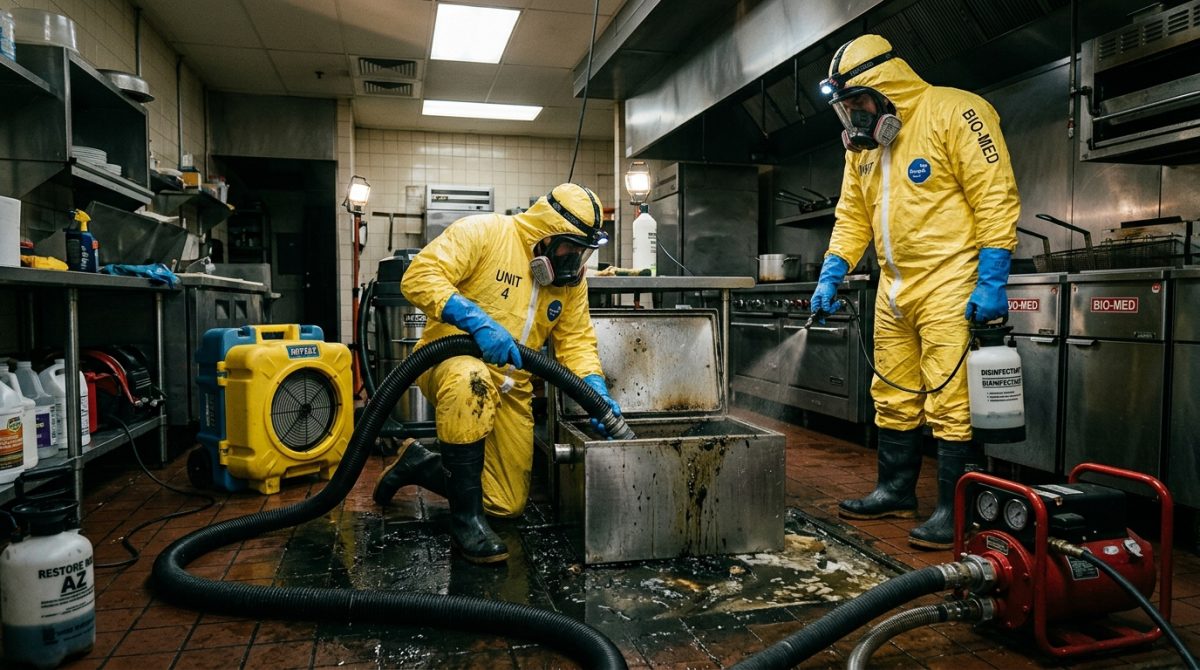

Specialized Equipment & Industrial Restoration Technology
Mitigating severe property damage requires industrial-grade technology capable of altering thermodynamic psychrometrics:
Truck-Mounted Extraction Rigs
31-HP engines producing 16+ inches Hg vacuum suction to evacuate bulk water rapidly into holding tanks.
Low-Grain Refrigerant Dryers
Pre-cooling heat-pipe systems driving ambient grains per pound below 25 GPP to draw deep trapped water out of framing.
HEPA Negative-Air Scrubbers
Hospital-grade 99.97% particulate filtration capturing microscopic fungal spores, soot, and biohazard aerosols.
FLIR® Thermal Scanners & Probes
Infrared thermography detecting evaporative cooling boundaries behind walls, combined with digital RF pinless scanners.
Professional Restoration vs. DIY Mitigation
Attempting DIY cleanup during a property disaster creates severe hidden liabilities:
- Trapped Moisture: Surface drywall dries while moisture inside cavities triggers hidden mold blooms.
- Pathogenic Risks: Category 2 & 3 water contains bio-contaminants standard cleaners fail to kill.
- Insurance Denial: Insurers require daily psychrometric logs; lack of data causes claim disputes.
Transparent Upfront Itemized Pricing
Valley Restoration Pros operates with complete transparency:
- Free On-Site Assessment: Complete physical inspection before work begins.
- Upfront Itemized Estimates: Detailed line items calculated via industry-standard Xactimate.
- Zero Surprise Billing: No hidden charges or unauthorized repairs.
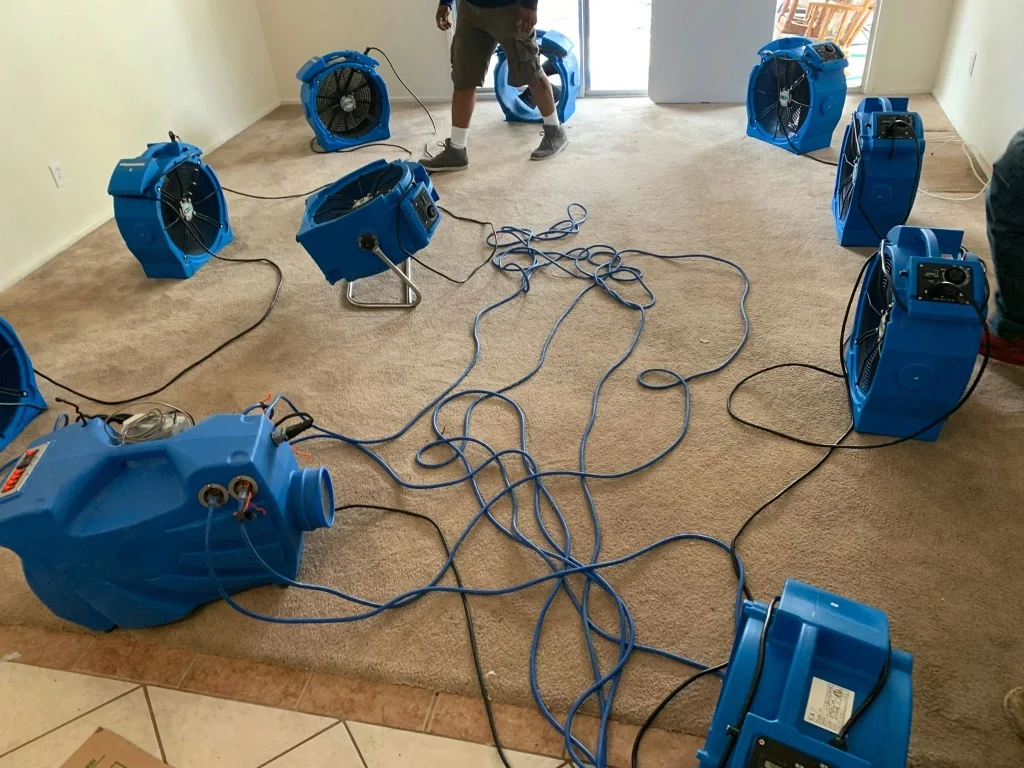
Certified Commercial High Rise Grease Interceptor Hydro Jetting Backup Downtown Phoenix Field Documentation
Every response performed by Valley Restoration Pros is documented through photographic and thermographic records:
Comprehensive Commercial High Rise Grease Interceptor Hydro Jetting Backup Downtown Phoenix Technical Manual & Operational Standards
Exhaustive engineering protocols, psychrometric calculations, geological multipliers, and step-by-step restoration standards for Maricopa County properties:
Executive Emergency Abstract: Downtown Phoenix High-Rise Vertical Grease Riser Hydro Jetting Blowout & Blackwater Inundation
Within the vertical commercial skyline of Downtown Phoenix—concentrated along the high-density corridors of Central Avenue, Washington Street, Jefferson Street, Monroe Street, Adams Street, and the CityScape culinary entertainment complex—mixed-use high-rise towers present extraordinary structural and mechanical engineering complexities. These twenty to forty-story architectural structures house multiple high-volume commercial food service operations, including rooftop culinary lounges, executive dining facilities, mezzanine food halls, and ground-floor anchor restaurants. Every day, these commercial kitchens discharge tens of thousands of gallons of fats, oils, and grease (FOG), scalding scullery wash water, alkaline warewashing detergents, and organic food debris directly into dedicated vertical grease waste drainage stacks.
Unlike horizontal drainage systems found in suburban commercial strip centers, high-rise grease stacks consist of vertical cast iron or No-Hub steel piping running continuously across hundreds of feet of building elevation before discharging into massive subterranean grease interceptor vaults located in sub-grade basement parking levels (P1 through P4). Over months of continuous culinary operation, warm emulsified grease cools, congeals, and forms heavy mineralized encrustations along interior pipe walls. When building facility engineers or commercial plumbing contractors attempt to scour these vertical risers utilizing high-pressure thermal hydro jetting apparatus (operating at 3,500 to 4,000 PSI with water temperatures exceeding 180 to 200 degrees Fahrenheit), severe hydrodynamic and pneumatic anomalies can convert standard maintenance into an explosive indoor flood disaster.
If a dense grease blockage or calcified obstruction exists down-line, or if the hydro jetting nozzle propels down the vertical stack faster than downstream drainage occurs, the high-velocity nozzle acts as a massive hydraulic piston. The jetting spray envelope and the rapidly displaced air cushion generate extreme pneumatic compression and hydrostatic backpressure within the vertical pipe. Lacking an immediate downward relief path, this pressurized torrent of boiling wastewater, rancid animal tallow, dissolved grease emulsion, and anaerobic sewer sludge violently decompresses upward through the nearest low-elevation fixtures. Floor sinks, dishwashing trench drains, commercial mop basins, and prep sinks across lower-level culinary suites erupt like geysers, inundating pristine kitchens, dining rooms, dry storage vaults, and public concourses in biohazardous Category 3 wastewater.
Under the strict regulatory oversight of the Maricopa County Environmental Services Department (MCESD) and the City of Phoenix Water Services Department, a grease interceptor or hydro jetting sewage eruption constitutes an immediate Imminent Health Hazard. Food preparation operations must halt instantly. Escaping effluent rapidly breaches post-tension concrete floor penetrations, pouring into tenant ceiling plenums below, flooding passenger and freight elevator shafts, and soaking structural building assemblies. Rapid intervention by certified restoration specialists utilizing industrial-grade emergency water extraction apparatus and proven commercial grease trap backup flood restoration procedures is mandatory to safeguard occupant health, halt structural decay, and prevent catastrophic business interruption losses.
Critical Emergency Advisory: High-Rise Grease Blowouts Require Instant Engineering Shutdown
When a hydro jetting operation triggers a vertical riser backup in a Downtown Phoenix commercial tower, shut down the hydro jetting pump unit instantaneously. Continuous operation pumps 15 to 25 gallons per minute of pressurized boiling blackwater directly into tenant spaces. Immediately alert building operations to isolate electrical sub-panels serving flooded zones and notify upper-floor commercial kitchens to cease all water discharge into the grease waste stack.
Marcus Vance and the Valley Restoration Pros commercial large-loss response team provide 24/7 emergency dispatch throughout the Downtown Phoenix core, guaranteeing on-site mobilization within 30 minutes. Contact our emergency dispatch desk immediately at (602) 847-9593 or engage our direct line via Emergency Phone Dispatch.
Anatomy of High-Rise Grease Stack Hydro Jetting Failures: Pneumatic Pistons, Hydrostatic Surges & Fixture Blowouts
Analyzing why vertical grease waste risers fail catastrophically during routine hydro jetting requires an exhaustive examination of fluid dynamics, pneumatic displacement, and commercial high-rise plumbing architecture. In modern commercial construction, kitchen grease waste lines are strictly segregated from domestic sanitary sewage piping. Because commercial dishwashers, braising pans, rotisseries, and tilt skillets discharge heavy loads of animal lipids, dairy fats, and vegetable oils, grease lines must flow through dedicated DWV (drain-waste-vent) stacks built of heavy-duty cast iron or epoxy-coated steel. In a multi-story Downtown Phoenix high-rise, these vertical stacks can reach heights of 100 to over 400 feet, creating extreme hydraulic static head pressures.
Hydro jetting is universally recognized as the primary mechanical method for scouring congealed grease encrustations from interior pipe walls. Jetting machines utilize high-pressure reciprocating triplex plunger pumps that propel water through specialized nozzles at pressures between 3,000 and 4,000 PSI with volumetric flow rates of 12 to 20 GPM. Nozzles incorporate forward-penetrating cutting jets and reverse-thrusting propulsion jets designed to pull the heavy, wire-braided flexible hose up vertical stacks or down through cleanout tees. However, when hydro jetting is executed within high-rise vertical stacks, several physical mechanisms can convert this maintenance procedure into an explosive indoor flood disaster.
Pneumatic Air Compression & Hydraulic Piston Effect
As a high-pressure jetting nozzle propels itself down a vertical 4-inch or 6-inch grease stack, the high-velocity water envelope forms a moving hydraulic seal across the pipe cross-section. This moving seal compresses the column of air trapped beneath the nozzle. If the lower plumbing vents are restricted with grease scale or the downstream stack enters a flooded interceptor, this trapped air column experiences extreme pneumatic compression. Unable to escape downward, the pressurized air and propelled water violently decompress upward through the nearest low-elevation fixture traps.
Dislodged Saponified FOG Dam Occlusion
Thermal hydro jetting breaks loose massive chunks of hardened, saponified calcium-fat deposits from upper pipe sections. Rather than completely liquefying, these heavy solid slabs drop rapidly down the vertical riser under gravity. Upon reaching horizontal pipe offsets, sweep elbows, or transition fittings in mezzanine ceilings or basement ceilings, these dislodged slabs wedge together, creating an impenetrable physical dam. Wastewater accumulating behind this sudden dam fills the vertical pipe at 0.433 PSI per foot of elevation, producing explosive head pressures that rupture gaskets and inundate lower suites.
Nozzle Blowback Through Unvented Floor Sinks
When jetting is operated upward from a subterranean interceptor or ground-floor cleanout toward upper stories, reverse propulsion jets can lose forward momentum against heavy grease deposits. If a jetting operator encounters an immovable obstruction, water discharged from rear-facing thrust orifices reflects backwards at supersonic speeds. This reflected energy generates extreme fluid turbulence that blows out p-traps in adjacent kitchen floor sinks, shooting geysers of foul grease and sewage three to six feet into commercial kitchen prep areas.
Thermal Shock & Mechanical Joint Separation
Introducing 180 to 200 degree Fahrenheit water at 4,000 PSI into aged cast iron soil pipe stacks can cause severe thermal expansion and hydraulic vibration. In high-rises where pipe hangers are subjected to mechanical torque, mechanical No-Hub couplings, neoprene gaskets, or lead-and-oakum joints can slip or rupture inside enclosed drywall chases. When joints separate hidden within tenant walls, thousands of gallons of blackwater saturate interior wall cavities and ceiling assemblies across multiple floors before visible surface ponding occurs.
Managing these multi-layered failure mechanisms demands advanced engineering knowledge of building MEP systems and experienced commercial water damage restoration capabilities. Valley Restoration Pros specializes in navigating complex high-rise commercial structures throughout Maricopa County.
Phoenix Climatic, Geological & Water Chemistry Multipliers: Extreme Hard Water, Caliche & Desert Heat
High-rise grease interceptor failures in Downtown Phoenix are not merely mechanical plumbing incidents; they are profoundly magnified by the Sonoran Desert environmental conditions unique to the Salt River Valley. While municipal sewer systems in temperate climates deal primarily with organic grease accumulation, Phoenix commercial infrastructure contends with an aggressive trio of environmental forces: extreme mineral hardness, expansive caliche clay geology, and punishing ambient heat.
The chemical process of saponification in Phoenix plumbing systems cannot be overstated. When restaurant dishwashers discharge water at 160 degrees Fahrenheit containing alkaline commercial detergents into grease lines, animal lipids dissolve temporarily. However, as the effluent mixes with Phoenix municipal water carrying 18 grains per gallon of mineral hardness, calcium ions bind directly with stearic and palmitic fatty acids. This precipitates out as insoluble calcium stearate. Unlike soft grease that can be cleared with standard hot water flushes, calcium stearate has a compressive strength comparable to low-strength concrete mortar.
Furthermore, subterranean movement from caliche soil expansion frequently damages basement pipe transitions, requiring emergency solutions for high-pressure burst pipe repair and specialized concrete slab leak water damage restoration when subterranean sewer laterals crack under soil upheaval.
Immediate First-Hour Emergency Isolation Protocol for Downtown Phoenix High-Rise Facility Engineers
When a high-rise grease stack hydro jetting operation fails and triggers a fixture eruption, the actions taken by building engineers, restaurant managers, and property directors within the first 60 minutes dictate the ultimate financial severity of the loss. Rapid response stops the continuous spread of biohazardous blackwater into vertical shafts, adjacent retail concourses, and sub-level parking facilities.
Critical Sequence of Action: Minutes 0 Through 60
Minute 0–10: Emergency Equipment Shutdown & Riser Depressurization
Instantly shut off power to the hydro jetting pump unit. Do not attempt to force the jetting hose forward. Disconnect the high-pressure water supply to release residual line pressure. Open the jetter pump pressure relief bypass valve to bleed pneumatic pressure trapped behind the nozzle.
Minute 10–20: Tower-Wide Kitchen Drainage Lockout
Deploy building engineering staff or security to immediately contact all upper-floor commercial culinary tenants connected to the affected grease stack. Issue an urgent operational cessation directive: absolutely zero water may be drained into three-compartment sinks, prep basins, dishwashers, or floor drains. Every gallon drained from upper floors will discharge directly out of ground-floor fixtures onto flooded finishes.
Minute 20–35: Electrical Sub-Panel De-Energization & Life Safety
Commercial kitchens feature 208V and 480V 3-phase electrical feeds powering convection ovens, fryers, refrigeration compressor racks, and high-temperature dishwashers. Submerged floor outlets, conduit junction boxes, and equipment disconnects present severe electrocution and arc flash hazards. De-energize all branch circuit breakers supplying the affected kitchen zone at the main electrical distribution panel. Lockout/tagout (LOTO) protocols must be enforced before personnel enter standing blackwater.
Minute 35–45: Elevator Shaft & Core Utility Floor Penetration Containment
Deploy heavy-duty sandless absorbent berms, quick-dam water barriers, and squeegees to divert migrating blackwater away from passenger and service elevator lobbies, electrical utility closets, and telecommunications risers. If water approaches elevator hoistway sills, immediately recall elevator cabs to upper floors and place bank controllers on emergency service hold to prevent car submersion or counterweight fouling.
Minute 45–60: Certified Restoration Mobilization & MCESD Documentation
Contact Valley Restoration Pros at (602) 847-9593 or submit an emergency dispatch ticket via 24/7 commercial emergency dispatch contact. Our rapid response commanders arrive equipped for high-rise commercial extractions, providing instant coordination for commercial restaurant floor drain sewage backup incidents and large-scale mechanical failures.
Safety Mandatory: Zero Entry Without OSHA Level C PPE
Grease interceptor backwater is legally classified as Category 3 gross biohazardous blackwater. Under no circumstances should custodial or restaurant kitchen staff walk through standing grease effluent in canvas sneakers, standard rubber work shoes, or without respiratory protection. Effluent carries dangerous enteric pathogens, endotoxins, and toxic volatile sulfur gases. All personnel in the containment zone must wear full chemical-resistant Tyvek suits, nitrile-coated butyl boots, full eye protection, and half-face respirators equipped with multi-gas/P100 vapor cartridges.
Advanced Industrial Equipment Specifications: High-Rise Extraction Fleet & Desiccant Dehumidification Array
Extracting high-viscosity grease sludge, hot wastewater, and sewage solids from a multi-story commercial high-rise cannot be accomplished with standard janitorial wet-vacs or portable consumer water pumps. Valley Restoration Pros deploys a specialized fleet of industrial-grade commercial restoration apparatus engineered specifically for high-rise vertical access, subterranean vault extraction, and deep structural desiccation.
High-Lift Vacuum Extraction Fleet & Slurry Extractors
Our fleet features industrial positive displacement (PD) blower truck-mounted units capable of generating 16 inches of mercury (Hg) vacuum and over 650 CFM of airflow. These units can pull viscous grease slurry vertically through 250 feet of 2.5-inch vacuum hose to clear basement interceptor vaults, elevator pits, and multi-level kitchen floors without losing lift velocity.
Phoenix DryMAX XL LGR Dehumidification Array
Low Grain Refrigerant (LGR) dehumidifiers engineered to remove up to 140 pints of water per day at AHAM conditions (80°F/60% RH). These compact units feature patented bypass technology that continues extracting ambient moisture down to 33 grains per pound (GPP), crucial for drawing moisture out of saturated commercial quarry tile sub-bases and masonry perimeter walls.
Industrial Trailer-Mounted Desiccant Dehumidifiers
For large-loss multi-story commercial inundations, our mobile desiccant trailers (ranging from 2,500 to 5,000 CFM) process thousands of cubic feet of ambient air per minute. Desiccants utilize silica gel rotor wheels that produce super-dry process air down to below 15 GPP, forcing deep capillary moisture desorption from post-tension concrete slabs and structural columns.
HEPA 500 Air Filtration & Odor Control Scrubbers
Commercial air scrubbers equipped with three-stage filtration: 1st stage coarse pre-filter, 2nd stage activated carbon with potassium permanganate chemisorption modules (to neutralize foul hydrogen sulfide and volatile sulfur compounds), and 3rd stage true HEPA filters capturing 99.97% of airborne microbial particulate down to 0.3 microns.
These high-output extraction and drying systems ensure rapid structural stabilization across commercial high-rises. Every restoration program is engineered in strict accordance with industrial structural drying protocols, preventing long-term structural decay and tenant mold proliferation.
IICRC S500 / S520 Category 3 Blackwater Biohazard Decontamination Protocol & Microbial Sanitation
Under the Institute of Inspection, Cleaning and Restoration Certification (IICRC) S500 Standard for Professional Water Damage Restoration, water originating from commercial grease interceptor eruptions, hydro jetting backups, or kitchen waste lines is unconditionally classified as Category 3: Grossly Contaminated Water (Blackwater). Category 3 water carries heavy concentrations of pathogenic agents, including enteropathogenic Escherichia coli, Salmonella enterica, Listeria monocytogenes, Campylobacter jejuni, Norovirus, and parasitic helminth ova.
Restoring a commercial kitchen, restaurant dining room, or commercial high-rise corridor affected by Category 3 FOG blackwater requires a rigorous, six-phase biomedical remediation process that eliminates microscopic biological contaminants and fulfills county health department standards.
Biohazard Engineering Containment & Negative Pressure
Technicians construct 6-mil flame-retardant poly vapor containment barriers isolating the culinary zone from dining areas, public concourses, and HVAC return air plenums. HEPA-filtered negative air machines are vented to the building exterior, maintaining a continuous pressure differential of at least -0.02 inches of water column. This guarantees that airborne endotoxins, aerosolized bacteria, and rancid grease odors cannot migrate into commercial tenant suites.
Bulk FOG Sludge Vacuum Extraction & Thermal Pressure Flushing
Technicians utilize high-cfm slurry extraction tools and squeegee wands to evacuate congealed grease sludge, standing gray wastewater, and organic debris. Surfaces are treated with hot water injection (180°F) combined with bio-enzymatic emulsifiers to dissolve the sticky lipid film binding pathogens to floor surfaces, followed immediately by continuous vacuum extraction into dedicated biohazard waste holding tanks.
Controlled Demolition of Saturated Porous Substrates
In accordance with IICRC S500 standards, porous building assemblies in contact with Category 3 blackwater cannot be adequately salvaged. Technicians execute controlled flood cuts at a minimum of 24 inches above the highest moisture line, removing waterlogged gypsum wallboard, fiberglass insulation, hollow metal door jamb insulation, and deteriorated FRP wall panel backings. Materials are bagged in sealed 6-mil biohazard waste containers and manifested for licensed disposal.
Hospital-Grade EPA-Registered Antimicrobial Decontamination
All remaining semi-porous and non-porous surfaces—including concrete slabs, steel wall studs, commercial equipment legs, and floor trench drains—undergo intensive mechanical scrubbing. Certified technicians apply broad-spectrum, EPA-registered hospital-grade botanical disinfectants (thymol-based) or quaternary ammonium sanitizers with verified efficacy against human coronavirus, Norovirus, MRSA, and enteric bacteria. Mandatory 10-minute wet dwell times are strictly monitored.
Psychrometric Structural Drying & Moisture Tracking
Industrial LGR and desiccant dehumidifiers paired with centrifugal and axial air movers are deployed across the containment zone. Restoration technicians log daily psychrometric parameters—including relative humidity (RH), temperature, dew point, grains per pound (GPP), and vapor pressure differentials—utilizing Protimeter MMS3 moisture meters and FLIR thermal imaging to verify that building materials reach established dry standards.
ATP Bioluminescence Testing & Health Clearance Verification
Prior to releasing culinary containment zones back to commercial kitchen operators and health inspectors, technicians perform surface swab testing using Adenosine Triphosphate (ATP) luminometers. Quantitative relative light unit (RLU) counts must fall below hospital-grade food contact standards (RLU < 30). This empirical validation provides definitive legal proof that biohazard decontamination has succeeded.
For commercial properties experiencing chronic microbial colonization or deferred pipe leakages behind commercial drywall, our specialized commercial sewage cleanup teams coordinate with our certified commercial mold remediation specialists to deliver total building decontamination.
Multi-Tenant Vertical Cascade Dynamics: Elevator Pit Flood Extraction & Subterranean Parking Mitigation
In a Downtown Phoenix commercial high-rise tower, a water release is rarely confined to a single tenant suite. Commercial high-rise structures are built with post-tensioned concrete floor slabs penetrated by hundreds of vertical utility sleeves, fire protection risers, electrical conduits, and elevator hoistways. When high-pressure hydro jetting blows several hundred gallons of blackwater across a mezzanine or ground-floor commercial restaurant floor, the liquid immediately seeks the path of least resistance.
Gravity drives the contaminated water downward through sleeve penetrations, compromised firestop collars, floor expansion joints, and perimeter drywall gap voids. Within minutes, grease-laden blackwater can cascade through suspended ceiling grids of retail banks or law offices on lower levels, short-circuit main electrical bus duct risers, and drain into passenger and freight elevator hoistways.
Elevator Hoistway & Subterranean Pit Submersion
Elevator pits represent the lowest structural elevation in commercial high-rises, often situated four to five stories below street grade. Cascading grease wastewater runs down hoistway walls, coating vertical elevator track rails and submerging car buffer springs, compensating chain sheaves, electrical traveling cables, and pit safety stop switches. Water contaminated with FOG solidifies over sensitive switches, triggering safety circuit trips and shutting down elevator banks.
Electrical Bus Duct & Transformer Vault Contamination
High-rise electrical distribution relies on vertical bus ducts carrying 480V/277V power. Because bus duct enclosures pass vertically through slab penetrations, contaminated water entering joint covers can cause catastrophic phase-to-phase short circuits, violent electrical explosions, and city-grid breaker lockouts. Mitigating water near electrical risers requires certified high-voltage isolation procedures.
Sub-Level Parking Garage (P1–P4) Deck Ponding
Below-grade parking decks accumulate cascading water from upper culinary zones. Grease-laden effluent forms slick, hazardous ponds on smooth troweled concrete, creating severe slip-and-fall liabilities for building tenants and visitors. Furthermore, if grease enters parking garage storm sump basins, oil-water separators become overwhelmed, threatening violations of municipal storm runoff codes.
Restoring vertical cascade inundations requires coordinated multi-team extraction. Valley Restoration Pros deploys synchronized extraction crews equipped with explosion-proof submersible pumps, truck-mounted extraction wands, and desiccant drying ducts routed through vertical stairwells and service corridors. We coordinate directly with elevator maintenance contractors (Otis, Schindler, KONE, TK Elevator) to ensure elevator pits are decontaminated and certified safe for operation.
Similar complex multi-story hydraulic challenges are handled regularly by our emergency specialists during hotel and hospitality flood restoration campaigns and large-scale high-rise water damage mitigation deployments throughout the Midtown and Downtown Phoenix central corridors.
Municipal Sewer Codes, MCESD Health Compliance & City of Phoenix Pretreatment Standards
Operating commercial culinary facilities in the City of Phoenix involves strict compliance with federal, county, and municipal environmental health ordinances. When a grease interceptor backs up or an uncontained hydro jetting blowout occurs, building owners and restaurant operators face immediate regulatory exposure across three independent oversight jurisdictions:
1. Maricopa County Environmental Services Department (MCESD) Food Safety Division
Under Chapter 8 of the Maricopa County Environmental Health Code and the FDA Food Code (Section 5-205.15), sewage or grease backup into a food establishment is explicitly defined as an Imminent Health Hazard. The permit holder must immediately cease food service operations, close the facility to the public, and notify MCESD. Resuming business requires full biohazard remediation, ATP clearance testing, and written sign-off from a county health inspector.
2. City of Phoenix Water Services Department Industrial Pretreatment Program (Chapter 28)
Phoenix Municipal Code Chapter 28 (Sewers) regulates the discharge of fats, oils, and grease into the public sanitary sewer network. Discharging wastewater with FOG concentrations exceeding 100 mg/L or with temperatures exceeding 140°F is strictly prohibited. Discharging grease wastewater into storm drains or allowing flooded interceptor effluent to enter street gutters incurs civil penalties of up to $25,000 per violation day plus environmental cleanup liability.
3. Uniform Plumbing Code (UPC) & Phoenix Plumbing Code Amendments
The Phoenix Plumbing Code mandates that all grease waste drainage lines in multi-story buildings be equipped with properly sized relief vents, backwater valves on fixtures located below the nearest upstream manhole rim, and accessible two-way cleanouts for hydro jetting. Failure to maintain compliant backwater prevention devices makes property owners vulnerable to tort claims from flooded sub-level tenants.
Mandatory Regulatory Chain-of-Custody & Remediation Documentation
To ensure zero legal or financial liability following a grease interceptor hydro jetting blowout, Valley Restoration Pros delivers complete regulatory documentation packets, including:
- EPA-Compliant Hazardous Waste Manifests: Full manifest detailing the extraction, transportation, and legal manifest disposal of extracted FOG blackwater at state-licensed waste treatment facilities.
- Microbial Sanitization & ATP Verification Certificates: Quantitative surface sanitation logs proving eradication of coliform bacteria on food contact and structural substrates.
- Psychrometric Structural Dryness Certifications: Complete daily moisture mapping and drying records proving concrete slabs and wall framing have returned to dry baseline standards.
- MCESD Inspection Assistance: Direct on-site representation during county health officer inspection walk-throughs to expedite facility re-opening authorizations.
Valley Restoration Pros ensures full environmental and municipal compliance, protecting property management firms and hospitality owners from severe fines and reputational loss.
Hyper-Local Downtown Phoenix Case Study: 24-Story Mixed-Use Tower at Washington & Central Ave
To demonstrate the complex real-world operational challenges of high-rise grease stack hydro jetting failures in the Downtown Phoenix Central Business District, consider this documented commercial emergency restoration incident managed by Valley Restoration Pros.
Hydro Jetting Pressure Surge Eruption & Elevator Shaft Flood: Washington St & Central Ave
Downtown Phoenix CBD | 24-Story Mixed-Use Tower | 3 Commercial Culinary Tenants
The Incident & Failure Mechanism
At 11:30 PM on a Tuesday evening in late July, a third-party commercial plumbing contractor was executing scheduled preventative hydro jetting on the primary 6-inch vertical grease riser servicing a high-rise tower at Washington Street and Central Avenue. The tower housed a rooftop fine-dining steakhouse on the 24th floor, an executive dining club on the 14th floor, and an anchor ground-floor Italian bistro with an open display kitchen. Operating from the 12th-floor mechanical room cleanout, the jetter pump was running at 3,800 PSI with 190°F hot water.
Upon encountering a dense calcium-fat obstruction at the 3rd-floor transition elbow, the high-pressure jetting nozzle created an impenetrable hydraulic piston seal. Within seconds, extreme pneumatic backpressure built up within the sealed pipe. The hydraulic shockwave blown through the ground-floor bistro scullery sinks, dishwashing trench drains, and mop basins with violent force. Over 850 gallons of boiling, rancid, congealed grease blackwater erupted across 4,200 square feet of commercial kitchen quarry tile and escaped into the adjacent 3,800 square foot dining room, soaking custom millwork and hardwood dining floors.
Effluent quickly poured across the elevator lobby threshold, cascading down two passenger elevator hoistways into the P3 parking basement pit, submerging elevator buffer equipment in three feet of grease blackwater and shorting out hoistway lighting circuits.
Diagnostic Metrics & Initial Psychrometric Readings
- Ambient Outdoor Conditions: 106°F, 28% RH, 98 GPP (Monsoon humidity elevation).
- Indoor Affected Environment: 92°F, 82% RH, 185 GPP (Extreme moisture saturation).
- Concrete Slab Moisture Baseline: 99% Relative Humidity (RH) via in-situ probes; 28.6% Wood Moisture Equivalent (WME) on perimeter framing.
- Elevator Pit Inundation Depth: 34 inches of Category 3 FOG sludge and sewage water.
Restoration Strategy & Execution Timeline
Valley Restoration Pros mobilized within 28 minutes of the emergency dispatch call:
- Hour 1–3: Containment & High-Lift Extraction: Deployed two truck-mounted high-lift vacuum units. Technicians ran 250 feet of vacuum hose down the service stairwell to evacuate 850 gallons of grease sludge from the kitchen, dining room, and elevator pits. Sealed containment barriers erected under negative pressure (-0.02 in. WC).
- Hour 4–12: Controlled Demolition & Thermal Washing: Executed 24-inch flood cuts removing contaminated drywall, baseboards, and waterlogged acoustic ceiling tiles. Power-washed quarry tile floors with 180°F EPA-registered emulsifying antimicrobial solution under immediate vacuum recovery.
- Hour 12–60: Desiccant Dehumidification Array: Positioned a 5,000 CFM mobile desiccant dehumidifier trailer outside on Washington St, ducting ultra-low dewpoint process air (18 GPP) directly into the kitchen and elevator hoistways. Paired with 18 Phoenix DryMAX LGR dehumidifiers and 46 high-velocity centrifugal air movers. Specialized drying mats were installed to rescue the dining room, leveraging our expertise in hardwood floor water damage drying to save $45,000 in imported oak flooring.
- Hour 60–68: Health Clearance & Turnover: Conducted 40 ATP bioluminescent surface tests across kitchen food prep stations, all registering RLU < 18. Performed FLIR thermal scanning and pinned moisture meter testing, confirming concrete slab equilibrium at < 75% RH.
We manage complex commercial losses across the Downtown Phoenix core, Midtown corridor, Biltmore area, and all municipal sectors outlined in our comprehensive areas we serve across Maricopa County.
Commercial Insurance Claims Architecture, Pay-Per-Call Financial Compliance & Xactimate Line-Item Detailing
Commercial property restorations involving high-rise grease stack blowouts represent complex, high-value insurance claims. In high-rise tenant-landlord environments, liability frequently crosses boundaries between the master building property policy, commercial tenant general liability policies, and the plumbing contractor’s pollution liability and completed operations coverage. Navigating these overlapping layers demands total financial transparency, meticulous forensic documentation, and strict adherence to commercial claims standards.
Our Transparent Commercial Service Commitment
Valley Restoration Pros operates with absolute regulatory transparency and clear upfront pricing. We do not make misleading claims of direct billing without client involvement or promise that insurance carriers will cover 100% of restoration costs without policy evaluation. Instead, we provide:
Commercial Claims Categories in High-Rise Hydro Jetting Failures
When a high-rise hydro jetting backup occurs, claims typically span several critical policy components:
Commercial Property & Building Shell Coverage
Covers physical damage to structural post-tension slabs, perimeter masonry, commercial MEP infrastructure, elevator hoistways, and central building services.
Tenant Improvements & Betterments (TIB)
Covers custom dining room finishes, imported Italian quarry tile, architectural acoustic ceiling grids, custom bar millwork, and dedicated commercial kitchen fixtures installed by the culinary tenant.
Business Interruption & Extra Expense (BI/EE)
Compensates the restaurant or commercial building owner for lost operational net revenues, ongoing employee payroll obligations, and temporary relocation or expedited restoration expenses incurred to shorten closure periods.
Plumbing Contractor Pollution & General Liability
If the hydro jetting vendor acted negligently—such as failing to vent lines, exceeding recommended operating pressures, or ignoring backpressure alarms—their commercial liability and pollution coverage may be held responsible for subrogated losses.
Our team uses industry-standard Xactimate pricing software, detailing every cubic foot of desiccant process air, extraction square footage, antimicrobial chemical application, and technician labor hour to ensure seamless claim processing with major commercial insurers (Travelers, FM Global, Zurich, Chubb, Liberty Mutual, and Nationwide).
For property managers seeking an accurate projection of restoration expenditures, use our instant commercial cost estimator to calculate estimated project scopes before mobilization.
Advanced FOG Separation Mechanics: Hydromechanical vs Gravity Interceptors in Subterranean Vaults
High-rise commercial properties utilize two primary categories of grease interceptors: Hydromechanical Grease Interceptors (HGIs) and Gravity Grease Interceptors (GGIs). Understanding the physical separation dynamics of these units is essential when troubleshooting hydro jetting backups and planning commercial recovery operations.
In high-rise mixed-use towers, plumbing designers often specify a hybrid approach: local HGIs installed point-of-use at scullery stations, feeding into a primary vertical grease stack that terminates in a multi-compartment GGI in the lowest parking level. When hydro jetting the primary vertical riser, jetting technicians must account for both the inlet drop tee geometry and the liquid volume of the subterranean interceptor.
If a jetting crew fails to open the interceptor vault manhole covers to relieve pneumatic head pressure prior to running high-pressure nozzles down upper-floor cleanouts, the vault acts as a closed hydraulic chamber. Air forced down the vertical pipe has no exit path except backwards through lower tenant branches. Maintaining proper relief protocols and partnering with certified restorers like Valley Restoration Pros for large-loss emergencies prevents these engineering failures.
Concrete Sub-Slab Desorption, Tile Delamination & High-Rise Post-Tension Slab Integrity
The long-term danger of high-rise grease interceptor backups extends far beyond surface contamination. Commercial kitchens in high-rise buildings are constructed over structural concrete slabs—frequently engineered as post-tensioned (PT) monolithic slabs containing high-strength steel tendons tensioned to thousands of pounds per square inch. When Category 3 grease blackwater floods across commercial quarry tile, significant physical and chemical reactions occur within the slab assembly.
Mechanisms of Concrete & Flooring Degradation
Concrete is an inherently porous material riddled with microscopic capillary networks. When boiling, pressurized grease water covers the floor, water and dissolved animal fatty acids are pulled deep into the concrete matrix via capillary action. While moisture can eventually evaporate, non-volatile lipids remain trapped within the concrete pores, rancidifying over time and releasing chronic sulfurous odors that penetrate into upper-floor suites.
Quarry tiles are set using cementitious thin-set mortars and grouted with epoxy or polymer-modified cement. The chemical combination of high-temperature wash water, alkaline commercial cleaning chemicals, and fatty acids initiates a secondary saponification reaction within the mortar bed. The mortar loses compressive shear strength, causing widespread tile debonding, tenting, and cracking under heavy kitchen equipment loads.
Post-tension tendons are housed in plastic sheaths filled with protective grease. If contaminated blackwater containing chloride ions and organic acids penetrates micro-cracks around sleeve penetrations, it can reach the PT anchors and unbonded tendons. In the presence of moisture and oxygen, high-strength steel tendons can suffer stress corrosion cracking (SCC) or hydrogen embrittlement—a catastrophic structural threat to high-rise building stability.
Advanced Desiccant Vapor Desorption Technology
Extracting deep sub-surface moisture from 8-to-12-inch post-tension concrete slabs cannot be achieved with standard refrigerant dehumidifiers. Valley Restoration Pros implements high-output desiccant drying chambers. By introducing process air with vapor pressures below 0.15 inches of mercury (under 20 grains per pound) and establishing a vapor pressure differential of over 0.50 in. Hg between the wet slab and ambient air, we force deep bound water to migrate upward through capillary channels toward the surface for evaporation.
This rigorous drying process is monitored using in-situ relative humidity probes conforming to ASTM F2170 standards, ensuring structural concrete returns to equilibrium before new flooring adhesives or waterproofing membranes are applied.
Our structural engineering drying methodologies protect the capital value of commercial towers throughout Greater Phoenix.
Preventative Maintenance Standards & Facility Emergency Playbook for High-Rise Culinary Towers
Preventing catastrophic hydro jetting blowouts and grease interceptor surcharges in multi-story commercial properties requires continuous preventative protocols. Property management companies, high-rise chief engineers, and commercial restaurant tenants must establish shared maintenance accountability across the vertical stack.
Pre-Jetting High-Definition CCTV Inspections
Never permit a plumbing contractor to insert a high-pressure hydro jetting nozzle into a high-rise grease stack without first conducting a closed-circuit television (CCTV) video pipe audit. CCTV cameras identify the exact location of heavy fat dams, scale buildup, and structural pipe fractures, allowing operators to select appropriate nozzle configurations and water pressures.
Mandatory Vent Stack Relief Verification
Prior to jetting vertical lines, contractors must inspect rooftop vent terminations to verify that vent pipes are free of bird nests, grease aerosols, and scale occlusions. If a vent stack is obstructed, pneumatic displacement created by the jetting nozzle will immediately pressurize the stack and blow out tenant fixtures.
Automated Bio-Enzymatic Bioremediation
Install automated peristaltic dosing pumps that inject live, non-pathogenic bacterial cultures and enzymes into kitchen drains during closed night hours. These specialized bacterial strains metabolize complex triglycerides into carbon dioxide and water, reducing the accumulation rate of hardened calcium-fat scale within vertical risers.
Downstream Vacuum Depressurization Assistance
When jetting severe clogs in high-rises, best practice dictates positioning an industrial vacuum recovery truck at the lower interceptor cleanout. By maintaining continuous suction downstream of the jetting head, technicians relieve pneumatic backpressure and immediately extract dislodged solids before they can dam up pipe sweeps.
Facility Chief Engineer Emergency Checklist for Water Incidents
In addition to vertical grease riser failures, high-rise buildings frequently experience related commercial mechanical emergencies, including culinary wash line leaks and commercial water heater burst cleanup events in boiler rooms. Keep these primary contacts readily accessible in the central building control room:
Valley Restoration Pros: (602) 847-9593
Dedicated Service Contractor Line
Phoenix Industrial Pretreatment: (602) 262-6993
Exhaustive Commercial FAQ: High-Rise Grease Interceptors & Hydro Jetting Blowout Recovery
A hydro jetting blowout occurs when the high-pressure water stream (3,500 to 4,000 PSI) and moving nozzle act as a hydraulic piston inside the vertical pipe. As the nozzle advances toward a downstream blockage or horizontal pipe transition, it traps and compresses a massive volume of air beneath it. If plumbing vents are choked with mineralized grease or the downstream sewer interceptor is submerged, this trapped air column experiences rapid pneumatic pressurization. The trapped energy and injected water decompress violently upward through the path of least resistance: the nearest low-elevation floor sinks, trench drains, and mop basins in lower-floor tenant facilities.
Yes. Under IICRC S500 standards and OSHA biohazard regulations, effluent from commercial kitchen grease traps and grease waste stacks is classified as Category 3: Grossly Contaminated Water (Blackwater). The effluent contains dense colonies of enteric pathogens, including E. coli, Salmonella, Listeria, noroviruses, and anaerobic bacterial endotoxins. Furthermore, standing grease releases hazardous hydrogen sulfide (H2S) gas. Porous materials in direct contact with this effluent cannot be sanitized and must be removed under biohazard containment.
No. Vacuuming up standing water is only the first step of remediation. The Maricopa County Environmental Services Department (MCESD) classifies a grease interceptor or sewer backup as an Imminent Health Hazard. Food preparation or customer occupancy before professional decontamination is a violation that can result in immediate operating permit revocation. The facility must undergo multi-stage sanitization, ATP surface luminescence clearance testing, structural moisture drying, and formal health inspection clearance before resuming food service operations.
City of Phoenix tap water carries an extreme mineral content of 16 to 18+ grains per gallon (GPG) of dissolved calcium and magnesium carbonates. When high-temperature dishwasher discharge carrying animal fats mixes with this mineral-rich water, an alkaline saponification reaction takes place. Free fatty acids bind with calcium ions to precipitate out as insoluble calcium stearate. This compound hardens into a dense, concrete-like scale along interior pipe walls that resists standard snake clearing and requires high-pressure hydro jetting.
Commercial insurance carriers require comprehensive empirical documentation before releasing business interruption (BI) and property damage payments. This includes certified psychrometric drying logs, daily moisture maps, detailed Xactimate itemized repair scopes, photographic logs of all demolished porous materials, independent plumbing diagnostic reports detailing the mechanical failure mechanism, and county health closure and re-opening notices. Valley Restoration Pros compiles this complete claims portfolio for your adjuster.
Immediate containment is critical. Our emergency response crews deploy rapid-inflating containment berms, weighted polyurethane water barriers, and high-volume suction wands within minutes of arrival to divert water paths away from elevator sills and electrical closets. Elevator cabs are locked out on upper floors. If blackwater enters the hoistway, we deploy truck-mounted high-lift vacuum hoses down the shaft to extract water from the pit before electrical components or elevator buffer mechanisms suffer corrosion.
Structural concrete drying typically requires 48 to 96 hours depending on the depth of liquid penetration and ambient conditions. Because post-tension concrete slabs are dense and quarry tiles inhibit upward vapor migration, we deploy industrial desiccant dehumidifiers producing ultra-dry air (under 20 grains per pound) combined with targeted high-velocity air movers. We verify dryness using calibrated in-situ relative humidity probes conforming to ASTM F2170 rather than guessing based on surface dryness.
Absolutely not. Discharging grease-laden water or sewage effluent into municipal storm drains, street gutters, or retention basins is a severe violation of the federal Clean Water Act and City of Phoenix Municipal Code Chapter 28. Violations carry municipal fines of up to $25,000 per day. All extracted grease effluent, wash water, and sludge must be vacuumed into sealed holding tanks and transported under official hazardous waste manifests to an Arizona state-permitted wastewater treatment facility.
Verified Local Area Dispatch: Phoenix, AZ
Official Geo-Coordinates: 33.4484° N, -112.074° W • Maricopa County
Related Specialized Emergency Restoration Services
Explore specialized rapid-response mitigation protocols across Greater Phoenix and Maricopa County:
Valley-Wide Emergency Response Service Coverage
Our mobile restoration fleet is dispatched across the entire Phoenix metropolitan region, providing rapid 30 to 60 minute emergency response: