
Valley Restoration Pros delivers 24/7 industrial emergency water extraction, thermal psychrometric drying, and structural mitigation across Phoenix and Maricopa County with guaranteed 30–60 minute rapid arrival. All protocols strictly adhere to IICRC S500 standards, featuring upfront itemized pricing and free on-site thermal moisture assessments. Call dispatch directly at (602) 847-9593.
Why Immediate Mitigation Is Critical in Phoenix Heat
Blast freezer evaporator ruptures and defrost failures unleash hundreds of gallons of superheated meltwater and glycol into sub-zero chambers. Under Phoenix 115°F summer heat, extreme vapor drive compromises insulated panel seams, flash-freezes into dangerous floor ice sheets, saturates sub-slab insulation inducing catastrophic frost heave, and threatens USDA compliance and perishable meat inventory.

Service Definition & The IICRC Standard of Care
Professional commercial meat processing blast freezer leak water damage phoenix is an engineering and environmental discipline adhering strictly to IICRC S500 protocols, not mere surface mopping. When structural plumbing failures strike in Maricopa County, certified emergency water extraction and thermal structural drying procedures must be deployed immediately. Whether triggered by high-pressure burst pipe emergencies, subfloor leaks, or commercial line ruptures, bound moisture rapidly penetrates concrete subfloors and wall framing. In the desert heat, delays trigger microbial proliferation requiring rapid mold remediation. Request damage assessment through our emergency assessment portal or request 30-minute dispatch across all Valley service areas.
Securing electrical feeds, inspecting load-bearing assemblies, and containing pathogens.
Stopping the intrusion source and erecting 6-mil plastic isolation containment airlocks.
31-HP truck-mount extraction, removing gallons exponentially faster than evaporation.
LGR dehumidifiers and HEPA air scrubbers driving grains per pound below 25 GPP.
Calibrated electronic pinless testing confirming baseline dry standards.
The Complete 6-Stage Restoration Roadmap
Our IICRC-certified crews execute a disciplined, scientific 6-stage protocol to stabilize and dry structural components:
Emergency Dispatch & Perimeter Isolation
30 to 60 minute arrival. Securing electrical shutoffs, evaluating structural loads, and erecting containment airlocks.
FLIR® Thermal Mapping & Baseline Scans
Infrared thermal scans detect trapped moisture behind walls and beneath concrete without invasive exploratory demolition.
High-Volume Bulk Extraction
31-HP truck-mount extraction units pump standing water away at hundreds of gallons per minute.
Controlled Selective Demolition
Precision flood cuts 12 to 24 inches above moisture lines, removing wet insulation and opening wall framing to dry airflow.
Thermodynamic Dehumidification
Industrial Low-Grain Refrigerant dehumidifiers pull deep trapped moisture from dense framing lumber and concrete slabs.
Antimicrobial Sanitization & Verification
EPA-registered botanical application (Benefect Decon 30) and calibrated moisture testing to issue an official dry certificate.

Specialized Equipment & Industrial Restoration Technology
Mitigating severe property damage requires industrial-grade technology capable of altering thermodynamic psychrometrics:
Truck-Mounted Extraction Rigs
31-HP engines producing 16+ inches Hg vacuum suction to evacuate bulk water rapidly into holding tanks.
Low-Grain Refrigerant Dryers
Pre-cooling heat-pipe systems driving ambient grains per pound below 25 GPP to draw deep trapped water out of framing.
HEPA Negative-Air Scrubbers
Hospital-grade 99.97% particulate filtration capturing microscopic fungal spores, soot, and biohazard aerosols.
FLIR® Thermal Scanners & Probes
Infrared thermography detecting evaporative cooling boundaries behind walls, combined with digital RF pinless scanners.
Professional Restoration vs. DIY Mitigation
Attempting DIY cleanup during a property disaster creates severe hidden liabilities:
- Trapped Moisture: Surface drywall dries while moisture inside cavities triggers hidden mold blooms.
- Pathogenic Risks: Category 2 & 3 water contains bio-contaminants standard cleaners fail to kill.
- Insurance Denial: Insurers require daily psychrometric logs; lack of data causes claim disputes.
Transparent Upfront Itemized Pricing
Valley Restoration Pros operates with complete transparency:
- Free On-Site Assessment: Complete physical inspection before work begins.
- Upfront Itemized Estimates: Detailed line items calculated via industry-standard Xactimate.
- Zero Surprise Billing: No hidden charges or unauthorized repairs.
Certified Commercial Meat Processing Blast Freezer Leak Water Damage Phoenix Field Documentation
Every response performed by Valley Restoration Pros is documented through photographic and thermographic records:

Comprehensive Commercial Meat Processing Blast Freezer Leak Water Damage Phoenix Technical Manual & Operational Standards
Exhaustive engineering protocols, psychrometric calculations, geological multipliers, and step-by-step restoration standards for Maricopa County properties:
Executive Emergency Abstract: Sub-Zero Blast Freezer Coil Failure & Meat Processing Inundation in Phoenix
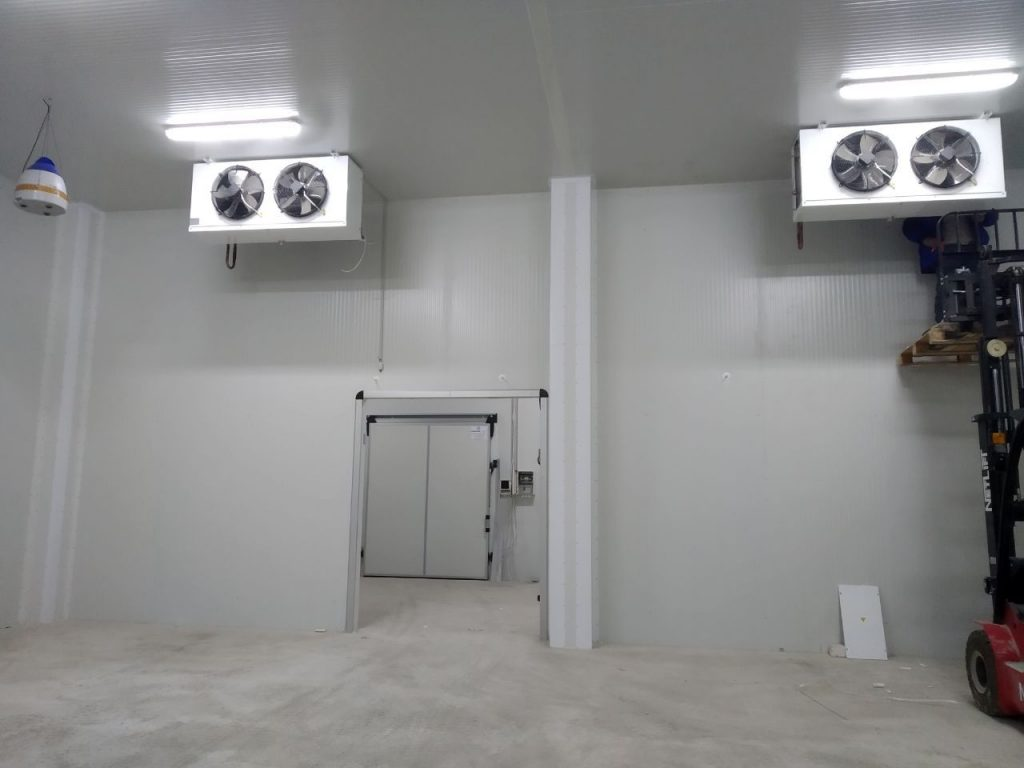
Commercial meat processing plants, wholesale abattoirs, commercial smokehouses, and portion-packaging facilities across the Greater Phoenix industrial corridors operate on razor-thin thermal tolerances. Central to these operations are high-velocity blast freezers and cryogenic blast cells engineered to drive fresh primal beef cuts, pork loins, poultry carcasses, and processed meats from hot carcass temperatures (around 100°F) down to sub-zero cores (-10°F to -40°F) in minimal time. This rapid temperature pull-down is thermodynamically mandatory to prevent cellular fluid expansion, arrest drip-loss during thaw, and immediately stop microbial proliferation of pathogenic microorganisms. These industrial blast cells rely on high-capacity direct expansion (DX) ammonia (R-717) or secondary chilled food-grade propylene glycol brine loops coupled with heavy-duty ceiling-hung multi-fan evaporator coils, automated high-pressure hot-gas defrost circuits, and heated condensation collection troughs.
When an industrial blast freezer evaporator coil splits, a hot-gas defrost bypass valve jams open, or an unheated condensate drain line freezes solid, the resulting deluge inside a sub-zero commercial facility creates an acute operational and food safety emergency. In the arid desert climate of Phoenix, where outdoor ambient summer temperatures frequently eclipse 115°F, the colossal thermodynamic differential between outdoor air and the -20°F interior blast cell generates tremendous vapor pressure gradients. Searing outdoor air infiltrates dock seals and staging vestibules, creating massive condensation downpours. Simultaneously, superheated defrost water and glycol solution spill over frozen drain pans, dumping hundreds of gallons of scalding liquid across chilled concrete slab floors.
Within seconds, escaping liquid flash-freezes across blast cell floors into treacherous sheets of dense ice up to three inches thick, encasing floor scale mechanisms, jamming automated pallet chain conveyors, and penetrating the joints of insulated metal wall panels (IMPs). Water vapor driven by the violent thermal gradient permeates panel joint seals, saturating closed-cell polyisocyanurate (PIR) cores and freezing within structural wall assemblies. Unchecked, this moisture migrates downward through concrete expansion joints into the sub-base beneath the wear slab, freezing native sub-soils and triggering massive slab frost heave that cracks foundation footings and ruptures embedded sanitary sewer lines. Concurrently, humidity spikes in adjacent processing corridors create widespread ceiling condensation dripping directly above exposed raw meat production lines, triggering mandatory product condemnation under federal food safety statutes.
Valley Restoration Pros maintains a 24/7 Rapid Response Industrial Food Plant Division specifically trained and equipped to stabilize cold-chain emergencies across Maricopa County. We deploy heavy-duty heated liquid vacuum extraction units, trailer-mounted low-dewpoint desiccant dehumidifiers, sub-zero extraction tools, and USDA-compliant containment barriers within 30 minutes of emergency dispatch. Whether your facility operates along the Interstate 17 industrial food corridor, the Deer Valley logistics hub, or the Tolleson freight belt, our specialized team delivers rapid mitigation. For facilities facing widespread facility water incidents throughout the Valley, consult our emergency Phoenix water damage dispatch team, or request immediate high-volume emergency water extraction.
Immediate Blast Freezer Inundation Emergency Directives
- Manually Override Defrost Controls on Affected Blast Cells: Utilize your central refrigeration SCADA or programmable logic controller (PLC) interface to immediately abort automated hot-gas or electric defrost cycles on overflowing coil banks to cut off the continuous supply of scalding meltwater.
- Barricade Blast Cell Entrances & Establish Slip/Fall Perimeter: Rapid ice accumulation creates catastrophic slip-and-fall hazards on polished concrete surfaces. Restrict all personnel entry until certified emergency restoration teams establish non-slip safety corridors.
- Isolate Raw Meat Inventory & Seal Packaging Buffer Zones: Protect unprocessed primal cuts, hanging carcasses, and packaged inventory from aerosolized mist, dripping ceiling condensate, or glycol vapor by erecting temporary poly containment barriers.
- Dispatch Industrial Food Plant Restoration Crews: Call our 24/7 Command Center immediately at (602) 847-9593. Our industrial rigs deploy low-dewpoint desiccant trailers capable of operating in sub-zero environments without introducing unconditioned ambient air.
Anatomy of the Failure: Sub-Zero Blast Freezer Evaporator, Defrost & Glycol Line Ruptures
Industrial blast freezers operate under the most severe mechanical, hydraulic, and thermodynamic stresses found in commercial manufacturing. Unlike standard refrigerated holding rooms that maintain a continuous 34°F or commercial walk-in freezers held at a static 0°F, blast freezing cells subject cooling coils, piping headers, expansion joints, and drain assemblies to rapid cyclic temperature shocks several times each day. When warm meat loads enter the room, evaporator fan coils pull hundreds of thousands of BTUs per hour from the room air, accumulating dense frost layers across aluminum fin assemblies. Defrosting these coils requires rapid thermal cycling that introduces acute structural vulnerabilities:
Hot-Gas Defrost Thermal Shock & Liquid Hammer
To shed thick frost accumulation from evaporator coils operating at -30°F, industrial blast refrigeration plants inject superheated compressor discharge vapor (95°F to 115°F) directly into chilled evaporator tubes. If the suction stop valve fails to close completely or downstream condensate relief solenoids cycle too quickly, high-velocity liquid refrigerant slugs slam against header elbows at sonic speeds. This phenomenon, known as hydraulic liquid hammer, generates shock pressures exceeding 1,200 PSI. The violent pressure wave tears brazed copper return bends, fractures aluminum coil headers, and causes catastrophic refrigerant discharge and condensate inundation across production bays.
Drain Pan Heat Trace Burnout & Ice Damming
Blast freezer drain pans and gravity drain pipes must be continuously heated with mineral-insulated (MI) electric resistance heat trace cables to prevent meltwater from freezing before exiting the insulated facility envelope. When heat trace wiring burns out, suffers mechanical severance during pressure washing, or trips ground-fault circuit interrupters, meltwater solidifies instantaneously upon contact with the -25°F pan surface. Successive defrost cycles build massive ice dams bridging the pan rim, directing hundreds of gallons of defrost overflow across structural ceiling joists and product staging bays.
Organic Caliche & Rendered Fat Drain Clogging
In meat processing environments, aerosolized animal fats, bone dust, and airborne proteinaceous residues mix with Phoenix hard water mineral precipitates (calcium carbonate and magnesium carbonate). When sanitation teams wash down blast freezer coils, this organic-mineral slurry flows into condensate drain pans. Inside the cold unheated drain line sections, animal fats congeal into a rock-solid hydrophobic matrix, creating an impenetrable plug that backs up scalding defrost water into overhead fan cowlings and blast cells.
Secondary Propylene Glycol Loop Acidification
Facilities utilizing food-grade propylene glycol brine circuits face chemical degradation over time. As corrosion inhibitors deplete, glycol oxidizes into organic acids (lactic, formic, and pyruvic acids), dropping loop pH below 6.5. This acidic brine aggressively attacks copper coil headers, silver-soldered joints, and steel piping. When pinhole perforations develop under 60 PSI line pressure, viscous chemical brine saturates concrete sub-slabs and insulated panels, requiring specialized chemical dewatering and burst pipe repair protocols.
The mechanical complexity of these systems means that failures rarely occur during calm daytime shifts; they typically trigger during automated defrost sequences in the early morning hours when cooling demand is transitioning. Escaped liquid expands by 9% upon freezing, shattering concrete control joints, unseating floor drains, and compromising the airtight seals of insulated metal panels.
When these industrial cooling networks rupture, the discharge cannot be treated as an ordinary plumbing leak. In low-temperature food processing environments, escaped water behaves dynamically: it migrates into floor joints, freezes beneath the slab, and establishes capillary flow paths behind metal wall skins. For complete industrial stabilization, food plant operators require certified commercial water damage restoration teams equipped with sub-zero thermal recovery apparatus.
Phoenix Multipliers: Extreme Desert Heat, Caliche Soils & Sub-Slab Permafrost Heave
Operating an industrial blast freezing and meat packaging facility in the Sonoran Desert presents engineering and psychrometric challenges seen nowhere else in North America. The physical environment of Greater Phoenix introduces severe external compounding factors that accelerate structural degradation and complicate water extraction following a blast freezer coil rupture:
1. Massive Thermal Gradient & Inward Vapor Drive (115°F Ambient vs -20°F Blast Interior)
During Phoenix summer heatwaves, ambient air temperatures frequently exceed 115°F, with industrial standing seam metal roof temperatures soaring past 155°F. Inside an active blast freezing cell, air temperatures are held at -20°F to -40°F. This creates an extraordinary 135°F to 155°F temperature difference across the building thermal envelope.
Thermodynamically, moisture always travels from high vapor pressure (warm, moist exterior air) toward low vapor pressure (cold, dry freezer air). Phoenix ambient summer air during monsoon periods contains a moisture load of 90 to 120 grains per pound (GPP) with vapor pressures exceeding 0.95 inches of mercury (inHg). In contrast, blast freezer air at -20°F and 90% RH holds less than 2 GPP with a vapor pressure of approximately 0.012 inHg.
This staggering vapor pressure differential—exceeding 1.15 pounds per square inch across exterior wall envelopes—acts like a continuous mechanical pump forcing atmospheric moisture through microscopic wall joint voids, conduit penetrations, and dock door gaskets. When an internal evaporator coil or defrost line ruptures inside the blast cell, the introduction of standing water elevates relative humidity inside the chamber, causing explosive condensation storms, overhead frost fogging, and massive ice buildup across pallet racking.
2. Expansive Caliche Sub-Base & Catastrophic Frost Heave
The native soil across the Salt River Valley consists heavily of caliche—a dense, calcium carbonate-cemented sedimentary layer with extreme expansive clay properties. Commercial blast freezer slabs are constructed with thick wear slabs, extruded polystyrene (XPS) insulation boards, sub-slab vapor barriers, and under-floor glycol warming loops or electric heating grids designed to prevent the 32°F freezing line from penetrating the sub-grade.
When a major evaporator overflow or glycol pipe fracture discharges hundreds of gallons onto the slab, liquid finds micro-fissures in concrete control joints, bypasses compromised vapor membranes, and saturates sub-slab insulation layers. Waterlogged insulation loses up to 90% of its thermal resistance (R-value). The sub-zero freezing front instantly migrates into moisture-saturated caliche soil beneath.
As the moisture in the caliche turns to ice, it expands with pressures exceeding 30,000 pounds per square foot. This frost heave lifts the 8-inch reinforced concrete slab, buckling structural building columns, shearing underground drainage pipes, misaligning automated pallet cranes, and necessitating specialized slab leak water damage restoration and concrete stabilization.
3. Phoenix Extreme Water Hardness (18 GPG) & Rapid Biological Incubation
Municipal water delivered across Phoenix, Tolleson, and Glendale averages an exceptionally high mineral hardness of 18 grains per gallon (GPG), carrying heavy dissolved calcium carbonate, silica, and sulfates. This extreme hardness rapidly fouls defrost spray headers, creates rough mineral anchor surfaces on evaporator fins, and accelerates galvanic corrosion between copper headers and aluminum fin collars.
Furthermore, when unconditioned moisture spills from compromised blast freezers into adjacent 80°F to 105°F meat preparation halls, it creates optimal incubation zones for psychrotrophic bacteria like Listeria monocytogenes and Pseudomonas within 24 to 48 hours. Facilities across the West Valley rely on our specialized Glendale water damage teams to arrest both mineral scaling and biological contamination before food safety clearance is jeopardized.
First-Hour Emergency Refrigeration Isolation & Cold-Chain Hazard Protocol
In a commercial meat processing plant, the first sixty minutes following a blast freezer coil burst or defrost flood determine whether the incident remains a localized mechanical repair or explodes into millions of dollars in condemned primal inventory, permanent structural frost heave, and regulatory plant shutdown. Operations personnel must execute the following structured response sequence immediately:
Failing to follow this strict chronological sequence can turn a manageable coil leak into an uncontained plant crisis. When facility staff attempt to shovel ice or pour hot water down frozen drains, they inevitably spread water into uninsulated wall joints, increasing structural drying times by days and exposing perishable meat to thermal degradation.
Advanced Industrial Food Plant Dewatering & Drying Technology
Standard commercial restoration equipment—such as conventional refrigerant dehumidifiers or plastic centrifugal fans—is entirely incapable of operating in sub-zero meat processing environments. Standard dehumidifier coils freeze solid in minutes below 45°F, while unconditioned air movement simply drives moisture deeper into insulated wall cavities. Valley Restoration Pros deploys an elite, food-safe fleet of specialized industrial machinery engineered specifically for sub-freezing, USDA-regulated environments:
Trailer-Mounted Industrial Desiccant Dehumidifiers (5,000 - 15,000 CFM)
Our mobile industrial desiccant drying units utilize massive rotating honeycomb silica gel wheels capable of operating in air temperatures as low as -40°F. By pulling ambient air through a continuously reactivated chemical desiccant rotor, these machines deliver deep dry process air at -20°F dewpoints (under 2 grains per pound of moisture). We duct dry, low-dewpoint process air directly into flooded blast freezers through food-grade antimicrobial lay-flat ducting, sublimating surface ice directly into vapor without heating the room or compromising cold-chain compliance. Explore our comprehensive structural drying methodologies for large commercial envelopes.
Sub-Zero Heated Vacuum Dewatering Rigs
To extract standing liquids and slush before they fuse into sheet ice, we utilize truck-mounted positive displacement vacuum extractors equipped with inline thermal heat exchangers capable of generating 16 inches of mercury vacuum lift. These extractors circulate tempered fluid through suction wands and weighted floor extraction shoes, melting and recovering water and viscous glycol simultaneously without generating airborne aerosols or dispersing bacterial contaminants into food processing air streams.
Cryogenic Dry-Ice Blasters for Ice Dam Removal
When massive ice dams form across blast freezer ceilings, overhead cable trays, and evaporator coils, conventional chipping damages sensitive refrigeration tubing and electric defrost wiring. We deploy industrial dry-ice blasters that propel solid carbon dioxide (CO2) pellets at supersonic velocity. The cryogenic pellets thermal-fracture heavy ice sheets instantly, sublimating on contact into harmless carbon dioxide gas without adding a single drop of secondary liquid moisture to the facility.
USDA-Compliant Food-Safe Antimicrobials & Thermal Imaging
All chemical sanitizers utilized in our decontamination procedures are EPA-registered, NSF D2-certified, and fully approved for meat and poultry processing facilities under USDA FSIS directives. We utilize peracetic acid (PAA) and quaternary ammonium blends that leave zero toxic chemical residues. Coupled with high-resolution FLIR commercial thermal imaging cameras and capacitance moisture meters, our technicians identify hidden moisture pockets trapped within insulated metal panels and beneath floor wear slabs with millimeter precision. For full commercial cost analysis, review our commercial restoration cost estimator.
Specialized Equipment Calibration for Low-Temperature Food Plants
All equipment deployed into an active meat packaging facility undergoes multi-point sanitary inspection prior to building entry. Tires and casters are disinfected with food-grade quat solutions, intake air is filtered through 99.97% HEPA media, and all electrical connections utilize NEMA 4X washdown-rated cabling to eliminate spark or contamination hazards around food preparation corridors.
IICRC S500 / S520 Step-by-Step Restoration Protocol for Sub-Zero Facilities
Executing structural restoration inside an operating commercial meat processing facility requires strict adherence to the Institute of Inspection, Cleaning and Restoration Certification (IICRC) S500 Standard for Professional Water Damage Restoration and IICRC S520 Standard for Professional Mold Remediation, harmonized with federal food hygiene standards. Our five-stage restoration framework provides systematic recovery:
Stage 1: Multi-Point Psychrometric & Thermal Loss Mapping
Upon arrival, our Master Water Restorers establish a comprehensive psychrometric baseline. We measure dry bulb temperature, relative humidity, dewpoint, and grains per pound (GPP) across three distinct zones: the flooded blast cell, the adjoining packaging corridor, and the exterior ambient environment. Using infrared thermography and high-frequency non-invasive RF moisture meters, we map the exact migration boundaries of moisture behind stainless steel wall panels and beneath floor wear slabs. Establishing an accurate dry standard ensures our team knows exactly when structural equilibrium has been re-established.
Stage 2: Cryogenic Ice Abatement & High-Volume Fluid Extraction
All free-standing liquid water, slush, and glycol spills are extracted using heated vacuum extractors equipped with sealed HEPA filtration to eliminate bio-aerosolization. Heavy ice dams accumulated on overhead evaporator frames, pallet tracks, and floor slabs are methodically removed using dry-ice cryogenic blasting and pneumatic thermal scrapers. All extracted ice and liquid are directed through dedicated graywater disposal lines in full compliance with City of Phoenix industrial discharge permits.
Stage 3: Insulated Metal Panel (IMP) Wall Cavity Desiccation
Insulated metal panels (IMPs) utilized in blast freezers feature metal skins bonded to polyisocyanurate (PIR) cores. When water enters panel joints, moisture remains trapped against internal metal skins. Traditional demolition and panel replacement costs hundreds of thousands of dollars and causes weeks of downtime. Instead, we utilize specialized negative-pressure injection drying adapters. Ultra-low dewpoint desiccant air is forced through micro-ports into the panel seams, extracting vaporized moisture without compromising the panel structural integrity. For facilities with adjacent building damage, review our mold remediation and cavity sterilization standards.
Stage 4: Sub-Slab Moisture Evacuation & Under-Floor Warming Verification
To arrest and reverse sub-slab permafrost development, we test and verify the operational integrity of the sub-floor glycol warming loop or electric resistance grid. If under-floor warming systems are damaged, we drill strategic moisture evacuation ports into the concrete perimeter expansion joints. Dry desiccant air is forced under high pressure beneath the slab wear layer, evaporating trapped water before the freezing front can penetrate native caliche soils. For similar deep-freeze operations, see our technical breakdown of cold storage evaporator coil water damage in Glendale.
Stage 5: High-Level Bio-Sanitization & Environmental Clearance Swabbing
Following total structural drying, all surfaces undergo a three-stage bio-cleansing protocol. We apply an EPA-registered food-safe disinfectant formulated to destroy Listeria monocytogenes, Salmonella, and Escherichia coli biofilms. Technicians wipe down stainless steel surfaces, structural columns, and evaporator housings. Finally, our team conducts adenosine triphosphate (ATP) rapid hygiene swabbing and microbiological zone testing to provide verified clearance records for plant quality assurance teams and government inspectors.
Throughout all five stages, psychrometric records are captured every six hours and uploaded directly to our cloud-based industrial monitoring dashboard. This provides plant engineering leadership, food safety directors, and insurance underwriters with real-time verification of moisture reduction curves and structural stabilization metrics.
USDA FSIS & Maricopa County Environmental Services Compliance
Unlike general commercial warehousing, meat processing and packing facilities operate under daily federal oversight by the United States Department of Agriculture (USDA) Food Safety and Inspection Service (FSIS) and local inspection by the Maricopa County Environmental Services Department (MCESD). A blast freezer coil rupture or defrost overflow introduces immediate regulatory liabilities that can result in immediate withholding of inspection marks, mandatory product destruction, and Notice of Intended Enforcement (NOIE) actions:
Critical Regulatory Touchpoints in Low-Temperature Meat Facilities
- Title 9 CFR Part 416 (Sanitation Performance Standards): Federal regulations strictly dictate that establishments must be maintained in a sanitary condition to prevent the adulteration of product. Any condensation dripping from overhead structures, ceilings, or evaporator coils onto unpackaged meat carcasses or processing equipment represents an immediate regulatory violation requiring immediate product condemnation.
- Title 9 CFR Part 417 (Hazard Analysis and Critical Control Point - HACCP): Water inundation compromises established critical limits for product surface temperature and ambient holding temperature. Our documentation provides full temperature audit trails to prove whether meat inventory remained within validated critical control parameters during extraction.
- USDA FSIS Directive 5000.1 (Verifying Plant Sanitation): FSIS inspectors will inspect structural repairs, ceiling paint adhesion, seam caulking on insulated panels, and drainage traps before granting permission to reintroduce meat products into the affected blast cell.
- Environmental Listeria Monitoring (Zone 1 through Zone 4 Mapping): In accordance with USDA FSIS directives for Ready-to-Eat (RTE) and fresh meat facilities, our sanitation team establishes strict 4-zone environmental sampling. Zone 1 represents direct food contact surfaces; Zone 2 represents non-food contact surfaces adjacent to meat products; Zone 3 represents surrounding walls, floors, and drains; and Zone 4 represents remote areas like maintenance shops and locker rooms. Our post-restoration clearance swabbing ensures zero pathogen persistence across all four zones.
- Maricopa County Environmental Health Code: MCESD enforces strict standards regarding commercial wastewater containment, grease trap backflow prevention, and chemical storage. Spilled propylene glycol must be captured, manifested, and disposed of according to regional hazardous material mandates.
Valley Restoration Pros works directly alongside plant Quality Assurance Directors, USDA Consumer Safety Inspectors (CSIs), and environmental compliance officers. We provide verified ATP test results, psychrometric drying logs, and non-toxic sanitation certificates required for full facility clearance. For specialized food processing recovery across different industry verticals, examine our emergency protocols for commercial bakery proofing box leak cleanup and large commercial chillers at our commercial indoor ice rink chiller glycol flood restoration page.
Hyper-Local Phoenix Case Study: I-17 & Encanto Food Corridor Blast Freezer Recovery
The Incident: Defrost Valve Failure & Hot-Gas Coil Blowout During July Heatwave
On a Friday afternoon in late July, when outdoor ambient temperatures in Central Phoenix reached 116°F, an industrial blast freezing cell (Cell #3, 3,200 square feet operating at -25°F) suffered a catastrophic mechanical failure. An automated hot-gas defrost regulator stuck wide open, driving 105°F high-pressure gas continuously into frozen copper headers. The extreme thermal shock split two 3-inch return bends, while simultaneous drain pan heat trace failure caused meltwater to dam. Over 1,400 gallons of scalding defrost meltwater and secondary brine flooded the blast chamber, flash-freezing into a 2.5-inch sheet of solid ice across the floor and migrating beneath insulated partition walls into the active primal fabrication room.
• 2.5-inch sheet ice on blast floor
• 78,000 lbs prime beef in jeopardy
• Relative Humidity: 94% RH inside cell
• Moisture target: < 8 GPP air supply
• Zero USDA condemnation of sealed meat
• Complete structural drying in 54 hrs
Psychrometric Drying Progression & Timeline
| Time Elapsed | Chamber Temp (°F) | Relative Humidity (%) | Humidity Ratio (GPP) | Operational Status |
|---|---|---|---|---|
| Hour 0 (Arrival) | 18°F | 94% | 14.2 GPP | Emergency triage, meat isolated |
| Hour 12 | 24°F | 65% | 7.8 GPP | Cryogenic ice removal, heated extraction |
| Hour 24 | 26°F | 38% | 4.1 GPP | IMP wall cavity injection drying active |
| Hour 36 | 22°F | 22% | 2.1 GPP | Sub-slab expansion ports dry |
| Hour 54 (Completion) | -20°F | 12% | 0.3 GPP | Full USDA FSIS clearance approved |
Deployment & Restoration Execution
Valley Restoration Pros deployed two 7,500 CFM trailer-mounted desiccant dehumidifiers, two truck-mounted heated vacuum extraction rigs, and cryogenic dry-ice blasting teams within 26 minutes of dispatch. Crews immediately isolated product staging areas with negative-pressure poly containment to prevent moist warm air infiltration. Heated vacuum wands melted and recovered floor ice without raising room air temperatures above 38°F. Deep desiccant air was ducted directly into the blast chamber, dropping ambient dewpoints to -22°F and sublimating residual surface moisture.
Outcome & Regulatory Clearance
Within 54 hours of continuous desiccant desiccation, all IMP wall cavities and sub-slab perimeter joints reached certified dry standards. Complete bio-sanitization with food-grade peracetic acid achieved 100% negative swab results for Listeria and Salmonella. USDA FSIS inspectors approved the room for re-freezing on Monday morning with zero product condemnation, saving the processor an estimated $420,000 in perishable inventory. For similar food and beverage plant recoveries in the East Valley, review our commercial brewery glycol line burst flood cleanup or connect with our teams serving Scottsdale water damage properties.
Transparent Financial Disclosures & Commercial Insurance Documentation
Commercial large-loss water damage incidents in food manufacturing plants involve intricate commercial property insurance policies, business interruption riders, and inventory spoilage claims. Valley Restoration Pros upholds strict Pay-Per-Call ethical standards and transparent pricing practices:
Our Transparent Financial Standards
- Free Comprehensive On-Site Damage Assessment: We dispatch certified industrial project managers to your facility at zero cost to evaluate structural saturation, map thermal anomalies, and establish initial emergency stabilization scopes.
- Transparent Upfront Itemized Pricing Before Work Commences: All mitigation, drying equipment rentals, cryogenic ice blasting, and sanitation labor are itemized using standardized industrial Xactimate estimating codes. You receive a transparent breakdown prior to contract authorization.
- No Misleading Direct Billing Guarantees: We never promise that commercial property insurance carriers will cover 100% of all claims without client deductible or policy limit responsibilities. Policy coverage is determined strictly between the policyholder and their commercial insurance underwriter.
- Exhaustive Insurance Documentation Support: We supply your risk management team and forensic insurance adjusters with psychrometric drying logs, infrared thermal imaging scans, digital time-stamped photo logs, and USDA compliance verification to expedite claim settlement.
Typical Commercial Insurance Line-Item Categories for Meat Plant Floods
Our detailed claim packages categorize costs under industry-standard codes to eliminate carrier friction and prevent claim processing delays:
By working cooperatively with plant management and insurance carriers, our detailed forensic reporting documents the precise mechanical origin of the failure, distinguishes between direct physical water damage and product spoilage, and provides carrier-ready records. Review our full geographic coverage across all regional service areas throughout Arizona.
Frequently Asked Technical Questions: Blast Freezer Inundation Recovery
Attempting to melt ice by introducing space heaters into a sub-zero room creates massive condensation showers, saturates insulated panels, and destroys food products. Instead, we isolate the specific blast cell while keeping neighboring cold rooms running. We deploy high-temperature truck-mounted fluid extractors to rapidly pull standing liquid before it solidifies. For existing sheet ice, we utilize cryogenic dry-ice blasting. Supersonic CO2 pellets fracture the ice matrix through thermal shock, sublimating into harmless gas without adding moisture. Simultaneously, we duct trailer-mounted desiccant dehumidifiers into the space, delivering -20°F dewpoint air that sublimates residual ice directly into vapor.
Yes, in the vast majority of incidents. Commercial IMPs feature closed-cell polyisocyanurate (PIR) cores between metal skins. While the core itself resists liquid absorption, water enters through joint seams and remains trapped between the metal skin and foam core. We attach specialized injection drying manifolds to joint seams under negative pressure. By circulating ultra-dry desiccant air through the internal micro-channels, we pull vaporized moisture out of the assembly without removing panel skins or compromising structural thermal envelopes.
Sub-freezing blast freezer floors depend on sub-slab insulation boards and active under-floor warming systems to keep underlying ground temperatures above 32°F. When hundreds of gallons of defrost water seep through floor cracks or compromised perimeter joint seals, water saturates the sub-floor insulation. Wet insulation loses its insulating value, allowing the -20°F freeze line to penetrate into native Phoenix caliche soils. Caliche contains expansive clay minerals that expand tremendously upon freezing. The resulting frost heave can lift multi-ton concrete slabs several inches, fracturing building footings and shearing embedded plumbing.
While propylene glycol is designated Generally Recognized as Safe (GRAS) for indirect food contact, direct liquid contamination of unpackaged meat or absorbent corrugated packaging mandates immediate product condemnation under USDA FSIS regulations. On concrete floors, glycol does not evaporate naturally due to its low vapor pressure. It remains as a slick, hygroscopic residue that attracts ambient moisture and accelerates concrete surface spalling. Our crews extract glycol with heated wash water extraction, neutralize residues with specialized alkaline cleaners, and flush containment sumps.
USDA Title 9 CFR Part 416 mandates continuous plant sanitation. During water mitigation, all restoration equipment brought into the facility must undergo thorough pre-entry sanitization. Technicians must wear clean food-grade PPE, including hairnets, beard nets, sanitizable rubber boots, and disposable coveralls. Any containment walls must be constructed of food-grade virgin polyethylene sheeting. All disinfectants applied must be EPA-registered, NSF D2-rated sanitizers that do not require a potable water rinse on food contact surfaces.
In Phoenix summer conditions, ambient temperatures exceed 115°F with elevated dewpoints during July-September monsoon seasons. The thermal gradient between outdoor air (115°F) and blast freezer air (-20°F) exceeds 135°F, creating intense vapor pressure differentials greater than 1.0 psi. Any opening of exterior doors or dock seals causes humid outdoor air to rush violently into the freezer, condensing immediately on cold surfaces. Controlling this extreme vapor drive requires specialized high-static desiccant air handlers capable of maintaining positive chamber pressurization with ultra-dry process air.
Commercial property and business interruption insurance adjusters require comprehensive proof of loss documentation. This includes refrigeration telemetry logs showing precise failure timestamps, psychrometric moisture logs tracking temperature and grains per pound throughout drying, FLIR thermal imaging reports documenting moisture migration boundaries in walls and sub-slabs, equipment run sheets, itemized USDA product disposition records, and clearance testing swab reports. We compile and deliver this entire forensic documentation package to facilitate swift claim resolution.
Listeria monocytogenes is a psychrotrophic bacterium, meaning it can grow and proliferate at temperatures as low as 31°F. When defrost water escapes into refrigerated rooms or staging hallways, standing moisture mixes with organic meat proteins, forming dense microbial biofilms within 24 to 48 hours. Once biofilms anchor into concrete floor micro-pits or floor drain grates, standard washdowns fail to penetrate the protective matrix. Our specialized remediation uses enzymatic cleaners followed by peracetic acid fogging to completely eradicate biofilms at a cellular level.
Phoenix Metro Food Manufacturing & Cold Logistics Response Corridors
Valley Restoration Pros strategically positions emergency response teams and heavy desiccant mobile trailers adjacent to the primary meat processing, cold storage, and food distribution hubs across the Phoenix metropolitan area. Our industrial command centers provide rapid 30-minute emergency dispatch across these vital commercial logistics corridors:
I-17 & Grand Avenue Food Processing Basin
Serving commercial abattoirs, primal beef fabrication plants, and food packaging centers along Interstate 17 from McDowell Road through Encanto Blvd, Dunlap Avenue, and the Grand Avenue rail corridor. Our rapid-response teams reach any facility within this central industrial spine in under 25 minutes.
Tolleson Freight & Meat Packing Corridor
Direct emergency coverage for mega-scale meat packing facilities, refrigerated consolidation hubs, and automated cold-chain logistics centers along the I-10 corridor, 91st Avenue, and 107th Avenue. We maintain high-tonnage mobile desiccant trailers staged immediately off 99th Avenue for instant deployment.
Deer Valley Industrial & Cold Storage Hub
Rapid mobilization for commercial blast freezing, prepared foods manufacturing, and aerospace cold facilities across Deer Valley Airpark, Happy Valley Road, and the Loop 101/I-17 interchange, providing complete containment and drying for North Valley processors.
Tempe & Chandler Specialty Logistics Belt
Supporting commercial charcuterie, craft brewing, poultry processing, and commissary production facilities spanning the Broadway industrial corridor, Arizona State Route 143, and the Kyrene corridor with dedicated food-safe extraction fleets.
South Phoenix & Broadway Industrial Spine
Delivering industrial water mitigation and sub-slab moisture remediation across commercial meat smoking, sausage manufacturing, and wholesale food distributors along 7th Street, 16th Street, and University Drive.
24/7 Commercial Meat Processing Emergency Response
When a blast freezer leak, glycol rupture, or defrost failure threatens cold-chain compliance and millions of dollars in meat inventory, every second counts. Connect directly with our industrial response unit for immediate dispatch across Phoenix.
Call Industrial Emergency Dispatch: (602) 847-9593Verified Local Area Dispatch: Phoenix, AZ
Official Geo-Coordinates: 33.4484° N, -112.074° W • Maricopa County
Related Specialized Emergency Restoration Services
Explore specialized rapid-response mitigation protocols across Greater Phoenix and Maricopa County:
Valley-Wide Emergency Response Service Coverage
Our mobile restoration fleet is dispatched across the entire Phoenix metropolitan region, providing rapid 30 to 60 minute emergency response: