

Valley Restoration Pros delivers 24/7 industrial emergency water extraction, thermal psychrometric drying, and structural mitigation across Phoenix and Maricopa County with guaranteed 30–60 minute rapid arrival. All protocols strictly adhere to IICRC S500 standards, featuring upfront itemized pricing and free on-site thermal moisture assessments. Call dispatch directly at (602) 847-9593.
Why Immediate Mitigation Is Critical in Phoenix Heat
Subterranean district cooling tunnel inundation presents catastrophic municipal, structural, and life-safety hazards across the Downtown Phoenix urban core. When a 24-inch to 42-inch high-pressure chilled water supply loop ruptures at 150 to 250 PSI, tens of thousands of gallons of chemically treated chilled water discharge per minute, submerging 12.47kV medium-voltage electrical feeder conduits, SCADA automated valve actuators, and steam distribution mains. Floodwaters reaching depths of 10 to 30 feet below street grade create extreme electrocution hazards via step-and-touch potential, confined space atmospheric asphyxiation, steam vapor flash displacement, and structural soil loading. Under Phoenix's 18 GPG municipal hard water and 115°F desert ambient heat, mineral scale encrusts mechanical roller stanchions, unsealed tunnel concrete faces severe hydrostatic pressure from expansive caliche soils, and toxic microbial growth incubates within 24 hours.
Subterranean District Energy Tunnel Flooding: First-Hour Incident Commander Action Protocol
- Initiate Emergency SCADA Isolation & Pressure Relief: Contact Central Plant Operations (District Cooling Network Dispatch) immediately to initiate emergency SCADA valve closure on the affected 24- to 42-inch chilled water supply/return headers, locking out booster pumps and mitigating hydraulic water hammer.
- Implement High-Voltage Electrical Lockout/Tagout (LOTO): Coordinate with Arizona Public Service (APS) and municipal facility engineering to de-energize submerged 480V to 12.47kV tunnel feeder bus ducts, lighting raceways, and sump pump control panels before personnel approach tunnel portals.
- Establish Street-Level Perimeter & Ventilation Grate Isolation: Secure above-grade ventilation shafts, sidewalk grates, and tunnel access hatches along Washington Street, Jefferson Street, and 2nd Street to prevent street-level pedestrian hazards, vehicular loading stresses, and further monsoon runoff ingress.
- Perform Atmospheric Multi-Gas Monitoring: Deploy calibrated 4-gas/5-gas atmospheric analyzers (monitoring O2, LEL, H2S, CO, and volatile organic compounds) at tunnel portal entrances before authorizing any permit-required confined space entry.
- Deploy Positive-Pressure Ventilation Blowers: Position high-CFM explosion-proof blowers with antistatic flexible ducting at street level, establishing continuous mechanical ventilation to purge hazardous gases, moisture mist, and elevated ambient heat.
- Mobilize Valley Restoration Pros Emergency Large-Loss Command: Call (602) 847-9593 for immediate dispatch of specialized trailer-mounted hydraulic submersible trash pumps, industrial desiccant drying trailers, and OSHA-certified confined space restoration crews.
Service Definition & The IICRC Standard of Care
Professional downtown phoenix district cooling underground utility tunnel flood extraction is an engineering and environmental discipline adhering strictly to IICRC S500 protocols, not mere surface mopping. When structural plumbing failures strike in Maricopa County, certified emergency water extraction and thermal structural drying procedures must be deployed immediately. Whether triggered by high-pressure burst pipe emergencies, subfloor leaks, or commercial line ruptures, bound moisture rapidly penetrates concrete subfloors and wall framing. In the desert heat, delays trigger microbial proliferation requiring rapid mold remediation. Request damage assessment through our emergency assessment portal or request 30-minute dispatch across all Valley service areas.
Securing electrical feeds, inspecting load-bearing assemblies, and containing pathogens.
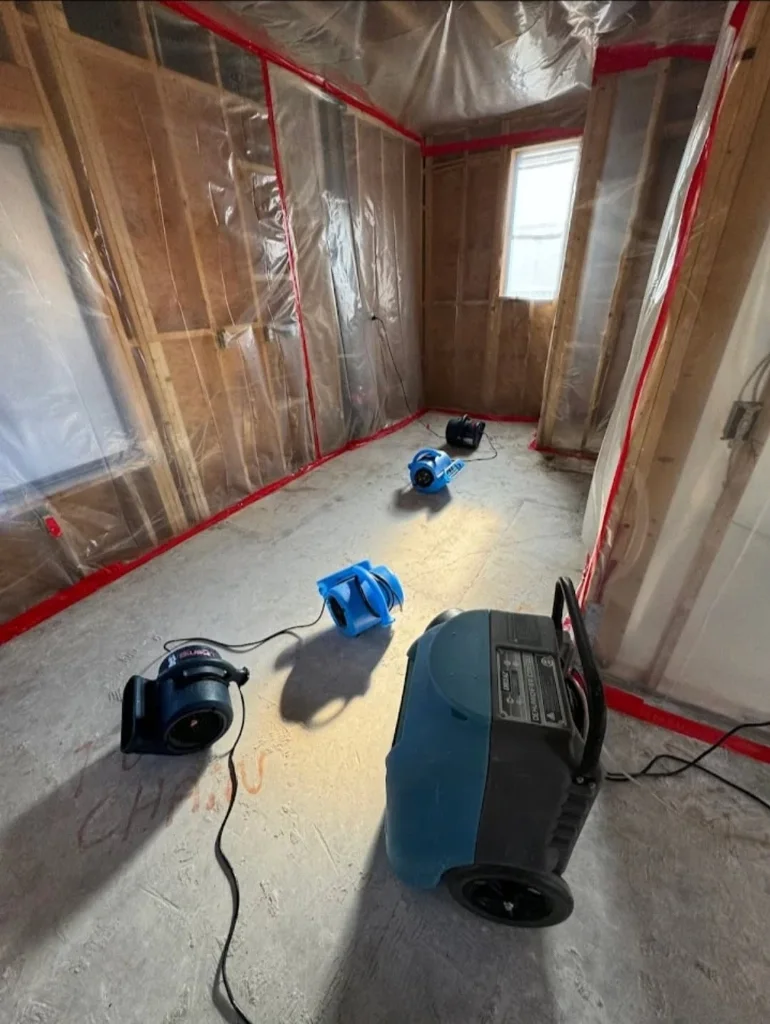
Stopping the intrusion source and erecting 6-mil plastic isolation containment airlocks.
31-HP truck-mount extraction, removing gallons exponentially faster than evaporation.
LGR dehumidifiers and HEPA air scrubbers driving grains per pound below 25 GPP.
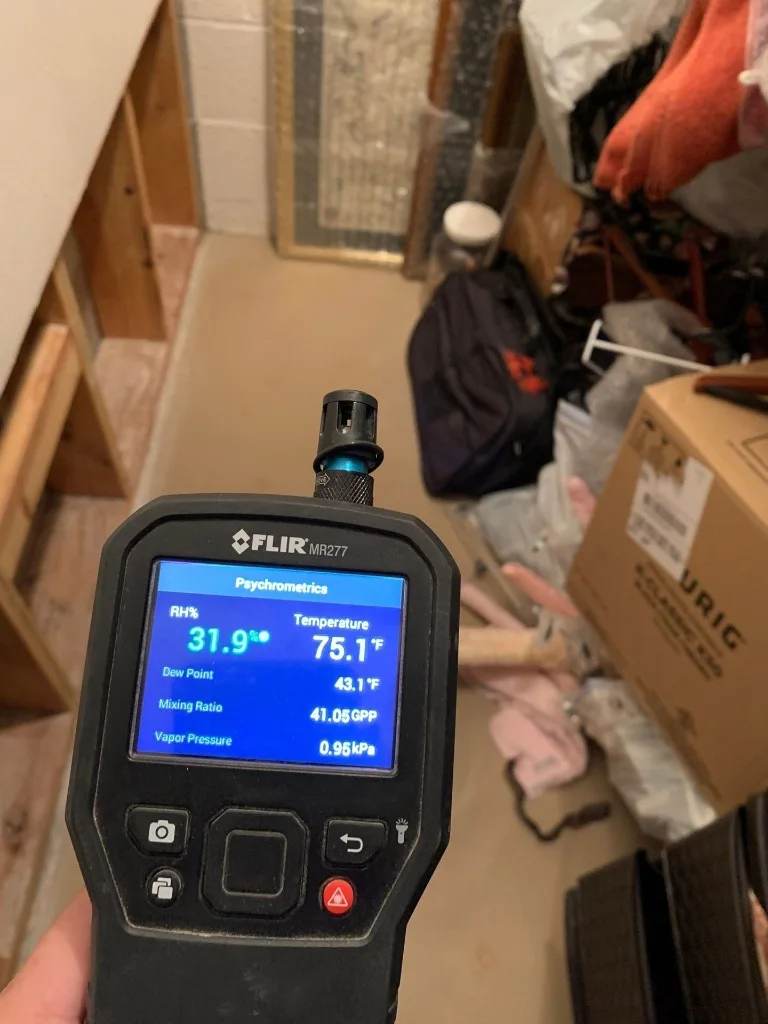
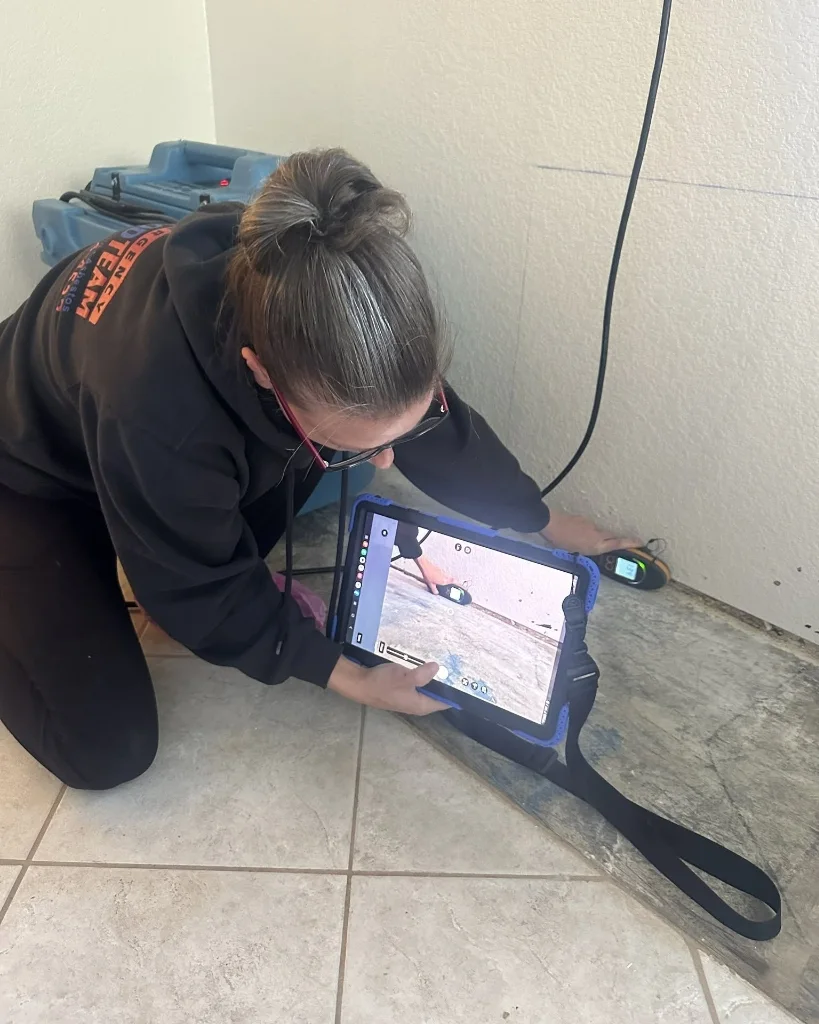
Calibrated electronic pinless testing confirming baseline dry standards.
Catastrophic Mistakes Facility Engineers Make During Subterranean District Utility Floods
Property owners naturally try to act fast, but well-intentioned DIY measures frequently escalate structural damage or void insurance claims:
- Authorizing Uncertified Personnel Entry Without Confined Space Permits: Entering an inundated subterranean utility tunnel without OSHA 29 CFR 1910.146 permit certification, continuous gas monitoring, and emergency retrieval tripods results in fatal asphyxiation or electrocution from submerged energized raceways.
- Operating Standard Electric Sump Pumps in Combustible or High-Vapor Atmospheres: Utilizing unrated non-explosion-proof electrical submersible pumps in confined utility spaces risks sparking catastrophic arc explosions if sewer gas, refrigerant vapor, or flammable industrial hydrocarbons are present.
- Ignoring Waterlogged Pipe Insulation (Aerogel, Calcium Silicate, Cellular Glass): Leaving flooded insulation jackets on chilled water or steam pipes causes severe Corrosion Under Insulation (CUI), destroying carbon steel pipe walls within months and triggering subsequent multi-million-dollar ruptures.
- Permitting Evaporative Drying Without Industrial Desiccant Dehumidification: Attempting to dry underground concrete utility tunnels with ambient air or heat alone causes runaway relative humidity (99%+ RH), rapid secondary condensation on electrical gear, and explosive fungal proliferation on unsealed surfaces.
- Overlooking Phoenix Alluvial Silt & 18 GPG Mineral Scale Accumulation: Failing to immediately pressure-wash and vacuum abrasive desert silt and hard-water calcification from expansion joints, pipe roller supports, and automated valve actuators leads to mechanical binding and structural stanchion failure.
Damage Severity Classification & Contamination Matrix
Industry standards categorize property damage by contamination risk and drying difficulty. Review the matrix below to understand the technical protocols required:
Stage 1: Category 1 Clean / Chemically Treated Chilled Water Inundation
Source Examples: Rupture of 24- to 42-inch chilled water supply/return loop, expansion joint gasket blowout, air release valve failure, cooling coil bypass rupture
Hazards & Risks: Massive hydrostatic flooding, 18 GPG mineral scale encrustation, chemical biocide exposure (molybdate, glutaraldehyde, tolyltriazole), thermal insulation soaking.
Certified Protocol: Emergency SCADA isolation, hydraulic submersible pump extraction, positive-pressure desiccant air purge, FLIR thermography insulation audit, IEEE 43 electrical verification.
Stage 2: Category 2 Urban Runoff & Saturated Subsoil Inundation
Source Examples: Monsoon stormwater intrusion through street-level ventilation grates, municipal storm culvert overflow, perched groundwater migration through concrete cold joints
Hazards & Risks: Suspended alluvial silt, road hydrocarbons, abrasive caliche mud slurry, accelerated bacterial amplification in 115°F ambient desert temperatures.
Certified Protocol: Truck-mounted high-lift vacuum extraction, high-pressure demineralized water washing of inverts and stanchions, hospital-grade botanical biocide application, desiccant bake-out.
Stage 3: Category 3 Stormwater Deluge, Sewage Backflow, or Steam Condensate Flooding
Source Examples: Co-located sanitary sewer line breach within utility right-of-way, severe monsoon street inundation carrying biological waste, steam loop rupture flash vapor deluge
Hazards & Risks: Gross pathogenic biohazard contamination, thermal burn hazards (250°F+ steam condensate), extreme oxygen deficiency, toxic hydrogen sulfide (H2S) accumulation.
Certified Protocol: OSHA permit-required confined space entry, supplied-air respirators (SAR), Class 1 Div 1 explosion-proof ventilation, complete insulation removal, full structural decontamination.
The Complete 6-Stage Restoration Roadmap
Our IICRC-certified crews execute a disciplined, scientific 6-stage protocol to stabilize and dry structural components:
Emergency Dispatch & Perimeter Isolation
30 to 60 minute arrival. Securing electrical shutoffs, evaluating structural loads, and erecting containment airlocks.
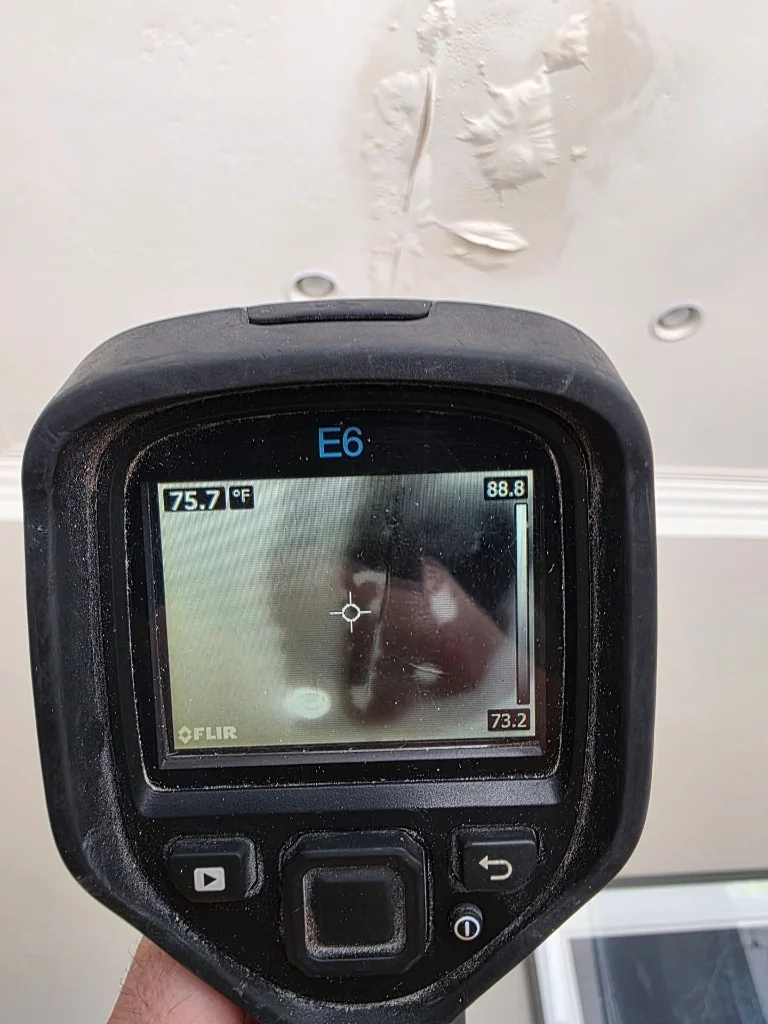
FLIR® Thermal Mapping & Baseline Scans
Infrared thermal scans detect trapped moisture behind walls and beneath concrete without invasive exploratory demolition.
High-Volume Bulk Extraction
31-HP truck-mount extraction units pump standing water away at hundreds of gallons per minute.
Controlled Selective Demolition
Precision flood cuts 12 to 24 inches above moisture lines, removing wet insulation and opening wall framing to dry airflow.
Thermodynamic Dehumidification
Industrial Low-Grain Refrigerant dehumidifiers pull deep trapped moisture from dense framing lumber and concrete slabs.
Antimicrobial Sanitization & Verification
EPA-registered botanical application (Benefect Decon 30) and calibrated moisture testing to issue an official dry certificate.

Specialized Equipment & Industrial Restoration Technology
Mitigating severe property damage requires industrial-grade technology capable of altering thermodynamic psychrometrics:
Truck-Mounted Extraction Rigs
31-HP engines producing 16+ inches Hg vacuum suction to evacuate bulk water rapidly into holding tanks.
Low-Grain Refrigerant Dryers
Pre-cooling heat-pipe systems driving ambient grains per pound below 25 GPP to draw deep trapped water out of framing.
HEPA Negative-Air Scrubbers
Hospital-grade 99.97% particulate filtration capturing microscopic fungal spores, soot, and biohazard aerosols.
FLIR® Thermal Scanners & Probes
Infrared thermography detecting evaporative cooling boundaries behind walls, combined with digital RF pinless scanners.
Professional Restoration vs. DIY Mitigation
Attempting DIY cleanup during a property disaster creates severe hidden liabilities:
- Trapped Moisture: Surface drywall dries while moisture inside cavities triggers hidden mold blooms.
- Pathogenic Risks: Category 2 & 3 water contains bio-contaminants standard cleaners fail to kill.
- Insurance Denial: Insurers require daily psychrometric logs; lack of data causes claim disputes.
Transparent Upfront Itemized Pricing
Valley Restoration Pros operates with complete transparency:
- Free On-Site Assessment: Complete physical inspection before work begins.
- Upfront Itemized Estimates: Detailed line items calculated via industry-standard Xactimate.
- Zero Surprise Billing: No hidden charges or unauthorized repairs.
Certified Downtown Phoenix District Cooling Underground Utility Tunnel Flood Extraction Field Documentation
Every response performed by Valley Restoration Pros is documented through photographic and thermographic records:
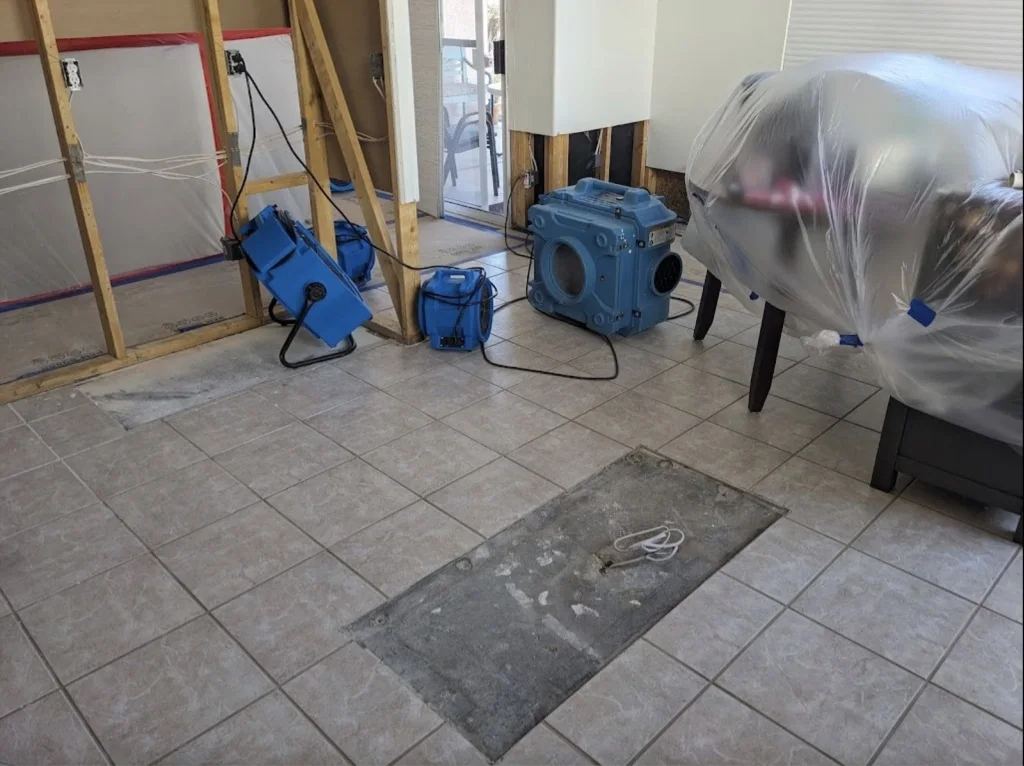
Comprehensive Downtown Phoenix District Cooling Underground Utility Tunnel Flood Extraction Technical Manual & Operational Standards
Exhaustive engineering protocols, psychrometric calculations, geological multipliers, and step-by-step restoration standards for Maricopa County properties:
Executive Emergency Abstract: Subterranean District Cooling & Utility Tunnel Flood Inundation Across Downtown Phoenix
Beneath the dense urban core of Downtown Phoenix, Arizona, lies one of the most sophisticated, high-capacity district energy networks in North America. Spanning miles beneath historic thoroughfares and major commercial avenues—including Washington Street, Jefferson Street, 1st Avenue, 2nd Street, 3rd Street, 7th Street, Van Buren Street, Monroe Street, and Adams Street (ZIP codes 85003 and 85004)—this subterranean utility network supplies chilled water to millions of square feet of mission-critical commercial real estate. Buried between 15 and 45 feet below street grade, heavy reinforced concrete box tunnels house parallel 24-inch to 42-inch welded carbon steel supply and return loops circulating chilled water at temperatures between 38°F and 42°F under extreme operating pressures ranging from 150 to 250 pounds per square inch (PSI). This centralized district energy grid powers the thermal regulation of iconic public and private facilities, including the Phoenix Convention Center, Footprint Center arena, Chase Field, Phoenix City Hall, the Maricopa County Superior Court complex, Arizona State University Downtown Phoenix Campus, major hospitality towers such as the Sheraton Phoenix Downtown and Hyatt Regency, and dozens of Class-A corporate high-rises.
When an unpredicted catastrophic breach occurs within this subterranean utility corridor—whether precipitated by a high-pressure welded joint shear, dynamic hydraulic water hammer, expansion bellows rupture, municipal water main collapse directly above the vault ceiling, or violent desert monsoon cloudbursts overwhelming street-level stormwater drainage grates—the physical consequences are immediate, violent, and devastating. Pressurized water dislodges utility stanchions, pulverizes pipe insulation jacketing, and discharges tens of thousands of gallons per minute into subterranean chambers that possess zero natural gravity drainage. Inundation levels can rise from dry floor invert to fifteen feet of standing water in less than forty minutes, completely submerging automated Supervisory Control and Data Acquisition (SCADA) telemetry, high-voltage motor control panels, valve actuators, and co-located medium-voltage electrical conduits.
The downstream operational fallout of a district cooling utility tunnel flood extends far beyond localized physical property damage. In Phoenix, where summer ambient daytime temperatures consistently hover between 110°F and 122°F, any sustained disruption to district chilled water delivery forces the emergency shutdown of enterprise server infrastructure, triggers catastrophic heat stress inside high-rise office towers, and mandates the evacuation of public assembly facilities under municipal life safety codes. Furthermore, submerged tunnels represent acute life-safety hazards: step-and-touch electrical potential gradients radiated through standing water by compromised 480V to 12.47kV power feeders, rapid atmospheric oxygen displacement caused by high-pressure steam line interactions, and gross chemical contamination from closed-loop corrosion inhibitors. Immediate high-capacity emergency water extraction and comprehensive commercial water damage mitigation are essential to stabilize municipal infrastructure, preserve irreplaceable utility equipment, and restore critical cooling delivery before structural degradation and electrical damage become irreversible.
Subterranean utility infrastructure restoration requires specialized capabilities that conventional building contractors cannot provide. Downtown Phoenix utility tunnels are classified as Permit-Required Confined Spaces (PRCS) under OSHA 29 CFR 1910.146, requiring specialized entry certification, three-way mechanical extraction tripods, continuous multi-gas atmospheric monitors, and explosion-proof equipment. Conventional electrical submersible pumps cannot be operated safely in atmospheres with potential hydrocarbon vapors or steam flash hazards. Furthermore, deep vertical static lifts between 25 and 45 feet demand trailer-mounted hydraulic submersible trash pumps and high-vacuum positive displacement tankers capable of overcoming extreme head pressure to evacuate thousands of gallons of water and dense alluvial silt slurry per hour.
Valley Restoration Pros operates the Southwest region's most technically advanced, 24/7 Commercial Large-Loss Emergency Response Division. Headquartered in Phoenix and maintaining dedicated industrial staging facilities near the downtown corridor, our master certified technicians arrive on site in 30 minutes. We mobilize high-GPM diesel hydraulic submersible pumps, flame-proof explosion-proof ventilation arrays, trailer-mounted industrial desiccant dehumidifiers producing sub-zero dew points, and calibrated FLIR thermal diagnostic cameras. We partner seamlessly with municipal engineering teams, central energy plant operators, and risk management authorities to contain breaches, evacuate floodwaters, desiccate reinforced concrete infrastructure, and prevent long-term Corrosion Under Insulation (CUI) across Downtown Phoenix's district energy network.
Immediate Incident Commander Safety Checkpoints: District Cooling Inundation
- Emergency SCADA Isolation & Pump Shedding: Contact central plant operations immediately to execute emergency valve shedding and disable primary and secondary distribution pumps, mitigating pressure surge propagation and limiting fluid discharge volume.
- High-Voltage Power Interruption: Coordinate with Arizona Public Service (APS) and municipal substation supervisors to de-energize and verify zero-energy states on all 480V, 4,160V, and 12.47kV power circuits routing through or adjacent to the flooded tunnel alignment.
- Perimeter Pedestrian & Traffic Barricades: Establish rigid surface exclusion perimeters around sidewalk ventilation grates, utility access shafts, and manhole lids along Washington and Jefferson Streets to prevent pedestrian fall hazards and vehicle surcharge loading over compromised vaults.
- Continuous Atmospheric Sampling: Position calibrated direct-reading multi-gas detectors at street-level shaft openings to detect oxygen deficiency (< 19.5%), explosive vapor accumulation (> 10% LEL), carbon monoxide, hydrogen sulfide, and thermal steam vapors before any human descent.
- Engage Large-Loss Response at (602) 847-9593: Dispatch Valley Restoration Pros for rapid deployment of heavy hydraulic pumping assets, high-capacity desiccant trailers, and certified confined space entry personnel.
Anatomy of Subterranean Utility Tunnel Flooding: High-Pressure Chilled Water Dynamics, Steam Co-Location & Structural Stresses
Comprehensive comprehension of subterranean utility tunnel inundation demands rigorous structural, mechanical, and thermodynamic analysis. The subterranean district energy infrastructure of Downtown Phoenix consists primarily of cast-in-place and precast reinforced concrete box culverts ranging from 8 to 14 feet in internal width and 8 to 12 feet in internal height. These subterranean arteries serve as multi-utility conduits, housing not only 24-inch to 42-inch high-pressure chilled water supply and return lines, but also high-pressure saturated steam piping (operating at 125 to 150 PSI and 350°F), high-temperature condensate return lines, high-density fiber-optic telecommunications banks, and medium-voltage electrical feeders. When water breaches this complex utility corridor, the interaction of pressure, thermal shock, confined volume, and co-located utilities creates compound physical failure modes.
Hydraulic Water Hammer & Mechanical Rupture
District chilled water loops circulate massive volumes of fluid at velocities between 7 and 12 feet per second. When an automated butterfly valve closes abruptly, a circulation pump trips, or an emergency power outage halts flow, the momentum of the moving water mass generates extreme pressure shockwaves known as hydraulic water hammer. Transient surge pressures can spike to more than 400 PSI, exceeding the yield strength of pipe fittings, elastomer expansion bellows, and welded flanged elbows. A complete guillotine shear of a 36-inch chilled water pipe at 180 PSI discharges over 35,000 gallons per minute. This torrent generates destructive mechanical impact forces capable of ripping heavy pipe stanchions from concrete walls, tearing cable trays, and destroying electrical enclosures within seconds. Addressing these violent failures requires specialized commercial chiller pipe flood restoration protocols and rapid burst pipe repair expertise to contain the pressurized breach.
Thermal Shock & Steam Flash Vapor Displacement
In utility corridors where district chilled water mains run parallel to high-pressure steam distribution headers, flooding triggers violent thermodynamic reactions. When 40°F chilled floodwater contacts uninsulated steam valves, condensate traps, or unjacketed pipe flanges operating above 350°F, rapid heat transfer causes severe thermal shock. The sudden differential contraction can crack cast iron valve bodies, warp steel flanges, and rupture expansion joints. Furthermore, boiling floodwaters generate massive volumes of superheated steam that instantly displace breathable oxygen inside the tunnel, raising ambient temperatures above 180°F and creating a catastrophic scald hazard that prohibits unprotected entry and forces emergency thermal isolation.
Corrosion Under Insulation (CUI) Escalation
Large-diameter chilled water and steam lines are clad in thick thermal insulation—typically rigid cellular glass, calcium silicate, or hydrophobic aerogel blankets—encased in an outer protective aluminum or embossed stainless steel vapor jacket. When an underground tunnel floods, floodwaters penetrate jacket seams, pop rivets, and expansion joints, saturating the inner insulation material. Trapped against the external surface of carbon steel pipes, this moisture creates an aggressive electrochemical cell. In the presence of dissolved minerals, oxygen, and fluctuating pipe operating temperatures, Corrosion Under Insulation (CUI) causes rapid localized pitting, stress-corrosion cracking, and severe wall thinning that can destroy multi-million-dollar piping assets within months if not systematically identified and dried.
Alluvial Silt, Sediment Slurry & Mineral Fouling
When tunnel flooding originates from external stormwater infiltration or municipal water main washouts, the incoming water carries tons of suspended alluvial sand, pulverized caliche clay, and urban street hydrocarbons. As water velocity slows inside the tunnel, these dense solids settle out across the concrete invert, depositing an abrasive mud slurry 6 to 24 inches deep. This silt chokes subterranean drainage sumps, buries low-mounted electrical junction boxes, coats pipe roller assemblies, and infiltrates motorized valve actuator housings. Cleaning and evacuating this heavy slurry requires industrial positive-displacement vacuum tankers and high-pressure demineralized water flushing before structural drying can proceed.
The mechanical layout of district cooling tunnels also introduces complex geometry that obstructs water evacuation. Tunnels do not follow a flat horizontal path; they pitch, dip, and step down around existing municipal infrastructure, including deep sanitary sewer trunks, light rail transit foundations on Washington and Jefferson Streets, storm culverts, and telecommunication duct banks. Consequently, water does not distribute evenly. Low-elevation inverted siphons and depression sumps become deep collection pockets where floodwaters remain trapped under tens of feet of hydrostatic head even after the main tunnel segments have been partially drained.
Additionally, the structural envelope of the tunnel itself experiences extreme physical forces during an internal flood event. Concrete tunnels are engineered to resist external soil and groundwater pressures. However, when an internal pipe rupture fills a tunnel with millions of pounds of water, the structure experiences massive internal hydrostatic pressure pushing outward against precast joint seals, waterstops, and ventilation penetrations. If water escapes into surrounding soil strata through compromised joints, it can erode the sub-base beneath street pavement, causing roadway settling, sinkhole formation, and light rail track misalignment along the busiest corridors in Downtown Phoenix.
Restoring these subterranean utility complexes requires an integrated, multi-disciplinary approach. Master restorers must execute precision water level tracking, monitor atmospheric gas profiles continuously, evaluate piping insulation degradation with calibrated thermal imaging, and coordinate multi-stage industrial drying systems that stabilize temperature and vapor pressure without inducing thermal shock to sensitive mechanical infrastructure.
Phoenix Desert Climatic & Geological Multipliers: Caliche Hydrostatic Pressure, Summer Heat & Monsoon Flash Floods
Subterranean water restoration in Downtown Phoenix cannot be executed through generic protocols developed for humid or temperate climates. The Sonoran Desert presents a harsh environmental convergence of extreme thermal energy, severe seasonal meteorological violence, and unique geological soil formations that fundamentally magnify water damage risks, complicate bulk extraction, and accelerate structural deterioration across subterranean concrete utility corridors.
1. Expansive Caliche Hardpan & Lateral Hydrostatic Trapping
The subsurface geology beneath Downtown Phoenix and the Salt River Valley consists of stratified alluvial gravels, fine silts, and dense calcium carbonate-cemented sedimentary layers known locally as caliche. Caliche formations are rock-hard, semi-impervious geological strata that exhibit near-zero vertical hydraulic conductivity. In standard geological soils, surface water percolates downward into deep aquifer basins. In Downtown Phoenix, caliche shelves act as impenetrable subterranean aquitards.
When catastrophic tunnel flooding discharges hundreds of thousands of gallons of water, or when intense monsoon storms saturate surface soils, water cannot drain downward. Instead, it accumulates horizontally atop caliche shelves, forming perched water tables directly adjacent to underground utility structures. Saturated soils exert immense lateral hydrostatic pressure—up to 62.4 pounds per cubic foot plus horizontal earth loading—against tunnel walls. This pressure forces groundwater back through cold construction joints, tie-rod holes, and deteriorated waterproofing membranes long after internal floodwaters have been pumped out. Similar subterranean pressure dynamics affect other deep concrete infrastructure throughout the Valley, as detailed in our analysis of subterranean parking garage flood extraction challenges. Mitigating this continuous water intrusion requires deep perimeter dewatering and advanced slab leak water damage restoration techniques to seal subterranean concrete boundaries against hydraulic infiltration.
2. Desert Monsoon Deluges & Street-Level Ventilation Grate Inundation
Between late June and September, the North American Monsoon brings severe meteorological disturbances to Maricopa County. Violent convective storms produce intense wall-cloud dust storms (haboobs) followed by microburst cloudbursts that dump 1.5 to 3.0 inches of torrential rain within 45 minutes across the Downtown Phoenix street grid. The paved urban landscape of asphalt streets, concrete sidewalks, and high-rise footprints provides zero soil absorption, generating massive surface runoff that instantly overwhelms municipal storm culverts.
Downtown utility tunnels rely on street-level sidewalk ventilation grates, emergency blast-relief louvers, and personnel egress shafts spaced every 300 to 500 feet along pedestrian walkways on Washington, Jefferson, and 2nd Streets. When storm runoff exceeds street curb capacity, standing water sheets across sidewalks and cascades directly down into ventilation shafts like waterfalls. Thousands of gallons of Category 3 contaminated urban stormwater—carrying motor oils, brake dust, toxic road chemicals, and desert grit—pour into the utility tunnel system, turning high-tech energy corridors into subterranean catch basins.
3. 115°F Ambient Surface Heat & Subterranean Microbial Incubation
Phoenix summer daytime temperatures regularly exceed 115°F, with surface asphalt and sidewalk concrete reaching blistering temperatures between 150°F and 165°F. This intense thermal energy conducts downward through street pavement, heating subterranean concrete tunnel roofs and shafts. Within an inundated utility tunnel, water temperatures rapidly elevate to 85°F–95°F, creating a subterranean sauna with ambient relative humidity locked at 98% to 100%.
This high-temperature, hyper-humid subterranean microclimate forms an aggressive microbial incubator. While mold germination in temperate climates typically requires 48 to 72 hours, Sonoran Desert conditions accelerate fungal colonization. Thermotolerant fungi (including Aspergillus niger, Chaetomium, and Stachybotrys) germinate on organic matter, cardboard filter boxes, cable jackets, and pipe labels within 24 to 36 hours. Once fungal colonies establish on porous concrete walls, remediation costs escalate exponentially. Rapid deployment of our specialized Phoenix water damage restoration teams is imperative to purge ambient moisture and decontaminate surfaces before hazardous microbial proliferation takes hold.
4. Phoenix 18 GPG Extreme Municipal Hard Water Calcification
Water distributed across the City of Phoenix municipal grid averages an extreme hardness rating of 18 to 22 grains per gallon (GPG), carrying high concentrations of dissolved calcium carbonate, magnesium bicarbonate, and silica. In closed-loop district cooling systems, water is continuously conditioned with chemical inhibitors, biocides, and corrosion-prevention compounds to prevent internal scaling.
When a tunnel flood occurs, whether from municipal main water, monsoon runoff, or treated loop fluid, evaporation leaves behind thick crusts of rock-hard calcite scale on all exposed metal and mechanical surfaces. This calcium encrustation fuses valve stems, seizes pipe expansion roller bearings, coats sensitive optical instrumentation, and fouls SCADA limit switches. Standard drying without chemical demineralization and mechanical descaling leaves vital infrastructure mechanically compromised, causing chronic operational failures long after floodwaters are removed.
Immediate Emergency First-Hour Protocol: OSHA Confined Space Permitting & High-Voltage Life Safety Procedures
The initial sixty minutes following a subterranean district cooling utility tunnel flood are critical to preserving life, stabilizing municipal energy distribution, and preventing catastrophic physical loss. Subterranean utility corridors present extreme occupational hazards that combine the lethal dangers of high-voltage electrical distribution, toxic or oxygen-deficient confined space atmospheres, high-pressure fluid dynamics, and complex mechanical hazards. Uncertified personnel attempting entry into an inundated utility tunnel risk fatal electrocution, asphyxiation, or engulfment. Valley Restoration Pros strictly executes a rigorous First-Hour Emergency Protocol compliant with OSHA standard 29 CFR 1910.146 (Permit-Required Confined Spaces) and NFPA 70E (Standard for Electrical Safety in the Workplace).
Phase 1: High-Voltage LOTO & Arc Flash Safety
Subterranean tunnels carry 480V auxiliary power feeds, 4,160V pump lines, and 12.47kV distribution feeder cables. When floodwaters contact compromised electrical conduits or terminal enclosures, current radiates through standing water, creating lethal step-potential and touch-potential gradients. Before any technician approaches water access portals, incident supervisors coordinate with Arizona Public Service (APS) and municipal energy engineers to execute complete Lockout/Tagout (LOTO) protocols, isolate transformers, and verify zero-energy states using calibrated non-contact high-voltage detectors and hot sticks. Similar high-energy protocols are applied during our underground electrical vault flood extraction deployments.
Phase 2: Confined Space Permitting & Retrieval Setup
Under OSHA 29 CFR 1910.146, every subterranean utility tunnel is classified as a Permit-Required Confined Space (PRCS). Prior to entry, an authorized Confined Space Entry Supervisor establishes a written entry permit, documents emergency rescue protocols, and assigns certified Safety Attendants to remain stationed at the surface opening. Heavy-duty aluminum rescue tripods equipped with 3-way mechanical retrieval winches and self-retracting lifelines (SRLs) are mounted over access shafts. Every authorized entrant wears a full-body Class III safety harness connected continuously to the mechanical retrieval system.
Phase 3: Stratified Atmospheric Testing & Purge
Because gases stratify by density in deep subterranean chambers, atmospheric testing must be executed at multiple vertical elevations (tunnel ceiling, breathing zone, intermediate level, and floor invert). Using calibrated direct-reading 5-gas analyzers, technicians test for oxygen content (safe range 19.5%–23.5%), combustible gases (< 10% LEL), carbon monoxide (< 25 PPM), hydrogen sulfide (< 10 PPM), and volatile organic compounds. If readings deviate from safe limits, high-CFM explosion-proof blowers with antistatic ducting are deployed to force 10,000+ CFM of fresh outdoor air into the space until clean readings are verified.
Phase 4: Pre-Entry Submersible Pumping Deployment
To minimize human exposure in submerged confined corridors, initial high-capacity bulk dewatering is conducted entirely from street level prior to human entry. Trailer-mounted hydraulic power units drive heavy-duty aluminum submersible trash pumps lowered through street access shafts on crane booms. These non-electric hydraulic pumps evacuate thousands of gallons per minute, lowering water levels from ceiling-height submergence to ankle depth before entry personnel descend to commence precision remediation and salvage.
In facilities where district cooling infrastructure interfaces with municipal data transport or emergency communication hubs, water migration presents severe secondary risks to optical transmission systems. When floodwaters compromise subterranean telecommunication ducts entering downtown utility tunnels, specialized dewatering protocols are deployed immediately to safeguard regional transcontinental fiber optic cables, mirroring the precision mitigation protocols detailed in our Downtown Phoenix telecom hotel carrier vault water extraction procedures. Furthermore, where utility corridors house fire suppression risers or booster stations, technicians verify operational integrity alongside dedicated commercial fire pump room flood water extraction standards to maintain municipal life-safety compliance.
Personal Protective Equipment (PPE) standards for subterranean district cooling flood extraction are uncompromising. Every technician entering the tunnel environment is outfitted with Level C chemical and biological immersion drysuits, non-sparking steel-toe composite boots, rubber chemical-resistant outer gloves, intrinsically safe Class 1 Division 1 LED headlamps, personal direct-reading gas monitors, and supplied-air respirators (SAR) or self-contained breathing apparatus (SCBA) whenever hazardous atmospheres or steam flash risks are identified. This rigorous safety posture guarantees zero occupational injuries during complex, high-hazard municipal extractions.
Advanced Industrial Equipment Specifications: Submersible Hydraulic Extraction, Negative Air Systems & Desiccant Trailers
Successfully mitigating deep subterranean district cooling utility tunnel floods in Downtown Phoenix requires an extraordinary fleet of specialized industrial disaster recovery equipment. Generic commercial water restoration equipment—such as portable electric sump pumps, residential LGR dehumidifiers, and standard carpet fans—is completely incapable of overcoming the deep vertical head, massive volumetric water displacement, high ambient thermal loads, and explosive confined space requirements of deep utility corridors. Valley Restoration Pros deploys a purpose-engineered heavy machinery array capable of operating independently of building power to achieve rapid stabilization and comprehensive structural drying.
Primary Industrial Equipment Specifications Matrix
| Equipment Category | Technical Model & Rating | Operating Capacity & Lift | Subterranean Application |
|---|---|---|---|
| Hydraulic Submersible Trash Pumps | Stanley / Hydra-Tech 6-Inch Aluminum Submersible | 3,500 GPM per unit; 65 ft vertical static head; 3-inch solid handling | Bulk dewatering of deep tunnel inverts without electrical explosion hazards. |
| Positive Displacement Vacuum Tankers | Vactor 2100i / Guzzler Industrial Vacuum Truck | 27 inHg vacuum lift; 5,800 CFM airflow; 3,000 gal debris payload | Extraction of heavy caliche mud slurry, gravel, and standing invert water. |
| Industrial Desiccant Dehumidifier Trailers | Munters / DryMax 9,000–15,000 CFM Mobile Trailers | Active silica gel rotor; < 15 GPP process air; dew point < -10°F | Deep vapor pressure drying of thick precast concrete tunnel walls and pipe jackets. |
| Explosion-Proof Confined Space Blowers | Eur-Amco RamFan Class 1 Div 1 Pneumatic & Electric | 10,000 to 25,000 CFM continuous purge with antistatic ducting | Continuous air exchange, purging toxic gases, moisture mist, and steam vapor. |
| High-Resolution Infrared Thermography | FLIR T865 / MR277 Calibrated Thermal Imaging Cameras | 640x480 detector; < 30 mK thermal sensitivity; built-in psychrometrics | Mapping moisture intrusion boundaries inside pipe insulation and behind wall panels. |
| Non-Destructive Concrete Moisture Diagnostic Meters | Tramex CME5 / Protimeter MMS3 Psychrometer System | Radio-frequency impedance scanning to 1.5-inch depth; relative & GPP logs | Quantitative verification of concrete drying progress against IICRC dry standards. |
A critical engineering advantage of our trailer-mounted desiccant systems is their ability to establish ultra-low vapor pressures independent of outside atmospheric temperatures. Operating on active silica gel chemical adsorption wheels, these units strip water molecules directly from incoming air streams, producing process air with specific humidity levels below 15 grains per pound (GPP) and relative humidity below 10%. When pumped through 20-inch reinforced layflat ducting down street-level utility risers, this hyper-dry process air creates a steep vapor pressure differential between the tunnel atmosphere and the bound moisture trapped within saturated concrete slabs and pipe insulation. Water molecules migrate out of porous concrete and insulation matrices rapidly via capillary action and vapor diffusion, accelerating structural drying times by more than 65% compared to conventional dehumidification equipment.
To verify that moisture extraction reaches every recessed corner of the subterranean corridor, technicians deploy omnidirectional axial air movers and centrifugal turbo-dryers along the tunnel invert. Positioned every 25 linear feet in a synchronized cyclonic configuration, these air movers maintain continuous boundary-layer turbulence across concrete floors, vertical walls, and overhead pipe racks. This high-velocity surface sweep eliminates stagnant microclimates and accelerates evaporation from hard-to-reach stanchion brackets and expansion joints.
For commercial facility directors, municipal project managers, and utility operators calculating mitigation budgets and equipment allocations, our interactive instant cost estimator provides transparent, itemized calculations reflecting standardized industry equipment rates, square footage parameters, and extraction volume metrics before emergency mobilization.
IICRC S500 Step-by-Step Restoration Protocol: Subterranean Utility & District Cooling Infrastructure
The restoration of subterranean district cooling utility infrastructure is executed in strict conformance with the ANSI/IICRC S500 Standard for Professional Water Damage Restoration and the IICRC S520 Standard for Professional Mold Remediation. Given the high-hazard operational environment and the critical municipal dependencies involved, Valley Restoration Pros applies an engineered, six-stage technical protocol designed to ensure complete structural decontamination, psychrometric equilibrium, and mechanical reliability.
Stage 1: Multi-Agency Incident Command & Confined Space Authorization
Upon arrival, our Incident Commander integrates immediately into the Unified Command Structure with municipal stakeholders, including the Phoenix Fire Department Special Operations, City of Phoenix Streets Transportation Department, and Central Plant Operations. Street-level traffic control and lane closures are established along the affected thoroughfare (e.g., Washington Street or 2nd Street). The OSHA 29 CFR 1910.146 Permit-Required Confined Space entry permit is issued, continuous multi-gas monitors are calibrated, and mechanical extraction tripods with 3-way retrieval winches are anchored over designated access portals. Electrical Lockout/Tagout (LOTO) is completed and verified across all submerged and adjacent utility circuits.
Stage 2: High-Volume Hydraulic Submersible Extraction & Water Source Verification
Heavy hydraulic submersible trash pumps are lowered through access shafts using mobile crane booms. Powered by exterior diesel hydraulic power packs, pumps discharge bulk water at rates up to 3,500 GPM per unit through 6-inch reinforced layflat lines routed directly to municipal sanitary discharge points approved by the Maricopa County Environmental Services Department. Concurrently, technical teams verify that primary SCADA loop isolation valves and manual sectionalizing gates have achieved complete fluid shutoff, preventing secondary backflow or continuous recharge from the central plant. Similar high-capacity loop containment protocols are implemented during our specialized Tempe Town Lake chilled water loop flood cleanup operations.
Stage 3: Alluvial Silt Evacuation, Caliche Washing & Sump Pit Dewatering
As bulk water recedes, authorized entry technicians descend in full Level C immersion suits to clear heavy alluvial silt, gravel, and caliche mud slurry deposited across the concrete invert. Industrial positive displacement vacuum tankers exert 27 inHg of vacuum lift to vacuum heavy slurry from low siphons, drainage sumps, and utility depressions. Technicians utilize high-pressure demineralized hot-water pressure washers (operating at 3,000 PSI and 180°F) to power-wash concrete floors, pipe stanchion bases, roller supports, and drainage troughs, stripping abrasive mineral scale and road hydrocarbons. Where drainage tracks connect to subterranean mechanical pits, our crews follow rigorous commercial elevator pit water extraction standards to ensure no secondary hydraulic sumps remain contaminated.
Stage 4: FLIR Infrared Thermography Audit & CUI Insulation Inspection
Technicians conduct a comprehensive non-destructive thermographic survey using calibrated FLIR T-Series infrared cameras along the entire affected pipeline alignment. Water trapped inside cellular glass, calcium silicate, or aerogel insulation exhibits distinct evaporative cooling signatures visible through metal protective jacketing. Where wet insulation is identified, outer aluminum bands and jacketing are carefully opened to inspect the carbon steel pipe wall. Technicians utilize ultrasonic non-destructive thickness testing gauges (NDT) to measure remaining pipe wall thickness and verify structural metal integrity. Saturated insulation is excised and bagged for disposal, while exposed pipe exteriors are treated with rust converters and protective epoxy coatings to permanently halt Corrosion Under Insulation (CUI).
Stage 5: Engineered Desiccant Drying Chamber Establishment & Psychrometric Monitoring
The subterranean tunnel is transformed into an engineered closed-loop drying chamber. Trailer-mounted industrial desiccant dehumidifiers deliver 10,000+ CFM of ultra-dry process air (< 15 GPP, < 0°F dew point) through heavy-duty vertical layflat ducting routed through street access shafts. Inside the tunnel, explosion-proof centrifugal air movers create high-velocity laminar airflow sweeping along the concrete slab, pipe racks, and ceiling culvert joints. Lead restoration technicians record digital psychrometric logs twice daily—measuring ambient temperature, relative humidity, humidity ratio (GPP), surface temperatures, and concrete moisture content—tracking the drying curve until all materials meet verified dry standards. Where microbial amplification has initiated, technicians apply EPA-registered botanical antimicrobials and follow certified commercial mold remediation procedures to ensure clean indoor environmental quality.
Stage 6: Electrical Megohmmeter Testing, Structural Sign-Off & Commissioning
Before electrical circuits are re-energized, certified master electricians perform IEEE 43 megohmmeter (megger) insulation resistance testing on all subterranean power cables, motor windings, and valve actuators, verifying dielectric integrity exceeding 100 megohms. Concrete core moisture content is confirmed at baseline dry standard (< 4% moisture content by weight). The incident commander compiles all psychrometric logs, FLIR thermal imaging reports, confined space atmospheric records, and NDT pipe inspection certificates into an exhaustive digital completion package. Formal sign-off is completed with municipal building officials and central plant directors, authorizing the safe re-pressurization of the district cooling loop and restoration of full municipal thermal service.
Hyper-Local Phoenix Case Study: 3-Story Subterranean District Chilled Water Tunnel Flood on Washington St & 2nd St, Downtown Phoenix, AZ
Transparent Financial & Insurance Documentation: Transparent Itemized Estimates & Claims Support
Large-loss subterranean infrastructure disasters present complex financial, contractual, and risk management challenges. In municipal district energy systems, commercial high-rise campuses, and institutional facilities, multiple stakeholders—including municipal risk managers, private energy concessionaires, property owners, and commercial insurers—demand complete financial transparency, rigorous forensic documentation, and absolute adherence to regulatory accounting standards. Valley Restoration Pros strictly upholds the highest standards of financial integrity and pay-per-call compliance across every commercial engagement.
Zero Misleading Billing Promises
We maintain an absolute corporate policy against deceptive marketing and false billing claims. We never promise that commercial property insurance will cover 100% of mitigation costs, nor do we falsely claim that facility owners can avoid responsibility through direct billing. Insurance coverage is governed strictly by the specific terms, exclusions, utility easements, and deductible endorsements of each policy. We provide transparent, upfront itemized pricing before work begins so facility stakeholders maintain complete financial control.
Standardized Xactimate Line-Item Accounting
All project estimates and final billings are prepared using Xactimate, the universal insurance industry estimating platform. Every piece of equipment, labor hour, extraction volume, and confined space safety asset is billed under standardized Maricopa County regional price indexes. Our line-item transparency eliminates billing disputes with commercial underwriters, including FM Global, Travelers, Chubb, Zurich, and municipal risk sharing pools.
Forensic Psychrometric Claims Package
Commercial claims adjusters require verifiable empirical evidence to substantiate large-loss payouts and business interruption claims. Valley Restoration Pros compiles a comprehensive digital claims package containing pre-mitigation and post-mitigation FLIR infrared thermographic images, digital moisture perimeter maps, twice-daily psychrometric data logs (ambient temperature, RH, GPP, and dew point), equipment serial run-hour logs, and IICRC master restorer completion certificates.
Free On-Site Damage Assessment
For municipal agencies, utility concessionaires, and property managers facing subterranean flooding or water intrusion threats, we provide a free, comprehensive on-site damage assessment. Our senior large-loss project managers inspect the facility, measure standing water depths, conduct atmospheric pre-testing, evaluate structural risks, and deliver a detailed scope of work before emergency contracts are executed.
To initiate an emergency commercial assessment or discuss municipal disaster preparedness protocols, contact our large-loss dispatch team directly at (602) 847-9593. Our rapid-response teams provide comprehensive commercial and industrial disaster recovery coverage across all areas we serve throughout the Phoenix metropolitan region.
Commercial Municipal Utility Infrastructure FAQ: Deep Technical Inundation Engineering Inquiries
Hydraulic water hammer occurs when the momentum of moving fluid in a closed piping system is suddenly halted or redirected, typically by rapid automated valve closure, power loss to primary circulation pumps, or emergency shutdowns. Because water is essentially incompressible, the kinetic energy of thousands of tons of moving water transforms into a massive acoustic shockwave traveling backward through the pipe network at speeds exceeding 4,000 feet per second. In a 36-inch or 42-inch chilled water loop operating at 180 PSI, water hammer can spike localized line pressure to more than 450 PSI within milliseconds. This dramatic surge exceeds the yield strength of mechanical joints, blowing out flexible expansion bellows, cracking cast-iron butterfly valve bodies, or shearing flanged elbow welds and triggering sudden high-volume tunnel inundation.
Closed-loop district chilled water systems are not filled with potable drinking water. To prevent internal corrosion, biological fouling, and mineral scale in extensive multi-mile carbon steel pipelines, central plant operators treat circulating water with specialized industrial chemical cocktails. Common additives include molybdate or nitrite corrosion inhibitors, tolyltriazole (TTA) yellow metal passivators, polyacrylate scale dispersants, and non-oxidizing biocides such as glutaraldehyde or isothiazolinone. Consequently, under ANSI/IICRC S500 standards, chilled water loop discharge is classified as Category 2 (significant chemical contamination) or Category 3 if biological growth or stagnant conditions are present. Personnel exposed to this water require Level C protective immersion equipment, and discharged water must be routed through approved municipal industrial pre-treatment or sanitary sewers rather than surface storm drains.
Standard electric submersible utility pumps present severe safety and mechanical risks in flooded subterranean utility corridors. First, unrated electric pumps operate with 120V to 480V power cords running directly into standing water, introducing acute shock and electrocution hazards if insulation jackets become abraded against concrete shaft walls or submerged steel rebar. Second, subterranean utility tunnels frequently harbor combustible atmospheric gases, including methane from adjacent sewer lines, sewer hydrogen sulfide, or volatilized hydrocarbons from street runoff. Operating non-explosion-proof electrical motors in potentially combustible atmospheres violates OSHA Class 1 Division 1 safety standards. Valley Restoration Pros utilizes diesel-driven hydraulic submersible trash pumps; hydraulic fluid powers the submerged pump motor via high-pressure hoses, eliminating all electrical conductors from the wet environment and completely removing ignition sources.
Corrosion Under Insulation (CUI) occurs when water infiltrates the annular space between outer weather-proofing jacketing (aluminum or stainless steel) and the underlying carbon steel pipe surface, saturating the insulation core (cellular glass, calcium silicate, or aerogel). In subterranean tunnels where temperatures cycle between 40°F and ambient levels, this moisture creates a persistent electrochemical corrosion cell. Trapped dissolved minerals and chlorides accelerate aggressive localized pitting corrosion and stress-corrosion cracking, thinning steel pipe walls by several millimeters per year beneath intact outer jacketing. To detect CUI without costly full insulation removal, Valley Restoration Pros utilizes high-resolution FLIR infrared thermography to identify evaporative cooling patterns indicative of wet insulation cores, coupled with ultrasonic thickness testing (NDT) to measure remaining steel pipe wall thickness through access ports.
OSHA standard 29 CFR 1910.146 mandates strict engineering controls and rescue capabilities for Permit-Required Confined Spaces. Because utility tunnel access points consist of vertical manhole shafts 15 to 45 feet deep, every entry point must feature a heavy-duty aluminum rescue tripod rated for a minimum 5,000-pound proof load. The tripod is equipped with a mechanical personnel winch and a secondary self-retracting lifeline (SRL) with emergency retrieval braking. Authorized entrants must wear an OSHA-compliant Class III full-body safety harness connected to the retrieval line at all times. A certified Safety Attendant must remain positioned at the surface access opening continuously, maintaining direct visual and two-way radio contact with entrants and monitoring atmospheric gas readings. Under no circumstances may an attendant enter the space to attempt rescue; non-entry mechanical retrieval must be initiated immediately if an emergency occurs.
In the Sonoran Desert, 115°F external ambient temperatures heat street asphalt and sidewalk concrete, which conducts downward into subterranean utility corridors. Warm air holds significantly more water vapor than cool air; at 90°F, air at 90% relative humidity carries an extreme moisture load exceeding 190 grains per pound (GPP). When cold chilled water floods this hot subterranean space, relative humidity locks at near 100%, and the dew point approaches the ambient air temperature. Standard commercial refrigerant dehumidifiers fail in this environment because their cooling coils cannot generate sufficient thermal differentials to condense moisture efficiently. Industrial desiccant dehumidifiers solve this thermodynamic challenge by utilizing active silica gel chemical adsorption wheels that strip moisture independently of temperature, delivering process air with dew points below -10°F and creating an aggressive vapor pressure gradient that extracts bound moisture from concrete tunnel walls.
Before any subterranean electrical distribution equipment (such as 480V feeder busways, 12.47kV cables, or automatic transfer switches) can be re-energized following inundation, master electricians and restoration engineers must execute standardized IEEE 43 and NEMA testing protocols. Technicians perform high-pressure demineralized water flushing to remove conductive 18 GPG mineral scale and caliche mud slurry from bus bar supports and insulator bushings, followed by forced warm-air desiccant bake-outs. Once dry, certified testing technicians execute megohmmeter (megger) insulation resistance testing, applying 1,000V to 5,000V DC across conductors to ground. Insulation resistance must exceed industry baseline standards (typically > 100 megohms for medium voltage) without leakage current spikes before municipal utility clearance is granted.
Valley Restoration Pros maintains fully staged, commercial large-loss emergency response units on continuous 24/7 standby at strategic dispatch hubs across the Phoenix metropolitan area. For mission-critical subterranean utility infrastructure emergencies within the Downtown Phoenix core, our emergency response units arrive on site in 30 minutes. Our initial deployment arrives equipped with trailer-mounted hydraulic submersible pumps, mobile explosion-proof ventilation blowers, confined space safety retrieval apparatus, and calibrated multi-gas diagnostic instruments to establish immediate scene control and begin fluid extraction without delay. Call our 24/7 Commercial Emergency Dispatch hotline at (602) 847-9593.
Verified Local Area Dispatch: Phoenix, AZ
Official Geo-Coordinates: 33.4484° N, -112.074° W • Maricopa County
Frequently Asked Questions: Certified Restorer Insights
Direct answers to the most critical technical, operational, and insurance questions Phoenix property owners ask:
Related Specialized Emergency Restoration Services
Explore specialized rapid-response mitigation protocols across Greater Phoenix and Maricopa County:
Valley-Wide Emergency Response Service Coverage
Our mobile restoration fleet is dispatched across the entire Phoenix metropolitan region, providing rapid 30 to 60 minute emergency response: