

Valley Restoration Pros delivers 24/7 industrial emergency water extraction, thermal psychrometric drying, and structural mitigation across Phoenix and Maricopa County with guaranteed 30–60 minute rapid arrival. All protocols strictly adhere to IICRC S500 standards, featuring upfront itemized pricing and free on-site thermal moisture assessments. Call dispatch directly at (602) 847-9593.
Why Immediate Mitigation Is Critical in Phoenix Heat
Domestic copper plumbing risers in historic Old Town Scottsdale commercial buildings suffer accelerated wall thinning from 20 GPG hard water corrosion, resulting in catastrophic full-bore pipe splits discharging 80+ PSI pressurized water into historic lath-and-plaster and adobe cavity walls. Water intrusion into historic art galleries, fine jewelry showrooms, and boutique hotels threatens millions of dollars in irreplaceable Southwest fine art, custom canvas collections, and high-value antique inventory. Historic reclaimed Douglas fir joists, tongue-and-groove hardwood flooring, and historic adobe brick masonry absorb massive volumes of moisture, leading to severe hygroscopic cupping, structural dry-rot, and compressive foundation failure if not rapidly dehydrated with desiccant systems. Scottsdale summer ambient temperatures regularly exceeding 115°F create an aggressive greenhouse incubator within saturated unconditioned building cavities, triggering rampant toxic mold colonization (Aspergillus, Penicillium, Stachybotrys) within 24 to 48 hours. Sub-floor water migration into commercial kitchen electrical conduits, POS networks, and refrigeration compressor sub-bases creates imminent arc-flash hazards, health code violations, and costly operational shutdowns during peak dining periods.

Service Definition & The IICRC Standard of Care
Professional old town scottsdale commercial hospitality water damage cleanup is an engineering and environmental discipline adhering strictly to IICRC S500 protocols, not mere surface mopping. When structural plumbing failures strike in Maricopa County, certified emergency water extraction and thermal structural drying procedures must be deployed immediately. Whether triggered by high-pressure burst pipe emergencies, subfloor leaks, or commercial line ruptures, bound moisture rapidly penetrates concrete subfloors and wall framing. In the desert heat, delays trigger microbial proliferation requiring rapid mold remediation. Request damage assessment through our emergency assessment portal or request 30-minute dispatch across all Valley service areas.
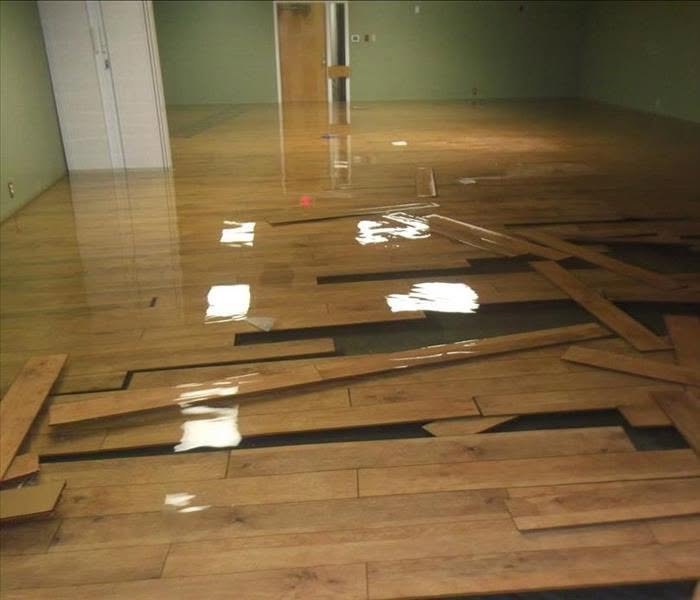
Securing electrical feeds, inspecting load-bearing assemblies, and containing pathogens.
Stopping the intrusion source and erecting 6-mil plastic isolation containment airlocks.
31-HP truck-mount extraction, removing gallons exponentially faster than evaporation.
LGR dehumidifiers and HEPA air scrubbers driving grains per pound below 25 GPP.
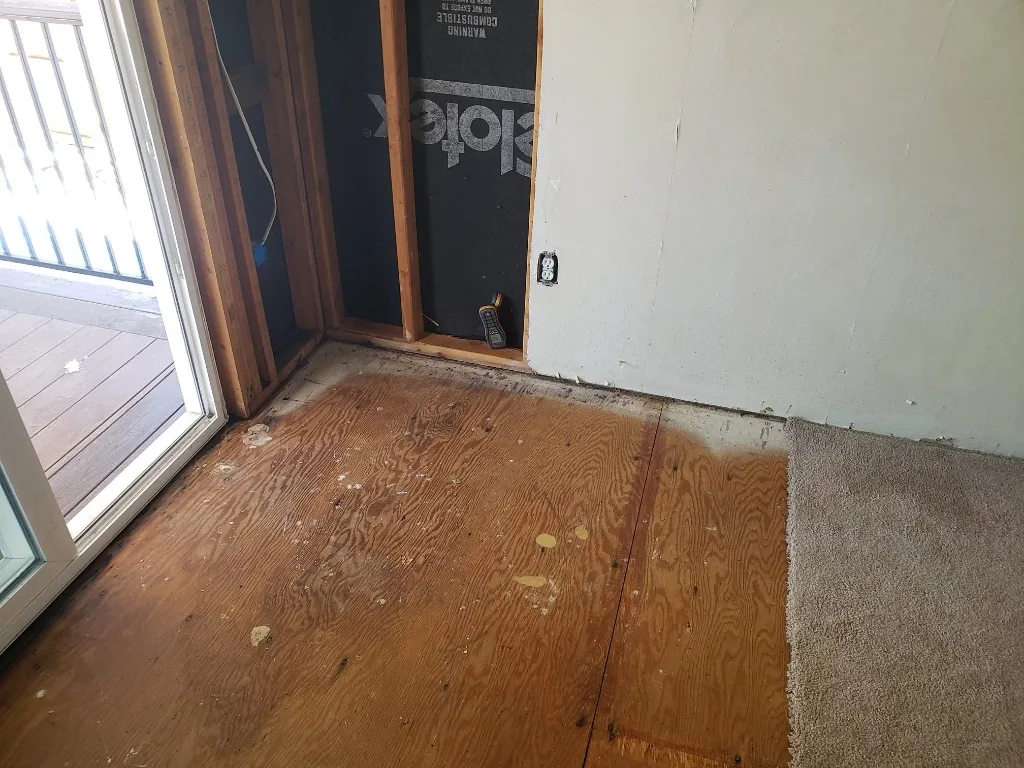
Calibrated electronic pinless testing confirming baseline dry standards.
The Complete 6-Stage Restoration Roadmap
Our IICRC-certified crews execute a disciplined, scientific 6-stage protocol to stabilize and dry structural components:
Emergency Dispatch & Perimeter Isolation
30 to 60 minute arrival. Securing electrical shutoffs, evaluating structural loads, and erecting containment airlocks.
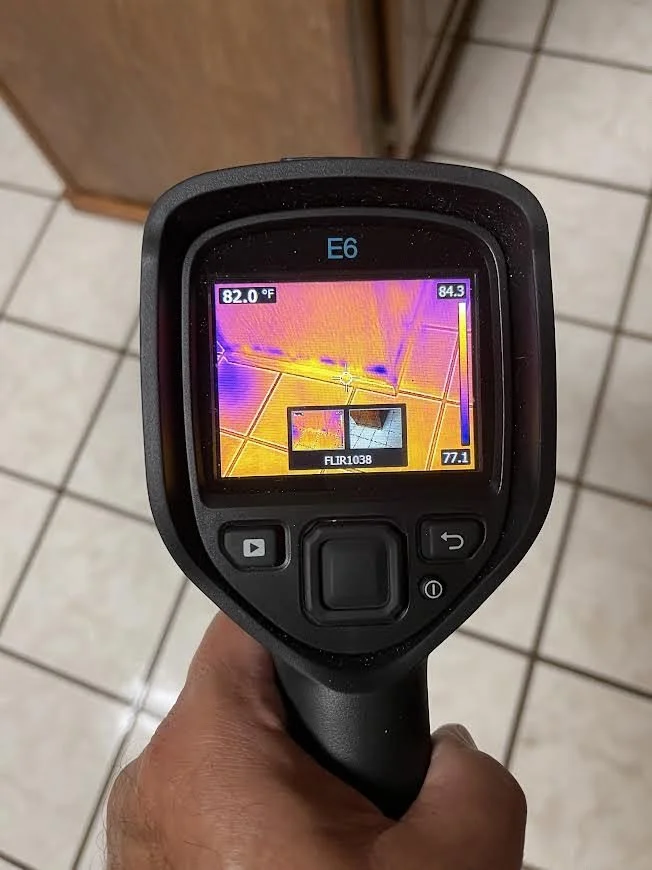
FLIR® Thermal Mapping & Baseline Scans
Infrared thermal scans detect trapped moisture behind walls and beneath concrete without invasive exploratory demolition.
High-Volume Bulk Extraction
31-HP truck-mount extraction units pump standing water away at hundreds of gallons per minute.
Controlled Selective Demolition
Precision flood cuts 12 to 24 inches above moisture lines, removing wet insulation and opening wall framing to dry airflow.
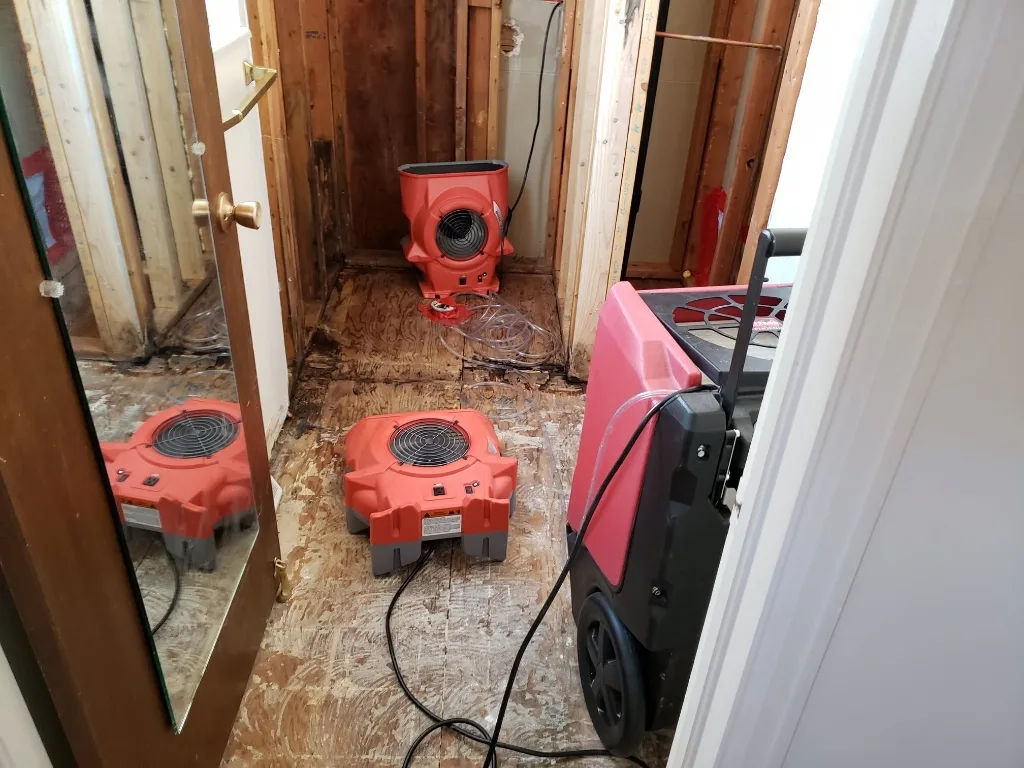
Thermodynamic Dehumidification
Industrial Low-Grain Refrigerant dehumidifiers pull deep trapped moisture from dense framing lumber and concrete slabs.
Antimicrobial Sanitization & Verification
EPA-registered botanical application (Benefect Decon 30) and calibrated moisture testing to issue an official dry certificate.
Specialized Equipment & Industrial Restoration Technology
Mitigating severe property damage requires industrial-grade technology capable of altering thermodynamic psychrometrics:
Truck-Mounted Extraction Rigs
31-HP engines producing 16+ inches Hg vacuum suction to evacuate bulk water rapidly into holding tanks.
Low-Grain Refrigerant Dryers
Pre-cooling heat-pipe systems driving ambient grains per pound below 25 GPP to draw deep trapped water out of framing.
HEPA Negative-Air Scrubbers
Hospital-grade 99.97% particulate filtration capturing microscopic fungal spores, soot, and biohazard aerosols.
FLIR® Thermal Scanners & Probes
Infrared thermography detecting evaporative cooling boundaries behind walls, combined with digital RF pinless scanners.
Professional Restoration vs. DIY Mitigation
Attempting DIY cleanup during a property disaster creates severe hidden liabilities:
- Trapped Moisture: Surface drywall dries while moisture inside cavities triggers hidden mold blooms.
- Pathogenic Risks: Category 2 & 3 water contains bio-contaminants standard cleaners fail to kill.
- Insurance Denial: Insurers require daily psychrometric logs; lack of data causes claim disputes.
Transparent Upfront Itemized Pricing
Valley Restoration Pros operates with complete transparency:
- Free On-Site Assessment: Complete physical inspection before work begins.
- Upfront Itemized Estimates: Detailed line items calculated via industry-standard Xactimate.
- Zero Surprise Billing: No hidden charges or unauthorized repairs.
Certified old town scottsdale commercial hospitality water damage cleanup Field Documentation
Every response performed by Valley Restoration Pros is documented through photographic and thermographic records:
Comprehensive old town scottsdale commercial hospitality water damage cleanup Technical Manual & Operational Standards
Exhaustive engineering protocols, psychrometric calculations, geological multipliers, and step-by-step restoration standards for Maricopa County properties:
Executive Emergency Abstract: Historic Commercial Hospitality & Fine Art Gallery Water Inundation in Old Town Scottsdale
Old Town Scottsdale represents the historic cultural, artistic, and hospitality nucleus of the East Valley. Centered around the iconic intersection of Scottsdale Road, Main Street, and East 5th Avenue, this premier district houses an irreplaceable concentration of luxury boutique hotels, world-renowned Southwest fine art galleries, bespoke jewelry salons, and award-winning dining establishments. The architectural fabric of Old Town Scottsdale presents unique structural drying challenges, blending 20th-century historic adobe block, structural brick masonry, timber joist floor assemblies, and antique tongue-and-groove hardwood flooring with modern commercial hospitality infrastructure. When plumbing failures, catastrophic fire suppression discharges, or severe domestic water riser fractures strike these properties, the loss potential is measured not merely in square footage, but in millions of dollars of delicate inventory, historic building fabric, and immediate commercial revenue.
During peak tourist, culinary, and international art seasons, commercial properties operate at maximum occupancy and heightened utility loads. Aging domestic water supply mains, pressurized copper pipe risers concealed within historic plaster walls, and multi-unit hospitality chilled water loops are subject to continuous hydrostatic stress. When a major copper riser fails or a commercial grease interceptor backs up into adjoining retail bays, thousands of gallons of pressurized water cascade across finished galleries, guest suites, and fine dining dining rooms. Uncontrolled moisture rapidly migrates through historic pine subfloors, wicks vertically into historic lime-and-gypsum plaster wall assemblies, and pools across subterranean wine cellars and storage vaults. The presence of non-replaceable artworks, antique wool tapestries, and bespoke architectural millwork transforms a standard water mitigation assignment into a mission-critical preservation engagement requiring forensic precision and museum-standard climate stabilization.
Valley Restoration Pros maintains a dedicated 24/7 rapid response division specifically trained in historic commercial preservation and hospitality flood mitigation. Deploying within 30 minutes across Old Town Scottsdale, our IICRC-certified master restorers mobilize high-recovery extraction units, desiccant dehumidification trailers, and non-invasive moisture diagnostics to stabilize structural integrity, salvage irreplaceable art and merchandise, and prevent secondary microbial contamination without compromising historic architectural integrity. Every phase of our mitigation workflow is engineered to minimize business interruption while providing corporate risk managers, property owners, and commercial insurance adjusters with comprehensive forensic documentation.
For immediate emergency dispatch, property preservation protocols, and rapid on-site structural drying coordination, contact our emergency command center directly at (602) 847-9593 for priority commercial response.
Anatomy of the Failure: Aging Copper Plumbing Hydraulics, Velocity Erosion & Historic Wall Cavity Migration
The plumbing infrastructure serving Old Town Scottsdale commercial buildings often combines original Type L and Type M copper piping installed decades ago with contemporary high-pressure commercial fixtures. The primary mechanism of catastrophic failure in these systems is internal velocity erosion-corrosion coupled with aggressive mineral deposition. Scottsdale municipal water supplies exhibit elevated calcium and magnesium carbonate concentrations averaging 18 to 22 grains per gallon (GPG). Over years of continuous hot and cold water cycling, turbulence at 90-degree elbows, tee junctions, and undersized branch lines strips away the protective cuprous oxide film inside the pipe walls.
This pitting corrosion progressively thins the copper wall from the inside out until normal municipal pressure surges (often fluctuating between 75 and 110 PSI during night-time low-demand cycles) cause a longitudinal stress rupture. When a 2-inch commercial copper water riser splits within an upper-story guest suite or mechanical chase, it discharges water at rates exceeding 85 gallons per minute. Unlike modern commercial construction with moisture-resistant drywall and metal framing, historic Old Town envelopes feature dense structural brick, porous adobe block, and Douglas fir framing lath.
Water escaping under pressure follows gravitational and capillary paths through floor joist cavities, soaking tongue-and-groove subflooring, running along horizontal utility lines, and descending vertically through lath-and-plaster wall partitions. Because historic plaster acts as an evaporative wick with high hygroscopic absorption capacity, water spreads laterally across dozens of feet of interior wall surface before penetrating through to visible paint or wallpaper finishes. By the time water is visually detected pooling on boutique gallery floors or beneath custom dining booths, hundreds of cubic feet of concealed framing timber and masonry are already saturated beyond the 30% fiber saturation point (FSP).
The physical dynamics of fluid movement through historic building materials obey Darcy’s Law for porous media flow. Saturated adobe brick exhibits an exceptionally high capillary suction potential, drawing water upward against gravity to heights exceeding four feet within twenty-four hours. This phenomenon, known as capillary rising damp, dissolves the clay binders in sun-dried adobe bricks, causing them to lose up to 70% of their structural compressive load capacity. Simultaneously, old-growth timber joists swell laterally, exerting immense shear stress on masonry pockets and fracturing perimeter mortar beds.
Our technicians utilize calibrated radiometric thermal imaging cameras and high-frequency non-invasive RF moisture meters to trace the complete hydrostatic plume behind plaster, tracking concealed water pathways through chases and preventing unnecessary structural demolition of historic architectural elements. Exploring our commercial burst pipe repair protocol provides full technical insight into line isolation and pressure diagnostics.
Scottsdale Micro-Climatic Multipliers: 115°F Desert Heat, 20 GPG Water Hardness & The High-Evaporation Paradox
Property restoration in Old Town Scottsdale is profoundly shaped by the extreme environmental dynamics of the Sonoran Desert. During the extended summer cooling season spanning May through October, outdoor ambient temperatures routinely exceed 115°F (46°C), while building roof surfaces and unconditioned parapet plenums can reach blistering temperatures of 160°F or higher. This intense thermal load creates what restoration scientists term the "Desert Thermal Trap." When a water loss occurs inside a commercial building, facility managers often shut off electrical power for safety or experience HVAC lockout, causing indoor temperatures to spike to 105°F+ within two hours.
In typical environments, water damage requires 48 to 72 hours before active microbial amplification begins. In Scottsdale, the combination of extreme indoor heat (95°F–110°F), saturated organic substrates (antique pine, horsehair plaster binders, paper-backed wallpaper, wood framing), and high relative humidity within closed wall cavities creates an ultra-rapid incubation chamber. Fungal colonization by thermotolerant species such as Aspergillus niger, Penicillium, and Chaetomium can reach active spore release in as little as 24 to 36 hours, converting a Category 1 clean water loss into a hazardous Category 3 biohazard situation requiring containment.
Furthermore, Scottsdale’s extreme water hardness of 18 to 22 GPG leaves heavy calcium carbonate and mineral salt encrustations as water evaporates. When untreated hard water wicks through historic masonry and brickwork, it triggers severe sub-surface efflorescence and crypto-efflorescence. As water evaporates from masonry pores, expanding salt crystals generate internal pressures exceeding 2,000 PSI, spalling decorative plaster and fracturing historic adobe blocks from within. This chemical crystallization is irreversible and necessitates controlled vapor pressure extraction rather than rapid uncontrolled air drying.
Additionally, the rapid outdoor low-humidity condition (often under 10% RH) presents the "Evaporation Paradox." Untrained contractors attempting to dry historic buildings by opening exterior doors cause the surface layer of antique hardwood and plaster to dry prematurely while deep internal moisture remains trapped. This differential shrinkage causes severe case-hardening, permanent wood warping, and extensive plaster cracking. Learn more about our climate-controlled drying standards on our commercial structural drying procedures resource page.
Immediate Emergency First-Hour Protocol: Rapid Utility Isolation & Fine Art Salvage Triaging
The initial sixty minutes following a commercial water intrusion event dictate whether a hospitality venue or art gallery can resume operations within days or face months of catastrophic disruption. Our specialized Old Town first-hour protocol executes a disciplined multi-stage emergency response designed to arrest water migration, protect high-value inventory, and secure the structural envelope:
Emergency First-Hour Action Protocol:
- Immediate Hydraulic Supply Isolation: Rapid shutoff of primary commercial street gate valves or secondary zone isolation valves to arrest pressurized in-flow, accompanied by opening low-point drain bibs to relieve trapped line pressure.
- Electrical Hazard De-energization: Targeted lock-out/tag-out (LOTO) of sub-panels feeding flooded floor cavities, illuminated display cases, subfloor conduits, and kitchen machinery, preserving clean power for emergency extraction gear.
- Fine Art & High-Value Inventory Triage: Immediate relocation of hanging canvases, bronze sculptures, Navajo textiles, and antique furnishings from threatened floor zones to conditioned staging rooms maintained at 50% RH.
- Overhead Ceiling Risk Mitigation: Identification and puncture-draining of water-saturated plaster or ceiling cavities using clean catch containers to prevent uncontrolled ceiling collapses over display cases.
- Establishment of Negative Pressure Containment: Deployment of true HEPA air scrubbers running under negative pressure to scrub aerosolized dust and prevent cross-contamination into adjoining hospitality suites.
Simultaneously, our field incident commander initiates comprehensive psychrometric baseline profiling. Relative humidity, ambient dry-bulb temperature, dew point, and grains per pound (GPP) are established for both affected and unaffected control zones. Pin-type electrical resistance moisture meters verify the baseline moisture content of unaffected timber framing and hardwood flooring. This critical data forms the scientific foundation of the restoration dry standard, against which daily drying performance is logged.
When immediate bulk water extraction is required to halt subfloor penetration, our technicians initiate truckmount extraction within minutes of arrival. Reference our emergency water extraction services to review our high-vacuum continuous extraction capabilities.
Advanced Industrial Equipment Specifications: Low-Grain Refrigerants, Desiccant Fleets & Injectidry Vacuum Mats
Restoring historic hospitality and retail envelopes demands precision drying technology that extracts deeply embedded moisture without causing violent thermal or hygroscopic shock to delicate antique materials. Valley Restoration Pros deploys the most sophisticated industrial drying equipment fleet in Arizona:
| Equipment Class | Model & Capacity | Operational CFM / Rating | Target Application |
|---|---|---|---|
| Industrial Desiccant Dehumidifier | Phoenix D850 / Quest 3000 | 850 – 3,000 CFM (350+ PPD) | Deep structural cavity drying, adobe masonry, grain depression below 25 GPP. |
| Low-Grain Refrigerant (LGR) | Phoenix DryMAX XL / DrieAz LGR 7000 | 140 PPD @ AHAM, 325 CFM | Rapid ambient humidity extraction across guest suites, dining rooms, and galleries. |
| Negative-Pressure Floor Mat Array | Injectidry HP-PLUS Floor System | 60 in. Hg vacuum lift | Non-destructive extraction of bound moisture from historic hardwood and subfloors. |
| High-Velocity Radial Air Movers | Phoenix AirMax / DrieAz StealthAV | 1,000 CFM @ 1.8 Amps | Continuous boundary layer air displacement along baseboards, plaster walls, and tile. |
| HEPA Air Filtration & Scrubbers | DefendAir HEPA 500 / Phoenix Guardian | 500 CFM, 99.97% @ 0.3 microns | Airborne fungal spore capture, dust scrub, and fine art gallery air purification. |
The technical engineering behind our equipment staging involves meticulous electrical load calculation and thermal management. Old Town Scottsdale commercial buildings frequently feature legacy electrical panels with limited 15-amp and 20-amp branch circuit capacities. Running heavy industrial drying fleets on existing building circuits risks tripping breakers, interrupting hotel guest services, or creating electrical fire hazards. Valley Restoration Pros deploys mobile exterior diesel generator distribution trailers delivering dedicated 100-amp and 200-amp power through temporary GFCI distribution boxes directly to drying equipment arrays.
To learn more about how specialized floor mat drying systems save expensive architectural wood surfaces, review our hardwood floor water damage drying standards.
IICRC S500 / S520 Step-by-Step Restoration Protocol for Historic Commercial Properties
Valley Restoration Pros strictly adheres to the Institute of Inspection, Cleaning and Restoration Certification (IICRC) S500 Standard for Professional Water Damage Restoration and S520 Standard for Professional Mold Remediation. Our six-phase protocol guarantees forensic thoroughness while safeguarding client assets:
Phase 1: Psychrometric Inspection & Moisture Mapping
Technicians establish dry standard baseline readings using calibrated pin and pinless meters on unaffected structural elements. Calibrated FLIR radiometric infrared thermal scanning identifies the full boundary of moisture migration across ceilings, walls, and flooring assemblies.
Phase 2: Heavy-Duty Commercial Extraction
Multi-stage vacuum extraction wands and submersible pumps remove standing water from hard surfaces, subfloors, and subterranean areas. Removing bulk liquid water mechanically is 500 times faster and more energy-efficient than evaporative drying.
Phase 3: Antimicrobial Biocide Application
Application of EPA-registered, museum-safe botanical antimicrobial agents across affected masonry, subfloor joists, and cavities prevents fungal spore propagation and neutralizes musty odors without emitting harmful VOCs.
Phase 4: Negative-Pressure Vacuum & Desiccant Dehumidification Setup
Deploying Injectidry vacuum floor mats over saturated hardwood flooring alongside large-volume desiccant dehumidifiers producing deep grain depressions under 25 GPP to draw moisture out of thick adobe and masonry assemblies.
Phase 5: Daily Psychrometric Monitoring & Data Logging
Restoration supervisors log daily temperature, relative humidity, GPP, and material moisture content (MC%) readings, adjusting equipment placement to maintain optimal vapor pressure differentials until certified dry standards are achieved.
Phase 6: Final Verification & Clearance Certification
Final moisture audit verifying that all framing members and floor substrates have returned to historical baseline equilibrium moisture content (EMC), accompanied by complete formal documentation for corporate risk managers and insurance adjusters.
Throughout every stage, our technicians adhere to strict containment procedures. Containment barriers constructed of 6-mil flame-retardant polyethylene sheeting isolate drying chambers from occupied guest zones, restaurant kitchens, and neighboring commercial tenancies. High-efficiency differential pressure manometers continuously verify that drying zones remain under negative pressure relative to clean commercial areas, preventing the migration of dust, moisture vapor, or aerosolized antimicrobial products.
For facilities where mold colonization is already suspected prior to arrival, our certified teams operate under strict containment protocols outlined in our commercial mold remediation procedures.
Hyper-Local Case Study: Luxury Main Street Art Gallery & Wine Lounge Water Mitigation
Case Incident Profile: Commercial Copper Supply Riser Burst on Main Street
- Location: East Main Street & North Scottsdale Road, Old Town Scottsdale, AZ 85251
- Facility: Two-story historic commercial building featuring a ground-floor premier Native American art gallery and a subterranean boutique wine lounge.
- Incident: A 1.5-inch domestic copper water supply pipe failed at an elbow inside a second-story guest suite wall during a midnight pressure surge, discharging approximately 14,000 gallons over 3.5 hours.
- Impacted Area: 4,800 square feet including original Douglas fir hardwood gallery floors, custom adobe accent walls, antique display casework, and subterranean wine cellar.
- Initial Psychrometric Reading: Ambient Gallery: 82°F, 78% RH (126 GPP); Hardwood Flooring MC%: 29.8% (Dry Standard: 9.2%); Wall Cavity Plaster: 99% Relative Moisture Level.
Emergency Response & Mitigation Timeline:
Valley Restoration Pros emergency units arrived on site within 26 minutes of dispatch. Crews immediately isolated the building street valve, deployed heavy truckmount extractors, and established a climate-controlled containment zone around fragile oil-on-canvas paintings, relocating $1.8M in inventory to a dry secondary chamber. Technicians installed 18 Injectidry floor mats across the saturated hardwood floor to pull water directly through the wood grain into liquid separators.
To dry the dense historic plaster and adobe without cracking the surfaces, crews staged two Phoenix D850 desiccant dehumidifiers delivering 1,700 CFM of ultra-dry 18 GPP air, combined with low-profile radial air movers running at controlled laminar velocities. Within 48 hours, gallery relative humidity was reduced from 78% to 32%, and ambient grains dropped from 126 GPP to 34 GPP. In the subterranean wine cellar, negative air scrubbers eliminated musty moisture odors and preserved thousands of bottles of vintage wine from label degradation.
Outcome & Savings:
By day five of controlled desiccant drying, the historic hardwood floors reached 9.4% MC (within 0.2% of dry standard) with zero permanent cupping or crowning, saving the property owner over $140,000 in floor replacement costs. Zero artworks suffered moisture damage or fungal contamination. The gallery resumed public exhibitions on day six, saving tens of thousands in lost revenue. Review sister luxury commercial case studies at our Scottsdale Quarter commercial retail flood case study.
Commercial Financial Transparency: Itemized Estimating & Forensic Insurance Claims Documentation
Navigating a commercial property water loss involves complex financial, legal, and insurance considerations. In accordance with strict industry billing standards, Valley Restoration Pros provides clear, transparent financial terms with zero ambiguous direct-billing promises:
Our Commercial Financial Commitments:
- Free Comprehensive On-Site Damage Assessment: Thorough visual, thermal, and psychrometric evaluation of all affected areas before work commences.
- Transparent Upfront Itemized Pricing Before Work Begins: Complete line-item estimates formatted in Xactimate commercial pricing codes universally recognized by all major commercial insurers.
- Assistance with Detailed Claims Documentation & Psychrometric Moisture Logs: Daily moisture logs, drying progress charts, digital photo portfolios, and thermal imagery provided directly to corporate risk managers and adjusters.
- Zero Misleading Direct Billing Guarantees: Transparent disclosure that property owners and policyholders retain ultimate contractual responsibility for work authorized, with full documentation support to maximize legitimate insurance claim recovery.
Insurance carrier adjusters evaluating historic commercial losses require meticulous justification for specialized equipment such as desiccant dehumidification trailers and Injectidry systems. Valley Restoration Pros compiles comprehensive psychrometric proof packets illustrating why standard refrigerant dehumidifiers cannot achieve the required grain depressions in historic materials. This documentation significantly expedites claim approvals, minimizes adjuster disputes, and ensures full claim payouts for justified mitigation activities.
Commercial property owners and asset managers can estimate anticipated mitigation investments across square footages using our interactive commercial restoration cost estimator tool.
Frequently Asked Commercial Questions: Old Town Scottsdale Hospitality Restoration
Yes. Utilizing specialized negative-pressure Injectidry floor mat systems, we extract bound water directly through the tongue-and-groove joints from above while desiccant air streams dry the subfloor joists from below. If mitigation begins within the first 24 to 36 hours, up to 90% of historic hardwood flooring can be salvaged without cupping or crowning.
Our technicians immediately establish museum-grade staging areas isolated by polyethylene containment barriers and negative-pressure HEPA filtration. We maintain strict ambient climate controls at 68°F to 72°F and 45% to 55% relative humidity to prevent dimensional distortion of canvases, frames, and antique furniture while structural drying proceeds in adjacent spaces.
Low-Grain Refrigerant (LGR) units are highly efficient in open commercial spaces with ambient humidity above 40 GPP. However, dense historic materials like adobe, brick, and thick timber require desiccant dehumidifiers capable of creating deep grain depressions down to 15–25 GPP, establishing the steep vapor pressure differential necessary to draw bound water out of deep masonry pores.
For clean water incidents addressed within two hours, localized extraction and low-profile drying equipment often allow unaffected front-of-house or retail sections to remain operational or reopen within 24 to 48 hours under safe containment protocols. Structural drying typically completes within three to five days.
Scottsdale municipal water contains 18 to 22 GPG of dissolved minerals. As water wicks through historic lime mortar, adobe, and masonry, dissolved salts recrystallize inside microscopic material pores upon drying. This sub-surface efflorescence creates immense internal expansive force that pulverizes historic plaster and masonry faces.
Commercial kitchen and grease interceptor overflows represent Category 3 blackwater losses containing pathogenic microbes. We establish full containment with negative air pressure, extract wastewater using dedicated sealed pump lines, remove porous non-salvageable materials, apply EPA-registered broad-spectrum biocides, and perform ATP bioluminescence testing to certify complete sanitization prior to reopening.
Yes. We provide complete forensic documentation packages including initial thermal scans, daily psychrometric drying logs, equipment run logs, and detailed Xactimate itemized pricing directly to your insurance company adjuster to facilitate rapid claim processing and approval.
Deep Psychrometric Science: Vapor Pressure Differentials, GPP Depression & Historic Wood Equilibrium
Professional structural drying is an exact science governed by thermodynamic and psychrometric principles. Water does not evaporate simply because air is blown across a surface; evaporation occurs because of a vapor pressure differential between the moisture within the material and the surrounding ambient air.
In historic commercial buildings containing dense wood and masonry, restoration engineers calculate the specific humidity in grains per pound (GPP) of dry air using psychrometric charts and digital thermo-hygrometers. In a flooded building at 80°F and 80% relative humidity, the vapor pressure within the room is approximately 0.82 inches of mercury (in. Hg), and the air contains 124 GPP. In this state, air is saturated, and the rate of evaporation from saturated materials drops to near zero.
By deploying high-capacity desiccant dehumidifiers, our technicians depress the air moisture level to 30 GPP and maintain relative humidity at 25% to 30%. At 75°F and 30% RH, ambient vapor pressure drops to 0.26 in. Hg. This establishes a substantial vapor pressure gradient of over 0.56 in. Hg between the wet material core and the surrounding air. This gradient exerts an active osmotic pull, forcing bound water molecules out from deep capillary pores within historic timber and adobe blocks into the dry air stream, where it is exhausted safely outside the building envelope.
The mathematical calculation for required dehumidification pints per day (PPD) in commercial hospitality enclosures utilizes the IICRC Class 2 and Class 3 volumetric formulas:
Class 3 Loss (Gallery with Flooded Ceilings, Walls & Floors): Volume / 40 = Minimum PPD Capacity.
Example: 40,000 cu. ft. / 40 = 1,000 PPD AHAM Dehumidification Required.
For comprehensive coverage across adjacent municipal areas in Maricopa County, visit our Valley-wide service areas directory.
Specialized Material Dehydration: Historic Adobe Brick, Lath-and-Plaster & Reclaimed Framing
Modern standard restoration techniques that rely on aggressive demolition, opening large flood cuts, and ripping out wall assemblies are fundamentally incompatible with historic commercial preservation in Old Town Scottsdale. Our specialized non-invasive techniques preserve irreplaceable historic fabric:
- Historic Adobe Masonry Stabilization: Adobe blocks are composed of unbaked earth, straw, and clay binders. When saturated, adobe loses its compressive load-bearing strength. We avoid aggressive airflow that can erode fragile surfaces, instead utilizing indirect desiccant tenting to gently extract moisture without destabilizing clay binders.
- Lath-and-Plaster Cavity Drying: Rather than tearing down historic plaster, we remove baseboards and inject conditioned, heated dry air directly into wall cavity stud spaces via small, concealable 3/8-inch ports, drying framing timbers and lath from the inside out.
- Reclaimed Douglas Fir & Pine Floor Joists: Heavy timber floor assemblies require extended desiccant dehumidification at controlled equilibrium moisture rates to prevent rapid radial shrinkage that causes severe checking and grain separation.
- Ceramic Tile & Sub-Slab Wicking Mitigation: Specialized vacuum extractors draw water up through grout lines, preventing moisture from wicking laterally into perimeter walls and dissolving subfloor adhesives.
Our preservation teams work in close alignment with historical preservation guidelines and architectural conservators to ensure all drying interventions protect original finishes, decorative moldings, hand-carved wood lintels, and historic masonry character. For related specialized commercial water loss procedures, view our commercial sewage cleanup protocol.
Discover how we preserve related dining and restaurant facilities in our Gilbert Heritage District commercial restaurant restoration case study.
Fine Art Gallery & Luxury Inventory Salvage: Chain of Custody & Environmental Stabilization
In high-end commercial retail and gallery environments, physical inventory often exceeds the structural building value. Valley Restoration Pros implements rigorous chain of custody protocols to document and protect client assets throughout the mitigation lifecycle:
Every artwork, textile, display vitrine, and piece of commercial inventory removed from affected areas is documented with high-resolution digital photography, condition assessment notes, unique barcoding, and GPS location tracking. Items are transported to secure, climate-controlled temporary storage chambers maintained at 70°F and 50% relative humidity. For sensitive porous canvases and organic sculptures exposed to high humidity, specialized desiccant drying chambers gently normalize moisture content, preventing paint delamination, canvas cockling, or mold germination.
Our inventory specialists collaborate with certified art conservators and fine art insurance underwriters to establish acceptable handling and packing criteria. Custom crating, archival tissue wrapping, and acid-free moisture barriers protect paintings during staging and transit. For related high-value commercial properties, explore our Biltmore Financial District commercial restoration overview.
Review our related high-value commercial mitigation procedures on our commercial water damage restoration overview page.
Hospitality Business Continuity, Odor Neutralization & Formal Clearance Certification
For commercial hospitality and dining businesses, every hour of closure translates into lost customer goodwill, event cancellations, and direct revenue loss. Our primary operational objective is returning your facility to revenue-generating operations at the earliest safe opportunity.
We deploy industrial hydroxyl generators and HEPA carbon filtration scrubbers to eliminate musty moisture odors without producing ozone, allowing hospitality staff to prepare dining rooms and guest suites safely during structural drying. Upon reaching certified dry standards, our project director issues a comprehensive Clearance Certificate detailing initial psychrometric baselines, daily drying logs, final moisture readings, and antimicrobial sanitation verification.
This formal clearance package serves as legally defensible documentation for municipal building officials, health department inspectors, and commercial insurers, confirming that the property meets all IICRC S500/S520 structural dry standards and poses zero microbial health risks to guests or employees. For related slab leak and foundation intrusion services, consult our slab leak water damage restoration standards.
To schedule an immediate emergency response team or request an on-site commercial damage evaluation in Old Town Scottsdale, call (602) 847-9593 or visit our emergency commercial dispatch contact page.
Subterranean Wine Cellar, Elevator Pit & Basement Mechanical Vault Dewatering
Historic Old Town Scottsdale properties frequently incorporate subterranean levels, including boutique hotel service basements, hydraulic elevator mechanical pits, and high-value private wine tasting cellars. Due to the subterranean elevation relative to surrounding street gutters, water from upper-story pipe failures or exterior flash flooding rapidly gravity-drains into these below-grade chambers, creating stagnant water accumulation depths of several feet within hours.
Dewatering subterranean commercial spaces requires specialized intrinsically safe submersible pumps and continuous air-exchange systems. Hydraulic elevator pits contain hydraulic oil reservoirs, safety governor cables, electrical travel cables, and sensitive buffer springs. Submerging these components in contaminated water emulsifies hydraulic fluids and destroys electro-mechanical interlocks. In accordance with ASME A17.1 elevator safety standards and OSHA 29 CFR 1910.146 permit-required confined space entry regulations, our certified technicians execute isolated fluid extraction using oil-water separator containment wands to prevent environmental contamination of city storm drains.
In commercial wine cellars housing rare vintage collections, sudden humidity spikes threaten label integrity and accelerate cork mold degradation. Our emergency teams establish rapid climate stabilization utilizing portable desiccant dehumidifiers to lower ambient relative humidity back to the optimal 55% to 65% conservation window while scrubbing airborne fungal spores through True HEPA air filtration. For related below-grade and subterranean extraction scenarios, consult our commercial water damage recovery protocol.
Furthermore, concrete subterranean foundation walls in historic Scottsdale frequently lack modern exterior elastomeric waterproofing membranes. Prolonged water pooling generates intense hydrostatic head pressure against porous concrete block and rubble masonry, forcing water into footing cold joints and initiating sub-slab foundation heave in adjacent expansive clay soils. Rapid mechanical extraction is vital to prevent long-term structural settling. Learn more about our specialized subterranean dewatering capabilities on our emergency water extraction procedures page.
Historic Preservation Compliance & Secretary of the Interior Standards for Rehabilitation
Restoring registered historic commercial structures or contributing properties within the Old Town Scottsdale Historic District demands strict adherence to the Secretary of the Interior’s Standards for the Treatment of Historic Properties. Aggressive conventional restoration practices that involve cutting out large sections of original plaster, discarding historic pine baseboards, or pressure-washing adobe masonry violate preservation guidelines and can strip a commercial building of its historic landmark tax credits and architectural value.
Valley Restoration Pros employs conservation-grade restoration methodologies designed to maximize the retention of historic character-defining elements:
Conservation-Grade Restoration Standards:
- Non-Destructive In-Situ Dehydration: We prioritize in-place drying of original historic building materials through low-grain desiccant air streams and precision heat injection rather than destructive removal.
- Careful Architectural Trim Deconstruction: Where wall cavity access is mandatory, antique hand-planed baseboards and door casings are carefully unfastened using micro-pry bars, numbered sequentially according to an architectural grid map, and conditioned in climate-controlled chambers for exact reinstallation.
- Adobe & Lime Mortar Compatibility: When historic adobe mortar requires re-pointing post-drying, we utilize lime-based compatible mortars matching original aggregate ratios rather than modern Portland cement, which traps moisture and accelerates adobe deterioration.
- Comprehensive Archival Restoration Records: All moisture profiles, drying timelines, and conservation interventions are compiled into a formal Architectural Conservation Report for municipal historic preservation boards and commercial insurers.
This meticulous conservation approach preserves both the historical integrity and the physical value of your commercial investment. For related specialized multi-tenant commercial emergency services across the Valley, explore our Tempe Mill Avenue commercial water cleanup case study.
For 24/7 historic commercial disaster recovery across Scottsdale and metropolitan Phoenix, connect immediately with our senior incident commanders at (602) 847-9593 or reach out through our emergency service contact portal.
Commercial Electrical Distribution, Low-Voltage Lighting & POS Network Decontamination
Water intrusion in modern hospitality and fine dining environments rarely affects plumbing and building finishes alone; it critically threatens commercial electrical infrastructure, specialty low-voltage accent lighting arrays, point-of-sale (POS) terminal networks, and commercial kitchen refrigeration circuits. When mineral-rich Scottsdale municipal water carrying 18 to 22 GPG dissolved solids infiltrates electrical conduit runs, subfloor junction boxes, and under-counter raceways, conductive mineral deposits bridge electrical contacts, creating severe short-circuit hazards and hidden electrocution risks.
In accordance with National Electrical Code (NEC) guidelines and OSHA standard 29 CFR 1910 Subpart S, all electrical equipment, circuit breakers, and wiring exposed to water intrusion must undergo rigorous de-energization and forensic inspection. Our specialized electrical drying technicians coordinate directly with licensed Arizona ROC commercial electrical contractors to perform insulation resistance testing (megohmmeter or "Megger" testing) across all affected branch circuits. Megger testing applies high DC voltage (typically 500V to 1,000V) across electrical insulation to detect microscopic leakage currents and breakdown caused by moisture intrusion or conductive mineral scaling.
Low-voltage data cabling, server racks, POS terminals, and fine art gallery track lighting controllers are subjected to precision desiccant dehydration. Technicians utilize non-conductive residue-free contact cleaners to dissolve mineral crusts from switchgear and terminals, followed by continuous low-grain desiccant air purging through conduits until resistance readings meet or exceed manufacturer specifications of 100 megohms or greater. Any circuit breakers, GFCI receptacles, or surge suppressors showing signs of internal corrosion, water staining, or insulation breakdown are condemned and replaced immediately to prevent catastrophic electrical fires upon facility re-energization.
Ensuring complete electro-mechanical and structural safety before reopening is the cornerstone of professional commercial disaster mitigation. To explore related high-tech and commercial facility recovery case studies across the Valley, consult our Chandler Airpark commercial flex space restoration analysis or connect 24/7 with our emergency response team at (602) 847-9593.
Post-Mitigation Air Quality Clearance & Antimicrobial Surface Residue Verification
Following complete structural dehydration to dry standards, our environmental hygiene team conducts a multi-vector indoor air quality (IAQ) and surface cleanliness audit. In luxury hospitality and food service environments, restoring relative humidity is only the first objective; guaranteeing that indoor air is free of aerosolized mold spores, bacterial fragments, and volatile organic compounds (VOCs) is equally critical. Our industrial hygienists collect baseline optical particle counter readings across multiple micron channels (0.3, 0.5, 1.0, 2.5, 5.0, and 10.0 microns) to verify that True HEPA filtration scrubbers have reduced airborne particulate concentrations to levels equal to or cleaner than outdoor control air.
High-touch surfaces, prep counters, and finished wood trims undergo Adenosine Triphosphate (ATP) bioluminescence testing to confirm the total eradication of organic microbial residue post-sanitization. All testing data is compiled into the client’s permanent property restoration archive, providing ironclad compliance documentation for local public health inspectors and property management stakeholders. For immediate professional dispatch across Scottsdale and surrounding Valley communities, contact Valley Restoration Pros 24/7 at (602) 847-9593.
Verified Local Area Dispatch: Scottsdale, AZ
Official Geo-Coordinates: 33.4942° N, -111.9261° W • Maricopa County
Related Specialized Emergency Restoration Services
Explore specialized rapid-response mitigation protocols across Greater Phoenix and Maricopa County:
Valley-Wide Emergency Response Service Coverage
Our mobile restoration fleet is dispatched across the entire Phoenix metropolitan region, providing rapid 30 to 60 minute emergency response: