

Valley Restoration Pros delivers 24/7 industrial emergency water extraction, thermal psychrometric drying, and structural mitigation across Phoenix and Maricopa County with guaranteed 30–60 minute rapid arrival. All protocols strictly adhere to IICRC S500 standards, featuring upfront itemized pricing and free on-site thermal moisture assessments. Call dispatch directly at (602) 847-9593.
Why Immediate Mitigation Is Critical in Phoenix Heat
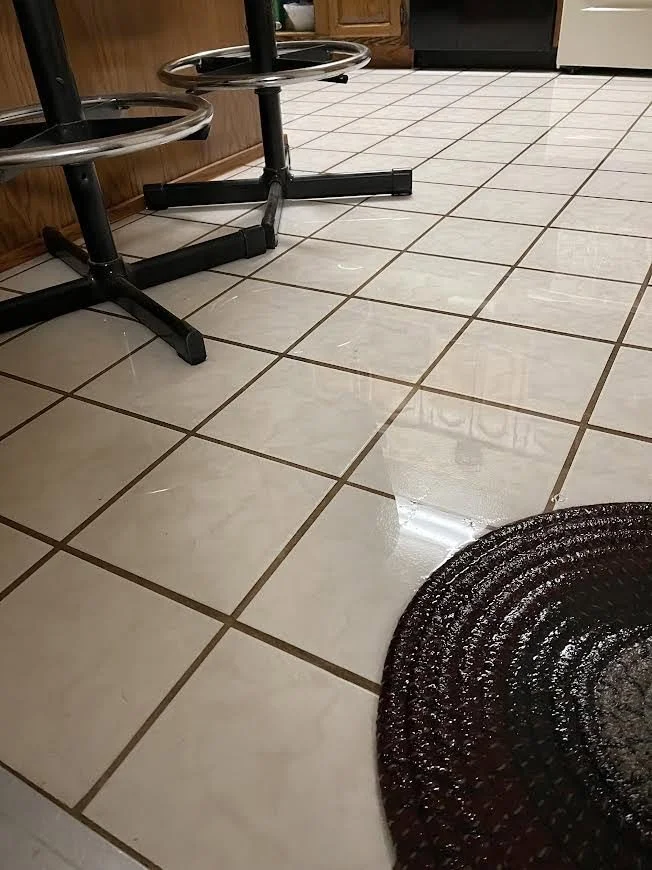
High-capacity commercial ice machines (1,500+ lbs/day) fed by pressurized 1/2-inch supply lines discharge 18 to 22 gallons per minute under continuous 65 PSI municipal line pressure, releasing over 6,000 gallons during overnight operational closures. Water migrates beneath commercial kitchen quarry tile grout beds and dining room Luxury Vinyl Tile (LVT), emulsifying subfloor adhesives and creating trapped vapor pockets that trigger mold colonization within 24 to 48 hours. Peoria municipal water contains 18 to 24 GPG mineral hardness, creating heavy calcium scale that accelerates fitting stress corrosion cracking and braided stainless hose fatigue. Expansive caliche clay soil beneath Peoria P83 commercial concrete slabs heaves upon saturation, risking slab cracking, grade beam displacement, and structural plumbing line fractures.

Service Definition & The IICRC Standard of Care
Professional peoria p83 commercial ice machine water line burst cleanup is an engineering and environmental discipline adhering strictly to IICRC S500 protocols, not mere surface mopping. When structural plumbing failures strike in Maricopa County, certified emergency water extraction and thermal structural drying procedures must be deployed immediately. Whether triggered by high-pressure burst pipe emergencies, subfloor leaks, or commercial line ruptures, bound moisture rapidly penetrates concrete subfloors and wall framing. In the desert heat, delays trigger microbial proliferation requiring rapid mold remediation. Request damage assessment through our emergency assessment portal or request 30-minute dispatch across all Valley service areas.
Securing electrical feeds, inspecting load-bearing assemblies, and containing pathogens.
Stopping the intrusion source and erecting 6-mil plastic isolation containment airlocks.
31-HP truck-mount extraction, removing gallons exponentially faster than evaporation.
LGR dehumidifiers and HEPA air scrubbers driving grains per pound below 25 GPP.
Calibrated electronic pinless testing confirming baseline dry standards.
The Complete 6-Stage Restoration Roadmap
Our IICRC-certified crews execute a disciplined, scientific 6-stage protocol to stabilize and dry structural components:
Emergency Dispatch & Perimeter Isolation
30 to 60 minute arrival. Securing electrical shutoffs, evaluating structural loads, and erecting containment airlocks.
FLIR® Thermal Mapping & Baseline Scans
Infrared thermal scans detect trapped moisture behind walls and beneath concrete without invasive exploratory demolition.
High-Volume Bulk Extraction
31-HP truck-mount extraction units pump standing water away at hundreds of gallons per minute.
Controlled Selective Demolition
Precision flood cuts 12 to 24 inches above moisture lines, removing wet insulation and opening wall framing to dry airflow.
Thermodynamic Dehumidification
Industrial Low-Grain Refrigerant dehumidifiers pull deep trapped moisture from dense framing lumber and concrete slabs.
Antimicrobial Sanitization & Verification
EPA-registered botanical application (Benefect Decon 30) and calibrated moisture testing to issue an official dry certificate.
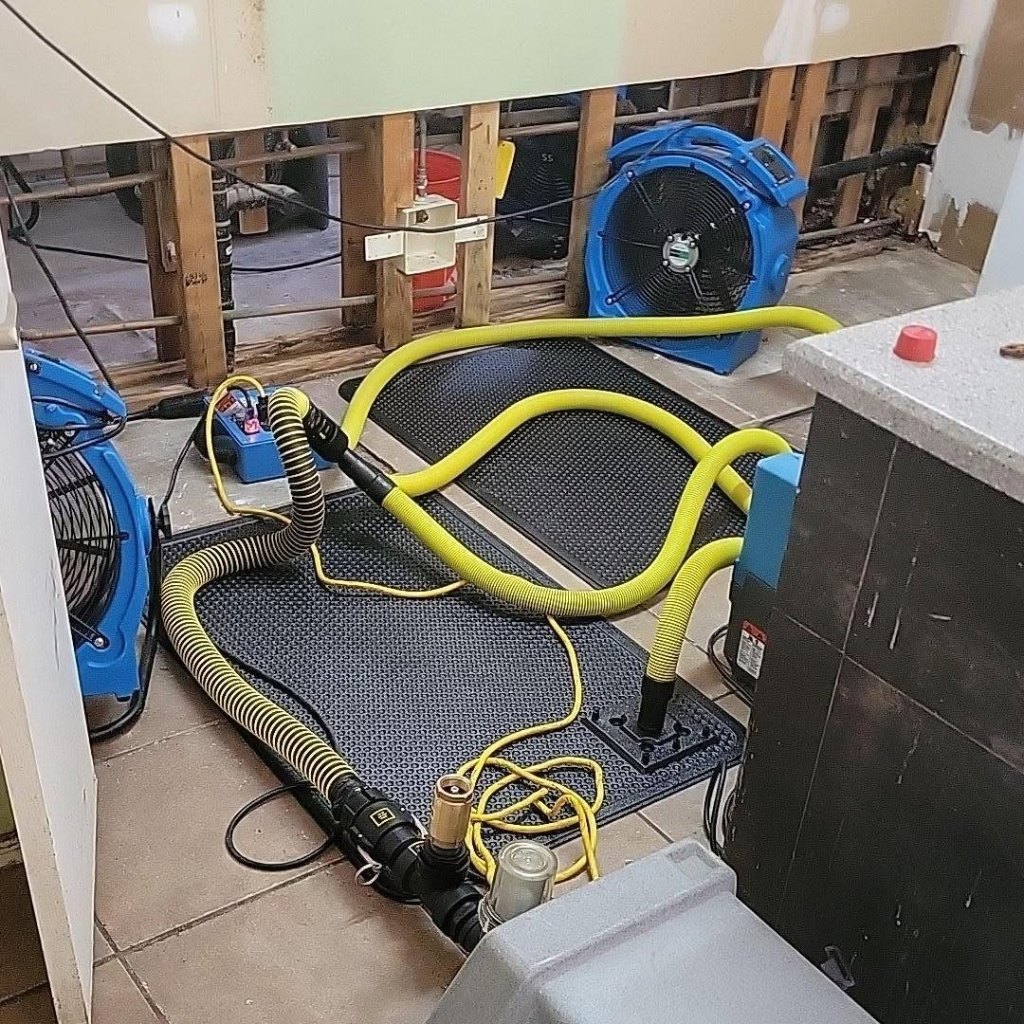
Specialized Equipment & Industrial Restoration Technology
Mitigating severe property damage requires industrial-grade technology capable of altering thermodynamic psychrometrics:
Truck-Mounted Extraction Rigs
31-HP engines producing 16+ inches Hg vacuum suction to evacuate bulk water rapidly into holding tanks.
Low-Grain Refrigerant Dryers
Pre-cooling heat-pipe systems driving ambient grains per pound below 25 GPP to draw deep trapped water out of framing.
HEPA Negative-Air Scrubbers
Hospital-grade 99.97% particulate filtration capturing microscopic fungal spores, soot, and biohazard aerosols.
FLIR® Thermal Scanners & Probes
Infrared thermography detecting evaporative cooling boundaries behind walls, combined with digital RF pinless scanners.
Professional Restoration vs. DIY Mitigation
Attempting DIY cleanup during a property disaster creates severe hidden liabilities:
- Trapped Moisture: Surface drywall dries while moisture inside cavities triggers hidden mold blooms.
- Pathogenic Risks: Category 2 & 3 water contains bio-contaminants standard cleaners fail to kill.
- Insurance Denial: Insurers require daily psychrometric logs; lack of data causes claim disputes.
Transparent Upfront Itemized Pricing
Valley Restoration Pros operates with complete transparency:
- Free On-Site Assessment: Complete physical inspection before work begins.
- Upfront Itemized Estimates: Detailed line items calculated via industry-standard Xactimate.
- Zero Surprise Billing: No hidden charges or unauthorized repairs.
Certified Peoria P83 commercial ice machine water line burst cleanup Field Documentation
Every response performed by Valley Restoration Pros is documented through photographic and thermographic records:
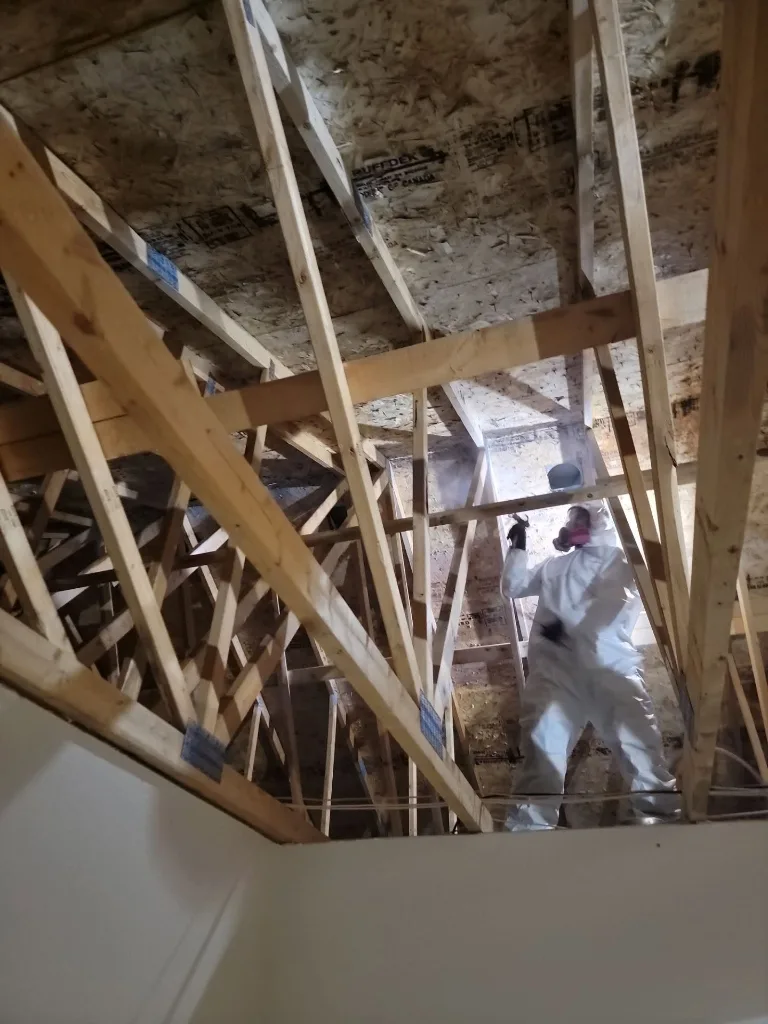
Comprehensive Peoria P83 commercial ice machine water line burst cleanup Technical Manual & Operational Standards
Exhaustive engineering protocols, psychrometric calculations, geological multipliers, and step-by-step restoration standards for Maricopa County properties:
Executive Emergency Abstract: Commercial High-Capacity Ice Machine Water Line Ruptures in Peoria P83
Within the premier Peoria P83 Entertainment District—anchored along the bustling commercial spines of 83rd Avenue and West Bell Road, adjacent to the Peoria Sports Complex spring training facility, Arrowhead Towne Center, and an elite concentration of high-volume sports bars, full-service grill restaurants, and regional resort hotels—commercial foodservice operations rely heavily on industrial-grade ice production equipment. High-capacity commercial ice flaker and modular cuber machines, engineered to manufacture between 1,200 and 2,400 pounds of ice every twenty-four hours, represent essential mechanical infrastructure. To sustain continuous automated harvesting cycles, these commercial appliances operate under uninterrupted hydraulic pressure, connected directly to municipal water supplies through 1/2-inch or 3/4-inch braided stainless steel flexible lines, corrugated stainless flex connectors, or rigid copper tubing under sustained static pressures between 60 and 75 pounds per square inch (PSI).
When a pressurized supply line, internal inlet solenoid valve assembly, or commercial reverse-osmosis filtration manifold suffers catastrophic rupture during overnight unattended hours, the volume of escaped water is staggering. Discharging at a rate of 18 to 22 gallons per minute, an uncontained line burst releases between 4,500 and 8,000 gallons of water across commercial kitchen floor plans within just four to six hours. This immense volume overwhelms local recessed indirect floor sinks, floods unglazed commercial quarry tile floors, submerges stainless steel refrigeration bases, breaches threshold transitions, and cascades directly into front-of-house guest dining areas, bar service areas, and private hospitality banquet rooms floored with luxury vinyl tile (LVT), commercial engineered plank, or direct-glue low-pile carpeting.
In Peoria's severe desert climate, where summer ambient temperatures routinely exceed 115°F and municipal tap water carries an extreme mineral hardness of 18 to 24 grains per gallon (GPG), an unmitigated water intrusion triggers rapid compound disasters. Standing water evaporates rapidly within hot commercial spaces, driving indoor relative humidity from standard 45% setpoints to over 90% in less than an hour. This tropical microclimate creates an aggressive microbial incubator across drywall assemblies, millwork, ceiling acoustic tiles, and hollow metal door frames. Without immediate industrial intervention, microbial colonization commences within 24 to 48 hours, exposing restaurant operators to severe property damage, structural loss, and immediate health authority operating suspensions.
Immediate Emergency Protocol for Foodservice & Hospitality Operators
- Isolate Cold-Water Supply Manifold: Immediately shut off the dedicated isolation ball valve located directly behind the ice machine or locate the facility master backflow preventer assembly outside the utility entrance to stop pressurized water discharge.
- De-Energize Dedicated Electrical Subpanels: Trip 208-240V dedicated commercial breakers supplying the ice machine, beverage dispensing skids, walk-in condenser fans, and floor-level commercial kitchen convenience receptacles before stepping into standing water.
- Protect Perishables & Food Inventory: Keep walk-in cooler doors closed to maintain internal temperatures below 41°F in compliance with Maricopa County health regulations. Elevate boxed inventory, disposable food containers, and dry dry goods to a minimum height of twelve inches.
- Deploy Industrial Disaster Mitigators: Call Valley Restoration Pros at (602) 847-9593. Our Peoria rapid-response crews arrive on site in 30 minutes with high-volume vacuum extraction rigs, mobile desiccant dehumidifiers, and non-destructive floor desiccation arrays.
For commercial dining, sports entertainment, and hospitality properties across Peoria P83, securing certified emergency water extraction within the initial hour of discovery is essential to prevent permanent floor adhesive failure, structural drywall rot, and extended operational shutdown.
Anatomy of the Mechanical Failure: Hydraulic Shock, Water Hammer & Line Fatigue
Industrial ice makers installed in high-volume hospitality venues—such as Scotsman Prodigy Plus flakers, Manitowoc Indigo NXT cubers, and Hoshizaki KM-series commercial units—are precision refrigeration machines operating under continuous cyclical operation. Producing up to 2,400 pounds of ice per day requires an uninterrupted intake of municipal water modulated through rapid-cycling automated components. The severe mechanical, chemical, and hydraulic dynamics governing these installations explain why ice machine water lines represent one of the leading causes of catastrophic commercial flood losses across the West Valley:
Braided Stainless Sleeve Creep & EPDM Core Rupture
Commercial ice machines are routinely installed using flexible 1/2-inch or 3/4-inch braided stainless steel supply hoses. Beneath the 304-grade stainless steel exterior protective wire mesh lies an extruded core made of ethylene propylene diene monomer (EPDM) or Santoprene synthetic rubber. Continuous exposure to chlorine, chloramines, and chemical oxidizers in municipal water causes polymer chain degradation, plasticizer leaching, and elastomeric hardening. Under continuous 65 PSI static pressure, micro-fissures develop along the rubber tubing, creating localized blisters that expand through wire mesh voids until catastrophic longitudinal rupture occurs.
Solenoid Valve Water Hammer Pressure Waves
Commercial ice machines utilize fast-acting pilot-operated electric solenoid valves that open and close hundreds of times daily. Because ice machine solenoids close in under 30 milliseconds, the abrupt deceleration of moving water converts kinetic energy into intense acoustic pressure spikes known as water hammer. These shockwaves generate instantaneous transient pressures exceeding 180 to 220 PSI throughout rigid copper feed lines. Over time, these hydraulic shocks fatigue soldered tee joints, loosen compression nuts, and fracture brass threaded adapters until total separation occurs.
Calcite Mineral Scaling & Stress Corrosion
Peoria municipal water contains 18 to 24 GPG of dissolved calcium carbonate and magnesium sulfate. As water passes through intake screens and pressure-reducing regulators, mineral scale precipitates rapidly across valve seats and brass threads. This calcite crust restricts fluid flow, creates high-velocity turbulent eddies, and induces galvanic micro-cells between dissimilar metals. Over repeated thermal expansion cycles, dezincification embrittles brass fittings, leading to sudden shear failure at the male pipe thread junction.
Floor Sink Drain Overflow & Surcharge
Plumbing codes mandate an indirect waste line draining to a floor sink with a 1-inch physical air gap. In commercial kitchens, floor sinks accumulate airborne organic grease, soft drink syrups, and scale flakes that settle in the dome strainer. When an intake supply line ruptures, delivering 20 gallons per minute, the partially restricted drain bowl surcharges immediately. Pressurized water overflows the rim, spreading unhindered across kitchen floors rather than flowing into the sanitary sewer.
When sudden plumbing failures occur behind commercial refrigeration equipment, our industrial mechanics execute rapid burst pipe repair protocols and commercial shutoff replacements to ensure absolute structural plumbing integrity before beginning deep desiccation.
Peoria P83 Environmental Multipliers: Caliche Heave, Water Hardness & Desert Microclimates
Restoring commercial restaurant, bar, and hospitality properties in the Peoria P83 Entertainment District requires deep technical familiarity with local environmental realities. Commercial complexes along 83rd Avenue, Bell Road, and Mariners Way are situated over the historic Agua Fria River and New River alluvial plain. This geological zone features deep sedimentary profiles containing smectite clay formations heavily cemented with calcium carbonate horizons known as caliche. Caliche deposits exhibit stone-like density when dry, but when subjected to large-scale indoor flooding, underlying expansive clay lenses absorb unextracted water and undergo severe volumetric swelling, generating upward pressures of 5,000 to 7,500 pounds per square foot against concrete slabs.
When 6,000 gallons of pressurized water escape from an ice machine line, water penetrates downward through floor expansion joints, saw-cut crack control lines, and plumbing rough-in sleeves. As the sub-slab caliche matrix hydrates, non-uniform soil expansion lifts commercial slab-on-grade foundations, fracturing rigid quarry tile mortar beds, shearing buried PVC grease interceptor lines, and misaligning commercial kitchen drain slopes. Rapid and complete water evacuation is therefore crucial to preserving structural foundation stability.
The Peoria P83 Commercial Facility Environmental Matrix
| Environmental Factor | Measured Field Parameter | Restoration & Structural Impact |
|---|---|---|
| Municipal Hard Water | 18 to 24 GPG (308 to 410 mg/L CaCO3) | Accelerates brass dezincification, crusts solenoid seats, and leaves heavy mineral efflorescence on porous concrete slabs. |
| Expansive Caliche Subsoil | Smectite clay + calcium carbonate caliche | Hydrates rapidly under flood conditions; upward hydrostatic heave threatens commercial slab integrity and grease trap alignments. |
| Desert Summer Ambient Heat | 110°F to 118°F Outdoor Ambient | Pushes restaurant HVAC units to maximum capacity. Flooding creates an indoor sauna, accelerating mold doubling rates to under 2 hours. |
| Monsoon Humidity Surges | Dew points > 65°F / GPP > 95 | Disables traditional open-air evaporative drying. Requires large industrial desiccant dehumidifiers producing deep negative vapor pressure. |
Managing these multi-layered environmental hazards requires comprehensive commercial water damage mitigation strategies designed specifically for desert climates and high-load commercial facilities.
First-Hour Facility Response Protocols: Containment, Isolation & Hazard Abatement
When opening kitchen personnel, bar managers, or overnight janitorial crews discover an active water line burst behind a commercial ice machine, the initial sixty minutes determine whether business operations can resume within days or remain shuttered for weeks. Water exiting a 1/2-inch pressurized line spreads radially across kitchen quarry tile at an alarming velocity. Implementing a standardized, rapid emergency response sequence stabilizes the loss environment and limits physical asset damage:
Immediate Chronological Action Checklist for On-Site Staff
- Primary Plumbing Shutoff: Immediately access the cold-water isolation ball valve located directly behind the ice machine or water filtration skid. If the local valve is seized by calcium deposits or unreachable due to pressurized spraying, proceed immediately to the mechanical room or building utility riser and turn off the primary commercial water service shutoff.
- Electrical Safety Lockout: Never step into standing water that touches electrical conduits, stainless steel prep tables with grounded drop cords, or commercial refrigeration compressors. Locate the electrical distribution panel and switch off all circuit breakers labeled for the ice maker, kitchen floor receptacles, under-bar draft beer coolers, and POS terminal circuits.
- Physical Ingress Containment: Place heavy-duty rubber spill berms, weighted absorbent socks, or rolled commercial entrance mats across kitchen doorways leading into customer dining areas, banquet halls, and front-of-house service corridors. Create a localized containment zone to prevent grease-laden kitchen water from migrating onto sensitive dining room luxury vinyl tile (LVT) or glued-down carpeting.
- Refrigeration & Perishables Quarantine: Ensure all walk-in cooler and reach-in freezer doors remain tightly sealed. Check that interior temperatures remain below 41°F. Relocate any unsealed dry food storage boxes or packaging materials located on bottom shelving tiers to a minimum height of twelve inches above the floor level.
- Notify Certified Emergency Restorers: Contact the industrial emergency deployment division at Valley Restoration Pros via our 24/7 hotline at (602) 847-9593 or submit a priority dispatch request through our contact us portal for immediate on-site mobilization.
Taking decisive action within the first hour dramatically reduces structural desiccation time and limits the spread of contaminated kitchen greywater into customer-facing dining environments.
IICRC S500 Professional Water Restoration Protocol for Commercial Kitchen Inundations
The Institute of Inspection, Cleaning and Restoration Certification (IICRC) establishes the governing benchmark for structural water damage restoration under the IICRC S500 Standard and Reference Standards for Professional Water Damage Restoration. While an ice machine water line initially delivers Category 1 (potable) water, the moment this pressurized stream impacts commercial kitchen floor surfaces, its microbiological profile alters immediately. Commercial kitchen floors accumulate cooking grease, animal fats, chemical wash detergents, and food residue within quarry tile grout pores. Consequently, IICRC standards classify commercial kitchen standing water as Category 2 (significant contamination / greywater), and if left stagnant for more than 24 hours under Peoria's ambient summer heat, it rapidly degenerates into Category 3 (grossly contaminated / blackwater).
Under IICRC S500 psychrometric classifications, commercial kitchen flooding typically represents a Class 3 or Class 4 water intrusion. Class 3 intrusions involve water coming from overhead or pressurized sources that saturate entire floor areas and wick up wall surfaces. Class 4 intrusions specifically encompass low-permeance, dense structural materials—such as thick commercial concrete slab foundations, unglazed ceramic quarry tiles, mortar beds, and hardwood platforms—where moisture is bound deeply within microscopic pore structures. Extracting bound Class 4 moisture requires establishing a profound vapor pressure differential between the saturated substrate and the circulating airstream.
Valley Restoration Pros executes a rigorous, multi-stage restoration protocol tailored specifically to commercial foodservice facilities:
Phase 1: Thermal & Psychrometric Mapping
Using high-resolution FLIR thermal cameras, calibrated pinless radio-frequency moisture meters, and digital thermo-hygrometers, our technicians map the complete horizontal and vertical moisture migration boundaries across kitchen slabs, wall assemblies, and dining room subfloors.
Phase 2: High-Volume Industrial Extraction
Truck-mounted positive displacement vacuum units extracting at 16 inches of mercury vacuum remove bulk standing water from quarry tile floors, floor drains, and carpeted surfaces. Mechanical extraction removes water 1,200 times faster than air evaporation.
Phase 3: Targeted Antimicrobial Sanitation
Application of EPA-registered, non-toxic botanical or quaternary ammonium antimicrobials approved for food-handling commercial establishments to neutralize bacterial colonization without contaminating stainless food preparation equipment.
Phase 4: Engineered Structural Desiccation
Strategic deployment of low-grain refrigerant (LGR) dehumidifiers, commercial desiccant trailers, and high-velocity centrifugal air movers establishing laminar airflow across saturated substrates to pull bound moisture from concrete slabs and wall cavities.
Executing these rigorous phases under certified structural drying protocols ensures commercial kitchens and dining halls meet verifiable dry standards before reopening to the public.
Multi-Surface Commercial Flooring Desiccation: Kitchen Quarry Tile, LVT & Hospitality Carpets
Commercial foodservice facilities in the Peoria P83 corridor feature complex multi-surface floor plans. Back-of-house operations utilize heavy unglazed quarry tile with epoxy or cementitious grout beds designed for slip resistance and heavy thermal washdowns. Front-of-house customer dining spaces transition into commercial luxury vinyl tile (LVT), engineered hardwood planks, or direct-glue commercial loop carpeting in private VIP suites. When thousands of gallons of water breach the kitchen boundary, each flooring material responds with distinct physical failure mechanics:
Substrate-Specific Desiccation Engineering
- Commercial Kitchen Quarry Tile & Mortar Beds: While unglazed ceramic quarry tiles are highly durable, the cementitious grout joints and underlying adhesive mortar beds absorb significant amounts of water through capillary suction. Trapped moisture beneath the tile profile migrates into the porous concrete slab. If not subjected to high-temperature desiccant drying, vapor pressure buildup causes hollow debonding, grout fracturing, and unsightly calcium efflorescence crystals bleeding through grout joints.
- Luxury Vinyl Tile (LVT) & Plank Adhesive Emulsification: LVT creates an impermeable synthetic vapor barrier over the concrete subfloor. Floodwaters flowing across the floor seep beneath plank seams, dissolving water-based pressure-sensitive adhesives (PSA). Trapped water cannot evaporate naturally through the vinyl sheet, leading to adhesive emulsification, bubbling, seam curling, and severe anaerobic microbial odors. Our specialized Injectidry floor mat systems apply negative suction pressure directly across LVT joints, pulling liquid moisture and saturated vapor from beneath the planks without requiring complete floor tear-out.
- Commercial Glue-Down Hospitality Carpeting: Low-pile commercial carpeting installed over concrete in dining rooms and sports bar viewing areas holds substantial water volume in its synthetic backing. We utilize heavy weighted rover extractors and self-propelled extraction wands to pull 95% of liquid moisture out of carpet fibers. Once bulk extraction is completed, industrial desiccant air streams are ducted across the carpet surface to purge remaining moisture from the underlying adhesive layer before mildew colonization can occur.
For facilities featuring elevated dining stages or hardwood bar accents, our restoration technicians apply precision hardwood floor water damage drying techniques to prevent cupping and crowning of exotic wood species.
Commercial Kitchen Wall Assemblies: FRP Panels, Cavity Moisture & Hidden Microbial Risks
Health sanitation standards across Maricopa County require commercial restaurant kitchens to install washable, impact-resistant wall surfaces. Consequently, virtually all commercial food preparation spaces in Peoria utilize Fiberglass Reinforced Plastic (FRP) panels or stainless steel wainscoting glued over water-resistant gypsum board or cement backer units. While FRP provides an exceptional hygienic barrier during routine kitchen cleaning, it poses a severe, hidden hazard during major flooding incidents.
When 6,000 gallons of water flood a kitchen floor, standing water wicks upward through the bottom edges of drywall via capillary action—often traveling two to three feet up inside wall cavities behind the impermeable FRP cladding. Because the FRP face is completely non-breathable, the trapped drywall backing remains saturated in total darkness. In Peoria's desert climate, where commercial kitchens maintain ambient operating temperatures of 75°F to 85°F, this sealed void creates a high-risk microclimate where toxic mold species—including Aspergillus niger, Penicillium, and Stachybotrys chartarum—can colonize the paper facing of drywall within 48 hours.
Non-Destructive Wall Cavity Desiccation Engineering
Traditional residential demolition methods—such as ripping off four feet of drywall—require tearing down expensive commercial FRP panels, removing heavy commercial kitchen stainless prep tables, and detaching gas-line cooking batteries. Valley Restoration Pros implements advanced non-destructive wall desiccation procedures to preserve kitchen infrastructure:
- Baseboard & Cove Molding Release: We carefully detach commercial sanitary rubber cove baseboards along floor edges, exposing the bottom edge of the gypsum wallboard.
- Precision Micro-Port Drilling: Technicians drill discreet 5/8-inch injection ports through the bottom gypsum plate beneath the cove molding line, keeping all drill penetrations completely hidden from health inspector sightlines.
- Positive-Pressure Desiccant Injection: Using pressurized wall-drying manifold systems, we inject ultra-low grain desiccant air (operating below 15 GPP) directly into the stud cavities. The pressurized dry air forces saturated vapor out through expansion joints, drying the interior wall framing without cutting down FRP panels.
- Thermal Verification & Antimicrobial Fogging: We verify cavity dryness using FLIR infrared thermography and introduce EPA-registered non-residual antimicrobial aerosol mist to neutralize airborne fungal spores within the wall voids.
If water intrusion remains undetected behind wall cavities for extended durations, our certified specialists execute complete IICRC S520 mold remediation containment procedures to protect indoor air quality and food safety compliance.
Industrial Equipment Fleet & Psychrometric Science: High-Velocity Commercial Dewatering
Drying commercial restaurant and sports bar facilities after a major water line burst requires massive industrial horsepower and exact thermodynamic calculations. Residential-grade drying fans and small dehumidifiers cannot compete against the massive moisture loads generated by 6,000 gallons of water absorbed into concrete slabs and commercial subfloors. Valley Restoration Pros deploys an elite commercial fleet engineered for rapid, large-scale commercial desiccation:
Truck-Mounted Vacuum Extractors
Heavy-duty PTO-driven Roots blowers generating 450 CFM airflow and 16 inches of mercury vacuum lift. Our extraction wands pull water out of tile grout pores, concrete fissures, and commercial carpet subfloors at rates exceeding 60 gallons per minute.
Industrial Desiccant Dehumidifiers
Silica-gel rotor desiccant trailers rated from 2,000 to 5,000 CFM. Unlike refrigerant dehumidifiers that lose efficiency in hot or dry conditions, desiccant systems produce super-dry air down to 5% relative humidity and under 10 grains per pound (GPP), creating massive vapor pressure gradients.
Low-Grain Refrigerant (LGR) Units
Commercial LGR dehumidifiers equipped with heat-pipe pre-cooling technology capable of removing up to 250 pints of water per day per unit. These machines continue extracting moisture efficiently down to 34 grains per pound, targeting ambient air in dining rooms.
HEPA Negative-Air Scrubbers
DOP-tested industrial air filtration units moving 2,000 CFM of air through true 99.97% HEPA filters at 0.3 microns, equipped with activated carbon stages to eliminate food odors, aerosolized grease particles, and volatile organic compounds (VOCs).
Psychrometric Evaporative Physics & Vapor Pressure Differential
The rate of evaporation from saturated dense materials (Class 4 concrete slabs and quarry tile mortar beds) is directly proportional to the difference in vapor pressure between the surface of the wet material and the surrounding ambient air. This physical relationship is expressed through Dalton's law of partial pressures:
Evaporation Rate ∝ (Vapor Pressure_surface - Vapor Pressure_air) × Air Velocity
At 85°F and 90% RH (typical flooded restaurant kitchen conditions), ambient vapor pressure is approximately 1.08 inches of mercury (inHg). In contrast, our industrial desiccant dehumidifiers deliver processed dry air at 90°F and 10% RH, with a vapor pressure of only 0.14 inHg. This massive differential of 0.94 inHg creates an aggressive thermodynamic vapor draw that pulls deep hygroscopic water molecules from concrete pores at maximum velocity.
Our psychrometric calculations continuously evaluate grain depression, specific humidity, and enthalpy across the restoration perimeter to accelerate structural evaporation rates.
Maricopa County Health Code Compliance: Food Contact Surfaces & Cross-Contamination Control
Operating a licensed foodservice establishment in Peoria requires strict compliance with the Maricopa County Environmental Services Department (MCESD) Food Code. When a major plumbing line failure inundates commercial food preparation spaces, the incident immediately triggers regulatory oversight. Unsanitary flood conditions can compromise food safety, contaminate ice storage bins, and spread microbial pathogens across food contact surfaces. Failure to document certified decontamination can result in immediate operating permit suspension, red-placard closure, and substantial administrative fines.
Foodservice Sanitation & Regulatory Decontamination Directives
- Ice Machine Hopper & Storage Bin Sanitization: Any ice stored inside the machine bin during a line burst must be condemned and melted down with hot water. The ice bin interior, drop chutes, evaporator plates, and water distributor manifolds must undergo three-stage chemical sanitization (alkaline wash, acid descaling rinse, and EPA-registered chlorine/quaternary ammonium sanitizing wipe per FDA Food Code Chapter 4).
- Cross-Contamination Containment Barriers: Technicians install 6-mil flame-retardant polyethylene containment sheeting with zippered airlock chambers separating wet drying areas from clean food prep equipment, stainless dish tables, and dry storage shelves, maintaining negative pressure via HEPA filtration to capture all airborne demolition particulates.
- Backflow Prevention Testing: A sudden pressure drop caused by a severed 1/2-inch water line can induce backsiphonage. Certified plumbers inspect the commercial Reduced Pressure Zone (RPZ) backflow prevention assembly to confirm no non-potable kitchen water entered the facility potable water lines.
- ATP Bioluminescence Surface Verification: Prior to signing off on structural clearance, our quality control inspectors conduct ATP (adenosine triphosphate) bioluminescence swab testing across stainless preparation surfaces and flooring to verify zero biological residue before kitchen operations resume.
If floodwater contains backflow contaminants or kitchen floor drain backups, our team immediately initiates certified sewage cleanup protocols with hospital-grade biocides to eliminate all biological hazards.
Peoria P83 Case Study: 1,500-Lb Ice Flaker Line Burst at 83rd Ave & Bell Road Sports Grill
In mid-July during Peoria's peak summer heat wave, a premier 7,500-square-foot commercial sports grill and entertainment restaurant situated at the intersection of 83rd Avenue and West Bell Road—directly across from the Peoria Sports Complex—suffered an emergency structural flood. At approximately 1:30 AM, an unreinforced 1/2-inch braided stainless steel water line feeding a Scotsman 1,500-lb/day commercial ice flaker behind the main bar service line suffered complete tensile failure at the brass compression elbow.
Operating under 68 PSI municipal water pressure, the severed line discharged an estimated 21 gallons per minute continuously for four and a half hours until the morning kitchen supervisor arrived at 6:00 AM. Over 5,600 gallons of pressurized water had cascaded through the bar, flooded the main commercial kitchen quarry tile floor, submerged floor sinks, breached kitchen thresholds, and inundated 3,800 square feet of commercial luxury vinyl tile (LVT) dining floor and glued-down carpeted banquet suites.
Incident Psychrometric Baseline vs. Restored Dry Standards
| Physical Metric / Inspection Point | Initial Baseline (Hour 1) | Stabilized (Hour 24) | Final Clearance (Hour 48) |
|---|---|---|---|
| Ambient Air Temperature | 88°F (Kitchen) / 82°F (Dining) | 76°F Controlled | 72°F Standard Dry |
| Indoor Relative Humidity (RH) | 92% Saturated | 44% Controlled Chamber | 32% Normal Baseline |
| Specific Humidity (Grains Per Pound) | 174 GPP Extreme Vapor Load | 58 GPP Active Drying | 38 GPP Dry Standard |
| LVT Subfloor Concrete Moisture | 100% Saturation / Free Water | 68% Relative Moisture Level | < 75% RH / In-Situ Probe Clear |
| FRP Wall Drywall Wood Moisture (WME) | 94% WME (Capillary Saturation) | 22% WME Cavity Injected | 11.2% WME Dry Standard |
Valley Restoration Pros dispatched three emergency mitigation trucks and a 3,500-CFM desiccant trailer, arriving on scene at 6:28 AM (28-minute response). The team deployed truck-mounted extractors, vacuuming 5,200 gallons of free standing water within two hours. We set up an airtight containment zipper wall separating the back-of-house kitchen from the front bar, deployed 18 Injectidry vacuum panels across the dining room LVT flooring to save the luxury vinyl from demolition, and injected high-velocity desiccant air through concealed toe-kick perforations behind bar casework.
By 4:00 PM the following afternoon (34 hours post-mobilization), the dining room LVT adhesive had completely re-cured with zero buckling, drywall moisture had stabilized at 11.2%, and ATP swab testing certified all kitchen surfaces as sanitarily pristine. The sports grill reopened for evening game broadcast service on day two, avoiding over $65,000 in projected revenue loss.
Geotechnical Foundation Risks: Sub-Slab Water Migration & Expansive Caliche Upheaval
Commercial structures within the Peoria P83 Entertainment District are constructed with reinforced concrete slab-on-grade foundations designed to withstand heavy dead loads from walk-in refrigeration units, heavy commercial ranges, and high-density customer seating. However, the presence of sub-surface expansive clay soils interleaved with cemented caliche layers throughout the Salt River Valley creates severe vulnerability when pressurized water leaks escape unextracted.
When 5,000 to 8,000 gallons of water escape from an ice machine line, hydrostatic pressure drives moisture down through slab expansion joints, saw-cut control joints, floor drain collars, and plumbing rough-in sleeves. Once water reaches the unsealed sub-base, it encounters dry smectite clay minerals. These clays possess a crystalline structure that swells dramatically when water molecules hydrate the interlayer platelets. The resulting volumetric expansion exerts immense upward force—frequently lifting sections of the slab by 1/2 to 1-1/2 inches.
Consequences of Uncontrolled Sub-Slab Hydration
- Differential Foundation Slab Cracking: Unequal clay expansion causes hairline and structural shear fractures across the slab, telegraphing cracks up through quarry tile and breaking waterproof membranes.
- Underground Plumbing Shear: As the concrete slab heaves upward while deeply buried cast-iron or PVC sanitary lines remain anchored in bedrock or lower soil, the vertical displacement shears sanitary pipe fittings, resulting in hidden sub-slab sewage leaks.
- Grease Interceptor Alignment Distortion: Commercial grease trap connection lines lose their required 1/4-inch per foot gravitational slope, causing repeated kitchen line backups and foul sewer gas emissions.
- Continuous Moisture Vapor Transmission: Saturated sub-base soils continue releasing high vapor emissions (exceeding 15 lbs/1,000 sq ft/24 hrs) for months, preventing any new flooring adhesives from bonding permanently.
Our team uses advanced non-invasive acoustic sensors and thermal diagnostics to assess sub-slab moisture, coordinating with our specialized slab leak water damage restoration engineers to ensure total structural stability before declaring a commercial facility dry.
Commercial Insurance Documentation & Transparent Financial Billing Standards
Navigating a commercial property damage claim following a major plumbing failure demands exhaustive technical evidence, precision recordkeeping, and absolute financial clarity. Commercial insurance policies for restaurants, bars, and entertainment facilities involve distinct coverage parts—including Building Property Coverage, Business Personal Property (BPP) for equipment and inventory, and Business Interruption (BI) with Extra Expense coverage. To guarantee full claim reimbursement without delays or disputes, every aspect of the mitigation process must be substantiated with defensible psychrometric data.
Our Pay-Per-Call Financial & Operational Commitments
Valley Restoration Pros operates with complete transparency. In strict compliance with industry standards, we adhere to the following mandatory customer protections:
- Free Comprehensive On-Site Damage Assessment: Our commercial disaster commanders conduct an immediate, thorough infrared inspection and psychrometric evaluation of your facility at zero out-of-pocket evaluation cost.
- Transparent Upfront Itemized Pricing Before Work Begins: You receive an exhaustive, itemized line-item scope utilizing standard industry Xactimate pricing matrices prior to the initiation of structural drying.
- Assistance with Detailed Claims Documentation & Psychrometric Moisture Logs: We compile and deliver certified digital documentation packages directly to your commercial insurance adjuster to ensure seamless claims processing.
Notice: We do not make misleading promises regarding direct billing or zero-deductible coverage. Commercial property policies require policyholder authorization and adherence to formal adjuster claim approvals. Our professional documentation supports your claim every step of the way.
Itemized Commercial Insurance Deliverables
Our claims mitigation dossier includes standard Xactimate line items tailored for commercial kitchen and foodservice losses:
- WTR EXT: High-vacuum truck-mounted extraction of commercial tile and subfloor concrete.
- WTR DRY: Low-grain refrigerant (LGR) and trailer-mounted desiccant dehumidification daily runtime logs.
- WTR APM: High-velocity centrifugal air mover positioning and airflow mapping records.
- WTR GRMB: Anti-microbial botanical sanitization of commercial food-preparation perimeters.
- WTR INJ: Specialty floor cavity and wall cavity positive/negative pressure desiccation monitoring.
Commercial operators can also utilize our interactive online cost estimator tool to obtain realistic baseline calculations for commercial water extraction, equipment deployment, and structural desiccation across the Phoenix metropolitan area.
Commercial Large-Loss Network: Specialized Incident Restorations Across Peoria & Maricopa County
Large-capacity plumbing and pressurized equipment ruptures present complex engineering challenges across diverse commercial sectors. Valley Restoration Pros maintains dedicated commercial restoration teams specializing in distinct commercial equipment categories throughout the West Valley and greater Phoenix region:
Commercial Vertical Agriculture & Cleanrooms
Restoring indoor vertical cultivation farms following multi-thousand-gallon fertigation tank failures along the Loop 303 industrial corridor.
Read the Peoria Vertical Farm Case Study →High-End Commercial Beverage & Espresso Systems
Mitigating pressurized 135 PSI commercial espresso machine boiler line ruptures in boutique cafes and luxury resort lounges.
View Espresso Machine Flood Protocols →Resort & Hospitality Multi-Story Deluges
Handling catastrophic multi-floor domestic hot water recirculation manifold failures across premier regional resort hotels.
Examine Hospitality Flood Recovery →Large-Footprint Retail Center Inundation
Rapid deep vacuum extraction and inventory protection following fire sprinkler head shear and roof failures in regional shopping centers.
Explore Retail Dewatering Solutions →Our multi-disciplinary engineering protocols ensure that whether your commercial loss involves beverage lines, industrial tanks, or multi-level building risers, our teams deploy the exact technical expertise required for rapid structural recovery.
Exhaustive Commercial Foodservice Water Damage FAQ
High-capacity ice machines (1,200 to 2,200 lbs/day) cycle their internal water inlet solenoids hundreds of times daily. When fast-acting electric solenoid valves snap shut, they generate severe hydraulic shockwaves (water hammer) exceeding 180 PSI. Coupled with Peoria's aggressive municipal water hardness (18 to 24 GPG), mineral deposits build up inside brass fittings, accelerating stress corrosion cracking. Concurrently, chlorine disinfectants embrittle internal rubber EPDM liners inside braided stainless lines, causing catastrophic tensile blowout under continuous municipal pressure.
Quarry tiles are non-porous, but the cementitious grout joints and thinset mortar beds are highly capillary-porous. Within 45 to 90 minutes of standing water exposure, water breaches microscopic cracks in the grout, saturating the mortar bed and entering the porous concrete slab beneath. Once inside the concrete slab, moisture spreads laterally, travelling beneath floor sinks, perimeter walls, and adjoining dining room flooring materials.
Yes, provided professional mitigation begins within the first twelve to twenty-four hours. Valley Restoration Pros utilizes negative-pressure Injectidry floor mat systems. These high-suction panels pull trapped liquid moisture and saturated air vapor directly through plank joints, preventing permanent adhesive emulsification and allowing commercial adhesives to re-bond cleanly to the concrete sub-slab without removing the flooring.
Commercial Fiberglass Reinforced Plastic (FRP) panels create a completely non-breathable vapor seal. We detach baseboard moldings and drill precision 5/8-inch ventilation ports beneath the sanitary cove line. We then inject ultra-dry desiccant airflow (below 15 GPP) directly into the wall cavities under positive pressure. This evaporates trapped moisture behind the drywall without requiring destructive removal of the FRP panels, maintaining food health code integrity.
Extreme outdoor ambient heat overloads commercial HVAC chillers. When thousands of gallons of standing water evaporate inside a warm building, indoor relative humidity surges past 90%, creating a virtual incubator. Bacterial populations double every 20 minutes in this warm, humid microclimate. To counteract this, we deploy industrial desiccant dehumidification trailers that mechanically pull moisture from the airspace while maintaining stable indoor temperatures to prevent microbial explosions.
Commercial adjusters require comprehensive evidence: high-resolution thermal imaging moisture maps, initial psychrometric baseline logs (temperature, RH, GPP, dew point), daily moisture reduction readings of affected structural assemblies, itemized Xactimate billing scopes with photographic proof of equipment run times, and third-party sanitization clearance verification. Valley Restoration Pros compiles this complete digital package on your behalf.
When industrial high-volume extraction and desiccant dehumidification trailers are deployed within the initial two hours of discovery, structural drying of quarry tile concrete slabs and dining room LVT flooring is typically completed within 48 to 72 hours. Delayed response allows moisture to migrate deeper into sub-slab soils and wall cavities, extending drying times to 5 to 7 days.
Peoria P83 & Northwest Valley Commercial Emergency Dispatch: 30-Minute Response
When a high-capacity commercial ice machine or kitchen supply line bursts, immediate rapid deployment is vital to prevent permanent facility damage. Valley Restoration Pros maintains dedicated commercial emergency response trailers stationed along major Northwest Valley transportation corridors:
Peoria P83 & Bell Road Commercial Corridor
Serving restaurants, bars, and sports complexes along 83rd Avenue, Bell Road, and Arrowhead Towne Center. Access our specialized team via Peoria water damage rapid response dispatch.
Glendale Westgate & Loop 101 Entertainment Hub
Providing large-loss mitigation for hospitality venues, arena concessionaires, and banquet halls across the West Valley entertainment centers.
Surprise City Center & Grand Avenue Commercial
Deploying high-capacity truck-mounted vacuum rigs to commercial kitchens, bakeries, and retail centers throughout Surprise and Sun City.
Phoenix Metropolitan Regional Dispatch
Coordinating multi-unit commercial disaster responses across all municipal corridors. Browse our complete regional directory on our areas we serve index or call (602) 847-9593.
Verified Local Area Dispatch: Peoria, AZ
Official Geo-Coordinates: 33.5806° N, -112.2374° W • Maricopa County
Related Specialized Emergency Restoration Services
Explore specialized rapid-response mitigation protocols across Greater Phoenix and Maricopa County:
Valley-Wide Emergency Response Service Coverage
Our mobile restoration fleet is dispatched across the entire Phoenix metropolitan region, providing rapid 30 to 60 minute emergency response: