

Valley Restoration Pros delivers 24/7 industrial emergency water extraction, thermal psychrometric drying, and structural mitigation across Phoenix and Maricopa County with guaranteed 30–60 minute rapid arrival. All protocols strictly adhere to IICRC S500 standards, featuring upfront itemized pricing and free on-site thermal moisture assessments. Call dispatch directly at (602) 847-9593.
Why Immediate Mitigation Is Critical in Phoenix Heat
Catastrophic dual-service utility tunnel ruptures discharging 350°F superheated steam condensate and 42°F high-pressure chilled water at 150+ PSI generate scalding flash vapor, blinding fog, and rapid thermal shock. Permit-required confined space utility corridors 15 to 25 feet beneath Tempe street grade trap deadly atmospheres with oxygen displacement, combustible sewer gases, and boiling floor slurry. Submerged 12.47kV medium-voltage electrical conduits, busway feeders, and SCADA telemetry controls create lethal electrocution and arc-flash blast hazards across flooded tunnel inverts. Tempe municipal water hardness (18 GPG) and Sonoran Desert ambient heat exceeding 115°F trigger violent mineral calcification on switchgear and aggressive microbial incubation within 24 hours.
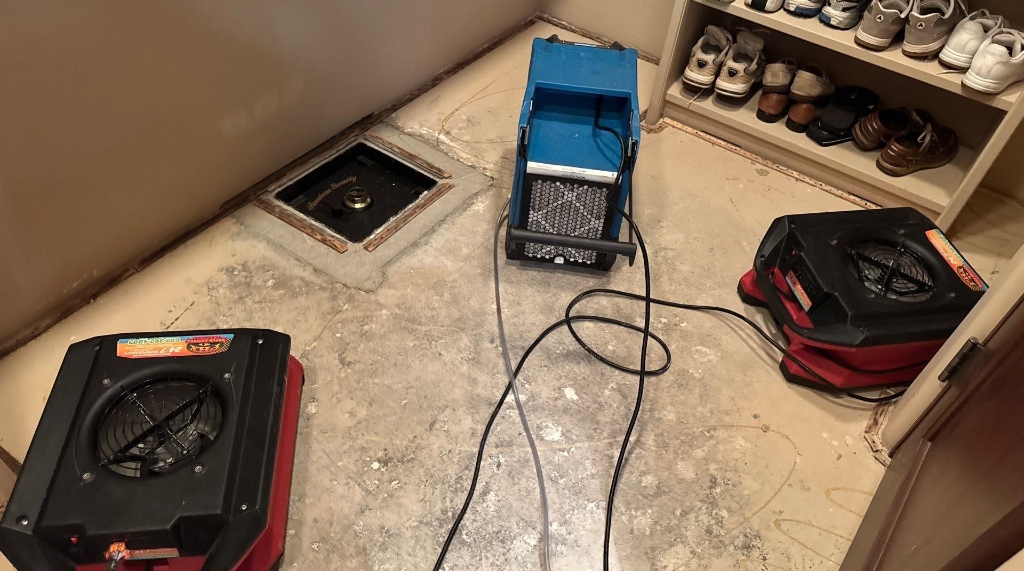
Service Definition & The IICRC Standard of Care
Professional subterranean campus utility tunnel chilled water flood tempe is an engineering and environmental discipline adhering strictly to IICRC S500 protocols, not mere surface mopping. When structural plumbing failures strike in Maricopa County, certified emergency water extraction and thermal structural drying procedures must be deployed immediately. Whether triggered by high-pressure burst pipe emergencies, subfloor leaks, or commercial line ruptures, bound moisture rapidly penetrates concrete subfloors and wall framing. In the desert heat, delays trigger microbial proliferation requiring rapid mold remediation. Request damage assessment through our emergency assessment portal or request 30-minute dispatch across all Valley service areas.
Securing electrical feeds, inspecting load-bearing assemblies, and containing pathogens.
Stopping the intrusion source and erecting 6-mil plastic isolation containment airlocks.
31-HP truck-mount extraction, removing gallons exponentially faster than evaporation.
LGR dehumidifiers and HEPA air scrubbers driving grains per pound below 25 GPP.
Calibrated electronic pinless testing confirming baseline dry standards.
The Complete 6-Stage Restoration Roadmap
Our IICRC-certified crews execute a disciplined, scientific 6-stage protocol to stabilize and dry structural components:
Emergency Dispatch & Perimeter Isolation
30 to 60 minute arrival. Securing electrical shutoffs, evaluating structural loads, and erecting containment airlocks.
FLIR® Thermal Mapping & Baseline Scans
Infrared thermal scans detect trapped moisture behind walls and beneath concrete without invasive exploratory demolition.
High-Volume Bulk Extraction
31-HP truck-mount extraction units pump standing water away at hundreds of gallons per minute.
Controlled Selective Demolition
Precision flood cuts 12 to 24 inches above moisture lines, removing wet insulation and opening wall framing to dry airflow.
Thermodynamic Dehumidification
Industrial Low-Grain Refrigerant dehumidifiers pull deep trapped moisture from dense framing lumber and concrete slabs.
Antimicrobial Sanitization & Verification
EPA-registered botanical application (Benefect Decon 30) and calibrated moisture testing to issue an official dry certificate.
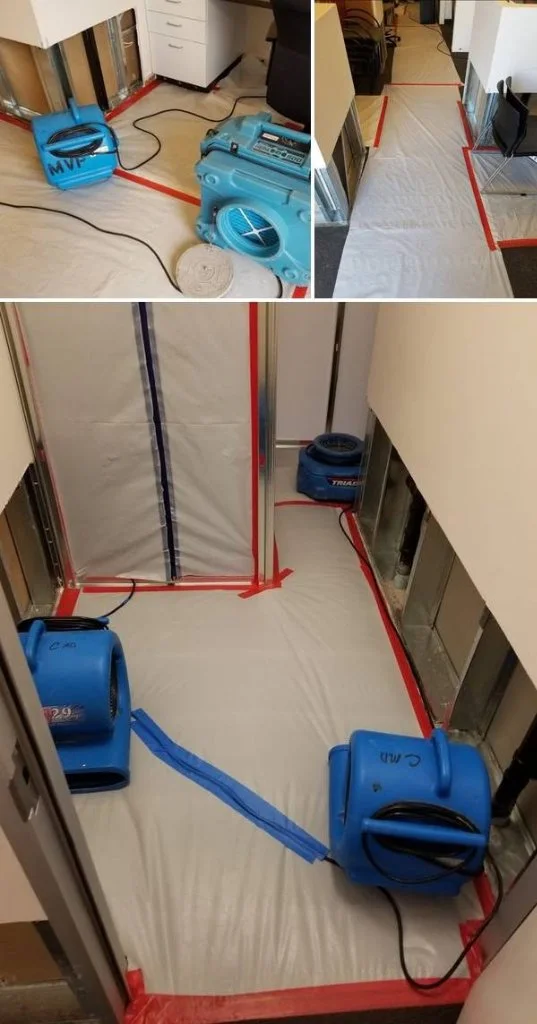
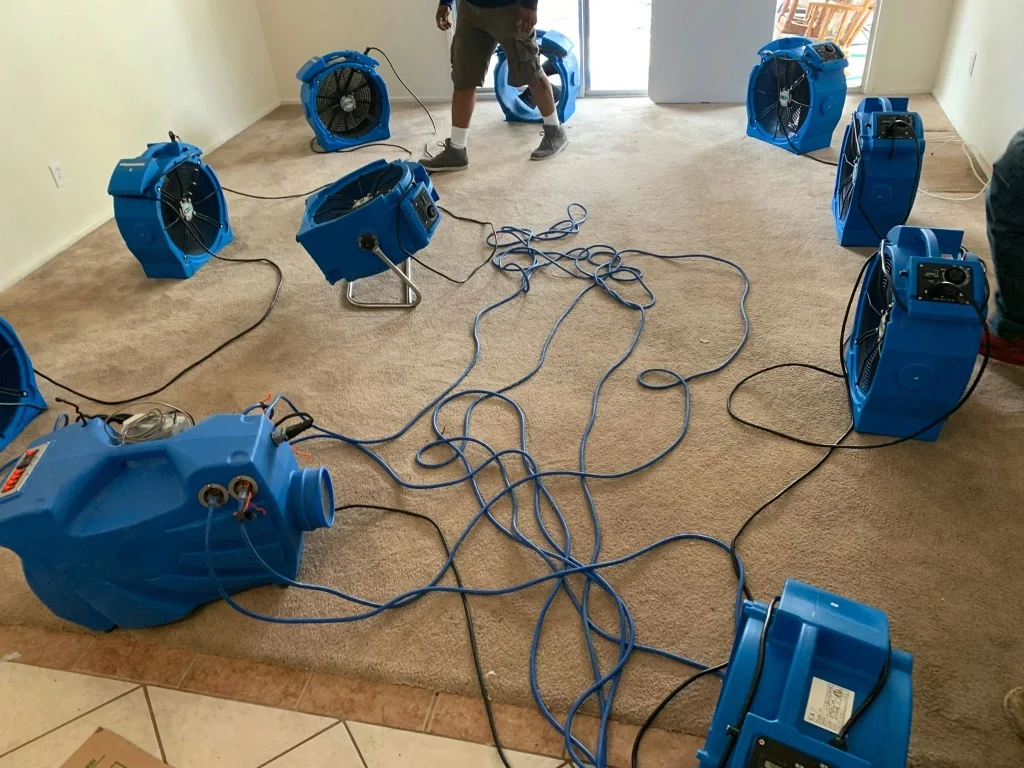
Specialized Equipment & Industrial Restoration Technology
Mitigating severe property damage requires industrial-grade technology capable of altering thermodynamic psychrometrics:
Truck-Mounted Extraction Rigs
31-HP engines producing 16+ inches Hg vacuum suction to evacuate bulk water rapidly into holding tanks.
Low-Grain Refrigerant Dryers
Pre-cooling heat-pipe systems driving ambient grains per pound below 25 GPP to draw deep trapped water out of framing.
HEPA Negative-Air Scrubbers
Hospital-grade 99.97% particulate filtration capturing microscopic fungal spores, soot, and biohazard aerosols.
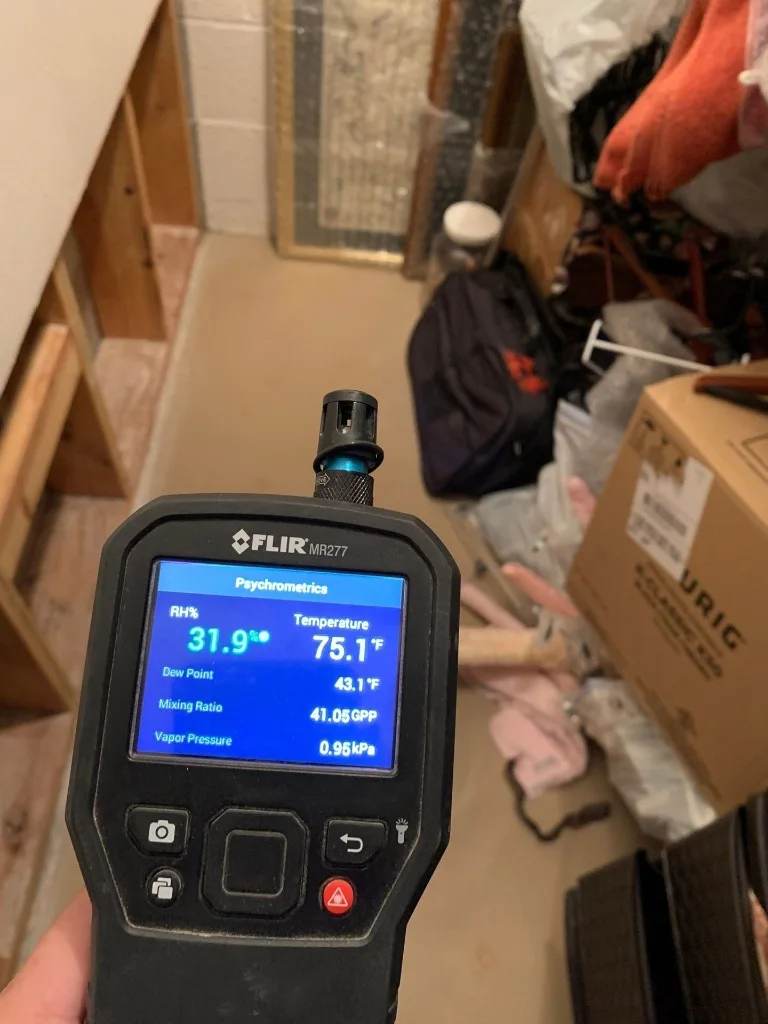
FLIR® Thermal Scanners & Probes
Infrared thermography detecting evaporative cooling boundaries behind walls, combined with digital RF pinless scanners.
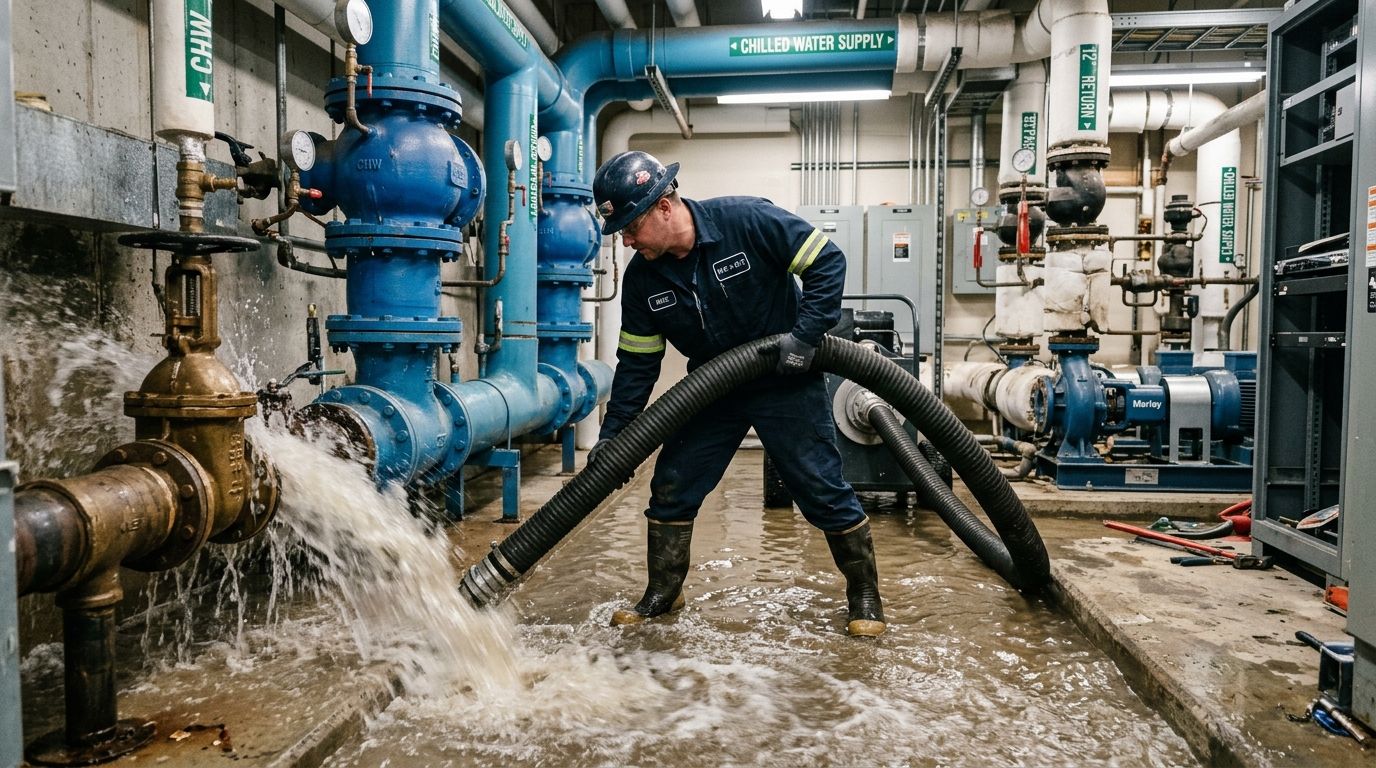
Professional Restoration vs. DIY Mitigation
Attempting DIY cleanup during a property disaster creates severe hidden liabilities:
- Trapped Moisture: Surface drywall dries while moisture inside cavities triggers hidden mold blooms.
- Pathogenic Risks: Category 2 & 3 water contains bio-contaminants standard cleaners fail to kill.
- Insurance Denial: Insurers require daily psychrometric logs; lack of data causes claim disputes.
Transparent Upfront Itemized Pricing
Valley Restoration Pros operates with complete transparency:
- Free On-Site Assessment: Complete physical inspection before work begins.
- Upfront Itemized Estimates: Detailed line items calculated via industry-standard Xactimate.
- Zero Surprise Billing: No hidden charges or unauthorized repairs.
Certified subterranean campus utility tunnel chilled water flood tempe Field Documentation
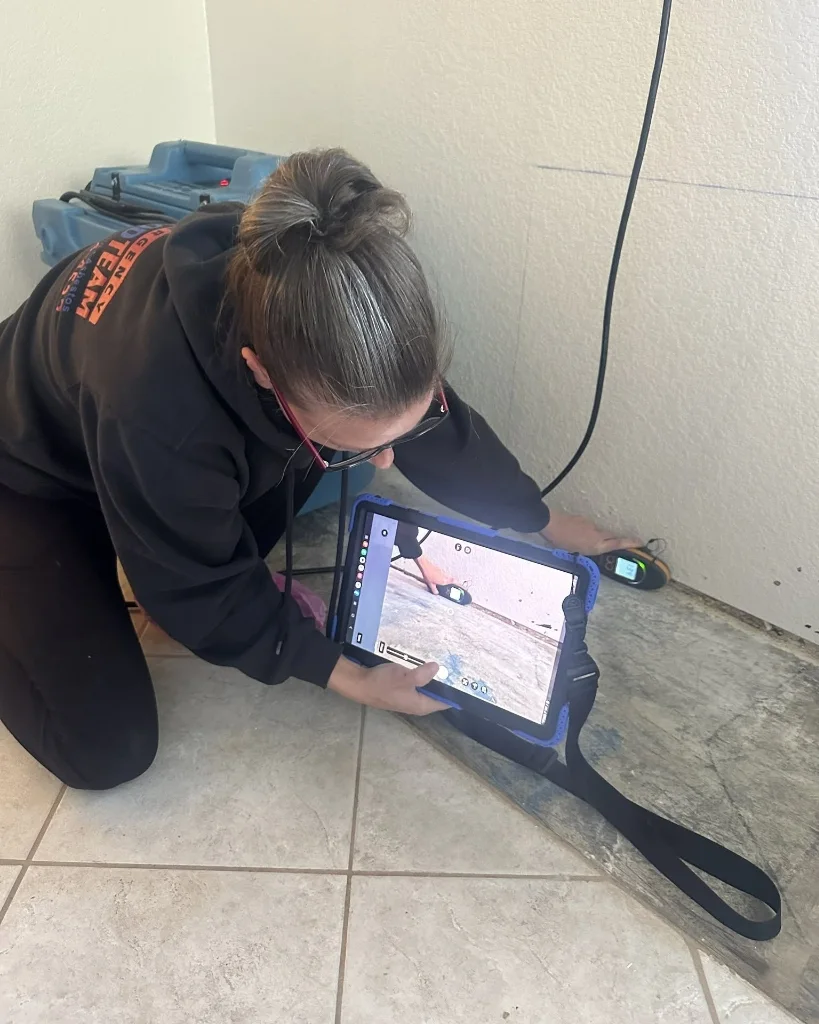
Every response performed by Valley Restoration Pros is documented through photographic and thermographic records:
Comprehensive subterranean campus utility tunnel chilled water flood tempe Technical Manual & Operational Standards
Exhaustive engineering protocols, psychrometric calculations, geological multipliers, and step-by-step restoration standards for Maricopa County properties:
Executive Emergency Abstract: Tempe Campus Subterranean Steam and Chilled Water Utility Tunnel Inundation
The urban core of Tempe, Arizona—anchored by the sprawling Arizona State University (ASU) Tempe campus and the dense municipal corridors flanking University Drive, Mill Avenue, Apache Boulevard, McAllister Avenue, and College Avenue—relies on an intricate subterranean utility tunnel network. These subterranean concrete passages, buried fifteen to twenty-five feet below street level, form the vital cardiovascular arteries of district energy distribution. Within these enclosed passages, massive district energy utility loops run in parallel: 350°F superheated high-pressure steam distribution mains, 180°F high-temperature condensate return lines, 42°F high-volume chilled water supply and return headers (ranging from 24-inch to 48-inch carbon steel piping), 12.47kV medium-voltage campus electrical distribution feeders, pneumatic control lines, and enterprise fiber optic raceways. These interconnected utility conduits power academic research complexes, high-density computing centers, university bio-laboratories, and multi-story commercial high-rises.
When an unpredicted mechanical failure strikes these subterranean energy arteries—such as an expansion joint rupture on a 36-inch chilled water loop, a mechanical gasket blowout on a high-temperature steam condensate header, or structural pipe stanchion failure triggered by expansive desert soil shifting—the resulting catastrophic inundation is immediate, violent, and life-threatening. Discharging between 2,500 and 5,000 gallons per minute (GPM) of chemically treated industrial water under continuous hydrostatic pressures of 125 to 175 PSI, flooding rapidly fills subterranean chambers to the ceiling vault. The collision of near-freezing chilled water with superheated steam condensate creates an explosive flash-vapor thermodynamic cascade, generating dense, scalding fog that displaces breathable oxygen and escalates vault temperatures to over 160°F.
In the extreme climatic landscape of Tempe, where summer ambient temperatures routinely surge past 115°F and municipal tap water exhibits an extreme mineral hardness of 18 Grains Per Gallon (GPG), unmitigated subterranean flooding triggers rapid secondary destruction. Submerged 12.47kV electrical busways and SCADA automation instrumentation face violent arc-flash short-circuits and corrosive mineral fouling. Simultaneously, high hydrostatic head pressure forces floodwaters into interconnected university building basements, research cleanrooms, and subterranean elevator shafts across the Tempe campus grid. Halting this multi-million-dollar loss trajectory demands immediate deployment of certified commercial water damage master restorers and specialized subterranean dewatering units.
Immediate Tempe Campus Utility Tunnel Incident Command Directives: First 30 Minutes
- Emergency District Plant Isolation: Contact campus Central Plant Operations and facility engineering dispatch immediately to isolate motorized district butterfly valves on 24- to 48-inch chilled water loops and secure high-pressure steam boiler output to arrest active pressurization.
- Execute Medium-Voltage Electrical Lockout/Tagout (LOTO): Coordinate with Arizona Public Service (APS) and university substation engineers to de-energize submerged 12.47kV feeders, 480V motor control centers (MCC), and tunnel sump circuits before any personnel approach access portals.
- Secure Surface Ventilation Shafts & Grates: Establish an exterior safety perimeter around street-level access grates, blast hatches, and ventilation shafts along University Drive and Mill Avenue to prevent pedestrian exposure to venting steam and toxic gases.
- Mobilize Industrial Subterranean Emergency Crews: Call Valley Restoration Pros at our 24/7 Priority Large-Loss Emergency Line: (602) 847-9593 for immediate dispatch of trailer-mounted diesel high-head pumps, OSHA-certified confined space entry teams, and high-tonnage industrial desiccant drying systems.
Thermodynamic Dynamics: Flash Steam Evaporation, Condensate Inundation, and Hydraulic Shock
Subterranean campus utility tunnel breaches represent one of the most mechanically complex and thermodynamically hazardous environments encountered in industrial property restoration. Unlike simple plumbing overflows or domestic pipe fractures, dual-service district utility corridors house contrasting high-energy thermal systems in extreme physical proximity. District cooling chilled water operates at 40°F to 44°F under operating pressures ranging from 125 to 175 PSI, while adjacent district steam distribution piping operates at 330°F to 365°F at 100 to 150 PSI, with high-temperature condensate return lines running at 180°F to 210°F. When an anchor stanchion fails, or when pipe metal fatigue culminates in a burst pipe repair emergency, the catastrophic release of kinetic and thermal energy completely destabilizes the enclosed subterranean microclimate.
The thermodynamic physics of high-pressure steam line failure in a confined tunnel are catastrophic. Superheated water flashing to steam expands over 1,600 times its liquid volume in a fraction of a second. As superheated steam discharges into the enclosed vault, it instantaneously atomizes surrounding water, generating an impenetrable aerosol fog bank and saturating the atmosphere to 100% relative humidity. Ambient vault air temperatures rapidly spike from a baseline of 95°F to over 175°F within minutes. This rapid thermal expansion creates severe positive air pressure pulses that can blow street-level inspection grates out of their concrete curbs and rupture fire dampers leading into connected university buildings.
Simultaneously, when thousands of gallons of 42°F chilled water flood the floor invert while 350°F steam vents directly overhead, a violent thermal condensation loop occurs. The chilled water acts as an active heat sink, causing the superheated steam to rapidly condense into a continuous scalding rainout within the tunnel. This boiling rain cascades over chilled water pipes, insulated steam loops, and overhead cable trays. The sudden, extreme thermal differential between the freezing chilled water lines and the boiling atmospheric fog induces severe thermal shock throughout the structural piping network. Cast iron pipe flanges crack, rubber expansion joints tear away from their tie-rods, and concrete tunnel ceiling slabs experience differential thermal expansion, triggering concrete spalling and micro-fissuring.
Furthermore, the hydraulic impact of sudden valve actuation or emergency central plant pump trips induces severe water hammer (hydraulic transient shock waves). Shock pressures exceeding 400 PSI rebound through the looped piping system, shearing structural wall anchors, twisting heavy steel roller stanchions, and compromising secondary mechanical seals throughout connected academic building sub-basements. Containing this multi-tiered physical destruction requires specialized restoration engineers equipped with thermal imaging diagnostics, high-temperature fluid extraction apparatus, and advanced thermodynamic psychrometric modeling.
Sonoran Desert Geotechnical and Climatic Multipliers in the Tempe University District
Restoring subterranean utility tunnel floods in Tempe, Arizona demands a rigorous understanding of the aggressive geotechnical and environmental forces unique to the Salt River Valley basin. The geographical footprint of the ASU Tempe campus and surrounding Mill Avenue commercial district sits atop ancient quaternary alluvial deposits and flood plain sediments interbedded with dense caliche strata. Caliche—a sedimentary rock composed of gravel, sand, and clay particles cemented together by hard calcium carbonate—creates an impervious subterranean shelf beneath Tempe roadways. When deep subterranean piping ruptures or unmitigated moisture leaches beneath concrete slabs, requiring precision slab leak water damage restoration, this impervious caliche layer prevents downward drainage and traps floodwaters around the exterior foundation walls of utility tunnels.
Surrounding this caliche layer are expansive smectite and bentonite clays that exhibit extreme shrink-swell dynamics. During prolonged dry periods, these desert soils shrink and form subterranean fissures. However, when hundreds of thousands of gallons of discharged chilled water escape cracked tunnel joints and saturate the surrounding subgrade, the expansive clay expands by up to 15% in volume. This soil expansion exerts immense lateral hydrostatic pressure—frequently exceeding 1,800 pounds per square foot—against aging reinforced concrete tunnel walls. This hydrostatic loading deforms tunnel alignments, crushes waterproofing membranes, and forces exterior groundwater back into the tunnel through cold joints and expansion seams.
Climatic factors exacerbate these subterranean challenges. During the Sonoran Desert summer, surface pavement temperatures in Tempe frequently surpass 150°F, with ambient air temperatures topping 115°F. This intense surface heat creates a severe thermal stratification barrier above street-level ventilation hatches. The density differential between superheated street air and humid subterranean tunnel air eliminates natural convective airflow, completely trapping toxic gases, moisture vapor, and volatile organic compounds inside the utility conduits. If the mechanical failure occurs during the summer North American Monsoon season (July through September), sudden convective microbursts can dump one to two inches of driving rain in under forty-five minutes. Storm runoff carrying abrasive road grit, motor oil, and desert silt pours into street-level ventilation grates along University Drive, transforming clear industrial pipe discharges into a toxic Category 3 alluvial mud slurry.
Finally, the chemical profile of municipal water in Tempe represents a major equipment degradation vector. Tempe tap water and central cooling tower makeup loops exhibit extreme mineral hardness averaging 18 Grains Per Gallon (over 300 parts per million of dissolved calcium carbonate, magnesium, and silica). When mineral-laden floodwater evaporates under elevated tunnel heat, dissolved mineral ions precipitate out as a rock-hard alkaline scale. This calcium scale rapidly coats motor armatures, fuses valve stems, bridges circuit breaker contacts, and clogs drainage weep holes, requiring specialized chemical descaling and demineralization procedures during restoration.
First-Hour Incident Command: OSHA 29 CFR 1910.146 Confined Space and Life Safety Protocols
Subterranean campus utility tunnels are strictly classified under federal law as Permit-Required Confined Spaces (PRCS) pursuant to OSHA 29 CFR 1910.146 and NFPA 350 Standards for Safe Confined Space Entry. Under normal operational conditions, these tunnels possess restricted points of ingress and egress, limited natural ventilation, and hazardous internal utilities. During an emergency flood event involving steam and chilled water, these utility corridors transform into immediate danger to life or health (IDLH) environments. Authorizing untrained personnel or standard cleaning crews into a flooded tunnel without formal atmospheric clearance is a catastrophic life-safety violation. Valley Restoration Pros deploys certified Confined Space Entry Supervisors and industrial rescue technicians to establish immediate site command.
The primary operational objective upon arrival is establishing an Entry Permit System and executing rigorous multi-gas atmospheric testing. Our incident command team deploys calibrated 5-gas photoionization detectors (PID) at multiple depths—testing the atmosphere at the street-level portal collar, at mid-depth stair transitions, and directly above the submerged tunnel invert. We continuously monitor five critical parameters: oxygen content (maintaining safe levels between 19.5% and 23.5%), lower explosive limit (LEL below 10% to guard against combustible sewer gas or refrigerant accumulation), carbon monoxide (CO under 25 PPM), hydrogen sulfide (H2S under 10 PPM), and total volatile organic compounds (VOCs). If atmospheric testing reveals an IDLH state, no personnel entry is authorized until mechanical ventilation stabilizes the environment.
Simultaneously, our team coordinates with Arizona Public Service (APS) and ASU Central Plant operations to execute zero-energy state verification through comprehensive Lockout/Tagout (LOTO) protocols compliant with OSHA 29 CFR 1910.147. All medium-voltage 12.47kV electrical busways traversing the tunnel are locked open at the substation distribution breakers. High-pressure steam isolation gate valves and chilled water butterfly isolation valves are secured with padlocks and danger tags. Variable frequency drive (VFD) circulation pumps are electrically disconnected to eliminate unexpected pressure surges or mechanical restart during entry.
Once LOTO is certified and mechanical isolation is verified, our rescue personnel position aluminum retrieval tripods equipped with 3-way rescue winches, self-retracting lifelines, and fall-arrest harnesses over the entry portal. High-output, intrinsically safe (explosion-proof) positive-pressure ventilation blowers are deployed at street level, ducting 10,000+ CFM of fresh ambient air directly into the tunnel base to displace steam vapor and thermal plumes. Only when atmospheric monitors confirm stable green conditions do certified technicians enter the space to initiate large-scale emergency water extraction operations.
Industrial High-Head Pumping, Bulk Water Extraction, and Subterranean Slurry Dewatering
Extracting hundreds of thousands of gallons of water from utility tunnels buried fifteen to twenty-five feet below street level presents formidable hydraulic challenges that overwhelm standard commercial restoration equipment. Standard portable extraction extractors and light electric submersible pumps lack the static vertical head lift and volume capacity required to move water up vertical access shafts against gravity. Furthermore, when floodwaters contain boiling steam condensate, water temperatures in the tunnel invert can exceed 150°F. Conventional electric submersible pumps quickly overheat and fail due to thermal overload, while standard PVC discharge hoses soften, kink, and rupture under high-temperature hydraulic pressure.
To conquer these subterranean hydraulic obstacles, Valley Restoration Pros mobilizes heavy industrial trailer-mounted diesel trash pumps and high-temperature hydraulic submersible pump arrays. Our specialized dewatering units feature stainless steel impellers, mechanical Viton seals engineered to withstand temperatures up to 220°F, and high-flow vortex chambers capable of passing solids up to 3 inches in diameter. Delivering pumping capacities between 2,500 and 6,000 GPM with over 80 feet of continuous dynamic head lift, these industrial units rapidly depress floodwater levels, pulling liquid out of tunnel access hatches and directing it through heavy-duty, heat-resistant lay-flat lines into municipal discharge conduits approved by Tempe environmental compliance officials.
Our subterranean pumping capabilities draw direct operational parallels to large-loss municipal utility projects, such as our downtown Phoenix district cooling tunnel flood extraction projects and multi-level dewatering operations in subterranean parking garage flood extraction facilities across the Valley. Beyond bulk liquid removal, our extraction teams deploy truck-mounted high-lift positive-displacement vacuum units to scour concrete floor invert trenches, sump basins, and conduit pits. These heavy vacuum systems extract dense alluvial mud slurry, exfoliated pipe rust, disintegrating calcium silicate insulation residue, and caliche sediments that accumulate on the tunnel floor.
Once standing water is drawn down below four inches, our crews utilize high-thrust industrial squeegee wands and weighted walk-behind extraction extractors to pull trapped surface film from porous concrete pores. Every linear foot of drainage trench is mechanically flushed with clean demineralized water and vacuumed dry to eliminate residual mineral salts and chemical rust inhibitors before the structural dehumidification phase begins.
IICRC S500 and S520 Restoration Protocols: Subterranean Environmental and Microbial Control
Restoring an inundated subterranean utility tunnel complex requires strict compliance with the IICRC S500 Standard and Reference Protocol for Professional Water Damage Restoration and the IICRC S520 Standard for Professional Mold Remediation. Under the IICRC S500 classification system, subterranean utility tunnel water is immediately designated as Category 2 (Significant Chemical and Thermal Contamination) or Category 3 (Grossly Pathogenic Black Water). Even when the original discharge originates from a closed chilled water supply loop, contact with industrial floor silt, boiler chemical treatments (such as sodium molybdate, tolyltriazole, and biocidal phosphonates), animal waste leached through street-level grates, and exterior soil runoff elevates the biological and chemical hazard profile to maximum severity.
In the extreme heat of Tempe, environmental control is an urgent race against time. Saturated underground environments with ambient temperatures between 85°F and 110°F provide ideal incubation chambers for fungal and bacterial colonization. If relative humidity remains above 70% for more than twenty-four to forty-eight hours, aggressive species such as Aspergillus, Penicillium, and Chaetomium germinate on organic residues, paper-faced insulation jackets, and biological dust films. To arrest microbial proliferation, Valley Restoration Pros deploys certified mold remediation specialists who establish comprehensive negative-pressure containment barriers.
Our technicians erect heavy-duty 6-mil flame-retardant poly containment walls with magnetic or heavy-zipper egress portals at every junction where utility tunnels enter academic buildings, research laboratories, or central plant substations. Differential pressure manometers are installed to ensure a continuous negative pressure gradient of at least -0.02 to -0.05 inches of water column (-5 to -12 Pascals) within the tunnel complex. This engineered pressure differential guarantees that contaminated subterranean air, mold spores, and chemical steam odors cannot migrate upward into occupied classrooms, faculty offices, or research cleanrooms.
Within the containment zone, our teams position industrial negative air machines equipped with multi-stage pre-filters and true medical-grade HEPA filters tested to capture 99.97% of airborne particulates down to 0.3 microns. These air scrubbers run continuously, scrubbing aerosolized dust, insulation fibers, and microbial particulates from the atmosphere. Concurrently, all non-porous concrete surfaces and structural steel stanchions are treated with EPA-registered, hospital-grade broad-spectrum botanical antimicrobials to neutralize biological pathogens without corroding sensitive telemetry and copper wiring.
Industrial Desiccant Dehumidification and Subterranean Thermodynamic Thermal Bake-Out
Drying subterranean concrete utility tunnels presents a formidable thermodynamic obstacle that renders standard Low-Grain Refrigerant (LGR) dehumidifiers utterly ineffective. Standard refrigerant dehumidifiers rely on cooling air to its dew point across refrigerated coils; when operating in subterranean vaults characterized by high ambient heat, elevated vapor pressure, or when attempting to drive moisture out of deep concrete inverts, LGR units lose psychrometric efficiency and ice over or exhaust warm humid air. Furthermore, the massive thermal mass of 12-inch to 18-inch thick reinforced concrete tunnel walls absorbs tens of thousands of pounds of moisture, trapping it deep within capillary pores. Achieving thorough structural drying in these underground chambers requires high-tonnage industrial desiccant dehumidification systems.
Valley Restoration Pros mobilizes industrial trailer-mounted desiccant dehumidification units ranging from 5,000 to 15,000 CFM capacity directly to the Tempe incident site. These massive machines utilize active silica gel honeycombed desiccant rotors to pull moisture molecules directly out of the air stream through chemical adsorption, completely independent of ambient dew points. The dry process air produced by our desiccant trailers exits at less than 10% relative humidity and an ultra-low humidity ratio under 20 Grains Per Pound (GPP). This super-dry air creates a massive vapor pressure differential between the saturated concrete surfaces (often exceeding 1.20 inches of mercury vapor pressure) and the dry ambient air (under 0.20 inches of mercury), aggressively drawing bound moisture out of deep structural concrete pores.
Our deployment strategy utilizes engineered high-velocity process air ducting. Heavy-duty, heat-resistant 20-inch to 24-inch flexible lay-flat ducting is dropped down street-level access hatches along University Drive, delivering super-heated dry process air deep into the tunnel inverts. At the far ends of the tunnel corridors, high-capacity reactivation blowers exhaust hot, moisture-laden air through vertical ventilation stacks into the atmosphere, creating a continuous one-directional drying loop. Inside the tunnel, an array of high-velocity axial air movers and centrifugal blowers is positioned in a laminar pattern at 20-foot intervals, blowing dry air along the floor inverts, around chilled water pipe stanchions, and across ceiling slabs to disrupt the boundary air layer.
Throughout this thermodynamic bake-out process, our certified structural drying managers monitor psychrometric conditions twice daily using calibrated digital thermo-hygrometers and concrete pin-less moisture meters. We record dry-bulb temperature, relative humidity, dew point, and grain depression across every 100-foot tunnel zone. Pumping continuous desiccant process air reduces subterranean tunnel concrete from 99% deep moisture saturation down to baseline dry standards (below 75% internal relative humidity per ASTM F2170) in record time, preventing long-term concrete carbonation and structural rebar corrosion.
Pipe Insulation Decontamination: Mitigating Corrosion Under Insulation (CUI) and Asbestos Hazards
One of the most insidious long-term structural liabilities resulting from subterranean utility tunnel flooding is the saturation of pipe thermal insulation. Campus utility tunnels contain thousands of linear feet of high-performance insulation cladding on steam mains, condensate lines, and chilled water loops. Common thermal insulation materials include cellular glass, calcium silicate, elastomeric closed-cell foam, fiberglass blankets, and advanced silica aerogel wrap. When floodwaters submerge these lines, or when flash steam condensation penetrates metal weather jackets, water becomes permanently trapped against the exterior carbon steel pipe walls, creating the ideal conditions for catastrophic Corrosion Under Insulation (CUI).
Corrosion Under Insulation is an accelerated electrochemical corrosion mechanism that destroys industrial piping systems from the outside in. Trapped floodwaters containing dissolved chlorides, sulfates, and 18 GPG mineral scale from Tempe municipal water concentrate against the warm metal surfaces of operating steam and condensate lines. Under operating temperatures between 140°F and 250°F, CUI corrosion rates accelerate exponentially, causing severe pitting, crevice corrosion, and stress corrosion cracking on ASTM A53 Grade B carbon steel and 304/316 stainless steel pipes. If wet insulation is left in place, external pipe wall thinning will inevitably trigger catastrophic secondary ruptures within twelve to twenty-four months. Addressing this hidden threat is a central pillar of our commercial chiller pipe flood restoration protocols.
Valley Restoration Pros conducts forensic thermographic inspections using calibrated FLIR infrared cameras to pinpoint moisture boundaries concealed beneath aluminum and stainless steel outer cladding. Where insulation saturation is detected, our crews carefully strip the compromised jacketing and waterlogged thermal core. For older utility tunnel segments built during early campus expansion phases, legacy thermal system insulation (TSI) may contain chrysotile or amosite asbestos fibers. Any disturbance of suspect insulation requires immediate cessation of mechanical drying and deployment of licensed asbestos abatement teams operating under strict NESHAP (40 CFR Part 61) and OSHA 1926.1101 containment standards.
Once saturated insulation is removed, our industrial coatings technicians clean the exposed carbon steel pipe walls using mechanical bristle blasters to remove surface rust and mineral scale down to bare metal (SSPC-SP 11 standards). We then apply high-temperature epoxy novolac or moisture-cured urethane protective coatings engineered to withstand thermal cycling up to 400°F before certified mechanical contractors install new non-wicking cellular glass or hydrophobic aerogel insulation.
Medium-Voltage Electrical Distribution, SCADA Telemetry, and Raceway Decontamination
Beyond steam and chilled water piping, campus utility tunnels serve as the primary underground thoroughfares for high-criticality electrical and communications infrastructure. Subterranean corridors house 12.47kV medium-voltage feeder circuits encased in rigid galvanized steel conduits or fiberglass cable trays, 480V motor branch wiring, automated Supervisory Control and Data Acquisition (SCADA) telemetry lines, building automation system (BAS) networking, and high-density multi-strand fiber optic backbones. When floodwaters submerge these electrical raceways, the risk of explosive arc-flash events and permanent communications blackout across the campus is critical.
Water contamination inside electrical enclosures introduces immediate conductive short-circuit pathways. Furthermore, the 18 GPG mineral hardness of Tempe municipal water leaves behind conductive alkaline mineral crusts across circuit breaker terminals, busbar insulators, relay contacts, and electronic circuit boards upon drying. Valley Restoration Pros coordinates with master commercial electricians and central plant instrumentation technicians to systematically decontaminate, dry, and recertify electrical assets. This methodology mirrors our technical execution on high-density commercial assets, such as our Tempe Town Lake commercial high-rise chilled water loop flood cleanup projects along Rio Salado Parkway.
Our electrical rehabilitation protocol begins with thorough de-energization verification using calibrated high-voltage proximity detectors. Conduits, junction boxes, and motor control centers (MCC) that suffered submersion are opened and flushed with deionized water at low pressure to dissolve and extract corrosive mineral deposits and silt without degrading wire insulation. High-purity electronic dielectric cleaning solvents are then applied to displace moisture and strip residual chemical films. Specialized non-conductive desiccant air wands are inserted directly into conduit runs to purge moisture from within vertical wire chases.
Before any electrical circuit is re-energized, our engineering partners conduct comprehensive insulation resistance testing in strict compliance with IEEE Standard 43-2013 and NETA Maintenance Testing Specifications. Utilizing calibrated 5kV and 10kV Megohmmeters, technicians measure insulation resistance across phase-to-phase and phase-to-ground conductors, verifying minimum resistance thresholds (typically >100 Megohms) and acceptable Polarization Index (PI > 2.0) values. SCADA telemetry loops, motorized valve actuators, and thermocouple sensors are re-calibrated and loop-tested to verify seamless automated control before central plant operations resume.
Hyper-Local Case Study: Catastrophic Campus Tunnel Inundation at McAllister and University
Incident Location: Subterranean Central Utility Tunnel Segment 4B, 18 feet below the intersection of McAllister Avenue and University Drive, Tempe, AZ 85281.
Facility Profile: 1,200 linear feet of 10-foot by 10-foot reinforced concrete utility tunnel connecting the Campus Central Energy Plant to major bioscience research complexes and academic data centers.
Event Classification: Simultaneous mechanical failure of a 36-inch chilled water expansion coupling and an adjacent 6-inch high-pressure steam condensate return flange during peak 114°F summer cooling operations.
Initial Conditions: 480,000 gallons of 145°F scalding floodwater filling the tunnel to a depth of 7.5 feet; 100% relative humidity with dense flash-steam fog displacing oxygen; three university research basements threatened by water intrusion through conduit seals.
First Hour Rapid Response & Isolation: Valley Restoration Pros emergency large-loss command arrived on site within 26 minutes of the initial emergency call. Incident commanders immediately established an OSHA permit-required confined space command post at the McAllister access portal. Atmospheric gas analyzers confirmed elevated temperatures (165°F) and localized oxygen depletion (18.8%). Working in tandem with campus facilities engineering and APS, technicians locked out 12.47kV substation feeder circuits, isolated main steam valves, and shut down central plant booster pumps. Two explosion-proof 10,000-CFM ventilation blowers were deployed at street level to purge thermal steam fog and establish positive airflow.
Bulk Extraction & Dewatering Deployment: Technicians lowered two heavy-duty hydraulic submersible trash pumps equipped with Viton high-temperature seals directly into the primary flood vault via street-level access hatches. Operating at a combined extraction capacity of 5,200 GPM against 45 feet of total dynamic head, the floodwater level was drawn down from 7.5 feet to 6 inches in just under four hours. Pumping operations required constant monitoring to manage water temperature and prevent hydraulic cavitation, drawing upon methodologies proven in our commercial airport baggage handling tunnel flood infrastructure recovery projects. Truck-mounted vacuum units scoured 14 tons of saturated silt, mineral scale, and exfoliated insulation debris from the tunnel invert trenches.
Desiccant Drying & Outcome Metrics: Two 9,000-CFM trailer-mounted industrial desiccant dehumidifiers were connected via 24-inch lay-flat ducting dropped into opposing access shafts. Delivering process air at 12% RH and 18 GPP, the system drove rapid concrete moisture evaporation. Baseline concrete relative humidity was reduced from 99.8% to the target dry standard of 72% RH within 64 hours. Over 800 linear feet of saturated calcium silicate insulation was safely stripped under negative pressure containment and replaced. IEEE 43 insulation testing certified all medium-voltage feeder cables, enabling full re-energization of the academic bioscience grid with zero data loss and zero structural concrete damage.
Elevator Pit, Mechanical Shaft, and Auxiliary Sump Vault Decontamination
Subterranean utility tunnels do not exist in isolation; they are physically connected to academic buildings, research laboratories, and parking facilities via vertical utility chases, pipe penetrations, and structural expansion joints. When a utility tunnel floods to a depth of several feet, the resulting hydrostatic pressure forces floodwaters into connected building basements and deep elevator hoistway pits along Mill Avenue, College Avenue, and Terrace Road. Dewatering and decontaminating these auxiliary subterranean structures requires specialized compliance procedures.
Elevator hoistway pits are the lowest architectural elevations in multi-story facilities, making them natural collection basins for migrating floodwater. Dewatering an elevator pit is governed by strict ASME A17.1 / CSA B44 Safety Code for Elevators and OSHA confined space entry protocols. Standing water in elevator pits frequently becomes contaminated with hydraulic elevator fluid, heavy lithium grease from vertical elevator track rails, and motor lubricants. Before any water is extracted, our certified technicians sample the liquid for hydrocarbon contamination. If petroleum hydrocarbons are detected, the contaminated water must be processed through oil-water coalescing separators or captured in hazardous waste holding tanks rather than discharged into municipal storm sewers. Our specialized elevator pit water extraction teams ensure total regulatory compliance.
Following water extraction, hydraulic elevator buffer springs, governor tension sheaves, traveling cables, and limit switches must be thoroughly sanitized, dried, and inspected for corrosion. Concurrently, if tunnel floodwaters have backed up into auxiliary sanitary sumps or graywater lift stations, biological pathogens create an immediate Category 3 contamination crisis requiring professional sewage cleanup and broad-spectrum antimicrobial sanitization.
All concrete pit floors and structural walls undergo high-pressure demineralized hot-water washing followed by HEPA vacuuming. Sump pump float switches, check valves, and high-water telemetry alarms are mechanically tested and certified to ensure the auxiliary drainage system operates flawlessly before elevator technicians restore traction systems to service.
Advanced Industrial Restoration Equipment Array and Subterranean Logistics Specifications
The execution of large-scale subterranean utility tunnel restoration demands an elite equipment fleet engineered specifically for high-temperature fluid extraction, confined space air scrubbing, and extreme vapor pressure dehumidification. Standard residential water extraction equipment is entirely inadequate for subterranean campus utility environments. Valley Restoration Pros maintains a dedicated fleet of industrial-grade heavy apparatus staged strategically in the Phoenix-Tempe metropolitan area, ready for instantaneous large-loss mobilization.
| Equipment Category | Unit Specifications | Subterranean Operational Role |
|---|---|---|
| Trailer-Mounted Desiccants | Munters & Aggreko 5,000 to 15,000 CFM active silica gel rotor units | Delivers sub-10% RH dry process air down utility access shafts to drive structural concrete moisture evaporation. |
| Hydraulic Submersibles | Godwin & Gorman-Rupp diesel hydraulic pumps (2,500 - 6,000 GPM) | High-head vertical lift dewatering handling boiling condensate up to 220°F with 3-inch solids passage. |
| Explosion-Proof Blowers | Coppus & Euramco 10,000+ CFM positive-pressure antistatic air movers | Continuous fresh air purging of thermal steam plumes, combustible vapors, and toxic atmospheric gases. |
| HEPA Air Filtration | Dri-Eaz DefendAir 500 & Phoenix Guardian HEPA (99.97% @ 0.3μm) | Captures airborne asbestos, calcium silicate dust, fungal spores, and aerosolized biocide droplets. |
| Diagnostic Telemetry | FLIR E8/E96 Thermal Cameras, Protimeter MMS3, Megger 10kV Testers | Forensic moisture mapping beneath pipe jackets, concrete relative humidity logging, and electrical resistance tests. |
Logistical staging along congested university corridors such as University Drive and Mill Avenue requires synchronized traffic control permits and pedestrian safety barricades. Valley Restoration Pros coordinates directly with the City of Tempe Department of Public Works and university police to secure street-level access points, deploy noise-dampened generator trailers, and route heavy extraction hoses safely across campus thoroughfares.
Pay-Per-Call Financial Transparency, Commercial Claims Documentation, and Psychrometric Logging
Large-loss commercial and institutional utility tunnel inundations involve significant capital investments, complex municipal infrastructure, and multi-layered insurance claims. When a major flood paralyzes campus operations, facility directors, university risk managers, and commercial real estate asset executives require total financial transparency and empirical, engineering-grade documentation. Valley Restoration Pros adheres to the highest standards of pay-per-call compliance and corporate integrity. We never make misleading billing promises, and we never claim that commercial insurance carriers will automatically cover 100% of restoration costs without policyholder deductible obligations.
Our operational financial framework is built upon three non-negotiable consumer protection pillars:
Free Comprehensive On-Site Damage Assessment
Our master commercial project directors deploy immediately to conduct an exhaustive multi-point physical, atmospheric, and thermographic inspection of the flooded tunnel network at zero upfront charge or obligation.
Transparent Upfront Itemized Pricing Before Work Begins
Before deploying extraction pumps, desiccant trailers, or containment barriers, we provide facility stakeholders with a fully itemized, transparent cost breakdown utilizing industry-standard Xactimate pricing.
Assistance with Detailed Claims Documentation & Psychrometric Moisture Logs
We equip clients and forensic insurance adjusters with comprehensive documentation packages, including twice-daily psychrometric spreadsheets, 3D spatial scans, moisture mapping, and Megohmmeter electrical certifications.
To assist university procurement departments and institutional property managers in forecasting project allocations, we provide access to our interactive instant commercial cost estimator. This utility helps facility stakeholders evaluate the scope of high-GPM dewatering, industrial desiccant thermal bake-out, hazardous insulation abatement, and electrical recertification based on square footage, linear footage, and inundation depth.
Our large-loss documentation teams interface directly with independent insurance adjusters, forensic mechanical engineers, and institutional risk executives to ensure total alignment. By providing an unassailable evidentiary record of atmospheric metrics, moisture migration boundaries, and dry standard compliance, we accelerate insurance claim processing and minimize corporate financial exposure.
Exhaustive Engineering FAQ: Subterranean Campus Steam and Chilled Water Flooding
The immediate protocol requires instant evacuation of all personnel from the tunnel and connected sub-basements, followed by rapid notification of campus Central Plant Operations to initiate emergency steam header isolation and boiler trip. No personnel may enter the space until high-voltage electrical Lockout/Tagout (LOTO) is completed and continuous mechanical ventilation purges thermal steam plumes. Flash steam displaces oxygen and creates severe burn hazards; entry is strictly prohibited until calibrated 5-gas monitors confirm atmospheric oxygen is above 19.5% and ambient temperatures have stabilized below 95°F.
OSHA 29 CFR 1910.146 mandates that any subterranean utility tunnel possessing limited entry, hazardous atmosphere potential, or engulfment hazards must be managed under an active Confined Space Entry Permit. Operations require a designated Entry Supervisor, trained Entrants, and continuous outside Attendants stationed at the portal. Mandatory safety equipment includes aluminum retrieval tripods with mechanical winches, full-body harnesses, continuous 4-gas or 5-gas atmospheric analyzers, and intrinsically safe (explosion-proof) ventilation blowers providing constant positive air exchange.
Standard Low-Grain Refrigerant (LGR) dehumidifiers condense moisture by cooling air across coils, losing efficiency at high ambient temperatures or low dew points. Subterranean utility tunnels contain massive 12- to 18-inch thick reinforced concrete walls that absorb enormous moisture volumes. Trailer-mounted industrial desiccant dehumidifiers utilize silica gel rotors that chemically adsorb water vapor, delivering process air at under 10% relative humidity and less than 20 GPP. This creates the massive vapor pressure differential required to pull bound water out of deep structural concrete pores without thermal limitations.
Tempe municipal tap water contains dissolved calcium carbonate, magnesium, and silica averaging 18 Grains Per Gallon (over 300 PPM). When floodwater evaporates naturally in the subterranean heat, these dissolved minerals precipitate as an alkaline crust. On electrical switchgear, busway contacts, and SCADA telemetry circuits, this mineral scaling forms conductive bridges that cause arc-fault explosions, short-circuits, and galvanic corrosion. Conduits must be flushed with low-pressure deionized water and dielectric solvents before desiccant drying and IEEE 43 Megohm testing.
Corrosion Under Insulation (CUI) occurs when water becomes trapped between pipe thermal insulation (such as calcium silicate or fiberglass) and carbon steel pipe walls. Under operating temperatures between 140°F and 250°F, trapped moisture and concentrated chlorides cause severe pitting, crevice corrosion, and wall thinning. Saturated insulation cannot dry effectively in place and must be stripped to inspect pipe integrity, apply protective coatings, and re-insulate to prevent catastrophic future steam or chilled water ruptures.
Valley Restoration Pros maintains 24/7 dedicated commercial large-loss response fleets strategically staged across Maricopa County. We work closely with campus facilities departments, municipal water authorities, and environmental compliance regulators across all Valley areas we serve. For immediate large-loss deployment, tunnel dewatering, and psychrometric restoration, facility managers can contact our emergency dispatch team 24/7/365 for on-site arrival within 30 minutes.
Verified Local Area Dispatch: Phoenix, AZ
Official Geo-Coordinates: 33.4484° N, -112.074° W • Maricopa County
Related Specialized Emergency Restoration Services
Explore specialized rapid-response mitigation protocols across Greater Phoenix and Maricopa County:
Valley-Wide Emergency Response Service Coverage
Our mobile restoration fleet is dispatched across the entire Phoenix metropolitan region, providing rapid 30 to 60 minute emergency response: