

Valley Restoration Pros delivers 24/7 industrial emergency water extraction, thermal psychrometric drying, and structural mitigation across Phoenix and Maricopa County with guaranteed 30–60 minute rapid arrival. All protocols strictly adhere to IICRC S500 standards, featuring upfront itemized pricing and free on-site thermal moisture assessments. Call dispatch directly at (602) 847-9593.
Why Immediate Mitigation Is Critical in Phoenix Heat
Catastrophic mechanical ruptures of commercial reverse osmosis (RO) membrane housings or high-pressure booster pumps discharge thousands of gallons of demineralized, aggressive permeate water across sterile clinical bays. In Surprise's extreme desert heat, water penetrating heat-welded clinical sheet vinyl flooring, drywall utility chaseways, and post-tensioned sub-slabs accelerates dangerous microbial growth within 24 hours, threatening immunocompromised kidney patients and risking immediate regulatory shutdowns.

Service Definition & The IICRC Standard of Care
Professional surprise medical office ro dialysis skid rupture flood cleanup is an engineering and environmental discipline adhering strictly to IICRC S500 protocols, not mere surface mopping. When structural plumbing failures strike in Maricopa County, certified emergency water extraction and thermal structural drying procedures must be deployed immediately. Whether triggered by high-pressure burst pipe emergencies, subfloor leaks, or commercial line ruptures, bound moisture rapidly penetrates concrete subfloors and wall framing. In the desert heat, delays trigger microbial proliferation requiring rapid mold remediation. Request damage assessment through our emergency assessment portal or request 30-minute dispatch across all Valley service areas.
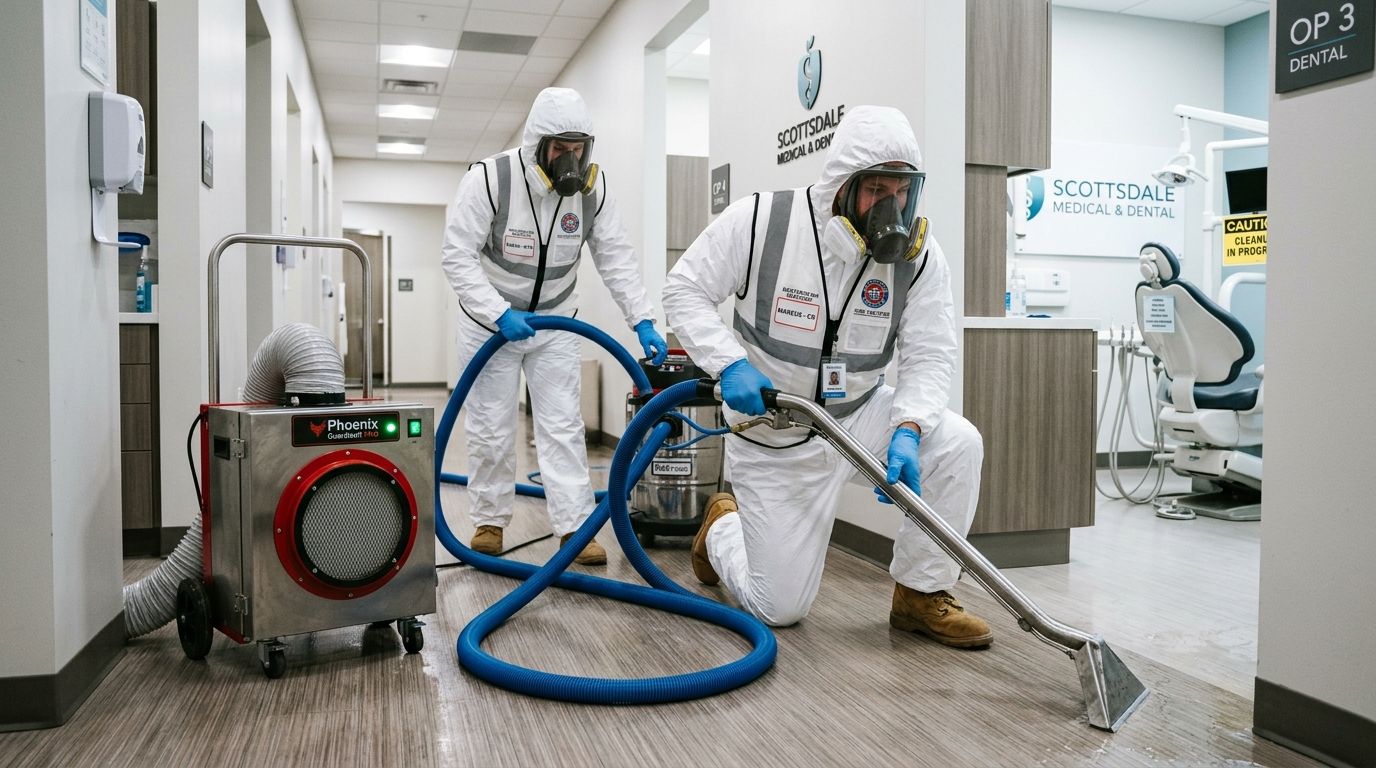
Securing electrical feeds, inspecting load-bearing assemblies, and containing pathogens.
Stopping the intrusion source and erecting 6-mil plastic isolation containment airlocks.
31-HP truck-mount extraction, removing gallons exponentially faster than evaporation.
LGR dehumidifiers and HEPA air scrubbers driving grains per pound below 25 GPP.
Calibrated electronic pinless testing confirming baseline dry standards.
The Complete 6-Stage Restoration Roadmap
Our IICRC-certified crews execute a disciplined, scientific 6-stage protocol to stabilize and dry structural components:
Emergency Dispatch & Perimeter Isolation
30 to 60 minute arrival. Securing electrical shutoffs, evaluating structural loads, and erecting containment airlocks.
FLIR® Thermal Mapping & Baseline Scans
Infrared thermal scans detect trapped moisture behind walls and beneath concrete without invasive exploratory demolition.
High-Volume Bulk Extraction
31-HP truck-mount extraction units pump standing water away at hundreds of gallons per minute.
Controlled Selective Demolition
Precision flood cuts 12 to 24 inches above moisture lines, removing wet insulation and opening wall framing to dry airflow.
Thermodynamic Dehumidification
Industrial Low-Grain Refrigerant dehumidifiers pull deep trapped moisture from dense framing lumber and concrete slabs.
Antimicrobial Sanitization & Verification
EPA-registered botanical application (Benefect Decon 30) and calibrated moisture testing to issue an official dry certificate.

Specialized Equipment & Industrial Restoration Technology
Mitigating severe property damage requires industrial-grade technology capable of altering thermodynamic psychrometrics:
Truck-Mounted Extraction Rigs
31-HP engines producing 16+ inches Hg vacuum suction to evacuate bulk water rapidly into holding tanks.
Low-Grain Refrigerant Dryers
Pre-cooling heat-pipe systems driving ambient grains per pound below 25 GPP to draw deep trapped water out of framing.
HEPA Negative-Air Scrubbers
Hospital-grade 99.97% particulate filtration capturing microscopic fungal spores, soot, and biohazard aerosols.
FLIR® Thermal Scanners & Probes
Infrared thermography detecting evaporative cooling boundaries behind walls, combined with digital RF pinless scanners.
Professional Restoration vs. DIY Mitigation
Attempting DIY cleanup during a property disaster creates severe hidden liabilities:
- Trapped Moisture: Surface drywall dries while moisture inside cavities triggers hidden mold blooms.
- Pathogenic Risks: Category 2 & 3 water contains bio-contaminants standard cleaners fail to kill.
- Insurance Denial: Insurers require daily psychrometric logs; lack of data causes claim disputes.
Transparent Upfront Itemized Pricing
Valley Restoration Pros operates with complete transparency:
- Free On-Site Assessment: Complete physical inspection before work begins.
- Upfront Itemized Estimates: Detailed line items calculated via industry-standard Xactimate.
- Zero Surprise Billing: No hidden charges or unauthorized repairs.
Certified Surprise medical office RO dialysis skid rupture flood cleanup Field Documentation
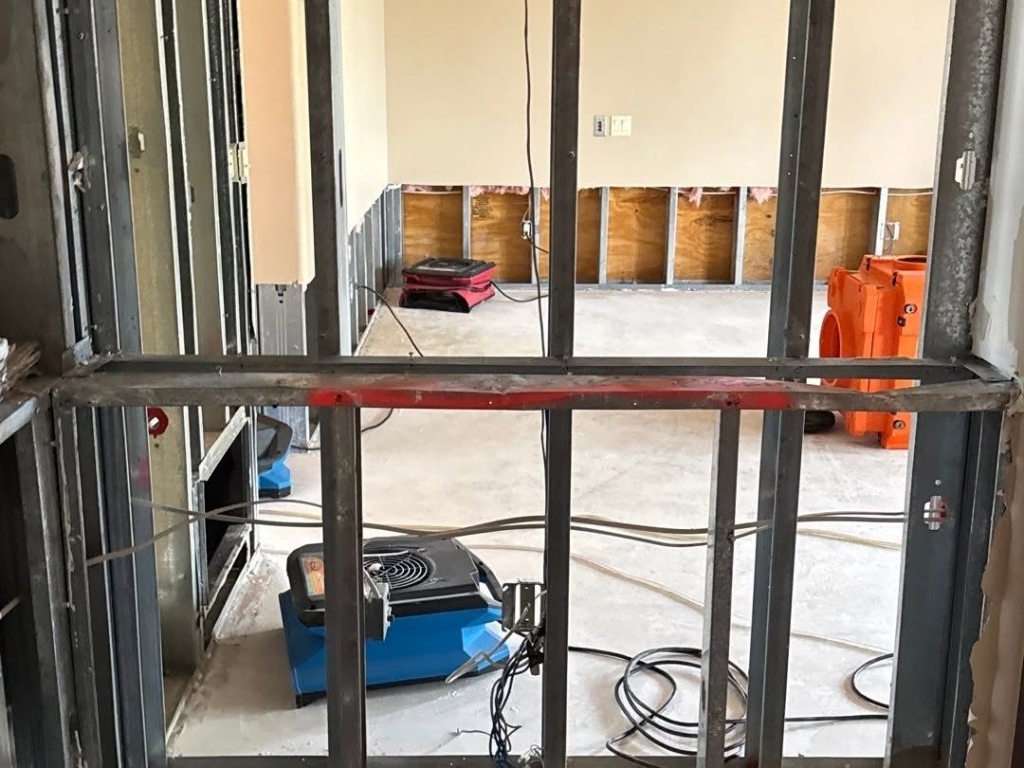
Every response performed by Valley Restoration Pros is documented through photographic and thermographic records:
Comprehensive Surprise medical office RO dialysis skid rupture flood cleanup Technical Manual & Operational Standards
Exhaustive engineering protocols, psychrometric calculations, geological multipliers, and step-by-step restoration standards for Maricopa County properties:
Executive Emergency Abstract: Surprise Medical Office Reverse Osmosis (RO) Dialysis Skid Rupture & Clinical Flood Containment
Outpatient hemodialysis facilities, ambulatory surgical centers, and clinical nephrology practices represent mission-critical healthcare environments where structural continuity directly safeguards human life. Positioned within the rapidly expanding Surprise City Center Medical District—flanking the major arterial intersection of Bell Road and Litchfield Road, adjacent to Banner Del E. Webb Medical Center and regional specialty healthcare complexes—commercial dialysis centers provide life-sustaining renal replacement therapy to hundreds of vulnerable end-stage renal disease (ESRD) patients every week. Central to daily clinical operations is an industrial-scale medical water purification plant: an integrated, multi-stage water treatment skid that continuously processes municipal drinking water through sediment filtration, dual cation-exchange softening resins, granular activated carbon (GAC) chloramine scrubbing beds, and high-pressure reverse osmosis (RO) membrane arrays to produce pharmaceutical-grade permeate water.
When an industrial medical RO skid suffers an acute mechanical failure—such as a catastrophic fracture of a multi-stage stainless steel vertical booster pump seal, a high-pressure fiberglass reinforced polymer (FRP) membrane pressure vessel rupture at 250 to 450 PSI, or an unplasticized polyvinyl chloride (PVC) / cross-linked polyethylene (PEX) distribution manifold weld blowout—the volumetric fluid release is instantaneous and uncontrolled. Because medical water purification loops run continuously 24 hours a day to prevent microbial biofilm formation and stagnation within distribution lines, a pressurized skid breach that occurs during unattended overnight hours can discharge 3,000 to 6,000+ gallons of ultra-pure permeate water across the facility before clinical morning staff arrive. When healthcare facility engineers, clinical nurse managers, or medical building administrators discover an active water plant inundation, mobilizing immediate emergency water extraction protocols is paramount to prevent catastrophic structural destruction.
Unlike domestic plumbing leaks, medical reverse osmosis permeate water presents unique and aggressive physical challenges. Having been thoroughly stripped of all dissolved minerals, calcium ions, and carbonates, purified RO water possesses an intense chemical hunger, low electrical conductivity, and high osmotic potential. It aggressively leaches free lime and calcium hydroxide from commercial concrete sub-slabs, accelerates the hydrolytic debonding of adhesives underneath heat-welded commercial sheet vinyl flooring, wicks rapidly upward through interior gypsum drywall partitions, and saturates sub-slab utilities. Valley Restoration Pros maintains a dedicated healthcare emergency restoration division experienced in complex commercial water damage mitigation throughout the Northwest Valley, engineered to stabilize clinical environments, protect multi-million-dollar medical equipment, and maintain full compliance with healthcare accrediting organizations.
Clinical Disaster Response Mandate
Hemodialysis treatment centers cannot absorb prolonged multi-week closures without forcing medically fragile ESRD patients into already strained regional emergency departments for emergency dialysis care. Our rapid emergency deployment protocol executes swift extraction, rigorous environmental containment, continuous industrial dehumidification, and hospital-grade sanitization adhering strictly to IICRC S500 / S520 and ICRA Level IV infection control standards, returning clinical spaces to certified operational status in record time.
Anatomy of Commercial Dialysis RO Skid Failures: Hydrodynamic Pressures & Permeate Corrosiveness
To design and execute an effective clinical restoration strategy, restoration specialists must master the internal mechanical architecture, thermodynamic forces, and hydraulic dynamics of a modern commercial medical reverse osmosis water treatment skid. Serving an outpatient clinic with 16 to 32 hemodialysis stations, a commercial skid incorporates raw feed boost pumps, dual multimedia depth filters, twin alternating water softeners for calcium and magnesium ion exchange, dual carbon filter beds to eliminate municipal chloramines, chemical anti-scalant dosing systems, multi-stage vertical centrifugal booster pumps generating operating head pressures between 200 and 450 PSI, semi-permeable thin-film composite (TFC) membrane housings, and a closed-loop distribution manifold constructed of polyvinylidene fluoride (PVDF), high-purity polypropylene, or 316L sanitary stainless steel.
Catastrophic mechanical failures across dialysis RO skids typically originate from distinct physical breakdown mechanisms:
- High-Pressure FRP Membrane Pressure Vessel Casing Rupture: Fiberglass reinforced plastic (FRP) membrane housings undergo continuous cyclic stress during automated high-pressure flushes and sanitization cycles. Material fatigue, microscopic resin delamination, or end-cap retaining snap-ring failure under 300+ PSI pressure can trigger a sudden explosive casing fracture, releasing a violent torrent of pressurized water across the equipment suite floor.
- Booster Pump Mechanical Seal Catastrophe: Multi-stage centrifugal stainless steel booster pumps experience premature mechanical seal failure when cavitation occurs due to upstream inlet filter clogging, pressure drops in the municipal supply, or air entrapment. Once ceramic-silicon carbide seal faces disintegrate, high-velocity water bypasses pump housings at 20 to 50 gallons per minute.
- Distribution Loop Thermal / Chemical Stress Fractures: Modern medical RO systems utilize automated periodic thermal sanitization (circulating hot water at 185°F / 85°C) or chemical ozone / peracetic acid sanitization cycles. Repeated thermal expansion and contraction cycles degrade unplasticized pipe joints, schedule 80 PVC transition fittings, and elastomeric seals, resulting in catastrophic piping fractures requiring emergency burst pipe repair and fluid abatement.
- Concentrate / Brine Reject Line Disconnect: The RO reject stream, carrying hyper-concentrated minerals, sulfates, and scale-forming ions, runs under high backpressure. If barbed connectors, Victaulic clamps, or drain couplings disconnect, corrosive brine water inundates the utility room, spreading hazardous high-conductivity fluids across building structures.
A critical, often misunderstood physical phenomenon in dialysis flood scenarios is the chemical aggressiveness of ultra-pure permeate water. Permeate water produced by medical RO skids has an electrical conductivity of less than 5 to 10 µS/cm and total dissolved solids (TDS) approaching zero. Because this water is completely demineralized, it exists in a state of chemical disequilibrium. When pure permeate floods commercial concrete slabs and architectural finishes, it actively leaches divalent calcium ions (Ca2+) and free lime from Portland cement paste. Furthermore, it aggressively hydrolyzes commercial water-based adhesives beneath medical sheet vinyl, turning bonding polymers into an unstable emulsified slurry. Within hours, floor seams pull apart, bubbles form across patient bays, and capillary action pulls water deep into interior partitions.
Surprise City Center Medical District Environmental Multipliers: 18 GPG Hard Water, Caliche Heave & 115°F Desert Incubation
Restoring commercial healthcare properties in Surprise, Arizona demands a sophisticated understanding of regional hydrogeology, climatic extremes, and municipal water chemistry. The City of Surprise draws municipal drinking water from deep alluvial groundwater aquifers across the West Salt River Valley basin. This groundwater is characterized by extreme mineral hardness averaging 18 to 22 grains per gallon (GPG), equivalent to 310 to 375 parts per million (ppm) of dissolved calcium carbonate (CaCO3) and magnesium compounds, along with elevated dissolved silica levels (35 to 50 ppm SiO2).
This punishing mineral baseline exerts immense operational stress on medical pretreatment equipment in Surprise medical facilities along Bell Road, Litchfield Road, and Greenway Road. Upstream water softeners must regenerate continuously with massive salt volumes, and reverse osmosis membranes suffer accelerated fouling. If anti-scalant dosing fluctuates or pre-filtration fails, scale accumulation increases pressure differentials across membrane housings, driving internal head pressures past critical mechanical failure thresholds.
Surprise Geological & Climatic Multipliers Matrix
| Environmental Factor | Regional Baseline in Surprise, AZ | Direct Impact on Medical RO Skid Floods |
|---|---|---|
| Municipal Water Hardness | 18–22 GPG (310–375 ppm CaCO3) | Accelerates scaling on RO valves, pumps, and membrane housings, triggering high-pressure relief fractures. |
| Expansive Caliche Soil Strata | High-density calcium carbonate cement | Water migrating under foundations triggers differential soil heave, fracturing sub-slab plumbing lines and cracking concrete slabs. |
| Ambient Summer Temperatures | 110°F to 118°F (June–September) | Compresses mold incubation from 72 hours down to 18–24 hours inside wet healthcare wall cavities and ceiling plenums. |
| Monsoon Humidity Deluges | Spikes from 10% to 65%+ RH | Eliminates natural evaporative drying potential, necessitating heavy commercial desiccant dehumidification. |
Furthermore, the subsurface geology of Surprise consists of dense alluvial sedimentary layers interbedded with thick caliche horizons—calcium-carbonate cemented soil matrices that possess near-zero hydraulic permeability. When thousands of gallons of pure water escape a ruptured dialysis skid and seep through concrete expansion joints or perimeter foundation stem walls, the moisture cannot drain downward into the water table. Instead, water pools horizontally atop caliche shelves, saturating expansive clay soils and generating upward hydrostatic uplift pressures. If left unmitigated, this subsurface moisture saturation can lead to structural foundation displacement and require costly slab leak water damage restoration procedures to remediate sub-floor moisture pockets.
Immediate First-Hour Emergency Protocol: Clinical Safety Isolation & Fluid Shutoff Procedures
The initial sixty minutes following a commercial reverse osmosis skid failure determine whether an outpatient facility experiences a controlled 48-hour recovery or a catastrophic multi-week regulatory shutdown. Healthcare facility managers, nephrology nurses, and facility maintenance engineers must execute disciplined emergency containment before our rapid dispatch teams arrive on site.
First-Hour Dialysis Facility Emergency Checklist
- Electromechanical Power Interruption: Immediately activate the emergency stop (E-Stop) on the RO skid control panel. De-energize the dedicated 480V/208V 3-phase electrical disconnect servicing the high-pressure booster pumps to prevent motor burnout, short circuits, and personnel electrocution hazards in standing water.
- Hydraulic Feed & Loop Isolation: Close the primary quarter-turn municipal feed isolation ball valve upstream of the pre-filter sediment housing. Concurrently isolate the purified water storage tank discharge valve and the dialysis loop return shutoff valve to prevent back-siphoning of the entire distribution reservoir.
- Patient Safety & Evacuation Triage: If the rupture occurs during active clinical shifts, initiate calm, controlled patient disconnection procedures in accordance with clinical blood-safety protocols. Relocate non-ambulatory ESRD patients away from wet treatment bays to prevent slip-and-fall trauma across slick vinyl flooring.
- HVAC Environmental Zone Lockdown: Shut down the dedicated air handling unit (AHU) servicing the water treatment room and treatment bay floor. This prevents pressurized HVAC air from blowing aerosolized moisture droplets or mold spores into sterile medical prep suites and patient treatment zones.
- Deploy Spill Barriers & Surface Containment: Place weighted absorbent booms and rubber spill dams at door thresholds between the mechanical water room and patient corridors to restrict fluid flow toward clean clinical areas.
- Notify Professional Restoration Dispatch: Immediately call Valley Restoration Pros at (602) 847-9593 to mobilize our certified healthcare emergency response vehicle equipped with extraction equipment, ICRA containment materials, and industrial desiccant drying technology.
Restoration technicians specialize in high-capacity extraction and rapid stabilization across Northwest Valley healthcare assets. For clinics located across our Surprise water damage restoration service territory, our mobile units arrive within sixty minutes equipped to initiate deep physical extraction before moisture wicks deeply into interior building assemblies.
Infection Control Risk Assessment (ICRA) Level IV Containment & Medical Cleanroom Environmental Isolation
Unlike ordinary commercial offices or retail spaces, an outpatient dialysis center is categorized as a high-risk healthcare facility under the American Society for Healthcare Engineering (ASHE) standards. Patients undergoing hemodialysis suffer from compromised immune systems due to chronic uremia, anemia, and vascular access catheters. Any airborne dissemination of fungal spores (such as Aspergillus niger, Penicillium, or Stachybotrys chartarum) or aerosolized bacteria generated during demolition or structural drying poses life-threatening infection risks.
Our team implements strict ICRA Level IV Infection Control Protocols prior to introducing any mechanical drying equipment or disturbing any wet structural materials:
Airtight Polyethylene Envelopes
Erecting true floor-to-ceiling temporary containment barriers utilizing 6-mil flame-retardant virgin polyethylene film mounted on heavy-duty telescoping aluminum spring-loaded poles. All wall-to-floor and ceiling junctions are hermetically sealed with low-residue cleanroom tape.
Negative Pressure Engineering
Deploying commercial HEPA negative air filtration units ducted directly to the building exterior. We maintain a continuous negative pressure differential of at least -0.020 inches water column (-5.0 Pascals), measured and logged continuously via digital differential pressure manometers.
Two-Stage Antechambers
Constructing sealed transition vestibules with dual magnetic or zippered doorways and multi-layered adhesive walk-off mats. Personnel don and doff disposable Tyvek suits and boot covers within the antechamber to prevent tracking particulates into sterile medical corridors.
Real-Time Airborne Particle Logging
Operating six-channel laser particle counters calibrated to detect particulate concentrations down to 0.3 microns. We verify that ambient air outside the containment envelope remains strictly within baseline ISO Class 7 or 8 cleanroom thresholds throughout the project duration.
These exacting environmental barriers ensure that while high-velocity extraction and invasive sub-floor drying occur within the mechanical skid room and flooded patient pods, adjacent clean zones—such as central nursing stations, medication preparation rooms, and laboratory testing areas—remain entirely uncontaminated. Our containment procedures mirror the standards we deploy in compounding pharmacy ISO 5 cleanroom water damage projects, providing total infection control assurance for clinic medical directors.
Advanced Industrial Equipment Specifications & Medical-Grade Moisture Extraction Matrix
Removing thousands of gallons of standing demineralized permeate water from high-density commercial healthcare facilities requires industrial machinery engineered for maximum efficiency, continuous operation, and ultra-low noise thresholds. Consumer or light-commercial drying gear is entirely incapable of overcoming the deep sub-slab moisture entrapment common in concrete commercial medical buildings.
Valley Restoration Pros deploys an extensive fleet of specialized restoration machinery tailored specifically for medical facilities:
Enterprise Equipment Deployment Matrix
| Equipment Category | Manufacturer & Model | Performance Specifications | Clinical Application |
|---|---|---|---|
| Continuous Deep Extraction | Phoenix Hydro-X Xtreme Extractor / Rover HVE | Sub-surface weighted pressure extraction, 1,200 CFM vacuum motor | Removes 95% of standing permeate water from commercial sheet vinyl and concrete slab interfaces. |
| Industrial Desiccant Drying | Quest PowerDry 4000 / Phoenix D850 Desiccant | 850–3,000 CFM airflow, delivers air below 15 GPP (grains per pound) | Produces ultra-low vapor pressure environments to force deep capillary evaporation out of concrete sub-slabs. |
| Low-Grain Refrigerant (LGR) | Dri-Eaz Revolution LGR / Phoenix DryMAX XL | 140–180 pints/day AHAM removal, dual-stage bypass refrigeration | Maintains optimal ambient psychrometric gradients across clinical hallways and nurse work areas. |
| HEPA Air Scrubbing | DefendAir HEPA 500 / OmniAire 2000V | True 99.97% 0.3-micron filtration, variable speed, sealed housing | Continuous air exchange in containment zones, scrubbing all particulates and protecting patient zones. |
| Wall Cavity Injection Systems | Injectidry HP-PLUS / DriForce Wall Drying | Pressurized positive/negative dry air injection via 3/8" wall penetrations | Dries light-gauge steel stud framing and plumbing chaseways without broad drywall demolition. |
| Diagnostic Thermal Imaging | FLIR E96 / T540 Thermal Imagers & Protimeter MMS3 | 640x480 true infrared resolution, radio-frequency pinless moisture profiling | Forensic mapping of hidden sub-slab moisture migration paths, wall wicking, and ceiling plenum moisture. |
Executing comprehensive drying across large commercial footprints requires disciplined calculation of psychrometric loads. Our restoration engineers leverage our proprietary instant commercial cost estimator algorithms and S500 cubic-footage formulas to calculate exact equipment density, ensuring that target relative humidity levels below 30% are achieved within the first 24 hours of operation.
IICRC S500 / S520 Clinical Restoration Protocol: Step-by-Step Dialysis Suite Decontamination
Our clinical restoration process follows a meticulous, eight-stage protocol adhering strictly to the Institute of Inspection, Cleaning and Restoration Certification (IICRC) S500 Standard for Professional Water Damage Restoration and IICRC S520 Standard for Professional Mold Remediation. In medical environments, there is zero tolerance for guesswork. Every phase is scientifically measured, logged, and certified.
8-Stage Clinical Restoration Roadmap
- Initial Psychrometric Assessment & Thermal Mapping: Certified healthcare restoration specialists map the entire perimeter of moisture migration utilizing high-resolution FLIR radiometric infrared cameras and pinless radio-frequency moisture meters. Baseline environmental readings (ambient temperature, relative humidity, dew point, and grains per pound) are logged in our digital restoration software.
- Water Category Triage & Environmental Categorization: While initial RO permeate is pristine Category 1 water, contact with concrete slab residues, sub-floor soil deposits, or chemical brine instantly transitions fluid to Category 2 (Significant Contamination). If standing water remains unmitigated for more than 24 hours under Surprise's 115°F ambient heat, it degrades into Category 3 (Grossly Contaminated) due to bacterial amplification, necessitating aggressive antimicrobial protocols.
- ICRA Level IV Containment & Engineering Controls: Negative pressure air barriers are established at all entryways, isolating dialysis bays from clean clinic zones. HEPA scrubbers operate continuously to maintain 12+ air changes per hour (ACH) within the contained envelope.
- Bulk Permeate Fluid Extraction: Heavy-duty commercial extraction units pull standing water from mechanical rooms, corridors, and treatment areas. Specialized floor squeegee attachments extract water from welded vinyl floor seams and perimeter cove bases.
- Controlled Structural Demolition & Flood Cuts: Where moisture has wicked up gypsum partitions exceeding 15% moisture content, technicians execute laser-level flood cuts 12 to 24 inches above the highest wet mark. Saturated fiberglass batt insulation is removed, exposing light-gauge steel studs for direct decontamination.
- Hospital-Grade Antimicrobial Sanitization: Application of botanical or quaternary ammonium EPA-registered hospital-grade antimicrobials specifically formulated to neutralize Pseudomonas aeruginosa, Legionella, and fungal spores without releasing toxic volatile organic compounds (VOCs) that could harm respiratory-sensitive renal patients.
- Controlled Psychrometric Structural Dehumidification: High-capacity industrial desiccant and LGR dehumidifiers are balanced with low-profile axial air movers. The drying chamber is calibrated to generate an extreme vapor pressure differential, pulling entrapped moisture out of deep concrete capillaries into the air stream for mechanical condenser removal.
- Post-Remediation Verification & Clearance Testing: Independent environmental testing, including airborne fungal spore trap sampling, ATP surface luminescence testing (verifying <15 RLU on clinical surfaces), and surface microbial culture swabs. Once third-party clearance is achieved, containment is dismantled and documentation is certified for clinical re-occupancy.
This meticulous clinical pathway prevents recurring microbial blooms and ensures that healthcare institutions maintain complete compliance with local health authorities. When complex water intrusions impact healthcare facilities, facility managers trust our proven medical facility water damage restoration expertise to navigate the rigorous standards mandated by healthcare accrediting bodies.
Clinical Sheet Vinyl Flooring, Welded Seam Failure & Sub-Slab Moisture Entrapment Remediation
Modern outpatient hemodialysis facilities feature commercial-grade homogeneous sheet vinyl flooring installed with heat-welded seams and integral cove base flashings extending 4 to 6 inches up wall partitions. This seamless installation is engineered to provide an impermeable, hygienic barrier against blood spills, bodily fluids, and dialysis chemical solutions. However, when an industrial RO skid ruptures and floods the mechanical room, water finds microscopic vulnerabilities at floor drains, door thresholds, wall penetrations, and expansion joints, migrating beneath the impermeable vinyl membrane.
Once ultra-pure, demineralized permeate water becomes trapped between an impermeable sheet vinyl top-layer and a dense concrete sub-floor, it forms an enclosed moisture sandwich. The physical dynamics of this entrapment create three severe structural failure mechanisms:
- Hydrolytic Adhesive Emulsification: Commercial acrylic and latex-based flooring adhesives undergo chemical hydrolysis in the presence of continuous moisture and elevated pH. The adhesive bond breaks down into an oily, foul-smelling liquid, causing extensive floor blistering, bubbling, and complete debonding across dialysis bays.
- Osmotic Blistering & Vapor Pressure Spikes: Trapped moisture warms under the ambient facility heat, generating extreme vapor drive. Because water vapor cannot penetrate the vinyl, it creates pressurized bubbles that distort the floor, creating serious tripping hazards for elderly or wheelchair-bound patients.
- Anaerobic Microbial Colonization: The warm, dark, damp interface between adhesive and concrete serves as an ideal breeding ground for anaerobic bacteria and fungal micro-colonies. Odorous microbial volatile organic compounds (MVOCs) generate pungent musty odors that permeate through failed heat-welded seams into clinical air spaces.
Remediating entrapped sub-floor moisture requires precision technical intervention. In areas where floor adhesion remains intact, our technicians deploy high-volume negative-pressure floor mat extraction arrays combined with industrial desiccant air streams to draw moisture vapor out through perimeter access points. In zones where adhesive hydrolysis has occurred, the damaged vinyl must be surgically excised under ICRA containment, the concrete mechanically abraded to remove adhesive residues, and deep desiccant drying applied to bring concrete slab relative humidity (measured via in-situ ASTM F2170 relative humidity probes) below 75% before new medical-grade flooring can be installed. This specialized methodology is part of our comprehensive structural drying protocols engineered specifically for commercial healthcare facilities.
Dialysis Nephrology Clinical Compliance: CMS Conditions for Coverage, AAMI / ANSI Standards & Pure Water Validation
Restoring an outpatient dialysis clinic is not merely a construction exercise; it is an exacting regulatory undertaking governed by federal and state healthcare authorities. Outpatient dialysis facilities are strictly regulated under the Centers for Medicare & Medicaid Services (CMS) Conditions for Coverage (CfC) for End-Stage Renal Disease Facilities (42 CFR Part 494), as well as the Association for the Advancement of Medical Instrumentation (AAMI) / American National Standards Institute (ANSI) / ISO 23500 series standards for water treatment equipment for hemodialysis applications.
Following an RO skid mechanical rupture, facility directors must navigate rigorous compliance thresholds before clinical dialysis operations can legally resume:
Key Dialysis Water Purity & Environmental Standards
- Bacterial Colony Forming Unit (CFU) Limits: Under ANSI/AAMI/ISO 23500-3, standard dialysis water must contain less than 100 CFU/mL of total viable bacteria (action level at 50 CFU/mL). For ultrapure dialysate, the limit is strictly less than 0.1 CFU/mL. Any contamination of the RO loop during structural flooding demands complete chemical sanitization and laboratory verification.
- Bacterial Endotoxin Unit (EU) Thresholds: Endotoxins (lipopolysaccharides from gram-negative bacterial cell walls) must not exceed 0.25 EU/mL in standard dialysis water (action level 0.125 EU/mL) and 0.03 EU/mL for ultrapure dialysate. Endotoxins that breach dialyzer membranes trigger life-threatening pyrogenic reactions in patients.
- Chemical Contaminant Action Levels: Dialysis water must be tested for toxic heavy metals, nitrates, sulfates, and chloramines (chloramine limit: <0.1 mg/L). Floods that compromise pre-treatment carbon tanks or brine systems can introduce dangerous chemical imbalances into the clinical water stream.
- Arizona Department of Health Services (ADHS) Licensing: As a licensed healthcare institution in Arizona, major structural repairs, flood events, and infection containment disruptions must be documented in comprehensive incident reports available for ADHS health surveyor inspection.
Valley Restoration Pros coordinates closely with the clinic’s biomedical engineering technicians, medical director, and water treatment vendor to provide complete chain-of-custody documentation. We deliver certified environmental clearance reports confirming that ambient air quality, surface particulate counts, and structural dry standards comply fully with clinical re-licensure requirements, echoing the standards we maintain in specialized dialysis center water damage restoration in Phoenix facilities.
Dialyzer Station Utility Chaseways, Wall Cavity Infiltration & Structural Decontamination Safeguards
In a commercial hemodialysis center, patient treatment stations are connected to complex utility delivery infrastructure. Running behind treatment chairs are multi-compartment utility wall chaseways or subterranean trenches that house purified RO water supply and return loops, bicarb and acid concentrate distribution tubing, medical waste drainage pipes, electrical conduits, and low-voltage telemetry cables.
When high-pressure permeate water escapes an RO skid rupture, it rapidly flows along floor-wall perimeters and penetrates the base of these utility chases. Because utility chaseways are densely packed with cabling and plumbing, water becomes trapped in stagnant pockets that cannot be reached by standard room air movers. If left untreated, the moisture triggers aggressive fungal propagation across paper-faced gypsum and promotes galvanic corrosion across light-gauge metal framing and electrical junction boxes.
Utility Chase Decontamination Protocol
Our technicians deploy specialized structural cavity drying systems to remediate utility chases without requiring destructive demolition of expensive medical station headwalls:
- Micro-Borescope Cavity Inspection: Fiber-optic articulating borescopes are inserted through existing utility penetrations to inspect internal wall framing, verify insulation saturation levels, and confirm absence of pre-existing fungal growth.
- Negative-Air Cavity Vacuum Drying: We attach high-pressure suction manifolds to precision 3/8-inch access holes drilled behind vinyl baseboards, pulling warm, ultra-dry desiccant air downward through the wall cavity and exhausting moisture-laden air directly into HEPA filtration units.
- Electrical & Telemetry Integrity Audits: All moisture-exposed clinical power receptacles, GFCIs, and data connections are checked with digital insulation resistance testers (megohmmeters) to prevent electrical shorts and patient equipment malfunction.
- Antimicrobial Aerosol Mist Decontamination: EPA-registered botanical biocides are fogged into sealed cavity chases to sterilize framing surfaces, neutralizing microbial growth without releasing corrosive vapors into clinical environments.
This meticulous approach protects the clinic’s expensive physical assets and ensures that critical dialyzer data connections and electrical pathways remain fully operational, similar to the precision measures we enforce during hospital MRI suite water damage restoration engagements.
Hyper-Local Case Study: Bell Rd & Litchfield Rd Surprise Outpatient Dialysis Center Skid Burst
In July 2024, during a punishing West Valley heatwave where daytime temperatures climbed to 116°F, an acute disaster struck a 24-station commercial outpatient hemodialysis center situated near the major retail and medical intersection of Bell Road and Litchfield Road in the Surprise City Center Medical District. At approximately 1:30 AM on a Sunday morning, while the clinic was unoccupied, the primary 400 PSI fiberglass membrane pressure vessel on the clinic’s multi-stage commercial reverse osmosis water skid suffered a catastrophic longitudinal casing split.
Because the facility’s automated high-pressure booster pump continued operating, an estimated 3,800 gallons of ultra-pure, demineralized RO permeate water discharged under pressure directly onto the water treatment room floor. Over the next four hours, the deluge breached the mechanical room threshold, flooding two primary patient treatment bays, four clinical exam rooms, the central nursing command station, the clean supply depot, and the patient waiting reception lobby. Standing water reached depths of 2.5 inches across 5,200 square feet of commercial sheet vinyl flooring.
Incident Timeline & Restoration Performance Metrics
| Operational Phase | Elapsed Time | Actions Performed & Psychrometric Milestones |
|---|---|---|
| Emergency Dispatch & Arrival | 38 Minutes | Emergency call received at 5:45 AM. Mobile crew on site in Surprise by 6:23 AM. Water feed isolated and mechanical room electrical breaker tripped. |
| Phase 1: Deep Extraction & ICRA Containment | Hours 1 to 6 | Extracted 3,600+ gallons of standing permeate water using two Rover HVE units. Erected ICRA Level IV 6-mil poly containment barriers with 4 HEPA scrubbers producing -0.025" WC negative pressure. |
| Phase 2: Surgical Demolition & Flood Cuts | Hours 6 to 14 | Excised 380 linear feet of saturated vinyl baseboard. Executed 18-inch flood cuts along non-critical perimeter partitions. Removed waterlogged R-13 insulation; preserved clinical headwalls. |
| Phase 3: Desiccant Drying & Vapor Gradient | Hours 14 to 54 | Deployed 1 Quest PowerDry 4000 desiccant (3,000 CFM) and 6 Phoenix DryMAX XL LGRs. Specific humidity dropped from 94 GPP to 28 GPP in 24 hours. Concrete slab equilibrium RH reduced from 98% to 73%. |
| Phase 4: Clearance & Clinical Turnback | Hours 54 to 72 | Third-party industrial hygienist conducted air and surface clearance. ATP surface testing achieved <10 RLU. ADHS notification completed. Clinic resumed patient dialysis by 6:00 AM Wednesday. |
By executing an aggressive, scientific restoration response, Valley Restoration Pros saved the facility over $240,000 in structural replacement costs and averted an estimated $180,000 in business interruption losses. Most importantly, not a single patient’s life-sustaining treatment regimen was permanently disrupted. Similar rapid recoveries are deployed across regional healthcare hubs for facilities requiring specialized reverse osmosis water filter flood cleanup services.
Commercial Insurance Claims Architecture, Psychrometric Moisture Logs & Pay-Per-Call Financial Clarity
Navigating a commercial property damage claim for a licensed medical facility is vastly more complex than standard commercial or residential losses. Large healthcare insurance carriers and independent adjusters require rigorous scientific documentation, time-stamped psychrometric records, equipment placement floorplans, and clear justification for every mechanical deployment and containment barrier.
Valley Restoration Pros provides seamless claims support designed to protect facility directors and commercial property owners. Every commercial engagement adheres to our core financial and operational commitments:
Our Commercial Client Transparency Commitments
- Free Comprehensive On-Site Damage Assessment: Our senior healthcare restoration estimators conduct an exhaustive, non-destructive initial site inspection, deploying infrared imaging and digital moisture profiling at zero upfront cost to evaluate the exact scope of water migration.
- Transparent Upfront Itemized Pricing Before Work Begins: We generate line-item estimates utilizing industry-standard Xactimate pricing software formatted in strict alignment with commercial healthcare property standards. You receive complete cost transparency prior to signing authorizations, with zero hidden surcharges or surprise billing.
- Assistance with Detailed Claims Documentation & Psychrometric Moisture Logs: We compile comprehensive forensic packages including initial moisture maps, daily temperature/RH/GPP logs, equipment operational hours, FLIR radiometric images, and third-party clearance certificates to substantiate your commercial business interruption and property loss claims.
In adherence to strict healthcare and insurance compliance standards, we provide objective, itemized invoicing directly to property owners and their designated risk management representatives. We do not make misleading promises that insurance carriers will automatically pay 100% of claims without client involvement; rather, we provide the rock-solid forensic documentation necessary to ensure claims are processed efficiently, smoothly, and without administrative friction.
Medical Facility Hardening & Preventative Engineering: Dual-Contained Piping, Flow Sensors & Skid Maintenance Procedures
Once an outpatient dialysis clinic has been successfully dried, sanitized, and cleared for patient operations, healthcare engineering leadership must implement robust facility hardening measures to ensure mechanical failures never result in catastrophic flooding again. Preventative engineering transforms vulnerable mechanical water rooms into resilient, fail-safe environments.
We advise healthcare facility managers and medical building engineers to incorporate the following commercial engineering safeguards:
Dual-Contained Piping Networks
Upgrading primary reverse osmosis permeate distribution lines from single-wall piping to dual-contained PVDF or polypropylene pipe systems. In the event of primary carrier pipe fracture, the outer containment pipe channels escaping fluid directly to a drainage hub without contacting building finishes.
Automated Solenoid Water Shutoffs
Installing normally closed, industrial-grade motorized ball valves or solenoid valves tied directly to the building automation system (BAS) and perimeter floor moisture sensor ropes. If moisture is detected in the skid room, the main water feed shuts off within 2 seconds.
Water Room Containment Curbing
Pouring 4-to-6-inch concrete containment curbs around the perimeter of the water treatment room and coating the floor slab with a chemical-resistant elastomeric waterproofing membrane. This converts the mechanical room into a sealed basin capable of containing 1,000+ gallons.
High-Capacity Floor Drains & Sump Wells
Ensuring water treatment skid rooms are equipped with dual 4-inch dedicated gravity drains or duplex submersible effluent pumps rated for at least 100 GPM, powered by facility emergency generator circuits to maintain drainage during power outages.
Implementing these preventative measures drastically minimizes facility vulnerability, ensuring that unexpected component fatigue or booster pump seal failure remains a localized mechanical incident rather than an enterprise-wide clinical catastrophe.
Emergency Operational Continuity: Mobile Water Treatment Interfacing & Temporary Dialysis Recovery
When a permanent reverse osmosis skid suffers catastrophic structural failure, rebuilding or replacing the primary RO membranes, high-pressure pumps, and electrical panels can require several days to multiple weeks. However, end-stage renal disease patients cannot skip treatments. Clinical directors must execute an emergency operational continuity plan to bridge the recovery window without compromising patient safety.
Our commercial healthcare division coordinates directly with mobile water treatment providers and clinical biomedical engineers to facilitate immediate operational continuity:
Mobile RO Integration Protocol
- Exterior Trailer Staging: Coordinating the placement of a mobile emergency dialysis water purification trailer in the facility parking area, establishing perimeter security fencing and weatherproof utility corridors.
- Temporary Feed & Loop Interfacing: Connecting temporary sanitary hoses from the exterior mobile RO unit to the building’s internal distribution loop through weatherproof wall port pass-throughs, bypassing the damaged mechanical room entirely.
- In-Line Chemical Sanitization: Performing rapid chemical or ozone sanitization across the distribution loop to ensure that no stagnant biological contaminants entered the piping during the skid rupture event.
- Immediate Lab Microbiological & Endotoxin Validation: Accelerating rapid-read endotoxin testing (Limulus Amebocyte Lysate / LAL assay) and rapid microbial culture plates to verify that temporary mobile water complies strictly with AAMI/ISO 23500 purity thresholds prior to connecting patients.
By executing structural drying within isolated ICRA containment chambers while simultaneously enabling temporary mobile water purification, clinics can resume essential treatments within 24 to 48 hours of an acute flood event. Healthcare administrators looking to prepare or respond to commercial water emergencies across Maricopa County can explore our comprehensive Valley-wide areas we serve to access dedicated 24/7 disaster response infrastructure.
Exhaustive Medical Technical FAQ: Surprise Commercial Dialysis RO Skid Flood Restoration
Why is reverse osmosis permeate water more damaging to commercial concrete and flooring adhesives than standard tap water?
Reverse osmosis permeate water has been stripped of virtually all dissolved minerals, electrolytes, and calcium carbonates, yielding an ultra-low total dissolved solids (TDS) concentration and electrical conductivity below 10 µS/cm. In accordance with Le Chatelier's chemical equilibrium principles, this demineralized water is chemically aggressive and hypotonic. When it contacts commercial concrete, it rapidly leaches free lime and calcium hydroxide from the cement matrix, increasing porosity. Concurrently, it aggressively accelerates the hydrolytic debonding of acrylic and polymer adhesives beneath commercial sheet vinyl flooring, transforming the adhesive layer into a non-cohesive emulsion that causes total floor failure far faster than mineral-saturated tap water.
What infection control standards must be enforced during restoration in an active dialysis facility?
Restoration in outpatient hemodialysis clinics must adhere to ICRA Level IV (Infection Control Risk Assessment) infection containment standards as established by the American Society for Healthcare Engineering (ASHE). This mandates airtight 6-mil flame-retardant poly containment envelopes, negative air machines maintaining a continuous differential pressure of at least -0.020 inches water column (-5.0 Pascals) exhausted to the exterior, two-stage antechambers with sticky mats for personnel entry/exit, and continuous 6-channel laser airborne particulate monitoring to ensure zero dust, microbial, or fungal spores migrate into sterile clinical bays where immunocompromised patients receive treatment.
How does Surprise's municipal water quality contribute to commercial RO equipment failures?
The City of Surprise municipal water system relies on deep groundwater wells with extreme mineral hardness ranging from 18 to 22 grains per gallon (GPG) and elevated dissolved silica (35 to 50 ppm SiO2). This heavy mineral burden places severe mechanical and chemical stress on pre-treatment water softeners and carbon filtration arrays. If scale-inhibitor dosing falters or softener resin experiences salt channeling, calcium carbonate and silica scale precipitate rapidly onto high-pressure RO membrane surfaces. This raises internal operating differential pressures, forcing booster pumps to run at maximum output (350+ PSI) and accelerating stress fatigue on membrane housings, fittings, and booster pump mechanical seals until catastrophic rupture occurs.
Can heat-welded clinical sheet vinyl flooring be salvaged after an RO flood, or must it be replaced?
Whether commercial sheet vinyl can be salvaged depends on the duration of water exposure, extent of adhesive hydrolysis, and whether water penetrated underneath the backing. If water is extracted immediately (within the first 2 to 4 hours) and thermal imaging confirms moisture remained atop the vinyl surface, the floor can be sanitized and dried in place. However, if permeate water migrated under heat-welded seams, perimeter cove bases, or floor drains, adhesive emulsification and sub-slab moisture entrapment almost always occur. In healthcare environments where sub-floor moisture promotes anaerobic bacteria and mold colonization that compromises infection control, unsalvageable vinyl must be excised under ICRA containment, the concrete abraded, and the slab dried to ASTM F2170 standards before reinstallation. In severe cases involving secondary biological contaminants or structural backups, our technicians also provide certified biohazard sewage cleanup and deep sanitation.
What steps ensure that mold does not develop in clinic walls during extreme 115°F desert summers?
In the Phoenix and Surprise summer climate where outdoor temperatures regularly exceed 115°F, indoor moisture accelerates fungal spore germination from standard 72 hours down to 18 to 24 hours. To prevent mold colonization, our teams immediately establish negative air pressure containment, execute rapid precision flood cuts to remove saturated drywall and insulation, apply EPA-registered hospital biocides, and deploy heavy-duty industrial desiccant dehumidifiers. These desiccants produce ultra-dry air with grains per pound (GPP) below 25, creating an inhospitable environment that halts microbial growth instantaneously. For facilities with pre-existing or delayed moisture challenges, we deploy comprehensive commercial mold remediation protocols backed by independent third-party laboratory clearance testing.
How do I initiate emergency dispatch and schedule an immediate inspection for my medical facility?
Healthcare facility directors, clinic administrators, and commercial property managers can connect directly with our 24/7 emergency restoration desk by calling (602) 847-9593 or by choosing to contact our emergency dispatch team online. Our rapid-response healthcare units arrive on site within sixty minutes equipped with complete extraction systems, containment barriers, and advanced drying technology to stabilize your facility immediately.
Verified Local Area Dispatch: Surprise, AZ
Official Geo-Coordinates: 33.6292° N, -112.3679° W • Maricopa County
Related Specialized Emergency Restoration Services
Explore specialized rapid-response mitigation protocols across Greater Phoenix and Maricopa County:
Valley-Wide Emergency Response Service Coverage
Our mobile restoration fleet is dispatched across the entire Phoenix metropolitan region, providing rapid 30 to 60 minute emergency response: