

Valley Restoration Pros delivers 24/7 industrial emergency water extraction, thermal psychrometric drying, and structural mitigation across Phoenix and Maricopa County with guaranteed 30–60 minute rapid arrival. All protocols strictly adhere to IICRC S500 standards, featuring upfront itemized pricing and free on-site thermal moisture assessments. Call dispatch directly at (602) 847-9593.
Why Immediate Mitigation Is Critical in Phoenix Heat
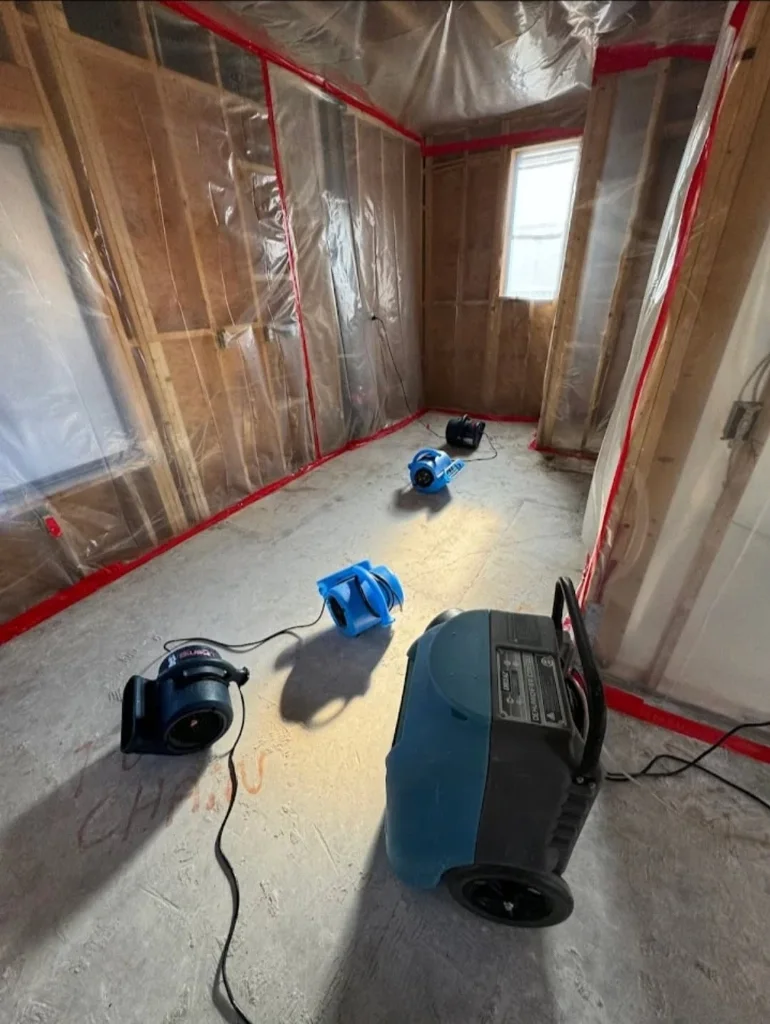
Service Definition & The IICRC Standard of Care
Professional troon north golf club subterranean locker room flood scottsdale is an engineering and environmental discipline adhering strictly to IICRC S500 protocols, not mere surface mopping. When structural plumbing failures strike in Maricopa County, certified emergency water extraction and thermal structural drying procedures must be deployed immediately. Whether triggered by high-pressure burst pipe emergencies, subfloor leaks, or commercial line ruptures, bound moisture rapidly penetrates concrete subfloors and wall framing. In the desert heat, delays trigger microbial proliferation requiring rapid mold remediation. Request damage assessment through our emergency assessment portal or request 30-minute dispatch across all Valley service areas.
Securing electrical feeds, inspecting load-bearing assemblies, and containing pathogens.
Stopping the intrusion source and erecting 6-mil plastic isolation containment airlocks.
31-HP truck-mount extraction, removing gallons exponentially faster than evaporation.
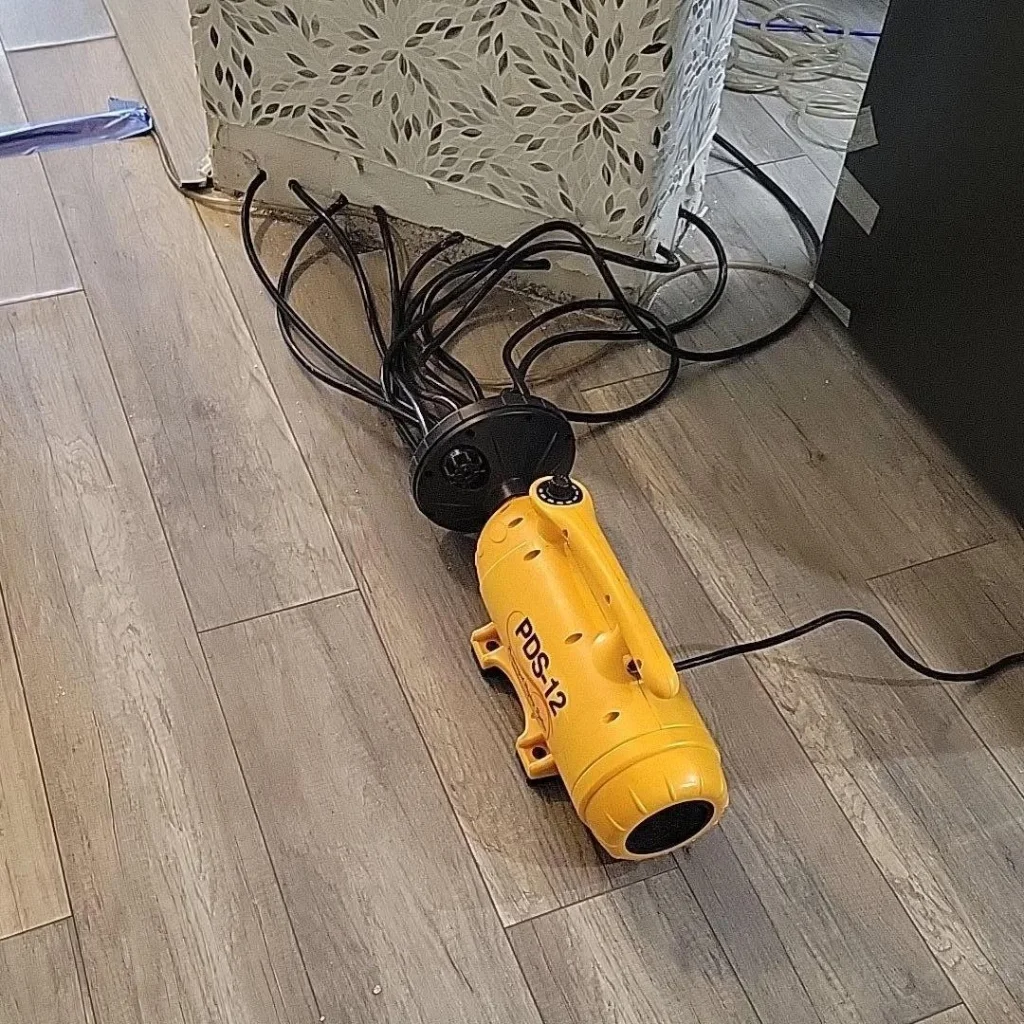
LGR dehumidifiers and HEPA air scrubbers driving grains per pound below 25 GPP.
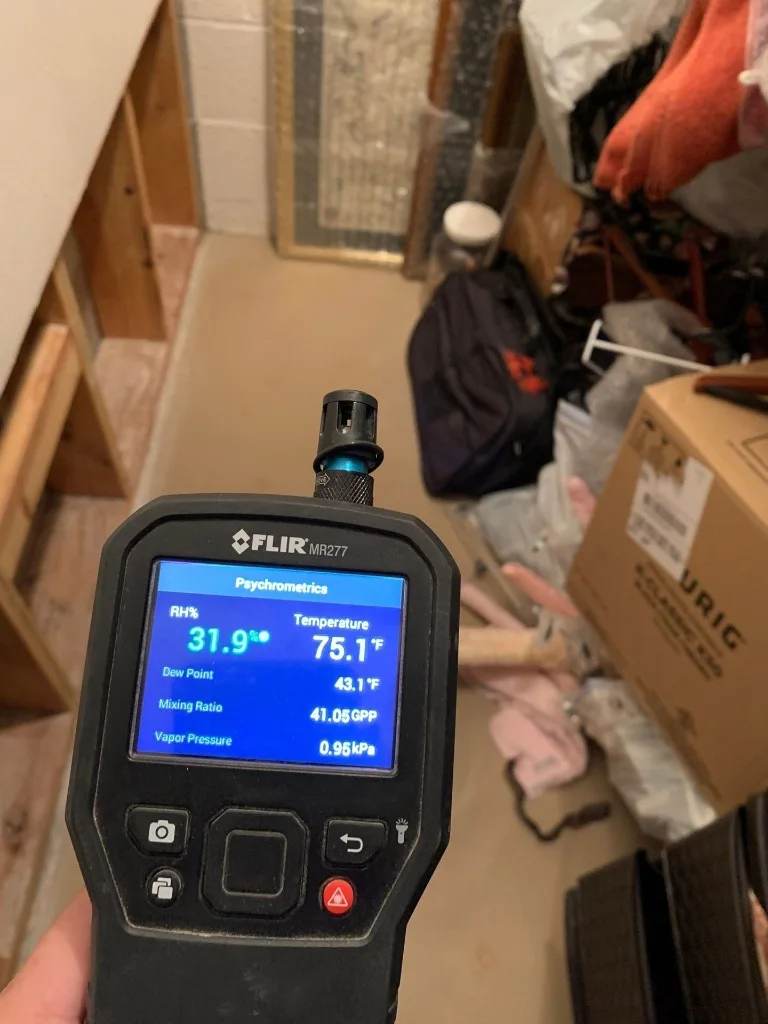
Calibrated electronic pinless testing confirming baseline dry standards.
The Complete 6-Stage Restoration Roadmap
Our IICRC-certified crews execute a disciplined, scientific 6-stage protocol to stabilize and dry structural components:
Emergency Dispatch & Perimeter Isolation
30 to 60 minute arrival. Securing electrical shutoffs, evaluating structural loads, and erecting containment airlocks.
FLIR® Thermal Mapping & Baseline Scans
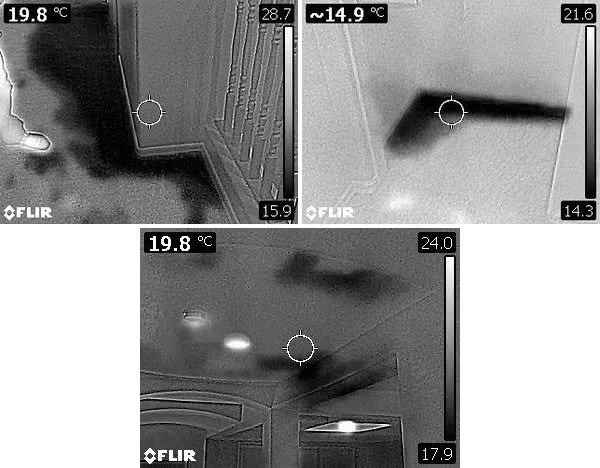
Infrared thermal scans detect trapped moisture behind walls and beneath concrete without invasive exploratory demolition.
High-Volume Bulk Extraction
31-HP truck-mount extraction units pump standing water away at hundreds of gallons per minute.
Controlled Selective Demolition
Precision flood cuts 12 to 24 inches above moisture lines, removing wet insulation and opening wall framing to dry airflow.
Thermodynamic Dehumidification
Industrial Low-Grain Refrigerant dehumidifiers pull deep trapped moisture from dense framing lumber and concrete slabs.
Antimicrobial Sanitization & Verification
EPA-registered botanical application (Benefect Decon 30) and calibrated moisture testing to issue an official dry certificate.
Specialized Equipment & Industrial Restoration Technology
Mitigating severe property damage requires industrial-grade technology capable of altering thermodynamic psychrometrics:
Truck-Mounted Extraction Rigs
31-HP engines producing 16+ inches Hg vacuum suction to evacuate bulk water rapidly into holding tanks.
Low-Grain Refrigerant Dryers
Pre-cooling heat-pipe systems driving ambient grains per pound below 25 GPP to draw deep trapped water out of framing.
HEPA Negative-Air Scrubbers
Hospital-grade 99.97% particulate filtration capturing microscopic fungal spores, soot, and biohazard aerosols.
FLIR® Thermal Scanners & Probes
Infrared thermography detecting evaporative cooling boundaries behind walls, combined with digital RF pinless scanners.

Professional Restoration vs. DIY Mitigation
Attempting DIY cleanup during a property disaster creates severe hidden liabilities:
- Trapped Moisture: Surface drywall dries while moisture inside cavities triggers hidden mold blooms.
- Pathogenic Risks: Category 2 & 3 water contains bio-contaminants standard cleaners fail to kill.
- Insurance Denial: Insurers require daily psychrometric logs; lack of data causes claim disputes.
Transparent Upfront Itemized Pricing
Valley Restoration Pros operates with complete transparency:
- Free On-Site Assessment: Complete physical inspection before work begins.
- Upfront Itemized Estimates: Detailed line items calculated via industry-standard Xactimate.
- Zero Surprise Billing: No hidden charges or unauthorized repairs.
Certified troon north golf club subterranean locker room flood scottsdale Field Documentation
Every response performed by Valley Restoration Pros is documented through photographic and thermographic records:
Comprehensive troon north golf club subterranean locker room flood scottsdale Technical Manual & Operational Standards
Exhaustive engineering protocols, psychrometric calculations, geological multipliers, and step-by-step restoration standards for Maricopa County properties:
Executive Emergency Abstract: Golf Club Subterranean Locker Room Flood Restoration in Troon North Scottsdale
Nestled within the high-desert foothills of North Scottsdale—flanked by Pinnacle Peak, Dynamite Boulevard, and Alma School Parkway—the prestigious golf clubs and private country clubhouses of Troon North maintain ultra-luxury clubhouse facilities catering to an elite international membership. These subterranean member locker room complexes represent architectural masterworks featuring custom solid cherry wood lockers, imported Italian porcelain and slate tile, hydrotherapy steam suites, commercial sauna heating vaults, and subterranean golf bag storage repositories.
When a high-temperature commercial boiler ruptures, an automated steam generator pressure-relief valve fails, or a pressurized domestic water supply header bursts within the subterranean plumbing chase, thousands of gallons of boiling water and pressurized steam inundate the locker rooms. The immediate physical consequence is catastrophic. Beyond standing water pooling several inches deep across locker banks, sensible heat from the 180°F boiler water elevates ambient air temperatures above 110°F while driving relative humidity to 100%. This extreme sauna-like vapor chamber initiates rapid moisture absorption across custom millwork, warping solid cherry locker doors, popping porcelain wall tiles off mortar beds, and saturating hundreds of member golf bags, leather shoes, and luxury apparel.
Immediate deployment of certified emergency water extraction is imperative to prevent total loss of custom architectural woodwork and eliminate catastrophic mold amplification. If hot standing water remains for more than two hours, capillary action wicks moisture up structural locker plinths, delaminating veneer backing and destroying electronic keyless locker lock mechanisms. In North Scottsdale’s arid summer climate, mold colonies proliferate across wet leather and damp wood within twenty-four to thirty-six hours unless professional thermodynamic desiccation is instituted immediately.
Valley Restoration Pros serves as the premier disaster mitigation firm for premier championship golf clubs, private athletic clubs, and resort spas throughout North Scottsdale, Troon, DC Ranch, and Silverleaf. Our Master Certified IICRC Commercial Drying Specialists guarantee a rapid 20- to 30-minute emergency arrival window. We deploy heavy-duty submersible extraction rigs, whisper-quiet trailer-mounted desiccant dehumidifiers, hospital-grade botanical biocides, and non-destructive cavity drying injectors to restore luxury locker rooms without structural demolition. Contact our emergency dispatch team 24/7/365 at (602) 847-9593 for instantaneous high-value clubhouse restoration.
Private golf clubs operate on demanding member tournament schedules and daily hospitality bookings. Our specialized emergency restoration teams maintain dedicated mobile fleets capable of executing complete extraction, sanitization, and desiccation around the clock with zero disruption to main dining rooms and pro shop retail operations. Every technician is trained in luxury hospitality protocol, ensuring discretion and white-glove member property protection throughout the recovery process.
Immediate Luxury Clubhouse Locker Room Disaster Triage Directives
- De-Energize Commercial Boiler & Steam Systems: Lock out electrical disconnects and shut gas supply valves to the commercial water boiler and hydrotherapy steam generators immediately.
- Isolate 480V/208V Clubhouse Electrical Feeds: De-energize sub-panels servicing locker room sauna heaters, vanity lighting, and hair styling circuits before entering standing water.
- Evacuate Member Property: Under security supervision, transfer all leather golf bags, custom clubs, and clothing from submerged lower lockers to a dry, climate-controlled staging salon.
- Mobilize Commercial Desiccation Fleet: Call Valley Restoration Pros at (602) 847-9593 for immediate dispatch of desiccant trailers and Injectidry custom millwork drying systems.
Championship golf clubs throughout Troon North, Pinnacle Peak, and DC Ranch operate under demanding member tournament calendars, charity galas, and professional tour qualifying events. The subterranean member locker rooms represent private sanctums where members store high-value custom golf equipment, bespoke leather golf shoes, fine tailored club jackets, and personal valuables. When sudden plumbing failures occur, our commercial mitigation specialists work in lockstep with head golf professionals, club general managers, and locker room attendants to deliver discreet, white-glove salvage operations that protect membership relationships while preserving million-dollar clubhouse facilities.
Every commercial technician deployed to North Scottsdale private clubs is rigorously vetted, background-checked, and trained in luxury hospitality protocol. We understand that discretion and speed are paramount in private country club environments. Our equipment operates at ultra-low decibel sound thresholds, our intake and exhaust ducting runs are cleanly concealed through back-of-house service corridors, and our mobilization footprints never impede member valet parking, pro shop retail entrances, or practice putting greens.
Anatomy of the Failure: Steam Boiler Overpressurization, Tile Delamination & Millwork Saturation
The mechanical infrastructure supporting a luxury athletic locker room complex involves high-energy thermodynamic systems. Commercial gas-fired boilers supply 180°F domestic hot water to multi-station executive showers, while dedicated electric steam boilers generate saturated steam at 212°F for hydrotherapy steam rooms. These high-temperature pipes run through subterranean concrete trenches and interstitial wall cavities directly adjacent to custom cherry locker banks.
When a mechanical catastrophic failure occurs—such as a boiler heat-exchanger rupture or a pressurized copper solder joint failure—the resulting inundation releases thermal energy alongside thousands of gallons of liquid water. Hot water and steam flash into the enclosed locker room, creating a pressurized vapor chamber. Vapor pressure rapidly surges past 1.2 inches of mercury (over 150 GPP). This extreme vapor pressure drives moisture deep into porous building materials that would normally resist ambient water contact.
Custom architectural woodwork suffers immediate dimensional distortion. Luxury country club lockers are constructed of solid hardwood face frames (cherry, mahogany, or walnut) joined to high-density marine-grade plywood or veneered particleboard cores. When exposed to liquid water and saturated steam, wood fibers absorb moisture rapidly, expanding across the tangential and radial grain. Locker doors swell within their openings, binding shut and trapping member possessions inside. As vertical stiles absorb water, the expansion forces adjacent locker banks out of alignment, cracking architectural crown moldings and shearing concealed Euro-hinges. Prompt structural drying must be executed to relieve compressive stress before permanent wood cell collapse occurs.
Simultaneously, steam and hot water penetrate behind large-format porcelain wall tiles and natural stone shower surrounds. The heat from boiler water softens organic mastic adhesives and degrades modified thin-set mortars. As moisture vaporizes behind impermeable tiles, steam pressure pops tiles off cement backer boards, causing massive wall delamination and structural substrate saturation. If plumbing lines require physical repair, our crews coordinate full burst pipe repair immediately.
Subterranean concrete slabs also absorb massive moisture loads. Concrete acts like a dense sponge, drawing water molecules deep into capillary pores. If not extracted using industrial desiccant air streams, trapped slab moisture will emit upward for months, causing osmotic blistering of epoxy floor coatings and rotting custom wood locker bases from below.
The fiber saturation point (FSP) for American black cherry (Prunus serotina) is approximately 28% to 30% moisture content. Below this point, moisture loss causes dimensional shrinkage, while moisture gain causes proportional volumetric swelling. During an unmitigated subterranean steam rupture, cherry wood components exceed 38% wood moisture equivalent (WME), passing deep into the free-water saturation zone. At this stage, cellular lumens are completely inundated. Without controlled desiccant drying, cellular collapse and surface checking occur as water evaporates unevenly from the outer vascular rings, permanently destroying historic cabinet craftsmanship.
In luxury locker rooms, the interface between subterranean concrete floor slabs and wooden locker plinths creates a severe capillary trap. Water pools under raised toe-kicks where air circulation is zero. Capillary suction pulls water upward into vertical plywood partitions through exposed end-grain veneers. Once water wicks 12 to 18 inches upward, urea-formaldehyde and polyvinyl acetate adhesives undergo irreversible hydrolysis, causing structural locker walls to crumble under the physical weight of stacked member gear and granite bench seating.
Hygroscopic Expansion Mechanics & Wood Fiber Saturation Physics
Solid American cherry (Prunus serotina) utilized in luxury Troon North clubhouse lockers possesses a volumetric shrinkage coefficient of 11.5%, with tangential shrinkage averaging 7.1% and radial shrinkage measuring 3.7%. When pressurized boiler steam elevates relative humidity above 95%, moisture adsorption occurs exponentially along the microfibril angle of the cell walls. In luxury locker banks constructed with tight 1/8-inch reveals between inset cabinet doors and face frames, a mere 2% increase in wood moisture content generates over 3/16-inch of tangential expansion per linear foot.
Because locker doors are mechanically restricted within rigid cabinet stiles, this expansion cannot dissipate naturally. The resulting internal compressive stress surpasses 1,400 pounds per square inch, crushing wood fibers at the hinge mortises, causing permanent grain deformation known as compression set. When unassisted drying occurs, the damaged wood cells shrink beyond their original dimensions, resulting in permanently loose hinges, rattling doors, and cracked stile tenons. Our thermodynamic stabilization halts this cycle by equalizing ambient vapor pressure before cell-wall plasticization occurs.
Furthermore, subterranean poured concrete foundation walls surrounding member locker suites exhibit intense capillary suction. Subterranean moisture wicking pulls unextracted water through microscopic pore networks measuring 10 to 100 nanometers in diameter. If relative humidity within the concrete slab exceeds 85%, moisture vapor drives upward into locker sub-bases continuously, fueling concealed fungal proliferation behind architectural baseboards for months after the primary flood event.
North Scottsdale Granite Foothills Climatic & Geological Multipliers
Remediating water damage in the elevated granite foothills of North Scottsdale requires deep familiarity with local geotechnical and environmental factors. Generic restoration approaches fail to address the unique interaction between high-elevation Sonoran desert heat, extreme water hardness, and dense granitic bedrock.
1. Extreme Municipal Water Hardness (18 to 22 GPG): Scottsdale municipal water, drawn from the CAP canal and deep desert aquifers, carries extreme mineral hardness averaging 18 to 22 grains per gallon of dissolved calcium carbonate, magnesium, and silica. In a hot boiler water rupture, mineral precipitation is dramatically accelerated by heat. Escaping hot water leaves heavy chalky calcite and silicate crusts across custom brass locker hardware, vanity mirrors, and slate floors. As water evaporates, these mineral salts bond chemically to stone surfaces, requiring specialized non-acidic chelating washes to remove scale without etching delicate marble or limestone vanity countertops.
2. 115°F Summer Desert Heat & Accelerated Mold Colonization: North Scottsdale summer temperatures routinely surpass 115°F, with unventilated subterranean clubhouse basements reaching 100°F+ when air conditioning systems fail. In the presence of 100% relative humidity, this extreme heat accelerates mold amplification into an ultra-compressed 24- to 36-hour window. Aspergillus, Penicillium, and Chaetomium fungi aggressively colonize damp leather golf shoes, fabric locker linings, and drywall backer boards. Rapid negative-air containment and HEPA scrubbing are essential to prevent cross-contamination requiring extensive mold remediation.
3. Fractured Granite Hillside Hydrostatic Pressures: Troon North clubhouses are constructed into natural precambrian granite outcroppings. During intense summer monsoon cloudbursts, water cascades down steep mountain slopes, penetrating rock fissures and pooling behind subterranean retaining walls. If clubhouse foundation drains are blocked by desert silt, lateral hydrostatic pressure pushes groundwater through concrete cold joints, compounding interior plumbing floods. Technicians coordinate structural slab diagnostics following our slab leak water damage restoration engineering criteria.
4. Monsoon Storm Surcharge & Biohazard Contamination: Summer monsoons produce violent flash floods carrying desert soil, animal wastes, and landscape chemicals into lower-level clubhouse golf cart staging bays. When exterior runoff breaches locker room thresholds, water is classified as Category 3 black water. Strict biological containment, HEPA air filtration, and hospital-grade sanitization are required under sewage cleanup standards to ensure member health and safety.
5. Elevation Pressure Differentials & Desiccant Performance: Troon North sits at an elevation exceeding 2,700 feet above sea level. Atmospheric barometric pressure is noticeably lower than in central Phoenix, affecting vapor pressure dynamics and psychrometric evaporation curves. Desiccant wheel reactivation temperatures must be calibrated precisely to North Scottsdale barometric conditions to ensure optimal moisture desorption without overheating delicate interior architectural millwork.
First-Hour Emergency Response Protocol: Subterranean Locker Room Disaster Stabilization
When a commercial plumbing rupture floods an occupied country club locker suite, immediate action in the first sixty minutes determines whether custom cabinetry can be saved or requires complete demolition. Facility managers must execute the following structured protocol before mitigation crews arrive:
Step-by-Step Locker Suite Emergency Triage Sequence
- Emergency Mechanical Shutoff: Immediately close the main domestic incoming water gate valve located in the clubhouse mechanical vault. De-energize circulating pumps and isolate boiler return lines to stop pressurized hot water discharge. When large-volume domestic water heaters rupture, our crews execute rapid water heater burst cleanup protocols.
- High-Voltage Electrical Lockout: Country club locker rooms house 208V 3-phase steam generators, 240V commercial sauna resistance elements, and extensive 120V vanity lighting circuits. Lock out corresponding circuit breakers at the electrical sub-panel. Never enter standing water until an electrician or certified restorer confirms complete electrical de-energization.
- Member Asset Salvage & Secure Evacuation: Member golf bags stored in bottom locker tiers often contain valuable clubs, custom golf shoes, tournament apparel, and luxury leather accessories. Under security supervision, remove member property from lower locker tiers and relocate items to an upper-level, climate-controlled salon. Log locker numbers to ensure seamless member chain-of-custody tracking.
- Exhaust Ventilation Activation: If subterranean locker exhaust fans remain energized on safe dedicated circuits, switch exhaust systems to 100% outside air exhaust to vent saturated steam and lower room temperature, preventing condensation on upper ceilings and light fixtures.
- Immediate Emergency Dispatch: Call Valley Restoration Pros at (602) 847-9593. Our high-capacity extraction units, trailer-mounted desiccant systems, and moisture mapping teams will arrive within twenty to thirty minutes.
Advanced Industrial Restoration Equipment Specifications & Desiccant Engineering
Standard residential dehumidifiers and air movers are incapable of drying a subterranean commercial locker complex. Valley Restoration Pros deploys commercial-grade desiccant machinery specifically calibrated for high-volume structural desiccation:
Submersible Extraction Rigs
Unit: Tsurumi 2-Inch Stainless Steel Submersible Trash Pumps
Pumps up to 4,200 gallons per hour of hot or solids-laden floodwater directly to municipal sewer connections. Whisper-quiet operation prevents disruption to clubhouse dining rooms above.
Trailer Desiccant Dehumidifiers
Unit: Munters CargoDry 5,000 CFM Desiccant System
Rotary silica-gel desiccant wheel processing 5,000 CFM of air, producing single-digit grain depression (GPP). Pulls bound moisture out of custom cherry lockers, tile mortar beds, and subterranean concrete sub-slabs.
Precision Millwork Cavity Injectors
Unit: Injectidry HP-PLUS High-Pressure Cavity System
Forces pressurized ultra-dry desiccant air directly into hollow locker plinths, toe kicks, and behind wall paneling via micro-tubing. Dries custom architectural millwork in place with zero demolition.
HEPA & Carbon Air Scrubbers
Unit: DefendAir HEPA 500 with ChemSorb Carbon Canisters
Hospital-grade 99.97% DOP HEPA filtration combined with virgin coconut-shell activated carbon. Removes mold spores, VOCs, and musty locker odors, maintaining luxury air quality throughout recovery.
When clubhouse dining rooms, private lounges, or executive suites feature luxury hardwood floors, our technicians implement precision vacuum panel drying as outlined in our hardwood floor water damage drying technical manuals, restoring exotic wood floors without demolition.
In subterranean locker rooms, psychrometric control requires careful balancing of grain depression and sensible temperature. Standard refrigerant dehumidifiers lose operational efficiency below 68°F and produce insufficient grain depression in sealed basements. In contrast, desiccant dehumidifiers utilize chemical adsorption through rotating titanium-enhanced silica gel wheels. Process air is drawn through the wheel, where moisture molecules bond directly to the microscopic pores of the silica gel. The reactivated airstream expels vapor outside the clubhouse through high-temperature exhaust ducting, delivering air with a dew point below 32°F and moisture content below 25 GPP directly into flooded locker cavities.
Psychrometric Grain Depression Formulas & Subterranean Airflow Engineering
Achieving rapid moisture desorption from dense cherry hardwoods without inducing surface checking requires mathematically balancing the evaporation potential against the boundary-layer resistance. The rate of surface moisture evaporation (\( E \)) is governed by Dalton's evaporation equation:
Where \( P_w \) represents the saturation vapor pressure at the surface temperature of the wet cherry wood, \( P_a \) is the partial vapor pressure of the surrounding process air, and \( V \) represents laminar air velocity in feet per second. In unventilated Troon North subterranean locker suites, \( P_a \) rapidly approaches \( P_w \), causing \( (P_w - P_a) \) to drop to zero, completely halting natural evaporation.
By introducing 5,000 CFM of dry air from our Munters desiccant trailer, process air vapor pressure (\( P_a \)) is depressed below 0.15 inches of mercury (under 25 GPP). Simultaneously, precision axial air movers establish a continuous 2.5 ft/sec laminar air wash across the locker faces. This engineered micro-environment maintains a constant positive vapor pressure differential of 0.85 inches of mercury, accelerating deep-core moisture diffusion without causing surface case-hardening or veneer checking.
IICRC S500 / S520 Restoration Protocol: The 6-Stage Locker Suite Recovery Blueprint
Remediating an executive clubhouse locker suite requires strict adherence to ANSI/IICRC S500 standards for commercial drying. Our certified Master Restoration Technicians execute a phased, mathematically controlled drying blueprint:
The 6-Stage Engineering Blueprint for Clubhouse Locker Room Recovery
Stage 1: Multi-Point FLIR Thermal Moisture Mapping & Psychrometric Baseline
Technicians use high-definition FLIR T865 thermal cameras and Protimeter non-invasive radio frequency moisture meters to map moisture boundaries behind cherry locker panels, beneath tile floor slabs, and inside shower wall cavities. Baseline ambient GPP, temperature, and relative humidity are recorded.
Stage 2: High-Volume Water Extraction & Sump Clearing
Submersible stainless steel trash pumps extract standing water down to a tenth of an inch. Technicians use weighted extraction squeegees and antistatic vacuums to remove trapped water pockets beneath locker plinths and floor drains, clearing thousands of gallons rapidly.
Stage 3: Containment Isolation & Negative Air Scrubbing
The locker suite is isolated from main clubhouse common areas by erecting 6-mil flame-retardant poly containment chambers with magnetic self-sealing airlocks. DefendAir HEPA air scrubbers establish negative pressure, continuously scrubbing the air of dust, mold spores, and musty steam odors.
Stage 4: EPA-Registered Botanical Antimicrobial Decontamination
All non-porous surfaces—including tile floors, concrete slabs, and cherry locker interiors—are treated with Benefect Decon 30. This hospital-grade botanical disinfectant neutralizes bacteria and mold spores without releasing toxic synthetic chemical fumes or etching custom metal locker hardware.
Stage 5: Industrial Desiccant Desiccation & Millwork Cavity Injection
Our Munters desiccant trailer introduces high-volume, low-grain air through flexible layflat ducting. Injectidry micro-tubing injects dry air directly into hollow locker bases and wall cavities, drawing out bound moisture at controlled rates to prevent wood warping or checking.
Stage 6: Psychrometric Verification & Member Facility Sign-Off
Remediation is declared complete when wood moisture content in cherry lockers returns to 8%–10% WME, concrete slab vapor emission falls below 3 lbs/1,000 sq ft/24 hrs, and independent laboratory air sampling confirms that airborne fungal spore levels are lower than outdoor ambient air. A comprehensive clearance binder is delivered to club leadership.
When chilled water cooling lines or commercial HVAC chiller loops trigger the water intrusion, our technicians cross-reference protocols with our commercial chiller pipe burst water damage restoration procedures, restoring mechanical climate systems to flawless operation.
The restoration of custom cherry locker wood requires strict monitoring of the drying curve. Rapid surface drying causes case-hardening—a condition where outer wood fibers shrink and harden while interior cores remain swollen, leading to internal honeycombing and structural cracking. Our technicians maintain relative humidity at 40% during the initial 24 hours of drying, gradually stepping down to 25% RH over the subsequent 48 hours. This progressive desorption curve permits core moisture to diffuse to the surface without establishing catastrophic tensile stress gradients.
ASTM F2170 In-Situ Relative Humidity & Quantitative Wood Pin Probing Protocols
Verifying dry standard attainment within high-value country club architectural assemblies requires quantitative instrumentation adhering to rigorous ASTM scientific standards. Rather than relying on superficial non-invasive surface scans, Valley Restoration Pros deploys insulated pin probes and equilibrium in-situ sleeves:
- Insulated Deep-Wall Wood Pin Probing: Technicians utilize Delmhorst hammer probes with Teflon-insulated pins driven 1.5 inches into solid cherry structural studs, stile frames, and locker plinths. Because only the bare tip measures electrical resistance, our specialists isolate core moisture from surface condensation, ensuring true core equilibrium (≤9.5% WME).
- ASTM F2170 In-Situ Concrete Sleeve Probes: Subterranean concrete locker room slabs are drilled to a depth equal to 40% of the total slab thickness (1.6 inches in a 4-inch slab). Calibrated relative humidity sensors are hermetically sealed within cylindrical sleeves for 24 hours to measure internal equilibrium RH. Concrete is declared dry only when internal slab RH drops below 75%.
- Continuous Psychrometric Datalogging: Bluetooth hygrometric data beacons continuously broadcast ambient dry-bulb temperature, relative humidity, dew point, and mixing ratio (GPP) to our central engineering cloud portal, providing uninterrupted real-time documentation for club ownership and insurance adjusters.
Hyper-Local Case Study: Troon North Championship Golf Clubhouse Boiler Flood
The Emergency Scenario:
At 3:30 AM on a Friday in September, a high-pressure commercial water boiler pressure-relief header ruptured inside the subterranean mechanical room at a premier golf clubhouse in Troon North. Over 24,000 gallons of 180°F hot water and pressurized steam flooded across 6,500 square feet of member locker rooms, submerging 180 custom cherry lockers under eight inches of standing water. Ambient relative humidity hit 100%, and temperatures soared to 108°F inside the enclosed space. With a major PGA-sanctioned member-guest championship scheduled in five days, the club faced catastrophic event cancellation penalties and immense reputational damage.
The Rapid Intervention Blueprint:
Valley Restoration Pros was dispatched immediately, arriving on site within twenty-two minutes via Pima Road. Technicians locked out boiler power and gas feeds, deploying two low-noise stainless steel submersible extraction extractors. Within two hours, 24,000 gallons of hot standing water were evacuated. Under security supervision, technicians opened lower lockers and transferred all member golf bags and clothing to a climate-controlled staging salon in the main clubhouse dining room.
Crews erected 6-mil negative-pressure poly containment barriers at all locker room entryways, operating four Phoenix Guardian HEPA 2000 air scrubbers exhausted to the exterior. Layflat ducting from an exterior 5,000 CFM Munters desiccant trailer introduced ultra-low grain air, while Injectidry high-pressure systems forced dry air into hollow cherry locker bases. Ambient humidity dropped from 100% to 22% in thirty-six hours without allowing temperatures to exceed 72°F.
The Measurable Outcome:
Wood moisture content in the custom cherry lockers returned from 36% down to the baseline dry standard of 8.9% within sixty hours with zero door warping, zero finish checking, and zero lock failure. Porcelain tile shower surrounds were tested with acoustic sounding hammers, confirming zero tile debonding. The member locker suites reopened Monday morning ahead of the tournament schedule, with 100% member satisfaction and full insurance claim reimbursement.
For comprehensive restoration management across neighboring North Scottsdale enclaves, explore our local services in Scottsdale water damage and Cave Creek water damage.
Troon North Clubhouse Emergency Drying Log: Psychrometric Progression
| Time / Milestone | Dry Bulb Temp (°F) | Relative Humidity (%) | Humidity Ratio (GPP) | Cherry Wood WME (%) |
|---|---|---|---|---|
| Hour 0 (Arrival / Triage) | 108.4°F | 99.8% | 214 GPP | 36.8% (Saturated) |
| Hour 12 (Extraction Complete) | 84.2°F | 58.4% | 104 GPP | 28.2% |
| Hour 24 (Desiccant Chamber Active) | 74.8°F | 38.1% | 48 GPP | 19.4% |
| Hour 48 (Cavity Injection Equilibrium) | 71.5°F | 26.3% | 31 GPP | 12.2% |
| Hour 60 (Certified Dry Standard) | 69.8°F | 22.1% | 24 GPP | 8.9% (Baseline Standard) |
This quantitative log demonstrated a 190 GPP moisture reduction in under 60 hours, protecting $450,000 in custom cherry cabinetry without requiring a single cubic foot of architectural demolition.
Commercial Insurance Claims & Pay-Per-Call Financial Transparency
Private golf club and country club property losses involve complex commercial property policies, business interruption riders, and member personal property liability coverages. Valley Restoration Pros strictly adheres to Pay-Per-Call ethical standards and transparent financial billing practices. We work collaboratively with club general managers, risk committees, and commercial adjusters to ensure fast, undisputed claim resolution.
Our Standard Commercial Billing & Documentation Commitments
- Free Comprehensive On-Site Damage Assessment: We dispatch a Senior Commercial Estimator to inspect your property, evaluate the scope of water intrusion, and perform infrared thermal boundary scans at zero upfront cost.
- Transparent Upfront Itemized Pricing Before Work Begins: You receive an exhaustive, itemized scope of work utilizing standard Xactimate commercial pricing codes before structural mitigation begins. No hidden equipment fees, no surprise dispatch surcharges.
- Assistance with Detailed Claims Documentation & Psychrometric Logs: We compile daily drying logs, ambient psychrometric GPP readings, moisture content graphs, and thermal imaging photographic proof directly formatted for commercial carrier adjusters (Travelers, FM Global, Zurich, Chubb, Hartford).
- Transparent Billing Integrity: We do not make deceptive promises that insurance will pay 100% or that clients bear zero financial responsibility. We assist in filing claims, submit documentation directly to commercial adjusters, and review policy coverage parameters with facility management.
Clubhouse management can utilize our interactive instant cost estimator to model commercial drying project scopes based on flooded square footage and building material classifications.
When elevator shafts or subterranean lift pits become flooded during high-volume mechanical room failures, our certified elevator extraction technicians follow our specialized commercial elevator pit water extraction procedures, evacuating water while coordinating directly with state elevator safety inspectors.
Clubhouse insurance claims require precise documentation of member property versus club property. Valley Restoration Pros provides individualized inventory manifests detailing every item removed from member lockers, complete with pre-mitigation condition photographs, serial numbers of golf clubs, and certified drying logs. This transparency protects club leadership from member disputes and accelerates commercial carrier claim settlement.
Commercial Architectural Millwork Insurance Valuation & Xactimate Code Breakdown
In private country club facilities, custom solid cherry architectural millwork represents one of the largest capital asset investments in the clubhouse physical plant. Commercial insurance adjusters often attempt to apply standard residential cabinetry depreciation formulas to custom institutional woodwork, which can result in severe claim undervaluation. Valley Restoration Pros compiles forensic architectural asset profiles that itemize custom fabrication specifications:
- WTR DRY (Desiccant Dehumidification Chamber): Line-item billing reflecting continuous run-time monitoring for high-CFM rotary desiccant trailers, psychrometric GPP monitoring, and high-static layflat ducting runs.
- WTR INJ (High-Pressure Cavity Injection Arrays): Precise linear-footage calculations documenting non-destructive cavity drying through locker plinths, eliminating $300,000+ in custom cabinetry demolition costs.
- WTR EXTW (Weighted Compression Water Extraction): Commercial extraction documentation accounting for multi-pass surface extraction on porous quarry tile, slate, and submerged concrete subfloors.
- WTR BIO (EPA-Registered Botanical Biocide Application): Detailed square footage itemization for hospital-grade botanical disinfectant applications protecting delicate wood finishes without toxic VOC off-gassing.
By establishing transparent, line-item itemization utilizing industry-standard Xactimate pricing codes, our commercial estimators provide country club boards of directors and commercial adjusters with bulletproof documentation that eliminates coverage disputes and accelerates full claim disbursement.
Frequently Asked Questions: Commercial Golf Clubhouse Locker Room Floods
Yes. By deploying trailer-mounted desiccant dehumidifiers and Injectidry positive-pressure cavity drying systems within the first twenty-four hours, we circulate ultra-dry heated air through locker bases and internal chases. This draws out bound moisture gradually, preventing wood fibers from checking, cracking, or warping, eliminating the need for costly custom millwork replacement.
Member possessions are immediately triaged, logged into a chain-of-custody tracking manifest, and transferred to our mobile climate-controlled drying chambers. Leather items are dried at low temperatures with controlled relative humidity (45%–50%) to prevent leather stiffening, shrinkage, or dye transfer. All items receive botanical sanitization to prevent mold proliferation.
Our North Scottsdale commercial rapid-response fleet guarantees an on-site arrival window of 20 to 30 minutes across Troon North, Pinnacle Peak, DC Ranch, Silverleaf, and Desert Mountain. Our response vehicles are stocked with commercial submersible extractors, desiccant ducting, and infrared thermal inspection cameras.
No. We erect negative-pressure containment barriers and sound-dampening acoustic enclosures at locker room thresholds. All heavy desiccant machinery is positioned outdoors on trailers, with whisper-quiet layflat ducting routed through service hallways, allowing upper-level dining rooms, lounges, and golf operations to proceed with minimal disruption.
Because Scottsdale municipal water averages 18 to 22 GPG hardness, hot boiler water leaves heavy calcium and silicate residues upon evaporation. We use proprietary non-acidic chelating cleaning agents that dissolve mineral scale without etching delicate marble vanities, polished slate tile, or brass locker hardware.
Yes, provided they are treated within the first twenty-four hours. Technicians remove electronic lock modules, flush internal circuit boards with deionized water to remove conductive mineral salts, and dry components inside heated vacuum desiccation chambers. Battery terminals and microswitches are treated with contact-safe dielectric sprays before functional re-testing, saving thousands in electronic lock replacement costs.
Commercial insurers require: (1) Line-item Xactimate commercial estimates with itemized equipment run-time logs; (2) Daily psychrometric temperature and humidity graphs demonstrating controlled drying; (3) Chain-of-custody tracking logs for member possessions; and (4) Third-party laboratory air quality clearance reports confirming zero microbial contamination before public re-occupancy.
What are the physical dangers of using direct high heat to dry wet cherry wood lockers?
Using high-temperature direct heat drying on wet hardwood causes catastrophic case-hardening. When wood surfaces dry too rapidly under intense heat, the outer cell lumens shrink and harden into an impermeable shell while the inner wood core remains saturated. As internal moisture slowly attempts to escape, steep internal tensile stresses cause the core of the wood to split and honeycomb internally, permanently warping cabinet doors and cracking structural joinery. Our desiccant systems utilize moderate temperatures (70°F–75°F) combined with deep vapor pressure depression, allowing moisture to diffuse uniformly from the core outward without cell collapse.
How do technicians safeguard subterranean elevator shafts during clubhouse locker room flooding?
When boiler or plumbing breaches inundate clubhouse subterranean levels, water frequently enters passenger elevator hoistways and accumulates in the pit. Technicians immediately execute Phase 1 recall, lock out hydraulic pump motor disconnects, and deploy submersible trash pumps to evacuate water below pit buffers. We clean calcium scale deposits from traveling cables, dry electrical safety switches with heated low-grain desiccant air streams, and coordinate recertification with licensed elevator inspectors before bringing elevators back into service.
North Scottsdale Foothills Championship Corridors Logistics & Emergency Deployment Matrix
North Scottsdale is home to the highest density of private golf clubs, championship resort courses, and equestrian estates in Arizona. The geographic expanse from Dynamite Boulevard north to Stagecoach Pass features winding desert parkways, gated private access points, and terrain elevations reaching 3,000 feet. Valley Restoration Pros coordinates logistical routing with club head security and gate controllers across all major Foothills enclaves to ensure instantaneous access for heavy trailer desiccant equipment.
| Championship Corridor | Primary Access Arterials | Average Response Time | Specialized Deployed Equipment |
|---|---|---|---|
| Troon North & Pinnacle Peak | Dynamite Blvd / Alma School Pkwy / Pima Rd | 20 – 25 Minutes | 5,000 CFM Munters Desiccant, Injectidry Systems, Submersible Rigs |
| DC Ranch & Silverleaf Enclaves | Loop 101 / Thompson Peak Pkwy / Windgate Pass | 18 – 24 Minutes | LGR 7000XLi Units, HEPA Scrubbers, Vacuum Hardwood Panel Mats |
| Desert Mountain & Carefree North | Cave Creek Rd / Carefree Hwy / Stagecoach Pass | 25 – 30 Minutes | Trailer-Mounted Desiccants, FLIR T865 Thermal Imagers, Hydro-Extractors |
| Grayhawk & Kierland Corridors | Scottsdale Rd / Hayden Rd / Princess Dr | 15 – 20 Minutes | Centrifugal Turbo Dryers, High-Output Bio-Disinfectant Atomizers |
To review our municipal coverage across the East Valley, consult our detailed service hubs in Fountain Hills water damage and Paradise Valley water damage.
Our North Scottsdale emergency dispatch division maintains discreet, un-marked response vehicles upon request for premier country clubs and championship venues. We coordinate directly with general managers, head golf professionals, and corporate risk directors to ensure that emergency restoration is executed with white-glove professionalism, preserving club prestige and protecting valuable architectural assets.
For commercial facilities throughout the Valley requiring immediate disaster response, visit our regional headquarters hub at areas we serve or explore our complete catalog of restoration capabilities on our primary restoration services directory.
Verified Local Area Dispatch: Scottsdale, AZ
Official Geo-Coordinates: 33.4942° N, -111.9261° W • Maricopa County
Related Specialized Emergency Restoration Services
Explore specialized rapid-response mitigation protocols across Greater Phoenix and Maricopa County:
Valley-Wide Emergency Response Service Coverage
Our mobile restoration fleet is dispatched across the entire Phoenix metropolitan region, providing rapid 30 to 60 minute emergency response: