

Valley Restoration Pros delivers 24/7 industrial emergency water extraction, thermal psychrometric drying, and structural mitigation across Phoenix and Maricopa County with guaranteed 30–60 minute rapid arrival. All protocols strictly adhere to IICRC S500 standards, featuring upfront itemized pricing and free on-site thermal moisture assessments. Call dispatch directly at (602) 847-9593.
Why Immediate Mitigation Is Critical in Phoenix Heat
Pressurized 180 PSI Water-for-Injection (WFI) and deionized water loop breaches discharge scalding, mineral-starved 18.2 MOhm-cm ultrapure water that aggressively strips ions from concrete and metallic framing, transforming into a corrosive electrolyte that causes catastrophic electrical shorts across automated filling lines and freeze dryers. Vertical fluid cascading from interstitial walk-on ceiling plenums saturates terminal HEPA/ULPA filter gel-seals, inverting positive-pressure differential cascades (+10 to +15 Pa) and pulling unconditioned air, construction debris, and fungal spores into sterile ISO Class 5 filling zones. Phoenix municipal water supplies deliver 18 to 22 grains per gallon (GPG) mineral hardness; secondary chiller line or fire sprinkler breaches deposit insoluble calcium carbonate and silicate scale over electropolished 316L stainless steel, ruining surface passivation finishes. Summer ambient temperatures reaching 115°F in Greater Phoenix elevate unconditioned interstitial plenums to 130°F+, condensing the microbial and fungal incubation window down to 24 to 48 hours for rapid colonization of Aspergillus, Penicillium, and Pseudomonas aeruginosa. Sub-slab water infiltration through expansive caliche and clay soil formations induces differential upward hydraulic heave, cracking seamless chemical-resistant epoxy floor coatings and breaking hermetic perimeter sanitary cove base seals.

Service Definition & The IICRC Standard of Care
Professional commercial pharmaceutical cleanroom flood restoration phoenix is an engineering and environmental discipline adhering strictly to IICRC S500 protocols, not mere surface mopping. When structural plumbing failures strike in Maricopa County, certified emergency water extraction and thermal structural drying procedures must be deployed immediately. Whether triggered by high-pressure burst pipe emergencies, subfloor leaks, or commercial line ruptures, bound moisture rapidly penetrates concrete subfloors and wall framing. In the desert heat, delays trigger microbial proliferation requiring rapid mold remediation. Request damage assessment through our emergency assessment portal or request 30-minute dispatch across all Valley service areas.
Securing electrical feeds, inspecting load-bearing assemblies, and containing pathogens.
Stopping the intrusion source and erecting 6-mil plastic isolation containment airlocks.
31-HP truck-mount extraction, removing gallons exponentially faster than evaporation.
LGR dehumidifiers and HEPA air scrubbers driving grains per pound below 25 GPP.
Calibrated electronic pinless testing confirming baseline dry standards.
The Complete 6-Stage Restoration Roadmap
Our IICRC-certified crews execute a disciplined, scientific 6-stage protocol to stabilize and dry structural components:
Emergency Dispatch & Perimeter Isolation
30 to 60 minute arrival. Securing electrical shutoffs, evaluating structural loads, and erecting containment airlocks.
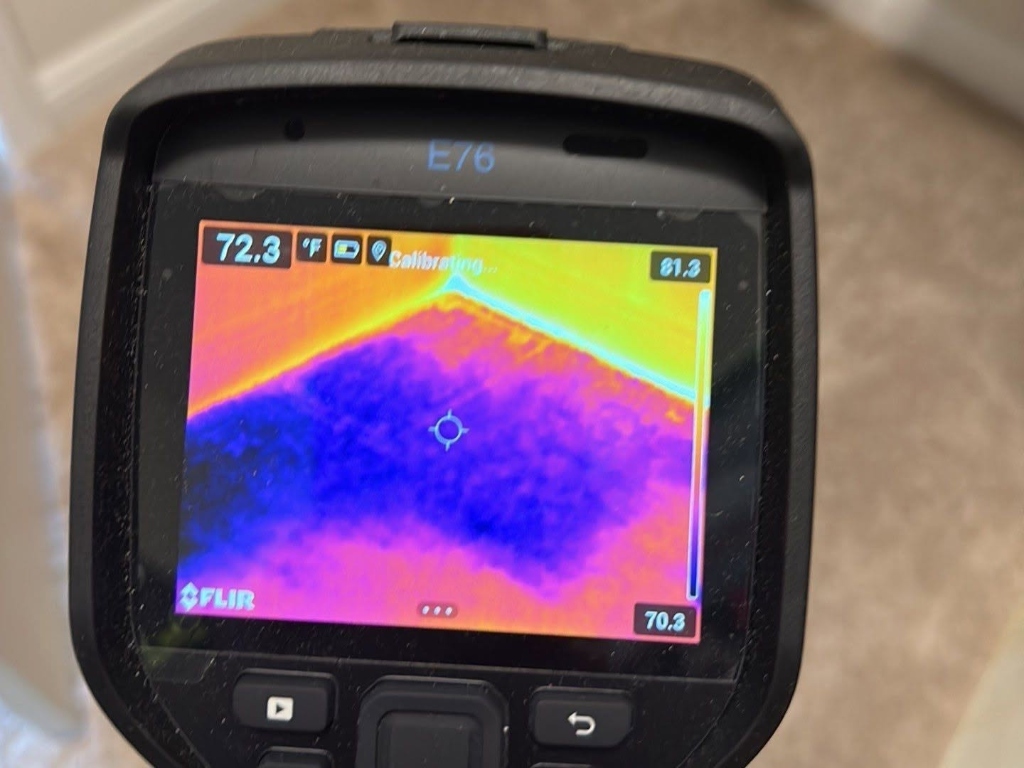
FLIR® Thermal Mapping & Baseline Scans
Infrared thermal scans detect trapped moisture behind walls and beneath concrete without invasive exploratory demolition.
High-Volume Bulk Extraction
31-HP truck-mount extraction units pump standing water away at hundreds of gallons per minute.
Controlled Selective Demolition
Precision flood cuts 12 to 24 inches above moisture lines, removing wet insulation and opening wall framing to dry airflow.
Thermodynamic Dehumidification
Industrial Low-Grain Refrigerant dehumidifiers pull deep trapped moisture from dense framing lumber and concrete slabs.
Antimicrobial Sanitization & Verification
EPA-registered botanical application (Benefect Decon 30) and calibrated moisture testing to issue an official dry certificate.


Specialized Equipment & Industrial Restoration Technology
Mitigating severe property damage requires industrial-grade technology capable of altering thermodynamic psychrometrics:
Truck-Mounted Extraction Rigs
31-HP engines producing 16+ inches Hg vacuum suction to evacuate bulk water rapidly into holding tanks.
Low-Grain Refrigerant Dryers
Pre-cooling heat-pipe systems driving ambient grains per pound below 25 GPP to draw deep trapped water out of framing.
HEPA Negative-Air Scrubbers
Hospital-grade 99.97% particulate filtration capturing microscopic fungal spores, soot, and biohazard aerosols.
FLIR® Thermal Scanners & Probes
Infrared thermography detecting evaporative cooling boundaries behind walls, combined with digital RF pinless scanners.

Professional Restoration vs. DIY Mitigation
Attempting DIY cleanup during a property disaster creates severe hidden liabilities:
- Trapped Moisture: Surface drywall dries while moisture inside cavities triggers hidden mold blooms.
- Pathogenic Risks: Category 2 & 3 water contains bio-contaminants standard cleaners fail to kill.
- Insurance Denial: Insurers require daily psychrometric logs; lack of data causes claim disputes.
Transparent Upfront Itemized Pricing
Valley Restoration Pros operates with complete transparency:
- Free On-Site Assessment: Complete physical inspection before work begins.
- Upfront Itemized Estimates: Detailed line items calculated via industry-standard Xactimate.
- Zero Surprise Billing: No hidden charges or unauthorized repairs.
Certified commercial pharmaceutical cleanroom flood restoration phoenix Field Documentation
Every response performed by Valley Restoration Pros is documented through photographic and thermographic records:
Comprehensive commercial pharmaceutical cleanroom flood restoration phoenix Technical Manual & Operational Standards
Exhaustive engineering protocols, psychrometric calculations, geological multipliers, and step-by-step restoration standards for Maricopa County properties:
Executive Emergency Abstract: Mission-Critical Pharmaceutical Cleanroom Flood Inundation in Greater Phoenix
Commercial pharmaceutical manufacturing facilities, sterile compounding pharmacies, and advanced biotechnology cleanrooms across Greater Phoenix operate under unforgiving environmental constraints. From high-density academic and commercial research laboratories clustered in the Downtown Phoenix Bioscience Core near East Van Buren Street and North 7th Street to the high-throughput manufacturing plants along the Chandler Price Innovation Corridor, Deer Valley, and the Scottsdale Airpark, these enterprise complexes maintain hyper-controlled environments governed by Current Good Manufacturing Practice (cGMP under FDA 21 CFR Parts 210 and 211) and ISO 14644-1 cleanroom standards. Within these specialized enclosures, production suites operate under strict non-viable particulate thresholds, ranging from ISO Class 5 laminar flow aseptic filling zones (strictly limited to 3,520 particles per cubic meter at 0.5 microns) to ISO Class 7 preparation suites and ISO Class 8 gowning airlocks. When an unexpected fluid disaster strikes—whether through a ruptured high-purity Water-for-Injection (WFI) loop, a sheared cleanroom cooling coil, or an overhead cleanroom fire sprinkler header breach—the consequences extend far beyond typical commercial property damage.
An uncontained flood inside a pharmaceutical cleanroom triggers an immediate, multidimensional operational crisis. Thousands of gallons of water overwhelm seamless monolithic epoxy or methyl methacrylate (MMA) floor coatings, infiltrate vertical utility risers, saturate walk-on interstitial ceiling decks, and breach terminal HEPA or ULPA filter gel-seals. More critically, the sudden introduction of high-volume water and vapor collapses the engineered positive-pressure differential cascade (+10 to +15 Pascals between adjoining classifications). As static pressure balances fail and return dampers become blinded by moisture, ambient particulate matter, chemical residues, and unconditioned desert air are drawn directly into sterile cleanroom envelopes. Millions of dollars in active pharmaceutical ingredients (APIs), sterile injectable batches, lyophilized biologics, cell therapy cultures, and automated robotic fill-finish machinery face catastrophic contamination or total destruction within minutes of initial water contact. For enterprise properties experiencing widespread water intrusion, our emergency protocols for commercial water damage ensure rapid structural stabilization.
Mitigating a disaster of this scale demands a level of scientific rigor, engineering precision, and specialized equipment that standard restoration contractors cannot provide. Valley Restoration Pros deploys an elite commercial disaster response team certified in IICRC S500 standard water damage restoration, IICRC S520 microbial remediation, and ISO 14644 environmental control procedures. Our rapid-response fleet maintains staging centers strategically positioned throughout the Phoenix metropolitan area, guaranteeing on-site arrival within thirty minutes of emergency dispatch. We deliver non-destructive structural water extraction, trailer-mounted desiccant dehumidification delivering ultra-low dewpoint airflow, continuous negative-pressure ULPA/HEPA particulate containment, and validated cGMP-compliant decontamination protocols engineered to safeguard active drug batches, preserve million-dollar equipment assets, and expedite regulatory re-certification.
Immediate Cleanroom First-Hour Containment Directives
- Emergency Fluid & Energy Isolation: Actuate localized pneumatic or manual sanitary isolation ball valves on the primary WFI, deionized water, or utility loop segment immediately, and execute electrical lockout/tagout (LOTO) on primary 480V cleanroom equipment panels and automated filling lines.
- Pressure Balance & Airflow Management: Immediately adjust Cleanroom Air Handling Units (AHUs) from full recirculation mode to 100% single-pass exhaust mode or controlled isolation mode to prevent the cross-migration of airborne moisture and particulate plumes into adjacent sterile suites.
- API & Cold-Chain Preservation: Shield automated robotic isolators and analytical chromatography consoles with static-dissipative polyethylene covers, and verify secondary emergency generator power circuits for ultra-low temperature (-80°C) biological storage freezers.
- Mobilize Commercial Cleanroom Restoration: Contact the Valley Restoration Pros commercial emergency command desk at (602) 847-9593 for thirty-minute deployment of trailer-mounted industrial desiccant dehumidifiers, DOP-certified ULPA negative-air scrubbers, and specialized hospital water damage restoration phoenix systems.
Anatomy of the Cleanroom Failure: High-Purity Water Loop Breaches & Fluid Dynamics
Pharmaceutical water processing and distribution infrastructure represents one of the most sophisticated fluid handling networks in modern engineering. Within sterile compounding and drug manufacturing facilities, high-purity Water-for-Injection (WFI) and USP purified water loops operate continuously under strict thermodynamic parameters. Standard WFI distribution systems circulate water at elevated temperatures between 80°C and 85°C (176°F to 185°F) in continuous turbulent flow (Reynolds numbers exceeding 10,000) to naturally suppress bio-film formation and bacterial endotoxin development. Constructed from 316L electropolished stainless steel with internal surface roughness averages (Ra) strictly below 15 micro-inches (0.38 microns), these loops utilize hygienic ASME BPE sanitary clamp connections sealed with fluoropolymer (PTFE), silicone, or ethylene propylene diene monomer (EPDM) gaskets.
Despite the stringent quality standards of pharmaceutical facility construction, these pressurized fluid networks remain highly vulnerable to catastrophic mechanical breakdown. Continuous thermal cycling between ambient staging temperatures and 121°C clean-in-place (CIP) or steam-in-place (SIP) sanitization cycles induces significant thermal expansion and contraction stress across piping headers. Over thousands of operational hours, elastomer gaskets experience compression set and cold-flow deformation, compromising seal integrity. Concurrently, rapid actuation of automated pneumatic diaphragms or solenoid sanitary valves generates intense hydrodynamic shockwaves—known as Joukowsky water hammer pressure spikes ($ΔP = ρ \cdot c \cdot Δv$). When a high-velocity fluid column decelerates instantaneously, the transient pressure pulse can exceed 300 PSI, far surpassing the elastic limits of fatigued tri-clamp ferrules, diaphragm seals, or orbital weld heat-affected zones. When a failure occurs, the facility faces a sudden, high-volume release of scalding, mineral-starved water cascading through ceiling interstitial decks. For related piping emergencies in high-consequence commercial facilities, our specialized burst pipe repair protocols provide rapid mechanical containment.
The physical fluid dynamics of high-purity water inside a classified environment differ fundamentally from ordinary municipal water damage. Ultrapure water possessing a theoretical electrical resistivity of 18.2 megohm-centimeters (MOhm-cm) is essentially ion-depleted and chemically aggressive. Upon discharging into the cleanroom interstitial plenum or across walkable ceiling grids, the water immediately acts as an aggressive chemical solvent, leaching free ions, calcium salts, silicates, and metallic trace elements from drywall assemblies, structural concrete decking, structural steel framing, and acoustic ceiling suspension systems. Within minutes, the non-conductive ultrapure fluid transforms into a highly conductive, mineral-rich electrolyte solution. As this contaminated water drips onto energized robotic filling lines, peristaltic dosing pumps, automated capping machines, and variable frequency drives (VFDs), it triggers devastating electrochemical corrosion, catastrophic short circuits, and irremediable control board degradation. When dealing with copper domestic supply lines or laboratory chilled water runs, facility managers should also be familiar with the warning signs of copper pipe pinhole leak water damage to prevent progressive structural erosion.
Positive-Pressure Cascade Collapse
Pharmaceutical cleanrooms rely on cascading positive pressure differentials (+10 to +15 Pa between successive classifications) to keep particulate matter out. Floodwater saturating return air louvers, exhaust dampers, and terminal HEPA filters blinds static pressure transducers, causing differential pressure control loops to collapse. This pressure inversion pulls ambient particulates, construction dust from interstitial cavities, and fungal spores directly into sterile core zones.
Interstitial Walk-On Ceiling Flooding
Walk-on ceiling systems housing terminal HEPA fan filter units (FFUs), ductwork, and electrical busways become massive perched reservoirs during an overhead pipe rupture. Water pools across aluminum honeycomb or composite ceiling panels, penetrating gel-seal troughs and dry silicone gaskets. Once the fluid breaches the grid, it rains directly onto sterile laminar flow hoods and aseptic vial-stoppering machinery below.
Sub-Epoxy Osmotic Delamination
Cleanroom floors feature monolithic, chemical-resistant epoxy or polyurethane coatings with integral 6-inch sanitary cove bases. When water breaches floor-wall interfaces or expands through hairline substrate fissures, high vapor drive and hydrostatic pressure become trapped beneath the impermeable membrane, creating massive osmotic blisters, interfacial adhesive shearing, and hollow floor sections that void cGMP compliance.
Managing these multi-layered fluid mechanics requires immediate technical intervention. Similar complexities routinely arise in academic research suites; for comprehensive operational insights into high-containment bioscience environments, review our technical analysis of Phoenix Bioscience Core laboratory water damage cleanup protocols.
Phoenix-Specific Climatic & Geological Multipliers in Pharmaceutical Cleanroom Disasters
Commercial pharmaceutical and biotech cleanroom facilities operating within the Sonoran Desert environment of Greater Phoenix face extreme ambient and geophysical stressors that drastically amplify flood consequences. While cleanrooms maintain artificial internal microclimates (typically 68°F ± 2°F and 30% to 50% relative humidity), a major fluid breach immediately punctures the thermal and moisture barriers isolating the facility from the brutal external environment. Facility engineers and remediation teams must contend with four distinct regional multipliers unique to the Valley of the Sun.
1. Extreme Municipal Water Hardness: 18 to 22 Grains Per Gallon (GPG) Scale
The municipal water supply distributed by the City of Phoenix and the Salt River Project (SRP) carries extreme mineral hardness, ranging from 300 to over 380 parts per million (ppm) of Total Dissolved Solids (TDS), translating to 18 to 22 grains per gallon (GPG). While primary production loops circulate ultrapure WFI, secondary utilities—such as cleanroom fire sprinkler headers, pre-treatment softening supply mains, and mechanical chiller cooling towers—utilize raw or partially treated municipal water.
When a secondary utility pipe bursts, this high-hardness water discharges over electropolished 316L stainless steel process vessels, robotic transfer arms, and architectural paneling. As the water evaporates under industrial ventilation, it deposits hard, insoluble precipitates of calcium carbonate ($CaCO_3$), magnesium silicate ($MgSiO_3$), and chlorides. These mineral crusts pit electropolished metal surfaces, destroy surface passivation layers, and create microscopic crevices that harbor bio-films and endotoxin-producing bacteria. Restoring affected cleanroom surfaces requires precision chemical de-rouging, passivation re-treatment, and thorough structural drying protocols. Similar mineral-scale and brine complications frequently occur during softening plant failures; see our procedures for water softener burst brine flood cleanup for technical insights.
2. 115°F Summer Desert Heat: 24 to 48 Hour Microbial Proliferation Window
During Phoenix summer months (May through September), ambient daytime temperatures routinely exceed 110°F to 115°F, with unconditioned interstitial ceiling spaces and mechanical service plenums soaring to 130°F or 140°F. Under standard IICRC S500 restoration standards, technicians operate under a nominal 72-hour window before Category 1 clean water degrades into Category 2 greywater or Category 3 blackwater. In Phoenix, however, extreme thermal loading shatters this assumption.
When standing water encounters high ambient plenum heat, the moisture flash-evaporates into closed wall cavities, driving relative humidity above 90% and vapor pressures above 1.5 inHg. This supercharged incubator environment accelerates the germination of fungal spores (specifically Aspergillus brasiliensis, Penicillium, and Chaetomium) and environmental Gram-negative bacteria (such as Pseudomonas aeruginosa) within a compressed 24 to 48-hour window. If high-capacity desiccant dehumidification is not deployed immediately, microbial colonization of acoustic fiberglass insulation, gypsum board chaseways, and HVAC duct liners becomes irreversible, mandating destructive containment tear-outs and expensive regulatory mold remediation interventions.
3. Expansive Caliche & Montmorillonite Clay Soils: Foundation Slab Shifting
The geological subsurface of the Salt River Valley consists of deep alluvial deposits interspersed with calcium-carbonate-cemented soil horizons known locally as caliche, layered with expansive smectite and montmorillonite clay. These desert soils possess an extreme shrink-swell index. In their native state beneath commercial concrete floor slabs, they remain desiccated and stable.
When cleanroom floodwaters penetrate plumbing penetrations, floor sink drains, or perimeter expansion joints, water rapidly infiltrates the sub-slab foundation matrix. As the underlying clay hydrates, it exerts immense upward swelling pressures (often exceeding 5,000 pounds per square foot). This differential hydraulic heave causes micro-cracking across post-tensioned concrete structural slabs, telegraphing cracks through expensive cleanroom epoxy coatings, dislodging monolithic cove moldings, and misaligning sensitive optical filling heads and analytical balance tables. Where subterranean plumbing shifts occur under desert commercial foundations, our engineering teams refer to protocols established for slab leak water damage restoration to manage sub-grade water movement.
4. Monsoon Haboobs & Severe Atmospheric Particulate Loading
Between late June and September, the North American Monsoon generates massive dust storms—haboobs—that sweep across the Phoenix metropolitan area, pushing atmospheric particulate concentrations ($PM_{10}$ and $PM_{2.5}$) to hazardous levels exceeding 3,000 micrograms per cubic meter.
If a cleanroom flood occurs during or immediately following a monsoon event, any failure of building envelope pressure boundaries or compromised makeup air filtration allows billions of abrasive, silicate-laden mineral particles to invade the cleanroom facility. These airborne particulates instantly choke standard pre-filters and overload terminal HEPA arrays, threatening total environmental re-classification failure across all pharmaceutical production zones. Furthermore, heavy monsoon rains frequently overwhelm roof drains and rooftop mechanical platforms; review our technical standards for rooftop HVAC condensation pan overflow for related upper-envelope mitigation strategies.
Immediate Emergency First-Hour Protocol & Cleanroom Safety Isolation
The initial sixty minutes following an uncontained water breach within a pharmaceutical cleanroom dictate whether the facility faces a temporary planned downtime or a catastrophic regulatory shutdown with total product loss. Cleanroom engineering personnel, quality assurance managers, and facility directors must execute a disciplined, pre-engineered sequence of containment actions designed to protect human life, preserve critical drug batches, prevent cross-contamination, and stabilize environmental boundaries before professional restoration teams enter the classified envelope.
Never attempt to utilize standard commercial janitorial equipment, residential shop-vacuums, or uncertified utility fans inside a classified cleanroom envelope. Standard vacuum motors discharge hundreds of thousands of carbon brush particles per minute, instantly contaminating the sterile suite and causing extensive filter damage that necessitates complete ceiling grid replacement. Cleanroom restoration demands non-shedding, DOP-tested machinery operated by certified personnel.
Advanced Industrial Equipment Specifications & Cleanroom Deployment Setup
Standard commercial water restoration equipment is strictly inadequate and legally impermissible for pharmaceutical cleanroom decontamination. Conventional low-grain refrigerant (LGR) dehumidifiers recirculate dirty air across hot condenser coils and lose operational efficiency rapidly once ambient relative humidity falls below 40% or ambient temperatures fluctuate. In sharp contrast, restoring classified cleanrooms, subterranean vaults, and critical electronics enclosures requires high-performance, purpose-engineered drying systems capable of operating under ultra-low dewpoints while preserving cleanroom particulate thresholds. For similar electrical and mission-critical installations, review our technical procedures for Deer Valley electrical switchgear flood dewatering.
1. Large-Scale Trailer-Mounted Desiccant Dehumidification Systems (1,500 to 5,000+ CFM)
Valley Restoration Pros deploys industrial silica gel honeycomb rotary desiccant dehumidifiers mounted on dedicated self-contained mobile trailers. These machines utilize an adsorption rotor that strips moisture from the air chemically rather than via condensation, delivering ultra-dry process air at dewpoints reaching -20°F to -40°F with moisture contents as low as 5 to 10 grains per pound (GPP). Process air is ducted directly into flooded cleanroom chambers through food-grade, static-dissipative antistatic layflat ductwork, while wet reactivation air is exhausted completely outside the facility envelope. This creates a massive vapor pressure differential (vapor pressure drive exceeding 1.2 inHg), drawing deep structural moisture out of concrete substrates, dense wall panels, and ceiling assemblies without relying on mechanical refrigeration or raising indoor temperatures.
2. DOP-Tested Cleanroom-Grade HEPA & ULPA Negative-Air Filtration Arrays
To establish and maintain strict containment boundaries, our fleet utilizes cleanroom-specific negative-air machines constructed from sealed, anodized aircraft aluminum. Each unit incorporates a multi-stage filtration train: a non-shedding MERV 8 synthetic pre-filter, a MERV 13 secondary stage, and a final factory-sealed, DOP (dispersed oil particulate) tested HEPA or ULPA filter rated at 99.999% efficiency at 0.12 microns. These units establish continuous negative pressure (-0.03 to -0.05 inches of water column) within the remediated drying zone, ensuring that any dust, moisture aerosol, or particulate generated during structural stabilization is captured and filtered before exhausting outside.
3. Electrostatic-Dissipative (ESD) Flame-Retardant Containment Barriers
Conventional polyethylene sheeting accumulates substantial static charges that attract microscopic airborne dust and generate dangerous electrostatic discharges near delicate analytical robotics and PLC controllers. Valley Restoration Pros uses solely antistatic, fire-rated (NFPA 701 compliant) 6-mil and 10-mil ESD sheeting possessing a certified surface resistivity between $10^9$ and $10^{11}$ ohms per square. These materials prevent triboelectric charging, suppress particulate cling, and create hermetically sealed modular decontamination chambers that integrate seamlessly with cleanroom pass-through airlocks.
4. FLIR Radiometric Infrared Thermal Imaging & Electromagnetic Moisture Diagnostic Suite
Accurately delineating moisture pathways behind cleanroom insulated sandwich panels, walk-on ceilings, and seamless epoxy coatings without destructive cutting is paramount. We deploy high-resolution FLIR T865 radiometric thermal imaging cameras featuring thermal sensitivity below 30 mK to detect minute evaporative cooling gradients across wall assemblies. Complementing infrared thermography, our technicians utilize non-destructive electromagnetic impedance meters (Tramex Dec Scanner and Protimeter MMS3) calibrated specifically for dense concrete and polymer coatings, enabling precise non-invasive moisture mapping across entire facility floor plans. Facility managers can estimate project scope and recovery budgets using our instant commercial cost estimator.
IICRC S500 / S520 & ISO 14644 Step-by-Step Restoration Protocol
Decontaminating and drying a flooded pharmaceutical cleanroom requires strict harmony between commercial disaster restoration standards (IICRC S500 for water restoration and IICRC S520 for microbial remediation) and international cleanroom validation mandates (ISO 14644-1 for airborne particulate classification and FDA cGMP 21 CFR Part 211). Every phase of work is thoroughly documented in auditable psychrometric logs and engineering field records. For critical cold-chain or thermal storage installations, see our specialized framework for cold storage glycol line burst cleanup.
Phase 1: High-Velocity Non-Contaminating Bulk Water Extraction & Baselining
HOURS 0–4Technicians equipped with Level C cleanroom-grade Tyvek suits, double-nitrile gloves, and cleanroom booties deploy electric continuous-duty submersible extraction pumps and specialized squeegee suction wands connected to external vacuum collection tanks. Standard diesel-powered truckmount engines are kept outside the building envelope, running sealed high-vacuum recovery hoses through gasketed airlock bulkheads to avoid exhaust fumes. Surface standing water is rapidly evacuated from epoxy floors, drain troughs, and ceiling plenum trays. Technicians establish initial psychrometric baselines—recording ambient dry bulb temperature, relative humidity, dewpoint, and grains per pound (GPP) across each classified zone and unconditioned mechanical space. Immediate deployment of dedicated emergency water extraction assets prevents water from pooling against sanitary perimeter cove bases.
Phase 2: Interstitial Ceiling Void & Insulated Wall Demarcation
HOURS 4–12Technicians access interstitial walk-on ceilings and vertical utility risers under negative-pressure HEPA containment. Using non-invasive radiometric FLIR cameras and high-frequency moisture impedance meters, crews map all trapped moisture pockets within insulated sandwich panels (polyisocyanurate, aluminum honeycomb, or mineral wool cores). Saturated acoustic insulation or non-cleanroom rated ceiling tiles are isolated, hermetically bagged within antistatic 6-mil poly, and removed through designated waste airlocks. Terminal HEPA/ULPA filter gel-seals are inspected for moisture compromise and particulate bypass.
Phase 3: Ultra-Low Dewpoint Desiccant Drying & Psychrometric Control
HOURS 12–48Mobile desiccant drying trailers supply pressurized, sub-freezing dewpoint dry air (-20°F to -40°F, 5 to 10 GPP) directly into the cleanroom enclosure via static-dissipative layflat ducts. Cleanroom-grade negative air scrubbers continuously circulate the atmosphere, maintaining continuous airflow across boundary layers without exceeding cleanroom velocity thresholds (maintaining 90 FPM ± 20 FPM in unidirectional zones). Trapped interstitial spaces receive positive desiccant injection via sealed injector manifolds. Psychrometric parameters are recorded every four hours, tracking the continuous decline in structural moisture until concrete subfloors reach predetermined dry standards (equilibrium relative humidity <75% per ASTM F2170).
Phase 4: Validated Multi-Stage Surface Cleaning & Sporicidal Decontamination
HOURS 48–60Following structural drying, technicians execute a rigorous, multi-tiered chemical decontamination protocol compliant with cGMP 21 CFR Part 211. All vertical wall surfaces, ceiling grids, glass viewports, and equipment outer housings undergo three-bucket method wash-downs utilizing sterile non-shedding microfiber cleanroom mops. Cleaning commences with an alkaline detergent wash to remove organic and mineral residues, followed by an EPA-registered broad-spectrum sporicidal agent (hydrogen peroxide and peracetic acid solution) with verified 6-log reduction efficacy against bacterial endospores (Bacillus subtilis) and fungal spores. Final wiping is conducted using 0.2-micron filtered sterile 70/30 Isopropyl Alcohol (USP grade IPA) executed in continuous, overlapping unidirectional strokes from top to bottom.
Phase 5: Passivation Inspection & Electropolished Stainless Steel De-Rouging
HOURS 60–72All flooded 316L stainless steel process vessels, sanitary pipe manifolds, autoclave loading racks, and laminar flow worktables undergo forensic metallurgical inspection. Where municipal water scale or high-temperature WFI caused Class I or Class II rouge formation (iron oxide/hydroxide deposits), technicians apply specialized neutral-pH chemical de-rouging chelating agents followed by citric or nitric acid passivation compliant with ASTM A967 standards. Surface passivation integrity is verified on-site using electronic passivation testers and ferroxyl test swabbing, ensuring passive chromium-to-iron surface ratios exceed 1.5:1.
Phase 6: Particle Count Validation & Viable Environmental Monitoring Re-Certification
HOURS 72–96The cleanroom facility cannot resume active pharmaceutical production until formal ISO 14644-1 re-certification and environmental monitoring (EM) validation occur. Certified cleanroom certifiers conduct discrete particle counts across a statistically defined grid pattern using calibrated laser particle counters (measuring 0.3, 0.5, 1.0, and 5.0 micron channels). Concurrently, microbiologists deploy active volumetric air samplers (impaction onto tryptic soy agar [TSA] and Sabouraud dextrose agar [SDA] media) and surface contact RODAC plates across critical work zones. Incubation over 3 to 7 days verifies zero colony-forming units (CFU) exceed action levels in ISO Class 5 filling cores, providing the auditable scientific certificate of sterility required for regulatory compliance.
Hyper-Local Phoenix Case Study: Downtown Biotech Research & Compounding Cleanroom
Downtown Phoenix Bioscience Research & Sterile Compounding Suite
Location: East Van Buren Street & North 7th Street, Downtown Phoenix, AZ 85004
Facility Profile & Incident Dynamics: A prominent clinical-stage biotechnology research center and commercial sterile compounding pharmacy operating 36,000 square feet of cGMP cleanroom facilities in the Downtown Phoenix Bioscience Core experienced a catastrophic mechanical breach at 1:45 AM on a Sunday in mid-July. An automated high-purity Water-for-Injection (WFI) loop operating under 180 PSI at 80°C suffered an abrupt gasket failure on a 3-inch 316L stainless steel distribution manifold located in the walk-on interstitial ceiling deck above the primary ISO Class 5 sterile filling suite and adjoining ISO Class 7 formulation preparation laboratories. Scalding deionized water discharged at an estimated rate of 165 gallons per minute for 22 minutes before SCADA automated telemetry triggered emergency valve isolation. Over 3,600 gallons of high-purity water flooded across 5,800 square feet of cleanroom space, penetrating ceiling grid gel-seals, running down interior partition chaseways, and pooling to a depth of 2.5 inches across monolithic epoxy floors.
Environmental Baseline & Immediate Risk: At the time of incident dispatch, external ambient conditions in Downtown Phoenix registered 114°F with 18% relative humidity (78 GPP). Within the flooded interstitial ceiling plenum, however, trapped steam and pooling water combined with high building heat loads to create an extreme internal microclimate: 128°F, 88% relative humidity, and 142 GPP. Concrete slab moisture impedance testing under the epoxy coating registered deep saturation exceeding 98% relative humidity (ASTM F2170 equivalent), threatening catastrophic osmotic blistering and complete adhesive delamination. Furthermore, differential pressure sensors recorded an immediate pressure collapse from +15 Pa positive pressure down to -2 Pa negative inversion, actively pulling unconditioned interstitial air, dust, and microbial spores directly into the aseptic core filling suite where multimillion-dollar robotic filling equipment and active clinical oncology drug lots were staged.
Restoration Deployment & Technical Execution: Valley Restoration Pros deployed its emergency commercial disaster response team, arriving on site within 26 minutes of dispatch. Crews immediately isolated secondary utilities and established an antistatic 10-mil ESD containment airlock. A mobile 5,000 CFM trailer-mounted silica gel desiccant dehumidifier was positioned in the exterior service courtyard, routing food-grade layflat supply ducting into the cleanroom while venting humid reactivation exhaust directly outside. Eight DOP-certified cleanroom ULPA negative-air filtration units were established to maintain -0.04 in. w.g. negative pressure in the contaminated interstitial space, preventing particulate migration into non-affected suites. Technicians utilized continuous-duty vacuum extraction systems to remove 3,400+ gallons of standing fluid within the first 3 hours, then deployed specialized deep-drying injection arrays to circulate ultra-low dewpoint air (-35°F dewpoint, 7 GPP) through interstitial wall cavities and walk-on ceiling plenums without damaging architectural panels. Continuous psychrometric monitoring was coordinated through our structural drying field management platform.
Psychrometric Recovery Metrics: 68-Hour Restoration Timeline
Concrete Slab: >98% RH
Concrete Slab: 88% RH
Concrete Slab: 76% RH
Concrete Slab: <72% RH (Dry Standard Met)
Validated Regulatory & Financial Outcome: By hour 68, all structural components met verified dry standards. Technicians completed full sporicidal wipedowns using sterile hydrogen peroxide/peracetic acid and 70/30 USP IPA. Independent cleanroom certifiers conducted discrete particle counting across 28 grid points, confirming 100% compliance with ISO Class 5 requirements (zero counts exceeding 3,520 particles/m³ at 0.5 µm). Viable active air and surface RODAC sampling incubated for 7 days showed zero colony-forming units (0 CFU). The client avoided an estimated $4.2 million in equipment loss, preserved $1.8 million in active clinical trial drug substance, and avoided costly FDA Form 483 inspection citations. For emergency consultation or facility assessment, connect directly with our 24/7 commercial emergency dispatch coordinators.
Commercial Insurance Claims & Financial Documentation Standards
Commercial pharmaceutical property and business interruption insurance claims involve high-stakes forensic financial scrutiny. When a flood damages classified cleanrooms, process automation, or active pharmaceutical inventory, commercial carriers and forensic adjusters demand an exhaustive, auditable chain of physical and psychrometric evidence. Conventional restoration invoices featuring generalized lump-sum charges are routinely disputed or rejected by major commercial underwriters. Valley Restoration Pros adheres to forensic cost accounting and documentation standards designed to withstand the most demanding commercial claim reviews.
Mandatory Commercial Compliance & Pricing Disclosures
Pay-Per-Call Insurance Responsibility Notice: Commercial property insurance policies vary considerably regarding limits for high-purity water contamination, cleanroom re-certification expenses, and business interruption losses. Valley Restoration Pros does not make deceptive promises that insurance will pay 100% of all costs, nor do we promise direct billing without facility authorization. The property owner or policyholder remains financially responsible for all applicable deductibles, co-insurance provisions, and non-covered services. We work collaboratively alongside your corporate risk management team and assigned insurance adjusters, supplying the meticulous engineering proof needed to substantiate every dollar of loss mitigation. If a mechanical piping breakdown triggered your loss, review our procedures for burst pipe repair and structural recovery.
To request an immediate emergency damage evaluation or consult with our commercial claims specialists, call our 24/7 technical hotline at (602) 847-9593.
Exhaustive Technical Cleanroom Restoration FAQ
Ultrapure Water-for-Injection (WFI) and deionized water possess an exceptionally high electrical resistivity (18.2 MOhm-cm at 25°C) and virtually zero mineral content. Because the water is completely starved of ions, it behaves as an aggressive chemical solvent. When discharged across concrete subfloors, gypsum wall assemblies, or metal framing, the fluid aggressively leaches calcium ions, magnesium salts, and metallic trace elements from building materials. Within minutes of surface contact, the water converts into a highly conductive electrolyte that triggers rapid galvanic corrosion and electrical short circuits across automated machinery, circuit boards, and PLCs. Furthermore, hot WFI circulating at 80°C flash-evaporates rapidly, generating immense steam loads that saturate ceiling plenums and overwhelm air filtration systems.
Demolishing a cleanroom epoxy or polyurethane floor introduces massive quantities of silica dust and airborne particulates that compromise cleanroom classification and require weeks of shutdown. To avoid destructive demolition, Valley Restoration Pros utilizes ultra-low dewpoint desiccant drying technology combined with sub-slab vapor extraction. By lowering ambient cleanroom dewpoints below -30°F, we establish a steep vapor pressure differential across the concrete-epoxy boundary layer. Where water has penetrated perimeter expansion joints or sanitary cove base junctions, we install non-destructive micro-vacuum injection channels that draw trapped moisture out from beneath the coating without perforating monolithic walking surfaces, preserving cGMP validation integrity.
Low-grain refrigerant (LGR) dehumidifiers are mechanically incapable of achieving the deep drying standards required in classified cleanrooms. First, LGR units experience severe efficiency drop-offs when ambient relative humidity falls below 40% or ambient grains per pound (GPP) drop below 45, making it impossible to pull bound moisture from concrete slabs and insulated sandwich wall cores. Second, commercial LGR compressors and open condenser fans recirculate dirty indoor air and shed carbon brush particulates, violating ISO particulate limits. In contrast, industrial desiccant dehumidifiers utilize chemical adsorption rotors delivering dry air down to 5–10 GPP at sub-freezing dewpoints, venting all humid reactivation air directly outside the facility envelope.
Re-certifying a cleanroom under ISO 14644-1 and FDA cGMP standards requires a structured five-step scientific validation sequence: First, DOP/PAO challenge testing of all terminal HEPA and ULPA ceiling filter modules to verify zero media tears or gel-seal leaks. Second, airflow volume, velocity uniformity, and room air-exchange rate (ACH) testing. Third, room-to-room cascading differential pressure testing (+10 to +15 Pa) to confirm pressure boundary integrity. Fourth, discrete non-viable airborne particle counting across defined grid coordinates using calibrated optical particle counters. Fifth, viable environmental monitoring, including active air sampling (CFU/m³) and contact RODAC plate surface testing incubated over 3 to 7 days to prove zero viable bacterial or fungal growth exists in the remediated space. Where biological contamination is detected, our certified mold remediation specialists execute validated sporicidal decontamination.
Phoenix municipal tap water contains 18 to 22 grains per gallon (GPG) of mineral hardness and over 350 ppm of Total Dissolved Solids, primarily composed of calcium carbonate, magnesium sulfate, and silica. When secondary utility pipes or fire sprinklers discharge into a cleanroom, this mineral-laden water washes over electropolished 316L stainless steel process vessels and cleanroom surfaces. As water evaporates under air circulation, it leaves tenacious mineral scale that ruins optical surface finishes, creates microscopic crevices that harbor bio-films, and accelerates surface corrosion. Remediation requires specialized chemical de-rouging, acid passivation under ASTM A967, and thorough surface washing with high-purity deionized water before final sterilization.
Regulatory auditors (under FDA 21 CFR Part 211) and commercial insurance adjusters require an extensive, auditable documentation package: continuous psychrometric logs recording ambient temperature, relative humidity, and GPP every four hours; FLIR radiometric infrared thermal scans tracking moisture boundaries; daily equipment run-time logs; chain-of-custody forms for discarded materials; certificates of analysis (COA) for all sporicidal and cleaning chemicals applied; third-party DOP filter challenge reports; and certified ISO 14644-1 particle count and microbiological incubation certificates. Valley Restoration Pros compiles this complete validation dossier into a bound engineering report to support insurance recovery and satisfy regulatory inspections across all Maricopa County service areas.
While standard restoration standards reference a 72-hour microbial window, Phoenix summer ambient temperatures exceeding 115°F drive interstitial ceiling and mechanical void temperatures to 130°F or higher. Trapped moisture combined with this extreme thermal load accelerates bacterial spore germination and fungal hyphal growth (specifically Aspergillus, Penicillium, and Pseudomonas species) within 24 to 48 hours. Immediate industrial desiccant dehumidification is mandatory to lower interstitial relative humidity below 50% and suppress microbial incubation before permanent mold colonization occurs. To schedule rapid emergency mitigation, connect with our 24/7 commercial emergency dispatch team immediately.
Greater Phoenix Pharmaceutical & Cleanroom Corridor Logistics Matrix
Valley Restoration Pros maintains strategically positioned rapid-response deployment hubs across Maricopa County. Our industrial desiccant drying trailers, cleanroom ULPA air scrubbers, and certified disaster technicians are pre-staged for immediate 30-minute commercial dispatch to all primary pharmaceutical, biomedical, and semiconductor cleanroom corridors throughout the Phoenix metropolitan region.
| Biotech / Cleanroom Corridor | Primary Municipal Anchor | Facility Classification Focus | Guaranteed Dispatch Radius |
|---|---|---|---|
| Downtown Phoenix Bioscience Core | E. Van Buren St & N. 7th St, Phoenix | Genomic Research, ISO 5–7 Sterile Suites, BSL-2 Laboratories | Under 30 Minutes |
| ASU Health Futures / Desert Ridge | Loop 101 & 56th St / Mayo Clinic Blvd | Biomedical Engineering, Translational Clinical Research Suites | Under 30 Minutes |
| Chandler Price Innovation Corridor | Price Rd & Queen Creek Rd, Chandler | Pharmaceutical Compounding, Medical Device Manufacturing | Under 30 Minutes |
| Scottsdale Airpark Bio-Industrial Park | Raintree Dr & Loop 101, Scottsdale | Sterile Injectables, Lyophilization Cleanrooms, Diagnostics | Under 30 Minutes |
| Deer Valley Advanced Technology Corridor | I-17 & Loop 101 / Pinnacle Peak Rd | Precision Microelectronics, Optical Cleanrooms, Biosensors | Under 30 Minutes |
Emergency Cleanroom Flood Disaster? Immediate 30-Minute Commercial Dispatch
Connect directly with our Master Certified Restoration Engineers for immediate trailer desiccant dehumidifier deployment, ULPA containment isolation, and non-destructive structural drying across Greater Phoenix.
Call 24/7 Commercial Dispatch:Verified Local Area Dispatch: Phoenix, AZ
Official Geo-Coordinates: 33.4484° N, -112.074° W • Maricopa County
Related Specialized Emergency Restoration Services
Explore specialized rapid-response mitigation protocols across Greater Phoenix and Maricopa County:
Valley-Wide Emergency Response Service Coverage
Our mobile restoration fleet is dispatched across the entire Phoenix metropolitan region, providing rapid 30 to 60 minute emergency response: