

Valley Restoration Pros delivers 24/7 industrial emergency water extraction, thermal psychrometric drying, and structural mitigation across Phoenix and Maricopa County with guaranteed 30–60 minute rapid arrival. All protocols strictly adhere to IICRC S500 standards, featuring upfront itemized pricing and free on-site thermal moisture assessments. Call dispatch directly at (602) 847-9593.
Why Immediate Mitigation Is Critical in Phoenix Heat
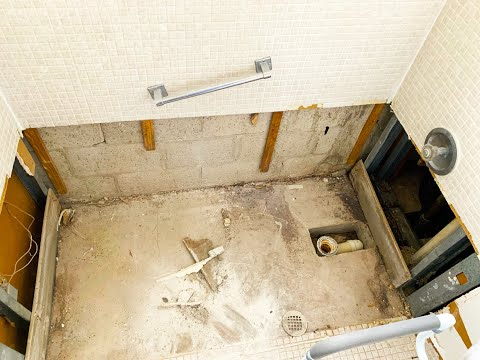
A ruptured copper pipe beneath a concrete foundation pumps thousands of gallons of pressurized water into Mesa caliche clay. Trapped under concrete in 115°F desert heat, subterranean water causes severe foundation heaving, cracks structural stem walls, pops tile with efflorescence, and cultivates toxic mold within 24 to 48 hours.
Service Definition & The IICRC Standard of Care
Professional slab leak water damage restoration mesa az is an engineering and environmental discipline adhering strictly to IICRC S500 protocols, not mere surface mopping. When structural plumbing failures strike in Maricopa County, certified emergency water extraction and thermal structural drying procedures must be deployed immediately. Whether triggered by high-pressure burst pipe emergencies, subfloor leaks, or commercial line ruptures, bound moisture rapidly penetrates concrete subfloors and wall framing. In the desert heat, delays trigger microbial proliferation requiring rapid mold remediation. Request damage assessment through our emergency assessment portal or request 30-minute dispatch across all Valley service areas.
Securing electrical feeds, inspecting load-bearing assemblies, and containing pathogens.
Stopping the intrusion source and erecting 6-mil plastic isolation containment airlocks.
31-HP truck-mount extraction, removing gallons exponentially faster than evaporation.
LGR dehumidifiers and HEPA air scrubbers driving grains per pound below 25 GPP.
Calibrated electronic pinless testing confirming baseline dry standards.
The Complete 6-Stage Restoration Roadmap
Our IICRC-certified crews execute a disciplined, scientific 6-stage protocol to stabilize and dry structural components:
Emergency Dispatch & Perimeter Isolation
30 to 60 minute arrival. Securing electrical shutoffs, evaluating structural loads, and erecting containment airlocks.
FLIR® Thermal Mapping & Baseline Scans
Infrared thermal scans detect trapped moisture behind walls and beneath concrete without invasive exploratory demolition.
High-Volume Bulk Extraction
31-HP truck-mount extraction units pump standing water away at hundreds of gallons per minute.
Controlled Selective Demolition
Precision flood cuts 12 to 24 inches above moisture lines, removing wet insulation and opening wall framing to dry airflow.
Thermodynamic Dehumidification
Industrial Low-Grain Refrigerant dehumidifiers pull deep trapped moisture from dense framing lumber and concrete slabs.
Antimicrobial Sanitization & Verification
EPA-registered botanical application (Benefect Decon 30) and calibrated moisture testing to issue an official dry certificate.

Specialized Equipment & Industrial Restoration Technology
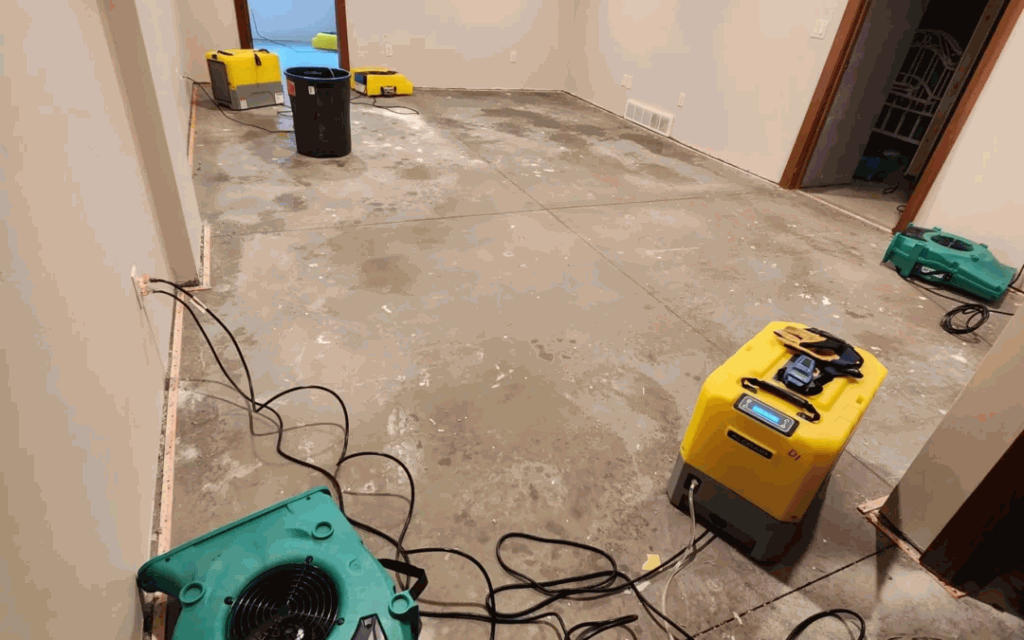
Mitigating severe property damage requires industrial-grade technology capable of altering thermodynamic psychrometrics:
Truck-Mounted Extraction Rigs
31-HP engines producing 16+ inches Hg vacuum suction to evacuate bulk water rapidly into holding tanks.
Low-Grain Refrigerant Dryers
Pre-cooling heat-pipe systems driving ambient grains per pound below 25 GPP to draw deep trapped water out of framing.
HEPA Negative-Air Scrubbers
Hospital-grade 99.97% particulate filtration capturing microscopic fungal spores, soot, and biohazard aerosols.
FLIR® Thermal Scanners & Probes
Infrared thermography detecting evaporative cooling boundaries behind walls, combined with digital RF pinless scanners.
Professional Restoration vs. DIY Mitigation
Attempting DIY cleanup during a property disaster creates severe hidden liabilities:
- Trapped Moisture: Surface drywall dries while moisture inside cavities triggers hidden mold blooms.
- Pathogenic Risks: Category 2 & 3 water contains bio-contaminants standard cleaners fail to kill.
- Insurance Denial: Insurers require daily psychrometric logs; lack of data causes claim disputes.
Transparent Upfront Itemized Pricing
Valley Restoration Pros operates with complete transparency:
- Free On-Site Assessment: Complete physical inspection before work begins.
- Upfront Itemized Estimates: Detailed line items calculated via industry-standard Xactimate.
- Zero Surprise Billing: No hidden charges or unauthorized repairs.
Certified Slab Leak Water Damage Restoration Mesa AZ Field Documentation
Every response performed by Valley Restoration Pros is documented through photographic and thermographic records:

Comprehensive Slab Leak Water Damage Restoration Mesa AZ Technical Manual & Operational Standards
Exhaustive engineering protocols, psychrometric calculations, geological multipliers, and step-by-step restoration standards for Maricopa County properties:
Executive Emergency Abstract: Mesa Sub-Slab Pressurized Breach Mitigation & Desorption
Throughout Mesa, Arizona—from established mid-century neighborhoods in Dobson Ranch, Alta Mesa, and Reed Park to master-planned developments across Superstition Springs, Red Mountain Ranch, and East Mesa—the vast majority of residential homes and commercial retail facilities are constructed upon monolithic or post-tension concrete slab-on-grade foundations. During the original building process, pressurized domestic copper water distribution lines were embedded directly beneath or within these 4-inch to 8-inch reinforced concrete pads without protective sleeves.
Over decades of exposure to Mesa's highly mineralized municipal tap water, corrosive alkaline caliche soils, continuous thermal cycling, and unshielded aggregate abrasion, these underground copper pipes suffer catastrophic structural breaches. Operating under continuous city water pressures of 65 to 80 pounds per square inch (PSI), a compromised sub-slab water line pumps hundreds to thousands of gallons of pressurized water daily into subterranean subgrade aggregate and foundation backfill.
Because the water source is trapped beneath heavy concrete, property owners rarely see standing water initially. Instead, the subterranean deluge saturates surrounding smectite clay soils, inducing severe foundation upheaval and slab cracking. Water wicks upward through microscopic capillaries in the concrete pad via hydrostatic pressure, saturating floor adhesives, delaminating ceramic tiles, buckling expensive hardwood planks, and soaking wall baseplates. In Mesa's blistering summer climate exceeding 115°F, this trapped subfloor moisture incubates dense colonies of hazardous mold beneath floor coverings within 24 to 48 hours.
Untreated sub-slab moisture also compromises structural load-bearing walls. As moisture wicks vertically up wooden sole plates and drywall studs, structural wood fibers soften, losing screw retention and compressive strength. Furthermore, when high-pressure hot water lines leak, the continuous thermal energy warms the concrete pad, accelerating the upward transmission of corrosive moisture vapor into the home living space and driving indoor relative humidity to hazardous levels.
Valley Restoration Pros deploys a specialized 24/7 Sub-Slab Moisture Extraction & Non-Invasive Structural Desorption Taskforce across Mesa and the East Valley. Arriving on site in under 30 minutes, our IICRC certified structural restorers deploy ultrasonic acoustic listening arrays, FLIR radiometric infrared cameras, weighted vacuum floor drying systems, and industrial Low-Grain Refrigerant (LGR) dehumidifiers. We pinpoint the exact sub-surface failure, extract trapped moisture from deep within the concrete matrix, and restore building materials to dry standard baseline.
Immediate First-Hour Mesa Slab Leak Emergency Directives
- Shut Off the Primary Water Supply Immediately: Locate your main domestic water shutoff valve—either the curbside City of Mesa water meter box using a pentagon meter key or the brass ball valve at your front hose bib manifold—and rotate until completely closed to halt pressurized sub-slab inflow.
- Isolate the Hot Water System if Floors Feel Warm: If a specific area of your tile, carpet, or vinyl flooring feels noticeably hot underfoot, the leak is located on the pressurized hot water distribution line. Turn off the cold water inlet valve on top of your water heater and switch off its electrical breaker or gas control valve.
- Protect Ground-Level Electrical Fixtures: Water wicking up through concrete saturates perimeter sill plates and low-voltage wall outlets. De-energize corresponding breakers in your main electrical panel to eliminate electrocution and arc hazards.
- Mobilize Certified Thermal & Sub-Slab Extraction: Call our 24/7 Mesa Emergency Dispatch Hotline at (602) 847-9593. Our master technicians arrive in 30 minutes with non-destructive thermal imaging, acoustic ground sensors, and commercial concrete desiccation equipment.
Anatomy of Sub-Slab Plumbing Failures: Mechanical Friction & Soil Chemistry
Copper lines buried beneath concrete foundations are subjected to a complex intersection of thermal, mechanical, and electrochemical forces. Understanding why sub-slab plumbing fails reveals why specialized restoration protocols are required:
Thermal Expansion & Aggregate Friction Abrasion
Domestic hot water copper pipes expand longitudinally by approximately 1.1 inches per 100 feet for every 100°F rise in temperature. When hot water runs, the pipe expands; when faucets shut off, it contracts. If installed directly against sharp basalt crushed stone or coarse river rock aggregate without protective polyethylene sleeving, this continuous friction saws through the copper wall, producing high-pressure abrasive ruptures.
External Caliche Soil Sulfate Corrosion
Mesa and East Valley soils contain concentrated layers of caliche—a hardened natural sedimentary rock composed of calcium carbonate, sulfates, and chlorides. When moisture interacts with these minerals, it creates a strongly alkaline, chemically aggressive electrolytic bath. Bare copper tubing in contact with damp caliche undergoes rapid external galvanic pitting, corroding through exterior pipe walls from the outside inward.
Hydraulic Turbulence & Elbow Erosion
Beneath concrete slabs, plumbers utilized soft annealed copper coils connected by wrought-copper solder fittings or brazed couplings. Sharp directional changes create violent internal eddy currents and cavitation bubbles when water velocities exceed 6 to 8 feet per second. This scouring action strips protective copper oxide layers, creating smooth horseshoe-shaped erosion troughs that quickly breach pipe walls.
Post-Tension Tendon Stress & Foundation Settlement
Many Mesa subdivisions feature post-tensioned concrete slabs containing high-strength steel tendons stressed to 33,000 pounds of tension. Minor differential soil settlement or expansive clay movement shifts the rigid concrete slab against soft annealed copper penetrations, pinching or shearing plumbing lines at slab pass-through points.
Moreover, the chemical interaction between wet concrete and copper pipe deserves close scrutiny. Fresh portland cement is intensely alkaline, possessing a pH between 12.5 and 13.5 due to free calcium hydroxide. If copper pipes come into direct physical contact with wet concrete without an impervious barrier sleeve, this alkaline paste strips the protective oxide patina. Over years of thermal cycling, micro-corrosion cells develop at every point of direct concrete contact.
When subterranean water escapes into living quarters, immediate deployment of certified emergency water extraction protocols is required to remove standing surface pools and stop moisture migration into wall framing.
Mesa & East Valley Climatic Multipliers: Expansive Clay Heave & 115°F Thermal Drives
Sub-slab leaks in Mesa trigger severe secondary structural consequences due to the unique geology and extreme climate of the East Valley:
1. Expansive Smectite Clay Swell & Foundation Upheaval
The subsurface geology of Mesa consists of alluvial deposits rich in smectite and bentonite clays. These high-plasticity expansive clays expand by up to 10% to 15% when exposed to continuous moisture from a sub-slab leak.
As clay soil absorbs thousands of gallons of escaping tap water, it exerts tremendous upward hydrostatic uplift pressure—often exceeding 6,000 to 10,000 pounds per square foot. This upheaval lifts concrete slab corners, cracks structural stem walls, binds exterior doors, and fractures interior drywall ceilings. For related structural damage recovery, explore our slab leak water damage restoration structural solutions.
2. Capillary Action & Efflorescence Salt Explosions
Concrete is inherently porous, functioning as a dense sponge interlaced with microscopic capillary tubes. Under hydrostatic pressure from a sub-slab leak, mineralized water travels upward through the slab via capillary action.
As water reaches the surface and evaporates into dry desert air, dissolved calcium, potassium, and magnesium salts crystallize. This mineral growth—known as efflorescence—generates enormous crystalline pressure that fractures grout joints, lifts ceramic tiles, delaminates epoxy floor coatings, and turns carpet backings into white powdery crusts. Learn more in our specialized tile efflorescence sub-slab moisture drying analysis.
3. 115°F Heatwave Vapor Drives & Subfloor Mold Proliferation
During hot East Valley summers when outdoor ambient temperatures climb past 115°F, building interiors are cooled to 74°F by air conditioners. This steep temperature differential creates a powerful thermal vapor drive, pulling moisture upward through the concrete slab into conditioned living spaces.
Trapped beneath impermeable floor finishes like Luxury Vinyl Plank (LVP), sheet vinyl, or wood laminate, this warm moisture creates an ideal incubator. Black mold colonies (Aspergillus, Cladosporium, Penicillium) thrive within 24 to 48 hours, releasing airborne spores through baseboard perimeter gaps. Review our comprehensive biohazard eradication procedures in our dedicated mold remediation division.
4. East Valley Hard Water Chemistry (18 to 22 GPG Hardness)
The City of Mesa draws water from the Salt and Verde rivers via the Salt River Project and the Colorado River via the CAP aqueduct. Total dissolved solids exceed 800 PPM, creating extreme mineral hardness of 18 to 22 grains per gallon.
This mineral-dense water aggressively attacks underground plumbing fittings and degrades appliance supply connections, causing destructive failures detailed in our appliance leak water damage recovery procedures.
Immediate First-Hour Emergency Protocol: Sub-Slab Isolation & Safety Control
The initial sixty minutes following the emergence of warm floor tiles, spinning water meters, or hissing sounds determine whether foundation integrity and high-end flooring can be salvaged:
Meter Box Hydraulic Isolation
Our technicians arrive equipped with specialized curb keys to access stubborn City of Mesa meter boxes, rotating the primary brass ball valve 90 degrees to halt pressurized water delivery into the sub-slab copper manifold immediately.
Water Heater Loop De-Energization
For hot-line slab leaks, we immediately isolate the water heater cold inlet valve and shut down power to gas burners or 240V electric heating elements, halting continuous hot water circulation and preventing water heater tank implosion.
Ground-Level Electrical Lockout
Sub-slab water migrates into floor outlets, bottom wall receptacles, and appliance circuits. Our crews test affected circuits with digital multimeters and apply Lockout/Tagout (LOTO) protocols to eliminate electrocution hazards.
Immediate Perimeter Containment
We erect negative-pressure poly containment chambers equipped with commercial HEPA air filtration units, isolating damp rooms to prevent mold spores and concrete dust from spreading into adjacent unaffected living areas.
For properties experiencing water intrusion from ruptured overhead water heaters in garages or interior closets, review our 24/7 procedures for water heater burst cleanup and garage utility room drying.
Advanced Industrial Equipment Specifications: Sub-Surface Locators & Concrete Dryers
Extracting deep moisture from 4 to 8 inches of reinforced concrete and locating buried leaks without jackhammering entire living spaces requires state-of-the-art diagnostic and desiccation machinery:
Acoustic Ground Microphone & Correlator
Model: Sewerin Aquaphon A200 / Fisher XLT-30 Sub-Slab Acoustic Probe
Pressurized water discharging into subgrade aggregate produces subterranean acoustic frequencies between 100 Hz and 2,500 Hz. Our acoustic ground microphones amplify these sound waves while filtering extraneous ambient interference, pinpointing subterranean pipe breaches through solid concrete to within a 6-inch target area.
- Depth Capability: Pinpoints leaks up to 8 feet below slab surface
- Digital Filtering: 100-step adjustable frequency bandpass filters
- Transducer: High-sensitivity piezoelectric ground contact pickup
FLIR High-Resolution Radiometric Thermal Cameras
Model: FLIR T540 Professional Infrared Radiometer
Hot water slab leaks produce distinctive radiant thermal blooms on floor surfaces, while cold water leaks register evaporative cooling signatures. Our high-resolution infrared cameras detect thermal differences down to 0.03°C, mapping the exact lateral moisture plume traveling beneath tiles, hardwood, and laminate.
- Sensor Resolution: 464 × 348 true microbolometer sensor
- Thermal Sensitivity: < 0.03°C @ 30°C temperature resolution
- Field of View: 42° wide-angle lens for broad floor mapping
Injectidry Weighted Floor Drying Mat Systems
Model: Injectidry Floor Mat High-Vacuum Desorption System
To extract moisture from saturated concrete slabs without destroying expensive ceramic, porcelain, or hardwood flooring, we deploy high-vacuum drying mats. Connected to commercial vacuum extraction units, these mats create negative-pressure vortexes that draw liquid water and vapor directly through porous grout and flooring joints.
- Vacuum Pressure: Up to 5.5 inches of mercury negative suction
- Coverage: Modular configurations spanning 100 to 500+ sq. ft.
- Preservation: Saves tile and hardwood in place without replacement
Commercial LGR & Desiccant Dehumidification Fleet
Model: Phoenix DryMAX XL / Quest Desiccant Mobile Drying Trailers
Concrete drying requires ultra-low vapor pressure environments. Our mobile desiccant and LGR units generate bone-dry air below 20 grains per pound (GPP), establishing a steep vapor pressure gradient that continuously pulls deep-seated moisture out of thick concrete slab foundations and wall bottom plates.
- Capacity: Up to 140 pints/day per LGR; 2,500 CFM desiccant units
- Operating Range: Unmatched performance in desert heat up to 125°F
- Monitoring: Integrated automated psychrometric telemetry logging
For properties experiencing burst piping inside finished walls or attic cavities, explore our certified protocols for burst pipe repair and high-velocity wall cavity drying.
IICRC S500 Step-by-Step Restoration Protocol: Six-Stage Sub-Slab Playbook
Restoring structures saturated by pressurized sub-slab breaches mandates rigorous adherence to ANSI/IICRC S500 standards to ensure permanent concrete desiccation, eliminate microbial incubation, and prevent structural foundation distortion:
Stage 1: Multi-Spectrum Acoustic & Radiometric Thermal Plume Mapping
Technicians conduct an exhaustive sub-surface diagnostic survey utilizing Sewerin Aquaphon A200 acoustic correlators, FLIR T540 high-resolution infrared cameras, and Tramex CMEX II digital moisture meters. We trace underground pipe routing and map acoustic shear waves (S-waves) generated by high-pressure pipe orifices through concrete.
Simultaneously, radiometric thermal scanning delineates the exact horizontal capillary moisture plume migrating beneath ceramic tile, travertine, or hardwood. Technicians record baseline atmospheric psychrometric conditions—including dry-bulb temperature, relative humidity, and humidity ratio (GPP)—in unaffected rooms to establish precise structural drying targets.
Stage 2: Critical Bio-Containment & High-Volume Surface Extraction
We erect dust-tight 6-mil flame-retardant polyethylene containment enclosures equipped with magnetic entry portals. Commercial DefendAir HEPA 500 air scrubbers establish continuous negative air pressure (-0.02 inches of water column) with a minimum of 6 to 8 air changes per hour (ACH), scrubbing airborne particulates down to 0.3 microns.
Simultaneously, truck-mounted extraction machines pull all standing surface water from tile surfaces, floor grout channels, and wall perimeter expansion joints. Saturated baseboards are carefully disengaged using trim pullers to inspect bottom drywall paper for hidden mold growth and expose bottom wall plates for direct air impingement.
Stage 3: Plumbing Isolation Coordination (Overhead PEX Reroute vs. Precision Access)
To preserve structural concrete and prevent the severe hazard of severing 33,000-pound post-tension tendons, we coordinate directly with licensed plumbing contractors to execute an overhead PEX-A pipe reroute. High-density Uponor PEX-A piping is run through attic trusses and drops into partition walls, abandoning the compromised underground copper line forever.
In rare cases where direct slab access is deemed necessary, technicians perform Ground Penetrating Radar (GPR) concrete scanning to mark post-tension cables and electrical conduits before diamond-core drilling a minimal 8-inch access port, completely avoiding indiscriminate pneumatic jackhammering.
Stage 4: EPA-Registered Botanical Antimicrobial Decontamination
Because sub-slab water wicks through native soil rich in organic decay and agricultural residues, the water intrusion is treated under Category 2 greywater standards. All damp concrete surfaces, wood bottom plates, and partition wall cavities receive deep ultra-low-volume (ULV) botanical antimicrobial fogging using Benefect Decon 30.
The active pharmaceutical-grade botanical thymol penetrates porous concrete and wood cellular structures, neutralizing fungal spores, neutralizing musty microbial VOC odors, and halting bacterial colonization without requiring synthetic chemical hazmat warnings.
Stage 5: High-Vacuum Floor Mat Extraction & Deep Concrete Desiccation
We deploy Injectidry weighted floor vacuum mats across the affected concrete slab and tile flooring. Connected to high-vacuum negative-pressure blowers, these mats create a powerful pressure differential that pulls liquid water and trapped moisture vapor directly out of the microscopic concrete pore network.
Concurrently, commercial Phoenix DryMAX XL LGR dehumidifiers and high-velocity axial air movers establish a high-energy closed-loop drying vortex. The dehumidifiers process hundreds of cubic feet of air per minute, plunging the surrounding specific humidity below 25 GPP to maximize the vapor pressure differential between the wet concrete slab and ambient air. For complex multi-story properties, review our complete structural drying protocols.
Stage 6: In-Situ RH ASTM F2170 Verification & Certificate of Structural Dryness
Technicians drill precision 5/8-inch test wells to a depth of 40% of the slab thickness, inserting calibrated electronic in-situ relative humidity probes in strict accordance with ASTM F2170 standards. Probes equilibrate for 24 hours to measure the internal equilibrium relative humidity of the core concrete.
Only when internal concrete relative humidity drops below 75% RH and framing timber measures below 10% to 12% moisture content (%MC) do we certify completion. Valley Restoration Pros delivers an official Certificate of Structural Dryness alongside complete psychrometric logs to your insurance provider.
Hyper-Local Case Study: Dobson Ranch Hot-Line Slab Leak Foundation Desorption
Incident Breakdown: Scorching Floors & 38,000-Gallon Utility Bill Spike
At a single-story ranch residence near S Dobson Rd and W Baseline Rd in Mesa's Dobson Ranch community, the homeowners noticed that their hallway and kitchen Saltillo tile floor had become uncomfortably hot to walk on barefoot. Concurrently, their monthly City of Mesa water bill showed an inexplicable surge of 38,000 gallons, accompanied by the faint, persistent sound of running water behind their laundry room walls.
A 3/4-inch soft copper domestic hot water line had suffered a severe friction abrasion breach beneath the 5-inch post-tension concrete slab. Over an estimated three-week period, high-temperature water had saturated the subgrade soil, migrated through 450 square feet of porous concrete via capillary action, cracked the Saltillo tile grout lines, and saturated the bottom plates of three interior partition walls.
Rapid Restoration Timeline & Preservation Metrics
- Minute 28: Emergency On-Site Response: Valley Restoration Pros Mesa response team arrived in 28 minutes. Technicians isolated the main water meter and deployed the FLIR T540 infrared camera, revealing a prominent 108°F radiant thermal bloom beneath the central hallway.
- Hour 2 to 4: Acoustic Pinpointing & Overhead Reroute: Using the Aquaphon A200 acoustic correlator, our specialists verified the leak position beneath the hallway tile. To eliminate the dangerous risk of severing post-tension cables with a jackhammer, we coordinated an overhead PEX-A bypass through the attic, restoring household water in four hours without touching the concrete.
- Hour 5 to 12: High-Vacuum Floor Mat Extraction: Placed twelve Injectidry vacuum floor mats directly over the saturated Saltillo tile and concrete slab. The system extracted 42 gallons of deep capillary water in the initial twelve hours, relieving upward hydrostatic vapor pressure.
- Hour 14 to 84: Closed-Loop Structural Desiccation: Deployed two Phoenix DryMAX XL LGR dehumidifiers and eight centrifugal air movers under HEPA containment. Ambient specific humidity dropped from 94 GPP down to 28 GPP, while deep concrete relative humidity plummeted.
- Hour 96: ASTM F2170 Dry Standard Clearance: In-situ concrete RH probes confirmed internal slab moisture had dropped to 72% RH (well below the 75% dry threshold), wall framing reached 9.1% MC, and original Saltillo tile was completely preserved without cracking or tile replacement.
Verified Resident Testimonial:
"When our floor turned scorching hot and our water bill exploded, other companies told us they would have to jackhammer through our entire home and destroy our Saltillo tiles. Valley Restoration Pros arrived in under 30 minutes, found the leak with a thermal camera, recommended a clean overhead pipe reroute, and dried our slab completely with heavy-duty suction mats. They saved our beautiful tile and handled all the documentation for our insurance company!"
— Gregory & Patricia S., Dobson Ranch, Mesa AZ
Transparent Upfront Pricing & Comprehensive Insurance Documentation Standards
Navigating a sub-slab water disaster requires complete financial clarity and honest communication. Valley Restoration Pros adheres to strict consumer protection standards, ensuring you receive transparent estimates and thorough claim documentation:
Free On-Site Structural Assessment
Our master technicians conduct an exhaustive on-site evaluation—including radiometric FLIR thermal imaging, acoustic leak confirmation, and non-invasive concrete moisture mapping—at zero cost or obligation before any work begins.
Transparent Upfront Itemized Pricing
We prepare all estimates using Xactimate®—the standardized software utilized by major property insurance adjusters. Every line item reflects standardized Maricopa County labor, equipment run-time, and regional material indices.
Zero Misleading Direct Billing Promises
We never make deceptive promises that insurance will pay 100% of all expenses without deductible responsibility. Individual policy coverage, plumbing tear-out access riders, and endorsements vary; we review your coverage openly before starting.
Comprehensive Claims Documentation Dossier
We supply your insurance adjuster with complete IICRC S500 documentation: thermal scans, acoustic leak logs, ASTM F2170 concrete relative humidity charts, and daily drying logs to substantiate your claim for rapid reimbursement.
To calculate estimated mitigation ranges for your Mesa property, visit our interactive free on-site assessment. To confirm service coverage in your neighborhood, view our active zones in areas we serve, or contact our dispatch team directly on our contact us page.
Frequently Asked Technical Questions: Mesa Slab Leak Desorption & Restoration
The most definitive symptoms of a subterranean slab leak include: an unexplained spike in your monthly municipal water utility bill; a localized warm or hot section of tile, carpet, or hardwood flooring (indicative of a hot water line breach); the faint, continuous sound of running or hissing water when all indoor and outdoor faucets are closed; the flow indicator triangle spinning on your water meter; damp baseboards or drywall discoloration along interior partition walls; and white powdery mineral crusts (efflorescence) pushing through tile grout.
Jackhammering through a concrete slab is loud, highly destructive, and introduces airborne silica dust throughout the residence. More critically, many Mesa homes are built on post-tension concrete slabs containing steel tendons tensioned to over 30,000 pounds. Accidental tendon severance poses extreme structural and safety hazards. In contrast, an overhead PEX-A pipe reroute routes durable, corrosion-proof cross-linked polyethylene through the attic or wall framing, bypassing the failing underground copper line entirely without damaging structural concrete or expensive floor coverings.
Most standard homeowner insurance policies (HO-3 and HO-5 forms) cover "tear-out" costs to access the leak and all resultant water damage restoration, including water extraction, concrete slab desiccation, drywall repair, and flooring replacement. However, the physical plumbing pipe repair itself is typically excluded. If jackhammering is required to access the pipe, the cost to open and restore the slab is frequently covered under the tear-out provision. We provide comprehensive thermal and moisture documentation to substantiate covered damages for your insurance adjuster.
Because concrete is dense and retains water deep within its capillary pore structure, drying a saturated concrete slab typically requires 4 to 7 days (96 to 168 hours) of continuous industrial desiccant or LGR dehumidification and weighted vacuum floor mat extraction. We monitor internal moisture levels using ASTM F2170 in-situ relative humidity probes to confirm the slab has reached the required dry equilibrium before new flooring or baseboards are installed.
With rapid intervention, ceramic tile, travertine, and even solid or engineered hardwood can often be completely saved. We deploy specialized Injectidry vacuum floor mats that pull water vapor upward through grout lines and wood pores without removing materials. If flooring has already delaminated from adhesive failure or severe wood cupping has developed, targeted removal may be required, but non-destructive preservation is always our initial priority.
Efflorescence is the crystalline deposit of soluble mineral salts (calcium carbonate, sodium sulfate, potassium chloride) carried upward by water migrating through concrete. As moisture evaporates at the surface into dry ambient air, these minerals crystallize, creating unsightly white powder that can lift tiles, dissolve carpet glue, and damage flooring finishes. Our deep drying protocols stop the capillary moisture drive, halting efflorescence at the source.
Engineering Evaluation: Overhead PEX Rerouting vs. Concrete Slab Jackhammering
When an underground plumbing failure is identified beneath a Mesa foundation, selecting the correct repair methodology is paramount to preserving structural integrity and minimizing restoration costs:
Direct Slab Jackhammering & Excavation
Jackhammering involves breaking open the concrete pad, digging out subgrade soil, and soldering a patch on the leaking copper line. While conceptually straightforward, this process destroys flooring, creates hazardous respirable silica dust, compromises the slab vapor barrier, and leaves the remaining aging copper lines vulnerable to future pinhole leaks.
Furthermore, patched underground lines often develop secondary leaks at adjacent fittings within months due to thermal stress and soil movement.
Overhead PEX-A Reroute Strategy (Recommended)
An overhead reroute abandons the failing sub-slab copper line entirely. Continuous, flexible Uponor PEX-A piping is routed from the main water manifold up through interior wall cavities and across attic trusses to feed plumbing fixtures from above.
This modern method completely avoids slab demolition, eliminates silica dust hazards, prevents future sub-slab breaches on that distribution run, and preserves valuable floor coverings. For vintage homes with crawl space access, review our specialized crawl space water damage restoration procedures.
Post-Tension Slab Engineering: Mitigating High-Tension Tendon Hazards
A substantial percentage of homes in Mesa built after 1980 utilize post-tensioned foundation systems. Operating restoration or demolition equipment on these structures requires advanced structural safety protocols:
The Extreme Danger of Tendon Severance
Post-tensioned slabs are reinforced with 1/2-inch high-strength seven-wire steel cables encased in plastic sheathing and pumped with grease. These cables are tensioned to approximately 33,000 pounds of force during foundation construction to counteract expansive soil movement.
If an inexperienced contractor strikes a post-tension tendon with a jackhammer, concrete saw, or core drill, the cable can violently snap. The explosive release of 33,000 pounds of stored mechanical energy can shoot through exterior foundation edges, demolish interior walls, and cause catastrophic injury or foundation failure. Valley Restoration Pros coordinates Ground Penetrating Radar (GPR) concrete scanning before any intrusive core drilling is performed.
For commercial properties with subterranean utility rooms or elevator shafts, consult our protocols for elevator pit water extraction and shaft structural drying.
Efflorescence Mechanics: Sub-Floor Hydrostatic Vapor Transmission
When sub-slab pipes leak, the concrete foundation acts as a conduit for heavy mineral salts, leading to surface degradation and flooring adhesive breakdown:
Osmotic Pressure & Salt Crystallization
Water beneath the slab dissolves alkalis and soluble salts within concrete. As water migrates through microscopic pores toward dry room air, it carries these ions upward. Evaporation concentrates these minerals at the surface, where they expand up to several hundred percent upon crystallization, exerting hydraulic pressure that shears floor adhesives and pops tiles.
Adhesive Hydrolysis & Flooring Delamination
High pH moisture (pH 11 to 13) leaching through concrete hydrolyzes standard organic adhesives used for luxury vinyl tile (LVT), engineered hardwood, and commercial carpet. The glue re-emulsifies into an oily, foul-smelling liquid, causing planks to slide, buckle, and separate along perimeter joints.
For commercial properties suffering sewer backups or blackwater contamination alongside slab damage, review our certified procedures for sewage cleanup and biohazard sanitization.
Hardwood & Engineered Wood Salvage: High-Vacuum Floor Extraction
Hardwood flooring installed over concrete slabs absorbs moisture rapidly when subterranean leaks occur, causing wood boards to swell and cup:
The Physics of Cupping vs. Crowning
When moisture wicks through concrete into the underside of hardwood planks, the bottom fibers expand while the top surface remains dry. This moisture imbalance causes "cupping"—edges lift higher than centers. If traditional contractors sand a cupped floor prematurely, the planks will "crown" once the bottom finally dries, permanently destroying the wood.
Valley Restoration Pros uses specialized vacuum drying mats. Connected to high-vacuum blowers, these mats pull moisture directly out of the concrete through the wood grain, restoring moisture equilibrium between top and bottom surfaces and allowing cupped planks to lay completely flat again. For dedicated wood restoration procedures, review our specialized hardwood floor water damage drying protocols.
Geotechnical Dynamics: Mesa Caliche Soil Upheaval & Foundation Settlement
The geotechnical interaction between water and East Valley desert soil creates dynamic structural movements that can crack building framing:
Differential Soil Swelling Pressures
When a sub-slab leak discharges thousands of gallons into dry clay, the soil directly beneath the rupture swells, while soil ten feet away remains bone-dry. This differential expansion exerts uneven upward heave, bending concrete slabs and generating stair-step cracks across exterior brick, block, and stucco walls.
Post-Drying Consolidation & Settlement
Once the water source is shut off and the soil gradually dries, saturated clay shrinks. In severe cases, void spaces form beneath the slab where fine soil particles washed away. Our controlled desiccation process stabilizes soil drying rates, preventing abrupt settlement fractures in structural footings.
For commercial industrial warehouses and commercial logistics centers affected by major sub-slab pipe bursts, see our specialized warehouse flood damage restoration and industrial drying capabilities.
Concrete Slab Desiccation Science: ASTM F2170 In-Situ Probe Testing
Verifying that a concrete slab foundation is truly dry requires scientific precision rather than surface guesswork:
Surface Impedance Meters vs. Deep In-Situ Probes
Standard surface moisture meters only read the top 1/2 to 3/4 inch of concrete. In Phoenix's dry desert air, the slab surface often appears completely dry while the slab core remains 95% water-saturated. If new flooring is installed based solely on surface readings, trapped moisture will destroy the new floor within weeks.
Valley Restoration Pros complies strictly with ASTM F2170—Standard Test Method for Determining Relative Humidity in Concrete Floor Slabs Using in situ Probes. We drill small 5/8-inch test holes to 40% of the slab depth, insert calibrated electronic relative humidity sensors, and allow them to equilibrate. Only when internal slab humidity drops below 75% RH is the foundation certified dry for flooring reinstallation.
For complex rooftop cooling equipment failures that saturate ceilings and upper building assemblies, review our emergency procedures for swamp cooler roof leak water damage recovery.
Microbial Eradication: Treating Subfloor Voids & Wall Baseplates
Because water from a sub-slab leak travels through native soil before wicking into living spaces, it carries organic particulates and micro-organisms:
Category 2 Water Decontamination Procedures
Under IICRC S500 standards, water that has contacted subterranean soils or passed through building assemblies is classified as Category 2 (greywater) or Category 3 (blackwater if sewage lines run nearby).
Simple surface drying is inadequate. Technicians treat all affected concrete surfaces, wall bottom plates, and stud cavities with hospital-grade botanical antimicrobials (Benefect Decon 30). This kills fungal spores, neutralizes musty soil odors, and ensures a clean indoor environment without leaving toxic synthetic chemical residues.
For commercial facilities, corporate office plazas, and retail complexes facing major structural water intrusion, explore our dedicated commercial water damage mitigation services.
Mesa Municipal Water Chemistry: Mineral Hardness & Under-Slab Pipe Degradation
Understanding why underground plumbing fails in Mesa requires examining the aggressive chemical characteristics of East Valley municipal water supplies:
High Total Dissolved Solids (TDS)
Mesa water utilities process water with TDS levels frequently ranging from 650 to over 950 PPM. High mineral concentrations enhance the electrical conductivity of water, accelerating galvanic and electrochemical corrosion cells across metallic piping.
Elevated Chloramine Disinfection Residuals
To maintain disinfection across extensive pipeline networks in 115°F desert heat, Mesa adds chloramines. These strong chemical oxidizers degrade internal copper oxide patinas, causing pitting corrosion along pipe inverts and solder fittings.
Alkaline pH Fluctuations (7.8 to 8.4)
Surface water from canal distribution experiences seasonal pH swings between 7.8 and 8.4. When combined with dissolved silica and calcium carbonate, this alkaline water creates non-uniform scale crusts that foster intense under-deposit pitting.
For properties experiencing kitchen filtration blowouts or under-sink water filter deluges, consult our specialized reverse osmosis water filter flood cleanup solutions.
Post-Remediation Verification & Foundation Moisture Barrier Protection
Achieving certified dryness is only the first step; protecting your Mesa property against future sub-slab vapor transmission ensures permanent structural resilience:
Third-Party Post-Remediation Air Quality Clearance
To ensure complete objectivity and satisfy strict property insurance requirements, Valley Restoration Pros facilitates third-party Post-Remediation Verification (PRV) testing conducted by certified indoor environmentalists (CIEs). Testing includes calibrated spore trap air sampling inside affected living areas compared against outdoor East Valley baseline control samples.
Clearance requires indoor fungal spore concentrations to be equal to or lower than outdoor background air, with zero presence of toxic indicator species such as Stachybotrys, Chaetomium, or Trichoderma.
100% Solids Epoxy Moisture Vapor Mitigation Barriers
Before new luxury vinyl, tile, or hardwood flooring is re-installed over a repaired slab, our reconstruction team applies an industrial 100% solids epoxy moisture vapor barrier (such as Bostik Slab-Cote or Mapei Planiseal VS). This impenetrable polymer coating seals concrete capillary pores, withstanding hydrostatic moisture vapor emission rates (MVER) up to 25 pounds per 1,000 square feet per 24 hours.
This high-performance vapor barrier protects new flooring adhesives from alkali hydrolysis and guarantees lifetime floor preservation even under fluctuating desert water table conditions. To explore real homeowner experiences across the Valley, read our verified client feedback on our reviews page.
Verified Local Area Dispatch: Mesa, AZ
Official Geo-Coordinates: 33.4152° N, -111.8315° W • Maricopa County
Related Specialized Emergency Restoration Services
Explore specialized rapid-response mitigation protocols across Greater Phoenix and Maricopa County:
Valley-Wide Emergency Response Service Coverage
Our mobile restoration fleet is dispatched across the entire Phoenix metropolitan region, providing rapid 30 to 60 minute emergency response: