

Valley Restoration Pros delivers 24/7 industrial emergency water extraction, thermal psychrometric drying, and structural mitigation across Phoenix and Maricopa County with guaranteed 30–60 minute rapid arrival. All protocols strictly adhere to IICRC S500 standards, featuring upfront itemized pricing and free on-site thermal moisture assessments. Call dispatch directly at (602) 847-9593.
Why Immediate Mitigation Is Critical in Phoenix Heat
Sub-slab water leaks beneath monolithic concrete foundations saturate caliche clay soils, causing massive structural foundation heave, cracked walls, and electrical conduit water intrusion. In Phoenix summer heat, trapped under-slab water incubates toxic microbial growth behind baseboards within 24 to 48 hours.
Immediate First-Hour Slab Leak Emergency Checklist
- Locate and close the main domestic water shutoff valve near the hose bib or garage manifold.
- Switch off electrical breakers for submerged floor receptacles and baseboard wiring.
- Open the lowest exterior garden hose spigot to vent residual hydraulic head pressure.
- Elevate wooden furniture legs onto plastic pucks or aluminum foil to prevent dye and rot damage.
- Take wide-angle photographs of warm floor tiles, cracked grout, and damp baseboards.
- Call Valley Restoration Pros at (602) 847-9593 for 30-to-60 minute emergency dispatch.

Service Definition & The IICRC Standard of Care
Professional slab leak water damage restoration is an engineering and environmental discipline adhering strictly to IICRC S500 protocols, not mere surface mopping. When structural plumbing failures strike in Maricopa County, certified emergency water extraction and thermal structural drying procedures must be deployed immediately. Whether triggered by high-pressure burst pipe emergencies, subfloor leaks, or commercial line ruptures, bound moisture rapidly penetrates concrete subfloors and wall framing. In the desert heat, delays trigger microbial proliferation requiring rapid mold remediation. Request damage assessment through our emergency assessment portal or request 30-minute dispatch across all Valley service areas.
Securing electrical feeds, inspecting load-bearing assemblies, and containing pathogens.
Stopping the intrusion source and erecting 6-mil plastic isolation containment airlocks.
31-HP truck-mount extraction, removing gallons exponentially faster than evaporation.
LGR dehumidifiers and HEPA air scrubbers driving grains per pound below 25 GPP.
Calibrated electronic pinless testing confirming baseline dry standards.
Critical Mistakes Property Owners Make During Slab Leaks
Property owners naturally try to act fast, but well-intentioned DIY measures frequently escalate structural damage or void insurance claims:
- Ignoring Warm Tile Spots or Faint Hissing Sounds: Assuming warmth is normal desert heat allows thousands of gallons to undermine foundation soils.
- Attempting Sledgehammer Concrete Demolition: Smashing slabs blindly risks severing electrical conduits and post-tension structural reinforcement cables.
- Relying Purely on Standard Domestic Plumbers: Plumbers repair pipes but leave thousands of gallons of trapped water inside slabs, triggering toxic mold.
- Opening Windows During 110°F Summer Days: High desert heat case-hardens surface drywall while trapping deep water inside concrete and sill plates.
- Failing to Request Daily Psychrometric Drying Logs: Insurance carriers require calibrated moisture logs to validate full restoration claims payouts.
Damage Severity Classification & Contamination Matrix
Industry standards categorize property damage by contamination risk and drying difficulty. Review the matrix below to understand the technical protocols required:
Class 1: Minor Under-Slab Seepage
Source Examples: Micro-pinhole copper leak discharging <5 GPH under concrete
Hazards & Risks: Slow subfloor moisture wicking, efflorescence on tile joints, isolated warm floor spot.
Certified Protocol: Thermal imaging survey, acoustic localization, spot extraction, portable LGR dehumidification.
Class 2: Moderate Hot Water Loop Rupture
Source Examples: Thermal expansion fatigue rupture discharging 10-35 GPH
Hazards & Risks: Flooring adhesive failure, buckled hardwood, moisture wicking 24 inches up interior drywall.
Certified Protocol: Containment airlocks, surgical slab access, flood cuts, high-velocity air movers, LGR desiccation.
Class 3: Catastrophic High-Pressure Main Breach
Source Examples: Full line shear or post-tension corrosion discharging 50+ GPH
Hazards & Risks: Foundation caliche clay heave, cracked structural walls, severe electrical conduit inundation.
Certified Protocol: Emergency truck-mount extraction, negative-air HEPA scrubbers, desiccant drying trailer, ULV biocide.
The Complete 6-Stage Restoration Roadmap
Our IICRC-certified crews execute a disciplined, scientific 6-stage protocol to stabilize and dry structural components:
Emergency Dispatch & Perimeter Isolation
30 to 60 minute arrival. Securing electrical shutoffs, evaluating structural loads, and erecting containment airlocks.
FLIR® Thermal Mapping & Baseline Scans
Infrared thermal scans detect trapped moisture behind walls and beneath concrete without invasive exploratory demolition.
High-Volume Bulk Extraction
31-HP truck-mount extraction units pump standing water away at hundreds of gallons per minute.
Controlled Selective Demolition
Precision flood cuts 12 to 24 inches above moisture lines, removing wet insulation and opening wall framing to dry airflow.
Thermodynamic Dehumidification
Industrial Low-Grain Refrigerant dehumidifiers pull deep trapped moisture from dense framing lumber and concrete slabs.
Antimicrobial Sanitization & Verification
EPA-registered botanical application (Benefect Decon 30) and calibrated moisture testing to issue an official dry certificate.


Specialized Equipment & Industrial Restoration Technology
Mitigating severe property damage requires industrial-grade technology capable of altering thermodynamic psychrometrics:
Truck-Mounted Extraction Rigs
31-HP engines producing 16+ inches Hg vacuum suction to evacuate bulk water rapidly into holding tanks.
Low-Grain Refrigerant Dryers
Pre-cooling heat-pipe systems driving ambient grains per pound below 25 GPP to draw deep trapped water out of framing.
HEPA Negative-Air Scrubbers
Hospital-grade 99.97% particulate filtration capturing microscopic fungal spores, soot, and biohazard aerosols.
FLIR® Thermal Scanners & Probes
Infrared thermography detecting evaporative cooling boundaries behind walls, combined with digital RF pinless scanners.


Professional Restoration vs. DIY Mitigation
Attempting DIY cleanup during a property disaster creates severe hidden liabilities:
- Trapped Moisture: Surface drywall dries while moisture inside cavities triggers hidden mold blooms.
- Pathogenic Risks: Category 2 & 3 water contains bio-contaminants standard cleaners fail to kill.
- Insurance Denial: Insurers require daily psychrometric logs; lack of data causes claim disputes.
Transparent Upfront Itemized Pricing
Valley Restoration Pros operates with complete transparency:
- Free On-Site Assessment: Complete physical inspection before work begins.
- Upfront Itemized Estimates: Detailed line items calculated via industry-standard Xactimate.
- Zero Surprise Billing: No hidden charges or unauthorized repairs.
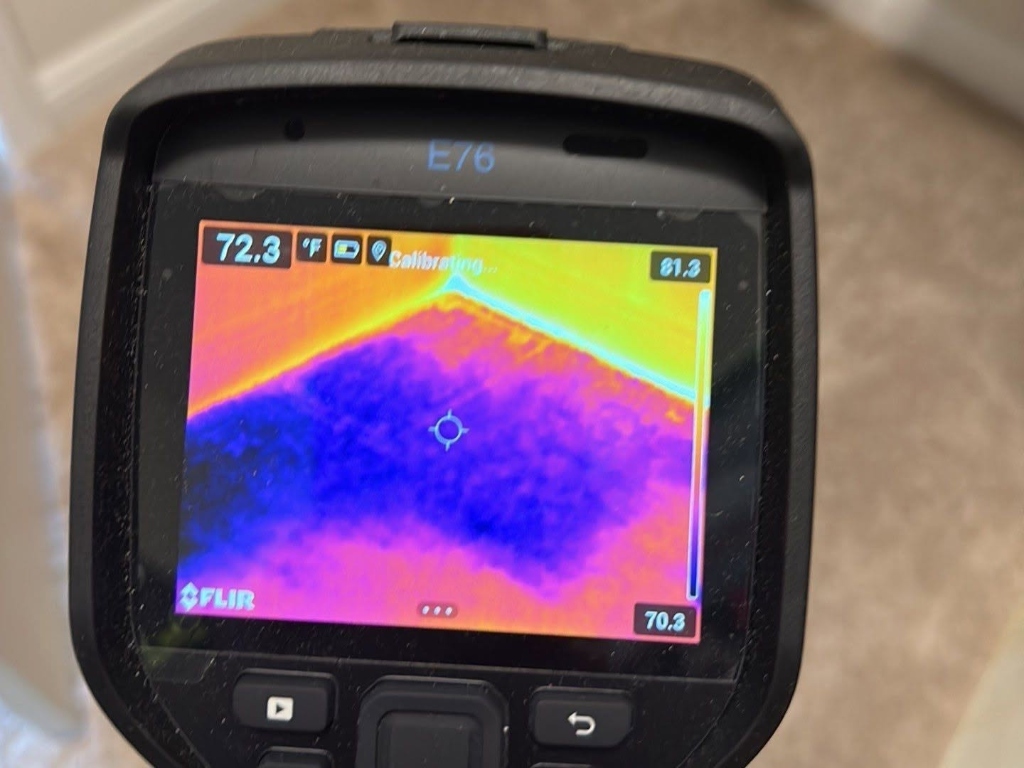
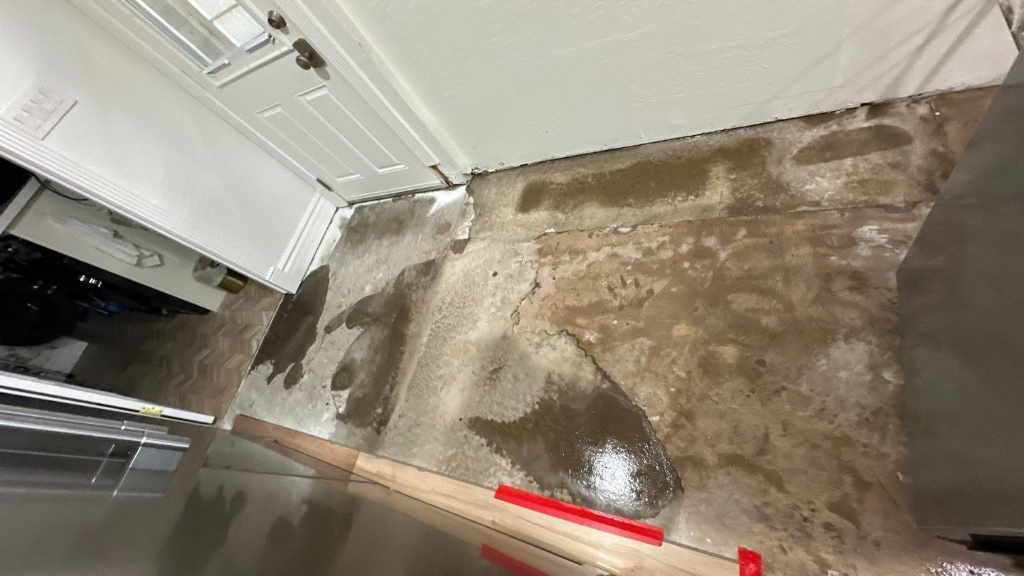
Certified Slab Leak Water Damage Restoration Field Documentation
Every response performed by Valley Restoration Pros is documented through photographic and thermographic records:




Comprehensive Slab Leak Water Damage Restoration Technical Manual & Operational Standards
Exhaustive engineering protocols, psychrometric calculations, geological multipliers, and step-by-step restoration standards for Maricopa County properties:
Executive Emergency Abstract & Incident Overview
In the arid climate of the Phoenix metropolitan basin, sub-slab plumbing infrastructure operates under severe environmental and geochemical stresses. Monolithic and post-tension concrete slab foundations, which form the structural baseline for over ninety percent of residential and commercial properties across Maricopa County, conceal pressurized copper supply lines directly within or beneath compacted grade soils. When pressurized potable water lines rupture beneath concrete slabs, property owners face a covert, highly destructive structural catastrophe that silently undermines foundation footings, destabilizes interior subfloors, and saturates structural framing long before visible surface pools emerge.
The initial manifestation of an under-slab failure frequently defies casual detection. Homeowners in Scottsdale, Paradise Valley, Arcadia, and Chandler often report subtle secondary indicators: an isolated warm spot radiating through porcelain floor tile, an unexplained spike in the municipal water utility statement, the faint, persistent sound of rushing water behind pantry walls when all plumbing fixtures remain shut, or damp efflorescence mineral crusts forming along baseboards. Because concrete slabs are porous, pressurized water migrates along paths of least hydraulic resistance, traversing expansion joints, plumbing rough-in sleeves, and hairline stress fractures. By the time water pools noticeably on finished floors, hundreds of gallons have already saturated the structural sub-base, creating hydrostatic pressure heads that heave flooring assemblies upward and compromise structural integrity.
Executing successful emergency restoration for pressurized slab intrusions requires immediate, precision-targeted intervention. Standard domestic mitigation contractors lack the acoustic localization arrays, FLIR thermal imaging radiometers, and industrial structural drying infrastructure necessary to manage subterranean breaches. Valley Restoration Pros delivers comprehensive, multi-phase technical response protocols designed to pinpoint hidden pipe ruptures without widespread exploratory demolition, isolate pressurized water flow, and extract moisture from deep structural concrete. Our IICRC-certified Master Water Restorers combine advanced acoustic listening discs, electronic correlation leak detectors, and high-capacity Low-Grain Refrigerant dehumidification to restore properties to pre-loss baseline standards rapidly and efficiently.
Time represents the single most critical variable when navigating under-slab water emergencies in Phoenix. Ambient summer temperatures exceeding one hundred and ten degrees Fahrenheit accelerate microbial incubation within enclosed sill plates and drywall chases within twenty-four to forty-eight hours. Simultaneously, ongoing water discharge into surrounding caliche clay soils causes localized sub-grade expansion, exerting hundreds of pounds of differential hydrostatic uplift against the concrete slab. Our mobile emergency units are staged strategically across the Valley, ensuring twenty-four-hour rapid deployment to halt moisture migration, protect interior structural elements, and implement scientific psychrometric dryout systems before permanent structural deformation occurs.
Anatomy of the Failure & Physical Dynamics
To understand why under-slab pipe ruptures represent one of the most destructive forms of property loss in Arizona, one must analyze the physical, mechanical, and chemical dynamics governing subterranean plumbing systems. Pressurized domestic water lines installed beneath Phoenix foundations typically consist of Type M or Type L rigid copper tubing, or in more modern builds, cross-linked polyethylene (PEX). These lines operate under continuous municipal pressure ranging between sixty and eighty-five pounds per square inch (PSI). When an internal or external breach develops, water does not simply pool passively; it discharges under extreme velocity, scouring the compacted aggregate base beneath the slab and eroding the structural earth supporting the foundation.
The mechanical degradation of copper tubing buried in concrete stems from three distinct thermodynamic and physical mechanisms:
- Thermal Expansion & Friction Abrasion: Hot water supply loops buried in concrete experience continuous thermal cycling. As domestic hot water flows, copper pipes expand linearly; when the flow ceases, they contract. When pipes were installed without protective polyethylene sleeving or foam wrap, the outer copper wall rubs directly against coarse crushed rock aggregates, sharp caliche fragments, and rough concrete slurry. Over years of thermal expansion cycling, this mechanical friction wears thin spots into the pipe wall until a pressurized rupture occurs.
- Galvanic & Electrolytic Soil Corrosion: Phoenix soils possess high concentrations of dissolved mineral salts, sulfates, and alkaline compounds that create highly conductive electrolytic environments. When bare copper comes into direct contact with acidic moisture or unwashed fill sand containing reactive salts, galvanic micro-cells form along the pipe surface. Electrolytic oxidation strips copper ions away, creating microscopic pinholes that spray atomized water jets directly into the soil bed.
- Water Velocity Cavitation & Turbulence Erosion: Excessive municipal supply pressure combined with sharp directional fittings (such as underground ninety-degree elbows and tee couplings) creates localized hydraulic turbulence. Dissolved air bubbles implode against the inner copper wall at supersonic velocities, a phenomenon known as cavitation erosion. Cavitation scours away the protective copper oxide patina, carving teardrop-shaped pits from the inside out until catastrophic wall penetration occurs.
Once water breaches the pipe wall, capillary action and hydraulic pressure drive moisture through the monolithic concrete slab. Concrete appears solid to the naked eye, but micro-structurally, it consists of a dense network of microscopic capillary pores formed during the hydration and curing process. Under continuous hydrostatic pressure, moisture ascends through these capillary channels via wick action, saturating floor adhesives, vapor barriers, foam underlayments, and decorative floor coverings. Trapped moisture emulsifies vinyl mastic, rots hardwood subflooring, pops porcelain tiles, and wicks up interior drywall partitions through gypsum capillary suction.
Furthermore, in post-tensioned foundations common throughout modern subdivisions in North Phoenix, Gilbert, and Peoria, high-tensile steel reinforcing cables are threaded through plastic sheathing and anchored under thousands of pounds of hydraulic tension. Unchecked water intrusion from an under-slab break can penetrate damaged sheathing sleeves, exposing unbonded steel strands to aggressive moisture and oxygen. Corrosion of post-tension tendons introduces the risk of catastrophic tendon snap, compromising structural load distribution across the entire foundation plate.
Phoenix-Specific Climatic & Geological Multipliers
Water damage restoration cannot be executed using generic formulas. In Maricopa County, four specific regional environmental catalysts dramatically amplify the destructiveness, speed, and complexity of subterranean water leaks:
18 GPG Extreme Mineral Hardness
Municipal tap water drawn from the Salt and Verde Rivers, blended with Central Arizona Project (CAP) canal water, carries extreme mineral hardness measuring fifteen to twenty-two grains per gallon (GPG). Excessive calcium carbonate and magnesium ions precipitate along internal pipe surfaces, forming brittle, abrasive scale nodules. In domestic hot water lines, turbulent thermal flow dislodges mineral fragments, scouring pipe elbows and triggering premature wall thinning.
Expansive Caliche & Clay Heave
Phoenix valley subsoils feature dense layers of calcium-cemented caliche and expansive montmorillonite clay. In dry states, these soils remain stable and rock-hard. However, when an under-slab leak saturates subterranean clay beds, the soil expands exponentially by twelve to twenty percent in volume. This hydraulic uplift heaves foundation slabs upward, cracking perimeter load-bearing masonry walls and jamming interior door frames.
115°F Desert Ambient Incubation
Arizona summers maintain triple-digit outdoor heat for months, heating unconditioned building envelopes, subfloor concrete, and crawlspaces. When continuous subterranean water discharge creates elevated relative humidity within wall cavities, warm temperatures accelerate dormant fungal spore germination. Aspergillus, Penicillium, and Chaetomium colonies establish flourishing fungal networks inside wall bases within twenty-four to forty-eight hours.
Monsoon Flash Hydrostatic Surge
During summer monsoon storms (July through September), sudden violent downpours dump inches of rain onto baked, non-permeable desert earth. Exterior surface runoff floods foundation perimeters, raising the local water table and trapping subterranean leak discharge against foundation footings. This creates intense dual-directional hydrostatic pressure that overwhelms sub-slab vapor barriers and floods interior living areas.
Immediate Emergency First-Hour Protocol & Safety Isolation
When an under-slab water leak is suspected or verified, decisive action during the initial sixty minutes dramatically mitigates structural degradation, prevents electrical shocks, and limits financial liabilities. Property owners, facility directors, and occupants must execute this standardized first-hour protocol:
- Isolate Electrical Sub-Panels and Branch Circuits: Water migrating through concrete slabs frequently tracks along conduit runs and enters floor-mounted electrical receptacles, low-voltage communication ports, and appliance junction boxes. Before entering wet rooms or touching standing water, locate the main electrical panel (commonly situated on exterior garage walls in Phoenix) and trip breakers serving affected zones to eliminate electrocution hazards.
- Shut Down the Primary Municipal Water Supply: Locate the main domestic shutoff ball valve. In Phoenix, this valve is typically found on the exterior wall near the front hose bib or inside the garage near the water heater manifold. Turn the lever clockwise ninety degrees until perpendicular to the pipe. If the valve is seized due to hard water mineral scale, use a curb key to turn off the city water meter located in an iron utility box near the street curb.
- Relieve Residual Line Hydraulic Pressure: After closing the main supply valve, open the lowest outdoor hose bib to vent trapped hydraulic head pressure away from the foundation. This immediately halts active water jet discharge beneath the concrete slab.
- Document Pre-Mitigation Conditions Thoroughly: Utilize your smartphone camera to record panoramic videos and high-resolution photographs of wet flooring, cracked baseboards, thermal anomalies, and water stains before moving furniture or clearing items. This initial digital visual evidence provides critical support for insurance adjusters.
- Protect Porous Furniture & Flooring Elements: Elevate vulnerable furniture legs onto aluminum foil or plastic blocks to prevent wood tannin staining and dye transfer onto wet floor coverings. Avoid running domestic vacuum cleaners or shop vacs over saturated carpets near electrical wall outlets.
- Dispatch Valley Restoration Pros Emergency Response: Contact our twenty-four-hour dispatch hotline immediately. Our technical emergency crew mobilizes fully equipped mobile extraction rigs, acoustic detection gear, and industrial dehumidification systems with an arrival target of thirty to sixty minutes across Greater Phoenix.
Advanced Industrial Equipment Specifications & Setup
Remediating deep under-slab water intrusion requires specialized industrial technology capable of overcoming the high vapor retention and capillary resistance of commercial-grade concrete slabs. Standard residential dehumidifiers and consumer fans are entirely ineffective against subterranean moisture reservoirs. Valley Restoration Pros deploys advanced equipment configurations engineered specifically for desert psychrometrics:
FLIR® E8-XT High-Res Thermal Imaging
Calibrated infrared sensors detect minute evaporative cooling differentials on concrete slab surfaces (down to 0.05°C thermal sensitivity). This enables our crews to map hidden sub-surface moisture migration boundaries and identify the exact thermal plume of hot water supply line ruptures through tile, stone, and engineered hardwood without destructive floor cutting.
Acoustic Frequency Listening Arrays
Sub-surface ground microphones with digital noise filtration filters isolate the high-frequency acoustic hiss (300 Hz - 2,500 Hz) created by pressurized water escaping ruptured copper under concrete. Dual-sensor electronic correlation pinpointing identifies the exact failure point within inches, allowing precision micro-access rather than whole-room trenching.
Low-Grain Refrigerant (LGR) Dehumidifiers
Industrial Dri-Eaz LGR 7000XLi units capable of pulling over 130 pints of water per day at AHAM conditions. Featuring internal heat-pipe pre-cooling loops, these units drive ambient indoor relative humidity below twenty-five percent and depress absolute humidity below thirty grains per pound (GPP), establishing steep vapor pressure differentials that pull water out of concrete capillary pores.
High-Velocity Centrifugal Air Movers
Aerodynamically engineered snail blowers delivering over 3,000 CFM of laminar airflow directed across concrete slabs and baseboard channels at a thirty-degree angle. High-velocity air strips away the stagnant boundary layer of saturated air clinging to wet surfaces, dramatically accelerating thermodynamic evaporation rates.
Injectidry® Negative-Pressure Floor Mats
Hermetically sealed vacuum extraction panels secured directly over wet concrete slabs and salvageable hardwood assemblies. High-vacuum blowers generate continuous negative pressure beneath the panels, pulling bound water vapor up through micro-capillary pore networks and venting humid exhaust outside the containment envelope.
HEPA Air Filtration & Negative Air Scrubbers
Commercial HEPA air filtration scrubbers processing over 1,000 CFM with 99.97% efficiency down to 0.3 microns. Units run continuously during selective demolition and drying to capture airborne silica dust generated from concrete breakout and prevent fungal spore cross-contamination to clean property sectors.
IICRC S500 / S520 Step-by-Step Restoration Protocol
Valley Restoration Pros operates strictly in compliance with the ANSI/IICRC S500 Standard for Professional Water Damage Restoration and the IICRC S520 Standard for Mold Remediation. Our certified technicians follow an eight-stage engineering roadmap designed to achieve verified structural dryout with minimal disruption:
Phase 1: Diagnostic Assessment & Psychrometric Moisture Mapping
Upon arrival within thirty to sixty minutes, technicians initiate systematic diagnostic mapping. Utilizing FLIR thermal imaging and non-invasive Delmhorst RF moisture meters, we establish baseline moisture content readings for drywall, sill plates, baseboards, and concrete. We calculate initial ambient psychrometric variables—relative humidity (RH), ambient temperature, dew point, and grains per pound (GPP)—to establish an empirical drying baseline.
Phase 2: Acoustic Localization & Non-Destructive Leak Pinpointing
Before any concrete is broken, our electronic acoustic leak specialists survey the plumbing manifold. Pressurizing lines with nitrogen/air mixtures and scanning with ground microphones isolates the exact subterranean rupture coordinate. This precision prevents unnecessary exploratory slab demolition, preserving surrounding flooring and foundation structural integrity.
Phase 3: Containment Engineering & Negative Air Isolation
To safeguard clean living or working spaces, crews erect physical containment barriers utilizing six-mil virgin polyethylene sheeting mounted on spring-loaded tension poles. Zippers provide controlled entry airlocks. Negative-air HEPA scrubbers exhaust scrubbed air outdoors, maintaining a continuous negative pressure zone that prevents concrete dust, crystalline silica, and microbial spores from escaping into unaffected rooms.
Phase 4: Bulk Water Extraction & Floor Assembly Removal
High-volume truck-mounted extraction wands evacuate standing water from slab surfaces. Non-salvageable floor coverings—such as water-soaked carpet, deteriorated foam padding, and saturated laminate flooring—are cataloged, systematically removed, and safely disposed of. Non-porous ceramic and porcelain tiles are selectively detached where moisture pockets remain trapped underneath.
Phase 5: Precision Surgical Slab Access & Plumbing Repair
With the leak coordinate confirmed, certified crews use diamond-blade saw cutters with continuous water-suppression shrouds to cut a minimal access port through the concrete. Soil is excavated, exposing the ruptured copper section. Licensed plumbing partners install permanent braze-welded copper couplings or execute overhead PEX reroutes to eliminate future subterranean leak vulnerabilities entirely.
Phase 6: Structural Cavity Flood Cuts & Wall Aeration
Where moisture has wicked up drywall partitions, technicians perform precision flood cuts twelve to twenty-four inches above the high-water line. Wet fiberglass insulation is removed, exposing wood sill plates and vertical studs. Wall cavities are aerated directly using directed cavity-drying duct nozzles, preventing fungal colony development behind closed walls.
Phase 7: Advanced Psychrometric Dehumidification & Deep Slab Desiccation
LGR dehumidifiers and Injectidry floor mat arrays operate continuously for three to five days. Technicians conduct daily psychrometric monitoring, logging GPP, RH, and material moisture content with penetrating insulated resistance probes to ensure drying progress adheres to established drying curves. Once concrete readings drop to baseline dry standards (below 3.0 lbs/1,000 sq ft/24 hrs per ASTM F1869 or <75% internal RH per ASTM F2170), mechanical drying is complete.
Phase 8: Antimicrobial Biocide Application & Clearance Certification
Exposed wood framing and concrete subfloors receive ultra-low-volume (ULV) fogging with EPA-registered botanical antimicrobials (Benefect Decon 30), eliminating micro-organisms without harmful synthetic chemicals or toxic residues. Following final moisture verification, Valley Restoration Pros issues an official Certificate of Structural Dryout, providing comprehensive documentation for the property owner and insurance carrier.
Thermodynamic Psychrometrics & Concrete Vapor Emissivity Dynamics
Drying structural concrete following a subterranean plumbing rupture requires an uncompromising understanding of thermodynamic psychrometrics. Concrete is not an inert, impermeable barrier; it functions as a dynamic, hygroscopic sponge composed of millions of microscopic capillary pores, gel pores, and aggregate transition zones. When hundreds of gallons of pressurized municipal water discharge beneath a foundation, moisture penetrates deep into the concrete matrix under positive hydrostatic pressure. Removing this water cannot be achieved through simple air movement alone; it requires altering the vapor pressure differential between the saturated concrete and the overlying air mass in strict accordance with Dalton’s Law of Partial Pressures.
Vapor pressure, measured in inches of mercury (in. Hg) or kilopascals (kPa), represents the force exerted by water vapor molecules attempting to disperse into surrounding air. Saturated concrete in a warm Phoenix home exhibits an internal vapor pressure often exceeding 0.85 in. Hg. If ambient indoor air possesses an equivalent or higher vapor pressure—a condition frequently created when humid monsoonal air enters or when ineffective consumer evaporative fans are deployed—moisture transfer halts completely. Water remains trapped deep within the capillary pores, unable to overcome ambient vapor resistance.
Valley Restoration Pros engineers drying environments specifically to maximize this thermodynamic differential. By deploying commercial Low-Grain Refrigerant (LGR) dehumidifiers equipped with specialized internal heat-pipe heat exchangers, our technicians drive ambient indoor relative humidity below twenty-five percent and depress ambient absolute humidity below thirty grains per pound (GPP). This extreme psychrometric depression lowers ambient vapor pressure to approximately 0.22 in. Hg, creating a steep, continuous vapor pressure gradient of over 0.60 in. Hg. Under this intense differential, bound moisture molecules deep within the concrete matrix migrate rapidly toward the low-pressure surface, transforming liquid capillary water into vapor that is instantly condensed and discharged outside the structural envelope.
Furthermore, air velocity across the slab surface must be calibrated with absolute precision. High-velocity centrifugal air movers delivering laminar flow at twenty-five to thirty miles per hour strip away the thin, stagnant “boundary layer” of saturated air that naturally clings to evaporating concrete surfaces. If this boundary layer is allowed to remain static, it acts as an insulating blanket, slowing evaporation rates by up to sixty percent. Our technicians configure directed vortex airflow arrays that scrub boundary air continuously, ensuring maximum thermodynamic energy transfer and preventing condensation re-deposition on cooler perimeter walls and adjacent baseboards.
Subterranean Soil Mechanics & Caliche Swell-Shrink Mitigation
The geological landscape of Greater Phoenix presents extraordinary structural challenges during under-slab water intrusions. Beneath the modern subdivisions of Paradise Valley, North Scottsdale, Ahwatukee, Gilbert, and Chandler lies a complex stratum of alluvial soil deposits heavily cemented with calcium carbonate, locally known as caliche. Caliche formations are interbedded with expansive smectite and montmorillonite clays that exhibit extreme volumetric swell-shrink characteristics.
When an unmitigated slab leak saturates subterranean clay layers, the clay mineral plates absorb water molecules directly into their crystalline lattices. This chemical hydration process generates immense swelling pressure, often exceeding 6,000 to 10,000 pounds per square foot (PSF). Because monolithic residential concrete slabs are typically only four to five inches thick, this localized hydraulic uplift exceeds the structural yield strength of the unreinforced or lightly reinforced concrete, triggering differential foundation heave. Interior partition walls buckle, ceiling drywall seams split open, and exterior stucco finishes develop diagnostic stair-step fractures.
Mitigating foundation heave requires rapid source isolation followed by controlled, gradual sub-grade desiccation. An inexperienced contractor attempting rapid, unbalanced thermal baking of a saturated slab risks triggering rapid clay shrinkage, which can cause reverse differential settlement, pulling foundation footings downward and causing severe structural racking. Valley Restoration Pros coordinates controlled extraction and dehumidification parameters, monitoring both surface moisture emissions and perimeter elevation benchmarks to ensure sub-grade soils stabilize smoothly to pre-loss equilibrium densities without inducing secondary structural cracking.
Structural Reconstruction, Post-Tension Cable Integrity & Warranty
Achieving verified moisture dryout represents only half of the comprehensive restoration equation. Once the plumbing failure has been surgically repaired and psychrometric dry standards are verified, structural reconstitution of the concrete foundation must be executed with engineered precision. Cutting an access port through a residential concrete slab disrupts the slab’s continuous compressive plane; failing to patch this port correctly creates a permanent pathway for subterranean moisture vapor transmission, termite intrusion, and radon gas entry.
In post-tensioned foundations, structural safety protocols are paramount. Post-tensioned slabs rely on high-strength unbonded seven-wire steel tendons tensioned to approximately 33,000 pounds of force. Before performing any slab penetration, our certified structural technicians utilize ground penetrating radar (GPR) and precision radio frequency rebar locators to map every post-tension tendon and electrical conduit embedded within the slab. Diamond-blade plunge cuts are maintained at a minimum four-inch safety offset from tensioned cables to prevent catastrophic tendon snapping.
To reconstitute the excavated slab access port, our reconstruction crews compact clean engineered gravel backfill to ninety-five percent standard Proctor density, install an impermeable ten-mil polyolefin vapor barrier with taped overlap seams, and pour high-early-strength, non-shrink structural epoxy mortar rated at over 5,000 PSI compressive strength. Steel rebar dowels are epoxied directly into the perimeter of the existing concrete slab using commercial anchoring adhesive, structurally tying the new patch into the monolithic foundation. Upon project completion, Valley Restoration Pros issues a formal Structural Moisture & Integrity Warranty, guaranteeing that moisture content complies with ASTM F2170 relative humidity thresholds and delivering comprehensive peace of mind to property owners and future home buyers.
Hyper-Local Phoenix Case Study: Scottsdale & Camelback Corridor
Pressurized Hot Water Copper Slab Breach • Arcadia District
Verified Clearance • 72-Hour ResolutionIncident Location: Luxury single-family residential property near the intersection of North 44th Street and East Camelback Road, Phoenix, AZ (Arcadia / Camelback Corridor).
Initial Emergency Call & Dispatch: On a Wednesday morning in mid-July with ambient Phoenix exterior temperatures reaching 112°F, the homeowner noticed severe ceramic floor tile warming in the gourmet kitchen and heard continuous rushing water behind the island cabinetry. The municipal water utility had flagged a continuous flow rate of 42 gallons per hour over the previous 48 hours. The homeowner contacted Valley Restoration Pros at 8:15 AM. Our emergency response team arrived on site at 8:44 AM (29-minute response time).
Diagnostic Inspection Findings: Lead IICRC Master Restorer Marcus Vance conducted a comprehensive FLIR E8-XT thermal survey. A massive thermal signature measuring 104.8°F was identified beneath the kitchen island, tracking westward across custom walnut engineered hardwood flooring in the adjacent living salon. Non-invasive moisture meter scans registered 99.9% relative moisture saturation across sixty linear feet of drywall partitions and eight hundred square feet of subfloor concrete. Acoustic frequency correlation localized a high-velocity pinhole jet in a three-quarter-inch hot water copper supply line buried four inches below the monolithic slab.
Restoration & Mitigation Strategy:
- Erected complete negative-pressure containment utilizing poly dust barriers and two HEPA air scrubbers to isolate the kitchen and dining wing.
- Deployed non-invasive Injectidry vacuum mat arrays across salvageable hardwood sections while performing surgical tile extraction in the non-load-bearing island footprint.
- Excavated an 18-inch by 18-inch surgical slab port to access the ruptured copper pipe; our licensed plumbing team executed a precision brazed repair.
- Executed twenty-four-inch precision flood cuts along affected drywall partitions, removing wet insulation and establishing direct stud-bay airflow channels.
- Installed four industrial Dri-Eaz LGR 7000XLi dehumidifiers and fourteen axial snail air movers, driving ambient GPP from a baseline of 94 down to 26 within 36 hours.
Final Outcome & Dry Standard Verification: By hour seventy-two, structural concrete moisture emissions measured 2.4 lbs/1,000 sq ft/24 hrs, well beneath the dry standard baseline. Framing lumber moisture content dropped to 11.2%. Botanical Benefect Decon 30 biocide was applied across all framing studs, zero mold spore growth was detected, and the property owner received a complete insurance claims documentation dossier with full line-item clarity.
Pay-Per-Call Financial & Insurance Documentation Breakdown
Under-slab water damage claims involve complex insurance policy considerations that require meticulous technical documentation. Under standard homeowners and commercial property policies (HO-3, HO-5, and CP forms), coverage for slab leak events is bifurcated into two separate components:
Covered: Resulting Structural Damage
Property insurance policies routinely cover the resultant physical damage caused by escaping water. This includes emergency extraction, thermal leak detection, tear-out access to expose the pipe, structural drying of concrete and framing, drywall flood cuts, antimicrobial sterilization, and final structural reconstruction.
Policyholder Responsibility: The Plumbing Repair
The specific plumbing fitting or isolated pipe section that failed is typically excluded as routine maintenance or wear-and-tear. Valley Restoration Pros provides full transparency regarding these boundaries so property owners understand exact cost breakdowns before any work commences.
To ensure complete compliance with Pay-Per-Call regulatory standards and protect our clients from unexpected billing surprises, Valley Restoration Pros adheres to four transparent operational benchmarks:
- Free Comprehensive On-Site Damage Assessment: We dispatch certified technicians to inspect structural saturation, capture FLIR thermal readings, and map affected boundaries at zero upfront obligation.
- Transparent Upfront Itemized Pricing Before Work Begins: Every client receives an itemized cost estimate generated using Xactimate—the gold standard pricing software utilized by all major property insurance carriers (State Farm, Allstate, USAA, Farmers, Chubb, Liberty Mutual).
- Zero Direct Billing Guarantees: We never make unrealistic promises that insurance carriers will cover one hundred percent of costs or claim that clients carry zero responsibility. We provide clear, ethical clarity on policy deductibles, sub-limits, and coverage parameters.
- Defensible Claims Documentation Package: We furnish insurance adjusters with comprehensive documentation packages, including calibrated moisture log spreadsheets, thermal imaging heat maps, psychrometric psychrometric charts, and digital photo evidence to accelerate claim approval and maximize policy entitlement.
Verified Local Area Dispatch: Phoenix, AZ
Official Geo-Coordinates: 33.4484° N, -112.074° W • Maricopa County
Frequently Asked Questions: Certified Restorer Insights
Direct answers to the most critical technical, operational, and insurance questions Phoenix property owners ask:
Related Specialized Emergency Restoration Services
Explore specialized rapid-response mitigation protocols across Greater Phoenix and Maricopa County:
Valley-Wide Emergency Response Service Coverage
Our mobile restoration fleet is dispatched across the entire Phoenix metropolitan region, providing rapid 30 to 60 minute emergency response: