

Valley Restoration Pros delivers 24/7 industrial emergency water extraction, thermal psychrometric drying, and structural mitigation across Phoenix and Maricopa County with guaranteed 30–60 minute rapid arrival. All protocols strictly adhere to IICRC S500 standards, featuring upfront itemized pricing and free on-site thermal moisture assessments. Call dispatch directly at (602) 847-9593.
Why Immediate Mitigation Is Critical in Phoenix Heat
Industrial ammonia refrigeration line bursts in Tolleson release volatile R-717 vapor alongside high-volume defrost deluge water that freezes into thick glaze ice across sub-zero concrete slabs. Under Tolleson 115°F desert summer heat and 18 GPG municipal hard water, standing floodwaters create massive vapor pressure differentials, ceiling condensation downpours, insulated metal panel core saturation, and catastrophic foundation frost heaving over expansive caliche soil strata without immediate industrial extraction.
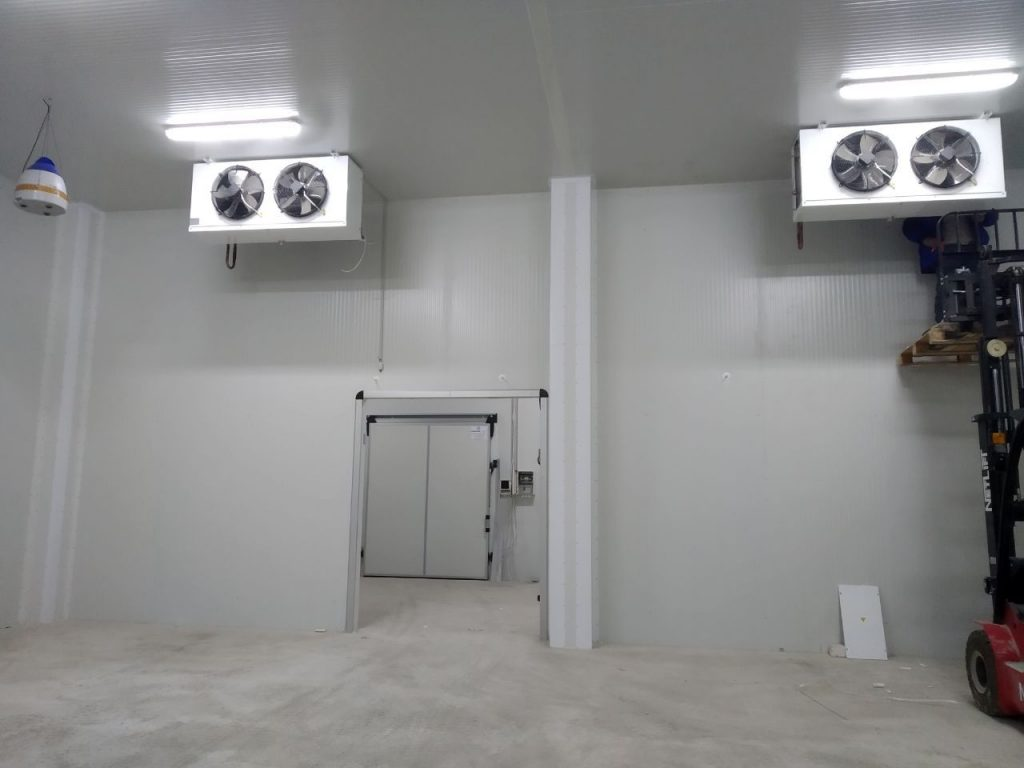
Service Definition & The IICRC Standard of Care
Professional commercial cold storage ammonia refrigeration pipe burst cleanup tolleson is an engineering and environmental discipline adhering strictly to IICRC S500 protocols, not mere surface mopping. When structural plumbing failures strike in Maricopa County, certified emergency water extraction and thermal structural drying procedures must be deployed immediately. Whether triggered by high-pressure burst pipe emergencies, subfloor leaks, or commercial line ruptures, bound moisture rapidly penetrates concrete subfloors and wall framing. In the desert heat, delays trigger microbial proliferation requiring rapid mold remediation. Request damage assessment through our emergency assessment portal or request 30-minute dispatch across all Valley service areas.
Securing electrical feeds, inspecting load-bearing assemblies, and containing pathogens.
Stopping the intrusion source and erecting 6-mil plastic isolation containment airlocks.
31-HP truck-mount extraction, removing gallons exponentially faster than evaporation.
LGR dehumidifiers and HEPA air scrubbers driving grains per pound below 25 GPP.
Calibrated electronic pinless testing confirming baseline dry standards.
The Complete 6-Stage Restoration Roadmap
Our IICRC-certified crews execute a disciplined, scientific 6-stage protocol to stabilize and dry structural components:
Emergency Dispatch & Perimeter Isolation
30 to 60 minute arrival. Securing electrical shutoffs, evaluating structural loads, and erecting containment airlocks.
FLIR® Thermal Mapping & Baseline Scans
Infrared thermal scans detect trapped moisture behind walls and beneath concrete without invasive exploratory demolition.
High-Volume Bulk Extraction
31-HP truck-mount extraction units pump standing water away at hundreds of gallons per minute.
Controlled Selective Demolition
Precision flood cuts 12 to 24 inches above moisture lines, removing wet insulation and opening wall framing to dry airflow.
Thermodynamic Dehumidification
Industrial Low-Grain Refrigerant dehumidifiers pull deep trapped moisture from dense framing lumber and concrete slabs.
Antimicrobial Sanitization & Verification
EPA-registered botanical application (Benefect Decon 30) and calibrated moisture testing to issue an official dry certificate.

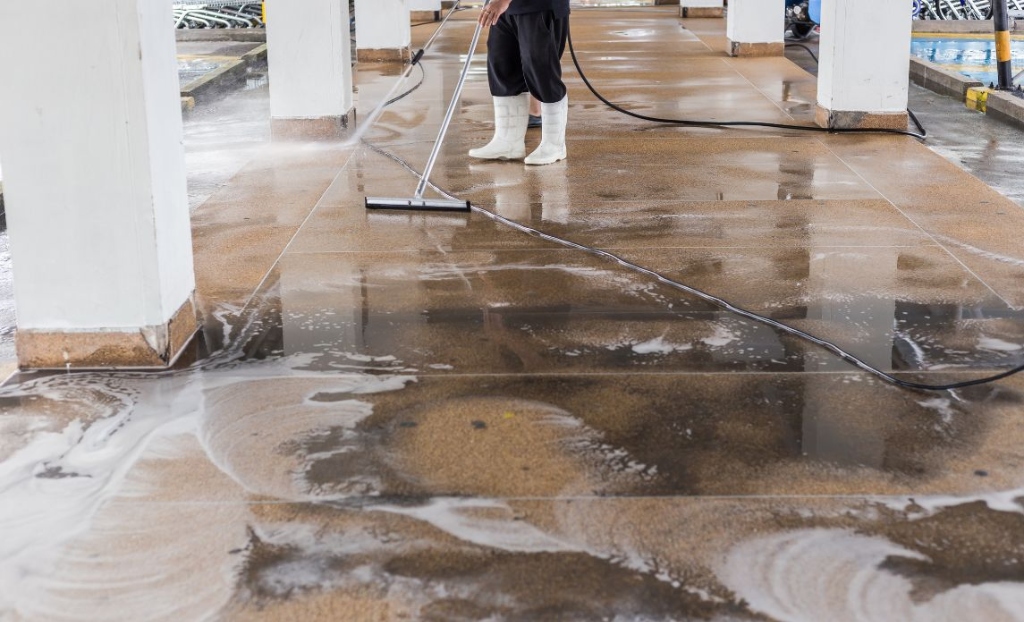
Specialized Equipment & Industrial Restoration Technology
Mitigating severe property damage requires industrial-grade technology capable of altering thermodynamic psychrometrics:
Truck-Mounted Extraction Rigs
31-HP engines producing 16+ inches Hg vacuum suction to evacuate bulk water rapidly into holding tanks.
Low-Grain Refrigerant Dryers
Pre-cooling heat-pipe systems driving ambient grains per pound below 25 GPP to draw deep trapped water out of framing.
HEPA Negative-Air Scrubbers
Hospital-grade 99.97% particulate filtration capturing microscopic fungal spores, soot, and biohazard aerosols.
FLIR® Thermal Scanners & Probes
Infrared thermography detecting evaporative cooling boundaries behind walls, combined with digital RF pinless scanners.
Professional Restoration vs. DIY Mitigation
Attempting DIY cleanup during a property disaster creates severe hidden liabilities:
- Trapped Moisture: Surface drywall dries while moisture inside cavities triggers hidden mold blooms.
- Pathogenic Risks: Category 2 & 3 water contains bio-contaminants standard cleaners fail to kill.
- Insurance Denial: Insurers require daily psychrometric logs; lack of data causes claim disputes.
Transparent Upfront Itemized Pricing
Valley Restoration Pros operates with complete transparency:
- Free On-Site Assessment: Complete physical inspection before work begins.
- Upfront Itemized Estimates: Detailed line items calculated via industry-standard Xactimate.
- Zero Surprise Billing: No hidden charges or unauthorized repairs.
Certified Commercial Cold Storage Ammonia Refrigeration Pipe Burst Cleanup Tolleson Field Documentation
Every response performed by Valley Restoration Pros is documented through photographic and thermographic records:
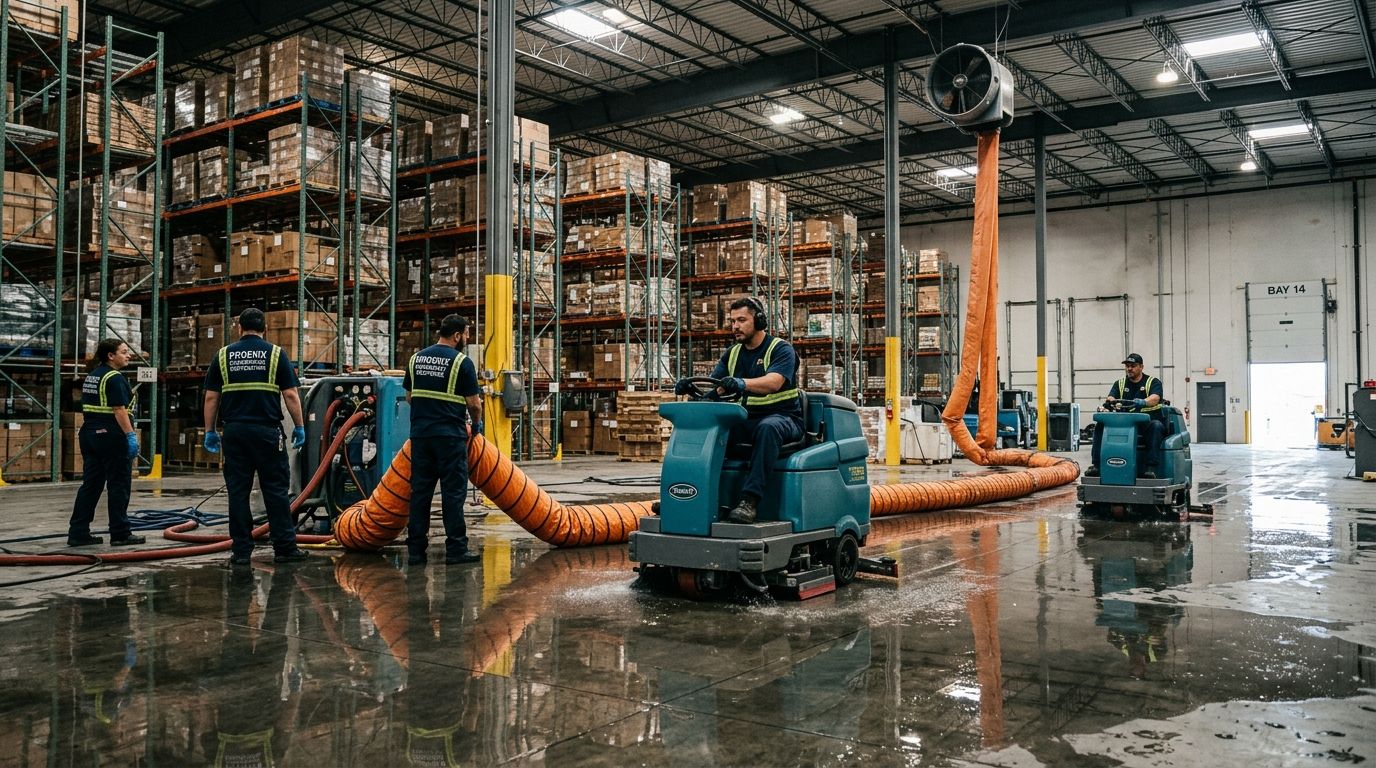
Comprehensive Commercial Cold Storage Ammonia Refrigeration Pipe Burst Cleanup Tolleson Technical Manual & Operational Standards
Exhaustive engineering protocols, psychrometric calculations, geological multipliers, and step-by-step restoration standards for Maricopa County properties:
Executive Emergency Abstract: Tolleson Cold Storage Ammonia Refrigeration Pipe Rupture & Industrial Flooding
The Tolleson Freight Logistics Corridor, concentrated along 91st Avenue, 99th Avenue, Van Buren Street, Buckeye Road, and Interstate 10, functions as the primary cold-chain distribution artery for the desert Southwest. Sprawling refrigerated distribution hubs, third-party logistics (3PL) cross-dock facilities, regional grocery distribution centers, and sub-zero blast freezers in Tolleson house tens of millions of dollars in perishable food inventory across multi-acre building envelopes. The lifeblood of these high-volume facilities is industrial anhydrous ammonia (chemical designation R-717) refrigeration, operating under severe pressure differentials to sustain sub-zero storage chambers down to -20°F and produce holding coolers at 34°F. When an ammonia refrigeration distribution pipe, high-pressure liquid supply header, hot gas defrost loop, or pump accumulator vessel suffers a catastrophic structural burst, the operational consequences extend far beyond hazardous chemical vapor discharge.
A high-pressure refrigeration pipe fracture instantly triggers an extreme dual-phase emergency: volatile R-717 vapor plumes expand violently into storage chambers while high-volume aqueous defrost water, condensing cooling tower deluge, and emergency hazmat vapor-knockdown spray systems discharge thousands of gallons of water across sub-zero insulated concrete slabs. Within minutes of a primary line rupture, standing water rapidly freezes into treacherous sheets of dense glaze ice across smooth power-troweled slabs, compromises composite insulated metal panel (IMP) wall systems, saturates sub-slab expansion joints, and threatens automated inductive-wire high-reach racking systems. Under Tolleson’s punishing 115°F summer climate, unmitigated water intrusion creates severe thermodynamic vapor pressure imbalances, generating dense ceiling condensation fog and heavy structural rainout within refrigerated staging bays.
Remediating an ammonia refrigeration deluge inside an active commercial cold storage environment requires specialized hazmat clearance integration, sub-zero psychrometric drying physics, and full compliance with FDA Food Safety Modernization Act (FSMA) standards. Standard commercial drying methodologies completely fail in sub-freezing industrial environments; traditional refrigerant dehumidifiers freeze solid within minutes, while warm air ventilation induces uncontrollable condensation across million-dollar racking profiles. Swift mobilization of certified industrial emergency water extraction units, chemical neutralizer slurry scrubbing, and multi-ton desiccant dehumidification trailers within the first hour of system isolation is essential to prevent permanent structural frost heave, preserve concrete integrity, and avoid catastrophic inventory condemnation.
Immediate Tolleson Cold Storage Emergency Directives: First 30 Minutes
- Initiate Ammonia PSM Isolation Protocol: Direct certified facility refrigeration technicians wearing Level B PPE to activate emergency shutoff valves, isolating high-pressure liquid supply lines, compressor suction manifolds, and hot gas defrost solenoid stations.
- Deploy Emergency Ventilation & Vapor Knockdown Containment: Engage industrial rooftop ammonia purge fans and ensure scrubber deluge water or fog nozzles are routed into isolated industrial containment sumps rather than municipal storm sewers along 91st Avenue.
- De-Energize Cold Storage Electrical & Automated Racking: Secure 480V 3-phase power distribution circuits feeding flooded evaporator coil fan arrays, under-floor glycol warming pumps, and automated path vehicle (AGV) recharging corridors to prevent electrical arc ignition and moisture-induced board failure.
- Mobilize Industrial Restoration Engineering: Contact Valley Restoration Pros at (602) 847-9593 or tap Emergency Phone Dispatch for rapid 30-minute deployment of trailer-mounted desiccant dehumidifiers, heated vacuum extraction rigs, and IICRC-certified commercial large-loss restoration teams to Tolleson logistics corridors.
Anatomy of Ammonia Refrigeration Failures in Sub-Zero Cold Storage Facilities
Industrial anhydrous ammonia (R-717) refrigeration networks in Tolleson cold storage plants represent sophisticated closed-loop thermodynamic circuits operating under severe mechanical stresses. Unlike residential or commercial freon-based cooling units, large-scale ammonia systems utilize high-pressure reciprocating or rotary screw compressors, overhead evaporative condensers, liquid recirculator pumps, and high-pressure liquid lines operating at pressures exceeding 180 to 250 pounds per square inch (PSI). The piping infrastructure, predominantly composed of heavy-wall Schedule 40 and Schedule 80 ASTM A106 Grade B carbon steel or low-temperature A333 Grade 6 alloy piping, traverses cavernous warehouse clear-spans suspended forty to fifty feet above automated rack structures.
A primary mechanical catalyst of catastrophic refrigeration line rupture is hydraulic shock, commonly known in the industrial refrigeration sector as "liquid hammer." During automated hot gas defrost cycles, high-temperature, high-pressure ammonia vapor (typically 120°F to 140°F at 150+ PSI) is injected directly into sub-zero evaporator coils operating at -20°F to melt surface frost. If an automated solenoid valve opens too rapidly, or if liquid ammonia has pooled inside cold suction lines due to improper trapping, the incoming hot gas violently accelerates liquid slugs through the piping network at velocities exceeding 100 feet per second. When this high-density liquid slug impacts a 90-degree elbow, flanged valve header, or welded reduction tee, the resulting instantaneous kinetic pressure spike can surpass 2,000 PSI—far exceeding the burst yield rating of the steel pipe.
Low-Temperature Brittle Fracture
Carbon steel transitions from ductile to brittle behavior at sub-zero temperatures. In blast freezer bays operating at -20°F to -40°F, minor cyclic thermal stress, weld root micro-cracks, or mechanical impacts from high-reach turret mast trucks induce instantaneous brittle cleavage failure, rupturing high-pressure liquid or suction distribution mains.
Corrosion Under Insulation (CUI)
Polyurethane foam insulation and PVC vapor retarder jackets around ammonia lines frequently suffer micro-punctures or joint seal degradation. In humid loading dock interfaces, ambient moisture infiltrates behind insulation, creating severe annular corrosion cells that eat through carbon steel pipe walls unseen until catastrophic pressurization blowouts occur.
Defrost Water Cascade & Drain Pan Backups
Evaporator defrost cycles release hundreds of gallons of melt water per hour. When electric heat trace tape fails on condensate drain lines, drain pans freeze over, forming massive ice dams that crack overhead coil headers and dump continuous volumes of chilled defrost water directly onto palletized inventory and transit aisles.
When a pipe ruptures, the escaping ammonia rapidly depressurizes, expanding into an aerosol vapor cloud while boiling off liquid droplets that absorb atmospheric water vapor. Simultaneously, secondary water sources—including defrost hot water loops, overhead fire sprinkler pre-action deluge systems activated by thermal disruption, or emergency water washdown lines—flood the storage chamber with tens of thousands of gallons of water. Remediating this complex loss demands comprehensive expertise in both industrial burst pipe repair protocols and advanced cold-storage water extraction methods.
Phoenix Desert & Tolleson Industrial Environmental Multipliers
Tolleson, Arizona occupies an exceptional geographic and climatic nexus in the West Valley. Situated in the Salt River Valley low basin between the Gila River and Interstate 10, Tolleson experiences extreme environmental forces that dramatically magnify the severity of industrial cold storage mechanical failures and post-flood structural degradation. Restoring a temperature-controlled logistics hub in this desert environment requires accounting for extreme ambient thermal differentials, hyper-saline municipal water chemistry, expansive subterranean soil mechanics, and seasonal monsoon storms.
These aggressive regional factors mean that a pipe burst in Tolleson is never an isolated mechanical problem. Within hours of a high-pressure pipe breach, extreme outdoor temperatures drive immense vapor pressure differentials that force atmospheric moisture into cold building cavities. If floodwaters infiltrate unconditioned sub-slab soils, chemical reaction with expansive caliche beds creates severe foundation upheaval. Addressing these multi-vector challenges requires large-scale industrial commercial water damage engineering built specifically for Arizona’s industrial distribution hubs.
HAZMAT Incident Command, OSHA PSM, and Chemical Containment Protocol
Anhydrous ammonia is regulated under OSHA 29 CFR 1910.119 Process Safety Management (PSM) and EPA 40 CFR Part 68 Risk Management Program (RMP) regulations due to its acute toxicity and physical volatility. With a National Fire Protection Association (NFPA) health hazard rating of 3, R-717 vapor poses severe respiratory and chemical burn risks at concentrations as low as 300 parts per million (PPM) (the Immediately Dangerous to Life or Health—IDLH threshold). Before any commercial water extraction or physical structural drying operations can commence, our incident response team interfaces seamlessly with the Tolleson Fire Department Hazmat Division and facility PSM safety coordinators to establish a rigorous industrial Incident Command System (ICS).
Anhydrous ammonia is intensely hygroscopic, possessing an extraordinary chemical affinity for water. A single gallon of water can rapidly absorb over 1,300 gallons of ammonia vapor, converting into an alkaline ammonium hydroxide (NH4OH) aqueous solution with a pH ranging between 11.5 and 13.0. While water curtain spray systems and deluge fog nozzles are strategically deployed by emergency responders to knock down gaseous ammonia plumes, this process generates hundreds of thousands of gallons of caustic, ammonia-saturated wastewater across cold storage concrete slabs.
Structured Hazmat Zonation & Atmospheric Clearance Thresholds
Direct discharge of caustic ammonium hydroxide wastewater into Tolleson municipal sewer systems or dry retention basins violates local environmental codes and federal Clean Water Act regulations. Our teams deploy high-volume polypropylene spill berms, pneumatic chemical transfer pumps, and mobile holding bladders. On-site pH neutralization using controlled agricultural-grade citric acid buffering agents reduces wastewater pH from 12.5 down to neutral (6.5–7.5) before certified disposal, safeguarding facility operators from severe regulatory fines while clearing the way for rapid structural restoration.
Immediate First-Hour Emergency Operational Isolation & Life Safety Procedures
The initial sixty minutes following a commercial ammonia refrigeration pipe burst determine whether an incident results in temporary business disruption or catastrophic, multimillion-dollar inventory write-offs and structural condemned status. When thousands of pounds of pressurized liquid ammonia escape alongside high-velocity cooling water, facility managers along the Tolleson corridor must follow an uncompromising sequence of mechanical containment, life safety isolation, and site stabilization actions.
Six-Stage Emergency Mechanical & Restoration Isolation Protocol
- Emergency King Valve & Solenoid Isolation: Trained certified refrigeration operators (CARO/CIRO) must instantly close the high-pressure liquid supply king valve at the main receiver vessel and trip emergency solenoid stop switches on the active refrigeration header to halt the pressurized feed of liquid R-717 to ruptured distribution coils.
- Compressor Room Emergency Ventilation Interlock: Confirm automated activation of high-capacity emergency exhaust fans designed to purge the machinery room at 30 air changes per hour (ACH). Ensure exhaust air streams do not draw toxic plumes toward building HVAC air intakes or exterior truck loading dock bay doors.
- Water Supply Shutoff to Evaporative Condensers & Defrost Loops: Immediately isolate booster water pumps and primary city water feed backflow preventers supplying rooftop evaporative condensers and defrost hot water heating loops to stop ongoing liquid discharge into warehouse bays.
- Thermal Zone Containment & High-Speed Door Lockout: Isolate the breached storage bay by sealing motorized vertical roll-up freezer doors and insulating cold curtains. De-energize auto-open proximity sensors to prevent warm 115°F dock air from surging into the cold storage room, which would trigger immediate ceiling condensation downpours.
- Containment Berming Around Warehouse Floor Drains: Deploy magnetic drain covers and neoprene spill dikes around interior floor cleanouts and exterior truck ramp storm drains to prevent caustic ammonia-water runoff from escaping into local municipal stormwater retention basins along Van Buren Street.
- Emergency Large-Loss Restoration Mobilization: Contact Valley Restoration Pros at (602) 847-9593. Our rapid-dispatch commercial flood teams mobilize from West Valley staging depots, arriving on site within 30 minutes equipped with explosion-proof extraction equipment, continuous desiccant trailers, and certified hazardous waste containment bladders.
Executing these initial procedures prevents mechanical cascading failures. In high-density refrigerated warehouses, uncontrolled liquid flooding frequently enters underfloor heating loops or compromises the critical vapor barrier beneath heavy storage slabs. For broader industrial warehouse flood recovery workflows, consult our specialized warehouse flood damage restoration in Phoenix standards.
High-Volume Deluge Water Extraction in Sub-Zero Freezers & Controlled Cold Rooms
Extracting standing floodwater from an industrial cold storage facility is fundamentally different from standard commercial water restoration. Inside a 34°F produce staging cooler, liquid water remains in a fluid state but exhibits increased viscosity and near-zero natural evaporation. Inside a -20°F sub-zero blast freezer chamber, escaping deluge water begins freezing instantaneously upon contact with the dense, super-cooled concrete floor slab. Within twenty to thirty minutes, thousands of gallons of water transform into a monolithic sheet of rock-hard, high-friction glaze ice spanning thousands of square feet.
This rapid phase change presents severe operational hazards. Heavy ice accumulation bonds tenaciously to smooth power-troweled concrete, encapsulates inductive floor RFID transponders, welds pallet rack baseplates to the slab, and freezes bottom-tier wooden pallets solid to the floor. Furthermore, ice expansion inside concrete contraction joints and perimeter control joints fractures concrete edges, breaking the elastomeric sealant beads that preserve sub-slab vapor integrity.
Advanced Sub-Zero Water Extraction Technology Matrix
To overcome freezing phase changes without introducing damaging external heat that would spoil stored goods, our industrial crews utilize a specialized three-tier mechanical extraction and ice mitigation methodology:
Once bulk standing water and surface ice are mechanically evacuated, micro-thin moisture films trapped within concrete pores must be addressed. In ambient produce rooms, standing water accelerates pallet mold growth within 24 hours under Arizona conditions. Immediate deployment of targeted structural drying protocols is necessary to pull deep capillary moisture out of heavy commercial slabs.
Low-Dewpoint Desiccant Dehumidification & Psychrometric Vapor Pressure Stabilization
Psychrometric science in cold storage environments defies standard drying conventions. In normal building drying at 75°F and 50% relative humidity (RH), air contains approximately 65 grains of moisture per pound of dry air (GPP). Inside a 34°F produce cooler at 90% RH, the air holds only 26 GPP. In a -20°F blast freezer, air at 90% RH holds less than 2 GPP. Standard Low-Grain Refrigerant (LGR) dehumidifiers cannot function in these conditions; their cooling evaporator coils instantly freeze over into solid blocks of ice, causing compressor burnout.
To dry saturated cold storage structures, Valley Restoration Pros deploys massive trailer-mounted, industrial silica-gel desiccant dehumidifiers (ranging from 5,000 to 15,000 CFM per unit). Desiccant technology operates via chemical adsorption rather than condensation. Process air from the flooded chamber is passed through a rotating honeycombed desiccant wheel impregnated with active silica gel, which directly strips water vapor molecules out of the air stream regardless of temperature. The desiccant system discharges ultra-dry air with dewpoints as low as -40°F and humidity ratios below 2 GPP.
Thermodynamic Vapor Pressure & Psychrometric Control Parameters
The central challenge during cold facility restoration in Tolleson is managing the colossal vapor pressure gradient between the exterior Sonoran Desert climate and the interior refrigerated envelope:
- Exterior Summer Conditions: 115°F dry bulb, 20% RH (during non-monsoon days) produces a water vapor pressure of approximately 0.60 inches of mercury (inHg). During August monsoon spikes, 100°F at 65% RH creates an extreme vapor pressure of 1.25 inHg.
- Interior Cooler Conditions: 34°F dry bulb at 85% RH produces an internal vapor pressure of only 0.16 inHg.
- Vapor Pressure Differential: This produces an inward driving vapor force exceeding 1.0 inHg (over 70 pounds per square foot). If warehouse dock seals or ceiling penetrations are compromised, outdoor water vapor forcefully invades the building envelope. As this warm, humid air contacts cold racking and ceiling panels, it instantly condenses, creating dense fog and "indoor rain" that re-saturates products.
Our engineering teams establish temporary hermetic airlocks and pressurization containment zones between loading docks and refrigerated storage aisles. By delivering high-volume, low-dewpoint desiccant air under slight positive pressure relative to the exterior loading dock, we reverse the vapor gradient. Moisture within wet concrete slabs and insulated panel cavities is pulled continuously into the desiccant stream and exhausted out of the building as superheated reactivation vapor.
For deep technical analysis on industrial mechanical loop drying, see our companion breakdown on commercial chiller pipe flood restoration for heavy hydronic and secondary cooling loops across Phoenix commercial properties.
Structural Restoration of Insulated Metal Panels (IMP) & Sub-Slab Frost Heave Mitigation
Modern cold storage buildings in Tolleson rely on specialized structural components that are uniquely vulnerable to water intrusion: Insulated Metal Panels (IMPs) and multi-layered sub-zero slab foundation assemblies. IMPs consist of an interior and exterior steel skin permanently bonded to a rigid foamed-in-place polyisocyanurate (PIR) or expanded polystyrene (EPS) core. In a severe ammonia refrigeration pipe burst, pressurized water penetrates vertical panel joints, caulked base channels, and ceiling suspension rods.
Water trapped inside IMP joints destroys thermal resistance (R-value). Wet PIR or EPS insulation loses up to 80% of its insulating capacity, leading to severe thermal bridging, localized sweating, and hidden microbial amplification within interstitial wall cavities. Even worse, if water inside IMP panels freezes, the 9% volumetric expansion of water ruptures internal core bonds, causing the exterior steel skin to delaminate from the foam core and compromising the structural shear capacity of 40-foot-tall freezer walls.
Infrared Thermographic Moisture Mapping
Certified thermographers utilize high-resolution FLIR optical gas and thermal imaging cameras. Evaporative cooling differentials and thermal capacitance variations pinpoint exact water migration pathways inside IMP joint interlocks, identifying trapped water pockets without destructive wall demolition.
Sub-Slab Permafrost & Frost Heave Hazards
Sub-zero blast freezers sit atop an insulated slab underlain by an engineered heating system (glycol warm-fluid loop or electric heat trace) and heavy vapor retarder. When deluge water penetrates perimeter expansion joints, water accumulates beneath the insulation layer, overwhelming floor heating loops.
Caliche Soil Hydraulic Upheaval
When sub-slab water reaches Tolleson’s native caliche clay deposits, the clay swells aggressively. Freezing temperatures penetrating downward freeze this subterranean groundwater, creating ice lenses that expand with immense force, heaving 8-inch reinforced concrete slabs upward and warping structural columns.
To arrest sub-slab frost heaving, our industrial restoration teams monitor slab elevation profiles with laser levels and deploy specialized positive-pressure injection drying into base channels. Where sub-slab water intrusion has occurred, we execute targeted sub-surface dewatering and psychrometric cavity drying to stabilize foundation strata before permanent structural shifting occurs. For detailed slab restoration protocols, review our dedicated subfloor water damage repair procedures.
For comparable cold-chain warehouse mitigation involving secondary cooling fluid releases in neighboring logistics clusters, explore our technical documentation on Goodyear commercial cold storage glycol line burst cleanup.
FDA FSMA Section 418 & USDA Cold-Chain Food Safety Compliance
Commercial cold storage facilities operating in Tolleson house perishable produce, beef, poultry, dairy, and processed foods distributed to hundreds of supermarket branches across the western United States. A commercial ammonia line rupture accompanied by high-volume floodwater release is not merely a facility structural emergency—it is a severe food safety crisis governed by strict federal mandates, including FDA Food Safety Modernization Act (FSMA) 21 CFR Part 117 (Hazard Analysis and Risk-Based Preventive Controls) and USDA Food Safety and Inspection Service (FSIS) regulations.
Anhydrous ammonia vapor dissolves instantly into surface moisture on raw agricultural commodities, leafy greens, and meat products, forming alkaline ammonium hydroxide that causes chemical burning, protein denaturation, off-odors, and toxic contamination. Concurrently, industrial floodwater discharged from overhead cooling coils contains rust particles, pipe scale, 18 GPG mineral deposits, and bacterial biofilm. If water droplets splash onto corrugated carton packaging, moisture wicks through cellulose fibers, compromising container integrity and introducing environmental pathogens such as Listeria monocytogenes and Salmonella into the product matrix.
Food Safety Incident Triaging & Regulatory Clearance Framework
- Exclusion & Quarantine Segregation: Immediately establish red-tag quarantine zones isolating all inventory located in the flooded or vapor-exposed storage chamber. Under FSMA Section 418, no product may be moved or shipped until formal food safety hazard evaluations are executed.
- Packaging Barrier Integrity Testing: Hermetically sealed food containers (canned products, aluminum foil pouches, sealed retort packs) that sustained exterior water exposure are evaluated. If exterior packaging integrity is intact, products undergo automated sanitary wash and rinse decontamination using approved sanitizing rinses (peracetic acid or chlorine dioxide). Corrugated cardboard cartons subjected to standing water or high-humidity condensation cannot be salvaged and must be condemned due to structural collapse and microbial harborage risks.
- Aqueous & Olfactory Ammonia Contamination Assay: Agricultural produce, naked meat, or permeable packaging exposed to ammonia vapor undergo chemical headspace testing and pH surface swabbing. Food showing elevated pH or organoleptic ammonia taint is condemned in full coordination with third-party QA auditors and USDA inspectors.
- Environmental Surface ATP & Microbial Swabbing: Following water extraction and structural drying, all food-contact surfaces, pallet racking uprights, conveyor rollers, and concrete floors undergo Adenosine Triphosphate (ATP) bioluminescence testing and microbial culture swabbing to prove zero pathogen presence before the facility is recertified for commercial food staging.
Our leadership works alongside facility Quality Assurance Directors, independent food safety auditors, and insurance adjusters to provide rigorous scientific documentation supporting salvageable inventory reclamation while establishing irrefutable proof for total-loss perishable inventory claims. For regional context on food distribution warehouse recovery, see our detailed operational overview for Tolleson commercial cold storage refrigerated warehouse flood mitigation.
Industrial Equipment, Automated Racking & Sensor Decontamination Procedures
Modern Tolleson distribution hubs feature advanced automation: computer-controlled pallet conveyor networks, Automated Storage and Retrieval Systems (ASRS), induction-tracked turret trucks, high-speed insulated fabric roll-up doors, and extensive barcode/RFID scanning tunnels. These high-precision mechatronic systems are exceptionally vulnerable to water inundation, corrosive ammonia vapors, and mineral scale deposition from 18 GPG municipal hard water.
When floodwaters containing dissolved ammonia and hard water salts reach material handling equipment, water is drawn into motor enclosures, electronic drive controllers, optical sensors, and subterranean track pathways via capillary action. Ammonia reacts chemically with copper wiring and brass terminals, causing rapid blue copper-complex corrosion and catastrophic short circuits. Concurrently, drying water leaves heavy calcium carbonate scale deposits on optical sensor lenses, drive motor commutators, and conveyor roller bearings, inducing mechanical binding and tracking errors.
Restoring complex automated logistics infrastructure requires specialized electrical decontamination protocols. Our technicians conduct precision megohmmeter (Megger) insulation testing across all affected wiring harnesses, motor windings, and power distribution transformers, ensuring every electrical circuit meets National Electrical Code (NEC) and NFPA 70B standards prior to re-energization.
Tolleson 91st Ave Industrial Logistics Corridor Case Study: Sub-Zero Ammonia Pipe Burst Recovery
160,000 Sq. Ft. Regional Cold Distribution Hub | 91st Avenue & Van Buren Street, Tolleson, AZ
Incident Date: July 22, 2024 | Exterior Ambient Temp: 116°F | Facility Profile: Multi-Temperature Frozen Grocery & Produce Facility
At 3:14 AM on July 22, during an extreme 116°F Phoenix heatwave, an automated 3-inch hot gas defrost distribution line suffered a violent liquid hammer rupture directly above Rack Bay D inside a 65,000 sq. ft. sub-zero freezer holding at -15°F. The high-pressure rupture discharged approximately 1,800 pounds of anhydrous ammonia into the space alongside an estimated 14,000 gallons of condensed water and automated pre-action deluge water before mechanical isolation was completed. Escaping water rapidly froze, coating 45,000 square feet of floor slab in two to four inches of solid ice while dense vapor plumes triggered automatic fire department hazmat dispatch.
Critical Large-Loss Incident Metrics
- Initial Moisture Baseline: Concrete slab moisture vapor emission rate (MVER) exceeding 15 lbs/1,000 sq ft/24 hours; internal air saturated at 95% RH with massive ceiling condensation droplets.
- Ammonia Contamination Level: Initial ambient air reading 450 PPM (well above IDLH); floor ice slurry pH measured 12.2.
- Target Dry Standard: Concrete equilibrium relative humidity (ERH) < 75% per ASTM F2170; slab surface pH normalized to 7.0–8.0; zero detectable airborne ammonia (< 1 PPM).
- Inventory Value at Risk: $14.2 million in palletized premium frozen beef, poultry, and temperature-sensitive ice cream inventory.
Execution & Recovery Timeline
This rapid 84-hour recovery saved the facility an estimated $22 million in structural repairs and inventory losses. For other complex West Valley industrial warehouse flood events, review our capabilities for Goodyear Airport Industrial Park commercial warehouse dewatering.
Transparent Upfront Itemized Pricing & Commercial Insurance Claims Documentation
Commercial industrial property losses involve complex property, casualty, and business interruption insurance policies. At Valley Restoration Pros, we reject vague estimates, deceptive billing schemes, and misleading promises regarding insurance settlements. We operate with complete commercial transparency, providing corporate facility owners, 3PL logistics operators, and risk managers with precise financial clarity before any restoration work commences.
Our Three Pillars of Commercial Financial Integrity
PPC Compliance & Regulatory Billing Disclosure
Valley Restoration Pros does not make unsubstantiated promises that insurance carriers will cover 100% of restoration costs or that claims can be billed directly without client authorization. Commercial insurance policies contain specific deductibles, sub-limits for ammonia release, environmental contamination exclusions, and business interruption waiting periods. The property owner or authorized facility operator retains ultimate financial responsibility for approved services. We collaborate closely with your corporate risk management team and assigned carrier adjusters to facilitate seamless, verified claim processing.
For commercial facility directors planning maintenance budgets or evaluating potential exposure scenarios across Greater Phoenix, our online Instant Cost Estimator provides rapid baseline projections based on square footage, water depth, and environmental complexity.
Long-Term Mechanical Integrity, Ultrasonic Pipe Testing & Preventative Maintenance
Recovering from an ammonia refrigeration pipe rupture does not end when the floor is dry and the air is clear. Secondary chemical and metallurgical consequences can manifest months or years down the line if long-term structural integrity is not meticulously addressed. In the harsh industrial climate of Tolleson, ongoing preventive maintenance must actively mitigate the synergistic degradation caused by 18 GPG municipal hard water scale, high-temperature cycling, and aggressive sub-surface soil conditions.
Post-Flood Industrial Mechanical Protection Framework
Certified ASNT technicians conduct ultrasonic thickness profiling across adjacent ammonia line elbows, reducer tees, and evaporative coil headers. Spot measurements detect hidden internal erosion, cavitation thinning, and localized pitting before future hydraulic pressure spikes can trigger secondary ruptures.
Municipal well water in Tolleson deposits heavy calcite scale on evaporative condenser tubes, restricting thermal transfer and driving compressor discharge temperatures into the danger zone. We execute recirculating chemical descaling using inhibited sulfamic acid flushes followed by surface passivation.
Water infiltration into sub-slab caliche soils causes foundation slab movement that transfers mechanical deflection upward into roof trusses and ceiling piping supports. Laser alignment inspections verify that all overhead pipe trapeze hangers maintain required slope and expansion allowances.
Implementing these post-restoration engineering checks ensures your cold storage facility complies with ANSI/IIAR 2 (Standard for Safe Design of Closed-Circuit Ammonia Refrigeration Systems) and ASME B31.5 (Refrigeration Piping and Heat Transfer Components). Proactive mechanical verification safeguards multi-million-dollar capital investments against catastrophic repeat failures.
For commercial operators managing extensive food and beverage processing operations in neighboring West Valley sub-markets, explore our specialized engineering protocols for Tolleson beverage bottling plant conveyor trench flood cleanup and related wet-processing facilities.
Exhaustive Technical FAQ: Commercial Cold Storage Ammonia Refrigeration Pipe Burst Cleanup
In standard commercial buildings, water remains liquid and standard LGR dehumidifiers extract moisture through condensation. Inside a -20°F blast freezer, unextracted water freezes almost instantaneously, bonding to the concrete slab and racking bases as solid glaze ice. Standard dehumidifiers freeze solid and fail. Restoration requires specialized low-temperature techniques: application of USP food-grade propylene glycol to depress the freezing point, heated hydro-vacuum extraction to recover liquid before it refreezes, mechanical rotary ice scarifiers to plane ice sheets, and large-scale industrial desiccant dehumidifiers producing -40°F dewpoint air to sublimate residual ice and extract deep slab moisture.
Anhydrous ammonia (R-717) is intensely hygroscopic and rapidly dissolves into water at an exothermic ratio of over 1,300:1 by volume. This reaction forms aqueous ammonium hydroxide (NH4OH), a strong alkaline caustic solution with a pH between 11.5 and 13.0. This caustic wastewater attacks zinc galvanizing on pallet racks, corrodes electrical copper terminals, and poses severe chemical burn hazards to personnel. Furthermore, the reaction with Tolleson’s 18 GPG hard water precipitates calcium and magnesium carbonates, leaving heavy alkaline scale across building assemblies that requires controlled chemical neutralization before disposal.
Frost heaving occurs when water migrates through perimeter expansion joints or floor cracks into the sub-slab gravel and soil bed beneath a freezer. If unmitigated, continuous sub-zero temperatures freeze this water into expanding ice lenses, heaving the reinforced concrete slab upward and warping structural building columns. We prevent frost heave by immediately monitoring and balancing sub-slab glycol heating loops, verifying heating element temperatures with embedded RTD sensors, and deploying deep positive-pressure desiccant air injection through perimeter base channels to evacuate moisture before ice lenses can form in native caliche soils.
Under OSHA 29 CFR 1910.1000 Table Z-1, the 8-hour Permissible Exposure Limit (PEL) for ammonia is 50 PPM, though NIOSH recommends a Recommended Exposure Limit (REL) of 25 PPM and an IDLH of 300 PPM. Our restoration technicians do not enter in standard PPE until continuous photoionization detector (PID) multi-gas meters verify that ambient concentrations have dropped below 25 PPM. For emergency extraction operations conducted while concentrations remain between 25 and 50 PPM, technicians wear full Level B supplied-air respirators or PAPR units equipped with specialized ammonia/methylamine cartridges.
Salvageability is governed by packaging integrity and FDA FSMA Section 418 standards. Raw produce, unpackaged meat, and foods in permeable packaging exposed to ammonia vapor absorb the gas rapidly, causing protein breakdown and off-flavors; these products must be condemned. Products packaged in hermetically sealed impermeable containers (metal cans, glass, retort foil pouches) that suffered external water splash can be salvaged following validated chemical decontamination, sanitary washdown, and swab clearance. Corrugated paper cartons saturated with water lose structural integrity and harbor bacteria, requiring repackaging or complete inventory loss claims.
The 80°F to 155°F temperature difference across the building envelope creates a massive vapor pressure differential of up to 1.25 inHg. Outdoor humidity aggressively seeks to equalize by driving through compromised dock door seals, wall penetrations, and damaged IMP seams. When warm outdoor air contacts cold 34°F interior surfaces, moisture instantly condenses, creating dense fog, dripping ceilings, and wet inventory. Our teams establish hermetic airlocks and utilize positive-pressure low-dewpoint desiccant dehumidifiers to overcome this vapor drive and keep interior surfaces bone dry.
Tolleson tap water carries high concentrations of dissolved calcium and magnesium carbonate salts. When deluge systems, evaporative condensers, or washdown lines discharge this water, rapid evaporation leaves behind dense calcite scale. This mineral scale insulates heat transfer surfaces, binds moving mechanical components, and forms conductive bridges inside electrical control boxes. Our teams utilize specialized chemical descaling flushes, deionized water rinsing, and dielectric solvent spray cleaning to thoroughly remove mineral deposits from sensitive machinery.
Valley Restoration Pros provides 24/7 commercial emergency restoration response throughout the entire West Valley freight corridor, including Tolleson (91st Ave, Van Buren, Buckeye Rd), Goodyear Logistics Center, Glendale Loop 303 corridor, and across all areas we serve in Maricopa County. For immediate dispatch of trailer-mounted desiccant systems and commercial extraction crews, contact our emergency dispatch team 24 hours a day, 365 days a year.
West Valley Logistics Cross-Facility Capabilities & Commercial Multi-Zone Restoration
The rapid expansion of the Loop 303, Interstate 10, and Northern Parkway freight corridors has transformed Tolleson, Glendale, and Goodyear into one of the largest contiguous refrigerated distribution epicenters in the United States. High-throughput facilities operate interconnected multi-zone environments: from ambient cross-dock staging bays and temperature-controlled chocolate/produce rooms to -10°F frozen grocery storage and -30°F quick-freeze ice cream holding vaults. A catastrophic mechanical failure in one temperature zone inevitably threatens adjoining atmospheric chambers via shared refrigeration racks, common underfloor glycol warmth grids, and inter-zonal conveyor apertures.
Our industrial emergency teams maintain specialized cross-facility restoration assets tailored to the unique mechanical topologies of modern distribution centers. When high-pressure ammonia or secondary hydronic loops rupture across multi-zone facilities, we establish dynamic psychrometric zone barriers using high-tensile vinyl containment walls and differential pressure airlocks. This compartmentalization prevents humid ambient air or toxic vapor cross-contamination from migrating from damaged bays into sensitive produce staging corridors or automated sorting mezzanines.
Comprehensive Multi-Facility Capabilities Across West Valley Freight Hubs
To discover how Valley Restoration Pros addresses specialized commercial water damage scenarios across adjacent West Valley distribution centers, explore our engineering manuals covering:
- Northwest Valley Cold Distribution: In-depth remediation of overhead condensate drain overflows and coil freeze splits via our technical procedures for cold storage evaporator coil water damage restoration in Glendale.
- Loop 303 Advanced Logistics Hubs: Rapid dewatering and desiccant environmental stabilization protocols documented in our engineering manual for Loop 303 logistics corridor commercial warehouse flood dewatering.
Whether mitigating a sudden anhydrous ammonia pipe burst in Tolleson, an overhead chilled glycol main rupture in Goodyear, or storm surge intrusion across Glendale logistics docks, Valley Restoration Pros delivers the engineering rigor, industrial capacity, and regulatory mastery necessary to protect your enterprise assets, preserve commercial inventory, and restore full operational velocity.
Regulatory Compliance, ANSI/IIAR Standards & Psychrometric Certification Audit
Following the physical extraction of deluge floodwaters, neutralization of caustic chemical effluent, and desiccant psychrometric stabilization of cold storage chambers, returning an industrial distribution hub to full commercial service requires stringent regulatory documentation. Commercial refrigerated logistics operations must satisfy overlapping federal, state, and municipal compliance standards before re-introducing perishable inventory, re-energizing automated storage systems, or re-admitting standard warehouse labor forces.
Valley Restoration Pros compiles a comprehensive Commercial Closeout & Restoration Certification Dossier that directly satisfies regulatory scrutiny from the Occupational Safety and Health Administration (OSHA), the Environmental Protection Agency (EPA), the Food and Drug Administration (FDA), and municipal fire jurisdictions. Our multidisciplinary engineering audit provides facility directors, corporate legal counsel, and commercial insurance underwriters with verified, defensible forensic documentation covering every parameter of environmental and structural remediation.
The Four Core Regulatory Compliance Audits
Verification that repaired piping, valve assemblies, emergency pressure relief systems, and mechanical ventilation interlocks meet the strict requirements of ANSI/IIAR 2-2021 (Standard for Safe Design of Closed-Circuit Ammonia Refrigeration Systems) and IIAR 9-2020 (Minimum System Safety Requirements for Existing Closed-Circuit Ammonia Systems).
Deployment of electronic in-situ relative humidity probes drilled to 40% depth across heavy commercial floor slabs. Certified documentation confirms concrete equilibrium relative humidity has dropped below 75%, eliminating the risk of sub-slab permafrost expansion or adhesive failure beneath seamless epoxy coatings.
Systematic ATP bioluminescence swabbing and third-party certified microbial laboratory culture analyses across food staging surfaces, rack uprights, and dock levelers. Irrefutable microbiological proof that zero residual pathogens, chemical residues, or bacterial colonies exist within the facility envelope.
Complete chain-of-custody documentation detailing all evacuated ammonium hydroxide wastewater, on-site neutralization titration logs, and certified industrial transport manifests proving 100% compliance with Maricopa County Environmental Services Department (MCESD) and federal Clean Water Act regulations.
By combining immediate emergency mitigation with meticulous post-incident engineering and regulatory certification, Valley Restoration Pros ensures that commercial cold storage operators in Tolleson survive catastrophic ammonia refrigeration failures with minimum inventory loss, zero regulatory penalties, and total peace of mind.
Verified Local Area Dispatch: Phoenix, AZ
Official Geo-Coordinates: 33.4484° N, -112.074° W • Maricopa County
Related Specialized Emergency Restoration Services
Explore specialized rapid-response mitigation protocols across Greater Phoenix and Maricopa County:
Valley-Wide Emergency Response Service Coverage
Our mobile restoration fleet is dispatched across the entire Phoenix metropolitan region, providing rapid 30 to 60 minute emergency response: