

Valley Restoration Pros delivers 24/7 industrial emergency water extraction, thermal psychrometric drying, and structural mitigation across Phoenix and Maricopa County with guaranteed 30–60 minute rapid arrival. All protocols strictly adhere to IICRC S500 standards, featuring upfront itemized pricing and free on-site thermal moisture assessments. Call dispatch directly at (602) 847-9593.
Why Immediate Mitigation Is Critical in Phoenix Heat
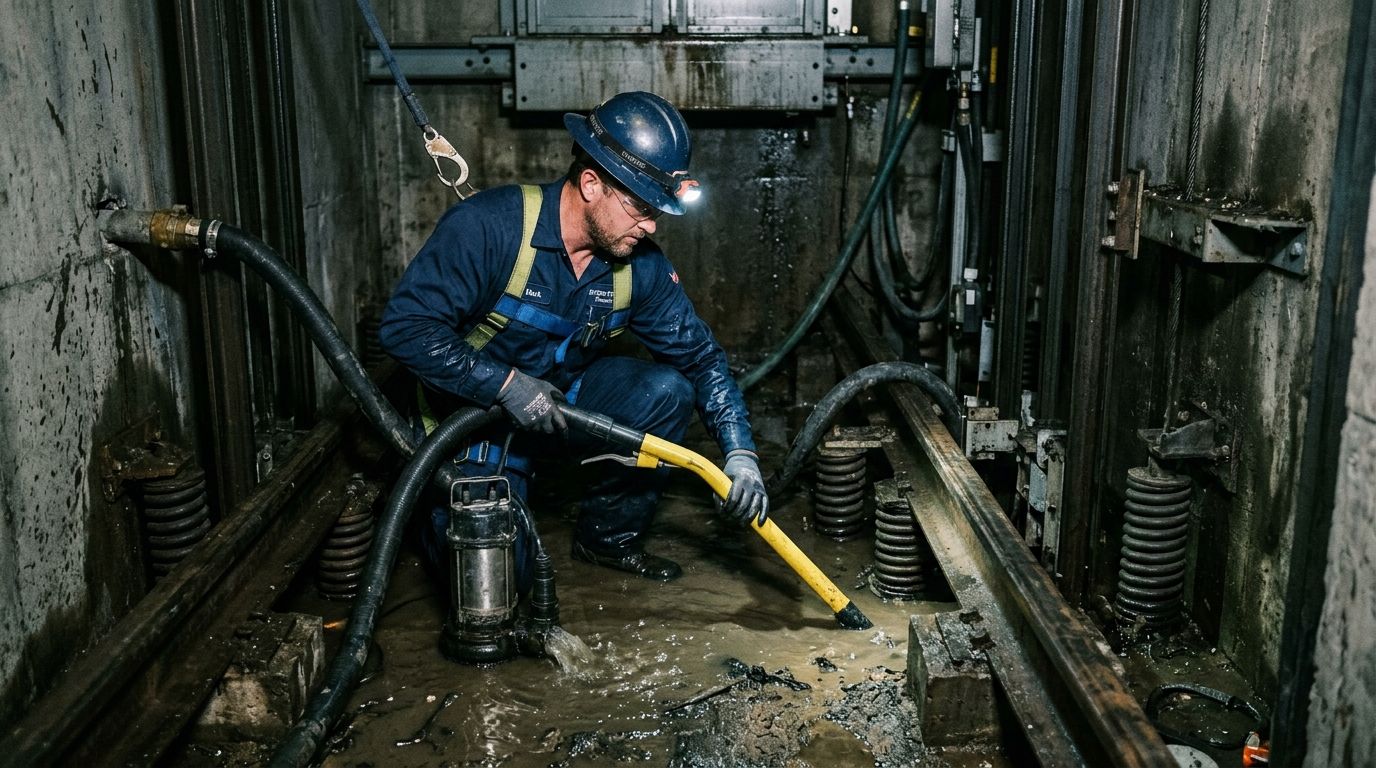
Subterranean flight simulator motion pits flooded by monsoon surges mix high-pressure hydraulic fluid (Skydrol or MIL-PRF-5606) with water, creating hazardous oily emulsions that submerge 3,000 PSI servo-actuators and LVDT position encoders. Glendale municipal water supplies carry 18 to 22 GPG extreme mineral hardness; rapid evaporation in desert heat bakes abrasive calcium carbonate scale onto precision hard-chrome actuator rods, destroying rod seals upon motion activation. Impermeable caliche hardpan strata across the Northern Avenue aerospace corridor trap monsoon stormwater in shallow subsurface layers, exerting severe lateral hydrostatic pressure that breaches subterranean pit cold joints and utility conduits. Stagnant water in unventilated subterranean pits accelerates anaerobic microbial fermentation of hydrocarbon residues under 115°F summer heat, generating toxic hydrogen sulfide (H2S) gases and corrosive acidic metabolites within 36 hours.
Service Definition & The IICRC Standard of Care
Professional glendale commercial flight simulator hydraulic pit water extraction is an engineering and environmental discipline adhering strictly to IICRC S500 protocols, not mere surface mopping. When structural plumbing failures strike in Maricopa County, certified emergency water extraction and thermal structural drying procedures must be deployed immediately. Whether triggered by high-pressure burst pipe emergencies, subfloor leaks, or commercial line ruptures, bound moisture rapidly penetrates concrete subfloors and wall framing. In the desert heat, delays trigger microbial proliferation requiring rapid mold remediation. Request damage assessment through our emergency assessment portal or request 30-minute dispatch across all Valley service areas.
Securing electrical feeds, inspecting load-bearing assemblies, and containing pathogens.
Stopping the intrusion source and erecting 6-mil plastic isolation containment airlocks.
31-HP truck-mount extraction, removing gallons exponentially faster than evaporation.
LGR dehumidifiers and HEPA air scrubbers driving grains per pound below 25 GPP.
Calibrated electronic pinless testing confirming baseline dry standards.
The Complete 6-Stage Restoration Roadmap
Our IICRC-certified crews execute a disciplined, scientific 6-stage protocol to stabilize and dry structural components:
Emergency Dispatch & Perimeter Isolation
30 to 60 minute arrival. Securing electrical shutoffs, evaluating structural loads, and erecting containment airlocks.
FLIR® Thermal Mapping & Baseline Scans
Infrared thermal scans detect trapped moisture behind walls and beneath concrete without invasive exploratory demolition.
High-Volume Bulk Extraction
31-HP truck-mount extraction units pump standing water away at hundreds of gallons per minute.
Controlled Selective Demolition
Precision flood cuts 12 to 24 inches above moisture lines, removing wet insulation and opening wall framing to dry airflow.
Thermodynamic Dehumidification
Industrial Low-Grain Refrigerant dehumidifiers pull deep trapped moisture from dense framing lumber and concrete slabs.
Antimicrobial Sanitization & Verification
EPA-registered botanical application (Benefect Decon 30) and calibrated moisture testing to issue an official dry certificate.

Specialized Equipment & Industrial Restoration Technology
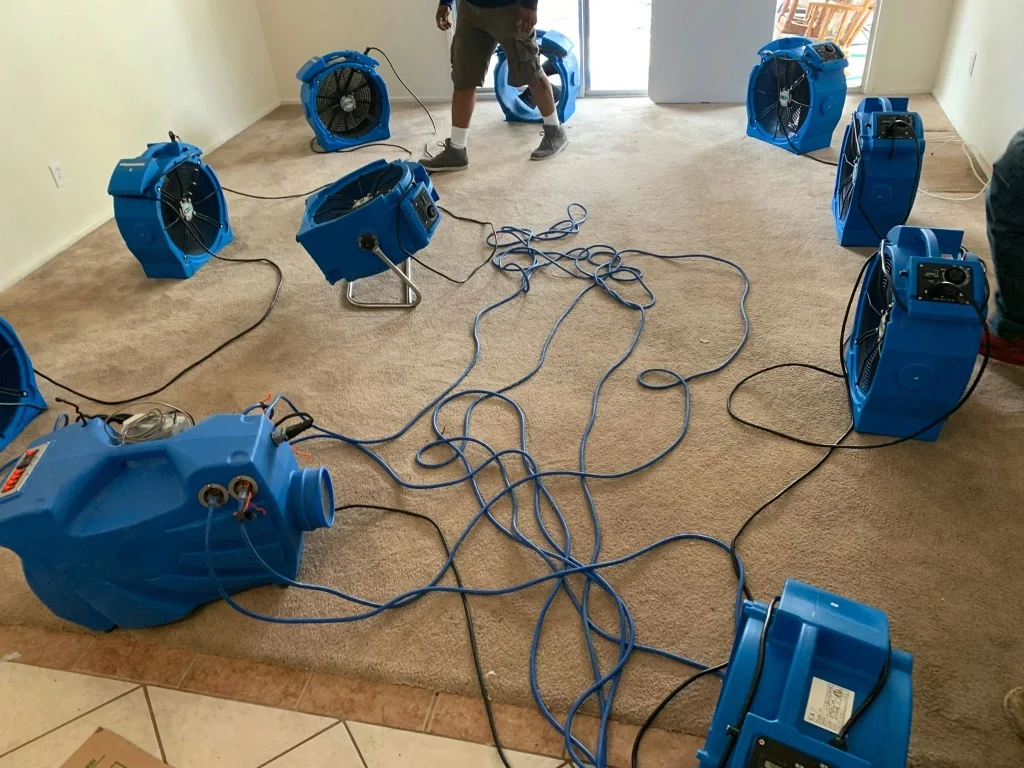
Mitigating severe property damage requires industrial-grade technology capable of altering thermodynamic psychrometrics:
Truck-Mounted Extraction Rigs
31-HP engines producing 16+ inches Hg vacuum suction to evacuate bulk water rapidly into holding tanks.
Low-Grain Refrigerant Dryers
Pre-cooling heat-pipe systems driving ambient grains per pound below 25 GPP to draw deep trapped water out of framing.
HEPA Negative-Air Scrubbers
Hospital-grade 99.97% particulate filtration capturing microscopic fungal spores, soot, and biohazard aerosols.
FLIR® Thermal Scanners & Probes
Infrared thermography detecting evaporative cooling boundaries behind walls, combined with digital RF pinless scanners.

Professional Restoration vs. DIY Mitigation
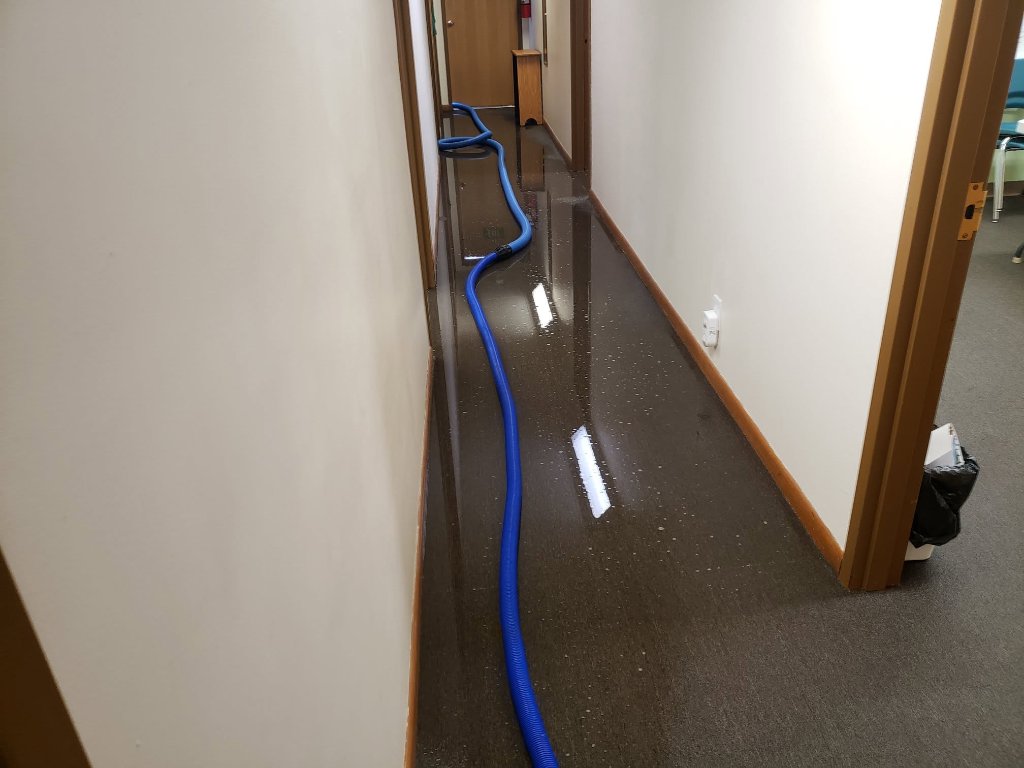
Attempting DIY cleanup during a property disaster creates severe hidden liabilities:
- Trapped Moisture: Surface drywall dries while moisture inside cavities triggers hidden mold blooms.
- Pathogenic Risks: Category 2 & 3 water contains bio-contaminants standard cleaners fail to kill.
- Insurance Denial: Insurers require daily psychrometric logs; lack of data causes claim disputes.
Transparent Upfront Itemized Pricing
Valley Restoration Pros operates with complete transparency:
- Free On-Site Assessment: Complete physical inspection before work begins.
- Upfront Itemized Estimates: Detailed line items calculated via industry-standard Xactimate.
- Zero Surprise Billing: No hidden charges or unauthorized repairs.
Certified glendale commercial flight simulator hydraulic pit water extraction Field Documentation
Every response performed by Valley Restoration Pros is documented through photographic and thermographic records:
Comprehensive glendale commercial flight simulator hydraulic pit water extraction Technical Manual & Operational Standards
Exhaustive engineering protocols, psychrometric calculations, geological multipliers, and step-by-step restoration standards for Maricopa County properties:
Executive Emergency Abstract: Commercial Flight Simulator Hydraulic Pit Inundation in Glendale's Aviation Corridor
The Glendale commercial aviation and defense aerospace manufacturing corridor—spanning the industrial zones along Northern Avenue, Glen Harbor Parkway, and the immediate periphery of Luke Air Force Base and Glendale Municipal Airport (GEU)—represents one of the Southwest's most mission-critical centers for commercial pilot training academies, defense contractor simulation hubs, and type-rating flight training organizations (FTOs). At the core of these advanced aeronautical facilities are Level D Full Flight Simulators (FFS), representing commercial transport airliners such as the Boeing 737 MAX, Airbus A320neo, and heavy military transport platforms. These high-fidelity simulators are mounted atop high-load six-degrees-of-freedom (6-DOF) hexapod motion platforms housed directly within dedicated subterranean hydraulic motion pits. Sunk between eight and fourteen feet below finished hangar floor grade, these reinforced concrete vaults contain precision electro-hydraulic actuator assemblies, high-pressure servo-valves, linear variable differential transformers (LVDTs), and heavy-gauge electrical feed conduits.
When sudden catastrophic water intrusion strikes—triggered by severe Sonoran Desert monsoon flash flooding, municipal storm sewer backflow along Northern Avenue, fire suppression preaction riser ruptures, or overhead chilled water loop mechanical failures—these subterranean simulator vaults act as collection catchments. Hundreds of linear feet of hydraulic tubing, electro-hydraulic proportional valves, electronic motion control transducers, and sub-floor sump systems become rapidly submerged beneath thousands of gallons of water. Complicating this emergency exponentially, the standing floodwater immediately blends with residual high-pressure aviation hydraulic fluid (MIL-PRF-5606, synthetic hydrocarbon formulations, or fire-resistant phosphate ester formulations like Skydrol), forming a hazardous, chemically complex oily water emulsion that defies standard restoration methods.
Uncontrolled standing water in a flight simulator motion pit creates immediate catastrophic risks: precision-ground chrome actuator pistons suffer rapid electrochemical pitting, microscopic mineral deposits from Glendale's 18 GPG municipal hard water bake onto sub-micron servo-spools, and high-voltage 480V 3-phase hydraulic power unit (HPU) electrical feeds face catastrophic insulation breakdown. Simulator operational downtime can exceed $1,500 to $2,500 per scheduled training hour, jeopardizing airline pilot certification timetables, recurrent type-rating qualifications, and military readiness schedules. Valley Restoration Pros deploys a specialized industrial aviation restoration task force within 30 minutes of emergency dispatch. Equipped with explosion-proof pneumatic extraction pumps, certified hazardous fluid containment, and industrial desiccant dehumidification systems, our master restoration teams execute rapid fluid evacuation and psychrometric restoration. Aviation facility managers confronting an urgent motion pit flood can contact our 24/7 technical dispatch team immediately at (602) 847-9593 or mobilize our specialized rapid responders directly through our 24/7 aviation emergency dispatch center.
Critical Simulator Pit Containment Objectives: First 45 Minutes on Site
- High-Voltage Isolation & Zero-Energy Verification: Execute immediate Lockout/Tagout (LOTO) protocols on all 480V 3-phase hydraulic power units (HPUs), motor starter cabinets, and secondary 24VDC motion drive control circuits to eliminate lethal electrocution hazards prior to vault approach.
- Confined Space Atmospheric Profiling: Deploy 4-gas and photoionization detector (PID) instrumentation to evaluate Lower Explosive Limits (LEL), volatile organic compounds (VOCs) from vaporized hydraulic oils, and oxygen concentration per OSHA 29 CFR 1910.146.
- Environmental Hydrocarbon Containment: Place oil-absorbent hydrophobic containment booms around vault perimeter grates and drainage sumps to prevent oily emulsion migration into facility stormwater outflows or unsealed foundation expansion seams.
- Immediate High-Flow Pneumatic Dewatering: Deploy intrinsically safe, air-operated double-diaphragm (AODD) pumping equipment via our specialized emergency water extraction procedures to eliminate standing water head and arrest ongoing corrosion of submerged motion base actuator assemblies.
Anatomy of Full Flight Simulator Motion Bases & Subterranean Hydraulic Vault Engineering
Full Flight Simulators certified under Federal Aviation Administration (FAA) Title 14 CFR Part 60 to Level D standards require the highest fidelity of motion cues, simulating aerodynamic turbulence, runway rumble, crosswind touchdowns, and engine-out asymmetric thrust. To deliver this performance, motion systems utilize a Stewart platform hexapod configuration—an assembly of six high-performance hydraulic or electro-hydraulic actuators arranged in triangular pairs. Each actuator connects to an upper triangular motion frame supporting the 25,000-pound simulator cabin, visual projection dome, and instructor operating station (IOS). The lower ends of these six actuators anchor into massive cast-steel universal gimbal joints, anchored via high-tensile prestressed anchor bolts directly into the floor of the subterranean motion pit.
A typical commercial flight simulator hydraulic pit spans dimensions of 30 by 30 feet up to 45 by 45 feet, depressed 8 to 14 feet below the main hangar apron level. The pit serves several critical mechanical functions:
Subterranean Hydraulic Actuator Vault
Houses the lower stroke travel of the six 60-inch stroke hydraulic cylinders, providing structural clearance for pitch, roll, and heave motions while containing hydraulic distribution manifolds operating at 3,000 PSI operating pressures.
Hydraulic Power Unit (HPU) Vault & Chases
Contains high-volume variable displacement axial piston pumps driven by 75 to 150 HP 480V electric motors, pumping 120 to 180 gallons per minute of fluid through sound-dampened trenches into the motion base manifold.
Analog & Digital Signal Trenching
Depressed cable trenches route shielded cabling for Linear Variable Differential Transformers (LVDTs), optical position encoders, pressure transducers, servo feedback loops, and emergency safety interlocks to the computer control room.
When floodwaters enter this subterranean envelope, the geometric design that facilitates high-performance motion becomes a massive liability. The depression acts as a gravitational sink. Subterranean sump pumps installed in commercial simulator pits are typically designed solely to handle incidental seal seepage (a few gallons per month) rather than high-volume flood inundations. When water depth in the pit rises above 12 inches, fluid submerges the lower gimbal bearings and the primary rod gland seals of the actuators. At 24 to 36 inches of submersion, high-precision electro-hydraulic servo-valves (such as Moog 760 or Rexroth 4WPEH series) are completely inundated.
Standard industrial facilities suffering water intrusion require general dewatering, but a flight simulator motion vault presents extraordinary engineering challenges. Water entering through unsealed concrete joints or conduit penetrations carries abrasive desert silt and dissolved mineral salts. Furthermore, hydraulic actuators operate with precision mechanical tolerances as fine as 0.0002 inches (5 microns) between the valve spool and sleeve. Even minor water intrusion into the valve torque motor or feedback wire mechanisms causes immediate galvanic corrosion, catastrophic valve seizure, and uncommanded motion platform runaway. Addressing these failures requires the sophisticated protocols of commercial water damage restoration engineered specifically for high-precision aerospace assets.
Hazardous Fluid Dynamics: Oily Water Emulsions, Hydraulic Fluid Chemistries & Flammability Profiles
Water extraction from a commercial flight simulator hydraulic pit cannot be approached as a routine clean-water pumping operation. In every operational motion vault, a volume of hydraulic fluid resides within drip trays, line weepage sumps, and filter return loops. When floodwater rapidly enters the pit, dynamic turbulence mixes this standing fluid into the water column, creating an intricate chemical matrix consisting of free oil, dispersed hydrocarbon droplets, and tight colloidal oily water emulsions.
Aviation flight simulators operate on two primary categories of hydraulic media, each presenting distinct physical, chemical, and health challenges during flood mitigation:
Aviation Hydraulic Fluid Types in Motion Bases
- Mineral-Based & Synthetic Hydrocarbons (MIL-PRF-5606 / MIL-PRF-83282): Formulated with red-dyed refined petroleum or synthetic hydrocarbon base oils and anti-wear additive packages (such as tricresyl phosphate). These fluids have a specific gravity of 0.84 to 0.88, causing free oil to float on water. However, when agitated by rushing floodwater or turbulent pumping, they form stable emulsions that coat concrete walls and penetrate deeply into porous masonry surfaces.
- Fire-Resistant Phosphate-Ester Formulations (Skydrol LD-4, Skydrol 500B-4, HyJet IV-Aplus): Commonly utilized in commercial transport category flight simulators replicating Boeing and Airbus jetliners. Phosphate esters feature a specific gravity between 1.00 and 1.06, meaning they are as dense as or slightly denser than water. Rather than floating neatly on the surface, phosphate esters can sink to the bottom of the pit or remain neutrally suspended in the floodwater column, creating severe chemical hazards.
The presence of phosphate ester fluids radically changes the restoration engineering protocol. Phosphate esters are aggressive chemical plasticizers that rapidly attack standard elastomers, dissolving Buna-N (nitrile) gaskets, degrading standard electrical wire insulation, stripping standard epoxy floor coatings, and clouding acrylic optical components. Furthermore, when phosphate esters contact water under ambient heat, they undergo chemical hydrolysis, breaking down into phosphoric acid and volatile alcohols:
This acidic breakdown product severely accelerates galvanic corrosion on electrical terminal strips, copper ground straps, and aluminum manifold blocks within the pit. Technicians exposed to phosphate-ester vapors or droplets experience severe mucosal irritation, respiratory coughing, and skin chemical burns. Strict personal protective equipment (PPE)—including butyl rubber gloves, chemical splash suits, and full-face respirators equipped with organic vapor/acid gas P100 combination cartridges—is mandatory.
Environmental compliance represents another critical liability. Discharging hydrocarbon-contaminated water into Glendale's municipal storm sewers or drywells violates the Clean Water Act and Arizona Department of Environmental Quality (ADEQ) AZPDES industrial discharge permits, carrying penalties exceeding $25,000 per day. All pumped effluent must undergo on-site multi-stage hydrocarbon separation or be contained in dedicated vacuum tanker units for certified off-site disposal, mirroring the containment standards detailed in our specialized oil-water separator flood cleanup protocols.
Glendale & West Valley Climatic & Geological Inundation Multipliers
Subterranean structures in Glendale, Peoria, and the West Valley aviation corridor are subject to harsh environmental dynamics that amplify restoration complexity beyond standard indoor property water losses. Four specific regional factors dictate our remediation protocols:
1. Extreme Municipal Water Hardness (18 to 22 Grains Per Gallon)
Glendale municipal water supplies, sourced from Central Arizona Project (CAP) surface water from the Colorado River and deep aquifer wells along the Salt River basin, carry mineral hardness between 300 and 380 parts per million (PPM), translating to 18 to 22 GPG. When municipal water or storm runoff floods a simulator pit and begins evaporating under facility HVAC loads or ambient summer heat, dissolved calcium carbonate (CaCO3), calcium sulfate, and magnesium silicate precipitate rapidly out of solution. This forms dense, rock-hard mineral scale on chrome-plated actuator cylinder rods, internal valve spools, and feedback linear encoders. If an actuator is cycled while encrusted with hard water scale, the abrasive minerals slice through elastomeric wiper seals and rod packings within seconds, causing catastrophic hydraulic fluid blowouts.
2. Expansive Caliche Hardpan & Soil Foundation Upheaval
The geological subgrade beneath Glendale, particularly across the Luke Air Force Base flight corridor and Glen Harbor Airpark, consists of dense Quaternary alluvial deposits interlaced with thick horizontal strata of calcium carbonate-cemented caliche. Caliche forms an almost impermeable subterranean barrier. When severe monsoon storms deluge the region, surface water cannot percolate downward into deep aquifers; instead, it forms perched water tables above the caliche layer. This subterranean water accumulates directly against below-grade simulator pit retaining walls. As surrounding clay lenses absorb moisture, they undergo severe volumetric expansion, exerting immense lateral hydrostatic and upward uplift pressure. This hydraulic force breaches unsealed cold joints, conduit sleeves, and foundation cracks, inundating the simulator pit from beneath. Resolving this deep structural moisture requires advanced slab leak water damage restoration and concrete desiccation techniques.
3. Triple-Digit Summer Heat & Accelerated Microbial Incubation
Summer temperatures in Glendale regularly exceed 110°F to 115°F from June through September. Inside high-bay flight training hangars, ambient ceiling temperatures can reach 125°F. While the subterranean simulator pit is slightly cooler, the combination of stagnant floodwater, warm ambient temperatures, and organic contaminants creates a biological incubator. Microbial colonization begins within 24 to 36 hours. Anaerobic bacteria digest hydrocarbons in residual hydraulic fluid, generating foul-smelling hydrogen sulfide (H2S) gases and acidic metabolites that accelerate the destruction of structural steel framing and copper wiring harnesses. Rapid extraction and psychrometric drying are essential to prevent Category 1 water from degrading into hazardous Category 3 black water contamination.
4. Monsoonal Flash Floods & Municipal Drainage Surcharging
The Sonoran Desert monsoon season generates intense microbursts capable of dumping 1.5 to 2.5 inches of rain within 45 minutes across Glendale and West Phoenix. Regional drainage retention basins along Northern Avenue and Glendale Avenue frequently surcharge. When municipal catch basins reach capacity, sheet flooding flows across aviation apron tarmac, entering flight training facility roll-up hangar doors and cascading down access stairwells directly into the subterranean simulator motion vaults. Handling these sudden, high-volume structural emergencies requires specialized local experience in Glendale water damage remediation.
Emergency First-Hour Safety Protocols: High-Voltage LOTO & Confined Space Vault Isolation
Entering an inundated flight simulator hydraulic pit without stringent industrial safety protocols presents life-threatening hazards to personnel. Subterranean motion vaults qualify as Permit-Required Confined Spaces under federal OSHA standard 29 CFR 1910.146. They feature restricted vertical ladder access, lack natural cross-ventilation, and present severe electrical electrocution, mechanical crushing, and toxic atmospheric entrapment hazards.
Valley Restoration Pros enforces a mandatory four-point life-safety protocol before any technician descends into a flooded vault:
1. Comprehensive High-Voltage LOTO
Technicians lock out main 480V 3-phase motor power distribution units (PDUs) feeding HPU pumps, 120VAC control transformers, and 24VDC servo bus circuits. Stored hydraulic pressure is depressurized via manual dump valves; nitrogen-charged accumulator banks (operating up to 3,000 PSI) are mechanically isolated.
2. Multi-Gas Atmospheric Evaluation
Direct testing of vault air at top, middle, and bottom levels using calibrated RAE Systems multi-gas detectors: Oxygen (must register between 19.5% and 23.5%), Lower Explosive Limit (must remain below 10%), Carbon Monoxide (< 25 PPM), and Photoionization Detection for volatile hydrocarbon vapors (< 5 PPM).
3. Intrinsically Safe Forced Ventilation
Continuous positive-pressure purge ventilation using Euramco RAMFAN explosion-proof pneumatic air movers delivering 2,500 CFM of fresh outside air to the vault floor, continuously displacing volatile hydrocarbon mists and preventing stagnant hazardous vapor accumulation.
4. Confined Space Retrieval Setup
Erecting an industrial aluminum rescue tripod over the pit access hatch with a 3-way retrieval winch, self-retracting lifeline (SRL), and full-body Class III safety harnesses worn by all entering personnel, accompanied by a dedicated safety attendant stationed at the hatch.
Mechanical physical hazards are equally critical. The 25,000-pound flight simulator cabin sitting atop the Stewart platform hexapod must be mechanically secured. Under normal operations, hydraulic counterbalances or safety lock-valves support the platform. However, if floodwaters have corroded pilot solenoids or breached hydraulic pilot lines, the platform risks uncommanded settling. Technicians install certified mechanical motion base safety support struts (maintenance safety locks) between the simulator base frame and the pit floor embeds before working beneath the actuator cylinders. This rigorous approach mirrors our procedures for commercial elevator pit water extraction where heavy mechanical counterweights and carriage structures must be locked prior to hydraulic restoration.
Industrial Fluid Extraction Engineering: Pneumatic Diaphragm Pumping & Hydrocarbon Separation
Standard electric submersible utility pumps are prohibited in a flight simulator motion pit due to the presence of flammable hydraulic vapors and aggressive phosphate-ester fluids that corrode pump impeller seals and motor wiring. Valley Restoration Pros deploys specialized air-operated double-diaphragm (AODD) pumping systems powered by remote rotary-screw diesel air compressors parked outside the aviation facility.
Our extraction apparatus utilizes Wilden and Yamada 2-inch and 3-inch intrinsically safe pneumatic pumps constructed from passivated aluminum or 316 stainless steel with pure PTFE (Teflon) diaphragms and Kalrez check balls. These pumps are completely non-sparking, self-priming, and capable of deadhead operation without mechanical damage. They transfer up to 150 gallons per minute of viscous, silt-laden oily slurry containing solids up to 1/4-inch in diameter directly from the lowest sump trench of the simulator pit.
Three-Phase Mobile Hydrocarbon Separation Architecture
To comply with Maricopa County Environmental Services Department (MCESD) and ADEQ environmental discharge limits, all extracted fluids pass through our self-contained mobile filtration trailers operating in a closed-loop configuration:
- Stage 1: Primary Heavy Debris & Caliche Silt Trapping: Effluent flows through stainless-steel duplex basket strainers (200-micron mesh) to remove coarse caliche grit, building drywall fragments, and mechanical debris before entering separation tanks.
- Stage 2: Oleophilic Coalescing Separation: Water enters a multi-chamber inclined-plate oil-water separator. Specially formulated oleophilic polypropylene matrix media cause micro-droplets of suspended hydraulic oil to coalesce and float into an upper skimmer weir, separating free hydrocarbons down to less than 15 parts per million (PPM).
- Stage 3: Hydrocarbon Polishing & Activated Carbon Absorption: The partially clarified water passes through granular activated carbon (GAC) and organoclay filtration canisters that absorb dissolved phosphate esters and synthetic hydrocarbons, preparing clean effluent for permitted disposal while concentrating recovered oils for certified recycling.
For deep standing water extraction in hard-to-reach actuator anchor pockets, high-vacuum suction equipment is deployed. Truck-mounted vacuum units operating at 14 to 16 inches of mercury (inHg) vacuum evacuate standing fluid from narrow subterranean conduits, cable raceways, and sub-slab drainage sumps. Every gallon of recovered oil-water emulsion is documented with an EPA hazardous waste manifest, providing the facility director with verifiable environmental regulatory compliance. Similar closed-loop extraction protocols are utilized during our large-scale operations for subterranean parking garage flood extraction throughout urban Phoenix commercial corridors.
Precision Mechanical Decontamination: Electro-Hydraulic Actuators, Servo-Valves & LVDT Encoders
Once bulk fluid is evacuated from the simulator pit, technicians begin the delicate work of precision mechanical decontamination. The electro-hydraulic motion base contains some of the most sensitive mechanical assemblies in the aviation training industry. Leaving residual moisture, hard-water mineral crystals, or acidic oil emulsions on these components results in micro-corrosion, seal failure, and erratic motion cues that cause motion sickness in flight crews or fail FAA recurrent Level D validation checks.
Our precision decontamination protocol addresses each critical subsystem:
1. Chrome-Plated Actuator Rods & Gland Seal Packings
Actuator cylinder rods are engineered from high-strength forged alloy steel with precision micro-crack industrial hard-chrome plating polished to a 4 to 8 micro-inch Ra finish. Technicians execute low-pressure washing using heated deionized water (< 90 PSI to prevent forcing water past elastomeric rod wipers) combined with neutral pH biodegradable aerospace degreasers. The rods are immediately dried using oil-free dry compressed air and hand-wiped with lint-free micro-denier cloths saturated with clean synthetic hydraulic fluid to re-establish a protective corrosion-inhibiting boundary film.
2. Electro-Hydraulic Servo-Valves & Manifold Blocks
Servo-valves control high-speed fluid distribution to each actuator chamber with response frequencies exceeding 50 Hz. Submerged valve assemblies are isolated, visually inspected under fiber-optic borescopes, and their electrical connector shells (MS-spec military connectors) are disassembled. Connector pins are flushed with high-purity dielectric cleaning solvents (dielectric strength > 35 kV) to displace residual water and dissolved salts, followed by precision vacuum desiccation. If floodwater penetrated the internal valve pilot stages, valves are tagged for controlled bench refurbishment and dynamic spool calibration.
3. Position Feedback Transducers (LVDTs) & Optical Encoders
Linear Variable Differential Transformers provide continuous analog position feedback to the flight simulator motion computer, measuring actuator extension down to fractions of a millimeter. Even trace moisture inside the LVDT magnetic core casing alters inductive impedance, causing position tracking errors and triggering simulator runaway emergency stops. Technicians deploy infrared heating blankets and continuous desiccant purge lines to gently extract moisture from transducer housings without exceeding the 160°F thermal limits of internal potting compounds.
Following component decontamination, technicians inspect all high-pressure flexible hydraulic hoses (SAE 100R12 / 100R15 four-spiral wire reinforced) connecting the pit manifold to moving actuators. Floodwaters containing fine caliche abrasive can lodge between hose outer covers and crimped hose fittings, leading to premature fatigue ruptures under 3,000 PSI pulsation cycles. Defective or moisture-infiltrated lines are identified and isolated following the same rigorous standards we apply during urgent burst pipe repair services across commercial facilities.
Psychrometric Moisture Extraction & Subterranean Concrete Vault Desiccation
Evacuating standing water from a concrete flight simulator pit solves only the visible half of the moisture crisis. Reinforced structural concrete is a porous, hygroscopic material containing billions of microscopic capillary pores. During an inundation event, concrete absorbs hundreds of gallons of water into its internal matrix via capillary suction. When the standing water is removed, this bound moisture creates a high relative humidity (RH) microclimate within the unventilated pit, often sustaining RH levels between 85% and 98%.
Standard refrigerant dehumidifiers fail in this environment because as the ambient air cools below 65°F in subterranean vaults, conventional cooling coils frost over. Valley Restoration Pros deploys trailer-mounted industrial desiccant dehumidifiers (utilizing active silica gel rotor technology) combined with low-grain refrigerant (LGR) units to achieve deep psychrometric desiccation.
Desiccant Dehumidification Dynamics in Subterranean Vaults
Desiccant dehumidifiers operate on chemical adsorption rather than condensation. Process air drawn from the simulator pit is forced through a slowly rotating honeycomb wheel impregnated with synthetic silica gel. Moisture is extracted at the molecular level, discharging ultra-dry process air with specific humidity levels below 25 to 30 Grains Per Pound (GPP) and dew points dropping below 15°F.
This creates an immense vapor pressure differential between the saturated concrete slab (where internal vapor pressure exceeds 0.85 inches of mercury) and the surrounding desiccant air (vapor pressure below 0.15 inHg). This hydrostatic vapor gradient draws deeply bound moisture out of the concrete slab, drying structural walls from the inside out without causing destructive thermal shocking or surface spalling.
To prevent stagnant boundary-layer microclimates from forming along pit walls and beneath actuator pedestals, technicians position explosion-proof axial air movers in a continuous cyclonic vortex pattern. High-velocity air (exceeding 600 feet per minute across the concrete floor) scrubs away the thin boundary layer of humid air adhering to structural surfaces, accelerating evaporation rates by up to 300%.
Psychrometric progress is monitored every six hours using Tramex CMEX5 non-destructive impedance meters and ASTM F2170 in-situ relative humidity probes drilled into the concrete floor slab. Dehumidification continues until the concrete core humidity drops below 75% RH (matching the facility dry standard baseline), ensuring total elimination of latent moisture per our proven structural drying procedures.
Avionics, Control Cabinet & Electrical Insulation Diagnostic Protocols
Commercial flight simulators represent an intricate fusion of heavy hydraulics and ultra-sensitive computing architecture. While the motion pit houses the physical actuators, high-density computing racks, digital signal processors, visual projection computers, and host mainframe systems reside immediately adjacent to the pit in the simulator bay or mezzanine control rooms. High relative humidity and airborne chemical vapors rising from a flooded pit migrate upward via thermal convection, threatening multimillion-dollar avionics systems.
Valley Restoration Pros deploys certified electronics restoration specialists to perform exhaustive electrical diagnostics before any simulator subsystem is re-energized:
Megohmmeter Insulation Resistance (IR) Testing
Technicians utilize calibrated Fluke and Megger insulation testers, applying 500V and 1,000V DC across 480V motor windings, transformer windings, and power conductors. In accordance with IEEE Standard 43, any reading falling below 100 Megaohms indicates moisture ingress within wire insulation or terminal blocks, requiring continued desiccation or cable replacement.
Time-Domain Reflectometry (TDR) Cable Diagnostics
Subterranean signal trenches carry thousands of feet of multi-conductor shielded cables linking motion controllers to actuator servo-valves. TDR pulse generators send high-frequency electrical pulses down the lines, mapping characteristic impedance changes to detect microscopic insulation breaches or water ingress along submerged conduit runs.
FLIR Thermal Imaging & Micro-Ohmic Resistance
Following controlled re-energization under no-load conditions, technicians conduct radiometric FLIR infrared inspections of circuit breaker contacts, terminal lugs, and solid-state relays. Mineral salts deposited by hard water create high-resistance micro-corrosion paths that present as hot spots (> 15°C above baseline), which are immediately rectified.
If conductive mineral salts or oily mists have deposited on printed circuit boards inside motion drive cabinets, boards are removed for precision ultrasonic bath decontamination utilizing specialty fluorinated electronic cleaning solvents. Boards are rinsed with 18-Megaohm deionized water, dried in vacuum baking chambers at 130°F, and coated with protective aerospace-grade conformal coating (MIL-I-46058C). These comprehensive electronics rescue procedures parallel our engineering workflows for subterranean utility tunnel chilled water flood remediation where multi-conductor high-voltage feeds intersect wet environments.
IICRC S500 / S520 Step-by-Step Subterranean Vault Restoration Protocol
Valley Restoration Pros executes flight simulator pit restoration following an exhaustive six-stage technical framework conforming strictly to IICRC S500 (Standard for Professional Water Damage Restoration) and IICRC S520 (Standard for Professional Mold Remediation):
Stage 1: Emergency Mobilization, Hazmat Profiling & Safety Isolation (Hours 0–2)
Arrival on site within 30 minutes. Establishment of perimeter safety exclusion zones, installation of mechanical safety lock-struts on the 6-DOF simulator cabin, execution of 480V LOTO, atmospheric multi-gas monitoring, and retrieval winch staging per OSHA confined-space regulations.
Stage 2: High-Volume Pneumatic Pumping & Hydrocarbon Separation (Hours 2–6)
Deployment of explosion-proof pneumatic AODD pumps and high-vacuum recovery units. Evacuation of standing water-oil slurry through mobile coalescing oil-water separators. Containment of hazardous hydrocarbon residues in DOT-approved containment totes for certified recycling.
Stage 3: Caliche Scale Removal & Precision Mechanical Decontamination (Hours 6–14)
Controlled washdown of concrete walls and steel embeds using deionized hot water and aerospace-approved neutral degreasers. Precision hand-cleaning of hard chrome actuator rods, disassembling electrical connectors, and flushing servo-valve manifolds with dielectric solvents.
Stage 4: Deep Psychrometric Desiccation & Continuous Airflow Scrubbing (Hours 14–48)
Installation of trailer-mounted desiccant dehumidification supplying sub-30 GPP process air into the vault. Positioning explosion-proof axial air movers in high-velocity vortex configurations to break boundary layers and extract deeply bound moisture from concrete slabs.
Stage 5: Electronic Insulation Diagnostics & Karl Fischer Oil Titration (Hours 48–60)
Megger insulation resistance testing across all motor circuits (> 100 MΩ threshold), TDR cable verification, and thermal imaging of control cabinets. Laboratory testing of hydraulic reservoir fluid via Karl Fischer coulometric titration (ASTM D6304) to verify water content below 50 PPM.
Stage 6: Post-Remediation Verification, Concrete RH Sign-Off & Recommissioning (Hours 60–72)
Final in-situ ASTM F2170 moisture testing verifying concrete RH below 75%. Removal of mechanical safety locks, controlled hydraulic repressurization, zero-backlash motion verification, and delivery of complete psychrometric moisture logs to facility management.
If the inundation involved contaminated floodwater containing biological pathogens from regional stormwater surcharges, full antimicrobial decontamination is executed using EPA-registered broad-spectrum disinfectants in accordance with our certified sewage cleanup protocols. Furthermore, if standing water remained unaddressed for over 48 hours, comprehensive fungal spore sampling and HEPA filtration are deployed following our accredited certified mold remediation standards.
Industrial Equipment Specification Matrix & Airflow Engineering in Confined Aviation Vaults
Restoring high-value aerospace simulation facilities requires purpose-engineered industrial apparatus. The table below outlines the specialized technical equipment deployed by Valley Restoration Pros during flight simulator motion pit water extraction projects:
| Equipment Type | Manufacturer / Model | Technical Performance Capacity | Aviation Vault Application |
|---|---|---|---|
| Pneumatic AODD Pumps | Wilden Pro-Flo Shift 2" & 3" | 150–245 GPM, 125 PSI max pressure, pure PTFE diaphragms | Intrinsically safe extraction of oily hydraulic emulsion without spark hazards. |
| Industrial Desiccant Dehumidifiers | Phoenix / Quest D3000 Desiccant | 3,000 CFM process air, 125 lbs/hr water extraction at sub-30 GPP | Deep vapor pressure drying of saturated concrete pit slabs and foundation footings. |
| Low-Grain Refrigerant Units | Phoenix DryMAX XL LGR | 140 PPD AHAM (80°F/60% RH), 365 CFM high-static blower | Rapid atmospheric moisture removal in high-bay simulator staging bays. |
| Explosion-Proof Axial Air Movers | Euramco RAMFAN UB20xx | 980 CFM intrinsically safe motor, ATEX/IECEx Class 1 Div 1 rated | High-velocity boundary layer scrubbing in confined subterranean motion pits. |
| High-Vacuum Fluid Recovery Units | Roots-Dresser Truck-Mounted Vacuum | 650 CFM displacement at 15 inHg continuous vacuum | Deep suction extraction from subterranean conduit raceways and sump trenches. |
| Precision Moisture Diagnostics | Tramex CMEX5 & FLIR T865 Thermal | In-situ ASTM F2170 probes, 640x480 radiometric IR sensor | Quantitative mapping of concrete core RH and thermal anomaly detection in avionics. |
Airflow engineering within a subterranean simulator vault requires precise volumetric calculations. A standard 35' x 35' x 12' pit contains approximately 14,700 cubic feet of volume. To achieve rapid desiccation without creating stagnant pockets of high-humidity air beneath the motion platform gimbal joints, our engineering protocol mandates a minimum of 25 to 30 Air Changes Per Hour (ACH). This requires delivering approximately 6,100 to 7,350 CFM of total conditioned airflow across the floor plane, continually sweeping moisture toward desiccant return ducts.
Hyper-Local Glendale Aviation Case Study: Level D Jet Simulator Pit Inundation on Northern Avenue
To understand the rigorous execution required during commercial simulator inundations, consider this documented emergency response executed by Valley Restoration Pros at a premier commercial pilot training academy located along Northern Avenue near Glen Harbor Parkway in Glendale, Arizona (ZIP 85307):
Incident Background & Initial Damage Matrix
During a severe late-July monsoon microburst, Glendale received 2.2 inches of rainfall within 40 minutes. Municipal stormwater catch basins along Northern Avenue surcharged, backing up through an exterior drainage swale and breaching the flight training facility's rear hangar access doors. Floodwaters poured down the access stairwell and open utility grates of Bay 3, housing a $14 million CAE Boeing 737 MAX Level D Full Flight Simulator.
The 36' x 36' x 11' subterranean hydraulic motion pit was submerged beneath 34 inches of water (approximately 6,800 gallons). The floodwater blended with 95 gallons of residual Skydrol LD-4 hydraulic fluid and fine desert caliche silt. The lower six spherical gimbal joints, all six electro-hydraulic actuator rod gland seals, and multiple LVDT position sensor terminal housings were fully inundated.
Chronological Restoration Timeline
- Hour 0.5 (Emergency Arrival): Valley Restoration Pros rapid response unit arrived on site 28 minutes post-dispatch. Mechanical safety lock-struts were installed beneath the simulator motion base. The 480V 3-phase HPU power and 24VDC motion controls were locked out, and OSHA confined space entry permits were authorized.
- Hour 4.0 (Bulk Extraction Complete): Two explosion-proof pneumatic AODD pumps evacuated 6,800 gallons of oily emulsion into mobile coalescing separation tanks. Zero gallons discharged into Glendale storm sewers; all recovered hydrocarbons were containerized for recycling.
- Hour 14.0 (Mechanical Decontamination): Technicians completed precision hand-washing of chrome actuator rods, disassembled military-spec electrical connectors, and flushed servo-valve pilot manifolds with dielectric solvent. Baseline concrete core moisture registered at 94% RH.
- Hour 38.0 (Psychrometric Target Achieved): Continuous operation of a 3,000 CFM desiccant dehumidifier delivering 28 GPP dry air, paired with four explosion-proof RAMFAN air movers, reduced concrete core moisture from 94% RH down to 71% RH (surpassing the facility 75% dry standard).
- Hour 58.0 (Testing & Recommissioning): Megohmmeter insulation resistance testing across all six actuator circuits demonstrated > 250 Megaohms (well exceeding the 100 MΩ pass threshold). Hydraulic fluid Karl Fischer titration confirmed moisture at 28 PPM (well below the 50 PPM limit). The simulator executed full 6-DOF dynamic motion calibrations with zero sensor errors, returning to flight crew training 36 hours ahead of insurer projections.
This rapid 58-hour turnaround saved the flight academy an estimated $380,000 in flight cancellation penalties and prevented $420,000 in unnecessary actuator rebuild costs. Similar aerospace decontamination precision is applied during our operations for aircraft deicing collection trench flood restoration in Mesa Gateway, demonstrating our comprehensive valley-wide aviation expertise.
Pay-Per-Call Financial, Commercial Insurance Documentation & Forensic Cost Breakdown
Navigating property restoration for multi-million-dollar aviation assets demands absolute financial transparency and rigorous forensic documentation. Commercial flight training organizations operate under complex insurance structures, involving Aviation Hull & Machinery policies, Commercial Property Casualty coverage, and Business Interruption / Loss of Use endorsements.
Valley Restoration Pros adheres to strict commercial transparency standards. We maintain zero direct billing promises, recognizing that commercial insurance policies involve policyholder deductibles, coverage sub-limits, and forensic claim adjustments. Instead, we empower aviation facility directors with our triple-tier financial commitment:
Our Mandatory Commercial Client Commitments
- Free Comprehensive On-Site Damage Assessment: Immediate dispatch of an accredited Senior Restoration Project Manager to survey vault inundation depth, fluid contamination levels, and structural impact at zero initial assessment cost.
- Transparent Upfront Itemized Pricing Before Work Begins: Complete line-item pricing breakdowns utilizing standardized industrial Xactimate restoration pricing codes, ensuring facility directors review exact operational costs prior to authorization.
- Assistance with Detailed Claims Documentation & Psychrometric Moisture Logs: Exhaustive forensic dossiers provided directly to risk managers and commercial adjusters, including timestamped digital photography, continuous psychrometric drying logs, FLIR thermal scans, and laboratory oil analysis reports.
To assist aviation risk managers in evaluating loss scenarios, the table below provides a forensic cost comparison between rapid certified restoration versus delayed mitigation leading to mechanical asset replacement:
| Mitigation Category | Rapid Certified Restoration Protocol | Delayed Response / Replacement Scenario |
|---|---|---|
| Fluid Extraction & Hazardous Disposal | $4,500 – $8,500 (On-site separation & hydrocarbon recycling) | $18,000 – $35,000 (Bulk hazardous waste hauling & soil remediation) |
| Mechanical Actuator Decontamination | $6,000 – $12,000 (In-situ cleaning, dielectric flush, seal polish) | $240,000 – $450,000 (Full 6-DOF Stewart platform actuator replacement) |
| Psychrometric Concrete Desiccation | $5,500 – $9,500 (Industrial desiccant trailer & air movement) | $25,000 – $45,000 (Concrete spall repair & foundation stabilization) |
| Electronics & Avionics Recovery | $3,500 – $7,000 (Megger testing, vacuum baking, TDR analysis) | $85,000 – $160,000 (Motion controller & interface board replacement) |
| Simulator Training Downtime Loss | 48–72 Hours ($72,000 – $144,000 lost revenue) | 12–24 Weeks ($1,800,000 – $3,600,000 business interruption loss) |
Facility directors seeking immediate budgetary estimates can utilize our digital instant restoration cost estimator or connect directly with our commercial estimating department for a tailored scope of work.
Subterranean Hydraulic Vault Structural Hardening & Preventative Waterproofing Engineering
Following complete structural drying and mechanical recommissioning, forward-thinking aviation facility engineers implement structural hardening measures to permanently isolate subterranean simulator vaults from future groundwater surges and monsoon inundations. Because flight simulator pits cannot be excavated from the exterior without demolishing adjacent hangar slabs, structural waterproofing must be engineered from the negative side (the interior vault face).
Valley Restoration Pros advises and implements a four-tiered structural hardening protocol:
1. Negative-Side Crystalline Waterproofing
Application of inorganic catalytic crystalline chemical slurries (such as Xypex Concentrated or Kryton KIM) directly onto scarified concrete walls. The active chemicals react with moisture and unhydrated cement particles to grow millions of insoluble needle-like dendritic crystals, permanently sealing capillary pores against hydrostatic pressure up to 400 feet of head.
2. Hydrophilic Polyurethane Injection Grouting
High-pressure injection of low-viscosity, water-reactive polyurethane chemical grout (such as Avanti AV-275) through mechanical packers drilled diagonally into moving cold joints, structural floor-to-wall intersections, and electrical pipe penetrations. The grout expands up to 20 times its liquid volume to create a flexible, elastomeric gasket.
3. Redundant Dual-Sump Pumping Stations
Engineering cast-in-place duplex sump basins equipped with twin explosion-proof 1/2 HP vortex impeller submersible pumps operating on alternating lead-lag float switches. Systems feature dedicated battery backup inverters capable of sustaining continuous pumping for 18 hours during regional grid power failures.
4. Smart Telemetry & Hydrocarbon Detection
Installation of optical oil-sensing float switches and ultrasonic water level sensors integrated via Modbus or BACnet protocols into the facility Building Automation System (BAS), delivering instantaneous SMS alerts to facility engineers upon detection of 1/2-inch of standing liquid.
These structural hardening methodologies provide long-term resilience for commercial infrastructure across Glendale and surrounding municipalities. To explore our comprehensive regional coverage, visit our directory of areas we serve across the Phoenix Valley.
Exhaustive Technical FAQ: Commercial Flight Simulator Pit Inundation & Restoration
Below are detailed technical answers to critical questions confronting aviation training center directors, simulator engineering managers, and commercial insurance adjusters during motion pit flood emergencies:
1. How rapidly can Valley Restoration Pros mobilize to flight simulation facilities in Glendale near Glen Harbor or Luke AFB?
Our dedicated West Valley industrial emergency response task force maintains a guaranteed 30-minute on-site arrival window 24 hours a day, 365 days a year. Stationed strategically with rapid access to Loop 101, Northern Avenue, and Glendale Avenue, our mobile response trailers arrive fully outfitted with explosion-proof pneumatic diaphragm pumps, mobile hydrocarbon separation systems, and trailer desiccant dehumidifiers to commence fluid evacuation immediately.
2. Why are conventional water damage restoration contractors unqualified to remediate flight simulator hydraulic pits?
Standard restoration companies rely on residential electric submersible pumps, which create severe ignition risks in the presence of vaporized hydraulic fluids. Furthermore, they lack OSHA 29 CFR 1910.146 permit-required confined-space certifications, do not understand the chemical breakdown of phosphate ester hydraulic fluids (Skydrol), and lack the technical expertise required to perform megohmmeter insulation resistance diagnostics on precision 480V HPUs and LVDT position feedback transducers. Attempting remediation without specialized aviation engineering protocols risks permanently seizing multi-hundred-thousand-dollar motion base components.
3. What are the legal disposal mandates for hydraulic oil-water emulsions in Glendale and Maricopa County?
Under Clean Water Act regulations and Arizona Department of Environmental Quality (ADEQ) AZPDES rules, water containing more than 15 parts per million (PPM) of hydrocarbons cannot be discharged into municipal storm drains, drywells, or sanitary sewers. Violations carry civil penalties exceeding $25,000 per occurrence. Valley Restoration Pros separates free and emulsified oils on site using multi-chamber coalescing filtration, manifests all concentrated hazardous fluids under EPA environmental protocols, and transports them to permitted industrial recycling facilities.
4. Will floodwater immersion automatically void the FAA Level D certification of our flight simulator?
Flood immersion requires thorough inspection and documentation under 14 CFR Part 60. While water contact triggers mandatory engineering evaluations, rapid professional decontamination and verified non-destructive testing prevent certification revocation. By conducting dielectric flushing, precision descaling, Megger insulation verification, and Karl Fischer oil titrations, we produce the forensic engineering documentation required by the FAA National Simulator Program (NSP) inspectors to validate motion base integrity without requiring complete mechanical rebuilds.
5. How do you prevent Glendale's 18 GPG hard water from permanently seizing electro-hydraulic servo-valves?
When hard municipal water evaporates, dissolved calcium and magnesium minerals crystallize into abrasive scale. If allowed to bake onto 5-micron servo-valve spools or chrome actuator shafts, the scale destroys seals instantly upon system movement. We immediately neutralize mineral deposits using heated deionized water rinses combined with proprietary chelating agents, followed by displacement with high-purity dielectric drying solvents before hard scale precipitation can occur.
6. How does industrial desiccant dehumidification protect upper cockpit avionics and projection optics?
Moisture evaporating from a flooded subterranean pit rises naturally into the simulator bay via convective buoyancy. This humid air enters the simulator cockpit and visual display dome, condensing on collimated glass mirrors and electronic circuit cards. By placing the subterranean vault under continuous negative pressure and ducting ultra-dry air (< 25 GPP) directly from our trailer-mounted desiccant systems, we prevent moisture migration into upper visual projection optics and host computing suites.
7. What specific forensic documentation do you provide for commercial business interruption insurance claims?
We furnish facility risk managers and insurance adjusters with an exhaustive forensic restoration binder. This dossier contains time-stamped infrared thermography scans, hourly psychrometric data logs (temperature, RH, dew point, GPP), ASTM F2170 in-situ concrete equilibrium curves, Megohmmeter electrical test certificates, hazardous waste manifests, and itemized Xactimate billing breakdowns. This granular technical evidence substantiates the exact duration of business interruption and validates every dollar of mitigation expense.
8. How does expansive caliche soil around Glendale impact long-term subterranean vault structural stability?
The caliche hardpan prevalent throughout Glendale traps monsoon stormwater in shallow subsurface layers, creating perched water tables that exert thousands of pounds of hydrostatic pressure against subterranean vault walls. Unsealed construction cold joints or settling cracks act as primary failure points. Following water extraction, we apply negative-side crystalline waterproofing and high-pressure polyurethane chemical grout injection, converting porous concrete and moving joints into an impermeable barrier capable of withstanding heavy hydrostatic pressure.
Verified Local Area Dispatch: Glendale, AZ
Official Geo-Coordinates: 33.5387° N, -112.186° W • Maricopa County
Related Specialized Emergency Restoration Services
Explore specialized rapid-response mitigation protocols across Greater Phoenix and Maricopa County:
Valley-Wide Emergency Response Service Coverage
Our mobile restoration fleet is dispatched across the entire Phoenix metropolitan region, providing rapid 30 to 60 minute emergency response: