

Valley Restoration Pros delivers 24/7 industrial emergency water extraction, thermal psychrometric drying, and structural mitigation across Phoenix and Maricopa County with guaranteed 30–60 minute rapid arrival. All protocols strictly adhere to IICRC S500 standards, featuring upfront itemized pricing and free on-site thermal moisture assessments. Call dispatch directly at (602) 847-9593.
Why Immediate Mitigation Is Critical in Phoenix Heat
Autoclave steam condensate line ruptures discharge scalding 212°F to 275°F effluent combined with pressurized steam vapor across biomedical sterilization suites. In Downtown Phoenix, where 18 GPG municipal hard water causes rapid mineral scale accumulation and 115°F summer heat accelerates microbial amplification within 24 to 48 hours, uncontrolled condensate flooding compromises BSL-2/BSL-3 biohazard containment barriers, destroys sensitive microelectronics, delaminates cleanroom epoxy coatings, and triggers catastrophic facility downtime without immediate industrial extraction.

Service Definition & The IICRC Standard of Care
Professional autoclave steam condensate flood extraction phoenix bioscience core is an engineering and environmental discipline adhering strictly to IICRC S500 protocols, not mere surface mopping. When structural plumbing failures strike in Maricopa County, certified emergency water extraction and thermal structural drying procedures must be deployed immediately. Whether triggered by high-pressure burst pipe emergencies, subfloor leaks, or commercial line ruptures, bound moisture rapidly penetrates concrete subfloors and wall framing. In the desert heat, delays trigger microbial proliferation requiring rapid mold remediation. Request damage assessment through our emergency assessment portal or request 30-minute dispatch across all Valley service areas.
Securing electrical feeds, inspecting load-bearing assemblies, and containing pathogens.
Stopping the intrusion source and erecting 6-mil plastic isolation containment airlocks.
31-HP truck-mount extraction, removing gallons exponentially faster than evaporation.
LGR dehumidifiers and HEPA air scrubbers driving grains per pound below 25 GPP.
Calibrated electronic pinless testing confirming baseline dry standards.
The Complete 6-Stage Restoration Roadmap
Our IICRC-certified crews execute a disciplined, scientific 6-stage protocol to stabilize and dry structural components:
Emergency Dispatch & Perimeter Isolation
30 to 60 minute arrival. Securing electrical shutoffs, evaluating structural loads, and erecting containment airlocks.
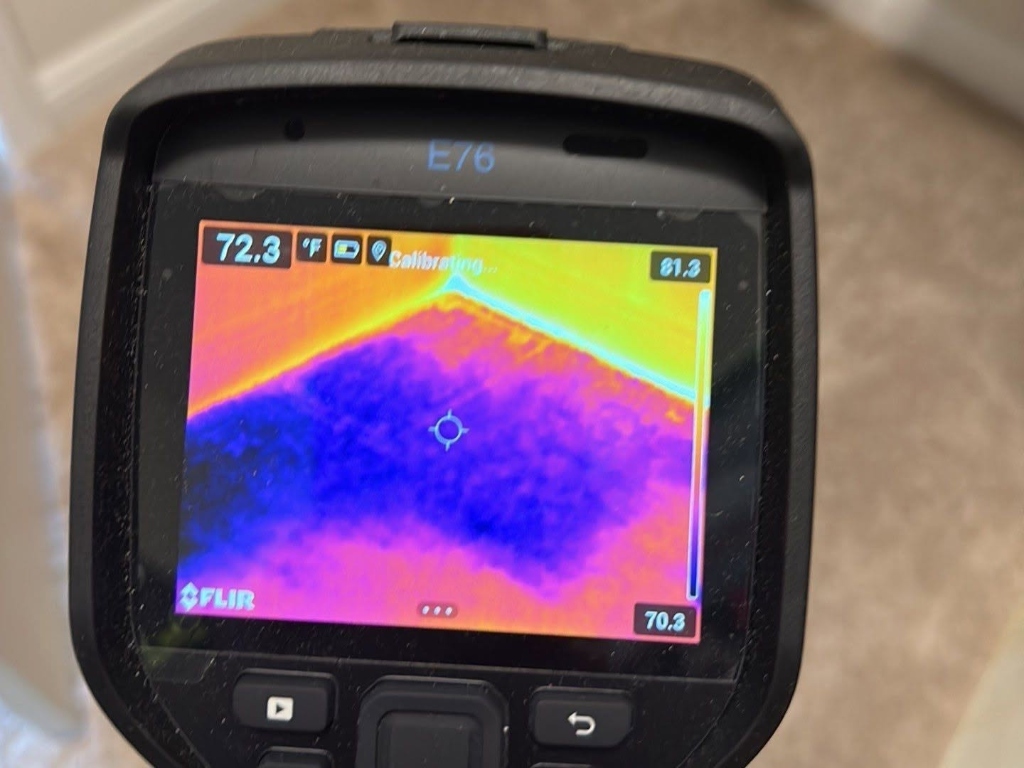
FLIR® Thermal Mapping & Baseline Scans
Infrared thermal scans detect trapped moisture behind walls and beneath concrete without invasive exploratory demolition.
High-Volume Bulk Extraction
31-HP truck-mount extraction units pump standing water away at hundreds of gallons per minute.
Controlled Selective Demolition
Precision flood cuts 12 to 24 inches above moisture lines, removing wet insulation and opening wall framing to dry airflow.
Thermodynamic Dehumidification
Industrial Low-Grain Refrigerant dehumidifiers pull deep trapped moisture from dense framing lumber and concrete slabs.
Antimicrobial Sanitization & Verification
EPA-registered botanical application (Benefect Decon 30) and calibrated moisture testing to issue an official dry certificate.

Specialized Equipment & Industrial Restoration Technology
Mitigating severe property damage requires industrial-grade technology capable of altering thermodynamic psychrometrics:
Truck-Mounted Extraction Rigs
31-HP engines producing 16+ inches Hg vacuum suction to evacuate bulk water rapidly into holding tanks.
Low-Grain Refrigerant Dryers
Pre-cooling heat-pipe systems driving ambient grains per pound below 25 GPP to draw deep trapped water out of framing.
HEPA Negative-Air Scrubbers
Hospital-grade 99.97% particulate filtration capturing microscopic fungal spores, soot, and biohazard aerosols.
FLIR® Thermal Scanners & Probes
Infrared thermography detecting evaporative cooling boundaries behind walls, combined with digital RF pinless scanners.


Professional Restoration vs. DIY Mitigation
Attempting DIY cleanup during a property disaster creates severe hidden liabilities:
- Trapped Moisture: Surface drywall dries while moisture inside cavities triggers hidden mold blooms.
- Pathogenic Risks: Category 2 & 3 water contains bio-contaminants standard cleaners fail to kill.
- Insurance Denial: Insurers require daily psychrometric logs; lack of data causes claim disputes.
Transparent Upfront Itemized Pricing
Valley Restoration Pros operates with complete transparency:
- Free On-Site Assessment: Complete physical inspection before work begins.
- Upfront Itemized Estimates: Detailed line items calculated via industry-standard Xactimate.
- Zero Surprise Billing: No hidden charges or unauthorized repairs.
Certified Autoclave Steam Condensate Flood Extraction Phoenix Bioscience Core Field Documentation
Every response performed by Valley Restoration Pros is documented through photographic and thermographic records:
Comprehensive Autoclave Steam Condensate Flood Extraction Phoenix Bioscience Core Technical Manual & Operational Standards
Exhaustive engineering protocols, psychrometric calculations, geological multipliers, and step-by-step restoration standards for Maricopa County properties:
Executive Emergency Abstract: Downtown Phoenix Bioscience Core Autoclave Steam Condensate Flood Extraction
The Phoenix Bioscience Core (PBC), strategically positioned along North 5th Street, East Van Buren Street, and East Fillmore Street in Downtown Phoenix, stands as Arizona's premier urban epicenter for advanced biomedical innovation, genomic sequencing, academic medicine, and clinical biotechnology. Encompassing elite academic and private research institutions—including the University of Arizona College of Medicine – Phoenix, Northern Arizona University, Arizona State University Health Solutions, the Translational Genomics Research Institute (TGen), and the Wexford Science & Technology 850 PBC research complex—this 30-acre life sciences campus operates round-the-clock biomedical sterilization suites, vivarium autoclaves, and cGMP-compliant preparation laboratories. In these high-containment environments, bulk industrial autoclaves utilize pressurized, superheated clean steam to sterilize surgical instruments, culture media, biohazard waste, and bioreactor components.
When an autoclave steam condensate return line ruptures, an inverted bucket steam trap fails in the open position, or an internal heat-exchanger gasket blows under extreme operating pressure, the resulting thermal and hydraulic crisis is catastrophic. Rather than discharging ambient-temperature domestic tap water, a ruptured autoclave condensate line releases hundreds of gallons of scalding effluent ranging from 212°F to 275°F (100°C to 135°C) combined with high-velocity flash steam vapor. Within seconds, this superheated liquid overwhelms floor trench drains, breaches chemical-resistant seamless flooring coving, and flashes into an airborne aerosol cloud that penetrates interstitial ceiling plenums, electrical conduit raceways, and adjacent ISO Class 5 and ISO Class 7 cleanrooms.
The catastrophic nature of autoclave steam condensate flooding extends far beyond physical water intrusion. In research laboratories operating at Biosafety Level 2 (BSL-2) or Biosafety Level 3 (BSL-3), uncontrolled condensate flooding threatens to breach secondary biological containment, aerosolize pathogenic or bio-hazardous residues from floor surfaces, and disrupt dedicated negative pressure cascades. Furthermore, the extreme thermal shock of 250°F condensate pouring over structural concrete slabs can cause micro-fracturing of substrate matrices and delamination of expensive monolithic epoxy coatings. Immediate deployment of certified emergency water extraction teams equipped with explosion-proof sanitary pumps, high-temperature fluid recovery gear, and biohazard isolation containment is vital to halting structural destruction and protecting irreplaceable medical research trials.
Immediate Incident Command Protocols: First 30 Minutes on Site
- Emergency Steam Supply & Boiler Isolation: Immediately actuate the high-pressure steam isolation ball valve and lock out/tag out (LOTO) the clean steam generator or central campus district steam heat exchange line serving the affected sterilization bank.
- HVAC & Differential Pressure Airflow Lockdown: Verify that the building automation system (BAS) has isolated supply air to the affected autoclave suite while maintaining negative exhaust airflow to prevent scalding steam aerosols from migrating into public hallways or sterile cleanroom corridors.
- Thermal Hazard Zone Quarantine: Establish an exterior physical safety perimeter with warning barricades to prevent laboratory staff from entering rooms inundated with standing scalding condensate and invisible superheated steam pockets.
- Rapid Response Dispatch Verification: Contact Valley Restoration Pros at (602) 847-9593 for 30-minute rapid commercial dispatch equipped with sanitary fluid extraction tanks and industrial desiccant drying systems.
Anatomy of Autoclave Steam Condensate Line Failures: Thermodynamics, Steam Traps, and Cavitation
Autoclaves in biomedical research institutions rely on sophisticated thermodynamic cycles to achieve terminal sterilization. Clean steam generators produce dry saturated steam at pressures typically between 30 and 50 pounds per square inch gauge (psig), maintaining chamber temperatures of 250°F to 273°F (121°C to 134°C). As this steam transfers its latent heat of vaporization to the sterilization load, it undergoes a phase change back into liquid condensate. This condensate accumulates rapidly at the bottom of the pressure vessel and must be continuously discharged through dedicated thermostatic or inverted bucket steam traps into a stainless steel condensate return line.
Mechanical failures within this closed loop system occur through three primary failure modes: mechanical steam trap lock-up, thermal fatigue cracking of sanitary welded joints, and severe water hammer cavitation. When an inverted bucket steam trap suffers mechanical erosion or becomes fouled by particulate matter, the trap can fail in the wide-open position. This condition, known as steam trap blow-by, discharges high-pressure live steam directly into low-pressure atmospheric condensate return manifolds. As live steam encounters cooler residual water in uninsulated condensate pipes, rapid steam bubble collapse generates violent hydraulic shockwaves—water hammer—capable of exceeding 1,000 psi in instantaneous pressure spikes. These shockwaves fracture pipe welds, shear sanitary tri-clamp ferrules, and shatter brass valve bodies.
In facilities requiring comprehensive commercial water damage mitigation, the thermal dynamics of escaping condensate present unique restoration challenges. Because the liquid escapes under pressure at temperatures well above boiling, a significant fraction instantly flashes into vapor. This vapor creates an intense relative humidity microclimate approaching 100% RH within the room envelope, leading to rapid hygroscopic absorption by drywall, acoustic ceiling assemblies, and insulation materials within interstitial utility chases. Without specialized high-temperature extraction tools and heavy-duty structural dehumidification, structural elements experience severe swelling, micro-biological growth, and galvanic corrosion on adjacent metal conduits.
Thermodynamic Breakdown: Autoclave Effluent vs. Domestic Pipe Rupture
| Parameter | Domestic Potable Water Rupture | Autoclave Steam Condensate Flood |
|---|---|---|
| Discharge Temperature | 65°F – 85°F (Ambient Desert) | 212°F – 275°F (Scalding Effluent) |
| System Operating Pressure | 45 – 75 psig | 30 – 60 psig (Live Steam Riser) |
| Aerosolization & Vaporization | Minimal localized misting | Immediate flash steam vapor cloud (100% RH) |
| Biohazard Cross-Contamination | Category 1 clean water source | Category 2 to 3 (Biological waste cycle residue) |
| Concrete Substrate Impact | Hydrostatic capillary saturation | Thermal shock fracturing & epoxy bond failure |
Sonoran Desert & Downtown Phoenix Geological Multipliers: 18 GPG Scale, Caliche Sub-Slab Dynamics & 115°F Thermal Acceleration
Commercial restoration within the Downtown Phoenix urban core requires specialized expertise that accounts for the hostile environmental realities of the Sonoran Desert. Commercial facilities across Central Phoenix, including properties along Washington Street, Jefferson Street, and the Phoenix Bioscience Core, operate under harsh geological and climatic pressures that dramatically amplify the consequences of water and steam damage. Property managers confronting water intrusion in Central Arizona must address localized conditions through specialized phoenix water damage mitigation engineering.
Foremost among these localized challenges is the extraordinary mineral hardness of the municipal water supply provided by the City of Phoenix Water Services Department. Sourced primarily from the Salt River Project (SRP) canal network and Central Arizona Project (CAP) Colorado River allocations, tap water throughout Downtown Phoenix contains extreme concentrations of dissolved calcium carbonate, magnesium sulfate, and silica, averaging 18 Grains Per Gallon (GPG)—exceeding 300 parts per million (ppm) Total Dissolved Solids (TDS). In autoclave installations, boilers and clean steam generators utilize complex reverse osmosis (RO) and deionization (DI) pre-treatment systems. However, secondary cooling loops, quench tanks, and heat exchanger backwashes frequently interface with raw municipal lines. When high-mineral water is heated to steam or mixed with scalding condensate, calcium scale precipitates aggressively across pipe interiors, causing valve seat binding, thermostatic bellows seizure, and localized galvanic pitting on 316L stainless steel headers.
Geologically, Downtown Phoenix sits atop dense alluvial deposits heavily stratified with caliche—a cement-like sedimentary layer formed by calcium carbonate accumulation. Beneath multi-story research facilities, deep concrete footings and ground-level structural slabs interface directly with expansive clay strata interbedded with caliche. When hundreds of gallons of hot autoclave condensate escape through cracked expansion joints or drainage trenches, the sudden moisture saturation triggers severe volumetric expansion (soil heave). Caliche formations resist downward drainage, trapping water beneath structural slabs and exerting hydrostatic pressure upward against slab vapor barriers. Furthermore, ground vibrations generated by the Valley Metro Light Rail operating along Central Avenue, 1st Avenue, and Washington Street exacerbate micro-cracking in rigid caliche strata, creating preferential paths for subterranean moisture migration.
Climatic heat during the extended Phoenix summer—where outdoor ambient temperatures regularly surpass 115°F (46°C) between May and September—creates an immediate biological incubation hazard. When an autoclave condensate line ruptures during summer months, interior facility temperatures and humidity levels surge simultaneously. While standard indoor environments require 48 to 72 hours before secondary mold spore germination begins, the combination of high ambient desert heat and 100% relative humidity accelerates microbial propagation into a hyper-accelerated 24 to 36-hour window. Spores of Aspergillus brasiliensis, Penicillium, and environmental Chaetomium can colonize wet drywall, paper-faced insulation, and HVAC filter media at explosive rates unless rapid mechanical dehumidification and sanitization are deployed immediately.
First-Hour Emergency Protocol: Biosafety Incident Command, Containment Isolation & Utility Shutdown
The initial sixty minutes following an autoclave condensate flood in a bioscience facility determine whether the incident results in a localized equipment outage or a catastrophic multi-million-dollar contamination crisis. Because biomedical laboratories handle biologically active materials, mammalian tissue cultures, viral vectors, and chemical reagents, emergency response procedures must integrate certified industrial hygiene practices alongside emergency plumbing isolation. When building operators detect an active pipe failure, facility managers must execute precise burst pipe repair and utility isolation steps under established Environmental Health & Safety (EH&S) standard operating procedures.
The emergency protocol commences with immediate Incident Command activation. The facility Biosafety Officer (BSO) and lead plant engineer must establish joint command at a safe perimeter outside the thermal danger zone. High-temperature steam leaks produce invisible thermal hazards where pressurized steam jets can inflict severe third-degree burns without visual cues. Responders entering the area must don appropriate Personal Protective Equipment (PPE), including thermal-resistant neoprene gloves, full-face ballistic heat shields, respiratory protection (N95 or PAPR units depending on biohazard status), and non-slip insulated safety boots.
Standardized First-Hour Laboratory Isolation Workflow
- Thermal Source Isolation: Close the quarter-turn stainless steel clean steam header shutoff valve. Verify that boiler feed pumps and secondary steam generators transition to standby mode. If the rupture is downstream of an inverted bucket trap, isolate the condensate return bypass assembly.
- Electrical De-Energization (LOTO): De-energize 480V 3-phase power distribution circuits feeding autoclave heating elements, vacuum pumps, and motorized door assemblies at the main sub-panel. Lock out and tag out all electrical disconnects to prevent electrical short-circuits and arc flash risks in flooded floor troughs.
- Pressure Cascade Verification: Inspect the magnehelic pressure gauges or building automation sensors outside the autoclave suite. Confirm that the room maintains a minimum negative pressure differential of -0.03 to -0.05 inches of water gauge (-7.5 to -12.5 Pa) relative to adjacent clean corridors to prevent airborne steam migration.
- Biohazard Barrier Deployment: If the autoclave was processing live biological waste or BSL-2 materials at the time of failure, seal all door sweeps, perimeter air gaps, and return air grilles with 6-mil flame-retardant polyethylene sheeting secured with cleanroom-safe vinyl tape.
- Emergency Dispatch Mobilization: Summon Valley Restoration Pros 24/7 emergency dispatch to deploy commercial extraction trucks, desiccant air drying units, and DOP-certified HEPA filtration scrubbers directly to the Phoenix Bioscience Core facility.
Advanced Industrial Equipment Specifications: High-Volume Extraction & Desiccant Dehumidification
Standard commercial water restoration equipment designed for office buildings or residential basements is entirely unsuitable for high-containment bioscience environments. Removing scalding autoclave condensate requires industrial-grade extraction machinery engineered with thermal-rated components, explosion-proof electrical enclosures, and high-efficiency particulate air filtration. To preserve laboratory integrity and prevent widespread facility downtime, Valley Restoration Pros deploys a specialized fleet of biomedical drying and extraction hardware engineered for rapid deployment across cleanroom facilities.
The cornerstone of our extraction array is the sanitary stainless steel fluid recovery skid. These systems utilize high-temperature diaphragm and centrifugal vacuum pumps outfitted with Viton seals, Teflon diaphragms, and 304 stainless steel fluid-wetted parts capable of safely handling boiling condensate up to 250°F without seal breakdown or thermal vapor lock. Discharged liquid is directed through sealed camlock hoses into sanitary holding tanks equipped with high-temperature effluent neutralization ports, ensuring that municipal sewer discharge complies with City of Phoenix industrial wastewater temperature and pH ordinances.
For comprehensive atmospheric stabilization and deep structural extraction, our teams establish industrial structural drying enclosures powered by trailer-mounted solid desiccant dehumidifiers. Unlike standard refrigerant (LGR) dehumidifiers that lose extraction efficiency at low relative humidity levels, industrial desiccant systems utilize continuous silica gel rotor technology capable of processing up to 5,000 CFM of air. These machines produce ultra-dry air streams with dew points as low as -10°F (less than 15 GPP), creating powerful vapor pressure differentials that pull deeply embedded moisture out of concrete slab pores, interstitial wall assemblies, and ceiling voids without causing thermal damage to delicate laboratory instruments.
Cleanroom Equipment Specification Matrix
| Equipment Class | Model Specification | Operating Capacity | Cleanroom Application |
|---|---|---|---|
| Sanitary Vacuum Skid | 304 SS Explosion-Proof Recovery | 120 GPM @ 250°F continuous | Boiling condensate bulk extraction |
| Industrial Desiccant | Silica Gel Rotor Dry-Air System | 5,000 CFM / <15 GPP dew point | Deep sub-slab and interstitial drying |
| Negative-Air HEPA Scrubber | DOP-Tested 99.97% @ 0.3 Micron | 2,000 CFM variable velocity | Aerosol capture & pressure containment |
| Infrared Thermography | FLIR T865 Radiometric Camera | ±1°C accuracy, 640x480 resolution | Sub-floor moisture plume mapping |
| Intra-Wall Injection System | Injectidry High-Pressure Airflow | Positive/Negative micro-manifold | Drying behind unsealed wall panels |
IICRC S500 / S520 Standards: Seven-Phase Biomedical Cleanroom Remediation Protocol
Executing water damage restoration within pharmaceutical, genomic, and biomedical facilities requires strict alignment with the Institute of Inspection, Cleaning and Restoration Certification (IICRC) S500 Standard for Professional Water Damage Restoration and IICRC S520 Standard for Professional Mold Remediation. In laboratory facilities where life sciences research is conducted, standard mitigation procedures must be integrated with clinical biocontainment protocols. Our master commercial restoration technicians implement an exhaustive seven-phase restoration methodology designed specifically for complex institutional environments, mirroring protocols employed in advanced medical facility water damage restoration operations.
The Seven-Phase Cleanroom Restoration Methodology
Phase 1: Forensic Psychrometric & Thermal Radiometric Mapping
Using high-resolution FLIR thermal imaging cameras, certified thermographers track the horizontal and vertical migration of high-temperature condensate across monolithic epoxy floors, under equipment skids, and behind cleanroom perimeter wall curbs. Diagnostic penetrating pin meters and non-invasive capacitance meters establish baseline moisture metrics across drywall, plaster, and concrete substrates.
Phase 2: Sanitary High-Temperature Liquid Extraction
Deploying stainless steel high-temperature vacuum extraction units, crews rapidly extract free-standing boiling condensate from floor surfaces, recessed autoclave trenches, and drainage sumps. Rapid removal limits thermal transfer into structural concrete and stops liquid migration across expansion joints.
Phase 3: Critical Containment Engineering & Aerosol Evacuation
Erect airtight negative-pressure containment barriers utilizing 6-mil poly with zippered decontamination airlocks between the affected autoclave room and clean research labs. Commercial air scrubbers equipped with DOP-tested HEPA filters scrub suspended steam aerosols and particulate at 12 to 18 air changes per hour (ACH).
Phase 4: Controlled Substrate Demolition & Salvage Assessment
In areas where condensate has penetrated unsealed gypsum assemblies or interstitial utility chases, technicians make surgical, precision flood cuts under HEPA containment. Thermal insulation saturated with contaminated condensate is bagged in biohazard waste containers and removed following strict biosafety protocols.
Phase 5: Desiccant Closed-Loop Structural Dehumidification
Connect industrial silica gel desiccant dehumidifiers using dedicated lay-flat ducting to introduce dry air streams (<10% RH, <20 GPP) into the containment envelope. Axial and centrifugal air movers create balanced boundary layer airflow across concrete floors and wall cavities, accelerating deep moisture evaporation without spreading airborne contaminants.
Phase 6: Antimicrobial Surface Decontamination & Biocidal Wash
Apply EPA-registered, non-corrosive cleanroom-grade botanical and quaternary ammonium disinfectants across all structural substrates, equipment chassis, and drainage channels. All formulations are verified compatible with cleanroom stainless steel and will not leave corrosive residues that invalidate cGMP cleanliness.
Phase 7: Psychrometric Verification, ATP Testing & cGMP Clearance
Conduct comprehensive moisture verification using thermo-hygrometers to confirm that all substrates have returned to established dry standards (wood <12% MC, drywall <0.5% calibrated, concrete <75% internal RH via ASTM F2170 in-situ probes). Perform ATP bioluminescence surface swab testing and laser particle counter certification prior to release for facility re-commissioning.
Downtown Phoenix Bioscience Core Case Study: 18,500 Sq Ft Research Autoclave Condensate Deluge Recovery at 5th & Van Buren
Facility Profile & Incident Genesis: Located near the intersection of North 5th Street and East Van Buren Street in the heart of the Phoenix Bioscience Core, an 18,500-square-foot multi-tenant biomedical genomics research facility operated two 800-liter bulk pass-through autoclaves within its central sterilization and vivarium prep core. At 02:45 AM on a Wednesday in mid-July—during a week where Phoenix daytime ambient temperatures reached 118°F—a 2.5-inch 316L stainless steel steam condensate return manifold experienced catastrophic structural failure. An inverted bucket steam trap had seized wide open, causing severe water hammer that sheared a welded elbow immediately upstream of the floor drain trench.
For approximately two hours before security discovered the alarm, the compromised manifold discharged pressurized 245°F condensate and live steam at an estimated 65 gallons per minute into the sterilization suite. Over 7,500 gallons of scalding effluent flooded the room, overwhelming the gravity drainage trench and submerging the floor under 3.5 inches of standing hot water. Dense steam vapors breached the suspended acoustic ceiling, saturating fiberglass batt insulation and migrating across common utility chases into an adjacent ISO Class 7 tissue culture suite and a secondary bioinformatics data archive. The facility faced catastrophic losses: million-dollar genome sequencers were at immediate risk of humidity damage, and active multi-year clinical trial specimens were threatened.
This incident presented complex operational challenges mirroring those seen in advanced biomedical lyophilizer condenser coil burst flood phoenix incidents where sub-zero cryogenic systems and superheated steam lines interact within cleanroom envelopes.
Case Study Incident Recovery Milestones: 5th & Van Buren Research Complex
- T+0:28 Minutes (Emergency Arrival): Valley Restoration Pros master commercial restoration response team arrived on site with two industrial extraction vehicles, trailer-mounted desiccant systems, and a crew of certified cleanroom technicians.
- T+1:15 Hours (Thermal Quarantine & Extraction): Deployed stainless steel high-temperature vacuum pumps to extract 7,500+ gallons of boiling effluent. Established temporary negative pressure barriers isolating the sterilization suite from cleanroom corridors.
- T+3:30 Hours (Ceiling Removal & Interstitial Stabilization): Controlled surgical removal of 2,400 square feet of steam-saturated acoustic ceiling tiles under HEPA containment. Positioned 4 DOP-tested negative air scrubbers running continuously at 2,000 CFM each.
- T+6:00 Hours (Desiccant Manifold Integration): Routed four 20-inch lay-flat duct lines from a 5,000 CFM industrial desiccant trailer, introducing deep dry air (<12% RH) into the cleanroom suite and data storage corridors.
- T+36:00 Hours (Equilibrium Moisture Standard Achieved): Moisture readings across concrete slabs dropped below 75% internal relative humidity; wall cavity framing verified at 8.5% moisture content. Thermal cameras confirmed zero residual thermal pockets beneath epoxy floor coverings.
- T+48:00 Hours (Final Clearance & Commissioning): Complete ATP bioluminescence swab testing confirmed zero surface contamination. Airborne particulate counter tests certified compliance with ISO Class 7 cleanroom cleanliness. Facility resumed complete operational capability with zero research specimen losses.
Regulatory Compliance, cGMP Validation & Biohazard Containment Standards (BSL-2/BSL-3, FDA 21 CFR Part 211, ISO 14644)
In commercial research and pharmaceutical settings, physical moisture extraction represents only one half of the recovery equation. The secondary and equally critical challenge involves maintaining strict regulatory compliance to ensure that scientific data, drug manufacturing batches, and research licenses remain valid. Cleanrooms, vivariums, and sterilization suites operating within the Phoenix Bioscience Core are governed by complex federal and international regulatory frameworks—including the Centers for Disease Control and Prevention (CDC) Biosafety in Microbiological and Biomedical Laboratories (BMBL) standards, FDA Current Good Manufacturing Practice (cGMP) regulations (21 CFR Part 211), and ISO 14644 cleanroom airborne particulate classifications.
Facilities operating under BSL-2 or BSL-3 biocontainment mandates require specialized restoration protocols to prevent biological cross-contamination. Under CDC and NIH standards, any water intrusion incident that breaches containment envelopes or impacts air-handling systems requires comprehensive biocide validation and negative pressure verification before facility clearance can be granted. Similarly, compounding pharmacies and pharmaceutical preparation cleanrooms subject to USP <797> and USP <800> regulations must undergo rigorous surface viable testing following any water event, establishing procedures comparable to those utilized in compounding pharmacy iso 5 cleanroom water damage scottsdale recovery operations.
Cleanroom Environmental Quality & Regulatory Parameters
| Regulatory Standard | Target Operational Metric | Water Event Vulnerability | Restoration Verification Protocol |
|---|---|---|---|
| ISO 14644-1 (Class 7) | ≤ 352,000 particles/m³ (≥0.5 µm) | Flash steam aerosol particle surge | Optical particle count certification |
| CDC / NIH BMBL (BSL-2/3) | -0.03 to -0.08 in. w.g. pressure | Loss of pressure cascade containment | Continuous differential logging |
| FDA 21 CFR Part 211.42 | Clean, sanitized surfaces | Biofilm formation on sub-slab | Surface swab ATP bioluminescence |
| USP <797> / <800> | Zero viable CFU/m³ fungal/bacterial | Thermal humidity incubation spike | Agar plate settling & air sampling |
Pay-Per-Call Financial Integrity, Transparent Itemized Estimating & Commercial Claims Documentation
In high-stakes commercial property restoration, operational transparency and fiscal integrity are as vital as technical competence. When an autoclave condensate disaster strikes a biomedical facility in Downtown Phoenix, facility directors and risk managers need absolute clarity regarding costs, billing procedures, and insurance documentation. Valley Restoration Pros strictly upholds consumer-first commercial billing principles, operating with zero hidden fees and zero ambiguous pricing structures.
Our Commercial Restoration Financial Commitments (Verbatim Compliance)
We operate with complete commercial transparency. Every commercial restoration engagement is anchored by three permanent guarantees:
- Free Comprehensive On-Site Damage Assessment: Our master commercial estimators deploy to your Phoenix Bioscience Core facility to conduct a thorough forensic inspection of all water intrusion, thermal damage, and structural moisture boundaries without upfront charge.
- Transparent Upfront Itemized Pricing Before Work Begins: You receive an exhaustive, line-item estimate detailing equipment rates, technician hours, containment supplies, and monitoring costs prior to the commencement of any non-emergency mitigation procedures. You can also explore our online cost estimator to understand baseline commercial drying parameters.
- Assistance with Detailed Claims Documentation & Psychrometric Moisture Logs: We maintain forensic digital documentation—including daily psychrometric moisture logs, thermal infrared imaging reports, moisture mapping diagrams, and Xactimate-formatted itemized reports—to assist your corporate risk management team in expediting claims processing with your commercial insurance carrier. Assistance with Detailed Claims Documentation & Psychrometric Moisture Logs is provided on every commercial project.
Mandatory Disclosure: Valley Restoration Pros does not make direct insurance billing promises or guarantee third-party insurer claim settlements. Policyholders remain responsible for deductible obligations and policy coverage terms. To coordinate an assessment, contact our commercial operations desk through our contact us emergency dispatch portal.
High-Purity Water Systems & Steam Generation Infrastructure: RO Loops, WFI Systems & Condensate Metallurgy
Understanding the water chemistry and metallurgy of biomedical steam infrastructure is crucial when planning flood recovery in advanced research environments. Autoclaves in the Phoenix Bioscience Core do not operate on standard utility steam generated from untreated tap water; rather, they require pyrogen-free clean steam generated from Reverse Osmosis (RO) or Water For Injection (WFI) water loops. This ultra-pure feed water is free of minerals, endotoxins, and chlorine, designed to meet strict pharmacopeial standards (USP Clean Steam).
Because pure water lacks dissolved minerals, it is chemically aggressive. At elevated temperatures (212°F to 275°F), high-purity condensate acts as an aggressive solvent, seeking to dissolve metal ions from surrounding piping. Consequently, all autoclave steam headers, valves, and condensate manifolds are constructed from high-grade 316L stainless steel with electropolished inner surfaces (often specified to ≤15 microinch Ra finish). However, when municipal Phoenix water—with its 18 GPG hardness—is introduced into auxiliary cooling systems or when heat exchanger tubes develop microscopic stress corrosion cracks, aggressive mineral chlorides attack the passive chromium oxide layer of stainless steel. This leads to chloride-induced stress corrosion cracking (CSCC) and rouge formation (iron oxide particulate), which clogs steam traps and accelerates line failure.
Similar metallurgical and plumbing complexities arise in advanced clinical diagnostic suites, such as those evaluated in hospital mri suite water damage restoration phoenix facilities where high-purity closed-loop chilled water systems protect sensitive superconducting magnet coils. When an autoclave steam condensate rupture occurs, restoration engineers must assess both the physical flood footprint and inspect surrounding stainless steel utility loops to identify secondary corrosion risks resulting from water vapor exposure.
Specialized Subfloor, Raised Access Flooring & Cleanroom Wall Assembly Drying Dynamics
Flooring systems in Phoenix Bioscience Core laboratories are engineered to meet exceptional performance standards. Monolithic epoxy resin, seamless welded polyurethanes, and chemical-resistant coved bases are designed to provide impenetrable chemical barriers and facilitate rigorous sterilization. However, when 240°F autoclave condensate pools across an epoxy-coated concrete slab, the thermal disparity between the superheated surface and the cold structural concrete creates extreme shear stress along the adhesive bond line.
This thermal shock induces osmotic blistering and pinhole fracturing in resinous coatings. Scalding water forced into micro-fractures travels laterally beneath the epoxy membrane, creating subterranean moisture pockets that remain completely invisible to casual visual inspection. If left untreated beneath the non-breathable resin layer, this trapped water causes extensive coating delamination, substrate softening, and fungal microbial colonization. The restorative mechanics required to extract trapped water from non-porous assemblies mirror the specialized techniques utilized in dialysis center water damage restoration phoenix facilities where continuous sanitary vinyl flooring assemblies require specialized deep drying methodologies.
Sub-Floor Diagnostic & Extraction Methodology
- Infrared Thermographic Delamination Mapping: Technicians utilize FLIR radiometric thermography to identify subsurface moisture plumes beneath epoxy membranes by capturing differential evaporative cooling profiles.
- ASTM F2170 In-Situ Relative Humidity Probes: Technicians drill precision micro-ports into the concrete slab in non-critical zones, inserting digital relative humidity sensors to measure internal slab moisture equilibrium depth.
- Negative-Pressure Floor Vacuum Mats: When moisture is trapped beneath salvageable flooring, heavy-duty suction mats create high-vacuum draw directly through slab expansion joints to pull moisture through capillary pathways.
- Sub-Slab Vapor Permeation Drying: Continuous ultra-low dew point air generated by industrial desiccant trailers sweeps across perimeter joints, drawing bound moisture upward through natural concrete pore networks.
Psychrometric Science & Vapor Pressure Differential Engineering in Bioscience Facilities
Restoring high-technology biomedical facilities requires mastery of psychrometric thermodynamics—the science governing moist air mixtures, temperature gradients, and vapor pressure dynamics. When superheated steam condensate escapes inside an enclosed laboratory, it instantly disrupts the environmental equilibrium. At standard atmospheric pressure, water at 212°F expands to over 1,600 times its liquid volume as steam vapor, driving interior ambient relative humidity from a controlled 40% RH to total saturation (100% RH) in minutes.
To extract moisture bound within structural materials without tearing down sterile cleanroom wall panels, restoration engineers manipulate vapor pressure differentials. Vapor pressure, measured in inches of mercury (in. Hg) or kilopascals (kPa), represents the physical force exerted by water vapor molecules within a substance. Moisture naturally travels from areas of high vapor pressure to areas of low vapor pressure. When wet gypsum or concrete has a vapor pressure of 1.20 in. Hg, introducing ultra-dry desiccant air with a vapor pressure of 0.15 in. Hg creates a massive vapor pressure differential of 1.05 in. Hg. This force drives moisture outward into the drying chamber air stream at the molecular level.
Preventing secondary microbial proliferation is especially critical during hot Phoenix summers. If elevated relative humidity persists within warm wall cavities for more than 48 hours, active fungal spores germinate. When contamination occurs, facility operators must immediately enact certified mold remediation protocols under negative air containment to prevent fungal particulate from contaminating research cell lines and sterile media.
Psychrometric Environmental Progression: Autoclave Flood Event
| Recovery Stage | Dry Bulb Temp (°F) | Relative Humidity (%) | Humidity Ratio (GPP) | Vapor Pressure (in. Hg) |
|---|---|---|---|---|
| Baseline Cleanroom | 68°F | 45% RH | 46 GPP | 0.31 in. Hg |
| Active Steam Flood | 105°F | 98% RH | 345 GPP | 2.15 in. Hg |
| Post-Extraction Stabilization | 82°F | 60% RH | 98 GPP | 0.65 in. Hg |
| Desiccant Dehumidification | 75°F | 18% RH | 24 GPP | 0.16 in. Hg |
| Final Cleanroom Dry Standard | 68°F | 42% RH | 43 GPP | 0.29 in. Hg |
Downtown Phoenix Medical & Bioscience Corridor Silo Architecture & Regional Connectivity
The Phoenix Bioscience Core represents a vital anchor within a dynamic network of healthcare, research, and biotechnology hubs spanning Maricopa County. Operating seamlessly across North 5th Street, Van Buren Street, and the wider downtown urban grid, our emergency commercial crews provide rapid-response restoration across every medical and clinical corridor in the region. Facilities in Central Phoenix experiencing complex emergency incidents rely on our dedicated downtown phoenix water damage emergency response teams for 24/7 priority mitigation.
Our regional response logistics are optimized along major Valley transportation corridors. Utilizing the Interstate 10 Papago Freeway, State Route 51 (Piestewa Freeway), and Loop 202 (Red Mountain Freeway), our commercial fleet deploys within 30 minutes to life science facilities across Greater Phoenix—from the Mayo Clinic campus and Scottsdale Cure Corridor to the Banner - University Medical Center Phoenix campus and Chandler Price Corridor biotech hubs.
Major Regional Biomedical Corridors We Serve
- Phoenix Bioscience Core (PBC): 30-acre downtown urban life sciences hub encompassing TGen, UA College of Medicine, NAU, and ASU Health Solutions.
- Midtown Medical Quarter: St. Joseph's Hospital and Medical Center, Barrow Neurological Institute, and Phoenix Children's Hospital.
- Scottsdale Cure Corridor: North Scottsdale healthcare research campuses, HonorHealth Scottsdale Shea, and Mayo Clinic Scottsdale.
- Tempe Tech & Biotechnology District: ASU Biodesign Institute, ASU Research Park, and associated pharmaceutical pilot manufacturing suites.
- Deer Valley & North Phoenix Medical Manufacturing: Biomedical device manufacturing facilities, cleanroom assembly plants, and contract packaging plants.
Exhaustive Technical FAQ: Autoclave Steam Condensate Floods in Biomedical Research Facilities
Review deep technical answers to the most urgent questions confronting facility managers, laboratory directors, and biosafety officers following an autoclave steam condensate flood in Greater Phoenix:
1. Why is an autoclave steam condensate line rupture considered significantly more hazardous than a domestic potable water pipe burst?
Autoclave condensate discharges at scalding temperatures between 212°F and 275°F (100°C to 135°C) under high pressure, instantly presenting severe thermal burn hazards and generating rapid flash steam vapor clouds that saturate overhead ceiling plenums and electrical systems. Furthermore, in research sterilization environments, condensate frequently contacts biological waste cycle residues, transitioning the flood from a clean Category 1 water loss to an acute Category 2 or Category 3 biohazard loss. In situations involving drain backup, facility operators require comprehensive sewage cleanup and biohazard sanitization protocols.
2. How does 18 GPG Phoenix municipal tap water accelerate steam trap and condensate line failures?
Phoenix municipal water contains high concentrations of dissolved calcium, magnesium, and silica (>300 ppm TDS). When raw tap water is fed into steam boilers or secondary quench loops, high operating temperatures cause rapid mineral scale precipitation. Scale crusting on inverted bucket steam traps prevents valve seating, causing the trap to lock wide open. This releases high-pressure live steam into low-pressure condensate lines, generating water hammer cavitation that shatters pipe welds and sanitary fittings.
3. Can commercial desiccant dehumidifiers dry cleanroom sub-floors without tearing up monolithic epoxy coatings?
Yes. Industrial trailer-mounted desiccant dehumidifiers produce ultra-dry air streams with dew points below -10°F and vapor pressures under 0.15 in. Hg. By delivering this dry air across perimeter expansion joints and unsealed wall curbs, a strong vapor pressure differential is created that draws trapped moisture through the capillary pore network of the concrete slab without necessitating destructive removal of intact epoxy coatings.
4. What specific protocols are required when an autoclave flood occurs within a BSL-2 or BSL-3 laboratory suite?
BSL-2 and BSL-3 suites require immediate verification of negative air pressure cascades using certified differential pressure loggers. Restoration technicians must erect secondary 6-mil polyethylene containment chambers equipped with DOP-tested negative air HEPA scrubbers operating at 12 to 18 air changes per hour. All extracted fluid must be captured in sealed sanitary containment vessels, and all surfaces must undergo chemical disinfection with EPA-registered cleanroom-compatible sporicidal agents followed by ATP bioluminescence clearance testing.
5. How does extreme Phoenix summer ambient heat (115°F) impact post-flood microbial incubation timelines?
Standard water damage restoration protocols assume ambient indoor temperatures of 68°F to 75°F, where mold colonization requires 48 to 72 hours. Under Sonoran Desert summer conditions, high outdoor heat combined with thermal steam release raises interior building temperatures above 85°F, accelerating fungal metabolic rates. Spores of Aspergillus and Penicillium can germinate within 24 to 36 hours. Immediate environmental climate stabilization is mandatory to halt microbial amplification.
6. What documentation does corporate insurance require for biomedical commercial flood claims?
Commercial property insurers require comprehensive forensic documentation, including FLIR thermal radiometric imaging surveys, daily psychrometric moisture logs (recording dry bulb temperature, relative humidity, and GPP across all drying zones), ASTM F2170 in-situ concrete slab RH data, line-item itemized pricing formatted in industry-standard Xactimate software, and certified air quality/particle clearance reports. Valley Restoration Pros assists facility managers with complete forensic claim documentation packages.
7. Why cannot standard residential or light commercial water extraction pumps be used for autoclave floods?
Standard commercial extraction pumps feature thermoplastic housings, standard rubber impellers, and nitrile seals rated only up to 120°F to 140°F. Subjecting these units to boiling 212°F to 250°F autoclave condensate causes rapid seal melting, impeller seizure, and cavitation vapor lock. Biomedical recovery requires stainless steel sanitary vacuum pumps with Viton seals, Teflon diaphragms, and thermal heat dissipation assemblies.
8. How does sub-slab caliche clay beneath Downtown Phoenix affect water drainage after an industrial flood?
Caliche is an impermeable cemented calcium carbonate sediment common throughout Central Arizona. When flood waters penetrate foundation expansion joints, caliche blocks downward percolative drainage, trapping perched water directly beneath the structural concrete slab. The trapped moisture exerts upward hydrostatic vapor pressure against floor adhesives and causes expansive clay layers to heave, threatening foundation integrity unless removed via specialized deep structural desiccant drying.
Valley-Wide Emergency Dispatch Infrastructure & 24/7 Rapid Response Logistics
When an autoclave steam condensate rupture occurs at the Phoenix Bioscience Core or any medical facility across Greater Phoenix, seconds count. Valley Restoration Pros maintains an active 24-hour commercial emergency response fleet equipped with industrial desiccant drying trailers, stainless steel sanitary extraction units, and negative air HEPA filtration arrays strategically positioned to reach Downtown Phoenix facilities in 30 minutes or less.
Our service radius extends across the entirety of Maricopa County. Whether your facility is located in Central Phoenix, Scottsdale, Tempe, Mesa, Chandler, or Glendale, our master commercial restoration specialists stand ready to protect your research assets, restore cGMP cleanroom parameters, and halt structural degradation. Explore our complete regional coverage network across our comprehensive areas we serve directory.
Emergency Cleanroom & Autoclave Water Extraction Hotline
Immediate 30-Minute Dispatch to Phoenix Bioscience Core & All Downtown Phoenix Medical Facilities
Call 24/7 Dispatch:Verified Local Area Dispatch: Phoenix, AZ
Official Geo-Coordinates: 33.4484° N, -112.074° W • Maricopa County
Related Specialized Emergency Restoration Services
Explore specialized rapid-response mitigation protocols across Greater Phoenix and Maricopa County:
Valley-Wide Emergency Response Service Coverage
Our mobile restoration fleet is dispatched across the entire Phoenix metropolitan region, providing rapid 30 to 60 minute emergency response: