

Valley Restoration Pros delivers 24/7 industrial emergency water extraction, thermal psychrometric drying, and structural mitigation across Phoenix and Maricopa County with guaranteed 30–60 minute rapid arrival. All protocols strictly adhere to IICRC S500 standards, featuring upfront itemized pricing and free on-site thermal moisture assessments. Call dispatch directly at (602) 847-9593.
Why Immediate Mitigation Is Critical in Phoenix Heat
Aggressive 18.2 Megohm-cm UPW acts as an aggressive chemical leachant, dissolving free lime and alkaline silicates from sub-fab concrete waffle slabs to create electrically conductive mineral brine that shorts sub-grade electrical busways and optical sensors. Trapped moisture inside high-heat (115°F ambient outdoor) Chandler desert environments causes explosive sub-fab vapor pressure buildup, migrating through perforated floor tiles into ISO Class 3/4 cleanrooms and causing rapid oxidation of exposed copper/cobalt wafer metallizations. Monsoon storm runoff and Chandler expansive caliche clay soil shifts crack subterranean utility pipe penetrations and seismic expansion joints along Price Road, compounding internal PVDF/PFA pipe joint failures with pressurized external groundwater. Evaporating UPW mineral brine creates airborne sub-micron crystalline salt aerosols that bypass standard HVAC filters, threatening catastrophic physical defect contamination on sub-3nm photolithography EUV scanner optics and wafer lots.

Service Definition & The IICRC Standard of Care
Professional chandler price corridor semiconductor upw loop breach restoration is an engineering and environmental discipline adhering strictly to IICRC S500 protocols, not mere surface mopping. When structural plumbing failures strike in Maricopa County, certified emergency water extraction and thermal structural drying procedures must be deployed immediately. Whether triggered by high-pressure burst pipe emergencies, subfloor leaks, or commercial line ruptures, bound moisture rapidly penetrates concrete subfloors and wall framing. In the desert heat, delays trigger microbial proliferation requiring rapid mold remediation. Request damage assessment through our emergency assessment portal or request 30-minute dispatch across all Valley service areas.
Securing electrical feeds, inspecting load-bearing assemblies, and containing pathogens.
Stopping the intrusion source and erecting 6-mil plastic isolation containment airlocks.
31-HP truck-mount extraction, removing gallons exponentially faster than evaporation.
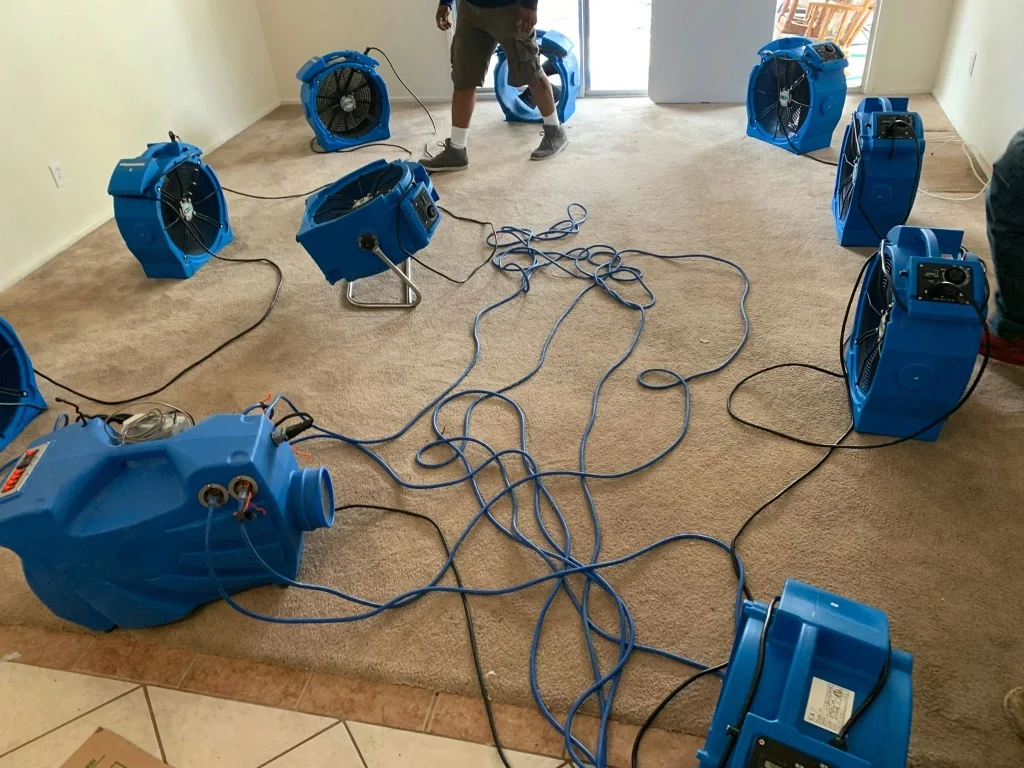
LGR dehumidifiers and HEPA air scrubbers driving grains per pound below 25 GPP.
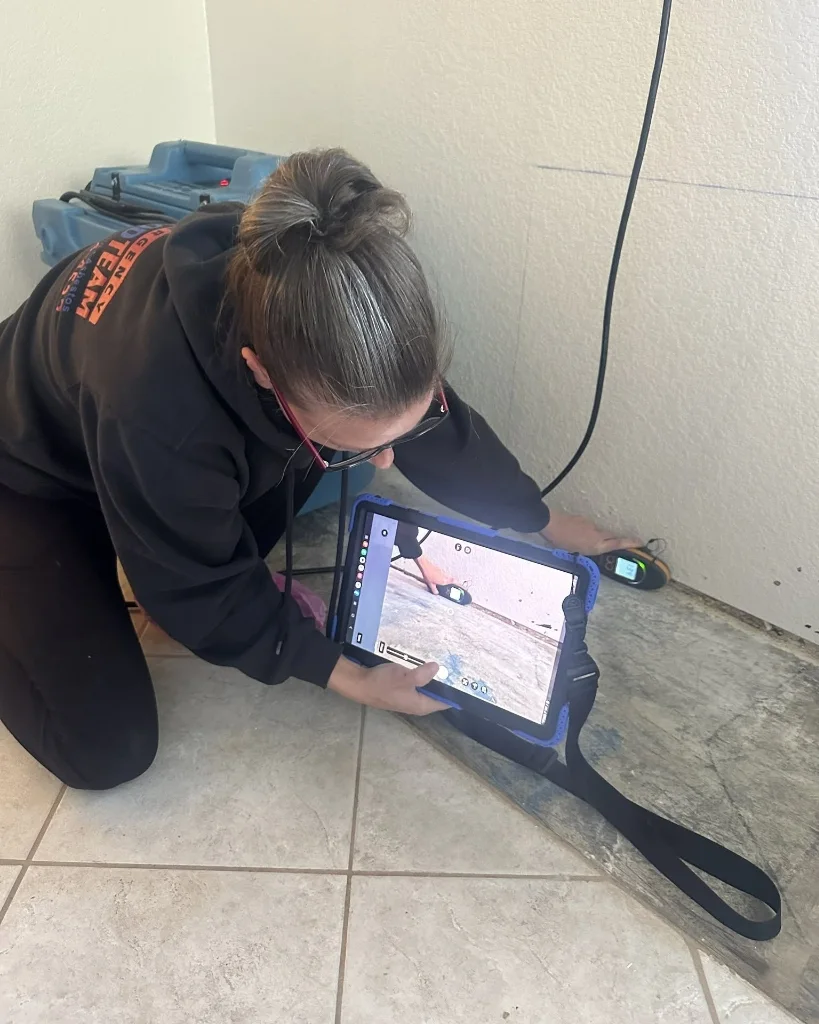
Calibrated electronic pinless testing confirming baseline dry standards.
The Complete 6-Stage Restoration Roadmap
Our IICRC-certified crews execute a disciplined, scientific 6-stage protocol to stabilize and dry structural components:
Emergency Dispatch & Perimeter Isolation
30 to 60 minute arrival. Securing electrical shutoffs, evaluating structural loads, and erecting containment airlocks.
FLIR® Thermal Mapping & Baseline Scans
Infrared thermal scans detect trapped moisture behind walls and beneath concrete without invasive exploratory demolition.
High-Volume Bulk Extraction
31-HP truck-mount extraction units pump standing water away at hundreds of gallons per minute.
Controlled Selective Demolition
Precision flood cuts 12 to 24 inches above moisture lines, removing wet insulation and opening wall framing to dry airflow.
Thermodynamic Dehumidification
Industrial Low-Grain Refrigerant dehumidifiers pull deep trapped moisture from dense framing lumber and concrete slabs.
Antimicrobial Sanitization & Verification
EPA-registered botanical application (Benefect Decon 30) and calibrated moisture testing to issue an official dry certificate.


Specialized Equipment & Industrial Restoration Technology
Mitigating severe property damage requires industrial-grade technology capable of altering thermodynamic psychrometrics:
Truck-Mounted Extraction Rigs
31-HP engines producing 16+ inches Hg vacuum suction to evacuate bulk water rapidly into holding tanks.
Low-Grain Refrigerant Dryers
Pre-cooling heat-pipe systems driving ambient grains per pound below 25 GPP to draw deep trapped water out of framing.
HEPA Negative-Air Scrubbers
Hospital-grade 99.97% particulate filtration capturing microscopic fungal spores, soot, and biohazard aerosols.
FLIR® Thermal Scanners & Probes
Infrared thermography detecting evaporative cooling boundaries behind walls, combined with digital RF pinless scanners.
Professional Restoration vs. DIY Mitigation
Attempting DIY cleanup during a property disaster creates severe hidden liabilities:
- Trapped Moisture: Surface drywall dries while moisture inside cavities triggers hidden mold blooms.
- Pathogenic Risks: Category 2 & 3 water contains bio-contaminants standard cleaners fail to kill.
- Insurance Denial: Insurers require daily psychrometric logs; lack of data causes claim disputes.
Transparent Upfront Itemized Pricing
Valley Restoration Pros operates with complete transparency:
- Free On-Site Assessment: Complete physical inspection before work begins.
- Upfront Itemized Estimates: Detailed line items calculated via industry-standard Xactimate.
- Zero Surprise Billing: No hidden charges or unauthorized repairs.
Certified chandler price corridor semiconductor upw loop breach restoration Field Documentation
Every response performed by Valley Restoration Pros is documented through photographic and thermographic records:
Comprehensive chandler price corridor semiconductor upw loop breach restoration Technical Manual & Operational Standards
Exhaustive engineering protocols, psychrometric calculations, geological multipliers, and step-by-step restoration standards for Maricopa County properties:
Executive Emergency Abstract: Chandler Price Corridor Semiconductor Ultrapure Water (UPW) Loop Breach Restoration
The Chandler Price Road Innovation Corridor represents the preeminent semiconductor manufacturing epicentre of the Southwest. Anchored along South Price Road, Dobson Road, Queen Creek Road, and the Loop 202 San Tan Freeway, this high-density technology corridor hosts premier semiconductor fabrication campuses, advanced packaging cleanrooms, and testing facilities producing sub-nanometer microprocessors and specialized RF transceivers. These multi-billion-dollar cleanroom complexes operate round-the-clock wafer processing environments dependent on continuous-flow Ultrapure Water (UPW) distribution systems. Treated to theoretical physical limits exhibiting an electrical resistivity of 18.2 Megohm-centimeter (MΩ·cm) at 25°C, zero detectable total organic carbon (TOC < 1 ppb), and sub-part-per-billion dissolved solids, UPW circulates at hundreds of gallons per minute under 85 to 115 PSI through specialized PVDF (polyvinylidene fluoride) and PFA (perfluoroalkoxy) piping arrays.
When a high-pressure 6-inch or 8-inch UPW loop experiences a catastrophic breach—whether precipitated by mechanical flange gasket blowout, pneumatic valve manifold actuator rupture, or vibration-induced ultrasonic weld fracture—the ensuing disaster threatens the entire manufacturing facility. Thousands of gallons of aggressive, hungry UPW erupt directly into sub-fab utility chases, underfloor return air plenums, and subterranean structural waffle-slab vaults. While chemically pure at the moment of discharge, UPW is in a state of extreme thermodynamic imbalance with its environment. It immediately begins leaching free lime, calcium hydroxide, and alkaline silicates from structural concrete surfaces, transforming within minutes into an electrically conductive, mineral-laden corrosive brine.
In a multi-level semiconductor cleanroom, every minute of unmitigated liquid migration escalates financial exposure exponentially. Front-end wafer processing tools, extreme ultraviolet (EUV) lithography scanners, chemical vapor deposition (CVD) reactors, and robotic wafer cassette tracks cannot tolerate liquid water contact or ambient relative humidity spikes exceeding 45% RH. Uncontrolled evaporation drives moisture vapor upward through perforated ballroom floor tiles, threatening catastrophic condensation onto multi-million-dollar optical mirrors and irreversible contamination of multi-wafer production lots. Production downtime in these Chandler facilities averages between $350,000 and $550,000 per hour, making immediate professional emergency water extraction an absolute operational imperative.
Valley Restoration Pros operates as the primary commercial cleanroom emergency disaster recovery contractor throughout the Chandler Price Corridor and the East Valley. Our master-certified industrial restoration specialists maintain a dedicated rapid-response presence along the Loop 202 and Price Road technology spine, guaranteeing a 20- to 30-minute on-site arrival window. Deploying cleanroom-rated oil-free electric desiccant dehumidifiers, intrinsically safe ATEX-certified extraction pumps, and mobile ULPA air-scrubbing arrays, our personnel execute precision recovery procedures designed to stabilize sub-fab environments, preserve high-value manufacturing assets, and restore ISO 14644-1 certified cleanroom environments without generating disruptive secondary contamination.
Chandler Semiconductor Fab Incident Metrics & Operational Objectives
- Emergency Mobilization Timeframe: Rapid emergency deployment guaranteed within 20 to 30 minutes to any industrial facility between Dobson Road and South Arizona Avenue along the Price Road corridor.
- Water Extraction Capacity: Intrinsically safe, static-grounded pneumatic double-diaphragm pumping systems evacuating up to 12,000 gallons per hour from sub-fab utility chases and waffle-slab trenches.
- Environmental Target Humidity: Rapid desiccation driving sub-fab relative humidity below 35% RH (dew point < 38°F) to halt moisture migration into cleanroom ballroom fan filter units (FFUs).
- ISO 14644 Particulate Compliance: Continuous positive-pressure isolation and ULPA filtration maintaining ISO Class 1 through Class 100 particle threshold integrity during all structural remediation phases.
Physics, Chemistry & Thermodynamics of Ultrapure Water (UPW) Breaches
Understanding the catastrophic nature of an Ultrapure Water loop breach requires analyzing the thermodynamic and chemical behaviors of water stripped of dissolved minerals. Ultrapure water is engineered through extensive filtration trains including multi-stage reverse osmosis, vacuum degasification, electrodeionization (EDI), and continuous ultraviolet irradiation at 185 nm and 254 nm wavelengths. The resulting effluent reaches an electrical resistivity of 18.2 Megohm-centimeter at 25°C, representing the theoretical limit of pure water where only hydrogen ($$\text{H}^+$$) and hydroxide ($$\text{OH}^-$$) ions exist in minute self-ionization equilibrium ($$1.0 \times 10^{-7} \text{ M}$$).
Because UPW contains zero mineral solutes, it exists in a state of severe chemical disequilibrium with ambient building materials. It behaves as an exceptionally aggressive chemical leachant, exhibiting a powerful thermodynamic affinity to dissolve any soluble material it encounters until reaching mineral saturation. When thousands of gallons of pressurized UPW escape from ruptured PVDF or PFA plumbing lines, the liquid immediately attacks structural concrete surfaces, epoxy floor coatings, and metallic structural supports. Physical restoration demands immediate, specialized burst pipe repair and structural containment isolation before hydraulic damage penetrates neighboring cleanroom bays.
The chemical transformation of UPW upon structural contact is rapid and destructive. As water contacts the reinforced concrete matrix of sub-fab waffle slabs, it dissolves free calcium hydroxide ($$\text{Ca(OH)}_2$$) and alkaline silicates:
This dissolution produces an aggressively alkaline chemical brine with a pH frequently exceeding 11.5 to 12.0. Simultaneously, ambient carbon dioxide ($$\text{CO}_2$$) rapidly absorbs into the unbuffered water, forming carbonic acid ($$\text{H}_2\text{CO}_3$$). Consequently, the fluid electrical resistivity plummets precipitously from 18.2 MΩ·cm down to less than 0.05 MΩ·cm within fifteen minutes. What escaped as a non-conductive dielectric fluid transforms into a highly conductive electrolyte slurry capable of causing catastrophic short circuits, electrical arc flashing across sub-fab busways, and severe galvanic corrosion across aluminum cable unistruts and galvanized seismic bracing.
Thermodynamically, the high vapor pressure of evaporating water inside enclosed sub-fab plenums accelerates crystalline salt formation. As the alkaline mineral brine evaporates under ambient cleanroom airflow, dissolved calcium and silica ions precipitate as fine, crystalline efflorescence particles measuring 0.1 to 0.5 microns. In an advanced semiconductor fab producing microchips with transistor gate widths under 5 nanometers, even a single sub-micron mineral aerosol particle depositing onto an exposed silicon wafer during photolithography, chemical mechanical polishing (CMP), or extreme ultraviolet (EUV) reticle transfer causes fatal bridge defects, pinhole shorts, and complete die loss across whole silicon wafers.
Comparative Resistivity & Chemical Alteration Lifecycle
| Stage of Contamination | Fluid Resistivity | Conductivity (μS/cm) | Dominant Chemical Activity |
|---|---|---|---|
| Virgin UPW at Loop Discharge | 18.2 MΩ·cm | 0.055 μS/cm | Zero mineral ions; extreme thermodynamic dissolution affinity |
| 5 Minutes Atmospheric Exposure | 1.0 - 2.5 MΩ·cm | 0.4 - 1.0 μS/cm | Rapid $$\text{CO}_2$$ absorption forming carbonic acid ($$\text{H}_2\text{CO}_3$$) |
| 15 Minutes Concrete Slab Contact | 0.02 - 0.08 MΩ·cm | 12.5 - 50.0 μS/cm | Dissolution of $$\text{Ca(OH)}_2$$; pH spikes to 11.8+; galvanic hazard |
| Secondary Efflorescence Phase | < 0.01 MΩ·cm | > 100.0 μS/cm | Precipitation of 0.1-0.5 μm crystalline salt dust; yield-killing aerosol |
Sub-Fab & Cleanroom Architecture Inundation Mechanics
The structural architecture of a state-of-the-art semiconductor fabrication plant differs radically from traditional commercial real estate. Modern fabs utilize a multi-tier vertical design consisting of three primary elevations: the upper interstitial mechanical level housing Fan Filter Units (FFUs) and make-up air handlers, the primary ballroom cleanroom floor where production tools operate, and the subterranean sub-fab level. The cleanroom ballroom floor is constructed of heavy-duty, raised perforated access tiles resting on steel pedestals. Directly below lies the massive reinforced concrete waffle slab—a structural deck 24 to 36 inches thick, penetrated by thousands of cast-in openings designed to return laminar airflow from the cleanroom down into the sub-fab before recirculation.
When a high-volume UPW line breaches in either the cleanroom utility chase or the sub-fab interstitial space, liquid water immediately flows downward through floor perforations and waffle-slab openings. In the sub-fab below, critical support infrastructure operates in dense utility racks: ultra-pure chemical supply lines, chemical dispense modules, vacuum pumps, toxic gas monitoring telemetry, radio frequency (RF) power generators, and high-voltage electrical bus ducts. Standing water in the sub-fab rapidly floods cable trenches, elevator pits, and drainage channels. Addressing this subterranean structural saturation requires engineering-grade structural drying protocols engineered specifically for cleanroom environments.
The thermodynamic airflow patterns of a semiconductor cleanroom exacerbate water damage risks. High-velocity recirculating air systems move hundreds of thousands of cubic feet of air per minute through ceiling-mounted HEPA and ULPA filtration arrays down across wafer tracks. When liquid water collects on the sub-fab waffle slab, this high-velocity airflow rapidly evaporates standing moisture, driving sub-fab relative humidity above 85% RH and elevating moisture vapor pressure. The recirculating air handlers pull this saturated vapor back up through return air plenums into cleanroom ceiling interstitial cavities.
Once moisture vapor enters the cleanroom ballroom, it encounters temperature gradients created by chilled-water tool jackets and cryogenic vacuum pumps. Moisture condenses on chilled stainless steel surfaces, robotic wafer handling tracks, and precision stepper lenses. Furthermore, relative humidity spikes above 45% trigger rapid oxidation of exposed copper interconnects and cobalt barrier layers on patterned silicon wafers. If wet sub-fab materials are not isolated and desiccated with extreme urgency, moisture migration induces structural corrosion across the entire cleanroom envelope, forcing protracted facility decontamination that can suspend manufacturing for weeks.
Cleanroom Vapor Pressure Differential Risks
A semiconductor cleanroom operates under positive pneumatic pressure (typically +15 to +30 Pascals relative to adjacent corridors) to prevent particulate infiltration. However, moisture vapor operates independently of air pressure differentials, migrating along vapor pressure gradients ($$\Delta P_v$$) from areas of high vapor pressure in a flooded sub-fab ($$P_v > 0.85 \text{ inHg}$$) toward dry cleanroom bays ($$P_v \approx 0.35 \text{ inHg}$$). Valley Restoration Pros counteracts this physical gradient by establishing dedicated negative-pressure moisture extraction envelopes equipped with ultra-low dew point desiccant systems directly inside the flooded sub-fab zone.
Sonoran Desert Geological & Climatic Multipliers in the Chandler Silicon Corridor
Industrial facilities located along the Chandler Price Corridor must endure severe geological and atmospheric challenges unique to the East Valley of the Phoenix metropolitan basin. Chandler rests within an ancient desert alluvial flood plain characterized by thick subterranean layers of calcium carbonate-cemented hardpan, locally known as caliche, interleaved with high-plasticity montmorillonite smectite clays. These clay soils exhibit pronounced shrink-swell volumetric expansion ratios, swelling by up to 10% to 15% when saturated and contracting violently during extended hyper-arid droughts.
This seasonal volumetric soil displacement exerts enormous lateral hydraulic force and differential foundation heave on deeply excavated industrial basements, sub-fab structural footings, and underground utility vaults. Over time, ground movement generates micro-fractures in reinforced concrete basement walls, shears seismic expansion couplings, and stresses buried utility piping sleeves entering cleanroom facilities near Price Road, Queen Creek Road, and Dobson Road. In commercial facilities across Chandler, these localized geotechnical stressors represent a primary root cause of piping joint fatigue. For complete local support, facility directors rely on our specialized Chandler commercial water damage response teams to address both subterranean soil shifts and internal loop ruptures.
Compounding this geological instability is Chandler municipal water supply profile. Originating from the Salt River Project (SRP) canal network and Central Arizona Project (CAP) Colorado River aqueducts, municipal feed water across Chandler carries extreme dissolved mineral burdens, averaging 18 Grains Per Gallon (GPG) in total hardness (over 310 mg/L of dissolved calcium carbonate and magnesium). This extreme mineral density places immense continuous mechanical stress on industrial pretreatment systems, water softeners, and reverse osmosis membranes. Premature membrane scaling, pressure spikes, and resin breakdown can create sudden hydraulic shockwaves (water hammer) in downstream high-pressure UPW circulation loops.
Climatically, Chandler experiences extreme Sonoran Desert summer temperatures frequently exceeding 115°F (46°C) between June and September, accompanied by sudden convective North American monsoon cloudbursts. When intense monsoon storms deliver two inches of torrential rain within 45 minutes across the Chandler Price Corridor, exterior storm detention retention basins fill instantly. Storm runoff saturated with alkaline desert silt and caliche particulate funnels toward subterranean fab loading docks, basement egress stairwells, and utility duct banks. When internal UPW loop failures coincide with summer heatwaves, ambient thermal energy accelerates sub-fab evaporation, shortening the critical intervention window before secondary microbial colonization and structural concrete damage become irreversible.
Chandler Geo-Climatic Environmental Impact Matrix
Caliche Soil Displacement
Expansive smectite clay heave along Price Road fractures rigid PVC/PVDF penetrations, creating mechanical stress on high-pressure loop couplings.
18 GPG Municipal Hardness
Heavy calcium carbonate loading accelerates RO membrane scaling, valve fouling, and hydraulic pressure spikes in industrial purification plants.
115°F Summer Thermal Window
Extreme ambient desert heat accelerates microbial incubation in flooded sub-fab plenums, shrinking the biohazard stabilization window to under 24 hours.
Immediate First-Hour Containment & Rapid Safety Isolation Directives
The initial sixty minutes following an Ultrapure Water loop breach determine whether the incident remains a localized mechanical failure or escalates into a catastrophic multi-million-dollar cleanroom contamination event. When water sensors trigger alarm states in the facility SCADA (Supervisory Control and Data Acquisition) monitoring control room, on-site personnel must act with absolute procedural discipline. Entering a flooded sub-fab without proper personal protective equipment (PPE) and electrical isolation verifications exposes workers to severe electrocution and hazardous chemical exposure hazards.
Managing high-stakes industrial cleanroom disasters requires specialized commercial emergency mitigation expertise. Our teams handle complex commercial emergencies by coordinating with facility operations through structured commercial water damage protocols designed for cleanroom environments. Emergency response leaders must execute five sequential life-safety and isolation directives immediately upon alarm confirmation:
Sequential First-Hour Emergency Protocol Checklist
- Establish Sub-Fab Exclusion Perimeter: Secure an absolute exclusion boundary extending 150 feet from all sub-fab access hatches, subterranean stairwells, and service elevator portals. Restrict entry exclusively to certified emergency responders equipped with Level B/C chemical-resistant footwear and calibrated multi-gas monitors ($$\text{O}_2, \text{LEL}, \text{CO}, \text{H}_2\text{S}, \text{HF}$$).
- Execute Remote Loop Pressure Depressurization: Activate SCADA emergency automated block valves to isolate the ruptured PVDF supply header. Open downstream drain bypass valves to vent residual line pressure into dedicated industrial drainage headers, halting continuous fluid discharge.
- Energize Intrinsically Safe Lockout/Tagout (LOTO): De-energize unsealed sub-fab electrical transformer feeds, 480V motor control centers (MCCs), and overhead busways serving flooded utility bays. Verify de-energization using non-contact voltage testers before personnel step into standing water.
- Implement Electrostatic Discharge (ESD) Bonding: Connect all metallic emergency response equipment, temporary hoses, and recovery collection drums to certified facility grounding busbars. Dissipate static electrical charges to eliminate spark ignition hazards near solvent delivery lines.
- Establish Negative Air Containment Envelopes: Erect antistatic poly-sheeting barriers across cleanroom return air chases and waffle-slab floor openings surrounding the flooded zone. Seal off recirculating airflow to prevent saturated moisture vapor and aerosolized salt droplets from entering cleanroom ballroom FFUs.
Valley Restoration Pros arrives on-site within 20 to 30 minutes equipped to take immediate operational command of the mitigation perimeter. Working in strict alignment with facility Environmental Health and Safety (EHS) directors, our Master Certified technicians integrate seamlessly into the incident command hierarchy, establishing containment zones, initializing non-sparking pumping arrays, and protecting cleanroom air quality.
Contamination Risk Assessment: Chemical Leaching, Corrosion & Particle Generation
In semiconductor cleanrooms, contamination risks are measured in nanometers and parts per quadrillion. When an Ultrapure Water loop breaches, the destructive mechanisms operate across three distinct pathways: aggressive chemical leaching from building materials, rapid atmospheric galvanic corrosion of metals, and microscopic crystalline particle generation. Each of these mechanisms threatens the ultra-clean baseline demanded by modern sub-3-nanometer lithography operations. Safeguarding advanced manufacturing environments requires specialized industrial cleanroom water damage restoration procedures executed by trained contamination control specialists.
Chemical leaching begins the millisecond UPW touches structural concrete. Concrete is fundamentally a porous composite composed of calcium silicate hydrate (C-S-H) gel and crystalline calcium hydroxide ($$\text{Ca(OH)}_2$$). Because UPW possesses zero ionic saturation, it dissolves free lime ($$\text{CaO}$$) and calcium hydroxide directly out of the concrete matrix through hydration hydrolysis:
The release of hydroxide ($$\text{OH}^-$$) ions forces the solution pH above 11.5. This caustic alkaline leachate aggressively attacks aluminum cable trays, stripped unistrut channels, and synthetic wire insulation. When this caustic fluid bridges electrical terminals, it induces electrolytic corrosion, dissolving copper conductors and precipitating copper hydroxide ($$\text{Cu(OH)}_2$$) dendrites that create permanent electrical shorts.
Equally dangerous is the secondary particle generation mechanism. As high-velocity airflow from cleanroom recirculating systems sweeps across flooded surfaces, moisture evaporates, leaving behind supersaturated salt solutions. Upon reaching complete dryout, these salts precipitate into crystalline efflorescence particles composed of calcium carbonate ($$\text{CaCO}_3$$), calcium sulfate ($$\text{CaSO}_4$$), and sodium silicates. The physical diameter of these crystalline nuclei typically ranges between 0.1 and 0.5 microns—well within the aerodynamic size range that can bypass damaged pre-filters and migrate into cleanroom fan filter units.
When sub-micron mineral particles deposit onto silicon wafers during photolithography exposure, they cause critical pattern distortion, gate dielectric breakdown, and complete die loss. On multi-million-dollar EUV lithography scanners, airborne particles settling on multilayer molybdenum-silicon (Mo/Si) mirrors degrade optical reflectivity, requiring catastrophic scanner teardowns and lens re-coatings costing over $15 million. Valley Restoration Pros halts particle generation through rapid deep vacuum extraction, continuous negative-air HEPA scrubbing, and precision chemical neutralization of leached structural substrates.
Cleanroom Contamination Control Standards (ISO 14644-1)
Under ISO 14644-1:2015, an ISO Class 3 cleanroom permits a maximum of only 35 particles of 0.5 μm or larger per cubic meter of air ($$1 \text{ particle/ft}^3$$). An uncontrolled UPW flood that evaporates without active particulate containment can release over 50,000,000 particles per cubic meter into sub-fab plenums, immediately violating cleanroom specifications and invalidating facility production certification.
Advanced Cleanroom Extraction & Non-Sparking Pumping Infrastructure
Extracting thousands of gallons of standing water from a semiconductor sub-fab requires equipment engineering standards far surpassing standard commercial restoration technology. Traditional electric sump pumps and commercial wet vacuums incorporate open-frame brushed motors that generate electrical arcing during normal operation. In a semiconductor sub-fab where solvent distribution lines (such as isopropyl alcohol, acetone, and propylene glycol monomethyl ether acetate) share utility corridors with UPW loops, standard electrical tools introduce catastrophic spark ignition hazards.
Valley Restoration Pros operates specialized, explosion-proof pumping equipment engineered specifically for hazardous industrial semiconductor environments. For flooded acid waste basins and underground containment pits, technicians coordinate specialized extraction adhering to our semiconductor acid waste neutralization sump flood restoration protocols to ensure hazardous effluents are completely contained. Our rapid-extraction armada utilizes intrinsically safe ATEX-certified pneumatic double-diaphragm (AODD) pumps constructed of conductive polypropylene and 316L stainless steel. Powered by external oil-free mobile air compressors staged outside the building envelope, these pumps eliminate all electrical spark sources within the flooded zone.
Every pump, extraction wand, and layflat discharge hose is equipped with continuous copper bonding cables clamped to facility ground busbars, continuously draining static electrical charges generated by high-velocity liquid flow. Our pneumatic extraction systems operate at continuous flow rates of up to 12,000 gallons per hour, rapidly evacuating standing water from waffle-slab basins, subterranean utility trenches, and elevator pits without introducing static charge or exhaust fumes into the building air intake.
Following bulk liquid extraction, our crews deploy industrial-grade, stainless-steel cleanroom vacuum units equipped with multi-stage absolute ULPA filtration (99.999% efficiency at 0.12 microns). These specialized vacuum systems capture trapped liquid from concrete micro-crevices, utility unistruts, and beneath raised floor pedestals without exhausting particulate-laden air back into the sub-fab atmosphere. Extracted water is transferred directly into sealed, antistatic polypropylene totes or discharged into facility industrial wastewater treatment (IWWT) lift stations in strict compliance with City of Chandler environmental discharge regulations.
Cleanroom-Certified Extraction Equipment Specifications
| Equipment Category | Engineering Specification | Operational Benefit in Semiconductor Fabs |
|---|---|---|
| ATEX AODD Pumps | Conductive PVDF/316 SS; 200 GPM flow; pneumatic drive | Zero electrical spark hazard; safe for Class 1 Div 1 solvent zones |
| Static-Dissipative Hoses | Carbon-impregnated polyurethane with continuous ground wire | Eliminates triboelectric charge accumulation during high-speed fluid transfer |
| ULPA Cleanroom Vacuums | 316L SS canister; 0.12 μm ULPA exhaust; ESD grounded | Deep interstitial water capture with zero particle release into air stream |
| Sub-Fab Dewatering Wands | Telescoping carbon-fiber wand with non-marking silicone head | Permits deep extraction beneath vibration-isolated tool pedestals |
Oil-Free Desiccant Dehumidification & Psychrometric Vapor Pressure Control
Once bulk standing liquid is extracted, the primary threat shifts to bound hygroscopic moisture trapped inside the porous concrete matrix of the sub-fab waffle slab. Standard commercial refrigerant or low-grain refrigerant (LGR) dehumidifiers are physically incapable of meeting cleanroom drying criteria. Refrigerant units operate by condensing moisture on cooling coils, becoming thermodynamically inefficient when ambient humidity drops below 40% RH or temperatures fall outside narrow bands. Furthermore, commercial LGR compressors introduce refrigeration oil mist and plasticizer out-gassing hazards that can ruin cleanroom air cleanliness. Similar high-purity air challenges are encountered across pharmaceutical environments, where technicians follow our compounding pharmacy ISO 5 cleanroom water damage restoration standards to prevent chemical and particulate cross-contamination.
Valley Restoration Pros deploys trailer-mounted, electric oil-free industrial desiccant dehumidification systems delivering up to 15,000 cubic feet per minute (CFM) of ultra-dry process air. Our desiccant units utilize active titanium silica gel honeycomb rotors. These massive rotors physically adsorb water molecules from the air stream independent of ambient temperature, producing process air exhibiting moisture ratios below 15 grains per pound (GPP) and dew points below -10°F (-23°C).
To maintain cleanroom cleanliness, our desiccant trailers remain exterior to the facility envelope. Ultra-dry process air is ducted into the building through heavy-duty, food-grade antistatic layflat ducting fitted with terminal HEPA filter housings. Reactivation air, laden with extracted moisture vapor, is exhausted entirely outside the facility envelope, preventing moisture recirculation. By continuously injecting 15 GPP process air into the sub-fab while maintaining slight negative air pressure relative to the cleanroom above, our psychrometric engineers create a powerful vapor pressure differential:
This steep vapor pressure differential forces bound moisture deep within 30-inch structural concrete slabs to migrate rapidly toward the surface through evaporative desorption. Continuous moisture migration logging, monitored via wireless hygrometric data loggers and thermal imaging radiometers, ensures that the sub-fab environment reaches equilibrium moisture content (EMC) without inducing differential shrinkage cracks or damaging concrete-to-steel bond interfaces.
Psychrometric Control Target Parameters
- Process Air Supply GPP: Continuously maintained between 12 and 18 GPP (ultra-low moisture content).
- Sub-Fab Ambient Dew Point: Driven below 32°F (0°C) to halt surface condensation on cold chilled-water headers.
- Cleanroom Relative Humidity Stability: Strictly preserved between 40% and 45% RH to eliminate wafer metallization oxidation.
- Differential Vapor Pressure ($$\Delta P_v$$): Maintained above 0.50 inHg across concrete boundary layers to accelerate deep desorption.
IICRC S500 / ISO 14644-1 Cleanroom Environmental Restoration Protocol
Executing structural restoration inside an advanced microelectronics facility demands an integrated protocol that harmonizes the structural drying standards of the IICRC S500 (Standard and Reference Manual for Professional Water Damage Restoration) with the rigorous particulate containment mandates of ISO 14644-1 and SEMI S2 environmental health and safety criteria. Similar high-precision standards govern our work at semiconductor ecosystem hubs, including our TSMC supplier park commercial cleanroom water damage restoration operations across the North Phoenix semiconductor corridor. Valley Restoration Pros implements a six-stage engineering protocol:
1. Pneumatic & Static Containment Isolation
Erect airtight antistatic ESD poly-vinyl containment envelopes across sub-fab waffle-slab openings. Establish certified negative pressure (-0.03 to -0.05 inWC) to isolate moisture and particles from entering cleanroom airflow.
2. Intrinsically Safe Bulk Dewatering
Deploy ATEX-certified pneumatic double-diaphragm pumps with grounded conductive hoses to evacuate standing water down to 1/16-inch depth, diverting discharge into approved industrial treatment lines.
3. Deep Sub-Slab Desiccant Desorption
Inject ultra-low dew point (< -10°F) process air from exterior oil-free desiccant trailers directly across saturated waffle-slab surfaces, maintaining continuous vapor pressure gradients for deep moisture extraction.
4. Multi-Stage ULPA Air Scrubbing
Operate stainless-steel negative air machines equipped with 99.999% efficient ULPA filters at 0.12 microns, cycling sub-fab volume at 30+ air changes per hour (ACH) to capture evaporating salt nuclei.
5. Cleanroom Surface Decontamination
Perform hand wipedowns of affected concrete, pedestals, and unistruts using semiconductor-grade 70/30 ultra-pure isopropanol (IPA) and continuous-filament polyester non-linting wipes.
6. Met One Optical Particle Certification
Execute discrete optical particle counter grid sweeps (0.1 μm, 0.3 μm, 0.5 μm) in accordance with ISO 14644-1:2015 Annex B before re-opening sub-fab zones to normal cleanroom production airflow.
This meticulous sequence ensures that every physical, chemical, and particulate parameter is fully controlled throughout the restoration lifecycle. Production cleanrooms can re-qualify their tool sets with complete scientific confidence, eliminating the threat of post-restoration particle spikes or latent moisture outgassing.
Deep Structural Concrete Waffle Slab Moisture Extraction & ASTM F2170 Verification
The reinforced concrete waffle slab of a semiconductor fabrication plant represents a massive structural moisture sink. Designed to provide rigid, vibration-isolated support for photolithography steppers and wafer tracks, these high-strength concrete structures (f'c ≥ 6,000 PSI) range from 24 to 36 inches in thickness. High-strength concrete contains a dense network of micro-capillaries. When exposed to thousands of gallons of standing ultrapure water, capillary suction draws moisture deep into the interior of the slab, saturating concrete pores to depths exceeding 12 to 18 inches within 24 hours.
Relying on standard surface moisture meters or electrical impedance pads provides false readings in thick industrial slabs. Surface evaporation creates an artificially dry skin (the top 1/4 inch of concrete), while the interior core of the slab remains near 100% relative humidity. Over subsequent weeks, this trapped core moisture emits continuous water vapor upward through micro-cracks and construction seams, elevating sub-fab humidity and causing debonding of cleanroom epoxy and polyurethane floor coatings. For foundational moisture mitigation across commercial properties, our teams follow proven slab leak water damage restoration diagnostic principles to resolve deep structural saturation.
Valley Restoration Pros validates concrete dryness using precision in-situ relative humidity testing compliant with ASTM F2170 (Standard Test Method for Determining Relative Humidity in Concrete Floor Slabs Using in situ Probes). Our technicians drill precision test holes to 40% of the slab depth (e.g., 12 inches deep in a 30-inch slab), insert hermetically sealed sensor sleeves, and allow 24-hour sensor equilibration before logging internal slab relative humidity and temperature.
To desiccate the deep concrete core, our engineers employ focused desiccant air injection arrays. Low-grain process air is directed into sub-fab concrete voids under high static pressure, driving interstitial moisture vapor toward perimeter extraction channels. Structural desiccation continues until ASTM F2170 in-situ probes verify that internal slab relative humidity has dropped below 75% RH, and anhydrous calcium chloride testing (ASTM F1869) confirms a Moisture Vapor Emission Rate (MVER) under 3.0 lbs / 1,000 sq ft / 24 hours. Achieving these certified thresholds guarantees long-term dimensional stability and prevents moisture-induced coating failures.
ASTM F2170 vs. Surface Impedance Diagnostic Comparison
| Testing Methodology | Depth of Measurement | Limitation in Waffle Slabs | Engineering Significance |
|---|---|---|---|
| Surface Impedance Pads | Top 0.5 to 1.0 inch | Reads surface dry skin; misses deep core moisture saturation | Unreliable; leads to premature equipment demobilization |
| Calcium Chloride (ASTM F1869) | Top 0.75 inch emission | Sensitive to ambient cleanroom temperature and humidity swings | Measures current vapor emission rate; cannot predict latent reservoir |
| In-Situ Probes (ASTM F2170) | 40% of Slab Depth (12-14 in) | Requires certified precision drilling and 24-hr equilibration | Definitive scientific standard; verifies true internal equilibrium moisture |
Data Center, CRAH, and SCADA Telemetry Sub-Floor Environmental Stabilization
Modern semiconductor fabrication plants incorporate massive on-site edge computing facilities, programmable logic controller (PLC) server rooms, and Computer Room Air Handler (CRAH) networks to orchestrate wafer tracking and tool robotics. These IT and SCADA environments reside on raised access flooring above sub-floor plenums carrying dense bundles of high-speed optical fiber, copper Cat6A telemetry wiring, and 480V electrical feeds. When high-volume UPW pipe failures breach sub-floor partitions, water cascades directly into these critical cabling race channels.
Sub-floor flooding in mission-critical IT infrastructure presents complex physical challenges. Technicians address these high-risk underfloor environments utilizing specialized protocols developed for mission-critical facilities, such as our data center underfloor CRAH chilled water loop flood mitigation methodologies in the Mesa data center hub. Standing water beneath server racks threatens severe signal loss across high-density optical fiber transceivers, initiates corrosion across copper patch panels, and risks short-circuiting uninterrupted power supply (UPS) distribution buses.
Valley Restoration Pros deploys non-destructive underfloor extraction wands designed to navigate congested cable bundles without displacing or damaging sensitive optical lines. Our technicians install specialized underfloor positive-pressure desiccant distribution manifolds that force ultra-dry air through cable troughs while simultaneously extracting humid air from opposite room corners. This directed airflow flushes stagnant moisture out of electrical conduit runs and underfloor acoustic damping insulation.
Throughout the underfloor stabilization process, technicians utilize infrared thermography to monitor server rack inlet temperatures and detect abnormal thermal anomalies. Maintaining balanced static pressure across the raised floor plenum prevents thermal bypass and hot-spot formation within high-density server cabinets. By coordinating closely with facility network engineering teams, our specialists ensure that SCADA telemetry and tool automation servers remain fully operational and protected throughout the recovery project.
Mission-Critical Telemetry Protection Directives
To safeguard high-speed data communications, all non-destructive underfloor suction systems utilize non-conductive, antistatic thermoplastic nozzles that prevent static discharge onto fiber-optic patch panels. Continuous RF signal monitoring ensures zero interference with wireless tool telemetry, while ambient underfloor relative humidity is stabilized below 40% RH to prevent dendritic corrosion across server motherboard bus traces.
High-Temperature Desert Biohazard & Microbial Amplification Mitigation
While Ultrapure Water is microbially sterile upon discharge from its PVDF circulation loop, the surrounding desert environment transforms standing water into an active biohazard incubator with extreme speed. In Chandler, summer ambient temperatures consistently hover around 115°F. Inside enclosed sub-fab plenums, waste heat from vacuum pumps, RF generators, and electrical transformers elevates ambient subterranean temperatures into the 85°F to 105°F range—the optimal incubation zone for rapid bacterial proliferation and fungal spore germination.
Under IICRC S500 standards, pristine Category 1 water degrades into Category 2 (greywater) within 24 to 48 hours when exposed to building dust and elevated temperatures. Beyond 48 hours, standing water in high-heat desert environments transitions into Category 3 (blackwater/grossly contaminated), harboring aggressive microbial amplification including fungal species like Aspergillus niger and Penicillium. To prevent fungal colonization in industrial facilities, our teams apply proven industrial mold remediation containment controls. If sub-fab drainage backups introduce external biological contamination, our crews simultaneously initiate certified sub-grade sewage cleanup and decontamination procedures to sanitize affected subterranean utility corridors.
In a semiconductor cleanroom, standard commercial antimicrobial biocides and quaternary ammonium solutions cannot be utilized. Most conventional biocides contain volatile organic compounds (VOCs), siloxanes, or halogenated compounds that off-gas into cleanroom airflow. These volatile chemical species deposit onto optical surfaces or interact with photoresist chemicals, ruining photolithographic resolution.
Valley Restoration Pros employs semiconductor-compatible, zero-VOC sanitizing agents specifically formulated for cleanroom and pharmaceutical applications. We utilize ultra-pure hydrogen peroxide vapor ($$\text{VHP}$$) and high-purity aqueous ozone solutions that decompose entirely into pure oxygen and water, leaving zero chemical residues, VOCs, or surface films. Applied through electrostatic atomizing sprayers under strict negative-air containment, these agents neutralize bacterial biofilms and fungal spores within concrete pores without threatening cleanroom air quality or violating facility environmental safety standards.
Cleanroom Biohazard Mitigation Protocol Comparison
| Sanitization Agent | VOC Off-Gassing Risk | Residue Profile | Semiconductor Fab Suitability |
|---|---|---|---|
| Quaternary Ammonium Salts | High VOC emission | Leaves persistent sticky chemical film | Strictly Prohibited |
| Sodium Hypochlorite (Bleach) | Severe chlorine off-gassing | Aggressive corrosive salt residue ($$\text{NaCl}$$) | Strictly Prohibited |
| Vaporized Hydrogen Peroxide (VHP) | Zero VOC emission | Decomposes into pure $$\text{H}_2\text{O}$$ and $$\text{O}_2$$ | Approved Cleanroom Standard |
Hyper-Local Chandler Price Corridor Case Study: 4-Inch PVDF Loop Rupture at 3nm Fab
In the heart of the Chandler Price Road Innovation Corridor, near the intersection of South Price Road and Queen Creek Road, a premier 300mm wafer fabrication facility was operating at full capacity. At 02:45 on an August morning with ambient outdoor temperatures already at 91°F, an automated acoustic alarm alerted facilities engineers to a catastrophic pressure drop along Loop Header B-4. A 4-inch high-purity PVDF piping loop supplying 18.2 Megohm-cm UPW to chemical mechanical planarization (CMP) polishing tools had suffered an ultrasonic weld separation under 95 PSI working pressure.
Before automated isolation valves fully seated, an estimated 14,200 gallons of ultrapure water erupted into the sub-fab utility chase. Water cascaded down through waffle-slab penetrations, submerging primary electrical raceways and flooding across 18,000 square feet of structural concrete basement flooring to a depth of 3.5 inches. Sub-fab relative humidity spiked from a baseline of 42% to 94% within 20 minutes, while grains per pound surged from 45 GPP to 132 GPP. Moisture vapor began ascending through return air chases, threatening catastrophic condensation inside two adjacent ISO Class 3 photolithography scanner bays.
The facility director immediately contacted Valley Restoration Pros 24/7 industrial emergency hotline. Our initial commercial emergency strike team arrived on-site in exactly 22 minutes from our East Valley dispatch center. Our deployment footprint included two 5,000 CFM trailer-mounted electric desiccant dehumidifiers, four ATEX-certified pneumatic double-diaphragm pumps, eight stainless steel ULPA air scrubbers, and 2,000 linear feet of static-dissipative layflat ducting. We serve high-tech industrial corridors across the Phoenix metropolitan area, providing comprehensive coverage across our comprehensive service territories.
Chandler Fab Recovery Incident Timeline & Environmental Metrics
- Hour 0:00 (02:45): 4-inch PVDF loop rupture discharges 14,200 gallons of 18.2 MΩ·cm UPW into sub-fab; relative humidity hits 94% RH (132 GPP).
- Hour 0:22 (03:07): Valley Restoration Pros master industrial crew arrives on-site; establishes incident command with facility EHS and deploys antistatic containment barriers across return air chases.
- Hour 1:15 (04:00): Four ATEX pneumatic pumps commence bulk extraction, evacuating standing water at 8,000 GPH into approved industrial neutralization lines.
- Hour 3:30 (06:15): Bulk water evacuated; two 5,000 CFM electric oil-free desiccant trailers begin injecting 14 GPP process air under negative pressure.
- Hour 18:00 (20:45): Sub-fab relative humidity driven down to 48% RH (48 GPP); wafer bay air handlers stabilized at 41% RH with zero condensation.
- Hour 44:00 (22:45): Structural concrete waffle slab verified at 71% internal RH via ASTM F2170 in-situ probes (well below 75% dry standard).
- Hour 48:00 (02:45): Met One optical particle counter clearance survey confirms ISO Class 3 compliance (zero 0.5 μm particle spikes); facility cleared for full production tool re-start.
Through rapid intervention and cleanroom-certified engineering controls, zero EUV scanner optics suffered moisture degradation, zero production silicon wafers were lost to contamination, and the facility resumed full manufacturing 60 hours ahead of insurance adjusters initial downtime projections.
Pay-Per-Call Financial Transparency, Xactimate Estimating & Insurance Claims Documentation
Commercial insurance claims in the semiconductor industry involve extraordinary financial complexity. When a cleanroom facility experiences water damage, the claim encompasses not merely physical structural drying costs, but also cleanroom tool recalibration expenses, high-value silicon wafer scrap losses, and massive business interruption (BI) claims that frequently exceed tens of millions of dollars. In this high-stakes environment, financial ambiguity, undocumented actions, or inaccurate pricing models lead directly to insurance claim delays and prolonged forensic audits.
Valley Restoration Pros operates with absolute commercial transparency and strict regulatory compliance. We do not make misleading promises regarding direct insurer billing or claim guarantees. Instead, we provide semiconductor facility owners, corporate risk managers, and commercial claims adjusters with definitive, defensible documentation built upon industry-standard pricing and verifiable scientific metrics. Facility directors can evaluate baseline cost parameters using our instant commercial cost estimator to model commercial recovery scenarios prior to mobilization.
Mandatory Commercial Restoration Transparency Commitments
Every commercial cleanroom recovery project managed by Valley Restoration Pros is governed by our mandatory institutional transparency standards:
- Free Comprehensive On-Site Damage Assessment: Immediate 20-30 minute mobilization to inspect sub-fab utility chases, evaluate cleanroom moisture migration, and document standing water depths with thermal imaging radiometers at zero upfront diagnostic cost.
- Transparent Upfront Itemized Pricing Before Work Begins: Every deployment is priced using industry-standard Xactimate commercial industrial price codes, providing corporate risk directors with transparent, line-item itemization covering equipment, labor hours, filtration consumables, and power requirements before work commences.
- Assistance with Detailed Claims Documentation & Psychrometric Moisture Logs: Complete digital audit trail including hourly psychrometric logs (temperature, RH, GPP, dew point), ASTM F2170 in-situ probe readings, FLIR thermal imaging moisture maps, and Met One optical particle counter clearance certificates to streamline claim settlement with commercial carriers.
Our team works directly alongside corporate risk engineers, forensic accountants, and independent insurance adjusters to ensure that every remediation step is technically justified under IICRC S500 and SEMI S2 standards, expediting claim resolution and minimizing total loss exposure.
Comprehensive Technical FAQ for Cleanroom & Semiconductor Facility Directors
When an Ultrapure Water loop breaches, semiconductor facility directors, cleanroom managers, and environmental health and safety (EHS) officers require immediate, scientifically rigorous answers. Below are critical technical inquiries addressed by our master industrial restoration team. For 24/7 dispatch and direct engineering consultations, connect immediately with our cleanroom disaster response hotline.
1. Why is 18.2 Megohm-cm Ultrapure Water significantly more corrosive to sub-fab structural materials than municipal water?
Ultrapure water contains virtually zero dissolved minerals, creating an extreme thermodynamic imbalance with its surroundings. It functions as an aggressive chemical leachant with a powerful chemical affinity to dissolve soluble ions. When UPW contacts structural concrete, it rapidly dissolves free lime ($$\text{CaO}$$) and calcium hydroxide ($$\text{Ca(OH)}_2$$), stripping the cement matrix and generating a caustic alkaline brine ($$\text{pH} > 11.5$$) that aggressively corrodes aluminum cable ladders, galvanized unistrut channels, and electrical terminals.
2. How do you prevent electrostatic discharge (ESD) and explosion hazards when extracting standing water in a sub-fab?
Sub-fabs frequently carry flammable chemical solvent lines alongside UPW headers. We deploy ATEX-certified pneumatic double-diaphragm (AODD) pumps driven by oil-free exterior air compressors, eliminating electrical motors from the wet area. Furthermore, all suction hoses and collection reservoirs incorporate continuous copper bonding straps clamped to facility earth ground busbars to continuously dissipate triboelectric static charges generated by high-velocity fluid flow.
3. Can standard commercial dehumidification equipment be used inside or adjacent to a semiconductor cleanroom?
No. Standard commercial refrigerant (LGR) dehumidifiers cannot operate effectively at the low dew points required in cleanrooms (sub-fab dew points must be driven below 32°F), and their refrigeration compressors introduce risks of compressor oil mist and plasticizer out-gassing. We exclusively deploy trailer-mounted, electric oil-free industrial desiccant dehumidifiers stationed outside the building, delivering process air via antistatic layflat ducting fitted with terminal HEPA/ULPA filtration.
4. What specific protocols ensure that restoration activities do not contaminate cleanroom air or violate ISO 14644-1 particulate standards?
We isolate the flooded sub-fab zone by erecting antistatic ESD poly-vinyl containment chambers maintained under continuous negative air pressure (-0.03 to -0.05 inWC) using ULPA-filtered air scrubbers. Air scrubbers cycle the containment air volume at 30+ air changes per hour, capturing airborne mineral salt aerosols before they reach cleanroom recirculating fans. Clearance is certified using Met One discrete optical particle counters across 0.1 μm, 0.3 μm, and 0.5 μm size channels.
5. How long does it typically take to desiccate a 30-inch reinforced concrete waffle slab to ASTM F2170 compliance?
Because dense structural waffle slabs exhibit low permeability, complete core desiccation typically requires 36 to 60 hours of continuous high-volume, low-dew-point desiccant air injection. Deep moisture content is measured using calibrated in-situ relative humidity probes installed at 40% of the slab depth in strict accordance with ASTM F2170, certifying dryness below 75% internal RH before equipment demobilization.
6. How does Valley Restoration Pros handle commercial business interruption documentation and insurance claim justification?
We provide complete forensic claim packages including hourly psychrometric logs, ASTM F2170 in-situ probe readouts, infrared thermal imaging scans, and particle count clearance logs. All physical work is itemized using Xactimate commercial industrial price codes, establishing clear, audit-proof documentation for commercial insurers, risk managers, and forensic adjusters.
7. What is your guaranteed emergency response and equipment mobilization timeline to the Chandler Price Road corridor?
Valley Restoration Pros guarantees an on-site arrival window of 20 to 30 minutes for any semiconductor facility along South Price Road, Dobson Road, Queen Creek Road, or adjacent industrial parks in Chandler. Our industrial disaster response units are staged for immediate dispatch 24 hours a day, 365 days a year.
Verified Local Area Dispatch: Chandler, AZ
Official Geo-Coordinates: 33.3062° N, -111.8413° W • Maricopa County
Related Specialized Emergency Restoration Services
Explore specialized rapid-response mitigation protocols across Greater Phoenix and Maricopa County:
Valley-Wide Emergency Response Service Coverage
Our mobile restoration fleet is dispatched across the entire Phoenix metropolitan region, providing rapid 30 to 60 minute emergency response: