

Valley Restoration Pros delivers 24/7 industrial emergency water extraction, thermal psychrometric drying, and structural mitigation across Phoenix and Maricopa County with guaranteed 30–60 minute rapid arrival. All protocols strictly adhere to IICRC S500 standards, featuring upfront itemized pricing and free on-site thermal moisture assessments. Call dispatch directly at (602) 847-9593.
Why Immediate Mitigation Is Critical in Phoenix Heat
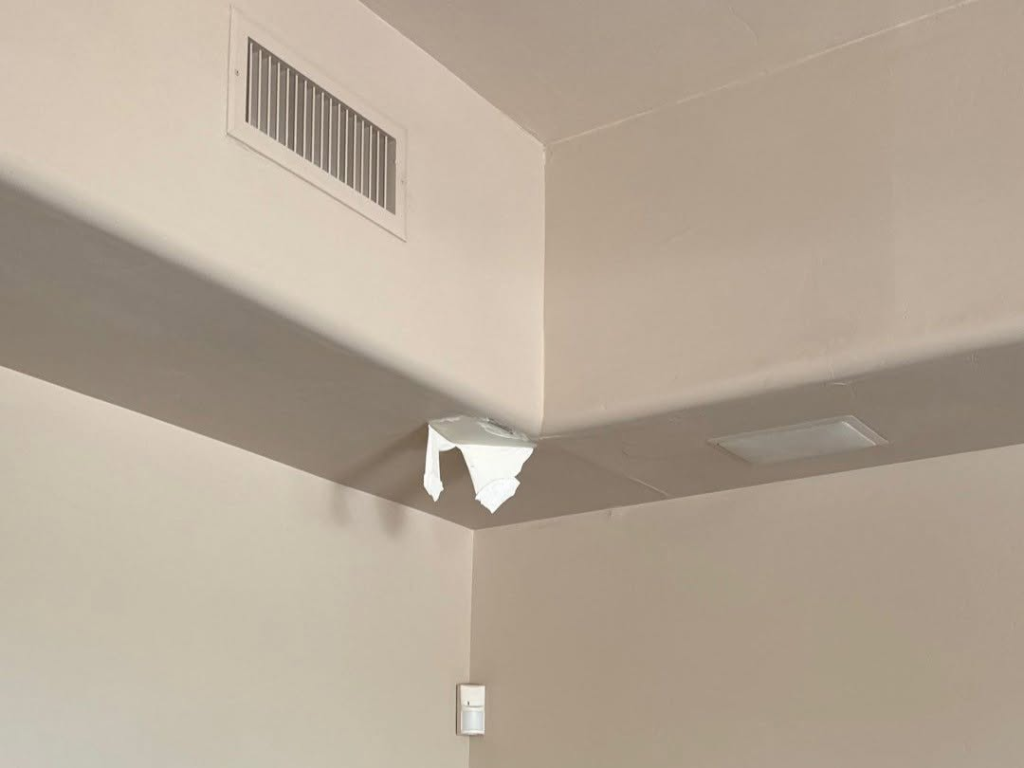
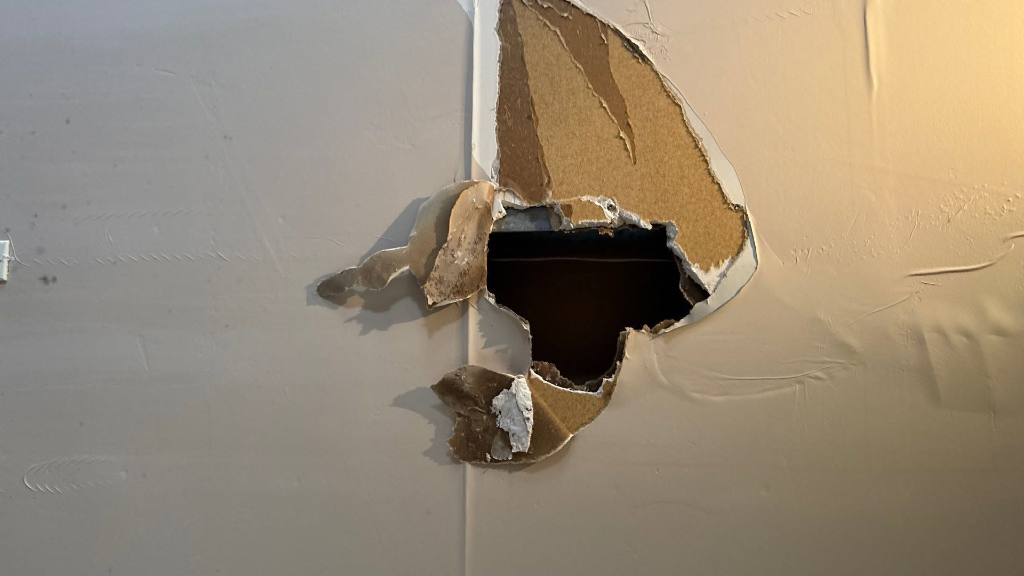
Water collecting above an interior ceiling poses catastrophic structural and electrical collapse hazards. Saturated half-inch drywall absorbs pounds of overhead water weight until drywall screws pull through paper, dropping sodden gypsum and contaminated fiberglass insulation onto living quarters below. In 140°F Phoenix summer attics, trapped overhead moisture cultivates toxic black mold colonies in under 24 to 48 hours.
Immediate First-Hour Overhead Ceiling Water Breach Action Checklist
- De-energize electrical circuits immediately at the main breaker box for all rooms underneath the wet ceiling.
- Never poke a bulging drywall ceiling directly from below; stand safely to the side to avoid falling debris.
- Place heavy plastic tarps and broad buckets beneath the sagging zone to catch dripping moisture.
- If water is originating from an upstairs bathroom or attic line, immediately shut off the home main water valve.
- Relocate valuable furnishings, electronics, and porous rugs outside the fall radius of the ceiling assembly.
- Contact Valley Restoration Pros at (602) 847-9593 for emergency stabilization and 30-to-60 minute dispatch.
Service Definition & The IICRC Standard of Care
Professional ceiling water damage restoration is an engineering and environmental discipline adhering strictly to IICRC S500 protocols, not mere surface mopping. When structural plumbing failures strike in Maricopa County, certified emergency water extraction and thermal structural drying procedures must be deployed immediately. Whether triggered by high-pressure burst pipe emergencies, subfloor leaks, or commercial line ruptures, bound moisture rapidly penetrates concrete subfloors and wall framing. In the desert heat, delays trigger microbial proliferation requiring rapid mold remediation. Request damage assessment through our emergency assessment portal or request 30-minute dispatch across all Valley service areas.
Securing electrical feeds, inspecting load-bearing assemblies, and containing pathogens.
Stopping the intrusion source and erecting 6-mil plastic isolation containment airlocks.
31-HP truck-mount extraction, removing gallons exponentially faster than evaporation.
LGR dehumidifiers and HEPA air scrubbers driving grains per pound below 25 GPP.
Calibrated electronic pinless testing confirming baseline dry standards.
Disastrous Mistakes Homeowners Make During Overhead Ceiling Leaks
Property owners naturally try to act fast, but well-intentioned DIY measures frequently escalate structural damage or void insurance claims:
- Puncturing the Center of a Sagging Drywall Bubble: Standing directly beneath a water blister risks hundreds of pounds of wet insulation collapsing directly onto you.
- Painting Over Water Stains Without Structural Moisture Testing: Stains indicate trapped moisture in trusses; covering stains seals moisture inside, fostering hidden black mold blooms.
- Running Ceiling Fans and HVAC While Attics Remain Saturated: Air handler fans suck fungal spores and wet insulation particulates from open ceiling cavities into duct systems.
- Assuming a Ceiling Has Dried Because Drips Have Stopped: Blown cellulose insulation in attics holds up to five times its weight in water, staying wet for weeks out of sight.
- Delaying Insurance Mitigation Requirements: Homeowner insurance policies demand active mitigation to prevent avoidable secondary microbial degradation.
Damage Severity Classification & Contamination Matrix
Industry standards categorize property damage by contamination risk and drying difficulty. Review the matrix below to understand the technical protocols required:
Class 1: Localized Overhead Ring Stain (Minor Infiltration)
Source Examples: Slow attic AC condensate line seep or minor roof flashing breach discharging under 10 gallons
Hazards & Risks: Drywall core dampness, yellow water rings, localized joint tape bubbling.
Certified Protocol: FLIR infrared mapping, pinless RF scanning, top-down attic insulation inspection, LGR dehumidifier.
Class 2: Sagging Drywall Bubble & Saturated Insulation (Active Intrusion)
Source Examples: Clogged primary AC drain pan overflow or upstairs toilet supply line rupture discharging 25-100 gallons
Hazards & Risks: Imminent drywall collapse, soaked attic joists, electrical short circuits in recessed lighting fixtures.
Certified Protocol: Emergency controlled drainage, complete saturated drywall extraction, insulation bag-out, HEPA air scrubbers.
Class 3: Multi-Room Catastrophic Ceiling Rupture (Severe Deluge)
Source Examples: Pressurized attic fire sprinkler burst, mainline pipe fracture, or monsoon roof deck tearing
Hazards & Risks: Full structural drywall drop, joist deflection, ruined hardwood flooring, whole-house microbial contamination.
Certified Protocol: Overhead shoring, high-volume truck extraction, industrial desiccant trailer deployment, botanical sanitization.
The Complete 6-Stage Restoration Roadmap
Our IICRC-certified crews execute a disciplined, scientific 6-stage protocol to stabilize and dry structural components:
Emergency Dispatch & Perimeter Isolation
30 to 60 minute arrival. Securing electrical shutoffs, evaluating structural loads, and erecting containment airlocks.
FLIR® Thermal Mapping & Baseline Scans
Infrared thermal scans detect trapped moisture behind walls and beneath concrete without invasive exploratory demolition.
High-Volume Bulk Extraction
31-HP truck-mount extraction units pump standing water away at hundreds of gallons per minute.
Controlled Selective Demolition
Precision flood cuts 12 to 24 inches above moisture lines, removing wet insulation and opening wall framing to dry airflow.
Thermodynamic Dehumidification
Industrial Low-Grain Refrigerant dehumidifiers pull deep trapped moisture from dense framing lumber and concrete slabs.
Antimicrobial Sanitization & Verification
EPA-registered botanical application (Benefect Decon 30) and calibrated moisture testing to issue an official dry certificate.

Specialized Equipment & Industrial Restoration Technology
Mitigating severe property damage requires industrial-grade technology capable of altering thermodynamic psychrometrics:
Truck-Mounted Extraction Rigs
31-HP engines producing 16+ inches Hg vacuum suction to evacuate bulk water rapidly into holding tanks.
Low-Grain Refrigerant Dryers
Pre-cooling heat-pipe systems driving ambient grains per pound below 25 GPP to draw deep trapped water out of framing.
HEPA Negative-Air Scrubbers
Hospital-grade 99.97% particulate filtration capturing microscopic fungal spores, soot, and biohazard aerosols.
FLIR® Thermal Scanners & Probes
Infrared thermography detecting evaporative cooling boundaries behind walls, combined with digital RF pinless scanners.
Professional Restoration vs. DIY Mitigation
Attempting DIY cleanup during a property disaster creates severe hidden liabilities:
- Trapped Moisture: Surface drywall dries while moisture inside cavities triggers hidden mold blooms.
- Pathogenic Risks: Category 2 & 3 water contains bio-contaminants standard cleaners fail to kill.
- Insurance Denial: Insurers require daily psychrometric logs; lack of data causes claim disputes.
Transparent Upfront Itemized Pricing
Valley Restoration Pros operates with complete transparency:
- Free On-Site Assessment: Complete physical inspection before work begins.
- Upfront Itemized Estimates: Detailed line items calculated via industry-standard Xactimate.
- Zero Surprise Billing: No hidden charges or unauthorized repairs.
Certified Ceiling Water Damage Restoration Field Documentation
Every response performed by Valley Restoration Pros is documented through photographic and thermographic records:

Comprehensive Ceiling Water Damage Restoration Technical Manual & Operational Standards
Exhaustive engineering protocols, psychrometric calculations, geological multipliers, and step-by-step restoration standards for Maricopa County properties:
Executive Emergency Abstract & Incident Overview
Overhead ceiling water intrusion represents one of the most hazardous, deceptive, and urgent structural emergencies confronting residential homeowners, facility directors, and property managers throughout the Phoenix metropolitan valley. Unlike ground-level surface water accumulation where water spreads visibly across tile or concrete floors, overhead intrusions originate inside concealed interstitial spaces—attic truss assemblies, multi-story floor cavity plenums, and mechanical chases. By the time water droplets visibly discolor ceiling paint, cause drywall tape blisters, or begin actively dripping onto interior furniture, hundreds of pounds of water have already saturated overhead fiberglass insulation, structural ceiling framing members, and porous gypsum board panels.
In Maricopa County, the overwhelming majority of catastrophic ceiling failures stem from two primary environmental drivers: attic-mounted split-system air conditioning air handler overflows and violent seasonal monsoon roof penetrations. During intense desert summers where ambient daytime temperatures routinely exceed 115°F, HVAC evaporators run continuously for twelve to eighteen hours per day, pulling between ten and twenty-five gallons of condensation out of humidified indoor air daily. When microscopic desert dust, airborne fungal spores, and mineral particulates choke primary condensate drain lines, condensation rapidly fills the primary drain pan and spills into the emergency secondary pan. If the emergency overflow pan lacks a functional float switch or its drain line has become encrusted with hard water calcium carbonate deposits, gallons of chilled condensation cascade directly onto structural ceiling joists and porous gypsum board. Immediate deployment of certified emergency water extraction and structural drying protocols is imperative to prevent sudden ceiling collapses, electrical fires, and widespread fungal contamination.
Standard interior ceiling drywall consists of 1/2-inch or 5/8-inch non-structural gypsum plaster cores wrapped in multi-ply recycled paper facing. Gypsum possesses remarkable fire-resistance properties, but its tensile strength plummets precipitously when exposed to liquid moisture. A single four-foot by eight-foot sheet of 1/2-inch drywall weighs approximately forty-five pounds dry. When saturated, the porous gypsum core and paper facings absorb upwards of three to four times their weight in water. Combined with saturated R-30 or R-38 blown-in cellulose or fiberglass insulation resting directly overhead, a single sagging ceiling section can impose upwards of one hundred and fifty to two hundred and fifty pounds of static weight on drywall screw heads. The softened drywall core gives way around the fastener dimples, resulting in sudden, violent ceiling collapses that dump sodden insulation, dirty water, and microbial sludge across occupied living areas, luxury furnishings, and expensive flooring. If your building exhibits active ceiling sagging, dripping, or discoloration, contact our 24/7 priority emergency dispatch immediately at (602) 847-9593.
Valley Restoration Pros functions as the premier emergency mitigation resource across Phoenix, Scottsdale, Mesa, Tempe, Chandler, Glendale, and Peoria. Our master-certified IICRC technicians arrive on-site within thirty to sixty minutes of your initial dispatch call, equipped with truck-mounted vacuum extraction units, industrial Low-Grain Refrigerant dehumidification fleets, negative-pressure HEPA filtration systems, and non-destructive FLIR infrared thermal mapping sensors. We stabilize precarious ceiling structures, isolate dangerous 120-volt and 240-volt electrical branch circuits, extract overhead contaminated materials, and engineer controlled thermodynamic drying environments to prevent toxic mold growth across Maricopa County communities.
Anatomy of the Failure & Overhead Physical Dynamics
Diagnosing overhead ceiling water damage requires a comprehensive understanding of architectural physics, building envelope dynamics, fluid mechanics, and the structural behavior of wood-frame and steel-stud construction assemblies. Overhead ceilings in Sonoran Desert structures are subjected to severe thermodynamic differentials that dictate how water behaves once it breaches containment:
1. HVAC Condensate Pan Overflow Dynamics & Algal Slime Occlusion
In residential split-system heat pumps and commercial package units, the indoor evaporator coil is housed within an unconditioned attic space or mechanical mezzanine. Warm, humid indoor air is drawn across the aluminum cooling fins, which maintain surface temperatures between 40°F and 45°F. Moisture condenses out of the air stream and drips down into an internal galvanized steel or molded ABS plastic drain pan. A three-quarter-inch schedule-40 PVC drain line routes this water by gravity toward an exterior drainage location, frequently terminating above a bathroom window or into a sewer trap.
However, desert air contains heavy loads of airborne silt, dust mites, pollen, and fungal spores. When these airborne particulates circulate through return ducts and contact damp evaporator fins, they wash down into the condensate trap. Within the dark, warm confines of the drain line, bacterial colonies (predominantly Zoogloea ramigera and aerobic slime-forming bacteria) metabolize organic dust, forming thick, gelatinous biological biofilms known colloquially as “algae sludge.” Over weeks of continuous operation, this biofilm expands until it creates a complete hydraulic blockage in the 3/4-inch pipe trap.
Once blocked, chilled condensation backs up into the internal coil pan and spills into the auxiliary secondary drain pan located underneath the air handler chassis. In theory, secondary pans are designed with safety float switches wired to break the low-voltage 24V yellow thermostat wire, shutting down the outdoor compressor before an overflow occurs. In practice, however, heavy mineral hardness (calcium and magnesium scale) from evaporating water and desert dust deposits physically seize the magnetic float switch in the down position. The compressor continues pumping refrigerant, generating a gallon of condensation every forty-five minutes. The water breaches the lip of the secondary pan, spilling directly onto ceiling drywall and structural ceiling joists beneath the unit.
2. Capillary Action & Hydrodynamic Migration in Attic Insulation
Modern Phoenix homes constructed to Energy Star or IECC standards feature significant attic insulation depths—often twelve to sixteen inches of loose-fill blown cellulose (shredded newspaper treated with borate) or blown fiberglass batts to achieve R-38 thermal resistance ratings. When water spills from an overhead source, insulation does not shed the water; it absorbs it aggressively through microscopic capillary interstitial pores.
Cellulose insulation fibers exhibit hydrophilic moisture wicking, absorbing up to five times their dry mass in water before releasing liquid drops downward. Consequently, a small, continuous one-gallon-per-hour leak can pool invisibly inside the insulation blanket for days or weeks. The water migrates laterally along ceiling joists, spreading out over a twenty-foot radius before liquid reaches the top face of the drywall ceiling.
This lateral fluid migration creates immense challenges for untrained property owners. Because water follows horizontal ceiling joists and sloped roof rafters, the physical water blister or paint discoloration that emerges in a hallway or kitchen may originate fifteen to twenty feet away in the master bedroom attic space. Without certified thermal imaging and deep pin-type moisture probes, amateur attempts to locate the leak source result in unnecessary exploratory wall cutting and misdiagnosed damage. When dealing with complex hidden plumbing intrusions, consult our burst pipe repair protocols to locate pressurized pinhole leaks.
3. Gypsum Tensile Failure, Fastener Pull-Through & Structural Shear
Gypsum drywall (calcium sulfate dihydrate) is held together by crystalline chemical bonds that provide rigidity under dry atmospheric conditions. However, when free water enters the crystal lattice, the gypsum core softens into an amorphous paste. Drywall ceiling panels are fastened to bottom chords of roof trusses or ceiling joists using 1-1/4-inch Type-W or Type-S drywall screws spaced every twelve inches along framing lines.
As saturated insulation and water pool on the upper surface of the drywall, the drywall sags downward under gravity, forming an inverted dome or “pillow.” This deformation creates extreme tensile stress focused directly on the screw heads. Because the wet paper facing loses its shear resistance, the screw heads slice cleanly through the softened core—an engineering failure mode termed “fastener pull-through.” Once three or four consecutive screws fail along a truss line, the entire sheet unzips, resulting in sudden, catastrophic ceiling collapse.
4. Upper-Floor Multi-Story Hydraulic Cascade & Plumbing Failures
In multi-story residences, luxury condominiums, and commercial hospitality complexes across Phoenix, ceiling water damage frequently originates from second-floor or third-floor plumbing infrastructure. Ruptured braided stainless steel toilet supply lines, overflowing bathtubs, failed wax rings, or burst washing machine supply hoses discharge pressurized water at rates exceeding five to twelve gallons per minute.
Water floods the upper-story subfloor, finding path-of-least-resistance penetrations through plumbing pipe rough-ins, electrical chase holes, and heating duct boots. Water cascades into the interstitial floor joist cavity, saturating floor joists, acoustic batt insulation, and the first-floor ceiling drywall below. This cascading fluid carries contaminants from upper flooring assemblies, transitioning clean Category 1 water into hazardous Category 2 or Category 3 black water requiring immediate biohazard containment under sewage and biohazard cleanup protocols.
Phoenix-Specific Climatic & Geological Multipliers
Ceiling water emergencies in the Greater Phoenix metropolitan area cannot be treated with generic restoration protocols used in temperate climates. The unique environmental stressors of the Sonoran Desert—extreme thermal amplification, violent summer monsoons, severe municipal water hardness, and expansive soil shifting—create aggressive catalysts that dramatically accelerate property destruction:
140°F to 160°F Attic Thermal Amplification & Spore Incubation
From May through October, the intense Arizona solar radiation loading on asphalt shingle and concrete tile roofs drives unconditioned attic temperatures to between 140°F and 160°F. When an AC condensate pan overflows or roof rainwater enters this superheated enclosure, the water immediately heats up, dramatically increasing vapor pressure.
In high-humidity, superheated environments, fungal mold spore germination accelerates exponentially. While standard industry benchmarks anticipate mold growth within 48 to 72 hours, Sonoran Desert attic conditions cultivate aggressive colonies of Aspergillus niger, Penicillium chrysogenum, and Chaetomium globosum along wet drywall paper and wood trusses in as few as 18 to 24 hours. Without emergency intervention, the entire attic envelope becomes biologically compromised.
Monsoon Microbursts, Haboob Dust & Sheet-Flow Roof Infiltration
The North American Monsoon season (July through September) subjects the Valley to sudden, violent atmospheric shifts. Microburst storm events generate hurricane-force wind gusts exceeding 60 to 75 miles per hour, followed by torrential cloudbursts that dump one to two inches of rain within thirty minutes.
Prior to the downpour, massive dust storms (haboobs) deposit thick layers of mineral particulate across roof decks and inside attic soffit vents. When the torrential rain hits, high winds displace Spanish clay and concrete roofing tiles, driving high-velocity rainwater horizontally underneath tile edges. Water tears through aged asphalt underlayment paper, cascading into attic crawl spaces and overwhelming ceiling joists. Saturated ceiling collapses spike dramatically across Phoenix during monsoon months.
18 GPG Extreme Municipal Hard Water Scale & Copper Pinhole Leaks
Municipal tap water supplied by the Salt River Project (SRP) and the Central Arizona Project (CAP) carries extraordinary dissolved mineral concentrations, averaging between 16 and 22 grains per gallon (GPG) of total hardness, with total dissolved solids (TDS) exceeding 650 PPM.
This aggressive, alkaline water chemistry induces severe calcium scale build-up inside plumbing fixtures and accelerates electrolytic galvanic corrosion in domestic copper supply lines routed through attic trusses. Water lines develop microscopic pinhole perforations that spray a high-pressure aerosol mist inside ceiling cavities. Because the spray is concealed by insulation, the leak continues undetected for weeks, rotting ceiling joists and saturating drywall before dripping becomes visible below.
Expansive Caliche & Clay Soil Heave Shifting Framing Envelopes
The geological foundation of the Salt River Valley consists of dense smectite and montmorillonite clay soils interlaid with caliche—a rock-hard sedimentary deposit of calcium carbonate. When seasonal moisture fluctuates, these expansive soils swell and shrink violently.
Differential foundation settlement causes subtle twisting and racking of vertical wall framing and horizontal ceiling trusses. This structural movement stresses rigid copper and CPVC water pipes routed through overhead joists, pulling soldered joints apart and shearing condensate drain lines. For properties suffering from foundation-induced plumbing ruptures, review our comprehensive slab leak water damage restoration breakdown.
To determine precise psychrometric drying requirements for your ceiling or attic failure, utilize our interactive online free on-site damage assessment or schedule a rapid on-site inspection.
Immediate Emergency First-Hour Protocol & Safety Isolation
The initial sixty minutes following the discovery of an overhead ceiling water breach are the most critical in determining the ultimate financial loss and physical devastation of the incident. Taking the wrong action—such as standing directly beneath a sagging water blister with a knife—can lead to severe personal injury and catastrophic interior flooding. Follow this strict emergency safety protocol:
Critical Life-Safety Warning: Structural & Electrical Hazard Protocol
Water is an excellent conductor of electricity. When water flows through ceiling cavities, it frequently submerges recessed can lighting canisters, ceiling fan mounting brackets, smoke alarms, and 120V Romex distribution lines. Never stand in pooled water to operate light switches or pull-chains. If water is dripping from a light fixture, treat the entire room as an active electrical hazard.
- De-Energize Local Electrical Breakers: Navigate immediately to the main electrical service panel (typically mounted on the exterior garage wall). Switch off the branch circuit breakers powering the lights, fans, and wall outlets in all rooms situated beneath or adjacent to the water intrusion. If the electrical panel itself is wet, contact Arizona Public Service (APS) or Salt River Project (SRP) immediately for an emergency service disconnect.
- Isolate the Primary Water Source: If water is gushing from an overhead plumbing pipe, immediately turn off the main domestic water shutoff valve (located on the front exterior hose bib riser or inside the garage). If the intrusion is originating from an attic AC condensate overflow, switch the thermostat to the “OFF” position at the wall controller to stop the compressor and blower motor immediately.
- Perform Controlled Relief Piercing (Prevent Spontaneous Blowouts): If the ceiling drywall is bulging into a swollen water bubble, allowing it to stretch further will result in a violent drywall rip that drops hundreds of pounds of debris. Place a broad plastic storage tub or five-gallon bucket on the floor directly beneath the sag. Standing safely three to four feet off to the side—never directly beneath the bubble—use a broom handle, screwdriver, or pole to poke a single 1/4-inch hole in the center of the lowest point. This creates a controlled gravity siphon, channeling water into the bucket and relieving hydrostatic pressure on surrounding drywall fasteners.
- Establish a Structural Exclusion Zone: Cordon off the affected room. Saturated drywall can collapse without auditory warning. Ensure children, pets, elderly family members, and non-essential staff are evacuated outside the collapse radius.
- Protect High-Value Flooring & Furnishings: Water splashing from a dripping ceiling damages porous floor coverings. Spread waterproof plastic tarps, heavy poly sheeting, or trash bags across carpet, laminate, and hardwood floor surfaces. Move wooden furniture, area rugs, and electronics to a dry adjacent room. Elevate heavy sofa and table legs onto aluminum foil or plastic blocks to prevent wood stain bleeding into wet carpeting.
- Mobilize 24/7 Professional Restoration Dispatch: Immediately contact Valley Restoration Pros at (602) 847-9593. Our rapid-response emergency fleet is mobilized across the Valley with 30-to-60 minute on-site dispatch guarantees.
Advanced Industrial Equipment Specifications & Setup
Restoring elevated ceiling structures and attic cavities requires industrial-grade restoration equipment engineered specifically for high-lift extraction, directional vertical airflow, and psychrometric dehumidification. Residential box fans, domestic dehumidifiers, and standard shop vacuums lack the thermodynamic capacity and CFM ratings required to pull deep bound moisture from saturated Douglas fir ceiling trusses and dense plaster:
Calibrated infrared cameras detecting 0.03°C temperature differentials. As moisture evaporates from ceiling drywall and framing, it produces a distinct thermal evaporative cooling signature. Our technicians scan the entire ceiling plane, mapping exact moisture boundaries behind plaster and locating hidden attic leak trails without cutting invasive inspection holes.
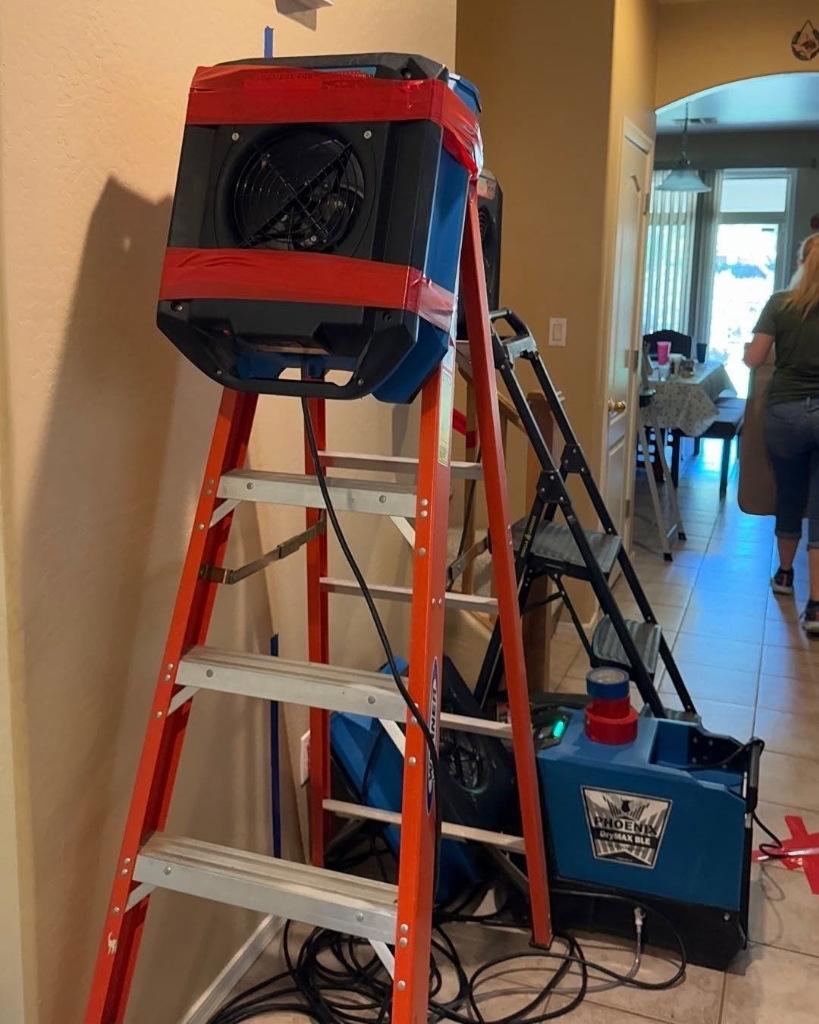
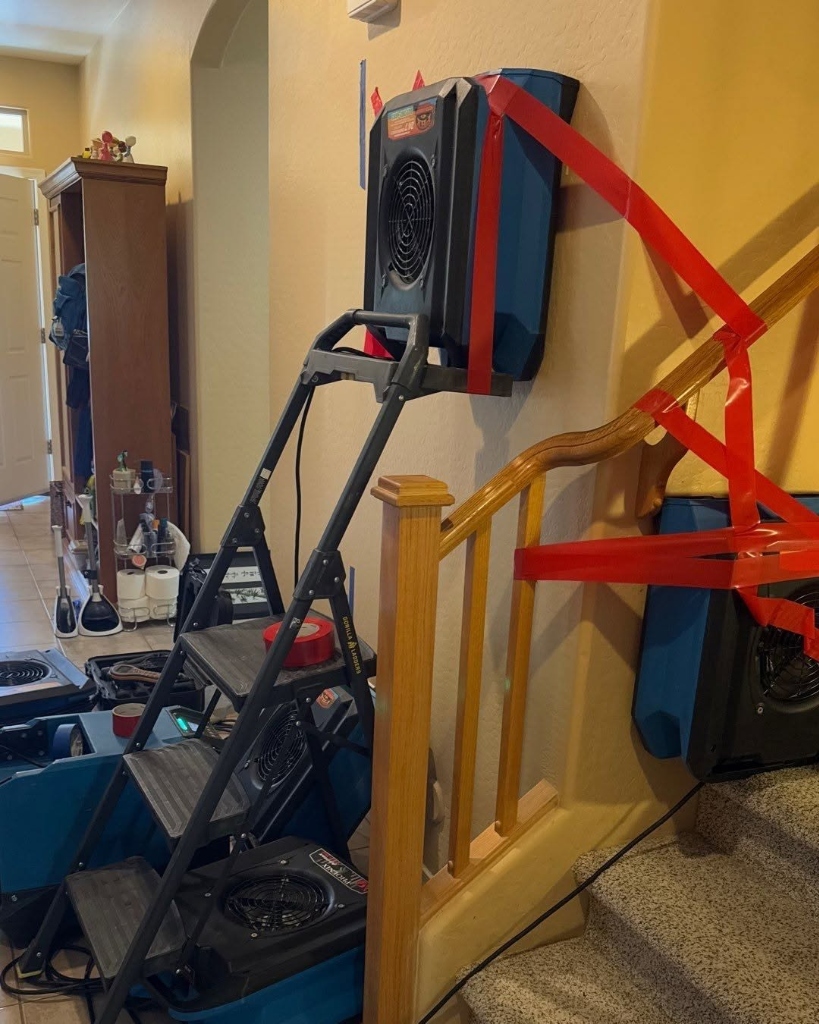
Industrial LGR dehumidifiers capable of removing 125 pints of water per day at AHAM conditions (80°F / 60% RH). These units utilize internal pre-cooling heat pipe systems that allow them to operate effectively down to 28 grains per pound (GPP) of specific humidity, creating a powerful vapor pressure differential that draws trapped water out of deep structural framing lumber.
Specialized high-pressure positive and negative airflow machines. In situations where high-end decorative plaster or ceiling drywall can be structurally preserved, the Injectidry system injects super-dry, heated dehumidifier exhaust air through small 3/8-inch ports directly into ceiling joist bays, desiccating trapped moisture inside the plenum chamber without wholesale ceiling demolition.
Hospital-grade particulate air scrubbers processing 500 CFM of air through certified 99.97% DOP HEPA filters capturing particulates down to 0.3 microns. Deployed with negative-pressure poly ducting to capture airborne fiberglass fibers, cellulose dust, and fungal spores generated during overhead demolition and attic insulation extraction.
Our field crews maintain dedicated 24/7 mobile restoration units stocked with specialized shoring timbers, telescopic ceiling jacks, industrial commercial insulation vacuum rigs, and digital hygrometric data loggers. For severe commercial facility deluges, consult our specialized commercial water damage restoration operations.
IICRC S500 / S520 Step-by-Step Restoration Protocol
Valley Restoration Pros executes every ceiling water mitigation project under the strict engineering benchmarks established by the Institute of Inspection, Cleaning and Restoration Certification (IICRC). Specifically, our crews follow the IICRC S500 Standard for Professional Water Damage Restoration and the IICRC S520 Standard for Professional Mold Remediation through a disciplined six-stage scientific workflow:
Stage 1: Psychrometric Evaluation & Non-Destructive Thermal Mapping
Within minutes of arrival, technicians establish baseline psychrometric conditions—measuring ambient air temperature, relative humidity (RH), dew point, and grains per pound (GPP) in both affected and unaffected control areas. Technicians utilize FLIR infrared cameras to identify the exact evaporative boundaries across the ceiling plane, marking saturated perimeter zones with blue painter tape.
Moisture meters with deep insulated hammer probes (Delmhorst BD-2100) are inserted into structural ceiling joists and drywall to record baseline moisture content (MC%). Water is formally categorized under IICRC S500 benchmarks: Category 1 (clean supply water), Category 2 (gray water from AC condensate pans carrying organic dust and algae), or Category 3 (black water containing bio-contaminants from roof storm runoff).
Stage 2: Critical Source Isolation & Overhead Structural Shoring
Before any demolition or drying can commence, the active water intrusion must be permanently terminated. If caused by an attic AC drain overflow, technicians clear the 3/4-inch PVC trap using high-pressure nitrogen blowouts, flush the secondary pan with antimicrobial disinfectant, and install an inline float safety shutoff switch. For storm-damaged roof decks, technicians ascend the roof to install heavy 10-mil hurricane tarps fastened with wooden battens to prevent rainwater re-entry.
If heavy lath-and-plaster ceilings or multi-layer drywall exhibits significant sag, technicians install temporary telescopic shoring poles with spreader beams to stabilize the ceiling assembly, ensuring the safety of crews working beneath.
Stage 3: Containment Airlocks & Controlled Selective Extraction
To protect unaffected living areas from airborne dust, fiberglass particles, and fungal spores, technicians erect floor-to-ceiling 6-mil poly containment barriers with magnetic self-closing zipper airlocks. Dri-Eaz HEPA 500 air scrubbers are ducted to create continuous negative air pressure within the containment chamber.
Using precision oscillating multi-tools with depth gauges, crews execute clean surgical cuts along ceiling joist centers, removing saturated drywall panels that have lost structural integrity. Saturated blown cellulose and fiberglass insulation is vacuumed directly out of the attic space through heavy four-inch suction hoses into dedicated containment collection bags, preventing indoor contamination.
Stage 4: EPA-Registered Botanical Antimicrobial Sanitization
Once contaminated insulation and wet drywall are removed, exposed Douglas fir ceiling trusses, roof rafters, and top plates are micro-cleaned with HEPA vacuums to eliminate surface dust and fungal hyphae. Technicians then apply an EPA-registered hospital-grade botanical antimicrobial biocide (Benefect Decon 30) via ultra-low-volume (ULV) cold foggers and direct spray. Benefect Decon 30 is derived from natural Thymol, achieving a 99.99% kill rate against fungal mold spores, gram-negative bacteria, and viruses within ten minutes of contact time without off-gassing toxic chemicals or synthetic fragrances into the residence.
Stage 5: High-Vapor-Pressure Thermodynamic Structural Desiccation
Drying dense structural framing timbers requires creating a severe vapor pressure deficit between the saturated wood cells and the ambient air. Technicians deploy commercial Phoenix DryMAX XL Low-Grain Refrigerant dehumidifiers paired with high-velocity axial air movers positioned at 45-degree angles to direct high-speed turbulent airflow along joist faces.
The dehumidifiers pull ambient moisture down to below 30 GPP, driving continuous moisture evaporation from the core of the timber into the air stream. For enclosed ceiling cavities where drywall was preserved, Injectidry directional systems force dry heated air through 3/8-inch ports into each joist bay. Psychrometric parameters are measured and recorded twice daily to verify drying velocity.
Stage 6: Calibrated Verification & Dry Certification Issuance
The drying protocol continues until calibrated digital resistance pin meters confirm that all structural ceiling trusses, rafters, and subfloor sheathing have returned to the regional dry equilibrium baseline—typically below 10% to 12% moisture content (MC%) for wood framing in the Sonoran Desert. Once verified, technicians compile an official IICRC Certificate of Completion, complete with comprehensive psychrometric drying logs, time-stamped thermal imagery, and itemized Xactimate documentation, officially clearing the property for drywall reconstruction and cosmetic painting.
Hyper-Local Phoenix Case Study: Camelback Corridor Ceiling Collapse Recovery
In mid-July during a sustained five-day heat wave where Phoenix Sky Harbor recorded afternoon highs of 117°F, a 3,800-square-foot custom executive residence in the prestigious Arcadia neighborhood suffered an catastrophic overhead water failure. The home primary 5-ton split-system attic air handler operated nearly twenty hours per day to maintain indoor temperatures. Airborne desert dust pulled through attic gable vents combined with heavy condensation inside the 3/4-inch PVC condensate line, forming a thick algal slime blockage.
Because the secondary emergency overflow pan magnetic float switch had seized due to 18 GPG municipal hard water calcium scale encrustation, the secondary pan filled and spilled over its galvanized lip. Over seventy-two hours of unobserved dripping, approximately 160 gallons of chilled condensation saturated 350 square feet of R-38 blown fiberglass insulation resting above the sixteen-foot vaulted great room ceiling. At 11:30 PM on a Tuesday, the saturated 5/8-inch gypsum drywall tore through its fastener dimples, causing a twenty-foot by fourteen-foot ceiling section to collapse onto luxury leather furnishings and custom-milled French white oak hardwood flooring.
Empirical Psychrometric Restoration Metrics & Drying Timeline:
- Baseline Wood Moisture Content (Ceiling Trusses): 38.4% (Severe hydraulic saturation, immediate decay risk)
- Initial Atmospheric Humidity (Inside Great Room): 84°F, 79% Relative Humidity (142 GPP Specific Humidity)
- Emergency Crew Arrival Time: 32 minutes from initial 911 dispatch notification
- Equipment Deployment: 2 Phoenix DryMAX XL LGR Dehumidifiers, 8 high-velocity axial air movers, 2 Dri-Eaz HEPA 500 scrubbers, Injectidry overhead cavity drying array
- 24-Hour Progress Metric: Poly containment established, collapsed drywall and 68 bags of wet insulation extracted; air scrubbed to 0.3-micron particulate baseline; atmospheric GPP reduced to 54 GPP
- 72-Hour Equilibrium Dry Standard: Douglas fir ceiling trusses stabilized at 9.6% moisture content; custom French white oak hardwood dried in place utilizing rescue mat systems without permanent cupping
- Total Mitigation Cost: $6,840 itemized via Xactimate®—approved 100% by property insurance adjuster without coverage disputes
“When our vaulted ceiling crashed down in the middle of the night, it sounded like an explosion. Valley Restoration Pros arrived in just over half an hour. Their technicians had plastic containment up and commercial extractors running before sunrise. They saved our French oak floors and handled our insurance claim documentation from day one. Unbelievable professionalism!”
Pay-Per-Call Financial & Insurance Documentation Breakdown
Experiencing a sudden ceiling collapse or overhead water deluge is emotionally jarring for any homeowner or commercial facility director. Facing complicated repair estimates and convoluted insurance claims procedures should not compound your anxiety. Valley Restoration Pros operates under rigid Pay-Per-Call consumer transparency standards:
Our master-certified technicians perform a complete thermal infrared scan, structural framing inspection, and moisture mapping evaluation of your ceiling and attic cavities at zero initial cost and zero obligation. We provide a transparent scope of work before any physical mitigation begins.
We utilize Xactimate®—the standardized estimating platform used by 99% of property insurance carriers nationwide. Every single line item—from HEPA air scrubber daily rates to containment poly barriers and insulation disposal—is billed at regional Maricopa County insurance-approved unit prices. No hidden fees or surprise billings.
We act as your technical advocate with your property insurance company. We document every phase of the project with time-stamped high-resolution photos, FLIR thermal imaging reports, daily psychrometric dry logs, and moisture mapping diagrams, ensuring your insurance adjuster has the empirical evidence needed to settle your claim smoothly.
We never make deceptive promises that insurance will cover 100% of costs without deductible responsibility, nor do we perform unauthorized repairs. Whether you are filing a homeowner claim through State Farm, Allstate, USAA, Farmers, or Liberty Mutual, or self-paying, we offer flexible terms. Connect directly with our team through our emergency contact portal for immediate assistance.
Exhaustive Technical FAQ Expansion & Engineering Standards
Explore in-depth technical answers addressing the physical mechanics, building science, insurance parameters, and operational protocols of ceiling water damage restoration across the Phoenix desert environment:
Secondary drain pans are fitted with an inline magnetic reed float switch designed to break the 24V control circuit to the condenser when water rises. In Phoenix, airborne caliche dust and mineral scale coat the switch stem over time, physically locking the buoyant float in the down position. When an overflow occurs, the AC compressor continues pumping condensation, spilling gallons across ceiling framing undetected.
Acoustic textured popcorn ceilings applied in Phoenix homes constructed before 1985 frequently contain regulated Chrysotile asbestos fibers. When saturated with water, the acoustic binder disintegrates, releasing hazardous asbestos fibers into the air. Certified technicians must test pre-1985 acoustic textures prior to mechanical disturbance, following strict NESHAP and OSHA containment protocols.
Yes. Douglas fir framing lumber absorbs moisture until it reaches its fiber saturation point (approximately 28% to 30% moisture content). At this threshold, wood cells expand unevenly. If allowed to remain saturated under the heavy static load of wet insulation and roof decking, joists sag and deflect permanently. Rapid thermodynamic extraction within 48 hours is critical to prevent permanent truss deflection.
When an upstairs toilet overflows or experiences a deteriorated wax ring, the effluent penetrating the ceiling subfloor is categorized as Category 3 black water. This water contains pathogenic bacteria, endotoxins, and viruses. Under IICRC S500 standards, all saturated drywall, insulation, and porous subfloors must be physically removed under containment; surface drying is illegal and hazardous. For severe sewer water backups, review our sewage cleanup procedures.
Commercial sprinkler systems discharge water at 25 to 60 gallons per minute at pressures exceeding 100 PSI, releasing stagnant, black pressurized water carrying iron pipe scale. Learn more about industrial ceiling sprinkler discharges in our commercial chiller pipe burst restoration manual and specialized hotel flood restoration protocols.
In split-level Phoenix properties, subterranean hydrostatic pressure and pressurized under-slab supply leaks can migrate vertically through interior chase walls into first-floor ceiling cavities. For under-slab diagnostics, consult our slab leak water damage restoration breakdown.
Many Phoenix retail corridors and commercial complexes utilize low-slope or flat built-up roof (BUR) or single-ply TPO membranes. When monsoon storms dump debris that clogs roof scuppers, water ponds up to several inches deep. Once the membrane laps or parapet flashings fail, water enters corrugated metal decking and acoustic ceiling tiles. For comprehensive commercial flat roof protocols, review our commercial flat roof leak restoration manual and monsoon storm flood cleanup procedures.
In high-rise commercial towers and historic properties with subgrade levels, water cascading from upper ceiling penetrations drains into vertical shafts, flooding mechanical elevator pits and subterranean storage vaults. Explore our specialized commercial elevator pit water extraction and water heater burst cleanup protocols for multi-level extraction.
Engineering Psychrometrics & Thermodynamic Dehumidification Formulas
Professional structural desiccation is governed by rigorous thermodynamic mathematics rather than guesswork. To calculate the precise dehumidification and airflow fleet required for an overhead ceiling and attic cavity loss in Greater Phoenix, our IICRC-certified project managers utilize standardized psychrometric formulas:
Dehumidifier Sizing Formula (IICRC S500 Class 2 / Class 3 Enclosure):
Required AHAM Pints/Day = (Enclosure Volume in Cubic Feet ÷ Factor) × Class Multiplier
For a typical 2,500-square-foot residence with ten-foot ceilings and an open attic plenum cavity (total cubic volume approximately 35,000 cu. ft.) experiencing a Class 2 ceiling water intrusion with wet insulation and drywall, the divisor factor is 40 for Low-Grain Refrigerant (LGR) units. 35,000 ÷ 40 = 875 pints of required AHAM moisture removal per 24-hour cycle. Valley Restoration Pros deploys seven 125-pint Phoenix DryMAX XL LGR units, establishing a rapid drying envelope within the first four hours of arrival.
Air Mover Calculation for Ceiling Boundary Layer Disruption:
Air Movers = 1 unit per 50 to 70 sq. ft. of saturated ceiling plane + 1 unit per room offset
Stagnant air forms a micro-thin boundary layer of high humidity immediately adjacent to wet joists and subflooring. High-velocity axial air movers generating over 3,000 CFM at 2.8 amps are angled at forty-five degrees upward to strip away this saturated boundary layer, replacing it with ultra-dry, low-vapor-pressure air produced by the dehumidifiers.
To learn more about industrial drying dynamics across large commercial facilities, review our specialized structural drying procedures and commercial water damage restoration protocols.
Verified Local Area Dispatch: Phoenix, AZ
Official Geo-Coordinates: 33.4484° N, -112.074° W • Maricopa County
Frequently Asked Questions: Certified Restorer Insights
Direct answers to the most critical technical, operational, and insurance questions Phoenix property owners ask:
Related Specialized Emergency Restoration Services
Explore specialized rapid-response mitigation protocols across Greater Phoenix and Maricopa County:
Valley-Wide Emergency Response Service Coverage
Our mobile restoration fleet is dispatched across the entire Phoenix metropolitan region, providing rapid 30 to 60 minute emergency response: